Our Community
Faster fashion, more wastage
At fast fashion shops, more casual
items such as t-shirts are just priced at
about HK$100 or even less. Knitted
pullovers, jeans, shoes and semi-formal
dresses cost from HK$200 to HK$500,
while coats are usually less than
HK$1,000.
Kris Cheung, one of the many in the
queue waiting for the opening of
H&M's first Hong Kong store on
March 10, said he was attracted by the
trendy styles and affordable prices.
Another customer Sarah Cher Sauman,
who is a 22-year-old saleswoman,
said she would buy more clothes than
usual from the shop because of the
relatively low prices, even though she
thought the quality of the items was not
very good.
Apart from price and quantity, fast
fashion retailers also try to beat their
rivals with their swiftness in capturing
the trend, as the period between
designing the clothes and arriving on the
shelves could be as short as two weeks,
compared to several months of
conventional operations.
Jeanne Tan, assistant professor of the
Institute of Textiles and Clothing at the
Hong Kong Polytechnic University, said
fast fashion was "affordable high street
fashion which is heavily influenced by
designer collections".
Advancement in technology has
enabled fast fashion designers to catch
up with the latest trends so quickly that
their products often arrive in retail shops
almost at the same time as that of the
original designer collections which they are
influenced by, said the scholar, who
specialises in fashion and textile surface
design.
Clothes are no longer products that
simply cover the bodies and keep us
warm. Dr Tan said Hong Kong people
were trendy and fashion-conscious, and
they "mix and match" different fashion
items to reflect their own personalities.
She said the wave of fast fashion had
further consolidated the "disposable"
nature of clothes, as people would throw
away the old ones whenever there were
new designs.
A spokeswoman for H&M, Kristina
Stenvinkel, agreed that their clothes were
disposable products. "We are in the fashion
business and we are trying to move on
quite quickly, so it's a part of that," the
head of communication said in a phone
interview from Stockholm, Sweden.
When asked if H&M's fast-moving business strategy was changing consumer behaviour and causing clothes wastage, Ms Stenvinkel said her company did not force people to buy its products. "It's a customer demand and it's up to them," she said.
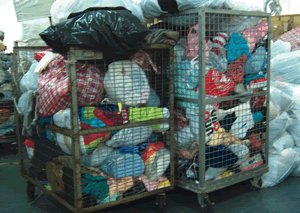
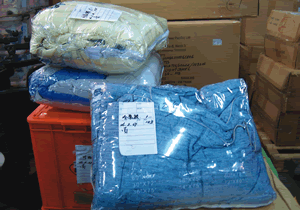


Piles of unwanted fashion items found in Salvation Army Hong Kong. They are either sent to be resold in the Salvation Army shop, recycled into different
fibres, or donated to Third World countries.