













The German Consul General in Hong Kong shares her diplomatic work around the world, and what inspired her to become a diplomat.
By Jette Kremer
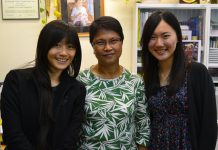
The life of German Consul in Hong Kong, Dr. Annika Bolten-Drutschmann, is defined by constantly moving between countries. Be it in Indonesia, Russia or Iraq. Her job has just taken her to Hong Kong.
“In my job, there is actually no typical day here at the Consulate General in Hong Kong – and I enjoy that a lot,” she says adding her work varies from political analysis , writing reports, organising events, accompanying delegations or networking or filming a video.
After being stationed in Baghdad, the capital of Iraq, alone, where she had a personal protection detail 24/7, Dr. Annika Bolton-Drutschmann, a German Consul General, is enjoying the peaceful lifestyle in Hong Kong with her family.
Hong Kong’s hiking trails and orderly public transport offers comfort for her demanding work.
“On the weekends, I am always on the way up somewhere on the hiking trails with my husband and kids,” she says. She also spends a lot of time in Happy Valley where the kids play football. She cites Dragon’s Back as one of the trails on her bucket list.
“What really impresses me is the calm and mutual respect with which Hongkongers board public transport,” she says. She also loves the strong walking culture and how often she sees elderly people exercising taking care of their health.
“I believe taking responsibility for one’s own body at an elderly age is something that aging societies like Germany and Hong Kong can greatly benefit from,” she says.
Her love for the city extends to its food culture, “My children love dim sum and are big fans of the chain Tim Ho Wan. And the other thing they really love is eating hot pot in Tsim Sha Tsui. That is an absolute highlight for them,” she says.
With locals being pragmatic, she has found Hong Kong an enjoyable place to live in, and a fascinating place for diplomatic work.
“Hongkongers are goal-oriented, reliable and open,” says Bolton-Drutschmann.
“Sometimes I am a little surprised that Hongkongers are even more rule-loving than Germans,” she says with a laugh. “I’ve also consistently encountered a great willingness to find pragmatic solutions, and I really appreciate that,” she adds.
Citing developing the ties between Germany and Hong Kong as her major duty, the Consul General says, “I believe that Hong Kong and Germany share an interest in preserving Hong Kong’s unique characteristics that are foundational to its success.”
She points out Hong Kong has an international character with its multiculturalism, rule of law, financial sophistication and the excellence of science and research institutions in the city.
“In this quintessential geoeconomic city, it is particularly interesting in the current geopolitical context. So, along with good international schools for my children and a good quality of life, Hong Kong is a very attractive package for me,” she says.
Bolten-Drutschmann dreamt of becoming a diplomat representing her home country and living in a foreign land when listening to a former German ambassador BBC Radio Four in the UK when she was a student.
“From then on, this curiosity about the world out there basically never let go of me. All my career plans and considerations when I did my European Baccalaureate in Italy always had an international dimension,” she remembers.
She was also inspired by the program to devote to the country she was born in.
“He explained very effectively to a British audience how Germany works, conveying an image of my country that was very close to how I see Germany: a cosmopolitan, liberal country committed to peace, democracy, and freedom. A country that is successful precisely because of its diverse society, a society that worked through the painful lessons from the Holocaust and German crimes during the Second World War,” she says.
“This image was not widespread in the UK at that time. That’s why this task of explaining Germany abroad, of representing a modern Germany in the world, seemed to me to be a really exciting, important but also challenging task,” she adds.
Bolten-Drutschmann joined the Federal Foreign Office in 2008. Her positions took her to Singapore, Jakarta and Moscow. One of the most challenging but also rewarding roles was her time as Chargée d’affaires at the embassy in Baghdad.
She explains, “It is very important for us as diplomats to stay well-connected to life and institutions in Berlin. Hence it is key that after four to eight years abroad we spend some time back at the capital before being posted again.” She expects to represent Germany in Hong Kong for the next four years.
To be a good diplomat, Bolten-Drutschmann says, “You need somebody who can balance interests and build trust whilst also having a very clear compass based on the interests and values of the country they represent.”
“When it comes to one’s own compass, you need, above all, integrity. The diplomatic lifestyle requires flexibility, a lot of curiosity and resilience. As a diplomat, one must not forget that our status derives from our assigned function,” she says.
What is not clear is where she and her family will go after this. The Consul General would like to continue to work on Asian affairs but it depends on what positions are free.
“It’s the challenge of constantly familiarising yourself with new topics, new countries, new networks, and also acquiring new skills, like karaoke singing, the ability to play golf or acquiring knowledge of local art and crafts,” she shares about the charm of her job.
“Depending where you are, these skills help you to work effectively … always having a steep learning curve ahead of me is something I find incredibly fascinating and motivating,” she adds.
Her children turn out to be her best teachers when she tries to learn new things in new places.
“I believe that culture shocks are largely reserved to us adults. Children approach other people and other cultures with far less prejudice. They are more open-minded and find it easier to adapt. I learn a lot from my children in a new place. They observe life around them with great attention to detail and oftentimes perceive things very differently,” she says.
Looking back on her own path, her advice for students is to seek out interesting experiences.
“The main point is that you should really use this time before you enter the profession to really invest in yourself and all your strengths. This means learning languages and gaining overseas experience, for example,” she says.
“You shouldn’t always follow the well-trodden path. A less used path may be more challenging but it offers new experiences, which may give you more valuable insights into your own interests, abilities and ambitions than following the crowd,” she adds.
For Bolten-Drutschmann, home is not a single place. “It’s really where the people who are important to me are,” she shares, but it is also a personal ritual. “It is always a special moment when the moving boxes are delivered and my books are back on the shelves,” she adds.
“Perhaps, now that I think about it, there is one ultimate feeling of “being home”: When I have the opportunity to cycle through the bright yellow rapeseed fields of Schleswig-Holstein during bloom,” Bolten-Drutschmann explains with a smile.
Edited by Pauline Yau
Sub-edited by Mike Chu