


















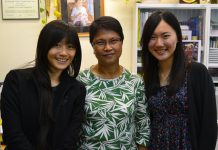


Farah Đặng, once a child in Hong Kong’s Kai Tak refugee camp, now runs a restaurant built on resilience and giving back.
By Calliope Nguyen
Born in a refugee camp and raised amid an immigrant influx, Farah Dang now runs a restaurant chain in Hong Kong and cooks for refugees in need every weekend at the Christian Action Centre for Refugees.
“When I cook for the refugees, I see myself in them. It takes me back to the camp, to my roots, to the journey my family and I have been through,” she says.
Dang was born in 1981 during the peak of the Vietnamese exodus to Hong Kong. After fleeing from a war-torn Vietnam, her family was settled at Kai Tak North Refugee camp.There, Dang spent 11 years growing up beside her mother’s hawker stall.
“My mother would be up at 2 or 3 a.m. to make pork congee. I would help her cook the soup, wash dishes, and bring goods to the market. That was our life,” Dang recalls her earliest memories. It was the daily three-hour routine of stirring pots of cháo sườn (pork rib congee) and steaming xôi vò (mung bean sticky rice), before attending classes at the nearby New Horizons school.
“I just remember having the most amazing childhood regardless of the conditions inside the camp,” she notes. Eight children shared two bunk beds. The tight space makes great space for small talks.
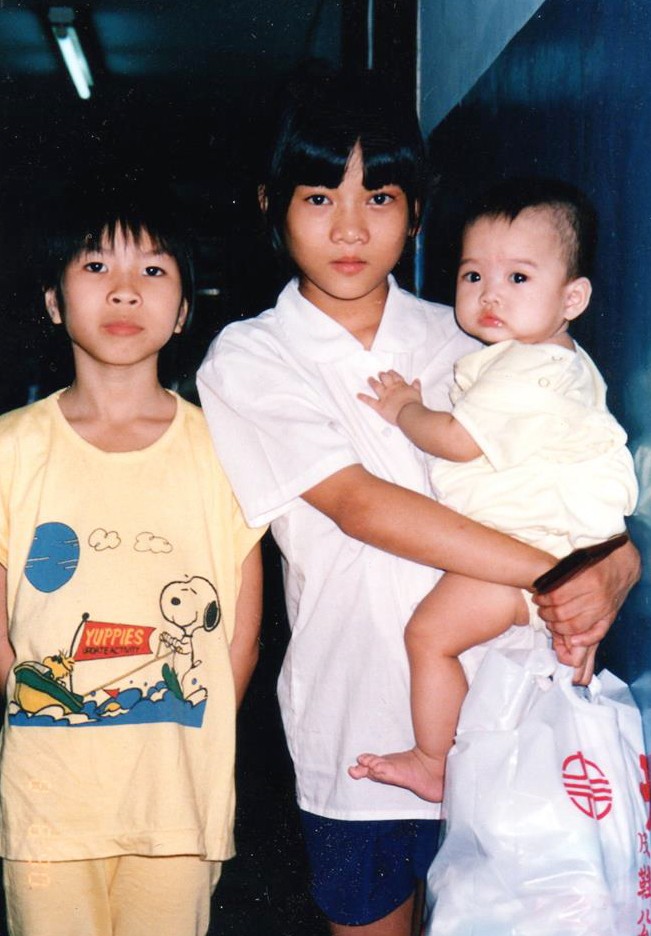
Even the ever-present rats and cockroaches became unlikely friends. “We used to feed them bits of food under my bed,” she laughs, confessing that the sight would terrify her now. It is this deep sense of community and belonging that sweetened the life at Kai Tak camp.
The camp, she insists, was not just about hardship.
“My most vivid memory was playing. There were a lot of children inside the camp. I was never lonely,” she says. Her days were filled with the simple joys of badminton and rope-skipping; she and her friends even fashioned their own jump ropes from elastic bands.
This playful environment had an extra boost from a unique source—her family’s three arcade machines. A gift from her father’s friend, the machines brought in coins from neighbourhood kids, giving Dang and her brother pocket money and endless entertainment.
“All the kids from the camp used to come play because we had it all—Tetris, Munchies, Snake, you name it. That’s probably why I’m always so entrepreneurial, always finding a solution to something,” she says, crediting this early experience with shaping her mindset.

At 11, Dang’s family resettled in the United Kingdom. For the first time, she stood out. “Before that, we were all the same. In the UK, though, I was the only Asian. People told me to go back to my own country,” she remembers.
While she learned to turn the fear and fluster into a thick skin, this defensiveness did not translate into pride about her identity. “Still, I’d be afraid to even say that I’m a refugee, because I didn’t want any disadvantage or discrimination against myself. But now, I could happily say I’m a second generation Vietnamese refugee. These are my experiences, this has made me who I am.” she says.
After 11 years in the United Kingdom as a chartered accountant, however, Dang realised her true calling was the kitchen. “I miss how I was able to connect with people through a simple bowl of phở. Feeding people is exactly what my parents and my grandparents would have done! It is their way of showing love, of saying “How are you?”, and now it’s my way too,” she says.
Finally, when Dang’s husband relocated to Hong Kong for work, she accompanied him. In 2018, alongside a fellow Vietnamese woman, she launched Soho Banh Mi. What started in a small Mid-levels alley has since grown into three locations across Hong Kong, but it remains a tribute to her past and a space for giving back.
For Dang, her restaurants can be the stepping stones for the community. “Anyone who wants or is willing to learn is welcome here. It’s a love I want to share for whomever I happen to meet across my path. I just hope the very best for them,” she shares.

Her commitment extends far beyond the restaurants. Having been nurtured by the caring teachers in the camp, Dang understands how one act of care can change a life. She now volunteers with Christian Action for Refugees, the very charity that managed the Kai Tak camp. On weekends, she prepares lunches and delivers food under the footbridges to refugees seeking shelter.
“Each time I hand out a meal, I feel a mix of gratitude and strength. I’m reminded of how far I’ve come, and I’m inspired and proud knowing that I can now be the one who offers hope,” she reflects.
“I’m sure it’s not much, but I want to do as much as I can. Whatever you can do, you should do it—out of conviction, not because of any fame or money attached to it. You should just do it because it’s truly the right thing to do,” she adds.
Looking ahead, she hopes to expand both her restaurant chain and her cycle of care. “That’s why I keep on opening my shop. It’s not just for me; it’s also to inspire other people to give back,” she envisions, ensuring the resilience born in Kai Tak would continue to nourish generations to come.
Edited by Mike Chu
Sub-edited by Pauline Yau