









Home Blog Page 12

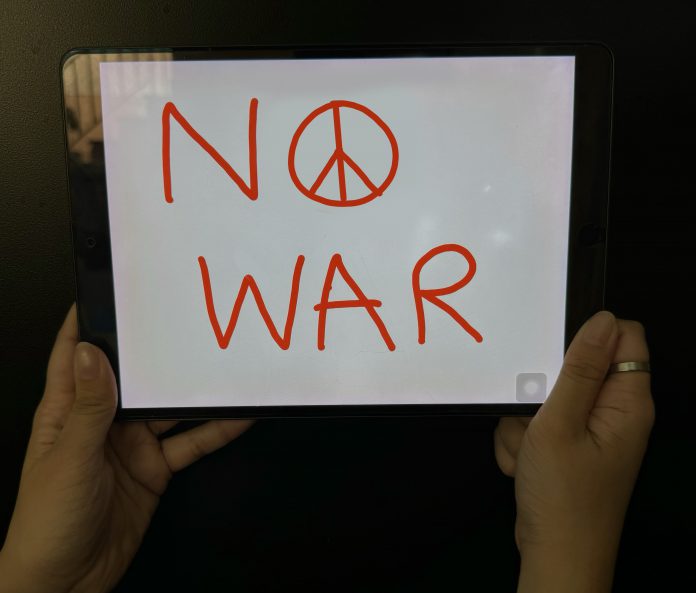
Make Peace No War

Veteran Vietnamese soldiers appeal for peace in the era of chaos

By Chloe Nguyen

Trần Duy Nghĩa, who had one leg amputated in the 1969 Vietnam War, sends out a message of peace when wars have erupted in different parts of the world.

“Wars are nonsense. Civilians, who are not involved in the conflicts between governments, are most affected by wars,” he says. 

At the age of 81 now, the veteran soldier reads newspapers every day to learn what is happening in Ukraine since he has deeper feelings about it.

Suffering a lot from wars throughout his life, he says, “Rulers in various countries become more greedy and use violence to compete with each other nowadays.”

He believes the Russia-Ukraine War broke out due to the political interests of different parties, including the president of Russia wanting to conquer Ukraine to create a greater Russia and the United States and its allies’ plans to make Ukraine a Western bastion on Russia’s borders.

“I cannot believe there are still wars going on and empathize with people there,” he says as he recalls how he lost his right leg in the Tet Offensive military campaign, one of the largest military campaigns of the Vietnam War.

“While I was investigating the battlefield to see if there were enemies nearby to attack, a bullet hit my knee. If my team had not carried me to a bush quickly, I would have been captured,” the former leader of the military district says.

Half of his right leg was cut and he stayed in the hospital for five years for  treatment and practicing walking all over again with a prosthetic leg. In 2021, a segment of his leg was cut again as it got infected.
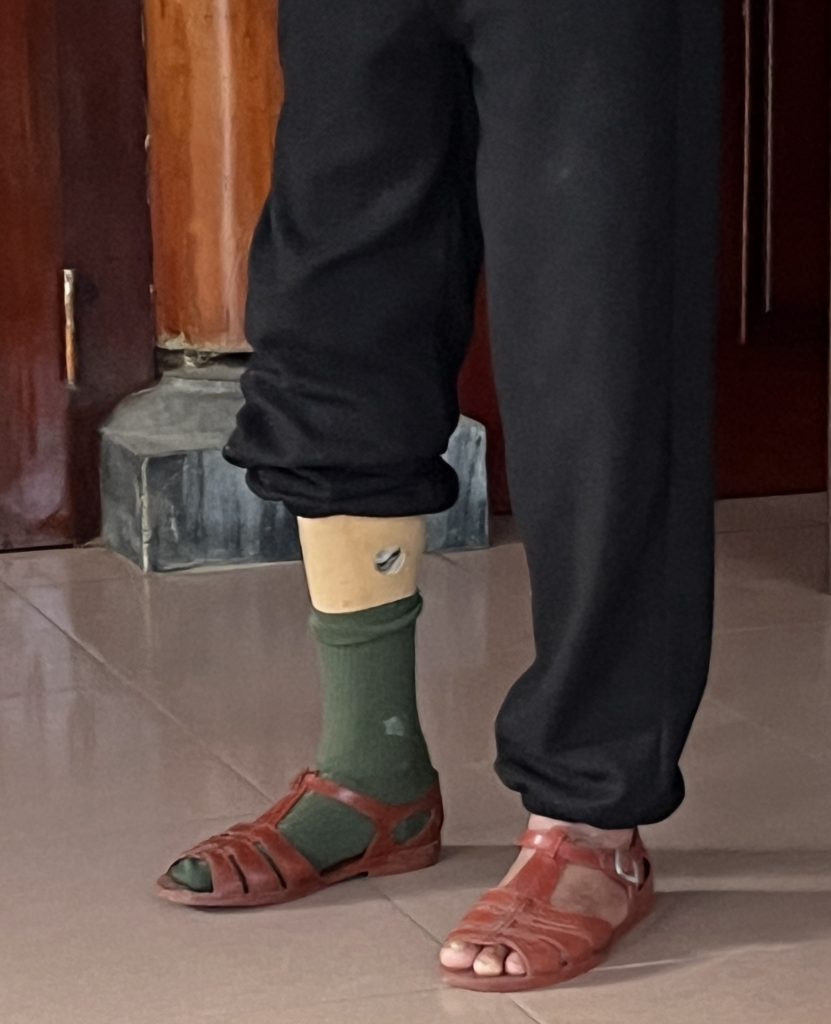
Trần Duy Nghĩa wearing a prosthetic leg.

During the Vietnam War from 1954 to 1975, about 800,000 soldiers became disabled, 849,018 military died and an estimated 500,000 soldiers went missing, the Ministry of Defence says.

In 1981, Trần worked at a government-funded neuropsychiatric nursing center, which caters to soldiers with post-war mental health issues and head injuries. 

“Having witnessed my comrades sacrifice their lives for peace, I felt lucky to be alive and wanted to make the best of it by serving the injured after the war,” he adds.

He says because of the war, the government was so poor that it could not feed patients and provide proper healthcare for them.

“We did not even have enough money to buy food so we grew vegetables and raised pigs on our own,” the nursing center’s director adds. 
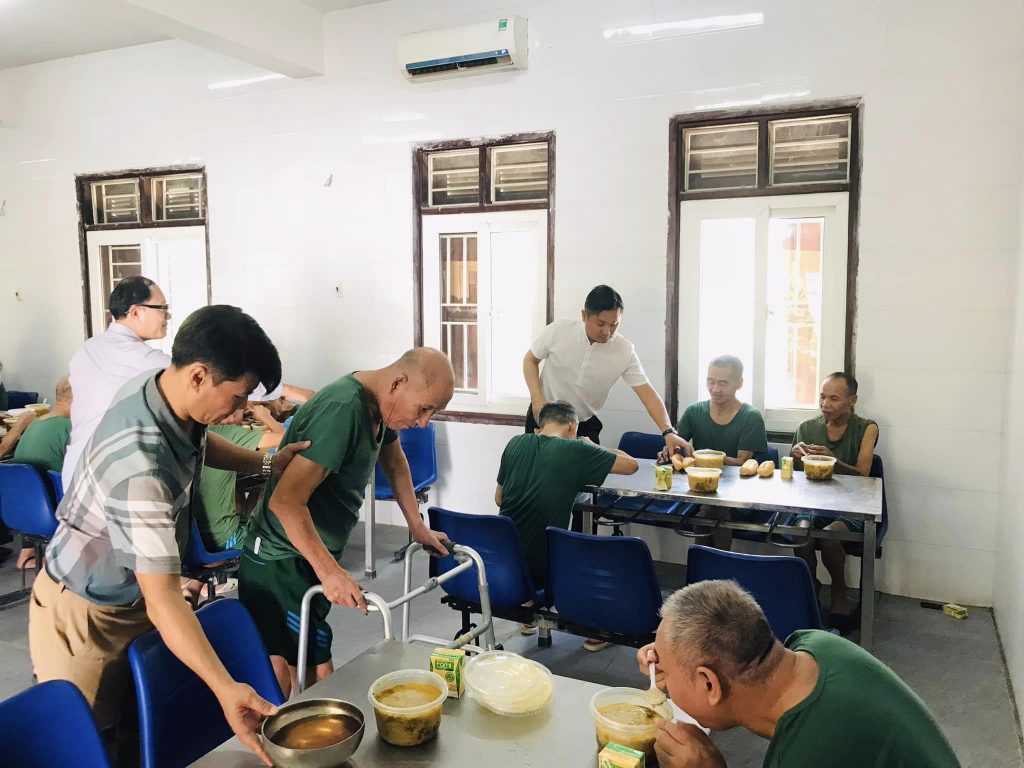

Injured veterans living at the Nghe An Convalescent War Invalids Nursing Area
(Photo courtesy by Khu điều dưỡng thương binh TTK Nghệ An)

The veteran soldier is saddened to see that 444,000 Ukrainian military were wounded and killed, figures updated in February 2024 from Russia’s Ministry of Defence show.

A total of 10,582 civilians were killed and 19,872 were injured during Russia’s invasion of Ukraine in February 2024, according to the Office of the United Nations High Commissioner for Human Rights (OHCHR). 

The former soldier hopes the wars will end soon for civilians’ sake.

“Violence cannot solve conflicts, it only harms innocent humans and makes situations worse. Negotiation is a better solution that authorities involved in ongoing wars should resort to,” he says.
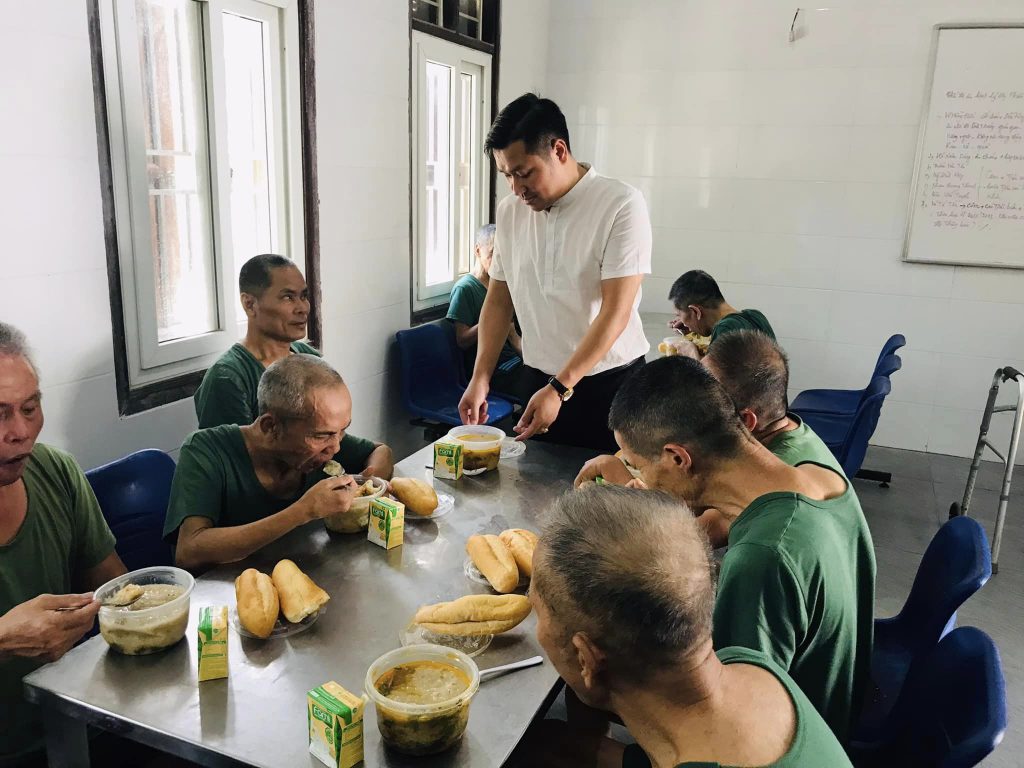
Veterans taken care by employees at the center
(Photo courtesy by Khu điều dưỡng thương binh TTK Nghệ An).

Also feeling wretched by the Vietnam War in 1972 is Ngô Thị Thu, who joined the rear forces of the army, supporting the front line with logistic works when she was only 17 years old.

She remembers her teeth were broken when she tried to escape from an airstrike with a 70-kg rice bag on her back.

“I was the least injured, 11 people in my team were hit by dropped bombs and died. Their bodies could not be found as they were shattered into pieces,” she adds.

“The worst part was I lost three family members when the U.S. dropped bombs in my hometown in 1969 and 1972,” the 69-year-old woman says.

Although the war ended more than 50 years ago, she is still suffering from war trauma, including body aches and mental health problems like experiencing nightmares and feeling anxious whenever a plane flies over her head.
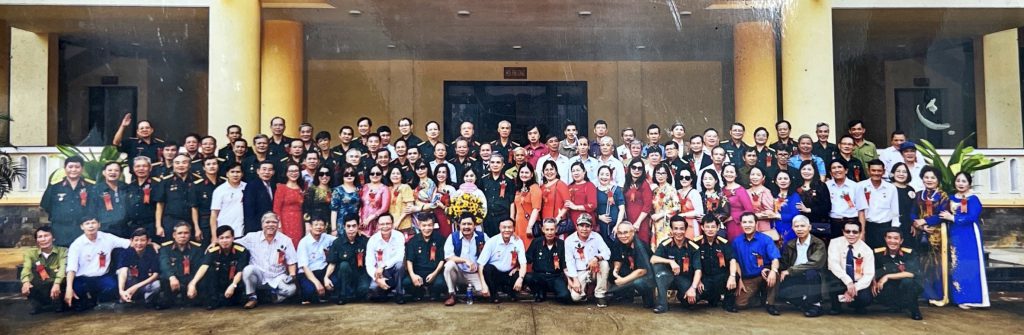
An annual meeting of former soldiers after the war (Photo courtesy by Trần Duy Nghĩa)

The current war also annoys her. “I do not dare to see pictures of the Israel-Hamas War as they are too heartbreaking,” she adds.

She wishes no one would feel the same sorrow as her.

“Leaders involved in current wars should give up political interests and ambitions,  to achieve a common voice and bring peace to the people and the world,” the war witness says.

Associate professor Nguyễn Quang Hồng, from the Department of History at the Vinh University, says every war has disastrous impact on human lives, economy and environment.

More than 40,000 deaths and 60,000 injuries have been caused by the 800,000 ton unexploded bombs left behind by the U.S. in Vietnam. The war ended more than 50 years ago but nearly 6.1 million hectares of land are still contaminated, accounting for 18.71 per cent of the total area of the country, according to the Vietnam National Mine Action Center. 

Data from the World Bank reveals the war between Russia and Ukraine, which was started in 2022, leads to 24.2 per cent of Ukarinians living in poverty. Before the war, the figure was only 5.5 per cent.

Over 34,000 people, 33,091 Palestinian and 1,410 Israeli have been reported as killed in the Israel–Hamas war, figures updated in April 2024 from the Gaza Health Ministry (GHM) show.

Nguyễn notes that consequences of the Russia-Ukraine War are on a global scale as the world is interconnected with each other.

“There is a danger that the Russia-Ukraine War will escalate, as the North Atlantic Treaty Organization (NATO) might jump into the fighting and nuclear weapons might be used,” the professor says.

Edited by Nutcha Hunsanimitkul

Sub-edited by Kamun Lai
Migrant Domestic Worker-turned-Writer

Migrant domestic worker finds strength in writing amidst struggles in Hong Kong.

By Lunaretta Linaura

Edited by Lorraine Chiang

Just like other migrant domestic workers, Ailenemae Salvador Ramos has to leave her family – including her husband and two children – in the Philippines as she works in Hong Kong. 

But since coming to the city in 2010, Ramos has grown into a writer, an author and a co-founder of a writers’ group.

As a migrant domestic worker, she finds it difficult to talk about heavy topics to her family and other workers. So in her free time, Ramos reflects on and records the details of her daily experiences through poems and short stories, mostly written in English.

“We cannot talk to our families about how we feel being away from them, because we don’t want them to feel sad. I don’t want my family to know I am not happy here,” the mother of a 17-year-old son and a 19-year-old daughter says.

“I keep it in my journal, and it makes me feel better. At least I have paper and a pen to help me understand what I’m really feeling,” the 40-year-old worker adds.

Ramos’ employers encouraged her to publish a book by sponsoring the publication.

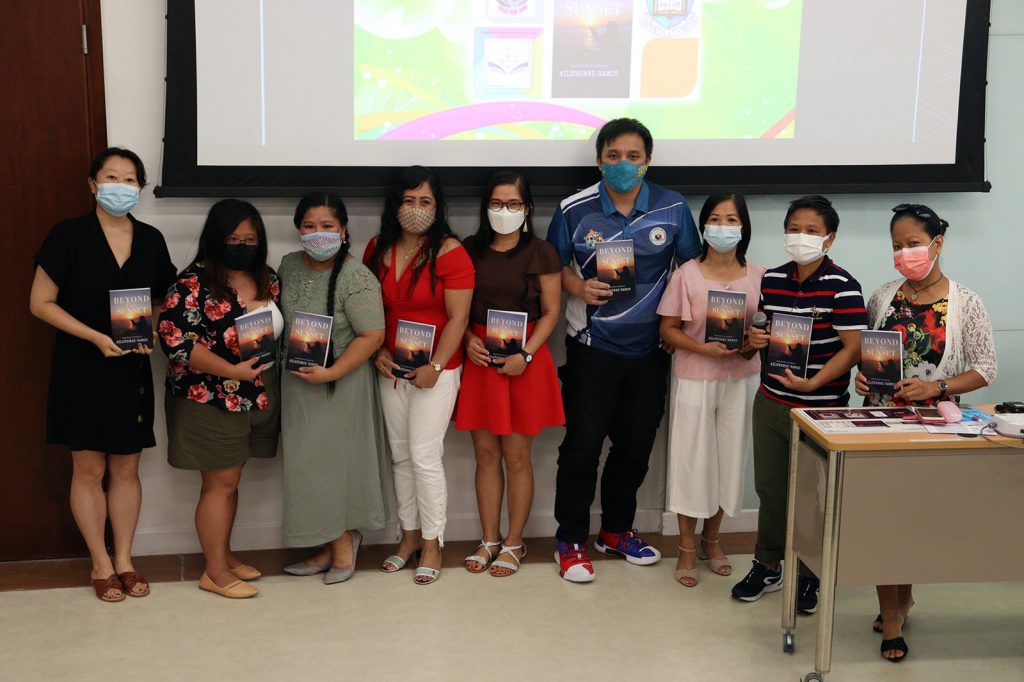
In 2021, Ramos’s first book, a poetry collection, “Beyond the Sunset” was published by Poetry Planet Publishing House. She dedicates the book to her mother who passed away when Ramos was two years old. As a child, Ramos’ relatives made her believe that her mother was “beyond the sunset”. 

Ramos’ book reveals her personal experiences and the collective experiences of women and migrant domestic workers – being away from their children, finding confidence in being a “simple woman” and the optimism through it all. 

“[My book] is my life story. Growing up, marriage, my aspirations, dreams for my children, migration story, pains, anxiety, depression. It’s everything,” she says.

“I honestly did not dream of being a writer. When I was a child, I actually dreamed of being an accountant to follow my mother’s footsteps,” she adds.

However, to sustain her family, she came to Hong Kong as a domestic worker. The minimum allowable monthly wage for migrant domestic workers in Hong Kong is currently HK$4,870 (US $623.64), while the low to average monthly income in the Philippines ranges from HK$1,530 to HK$6,060 (US $195.93 to US $776.02).

Having stayed in Hong Kong for 14 years, Ramos has worked for six different employers. She has no plans to return to the Philippines soon.

“I need to make the sacrifice despite the homesickness I feel. If I don’t make the sacrifice, my family will have no food to put on the table,” she says.

Ramos had a difficult time adjusting to her new life in Hong Kong.

“It was hard to stay with a stranger’s family and take care of their newborn baby whom I treated as my own. It was really hard since I myself have my own children, who were around 4 and 5 years old, whom I left in the Philippines,” she says.

Ramos’ fourth employer gave her the most difficult time. It only took three months before Ramos terminated the contract.

“Every day, [my fourth employer] called me ‘stupid’, ‘liar’, ‘dumb’. I couldn’t take it. It was torture,” she recalls.

Luckily, Ramos has also worked with supportive employers. She highlights how valuable they are in getting her to where she is today.

“They encouraged me to join activities, even on weekdays. I have never once received a ‘no’ from them… They believed that participating in events helped me improve myself… to inspire other migrant domestic workers,” she says.

In 2020, Ramos became acquainted with students from Singapore through a financial management online course. Through their introduction, she joined the Migrant Writers of Singapore — a writers’ group composed of migrant domestic workers in Singapore.

“I participated in writing and sharing poetry in their Facebook group. I joined their poetry reading and storytelling sessions every week,” she says.

Ramos also joined creative writing workshops held by the University of Hong Kong.

“[At the time of the writing workshops], I kept on writing. I improved my diary entries, rewrote them, and wrote them through poems and short stories. When I checked my notes app, notebooks and writings on Facebook, I’d written around 100 poems.” she says.

Ramos hopes other migrant workers can find the same resilience she found in writing.

Inspired by Migrant Writers of Singapore, Ramos co-founded Migrant Writers of Hong Kong with friends and fellow migrant domestic workers, MariaNemy Lou Rocio and Liezel Marcos, in 2021 just before publishing her own book.

With over 3,000 members now, Migrant Writers of Hong Kong conducts writing workshops for migrant workers and hosts a Facebook group where they can upload their writing.

Ramos’ book launch was held at the University of Hong Kong, where she celebrated with her peers.

“We wanted to start a community where [migrant domestic workers] could freely share their experiences and emotions without burden. Not all migrant domestic workers are confident to share their stories publicly. They may be scared to offend their employers with their stories,” she says.

“We think if other [migrant domestic workers] read the posted writings, they can relate to it and think ‘if she can survive this, why can’t I?’” she adds.

Through Migrant Writers of Hong Kong, Ramos aims to widen other migrant domestic workers’ horizons, not only through gaining new skills and engaging with literature, but also to inspire them to share their migration stories with confidence.

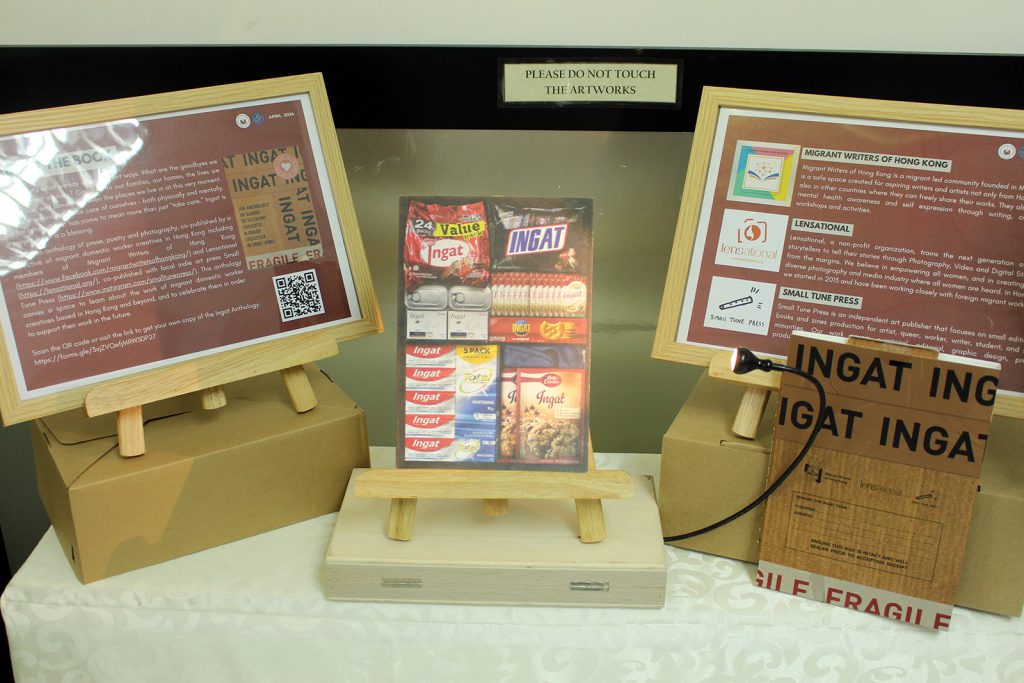
In March 2024, together with other photographers and sketchers who are also the city’s migrant workers, Migrant Writers of Hong Kong launched an anthology, Ingat, meaning “take care” in Tagalog.

Ingat was displayed at the Consulate General of the Philippines in Hong Kong in celebration of Philippine’s National Literature month.

Ingat showcases poetry, photography and visual art created by migrant domestic workers. All written pieces include Cantonese translations so that the artists will be able to be understood by more people in Hong Kong.

Ramos believes that writing can promote inclusion of migrant domestic workers in the city.

“I want us to voice out our stories for employers and the wider Hong Kong community to understand the true life and struggles of migrant domestic workers, that we are also human beings,” she says.

Although Ramos has no plans to publish another book soon, she continues to promote writing through Migrant Writers of Hong Kong’s writing workshops.

“I want [other migrant domestic workers] to understand that being in Hong Kong doesn’t mean only being a domestic helper. While working with our employers, there is more to do during our free times,” she says. 

“We are not just domestic helpers. We are more than that. We can do more,” Ramos adds.

Spotlight on Women in Chinese Musical Industry

Musicals featuring female artists as leading roles are becoming popular in China

By Bliss Zhu

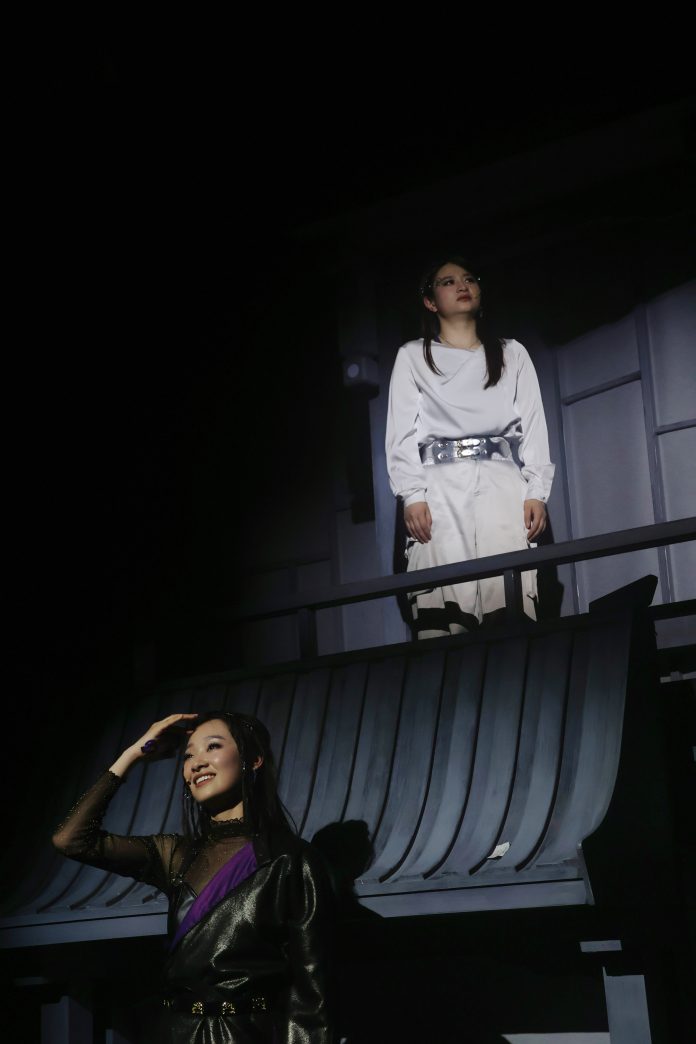
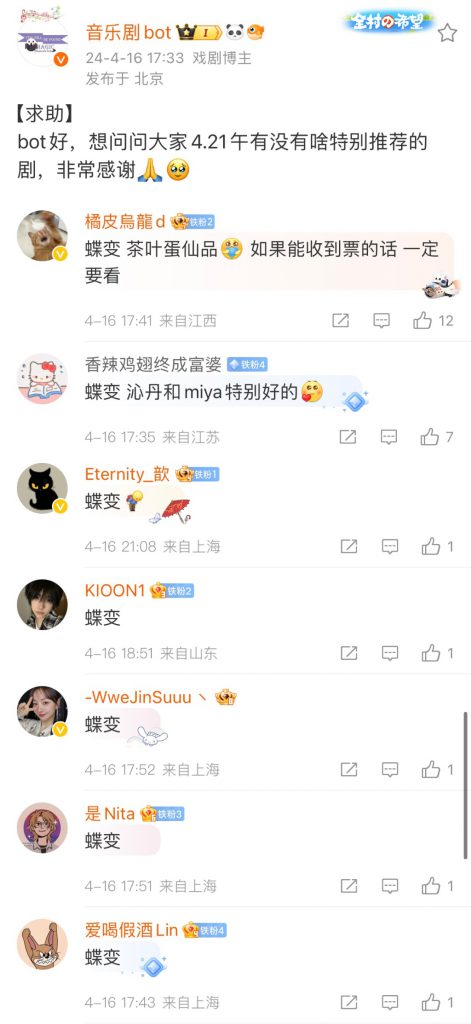
University student Chen Yishu has watched The Butterfly on the Bund(蝶變) featuring female artists as the leading roles six times. 

“I watched the first show in June last year. I wanted to watch more musical productions with female characters. I find that I am easily moved by female characters in musicals and can resonate with them. That is an attraction for female audiences,” the undergraduate says. 

The musical about the friendship of the underground party‘s two female members during the period of the Republic of China had tickets sold out in a few weeks. 

Chen visited Shanghai six times in the last six months watching more than 20 musicals – a total of 40 times. Of them, 13 productions are with female artists as the leading roles. She spent more than RMB ¥40,000 (about US $5,500) on tickets.

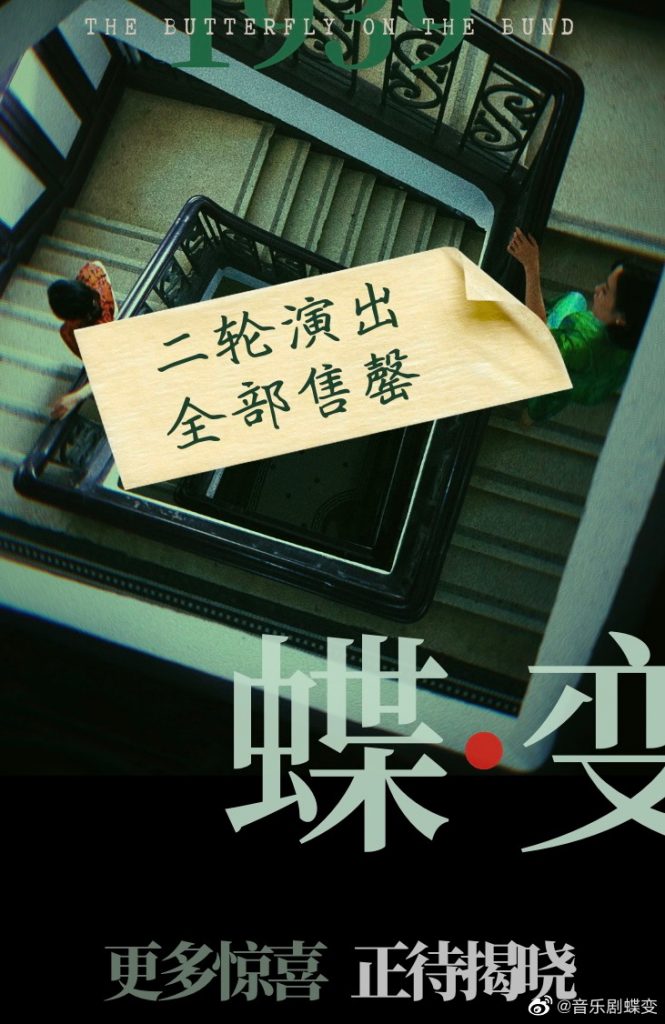
The tickets for The Butterfly on the Bund (蝶變)’s second round of shows were all sold out. (Photo courtesy of Musical The Butterfly on the Bund (蝶變) official account)

Most of the musical audiences are women, which accounts for 66 per cent, and the gender ratio of musical audiences is 9:1 for women to men, according to China Performance Market Annual Report 2022. 

In 2023, musicals focusing on female issues such as mother-daughter relationships, girls’ career development and women’s friendship were the new topics explored in the musical world, according to Jiemian Financial Channel, a financial and business news media outlet in Shanghai.

The Chinese version of Lizzie, the first all-female rock musical in China, became the top on the best-seller list of musicals after its first month of performances, according to the box office record from Damai Ticket, an important ticketing site in mainland China. 

Another popular musical featuring women on stage is Rocking Tai Bai, Poetry Stars (搖滾太白·詩與星), which tells a story about girls’ growing up experience and mother-daughter relationship, gets 9.5 points out of 10 on Damai’s musical rating site in which viewers voted for musicals they like.  

This musical has a long-term residency in Shanghai since September 2023 and celebrated its 100th performance in mid-April 2024.

Producer and director of the musical Yuki Huang says she launches the show to provide more opportunities for female musical artists. 

“It is a natural thing to do, as I am a woman. I want my audience to have some food for thought and resonate with the characters watching it,” Huang says.

Huang describes the absence of Chinese musicals featuring female artists as ‘not fair’, and she wants to fill this gap in the musical market.

“It is not easy to raise money for productions. Investors are quite conservative and most are convinced by past experience. Musicals featuring male artists are profitable so they keep pouring money into this,” she says.

“But that is understandable. It takes time for them to understand that the audience wants to see more musicals featuring female characters, as this is new to them,” she explains.

Huang borrowed RMB ¥1,000,000 (about US $138,000) from her mother to cover costs for casting, hiring a composer to create songs and renting a theatre venue, as she had difficulties finding investors when she was preparing for the production. 

“The ticket profit can now cover operation costs, including rental fees, and salaries for the entire cast and crew,” she says, adding that she will continue to produce more musicals featuring female characters.

Musical blogger Gu Qingzhou observes musicals featuring female artists are very much welcomed by netizens. 

Gu runs her blog about musicals on Weibo, the largest social media platform in China, with 400,000 followers. Many of her followers use her blog to exchange thoughts on plays and read musical reviews.

Gu observes there is an increasing interest in online discussion about women’s issues and that contributes to the popularity of musicals featuring female artists and exploring female-related matters. 

Screenshot of Musical_Bot’s discussion

“Females now are the majority in the audience. They prefer to watch productions focusing on women’s stories. But investors still think male musicals are more profitable because many female fans are willing to pay to watch performances by their favourite male actors,” Gu says.

“But I think new ideas and diversity are important for high-quality productions,” she adds.

Edited by Kamun Lai
Subedited by Nutcha Hunsanimitkul

Shining nails for pocket money

University students in China run nail businesses on campus.

By Suzana Li

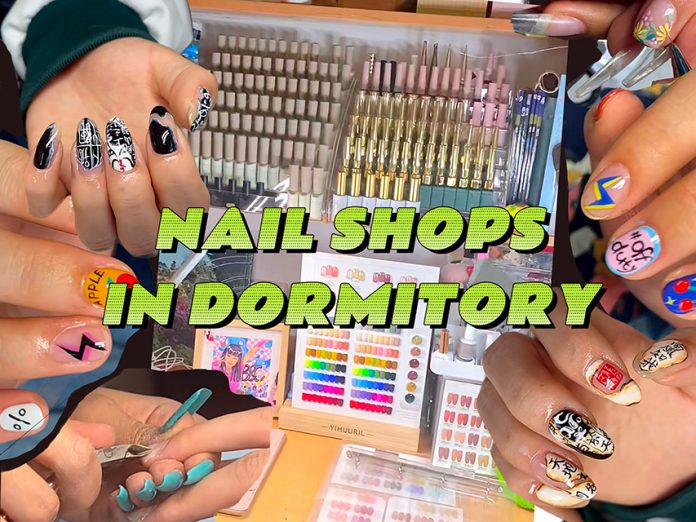
University student Kelsey Hou Yayuan has been running a nail salon in her dormitory for four years, making RMB ¥2000 to ¥3000 (US $276.40 to $414.60) a month. 

“A manicure session with complex designs costs around RMB ¥400 to ¥700 (US $55.28 to $96.74) for clients coming from outside of school, and RMB ¥100 to ¥300 (US $13.83 to $41.49) for customers on campus which is nearly half of the market price,” Hou says.

“I do not have to pay rent. I can do good design for nail painting. The dormitory’s warden is also one of my customers,” the art major student adds.

Hou’s workplace sits in the common area of her dormitory.

She serves four customers a day when she has no class and two during her school days.

Despite pressure from her studies, the 21-year-old student still devotes her time to her nail business because of her love for nail art.

“I’m a nail art lover. I get a sense of achievement from my beautiful artwork,” Hou says.

Another university student Zhou Yitong makes about RMB ¥13,000 (US $1,797.90) in three months by doing nails at her dormitory.

Zhou has been running a nail salon in her dorm room for two years, having started from scratch. 

“I did not know anything about doing nails. I paid 1,500 RMB (US $207.45) for learning manicure skills from an experienced senior student,” Zhou recalls.

 “When I asked my mom for money so that I could pay someone to teach me how to make nails, she thought it was a scam and refused to help me. She thought I should focus on my studies. So, I asked my friends for help,” the Year Four student says.

Zhou’s mother now has a different view of her nail business, as the student is making money to cover her own expenses. 

“Spending money that I make myself makes me feel much better than asking my parents for it,” Zhou adds.

To reach out to her potential customers, Zhou sends advertisements to WeChat and QQ groups. She also distributes flyers on campus.

“Customers with flyers are offered a RMB ¥5 (USD $0.69) discount. Those who are referred to me by my customers can also get a discount,” the nursing major student says. 

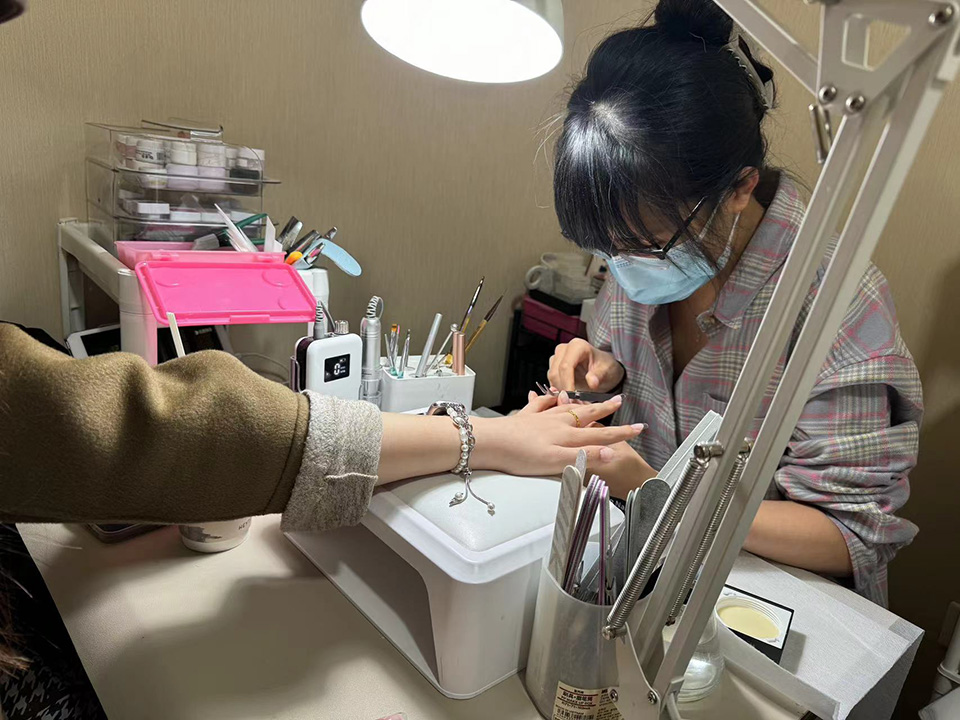
Yan is making nails for customers. (Photo courtesy of Yan Kelu)

University student Yan Kelu also started her nail business at school, but not in her dormitory. 

With support from Shaoxing University’s student entrepreneurship park, she and five other girls set up a nail salon studio in 2022. 

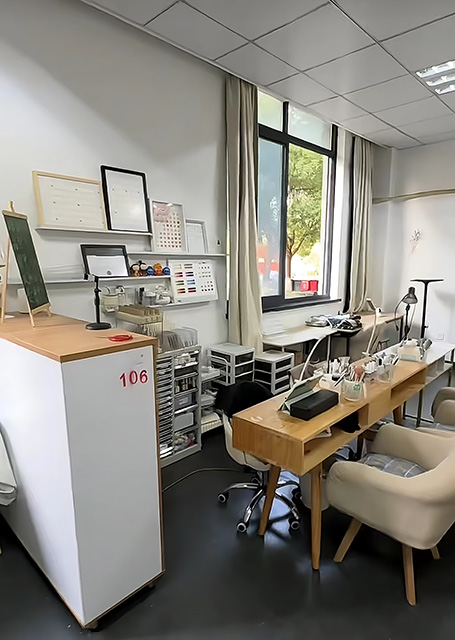
The team was offered a 20-square-meter room in a school building for running their nail business, after their business proposal was approved by the school. 

The outlay of nail shop in school’s entrepreneurship park. (Photo courtesy of Yan Kelu)

“Although we don’t have to pay rent, we have to cover expenses for utilities and decorations like nail supplies, sofas, tables, totaling RMB ¥7000 (US $967.40) at the beginning,” Yan says. 

“I usually take one to two clients after class. Sometimes I have no business.  It is not easy to balance my studies and work. But I find doing nails enjoyable and more importantly I can make money,” she adds. 

Frank Ng Wing-fung, a lecturer at the Department of Management at the Chinese University of Hong Kong, believes it is good for students to have hands-on experience to practice entrepreneurial skills. 

“When I teach entrepreneurship, one of the core principles is to get out of the building… The university provides students a safe space to test the feasibility of an idea. No one criticizes you if you fail,” Ng says. 

“It is important to research the industry, talk to customers and experts, and match personal interests with market needs. Also, one should plan for long-term growth and aim to become an expert in one field,” he adds.

Edited by Lilac Ye

Subedited by Liam Hordijk

Love Hunt

Chinese university students in Hong Kong seek love by joining arranged dates.

By Celina Lu

University student Kevin Xu Wenhao, who had seven girlfriends in high school and university, has participated in a dating event designed for Chinese university students studying in Hong Kong to find the love of his life. 

“I want to be in love. Being engaged in a romantic relationship is very important for me, as it is part of my life. I have a hunger for love. I want to find the right person who can also be the driving force of my life,” Xu, who has taken part in the One Week Couple programme, says.

The programme operates in two ways: one-on-one and three-on-three.

In the one-on-one part, programme operators do matching for participants and each pair has to complete tasks assigned with the help of a mentor within a week. In the three-on-three part, there are three boys, three girls, and one mentor participating in the activities.

There are 420 people in the One Week Couple programme, 120 people for the one-on one-part and 300 people for the three-on-three part. More than 700 people have registered so far, so far about 300 people were screened out of this event.  

The poster of one week couple activity.

Xu shares that he has a hard time looking for his love. 

“I’m an introvert. I find it difficult for me to interact with strangers. So I joined the dating event to help me expand my social circle,” the Year Two student shares. 

“I know such kind of activity might not be helpful,  but there is still a possibility it can help me find the right girl. It doesn’t cost anything to join this event so I give it a try,” Xu, a Chinese Language and Literature student says.

Another university student, Felix Shangguan Yuqian, who had two girlfriends before, also participated in the dating event.

“During the week, a mentor gave us some tasks to complete. The tasks are usually about dining together, visiting each other’s schools, taking pictures together to pave the way for a romantic relationship to develop,” Shangguan, who joined the programme in March, recalls. 

A couple is taking photos for One Week Couple event.

“I simply want to meet girls from other schools because my social circle is small.  I also hope there is a chance for me to find a girlfriend,” the Year Five student says.

“The downside of such an event is that the matching is randomly done which means you may not be able to match with someone you’re willing to hang out with,” he adds.

Shangguan is about to graduate and has already found a full-time job. “My life is pretty much set at the moment. School and work bother me much less, so I have more energy for relationships now,” he says. 

Pang Yuhuai, who studies at the City University of Hong Kong, is the organizer of the One Week Couple programme.

Pang shares that the activity is designed to provide a platform for all Chinese students to communicate with each other.

“It is a social activity that gives them a chance to expand their usual social circle,” he says.

“Many students may want to be in a relationship, but they cannot find their ideal half. This programme can give them a bigger platform to meet more people, and then give them more choices,” Pang adds.

The Year Two student shares that there are some successful cases in the programme. “Some participants find their love and develop long-term relationships after joining this programme,” he says.

Chan Lik Sam, an assistant professor in the School of Journalism and Communication at the Chinese University of Hong Kong reminds students to be cautious while building relationships with new faces with their hearts.  

“While it is important to exercise caution when meeting new people, building a relationship involves opening our hearts to truly get to know another person and establish a common ground with them,” Chan says.

Edited by Cynthia Hu

Sub-edited by Sunnie Wu

Shadow Puppetry Shines in Fashion Fusion

Discover the marriage of shadow puppetry and style, as ancient art gets a modern makeover.

By Zora Yan

Jewellery designer Zhang Jielu transformed traditional shadow puppets into trendy-fashion jewellery to let more young people know about this handicraft.

Drawing inspiration from mythical creatures such as a fish with six legs and a bird-like tail, mountain gods and more from the ancient Chinese mythology book ‘Shan Hai Jing,’ Zhang had made 10 jewellery pieces including masks, headpieces, earrings, necklaces, and handbags. 

These wearable artworks made with materials used in shadow puppets were showcased at the 2022 Toronto Art Fashion Week.

“It is a significant breakthrough of innovation in traditional craftsmanship as nobody has tried it before,” Zhang says.

Zhang says shadow puppetry, originating in the Xi Han dynasty(202 BC-9 AD), is a genre of Chinese traditional folk drama that uses animal skins to create characters and tell stories, accompanied by music and singing.

Illuminated from behind, these puppets project colourful images on a translucent sheet. 

Having completed her studies in jewellery design at  Central Saint Martins College of Art and Design in London, Zhang believes it is a pity shadow puppetry is only perceived as a tradition seen in museums.

Zhang Jielu with her shadow puppet jewellery. (Photo courtesy of Zhang Jielu )

She was intrigued by traditional arts after visiting the Chengdu Shadow Puppet Museum in 2019 as she was attracted by the material used for shadow puppetry with its vibrant colours and impressive transparency.

“So, I decided to transform shadow puppetry into a cool form of art to let more people learn about and love this intangible cultural heritage,” the 34-year-old designer says.

She spent ten months consulting professional craftsmen and researching online to learn the puppet-making basics. 

“Before learning, I thought that cowhide should be relatively soft, but actually it is very hard and not easy to shape,” Zhang says.

The designer also explores innovative methods that can modernize this handicraft.

She breaks down the tradition of shadow puppetry in five ways: transforming its presentation from 2D to 3D, changing its imagery from concrete to abstract, altering the use of solid colours to mixed ones, incorporating new materials, and integrating it with wearable objects.

In 2021, Zhang started running her second studio, focusing on making ‘new shadow puppets’ that can be worn, such as earrings, bracelets, necklaces, and bags.

She thinks her jewellery can attract young people to learn more about the traditional handcraft, which usually can only be found in theatre.

Zhang’s shadow puppet jewellery artwork.

Zhang also organised workshops to introduce the history of shadow puppets to people of all ages by introducing new forms of this handicraft, such as making shadow puppets into bookmarks.

The designer believes turning shadow puppets into items that can be used in everyday life is the best way to keep the culture alive.

A master of shadow puppetry craft Wang Haitao also says presenting shadow puppetry in diverse forms can improve people’s understanding of this intangible cultural heritage. 

Born and raised in Huaxian in Shaanxi Province, the birthplace of shadow puppetry, Wang started learning the craft from his father at the age of 14. He immediately realised that shadow puppets can be presented in many forms when he turned the Chinese cartoon characters Calabash Brothers into shadow puppets.

“I brought the puppets to my school. Everybody loved them! “he says, recalling the joyful moment from 24 years ago. 

Wang Haitao in his shadow puppet studio. (Photo courtesy of Wang Haitao )

He says people merely think shadow puppets are simply made of cutting out various shapes from cowhide. 

“In 2018 we collaborated with Fendi to create a round-shaped logo that incorporates unique snowflake patterns inspired by traditional Chinese shadow puppetry,” the 38-year-old man says.

He points out that many unique carving patterns, such as snowflakes, swastikas, and peonies, usually used in making shadow puppets, can be applied to many other products, such as cups, umbrellas, and brooches.

Wang also believes that not only patterns but also images of shadow puppet characters can be combined with innovative and modern popular images.

Many gaming companies have approached Wang to create shadow puppet versions of game characters, such as Sun Ce and Sun Shangxiang from Tencent’s Honor of Kings and various game scenes showcased in NetEase’s Fantasy Westward Journey.

Wang believes the continuous innovation of shadow puppetry can beat stereotypes and allow more people to understand this intangible cultural heritage.

Edited by Sean Pan

Sub-edited by Lorraine Chiang

Suicide Prevention by Dogs

Reporters: Angel Yu, Charlotte Wu, Molisa Meng, NutchaHunsanimitkul, Kamun Lai

Editors: Amelie Yeung, Christine Tang

Dog therapy helps ease university students mental health amid the city’s increasing suicide rate

Elderly for Elderly

Elderly for Elderly

Reporters: Lorraine Chiang, Nicole Li, Sunnie Wu, Hannah Tang, Liam Hordijk

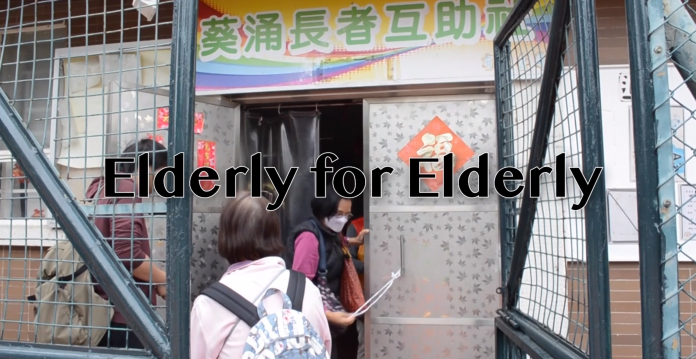
An elderly-run NGO provides community services for the elderly to promote active ageing in Hong Kong.

Short End of the Hockey Stick

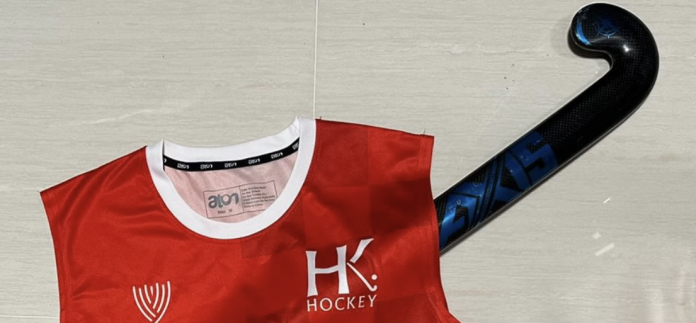
A policy change complicates ethnic minorities, long part of Hong Kong’s hockey culture, playing for the Hong Kong team.

By Daniel Koong

Ivy Nina Pieter first started playing hockey in February 2021. In less than three years, she has already become a player for the Kowloon Cricket Club, representing their A team and competing in the women’s premier division. As her hockey skills continue to grow, despite she is now playing at the highest level of the domestic league, it does not satisfy her.

“I do want to play for the Hong Kong team because Hong Kong hockey is only so small. So it is fun to play against different teams and play a bigger tournament, play against better opponents,” the 17-year-old hockey player says. But in reality, she understands that most likely she will never be able to represent Hong Kong due to her nationality.

“Realistically I never gonna able to play for the Dutch national team” Ivy says. “And I don’t want to give up my Dutch passport, so I won’t be able to play for the Hong Kong national team either.” Regarding this, she says she understood herself as being an ethnic minority, and that she cannot represent Hong Kong is reasonable.

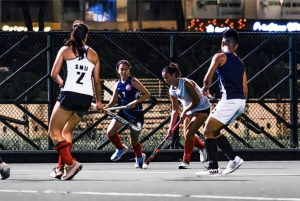
Ivy Nina Pieter playing in a high-level hockey game. (Photo courtesy of Ivy Nina Pieter)

Six years ago, Ivy and her family moved from the Netherlands to Hong Kong. During the pandemic lockdown, there was no social activity for her. She decided to follow her mother and started playing hockey with her sister, then she found it interesting. But as soon as she gets more into the sport, she realises that there is a problem with joining the national team.

However, according to Arif Ali, the current head coach of the Hong Kong women’s national field hockey team, the situation was different around ten years ago.

Arif Ali, a Pakistani Hong Kong hockey player retired from the pitch in 2014. He has been representing the Hong Kong national team since 1994, the 44-year-old player witnessed the change.

To him, the relationship between ethnic minorities and hockey in Hong Kong is very close. Growing up in a Muslim community on Shelley Street, Central, he said it was an important place in Hong Kong hockey history.

“The Hong Kong team always had around eight to ten players growing up from Shelley Street. There are Chinese, Nepails, Pakistian and many others. All of them are Muslims.”

He saw so many Pakistani children who lost track of life because of financial difficulties and racism. Still, when they started to engage in sports, they started to focus on life and learn to become responsible young men.

However, outside of the Muslim community, the majority may not even know this sport or have any chance to play.

“Before I see students with different from different ethnicities start making friends with each other when I am teaching courses at schools. But then many schools cut down the courses as they don’t know how important it is,” the current Hong Kong team coach adds. In 2023-2024, only 12 schools participated in the boys’ open grade interschool competition and 9 for girls. Besides, most of them are international schools.

Field hockey is not a popular sport in Hong Kong now, at one point, there were over 2,500 players in the city.

Hockey was first introduced to Hong Kong by British troops stationed in India. Hockey Hong Kong, China(HockeyHK), an association dedicated to the sport, was then founded in 1933.

Arif Ali playing for the Hong Kong team. (Photo courtesy of Arif Ali)

1964 was a huge year for hockey history even the sports history of Hong Kong. This year, the Hong Kong men’s national hockey team participated in the Tokyo Olympics. It is the first and only time for them to participate in the Olympic games.

At that time, the Hong Kong team featured players from diverse ethnic backgrounds, including those from England, India and Pakistan, but there were no Chinese players. The team has always been having a diverse ethnicity but the
situation has changed in the last decade.

Arif explains the main reason is the policy change of qualification. According to HockeyHK’s latest mail of “National Squad Selection Criteria, Selection Procedure & Appeal Mechanism”, the Asian Hockey Federation has advised the HockeyHK that only HKSAR passports are eligible to represent Hong Kong at international tournaments. Players are therefore required to produce their HKSAR passport as proof of eligibility before they can be considered for selection for the 12th HKQHT. No reason behind is explained.

Ethnic minorities who are born in Hong Kong holding Hong Kong passports are potential Hong Kong team players. But if they are not willing to give up their original nationality, they may not even be able to train with the squad. “When they give up their household registration from their home town, they may also need to give up all their assets there.”

This is also one of the major concerns for Ivy. “The Netherlands is a part of the European Union so with my passport I can go to around 26 countries I think.” She claims that the Netherlands passport is “stronger” so she does not want to give up.

Only players meeting the eligibility criteria for a particular tournament can be considered for selection for that tournament. Non-eligible players may be asked to continue training with the squad during the preparation for a tournament if they are eligible to compete in future tournaments. “The Hong Kong team always relies on players from different ethnic backgrounds. So the policy change affects Hong Kong more than anyone else,” Arif says.

Oson Lam Ngo-sing, is a local hockey player who joined the Hong Kong junior squad seven months ago. But soon he realises there is a problem communicating with the ethnic minority players. “There are five ethnic minority players in the squad and some of them are talented. But I will only communicate with them on the pitch, not making friends with them off the pitch.”

Oson Lam Ngo-sing thinks there is a communication problem with the ethnic minority players now.

“We are not intentionally ignoring them,” the local hockey player explains. “We will only be speaking in English sometimes during a match. Normally we the local players will be speaking in Cantonese while they will be speaking in their language.”

We have asked the Hong Kong Hockey Association how to ensure that the Hong Kong team can maintain ethnic diversity in light of policy changes. Yet till this moment, we still haven’t received their reply.

Edited by Agnes Lam

Sub-edited by Chloe Tam

Twistman: Crafting Happiness Amidst Academic Pressure

Twistman spread happiness in Hong Kong campus

By Suzana Li

“I twist wherever I go, and I want to share this joy wherever I go,” University student Lenka Tao Huayi says.

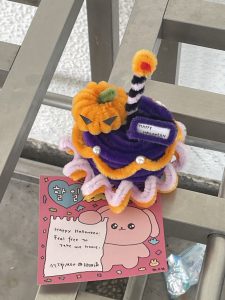
Walking around the campus of the Chinese University of Hong Kong (CUHK), students might unexpectedly come across cute and beautiful handmade crafts alongside a note with encouraging words like “Be relaxed!”, “Have a nice day!” nestled in the bushes or on chairs of the sports center. 

 A signature of “Twistman” is left at the end of each note.

Since last November, Tao has randomly placed her charming creations, made of pipe cleaners, across the CUHK campus.

Tao is a CUHK postgraduate student from the mainland studying New Media. 

Every week, Tao posts two to four posts on ‘Little Red Book,’ one of the mainland’s most popular social media platforms. She provides clues in words with pictures of her crafts placed in various locations on the campus. 

To attract more people and leave them with a profound impression, she makes a human-like character in fluorescent pigment orange named Twistman to represent herself on social media.

Handmade crafts were distributed around the campus by Lenka Tao Huayi. (Photo courtesy of Lenka Tao Huayi)

“The orange color makes the character easily to be noticed and remembered. I think the funny look makes people feel happy,” Tao says.

Viewers engaged in a sort of treasure hunt use the given clues to find the gifts or come across them randomly.

So far, Tao has distributed over 100 of her handmade gifts and netted over 10,000 followers within five months on Little Red Book.

Recipients express their gratitude in the comments, stating that these tiny crafts brighten their days.     

“Thank you for spending time making many beautiful crafts for us. It is warm and delightful for my university life!” a recipient wrote in a message for Tao.

Crafting Magic

Tao believes crafts made with simple materials can bring happiness to others. 

“With pipe cleaners, stickers, glue, and creativity, you can make your own masterpiece,” Tao says, noting that the body of the Twistman is made from a toilet paper roll. She finds inspiration in everything in daily life.

“I hope my crafts can be a little delight when students are busy with their study. They can feel my care and good wishes for them,” she adds.

Her love for crafting began a year ago when she was a university student in Nanjing. The first craft she created was a bunny with a white ribbon around its neck. 

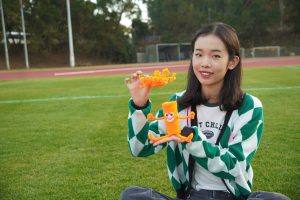
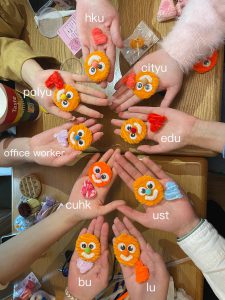
Lenka Tao Huayi holding the orange human-like toy Twistman with afro hair.

Tao continues her craft-making endeavors after moving to Hong Kong for her studies.  

With materials shipped from the mainland at a cheaper price, Tao makes her crafts in her free time.

“The cost is not high. It costs around RMB ¥5 (US $0.7) for 100 pipe cleaners. My time and effort makes them more valuable,” Tao says.

Behind Twistman 

The creation of Twistman all began with a group project in Tao’s new media analytics course.  

“We were required to manage a social media account. I got inspired by my hobby of making pipe cleaner crafts and wanted to combine it with my project,” Tao says.

On top of the homework’s requirements, Tao hopes her work can bring joy to people who feel stressed. 

“Numerous suicide cases were reported last year. Many of them are in my age. I want to do something to help others reduce stress and pressure, even though I cannot reach them in person,” she says.     

Similar to Hong Kong, mental health issues are also common among students at Nanjing University, where she had her first degree in the Korean language.

 “Frustration is also common amongst mainland university students. Students need to work hard for their GPA and are under a lot of pressure from parents,” Tao says. 

“I was shocked when one of my Korean friends at Nanjing University jumped into his death due to his family issues,” she recalls.

Tao shares that she also experienced a brief period of depression, but she overcame it at last as she realized everything has its ebbs and flows and that there is no point in pushing oneself too hard.

“Craft making is a way for me to release pressure and find satisfaction. I encourage young people to develop their interests,” Tao adds.

Movement Expands

Aspired to spread her joy to more people, Tao does not want to confine the giveaways in CUHK only. 

Twistman and her team. (Photo courtesy of Lenka Tao Huayi)

Sharing the same goal, 11 girls have joined Tao since January 2024. 

While one of them is an office worker in Central, the rest come from the eight universities across the city.

They usually gather on weekends when Tao assigns them crafts to be delivered to different places in Hong Kong.

“I am so glad that many people join me to spread joy. I wish those who are in sorrow and anxiety can step out of their blue one day,” she adds.

Edited by Jasmine Lam

Sub-edited by Nicole Li