














Home Blog Page 10

Keeping Handmade Mahjong Alive

A mahjong maker insists on making hand-carved mahjong.

By Kathy Yee

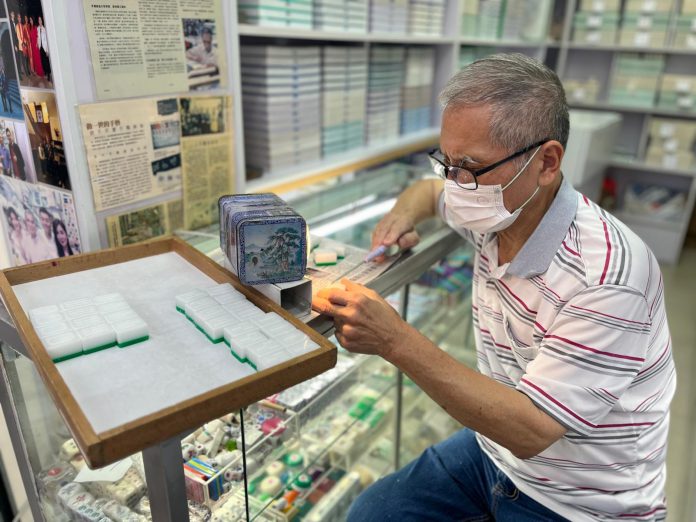
Cheung Shun-king is one of the remaining three artisan mahjong tile carvers in Hong Kong.

The 70-year-old master only takes a day off once a year, dedicating the rest of his time to the art of hand-carving mahjong. The store opens at 10 a.m. daily and he works until late.

“I have become accustomed to sleeping as late as 3 a.m. I will continue working until nobody buys it anymore. I will not retire,” Cheung says.  

“The hand-carved mahjong we used to enjoy playing with have gradually been replaced by machine-carved ones. As time goes by, this traditional skill that was once popular is now fading out,” he says. 

Cheung Shun-king, one of the mahjong tile carvers in Hong Kong.

Cheung has been working in Biu Kee MahJong, a family business founded around 60 years ago by his grandfather. He inherited it from his father when he was in secondary school. “Biu” is his father’s name. 

Cheung started learning carving mahjong when he was in secondary school and he has been doing this job his whole life. When he was younger, he tried working part-time for a day or two, but later his family called him back home to help.

“I followed the old mahjong’s footsteps and became skilled at making it. Now I can make it without even looking at tiles,” he says.

A mahjong set takes one month to a year to be completed. It is usually used as decorations so the customers are not in a hurry to receive their orders.

Hand-carved mahjong seems to be less attractive to Hong Kong people but more and more foreigners are buying them. 

“Half of my customers are from China and the other half are from foreign countries like the United States and Britain. Most of the customers were from Hong Kong, but those who wanted to buy hand-carved mahjong had already bought them,” Cheung says.

An online ordering system is available on Facebook for foreign customers. Biu Kee MahJong provides overseas shipments.

“Each hand-carved mahjong is unique. The style of each artisan mahjong tile carver is different. You can spot the differences if you are familiar with their style. But for the machine-carved ones, the machines have been adjusted to produce a specific size to ensure the uniformity in the output,” he says.
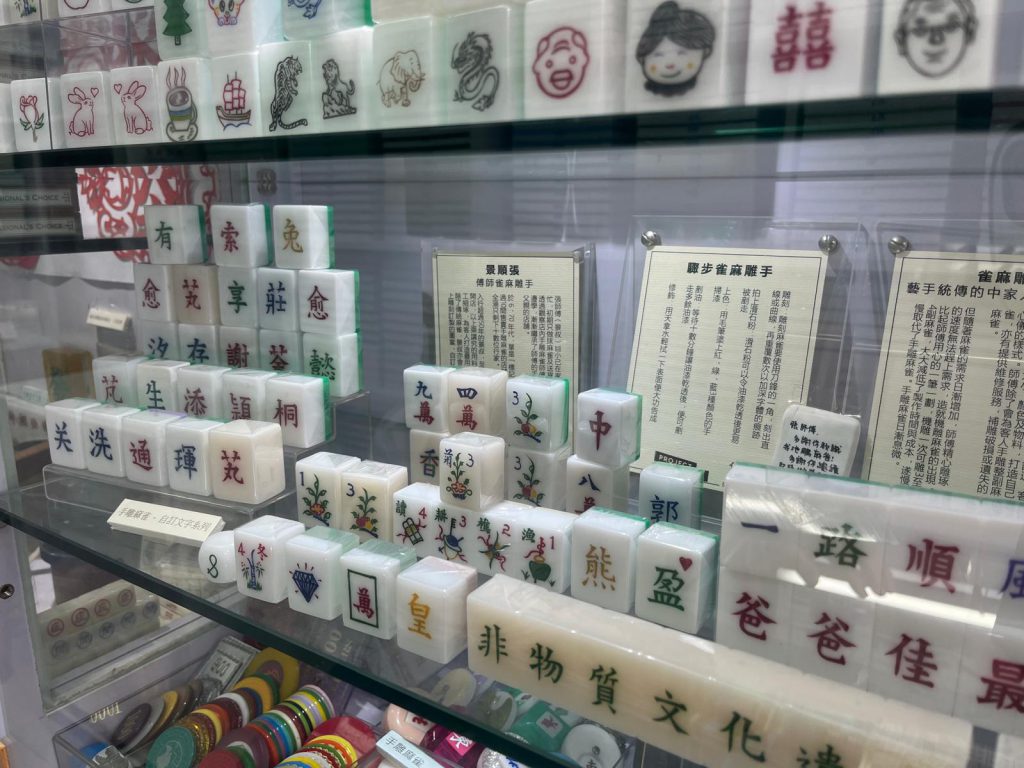
Tailor-made tiles featuring characters and cartoons.

To attract more customers, Cheung creates tailor-made tiles featuring characters or cartoons. He charges one hundred dollars per character. The most popular characters are “Happy Birthday” and “Get rich”.

At the verge of disappearing, Cheung wants to pass down the culture. He teaches people the background of hand-carved mahjong and the making process by working with social enterprises.

“Before COVID-19, many people were interested in hand-carved mahjong, especially foreigners, but now fewer are interested. The hand-carved mahjong culture depends on the media to spread awareness and promote it these days,” he says.

However, Cheung does not plan to train apprentices.

“It is actually bad for newcomers to join the industry, especially when it is hard to make a good living. It takes years of practice to master the skills,” he says.

Cheung is optimistic about the current situation as he believes there are advantages when hand-carved mahjong is less popular.

“With fewer customers, I have more time to create. I don’t need to rush and can focus on being more meticulous and produce high-quality mahjong,”  he adds.

Sub-edited by Cynthia Chan

Hi, I am Wan Kwong!

Reporters & Editors: Daniel Koong, Mike Chu, Ken Nguyen, Cindy Lee

Jackson Wan Kwong shares his singing journey with Varsity. At age 79, Wan won the ‘Best Male Vocal Performance’ at the 22nd CASH Golden Sail Music Awards in 2024. His song “Dear Myself (feat. Wan ong)” was awarded the CASH Best Song.

A Papermaking Master

A craftsman devotes his lifetime to traditional Chinese paper making.

By Emma Wei

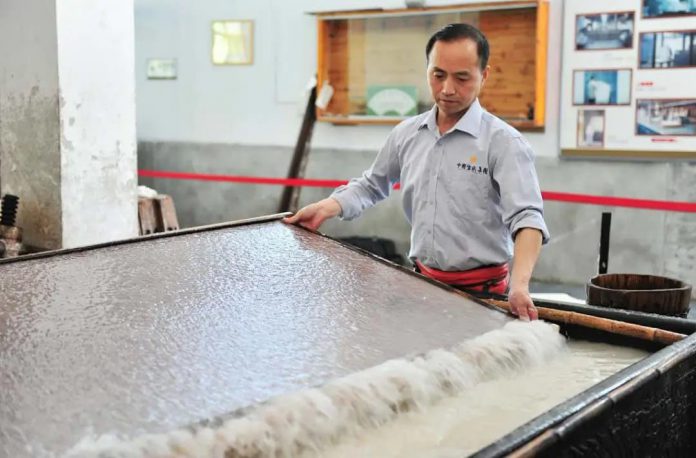
Paper master Zhou Donghong wakes up at 4 a.m. and works for 10 hours a day in a factory. His work routine has lasted for 39 years. 

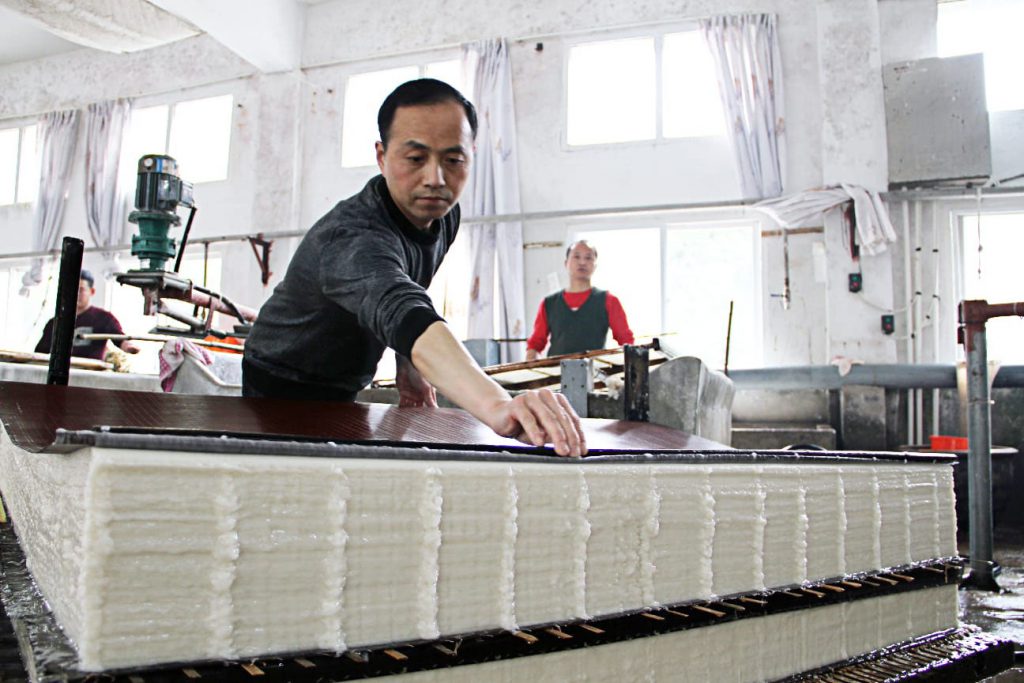
The 57-year-old craftsman gets up early to finish the cleaning and start scooping paper. He finishes work at 6 p.m. He has to make nearly 200 sheets of paper a day, and the size of each is 248cm in length and 129cm in width.

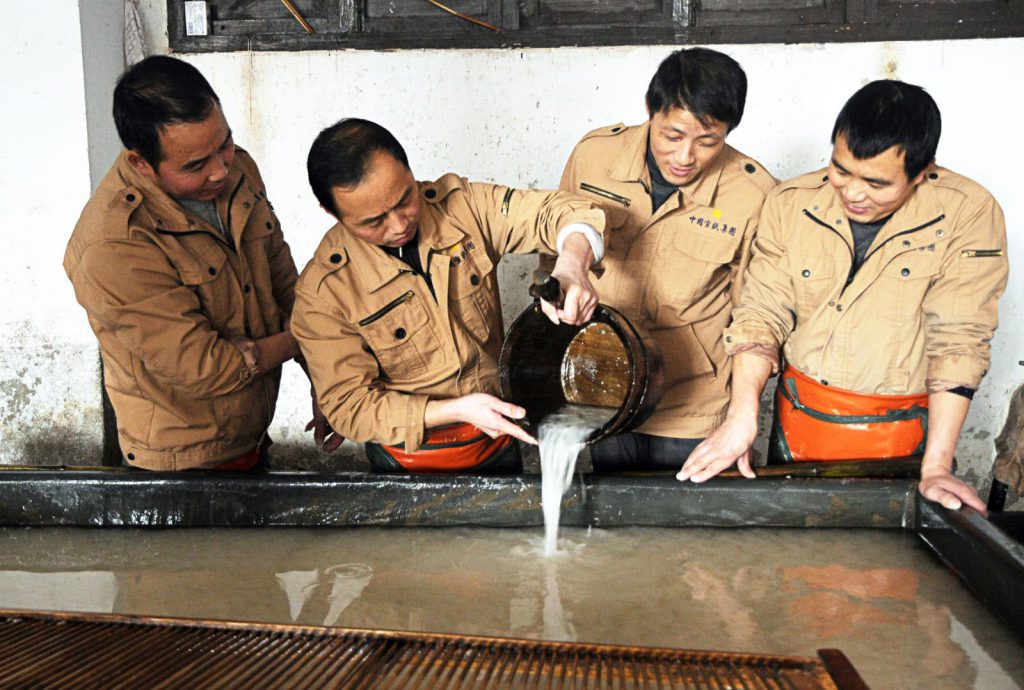
“My job is to soak the paper pulp in a paper-shoveling pool, and then use bamboo nets to make paper,” he says.

Paper pulp is made after a certain proportion of tree bark and rice straw are evenly mixed.

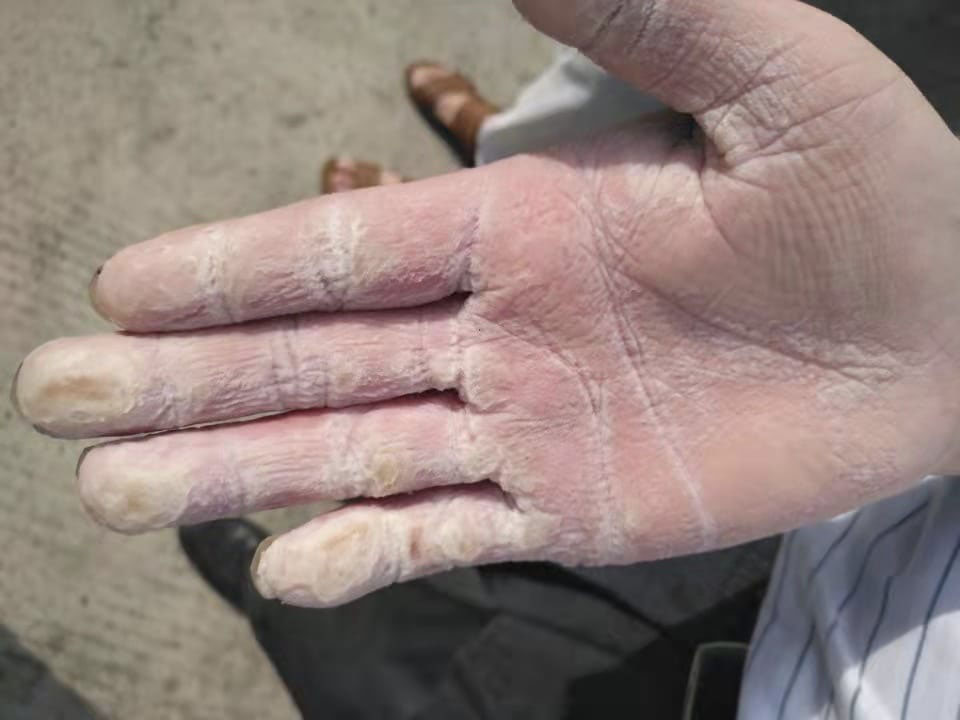
“My hands were seriously injured because they have been soaked in water for too long. In July and August, the weather is hot and the water temperature rises, which makes my skin go bad. In winter, the temperature drops, which makes me suffer from frostbite,” Zhou says.

Zhou’s hands were badly injured. (Photo courtesy of Zhou Donghong)

“My arms and shoulders were also injured. Each piece of paper is large and heavy. I now make less paper, but I will not stop because this is my passion,” he adds.

The paper he makes every day can be traced back to the Tang Dynasty with a history of more than 1,500 years.

Jingxian, in Anhui Province, where Zhou was born and works, is the birthplace of Xuan paper, or rice paper.

“My family was very poor. I had to stop school when I was eight. I had to make money to support my family. My first job was papermaking,” he says.

Zhou started learning papermaking when he was 18 with master Shi Jiemin, who has 50 years of experience in traditional craftsmanship. 

Zhou is checking the paper he has made. (Photo courtesy of Zhou Donghong)

“At first, I worked as a helper in the factory, hence I did not really have the chance to make paper,” he recalls.

“My master taught me seven main steps of making paper, which are: mixing pulp, scooping paper, pressing, baking, selecting, paper cutting and packaging,” he says.

“I thought it was simple and cool at first. I was able to produce good quality paper after working for five years. I was 23,” he adds.

The skill, which took Zhou 10 years to achieve perfection, was hard earned. 

“When I first started, every piece of paper I made was torn. The thickness of the paper was never right. None of the paper I made was up to standard,” he recalls.

Zhou worries that traditional craftsmanship might become history. 

“Young people are not interested in learning the skill. They work with computers rather than pens and paper. The paper I make is only used for Chinese calligraphy and painting, so the demand keeps falling,” he says.

Zhou teaches his apprentice to soak the paper pulp. (Photo courtesy of Zhou Donghong)

Zhou recalls many workers were sacked and forced to be laid off during the epidemic, and their factory operation was suspended for about two years.

“I hope more people can learn this traditional craft. I hope I can pass the torch to the younger generation keeping this craftsmanship alive,” he says.

“I believe that more young people will come and join me. I will work harder,” he adds.

Edited by Molisa Meng

Sub-edited by Enya So

The Missing Puzzle in Hiroshima Peace Memorial Museum

No explanation is given in Hiroshima Peace Memorial Museum about why Japan was attacked by atomic bombs.

By Daniel Koong and Winnie Li in Hiroshima

University student Mike Chu Chi-hei feels frustrated after visiting the Hiroshima Peace Memorial Museum and wonders why there are no exhibits explaining why two atomic bombs were dropped in Japan.

“When I walked out of the museum, I realised the exhibition did not talk about how Japan started the war and the war crimes they committed,” Chu says.

 “I feel like the museum management intentionally keeps war crime elements out of the exhibition. The focus is all about portraying Japan as a victim of the war without showing visitors the causes of the war,” the journalism major student says.  

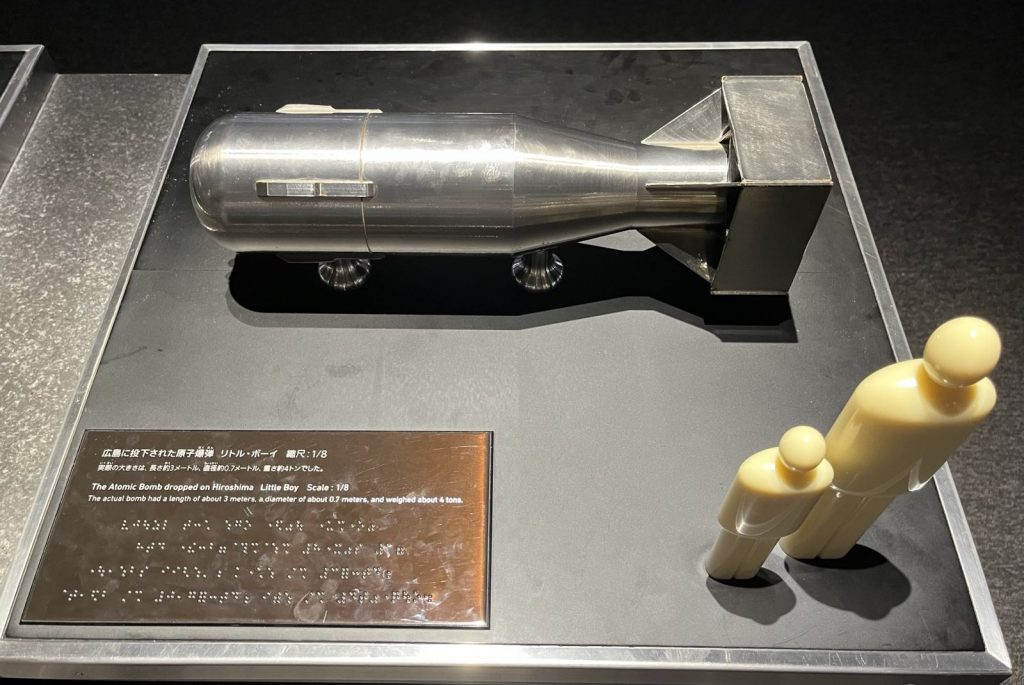
Hiroshima was the first target of a nuclear weapon in history. The bomb dropped on Hiroshima, named “Little Boy”, was 3 metres tall with a 0.7-metre diameter. 

Model of “Little Boy” the bomb being thrown in Hiroshima.

Another bomb, “Fat Man”, dropped on Nagasaki, was 3.2 metres in length with a 1.5-metre diameter. The United States deployed both bombs during World War II.

Built in 1955, ten years after the end of World War II, the museum is dedicated to documenting the atomic bombing of Hiroshima and promoting world peace, and displays artefacts and belongings left by the victims of the atomic bombing in Hiroshima.

According to data from the Hiroshima Peace Memorial Museum, from January to September 2024, 162,019 people had paid a visit. Schools arrange tours for students to visit the museum.

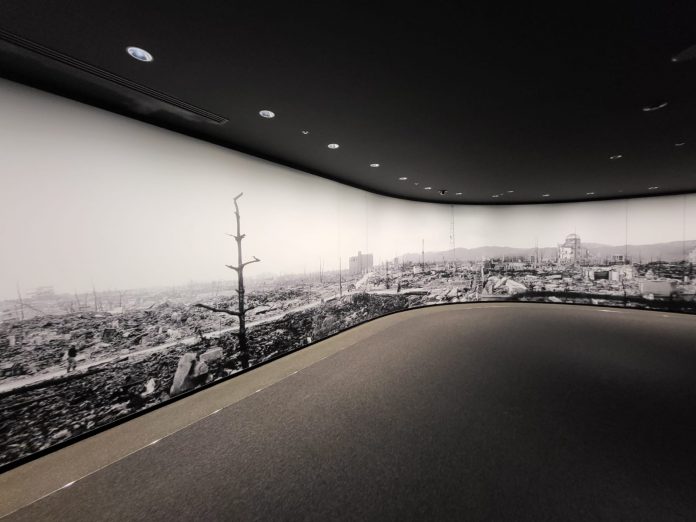
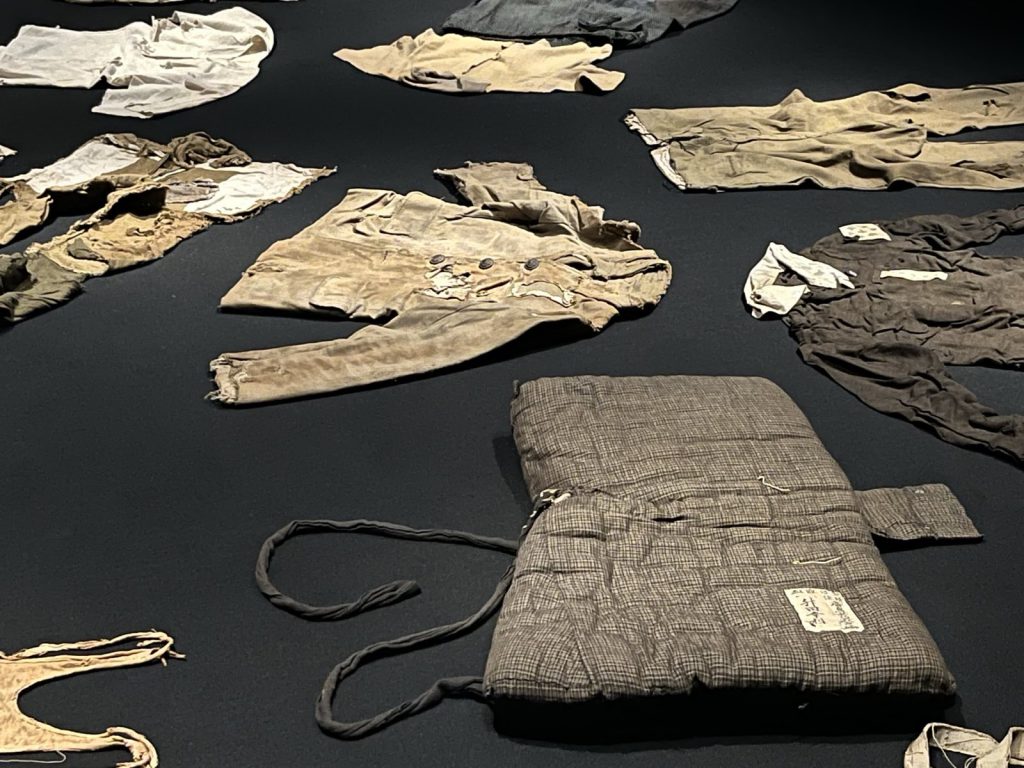
Exhibition in the museum starts with how Hiroshima was destroyed by the atomic bomb. Pictures and photos of victims’ injuries are displayed. Visitors can also see victims’ personal belongings and clothes. 

Clothes of children who were injured or dead because of the bomb.

The museum covers details about the Manhattan project that created the atomic bomb. 

Chu questions why Japan cannot learn from Germany, imperial Japan’s wartime ally, publicly admitting their war crimes in the museum after the war.  

“I don’t understand why Japan still does not admit that they were wrong in World War II, they are still hiding the truth from their people,” Chu says.

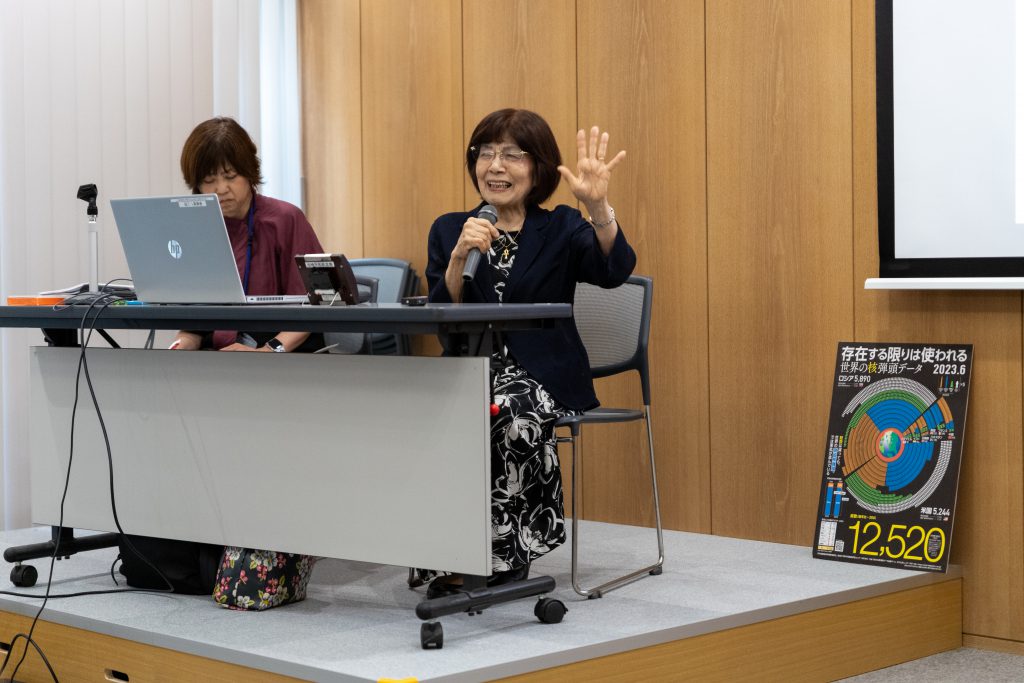
Like Chu, atomic bomb survivor Teruko Yahata thinks it is important for young people to learn about causes of the war. 

Yahata did not know why Japan was bombed until she participated in the Peace Boat Hibakusha Global Voyage in Singapore in 2013 when she was 75. She is now 86.

“I was so shocked to learn about that. I didn’t know much about Japan being the aggressor during World War II… I think it is necessary for Japanese students to learn about the history as well as the cause and result of the war,” the Hiroshima resident says.

Atomic bomb survivor in Hiroshima, Teruko Yahata sharing her experiences.

Assistant Director of the International Peace Promotion Department, in the City of Hiroshima, Ryoji Hasebe, thinks that the most important role of the museum is to inform the public of the horrendous impact of the atomic bomb on humans. 

“The displays explain our strong wish for a peaceful world and how we seek peace. What we want to tell through the exhibition of the museum is not that Japan was not victimised by the atomic bombing. We want to emphasise that if nuclear weapons were used again, these kinds of things would happen again and might happen to anyone anywhere,” Hasebe says.

Professor Edward Vickers, the United Nations Educational, Scientific, and Cultural Organisation Chair on Education for Peace, Social Justice, and Global Citizenship, comments that it is important to the truth.

He also points out that selective speaking of history is dangerous for the peace and stability of East Asia.

“I think that the result of the failure to confront young Japanese with the truth about atrocities committed by imperial Japan during World War II is enduring hostility and suspicion in relations between Japan and its closest Asian neighbours – Korea and China,” he says.

“Of course, Japan is not the only nation using public history and schooling to tell a story of national ‘victimhood’; China and Korea do this, too. This intense focus on victimhood, with Japan, China and Korea all claiming that they are the supreme ‘victims’ with a special understanding of the horrors of war, creates a deep intolerance of other people’s stories of suffering,” he adds.

Regarding the comparison often made between Japan’s and Germany’s reactions to World War II, Professor Ran Zwigenberg, Associate Professor of Asian Studies and Jewish Studies at Pennsylvania State University, says the museum in Japan should not be compared with Germany.

“There is indeed a difference in the post-war history of the two societies and the reaction of their political establishments but one should not talk about ‘Germany’ or ‘Japan’ here but in terms of different times, political parties, and groups,” Zwigenberg says.

He points out that, as German political elites had to reintegrate themselves into the North Atlantic Treaty Organisation alliance and the European Union, they had to “solve” the moral and compensation issues vis-a-vis Western European countries as well as the Jewish victims. 

“Unlike Germany, Japan could separate itself from the rest of Asia as there was no political and diplomatic incentive to be as open as the Germans about this. The US supports Japan, unlike Germany,” he adds.

Edited by Carrie Lock

Sub-edited by Molisa Meng

Searching for the Remains of Fallen Soldiers

A veteran Vietnamese soldier searches for remains of fallen soldiers at battlefield.

By Chloe Nguyen

Almost 50 years after fighting in the Vietnam War, 76-year-old Hồ Ngọc Nhuần still has a bullet lodged in his head. He is also committed to a never-ending search for remains of those who lost their lives in the war.

Haunted by survivor’s guilt, Hồ spends most of his money on visiting battlefields where he looks for bodies of fallen soldiers.

“It is a long and tough journey that spans over decades,” the veteran soldier says.

He meets up with other veteran soldiers on every war memorial day such as Remembrance Day and War Veterans Day to plan for more search trips.

“We are still looking for nine bodies at one of the battlefields in Long Hưng intersection, which is in Quảng Trị province, which is 157 kilometers from Đà Nẵng city. But we have not found them yet,” he says, adding that the terrain has changed over 50 years with dense plantations.

“I can identify the remains by examining their belongings, such as aluminum water bottles, wallets and belts,” he says.

Hồ gathers with fellow comrades on July 27th, which is the Vietnam War Veterans Day to commemorate those who sacrificed their lives in the war.

The journey started in 2015 when a family member of a missing soldier asked for his help.

So far, he and two fellows have altogether recovered six bodies and have them all buried in a cemetery.

Reading newspapers every day and knowing that wars have erupted in different parts of the world, he recalls what he had been through.

He first joined the army in 1970 and was injured for the first time in 1972 during the Vietnam War.

“I was attacked while fighting and captured alive by the South Vietnamese Army, which belonged to America’s side. I wiped blood on my face to play dead,” Hồ recalls, adding that he successfully cheated the enemy and was brought back to a camp by other soldiers for treatment.

Hồ recalled failing an operation on September 16, 1972. “I can never forget those 81 days and nights under firebombing,” he says.

“Soldiers and weapons were transported across the Thạch Hãn river into the battlefield. But under the dense firepower of American forces, over 1,000 soldiers were killed in this river,” he recalls.

Since then, the Thạch Hãn river has been referred to by local people as the Blood River.

In 1975, he rejoined the Liberation of  Sài Gòn – Gia Định campaign.

Hồ’s house is full of war certificates and pictures he took with his fellow comrades.

“My mission was to build fake artillery positions, dummy soldiers and act as decoys to reveal my own traces and divert attention of the American soldiers. I had to stand 200 meters away from the cannon. I was exposed to mines and firearms. I had a gunshot wound in my head,” he recalls.

He was hit by a bullet in his head whilst the war ended at the same time. For 15 years, he had to endure many medical operations in various hospitals. He could only return home in 2007.

“There is still a bullet in my head. I have a seizure once in a while. About 81 per cent of my physical abilities were hindered, when I was injured. I could not take a shower when I was in hospital. I also got asthma due to exposure to the Agent Orange herbicide, which was the highly toxic dioxin,” the veteran says.

When returning home, he had to sell peanuts and beans at the market to make a living.

It was not until 1995 that the Vietnamese government started to offer compensation to veteran soldiers.

Certificate of Hồ fighting in the Liberation of  Sài Gòn – Gia Định campaign in 1975.

Hồ is now classified as a Class 1 disability veteran, which is the highest grade of injury. He receives an allowance of 14 million Vietnamese dong (HK$4,389) every month.

He is also suffering from body aches, inflamed wounds and mental health problems such as being delusional about the war and constantly feels like somebody is shooting at him.

“That is the life of a soldier… still alive but always thinking about the past and people who they have fought with. It is an enduring pain,” the veteran says.

According to the Department of Labor, War Invalids and Social Affairs, around 300,000 bodies from the warfare have not been identified.

Sub-edited by Iris Jiang

Loved-Ones Hunter

TV host Li Qiyue runs a missing person unit to help families reunite.

By Cathleena Zhu

After being the host of a TV programme that helps reunite families for six years, Li Qiyue has learnt to be a better mother.

“I often think about my relationship with my three-year-old son after learning stories of so many families. I realise that it is important to spend quality time with my child and respect him as an individual while nurturing him,” the TV host of Waiting for Me says.

Li says she always tries hard to strike a balance between time spent with her son and her career.

“I often have to travel to different cities for my work. I apply for leave for my son from his school and take him to work with me,” the 37-year-old mother says.

Her son loves to draw landscapes he sees after doing a trip with his mother.

“I sign him up for an art class and buy him a yoga mat, as he loves drawing and doing yoga. The TV programme has taught me to be a better mother,” Li says.

“My husband and I want our son to see the world out there. I think children who have been exposed to a broader perspective will have better mental health,” she adds.

Li Qiyue is sharing her searching experience of the boy with family problems. (Photo courtesy of Li Qiyue)

Li recalls her first search operation was to look for a 24-year-old man who had gone missing for nine years in Henan Province in February 2018. 

“The young man tried to lift a huge flower pot and threw it at us. We had to suspend filming. I must try to understand his feelings. Children who have been separated from their families are insecure. They all have a lock in their hearts. I must try to find the key to open it,” Li says.

Li tried to approach the young man as a friend by chatting with him about his diet and hobbies. It took her three days to persuade him to share his stories with her.

“I felt a great sense of achievement from my job when he first talked to me,” she recalls.

The TV programme Li produced was first aired on China Central Television (CCTV) in 2014. The show has so far helped more than 20,000 families.

The programme which conducts searches to locate children who are abducted or have run away from home is funded by grants from the Yuanmeng Foundation and the Chinese government.

Li’s family also has experienced the same ordeal. 

Her aunt was abducted while playing in a yard outside her home in 1964. She was five. 

Her family has been in a constant state of anxiety ever since, as her aunt is still missing.

There were no mobile phones in Li’s home and no surveillance cameras on the country roads in the 1960s. It took her family three days to go to a police station to report the case in downtown Harbin.

Li’s family printed out thousands of photos of her aunt and posted them all over the village. But all efforts were in vain. 

Her grandparents often suffer from insomnia after losing their child. Li’s grandaunt has become moderately anorexic. She has forgotten almost everything, but finding her daughter is all she cares about.

“After I was born, for as long as I can remember, I often heard my family talking about my aunt. Her story was something I grew up with. My parents taught me how to protect myself and not to trust strangers so easily when I was a child,” Li says.

Li Qiyue comforts the 90-year-old man who loses his family. (Photo courtesy of “Waiting for Me” official website)

The media major graduate of the Communication University of China hopes to find her aunt with what she has learned at school.

After graduation, Li joined CCTV. Her aunt’s abduction was her biggest motivation to host Waiting for Me.

“I understand the sadness of these families who have suffered from separation from their loved ones. That is why I accepted the role of host when the producer offered me the job in 2018,” Li says.

Since joining the team, she has reported stories of nearly 500 families whom she has helped reunite.

Despite the successes, more than 200 family searches conducted by Li’s team failed to locate the missing ones.

“I always remind these families that the search is not finished yet. I also remind myself that this is not the end of it. I am confident that I can find my aunt in the future. I will not give up,” the host says.

Sub-edited by Cynthia Chan

Birthday Party as Blessing

Reporters: Alexia Leung Wai Sam, Alexa Lau Yi Hang, Hanne Chan, Steven Myo Min Htin, Suan Yeon

Editors: Nicole Li

NGO holds birthday parties for underprivileged children 

Cheap deals in Shenzhen

Reporters: Suzana Shin Ru Li, Bliss Zhu Fu, Zora Yan Zhuo, Celina Lu Yu Jie, Emma Wei Jia Yu, Cathleena Zhu Li Yang

Editors: Kamun Lai Jia Wen, Gene Nutcha Hunsanimitkul, Cynthia Hu Xin Yu, Sean Pan Wei Xuan

People in Hong Kong choose to spend money in Shenzhen rather than stay in Hong Kong.

Domestic Workers Release Stress through Art

Reporters: Chloe Nguyen, Winnie Li, Pauline Yau, Lunaretta Linaura

Migrant workers in Hong Kong eases pressure from work with drawings and photography.

Keeping Ukrainian culture alive

Reporters: Charley Ho Cheuk Ying, Roy Ng Po Shing, Erica Hwang Seowoo, Daniel Paek Kieon

Editor: Lorraine Chiang Lok Wing

Ukrainian artists run workshops and concerts to keep their culture alive, as cultural hearitage sites are under attack.