














Reporters: Charlie Yip, Mandy Yim
Under COVID-19, virtual fitness becomes the new norm. Fitness enthusiasts and coaches continue their workout routines with online videos during the pandemic.



Reporters: Charlie Yip, Mandy Yim
Under COVID-19, virtual fitness becomes the new norm. Fitness enthusiasts and coaches continue their workout routines with online videos during the pandemic.

Reporters: Agnes Lam, Bonita Wong
The national security law came into effect on June 30, 2020. It generates fear and uncertainties among artists and the art industry. Three artists share with us their changes, worries and hopes.
Reporters: Fiona Cheung, Isaiah Hui, Kelly Yu, Linn Wu in Taipei
Students in Hong Kong are required to wear school uniform to reinforce group identity. But some students do not like their uniforms.
Students in Taiwan have started campaigning for changes in their dress codes, while Hong Kong students just begin their journey of looking for options.

Reporters: Kassandra Lai, Savoki Zhang
Downshifting lifestyle, art, craftsmanship – The appeal of tie dye may vary for everyone from company owners, workshop participants, to at-home crafters. However, amid COVID-19, tie dye offers the same outlet for all to feel connected to humans and to nature.

Reporter: Hayley Wong
Social enterprise Gingko House observes an increase in unemployment in their free lunchbox distribution service during the pandemic. While the social enterprise continues to support the underprivileged, it struggles with business loss and infection risk.

Reporters: Eve Lee, Soweon Park in Seoul
South Korea has witnessed an increasing number of COVID-19 cases since November, 2020.
The elderly, who are the most vulnerable age group to the virus, are going through difficult times during the pandemic. They spend most of their days at home, feeling depressed and lonely.

Reporters: Coco Zhang in Shaanxi, Shell Zhang in Shanghai, Alice Wang in Shandong
Many parents in China try to have their children vaccinated, as the peak flu season has arrived and the world is being affected by COVID-19. But an acute shortage of influenza vaccine grips some areas of China this winter due to high demand.

Reporters: Gloria Wei in Harbin, Lynne Rao in Luzhou, Vivian Cao in Yunnan
E-payment like WeChat has become a common feature of daily life in Mainland China. Being used to cash payment, however, elderly people are struggling to adapt to the new normal.
Zhou Yuqiong, a university professor, suggests the society and family together help the elderly keep pace with the development of digital technology.

The global aviation industry has been hit hard by the COVID-19 pandemic. Airlines were expected to suffer a roughly 60 per cent plunge in passenger numbers in 2020, according to the International Air Transport Association (IATA).
Fleets of planes are parked in airports and countless journeys have been cancelled. Hong Kong’s flag carrier, Cathay Pacific struggles to survive the pandemic. The airline cut a total of 8,500 jobs and shut down its subsidiary, Cathay Dragon. The carrier received a HK $39 billion government cash injection to sustain its operation.
IATA’s analysis issued in April shows that some 25 million jobs are at risk of disappearing with plummeting demand for air travel. Employees in the industry are living in the fear of job loss.
In this issue of Varsity, we try to examine the changes and challenges faced by the aviation industry in Hong Kong, China, and South Korea in 2020.
Varsity’s Periscope section reporters talk to flight attendants and pilots who are facing unprecedented challenges such as changing their lifelong career due to the pandemic. We also speak to aviation technicians and aviation-major students who face a challenging time in their job hunt.
In this issue, Varsity also looks into other social issues such as “Period Poverty” in China, VPN use by Chinese students of overseas universities who are now trapped at home, and the podcast industry boom in Taiwan. We also cover new players in the delivery service industry who want to boost the yellow economy and introduce “bulimia”, a potentially life-threatening eating disorder. Our People section features great stories of a Hong Kong film director Chow Kwun-wai, a Mainland Chinese pornstar June Liu, a South Korean drag queen, and Kang Jung-hwa, a veteran nurse who was infected by COVID-19.
Enjoy the read and wish you all the best in the coming 2021!

Lasley Lui
Managing Editor
Travel agencies in Hong Kong are changing their business models to cope with the impact of COVID-19.
By Hayley Wong & Patricia Ricafort
International Tourists Lost during the Pandemic
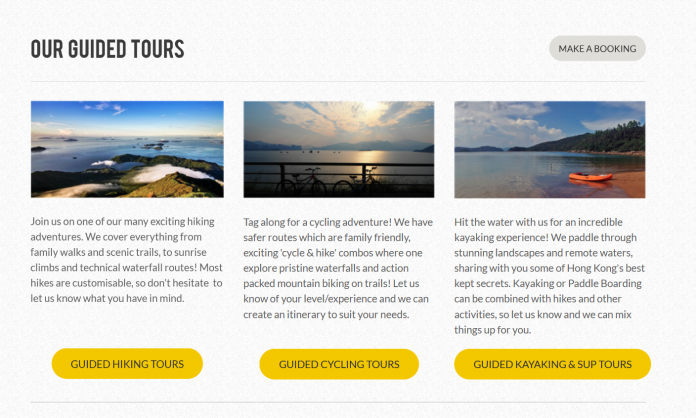
Rory Mackay, founder of Wild Hong Kong, has changed his business model due to the pandemic. Wild Hong Kong is an adventure and eco-tour company that offers excursions featuring activities such as hiking, biking, and water sports.
The company used to primarily operate guided hiking tours for international tourists, but now it is running more water sports tours for local Hongkongers.
“About 80 to 90 per cent of our customers were international tourists, and the rest were local Hongkongers (before the pandemic),” Mackay says.
The company suffered losses at the beginning of the pandemic, and situation started to improve gradually in late March.
“Our (local) customers were more inclined to book water sports tours during summer. This year, 90 per cent of the tours are water sports tours. Also, Hong Kong folks realised they’re stuck here,” Mackay says.

“And during school holidays, some parents are not sure what to do with their kids since camps are closed due to COVID-19. Lots of things like that, culminating together, (helped our business recovery),” Mackay adds.
Mackay says Hongkongers do not need hiking guides but they need tour guides for kayaking tours.
“For most people in Hong Kong, if they want to hike, they’ll just go by themselves. Whereas for water sports, customers have a lot of questions like where and how to kayak in Hong Kong. So, they get a guide to show them around,” he says.
Despite the pandemic, the agency received more customers than last year. “We had really good word of mouth this summer. Tourists come and go. But with locals, we see a lot more repeating customers,” Mackay says.
“Tourists come and go. But with locals, we see a lot more repeating customers.”
Travel Agency amid Travel Ban
GLO Travel, a travel agency in Hong Kong also experienced business model change in response to the pandemic.
Before the pandemic, the agency ran outbound tours to countries like Ukraine and North Korea and held one to two talks a month about these travel destinations. About 80 to 100 participants attended these sessions to gain insights from guest speakers like nuclear power expert, Koo Waimuk Prentice.
Academics like philosophy scholar Wong Kim-fan and social science scholar Leung Kai-chi were invited to join outbound tours organised by the agency to share their knowledge and insights with travellers.
But the agency had to suspend all outbound tours since March due to the pandemic.
Yoyo Chan Lok-yiu, the project and content manager of the travel agency, says: “During the pandemic, we decided to make use of our knowledge and network of scholars and travellers to bring cultural education (of these travel destinations) back to Hong Kong (by doing it online).”

Exploring the World Online
The agency launched their first series of travel lectures in July. They invited architect Charles Lai Chun-wai to conduct six lectures about western to eastern architecture history. The charge is HK $800 for live lectures and HK $720 for recorded lectures.
The idea of the lecture series comes from their outbound tour package to Japan that features architecture. “(We organised the tour because) very few Hong Kong travellers focus on the aesthetic and cultural value of Japan,” Chan explains.
The travel agency also developed online lecture series entitled “The Nightmare of the World’s Nuclear Crises” based on their outbound tours to Fukushima and Chornobyl.
It costs HK $600 to take the series that consists four lectures featuring nuclear crisis impact on Fukushima and Chornobyl, and its implication on Hong Kong’s nuclear development and the current COVID-19 situation.

Travel Agencies Manoeuvre during the Pandemic
The travel agency extends the scope of their online programme partners to include experts of different topics such as ecology and urban studies in Hong Kong. Over 500 participants joined their online travel lectures from July to November.
“We are now planning for the worst – tourism might not revive until 2022. So we will focus on online travel lectures,” Chan says.
“It was not easy at the beginning. Because we are changing our business model, there is a lot of trial and error,” she adds.
“We are now planning for the worst – tourism might not revive until 2022. So we will focus on online travel lectures.”
“Compared to outbound travel tours, online lectures require lower cost and effort from participants (to learn similar knowledge). We can also invite our partners all over the world to join our online events,” Chan says.
Even when the tourism industry recovers, the agency plans to continue organising online travel lectures.
The travel agency has now recovered 70 per cent of their business.
“We definitely hope the tourism industry will recover soon so we can organise tours again. After all, this is what we are best at,” Chan says.
Edited by Lasley Lui & Regina Chen