














Home Blog Page 21

Scholarships Lures Talent

Scholarships becomes a vital key to attract foreign talents to the city.

By Charlotte Wu

Among offers from the renowned Indonesia International Institute for Life-Sciences and three universities in Hong Kong, Michelle Tjoa decided to embark on university studies at the Chinese University of Hong Kong (CUHK).

“I had other options when it came to studying abroad. But Hong Kong was very generous with financial aid and scholarships,” the year one Indonesian student, who joined the university in September 2022, says. 

Under the CUHK University Admission Scholarship, students who achieve three A*s in A-levels are awarded full tuition fee.

“I think the main reason people choose to study in Hong Kong is because of the scholarships,” the biomedical science major student adds.

“Around 40 Indonesians applied for the CUHK conditional scholarships. Only a few were eligible to receive the scholarship,” she says.

Having obtained two A*s in A-levels, Tjoa only got half of the scholarship. But she still decided to come and learn research-oriented skills to prepare for her future career plan.

“I am happy I can study here. The scholarship helps reduce the financial burden on my family. There is no way I can come here without a scholarship.”

Tjoa thinks Hong Kong has a better academic reputation and environment for Science, Technology, Engineering, the Arts and Mathematics (STEAM) students.

“Hong Kong has higher-quality resources for research. There are also better institutions that I can join after graduating,” she adds.
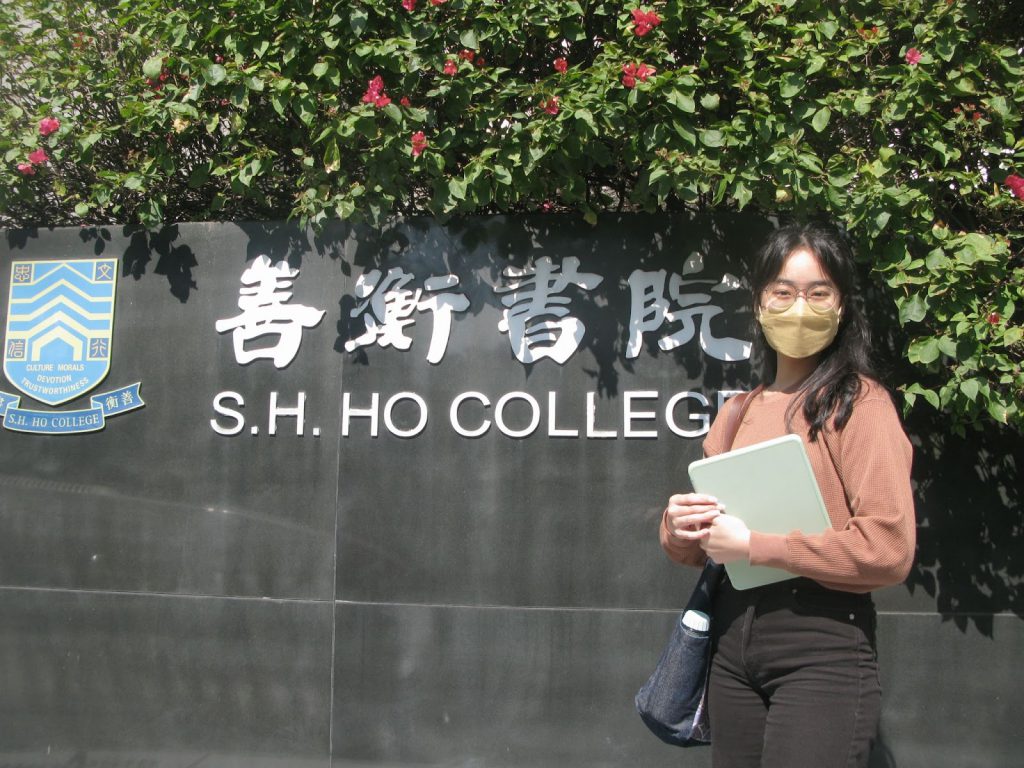
Michelle Tjoa is studying biomedical science at the Chinese University of Hong Kong.

In the 2020-21 academic year, a total of 12,477 non-local full-time undergraduates were enrolled in Hong Kong’s eight publicly-funded universities. In 2021-22, the number rose by 6.3 per cent to 13,254, according to figures released by the University Grants Committee (UGC).

The number of international undergraduates at the Hong Kong University of Science and Technology (HKUST) increased by 16.9 per cent from 6,257 in the 2020-2021 academic year to 7,308 in 2021-2022 academic year.

For the University of Hong Kong (HKU), a total of 4,408 non-local full-time undergraduates were admitted in the 2021-2022 academic year. The number is 4.6 per cent more than the matriculated 4,213 in the 2020-2021 academic year, according to the HKU Student Profiles.

Born and raised in Thailand, Gene Nutcha is another international student studying at CUHK.

The 19-year-old attended Chulalongkorn University (CHULA) in Thailand as a science major student for one year. She came to the city for a different study path.

“I think communication studies fits my interests better,” the year one student says.

Benefiting from the CUHK University Admission Scholarship, Nutcha is able to study global communication with full tuition coverage of HK $580,000 (US $74,081) for the four-year curriculum.

“The tuition fee for international students is more expensive. I will not study in Hong Kong without the scholarship,” she says. Non-local students pay HK $145,000 (US $18,480) per year, while local students pay HK $42,100 (US $5,366) per year.

“It [CUHK scholarship] helps me a lot because I do not have to pay for my tuition. My parents can save their earnings for my living expenses.”

Studying abroad has allowed Nutcha to use more English, not only in class but also in daily life.

“I need time to ease into an English-speaking environment and studying in Hong Kong encouraged me to step out of my comfort zone,” she says.
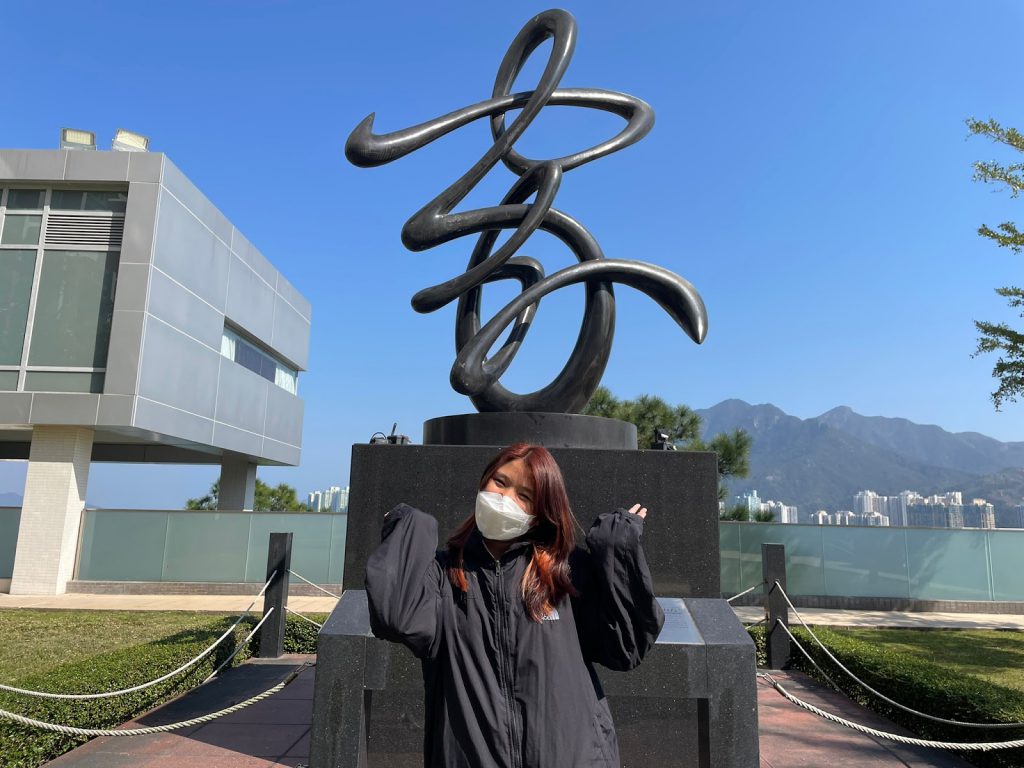
Gene Nutcha serves as the public relation director of the Executive Committee at the student dormitory.

Nutcha is enjoying her time in Hong Kong. When comparing the learning atmosphere of Hong Kong to Thailand, she is more motivated and active in class.

“CHULA adopts one-way teaching. There are no tutorials for us to discuss among small groups. But here [in CUHK], students eagerly participate in discussions, I can share my opinions and learn from others. I cannot find this peer learning atmosphere in Thailand,” she says.

Like Nutcha, Lucy Seoyeon Jung also benefits from the CUHK admission scholarship.

Studying the CUHK-Tsinghua University Dual Undergraduate Degree Programme in Economics, the South Korean student will spend two years in the city and another one and a half years in Beijing.

Having secured offers from HKUST and Tsinghua University, the 19-year-old only received an admission scholarship from CUHK. The scholarship reduced her tuition of HK $174,000 (US $22,184) per annum by half for two years.

Jung believes offering scholarships is an important incentive for the university to lure overseas students to study in Hong Kong as it recognises and rewards the effort students put in.

Through the program, she hopes to experience different types of university life and learn about the diverse economic backgrounds in Hong Kong and Beijing.

“I think this will be a fun experience to study in two different locations and obtain two degrees,” the year one student says.

The economics major student plans to work in consulting and finance in the future. She believes her study will equip her with relevant skills.

“There are many mentorships and research opportunities in this subject. I can contact professors and understand procedures on how to support research,” she adds.

In October 2022, the Policy Address was released with key measures to trawl for foreign talents. Specific measures targeting talents and enterprises were rolled out in December 2022, including the introduction of the Top Talent Pass Scheme and establishment of The Office for Attracting Strategic Enterprises.

UGC has allocated funding to the Heads of Universities Committee Standing Committee in promoting the “Studying in Hong Kong” brand. Universities will participate in major international conferences and recruiting trips including the Asia-Pacific Association for International Education Annual Conference and Exhibition in Thailand in March 2023 and the National Association of Foreign Student Advisers 2023 Annual Conference & Expo in the U.S. in May this year.

Non-local students studying in UGC-funded universities are eligible for the Hong Kong Special Administrative Region Government Scholarship of HK $80,000 (US $10,191) per year.

In a written response to queries from Varsity regarding their policies in attracting foreign talents, the UGC says they will continue to work closely with universities in positioning Hong Kong as Asia’s World City and developing strategic partnerships with major cities in the Greater Bay Area.

Edited by Charlie Chun
Sub-edited by Phoebe Chu
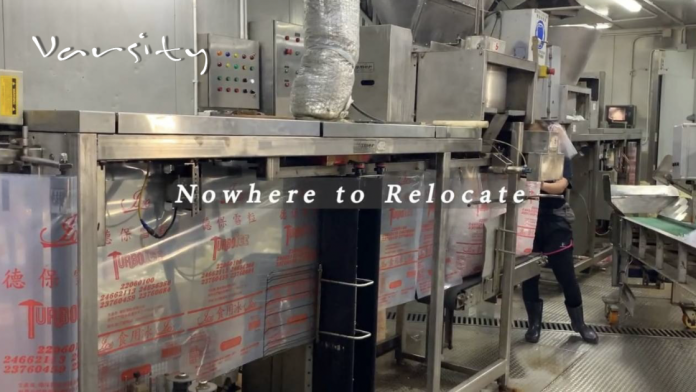
Nowhere to Relocate

Reporters: Leopold Chen, Kossy Chen

Editor: Ella Lang

Turbo Ice Limited in Tuen Mun finds nowhere to relocate facing government’s forcing to move.

We Want Live Shows!

Reporters: Lily Wang, Fiona Dongye, Eve Qiao

After three years of the pandemic, Mainland students studying in Hong Kong spend extra money buying concert tickets to experience what they called “normal life”. People want more live shows to reclaim their autonomy and freedom.

Minimum Wage on the Rise

Reporters: Charmaine Choi, Enya So

Editor: Ryan Li

Despite the rise in minimum wage from HKD$37.5 to $40 per hour, low paid workers still struggle to make ends meet.

Silenced Buskers

Reporters: Carrie Lock, Charlie Chun, Esme Lam

Editor: Chaelim Kim

Buskers continue to pursue their dreams amid strict government regulations.

Is AI Killing Art?

Reporters: Karmen Yip, Christine Tang, Yap Ying-ye

Editor: Gabriella Lynn

Creating art with artificial intelligence has become so effortless and enjoyable that even professional artists and illustrators are captivated by the results.

Forced Off The Streets

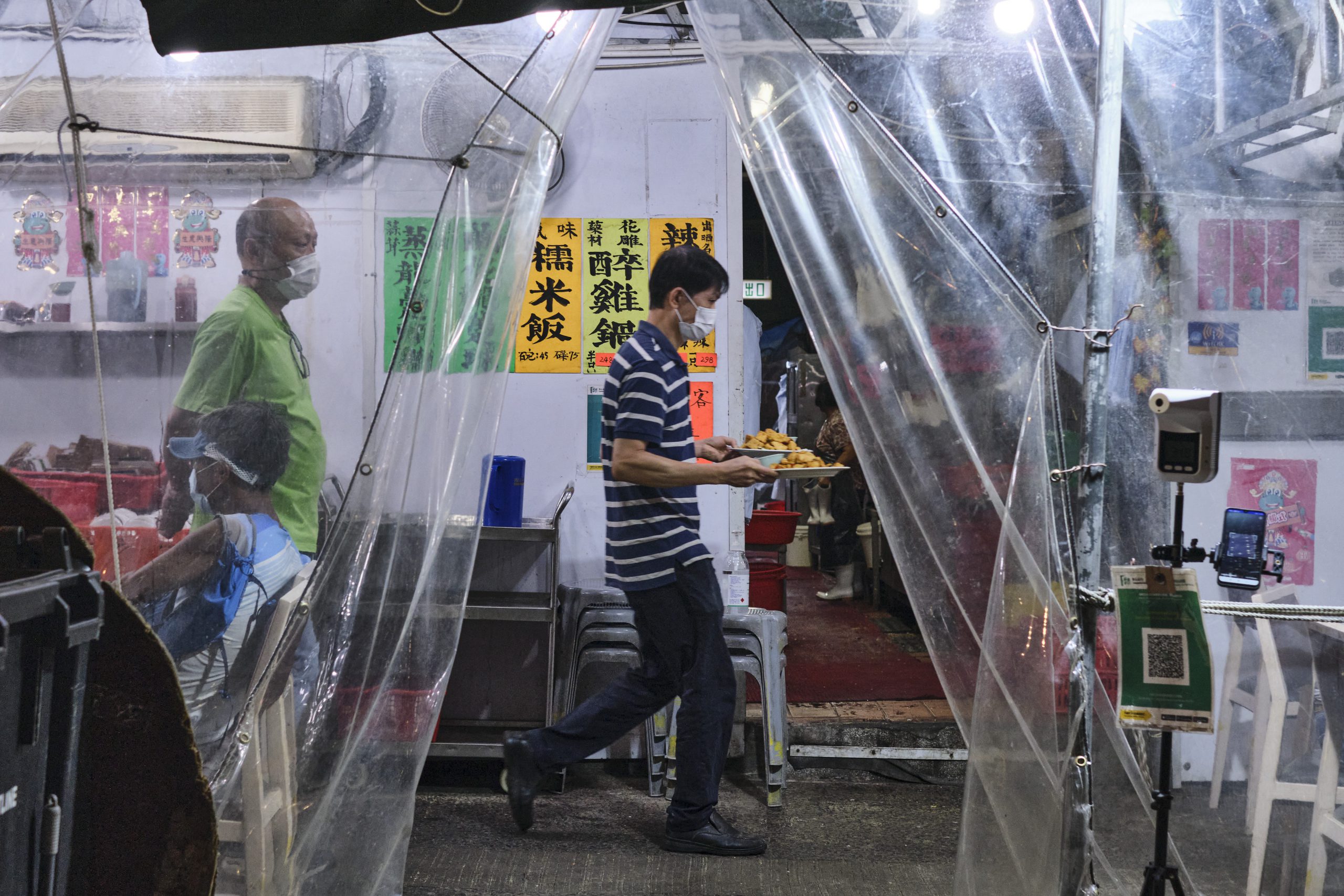
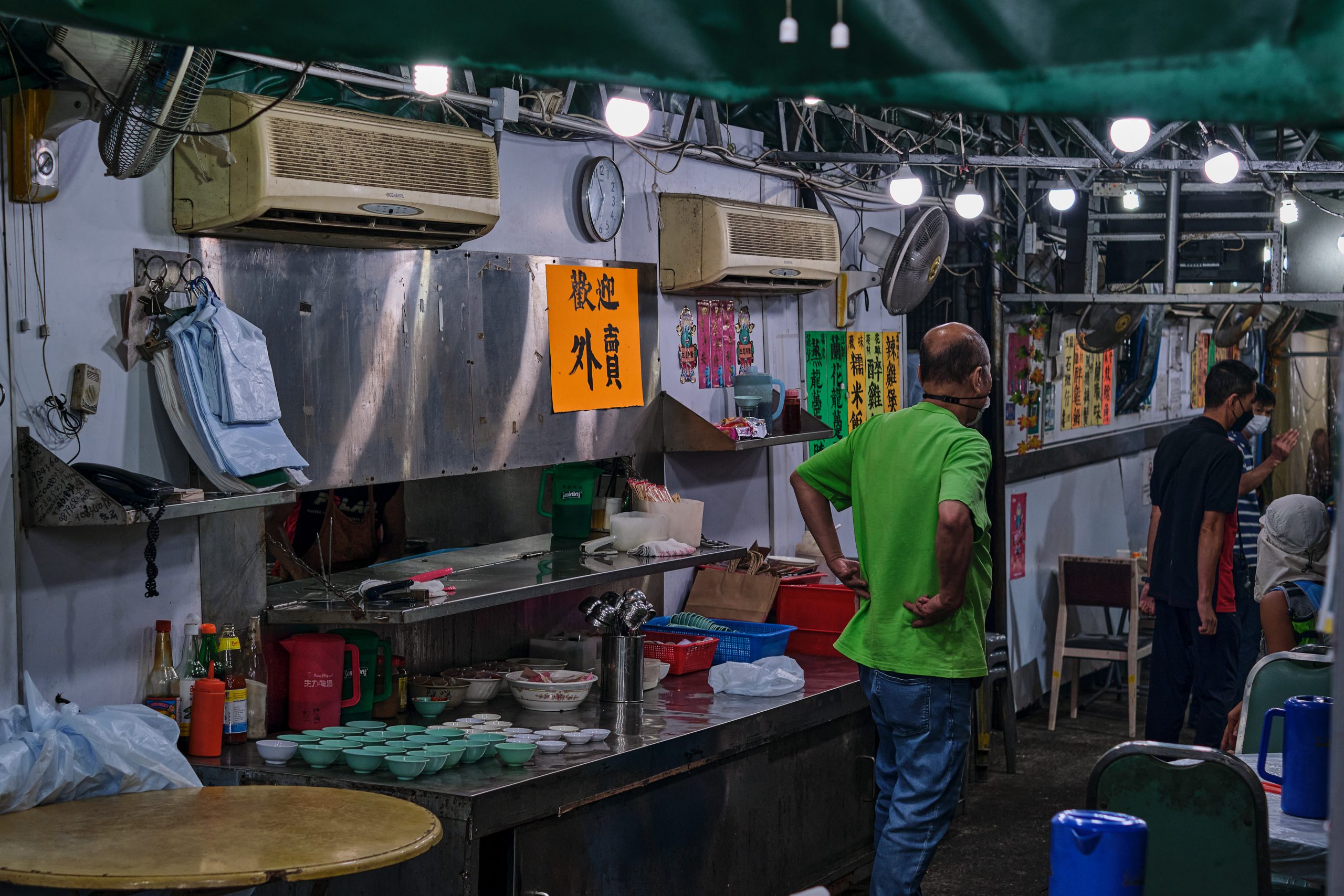
Dai pai dong owners in Fo Tan may face eviction by 2024 due to government plans.

By Victoria Fong

Jerry has been working in Tai Yuen Dai Pai Dong in Fo Tan for over 30 years. The stall is facing eviction by 2024 due to government plans to redevelop Fo Tan’s East and West Cooked Food Markets into a new government complex. 

“Our latest rental contract with the Food and Environmental Hygiene Department (FEHD) ends in June 2023 and FEHD officers say we have to move by 2024, but many details are uncertain. We are unlikely to move to another place since it is difficult to find a space as big as our current site, where big groups can eat, chat and have a beer,” says Jerry, who declines to reveal his full name.  

“Our contract is renewed every two to three years. We would love to renew our contract, but we do not know if the FEHD will offer us a renewal in June,” he says. 

  • Jerry, who is the person-in-charge of Tai Yuen (泰源) in Fo Tan’s East and West Food Markets, has been working at the stall for more than 30 years.

The FEHD announced in May 2021 that Fo Tan’s East and West Cooked Food Markets would be fully closed by 2024. The government plans to construct a new government complex at Shan Mei Street in Fo Tan, which is about 60 metres away from the cooked food markets. 

According to a joint response from the Government Property Agency (GPA) and the FEHD to questions raised by the Sha Tin District Council in January 2022, stalls at Fo Tan’s East and West Cooked Food Markets would not be relocated to the new government complex, citing that there are plenty of restaurants for workers and residents to choose from in that area. 

The new government complex will mainly be used for “recreational, cultural, medical and health, social welfare and education facilities, government offices and car parks”, according to GPA’s response to Legislative Council member Michael Lee Chun-keung in May 2022. 

But the government building’s plan was not revealed to Jerry during his meeting with FEHD officers. 

“Stall owners do not have much say if the government decides they no longer need dai pai dongs when chain restaurants are opening across the city. It is completely out of our control. It is true that we are not as tech-savvy as chain restaurants. We do not have digital ordering systems, but I think we still have an edge,” Jerry says. 

“Students from the Chinese University of Hong Kong (CUHK) often come during orientation camps and ‘dem beat’ (perform chants) in the open space nearby. You don’t get to do that at regular restaurants because they’re usually more restrictive. Our food also tastes better than chain restaurants because of the ‘wok hei’,” he says, referring to the smoky flavours of dishes that can only be achieved by cooking under intense heat with a cooking wok. 

  • 'Wok hei', meaning 'breath of wok', can only be achieved under conditions of intense heat with dai pai dong's cooking range.

Professor Chong Yuk-sik, who published a book about dai pai dongs in Hong Kong in 2011, thinks that dai pai dongs like Tai Yuen carry social value in Hong Kong. 

“Dai pai dongs are freer than indoor restaurants. There is more interaction between customers and stall owners than chain restaurants,” says Chong, who is a research associate at the Hong Kong Institute of Asia-Pacific Studies in CUHK. 

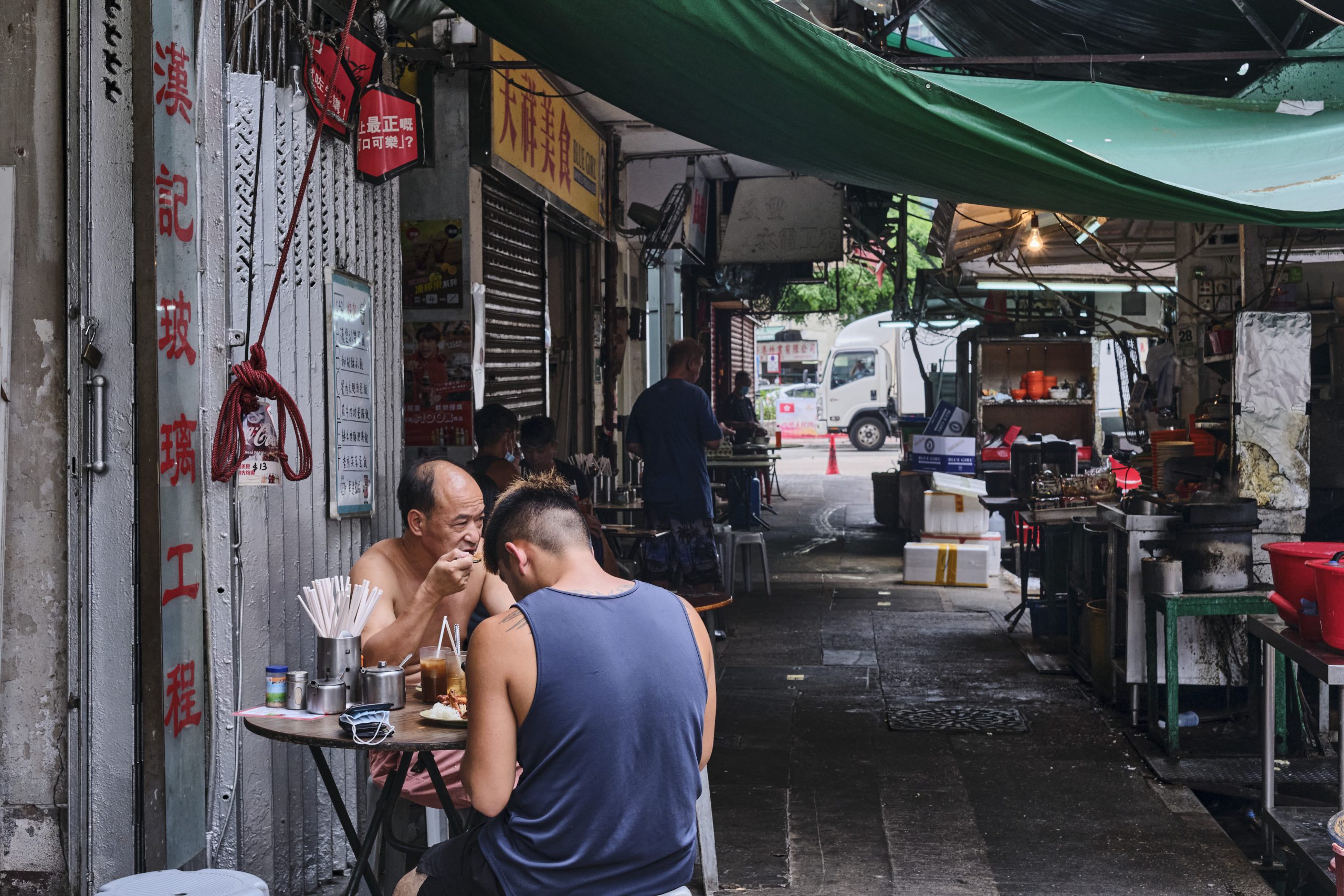
  • Customers having lunch outdoors at a dai pai dong in Sham Shui Po.

“The government is not keen on conserving dai pai dongs. They mainly focus on conserving dai pai dongs that can promote tourism, like the ones on Stanley Street in Central. For cooked food bazaars, they may halt renewal plans when encountering resistance, but eventually, they will go on with their plans,” she says.

Edited by Gabriella Lynn
Sub-edited by Chaelim Kim

Quitting a student society – A better way out?

Many university students are feeling anxious and hesitant because of too many club affairs.

By Christine Tang

Amy Chan*, a student at the Chinese University of Hong Kong (CUHK), quit a service club that aims at nurturing tertiary students into future leaders, due to a mismatch between expectations and reality.  

“I would warn freshmen to consider seriously before getting involved in any societies at university.  Hold realistic expectations that even if you go along with your friends happily, you can still end up in distress yourself,” the Year Two student says. 

“I once thought we could organise what we wanted freely with much financial support and few limitations,” the former public relation officer of the club adds. 

“There were way too many meetings, most frequently twice a week lasting for two hours for my post. The aim of the meetings was usually to achieve consensus between students and advisors in organising activities. Sometimes, I had to join meetings over the phone because there was a time clash between the club’s work and my personal life,” she says. 

“Other than meetings, off-campus training with other universities’ units, which aimed to build up leadership skills, lasted even longer, like for the whole day long or even overnight when the pandemic was not that serious,” Chan adds. 

It is even harder in event execution, as students had to gain approval from the unit’s advisor every time in deciding what and how events should be like. For example, even the name of events, graphics and texts of social media posts had to be approved by the advisor, limiting students’ freedom in event planning and execution. 

While the experience of organising event is not what Chan imagined, the friendships with her friends have also been adversely affected due to personal matters. They are no longer close now. 

The student later found out that the experience was not as expected. 

“Of course, I do feel a bit remorseful as I left my friends behind. But overall speaking, the benefits outweigh the loss, as I am now mentally less stressed. Back then, my schedule was so packed that I could hardly enjoy university life,” Chan says. 

“Luckily, the process of quitting was smooth as other members and the advisor show their understanding of my situation,” Chan says.  

Another university student, Chloe Lau*, quit a service club because of her mental health. 

“They got mad at me because I was not involved much in designing products, while they never understood my situation as I was having depression at that time due to the social movement,” the Year Four student at CUHK says. 

“Differences in value judgment drove us apart. I was way more concerned about the socio-political situation of Hong Kong than they were. I did not think it was worth all the hassle to make souvenirs to be put on campus. To me, obviously, the social unrest was a more pressing issue,” the former design officer of the club adds. 

Lau got involved in the club in Year One in the hope of serving the community and making new friends, as she had a good experience doing voluntary service back in secondary school.  

But none of her expectations were met. 

“I realized we were not true friends as they did not even care about my mental health but the work. After quitting, I gradually got better emotionally and concluded that birds of different feathers do not flock together,” Lau says. 

Despite the dissatisfactory experience, she realises her passion and values in being part of another society after two years. She finds her values in promoting public awareness about sex and gender. 

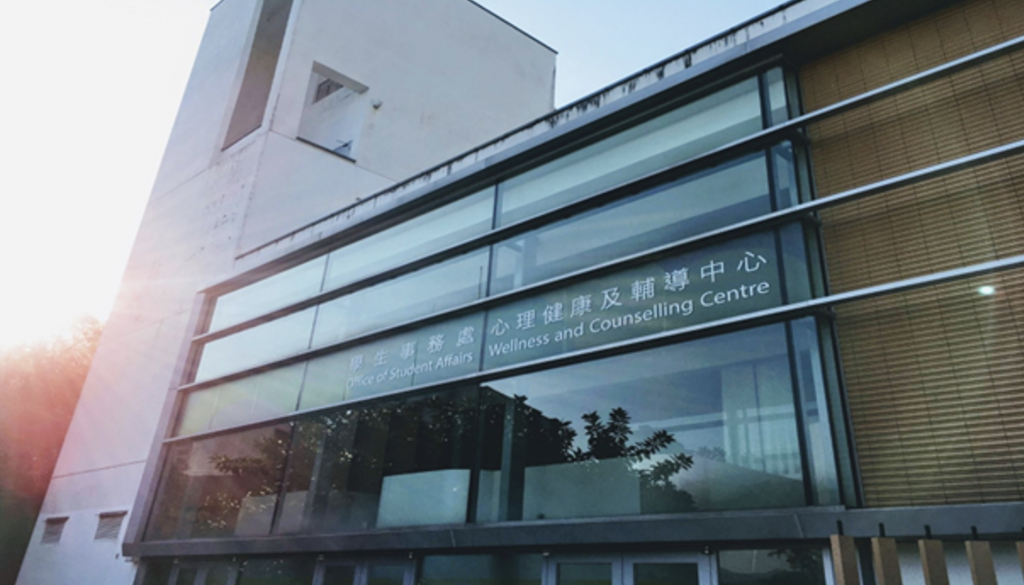
Wellness and Counselling Centre (WACC) of the Office of the Student Affairs (Photo from CUHK Website).

“I would strongly encourage people to get counselling service on campus when necessary as it is free of charge when you are still a CUHK student. It is rare to have people listening to you without judgment while being very supportive, ” Lau says.  

“I had insomnia problems back then and got diagnosed with depression very soon. Then, I was prescribed antidepressant from the university health service,” Lau adds. 

Another university student, Celine Pang*, also quit a society for her own good. 

Pang, once an exco-member of a debating team at CUHK, decided to quit after being in the team for two years. 

“We got three-hour meetings twice a week and on top of that I had to join competitions which would usually take up an entire weekend. At times, I had to multitask to get prepared for my mid-term and final exams,” the Year Three student says. 

“Especially now I do not live in dorm, it started to take up a lot of time and I also started to get a lot busier with schoolwork, so I decided it was not really worth it to join a society anymore” Pang says.  

Students take part in club activities for different reasons. One of the common reasons for CUHK students to live on campus is to earn enough hostel points in a bid to retain a bed place at the dormitory. 

While joining the society was a bigger commitment than she initially expected and realised, other underlying factors, including interpersonal problems, also led her quitting the team. 

“Sometimes it would take up a lot of my emotional strength as I cried several times. It also took me time to deal with major disagreements within the committee members,” she says. 

“It was just troublesome and draining to deal with, though it was mostly just differences in opinions arising due to different people being in the same team,” she says. 

According to a written reply provided by Megan Tsang, one of the supervisory staff members at Office of Student Affairs, CUHK promotes whole-person development and encourages students to enrich their university life.

“CUHK promotes whole-person development and encourages students to enrich their university life.”

“CUHK students could join different student organizations or participate in diverse student programmes. Students join activities according to their own interests. For example, some may wish to learn from operating a student society by being ExCo members; some may participate in other interest clubs or social service teams,” the head of Student Development and Resources Section says in her reply. 

She notes that while students could learn from joining non-formal activities, they are reminded that time management and striking a balance between academic study and activities are also important. 

*Names Changed at interviewees’ request

Sub-edited by Chaelim Kim

Swim Upstream in Hong Kong

Huang filming a vlog. (Photo courtesy of Huang Yu Hui)

Taiwanese girl Huang Yu Hui decides to settle down in Hong Kong when Hongkongers are leaving the city.

By Yika Ng

When most Hong Kong people are leaving the city, Taiwanese Cynthia Huang Yu Hui came to the city in 2019 and is now working in a content creator agency.

Huang is a manager of three Hong Kong social media influencers. She is also running her own YouTube vlogging channel which has 155,000 subscribers.

“Hong Kong is the place where I first taste happiness in my life and I find satisfaction from my work here. This place is full of opportunities and potential which makes me want to stay and see what the future holds for me in Hong Kong,” Huang says. 

“Hong Kong is the place where I first taste happiness in my life and I find satisfaction from my work here.”

“I did not think much when my boss offered me this job in Hong Kong, I quickly made my decision to come because I do not want to regret,” she says.

Huang first came to Hong Kong in March 2019, a few months before the social unrest sparked by the proposed extradition bill. 

“When I first came to Hong Kong, my first impression was I always got yelled at by waiters in restaurants. The impression has changed during the social movement when I saw Hong Kong people stayed united to fight for freedom,” Huang recalls. 

Despite the change of impression, Huang struggled to adjust to working pace in Hong Kong.

“I remember crying in my office alone as I had no friends here. I had to communicate with Hong Kong clients but I did not understand a word in Cantonese and the culture here is so different from Taiwan,” Huang recalls. 

The 28-year-old social media influencer manager spent two years working in Hong Kong alone because the company was still in its infant stage.  

Huang is now able to understand Cantonese after coming to HK for three years. 

“Now I have Hong Kong colleagues, and I have picked up Cantonese,” Huang says.

The 10-year Eating Disorder Journey 

Though Huang now has rich experience working and living abroad independently, she struggled with eating disorder for 10 years. 

She was a ballet and contemporary dancer since her childhood to her teenage years and having a slim figure affected her health.

“At 15, I wanted to be admitted to my dream school, which was a boarding school for dancers in Taiwan. My teachers told me that if I lost a couple of kilograms, I would be able to get in. So, I followed all different kinds of weight loss recipes I found online which set me off to my eating disorder journey,” Huang recalls. 

She once weighed 44.5 kilograms with a height of 163 centimeters.

“I felt weak all the time and lost my period for a year and a half. I even fainted once in a convenient store,” Huang says. 

Huang was admitted to her dream school, but her health condition continued to deteriorate.

“I was surrounded by girls and boys with perfect figure at that time. They had long legs, and they were skinny with perfect flexibility and physical ability. I felt very insecure when I compared myself with them,” Huang recalls.

“When I was sixteen, my doctor told me that I must eat or else my period would stop forever. I ate and then threw up hoping that I would get nutrition I need but not calories,” Huang says. 

With support from her friends, she recovered from eating disorder and regained her health and self-confidence when she was 17.

Huang then decided to give up on dancing and went to the University of California, Berkeley to continue her tertiary studies as a business major student. 

Huang graduated from University of California, Berkeley in 2016.

“I gave up dancing because I did not think that I could be a professional dancer. I wanted to explore my other possibilities,” she says.

But her eating disorder relapsed after she graduated from university.

“I broke up with my boyfriend and I didn’t know where to go after university. I went to fast food drive-throughs and wolf down foods until my stomach started to hurt,” Huang says.

After struggling with bulimia for four years, Huang decided to step out of the vicious cycle by doing Yoga. She later learnt a new perspective towards body image.  

“In America people embrace all types of body shapes. I learnt to be more confident in my own skin. Also, Yoga helps me become more grounded and confident about how I feel. I no longer feel ashamed of wearing a size M or L,” she says. 

Huang teaching a yoga class in the US. (Photo courtesy of Huang Yu Hui)

Winning battle against eating disorder, Huang managed to be back on the saddle again and started holding podcasts to talk about life in 2020.

“I believe that everyone is living different lives with different problems and difficulties. I hope my sharing in vlogs and podcasts can resonate with my audience and inspire them that no matter what they are going through, do not stop trying to find bits of joy in life,” she says. 

“Happiness is simple. I feel happy when I find out my favorite yogurt is on sale,” she adds. 

Huang shares she does not think much about her future and will just go with the flow.  

“From giving up my 15-year dream to become a dancer, to studying business, to coming to Hong Kong, I do not regret any decision I have made. I follow my instincts. It’s never a right or wrong decision, but the best decision that has been made at that critical time,” Huang says.

Sub-edited by Jack Deng

The Never-Ending Fraud

Mainland students experience phone scams in Hong Kong.

By Lily Wang

Elisa Yang was swindled out of HKD25,000(USD3,212.5) in a phone scam in August 2022 and is still waiting for news from the Hong Kong and Mainland police officers after reporting her case. The traumatized university student now only uses WeChat Pay, Alipay, and cash in payment. 

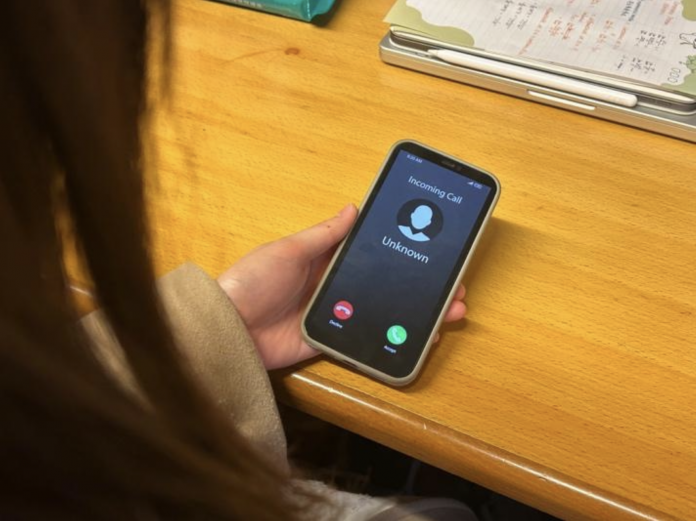
The phone fraudster impersonating a Department of Health employee claimed that Yang’s Leave Home Save App records showed she stayed somewhere in Tsim Sha Tsui with many confirmed COVID-19 cases reported on August 26th. Yang was told that she would be sent to a quarantine place, and she had to pay HKD25,000 as a deposit for the use of quarantine facilities with her credit card. Though she had no detail about where she would be sent, she gave the scammer her mainland credit card number.   

Victims are often asked to provide their credit card information.

“I received the phone call on August 27 afternoon. I was so nervous about issues related to COVID-19. I used to regularly receive messages checking my situation from Health Department when I was in Mainland China,” says Yang.  

The year two student only arrived in Hong Kong for a few days when the case occurred. Because of the pandemic, she did most of the classes through Zoom after being admitted to the Chinese University of Hong Kong. 

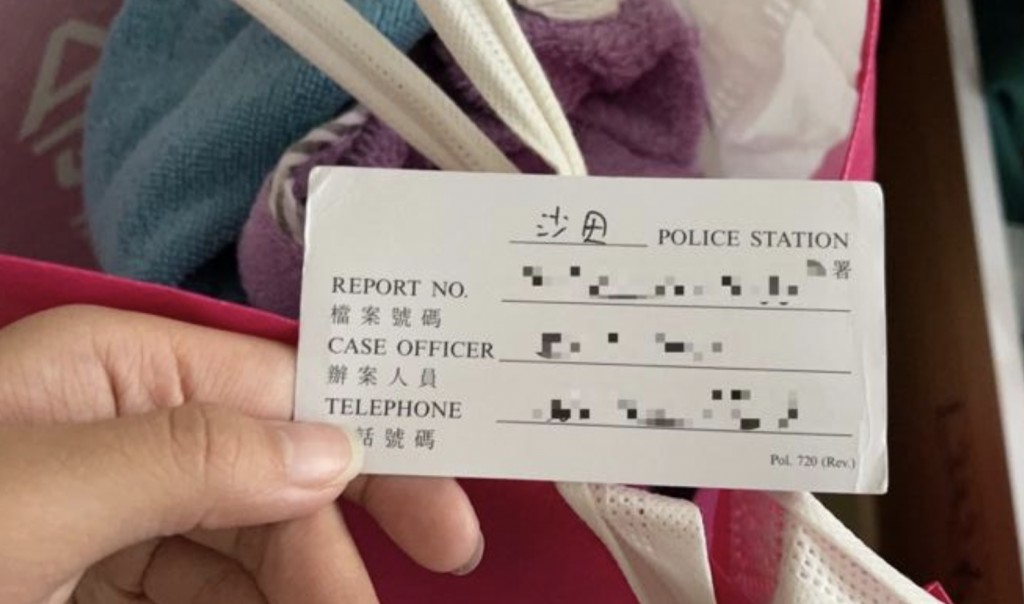
The police record after Elisa was scammed by the phone.

“I shared my fear of going to a government quarantine facility with my friends one day after receiving the phone call. Then I realized that this could be a phone fraud,” Yang adds. 

“Now all my cards are frozen as the mainland bank freezes my account. I rely only on WeChat Pay, Alipay, and a limited amount of cash for my daily expenses,” the Chinese University student says. 

“Since then, I doubt every decision I make. I fear that I might have become a laughingstock among my peers. Would they think I am a stupid girl, as I could easily be scammed? I wonder if they look down on me and do not want to be friends?” Yang says.  

Another university student Mike Yang also received a similar phone scam but managed to spot and protect himself.  

Yang received the call on October 11. The fraudster impersonated an officer from the High Court of Hong Kong, claiming that the Chinese University student had to settle a credit card bill of HKD 38,800 (USD4,985.8) within a week or else he would be sent to jail. 

“He told me that I consumed that bill on August 7 in Harbor City,” he recalled. 

“I was generally a cautious person. Though I was nervous, I kept asking the scammer questions such as which shop exactly I spent the money in and what the credit card number was,” the 18-year-old student recalled. 

He argued with the first scammer and the call was transferred to another fraudster posing as a senior officer from the High Court.  

“The senior one made up a credit card number for me and stressed the seriousness of the crime. I almost believed in their trick. I gave the scammer my Hong Kong Identity Card number and the last four digits of my credit card number and asked them to check the bill again,” the student says.  

After the first call, the fraudsters called him several times urging him to settle the payment. He then realized that this might be a phone scam. 

“I still feel worried now. I don’t know whether the information I gave them will cause me trouble later,” Yang says, adding that he has not suffered any losses so far. 

Regarding Elisa Yang’s case, police said in an email dated December 22 that the case is still under investigation.  

“Telephone deception is a cross-jurisdictional syndicated criminal activity. Swindlers made scam calls outside Hong Kong, sometimes with VoIP technology or prepaid SIM card. Part of the deceived money was deposited or transferred to bank accounts outside Hong Kong and dissipated instantly, making it difficult for fund tracing and police investigation,” the reply to states.  

The number of deception cases recorded increased from 648 to 1687 from 2019 to 2022. Police handled 906 “pretending officials” cases in the first nine months of 2022 with a total loss of HKD 721 million (USD92million). 

The reply also states that “the excuses made by fraudsters are unusually closely relating to current affairs. For instance, during the pandemic, the fraudster used excuses related to illegal delivery of vaccine or violation of quarantine order at the outset and duped victims into divulging their personal or financial information.” 

Police set up Anti-Deception Coordination Center in July 2017 to help monitor deception trends, implement combating strategies, and collaborate with the banking industry and oversea law enforcement agencies to intercept the proceeds of crime.  

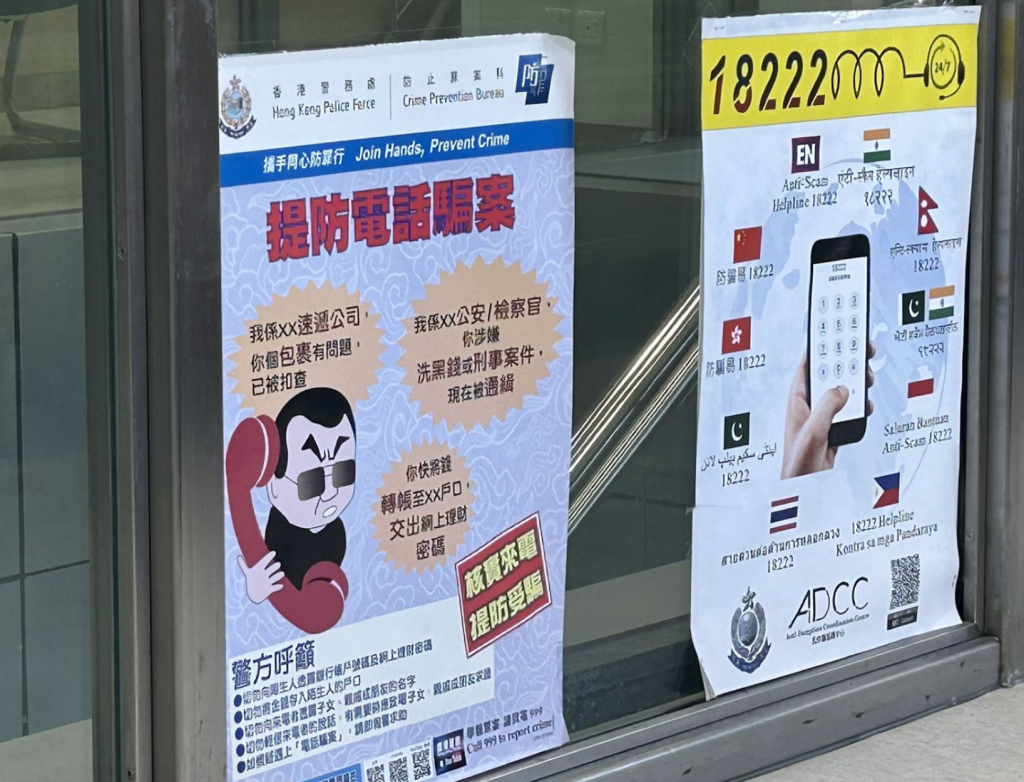
Anti-fraud posters displayed by the Hong Kong police.

The public should be aware of phone calls asking for money, personal information, and downloading unknown software, according to police.  

On avoiding phone scams, here are a few tips from police: 

1 DO NOT transfer money to strangers’ bank accounts.  

2 DO NOT install any unknown software or suspicious application on mobile phones or computers. 

3 DO NOT input personal information into any unknown website or application. 

4 DO NOT disclose your personal information to strangers. 

5 “Three Dos” against telephone deception – “Hang Up,” “Verify,” and “Get Help”. 

6 Remind your relatives and friends to stay alert against deception, and if in doubt, please call the Anti-Scam Helpline 18222. 

Sub-edited by Chaelim Kim