










Home Blog Page 107

A Rehearsal of Life

Mo Lai Yan-chi’s unconventional upbringing inspires stage success

By Silvia Li

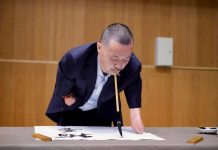
Under the spotlight and against a black backdrop, a hunch-backed old lady dressed in a red traditional Chinese jacket slowly recounts the moments she spent with her husband. In her quivering hands, she holds a pair of slippers that she wishes she could hand to her partner who has passed away. It is a moment of tender yearning. Then, she unties her hair from her tightly wound bun and straightens her back. In a blink, the old lady is replaced by a woman in her 30s.

The audience rises as applause echoes around the theatre of Hong Kong Cultural Centre where Mo Lai Yan-chi has just performed her one-woman show Woman in Red. The performance has been emotionally draining for the president and leading actress of the drama group FM Theatre Power and she cannot help but shed tears.

Lai has dedicated her life to theatre for over 15 years. Her efforts were recognised when she was named as one of the Ten Outstanding Young Persons last year. To Lai, the theatre is a rehearsal for life. And as lives go, Lai’s has played to a pretty dramatic script.

She was born in Hong Kong but her parents did not want to raise her themselves, so they sent her to live with distant relatives in a village in Guangdong when she was just one month old. After that, an elderly female relative took care of her.

The rural life shone led in those early years has had a huge impact on her. “My life was farming,” says Lai, “When I was hungry I would grab a tomato from the fields, rinse it in the river and eat it … I would climb trees, catch fish, run up the mountains with the dogs. That was how I spent my days.”

Such a childhood might seem dull to youngsters brought up on video games and electronic toys, but Lai thinks otherwise. Her worldview, values and personality were formed during this time. “I learnt that life is a cycle, you will get up after downs,” says Lai. “The simple life also taught me to not desire material things.”

‘‘When the other kids were going to kindergartens, nature was my classroom,’’ she adds.

Her parents’ abandonment of the young Lai made her question her self-worth. “I literally thought I was lower even than excrement,” says Lai. Her caretaker told her excrement was useful as fertilizer for crops. She reassured her that if excrement had value, so did she.
Learning the Ropes at Hong Kong’s Sea School

The naval-style school delivers strict discipline to low-achieving teenagers

By Yoyo Chan, James Fung & Cherry Wong

Hapi Fork, Healthy Meal

Monitor your eating habits with the smart fork

By James Fung

A sudden buzzing and the flashing of an LED light disturbs your meal. You fumble about and dig out your mobile phone from your pocket. There is no new message. Instead, there is a gentle reminder from the HAPIfork.

HAPIfork is an electronic fork that helps you monitor your eating habits. It will alert you with vibrations and indicator lights when you are eating too fast. How does it work?

The smart gadget monitors your habit of fork serving. Fork serving is the action of bringing food from your plate to your mouth. By counting how long each fork serving lasts and the number of fork servings per minute, HAPIfork analyses your eating habits and helps you improve them.

So what is wrong with eating too quickly?

Well, for one thing, it can lead to digestive problems, such as gastric reflux, which are common among urbanites.

Plus, eating quickly often also means eating more, making one more susceptible to obesity and heart disease.

Regulating how quickly you eat means regulating your health.

HAPIfork does not just remind you when you are eating too quickly, it also provides you with data. There is a USB connector under the plastic cover at the bottom tip of the fork. Once it is connected to your personal computer, you can assess the complete data on your eating habits. The speed at which you eat will be shown in a reader-friendly line graph.

You can register an online dashboard at HAPILABS.com. With the account, users can set objectives, such as target eating speed, and track their progress. In this way, you can make comprehensive plans to adjust your eating habits.

The fork also comes equipped with Bluetooth, so you can connect it to your smart phone with the HAPILABS iTunes or Android application. Then, you can keep track of your fitness progress any time, anywhere.

With the mobile application and the online dashboard, you can even share your fitness progress as well as photos and videos with others on the HAPIfork network.

And just in case you are wondering how sturdy it is, the HAPIfork is highly resistant to breakage and water. You can wash it with the dishes, or even put it into the dish washer. No damage will be caused.

So even when your meal is constantly disturbed, don’t get frustrated and stay calm. You are on the way to a healthier lifestyle. If your HAPIfork does not vibrate any more, congratulations (unless the fork has actually run out of power).

Order HAPIfork online now and check out its website to learn more:
http://www.hapilabs.com/products-hapifork.asp

Showcasing Chinese Documentaries

Witness Chinese history with documentary enthusiasts

by Yoyo Chan

Holding a large bag of DVDs, Danielle Zhang, project coordinator of CNEX Foundation Limited Hong Kong, rushes into the activities room of Goodlab in Cheung Sha Wan. She then settles down and introduces CNEX.

CNEX, which stands for “See Next” and “Chinese Next”, is a non-profit-making foundation which originated in Taiwan. Founded in 2006, it aims to produce and promote Chinese documentaries.

The people behind CNEX chose to focus on Chinese documentaries because the dramatic changes in China have attracted worldwide attention, including from documentary makers. “China accumulates so much wealth, but there are still lots of social problems. We want to focus on these problems and record them so that our next generation can have a reference,” Zhang says.

The foundation provides a platform for Chinese documentary enthusiasts to communicate. They intend to develop a library of global Chinese documentaries, so as to record the changing cultures of different Chinese communities.

To this end, they organise an annual thematic project, soliciting and promoting films that fit that year’s theme. The theme is based on the events happening in Chinese society during that year.

For example, in 2008 when the Beijing Olympics’ slogan was “One World, One Dream”, the annual theme was “Dream and Hope”. This year in 2013, since we survived the Mayan doomsday, the theme is “Dissolution and Restoration of Love”.

They also hold annual documentary film festivals where the topic is related to the annual theme. In addition to film screenings, they also invite professionals, such as psychologists, to hold post-screening seminars. The screening tour also includes forums for exchanging ideas.

The Hong Kong branch of CNEX helped to produce KJ: Music and Life, a biography of a Hong Kong child musical prodigy which later won the Best Documentary Award of the Taiwanese Golden Horse Awards 2009 and the Best New Director in Hong Kong Film Awards 2010. After the local CNEX was set up, it became responsible for organising local film tours in the hope of making documentaries more accessible to the public.

Compared with the Mainland and Taiwan, promoting documentaries in Hong Kong is a challenging task. “The situation in Taiwan is so mature that there are many documentary festivals. There are also independent cinemas specialising in documentaries,” Zhang says. “It is really difficult [to promote documentaries] in Hong Kong… It is not as appealing as mainstream films.”

She also points out that the aid from the Hong Kong government is not enough. “The subsidy from Hong Kong Arts Development Council does not pinpoint documentary. It has to compete with drama. Everyone applies for the same limited funds. So it is quite difficult,” she explained.

But Zhang believes there are certain values in documentaries that are irreplaceable. She says: “We hope that besides recording the visual, we can make a social impact.”

Zhang sometimes feels disheartened for the sorry state of affairs of documentaries in Hong Kong. “Documentaries are really good!” she exclaims.

The screening tour of CNEX Hong Kong lasts until June 2013. More information can be found on their website:
http://www.cnex.org.hk

20 Years: Stay True to the Dream (Video)

Varsity is 20. We look forward to seeing you at our discussion on “20 Years of English Language Media in Hong Kong” on Thursday April 11 (open to all) and our celebration dinner on Friday April 12 (registered students, alumni, staff and guests only).

Topic: 20 Years of English Language Media in Hong Kong
Date: 11 April 2013 (Thu)
Time: 11am – 12:45pm (doors open for refreshments at 10:30am)
Venue: Room 312, Humanities Building, New Asia College, The Chinese University of Hong Kong
Speakers: Mr. Stephen Vines, Mr. Frank Proctor, Mr. Mark Tjhung, Mr. Wang Feng, Ms. Joyce Lau
Moderator: Ms. Yuen Chan
-Stephen Vines is a commentator, broadcaster, author and businessman. He was the founding Chief Editor of the Eastern Express newspaper and satirical news magazine Spike.
-Frank Proctor was Newsweek’s general manager for Asia and international circulation director, and publisher of Muse magazine.
– Mark Tjhung is the Editor-in-Chief of the Time Out Hong Kong.
– Wang Feng is the Digital Editor of the South China Morning Post.
– Joyce Lau is the Education Editor at the International Herald Tribune.
Please register online via http://www.com.cuhk.edu.hk/2013varsitytalk/. We look forward to receiving your confirmation of participation by 5 April 2013.Should you have any questions, please feel free to contact Ms. Emily Owen (email: emilyowen@cuhk.edu.hk, Tel: 3943 7739) or Ms. Winkie Lui (email:winkielui@cuhk.edu.hk, Tel: 3943 5353)

Follow us live on April 11 at:http://varsity.com.cuhk.edu.hk/?p=5022

Varsity@20:20 Years of English Language Media in Hong Kong

Talk

Topic: 20 Years of English Language Media in Hong Kong
Date: 11 April 2013 (Thu)
Time: 11am – 12:45pm (doors open for refreshments at 10:30am)
Venue: Room 312, Humanities Building, New Asia College, The Chinese University of Hong Kong
Speakers: Mr. Stephen Vines, Mr. Frank Proctor, Mr. Mark Tjhung, Mr. Wang Feng, Ms. Joyce Lau
Moderator: Ms. Yuen Chan

-Stephen Vines is a commentator, broadcaster, author and businessman. He was the founding Chief Editor of the Eastern Express newspaper and satirical news magazine Spike.
-Frank Proctor was Newsweek’s general manager for Asia and international circulation director, and publisher of Muse magazine.
– Mark Tjhung is the Editor-in-Chief of the Time Out Hong Kong.
– Wang Feng is the Digital Editor of the South China Morning Post.
– Joyce Lau is the Education Editor at the International Herald Tribune.

Please register online via http://www.com.cuhk.edu.hk/2013varsitytalk/. We look forward to receiving your confirmation of participation by 5 April 2013.Should you have any questions, please feel free to contact Ms. Emily Owen (email: emilyowen@cuhk.edu.hk, Tel: 3943 7739) or Ms. Winkie Lui (email:winkielui@cuhk.edu.hk, Tel: 3943 5353)

Varsity@20

Varsity is 20. We are marking the anniversary with a discussion on “20 Years of English Language Media in Hong Kong” on Thurday April 11 at 11:00 am. Registration is open to all. Join us and our distinguished panel to look back on the development of English media and explore future directions.

We also look forward to seeing registered students, alumni, students and guests at the celebration dinner on Friday April 12 from 7.00 pm.

Details are as follows:

Talk

Topic: 20 Years of English Language Media in Hong Kong
Date: 11 April 2013 (Thu)
Time: 11am – 12:45pm (doors open for refreshments at 10:30am)
Venue: Room 312, Humanities Building, New Asia College, The Chinese University of Hong Kong
Speakers: Mr. Stephen Vines, Mr. Frank Proctor, Mr. Mark Tjhung, Mr. Wang Feng, Ms. Joyce Lau
Moderator: Ms. Yuen Chan

-Stephen Vines is a commentator, broadcaster, author and businessman. He was the founding Chief Editor of the Eastern Express newspaper and satirical news magazine Spike.
-Frank Proctor was Newsweek’s general manager for Asia and international circulation director, and publisher of Muse magazine.
– Mark Tjhung is the Editor-in-Chief of the Time Out Hong Kong.
– Wang Feng is the Digital Editor of the South China Morning Post.
– Joyce Lau is the Education Editor at the International Herald Tribune.

Please register online via http://www.com.cuhk.edu.hk/2013varsitytalk/. We look forward to receiving your confirmation of participation by 5 April 2013.Should you have any questions, please feel free to contact Ms. Emily Owen (email: emilyowen@cuhk.edu.hk, Tel: 3943 7739) or Ms. Winkie Lui (email:winkielui@cuhk.edu.hk, Tel:  3943 5353)

Live reporting@Apr11:http://varsity.com.cuhk.edu.hk/?p=5022

Celebration Dinner 
Date: 12 April 2013 (Fri)
Time: 7:00pm – 10pm
Venue: Function Rooms, 3/F South Tower, YMCA of Hong Kong, 41 Salisbury Road, Tsim Sha Tsui, Kowloon
Menu: Buffet Fee: HK$230 per head (The School will subsidize the remainder.)

Registration for this event is closed 

Should you have any questions, please feel free to contact Ms. Emily Owen (email: emilyowen@cuhk.edu.hk, Tel: 3943 7739) or Ms. Winkie Lui (email:winkielui@cuhk.edu.hk, Tel: 3943 5353)

A Brewing Cultural War

I have lived in Hong Kong since I was born.

Throughout this time, I always thought my hometown was really a diverse and intriguing place. It is home to different peoples, a city where you can hear different voices and find different cultures; and together we weave the rich tapestry that is Hong Kong.

But holes began to appear in the fabric recently, as our society is getting more and more divided, or even polarised, over an array of issues. A war between different values, in which citizens are digging their heels in on either side of the battle line, is now simmering.

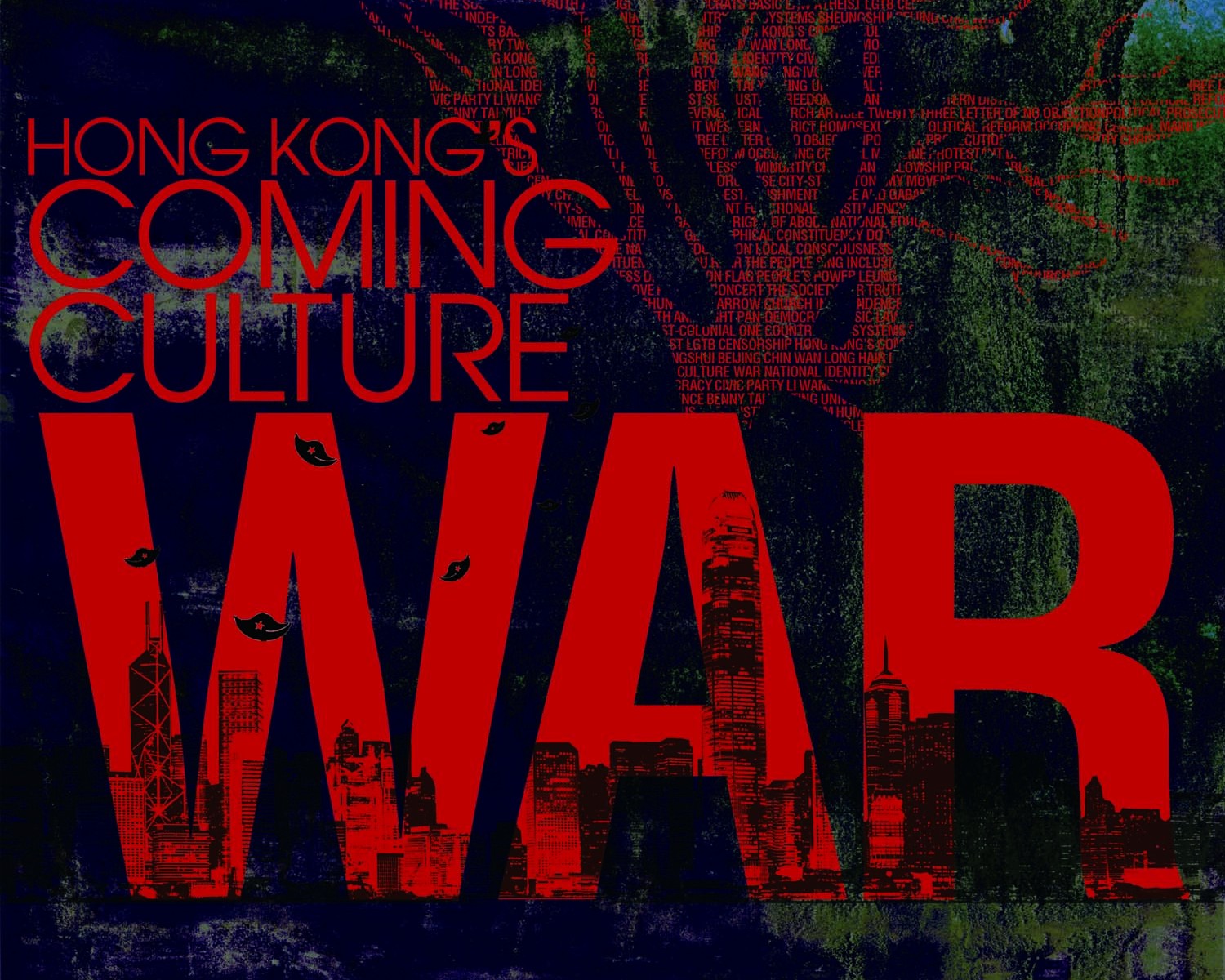
This is why we have decided to feature Hong Kong’s brewing culture war in this month’s Periscope section of Varsity. Contemporary use of the term originates from the United States and refers to the clash of ideas, usually between conservatives and liberals, over various social issues such as abortion, gun politics, gay rights and sex education. Has the culture war arrived in Hong Kong, and if so what are the issues of contention?

We start by looking at the struggle between local consciousness and nationalism in Hong Kong. As our ties with the Mainland have become closer, our feelings have also become more complex and ambivalent. This has caused some locals to reflect on their cultural identity, but this has apparently upset people who uphold their national identity tenaciously. Will these tensions escalate into more than just a war of words?

We also look at the conflicting views among evangelical and liberal Christians over a number of social issues. The most visible flashpoint is over the issue of homosexuality. The evangelicals’ high-profile stance against equal rights for homosexuals has even invited criticism from non-believers. How do Christians make sense of the widening division within their faith, and the world outside it?

We take our exploration further by looking at how some in Hong Kong are reimagining the way people should speak out about their needs and aspirations. In the past, people looked to lawmakers, especially those who were directly elected, to speak for the people in the Legislative Council. But as more people are disappointed with the pace of democratic reform and progress in their livelihoods, some are choosing alternative forms of resistance, opposition and advocacy. Some are protesting on the streets, others go further, engaging in civil disobedience. Why do some people stay to fight within the system while others have given up on it?

It is hoped that through looking into these issues, we can get a better grasp of Hong Kong’s present situation, and some clues about what is going to happen next.

But before I finish, I must state that this issue’s Varsity is a joint effort made by many first-time editors and reporters. With little clue about our job at the beginning, we worked hard with our advisers and spared no effort in striving for the best.

I proudly present this wonderful compilation of stories, and sincerely hope that you enjoy reading it – just as we enjoyed making it.

Editor-in-chief

City of Divided Loyalties

The struggle between local consciousness and national identity gathers pace

By Natalie Tsoi and Jeffrey Wong

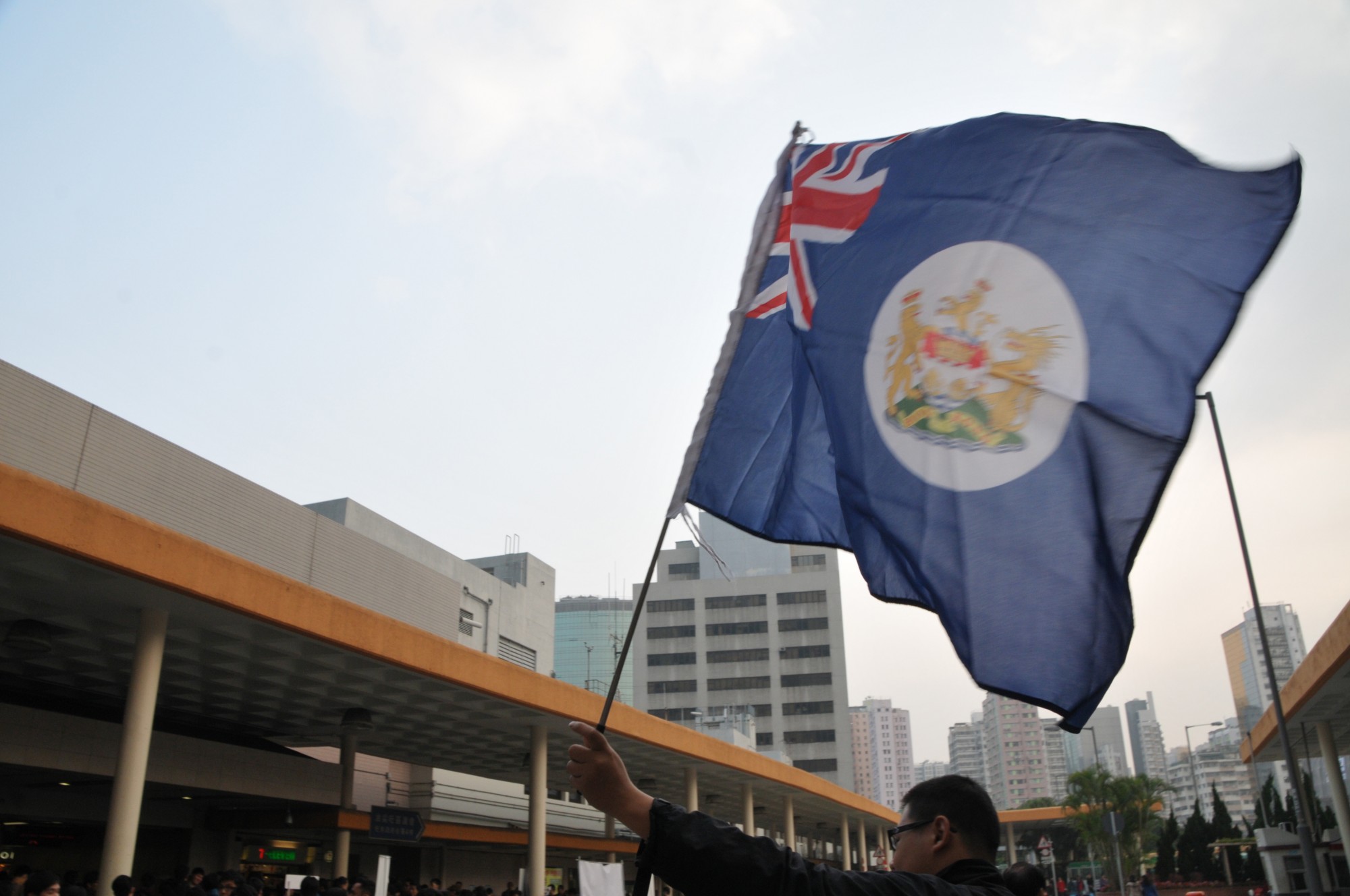
A man walks into Mong Kok East railway station pulling a trolley loaded with heavy cardboard boxes. When he tries to pass through the turnstile, a group of angry people immediately surround him, waving blue flags and swearing. The man is trapped. He cannot move until he has proven that his boxes contain fluorescent lights, not milk powder or other grey goods destined for sale across the border.

This incident is merely a tip of the iceberg. Tensions have been simmering between Hong Kong people and those from the Mainland for years and came to a head at the beginning of 2012. The flashpoint was when a security guard from the luxury fashion retailer, Dolce & Gabbana, forbade locals from taking photos outside their flagship store at Tsim Sha Tsui and said that only Mainlanders could do so.

Shortly after that, a video showing a dispute between Hong Kongers and mainland tourists over the tourists eating food on an MTR train went viral. Then, in a television discussion about the video, a Peking University professor called Hong Kong people dogs.

Tensions were stoked further when a group of Hong Kong netizens fought back against the insult. They raised money from donations to place an advertisement in the newspapers, calling mainland Chinese “locusts” swarming the city.

The advertisement fed into the discontent many people in the city felt that  mainlanders were coming to Hong Kong to give birth to children who could then claim right of abode here, competing with existing local families for hospital resources and primary school places. The rampant parallel trading activities that have affected the daily lives of Hong Kong people have further driven a wedge between Hong Kong and the Mainland.

The protests, such as those outside Mong Kok East and Sheung Shui stations may seem to be about a battle for resources or a reaction to changes in Hong Kong people’s way of life. Outsider observers might even see them as an expression of discrimination against the “other”. But as the more than 100,000 people who turned up to protest against the government’s proposed national education curriculum for schools showed, the battle for resources masks an ideological struggle. There is a brewing war between local consciousness and nationalism.

In the most recent findings from the “Identity and National Identification of Hong Kong People” survey conducted by the Chinese University of Hong Kong, 23 per cent of the respondents chose “Hongkongese” as their answer to the question “How do you identify yourself?”. This was the highest percentage since 2006. At the other end, 12 per cent picked “Chinese”, the lowest figure since the biannual survey was started 17 years ago.

Professor Eric Ma Kit-wai, who has conducted the survey from the beginning, says the results show how citizens have changed their minds. Ma says the initial projected outcome was that local identity would gradually diminish while national identity would rise. For the most part, the results seemed to confirm this but he began to witness a change in the trend in 2010.

Ma says the frequent disputes over resources between Hong Kong and the Mainland are some of the reasons for the change. Hong Kongpeople feel their own way of living is being eroded bit by bit. Also, Hong Kong media are producing more detailed news reports that reveal the negative side of China, like the mysterious “suicide” and death of activist Li Wangyang and the constant food scares. Ma says these have led to a worsening general impression of the country. At the same time, it has made Hong Kongpeople treasure their local identity more, in order to differentiate and distance themselves from what they see as the undesirable behaviour and culture of mainlanders.