














Home Blog Page 6

Reviving What Remains

Corals are disappearing all over the globe, here’s how Hong Kong’s coral coverage is being restored.

By Lunaretta Linaura

Thomas Fong, oceans conservation officer at the World Wildlife Fund (WWF) Hong Kong, dives every month to check on the health of corals in Hoi Ha Wan, a marine park located in the countryside of Sai Kung.

Fong compares corals seen underwater to a colour chart, which is used to determine the health of corals.

“The more intense the colour, the healthier [the coral] is,” Fong says.

Coral gets its colour from algae that thrive inside the structure, which is also the coral’s primary food source. 

Without the algae, coral turns white and is more prone to disease and death. The process is known as coral bleaching and can be caused by reasons including rising water temperatures.

Coral coverage – a measure of how much of the reef surface is covered in live corals – in Tolo Harbour and Channel dropped from about 80 to under ten percent between 1980 and 1985, due to the Sha Tin and Tai Po New Town development that came with residential and industrial sewage disposal into the water, according to the WWF. 

In an attempt to bring back this abundance, the WWF started a coral restoration programme called “Reviving Our Corals” in 2023 in collaboration with the Chinese University of Hong Kong, to foster increased resilience of marine communities reliant on corals.

Fong explains that Hong Kong corals have a slow growth rate of one to two centimetres per year, combined with more frequent bleaching events, human intervention is key to coral recovery.

“We know that corals are not able to recover by themselves, so we need to do coral plantation as active restoration work. We hope that the next generation of corals will be able to sustain themselves,” Fong says.

Restoration works involve bringing living fragments that have broken off corals into a coral nursery, and transplanting them into the Tolo Harbour when they have grown bigger in size. Some 90 percent of the corals transplanted there have survived, according to Fong.

  • Coral fragments collected are planted onto a stable substrate and grown in the coral nursery.

The WWF also holds workshops for local divers to learn how to transplant corals and conduct emergency rescue when they find a coral fragment underwater.

“We want the public to have a taste of coral restoration work and support us because coral restoration is not easily done by only a few people. We want divers to have knowledge on how to do coral restoration work in hopes they can join us and raise public awareness,” Fong says.

The last restoration workshop in 2024 received 200 sign-ups from divers within two days.

60 species of corals can be found in Hoi Ha Wan, management measures are put in place in Hoi Ha Wan Marine Park to protect corals from damage.

The WWF also hosts around 140 educational tours and activities for schools and other groups each year.

“For students, we want them to have a closer bond with the ocean. Here, we give them a chance for exploration by, for example, doing experiments with seawater,” Fong says.

Covering less than 0.1% of the ocean, corals are home to at least a quarter of all marine species and benefit an estimated 1 billion people, according to a 2020 report by the Global Coral Reef Monitoring Network. 

Corals also support tourism, fisheries, coastal protection, medicine, and welfare of coastal communities.

The services coral reefs provide are valued at US$2.7 trillion, according to the same 2020 report.

Due to factors such as warming waters and increased rainfall, coral bleaching has become a worldwide phenomenon.

In June 2024, the United Nations Environment Programme (UNEP) announced that a new global mass coral bleaching event had started. The last mass bleaching from 2014 to 2017 left about nine percent of the world’s corals dead.

Hong Kong’s corals are no exception to this danger. According to the Hong Kong Observatory, local waters have experienced a significant five percent annual warming since 1975.

  • Annual average sea surface temperature recorded at North Point between 1975 and 2024 (Courtesy of Hong Kong Observatory)
  • Annual rainfall recorded at the Hong Kong Observatory Headquarters between 1884 and 2024 (Courtesy of Hong Kong Observatory)

But Fong adds Hong Kong coral might have a chance to survive: “Unlike in the tropics, Hong Kong’s waters do not stay hot all the time. When the water cools, coral bleaching is reversed.”

Archireef is a Hong Kong start-up involved in coral restoration, best known for its 3D-printed tiles made out of terracotta clay.

Archireef’s eco-friendly tiles serve a stronger foundation for coral growth and survival (photo courtesy of Archireef)

David Michael Baker, Archireef’s co-founder, explains that the tiles is the first step to rehabilitate the seabed with living coral fragments.

“As the corals continue to expand and grow, they contribute to connecting Hong Kong’s patchy coral communities to attract more wildlife and form richer, more resilient ecosystems,” Baker says.

According to Archireef, these planted corals have started to reproduce, a sign that the restoration is effective. The company has extended its work deployment of reef tiles to the UAE, and is seeking further expansion to Southeast Asia.

Hong Kong’s Agricultural, Fisheries, and Conservation Department (AFCD) points out that Hong Kong is home to a higher coral diversity than the Caribbean Sea. Local coral-rich destinations include Tung Ping Chau Marine Park, Hoi Ha Wan Marine Park, Bluff Island, Sharp Island and Crescent Island.

“Some of the coral communities we have are quite impressive. On a good day, there are even some patches of reef here that look even better than places I’ve seen in Indonesia or the Great Barrier Reef,” Baker says.

Baker distinguishes Hong Kong as a “hope spot”, from which the understanding and appreciation of local corals can inform a future where more resilient coral communities grow.

“Not only are there many species of coral [in Hong Kong], but in some places they’re doing quite well,” says Baker.

“We shouldn’t be thinking about amusement parks, new shopping malls, we should be thinking about what’s all around us, including these country parks, and marine parks, there’s a tremendous amount of valuable things out there that I don’t think we’re leveraging in the right way,” he adds.

*Theme picture (photo courtesy of Jason Lau/WWF-Hong Kong)

Girls’ Hype Around Gay Erotica

The appeals of gay erotica to young girls in China.

By Jennifer Liu

Despite Juilie Zhang’s busy study schedule, the postgraduate student reads erotic gay fiction at least four to five hours a day.

“I love reading stories about two men falling in love, overcoming difficulties together and breaking social norms. This is what I expect from love. Stories about boy-girl pairings only position women as companions assisting their male lovers in becoming successful. Women are always in a secondary position rather than the leading protagonist,” the 26-year-old girl says. 

“Also I want to take a break from books I read for studies. I just want to stay in my dormitory and read gay fiction. I even stay up late to read,” the PhD student researching in electronic science says.

Zhang often associates the stories with her own breakup experiences. After experiencing two breakups, she is reluctant to date again. She finds comfort in reading online gay fiction when she undergoes hard times.

“The kind of love described in fiction is what I expect for my own romantic relationship which I do not find in real life. These fictions also help me escape from reality,” she says.

“So I see very clearly that gay fiction is a beautiful world constructed by women. It is like heaven for lovers,” she says.

Sharing Zhang’s interest in erotic gay fiction, university student Liu Chang also spends at least five hours a day reading gay fiction online. 

“I feel so excited that I have to prevent myself from screaming when I read stories with love scenes about two boys flirting or kissing,” the 19-year-old student says. 

Liu Chang reading gay erotica online with a smile.

Liu says her favourite story is titled The Children of Fire Dancing. The story is about a top student and a thug. The two have strong feelings for each other. At first, they try to avoid seeing each other and refuse to admit the fact that they love each other and later they become a couple.

“This story showcases the great courage of two young men going against all odds just to be in love and stay together. That is very difficult in real life,” she says.

Liu seldom reads books related to her studies or other literary works in her free time.

“These gay fictions are more interesting than the readings required for my study. I spend hundreds of dollars buying textbooks, but I don’t like reading them. Most of these gay fictions are free online, and I just love reading them,” she says. 

“I am fascinated by the description of subtle and sweet interactions between characters. The writing is so good that it makes me think that the fictional plot might be real,” Liu says.

Liu has never had a boyfriend, because she is concerned about dealing with loyalty problems and having an abusive relationship.

“I am ready to live alone for the rest of my life. I would rather read gay erotica than date a boy in real life,” she adds. 

Like Liu, university student Rita Wang, 20, spends at least five hours reading gay fiction.

Wang shares that she finds descriptions of gay relationships very appealing. “Most stories are about two male lovers who have their ups and downs in their relationship. They grow wiser together after going through tough times together. I really like that,” she says.

“I feel happy when I read gay fiction, and what happens in the fiction world does not bother me at all. But if I have a real boyfriend, I might have to deal with many relationship problems. I can have a good life on my own reading gay fiction,” she adds. 

Wang says she and her friends also got to know each other because of their love for gay fiction. Now reading gay fiction has become part of her life just like eating and sleeping.

A list of gay fiction books sold on a bookstore’s website.

She also points out that girls do not read gay fiction just for its pornographic element.  

“The gay fictions are written by female writers who understand what girls think and like to read. When I read gay fiction, I imagine that I am one of those characters without dealing with the troubles of having a real boyfriend. This saves time and money compared to dating in real life,” she adds. 

Professor Zhang Hui at the School of Sociology and Population Studies of Renmin University of China points out women enjoy reading erotic gay fiction because the writing provides space for women to have fantasies about romance.

“Readers can escape from real life in which couples have to deal with gender inequality. They can imagine having a relationship with the same gender. Gay fictions offer a compensatory pleasure, and provide both sexual and emotional satisfaction,” Zhang says. 

“The fictions allow readers to observe emotions as a bystander, “she adds.

Zhang also points out that unlike relationships in real life, which are often bound by social expectations, these fictions only focus on emotional connections and romance between two characters. 

Edited by Lunaretta Linaura

Subedited by Celina Lu

The Last Fight Scene in Hong Kong Cinema

Hong Kongers flock to movie theatres for blockbusters amid the poorest film industry performance in 13 years

By Swara Sanket Kamble

University student Oscar Seyau Tsz-wing goes to the movie theatre twice a month, and two Hong Kong blockbusters, ‘The Last Dance’ and ‘Twilight of the Warriors: Walled In’ are his favourites.

“As a Hong Konger, I feel very proud of the Hong Kong movie industry. Many films featuring ordinary citizens in the city have become popular. My family and friends who don’t usually watch movies also go to the theatre to watch ‘The Last Dance’ three times,” the engineering major says.

“I really like the cinematography of Hong Kong movies and how they present elements of daily lives in the city on a big screen. I can resonate with the film and relate to emotions and struggles characters go through in films. The cinematic experience of a film is a unique feeling,” the 20-year-old student says. 

Seyau thinks it is important to preserve the city’s unique culture and Hong Kongers should support the movie industry simply by watching movies in theatres more often.

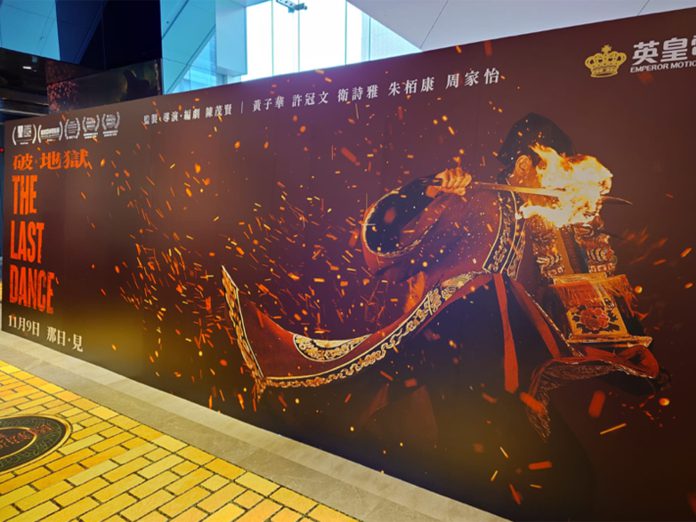
“The Last Dance” is crowned as the highest-grossing Chinese-language film in Hong Kong history.

The movie, based on the city’s funeral trade and family traditions, had the highest opening day for any Hong Kong film and has earned more than HK$158 million (US $15.7 million) as of February 2025.

The Last Dance becomes the 4th highest-grossing film in Hong Kong, after Avengers: Infinity War. For the first time since 2004, the Hong Kong box office surpassed Hollywood’s box office in 2024.

‘Twilight of the Warriors: Walled In’, an action flick about the notorious Kowloon Walled City, has earned HK$105 million (US $13.5 million) and become the second-highest-grossing Chinese language of all time in Hong Kong. 

Louis Koo in Twilight of the Warriors: Walled In
(Photo courtesy of Entertaining Power Co Limited)

The action and martial arts elements pay homage to the long history of Hong Kong kung-fu movies. It has been put forward as Hong Kong’s entry for the category of best international feature film at the 2025 Oscars.

Associate Professor Dorothy Lau at the Academy of Film at Hong Kong Baptist University (HKBU) believes that movies about Hong Kong are popular among moviegoers.

Citing the latest blockbuster, Twilight of the Warriors: Walled In, as an example, Lau says the movie creates “an environment that can make audiences recall Hong Kong in the past”.

“The fictional Kowloon Walled City in the movie mirrors what Hong Kong society was like in the past – when human relationships were very close. We can find solidarity. We can find kindness. We can find mutual help,” she says.

While some movies have an impressive performance in the box office, the city’s film industry has seen the lowest box office revenue, standing at HK$1.34 billion (US $172.5 million), since 2013. Earnings were down by 6.2 per cent when compared with the HK$1.43 billion (US $183.6 million) earned in 2023.

In 2025, during the Lunar New Year holiday, the box office revenue stood at HK$30 million, a staggering 40 per cent drop from the HK$41 million generated during the same time period in 2024.

The city has recently seen the closure of eight movie theatres across various districts, including two Golden Harvest cinemas in Kai Tak and Nam Cheong, and MCL Cinemas Plus+ Plaza Hollywood in Diamond Hill leaving 267 movie theatres in Hong Kong, according to the Hong Kong Theatres Association.

Hong Kong cinema chain Golden Harvest has reduced ticket prices to as low as HK$20 (US $2.60).

Professor Chan Ka-ming of communications at the Chinese University of Hong Kong (CUHK) and former film critic, believes that the pandemic has a long-lasting impact on the Hong Kong film industry. 

“Many people couldn’t go to the cinema during the pandemic, so they watched films through Netflix and Disney+. This is a global phenomenon, and their film film-watching habit has changed,” Chan says, adding that consumers are still glued to streaming services now. 

According to PricewaterhouseCoopers (PwC), a leading professional services firm that provides a wide range of services including audit and consulting, Hong Kong’s Over-The-Top (OTT) Video market, which includes streaming services that provide video, audio, and other media content directly to users through various devices like smartphones, has grown rapidly in the last few years, reaching HK$4.3 billion (US $557 million) in 2025. 

Subscription streaming services represent close to 84% of total OTT revenue in Hong Kong and are on course to increase to over 85% in 2028. 

Apart from the change of habit, Chan points out that room for creativity is another major factor that has affected the Hong Kong movie industry.

“We can see that the industry seems to be going downhill. In the 80s and 90s there was no intervention in the film industry. Now, the contexts have changed. The industry is very different as there are many limitations,” he says.  

Hong Kong’s legislature passed the film censorship law in 2021. The law bans films that violate China’s national security interests. Punishment for violating the law includes up to three years of imprisonment and fines of up to HK$1 million (US $128,400).

Director Norris Wong, best known for her 2023 movie ‘The Lyricist Wannabe’, says that many independent filmmakers like herself are facing difficulties such as the lack of filmmaking training and filming equipment, including high-quality cameras, and audio equipment due to budget concerns. 

Norris Wong on the set of ‘The Lyricist Wannabe’ (Photo courtesy of Norris Wong)

“Independent filmmakers can only make low-budget films due to limited funding. Also, government regulations, like the national security law screening, are stricter now, affecting creative freedom,” she says. 

Wong believes that Hong Kong cannot go back to the good old days like the 80s due to streaming services and the passing of the 2021 bill. 

Drawing on the example of Korean entertainment, which benefits from substantial government funding, she argues that Hong Kong’s government support is crucial for the industry’s success.

The Film Development Fund has provided financial support to 100 films in the last two decades. In May 2024, the government further injected about $1.4 billion into the fund to support the industry, according to the Hong Kong Film Development Council.

“Audiences also need to support with our feet by going to cinemas to watch films,” Wong says. 

Edited by Yika Ng

Sub-edited by Angel Yu

No sex! Let’s play badminton!

Education Bureau advises Hk students to quell sexual desire by playing badminton.

By Cindy Lee and Daniel Koong

Playing badminton has become a code for sex in the wake of a set of government sex education teaching materials asking young boys and girls to quell sexual desire and avoid premarital sex.

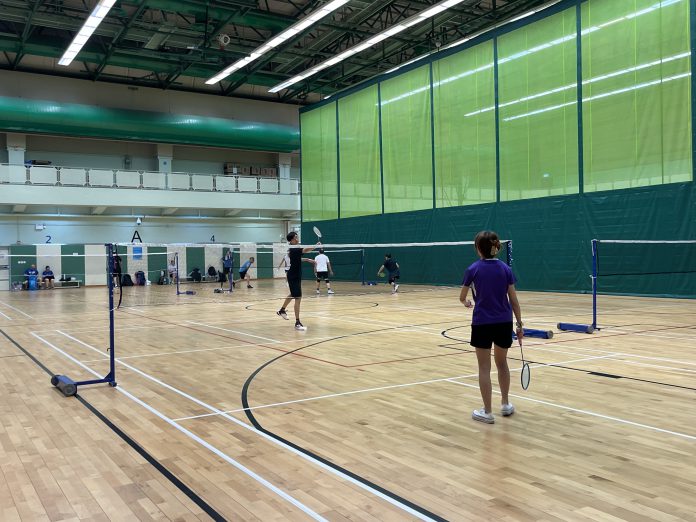
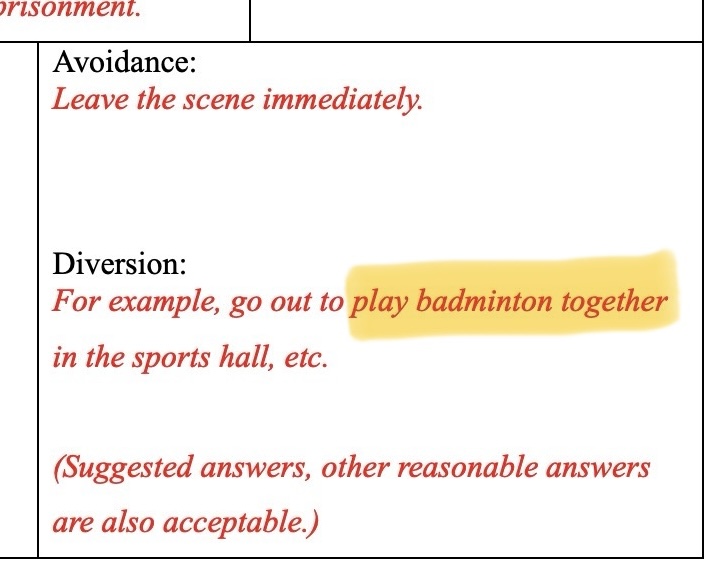
The 70-page document released by the Education Bureau in August last year suggests young people should focus on study. When experiencing sexual impulses, they should go out and play badminton together in a sports hall.

It also includes a form called “My Commitment” aimed at getting “young lovers” to attest that they would exercise “self-discipline, self-control, and resistance to pornography”. 

The Education Bureau advises students to play badminton to relieve their sexual desire in the Citizenship, Economics and Society curriculum guidelines issued in August 2024.

Since then, people across the city could not resist poking fun at these suggestions that “playing badminton” has become Hong Kong’s version of “Netflix and chill”.

“Students now use terms like “playing badminton” to refer to sex. I think Hong Kong is still quite conservative when people talk about sex. Many young people have sex without really understanding what it means,” Shatin Pui Ying College form six student So Wing-fung says. 

Eighteen-year-old student Patrick Lam Paak-Hin who is also studying at Shatin Pui Ying College thinks the government rolled out the new teaching materials out of good intentions. “But they ended up being a subject of ridicule. The materials should be revised,” he says.  

“Teachers should not just explain how to use a condom but should actually demonstrate it,” Lam says. 

Form Four student Clarinda Lee Cheuk-yau from Baptist Lui Ming Choi Secondary School finds sex education is almost nonexistent in Hong Kong education curricula. 

“Students have to seek advice elsewhere rather than learning about sex in school. I think more should be done in schools,” Lee says.

“Sex education is not properly taught in school. Teachers only mention a little about birth control preventive measures. I hope the subject can be included in the curriculum and students can have more in-depth knowledge about sex,” the 15-year-old student says. 

In August 2024, the Education Bureau launched an updated curriculum for sex education under the Citizenship, Economics, and Society, a new subject for Form One to Form Three students in Hong Kong.

Under the new teaching curriculum, sex education will be taught in Form Three in secondary school to students aged 13 to 14. It also covers advice on building a correct value system and what teenagers should do to control their sexual desires. 

The Family Planning Association of Hong Kong has been providing sexuality education since 1967.

Education manager of the Family Planning Association of Hong Kong Grace Lee Ming-ying points out that sex education should be introduced to children once they are born.

“The training should start when they are babies, starting from the family. Kids spend most of their time with their parents and have trust in them. Parents sharing what they believe with their children is the best way to guide them,” she says.

Lee says school time is very limited and that it is impossible to teach students everything. 

“The school schedule is very tight and there are only one or two lessons spare for sex education every year which means not much can be covered,” she adds.

Lee believes the government’s suggestion is to encourage young people to handle their sexual desires positively.

“We often encourage young people to face their sexual urges by focusing on proper communication with their partners. The most important thing is to have an open discussion and agree on healthy boundaries for intimacy,” Lee adds.

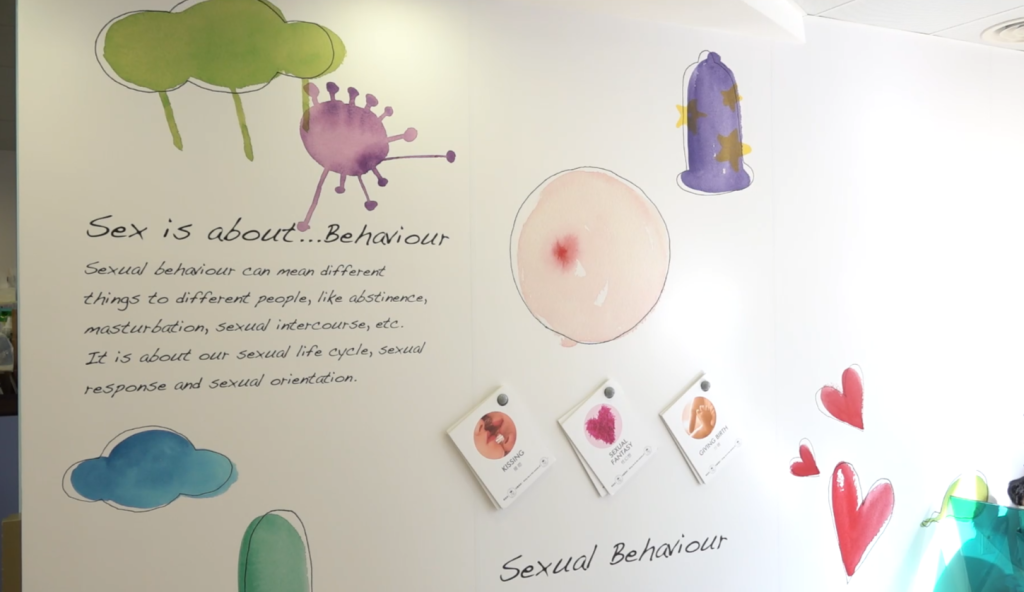
Sexual behavior can mean different things to different people.

Sky Siu, the Chief Executive Officer of Mother’s Choice, notes sex is a taboo in Hong Kong, making it difficult to do sex education in schools. 

“It’s a pretty uncomfortable subject matter that most people and families don’t enjoy bringing into conversation. People need to realise that sex is a normal part of our life and our relationships,’ she says.

“When we first started our comprehensive sexuality education program, it was targeted at young girls to make sure young people have the right information so that they could make informed choices for themselves,” Siu says. 

Since its establishment in 1986, the charity organisation has helped over 54,000 young girls with crisis pregnancy.

Siu points out that the updated sex education curriculum has been much needed since it was last updated in the 1970s. 

“The curriculum has more room for improvement, but it is a promising start. We hope to see the curriculum become mandatory so that it doesn’t get lost in the difficult challenges of scheduling in an academic setting,” she says.

In a written reply, the Education Bureau says it will “continue to maintain contact with the academic sector and various relevant groups to provide and optimise sex education courses and teaching materials that meet the growth needs of primary and secondary school students in Hong Kong”.

The bureau adds that teaching materials were compiled by the School of Education and Languages of the Metropolitan University of Hong Kong, which was commissioned by the Education Bureau in 2021. The production team is composed of experienced experts and scholars, senior social workers, and teachers.

The Hunchback of Smartphones

More young people suffer from health problems due to the long-term use of smartphones with bad postures.

By Christine Ge

Years of bad posture while using a smartphone have caused neck pain to university student Li Xiaotian. He now has an hour-long physiotherapy session twice a month and has to use plasters weekly to deal with the pain.

The 20-year-old student, who majors in Chinese Studies, first encountered the problem two and a half years ago, when he suddenly could not turn his neck.

“I wanted to look up at slides displayed in class. Suddenly my neck felt very stiff and I couldn’t move it. I was 18,” Li recalls.

The 20-year-old student Li now always suffers from dull neck pain, and the pain sometimes can be very intense when it attacks. 


Li is lying on the sofa playing with his phone. (Photo courtesy of Li Xiaotian)

“When the pain comes, the soreness and swelling of my neck then becomes stronger. The intersection of my cervical spine and shoulder tingles. I can’t help but have to rub it with my hands,” he adds.

This young man was diagnosed with cervical lordosis, commonly referred to as “turtleneck,” six months ago during a consultation at Shenzhen Pingle Orthopedic Hospital, a facility renowned for treating spinal and musculoskeletal disorders. 

The condition means his cervical spine has lost its natural curvature and is now curving forward, causing chronic discomfort and stiffness.

Using electronic devices for a long time with bad posture is confirmed to be the main cause of his neck pain by a doctor.

CT of Li’s neck. (Photo courtesy of Li Xiaotian)

Li shares that he always lies down or lies on his back with his neck tilting forward while playing video games on his smartphone for hours without changing posture. 

“I spent half a day on screen since I started my university study, mainly studying, playing video games, and scrolling social media posts. It’s easy to lose track of time when you’re in the middle of a game, and before I know it, my neck is stiff and sore,” he says. 

Like Li, Sheng Siyuan also suffers from chronic body pain, as he uses electronic devices for many hours every day.

The 21-year-old university student has lower back pain, especially on his right side. He has been diagnosed as suffering from lumbar dorsal fasciitis and lumbar strain which means overuse of lower back muscles.

Slouching without any support for long hours when using his smartphone and laptop is found to be the main cause.

“I spend about three to five hours a day on my laptop, and seven to eight hours on my phone. After spending a long time on screen, the pain is unbearable. I can’t sit for a second without wanting to lie down,” he shares. 

Sheng recalls his back pain first flared up near the end of his second year of study when he was having a final examination.

 “At first, I didn’t pay much attention to it because the pain eased after some rest. The pain keeps coming back and hits me, especially when I do my homework on my laptop or look at my phone for hours, I realize that I can no longer ignore it,” he adds.

After seeing a doctor, he received ultrasound therapy once a week for two months to treat his lower back pain. 

Sheng also has to exercise to build up the habit of adopting good posture and to be more mindful of taking breaks while using electronic devices.

The average age of cervical spine disease patients in China has dropped from 55 to 39, with 37% of the patients now under 30 in recent years, according to a report released by the Beijing Tsinghua Changgeng Hospital in 2023.

The report points out that bad posture and long hours of desk work are the main reasons.

Based in Bozhou, Anhui Province, yoga instructor Ming Jingyu, who has been teaching for seven years, observes more and more young people are suffering from body pain due to bad posture when using electronic devices. 

Ming’s youngest student is an 11-year-old girl. 

“The young girl has serious posture problems. Excessive smartphone use and long hours of sitting while studying have led to turtle neck, rounded shoulders, spinal misalignment, and even chronic lower back pain,” Ming says.

She warns that poor posture causes cervical spine rigidity and reversed spinal curvature, often followed by dizziness, nausea, and even breathing difficulties.

 Li’s sitting posture for daily phone use, stilted legs, slouch on the sofa. (Photo courtesy of Li Xiaotian)

Ming advises young people to adopt better daily habits such as avoiding tilting their heads while using phones for hours and crossing their legs.

  • Cover photo
  • Li's sitting posture for daily phone use, stilted legs, slouch on the sofa. (Photo courtesy by Li)
  • CT of Li's neck. (Photo courtesy of Li)
  • Li is lying on the sofa playing with his phone. (Photo courtesy of Li)

“Posture can be corrected by stretching and strengthening exercises if problems are detected at an early stage,” she adds.

Hui Ka-kit, a lecturer of the Physical Education Unit, PEU, at the Chinese University of Hong Kong, points out that body pain caused by poor posture when using electronic devices is a global trend.

“Rounded shoulders and turtlenecks are the two most common posture problems that lead to body pain among students,” Hui says.

“Many people like to slump into a sofa and play with their phones, including myself, but this posture damages the lower back because there is no support,” he adds. 

Hui suggests young people to exercise more and reduce screen time. 

Edited by Cathleena Zhu

Sub-edited by Emma Wei

I Like to Move It Move It – Editor’s Note

Ageing and sickness are often linked. Most people are not concerned about their health when they are young, as they can recover much quicker. They only realise the importance of health, when they fall sick. We often associate body pain with ageing, as a natural consequence of growing old.

But the situation has changed. With the more common use of digital devices, more and more young people start to have body pain, which should be in their physical prime.

Varsity talks to university students who suffer from various body pains, including text neck and lower back pain. Excessive use of technology causing screen dependency and poor posture are wreaking havoc on young bodies. 

In this issue, Varsity reporters explore how poor daily habits and ergonomics contribute to body pain in students. Yoga instructors and scholars on posture share their tips for good posture prevention measures. 

While many students are suffering from body pain, a man in his 70s embraces sports and training, proving that strength and vitality are not limited by age.

In this issue, Varsity reporters introduce you to Roneo Tsu, a 76-year-old gym enthusiast who has transformed his life through fitness, spending over 12 hours in the gym every week. His journey inspires everyone to rethink ageing. Ageing is not ‘lost youth’ but a new stage of opportunity and strength.

Other stories featured in the March issues include myths and misconceptions about drinking bottled fruit juice, why young girls in China enjoy reading gay fiction and what challenges these fiction writers are facing. Varsity reporters also investigate why short dramas are getting popular in China. Back in Hong Kong, the current situation of the film industry is examined.

This issue is a call to action for every reader to prioritize their health. Your body reflects your daily habits. 

Stay strong, stay active, and enjoy the read!

Daniel Koong

Chief Editor

FancyWall: Mixed Music, Pure Passion

FancyWall has carved out its own niche, sharing its journey from classroom to centre stage.

By Ivonne Deng

FancyWall, a Chinese indie band, pledges to keep concert ticket prices low so that more people, especially students, can watch its live performances even though it is famous now and has been recognised by one of the most prestigious music awards.

Formed in August 2015, the band was nominated for Best New Artist at the 2023 MIDI Music Awards, an annual award presented by the Beijing Midi School of Music to honour outstanding musicians in the country since 2009.

“We still hope to bring down the prices of our band performances. We will not raise the price unless we cannot keep us alive,” says Xu Yuhan, the founding member of FancyWall.

A student only needs to pay RMB¥150 (US $20.50), whilst others can watch a live show of the band by paying RMB¥200 (US $27.60). Bands of a similar stature to FancyWall usually have their ticket prices doubled.

Xu, keyboardist of FancyWall, recalls the band was formed when he was a secondary school student with his schoolmates. He is the only remaining founding member, the other current members are guitarist Yang Yutong, lead singer Min Haoyang, bassist Lyu Shang, and drummer Liu Yangming.

The band’s most famous song is the Pink Lightning, which has over 260,000 likes and five thousand comments on NetEase Cloud Music, a leading interactive music streaming service provider in China. Regarded as the most commercially successful song by its fans, the song is about a couple falling in love at first sight and hoping to treasure every moment. 

This song is always the highlight of FancyWall’s live performances and the audience would sing along loudly and interact with the band.

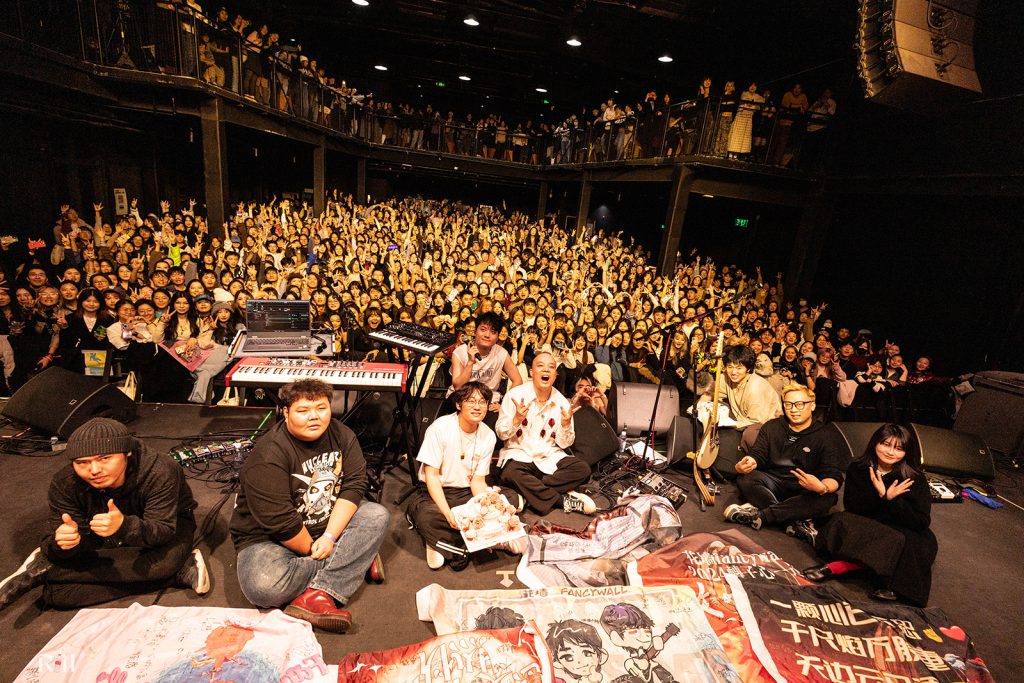
FancyWall’s live show in Beijing, 2024 (Photo courtesy of FancyWall)

The band believes live performance and a wide variety of music styles are its biggest charms.

“Live shows and recorded music are just like sketching and comics. We have instinctive expressions based on the occasion and audience during live performance, ” Min, the band’s lead singer, says. 

Underground bands in the mainland, including FancyWall, have only become popular in China due to the popularity of a famous entertainment show – the Big Band in 2019. Aired between 2019 and 2023, it was one of China’s biggest music competition television shows. Not only making rock music better known in China, the show also brought many less-known rock and indie bands to the fore.

While FancyWall did not get a chance to participate in the show, FancyWall still says thanks to it as many Chinese people become interested in indie music that they would go to small-scale live music clubs to watch live performances of these alternative rock bands.

FancyWall’s keyboardist remembers vividly the live performance marking the release of the band’s first album Millennium Eden in a small venue five years ago.

“On that day, the livehouse was packed with 250 people. I checked everyone’s ticket behind the table, ” Xu recalls.

More people enjoy watching its live performance nowadays. In their latest tour in 2024, FancyWall performed in 22 cities across China in 2024 and each of the 22 performances attracted more than 500 people.

The band’s drummer adds that FancyWall’s audience base has grown and not only students but middle-aged people would also watch its performances. 

“Many of them jumped happily during our show,” Liu says.

Apart from live performances, the band’s unique music style also attracts many audiences.

ROTOR HEART (Photo courtesy of FancyWall)

In its third album ROTOR HEART published in 2024, the band members liken themselves to a rotary engine that never stops spinning.

“Diversity is one of the core features of this band. Bands are like movies: comedies, literary films, documentaries, and even commercial romance films. FancyWall is a personal Vlog covering all the elements above,” Min, the lead singer says.

While each band member has his own music preference and style, Min stresses the band has never wanted to simply come up with only one single style but hopes the audience would appreciate a wide range of music.

The band says it is hard to attract a larger audience because the music tastes of many people are relatively restricted.

Vowing to walk its own way, the band stresses it would not just produce music purely for the commercial market.

“If we just ‘cater to’ the market, we can only reproduce the existing music,” Xu adds.

The band is now preparing for their next album after performing in Tokyo and Seoul. 

Joining FancyWall when he was a secondary school student, the lead singer urges youngsters to chase their dreams.

“I still highly recommend students to form a band now. It is romantic and touching to do music together with people sharing the same interests,” Min says.

Edited by Daniel Koong

Sub-edited by Cindy Lee

*Theme picture (photo courtesy of FancyWall)

The Sweet Lie of Fruit Juice

Drinking bottled fruit juice is unhealthy.

By Belle Yip

Office worker Jane Lee used to suffer from constipation. The problem has improved after she started eating more vegetables and fruits instead of drinking bottled berry juice after dinner three to four times a week. 

“I suffered from constipation when I drank bottled fruit juice. Sometimes, I stayed in the lavatory for an hour. I could only poop every four days. But now I can do it every day after I have started to eat more fresh vegetables and fruits,” Lee recalls

Lee used to believe she could easily get nutrients like vitamin C and dietary fiber by drinking bottled fruit juice. 

Fruit juice selling in chained supermarket

“I also found it refreshing to drink bottled fruit juice after dinner. I thought bottled juice was nutritious enough, so I didn’t eat other fruits or vegetables,” she says.

The office worker changed her habit half a year later after learning that it is healthier to eat more whole foods. “I now eat more fresh fruits such as tangerines and cherries,” she says.

Like Lee, university student Sally Chan finds her skin problem has improved after drinking water or tea instead of her favorite bottled apple or mango juice.

“I drank bottled fruit juice for two years. I often got acne on my face when I had it for breakfast,” she recalls.

Chan also had stomach pain a few times a week when she was a frequent bottled fruit juice drinker.

“I started to drink more water and tea and have a proper breakfast such as noodles and rice balls after finishing the HKDSE (Hong Kong Diploma of Secondary Education). My skin problem has greatly improved, and I do not have stomach pain anymore,” she says.

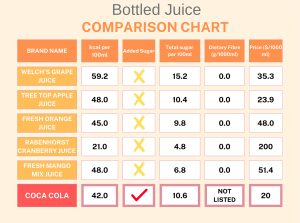
Varsity reporter surveys food labels on bottles of fruit juice in supermarkets in Hong Kong. Findings show that dietary fiber content in bottled fruit juice is mostly absent. 

Comparison of nutritional value between bottled fruit juice and Coca-Cola

The sugar level in bottled fruit juice is comparable to that in soft drinks like Coca-Cola. For example, Welch’s bottled grape juice contains 15.2g of sugar, even more than normal Coca-Cola with 10.6g of sugar per 100ml.

Dietitian Chloe Lee Wai Hang states that excessive sugar consumption can lead to skin problems. 

“Bottled fruit juice is a high-sugar beverage. Higher sugar intake increases chances of inflammation response such as redness and swelling of skin,” Lee says.

She also points out that the consumption of dietary fiber and gut health are closely related.

“Insufficient fiber intake is the main cause of constipation. Packaged fruit juice is very thin and smooth which means insoluble fiber is not retained when fruits are compressed to make juice. Cold-pressed juice is thoroughly filtered, and that makes dietary fiber content even lower,” she says. 

The dietitian from Gleneagles Hospital suggests that busy city dwellers can purchase packaged fresh fruit cups from chain stores as afternoon snacks.

Fruit boxes selling in chained supermarket

She suggests putting grapes or blueberries in a freezer so that the fruits can be consumed for a few days.

Lecturer Peggy Yip Pui-Sze from the School of Life Sciences at the Chinese University of Hong Kong says sugar content in bottled fruit juice is higher than eating the fruit itself.

Yip warns excessive sugar absorption can lead to obesity, which causes other health problems such as hypertension and cardiovascular diseases. 

She adds that vitamin C is very sensitive, and it oxidizes when fruits are being compressed, leading to loss of vitamins in bottled fruit juice.

The Centre for Health Protection (CHP) under the Department of Health suggests that adults and teenagers aged 12-17 eat at least two portions of fruits and three portions of vegetables per day. 

The World Health Organization (WHO) recommends a population intake goal of 25g per day for dietary fiber to reduce the risks of many chronic diseases.

Edited by Zora Yan

Sub-edited by Bliss Zhu

Gay Erotica Writers Facing Jail Time

The detention of more than 50 writers of gay erotica in mainland China has led to heated debate.

By Della Qing

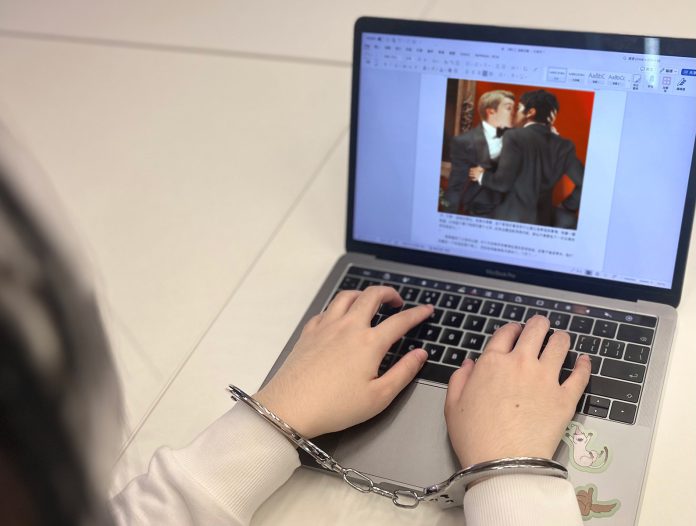
Out of anger and fear, gay erotica fiction writer who publishes under the pen name Ni Xiaoyu has deleted all her work after learning more than 50 other writers who used to post their stories on Haitang, a fiction website, have been arrested.

“I’m very furious about the arrest. I don’t think writing gay erotica fiction should be outlawed. Our work does not do any harm to anybody,” Ni says.

“I won’t stop writing because I’m a freelancer, and I’m happy to continue writing stories. Those who make a living by writing have to think carefully about what to write, how to write, and where to write. Fear will limit their freedom to create,” the writer adds. 

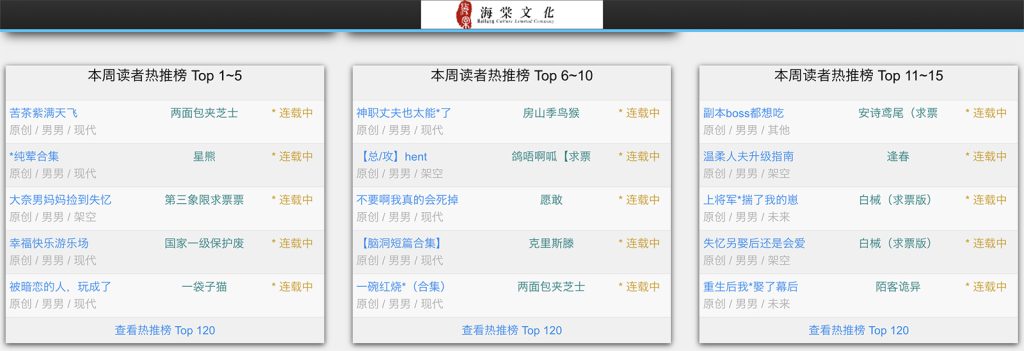
Founded in 2015, Haitang Culture is an online fiction website affiliated with Longma Culture Limited Company in Taiwan. It features gay erotica and other fiction which are only accessible for internet users who are 18 or above. 


The hot list of  top 15 articles highly recommended by readers on fiction website Haitang. All of them are gay erotica fictions.

“I’m worried about other fiction websites such as Weibo and Lofter that are subject to the authorities’ censorship,” the writer, with ten years of experience writing gay fiction, says.

“Since the censorship in Mainland China is getting stricter and stricter in recent years, Chinese gay erotica writers tend to choose Haitang Culture as an enclave to avoid content censorship, for this website is based in Taiwan where regulations on gay erotica fictions are relatively lenient,”  she adds.

Under Chinese law, writers who make more than RMB ¥250,000 (US $34,500) from selling erotic materials can face a maximum sentence of life imprisonment, although in practice they can get shorter prison terms if they settle the penalty.

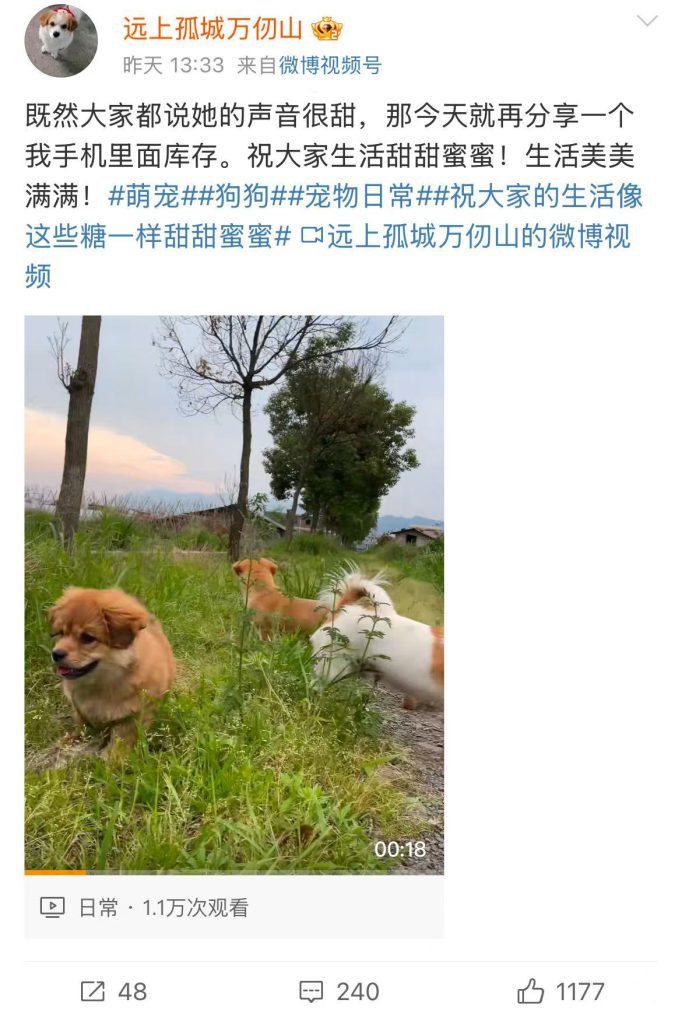
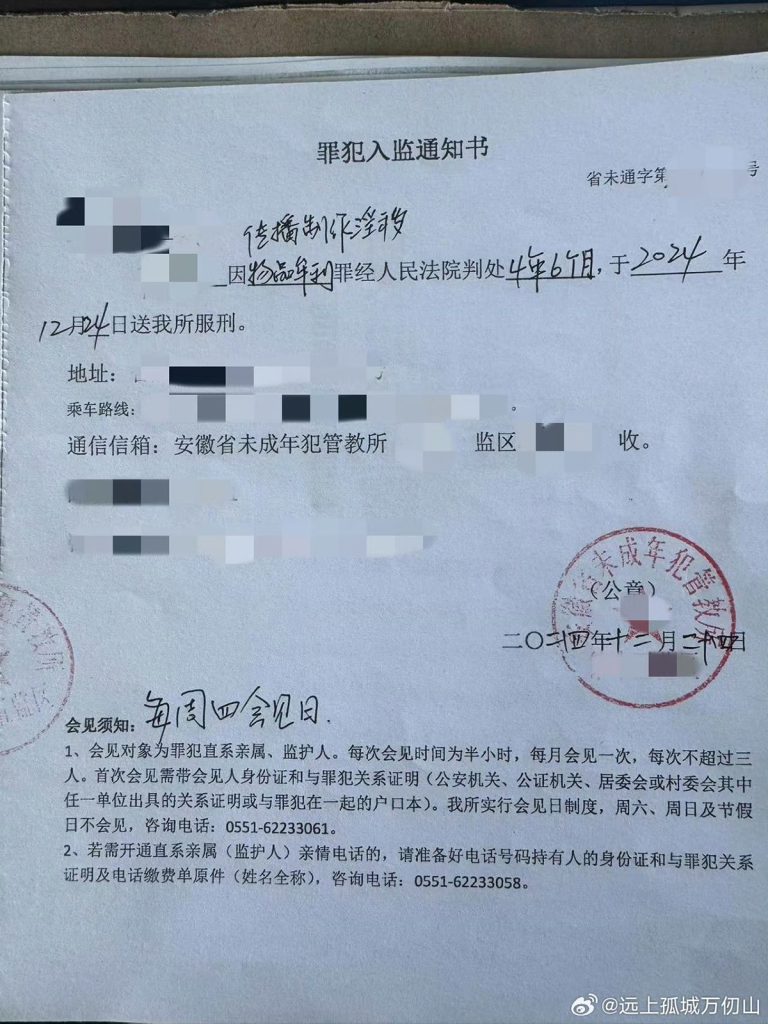
One of the arrested is a top writer who publishes under the pen name Yuan Shang Bai Yun Jian. She was sentenced to four years and six months’ imprisonment with confiscation of her personal property of RMB ¥1,850,000 (US $254,400) and a fine of RMB ¥1,850,000 (US $254,400).

“I think the penalties are certainly overwhelming and the laws should be reviewed. It is ridiculous to discuss laws and penalties when there is no rating system about literary work in mainland China,” Ni adds.

In October 2024, a woman who was believed to be Yuan’s sister posted a message on Weibo, said her sister who has been posting stories for almost a decade under the pen name Yunjian, has gone missing since mid-June 2024 and appealed to readers for donations to settle the penalty.

In early January 2025, a man claiming to be Yunjian’s husband posted on social media that his wife was sentenced to four and a half years in prison and thanked readers for their support.

The Weibo Homepage of Yunjian’s husband. So far this account has gotten 2.1 millions followers.

The post also highlights a message which is believed to be from the writer: “I will work hard in prison and try to get out earlier. By then, I’ll thank my readers in person.”

Another freelance gay erotica writer Shi Xiaoxuan, who also posted her works on Haitang, shares Ni’s frustration and worries.

“I don’t think writing gay erotica fictions is a crime. The only criminal element in these cases may be tax evasion. But I can understand why writers do not declare information from their written work. Writing gay erotica is like working in the grey area in China. If they pay tax, the police will investigate them,” Shi says.

“I think the police in Jixi arrested the gay erotica fiction writers because the government faces financial problems,” she adds.

The document of the arrest of Yun Jian. The crime element written here is publishing and selling erotic materials.

“I am not surprised with the sentencing of Yunjian. I don’t want to say that things are going backward, but the censorship is indeed getting tighter and tighter. Of course, I hope this kind of thing will not happen to anyone,” Shi says.

Apart from feeling worried about censorship, the two writers also find the fiction website, Haitang Culture, irresponsible for failing to protect writers who contributed work to the site.

“Haitang Culture takes commission from writers, but it does not bear any responsibility for offering legal protection to writers,” Ni says.

“The online fiction site even lied to the writers after the arrests were made, claiming it was safe for them to write on the platform,” Shi sighs.

After the arrest of around 50 gay erotica writers in June 2024, the fiction website only locked all the writers’ columns without any financial or legal assistance to their contributors.

Varsity reporter has emailed questions to Haitang Culture, but no reply has been received before publication. 

“I’m not worried about breaking the law because I live and write abroad. But I have a lot of sympathy for authors who write in the same language as me in mainland China,” Shi says.

​​Professor Fang Kecheng from the School of Journalism and Communication of the Chinese University of Hong Kong points out that the arrests of writers show that censorship is getting stronger in China. 

“Usually, politically sensitive issues are more likely to be censored. But in the past decade, censorship of content related to morality has grown stronger too,” Fang says.

“These issues might not be related to politics, but the government thinks they are dangerous, toxic, and influenced by western values, which might challenge the country’s future development and solidarity of the nation,” he adds.

Fang believes writing should be absolutely free, and regulations should be applied to the publication and distribution of written work. “Every country has its publication regulatory system, like a rating system,” Fang says.

“The key is that the regulations should be passed with public consent. The standards and processes of how regulations are applied should be transparent and open to the public. All matters should be discussed and solved in a legal framework,” he adds.

Edited by Bliss Zhu

Sub-edited by Cathleena Zhu

Start from Scrap: Touch it, Feel it

Scrapbook enthusiasts embrace handmade journals to preserve memories.

By Flavia Zhou

University student Evelyn Chan-yun has been making scrapbooks for nine years to record her daily life and memorable moments.   

Chan likes using hand-drawn stickers and tapes in scrapbooks. 

“Hand-drawn stickers and tapes are exquisite handwork. I don’t like e-journals. I like to write with pen and paper. The feeling of touch helps me relax after studying,” the 20-year-old student says.

Owning two smartphones and one tablet, she only uses them in class and checks PowerPoint slides for revision.

The scrapbook enthusiast journals daily events and makes to-do lists two to three times a week.

“Sometimes, I draw some pictures like emojis and food to make my scrapbook beautiful and memorable. My journal is more than just a record of my life. It is an artwork,” the Economics major student says.

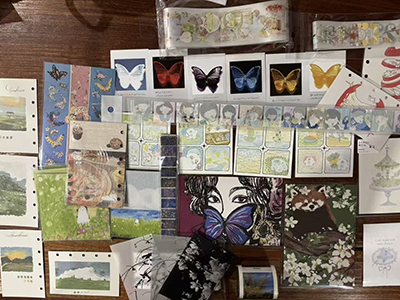
Some of the materials Chan bought.
(Photo courtesy of Evelyn Chan-yun)

Office worker Esther Lee shares Chan’s passion for making scrapbooks. She confines her use of electronic devices to work. For personal life, she makes five to six scrapbooks a year to preserve memories. 

“I express my feelings with words and paintings. I also enjoy junk journaling by sticking supermarket receipts and packaging from noodles in my scrapbook, it’s a personal and creative touch,” the 24-year-old office worker, who lives in Canada, says.

“I make records of special days like birthdays and outings with friends with photos and my writing.  I decorate pages with stickers featuring the same theme,” she says.

Lee sees scrapbooks as a tool for understanding herself and appreciating the small moments in life.

“I started this habit during a tough time, seeking a way to vent. Scrapbook was the solution. Writing served as an emotional outlet and regulator.  It helps me grow more introspective and reflective, allowing me to better understand myself and comprehend my experiences,” she adds. 

Alexia Schriver is another scrapbook maker who appreciates the essence of preserving memory in tangible form. The student who lives in the UK started scrapbooking in July 2024. 

“I make records of my daily life and special occasions. I want to preserve my memories in a physical format because it’s easier to look back on. Digital memories can disappear at any time,” she says.

She has been collecting restaurant receipts, clothing label tags, food packaging bags, scenic spot tickets, and movie tickets for one year. She puts them in her scrapbook to keep track of her life. She turns all her collection that others might consider as rubbish into materials for making her scrapbooks. 

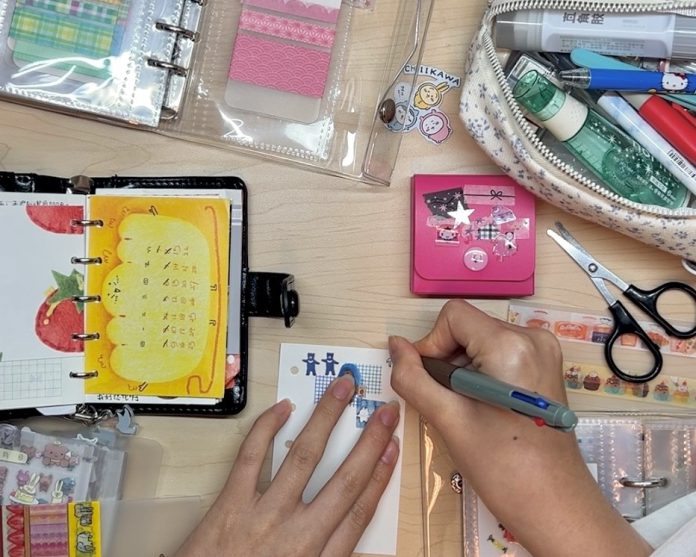
Alexia working on her scrapbook.
(Photo courtesy of Alexia Schriver)

“I started doing scrapbooks because I had so much junk sitting in a box in my room. I decided to start using it in a journal and haven’t stopped since I think everything in life triggers my memory. I keep collecting all sorts of paper tickets, receipts, and bags,” Schriver says. 

“I am willing to spend time on decorating my scrapbook because I want it to be a representation of my current aesthetics—colors, patterns, styles, and stickers that I like. I don’t have a specific style preference. I enjoy more chaotic spreads with lots of junk because it reflects how much I did that day or week, and it’s nice to look back on,” she adds. 

Schriver runs an Instagram page with 27,000 followers and a Xiaohongshu page with 2,700 followers, sharing her scrapbook inspirations and videos on how she does her own journal. 

“I hope to encourage others to give journaling a try, as well as to help those who are already journaling with layout ideas or motivation to maintain the habit. The Internet can transcend spatial distances, people with the same hobbies can be found,” the scrapbook enthusiast says.

“I think it is a great way to disconnect from the internet and create analog memories. It helps me ground myself and gives me room to reflect on my days,” she adds.

Part-time lecturer Jenny Leung Kit-wah from the School of Journalism and Communication of the Chinese University of Hong Kong points out that scrapbooking fosters a stronger personal and emotional connection and satisfaction. 

“Most handmade goods have a strong story from the producer. It represents or creates a sense of distinctiveness, uniqueness, design idea, and story. It is also the only creation in the world,” Leung says.

“Scrapbooks carry priceless memory, emotional value, and personal connection. It also has effort, ideas, time, and love behind it. Not the piece itself, but the moment, the joy, and the making process are all translated into eternal memory,” she adds.She also points out that reading with a digital device can never be compared with holding a physical item with.

“It demonstrates personalized creativity and innovation. It transcends the 2D limitations with the ability to build 3D models for painting. The smells from paper go beyond visual but project a five-sensory feeling that e-records can never compare. All in all, it creates a sensory moment each time you see it, touch it, and FEEL it,” she adds.

Edited by Angel Yu & Emma Wei

Sub-edited by James Cheang