












Home Blog Page 7

Start from Scrap: Touch it, Feel it

Scrapbook enthusiasts embrace handmade journals to preserve memories.

By Flavia Zhou

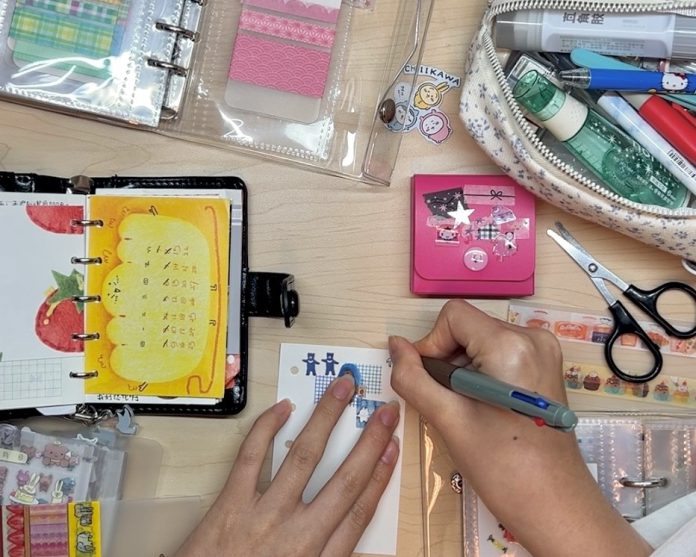
University student Evelyn Chan-yun has been making scrapbooks for nine years to record her daily life and memorable moments.   

Chan likes using hand-drawn stickers and tapes in scrapbooks. 

“Hand-drawn stickers and tapes are exquisite handwork. I don’t like e-journals. I like to write with pen and paper. The feeling of touch helps me relax after studying,” the 20-year-old student says.

Owning two smartphones and one tablet, she only uses them in class and checks PowerPoint slides for revision.

The scrapbook enthusiast journals daily events and makes to-do lists two to three times a week.

“Sometimes, I draw some pictures like emojis and food to make my scrapbook beautiful and memorable. My journal is more than just a record of my life. It is an artwork,” the Economics major student says.
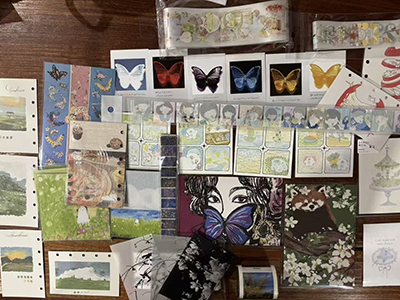
Some of the materials Chan bought.
(Photo courtesy of Evelyn Chan-yun)

Office worker Esther Lee shares Chan’s passion for making scrapbooks. She confines her use of electronic devices to work. For personal life, she makes five to six scrapbooks a year to preserve memories. 

“I express my feelings with words and paintings. I also enjoy junk journaling by sticking supermarket receipts and packaging from noodles in my scrapbook, it’s a personal and creative touch,” the 24-year-old office worker, who lives in Canada, says.

“I make records of special days like birthdays and outings with friends with photos and my writing.  I decorate pages with stickers featuring the same theme,” she says.

Lee sees scrapbooks as a tool for understanding herself and appreciating the small moments in life.

“I started this habit during a tough time, seeking a way to vent. Scrapbook was the solution. Writing served as an emotional outlet and regulator.  It helps me grow more introspective and reflective, allowing me to better understand myself and comprehend my experiences,” she adds. 

Alexia Schriver is another scrapbook maker who appreciates the essence of preserving memory in tangible form. The student who lives in the UK started scrapbooking in July 2024. 

“I make records of my daily life and special occasions. I want to preserve my memories in a physical format because it’s easier to look back on. Digital memories can disappear at any time,” she says.

She has been collecting restaurant receipts, clothing label tags, food packaging bags, scenic spot tickets, and movie tickets for one year. She puts them in her scrapbook to keep track of her life. She turns all her collection that others might consider as rubbish into materials for making her scrapbooks. 
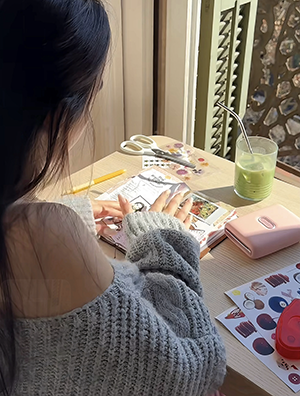
Alexia working on her scrapbook.
(Photo courtesy of Alexia Schriver)

“I started doing scrapbooks because I had so much junk sitting in a box in my room. I decided to start using it in a journal and haven’t stopped since I think everything in life triggers my memory. I keep collecting all sorts of paper tickets, receipts, and bags,” Schriver says. 

“I am willing to spend time on decorating my scrapbook because I want it to be a representation of my current aesthetics—colors, patterns, styles, and stickers that I like. I don’t have a specific style preference. I enjoy more chaotic spreads with lots of junk because it reflects how much I did that day or week, and it’s nice to look back on,” she adds. 

Schriver runs an Instagram page with 27,000 followers and a Xiaohongshu page with 2,700 followers, sharing her scrapbook inspirations and videos on how she does her own journal. 

“I hope to encourage others to give journaling a try, as well as to help those who are already journaling with layout ideas or motivation to maintain the habit. The Internet can transcend spatial distances, people with the same hobbies can be found,” the scrapbook enthusiast says.

“I think it is a great way to disconnect from the internet and create analog memories. It helps me ground myself and gives me room to reflect on my days,” she adds.

Part-time lecturer Jenny Leung Kit-wah from the School of Journalism and Communication of the Chinese University of Hong Kong points out that scrapbooking fosters a stronger personal and emotional connection and satisfaction. 

“Most handmade goods have a strong story from the producer. It represents or creates a sense of distinctiveness, uniqueness, design idea, and story. It is also the only creation in the world,” Leung says.

“Scrapbooks carry priceless memory, emotional value, and personal connection. It also has effort, ideas, time, and love behind it. Not the piece itself, but the moment, the joy, and the making process are all translated into eternal memory,” she adds.She also points out that reading with a digital device can never be compared with holding a physical item with.

“It demonstrates personalized creativity and innovation. It transcends the 2D limitations with the ability to build 3D models for painting. The smells from paper go beyond visual but project a five-sensory feeling that e-records can never compare. All in all, it creates a sensory moment each time you see it, touch it, and FEEL it,” she adds.

Edited by Angel Yu & Emma Wei

Sub-edited by James Cheang
Micro Drama Craze in China

Micro drama, a new form of entertainment is becoming increasingly popular in China.

By Isa He

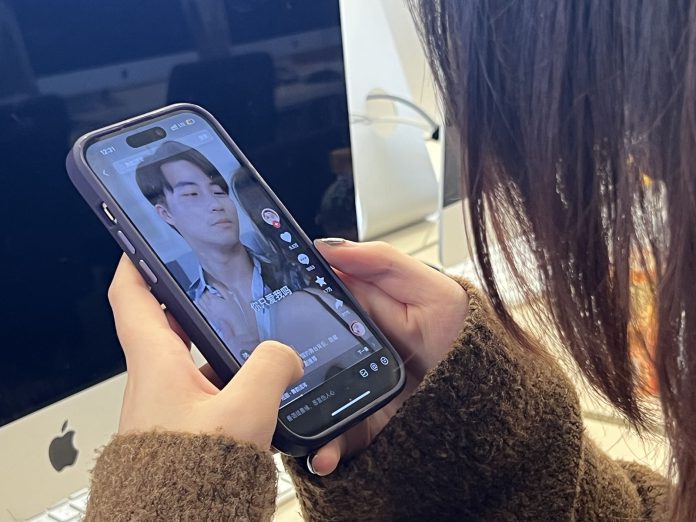
University student, Zhuang Yan, is an avid fan of micro dramas and spends at least five hours watching them weekly.

“I like watching dramatic micro dramas, where mother-in-law and daughter-in-law can become romantic rivals,” the Year Four student majoring in Integrated BBA says.

Micro dramas, or short dramas, typically featuring 50 to 100 episodes in a series with each episode lasting between two to five minutes, captivate her with cliffhangers and constant unexpected turn of events.

“Compared to conventional dramas, micro dramas are funnier, and the pace is faster so that they waste less of my time,” the 22-year-old girl adds.

Another notable characteristic is their vertical screen format, which closely resembles short videos, enhancing phone user’s viewing experience.

“It’s more convenient for me because they can be watched in portrait mode on my smartphone, so I don’t need to rotate the screen orientation,” Zhuang adds.

Zhuang’s interest in micro dramas started last summer when she came across micro drama advertisements while browsing Douyin, a mainland Chinese short video platform.

“There are lots of twists and suspense, leading me to wonder what the plots are. That’s how I first got hooked,”  she says. 

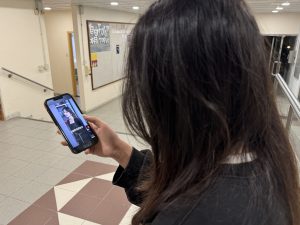
Zhuang Yan is watching a micro drama at school.

Another short drama fan, Cai Hanjun, also learnt about micro dramas through advertisements on Douyin.

“I love drama about a protagonist who is betrayed in her past life and has a second chance to take revenge on enemies, and finally win a perfect man’s heart,” the 20-year-old university student says.

“I know it’s trashy. But then that’s why I love it. They are so addictive just like novels,” she adds.

Compared to TV dramas, micro dramas are sold by episode. On average, the cost of each episode ranges from a few cents to RMB ¥2 (US $0.28) or RMB ¥3 (US $0.41).

As of June 2024, the number of users for Chinese micro dramas reached 576 million, accounting for 52.7 percent of the total internet users in the country, even surpassing the user base for online food delivery services, according to the China Netcasting Services Association (CNSA).

The market size of Chinese micro drama in 2024 has reached RMB ¥50.40 billion (US $6.93 billion), exceeding the box office of Chinese movies for the first time, according to White Paper on Micro-Short Drama Industry 2024 published by DataEye, a Chinese mobile advertising big data intelligence analytics company.

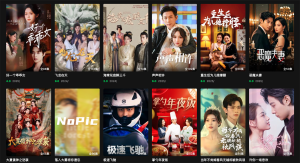
Various micro dramas are displayed with their popularity metrics in a Chinese micro drama app.

Lin Jian, an assistant professor from the Journalism and Communication School of the Chinese University of Hong Kong, explains micro dramas are popular now because they are very similar to short videos that many people watch in TikTok. 

“On the other hand, compared to most of those short videos, they are more professional and refined with more completed and coherent stories like fiction or movies,” he says.

Professor Lin adds micro dramas are full of dramatic twists and turns in a short period of time in order to boost viewing. 

“These fast-paced dramas filled with thrilling plots, which might lead viewers to favour quick, highly entertaining content more and more,” he adds.

Lin is concerned by such a trend. “When users prefer to consume a cultural product which continuously stimulates people’s senses and emotions, might the more reflective aspects of culture that provoke deeper thought gradually diminish?” he says. 

He believes the industry will develop in two extreme directions in the future.

“Some top companies may start to focus on producing high-quality and premium micro dramas, while others may continue making controversial or borderline practices, or so-called ‘gray area’ dramas,” he adds.

Edited by Celina Lu

Sub-edited by Lunaretta Linaura

A Lifetime of Pushing the Bar

Roneo Tsu, 76, shares his persistent journey of fitness and bodybuilding. 

By Justin Tai

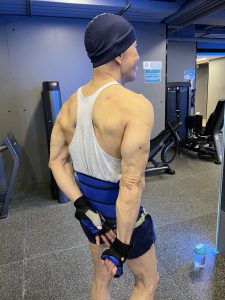
Gym goers might have met Roneo Tsu. Being in his late 70s, he has devoted his life to lifting weights and leading a healthy lifestyle for over 50 years. 

Tsu is known for being one of the most senior members in a gym he goes to, having a body that is as fit as a young athlete and a physique that is comparable to the finest bodybuilders in the field.

“As long as I can still move and walk, I will still be working out in a gym,” Tsu says.

The 76-year-old trains at the gym four days a week, three to three-and-a-half hours per session, which far exceeds the World Health Organisation’s recommended minimum duration.

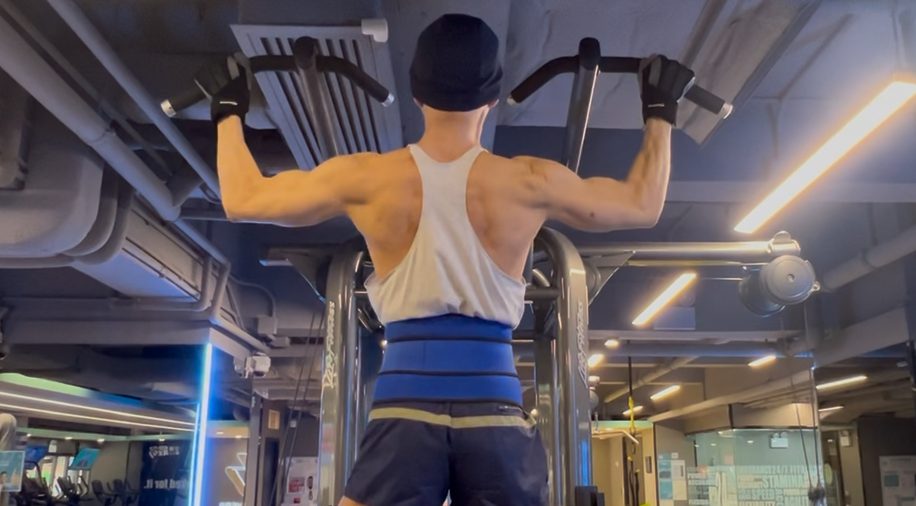
Tsu doing unassisted pull-ups

While it is recommended for adults aged 65 or above to do a minimum of 150 minutes of moderate-intensity physical activity throughout the week, Tsu does it in a day.

During a weekly routine, Tsu has four sets of chest press, shoulder press, bicep curls and pull ups to train his upper body. He then performs leg extensions, leg curls, hyperextension for his lower-body training.

“Quitting the gym is like going bankrupt, you would lose your years of hard-earned gains once you stopped,” he says. 

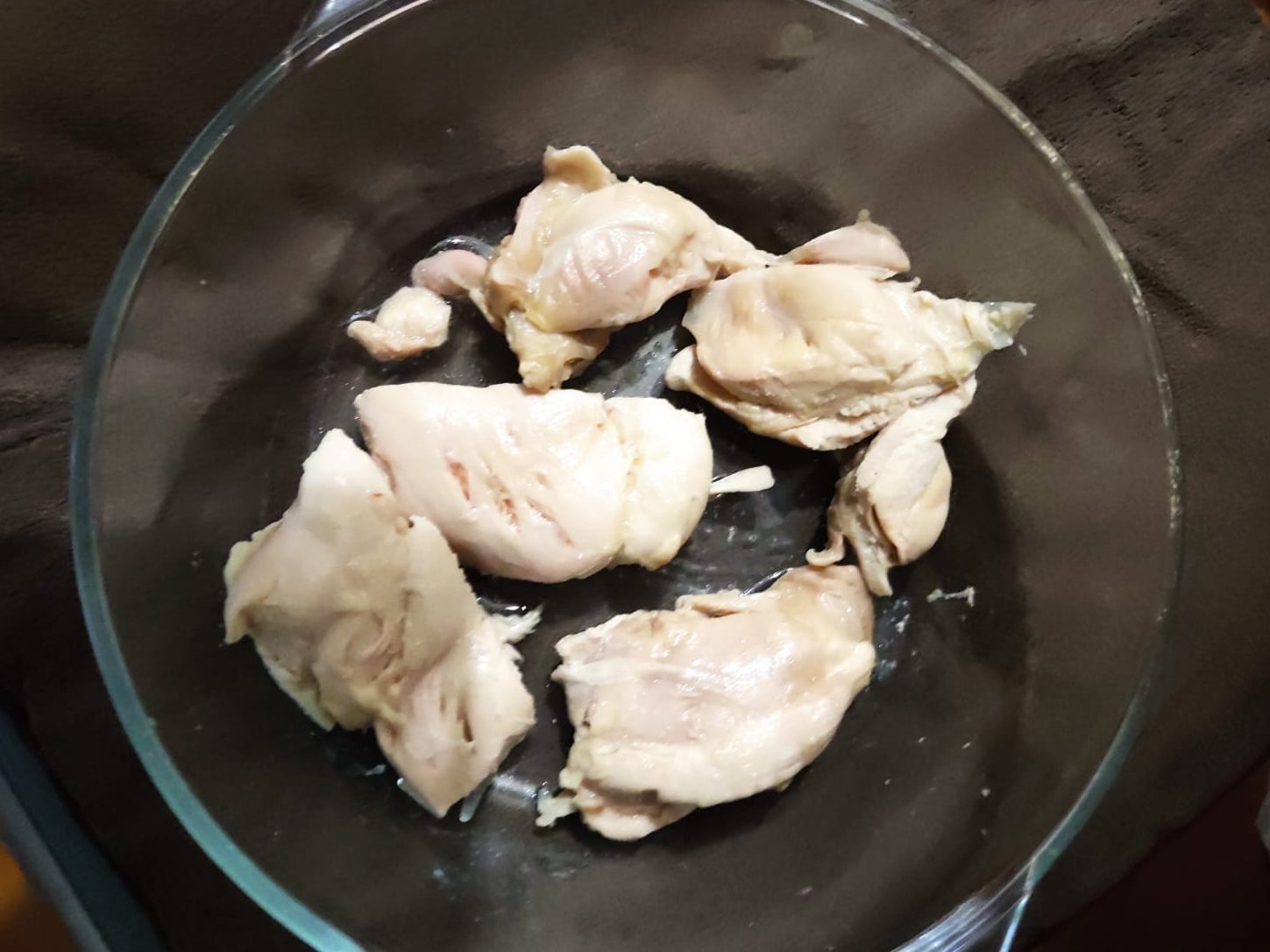
Apart from his regular training, he also adopts a clean diet. He only consumes a teaspoon of olive oil daily for frying and blanching vegetables, when it comes to cooking meats like chicken and beef, an oven and a microwave oven are all he needs.

“When I cook chicken breast, I just brush a tiny bit of oil on top of it and bake it in the oven. Cooking this way tastes as delicious as searing them, and it is healthier too,” he adds.

Tsu’s baked chicken meal (Photo courtesy of Roneo Tsu)

Family and friend gatherings are inevitable, and the food is often cooked with a great amount of fat and sodium. But that does not stop Tsu from practicing his diet rules.

“I remove skin from chicken before I eat it, and I spit out pork belly fat during gatherings. Sometimes I just simply don’t eat. I often get scolded by my friends for that,” Tsu says with a laugh.  

Tsu started working out when he was 21 years old. Like many amateur lifters, he initially worked out just to kill time and have fun, without much thought about his health and diet. 

Turning to his 30s, Tsu witnessed his parents, relatives and even friends suffering from various chronic diseases. They had diseases like high blood pressure, diabetes and heart problems. 

“My family has a history of diabetes, and I told myself I would never walk on the same path as them,” he says.

“I have never suffered from any chronic diseases, body pain and even posture problems. Even my doctor expressed shock and said I’m healthier than him,” he says. . 

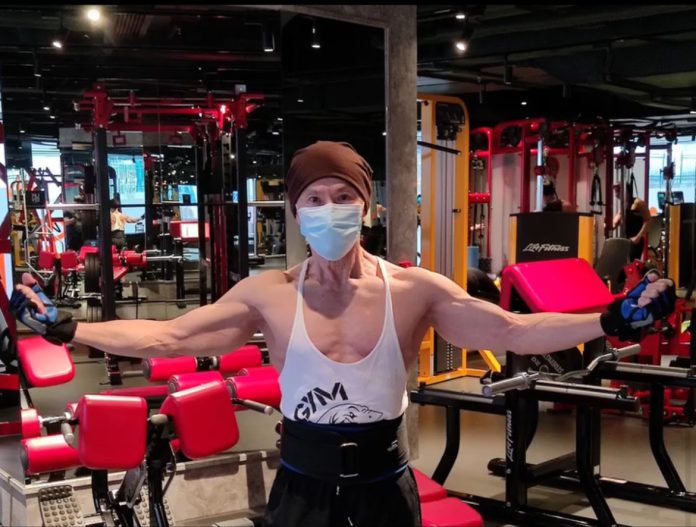
Tsu doing a side triceps pose

“I am not aiming to be strong, I just want to be healthy,” he adds.

Tsu has started following a strict workout and diet routine since then, lifting weights consistently and being wary of what he consumes every single day. 

Unlike most people in his age, Tsu does not suffer from any illnesses and body pains, proving that aging does not come with diseases.

“Many say that aging surely comes with diseases, I find that thinking ridiculous and I have proved them wrong,” he says.

“When you’re still young, you must pave your path for a better health when you have the chance, otherwise it’ll be too late,” he adds. 

Many consider eating, drinking, vacationing or any hedonistic activity to be enjoying life, but for Tsu, having good health is the ultimate luxury for a pleasurable life.

“I wouldn’t say I love working out, it simply is just a part of my life,” he says.

Tsu determines to continue living this way which may be seen as unbearable in the eyes of others. “Health is a give and take,” he says.

“I’m planning to lift weights and maintain this diet for the rest of my life. As long as I can still move, I will just stick to this lifestyle,” he shares.

Edited by James Cheang

Subedited by Daniel Koong

Beach Cleaners on Mission

Reporters: Suzana Shin Ru Li, Bliss Zhu Fu, Zora Yan Zhuo, Celina Lu Yu Jie, Emma Wei Jia Yu, Cathleena Zhu Li Yang

Volunteers take part in beach clean-up campaign organized by A Plastic Ocean Foundation to arouse public awareness about the importance of community participation to fight marine pollution.

Survival Game of the Hong Kong Democrats

Hong Kong democrats are struggling to survive in current social environment.

By Mike Chu

The last two opposition political parties in Hong Kong vow to fight on despite facing heavy pressure and increasingly tightening political space.

The League of Social Democrats (LSD) has been a frequent target of law enforcement agencies, despite massively downscaling its activities since national security law was imposed in the city in 2020.

Known for its relatively radical direct actions, whether in the street or within Hong Kong’s Legislative Council, the centre-left party has been repeatedly accused and fined for raising funds and displaying banners without a permit.

“We were fined more than 30 times for various charges, such as illegal fundraising and displaying banners without permission. Ten volunteers also received penalties for setting up street booths,” party chairperson Chan Po-ying says.

“We were not charged for similar actions before 2020,” Chan adds.

Chairperson of LSD Chan Po-ying.

In a recent court case, six members and volunteers from the party were charged for raising funds and displaying posters last year on April 2 and 30 and May 28 at the intersection of Great George Street and East Point Road in Causeway Bay and outside Wan Chai MTR station. 

The poster in question was a plain black banner.

They also find it hard to stage protests. In May 2024 they gathered outside the West Kowloon Law Courts Building to show support to the 47 pan-democrats who joined the primary election and were arrested for conspiracy to commit subversion. The case is sometimes referred to as Hong Kong 47.

However, Chan and other party members were arrested and kept by the police for more than 30 hours before they started their protest, and were later granted bail for HK$2,000. They are yet to be prosecuted.

The party has zero presence in the institution for years now. Chan’s husband, Leung Kwok-hung “Long Hair” was disqualified from the Legco in 2016 for making an invalid oath and two LSD members resigned from the district council in 2021.

Leung, a founding member of the party established in 2006, was among 47 activists charged with conspiracy to commit subversion for joining an unofficial primary in 2020 to pick candidates who can run for the Legco. He is now behind bars after being found guilty of subversion.

“The absence of a widely recognised political figure means we could not grab the public’s attention and obtain votes and funding, and we could not unite the people to speak out,” Chan says.

Members of LSD were arrested for staging a protest during the district council election in 2023. (Photo courtesy of The League of Social Democrats Facebook)

Another opposition party, the Democratic Party, also struggles to find their way into the councils. 

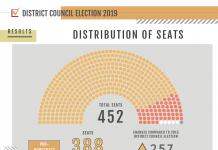
Known for its moderate proposition and long history of success in elections, the Democratic party won a landslide victory in the 2019 district council election. They got 91 seats out of the total 452 seats, and gained a majority in eight out of 18 districts, The party came out as the largest party in the council.

However, the party failed to secure enough nominations to run in last year’s district council election under a revamped electoral rule. It was the first time for pan-democrats to be absent from the city’s district-level elections since joining in 1985.

In order to join the race, a candidate had to secure at least three nominations from each of the three committees, the Area Committees, the District Fight Crime Committees, and the District Fire Safety Committees. Members from the three local-level committees were all appointed by the government.

“We tried to get nominations from the three committees. But we could not find the contact of the members,” says Lo Kin-hei, chairperson of the Democratic Party.

Chairperson of the Democratic Party Lo Kin-hei.

And the turnout rate in the 2023 district council election dropped to a historic low of 27.59 percent from the historic high of 71.23 percent in 2019 despite the government more than doubling its spending in promoting the election from the 2015 and 2019 elections.

Without votes and apparent public support, Lo admits he sometimes loses interest in continuing doing his job. But he stays regardless.

“I love this place! I believe I can still make it better, even though what I do right now is not so useful,” Lo says.

“We believe we are still responsible to speak to the government on behalf of the Hong Kong people, even if we do not have a place in both councils,” Lo says.

Noting that people in Hong Kong no longer believe their voices will be heard and can influence the government’s decision, LSD chairperson Chan says, “We hope we will be the one to speak out when no one dares to speak.”

Edited by Enya So

Sub-edited by Carrie Lock

Worthwhile Style

By Pauline Yau & Lunaretta Linaura

Youngsters turn to second-hand fashion to reflect a choice of self-expression and environmental consciousness.

Buying second-hand clothes allows Yekaterina Kim to develop a personal style, access to a wider range of clothing options at lower price points, and practise sustainable shopping habits.   

“When I shopped in chain stores, my wardrobe did not have its own style. I bought whatever was on sale at the time. But when I thrift, I have more choices which are unique and of different styles at different times. I can develop my own style instead of following trends,” the 21-year-old says.

The Humanities and Digital Technologies major student at the University of Hong Kong used to buy new clothes from fast-fashion brands, and only started buying from thrift shops three or four years ago. 

“I shop secondhand because it’s cheaper and more sustainable. Clothes from second-hand stores are also not governed by trends. It’s a fun way to experiment with my style,” Kim says.

Noting that the quality of a lot of secondhand clothes are better compared to new clothes bought from fast-fashion brands like H&M, Kim finds that thrifting not only offers an affordable alternative to shopping fast-fashion but is also a more sustainable choice.

“Fast fashion clothing manufacturing now makes use of more synthetic fiber. That means the clothes are not meant to last for long. Once the clothes are disposed of, the environment becomes more polluted with textile waste. Having higher quality second-hand clothes allows me to wear my clothes more often without discarding them quickly,” Kim states.

Kim also upcycles clothes by sewing new patterns, bleaching or other ways to add more personality to them. The student also resells and donates unused clothing.

A 2024 report by Global Data, a data analytics and consulting firm in London, identifies Gen Z as the driver for secondhand shopping across the world with growing interest in sustainability, resale purchases, and a desire for unique and affordable clothing.

The report further states that the global secondhand apparel market is expected to grow three times faster than the overall market between 2023 and 2028, at a compound annual growth rate of 12 per cent – meaning the size of the market is set to increase by around 12 per cent each year, reaching a gross merchandise value of US$350 billion by 2028.

About 90 million tonnes of textile waste end up in landfills each year, as consumers discard clothes after seven to 10 wears, and fast fashion brands produce twice the amount of clothes than they did in 2000, reports Earth.Org, a digital environmental news outlet.

The news outlet also reports that in garment manufacturing, only 12 per cent of textiles used for clothing are recycled, while 15 per cent of fabric is wasted in the garment manufacturing industry.

With second-hand and vintage clothing gaining popularity among Hongkongers, vintage stores which used to run online platforms are setting up shops in high-end malls. 

“We want to introduce our unique style to more people with the opening of our physical store in New Town Plaza. While everyone has their own fashion preferences, vintage clothing offers a diverse range of styles that are worth exploring,” says Wong Tung-hai, supervisor of Midwest Vintage’s flagship store, a second-hand clothes store in Tin Hau. 


Wong Tung-hai, supervisor of Midwest’s flagship store in Tin Hau.

“Second-hand shopping is an unstoppable trend. Whether it’s luxury brands or upcycled clothing, people are increasingly turning to second-hand stores. Hongkongers are more eco-conscious now, so the second-hand market is set to grow even more,” Wong adds.

Vintage store, The Palm Tree Office, also sees a rise in the trend. 

“With Gen-Z having more purchasing power, their desire for unique pieces fuels the vintage industry. Dressing up is a way of self-expression. This concept is more prevalent now than ever. This can also be seen in the phenomenon of the demise of fast fashion chain stores,” says Chak Sum-li, who sets up his physical store in 2020.

H&M has recently closed its stores in Shatin and Diamond Hill as part of its downsizing efforts, reducing its presence in Hong Kong to just four locations, down from 16 previously.

Chan and his business partner Soyu Fok first started selling second hand and vintage clothes via Instagram in 2018, due to wastage they witnessed in clothing industry. 

“I worked in a textile factory. The recycled textiles are not able to be sold at all. Many companies do not want to bear the extra cost involved in recycling. I hope that by selling secondhand clothes, people appreciate the value of sustainable fashion,” Fok says. 

“We source our clothing everywhere from anyone who produces secondhand clothing. Sometimes we find used clothes on the streets of Sham Shui Po, or source some clothes when travelling to the United States, the United Kingdom, Japan and Europe,” she says. 


Founders of The Palm Tree Office: Chan Sum-li and Soyu Fok.

Circular Fashion Programme Director, Aurianne Ricquer at Redress, an non-governmental organisation (NGO) which promotes sustainable fashion economy, warns that, regardless of shopping firsthand or secondhand, buyers should always be cautious of overconsumption.

“[Making shopping choices] comes back to the questions: why are you buying the piece? How is this piece important to you?” Ricquer says.

“Whether it’s shopping secondhand or not, if consumers are creating waste with the clothes they buy, then it’s not sustainable from the start. Do you know that you’re going to actually wear it for a long time? And of course, if the answer is no, it’s still not worth getting, even if it’s a good deal,” she adds.


Redress organises a semiannual fundraising campaign, the Secondhand Pop-up Shop, where a curation of clothes collected by the NGO are sold (Photo courtesy of Redress)

Redress places “takeback” boxes in retail stores around Hong Kong, where consumers can drop off any of their unwanted clothes.

Some clothes collected are resold at pop-up events or the NGO’s physical store at Sham Shui Po. Clothes in good condition are donated to charities, and lower quality clothes are downcycled to be other items.

“We have people who come and shop for a special occasion. Even if you buy it second hand, and you may know that you’re only going to wear it once, as long as you then give it to a friend, give it back to Redress or make sure it’s resold. I don’t see the problem with that, because at least it’s second-hand and you’ve not created new production for that,” Ricquer adds.

Edited by Carrie Lock

Sub-edited by Molisa Meng

Where to have fun in Fukuoka

Reporter: Erica Hwang Seowoo, Charley Ho Cheuk Ying, Roy Ng Po Shing, Daniel Paek Kieon

Kyushu University students spill the tea on where they have the most fun — discover Fukuoka’s hottest entertainment spots in this lively guide!

A Teacher turned Guardian Angel

By Charley Ho

Kwan Kam has devoted his lifetime to empower students with disabilities.

Educator Kwan Kam has devoted his love and care to teaching children and shaping lives of children with disabilities for over 30 years.  

The former vice principal of Elaine Field School, now in his 70s, is still teaching. “I still tutor primary school kids in Tin Shui Wai as a part-timer. It makes me happy,” he shares. 

Before joining the school for physically challenged children, Kwan already had a decade of teaching experience in various schools, including private and secondary schools. 

Elaine Field School, founded in 1973 as the Sau Mau Ping Training Centre, became a registered institution in 1979 and relocated to a larger campus in Tai Po. It is now known as The Spastics Association of Hong Kong Jockey Club Elaine Field School.

“Our school admits students with physical disabilities – those in wheelchairs, suffering from serious burns, or experiencing seizures. We don’t admit students with only intellectual disabilities,”  he says.

“Back when I was still teaching in Sau Mau Ping, our school only offered classes for students up till Form Three. The school later expanded to teaching under the Hong Kong Certificate of Education Examination and the Hong Kong Diploma of Secondary Education Examination curriculum afterwards,” he says.

“The school was small back then, with around 10 students per class and only five classes in total. We had six to seven teachers and mixed classes that grouped students based on learning abilities. Professionals like physical therapists, occupational therapists, and teaching assistants worked with us to support the students,” Kwan recalls. 

“For example, during physical education (PE) lessons, the physical therapist led stretching exercises and trained their coordination skills. The students enjoyed these lessons,” he adds.

Kwan has formed many lifelong friendships with his students. One of them is Nikita Tam, who was born with brittle bone disease.

Kwan describes Tam as an outgoing person now but remembers how quiet she was when she first joined the class. “I was Tam’s class teacher and I taught her Chinese, Mathematics and PE. She didn’t say a word when she first joined my class,” he recalls.

“Once, we all gathered to play a game in which we passed around school bags. She suddenly burst into tears. Later, I learned that she cherished her school bag so much that she didn’t like it being passed around. At the time, I had no idea,” he says with a laugh.

“Tam is a resilient person. She can travel in Europe on her own, carrying luggage with a tiny body. It is worth learning from her,” he adds.

Kwan describes his teaching style as more flexible than the conventional approach. 

“I’m more free and relaxed. I’d arrange time for students without specific educational goals – just chatting, having fun, and engaging in free activities. The students were already tired from schoolwork. If we held strict educational goals, it would scare them away,” he explains.

Kwan stresses a positive mindset is a must to have. “Teaching in this environment is never easy, and having a solution-based mindset is the key,” the veteran teacher says.

“The school’s sewage system once broke, and we had to evacuate from the school. We hopped on a coach and brought everyone to a country park. Unlike now, when parents’ consent is required for outings, and teachers are held accountable for any incidents,” he adds.

Apart from sudden outings and games, the devoted educator recalls how the school introduced Apple II computers to students in the 1980s in hope of equipping students with skills needed in the labour market. 

“Back then, computerisation hadn’t even been introduced by the Education Bureau. We taught students the Cangjie input method for communication. Not many people knew how to use it, but my students did. Some even found typing jobs in factories afterward,” he explains. 

Kwan also shares a fully paralysed student who wrote a computer programme spanning dozens of pages. 

“He couldn’t type letters due to his condition, but he used his head and a scanning device to input the text. His logical thinking and determination were remarkable,”  the proud teacher recalls. 

Despite his devotion and commitment to teaching, handling students with disabilities was not without emotional challenges.  

“There are times when you can’t help the students and feel defeated. Some of the weaker ones may not live past 10 or 11 years old. We focus on bringing happiness into their lives and never assume we know their fears,” Kwan adds.

“It is important to establish trusted relationships with the students. Even if they perform poorly, I always compliment them instead of scolding them,” he says.

Giving up is never an option for Kwan. “You simply cannot just give up. You still have to make a living and do what you think is right,” he stresses.

Kwan shares that he applies the same teaching to his own son. “I treat my son professionally, just as I do with my students at school. It’s unprofessional to get angry when children can’t meet your expectations,” he says.

Sub-edited by Jen Lam

The Iron Lady with Brittle Bones

By Charley Ho

Born with brittle bone, Nikita Tam shares her extraordinary journey of resilience and persistence.

Born with brittle bones and being wheelchair bound since she was a baby, Nikita Tam leads a life as a free spirit which helps her turn the impossible possible. She is a fast-food shop owner, a driver, an insurance agent and a diver.

Under 1.2 meters tall, it is beyond imagination how Tam works where heavy boxes of drinks and goods pile up in her eatery in San Po Kong.

“I usually ask delivery guys to help me stack the goods I order. I have to carefully plan the sequence, I definitely don’t want to put the best-selling items at the bottom,” she says.

Opened the fast-food shop in 2019, Tam operated the business entirely on her own until a loyal customer became her boyfriend and worked together with her after a year. 

“My work used to be hellish. I stayed in my shop for more than 24 hours. I only slept on the kitchen counter at 5 or 6 a.m. when there weren’t many customers,” she recalls.

Nikita Tam preparing for an order at the kitchen counter of her store

Though the business has not been profitable, Tam wins many friends.

“Instead of making money, I have made many heartfelt friends who are my customers. When I need help moving fridges, stacking boxes and filling bottles of  herbal tea, I call them over and offer free beers in exchange,” she says.

It is the very spirit that helps Tam overcome difficulties in life. She was born with osteogenesis imperfecta, commonly known as brittle bone disease. Her left arm is the only intact limb she has, while her legs and right arm remain fragile.

“When I was an infant, I couldn’t stop crying when  a nurse bathed me. Medical staff later found out my arm was broken. That’s when I was diagnosed with the disease,” she recalls.

 “I broke my legs and my arm every month when I was a kid. The worst case was when I got scared watching TV and ended up breaking my bones,” she shares.

 “My spine collapsed and turned into an S shape. The pain was so unbearable that I thought of committing suicide,” she adds.

Due to her condition, Tam lived with her relatives in mainland China and did not attend school until she was aged 10 or 11. 

“My bones were too fragile. My mother had to take care of my younger brother, and there weren’t many schools for disabled children at that time,” she explains.

Tam eventually joined SAHK Jockey Club Elaine Field School at the age of 11, a school for physically handicapped children, where she met her class teacher, Kwan Kam, whom she now refers to as Daddy.

Their bond has lasted nearly 30 years, and they still meet regularly.

Tam recalls she used to be quiet and she couldn’t understand why Kwan made students play a game about passing school bags around that she didn’t like his teaching at first. 

But she found out Kwan is a trustworthy and helpful teacher later.

“My parents divorced when I was 18. Kwan gave me his personal phone number and told me to call him whenever I needed help. One time, my father physically abused me. I called him for help. He comforted me and urged me to call the police,” she recalls.

“He just sat in silence and ate lunch with me to keep me company when I was upset about my parents’ divorce. He was never expressive, but I could feel his care. He is like the father figure in my life. He has taught me proper manners and shaped my personality which I couldn’t learn from my biological father ,” she says.

Beyond emotional support, Kwan encouraged Tam to learn swimming that became a turning point in her life.

“I didn’t want to learn swimming, but he forced me to. It took me three months to learn how to float in water. Everyone, including my mother, told me I couldn’t swim, but I proved them wrong,” she says.

Today, Tam can swim freestyle, backstroke, and breaststroke.

“There are three important men in my life. Kwan, my class teacher, my swimming coach who didn’t give up on me, and my doctor who insisted on conducting my spinal surgery,” she says.

“I used to give up easily, but once I experienced the thrill of making everyone’s jaw drop, I have become addicted to that feeling of success. It’s true, success comes when you refuse to give in to failure,” she adds.

Tam didn’t stop there. She obtained two Professional Association of Diving Instructors licenses and earned a driving license in Hong Kong. “

Life is full of challenges to many, especially to Tam. She is forced to close her fast-food shop.

“The business now is worse than during the pandemic when most people were forced to stay home and order take-way food. It’s all very quiet now,” she says.

Food menu of Nikita Tam’s store

Tam has decided to shut her shop and shift gears. “I’m planning to work as a delivery courier with my boyfriend. But for now, I’ll take some time to rest before deciding my next steps,” she says.

“My dream is to enjoy diving in Palau and Australia one day,” she shares. 

Sub-edited by Jen Lam

Beatbox All the Way

Reporters: Alexia Leung, Hanne Chan, Mike Chu and Pauline Yau

Editor: Alexia Leung, Hanne Chan, Mike Chu and Pauline Yau

The-o and his Cyphinal Beatbox hope to promote beatboxing in Hong Kong.