





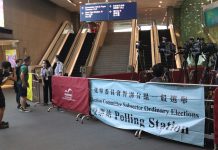



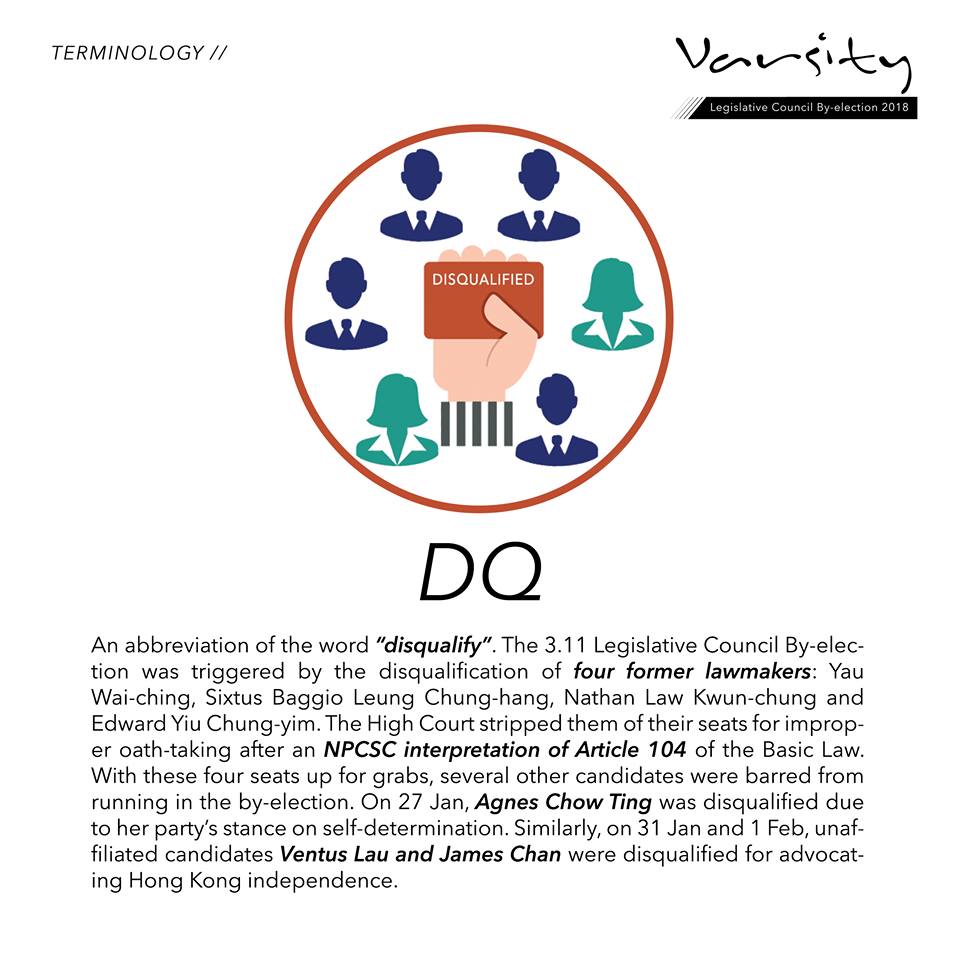
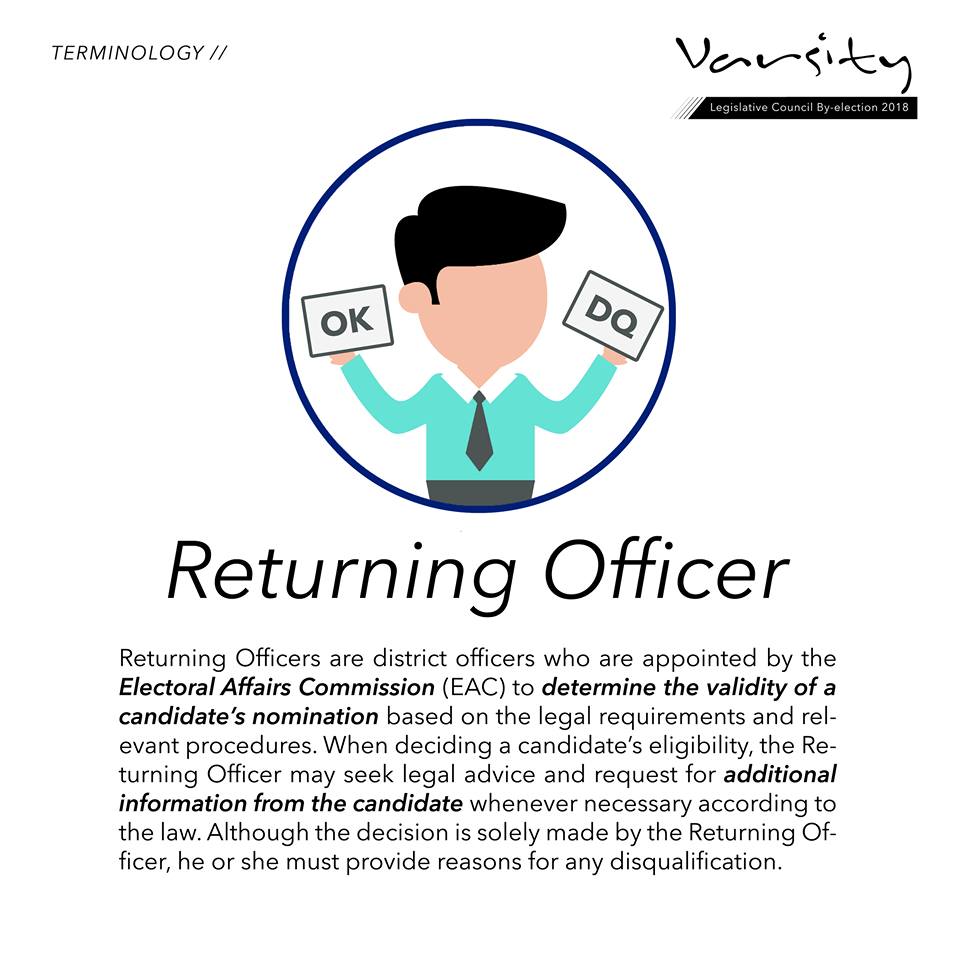
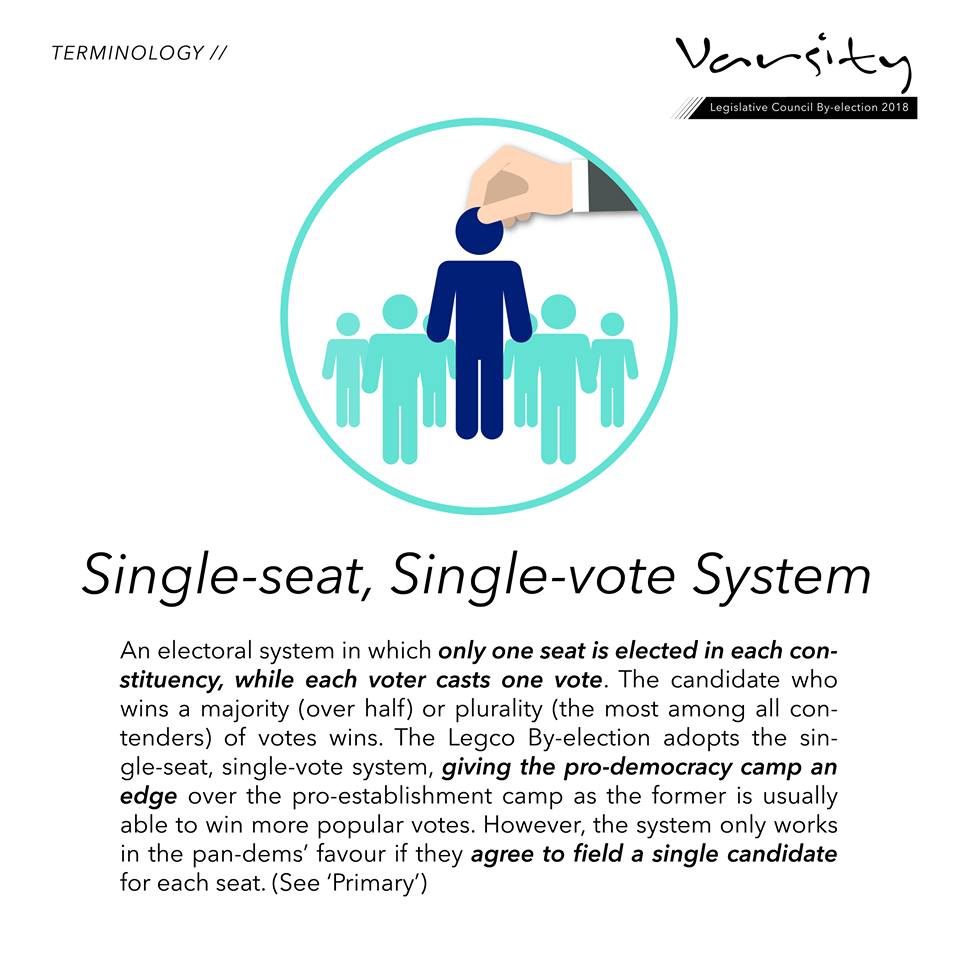
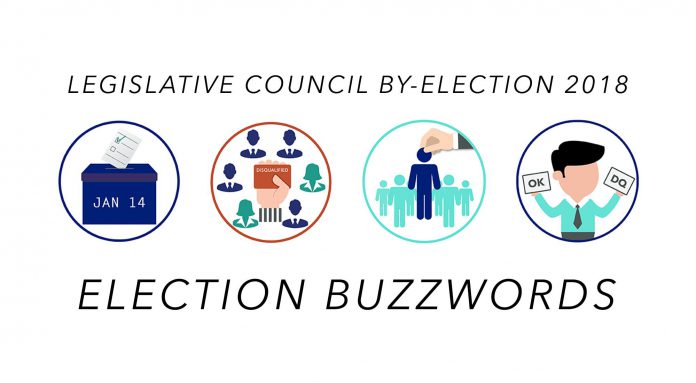
You may have come across some confusing buzzwords in the news about the upcoming Legislative Council By-election on March 11. Here are some of them explained:
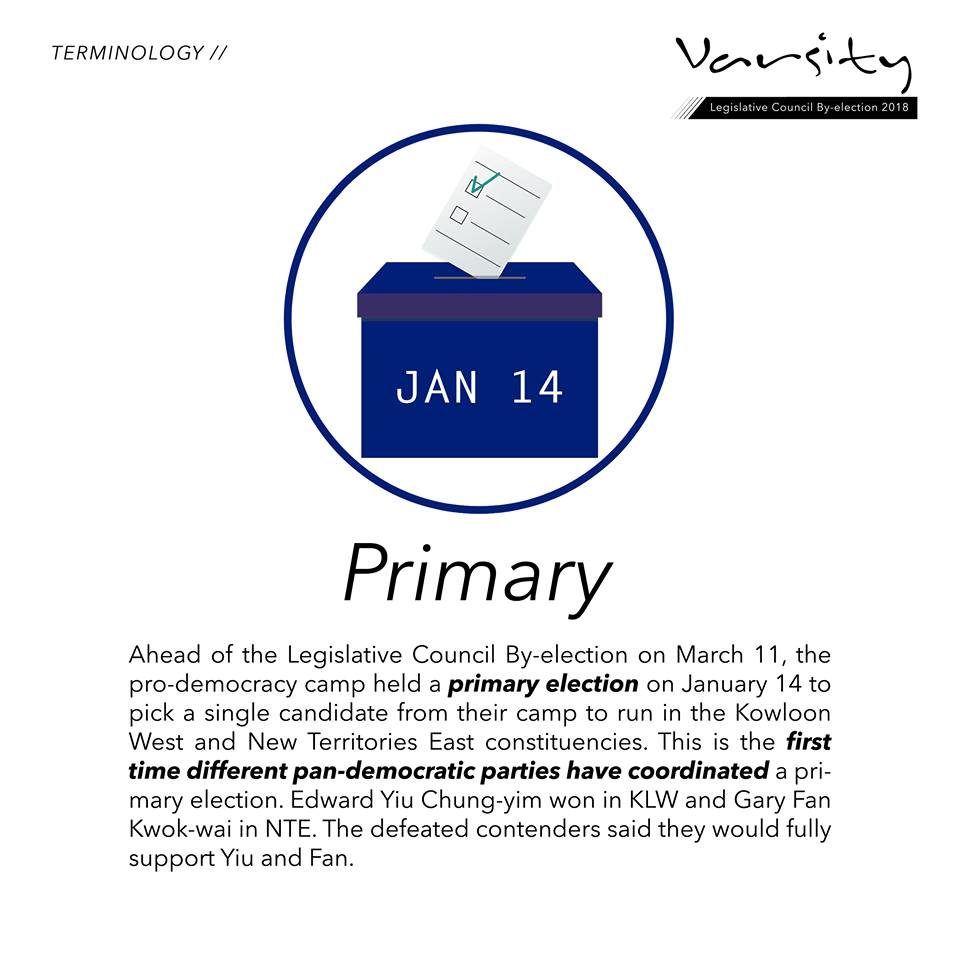


You may have come across some confusing buzzwords in the news about the upcoming Legislative Council By-election on March 11. Here are some of them explained:
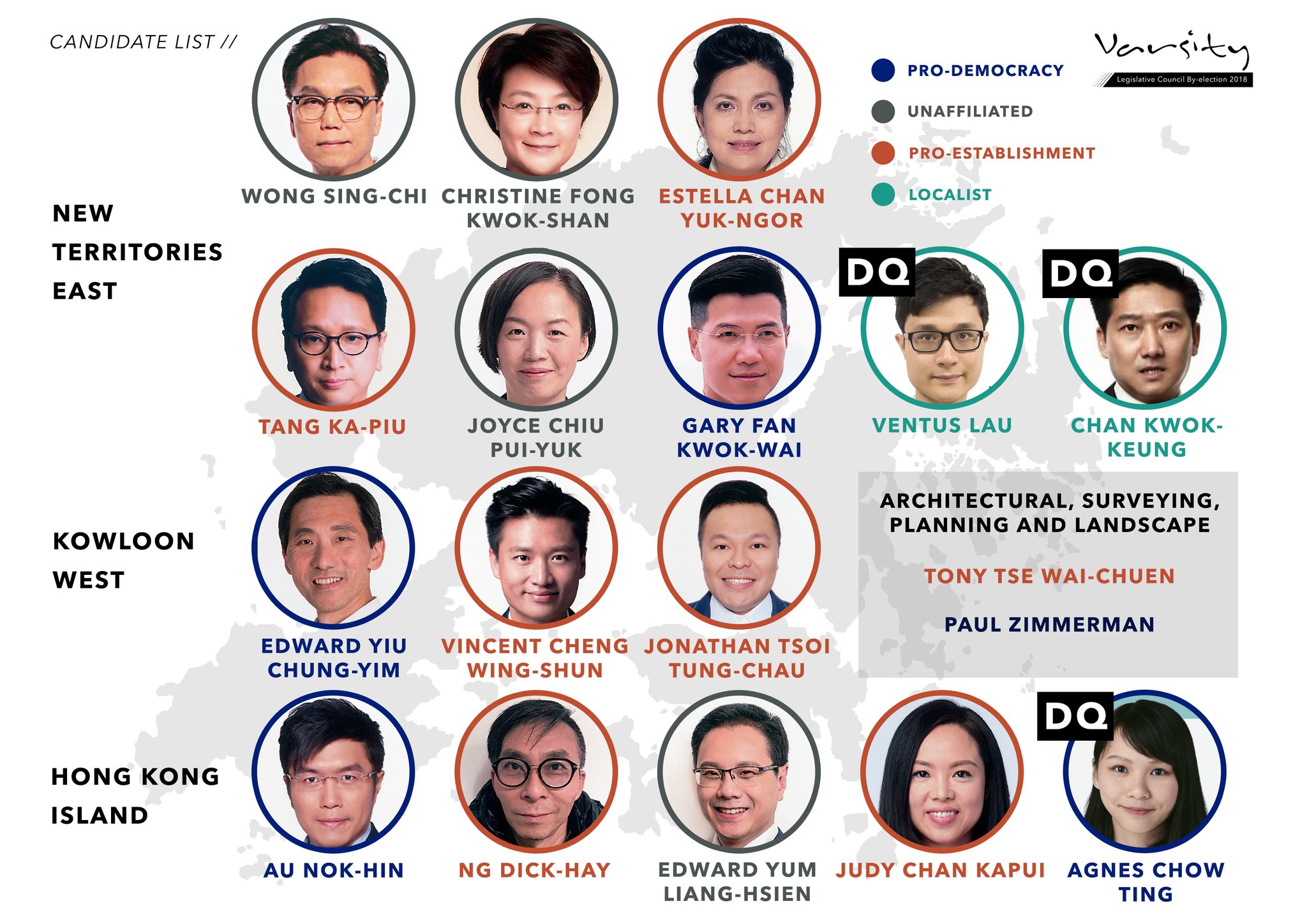
Who’s standing in the three geographical constituencies and one functional constituency that will be contested on March 11th?
Our graphic below shows you all the candidates, as well as those who were barred from standing.
The perceived shortage of international school places in Hong Kong is just a misconception
Reporters: Eric Park, Nancy Mak, Rivers Zhang
Edited by Rubie Fan, Howard Yang
Some parents go to great lengths to get their children into a good international school in Hong Kong. Many put their children onto waiting lists years before they reach school age, and buy expensive debentures so their children would have a bigger chance of getting an interview or they could jump forward on the waiting list. According to Top Schools, an agent that helps parents with international school applications, debentures cost from HK$25,000 to HK$10 million for top international schools.
In 2012, the government predicted Hong Kong would be short of over 4,200 primary and secondary international school places by the 2016/17 school year. The Education Bureau (EDB) said 8.2 per cent of companies looking to hire overseas staff could not do so because there weren’t enough international school places in Hong Kong for their children.
To meet this projected shortage of international school places, the government has been allocating vacant school premises and greenfield sites for developing international schools, as well as providing interest-free loans for the construction of international schools. For example, it granted a piece of land in Tseung Kwan O for HK$1,000 to Shrewsbury International School Hong Kong Limited in 2015 to build a new international school. The grant was controversial because one of the company’s directors is Executive Council member Bernard Chan Chi-Sze.
However, Ruth Benny from Top Schools says there has never been a shortage of international school places. “There are always enough, now we have an oversupply,” she says.
2015 figures from the English School Foundation (ESF) show that there is an excess of international school places in Hong Kong Island, Kowloon and the New Territories.

Benny says there is a perceived shortage because most of the parents are fighting to get their children into ‘first-tier’ international schools. These schools are preferred because of their good reputation, convenient locations and diversified nationalities of the students.
Ruth Benny from Top Schools explains why there is a perceived shortage of international school places, and what the differences are between the so-called ‘first tier’ and ‘second tier’ international schools.
Because of the demand for places in these ‘first-tier’ schools, they are able to charge high fees. Government figures show that tuition fees in 28 of the 80 international schools in Hong Kong cost over HK$150,000 for one year.
The high schools fees and money from debentures enable these schools to expand their campuses and improve their facilities, while ‘second-tier’ schools continue to have fewer resources for students who cannot afford the high fees. Currently, the government does not regulate additional fees that international schools charge. A spokesperson of the EDB says the debenture schemes are a common fundraising tactic among international schools, which “allow parents to join voluntarily”. The EDB says it requests schools to consult parents and other stakeholders before implementing these schemes, “with a view to reaching a consensus” on arrangement details such as transfer and redeem policy, and the related administrative fees.
Despite the difficulties of getting into a top international school, the number of local students entering international schools has been soaring in recent years. Figures provided by the English School Foundation (ESF) show that the percentage of students who hold Hong Kong passports in ESF primary and secondary schools has risen from 8 per cent in 2009-10 to 26.1 per cent in 2016-17.
 In a new study on the provision of international school places in Hong Kong released in February this year, the Education Bureau (EDB) projected the overall demand for international secondary school places from local students would increase by 105 per cent, from 2,931 in 2015/16 to 6,012 in 2022/23. Meanwhile, the number of non-local students is projected to only increase by 5 per cent, from 13,599 in 2015/16 to 14,312 in 2022/23.
The EDB requires that at least 70 per cent of students at international schools be from outside of Hong Kong. The projected increase of local students may disrupt this requirement, but an EDB spokesperson said it does not have immediate plans to adjust the current student mix requirement, and the whole international school sector should work “mainly to meet the demand for non-local families living in Hong Kong or coming to Hong Kong for work or investment.”
Virginia Wilson, the Chief Executive of the Child Development Centre of the American Chamber of Commerce in Hong Kong and a former board member of the English Schools Foundation (ESF) explains how parents’ disappointment in the local education system has created an increasing demand for international school places from local families.
Graidey Lo, is a local Year 12 Renaissance School student who transferred from a local school to the ESF school at the beginning of this school year. She said she switched to an international school because the curriculum and the learning atmosphere was more suitable for her.
“I feel like it [the local DSE curriculum] is a little bit too restrictive for me and IB (International Baccalaureate Diploma Programme) is all about being independent, and I feel like changing into an international school will be giving me more freedom,” Lo says.
EJ Anonuevo, a Year 13 student who had studied in a local boys’ school for five years before transferring to an international school two years ago, also prefers his current school.“Here, it’s a lot more independent [how we study],” he says.
EJ and Graidey share their experience of studying in local and international schools.
What are food allergies and how will you know if you have one?
Reporters: Elaine Ng, Katie Cheng, Selena Chan
Editor: Fiona Chan
Research shows that around 8 percent of children and 3 percent of adults in Hong Kong suffer from food allergies. Common allergies include reactions to eggs, milk, peanuts, nuts and shellfish.
Food allergies occur when our immune systems overreact to something that is normally harmless. In an allergic reaction, the immune system produces antibodies called Immunoglobulin E, or IgE. Immediate reactions appear within 10 to 15 minutes of exposure to an allergen and symptoms may include itching lips, a swollen face, or hives all over the body. In severe cases, they may cause a fatal response called anaphylaxis.
There are two reliable tests for food allergies offered by local hospitals and private laboratories, that is a skin-prick test and an allergen-specific IgE blood test. In the former, an allergen is applied to the surface of the skin and to observe whether there is any reaction, while in the latter, laboratory analysis is conducted to detect allergenic molecules in blood samples.
There is another test in the market, to measure an antibody called Immunoglobulin G, or IgG. Agnes Leung, a clinical lecturer from the Department of Paediatrics at the Chinese University of Hong Kong, advises against taking this test because it is not related to any specific allergic reaction and may produce misleading results. Instead she suggests those who be experience allergies to go for regular checkups to monitor their allergic reactions and see if there are any changes over time.
Leung urges parents of children who may have food allergies to watch out for the so-called Five D’s of food allergy, namely diet, dry skin, Vitamin D, dogs, and dirt, referring to a study by Murdoch Children’s Research Institute. Dogs and dirt are related to the ‘hygiene hypothesis’ which suggests that our immune systems need to be stimulated during development so that they can ‘learn’ how to attack potentially harmful things such as bacteria and viruses. Keeping everything spotlessly clean may not necessarily lead to a lower risk of allergy, says Leung.
Children with Vitamin D deficiency have also been found to be 10 times more likely to have food allergies. And those with dry skin or eczema have also been found more likely to suffer from food allergies.
Leung has noticed that some people will avoid giving their children many types of food even though they do not have food allergies. She discourages this and says children should be exposed to a wide variety of food as soon as possible to lower the risk of developing food allergies. Likewise, she says a mother-to-be should never refrain from consuming specific allergens during pregnancy unless she herself has food allergies.
As for those suffering from food allergies, there are always substitutes to the allergen. For instance those who are allergic to eggs can use silken tofu or mashed banana in their place in recipes, while soy milk, rice milk and almond milk are alternatives to cow’s milk.
However, Leung says there is little support for people with food allergies in Hong Kong. Most schools and restaurants in Hong Kong are not equipped with the EpiPen, an adrenaline injector for severe reactions. As for labelling and information, the Centre for Food Safety requires producers to state clearly if there are allergens on food labels. But there is no similar requirement for food items served in restaurants, and the presence of potential allergens is rarely indicated in menus. The lack of attention paid to food allergies is also reflected in the make-up of health personnel in the medical system. Leung says there is a lack of medical doctors specialising in allergic and autoimmune diseases.
People in the community dedicate themselves to promoting better understanding of Hong Kong among the international community.
Reporters: Brian Yu, Grace Liyang, Nannerl Yau
Editors: Doris Yu, Jessica Li
Diplomacy is typically thought of as something undertaken by states to advance their interests and tell their side of a story on the international stage. But some Hongkongers are hoping to conduct a kind of informal diplomacy. They think people around the world need to hear Hong Kong’s stories from Hong Kong people, so that they won’t simply regard Hong Kong as being the same as any other Chinese city, or solely equate it with China.
Based on the idea of civic diplomacy, some local scholars founded Network DIPLO, a network that aims to foster a vision of “Hong Kong in the world” by organising city tours and maintaining close contact with overseas representatives such as consulates in Hong Kong.
Some people are worried that the soft power of Hong Kong is in decline. Derek Yuen Mi-chang, the Convener of Network DIPLO, is one of them. Given its unique history and international nature, Yuen thinks Hong Kong city deserves to have its own diplomacy efforts.
To do this, Network DIPLO organises city tours to introduce overseas visitors and foreign residents to Hong Kong’s governance system in the British colonial period, the history of the Sino-British negotiations, the drafting process of the Basic Law, and the development of Hong Kong’s relations with the Mainland under “One Country, Two Systems”.
Network DIPLO is not the only group trying to promote Hong Kong to the world from a local perspective. Hong Kong Free Tours is a platform created to facilitate exchange between travellers and locals. During its walking tours, tour guides are encouraged to share their own feelings towards the city with tourists, whether they are positive or negative. The only principle is that the guides should think their sharing will help tourists understand the city from a new perspective.
“Under current system, whatever happened, Hong Kong people will not be able to speak for themselves, it will be told by Chinese government officially,” says Michael Tsang Chi-fai, the founder of HK Free Tours. “Hong Kong Free Tours cannot fill this gap, but it provides people [with] a different channel and perspective to see Hong Kong.”
The tour guides don’t just take tourists to visit important and memorable spots, they also show them pictures of major events that happened in this city, such as the Umbrella Movement in 2014 and the Mong Kok unrest in 2016. “So the guideline for everyone in HK Free Tours is, you need to speak about certain topics, but how to speak is up to you,” Tsang adds.
While different city tours are helping tourists understand more about the city, some artists strive to promote a better understanding of Hong Kong through music and art. Alex Yiu, a local composer, who is also a visual and sound artist, was inspired by events such as the 1967 leftist riots and the jailing of the Occupy Movement student leaders. He composed a song named Double to express his feelings about Hong Kong’s political situation. The work consists of music and video, which includes footage of the 1967 Riots and the jailing of the Occupy Movement’s student leaders. The piece was performed in public for the first time by The Hong Kong New Music Ensemble at the Cycle Music and Art Festival in Iceland.
“Some people came over to me to discuss and chatted about Chinese history and Chinese politics: contemporary politics or Ancient Chinese culture,” says Yiu. “I feel like the audience has a wide aspect of what is going on with the rest of the world.”
Yiu says artists have been incorporating political elements into their work throughout history.
“It is important for us to bring out the political situation in Hong Kong because we are in need or somehow have the anger or the urge to push the political situation out of Hong Kong,” says Yiu. “At the same time, I wonder if we take out the politics or social aspect from Hong Kong art, what is the rest of Hong Kong Art will be?”
It is not just Hongkongers who live in the city who are intent on telling Hong Kong’s story. Some Hong Kong students studying overseas and professionals working abroad are also joining in. After the Umbrella Movement, several young Hongkongerss who study and work in the United Kingdom set up an organisation named Democracy for Hong Kong (D4HK), in order to support Hong Kong’s democracy movement and raise awareness of Hong Kong’s political development in Britain. The group organises protests in London to raise awareness in the international community when major events take place in Hong Kong. It also arranges meetings with British politicians in the hope of raising Hong Kong issues at the parliamentary level.
“With our efforts, more and more British people start to know more about Hong Kong. Afterwards, they also started to talk about Hong Kong society,” says Jobie Yip, one of the organisers.
“Although we are not a front-line organisation, we are just supporting [the] democracy movement in Hong Kong, but still, we hope to make a contribution.”
Co-living is about more than addressing the housing shortage
Reporters: Jennifer Leung, Marilyn Ma, Crystal Wu
Editors: Chloe Kwan, Ryan Li
In 2017, Hong Kong was found to be the least affordable city in the world for housing for the seventh consecutive year, according to an annual survey. Buying an apartment remains out of the question for many young people, who are also increasingly priced out of the rental market for all but sub-divided flats.
Co-living has become a popular topic of discussion – especially among young people – against this backdrop. By living together, people can share the cost of the rent as well as utilities charges such as water and electricity, lightening their financial burden. However, the concept of co-living is about more than just saving money.
Co-Housing HK is a group of five young people who want to explore and promote co-living in Hong Kong. Members want to make a difference in a city where rents continue to soar and many people have to live in cramped spaces. Co-founder Lai Wing-fung, who is an architect, says, “Living is not surviving, To live is not to just have a bed to sleep in.”
The group believes that apart from offering a more affordable housing arrangement, co-living is about living well and being part of a community. Lai says this is what sets co-living apart from sub-divided flats. In a co-living arrangement, housemates can share their lives and become good friends who hang out together in a common space, instead of just retreating into their own rooms to be on their own.
The collective faces a number of challenges in order to turn their ideas into reality – for instance they have to find appropriate properties to rent, find a way to change the layout of the properties to suit their uses with the owners’ agreement. They’d like to find a vacant village house where all three storeys are available for rent but these are not so easy to come by. Still, group members know they have to overcome these challenges if they are to win around converts. Their future plans include multiple co-living houses, but for now, they plan to start with one.
“There has to be one working co-living house first, to prove that the project is practical,” said Josie Cheng Ho-yi, another co-founder.
In fact, there are successful examples of organized co-living in Hong Kong, for instance, among the elderly. In Chuk Yuen North, a public housing estate in Wong Tai Sin, the Helping Hand charity runs a co-living accommodation is provided for 360 elderly people. The co-living arrangement not only addresses their housing problems but also creates a community where the elderly residents do not have to deal with loneliness.
The residents move here for various reasons, with the lack of living space and family problems being the most common ones. Leung Chi-choi, a 91-year-old resident, moved to the elderly unit when her grandsons grew too big for their cramped shared accommodation, they were also too noisy and she couldn’t sleep. She also found it difficult to deal with her son-in-law’s temper and was unhappy in the household. After moving into the elderly unit, she did find some differences in lifestyle with her roommates, but she still manages to get along with them.
Co-living arrangements can also be helpful for former drug addicts who are trying to rebuild their lives and return to mainstream society. Ling Oi Centre operates the Wing Lee Residence for male ex-drug abusers, a co-living accommodation that costs residents HK$1200 a month.
Daniel Cheng, who is 30 years-old, quit drugs two years ago moved to the Wing Lee Residence last year. After 15 years of using drugs, Cheng decided to quit. It’s his second stint at the residence. During his first stay, he ended up moving out because he succumbed to the temptations of his former life.
Cheng is currently living with two other residents, and he thinks the co-living experience is beneficial to his rehabilitation and recovery. “When we see each other, we’ll ask each other about our past experiences – why did we took drugs, how many times we tried to quit drugs. After listening to their sharing, I have a stronger resolve to stay away from drugs,” says Cheng. “The environment of co-living helps me to get rid of loneliness.”
Chan Nang-lung, a social worker for Wing Lee Residence, says the co-living environment offers ex-drug abusers a sense that they are not alone. From the perspective of a co-living service provider, Chan sees co-living model as being both emotionally supportive and cost-effective.
Reporters: Angela Ng, Catherine Chiang, Yi Yeung
Editors: Stanley Lam, Chester Chan
F
rom the nightly light show on Victoria Harbour to the neon signs of Mong Kok, Hong Kong is famed for its nightscape. Tourists from around the world come to marvel at this colourful display but local residents may see it differently.
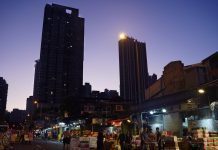
A new LED video screen the size of five tennis courts on the exterior wall at the Sogo department store in Causeway Bay, led to questions about whether the use of decorative or advertising external lighting is becoming excessive.
Sammy Poon, a Causeway Bay resident, has lived next to Times Square for almost 20 years. In the past, her window blinds were enough to block the lights. But with so many bright screens now, she says it is impossible to shut the light out. Even if she sleeps with all the blinds drawn, she can still feel the lights flashing.
In 2011, the government set up the Task Force on External Lighting to look at how best to tackle light pollution in urban areas. After a public engagement exercise from August to November 2013, the Task Force concluded that due to diverse views on the regulation of external lighting, legislation would not be appropriate. In 2015, they recommended setting up a voluntary charter scheme instead.
This scheme is now known as the Charter on External Lighting (the Charter), and was launched in January 2016. The voluntary Charter asks businesses to switch off lighting installations with decorative, promotional or advertising purposes at a preset time between 11pm and midnight.
As of today, it boasts nearly 4700 signatories from individual outlets around Hong Kong. However, there are relatively few signatories in light pollution hotspots such as Tsim Sha Tsui and Causeway Bay.
Location of the charter signatories
Although there are 4679 signatories all over Hong Kong to date, only 146 signatories are located at three districts where light pollution is most severe in: Causeway Bay (22), Mong Kok (40) and Tsim Sha Tsui (84).
One year into the Charter’s operation, Caroline Mak, Chairperson for the Promotions of the Charter on External Lighting, still believes the Charter is the best solution for businesses and the public. She is sympathetic to the Environment Bureau (ENB), who she says has to balance the interests of different stakeholders.
However, Wan Chai District Councillor, Yolanda Ng, says her constituents in Causeway Bay are still affected by light pollution even after the Charter was implemented. She explains that though many TV screens in the area are on second or third floor walls, their brightness can still affect residents who live on the 20th to the 30th floor.
Ng thinks businesses are taking advantage of the charter’s voluntary nature and lack of enforcement measures. Since the Charter was implemented, she has seen more than ten big TV screens being installed, including Sogo’s.
She adds that her constituents are tired of complaining without seeing any positive response from the government and they feel helpless. “When even the government backs the businesses, we feel like solving light pollution problem through legislating won’t happen in the foreseeable future,” she says.
So Chu-wing is a Physics professor and astronomer at the University of Hong Kong, and the project manager of the Hong Kong Night Sky Brightness Monitoring Network. For the past ten years, the network has been researching light pollution in Hong Kong. Their results show there is indeed an excessive amount of unnecessary lighting in Hong Kong, making it one of the most light-polluted cities in the world.
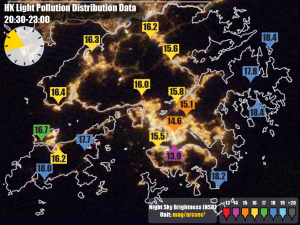
His research found that the night sky brightness dropped significantly at 11pm and midnight – when most commercial, advertising lights are turned off.
So remains optimistic and hopes the Charter is just the first of many gradual steps taken by the government to tackle the issue. While he understands the politics behind the issue of light pollution might be complicated, the solution might be simpler than people may think. “Just turn off the lights,” he says.
Environmentalists lead the way with fresh approach to handle recyclables
Reporters: Jade Li, Kristy Tong, Brianna To, Angela Siu
Editor: Minnie Wong
What happens to household objects that are no longer wanted? Some may be thrown into the rubbish and end up in landfills; paper products such as books may be placed in recycling bins. Now, some community-based green groups are promoting a different way of dealing with rubbish in Hong Kong. They want to turn conventional refuse collection points into community resources sharing centres.
Yuen Long residents can try out this approach for themselves at the weekly ‘Waste-no-mall’ held on Saturdays. Volunteers at the event call themselves “demonstrators” because they say they are creating social change rather than serving participants. The want to change the way people think about rubbish.
“Once the rubbish is brought here, it’s not rubbish anymore,” says Qing Lam, the initiator of Waste-no-mall. “They are resources.”
Waste-no-mall provides a platform where people can pass on resources that are no longer useful to them, such as old toys and books, and redistribute them to people who find them useful. Unlike at conventional refuse stations and recyclables collection points, people can see where their “rubbish” goes. The same goes for any items they pick up at the gathering. It’s a “give and take” concept while the government recycling bins only allow people to “give”.
Joe Tsiu, one of the demonstrators at Waste-no-mall, says the idea is still new to members of the public. People often come and take useful products home, without necessarily recognizing the project’s broader goal – to spread this mode of operation to every refuse collection. Tsiu says it will take time for the message to take root, so he grabs the chance to preach it every Saturday.
Most supporters of Waste-no-mall are local residents. They think it’s a meaningful campaign, one that benefits them and the needy. For some, the reuse of their unwanted items is a welcome alternative to using the government recycling bins. One resident says she doesn’t believe in the government system – she’s seen reports about how outsourced companies end up sending recyclables to landfills.
For its part, the Environment Bureau has been progressively developing Community Green Stations (CGS) in all Hong Kong’s 18 districts to enhance public environmental education and help collect different types of recyclables in local communities. So far five have been launched in Sha Tin, Eastern, Kwun Tong, Yuen Long and Sham Shui Po Districts. The amount of recyclables collected by each CGS is shown below:
| 2016 Q1 | 2016 Q2 | 2016 Q3 | 2016 Q4 | 2017 Q1 | 2017 Q2 | 2017 Q3 | |
| Sha Tin CGS | 70 tonnes | 76.4 tonnes | 81.4 tonnes | 80 tonnes | 93.6 tonnes | 99.6 tonnes | 105.3 tonnes |
| Eastern CGS | 60.3 tonnes | 67.5 tonnes | 84.6 tonnes | 80 tonnes | 109.3 tonnes | 98 tonnes | 91.7 tonnes |
| Kwun Tong CGS | – | – | – | – | 65.2 tonnes | 69.5 tonnes | 75.1 tonnes |
| Yuen Long CGS | – | – | – | – | 42.9 tonnes | 66.9 tonnes | 85.1 tonnes |
(Note: Sham Shui Po CGS commenced its operation in October 2017)
Each station serves the whole district. For example, the Yuen Long station is actually located in Tin Shui Wai, which means it’s not particularly convenient to every resident in the district. The location factor is one of the reasons legislator Eddie Chu Hoi-dick doubts the effectiveness of the CGS scheme. As most residents do not want to see rubbish collection points close to their homes, the stations tend to be a bit removed from the community.
Inspired by the Yuen Long Waste-no-mall, Chu’s team launched the Tsuen-Kwai-Tsing Waste-no-mall in October. To make the idea work, Chu thinks all it takes is a place where people can gather.
“You come here to learn, to meet new people, to participate or to contribute. This is also one way of organizing the community, but this model can only operate if many people take part,” he says.
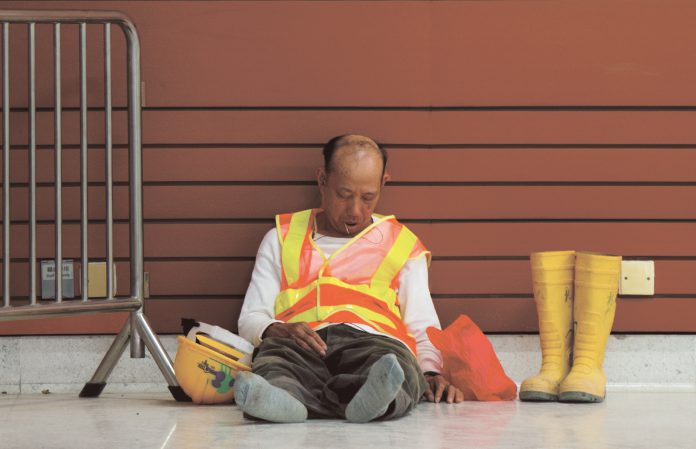
The December 2017 issue of Periscope looks at Hong Kong workers and their working conditions:
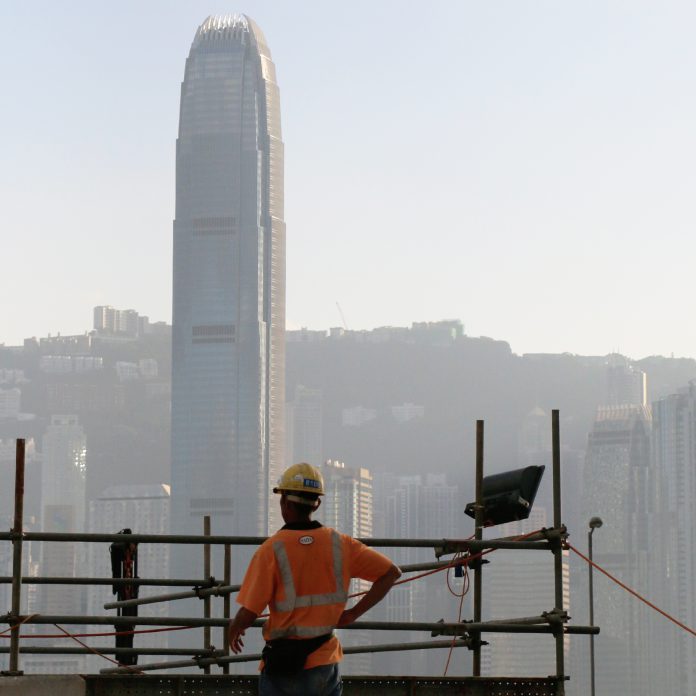
From the era when Hong Kong was a centre of industry and manufacturing to today’s service economy, the plight of Hong Kong’s workers has been an issue of social concern. Finding a consensus in balancing the interests of employers, government and workers seems as difficult as ever.
Despite an overall reported improvement in workplace safety, there are still too many fatal accidents, mostly in the construction industry. In July, three workers died when a sewer in Hung Hom suddenly burst and filled the tunnel they were working in with water. In March two construction workers went missing after a platform collapsed on the site of the Hong Kong Zhuhai Macau Bridge. There have been nine fatal accidents on the site in the past six years, according to local media reports, sparking concern about the lack of adequate protection and poor work conditions of workers on infrastructure projects.
But fatal accidents do not just happen on major construction projects. In September, a double-decker bus veered onto a pavement in Sham Shui Po, one of the busiest districts in the city. At first many blamed the bus driver for the deaths of three people and injuries to 29 others. However, it later emerged that the driver had been working 14 hour shifts consecutively.
Long working hours is one of the issues many employees complain about but few dare speak up for fear of losing their jobs. Labour unions have taken up their cause in negotiating with the government, but with little success.
Varsity looks at how injured workers struggle to get timely and reasonable compensation payments, and hear about how some employers hide industrial accidents to avoid paying workers their due.
Our Periscope section also looks at workplace safety. As Hong Kong has transformed into a service economy, frontline service industry staff are overworked in conditions that have a detrimental effect on their health. They cannot get compensation for chronic diseases and conditions that arise from work, such as standing for long periods of time, because it is hard to provide proof of a direct correlation between their work and their ailment.
In the meantime, the introduction of the minimum wage and proposed contractual working hours for lower-paid staff fail to make substantial improvements for many workers.
We also look at the working conditions of those employed in non-standard forms of employment, such as part-time work, temporary or freelance jobs. These workers are not given the protections of full-time employees under the law and the nature of their work does not provide them with the conditions and impetus to get involved in the organised labour movement to fight for their rights. We talk to several newly-formed labour unions to learn more about the difficulties of mobilising workers in these newer modes of employment.
In this issue, we also go undercover to delve into the private fostering of anchor children in Hong Kong and agencies which help the mainland parents of anchor children stay in Hong Kong legally. Among other highlights are profiles of singer-songwriter Vicky Fung Wing-ki and TV physicist Tong Shiu-sing, popularly known as Dr Tong.