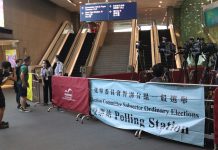
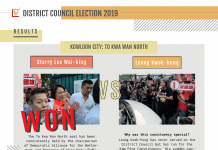
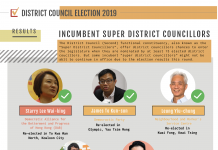
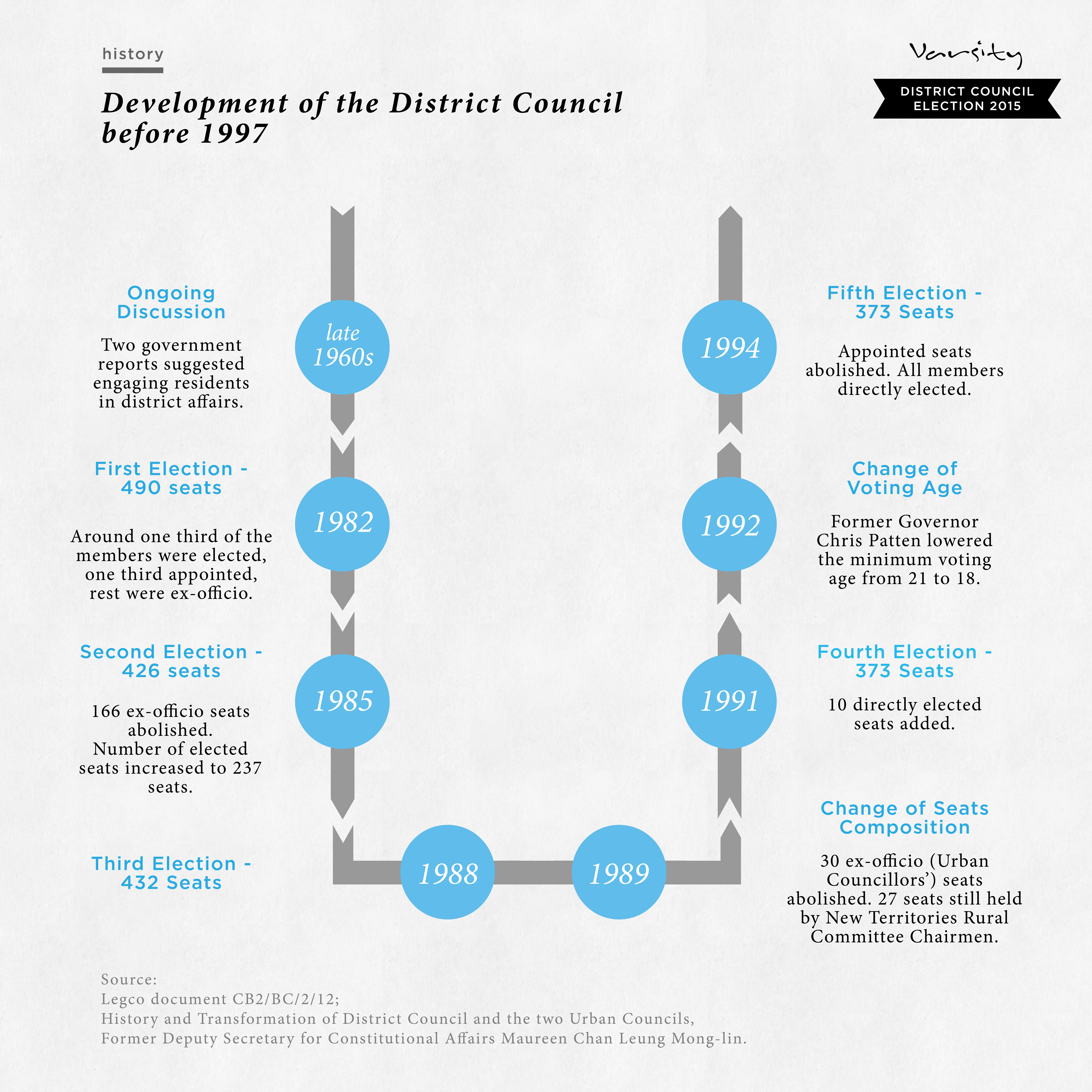
This infographic shows the history and development of the District Council before 1997. Tomorrow we will post Part II, showing development after the handover of Hong Kong’s sovereignty from Britain to China in 1997.
Note: Before 1997, the District Councils were called District Boards
As we enter adulthood, we start to taste life’s many different flavours – including the bittersweet. We have to stand on our own two feet, make our own living and stop relying on our families. We become aware of the responsibilities on our shoulders. Some might describe this as a “moment of awakening”, the beginning of an exciting adventure, or perhaps, the prelude to the loss of innocence.
For Hong Kong’s youth the “moment of awakening” finds them in a rapidly changing society with unprecedented challenges arising from their place in space and time, in an increasingly globalised and digital world. As they grapple with these challenges, the future pillars of our society also have to contend with the label of “useless youth” (廢青) that is now frequently used by members of the older generation to criticise young people. It is a caricature of the young that paints them as shallow, work-shy, feckless and “radical”. But are these charges fair?
Instead of stereotyping young people this way, Varsity wants to look at the present and future circumstances awaiting the city’s youth, the challenges they face and the choices they make in responding to them. We decided to look at three issues – namely, social engagement, work and family.
Hong Kong society has been more polarised since the end of the Occupy Movement while youngsters who participated in the movement ponder how to face the city’s political predicament. Their efforts failed to win any concessions and the political reform proposal the government tabled to the Legislative Council strictly followed the National People’s Congress Standing Committee’s (NPCSC) framework. The controversial plan was eventually vetoed in the Legislative Council in June this year, six months after the Occupy Movement was ended.
With a new round of political reform nowhere on the horizon, and disappointed with the government, youngsters have adopted different approaches to deal with their sense of powerlessness. Some are prepared to take more radical action, some have given up hope and plan to emigrate, while others are striving to carve out space for rational discussion. We try to find out why they made such different choices.
Another challenge our young people face is the changing work environment. The International Labour Organization says the traditional employment model we consider “work” is no longer dominant. Employers are offering fewer full-time positions and employing more freelancers, while there are more and more start-ups in the business market. Many young people have a romantic view of freelancers and start-ups but is striking out on our own all that it is cracked up to be?
Lastly, we take a look at young people’s changing concept of family. Here, the disputes related to the Occupy Movement have yet to disappear. The arguments heard on the streets were also frequently heard around dinner tables. Varsity finds that generational differences on politics also echo differences in how young people view the idea of family. We polled more than 300 young people to gauge their opinion on what makes a modern family, on marriage and on having children.
As young people ourselves, we are excited to present this issue of Varsity to you. Before we fully step into the adult world, we sincerely hope we can show you a snapshot of our generation and together reflect on the society we belong to in this time and place. We hope you enjoy reading it as much as we did making it.
Hong Kong’s young people respond to political stalemate one year after Occupy
By Emily Man & Jayce Lai
Tears streamed down Jasmine Choi Yan-yan’s face when she was arrested in the forecourt outside government headquarters. At midnight on September 26, 2014, she and other youngsters had heeded the call from student leaders to break into Civic Square, as it is known, and “reclaimed” the space.
“I felt aggrieved for Hong Kong, it’s like we’re being bullied. What we did was justified,” says Choi, a 22-year-old fresh graduate from The Chinese University of Hong Kong, her voice still shaking as she recalls the most unforgettable night in her life.
It turned out to be the opening act in what became the 79-day Occupy Movement to demand fair and open elections by universal suffrage for the 2017 Chief Executive election. During the movement, Choi spent countless nights on the streets and ended up getting pneumonia.
After her arrest, Choi was denied access at the border to mainland China and questioned by officers in a tiny room for hours before being sent back to Hong Kong. Looking back, she feels that all her actions and sacrifices were useless.
“If the former Chief Executives had faced such a large-scale protest [Occupy Movement], they wouldn’t have been able to ignore it. But now they don’t care at all.”
The failure to win any concesssions from the government or from Beijing has left many young people in a quandary. Some have become more radical, some have given up on working for change, and yet others are trying to seek an alternative.
For her part, Choi has given up on the government but still sees a need to take action on political and social issues. She is no longer interested in sharing her opinions online or speaking out through established channels. Instead she says she will simply act.
For example, if the government builds the proposed third runway for the Hong Kong International Airport, Choi says she would take part in a sit-in at the construction site to stop the construction work. “They [the government] will never listen to criticisms, and the last resort is to block the excavator.”
Jasmine Choi Yan-yan was banned from visiting mainland after her arrest on September 26 2014 at Civic Square
Youngsters face pitfalls as they chase their freelance and start-up dreams By Kate Kim & Vivienne Tsang
Chandni Chotrani picks up her camera, looks for the perfect frame and takes the shot.
After finishing secondary school two years ago, Chotrani followed her instincts and her knack for photography. She asked her parents for a gap year so she could decide if this could be her life-long career. She is currently working as a freelance photographer.
Chotrani says being a freelancer is not as carefree as people might think. “It’s down [to me] on my own feet,” she says. She has to brush up on her photo-taking skills, reach out to potential clients, and maintain her website. It is challenging but she says she does enjoy her life now.
Freelance photographer Chandni Chotrani photographs a model.
Brothers Jonathan and Eric Chiu are also choosing to strike out on their own. After earning good salaries, they decided to quit their jobs to establish their own start-up. “I don’t want to work for someone,” says Eric. “I’d be making money for the employer.”
The brothers, admirers and devotees of the success stories from the Silicon Valley, are the co-founders of Lime Inventory, an app that simplifies stock-taking for restaurants and bars.
Despite the ups and downs of running their own business, the brothers are optimistic they can become lifelong entrepreneurs. They do not want to go back to regular employment because in their eyes, freedom means everything. “I would rather be poor and die trying,” says Jonathan.
The Good Lab, a co-working space where the Chiu brothers are now based, aims at enabling like-minded people to collaborate and develop their businesses. Ada Wong, its director, came up with the idea of establishing this space through her personal observations. She noted that many cities in the region already have co-working spaces of their own. “I’m just following the trend worldwide.”
Start-ups are just one dimension of the changing nature of work for young people. With the advancement of communication technology, many of them opt to work part-time or as freelancers. For some millennials, the traditional features of work – a fixed place of work, regular hours and constant contact with colleagues – are no longer familiar.
Foster Lam Yuen-ho, a social worker who specialises in career counselling for teenagers, says youngsters in the past were only concerned about the economic benefits of employment. Working was a means to survive. But young people now expect more from work, for example, job satisfaction and being able to contribute to society. He says flexibility and the autonomy to control their own life, have become key considerations.
Lam says that since more young people prefer part-time over full-time jobs, employers tend to offer contract-based or part-time jobs. But this is only part of the picture. While some youngsters might opt to work freelance or part-time, others might soon have no choice.
According to a recent report published by the International Labour Organization, the world labour market is undergoing a vigorous shake-up that is changing the meaning and nature of work. In advanced economies, the standard employment model is less dominant, and full-time, stable contracts represent less than one in every four jobs.
Hong Kong’s politically aware millennials are challenging the traditional idea of family
By Kelly Wong & Achlys Xi
Studying in her final year at university, 22-year-old Queenie Chung Xiao-qing has a promising future ahead of her. It is a future she envisages with a husband and children. “I want to get married at 26, the earlier the better…and give birth before 30, to maybe at least one or two children,” she says, wide-eyed with excitement. “Having only one child could be rather boring. Two kids seem much better – perhaps a boy and a girl.”
But as she continues, and she begins to consider the difficulties she may have to face raising a family in Hong Kong, her excitement dims. Even before the 79-day Occupy Movement began, the city had become increasingly polarised, with deep rifts between generations and within families over Hong Kong’s political future and social and cultural values. This has, to varying degrees, affected young people’s views about family – what the concept means, their ties with their families and their desire to form one of their own.
For Chung, Hong Kong’s political situation is a disincentive for her to start a family. “Currently [in Hong Kong] the idea of ‘One Country’ has predominated over the idea of ‘Two Systems’, which makes me worry [about communism and Hong Kong’s future].”
Chung was an active participant in local politics, being a former convener of Scholarism and a member of the Kwu Tung North Development Concern Group.
Queenie Chung Xiao-qing
She is majoring in Chinese language studies and education, and is also worried about the quality of education for her future child. “I will definitely not [send my child into] mainstream schools. As I also study education, I find [the pressure at mainstream schools] hard to withstand. International schools would be the only choice, but then the cost might be out of reach.”
At home, Chung describes her relationship with her family as so-so. “My parents embrace the traditional idea of ‘valuing the sons more than the daughters’ and always pay more attention to my younger brother,” she complains.
Apart from their views on gender differences, Chung also has different political values to her parents. Although they are broadly supportive of democracy, Chung says her mother would have stopped her camping out on the streets during the Occupy Movement if she could because she thought “other people will do it for you”, whereas Chung says she believes that attaining true democracy requires people to make their own effort.
She says she finds her parents’ values and the way they handle differences disappointing, “I am not asking that everyone has the same values in a family…I can accept differences, but my family cannot.”
She says her own relationship with her parents and a desire to do things differently has influenced her eagerness for early marriage. “My parents couldn’t give me the happiness that I wanted. Therefore when forming my own family, I shall not repeat the same mistakes.”
Chan Kin-man, associate professor of sociology at the Chinese University of Hong Kong and one of the co-founders of Occupy Central with Love and Peace, observes that this generation of young people faces more conflict with their families because of different political values. “Unlike the previous generations, this generation of youth [born after the handover in 1997] no longer view Hong Kong as merely a labour market or a consumer market. They value Hong Kong as their home – thus their expectations [for Hong Kong’s future] are also different.”
Chan says the Occupy Movement was a catalyst for worsening family relations. “These [conflicts between different values] have been accumulating. Beijing’s increasingly tight grip on Hong Kong affairs since 2003 has made our society more divided politically. During the Occupy Movement, when the society was at its breaking point, intimate relations between many families, lovers and friends were greatly affected.”
He is currently conducting a study on how social movements influence family relationships. He says family is still important although most young people in this generation do not identify with the political values of their parents. “Family is still very important in Hong Kong as a Chinese society.”
Chan elaborates by describing a phenomenon that he has noticed in his sociology class. “Every year, I would ask them [students] to draw a picture that reflects the ‘happiest moment of your life’. Most of them ended up drawing moments they spent with their family, for instance having dinner together in front of television. Such emotional support is especially important, which explains why they treasure family a lot.”
Heily Wong Hei-lam
Unlike Queenie Chung, 19-year-old Heily Wong Hei-lam has a happy home life. She is close to her parents and receives emotional support from them. Her political stance is also not as strong as Chung’s.
University freshman Wong says she does have arguments with her parents, usually over aspects of her personal life. “They often complain about me getting home late,” she says. “But many of these conflicts are quickly resolved…they [parents] are quite open to discussion.” She thinks it is always important for her parents to express their understanding.
Wong adds she usually avoids discussing politics at home to minimise conflicts and that sharing similar values with her family members helps her to build stronger emotional bonds with them. “If I had to prioritise the importance of my family and friends, family definitely comes first,” she says.
Wong says her parents have given her considerable freedom when it comes to how she wants to form her own family – they would accept cohabitation and children before marriage. “A few of my relatives gave birth before getting married. My parents find that normal,” she says. As for her own thoughts on marriage, Wong thinks it is optional as she is eager to date different men before settling down, and she is not concerned about the issue of whether she will have a child or not.
Her views are not unusual. In a survey of 346 people aged between 18 and 27, Varsity looked into the changing concept of family among this generation of Hong Kong youth. Compared with surveys conducted by other organisations in the past, we found marriage and having children have become less popular while various aspects of the traditional idea of family are being challenged.
Traditional intermediary industries face challenges from new business models and the sharing economy By Esther Chan & Zoe Lai
A police raid on the Hong Kong office of the car-hailing app Uber in August drew attention to the social and legal implications of the global spread of what is being called the “sharing economy”.
The idea of the sharing economy or “collaborative consumption” is based on providing access to resources rather than ownership. An undisputed example would be an app that enables someone to borrow or hire a power drill from someone else who has one to spare.
But as marketing professors Giana M. Eckardt and Fleura Bardhi point out in an article in the Harvard Business Review, sharing is a social activity. When it is mediated by a company between people who do not know each other, for profit, it is an economic exchange.
According to this analysis, businesses like Uber and Airbnb, the online accommodation booking service may be disrupters, but they are disrupters of traditional intermediary businesses as well as of service providers. And this is a phenomenon that is happening across swathes of industries and businesses in Hong Kong.
In the face of climbing costs and diminishing profit margins, Antony Yiu Koon-tung, founder and creative director of Blitz Brand Consultancy, has been turning to freelancers instead of hiring production crews and companies to make advertisements for his clients. This starts with the models, who Yiu finds through his own personal network and on social media instead of through the modelling agencies he used to rely on for selecting models.
“We save the intermediary costs from the modelling agencies and hence it is more cost efficient when introducing the job to our customers,” Yiu explains.
Yiu says that cutting out the agencies means he has less choice and more work to do. He and his staff may have to do the casting themselves and even design the models’ calling cards to show clients.
Hiring freelancers also comes with risks. Yiu recalls a model was nearly two hours late for a shoot to advertise a bra catalogue. His company had to pay the cameraman extra for the time. In such cases, clients may complain and even call off the production.
Despite such experiences, Yiu does not intend to stop hiring freelance models as well as individual units for productions such as cameramen, lighting crews and editing teams. He says hiring each production member separately can cut costs by up to 40 per cent compared with going through a production company. The trend to cut out the middleman is well under way and is irreversible, he says.
Regina Lee Lok-yee
Regina Lee Lok-yee, a 21-year-old student who works as a freelance part-time model, acknowledges that established, reputable agencies offer better protection for models by securing work for them and making sure they are paid, but she prefers the freedom of working freelance because she can choose her jobs. A contract with a model agency usually lasts around five years and the agency will decide all the assignments.
With more models thinking in the same way, it is becoming an increasingly competitive market. “The market is so large that no matter how low the remuneration is, there will always be someone who will do the job,” she says.
In modeling, cutting out the middleman has not resulted in higher pay for the models. Lee says freelance models are seen as less professional and are paid less because clients hire them precisely to cut the costs of paying an intermediary.
E-textbooks have yet to win over all parents and teachers By Natale Ching & Wing Chan
After a day at school, Primary Four student Anson Woo comes home and takes his iPad out of his schoolbag. Anson is not getting ready for an afternoon of online games, he is preparing to do his homework and the tablet is the “book” he uses for some of his lessons at school.
Anson’s school, St. Francis of Assisi’s English Primary School adopted e-textbooks for students from Primary Three to Primary Six two years ago and his mother has noticed some positive aspects of the change from traditional textbooks. “There is an interesting ‘read aloud’ function [on e-textbook],” says Mrs. Woo. “For instance, the Chinese e-textbook is equipped with a Putonghua ‘read aloud’ function. When his parents are not at home, my son knows how to read the words with this function.”
Woo recalls she had high expectations of e-textbooks because of their apparent advantages. She says it is a strain for Anson to carry his heavy schoolbag so she was happy he would only have to carry an iPad instead of a stack of books. The animations, interactive activities and colourful design of e-textbooks also boosted Anson’s learning interest.
But after two years, Woo concludes that the advantages have come at a price. She says Anson’s short-sightedness has become worse and he has become over-dependent on the iPad. Today, she is far more circumspect and even worried about e-textbooks.
The government is committed to promoting the use of e-textbooks and there are obvious advantages of this flexible, easily updated and interactive medium of teaching and learning. But three years after the administration approved funding for an e-textbook pilot scheme , the feedback from parents seem to be mixed.
Anson’s mother recalls the time that he came home in a panic saying: “Mum, my goodness! I can’t do my homework because the iPad ran out of battery! I forgot to charge it.” She says she was shocked by her son’s anxiety whenever his iPad was unavailable.
Woo’s concern prompted her to lock up the iPad during the summer holiday. She encouraged Anson to read printed books and pick up hobbies such as baseball, painting and chess to rid him of what she saw as an addiction. She thinks it is important for him to know how to learn without the iPad.
Anson’s Chinese homework on his e-textbook
To further reduce Anson’s reliance on the iPad, Woo, like many other parents at the school, bought an extra set of Chinese and general studies printed textbooks just to discourage Anson from using the iPad when revising at home. After shelling out thousands of dollars for the device, plus a total of HK$1,300 for the e-textbooks – which is comparable to the cost of traditional textbooks – she ended up paying another extra HK$400. “It is never a cost-cutting solution for parents,” says Woo.
While she was frustrated by Anson’s dependence on the iPad, Anson was frustrated by bugs in the homework section of the mathematics e-textbook, which would occasionally clear all the work he had done. Anson and his classmates often had to take screenshots of all their finished homework to show their teacher just in case it was lost.
Anson also finds it hard to make notes on e-textbooks, as it is hard to doodle and type notes on an iPad. Even if he does manage to jot them down, he finds his messy notes hard to understand when it comes to revision time. His mother thinks writing on an iPad discourages Anson from learning the stroke order of Chinese characters.
Contract teachers face lower pay and more uncertainty By Tiff Chan & Teenie Ho
A Tai Po secondary school’s annual sports day has ended and most students have already left the premises except for a few who have stayed behind to chat next to the basketball court. Yam Ka-wing, their economics teacher is surprised to see them there and with a broad smile walks over to talk with them.
The 26-year-old holds a business degree and is the school’s only economics teacher. Despite a heavy workload, she enjoys her job and has a good rapport with her students. But she is not certain that she wants to or will be able to continue teaching at the school once her contract ends.
Since schools began to hire contract teachers like Yam in 2000, around 15 per cent of teachers in primary schools and 10 per cent of teachers in secondary schools have been hired on annual contract terms. Most of them are fresh or recent university graduates with a teaching degree or graduates who have taken the Postgraduate Diploma in Education. Many complain they are underpaid, overworked and lack job security – leading to fears about teaching quality and the future of the teaching profession.
Schools began to hire contract teachers after the Education Bureau (EDB) started giving out annual one-off cash grants to schools. Fung Wai-wah, the president of the Hong Kong Professional Teachers’ Union (HKPTU) says schools enjoy a high degree of freedom on how they use the grants.
Fung Wai-wah
Fung says the EDB introduced the grants after pressure from teachers to increase the number of permanent teachers to deal with the extra workload arising from special educational needs students, the New Senior Secondary (NSS) curriculum and life-planning education. The government refused to increase the headcount for permanent teachers, citing a drop in the number of school-aged children but agreed to the grants.
He says most of the schools use the money to hire staff such as contract teachers, associate teachers and teaching assistants to expand their teaching team and reduce the workload of permanent teachers.
The amount schools get every year fluctuates according to how many students there are. Government statistics show the number of secondary students dropped by 21 per cent in the past six years. If the EDB reduces the level of subsidy in a given school, its contract teachers may not be able to renew their contracts in the coming academic year. On the other hand, Fung points out that it is hard to fire a permanent teacher even if they perform badly.
Compared to contract teachers, permanent teachers enjoy job stability and their continued employment makes for a more stable teaching team in the school. The EDB has a strict quota on the number of permanent teachers a school can hire based on the ratio of two teachers for every class in a given year. They also have a predictable mechanism for pay increases.
However, there is no such mechanism for contract teachers whose salaries are decided by the schools. “According to the pay scale, the starting salary of a permanent teacher can be around HK$20,000 a month, but, in reality, fresh graduate contract teachers can only get half of that,” says Fung who describes it as a form of exploitation that the HKPTU cannot accept.
Run to meet friends and experience Hong Kong’s neighbourhoods By Karen Yu
It is 7 p.m. on a Wednesday and Dawn Chan Pui-yan, who is in her late twenties, has just finished work. She walks from her workplace to the nearest MTR station. The rush-hour crowds on the subway have not yet thinned as she makes her way to Central. Despite the crowds and her exhaustion from work, Chan looks forward to her weekly evening runs with friends.
Dawn enjoys running with her friends.
“Your brain is more tired than your body during work,” Chan explains, “so sweating through running can make me less exhausted and motivates me to do better at work.”
Chan is one of Hong Kong’s many running enthusiasts. Chong Hiu-yeung is another. The 36-year-old has 14 years of running experience and observes that the Hong Kong running community has been increasing in recent years. This is reflected in the number of people registering for the Standard Chartered Hong Kong Marathon. Since 2006, the race has attracted more than 40,000 participants, rising to more than 60,000 in 2010 and reaching 73,000 in 2015. Around 74,000 have signed up for next year’s event.
Chong also notes the growing popularity of new running groups organised by the younger people. Compared to the traditional running groups and associations that organise training and mainly run on tracks in sports fields, the new groups adopt different programmes such as running by the harbour or along trails and their runs are opportunities to build up social networks. “[The new running groups] gather and run after work,” says Chong. “They will take photos and dine afterwards, just to have some fun.”
Harbour Runners is one of these new groups. It started in 2010 and every Wednesday, around 100 runners, from all walks of life including farmers, musicians and teachers, run around the city. During the 7km run, they chat with one another about their daily lives and about their surroundings. A group photo marks the end of their run and some will stay and dine together.
For Dawn Chan, who is a public relations manager, Harbour Runners is a platform for social gatherings. “I reserve every Wednesday for Harbour Runners to meet my friends and have an enjoyable dinner with them.” she says, “It has become a part of my life.”
Running has also helped Chan to meet people outside Hong Kong. She travelled to Russia with a girl she met in Harbour Runners two years ago. During their trip, they participated in a local run and made friends with some Russians who showed them round Moscow and St. Petersburg through running.
Ivan Chan Ming-yuen, 28, is a core member of Harbour Runners. Apart from providing a social platform, he explains that Harbour Runners aims to advocate healthy lifestyles as the busy city life easily gives people an excuse to not exercise. Ivan Chan says Harbour Runners provides a relaxing healthy running experience by arranging beginner-friendly routes along the promenades in Tsim Sha Tsui, Central and Wan Chai.
ROC.Crew participants raise glasses after they complete their run.
Before joining Harbour Runners, 39-year-old Cyril Lau Kin-wai, who works in one of Hong Kong’s disciplinary forces, smoked, stayed up late and regularly went out drinking with his friends in Lan Kwai Fong. He joined Harbour Runners three years ago to help get in shape to pass the physical training test for his job. Yet, he gradually gave up his unhealthy lifestyle because he discovered the interesting sides of running, such as trying different running routes and improving his own health. More importantly, running has changed his attitude to life.
“My life is more balanced when I run with my friends in my leisure time instead of focusing on practical work and job promotion,” he says. “I know how to live my life instead of surviving.”