











Home Blog Page 111

Battle on the Table

The fantasy world of miniature war games
By Derek Li

“Charge!” roars Captain Angelos while smashing an orc’s face with his raging hammer. His squad sprints and shoots, the incoming bullets falling like rain. It is a bloody battle but Angelos pushes on.

The action is taking place on a table and the soldiers are the miniature pieces or figurines of a tabletop war game.

Tabletop war games involve two major elements: the miniatures and the terrain. You can choose between a brave knight, or a gigantic beast, made in plastic or metal. By putting up a few miniature buildings, you can easily construct your battlefield. If you ever get bored with the miniature scenery available you can always craft your own.

Unlike any other games, it allows you to customize your pieces and your board. You can paint the miniatures in whatever colours and combination you like, your miniatures can reflect your style. The player has absolute control over what types of strategies and units to deploy.

However, both players will have a limit on the number and varieties of soldiers they deploy. For instance, a basic squad needs 50 points while an armoured tank unit requires 100. Once the troops are armed, they can be sent to the battlefield where the show begins.

So how does the battle start?

Each time, a player can decide their move and whether they will trigger a battle. Every unit has its walking and attacking distance. Players need to strictly respect this rule and use a ruler to measure the exact distance. Any damage and kills are decided by the roll of the dice and the randomness adds thrill and possibilities to the game. Each step requires careful planning, as it is possible to lose in just one round.

All this means it can take hours to finish one full game. So with so many alternative games around, why do people still enjoy such a long-winded and complicated game? Walker Wu Chi-fai, a dedicated player for 14 years, has the answer.

“Unlike computer games that have endings, they [miniature war games] will not die out. You can keep playing them again and again, there are regular updates [of miniatures],” says Wu.

It is not just a game but also a hobby for Wu. He meets friends with the same interest through playing. He likes the game so much that he works for a miniature shop, teaches beginners how to play and holds tournaments for the senior players.

Tabletop games require actual players to compete against each other, so what if your friends are busy?

You are never alone.

The community of miniature war games is united and you can always find somebody at Fun Atelier, a shop that sells miniatures and provides terrains for tabletop war game lovers. Players visit the shop whenever they have the time. Sometimes they come to play, or just chat with friends. Since the game originates from the United Kingdom and is played in English, some of the players are expatriates living in Hong Kong.

If you have been fantasising about being a hero and saving the planet, or if you simply love painting models, join the battlefield of tabletop war games and the hundreds of fans waiting out there.

Light of the Party

The T-shirt that flashes to the beat
By Nectar Gan

Have you ever felt frustrated at not being able to follow the beat on the dance floor? Have you ever wished you could light the place up with your grooves?
Here comes the good news: with the assistance of the sound activated electro-luminescent (EL) T-shirt, a rhythmically challenged and shy person can also become a great dancer.

The “magic” of shining patterns is achieved with a built-in sound sensitive EL panel underneath. The patterns usually involve rows of colorful little squares, which look like a graphic equalizer on a music player. The bars of the graphic equalizer respond to the music around you, jumping in time to the beat: the louder the sound, the higher they jump. Other patterns can also be found, including stripes and signal shapes. In some stores, you can design your own patterns.

The EL T-shirt is a great choice of outfit for concerts, festivals, parties and even sports events. Putting on such a T-shirt will not only make you the focus of people’s attention, but also the life and soul of the party.

However, you might be worried about the potential safety implications of wearing an electric display panel right on your chest. Will the lights generate heat and burn your skin? You might ask.

Well, this is not much of a concern in the case of the EL T-shirt because of the special properties of the electro-luminescent sheet. The display sheet will not generate any heat or ultraviolet radiation while it transforms electricity into light, which is why it is also known as the “cold light” sheet. Besides, the EL sheet is thin and relatively flexible, allowing bends with a radius bigger than two centimeters. These properties have made it very suitable for use in clothing.

Since the EL panel requires electricity to function, a small battery box containing four AAA batteries is attached to the shirt. There is also a sliding wheel on the box, enabling you to control the sensitivity of the EL panel according to the volume of the music.

Care is needed with washing the T-shirts. They can only be dry-cleaned or hand washed. Both the battery box and the EL panel should be removed before cleaning. The panel is attached to the T-shirt with Velcro tape, which makes it easy to remove or replace.

As Christmas is approaching, the sound activated EL T-shirts could be a great gift for your friends and family. Shining along with the music and the Christmas lights might be a good way to celebrate Christmas Eve!

To get your own EL T-Shirt, please visit http://www.eltshirtco.com.

Read On – Editor’s note

Greetings from the Autumn 2012 Editorial Board!

The November issue of Varsity looks at books and bodies. First off, we explore Hong Kong’s reading culture.

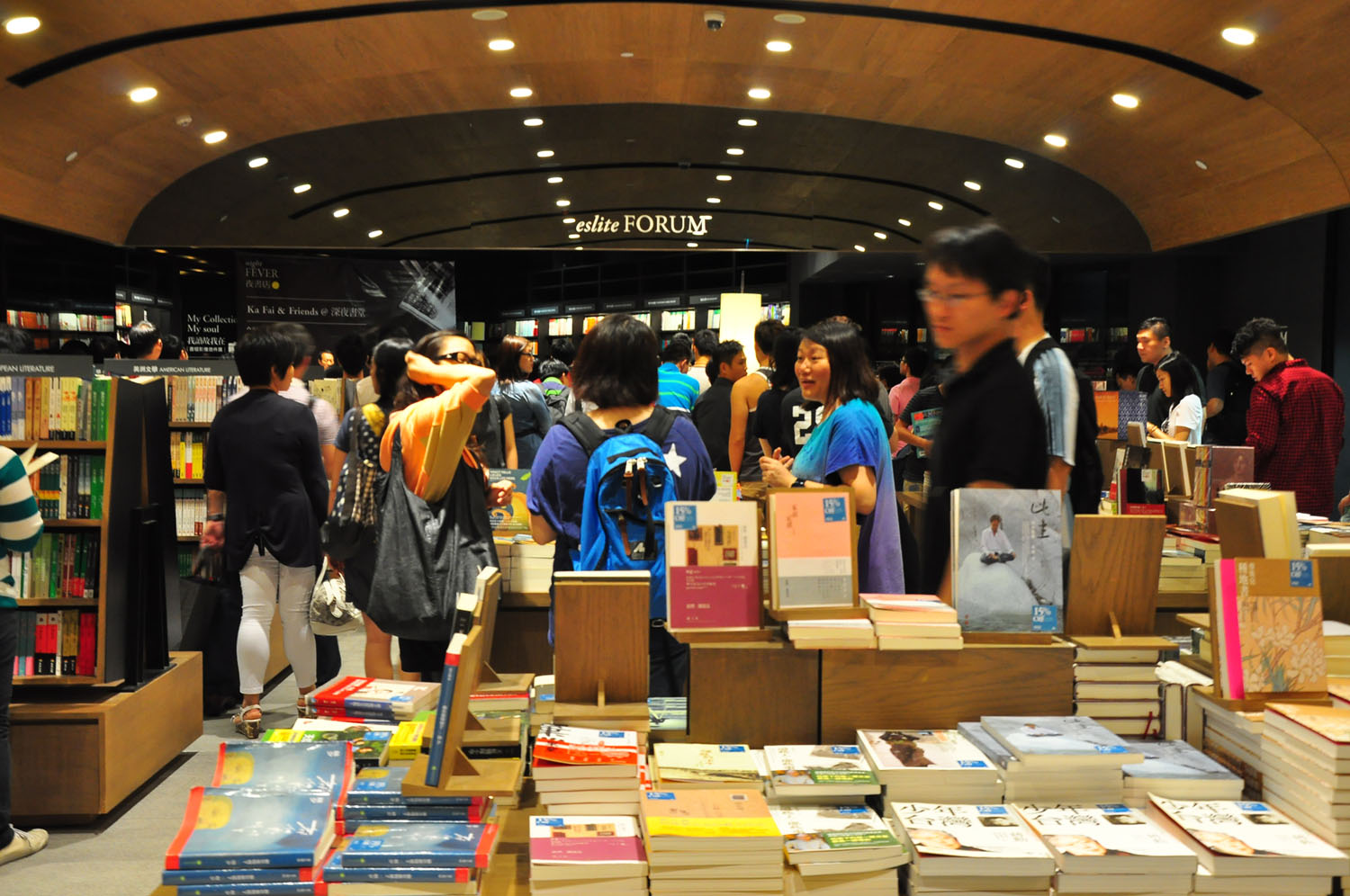
In August, the famed bookstore and lifestyle shop Eslite opened its first branch outside of Taiwan right here in Hong Kong. Crowds immediately thronged the store and it became the place to be seen. Some commentators believe its impact, if any, will be short-lived in a city regarded as something of a cultural desert. Others, including some local bookshops, hope Eslite’s arrival will usher in a few changes and boost interest in reading.

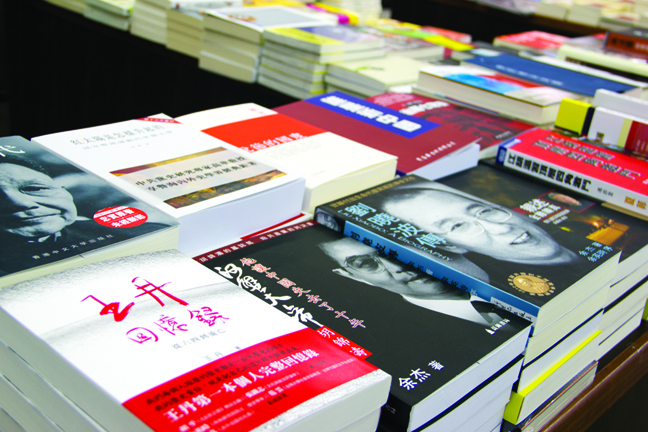
Although the reading culture in Hong Kong is not particularly strong, as a special administrative region of China, we enjoy freedom of the press. This makes Hong Kong an information hub for mainlanders as well as others from the Chinese-speaking world. Books banned in the mainland can be found in local bookstores. Mainland readers, hungry for information, stock up on books that are prohibited back home.

Teachers and parents are always emphasising the importance of reading and criticising youngsters for not reading enough.
Varsity attempts to see if this is true and looks at what the youth of Hong Kong are actually reading. Growing up in a digital age, we have access to many reading materials other than books and newspapers. Young people read online, so their reading habits differ from those of the older generation.

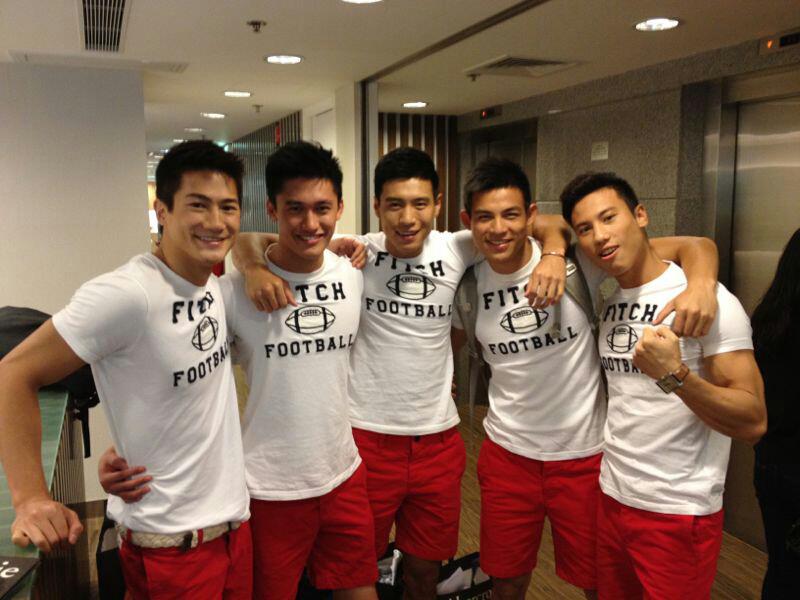
Apart from reading, this issue of Varsity looks at how we view our bodies. In the Our Community section, local Abercrombie & Fitch models talk about how Asian male bodies are viewed differently from those of western men. We explore the idea of the perfect male body.

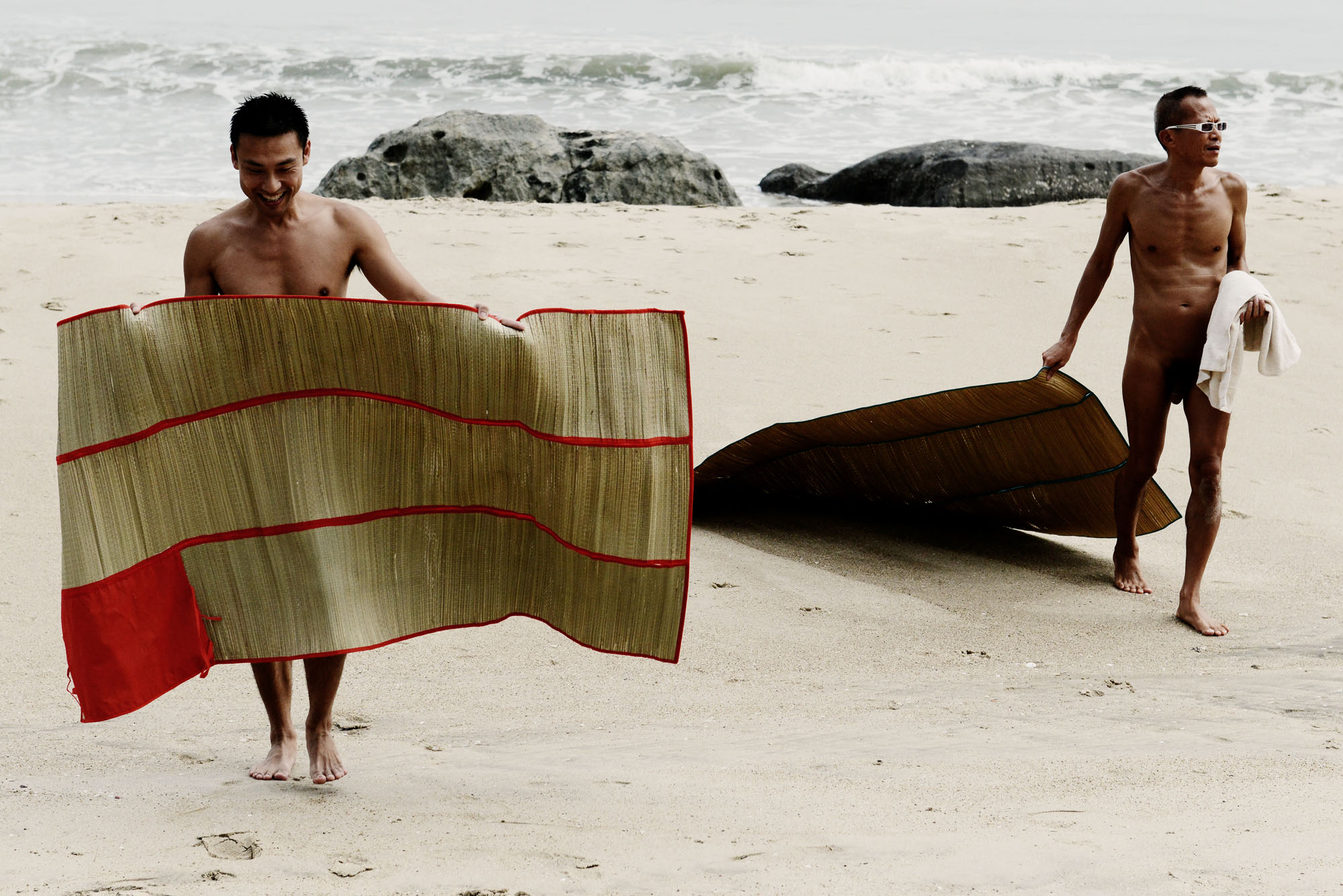
In the Lifestyle section, local nudists tell us how comfortable they are in nothing but the skin that nature gave them.

Happy reading!


Can Eslite Fever Get Hong Kong Reading?

Taiwan’s leading bookstore shakes up local book scene
By Matthew Leung and Vicki Yuen

Queenie Wong Kwan-yi alternates back and forth between tip-toeing and kneeling as she scans the bookshelves in the handicrafts section. Each shelf reveals another collection of treasures. In her left hand, she holds a shopping basket containing almost a dozen books and two items of stationery.

The sixteen-year-old student is a huge fan of the Eslite chain of bookstores in Taiwan, where the company was founded, and has visited them no less than five times. But this is her first visit to Eslite’s recently opened and, perhaps, the most discussed bookstore in Hong Kong.

After spending over five hours looking around, Wong is ready to give her assessment. She is impressed by the variety of books Eslite Bookstore offers, especially the handicraft books published in Japan. “I have not considered my budget, I would buy anything that I am interested in,” she says.

Eslite is one of Taiwan’s best known retail chains and has been around for 15 years. The Eslite brand of lifestyle and culture has captured the imagination of not only Taiwan readers and shoppers, but also Hong Kong and mainland visitors. Its stores, which are more like trendy shopping malls than mere bookshops, have become tourist attractions.

Around 70 per cent of the floor space is used to sell stationery and food and drinks, leaving just 30 per cent of the space for books. Book sales account for 30 per cent of company profits.

The success and popularity of Eslite Taiwan means there are high expectations for the new store in Hysan Place, Causeway Bay. However, the business model for the Hong Kong store differs from those in Taiwan.

Under the terms of the lease of the shop, 85 per cent of the 41,000 square feet retail space has to be given over to books. There are 100,000 books in the store, 40 per cent of which are English books. Books in simplified Chinese are yet to be introduced. When the three-storey shop officially opened in August this year, Eslite fever swept the city and there was much discussion of the impact it could have on Hong Kong’s reading culture.

Hong Kong is Banned Book Paradise

Mainlanders flock to Hong Kong bookstores to buy books censored back home

By Nectar Gan and Jennifer Lam

It is a weekday evening and Tsim Sha Tsui’s Peking Street is crowded with people and cars. But in an upstairs bookshop, it is extremely quiet. Thousands of books are arranged neatly on the shelves in historical order, from tomes about ancient times to contemporary China. Many of them are banned in the Mainland.

The Central Propaganda Department is the organ responsible for banning books in China. It has the power to censor, prohibit publication and ban the sale of books as well as to censor news, movies and television programmes. Banned books are often about sensitive issues in mainland China. They can range from academic works on political theory to salacious books of gossip about Chinese political leaders to fiction that is deemed morally suspect.

With such strict censorship in place, many mainland readers flock to Hong Kong for books they cannot buy back home.

On the evening of Varsity’s visit to 1908 Bookstore, Tim Wang bought two copies of Lishi de xiansheng, literally Herald of History. The book is a selection of speeches, articles and comments calling for freedom and democracy published by the Chinese Communist Party in the early 1940s, during the rule of the Kuomintang. The book has been banned by the Chinese government since 1999.

Wang grew up in the Mainland and came to Hong Kong before the handover. He is now in his 30s. He works in publishing and has a special affection for books. Wang says he has taken banned books back to the Mainland, either for himself or for friends,more than 10 times.

“I brought banned books as souvenirs from Hong Kong,” he says. In his eyes, banned books are much better gifts than mooncakes.

Wang says he was not always a big fan of prohibited books. He used to think such books were either poorly written or were just politically motivated. But his attitude changed after he read the historian Gao Hua’s acclaimed book on the Yan’an Rectification Movement, How the Red Sun Rises, out of curiosity. Wang recalls how he came to realise things that he had never paid attention to before. The more he read, the more he wanted to know. Soon, he was addicted to banned books.

For Wang, reading banned books is no longer just about satisfying curiosity. As China undergoes seismic changes, mainland society is struggling with many social problems. Wang hopes to get inspiration from books that are forbidden by the propaganda department, and be able to see a way out for the country.

Re-defining Reading

What Hong Kong’s young people are reading and how

By Astina Ng and Vivian Ng


If you look around on the train or the bus, or in cafés and restaurants, you are sure to see young people sitting and standing with their heads bent slightly forward, staring at their smartphones and tablets. It is less likely that you will see someone reading a printed book.

Hong Kong is often criticized for being a cultural and literary desert. Indeed, a survey of 800 people commissioned earlier this year by Sun Hung Kai Properties found that “reading” was ranked seventh out of nine leisure activities, behind shopping and listening to music and just ahead of sleeping.

Perhaps just as prevalent as the idea that Hong Kong’s reading culture is in a sorry state is the notion that Hong Kong’s young people belong to a generation that simply does not read.

Thanks to the growth of the internet, youngsters live in an age where information is readily available and for free online, accessed through computers, phones and other mobile devices. It seems obvious that young people no longer want to turn the pages of actual books.

But is the charge that the young do not read a fair one? Varsity set out to explore the reading culture of Hong Kong students, to find out their views about reading, what they are really reading and how. We conducted a survey (full results here) of 262 young people aged between 15 and 26, attending four local secondary schools and the Chinese University of Hong Kong. The vast majority of respondents were aged under 23.

The poll found that 37 per cent of the respondents said they spend an average of between half an hour and one hour reading each day. While 25 per cent of respondents said they spent less than half an hour reading each day and an equal number said they spent between one and two hours reading per day.

Most of the respondents thought it was important for young people to read, 89 per cent chose four or five on a scale of one to five (where five meant “very important”). But only 10 per cent thought that young people were reading enough and 61 per cent of respondents thought they did not spend enough time reading. The most common reason given was the lack of time.

“It’s not like we don’t want to read, but we don’t even have enough time to study, let alone read [for leisure],” says Janice Wong, one of the respondents from a local secondary school. Janice says she would rather scan through posts and articles on online social media platforms than read a novel from start to finish. “Short articles shared on Facebook and forums provide an excellent platform for us to read. They are much easier to read and it’s simply more convenient,” she says.


B&B Hong Kong Style

Bed and Breakfast offers alternative accommodation for visitors to Hong Kong

By Lindy Wong and Derek Li

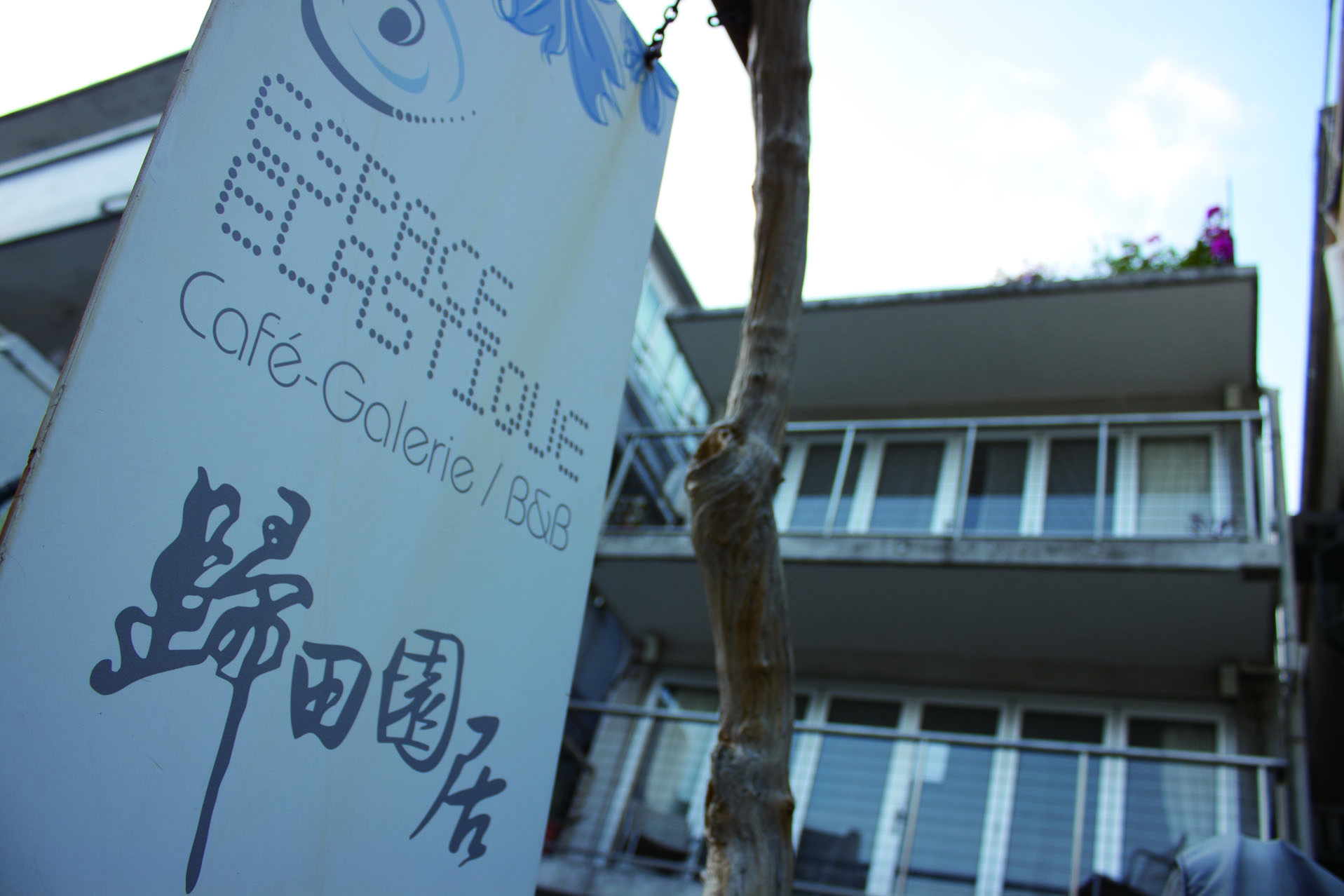
On a street packed with three-storey village houses and small stalls selling salty fish and shrimp paste in the village of Tai O, stands a house that has been elegantly re-styled in industrial concrete, wood and stone finishes. Guest accommodation is offered at this coolly contemporary house and you could easily imagine it as a boutique hotel, complete with restaurant and rooftop spa.

But owner Veronica Chan prefers to call it a B&B. B&B stands for bed and breakfast, a type of lodging establishment offering overnight accommodation and breakfast to travellers that first emerged in Europe and America.

Interior of Espace Elastique

In recent years, this kind of accommodation has also taken off in Asia. In Taiwan, travellers find B&Bs or homestays (民宿) provide a common and popular alternative to hotels and hostels. In both Taiwan and Japan, B&Bs are recognized and regulated businesses.

This is very different to Hong Kong. B&Bs do exist here but in very varied forms and price ranges. In general, they are accommodation units with basic utilities, furniture and an internet connection that are rented out on a daily basis.

Veronica Chan launched Espace Elastique, which offers three rooms, in December 2009 and has been running it as a B&B ever since. It used to be her family house and was later rented to locals. Chan turned it into a B&B after her father became too old to manage it.

Chan enjoys interacting with her guests. She thinks communication is what distinguishes B&Bs from other accommodation. “In hotels you just check-in and go straight to your room. It is very robotic,” she says.

In order to ensure the quality of service, Chan insists on being personally involved in daily operations. Not only is she engaged in duties like serving the visitors, cooking and cleaning, but she also takes time to sit down and have a cup of tea with them.

One visitor from the UK, Kam Sanghera, chose to stay at Espace Elastique for a two-day break after his two-week business trip. He has travelled extensively and stayed in various types of accommodation around the world, but he finds the personal interaction with the host is what makes him prefer B&Bs over business hotels.

“It’s hard for the big businesses of hotels to get beyond just the services. They are very good for facilities, but they are not as friendly or personal as B&B.”

Apart from bonding with the visitors, Chan also regularly organizes local tours in Tai O and workshops making shrimp paste and steamed buns so that they can experience the local culture.

The Model Asian

What the hype and hysteria over A&F hunks tells us about perceptions of Asian male bodies

By Ian Cheng and Thee Lui

Sweating on the treadmill, pumping iron, counting his crunches – 22-year-old Nicholas Tang Chia-wei works out for two hours every day. Then, almost every week, he takes a photo of the results of his labour and sends it to the headquarters of Abercrombie & Fitch (A&F) in the United States. Tang works as a model in the clothing retailer’s recently opened Hong Kong store. He is working his body so that he can satisfy his bosses at A&F that he is ready to bepromoted to the post of “shirtless greeter”.

These are the topless hunks with the toned torsos that A&F hire to stand by the doors of their stores, greet customers and pose for photographs with them.

When A&F’s store opened in August this year, it flew in around 100 male models to meet, greet and ride around Central on an open-top, double-decker bus wearing trademark red beach shorts and big smiles.

The topless models had the Central lunchtime crowd either whooping in approval, laughing or quietly shaking their heads. It was a difficult spectacle to ignore. Others travelled from across the territory to snap and to touch the men. Online too, it was a phenomenon, setting social networking sites like Facebook abuzz with pictures and both positive and negative comments.

Although it was a marketing event to promote a fashion brand, it stirred up heated debate about issues of gender, masculinity and race. In a society where women are the traditional objects of desire, it threw up questions about whether it was acceptable for women to look at men the way men look at women. The fact that the models were mostly foreigners also threw a light on how people perceive Asian male bodies, particularly Chinese, Japanese and Korean men.

Naked Sanctuary

Hong Kong’s home-grown nudists pursue state of nature

By Rene Lam

On a tranquil beach at the southern edge of Lantau Island, sunbathers laze around reading, taking photographs of the scenery and snoozing. They are much the same as sun-seekers you might find on any of Hong Kong’s beaches, except that trunk marks and bikini lines do not mean anything to them.

Although Hong Kong law forbids complete nudity outdoors, local nudists can still find some oases in isolated parts of Lantau, on beaches on the outlying islands off Sai Kung and a few other secret spots around Hong Kong that are usually deserted on weekdays.

Wing, who does not wish to disclose his real name, has taken time off work on this Friday afternoon to join a group of nudists who met up through social networking sites. He found out about the event after receiving an online invitation to a ‘Sunbathing Naturalist Gathering’.

Although the 39 year-old has been a nudist for ten years, this is the first time he has ever sunbathed with nudist companions. “Because I only come on weekdays, it is difficult to schedule a holiday with friends,” says Wing, “it is nice to meet new friends with the same interest.”

It took this group of ten nudists two hours to get to their destination and when they get there they strip off completely, without hesitation or awkwardness. It so happens there are some other unclothed people on the beach. They exchange smiles and go on drenching themselves in the sun.

However, when families or village people very occasionally pass by, everyone is on alert. Some quickly put on their swimsuits, some use a towel to cover their genitals. “The most important principle is to not disturb anyone… I do not want to be confrontational. After all, we are just a minority. Plus, it is prohibited by the Hong Kong law,” Wing says.

Public nudity is illegal in Hong Kong

Leading today’s group is 44-year-old Zeno, who says there are usually no more than 15 participants at each gathering. These can be held either indoors or outdoors, and participants range from 18 to 50 years of age.

Zeno has been a nudist for ten years. Besides nude sunbathing, he also does nude hiking, nude Yoga and figure drawing with nudist Facebook friends. He feels delighted and relaxed to be naked in Mother Nature. “We did not wear anything when we came to this world,” he says.

For Zeno, going bare is about getting back to basics. The desire to peel off his “second-skin” is a natural one but stripping down is about more than just removing physical items of clothing. “When you are naked, you tend to be more honest and open. You would talk more about your feelings from depth of your heart,” he says.