












Home Blog Page 112

Art for All

A group of young artists take art to the street

By Sabrina Poh

Earlier this year, guests in smart business attire admired contemporary Asian artworks in a 15,000 square-foot gallery space located in one of the city’s most exclusive office rental spaces. The artwork could be purchased for prices of between HK$160,000 and HK$5.5 million.

The guests were attending the opening party of a permanent new gallery opened by international auction house Sotheby’s and which is just one of the western art houses who want a presence in Hong Kong. The city has become the third largest auction centre in the world after New York and London. The Hong Kong art market is vibrant and new galleries seem to be opening constantly.

But that may not mean much to those who care about local art. Victor Liu Hing-yuen feels the art scene in Hong Kong only serves one group of people – the affluent. “It is just for rich people to buy luxuries and stuff,” says the 22-year-old fashion designer. “Art should be part of everybody’s life.”

At one gallery opening early this year, he began talking to a young artist who had just finished her studies abroad. He was attracted by her idea of bringing art onto Hong Kong’s streets, and joined her group of art lovers.

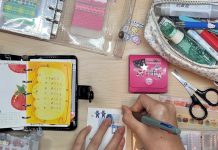
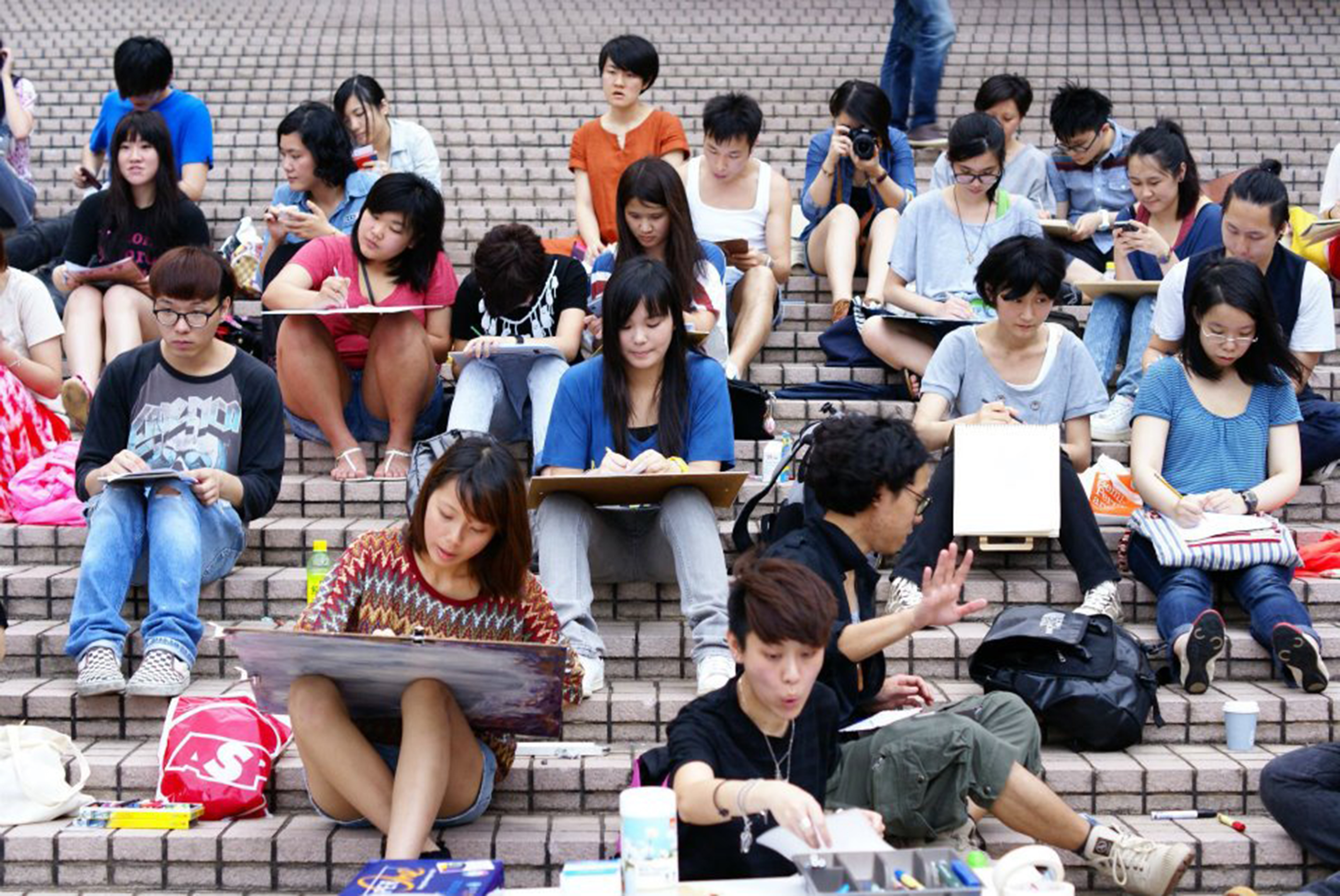
Members of the group do not create artworks in studios. They make art in unconventional venues and in public. They make life-drawings outside the Hong Kong Cultural Centre in Tsim Sha Tsui and in front of the Times Square shopping centre in Causeway Bay. They even have sketch-ins on the MTR.

This community of street art advocates has been growing since January this year and was hatched by two 22-year-olds, Jessica Poon Yin-tong and Vivian Ho Pok-yan. The two, who have been good friends since secondary school, both left to study in different US universities before returning to Hong Kong.
Being Stephen Au

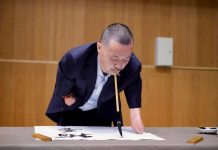
Musings Stephen Au Kam-tong: actor, presenter, playwright and man of many other parts

By Yannie Mak

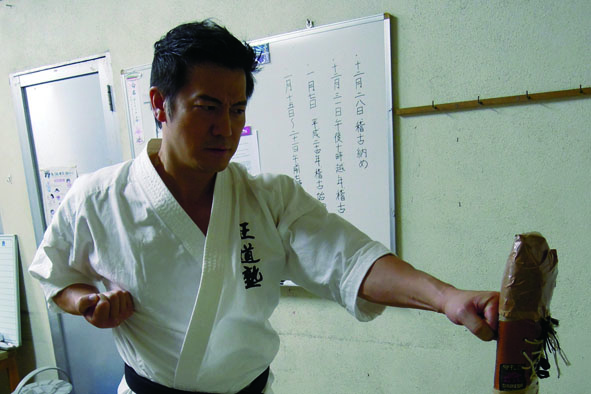
For a man who was once notorious for his prickly temperament and explosive temper, today’s Stephen Au Kam-tong is relaxed, candid and generous with his time. The 48-year-old actor looks dapper and boyish in a black T-shirt and a black jacket. Sitting in a Kowloon Tong coffee shop with a cup of gourmet tea in front of him, he shares his views on the current state of Hong Kong and stories from his life.

Au was unswerving in his public support for the anti-national-education protests earlier this year. He posted strong messages on his Facebook page, insisted on wearing black every day and spoke at a rally attended by tens of thousands of people at Tamar Park.

His outspokenness is all the more remarkable because he is a contracted artist with Television Broadcasts Limited (TVB). His friends were afraid there would be consequences, that it could hurt his career. But Au shrugs this off, “If we can’t even have a discussion without constraining ourselves, spooking ourselves, then what is the meaning of life?” he says.

Au says he is constantly pondering existential questions. He wonders about why he was born where he was when he was, about why events that have taken place in Hong Kong occurred the way they did. He thinks Hong Kongers are too careful, too worried about just “living”, which they equate with working at their jobs.

He wishes people could look at the bigger picture and see that Hong Kong, as a special administrative region, enjoys a lot of rights which are taken for granted. “If we can have the living conditions we do, the environment we have, if we can breathe the air of freedom, then we are wasting our lives if we don’t speak out.”

This urge to speak and act is not new for Au. When he was a secondary student, he protested against the depiction of the Sino-Japanese War during World War Two in Japanese history textbooks. He always identified himself as a Chinese.

History was Au’s favourite subject. He recalls that during lessons when Hong Kong was still under British colonial rule, he learned about the history of the Kuomintang, the Communist Party of China, and even the shameful incidents of British history. Discussion between teachers and students encouraged him to think critically.

He wanted China to be strong. Au remembers telling his teacher, “If we want China to be powerful, we have to study hard; as long as we are knowledgeable, China’s next generation will be good.”

Listen! Don’t look

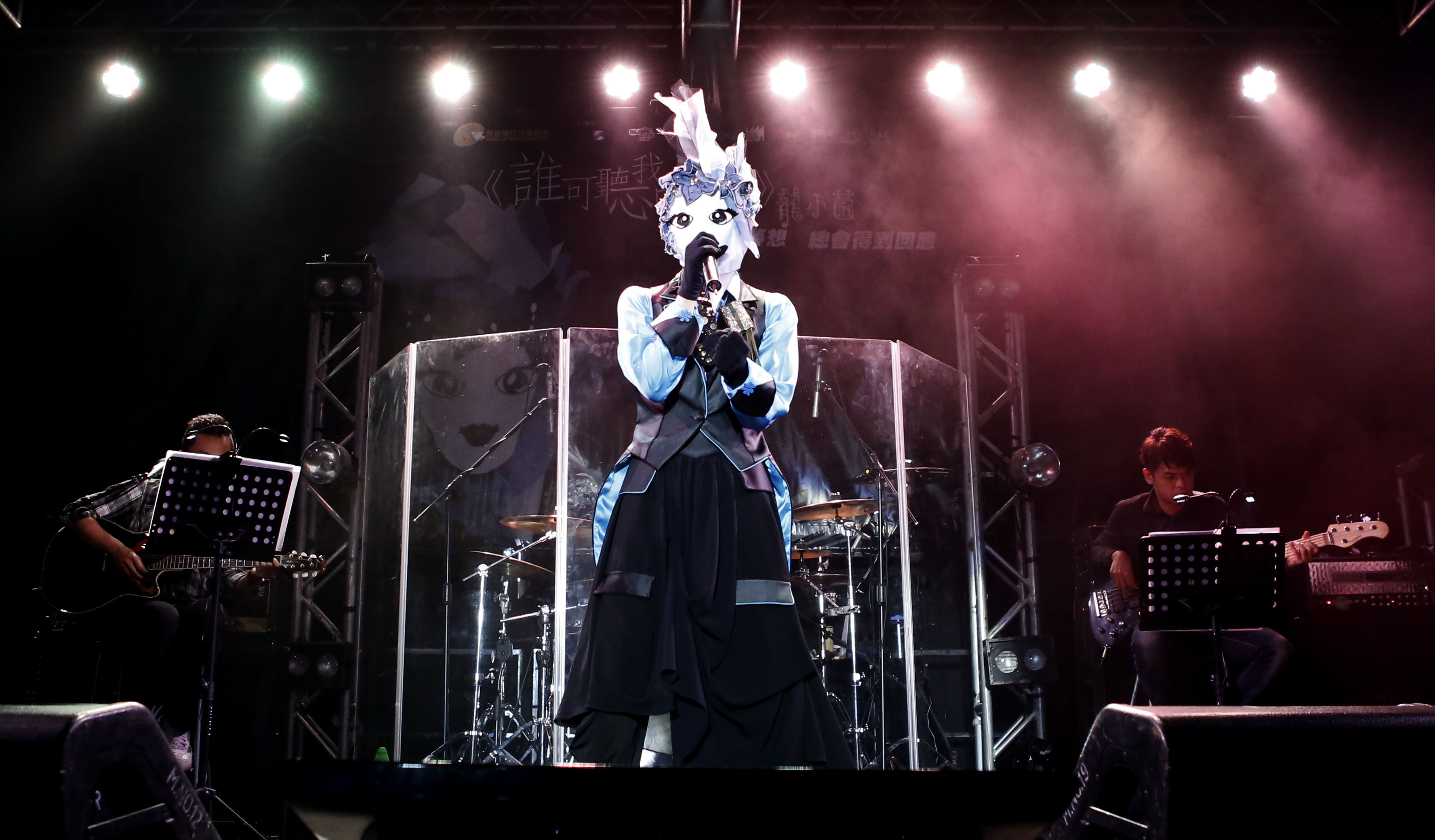
How  secondary school teacher became Lung Siu-kwan, a singer behind a mask

By Nicole Chan

Most people would find her outfit strange, perhaps even creepy. Her face is completely hidden behind her sunglasses and a black veil. Her full-length blue and white costume covers every inch of flesh, even in the summer heat, and is guaranteed to attract stares everywhere she goes.

She is Lung Siu-kwan, a former schoolteacher now turned professional singer.

Lung started out as an anonymous internet singer whose songs gathered a strong online following and ended up being signed to Golden Age Music, a music production company founded by actress Sandra Ng Kwan-yu and her brother.

Her real identity is a closely guarded secret. A record company staff member sat next to her during Varsity’s interview with Lung and shot her intense looks whenever she responded to sensitive questions which could reveal more about her background.

Lung says her insistence on hiding her face is based on a belief that, “music should be simple.” Audiences should appreciate a singer’s voice, instead of her appearance and figure.

She first dreamt of becoming a singer as a child but feared her dream would remain no more than just that. She recalls a judge’s criticism of her when she participated in a singing contest in 2009: “You sing quite well actually, but your size is plump so showmanship on stage is not good.”

Those words devastated Lung. She started to question if appearance meant everything for a singer.

At that time, Lung weighed over 90 kg and had health problems stemming from her weight. She developed sleep apnea and would pant even after a short walk. This made her determined to go on a diet. After a year, she managed to shed 45 kg. Lung says she had an inferiority complex starting from childhood. “I come from a lower class and a single-parent family. Besides, I was a fat girl since I was small,” she says. She remembers her peers often teased her about her weight and the negative feelings stayed in her mind.

Voiceover Maestro

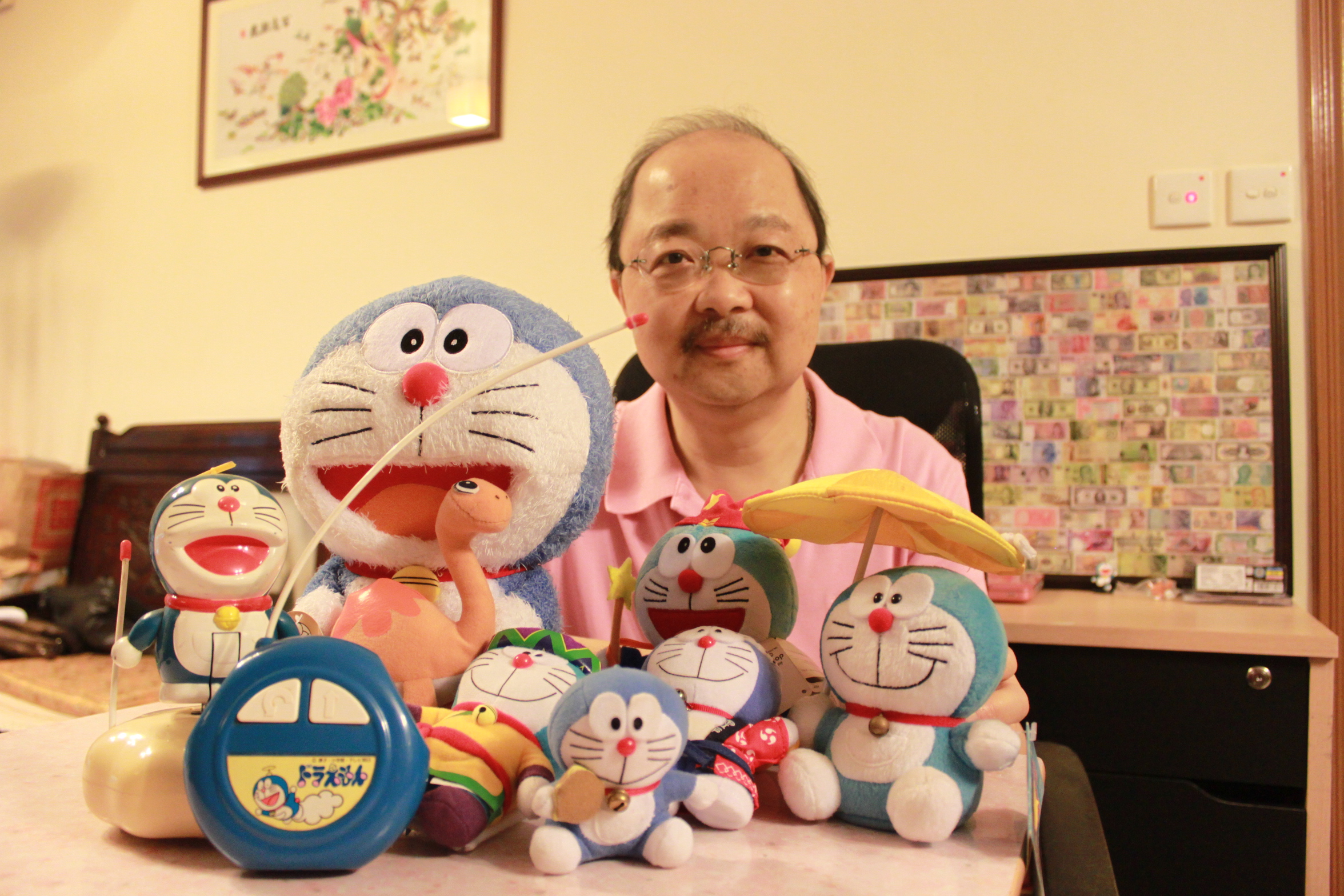
Meet Lam Pou Chuen, the voice of cartoon cat Doraemon

By Kris Lee

When Varsity mentions that his real voice sounds very different to the character that has made him a household name, Lam Pou-chuen breaks into a laugh and launches into the memorable lines, “Nobita! Wake up la! Wake up la! Hurry and wake up la! It’s time to go to school la! Otherwise you’ll be late again la!” These words are heard in almost every episode of the Hong Kong-dubbed version of the Japanese cartoon Doraemon over the past 30 years.

While Lam’s voice is deeply etched into the minds of Doraemon viewers of all ages, the cat with the magical gadgets is just one of Lam’s great achievements in his 42-year long career as a voice actor. “Voice actors are similar to chefs. If you cook a delicious dish that becomes popular, you will become well-known too,” says Lam.

Lam never set out to be a voice actor. After graduating from secondary school, he applied for bank jobs but failed. At that time, the dubbing industry was still in its infancy. Lam wrote to Television Broadcasts Limited (TVB) to apply for a job as a voice actor and passed the interview. He has been voice acting ever since.

During his early days, Lam did not have the chance to dub even a single word of dialogue. There were no training courses for him and other rookies. They were only assigned to produce sound effects like the sound of footsteps, opening doors and phone dialing with props in the studio.

“We did not have so much professional training like now. We just sat behind the seniors and learned from them while they were voice acting,” explains Lam. “These days there are professional voice actors giving lessons.”

Among his seniors, Lam most appreciates the actor Tam Bing-man, who belonged to the first generation of voice actors in Hong Kong. “I followed and learned from him since the first day,” says Lam. “I call him master.”

Lam did not just observe and learn while he was making sound effects at the back of the studio, he made use of all his time to perfect his art. After he got home every night, he read newspapers out loud to improve his articulation and pacing.

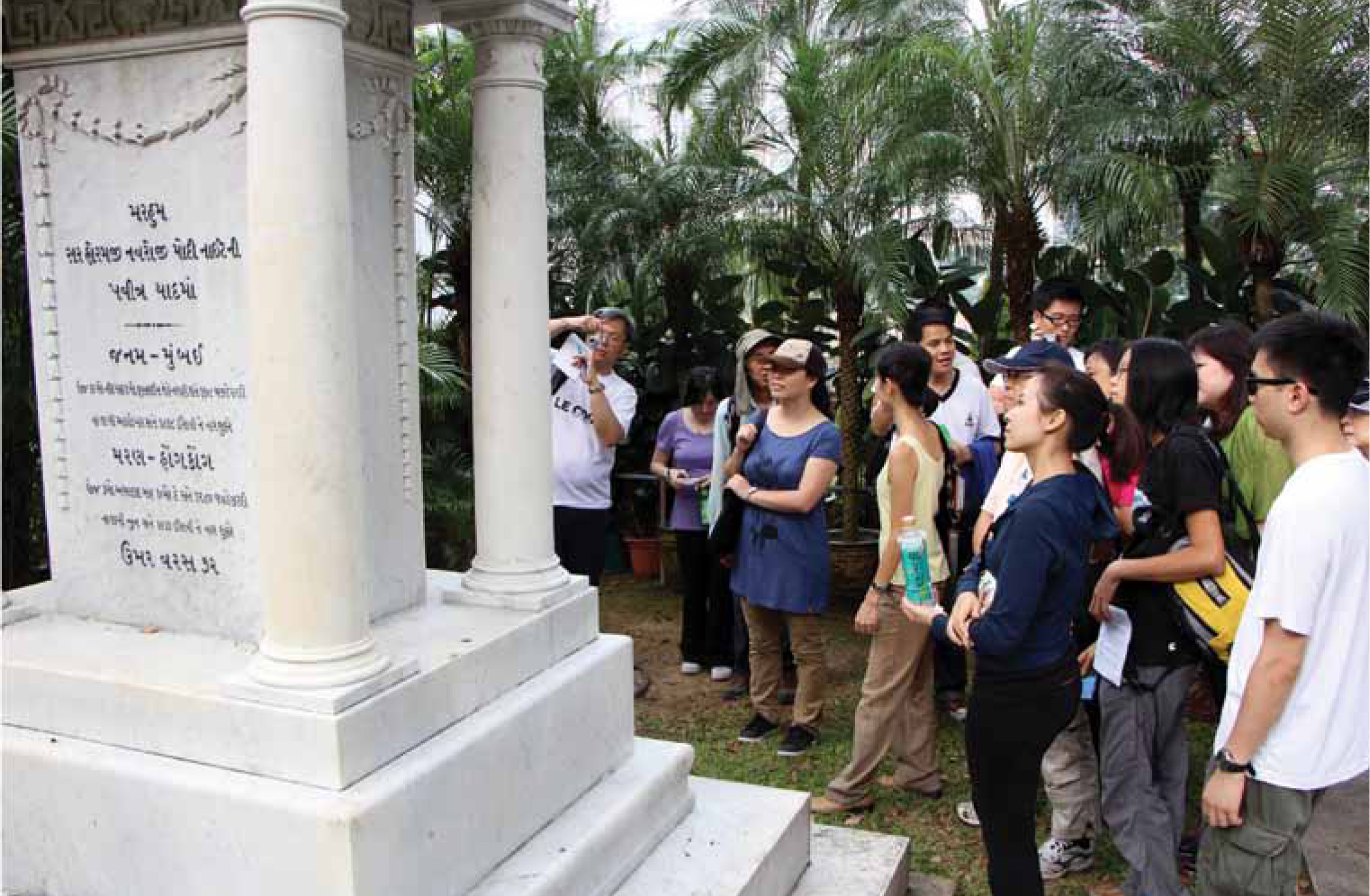
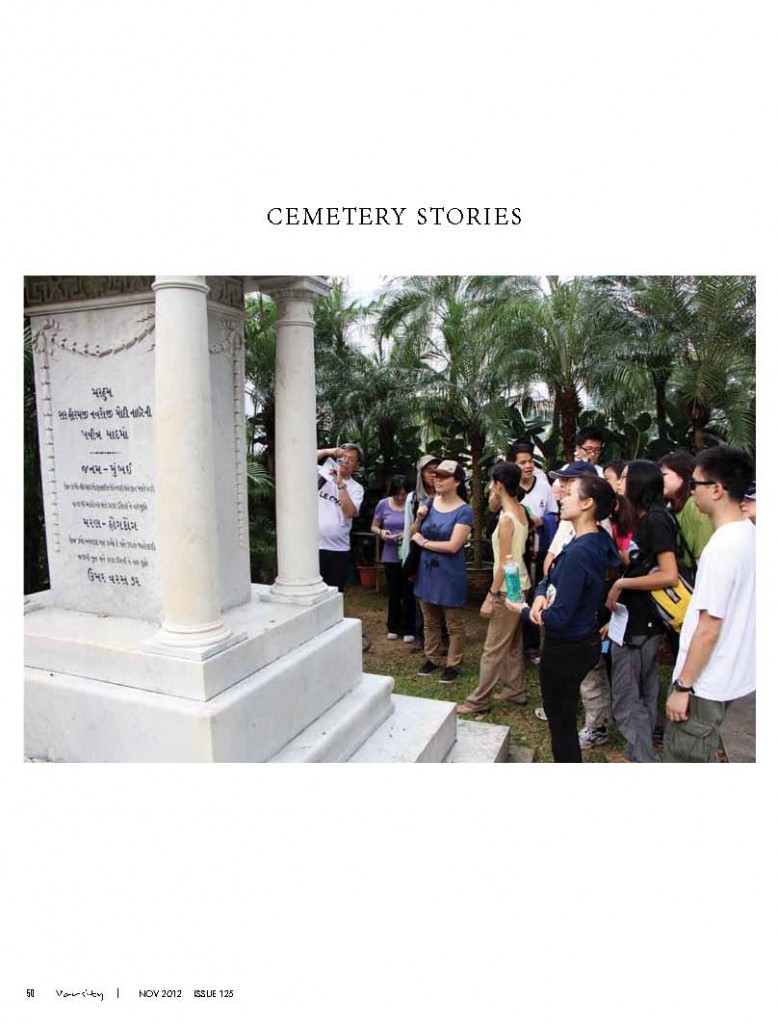
Cemetery Stories

Uncovering Hong Kong’s history among the gravestones in Happy Valley

by Stephanie Cheng & Viola Yeh


bobble: Filter In Your Bottle

The eco-friendly solution for safe, bottled water on the go

by Viola Yeh

If you ever worry about how safe it is to drink the water from drinking fountains at school, feel guilty that you are not being environmentally-friendly when you buy bottled water, or are turned off by the odour from tap water – then bobble might be able to help.

bobble is a water bottle that filters water as you drink. It has a portable water filtration cartridge with a carbon filter that significantly reduces odour, chlorine and organic contaminants from regular municipal tap water. It is also an eco-friendly water bottle made from recycled materials and is 100 per cent recyclable itself. Each bobble filter is good for producing the equivalent of at least 300 bottles of filtered water. If it is for daily use, the filter should be replaced once every two months.

Worried that you may forget to grab yourself a new filter in time? You can create a personal account on “bobble Love” to remind yourself regularly. bobble filters are available in more than 10 bright colours. So every two months, you will have an excuse to buy yourself a new filter that represents your mood, style and character.

Owning a bobble does not only help protect nature and save money, it can also be a symbol of friendship. Charmaine Chan Yin-man, 18, has been using a bobble for almost a year. She received a bobble as a present from her friend last Christmas. “I wanted that [bobble] present for a long time. My friend knew and she got it for me,” she says. A lot of Chan’s friends use a bobble, symbolizing their friendship and closeness.

Chan finds it convenient to drink from a bobble. She often fills up her bobble with tap water from her dormitory and drinks from it straightaway. “You feel safer drinking water from it and you actually feel better,” she says.

One of Chan’s friends had an interesting experience that may clear any doubts you have about the efficiency and effectiveness of the bobble filter. Her friend put chocolate milk into the bobble as an experiment to test its filtration ability. “The stuff that comes out is like brownish water and it tastes like water,” says Chan. Unfortunately, the success of the experiment had a sad ending. Her friend’s brand-new filter was clogged afterwards and she was forced to buy a new one.

A bobble costs HK$99. It can be found in City’super, Francfranc and different sports stores. It is available in three sizes, ranging from 385 millilitres to one litre.

Veggie Dining for a Cause

Happy Veggies, restaurant helping the hearing-impaired

By Stephanie Cheng

There is a wide variety of cuisines available in Hong Kong and at a wide range of prices. But if you want to savour fresh, green bites in a cosy environment and for a good cause, then look no further than Happy Veggies. Happy Veggies is the first not-for-profit vegetarian restaurant in Hong Kong. It is run as a social enterprise and employs both hearing-impaired and hearing staff. It also promotes vegetarian culture and the use of sign language.

Founded by actor Eric Tsang Chi-wai and actress Jaime Chik Mei-chun in 2010, Happy Veggies is run under the Enhancing Self-reliance through Business Partnership Programme. The restaurant serves economical meal sets tailored for vegetarians such as mushrooms and vegetables with rice and soup. It soon became a sought-after lunch spot for people who care about their health, especially the office ladies working nearby.

You might wonder whether the staff with hearing impairments can actually understand your order. Don’t worry, the restaurant has a user-friendly approach to enhancing your dining experience.

Once you step into the restaurant, you get a lunch set form and pay first at the cashier. You can then take your own food. In the evenings, they use a different system: customers are served by the hearing-impaired staff at their tables. To help diners differentiate, the hearing-impaired staff wear green shirts, while the hearing ones are in yellow.

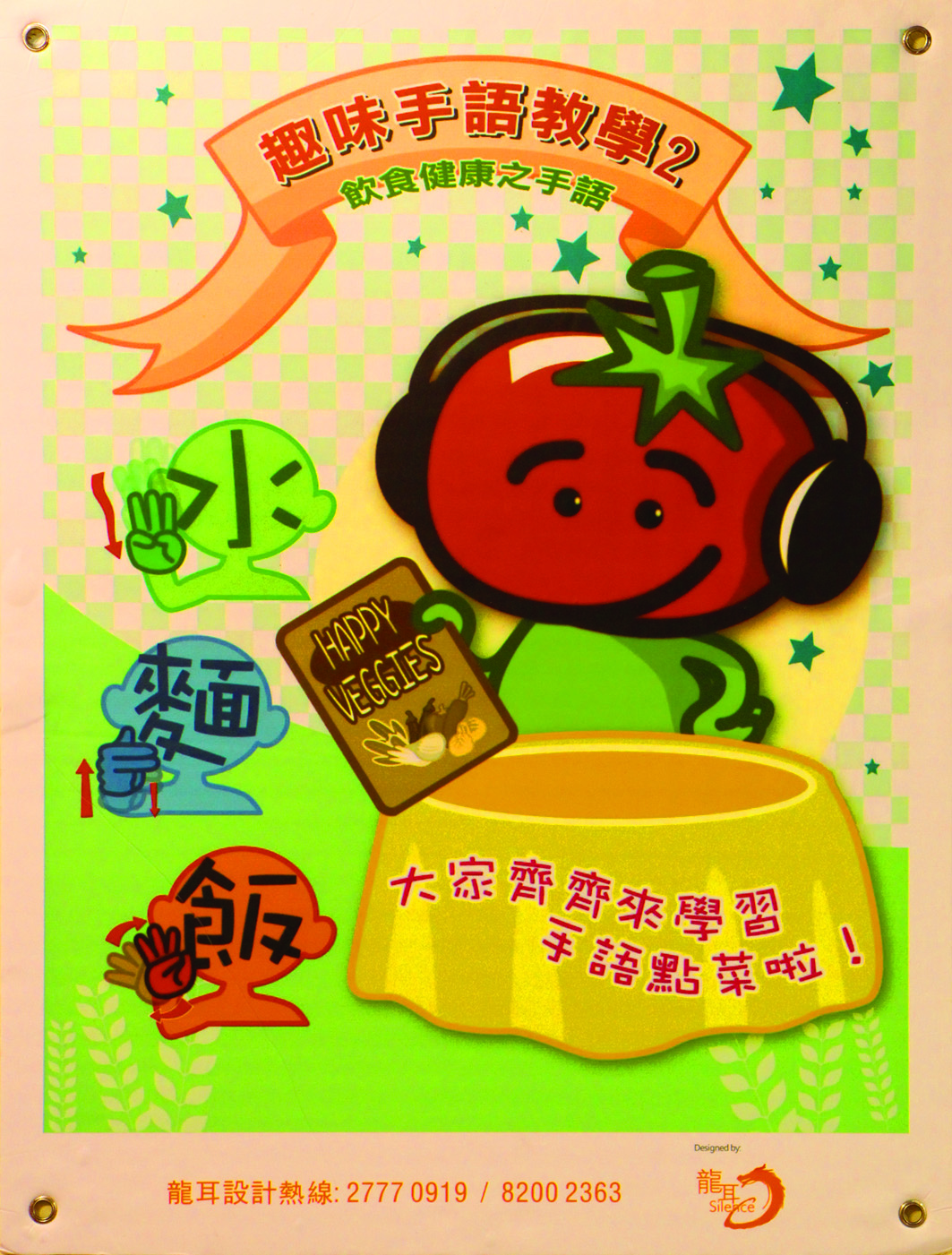
Menus with detailed descriptions of ingredients, prices and pictures of the dishes provide customers with clear information. Looking around, there are also posters introducing simple sign language, like water, noodles and rice.

At the corner of the restaurant, fair-trade products like tea bags and snacks are sold.

Candy Mok Siu-ying, who celebrated her birthday in Happy Veggies, was overwhelmed when she was treated to a rendition of her birthday song in sign language. She says although the staff sometimes cannot catch their words, they are very helpful and attentive to customers’ needs.

Chen Chia-wen, the administrative assistant of Happy Veggies, says the restaurant is a convenient platform for customers to get acquainted with the staff with hearing difficulties. It fosters mutual integration and understanding. The public gets to see the daily operation of a social enterprise while the hearing-impaired staff can learn how a business is run.

“The hearing-impaired colleagues are actually more focused. They want to prove themselves as competent workers and gain an equal footing with others,” says Chen. While most of the colleagues are deaf or hearing impaired, the challenge of being a waiter can encourage them to be more independent.

Few employers are willing to hire the deaf and hearing impaired. Happy Veggies is different. As an “enterprise with conscience”, it cherishes every employee and they get an afternoon break from 2.30pm to 6.00pm to relax.

If you want to show your support, or if you simply want to enjoy a tasty, healthy meal, then check out Happy Veggies: 1st Floor, Bayfield Building, 99 Hennessy Road, Wan Chai. For more information, please visit http://happyveggies99.blogspot.hk/.

Transsexual Marriage

Editor:Dorothy Goh,Joyce Lee
Reporters:Natalie Cheng,Rene Lam, Derek Li

Preparations are currently underway for a musical inspired by the case of W, a transsexual woman who is taking her fight for the right to marry in Hong Kong to the Court of Final Appeal.

“Dream of the Mermaid” tells the story of a mermaid, who is no longer considered an “animal” after transforming her body, fighting for her right to marry her human beloved. Her perseverance moves “God”, who finally alters the laws of the animal kingdom, granting the mermaid her lifelong wish.

The mermaid’s predicament is based on that of W’s. Although she was born a man, she has undergone sex reassignment treatment and has changed the gender on her Hong Kong Identity Card to female. She wants to get married, but the law forbids her to do so because she was a ‘man’.

Music producer Angela Mak believes the production will give W a source of support, and hopes for a happy ending to W’s court case, just like in the musical.

W is challenging the Marriage Ordinance, which she thinks unconstitutional as it denies her the right to marry a man. She says it contradicts the right to marry guaranteed under the Hong Kong Bill of Rights as stated in the Basic Law.

W lost her case in the Court of First Instance and then in Court of Appeal, which said there was no evidence of a social consensus regarding transsexual marriage.

The court restated that marriage is a union between a man and a woman, with the responsibility to procreate, following the logic that non-consummation remains a ground for annulling a marriage. It equates transsexual marriage with homosexual marriage, which is outlawed in the current marriage system. W’s lawsuit will be heard at the Court of Final Appeal early next year.

Philip Dykes SC, the barrister representing W, emphasizes that W is not gay. Transsexual women want to be acknowledged that they are born female inside a male body. The surgery is only a means to align their physical state with their mental one.

As the term LGTB (lesbian, gay, transsexual, bisexual) bounds these minorities together, their differences are often overlooked. Transsexuals ask for an affirmation of their new identity. Unlike gays and lesbians, who relish their own sex and challenge the traditional view of marriage, many transsexuals adhere to the conventional values of marriage, including the view that it is between a man and a woman.

Countries like Singapore strictly prohibit same-sex marriage but allow for transsexual marriage, as the latter reaffirms heterosexual marriage. Other regions in Asia that allow transsexual marriage include the mainland, Taiwan, South Korea and Japan.

Dr Ng Wan-lun, who performed transsexual surgeries before his retirement, says transsexuals have a special need which is currently treated as an illness. Medically, the condition of feeling trapped in a body of the wrong sex is referred to as gender dysphoria. It is believed to be a biological condition that develops before birth.

According to Ng, the government is but a witness to register marriages and its agreements; all couples should be given the legal right to marry.

Snake King

Editor:Stephanie Chan
Reporters: Ian Cheng, Vivian Ng, Matthew Leung

Despite being a cosmopolitan city, Hong Kong is home to 52 species of snake, fourteen of which are venomous. Banded Krait, Many-banded Krait, Chinese Cobra, King Cobra and Bamboo Pit Viper are the five venomous snakes commonly seen in Hong Kong.

Snakes are very often spotted by hikers in country parks or people who live in the mid-levels and village houses in the suburbs. Some of them will directly contact the snake kings; while some will seek help from the Police, who will then call the snake kings to catch the snakes. The captured snakes, be them venomous or non-venomous, will be sent from the Police to the Kadoorie Farm and Botanic Garden.

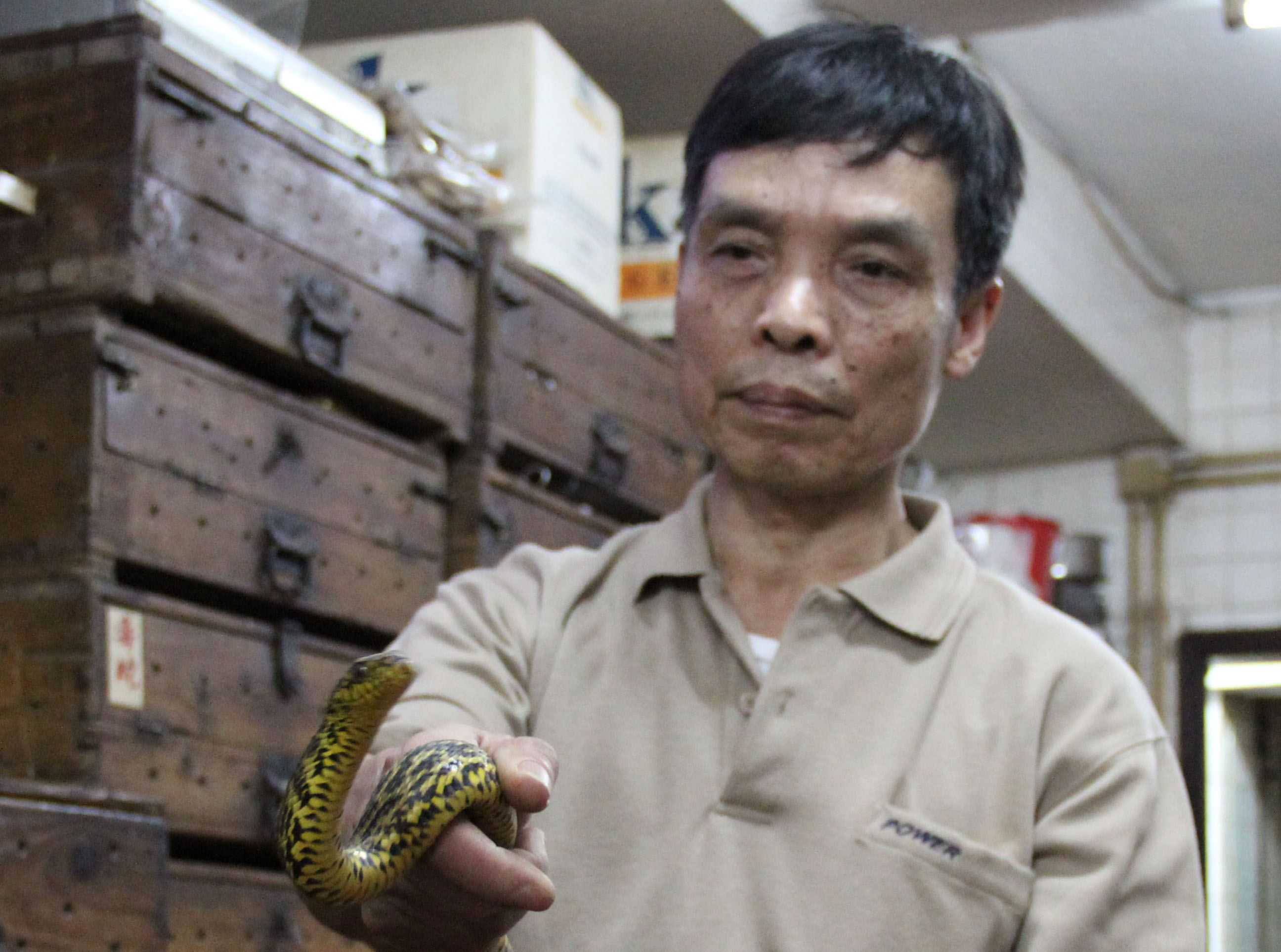
Snake Kings are people who catch snakes for a living. Also, they usually operate a shop serving a Chinese traditional dish, snake soup in some old districts in Hong Kong. They are called the “snake king” (se4 wong4) in Cantonese.

Working hand in hand with the snake kings, the Kadoorie farm provides temporary shelter for the captured snakes. Dr. Gary Ades, Head of Fauna Conservation Department, has been working in the Farm for over fifteen years. As he says, vets of the Farm will first examine those received snakes, then release them back to the nature in areas that are further away from the residential areas.

As Ades further explains, he believes that snakes, poisonous or not, are part of the nature and have an important role in the ecosystem. It is essential to release healthy snakes back to their nature to maintain the balance. For example, common rat snakes, that the Farm occasionally receives, which he describes as “farmers’ friends’”, carry a role to protect a farmer’s harvest as they feed on rats.

Lau Tit-pong, an experienced snake king in the East Kowloon, has been offering his skills in catching snakes for more than 20 years. As he says, at peak seasons, which is from May to August, he receives two to three orders per week. Lau has mastered a set of snake-catching skills through his experiences and is able to handle snakes confidently and professionally. Nonetheless, there is one conventional procedure that is not welcomed by the Farm.

As Lau says, “(In the past,) We used to de-fang the snakes immediately after catching them, so to made it less dangerous to put in a bag.”

However, as the Farm explains, since the fangs are essential for killing preys after releasing back to the wild, poisonous snakes cannot survive if snake kings de-fang them. Since then, Snake Kings capture snakes with their bare hands and no longer de-fang them.

Speaking of the continuality of this craftsmanship, Snake King Lau is not so optimistic. Lau says that it is almost impossible to find new blood to join the industry today. Yet, he understands that snake catching is often perceived as highly dangerous and young people nowadays would rather opt for ‘less-demanding’ jobs as they are better educated.

Ho Cheuk-hing, another experienced snake king who has been capturing snakes for more than 40 years, echoes with Lau, regarding the profession of snake catching as a ‘sunset’ business. Yet, he still finds a sense of satisfaction from his job today. Perhaps that is why he keeps working as a snake king as he has already stepped into his retiring age.