

















Home Blog Page 121

Macau Students in Hong Kong

Reporters: Stephanie Chan, Joana U, Jennifer Xu

Editor: Edith Liu

They speak Cantonese, they eat Cantonese food, they follow the same fashion trends. In fact, they share the same culture as most of their Hong Kong peers – except they carry Macanese S.A.R. passports.

More and more students from Macau are seeking places at Hong Kong’s universities. According to the Immigration Department, the number of student visas issued to Macanese students almost doubled from 58 in 2008 to 108 in 2010. Likewise, the number of employment visas issued to Macau residents nearly doubled from 31 to 63 in the same period.

In order to understand what attracts young Macanese to Hong Kong institutes of learning, Varsity spoke to four Macau students, a secondary school student, a first year Macanese student at a Hong Kong university, and two recent graduates from Hong Kong universities.

Agnes Ng will graduate from high school in June, “About 70% of my classmates have applied for universities in Hong Kong,” she said. “One of my classmates has already been accepted by CUHK, we all think that she is so great!”

Ng has already been accepted by two universities, the University of Macau and Peking University. Although Peking University has ranked as the top university in China for three years, starting from 2008, Ng says her first choice is still Hong Kong.

Ng believes that Hong Kong can provide her with a platform for learning better English and a chance to intern at a big company. She is also attracted by the world rankings of the universities in Hong Kong.

Though Macau and Hong Kong share a similar culture, Hong Kong still gives Macanese students a different experience. Timothy Lam is an undergraduate at the Chinese University of Hong Kong (CUHK). He feels that Hong Kong students are more hardworking and competitive.

Amelia Loi, a recent graduate from CUHK, has a similar impression. She says she can feel Hong Kong’s fast pace of life once she boards the ferry to Hong Kong..

Macau students see universities in Hong Kong as a stepping stone to a brighter future. Shortly after Varsity’s interview, Loi found a job as a reporter.

However, Macanese identity may be a drawback in job-hunting.

Loi’s classmate, was offered a job with a local Hong Kong television station but the offer was withdrawn days later because the company did not want to apply for his work visa.

“There is no difference in ability between Macau people and Hong Kong people,” said Ip. “I did feel bad……this is just because of my Macau identity.”

Although Ip had an unhappy experience when job-hunting in Hong Kong, he still enjoyed his four years of university life here. He found it was easy to adapt to life in Hong Kong. “Sometimes people just forgot that I am a Macau person,” Ip said.


Street Performance Central in Mong Kok

Reporters: Amy Leung, Gavin Li, Krizto Chan

Editor: Phyllis Lee

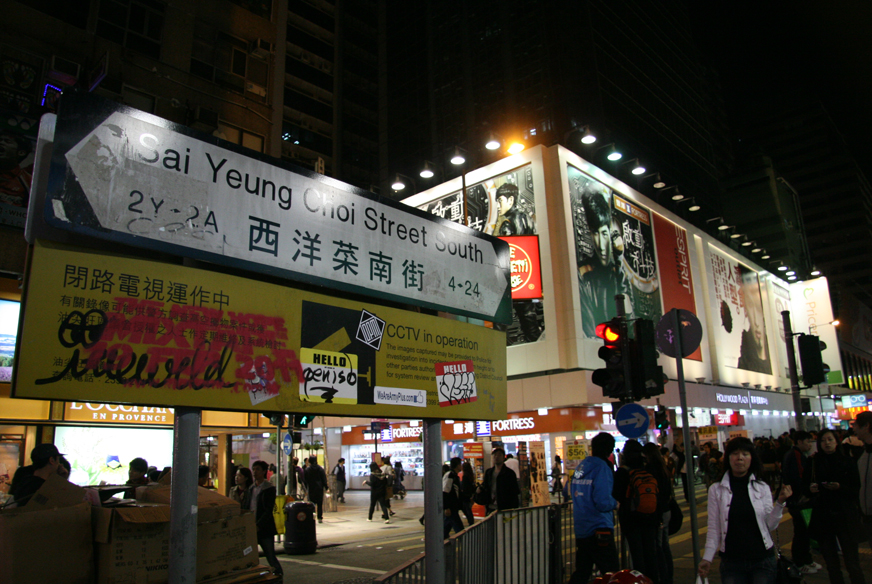
Once it turns dark, everything changes in Mong Kok’s Sai Yeung Choi Street South.

After 7:30 p.m., performers of all kinds transform the street into a giant stage. It is no longer just a place for shoppers. The sound of music produced by the street performers begins to reverberate in the air.

Every form of performance you could imagine can be found on this street. From the uplifting notes of a flute piper, to a martial arts master smashing glass bottles with his bare hands, to a guitar player singing songs which invite audience participation.

By day, these street performers may be ordinary homemakers, office clerks, salespeople or unemployed citizens wandering on the street. At night, they turn into superstars, losing themselves in the world of street performance.

Fa-jie, a 50-something homemaker, is one of the street performers on Sai Yeung Choi Street South. Apart from singing classic pop songs, she performs Latin dance or the Cha-Cha (a dance originating from Cuba) to attract a bigger audience.

Fa-jie’s performance partner, 61-year-old Mr. Yu, joined her several months ago. His dance performance is inspired by pop superstar Michael Jackson’s moonwalk, traditional Chinese elements and even the actions of monkeys.

Karito, another street performer, comes from Bolivia. His music is rather elegant and all his instruments are hand-crafted by himself.

Every now and then, crowds form around the performers. Curious passersby stop and stare.

Unlike regular performances on stage, there is no clear line drawn between the performers and their audience in street performance. It is common to see audience members being invited to take part in the performances.

The street performers do not just attract the audience’s attention. They also draw the attention of some shop owners and residents of the street who find them a disturbance.

They sometimes complain to the police, who may then ask the performers to lower the volume of the music.

Fa-jie says many shop owners or staff members have complained to the police about the volume of her performance.

“Of course our performances cannot be too loud. We may disturb those selling things (on the street),” Fa-jie says. “We will try our best to lower the volume.”

But sometimes, the performers may be driven away from the street, or shunted between venues/.

Police once asked Karito, a Bolivian musician, to leave Mong Kok and perform in Tsim Sha Tsui instead. Only to be told by police there that he should leave and play in Mong Kok.

In an attempt to accommodate the wishes of the performers and their audiences, as well as shop-owners and residents, the government launched the “Open Stage” pilot scheme last year. Under the scheme, performers can apply to perform in open spaces in the piazzas of the Hong Kong Cultural Centre, Sha Tin Town Hall and Kwai Tsing Theatre. However, applicants have to satisfy strict criteria.

They have to attend an audition and be assessed by a panel. They can only reserve the piazzas after a successful audition. Each performance should not involve more than eight performers and they must all hold valid Hong Kong permanent identity documents or valid travel documents showing that they are lawfully employable in Hong Kong.


New neutering policy to save thousands of stray dogs

Reporters: Sandy Ho, Dorothy Goh, Liz Yuen
Editors:Crystal Chui, Rebecca Wong

An upcoming pilot scheme to neuter and release stray dogs may save thousands of the animals and help to stamp out illegal neutering operations, say animal welfare groups.

Currently, animals that are caught by the Agriculture, Fisheries and Conservation Department (AFCD) are put down unless animal welfare organisations take them away for rehoming within up to seven days.

Individual volunteers and non-profit organisations have been making an effort to help stray dogs finding a shelter. Despite their efforts, around 20,000 strays are put down every year.

Save Hong Kong’s Cats and Dogs (STOP), supports a ‘no kill’ policy for stray animals in Hong Kong. STOP, together with other voluntary organizations, has been lobbying the government and political parties to implement a ‘Trap, Neuter and Release’ (TNR) programme instead.

Under such a scheme, volunteers could catch and send strays to be neutered before returning them to the original place they were found. TNR controls the reproduction rate of, and ultimately, the population of stray dogs.

A similar programme, the Cat Colony Care Programme (CCCP) was implemented ten years ago to reduce the surplus of stray cats.

Dr. Fiona Woodhouse, Deputy Director of Welfare Services at the Society for the Prevention of Cruelty to Animals (SPCA), says there has been an improvement in street cat welfare since the programme was introduced. “Without the stress of the reproduction, the health status has come up …it is very rare that you see very sick stray cats now,” Dr. Woodhouse says.

Attempts to introduce a similar scheme for dogs, has been thwarted by the absence of legal support. Under current law, animal welfare workers and volunteers risk being fined for “abandonment” if they release stray dogs after getting them neutered.

Elizabeth Huang, chairperson of the Lamma Animal Welfare Centre(LAWC), says that cases of volunteers being charged are not uncommon. Huang says members of the centre normally take neutered stray dogs to be inoculated against rabies but to receive a vaccination a dog must have an owner.

The volunteers have no choice but to claim they are the owners and get the dogs micro chipped and licensed. Two volunteers were charged with abandonment when the AFCD caught the released strays and tracked the identity stored in the chip.

“We(volunteers) have to redeem the strays at the AFCD, be fined and charged with the offense of not keeping the dogs under effective control… it is very unfair to us,” Huang says. She adds the policy makes it difficult for volunteers to offer help.

The ambiguity of the existing law can also lead to misguided and undesirable behaviour, according to some activists.

Organisations like the SPCA and Hong Kong Non-Profit making Veterinary Clinic (NPV) offer free neutering services for dogs, but they must be presented by their owners. Established organisations like LAWC may cooperate with private vets to neuter stray dogs, while other private clinics charge an average of around $1000 for a neutering operation.

Volunteers for a small group of animal welfare group say there is a black market for operations. The volunteers, who are based in Tai Po and chose not to reveal their names, say small volunteer groups are more prone to getting strays neutered illegally.

In such cases, the operations are carried out by unlicensed people without the benefit of proper equipment. Alex, who refuses to disclose her full name, says her dog was killed by another volunteer during an illegal neutering operation.

These practices may end of the AFCD eventually legitimises the TNR programme for stray dogs. Gloria Li, the co-chairperson of STOP says the first moves for this will be implemented during the second quarter of this year at the latest.

The SPCA and the Society for Abandoned Animals Limited (SAA) will be authorised to carry out trial TNR on stray dogs in specific districts. Li said the AFCD may expand the programme to all districts if the trial is successful.

Dr. Fiona Woodhouse from the SPCA, however, sees TNR as only a ‘medium term solution’ for stray dogs. TNR for dogs is different from TNR for cats, she says. Dr Woodhouse explains that cats are more like wild animals, whereas dogs are more like companion animals and are not suited to living wild in Hong Kong.

Dr. Woodhouse hopes to see every Hong Kong family taking dogs to be neutered, claim ownership of strays and be responsible in taking care of them. “So we do not have to run the TNR programme anymore,” she says.

Varsity April 2011 – Editor’s Note

Hong Kong Mosaic

At some point in life, most people will ask the question, “Who am I?” Ethnicity may play a part, the place they grew up in, the language(s) they speak. Given Hong Kong’s colonial history, relationship with the mainland and mixed population, it is intriguing to see how its inhabitants define themselves.

In this issue, we explore how the identities of different sectors of our community have evolved with the changes in society. Often, an individual experiences tensions between different layers of their multiple identities.

There are concerns that while students are being cultivated to be more “Chinese”, the government is pumping money into promoting a one-sided view of what that means in mainstream national education programmes.

Today, new arrivals from the Mainland may be coming to settle in Hong Kong for purposes different from their predecessors. They no longer come for the better welfare or living conditions. They no longer seek to integrate into Hong Kong society as China’s rapid development overshadows the appeal of being a Hongkonger.

On the other hand, those who do want to integrate are having a hard time. Members of ethnic minorities may be born and raised in Hong Kong, but they are not completely accepted as locals. Still, some have been able to find their place here. Briton Andrew Brown is Hong Kong’s first expatriate village head, having been elected by both expatriates and locals in three consecutive elections.

Other, traditional identities of Hong Kong are disappearing. Hong Kong’s fishing industry and communities once flourished, but today its remaining fishermen struggle to make a living.

These are the people that make up the communities of Hong Kong. Whatever their identities are, they each have a story to tell. Take your time to read through these stories – perhaps it may help you to discover your own.


Managing Editor
Melanie Leung


Varsity December 2010 – Editor’s Note

The Best of Times, the Worst of Times

In 2010, Hong Kong rebounded strongly from the financial tsunami – the Hang Seng Index stayed above 20,000 points, GDP grew by more than 6.5 per cent and a land developer paid $68,000 for a square foot of land on the Peak.

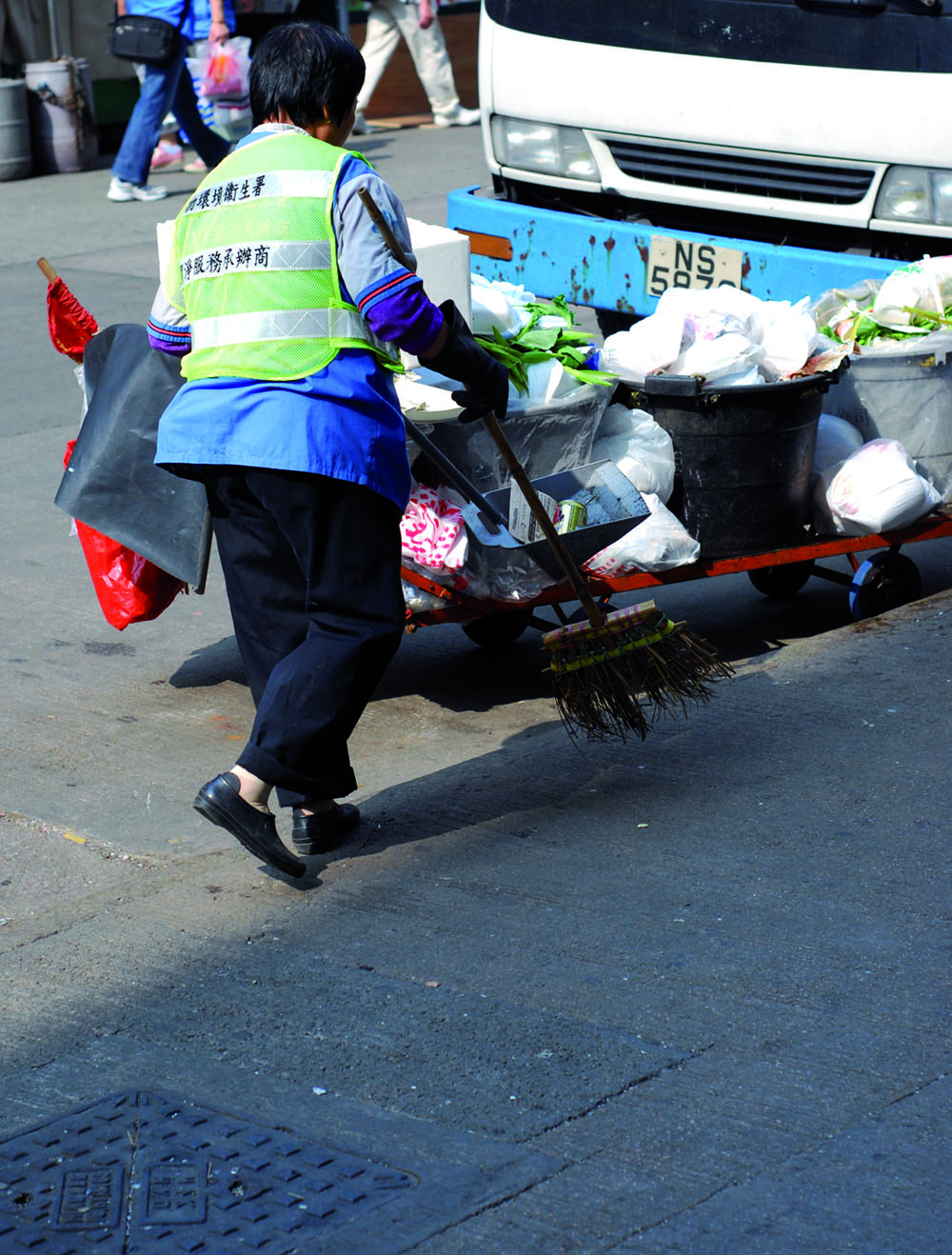
At the same time, we also have 1.26 million poor people, one in every three of the city’s elderly lives in poverty and we lead the developed economies of the world in terms of income disparity.

Given such contradictions, we cannot help but question: what is wrong with this city?

In this issue’s Periscope, we bring you stories of people at the grassroots as they struggle to make
a living and face enormous challenges every day. We hear from inexperienced youths trying to break into the job market, from the middle-aged working poor, and from the elderly who have nothing to show for their years of toil. We see a problem of intergenerational poverty, which means long-term poverty across all age groups in a family, is developing. Intergenerational poverty is undermining social mobility and fuelling tensions and resentment within the community.

To stop things getting worse, the whole city has to act now. The government should improve the education system and offer more opportunities to youngsters. Corporations should stop exploiting workers and, instead, should show them respect by paying a fair wage for their labour. All of us should take responsibility for looking after our senior citizens as they worked hard to create the city we are living in.

During this happiest moment of the year, we should not neglect the impoverished. We all can help.
Instead of buying Christmas presents for your loved ones, why not donate the money you would have spent to charity? You can send the receipt, along with goodwill and blessings, to the people you treasure.

Let’s share love, warmth and solicitude this winter.

Herman Wong
Managing Editor

Young and Poor in Hong Kong

Reporters: Katherine Chan and Melanie Leung

With a cap pulled over his head and a pair of black-rimmed glasses, 22-year-old Jay looks like a typical Hong Kong youngster. His eyes are glazed over with fatigue – not because of endless hours spent playing computer games but from long hours of work, day in, day out.

Jay’s father died when he was young and he came to Hong Kong with his mother and younger sister seven years ago in the hope of a better life. But things did not turn out so well. His mother got cancer two years after their arrival and Jay dropped out of school after form five.

The family survived on Comprehensive Social Security Assistance (CSSA) and Jay’s part-time job at a laundry. But several months ago, when his sister turned 18, the government cut off their payments. His sister also no longer qualifies for assistance on the vocational course she is taking.

All this means Jay is now the family’s sole breadwinner. “Suddenly, it was all down to me. It is a heavy burden on my shoulders,” he says. He now works 13 hours a day, six days a week at the laundry store for $7,000 a month. “I am a coolie,” he says.

Not only does he have to endure long hours, but also insecurity. Jay’s work schedule is not fixed, he is never certain if he is still needed the next day. His weary, blood-shot eyes begin to well up as he quietly describes the pressure of responsibility. “Every day I wake up and all I know is I must work. If I don’t, then we will have no money. Often I feel too tired to go on, and I cry in my room.”

More than half of Jay’s earnings – $4,000 a month – is spent on rent. In order to help make ends meet, he relies on food handouts from the Tung Wah Group of Hospitals which are funded by the Social Welfare Department. The service provides rice, noodles and vegetables on a temporary basis. “I eat instant noodles for my dinner almost every night,” he says.

While many young people are full of hopes and ambitions at his age, Jay cannot foresee any future. He can only focus on making as much money as possible. Recently, he burnt his right hand on a stove when he was cooking at night but he dared not take a day off work or trouble his sick mother. Instead, he put on a glove and continued working.

To Jay, life offers no alternatives. “It won’t help if I think about the situation negatively. I would only be unhappy at work, and I would make mistakes,” he says. “Why should I even think about it? Making mistakes would cost me my job.” He laughs bitterly at the notion of pursuing further studies. “It’s just a waste of time. The new month is coming up, and I have to pay the rent.”
What keeps Jay going is his family.

Once I realise that I am not working for myself only, but also for my mother and sister, I get over it,” he says. Now he hopes things will improve if they can get a public housing flat. He counts down to the day his sister finishes studying and can share the financial burden.

No Respite for Hong Kong’s Working Poor

Reporters: Andrew Choi Tsz-hong and Piano Ho

On a typical work day, 50-year old Tsoi Wai-man wakes up at around 5 a.m., gets ready and walks to the office to start his shift as a security guard at 6.45 a.m.

The shift is supposed to end at 7 p.m. but he often ends up staying longer, without overtime pay. Then, he goes home for a quick dinner and shower before it is time for bed and a night’s rest before another long day of work starts again.

“I don’t even have time to watch television. I never have my own time. I feel like I have sold myself to my boss!” he says.

His reward for selling himself to the boss is a monthly salary of $7,495 for a 12 hours a day, 26 days a month job. However, his income is unstable because he only gets to work whenever his company calls him to take up a temporary vacancy. “You work to death when you get calls. But you may get crazy waiting for the company to call you to work after a few days.”

Tsoi’s story is a common one for Hong Kong’s working poor. They tend to be people in their 40s, working 10 or more hours a day and for wages as low as $25 an hour.

A report released by the charity Oxfam earlier this year showed that between 2005 and the second quarter of this year, the number of working poor households had increased by 12 per cent to 192,500. This means one in every 10 families where at least one member is working has a monthly income that is less than half the median income of families of a similar size.

Like many of the working poor, Tsoi has a basic education level. He dropped out from school after form two and has been working for 35 years. He has been working as a security guard since 2005. It is a tough job – Tsoi summarized it using three descriptions – long working hours, low salary and harsh working conditions.

He once worked for nearly 15 hours but was only paid $307. Also, he once worked just 18 days in two months. He is barely able to maintain his daily life with the meagre and unstable income. “Sometimes, I have only one meal a day,” he says.
Security companies may require Tsoi to work anywhere in Hong Kong and he has to spend time and money on travelling to different places of work.

Tsoi is disillusioned with the security industry and has tried searching for different jobs, such as logistics clerk and outdoor office assistant. His attempts have all failed as employers prefer to hire younger, better educated workers who are willing to accept a low salary.

He also believes he has been punished for exercising his rights. Tsoi appeared in the news media when he demonstrated for better workers’ welfare. Afterwards, his then employer told him to leave, just a week before his probation period ended. “I am sure they fired me because of my actions outside the Legislative Council,” Tsoi grumbled.

But Tsoi’s worst employer was the one he had around two and a half years ago. At the time,his father, a long-term patient, was taken into intensive care. He asked for leave from work but his boss rejected his request. Tsoi had no choice but to quit his job and rush to the hospital. He was there when his father passed away.Still, Tsoi did not have enough money to buy a coffin and hold a funeral for his father. So he asked his friends and the Social Welfare Department for help.

He describes that period as the hardest and darkest time he has ever experienced. His message to employers is: “Labour is your asset, not your burden.”

Poverty Rife Among Hong Kong’s Elderly

Reporters: Edith Liu and Rebecca Wong

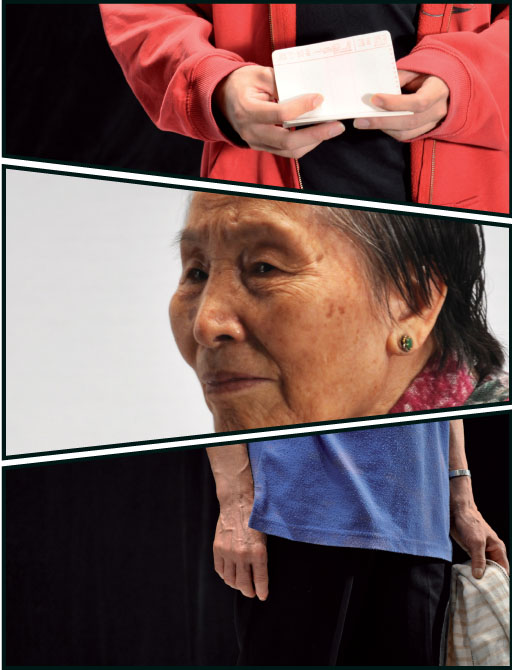
The best money saving advice may not come from financial planners, but from the 290,000 elderly people who are now living in poverty in Hong Kong.

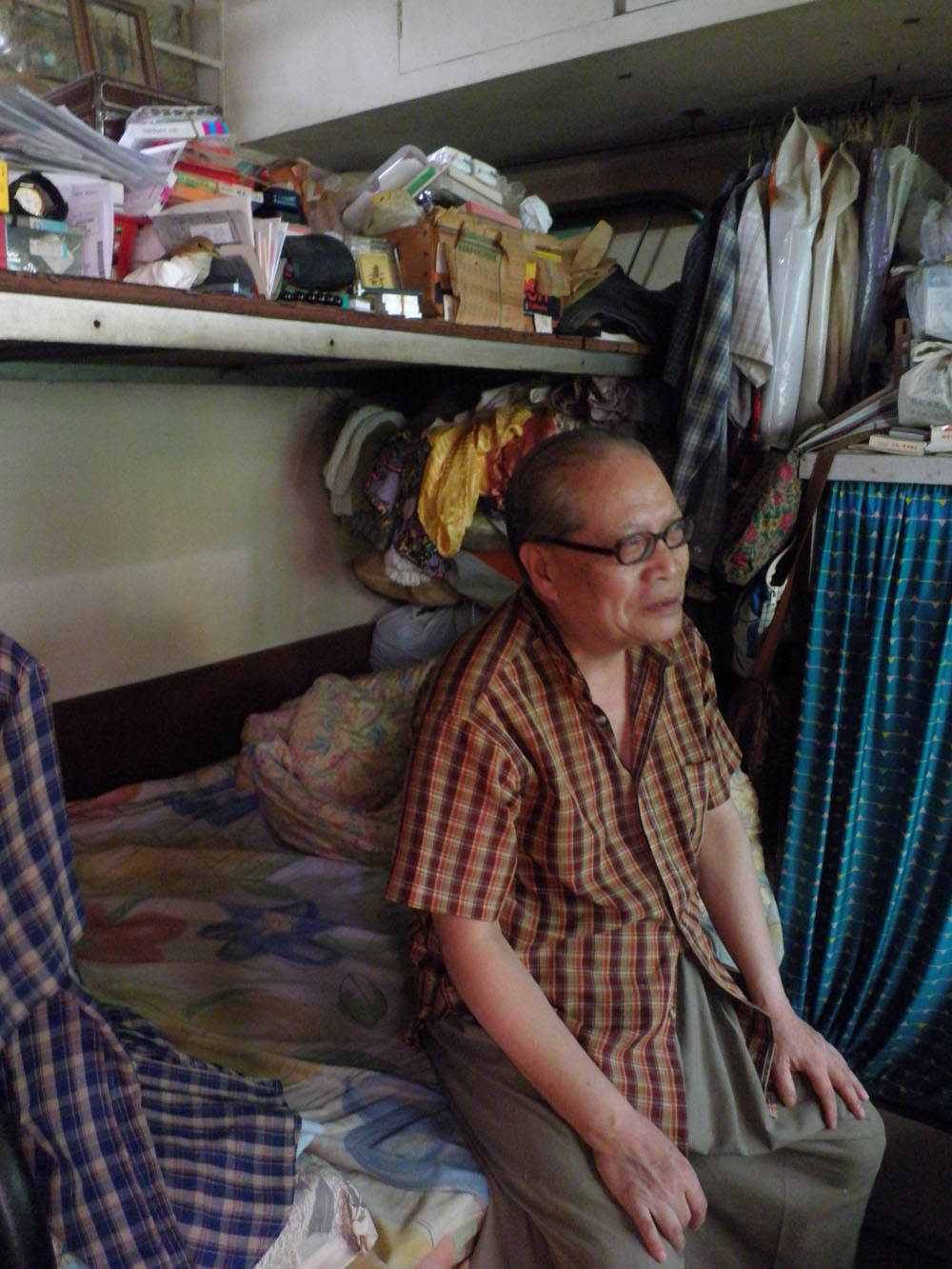
They sit idly in the park, leaving their home appliances switched off to avoid steep electricity bills. They visit the markets at sunset when the food is the cheapest and unsold meat is occasionally given away for free. They do not cook very often because a simple dish can be stretched to feed them for at least three days.

The elderly save in every possible way. They save because they have to.

The elderly poor population has increased by 14.2 per cent over the last decade, according to the Hong Kong Council of Social Service (HKCSS). Between 2009 and the first half of this year, the elderly poverty rate rose from 31 per cent to 34 per cent, the biggest increase among all the age groups. It means one out of three Hong Kong residents aged 65 or above is now living in poverty.

The HKCSS draws the poverty line at half the median monthly household income using the Organization for Economic Cooperation and Development definition. In the first half of 2010, a single-member family with a monthly income below $3,275 would be regarded as poor, while for a three-member family, the poverty line is drawn at $10,000.

Traditionally, the elderly got by on money given by younger family members and their own savings. The government provides a supplementary benefit in the form of Old Age Allowance, also known as “fruit money”.

However, the elderly can no longer rely on the financial support of the younger generation. With the change in emphasis from the extended family to nuclear families, and the proliferation of the working poor population, it is no longer a given that sons and daughters are able or willing to support their ageing parents.

Ms Yeung, 82, lives with her son, his wife and their child in Diamond Hill. It is a working poor household and she does not expect her son to take care of her financially. “He has only given me around $3,000 in the past few decades,”says Yeung.

According to Mariana Chan Waiyong, the chief officer of the Policy Research and Advocacy of the HKCSS, the dependency ratio for working poor households like Yeung’s is higher than that for better off families.

Studies show that on average, each worker in a working poor household has to support two family members in addition to himself or herself. That is more than double the dependency ratio for the population as a whole. “We can hardly rely on the working poor to support the elderly,” Chan concludes.