














Home Blog Page 70

Files Not Found

Lack of archives law creates holes in historical records and gaps in government accountability

By Jade Li and Jasper Cao 

On the nights before the police clearances of the occupied sites in Admiralty, Mongkok and Causeway Bay in 2014, volunteers raced to save the paintings, slogans, sculptures, banners and other “objects of demonstration” of the Umbrella Movement. This followed weeks of careful inventory making. After collecting the artefacts, the volunteers sent a number of them to the University Library of the Chinese University of Hong Kong for safe-keeping.

20150917SY_YKH_0318
Objects “rescued” and stored by the Umbrella Movement Visual Archives

Sampson Wong Yu-hin, the founder of the Umbrella Movement Visual Archives and Research Collective, one of the groups involved in the rescue, says the activists were hesitant to send the objects to museums because they were worried that the administration may try to hide or eradicate the historical record.

“We trust the library because we think institutions doing academic research uphold integrity, unlike museums which are more manipulated by the government,” explains Wong.

While artists and cultural workers were concerned about the need to preserve and record the cultural artefacts from the movement, others drew attention to the need to have a record of the government’s decision-making process during Hong Kong’s most significant political movement in recent decades.

As Hong Kong does not have an archives law, the government is not obliged to preserve and maintain records. However, the then Chief Secretary Carrie Lam told legislators last year that, “the essential principles of records management adopted internationally have been implemented through administrative arrangements.”

Simon Chu Fook-keung, a former director of the Government Records Service (GRS), is not convinced. Chu, who helped found the Archives Action Group, has been campaigning for the enactment of an archives law for years.

Chu says that without legal constraints, the government can falsely claim that they do not have records. He cites the recent example of the “soft lobbying” for the controversial Wang Chau housing plan in which officials said there were no records of certain meetings.

For Chu, records should be widely defined to mean anything related to official duties that may be of archival value. This means they can be in any media format and are not restricted to paper documents and minutes of meetings. He thinks that under an archives law, communications by email or messaging applications such as Whatsapp and Telegram should also be preserved.

He raises the example of Education Secretary Eddie Ng Hak-kim, who sat in his car for 45 minutes after refusing to speak with protesters following a visit to a school in March last year. When Ng was criticised for “playing with his phone”, he said he had been discussing work matters with colleagues. Chu says electronic records would reveal the truth, but under the current situation we may never know because the government fails at the first step of record keeping, which is to create files for keeping.

Chu adds the rapid advances in technology present an extra challenge to official record keeping as the government does not have an up-to-date system for managing electronic documents. He says many of the departments still use a print-and-save method to store data and records.

Meanwhile, action to enact an archives law has been slow. In November 2011, then lawmaker Margaret Ng Ngoi-yee tried to move a motion on enacting an archives law in the Legislative Council but failed. The Law Reform Commission formed a subcommittee in 2013 to conduct studies on an archives law but there has been little progress.
Not So Open Data

Hong Kong’s smart city goals thwarted by lack of access to open , user-friendly data

By Rivers Zhang, Brianna To

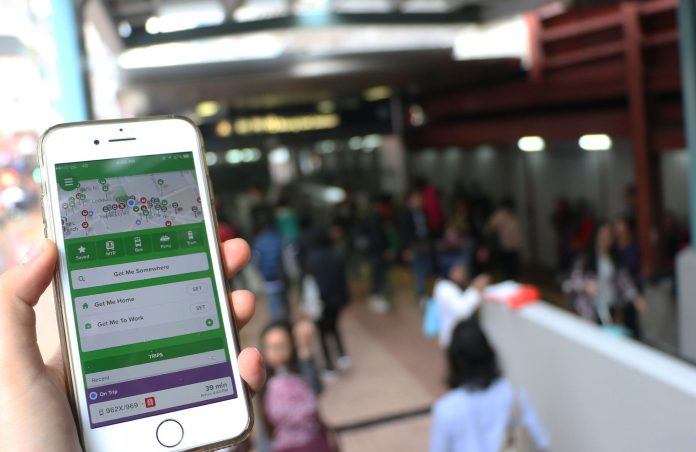
Anyone who has tried to work out how to get to a new destination will realise there is no one single smartphone application in Hong Kong that will tell you what public transport to take, how long it will take you, and how much it will cost. Despite all the talk about developing Hong Kong into a smart city, the lack of easily accessible and usable open data remains an impediment to that goal.

Charles Mok, the legislative councillor representing the IT functional constituency, says the government should be leading the way when it comes to promoting and providing open data. “Usually the first step [to open up data] should be done by the government, because they possess the largest amount of data,” says Mok.

Charles Mok
Legislator for the IT sector, Charles Mok

Mok says that the government has the most data because it is also the major service provider and is responsible for oversight of data sources such as the Hong Kong Observatory and various public transport franchises and operations.

Four years ago, the government took the initiative to open up data sets through the platform Data One, which has now been renamed data.gov.hk. But Mok says the data sets on the site are neither sufficient nor user-friendly.

According to the Open Data Handbook founded by Open Knowledge International, open data should be free to use, re-use and redistributed by anyone. In addition, the format of data sets is important. The most significant feature of open data is that the data set be “machine readable”.

Mart Van de Ven is a co-founder of Open Data Hong Kong, a group of volunteers who advocate for greater availability and quality of open data. Van de Ven explains that in order to be machine-readable, data should be in a format which can be understood and processed by a computer. Whereas, if for example, data is presented in PDF format, it would have to first be extracted before it can be used. This is costly and time-consuming.

Van de Ven says the government’s annual budget is an example of a document which is in PDF format and is not machine readable. “You can imagine a government budget, if the table has many different columns and many different rows, to get the right level in the right row becomes very problematic,” he says.

As the conversion process is complex and errors are inevitably made during the process, Van de Ven adds, “you will lose confidence about [whether] the data you use is correct”.

Van de Ven says some of the preferred formats for data are  XML, CSV, Excel and Application Programming Interface (API). These formats can be used without conversion in different programming systems. On the other hand, PDFs and even pictures produced by scanning hard copies present problems to those who want to use the data because they require conversion.

He also emphasises the importance of obtaining raw data. Raw data refers to data that has not been converted or processed after it is collected. Processed data can refer to data that has undergone calculations like summarising and average- taking. Taking housing prices in Hong Kong as an example, Van de Ven says web and software developers can often only get processed data sets. That is, they usually get summaries of housing prices in an area that can be as big as Kowloon, the New Territories and Hong Kong Island.

“Ideally, what we want to have is, this house sold for this much on this date and this address, because then you have thousands of data points, and you can make your model, and you can do your own analysis.”

Watching me, watching you

Surveillance, privacy and the tough choice between the privacy rights and the right to know

By Nancy Mak, Grace Liyang 

Joshua Wong Chi-fung was just a 15-year-old student when he led the student group Scholarism in the campaign against compulsory national education in Hong Kong’s schools in 2012. But he already suspected his phone calls were being intercepted.  “I heard strong echoes in my phone, I thought it could be wiretapping” says Wong.  “I could hear my own voice and there was a lot hissing noise.”

It was not just Wong’s phone. Scholarism was disbanded last year but while it was still operating, there were constant concerns about hacking and internet theft. One documented incident took place in 2015, when the group noticed documents had been downloaded from its Google account. Scholarism confirmed that an unknown account from Nanjing called “Eastern hunting hawk” had broken into the account and downloaded personal data relating to Scholarism’s members and volunteers over the years.

DSC_0448 (occupy)
Umbrella Movement protest in 2014

Wong suspects there may have been other thefts too. “That is why during the Umbrella Movement, all the members of Scholarism, ranging from the most well-known to the least-known, were all on a blacklist and couldn’t enter the Mainland. We think that the blacklist came from the stolen Scholarism membership list,” says Wong, who is now the secretary general of the political party Demosisto.

At the time of the hack, experts suggested it may have been state-sponsored given the political sensitivity of the group. But even within Hong Kong, Wong believes there are insufficient safeguards to protect citizens’ privacy, particularly from law enforcement agencies.

For instance, police can carry out a house search without a court warrant if they have reason to suspect a person to be arrested is inside the premises. People arrested for political actions may also have their personal communication devices seized. After Wong was arrested at Civic Square on September 26, 2014, his phone and computer were taken away and only returned after half a year.

“During this half year, no one knows what they did with my computer and phone. As to whether they could get into my devices, I think it’s not hard to hack into a computer.”

Wong’s examples show how citizens can have their privacy compromised and their communications intercepted. In a bid to protect the personal privacy of Hong Kong citizens, the government has enacted several ordinances, including the Personal Data (Privacy) Ordinance in 1995 and the Interception of Communications and Surveillance Ordinance (ICSO) in 2006.

The objective of the Privacy Ordinance is to protect the privacy rights of a person in relation to personal data. According to the ordinance, every Hong Kong citizen should follow six data protecting principles when handling personal data. For instance, the collection of data should be done in a lawful and fair way and the people involved should be notified about the purpose of the data collection; personal data should only be used for the data collection purpose; and data users must be open to the public about what types of personal data they hold and how the data is used.

In certain circumstances, such as for the protection of Hong Kong security and in the prevention and detection of crimes, exemptions are allowed. The Office of the Privacy Commissioner for Personal Data (PCPD) is an independent statutory body which oversees the enforcement of the Privacy Ordinance.

Best of Both Worlds?

International school students face language and cultural barriers in their own hometown

By Nannerl Yau and Jennifer Leung

After finishing class, a young man sits down for an interview. He laughs and lets out a sigh of relief on discovering the interview will be conducted in English. Harry Mou Kat-yan is a second-year sociology student at the Chinese University of Hong Kong (CUHK) and was born and raised in Hong Kong. But when it came to fitting in during his freshman year, he may as well have been a foreign student.

To his peers, Mou was known as the “I.B. kid,” a nickname given to him because he studied the International Baccalaureate curriculum at the Victoria Shanghai Academy, an international school in Hong Kong. He also stood out because he did not understand local university culture and even things like making meal choices were difficult for him. He was experiencing culture shock in his own hometown.

“When [international school students] go to the UK or US, they adapt really well because they are more into that culture,” Mou explains. “But we move into Hong Kong’s universities and really struggle.”

He recalls that his international school background and lack of knowledge of local news affected him drastically. During a class, his mentor publicly humiliated him by calling out his lack of knowledge of local politics and culture. He criticised Mou for his lack of exposure to local life and society. “He explained that [I] experienced the middle class, [I] experienced the upper class, but have no idea how the majority, which is the lower class, actually works,” recalls Mou.

He had encountered similar experiences even before he was admitted to CUHK. When he applied to universities, he had put down as his first choice, the undergraduate programmes in social work at six local universities. In the end, all six rejected him. Mou’s CUHK mentor later told him that social work departments rarely accept international school students because “they assume that they don’t really have the knowledge of local current affairs”.

Harry Mou Kat-yan and his high school classmates. Photo courtesy of Harry Mou

This echoes some of the criticisms levelled at international schools in Hong Kong, criticisms that suggest their students live in a bubble.  The Creativity, Activity, Service (CAS) component of the IB curriculum is supposed to counter this phenomenon by giving students real-world experiences and equipping them with local knowledge. The CAS Project is a mandatory programme for IB schools.

David Whalley, the director of education at the English Schools Foundation (ESF), which operates 22 international schools in Hong Kong, brings up the CAS Project when discussing how to help ESF students understand local cultures and Hong Kong society. He says the project is designed for students “to understand the local community, how they can be part of that community and how they can make a difference in that community.”

Whalley explains the CAS Project includes a range of activities that can help students become familiar with Hong Kong’s local culture and society. For example, students can participate in volunteer work, visit different parts of Hong Kong, try local cuisines, and “look at the different things going [on] around Hong Kong.”

But CUHK student Harry Mou feels the CAS Project has limitations. For his part, he says it only affected him for the short time he was involved in it and did not provide enough local knowledge. For his CAS Project, he started a dodgeball club for the “creativity” component, joined a soccer and dragonboat team for the “action” component and visited a children’s home for the “service” part. “For me it is useless. It is useless,” he says.

Children come first?

Domestic abuse victims fear co-parenting provisions in proposed children’s bill

By Catherine Chiang & Jody Yu

After enduring an abusive marriage, Ms C, who does not want to reveal her identity, thought divorce would offer her and her three daughters an escape from a violent husband and father. So when the judge told her that she would have joint custody, or co-parent, the children with her ex-husband, she was filled with dread.

Co-parenting is based on the idea that parental responsibilities do not end when a marriage does and is becoming a global trend in family law. Should a new “children’s bill”, currently under consultation, be adopted here, it could become the norm in Hong Kong too. But some women and children’s advocates say this could put victims in danger in cases where there is domestic violence.

The bill is an attempt to overhaul a system based on the concept of parental custody of children in the event of a divorce, a system that often neglects or overlooks the wishes and rights of children. The term “custody” refers to the responsibility and right of guardianship for a child. In the case of divorce, the custodial parent has the daily-caring and decision-making rights for a child, while the other parent might only retain a certain degree of involvement and access to the child. Existing custody orders in Hong Kong include a “sole custody order”, “joint custody order” and “split order”.

To make the system more child-focused, the Law Reform Commission (LRC) suggested a list of changes to Hong Kong family laws in a proposal – dubbed the Children’s Bill drafted in 2005. The proposed bill calls for a paradigm shift, replacing the concept of “custody” with “parental responsibility”.

This approach stresses the obligations and responsibilities parents should uphold, rather than their rights over their child. The proposed bill introduces the “joint parental responsibility model”, already in place in countries such as Australia and the UK, and stresses the right of the child to maintain a continuing relationship with both parents, who it encourages to co-parent. It also mentions a child’s right to have independent legal representation in court.

Barrister Michael Kung Kin-chung, who has written in support of the legislations, says: “We want to avoid drastic changes to the children, this is not good.” Kung believes the children in a divorce would be less affected if both parents were involved in their upbringing. He adds that co-parenting can potentially reduce the conflicts that arise when parents fight for custody, since both of them would take part in caring for their child.

IMG_3637
The children’s bill seeks to strengthen the rights of children in divorce cases.

Initial consultation on the bill was carried out from December 2011 to April 2012 and a recent consultation exercise was conducted from November 2015 to March 2016. Although the Children’s Bill is yet to be adopted, co-parenting is already a trend in Hong Kong’s family courts. Lawyers report the courts are increasingly granting joint custody to both parents rather than sole custody to one parent.

Although the arrangement is made with the child’s best interests in mind, it does not always work out that way. “I think my daughter doesn’t like the arrangement,” says Ms N, a divorced mother, who wishes to remain anonymous. Ms N was granted joint custody of her now eight-year-old daughter with her ex-husband.

She says that throughout her marriage, she experienced domestic violence and coercive control from her ex-husband. When she was in court, she presented medical records, police records, as well as photographic evidence of the abuse. For her, joint-parenting with a partner with whom she could not and still cannot communicate is a recipe for disaster and will extend the abuse.

She says it is very difficult for her to reach any agreement with her ex-husband on a whole raft of issues related to their daughter, from the choice of schools, to her extra-curricular activities and where she should live.

At the moment, Ms N’s daughter spends three days at her apartment and the rest of the week at her father’s. The child told her she felt like she was being bounced around all the time. Ms N understands it could be exhausting for the child, but her hands are tied. She recalls an instance where her daughter was invited to perform in her school’s annual dance performance. She rehearsed diligently for months. However, the performance fell on a day she was supposed to spend at her father’s home. He prohibited her from performing because he felt it encroached on his parenting time.

“Co-parenting only works if two parents are willing to work,” Ms N says. “Abusive parents don’t do that. They want to control the partner, the children, and they use children as [a] weapon.”

Ms N is worried that if the Children’s Bill is adopted without sufficient safeguards to protect victims of family violence, more of them will have to go through the trauma of being forced to maintain contact and co-operate with their abuser.

School’s not for everyone

School dropouts seek recognition and opportunities outside traditional education

By Crystal Wu & Yi Yeung

On a cold Saturday afternoon, a tired-looking 19-year-old takes a sip of hot tea at home in the hours between working the early shift at a restaurant and taking classes in the evening. Felix Choi dropped out of regular secondary school a year ago, and now finds himself busier than ever. He is at work from 6 a.m. to 2 p.m., takes a nap at home, then goes to evening school at 6:45 p.m. for a three-hour class.

Choi dropped out of school after repeating Secondary Four twice. He says that throughout his time in secondary school, he always knew he had no interest in study. Choi thought that studying school subjects was meaningless for his future life and all he needed to survive was a grasp of basic knowledge. So he spent minimal effort on study and planned to just coast along until his graduation from secondary school – but then he got stuck in Secondary Four.

However, while Choi dropped out of mainstream school, he never considered completely opting out of the education system altogether. This is because both he and his family believe a certificate of secondary school graduation ensures better job prospects. Evening school was preferable because it gave him an alternative way to get secondary school qualifications without having to endure the trappings of conventional school.

“Hong Kong society is certificate-oriented,” says Choi. “[Getting] the certificate represents that you have gone through your secondary school and completed a stage of your life. However much I dislike studying, I still need to finish it.”

Apart from his lack of interest in study, another challenge he faced at secondary school was the classroom environment. Choi says his class was the most disruptive one in the school. He says students in the class were playful and reckless; they were always resisting and disobeying their teachers. Meanwhile, the teachers did not provide much care and help to him and his classmates. Although he did not always agree with his classmates’ disruptive behaviour, Choi says he got along with them happily for five years.

But he was already 18 when the school asked him to repeat Form Four for a third time. His mother suggested he drop out of the school and he considered it seriously. They both agreed that staying there would be no good for Choi’s future and only waste everyone’s time.

Choi says his classmates at evening school are more mature and motivated and it has a good influence on him. “Now, studying at evening school, it feels like I’m remedying my mistakes in the past to catch up on the things I lost when I indulged in play,” says Choi.

Choi may have dropped out of regular school but he still struggles to complete his secondary education because of his belief in the need for basic qualifications, but there are others who reject this and choose a different path.

Renee Lui Hau-lam, now 17, works as a waitress in a café. She dropped out of school last October during her first semester of Secondary Five.

Lui was raised in a single parent family and her mother had high expectations for her academically from a young age. Against Lui’s wishes, her mother enrolled her in a secondary school using English as the medium of instruction although Lui had studied in a Chinese primary school. As Lui was not good at English, she found herself falling behind in secondary school.

Please Like, Share and Monetise!

Loskin

Turning social media influence into gold

By Selena Chan

Dressed in a perfectly coordinated white outfit, white and pink lace ankle socks and transparent flats, and with her hair just styled at the salon, 27-year-old YouTuber So Lok-sin effortlessly strikes a pose in front of the lunchtime crowd and traffic at a busy intersection in Central.

So moves fast. Earlier, having scoped out the best spot for a photo shoot, she took a quick look to see if there were any cars approaching and dashed into the middle of the road to take her position, seemingly oblivious to her bustling surroundings.

So works as a full-time senior editor at BeautyExchange.com, an online beauty, fashion and lifestyle platform for women. She launched her YouTube channel, Lok Sin So, in October 2013 at the suggestion of her boss and as part of her job. It now has more than 70,000 subscribers.

The topics of her videos range from skincare and cosmetics, to fashion, food, travel and pop idols. Although it started as an idea from her boss, So treats the channel as more than just part of her job. “I’m showcasing to the public or audience my character and my personality,” she says. So enjoys sharing things she likes and is grateful she can combine her interests with her work. “I think I’m a lucky person,” she says.

As a beauty editor and blogger, So is regularly invited to attend product launches. She is often among the first to try the latest products and makes product review videos based on her opinion of them. For instance, she may compare 10 different lipsticks to tell viewers about the pros and cons of each one.

So enjoys sharing what she likes in her everyday life.

Interaction with her audience is very important to So and she analyses the statistics for her videos to get a better understanding of her audience segment and what they like about the videos. She was surprised at the wide age range of her subscribers, some of whom are in their 40s. As for the most popular type of videos, she says they are the ones about shopping. “They like to see me spending money,” she says.

So does not call her audience “fans” but rather “friends”. She says she checks every comment they post and tries her best to reply to all of them, especially the private messages on her two other social media platforms, Facebook and Instagram. She wants to be a friend who people turn to when considering whether to try a new product.

However, her “friends” sometimes let her down with their harsh comments, calling her ugly or using foul language. She says it is important to be mentally strong as a YouTuber. Although she still gets hurt when reading negative comments, she has learnt to put them aside.

Although her job may seem fun and glamorous, So says there are two sides to every coin. “People focus on the fancy side working in the media industry,” she says. What they do not see is that it may have taken 30 hours to produce a three-minute video that has to be both informative and entertaining. She jokes that even when she is on vacation, she keeps thinking about what products or food to share. “It is supposed to be my holiday!”

While So has embarked on becoming an online influencer as a career, some fall into it by accident. Food blogger Nicole Fung used to work in finance and started writing about food and travel as an escape from her unfulfilling nine-to-five job. Now she co-runs the blog That Food Cray !!!, which has been up since 2012 and has attracted more than 90,000 followers on its Facebook pages and 97,000 on Instagram.

Fung says she did not expect to be popular, still less an influencer. “It was mainly like a passion project at first,” she says. “I did not realise people would really look at it.” She started by posting for her family and friends but the blog was so well-received that she decided to develop it more seriously.

From being a hobby, blogging and writing has turned into a job, albeit an enjoyable one. Fung works with magazines, writing, taking photos and sometimes shooting videos. She also runs a lifestyle and fashion website along with her food site.

Being a travel lover, Fung reviews both Hong Kong and overseas restaurants. She says she posts at least twice a day on Instagram and updates her food blog around once a week. She wants to keep the focus on the food rather than herself. “I don’t like putting up photos of myself too much,” she says.

Fung is always out with her camera and iPhone.

She is rarely out without a camera and her iPhone and enjoys having meals with family and friends so that she can try a bite of each dish and take more pictures. Fung captures the dish from different angles and always takes notes on the names of and ingredients in each one. She tends to only share the things she really likes, so her posts are generally positive. “I don’t really have that much time to write about every single restaurant,” she explains.

As an influential food blogger, Fung is often invited to free tastings by restaurants, but she rarely accepts. She says people have a misconception about the role of a food blogger. For example, restaurant owners might expect her to write a positive review after treating her to a free meal. In her opinion, this is not a fair trade. “I think it almost feels like a bribe in some ways,” she says.

So Lok-sin and Nicole Fung are both online personalities who create content that can influence the purchasing decisions of their readers, so they can be regarded as influencers. Their influencing power attracts companies looking for partners for their promotions. Fashion brand Topshop Topman is among those that engage influencers in their marketing campaigns.

VR technology – a gimmick or the future?

Will virtual reality finally break through into mainstream success?

By Katie Cheng

Put on your headsets, shut the real world out and enter the realm of virtual reality (VR) where you can enjoy an immersive sensory experience. With the HTC Vive headset on, you can become a Star Wars Jedi and the remote control in your hand a light sabre. Wave your light sabre and fight stormtroopers and restore peace to the galaxy. Change to another VR headset and you can turn into the sole survivor in a city full of zombies. This time the remote controls become guns.

With a VR head-mounted display, anyone can explore a virtual world by looking around and interacting with elements in an artificial environment. For most people, the best known application of virtual reality is in gaming. VR applications in other commercial fields like tourism and property sales have also made headway.

With an eye on the great potential of VR, big-name brands are investing in related technology. Facebook has put US$2 billion into its VR technology Oculus, while Google is investing US$542 million into Magic Leap. Market forecasts predict VR applications will generate over US$200 billion a year by 2020. But these big players do not represent the whole of the fast-developing VR industry.

JetOne Motion, a VR experience centre located in Central, provides games ranging from VR bikes to horse racing. It costs HK$580 for half an hour of VR gaming. Noel Leung, a special project director at JetOne Motion, describes the centre as a “library” of VR devices sourced from around the world.

But entertainment and gaming are not all the company provides, it also offers content development for various corporations and organisations, such as scenario-based education. By putting on a VR headset, children can enjoy a more interactive learning experience with a virtual teacher standing beside them in a virtual world.

“We do both gaming and content development for VR simultaneously,” Leung says. “It’s a rather new technology and we are not sure which one will outrun the other. So, we do not mainly focus on either part.”

Leung says that throughout the year of 2015, most enquiries about their services were about gaming. From mid 2016 onwards, the ratio of enquries about content development began to even out with those about gaming. Leung sees this as indicative of an emerging opportunity in the local market.

From Hell to Heaven

Yeung Sau-churk’s long journey from bored bookkeeper to rebellious artist to wise teacher

 By Kristy Tong

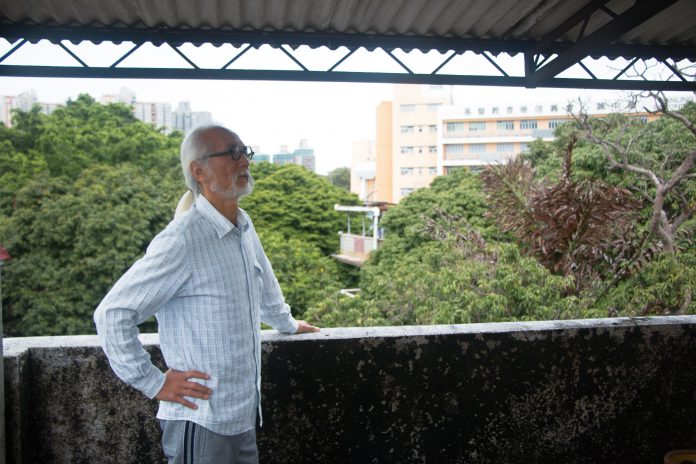
In a local secondary school, a man wearing round, black-rimmed glasses and his snow-white hair in a ponytail steps into the art room. He greets each of the students like an old friend and asks whether they missed him. Throughout the lesson, he constantly asks questions and requires them take photographs to capture different visual elements of objects such as metal surfaces, lines, and corners, in order to train their observation and artistic sense.

Artist and teacher Ricky Yeung Sau-churk describes himself as “being possessed by other spirits” once he enters a classroom. The 64-year-old cannot wait to share his experience and knowledge. He enjoys teaching so much that even retirement cannot stop him and he is currently an artist-in-residence who teaches art workshops at various primary and secondary schools.

It is hard to imagine that Yeung spent the first part of his working life with his head buried in ledgers and accounts for 18 years. After completing secondary school at the Morrison Hill Technical Institute, Yeung followed social expectations and opted for a stable office job. But after spending five years doing accounting work for an audit firm, Yeung discovered he had no interest in figures and could not bear the working environment.

“I felt like I was in jail. There was no human touch,” Yeung says. Inspired by works such as existential psychologist Rollo May’s Man’s Search for Himself, he reconsidered his career path and decided to take action to create meaning in his life.

He remembered that he used to enjoy art lessons at primary school and his work was always chosen for display. To explore his potential, he started to take art classes after work at a Caritas Social Centre. Later, he switched to a three-year part-time course organised by the Department of Extra-Mural Studies of the University of Hong Kong (HKU) when he was 26. This was a turning point.

“My desire to create was so strong that I was like burning myself out,” Yeung recalls of that time.

The conditions for practising art were less than ideal. Yeung lived in a cramped tenement house with his family and had to wait for them to sleep before he could practise calligraphy on weekday nights. On the weekends he would just stay on the verandah to draw and paint. His family disdained his passion for art and told him he would end up begging if that was all he did.

Yeung did not have the courage to quit his job because he had to support his parents and save money to rent a studio. “There were two of me at that time. I sold my body in the day to earn money and redeemed it at night to do what I loved,” he says. “Through art, I found a release from the suppression of work and healed myself.”

Ricky Yeung Sau-churk’s performance installation Man and Cage in 1987 (Left); sculpture People vs People in 1981 (Right)

Yeung’s early artworks were radical, sexual, and vulgar. He was the first artist to adopt condoms as a material, using condoms, bamboo sticks and cotton wool to make the sculpture People vs People in 1981.The work depicts office workers’ attempts to cheat and outwit their colleagues. Another acclaimed work was his 1987 performance installation Man and Cage. In this installation, the artist was trapped in a bamboo cage, with his face painted white and his body painted red. He kept climbing inside the cage and yelling for 48 hours as a commentary on Hong Kong’s limited living space.

Yeung’s style during this period made some people uncomfortable. In 1984, two of his pieces depicting sexual intercourse were removed from an exhibition in the Ninety Seven Restaurant in Lan Kwai Fong after just one day due to diners’ complaints.

Although art provided Yeung with an outlet to vent his frustrations and disillusionment with work, society and his loss of his earlier Christian beliefs, it did not prevent him from experiencing a serious breakdown at the age of 37. The last straw was when he wrote eight cheques incorrectly in one day, something he had never done before. With his girlfriend’s encouragement, he finally quit his job and travelled around Europe for 15 months.

When Yeung came back to Hong Kong, he decided to pick up his studies and applied to study fine arts at HKU. His interviewers recognised him as a rising artist with some fame, and told him they were impressed by his performance in Man and Cage. He was accepted to study fine arts and comparative literature at the age of 39. Yeung threw himself into his studies to make up for lost time and spent most of his time in the library reading books.

Studying at university helped Yeung to find his path and put his life on the right track. He still had anger but wanted to transform it into energy for teaching, so he decided to apply for a teaching job after graduation. But it was not easy for a 42 year-old with no teaching experience. It took him a year to find a post as an art teacher in Fanling Lutheran Secondary School.

Grenville Cross – Still Vocal After All These Years

Hong Kong’s first post-handover Director of Public Prosecutions calls for an improved prosecutions system

By Angela Siu

When Grenville Cross left his job as an in-house prosecutor at the Customs and Excise Department in Britain to take a job in Hong Kong in 1978, he asked his employers to hold his post. They waited two and a half years, and then another two and a half years.  But not only did Cross not return to the UK, he encouraged his colleagues to come and join him in the then British colony.

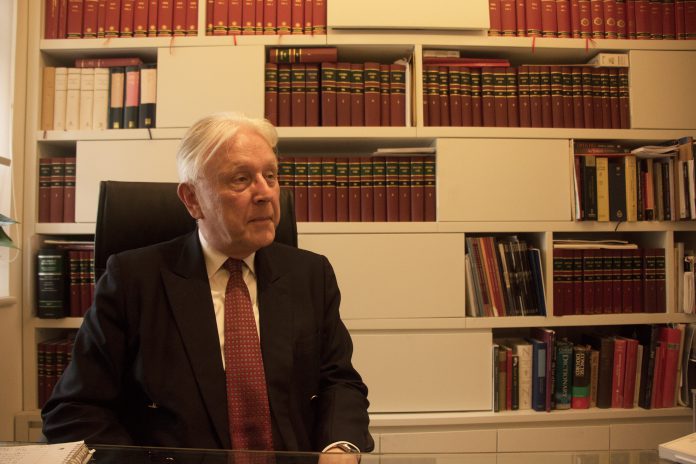
Today, 65-year-old Cross considers Hong Kong his home. He is a local history buff and enthusiastically shows off his collections of old Hong Kong memorabilia and Chinese antiques. Cross is especially proud of a full set of hat knobs denoting the different ranks of late Qing dynasty officials – from ruby for the first rank to gold for the ninth.

Cross’s collection of hat knobs from the late Qing dynasty

It has been a long journey for the boy from Lincolnshire, England who became Hong Kong’s first post-handover director of public prosecutions (DPP) in 1997.

He has been keen on history and collecting old things since he was at school and had thought about becoming a historian. But he decided that did not present many career opportunities apart from teaching, which was not what he aspired to do and, instead, chose to study law at the University of Southampton.

His interest in law developed in secondary school where he chaired the Debating Society. He enjoys debating, exchanging ideas, and persuading people, which are the common characteristics of a lawyer.

After two years in private practice as a barrister, Cross joined the Customs and Excise Department in 1976. While working there, he saw an article in The Times recruiting prosecutors to work in Hong Kong. Seeing it as a good opportunity to travel and gain work experience, he applied for the job which would completely change his life.

Cross came to Hong Kong to work as a Crown Counsel at the Attorney General’s Chambers (the former Department of Justice, DOJ) at the age of 27. Beyond his expectations, he started working on jury trials in a year and dealt with his first murder case within two years.

Cross formerly a Queen's Counsel before handover
Cross was a Queen’s Counsel before the handover

“It was unheard of in England to do a murder trial when you were still in your twenties. You had to wait probably until in your forties,” Cross says. “So from doing very minor cases in England, I came out here and [was] suddenly doing very important cases.”

All these experiences and opportunities made Cross reluctant to return to Britain. He worked as a prosecutor for 13 years before becoming a deputy DPP in 1991. He applied for the DPP position three years later, but was turned down due to the colonial government’s localisation policy, which reserved senior positions for local Chinese. The job was given to Peter Nguyen instead.

As a “consolation prize”, Cross was offered a judgeship at the High Court. Cross considered it but decided that he preferred to argue cases and take decisions on whether to prosecute. Being a judge would also have meant being circumspect and not advocating for things he feels strongly about, such as children’s rights. So he rejected the offer and continued being a deputy DPP. “Sadly it wasn’t really for me, even though it would have been very attractive in terms of money and security,” he says.

Cross did not lose faith and chose to stay in Hong Kong even though many Hong Kong people emigrated before the handover. “I’ve been here for so many years, and this is my home,” he says. “I wanted Hong Kong to succeed after the British had left, and if everyone left at the same time, then it wouldn’t be good for the Department of Justice.”

He waited until Peter Nguyen left the office of the DPP for a judgeship in 1997 and applied for the job again. This time the post-handover government approved his appointment and he became the first DPP for the HKSAR government. “You never know in life how things are going to turn out,” he says. “So even when things look very bad, you have to keep going, and they can turn out as the best.”

Cross says it was a great honour but also a challenge to take up the job shortly after the transfer of sovereignty. To ensure a smooth transition, he initiated many reforms to modernise the system of public prosecution and safeguard the rule of law. For example, he developed areas of expertise within the department on areas such as computer crime and human rights. He also facilitated Hong Kong’s membership of the International Association of Prosecutors (IAP) to forge closer ties with prosecutors around the world.

Seeing the importance of maintaining transparency during a time of uncertainty, Cross introduced an annual report by the Department of Justice that explains the guidelines and criteria applied to prosecutions for the media and the public. With the implementation of the reforms, Cross says the legal system has grown from strength to strength and he believes the fact that many people who emigrated in the 1990s came back to Hong Kong is proof of this.

As the longest serving DPP, Cross dealt with many controversial cases, one of which came to be known as “Lexusgate”. It refers to a controversy in 2003 when the then financial secretary, Antony Leung Kam-chung bought a new luxury vehicle weeks before he announced an increase in the Motor Vehicles First Registration Tax in his budget. Leung had failed to declare his purchase.

Cross recalls he had to handle the case very carefully and asked for outside legal advice. Despite public sentiment, he says he chose not to prosecute Leung because the evidence was not strong enough. “Prosecutors are gatekeepers and they have to make sure that people are only prosecuted if there is a proper basis,” he says. To defuse any misunderstanding that prosecutors were covering up for Leung, Cross arranged a press conference and attended the Legislative Council to explain the reasons for not prosecuting.