
















Home Blog Page 69

Reviving Hakka Culture in Lai Chi Wo

Abandoned houses in 400-year-old village to be turned into holiday homes

By Jennifer Leung & Catherine Chiang

David Tsang Wai-keung, a resident of Lai Chi Wo David Tsang Wai-keung David Tsang Wai-keung


To get to the village of Lai Chi Wo, you can catch a ferry that sails from Ma Liu Shui Pier once a week, or hike two hours from Tai Po or Fanling. Once you make it there, it can feel like stepping into another world and another time – one without skyscrapers and cars. The secluded 400-year-old Hakka village is situated in Yan Chau Tong Marine Park and surrounded by a vast expanse of feng shui woodland near Sha Tau Kok in the northeastern outskirts of Hong Kong.

Today, the village is mostly deserted, with no more than 17 inhabitants, but still retains many of its original Hakka traits. All the 211 houses were built within a feng shui wall, which according to traditional belief, keeps the wealth of residents within the village. The houses are also arranged in nine horizontal rows and three vertical columns as these are lucky numbers denoting life and longevity.

At its peak, the village had a population of 1,000 but the number dropped sharply in the 1960s when many villagers emigrated overseas for a better livelihood and education for their children. Most of the houses were abandoned and fell into disrepair. In an attempt to revitalise the area and promote Hakka culture, the Hong Kong Countryside Foundation proposed a project to convert 12 deserted houses into holiday homes. The plan won the backing of the Hong Kong Jockey Club, which allocated around HK$50 million for the project, and was approved by the Town Planning Board in August this year. The first stage of the project will be finished by the coming Lunar New Year, which will present villagers with two examples of restored houses.

David Au Chi-wai, the director of the restoration project says it aims to conserve the hardware and the software in Lai Chi Wo, by this he means the houses and Hakka culture. To preserve Hakka culture, the foundation will collaborate with local villagers on creating experiential learning activities for tourists, including making Hakka traditional cuisine and making Hakka handicrafts. Some houses will be converted to provide activity rooms and visitor facilities.

To preserve the Hakka elements of the village, Au says the character-defining elements of the houses must be identified. One such element is the traditional pitched tile roofs. Lai Chi Wo has the most pitched-roofed houses out of any village in Hong Kong, giving it a classic, even antique feel. Another defining element is the traditional brick cooking stoves.

However, the process of restoration is fraught with challenges on multiple levels. The remoteness of the village makes it hard to transport construction materials and labour. Lai Chi Wo is only accessible via a two-hour hike, or by using boats small enough to traverse shallow waters and berth at the pier.

Another challenge is maintaining the balance between heritage conservation and structural integrity. The walls in the Hakka houses were mostly built using a technique called “Ram Earth”, which involved ramming earth, raw stone material and animal waste altogether to create a wall. However, this type of construction cannot be certified as structurally sound, so architects have to come up with alternatives that balance traditional design with modern requirements. A team of craftsmen will have to be found that can execute the construction well. It is also difficult to integrate infrastructure support such as fire safety, water supply and drainage into the design of the houses.

The grand vision of the project has met with mixed reactions from local villagers. Eddie Tsang, 66, runs a grocery store in the village, while his wife, who prefers to be called Auntie Tsang, operates a small stall outside the ancestral hall selling tofu pudding. Both of the Tsangs are happy about the project. Eddie says the project will not affect their lives much because the holiday homes would only accommodate a small number tourists. The couple agree there is a need to restore the abandoned houses.

“The wood in the houses has been eroded by termites, making [the houses] uninhabitable. Some even have water leaking out,” Eddie says. Auntie Tsang thinks the project will attract more visitors to Lai Chi Wo and boost their businesses.

However, not everyone in Lai Chi Wo supports the project. Some villagers are sceptical of the Foundation’s motives, while others are concerned that vistors might not take care of the environment. One such resident, is David Tsang Wai-keung, 58, who was born and raised in Lai Chi Wo. During his childhood, David disliked what he saw as the boring lifestyle in the village. He could not wait to move out when he grew up and eventually emigrated to the United Kingdom. But he returned to Lai Chi Wo in 2010 after his retirement and now values the tranquility of the village. “Lai Chi Wo is so quiet. I can go wherever I want to go without anyone bothering me. It is my favourite thing,” he says.

David is concerned about the impact the project will have on the environment in Lai Chi Wo. “Those who really want to come here [Lai Chi Wo] will regard themselves as villagers, and they will treasure the environment here,” he says. “But for those who are only coming for one night, they won’t do the same. They would just take a look of what fun there is here, then they will leave the next day. This is not how I want it [the project] to be.”

Edited by Jessica Li

 

Rest and Brew

Yú teahouse presents a hip new image of Chinese tea

By Jennifer Leung

Mention Chinese tea, and many may think of the big, boiling pots of tea served with dim sum in traditional Chinese restaurants. Catherine Yung, who started Yú teahouse, is trying to change that old-fashioned image of Chinese tea. Located in a Fo Tan industrial building, Yú stands out with its modern décor and cross-cultural menu which offers Chinese tea alongside western desserts. The 27-year-old Yung hopes youngsters will come to appreciate traditional Chinese tea and hopes drinking tea can become a trend.

Yung’s mother works in the Chinese tea trading industry and Yung has been following her to tea plantations in Yunnan to collect tea leaves since she was 15. Her love for Chinese tea grew during her visits. She also discovered the health and mental benefits of drinking tea. With a desire to share her love of the beverage, she set up her own teahouse in 2015.

Inspired by the simple lifestyle of the people living on the tea plantations, Yung’s teahouse is designed in a minimalist style. The furniture is mostly made of wood. Unlike the traditionally patterned teapots and cups, the tea sets are plain, matching the tranquil atmosphere of the teahouse. Yung wants the teahouse to be a shelter for people to escape to from the hustle and bustle of the city.

Catherine Yung prepares Chinese tea.

Unlike traditional teahouses which only serve Chinese tea and Chinese snacks, Yú teahouse has Western desserts such as cheesecake and ice cream. While most Chinese restaurants only offer one type of Pu-erh, a variety of fermented tea, Yú has several on its menu, ranging from Red Mandarin Pu-erh to Chenpi (a sun-dried tangerine peel) Pu-erh. Tea leaves packed in wooden boxes are also available for sale.

“The teas served in Chinese restaurants are unvaried and the tastes are flat – it never changes,” says Yung. She says with good quality tea, you should be able to notice that the taste is different with each brew. For example, when you drink Chenpi Pu-erh, the earthy taste of Pu-erh dominates at first. After a few cups, the sweet taste from the Chenpi becomes more apparent.

Besides sharing basic knowledge of Chinese tea with her customers, Yung hopes they can be more appreciative when they drink a cup of tea because of the large amount of effort needed to make it; from planting, storing and transporting the leaves to brewing it just right. “Even the emperors back then couldn’t have tea as good as we do now, because the techniques and machinery we use now have been refined over all these years,” says Yung.

If you want to enjoy a relaxing cup of tea at Yú teahouse, please visit Workshop B, 14/F, Century Industrial Centre, No. 33-35 Au Pui Wan Street, Fo Tan. You can also search “Yú teahouse” on Facebook or Instagram for more details.

Edited by Jessica Li

A Dying Art

Cheung Shun-king presses down on the mahjong tile with a blade.

Meet one of the last artisans making hand-engraved mahjong tiles

By Catherine Chiang

Under the blistering heat of the midday sun, Cheung Shun-king methodically opens up his small shop, Biu Kee Mahjong. Cheung, 63, has been in the industry for more than half a century. He demonstrates his skills by swiftly engraving patterns onto a mahjong tile, finishing one in just a few minutes.

Cheung is one of the few remaining artisans in Hong Kong who engraves mahjong tiles. Once a thriving business in the 1970s, it has been in decline since machine-made tiles came onto the market in the 1980s. Now, most mahjong sets are mass-produced in mainland factories. With so few people practising this craft, it could disappear soon.

As a third-generation engraver, Cheung witnessed the peak of the hand-carved mahjong industry. Back in the day when demand was high, the shop could sell three to five sets a day. Cheung recalled that everyone used to own a set of hand-carved mahjong, but customers today are few and far between, consisting of mostly middle-aged Hongkongers or tourists. Cheung says the older generation in Hong Kong is more appreciative of the craft because they grew up playing with this type of mahjong tile.

Cheung Shun-king brushes paint over the mahjong tiles.

It takes immense effort to produce one set of mahjong, which consists of 144 tiles, so the price is high. One mahjong set costs around HK$4,000 to HK$5,000. It takes about a week to complete a set, but Cheung says most customers give him around three months to finish the work. “Rushing the process would worsen the quality of the set,” he says.

The process of carving doesn’t start with the carving itself, but with preparing the equipment. Cheung insists on sharpening his own knives. “If you buy a piece of equipment, it doesn’t suit you completely, so all of my tools I usually make myself,” he says. Most of Cheung’s tools have been in use for more than 50 years – some of them were made by his father and grandfather.

Cheung works with expert ease. He first uses a small blade to gently mark down the spots he is going to start and end with. Then, he presses down with the blade with his right hand, while his left hand turns the tile. After the carving is finished, he gets out three paint pots and brushes the paint over the tiles. Every move is planned and precise.

However, Cheung doesn’t have an apprentice to pass his skills on to, and his children are not interested. Even though he is currently in discussion with a social enterprise, Eldage, to start a class to teach his techniques, he does not have high expectations as he thinks people would just join it for fun. His industry is fading slowly, but surely, and there is not much he can do.

If you are interested in owning a set of hand-engraved mahjong, please visit G/F, 26F Jordan Road, Jordan. You can search “Biu Kee Mahjong” on Facebook for more details.

Edited by Jessica Li

Other Ways to Learn

Hong Kong parents seek alternatives of pre-school education for their child

Reporters: Angela Siu, Brianna To, Jade Li, Kristy Tong

Editor: Megan Leung

In Hong Kong, academic competition begins early – as early as kindergarten where children start learning to read and write so that they can be competitive primary school applicants. But despite the increasing pressure for academic success, some parents are pursuing alternative learning approaches for their kids and letting the children choose what they want to learn at an appropriate time.

Hong Kong Forest Adventures is a playgroup for children aged one and a half to six years-old. Fees range from HK$450-700 per session depending on the programmes they join, including day trips and camps. The sessions are child-led and not curriculum driven. Established in 2015, the playgroup started with just eight children joining their programmes. Today, 26 children attend on a weekly basis, and hundreds more join one-off trips every month. Danie Strydom, the founder of Hong Kong Forest Adventures, thinks learning should not be restricted to tangible knowledge such as writing. Instead, he believes that children learn through play.

“When they play they learn, they learn about something that is heavy, and something that is light. They learn about colours because they see the colours all around them. They learn all the time – play is how children learn. I think if we think that they only learn when they do academic stuff, we don’t know what learning is,” Strydom says, adding that kids learn soft skills such as sharing, negotiating and persistence through play.

Another alternative approach to early education is the Montessori approach. This contrasts with the traditional education system in Hong Kong in that it is child-led, with an emphasis on independence, freedom within limits and self-exploration in a stress-free but stimulating mixed age environment.

Fiona Kwong, is a full-time mum with two kids aged two and four. She runs a blog called ‘Playful Chaos’ about Montessori education and she hopes her kids can learn naturally develop a love of learning.

Infinity Children’s School is one of the Montessori schools in Hong Kong. The school runs courses for young children below the age of three with their parents, and mixed-age classes for children aged three to six. It is more costly than conventional kindergartens –  monthly fees for half day and whole day mixed-age classes are HK$7,100 and HK$10,850 respectively. However, despite the cost, Infinity Children’s School is oversubscribed.

The daily routine in a Montessori school is different from that of traditional schools. Children in conventional pre-schools and kindergartens cannot choose what they want to learn. But so-called alternative schools try to encourage self-exploration and their curricula tend to be based on a child’s specific stage of development.

Some parents prefer not to send their children to pre-schools or kindergarten altogether. Wincy Chan, a homeschool parent, says kindergartens want children to learn tangible knowledge, such as writing from an early age.

“We think that our kids are not ready for such education, so we deferred their admission to let them grow, hoping to let them explore more and play more,” says Chan.

Homeschooling after the age of six is not encouraged in Hong Kong, and most children will eventually enter mainstream schools to continue their education. Chan knows her children will have to adapt when time for the transition comes, but she believes it won’t be that different from the adaptation kindergarteners make have to make when entering primary school.

Whether it’s learning through forest adventures, Montessori schools or homeschooling, Ralph Yau, the founder of Hong Kong Montessori Research and Development Association says we shouldn’t dwell on the idea of an “alternative” education. Yau believes education shouldn’t be judged on whether it’s “alternative” or not – it should only be differentiated by whether it is suitable for human development.


Should Buskers be Licensed and Regulated?

Hong Kong’s street performers still struggling despite government pilot schemes

Reporters: Selena Chan, Elaine Ng, Jody Yu

Editors: Rammie Chui, Venice Lai

There are an estimated  300 or so active street performers in Hong Kong. Most of them can be found in some of the city’s most crowded areas such as Tsim Sha Tsui, Mongkok and Causeway Bay, as well as newer performance areas such as the West Kowloon Cultural District.

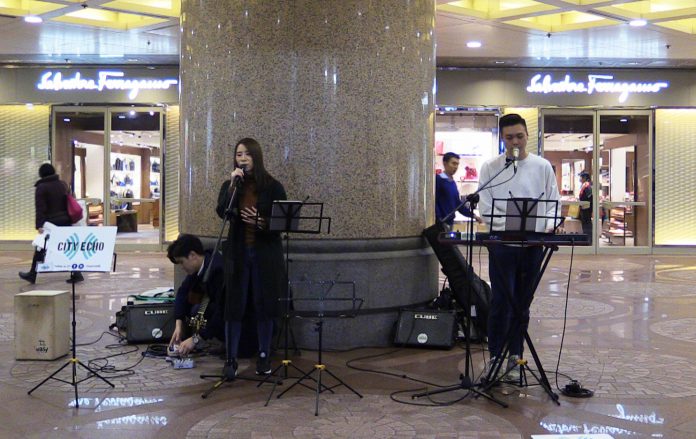
Every Friday night, a group of buskers perform outside Times Square in Causeway Bay. The regular gigs were initiated by a 27-year-old musician JL, who set up the platform, which he calls “City Echo”. JL has been performing on the streets for more than four years, and in this time he’s had to put up with constant hassles. .

According to JL, one of the biggest  problems buskers face is being treated like beggars on the street. He believes one way to overcome this is for there to be a well-structured licensing scheme which would recognize street performers and give them an identity.

In the absence of an official regulatory system covering the whole of Hong Kong, the Open Stage Scheme and West Kowloon Street Performance Scheme are the closest mechanisms Hong Kong have to a licensing system.

Open Stage was launched by the Leisure and Cultural Services Department (LCSD) in 2011, and is an outdoor performance scheme for qualified performers to showcase their talents. According to the official literature, the scheme was launched to enable “appreciation of the arts by members of the public,” and to enrich “the cultural ambience to the community.”

Under the scheme, applicants have to pass auditions, in which they are assessed on the content, artistic level and safety of their performances. The assessment panel includes a member of the cultural sector, a district councillor and a representative of the LCSD.

There were originally three approved outdoor performance spaces, all piazzas of performing arts venues run by the LCSD – outside  the Hong Kong Cultural Centre, Sha Tin Town Hall and Kwai Tsing Theatre. However, Shatin Town Hall is now the only spot left because the other two sites were under-used.

Permits have been issued to 54 acts so far, including 62-year-old singer Simon Mong. Mong appreciates the Open Stage Scheme and supports the idea of having a licensing system in order to weed out acts of poor quality.

The West Kowloon Street Performance Scheme is a newer programme, launched two years ago to promote the appreciation of street performance and encourage street performers to make use of public space. Applicants also have to pass auditions before getting a permit to perform in the open spaces of the West Kowloon Cultural Centre. There is no rundown and approved acts can perform from 10am to 10pm every day. But they are restricted to eleven designated sites which are mainly along the waterfront promenade.

Not everyone agrees that buskers should be regulated through official policies. Mandy Cheng Hiu-tung, Project Manager of a busking policy research study called “Our ‘Play’ground”, thinks buskers should regulate themselves instead. Cheng says buskers could coordinate among themselves to prevent problems such as noise or the occupation of public space. She thinks street performance should be natural and that any third party intervention should be avoided.

Lyson Sze, a 29 year-old freestyle football player has been a street performer for five years and demonstrates how self-regulation can actually work. He performs in Tsim Sha Tsui every Friday night with around four other acts and they all share a spot. Each one performs for 20 minutes on rotation. Sze says the arrangement has become spontaneous and says it is similar to the Open Stage scheme. Except in this case, performers are regulating themselves.

When the Open Stage scheme was launched six years ago, there were hopes it could encourage Hong Kong’s street performance culture and help it develop in a somewhat orderly manner. Six years later, we seem no nearer to a consensus on whether more or less regulation is needed.

Humanoid Robots – The New Servants in Our Modern Life

Robots are performing more human functions

Reporters: Jasper Cao, Nannerl Yau, Rivers Zhang

Editors: Karin Li, Eunice Ip

In the past, robots were mainly used for industrial purposes. They were primarily designed to undertake repetitive, tedious work, such as assembling product parts. But with greater integration of more advanced artificial intelligence, they are now able to perform many functions that we once thought could only be done by humans, such as interacting with people.

This has given rise to a new generation of robots called humanoid robots. The development of humanoid robots has sparked concerns that robots might one day replace humans. But how well is this new generation of robots actually doing in performing human functions?

Professor Li Xiang, a faculty member of The T Stone Robotics Institute of The Chinese University of Hong Kong, envisages the robots of the future will have a higher degree of autonomy. Unlike in the past when scientists had to design everything for a robot to work, Li says robots will eventually be able to determine their own actions in an unknown environment.

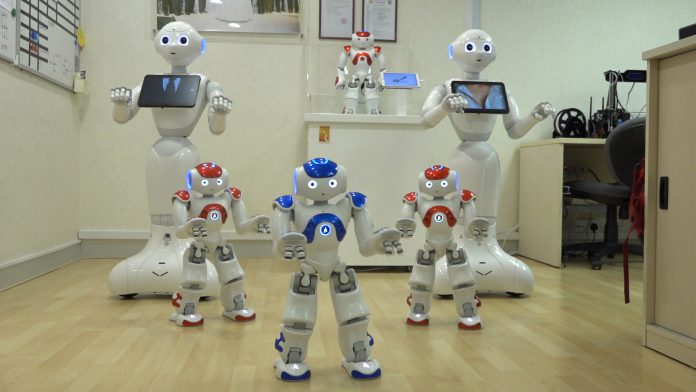
Win Win Group is the distributor of humanoid robots, NAO and Pepper. Its Project Manager, Samuel Wong, says the development of robots is a long, continuous process of improvement. He says that at the current level of technology, his robots are usually applied at the service level. They can provide entertainment and information for customers. However, the scope of their functions depends on what they are specifically programmed to do. So customisation is required to cater for the needs of each customer.

Such customisation has been made for the NAO robot in a Central District branch of the Bank of China (BOC). Named RoBOC, after BOC, it is programmed to answer more than 6000 enquiries from customers in three languages – Cantonese, English and Mandarin, as well as provide entertainment. Its database enables it to answer questions ranging from stock prices to directions for nearby locations.

The RoBOC is still a work in progress and Rocky Cheng Chung-ngam, General Manager of Information and Technology of the BOC, says it takes time for the robot to learn in order to expand its database.

“The more it can learn, the bigger its knowledge base, the higher its intelligence,” says Cheng.

Unlike in countries such as Japan, the use of robots is still a new idea in Hong Kong. Cheng says that it takes a long time to look for robots that can understand Cantonese, the native language of the city. He thinks that a precise recognition of speech and faces is crucial to making it convenient for customers to give banking instructions to a robot. As for  the idea of humans being replaced by robots, Cheng says it is unlikely this would happen in the next few years because it takes a long time for a technology to mature. Besides, he adds new technologies often give rise to new industries that can create job opportunities.

Kam Mong Restaurant in Mong Kok is the first restaurant in Hong Kong to use robots to serve customers. The restaurant’s three robots have made the news and boosted business since they were first introduced in August, 2016. However, General Manager Billy Chan Chi Ming thinks their positive impact can be attributed to their use as a marketing gimmick rather than to their functionality. He says there are a lot of unknown situations in a Hong Kong diner (Cha Chaan Teng) which robots might not be able to deal with, such as remembering the preferences of regular customers.

What’s more, he adds, emotions and the human touch are missing in robots – it’s always more hospitable to have humans serving customers than robots.

Bridging the Generation Gap

Young and old do not have to be at loggerheads

Reporters: Jennifer Leung, Marilyn Ma, Crystal Wu

Editors: Lynette Zhang, Avery Tsui

When it comes to their impression towards the elderly, many youngsters may think of terms such as stubborn, arrogant or garrulous. On the other hand, seniors who are asked to describe the young may resort to using terms like reckless, impatient or disrespectful.

Due to their different life experiences, the two generations are likely to hold different values and perceptions. For example, the elderly value stability and a higher living standard but younger people may think freedom and their rights are more important. Some young people would risk the stability of their lives to pursue these ‘higher values’. Given these differences, clashes seem inevitable.

According to a report by the Japanese Ministry of Health, Labour and Welfare in 2016, Hong Kong people enjoy the longest life expectancy in the world. Given this and the city’s low birth rate, Hong Kong has the second-highest proportion of people aged 65 or above in Asia. Therefore, young people are bound to come into contact with the elderly at some point.

Despite the perceived hostilities between the generations, relations may not be quite as dreadful as we think. A study called ‘Cross generation: Fallacy and Truth’ by the Department of Applied Social Science of The City University of Hong Kong and conducted from September 2014 to April 2016 found that the more young people understand about elderly, the more friendly they are towards them. Around 80 per cent of university students who responded to the survey feel positive about the elderly and are willing to talk to them. Similar results were reported for the way the elderly felt about young.

In fact, there are a number of charities and other groups offering various activities to promote and encourage communication between the two generations. These activities range from playing games together to, biography writing sessions and elderly home visits.

Emily Ng, a student of The Chinese University of Hong Kong, rarely got along with the elderly before several visits she made in Sha Tau Kok. After her visit, she realized that in contrast to what is portrayed in the media, the elderly are willing to listen and try to understand her. When she talked about the difficulties she came across, they would show empathy and tell her they encountered similar situations when they were young. She says she sees harmony instead of confrontation between young people and the elderly.

Eye Health of the iGeneration

How is smartphone and digital device use affecting eye-health of Hong Kong’s young children?

Reporters: Catherine Chiang, Angela Ng, Yi Yeung

Editors: Gloria Lee, Sunpin Li

It’s a warm Sunday afternoon. Many parents would consider the fine weather as an opportunity to take their children out to the park or go hiking. However, 10 year-old Oswin Lian would rather stay at home. He far prefers playing on his smartphone to outdoor activities.

Oswin is a part of a new generation in Hong Kong that is growing up with all kinds of smart devices at their disposal. They use digital devices for both entertainment and as educational tools.

Oswin’s mother, Tammy Or Ka-bo, explains that over 90 per cent of his homework has to be done on the computer, so he can’t avoid spending long hours on electronic devices.

This increased exposure to electronics has had a detrimental effect on children’s eye-health. A 2015 study by the Department of Ophthalmology and Visual Sciences at The Chinese University of Hong Kong found that 14 per cent of six-year-olds had myopia. This figure is almost doubled for seven-year-olds.


Children even younger than Oswin are also using smart devices. Pinky Cheung Yuk-fung is a working mother with two children aged one and three. Despite their young age, they are already familiar with the online video sharing platform YouTube and with smartphone games.

Like many parents in Hong Kong, Cheung uses digital devices for what has been called “e-babysitting”. This is when parents use smartphones, tablets and other smart devices to keep children calm, or distracted so their parents can do other things.

This behavior is not encouraged by Hui Li, who is an early childhood development specialist at the University of Hong Kong.

“Young children are still developing their muscles, fine muscles to control eye movement and the controlling is not mature so far,” Li says. “I’ve found that in Hong Kong, many young parents are not aware that this kind of e-babysitting behavior is harmful to young children’s eye development.”

However, Li concedes that some smartphone apps do have educational purposes, capable of teaching children new words in English and in Chinese, as well as logic.

These educational apps are common and plentiful. Motherapp, an app development company, develops interactive apps for children. Their vice president of sales, Hauman Chow, sees the apps as a way for children to have fun and learn simultaneously.

However, some families still believe that children should not use smartphones at such a young age. In the Docherty family, four year-old Thomas and six year-old Megan read books and watch television instead. When they use the computer, their mother, Teresa Docherty, keeps an eye on them to make sure they don’t spend too much time on it.

Vincent Ng Sheung-shun agrees this is a good strategy. Ng, who is an optometrist at the Polytechnic University’s School of Optometry, says it is easy for children lose themselves in smart devices because they are interactive. The amount of time spent on electronic devices decreases the time children spend outdoors, which doubles the negative impact on their eyesight. To counter this trend of deteriorating eye health, he encourages all parents to let their children play outdoors.

In a modern city like Hong Kong, it is hard for children to completely avoid using electronic devices. Technology plays a big part in their everyday lives, both at home and in school. Parents face a tough challenge in trying to balance technology use and their children’s eye health.

April 2017 – Information and its Discontents

We live in a post-information revolution age where we are deluged with information and data. How we make sense and make use of this information presents complex challenges. As does how we make information available while protecting it from improper use.

In the April 2017 issue of Varsity, we try to explore some of the complex issues around information in our society today.

The lack of an archives law means the government is not legally bound to retain internal documents and records of its inner workings, to be made public at a later date. We talk to the keepers of information – professional archivists, veteran journalists and scholars who recognise the need for an archives law and value the importance of information.

Openness is crucial to unleashing the maximum value of data. The government has repeatedly affirmed the need to develop Hong Kong into a smart city and has pledged to make government information, such as expenditure, transportation and weather data available to the public. Varsity talks to open data advocates, apps developers and journalists about the shortcomings of available datasets in Hong Kong.

The more we live our lives online and rely on our digital devices, the more we potentially compromise our privacy. Governments, businesses and telecommunications and internet companies are collecting large amounts of information about us. Yet the laws protecting us from government snooping do not cover our online communication and digital data.


Information and its Discontents – Editor’s Note

It is hard to imagine life now without computers and the internet. The drivers of the information revolution have changed our lives in previously unimaginable ways. This revolution has resulted in the creation, dissemination, storage and use of information and data in myriad forms and massive quantities.

How we make sense and make use of this information; how we make it available or protect it from improper use, present complex challenges. In Hong Kong, we pride ourselves on being a city that enjoys the free flow of information. We uphold the freedom of expression and of the press, of the people’s right to know as core values.

Information about government policies, decisions and actions, comprehensively recorded and accessible to the public, helps to hold power to account. Information, in the form of intelligence, can help to prevent and detect crime. But at the same time, we need to protect personal privacy rights and prevent information and data theft.

In the April 2017 issue of Varsity, we try to explore some of the complex issues around information in our society today.

We start by looking at the recording of government business and retention of information in the administration. The lack of an archives law means the government is not legally bound to retain internal documents and records of its inner workings, to be made public at a later date. We talk to the keepers of information – professional archivists, veteran journalists and scholars who recognise the need for an archives law and value the importance of information.

With so much data now being created, collected and stored, there is enormous potential for it to be put to use. Openness is crucial to unleashing the maximum value of information. The government has repeatedly affirmed the need to develop Hong Kong into a smart city. With this in mind it pledged to make government information, such as expenditure, transportation and weather data available to the public. Yet Hong Kong still lags behind other places in the Open Data Index. Varsity talks to open data advocates, apps developers and journalists about the shortcomings of available datasets in Hong Kong.

Our third Periscope story looks at privacy and surveillance. The more we live our lives online and rely on our digital devices, the more we potentially compromise our privacy. Governments, businesses and telecommunications and internet companies are collecting large amounts of information about us. Yet the laws protecting us from government snooping do not cover our online communication and digital data. We talk to political activists and experts who tell us about their concerns over the lack of privacy protection. But we also hear about how journalists find the government uses privacy as an excuse to withhold information.

This issue of Varsity also features a wide range of stories – from the struggles of school dropouts to how social media players leverage their influence, and from profiles of artist Yeung Sau-Churk and former Director of Public Prosecutions Grenville Cross to Hong Kong’s feral cattle. Enjoy the read!


Editor-in-Chief
Karin Li