












Home Blog Page 81

Expert Dickson – Love Guru and Man of Letters

Accidental internet celebrity Yuen Man-tai is a writer at heart

By Eunice Ip

“Three. Two. One. Action!” The camera starts recording and a nerdy young man wearing an ill-fitting suit and metal-rimmed glasses starts giving “expert” advice on relationship problems, despite the fact that he has never been in a romantic relationship. If it sounds absurd, it is meant to be, for the loveless love guru known as Expert Dickson has struck a chord with Hong Kong netizens and struck gold for 30-year-old Yuen Man-tai.

Expert Dickson is one of the most popular characters created by 100Most a media company that publishes a satirical youth magazine and produces online parody songs, skits for its satirical news channel TVMost.

Dickson first appeared on TVMost’s News at About 6:30 in August last year. He was asked as a “love investment expert” to comment on a real case in which a young man spent HK$400,000 to propose to his girlfriend. His response was to open with the comment: “From a business point of view, marriage is like a merger of two companies. The buying party must take into account the value of the other party’s total assets to make long-term profit projections.” And then he went on to analyse the merits of the “deal” at hand.

The character was an instant hit, prompting 100Most to develop Expert Dickson and put him in more videos. Projecting a quality referred to as “toxic”(毒), which is usually used to describe males who are more comfortable with computers and geeky pursuits than the opposite sex, Expert Dickson has gained widespread fame as an internet celebrity. He has more than 73,000 followers on his Facebook page and is in demand from brands who want him to promote their products.

But what of Yuen Man-tai, the man behind Expert Dickson, or perhaps even his alter ego?

“I enjoy tasks related to writing,” says Yuen. Both on screen as Expert Dickson and in person, Yuen comes across as a shy introvert. But he expresses himself passionately through his writing.

Given his love for writing, it is no surprise that he studied Chinese at Lingnan University, and his first job after graduating was as a Chinese language teaching assistant at a secondary school.

IMG_8267
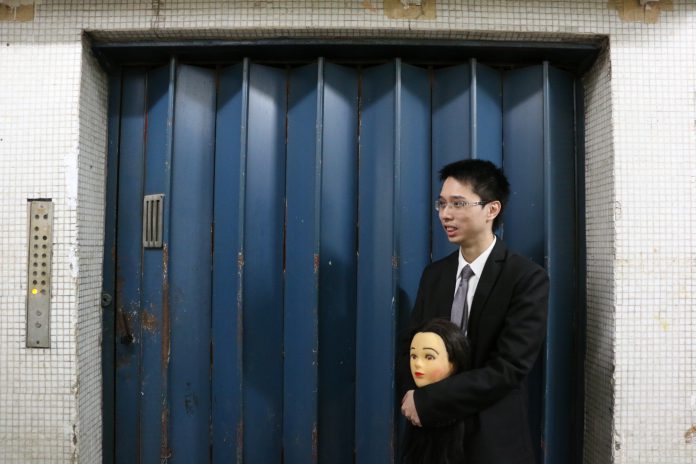
Expert Dickson a.k.a. Yuen Man-tai is a writer at heart

Teaching, however, did not suit Yuen. Like Dickson, Yuen lacks confidence when speaking in front of a large group of people.

“From the first day of work until the last lesson, I was always panicking,” he recalls. Even now, Yuen says his heart starts beating rapidly when he has to address a crowd. When he has to conduct interviews in character as Expert Dickson alongside other 100Most artists, he is mostly silent and lets others do the talking.

Another reason he did not enjoy teaching was that he had to scold the students. While he was sympathetic to the students’ disregard for the rules, as a teacher he had to enforce them. So after a year on the job, he quit to find an editorial job where he could use his writing skills.

Yuen joined Sing Pao Daily News and worked as an editor for the horse racing pages. But he began to question his career prospects after seeing one of his 50-year-old colleagues failing to find another editing job. He realised that horse-racing news editors are not recognised as professionals.

He quit again and worked for a while at a production company before joining the editorial team at 100Most.

Yuen says he applied to 100Most because he thought it was the most forward-looking print media operation in town. Originally, his main duty was to generate content and to edit the photographs for the print magazine. He was responsible for a section about senior artists, and had to do everything from brainstorming ideas, to conducting the interviews and writing the stories.

After two weeks of work, the content manager, Jonathan Chui asked him to give the role of Expert Dickson a try. Acting was completely new to him.

“When I first entered this company, I had never thought of being an internet celebrity,” he says. “At that time, I agreed to play the role just because I wanted to give Jonathan a hand.”

Even now, Yuen is not sure why he was designated to be the character, but he guesses there are two reasons: his clothing and the way he speaks. During his job interview and for the first few days of work, he came to the office in a suit. This appearance gave off the aura of an “expert”.

“My colleagues found me strange for wearing a full suit to my job interview. But because I used to be a teaching assistant and had worked at a production house, I was used to dressing formally for work.”

As for the way he speaks, he can stumble over his words and says “er” a lot. Yuen thinks his inarticulate speech is also a reason he was assigned to playing the role of Expert Dickson.

Acting does not come easily to Yuen, like Dickson he is an introvert. He also finds it difficult to remember his lines, especially when they are long.

“When you cannot memorise the script, you have to NG (no good), which hinders the shooting process.”

Although he is still afraid of acting before the camera, he thinks he has improved compared to his first appearance in an advertisement where he played a worker at McDonald’s, the fast-food restaurant chain. At that time, he panicked. He was anxious because he was unfamiliar with what he had to do. He was unclear about his instructions, and he worried that he would be scolded for doing something wrong.

While he still gets nervous before shoots, he now enjoys them. He says 100Most shoots are always full of laughter. When they shoot outdoors, he says it feels like a bunch of primary school students on a school picnic. When 100Most filmed their Lunar New year promotional video, Expert Dickson was assigned to play the monk Tang Sanzang in a parody of Journey to the West. He had to wear the monk’s costume and act on the street. This is definitely out of Yuen Man-tai’s comfort zone and puts him under pressure. But, at the same time, he enjoys it; it is a perk of being Expert Dickson.

Yuen says he does not go out of his way to seek more advertising jobs. Although he welcomes the work, what he would most like is more time for himself.

“I am not really keen on being a celebrity. More [advertisements] are good, but I will be tired. I do not want to affect my role as an editor.”

If Yuen had to choose between being a celebrity and an editor, he would definitely choose the latter option. He is clear that he prefers writing to acting, singing and dancing. He dreams of writing fiction and although Dickson is a love investment expert, Yuen does not want to limit himself to writing romance stories.

“I want to write fiction of all kinds,” he says.

But while he would like people to know him as Yuen Man-tai the writer, he knows that Dickson the love investment expert has given him an opportunity to showcase his writing to a much bigger audience. Before he acquired the Expert Dickson persona, Yuen opened a Facebook page to share his writing but it only had a small readership. So he began posting his work on the Hong Kong Golden Forum – this did attract more readers to his page but even so, he only acquired around 800 likes over five years. The page, which includes earlier posts of short stories and Yuen’s musings on life, now has more than 5,000 likes.

The Expert Dickson fan page has around 14 times more likes and Yuen is grateful that the persona has brought him such a big readership. What Dickson says and does in the videos are created by the production team, but all the posts on his Facebook page are created and written solely by Yuen himself.

“That’s why I need not worry people will question whether Expert Dickson and Yuen Man-tai are different. They are the same person.”

Yuen mainly writes about his views and opinions on issues such as love affairs and the news. Often the views and experiences he describes match those of Expert Dickson. For example, Yuen sometimes writes about how he would like to have a girlfriend. This is also a wish that Dickson has expressed. Neither of them have been in a romantic relationship.

Ultimately, Yuen hopes his audience will be interested in what Yuen Man-tai writes and thinks.

“If people know me only because of the popularity of Expert Dickson, I will be quite disappointed. But if they know Expert Dickson and thinks his views are quite meaningful, and that his views are close to their own, then that would be something else altogether,” says Yuen.

He foresees that Expert Dickson’s star will begin to wane, and predicts his popularity will last for a year and a half at most. His fame is a stroke of luck, he says, and he hopes people can focus on his writing.

“When you are enjoying good fortune, you have to let people know your strengths so, when adversity comes, you can carry on and they will not be so disappointed,” he says.


IMG_8235
Expert Dickson’s “friend” Lily

Colour Your Workout

Enjoy your ultimate fitness experience with Pavigym

by Megan Leung

You may expect gym equipment at a fitness studio, but Pavigym presents you with a spacious training room and lights flashing on the floor and walls. Pavigym is a European training concept that OPStudio has just brought to Hong Kong. Unlike traditional training, Pavigym is an interactive workout system that involves no equipment.

Wayne Clark, business and education manager of OPStudio, says the studio has a “train the way you play” philosophy, which fits the interactive, personalised and fun Pavigym. He says that’s why it stood out from all the other training programmes on the market.

Pavigym training is done in small groups with trainees doing games and challenges together. The trainer sets tasks on a computer. Floor panels and pressure sensitive walls with built-in sensors light up accordingly. The sensors detect and record the movements of a trainee during a workout. To double up the fun, the lights in the room change colours based upon the moods of the exercise— warm tones for high intensity workouts and cool ones for cooling down.

The physical benefits of Pavigym training aren’t much different from other forms of exercise, but it makes the trainig more fun. Once you start hitting the lights flashing on the walls and floor, you won’t even realise that you’re working out.OPTIMUM-12

The studio also plans to start classes for children and families.

“This is very much user-friendly for all ages, from being able to walk to not being able to walk,” Clark says. “When you’re working in a situation like this, you only work as much as your body will allow you to, so there’s no pressure to keep up.”

After being in the health and fitness industry for 40 years, Clark says people are too focused on the competitive nature of sports, which he says might not be good.

“That’s not what health and fitness should be about at all, it should be about fun and just having a great time and not worrying about the pressure of competing or performing.”

As an educator in sports science, his goal is to promote the importance of exercises and sports, making it a habit rather than a goal-orientated activity.

Pavigym is located at OPStudio, 2/F, World Trust Tower, 50 Stanley Street, Central. Call 2868-5170 or head to http://www.opstudiohk.com/ for details and rates.

Edited by Kate Kim

Spend a purr-fect afternoon reading with cats

Release your inner literati with 30 furry companions

by Avery Tsui

Get away from busy city life for a day of reading with a cuddly companion. Sam Kee Bookstore in North Point has been around for 38 years, and it’s also a shelter for more than 30 homeless cats.077

The cats are everywhere – napping on a stack of books or in a customer’s lap.

The books are nice too. Caroline Chan, the owner, recalls helping a customer find a 40-year-old copy of Reader’s Digest. There are other historic books that you won’t find in chain bookstores. Chan says many customers spend hours in the shop looking for the right one.

Rent has been going up in many parts of Hong Kong, and Sam Kee is no exception. The rent in 2014 was double what it was before. Chan admits that Sam Kee is under financial pressure, but she will continue to run the bookstore as best she can. She says the value of sharing books and ideas is more important to her than being profitable.

If you want to spend an afternoon with cats and books, visit Sam Kee at King’s Centre basement 19, 193 King’s Rd, North Point.

Edited by Kate Kim

Remaking Our Communities

In this issue of Varsity, we look at different aspects of “community” in Hong Kong. A community can refer to a group of people living in the same place or being educated or working together, or those who are united by common values, identities or interests.

Yet, to many young people in Hong Kong, it seems a rather abstract idea. We often hear our parents sharing their stories about life in the old housing estates, when doors were always open and neighbours trusted each other.

It is hard for us to picture this bygone Hong Kong. It seems we are all too busy to have time to care about others. Not only do we not see our neighbours often, we may not even know who they are. We try look at whether it is possible to rebuild bonds within our communities.

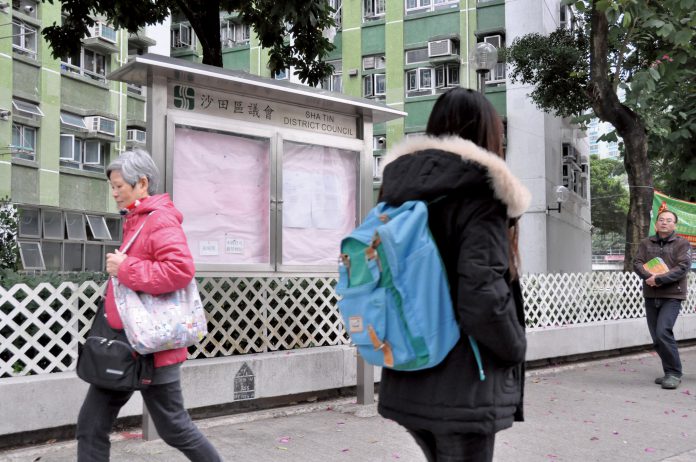
Last November, the district council elections got Hongkongers talking about their communities. The district council is the only official district advisory body in the current political system, so some members of the public hope it can take a leading local role. But many residents and even some councillors question the function of the councils.

Despite the Chief Executive’s promise to grant more power over local development to the district councils, councillors point out the ultimate decisions on projects and funding still lie with government departments.

In the absence of reform of the system, some residents are trying to come up with imaginative and alternative ways to influence local development and build communities from the bottom up. They have set up community groups and even a “shadow” district council.

A pressing question is how to bring people together in our disconnected communities. One increasingly popular way is to form online communities. In the past few years, there has been a blossoming of district-based Facebook pages and groups.

From sharing stories about Tin Shui Wai to sharing recommendations on the best restaurants in Sha Tin, and searching for missing pets, these groups help to foster conversations and build connections in local districts.

We meet the founders of various online district pages and groups and find that although they are cheap to run and maintain, it is difficult to turn the connections made online into bonds in the physical world.

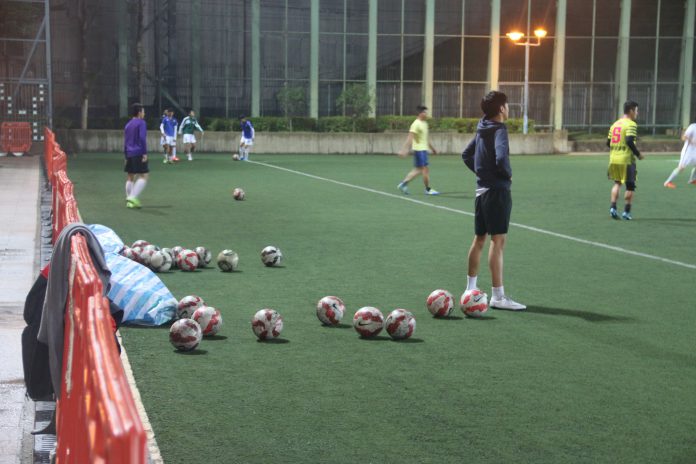
Sports and recreational facilities in a district have a big impact on the quality of life of the residents and affect the cohesion of the community. Varsity visited Tai Po, Tin Shui Wai and Sai Kung to look into claims of inadequate facilities and planning. Is the lack of recreational facilities preventing residents from getting more involved in the community? Would a cycling path or more sports facilities improve residents’ lives?

We hope these stories can help give you a better picture of our communities and of the many people devoting their time, effort and even money to help build a better community. I am excited to see so many people who care about our city, and hope they can inspire more of us to a little more of the same.

This issue is produced by a team of first-time editors and reporters and from the get-go we have worked very hard to make sure it is our best effort. I am proud to present it to you, and sincerely hope you enjoy reading it.

Managing Editor

Julian Ng

Julian's Signature

Build From the Bottom Up

As district councils have limited power to influence local affairs, residents are forming their own organisations

By Megan Leung & Rubie Fan

On a Sha Tin sidewalk, 22-year-old Wong Hok-lai fully extends his pull-up banner, sets up a folding table and some folding chairs. His mobile office is now complete and the rookie district councillor is ready to serve the community of Chung Tin, an area with a mixture of public housing estates, village houses and private residential developments.

Wong is one of several young newcomers who were elected in November’s district council polls and the youngest district councillor of the current term. Like other young people who contested the first elections after 2014’s Occupy Movement, Wong hopes to make a difference in local government through the district council. But getting elected into the district councils does not mean being able to change the established system.

Wong Hok-lai answers a resident's question in Chung Tin.
Wong Hok-lai answers a resident’s question in Chung Tin.

Almost three months after his election, Wong still did not have an office in his constituency. Normally, the Housing Authority rents out offices to district councillors but because the previous district councillor did not move out immediately, Wong could only start applying to the Housing Authority for an office in January. He was finally allocated one in February.

But he does not regret the time he spent managing his makeshift mobile office. Although he had to stop when it rained, Wong thinks that being on the street also has its advantages. It allowed him to have more interaction with local residents and, for Wong, understanding residents’ needs is the key to building the community.

“It is less out of touch for me to have a booth on street,” he says.

The district councils have long been criticised for failing to properly consult the community on issues that affect members of the public. For instance, two rain shelters in Quarry Bay that cost a total of HK$210,000 were removed after being judged as useless and in the way. Yet, most people in the neighbourhood only found out about the construction plan after they were already built.

Wong says that to avoid such things happening, district councils should adopt a bottom-up approach and listen to residents’ opinions. “It is much more effective [for community participation] if they care about the issues,” says Wong. “After all, residents know best about their community’s problems.”

Before running for district councillor, Wong was a community officer for Shatin Community Network, which describes itself as a pragmatic localist democratic organisation. Wong’s role was like that of a middleman between the government and residents; for example, he lobbied the Transport Department to expand green mini bus services in the district.

After being elected as a district councillor, Wong is encouraged by his increased access to resources for community activities. And with his new title, officials and government bodies are more responsive to his requests for meetings and discussions.

However, these may be the only differences Wong has encountered before and after he became a district councillor. The district council is only an advisory body under the current political system and the ultimate decision-making power for district policies and projects lies in the hands of government departments.

“Ultimately, the constitutional power of the district council is limited. The power you have is to implement funding the government approved,” Wong says.

Local government has not always been so powerless. By the time of the handover in 1997, Hong Kong had three tiers of elected government, the district boards, the urban and regional councils and the Legislative Council. The urban and regional councils had greater policy-making power and financial autonomy than today’s district councils, and were responsible for cultural and leisure services and food and hygiene. But they were abolished in 1999 and their powers recentralised by the government.

The district boards were renamed as the district councils which remained consultation bodies advising the government on the well-being, infrastructure and environment of the various constituencies without any real administrative power.

In his 2014 Policy Address, Chief Executive Leung Chun-ying promised to give more power to the district councils, saying “district issues can be addressed at district level and local opportunities capitalised locally”. His government launched the Signature Project Scheme (SPS) in 2013 which granted HK$100 million for each district to implement projects in the community that were proposed, discussed by and agreed upon in the district council.

Virtual Districts

Online district groups step into real world to build community

by Chester Chan & Jessica Li

Two young people carrying a camera stroll the streets of Tin Shui Wai looking for people to talk to and take pictures of. Here, in the ordinary surroundings of a new town built on reclaimed land, they hope to uncover extraordinary stories.

Dialogue in Tin Shui Wai is an online Facebook page founded in August last year and was inspired by the online blog Humans of New York, featuring street portraits and interviews collected in that city. Or Wing-man and Lo Yan-chi, the two 26-year-olds who founded the page, both grew up in Tin Shui Wai and say they want to do something for the district.

Many Hongkongers, including Or and Lo, hold on to memories of a past Hong Kong where people had close and friendly relations with their neighbours. “In the past, neighbour relations were so close that everyone just kept their doors open,” says Or. However, they both think relations are becoming more distant now.

In the case of Tin Shui Wai, Lo thinks the Light Rail is to blame. “Many places are separated by the Light Rail… You have to make a 15-minute detour around the station, and this really affects the bonding of the community,” Lo says.

Dialogue in Tin Shui Wai is an attempt to rebuild community bonds.With its remote location, shortage of employment opportunities and a series of family tragedies highlighted in the media, Tin Shui Wai has been labelled as a “City of Misery”, notably by the then Director of Social Welfare Carrie Lam Cheng Yuet-ngor. Or and Lo want to change this perception of their town. They walk through the district and chat with residents randomly in order to discover interesting things happening locally. They choose to share their stories online because they believe they can reach a wider audience through the internet.

In recent years, a number of district-focused online communities have sprung up. There are now various Facebook pages and groups for all the 18 districts of Hong Kong. They have different characteristics, some focus on human stories such as Dialogue in Tin Shui Wai, others are more information-oriented and are mainly for residents to share information.

Before the boom in online pages and groups, district newspapers were the main channel for sharing district information, which is important in building up a community and bringing residents together.

Over in Tuen Mun, several TMPAPER01members of a local group called Tuenmunity distribute their distict newspaper near the West Rail Station after work. It is a monthly paper that mainly records matters related to the area. There are stories on social issues and information on matters of local interest, such as local restaurants.

Tuenmunity published its first issue in Feburary last year and since then has drawn people from different backgrounds, from school principals to office ladies, to join its editorial board. However, the original idea of Tuenmunity was hatched by a group of netizens from the popular online discussion forum Hong Kong Golden Forum, who wanted to raise issues Tuen Mun residents might be concerned about. Currently, most of the members of Tuenmunity are not from the online forum but they share a similar goal for the paper. “We want Tuen Mun residents to care about their own district,” says Nicole Lai, a member of Tuenmunity.

Lai explains that before she joined Tuenmunity, she believed the stereotype that Hong Kong people are indifferent. But her experience of distributing the paper with the many “aunties” who volunteer to help promote it on the streets has changed her view.

“I used to think people in the neighbourhood were very cold. But in fact, it’s not true. What I discovered was that previously I had not stepped out to make contact with the community,” says Lai.

The Wrong Mix

Insufficient and inadequate provision of sports and recreational facilities mar cohesion in the community

By Eunice Ip, Ryan Li

In the morning at Tai Po’s Wan Tau Tong Estate, elderly residents queue to pick up free newspapers and to squeeze into fast-food shops in the shopping mall for breakfast. Wan Tau Tong is a small district packed with public rental housing estates and home ownership scheme flats. There is a sizable elderly population but apart from the shopping mall, few recreational facilities where senior citizens can spend their time.

Recreational and sports facilities are places people go to socialise, to get healthy and to relieve stress. They can enhance cohesion in a community and play an important part in determining how livable a community is. But to fulfill these important roles, they must match the needs of the communities in which they are found.

Do Hong Kong’s sports and recreational facilities fit the bill?

Tai Po is one of the districts which face the most serious aging problem in Hong Kong. According to the Planning Department’s Projections of Population Distribution for 2015 to 2024, the number of residents aged 60 or above in Tai Po is expected to rise from 67,100 in 2016 to 104,300 in 2024. This will create an increased demand for health services and it makes sense for the government to encourage the elderly to exercise more to stay fit and avoid illnesses. The problem is, for those elderly living in Wan Tau Tong, there is nowhere to go within striking distance.

Wan Tau Tong’s district councillor, Ken Yu Chi-wing, is disappointed with the lack of facilities for the elderly in his district.

“We often persuade the elderly not to stay at home, and they do listen to us. But even if they are willing to go out, there is not much they can do when they go downstairs,” he laments.

Although the government is aware of Hong Kong’s ageing problem, it seems few districts have actively developed sports facilities for the elderly. The legislator for the social welfare functional constituency, Peter Cheung Kwok-che, says the government has failed to adopt an “elderly mainstreaming” approach which would take account of the needs of the elderly in policy-making.

Cheung agrees with building more recreational facilities and organising sports classes for the elderly. However, he points out it is difficult for them to walk long distances from their homes to exercise. Therefore facilities should be located in each district to encourage the elderly to exercise frequently.

This is something that Wan Tau Tong district councillor Ken Yu is only too aware of. However, he and his fellow district councillors do not have the final say in deciding on which infrastructure projects are built.

Instead, that responsibility falls to the District Facilities Management Committee (DFMC). The DFMC’s were set up for each district in 2008 and membership comprises district councillors and government officials from various departments. The committees will negotiate with government departments over the various proposals and those that are passed will be submitted to the Legislative Council for funding approval.

For example, every district councillor in Tai Po can propose two projects, of high and low priority, to the District Facilities Management Committee (DFMC) every year. Ho

wever, according to Yu there are two major problems with this system.

Firstly, the facilities eventually built may differ from district councillors’ original proposals. Yu explains the DFMCs spend large sums of money on consulta

ncies to study the feasibility of the proposals received, and to make amendments if necessary. He says the consultancies may come up with useless facilities, such as rain shelters that cannot block rain. These problems are then left for district councillors to deal with.

Secondly, the committees do not usually approve large-scale projects due to their high costs. Even if they are passed, it takes a long time for construction to begin. For example, the sports’ centre on Plover Cove Road in Tai Po, was proposed in 2009 and was approved by the committee in 2011, but is still awaiting funding approval from the Legislative Council.

Cycling track outside Tai Po Plaza

Apart from procedural issues, the way projects are executed presents other problems. Outside Tai Po Plaza, there is a cycling track which is divided into several short sections. The segmentation of the track and its proximity to the crowded shopping mall makes it inconvenient for cyclists.

Cancer Therapy Effective but out of Reach

Cancer patients struggle to pay the high cost of targeted drugs treatment with limited subsidies available

by Avery Tsui & Rammie Chui

It is a cold morning and Lau Chi-kuen is sitting by the window in a coffee shop sipping his hot coffee. Nothing about him marks him out from other customers, or gives any indication that his life has been turned upside down in recent months.

Not long ago, Lau was a healthy, full-time Baptist pastor with a monthly income of around HK$20,000 and his own property.

Then, for no particular reason, he decided in December to undergo his first body check-up in eight years at the United Christian Hospital. A day after his assessment, the public hospital called to tell him he had been diagnosed with chronic myeloid leukemia, a type of blood cancer.

IMG_9731(small)
Lau Chi-kuen

Wanting to be treated promptly, a shocked Lau decided to seek treatment at the private Baptist Hospital, where they could admit him immediately. He was there for seven days during which time he underwent chemotherapy, as well as targeted therapy.

Targeted therapy is medicine that impedes the spread of cancer through controlling specific molecules engaged in growing cancer cells. As conventional chemotherapy and radiation therapy kill cancer cells and normal healthy cells indiscriminately, targeted therapy is often considered a better alternative to treat cancer.

But it can also be an expensive alternative. In Hong Kong, cancer patients at public hospitals can receive chemotherapy and radiation therapy for HK$80 per attendance. But the price of just one targeted therapy pill can be up to several hundred dollars.

Under the Drug Formulary established by the Hospital Authority (HA), patients can purchase general drugs at a standard charge of HK$10 for up to 16 weeks treatment. There are currently 30 types of targeted drugs that belong in this category.

There are also self-financed items (SFIs) — extremely expensive drugs for which patients have to bear the cost themselves. Some of the pricey SFIs have been shown to be very useful at controlling certain respective diseases. These SFIs are included in a “safety net” – a list of drugs for which patients with financial difficulties can apply for subsidies from the Samaritan Fund or Care Fund, both of which are funded by the government. There are 37 types of targeted therapy covered by this scheme and the level of subsidy depends on a complicated formula that takes into account family income and the cost of care.

Other SFIs, with only an exploratory indication of their usefulness must be bought by patients at their own expense.

Lau’s seven-day treatment at the Baptist Hospital cost him HK$160,000. After being discharged from treatment, he has to keep taking four targeted drug pills a day to control his blood cells. Using funds from his HK$500,000 critical illness insurance claim, he bought two months of medication from Baptist Hospital for around HK$37,800 per month.

Afterwards, he will continue his treatment at the United Christian Hospital, as he  cannot afford the cost of private medical care. The public hospital charges him HK$18,840 per month for his medicine, less than half of what Baptist Hospital charges.

Even so, Lau’s insurance money will dry up after two years of continuous targeted treatment. With his wife’s salary, the family income barely passes HK$30,000 a month, and he admits he has never been more helpless and desperate about his future.

“The thing is, there is no end for this [targeted treatment] and I do not know when I will die,” says Lau. “If I live till 80 years old, I don’t know how I am going to afford this life-long therapy with no subsidy.”

The high price tags of targeted drugs are a result of the patent system. Only the company that holds the patent of a drug can produce it and profit from it. Patent protection usually lasts for 20 years in developed countries like the US and Japan. Pharmaceutical companies say their drugs are priced to cover the cost of research and development, conducting trials, production and financial losses incurred from failed drugs. The size of the market also matters; if the drugs are produced for a smaller and more specific group of cancer patients, they are likely to be even more expensive.

Fortunately for Lau, the drug he has been prescribed for his leukemia is classed as an SFI under the safety net, which means he can apply for subsidy through the Samaritan Fund. However, he says the application process has left him feeling “very helpless and lost”. When he spoke to Varsity, he had already spent two weeks preparing his application and submitted more than 10 documents for the fund’s household-based income and asset review, but still had not completed the process.

“The process is too complicated for me to handle,” Lau says, “I am already troubled enough after knowing my health condition.”

Due to the limited resources of public hospitals, Lau says he normally has to queue for two to three hours for a three-minute consultation with the doctor. This gives him little time to understand more about his health situation, let alone have time to get a referral for medical social workers who could explain more about subsidy schemes.

Lau ended up proactively asking for a referral but was disappointed with the result.

He says the social worker he was assigned made him feel like he was trying to cheat the government out of money. What is more, she did not tell him about other possible subsidy schemes and he had to search for this information from elsewhere.

Indeed, navigating the cancer drug subsidy system can be a nightmare. Lin, a father of two who does not wish to reveal his full name, also faces the problem of unaffordable targeted drugs. He was diagnosed with a gastrointestinal stromal tumour in 2009 and was cured after surgery to remove it. However, he relapsed twice between 2013 and 2015, when the cancer cells spread to his oesophagus and small intestines.

Lin failed to apply for subsidy for his targeted treatment.
Lin failed to apply for subsidy for his
targeted treatment.

Like Lau, Lin has to take four targeted drug pills every day. It costs him HK$18,000 a month, but his monthly family income is only around HK$20,000.

However, Lin’s application for subsidy from the Samaritan Fund was rejected because he could not meet certain criteria. This was not due to his family income but because to qualify for a subsidy, a patient must prove the presence of a tumour. Furthermore, the tumour should be too large for removal so that the patient has to control their condition through drugs.

As Lin’s tumour was removed in 2009 before it could grow and develop into a fatal stage, his application was unsuccessful.

While he criticises the system, Lin cannot see a way out. “The doctors knew I needed the medicine,” he says, “but there are too many patients and the system is like that, they did not have a choice.”

Fortunately, Lin managed to get a full subsidy from the Apple Daily Fund just when he was about to give up on targeted treatment.

Those who are not as lucky may try turning to non-governmental organisations (NGOs) like the Philanthropic Community Pharmacy of St. James’ Settlement. The pharmacy has been running since 2009 and, in recent years, it started offering targeted drugs at half the price charged by public hospitals.

Leung Pui-hon, a pharmacist working at the charity, serves up to 30 patients a day for free. He explains the pharmacy receives private donations and collaborates with drug companies to subsidise medicine excluded from both the Formulary and the safety net. The pharmacy currently subsidises more than a dozen targeted drugs. It also provides psychological support, referral and counselling services.

Despite expanding from one Community Pharmacy to three since 2009, Leung says they cannot meet the service gap. He says it is a huge financial cost to subsidise each patient to the tune of over HK$100,000 – the NGO cannot cater all cancer patients.

When even the HA and charities cannot afford to sponsor some of the targeted drugs patients need, it is unrealistic to expect patients from the grassroots and even the middle class to do so. Tim Pang Hung-cheong, a community organiser of the Society for Community Organisation (SoCO), believes there is still room for lowering the cost of care for cancer patients.

He suggests the government could purchase medicine from pharmaceutical companies in larger amounts in order to get more discounted prices. It could consider being the purchaser not only for public hospitals, but also for private hospitals.        If necessary, the government could also set a price ceiling to prevent a further increase in drug prices. However, Pang notes this is unlikely to happen as it goes against the government’s non-interventionist approach to markets.

More importantly, what it could do is increase transparency over the process by which drugs are included or excluded from the safety net and the criteria for deciding on and calculating subsidies for patients.

At present, the Drug Management Committee, Drug Formulary Committee and Drug Advisory Committee, which manage and evaluate the Formulary, only involve professionals like pharmacists and professors and there are no patient representatives. Patients cannot participate in reviewing which drugs should be included in the safety net. They are merely notified of policy decisions, not consulted on them, says Pang.

In a written reply to Varsity, the HA says the review process will “take into account scientific evidence on safety, efficacy and cost-effectiveness as well as actual clinical experience in the use of drugs”. It also says the views of patient groups will be considered, but does not explain how.

Lee Kok-long
Lee Kok-long

Joseph Lee Kok-long, legislative councillor for the Health Services Functional Constituency, concludes the situation faced by cancer patients is a result of the conflict of interests between patients, drug companies and the government. Patients naturally want the best treatment for their diseases, and those with less purchasing power expect the government to help. At the same time, drug companies will use different means to pressure the government, their biggest client, to buy their medicines at the highest price.

The government, however, does not have the financial capacity to provide the best and most expensive medication for every patient. The current healthcare system, says Lee, is one where the rich get the best quality care while poorer people get basic treatment. “The government will never admit it adopts such capitalistic approach, because this is politically incorrect,” Lee chuckles dryly, “but it gives people wrong expectations.”

Any change to make the subsidy application process more transparent would be welcomed by Pastor Lau Chi-kuen. Sitting in the coffee shop, he continues to talk about his struggles with his application. He has no idea when he will complete it and given the opaque nature of the process, he does not know when he will be given the result, or even if his application will be accepted.

While acknowledging the complicated situation facing Hong Kong’s public system, Lau thinks the government could at least adopt a more proactive attitude in communicating with patients. “Is the government trying to help patients by standing in our shoes, or just trying to muddle through?” Lau sighs.

 Edited by Teenie Ho