













InvestHK calls our city “International, Transparent and Efficient” when explaining why “Hong Kong is the ideal place to do business in Asia.” In this issue of Varsity, we talk to professionals and InvestHK to see if that is still true.
Is Hong Kong International, Transparent and Efficient? – Editor’s Note

International, transparent and efficient – these are the words the government department for
attracting and keeping foreign investment in the city, InvestHK, uses to describe why “Hong Kong
is the ideal place to do business in Asia”. They are also characteristics Hongkongers have long been
proud to present to visitors to our city.
We might point to the city’s status as an international financial centre with one of the world’s
largest stock markets, to a relatively transparent system of governance and an efficient world-class
public transport system.
InvestHK proclaims the city is “one of the world’s most open and corruption-free economies” and
provides a public transportation service that is “reliable, efficient and very reasonably priced”.
But to what extent are these proclamations valid and to what extent are they under threat? In our
December issue, we set out to look at how these values are faring by focusing on aspects of how
Hong Kong is doing in terms of being international, transparent and efficient.
The influx of Mainland money and investment in Hong Kong since the handover in 1997 has led to
some soul-searching about whether Hong Kong is still an international city and an international
financial centre.
We are often told that a free and stable economy, the free flow of information and the rule of law
are the bedrock of Hong Kong as an international financial centre. But some are worried about the
impact Mainland money and business practices may have on these pillars. Has our stock market
and economy become more “Mainlandised”? Varsity asks economists, scholars and InvestHK to
comment.
In terms of transparency, there is growing concern in recent years about the way the government
disseminates information and consults the public about its policies. For instance, the government’s
plan to redevelop Tsim Sha Tsui’s waterfront, including the Avenue of Stars, provoked furious
debate over what was seen as the government’s lack of transparency and procedural justice.
Journalists and citizens have noticed the government has become more selective in releasing
information. Top officials have taken to social media like Facebook and blogs to float ideas and
announce information instead of holding press conferences open to all media.
Meanwhile barely a week goes by without Hongkongers bemoaning delays and breakdowns on a
public transport system whose efficiency they always prized.
In October, a barge collided into the Kap Shui Mun bridge along the Lantau Link and paralysed the
only path linking the airport and the rest of the city. The way information was given out and the
lack of alternative routes raised concerns about the city’s transport system.
Millions of people rely on the MTR or franchised buses every day, but Varsity finds buses are
hampered by increasingly severe congestion. As for the MTR, the increasing passenger load is
causing problems.
As Hongkongers, we care about the changes and challenges our city faces, especially in a climate
of social and political uncertainty.
Also in our December issue, we look at Hong Kong’s disappearing livestock industry. Despite a
growing foodie fashion to eat locally sourced produce, we import almost all our meat from the
Mainland. In the People section, we talk to writer-critic Tang Siu-wa on her penchant for heated
online debates and why she is trying to put those word battles behind her. Enjoy our issue!
Thomas Chan
Editor-in-chief
Holding on to our International Edge
Does Hong Kong’s economic integration with the Mainland help or hurt its status as an international financial centre?
By Mavis Wong & Zoe Tam
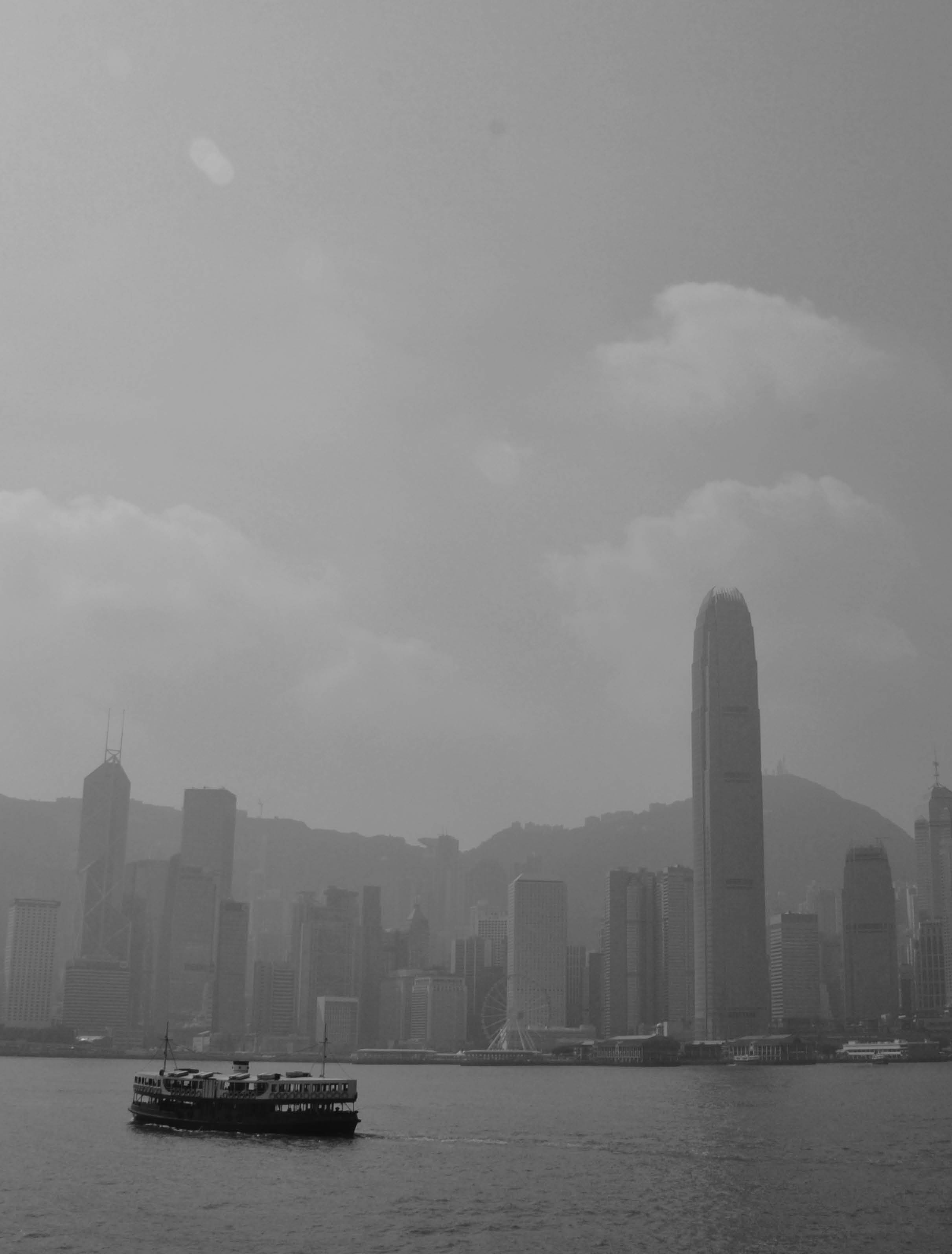
Throughout its evolution from a sleepy fishing village into a bustling entrepôt for trade between China and the rest of the world, and from an export-led manufacturing centre into an international financial centre, Hong Kong has thrived on its international connections. It attempted to underline the fact in 2001 with an official campaign to “brand” the city “Asia’s World City.”
Behind the title was the idea of Hong Kong as an international financial centre with a free and stable economy, free flow of information and the rule of law, all qualities that appeal to international investors.
On paper, the city is doing well. According to the United Nations Conference on Trade and Development World Investment Report 2015, Hong Kong, for the first time, beat the US, the UK and Singapore and came second only to mainland China in terms of global foreign direct investment in both inflows and outflows. It also ranked first in the Heritage Foundation’s 2015 Index of Economic Freedom.
However, it faces stiff competition from Singapore, which has been named the “Easiest place to do business” for nine consecutive years by the World Bank, while Hong Kong ranked third last year.
Although Hong Kong has a well-established investment system, its status as a financial market faces a number of potential threats. According to the World Economic Forum’s Global Competitiveness Report of 2015 to 2016, Hong Kong ranked third in the finance sector, losing its top ranking to New Zealand and Singapore.
However, Simon Galpin, the director-general of InvestHK, the government department responsible for attracting and retaining foreign direct investment, thinks Hong Kong still has a leading role in Asia due to its global reach.
“The best way to describe Hong Kong is as a connector for investment in and out,” says Galpin.
Galpin adds Hong Kong has a geographical advantage. Business people can travel to north-east Asian cities such as Beijing, Tokyo and Seoul, or south to Manila or Singapore within three to four hours; Singapore cannot provide such convenience.
There are other reasons why foreign and Mainland investors find Hong Kong attractive. Galpin explains Hong Kong provides high-quality professional services in its law, accounting and consulting firms.
InvestHK helped 355 overseas and Mainland companies to start and develop their businesses in Hong Kong last year. Galpin says businesses continue to choose Hong Kong because of its enduring advantages, which include the rule of law, an independent judiciary, free flow of information, and a simple low tax regime.
“They do it because they feel that Hong Kong is a secure and trustworthy base to do business,” he says.
Senior investment banker Vincent Chan Cheong-wa agrees that Hong Kong’s independent judiciary helps attract foreign investors. “The reason why Hong Kong can become a vibrant financial hub is because of the law courts,” he says, “and this is sacred and inviolable.”
Yet, this is one of the areas where Hong Kong’s closer integration with the Mainland has raised concerns. In a speech at the University of Hong Kong last year, the former Secretary for Justice Wong Yan-lung said heightened vigilance was needed to protect the rule of law because of “the rapid integration between Hong Kong and the Mainland in the social and economic realms. Temptations abound with big moneys flowing in.”
Transparently Unclear
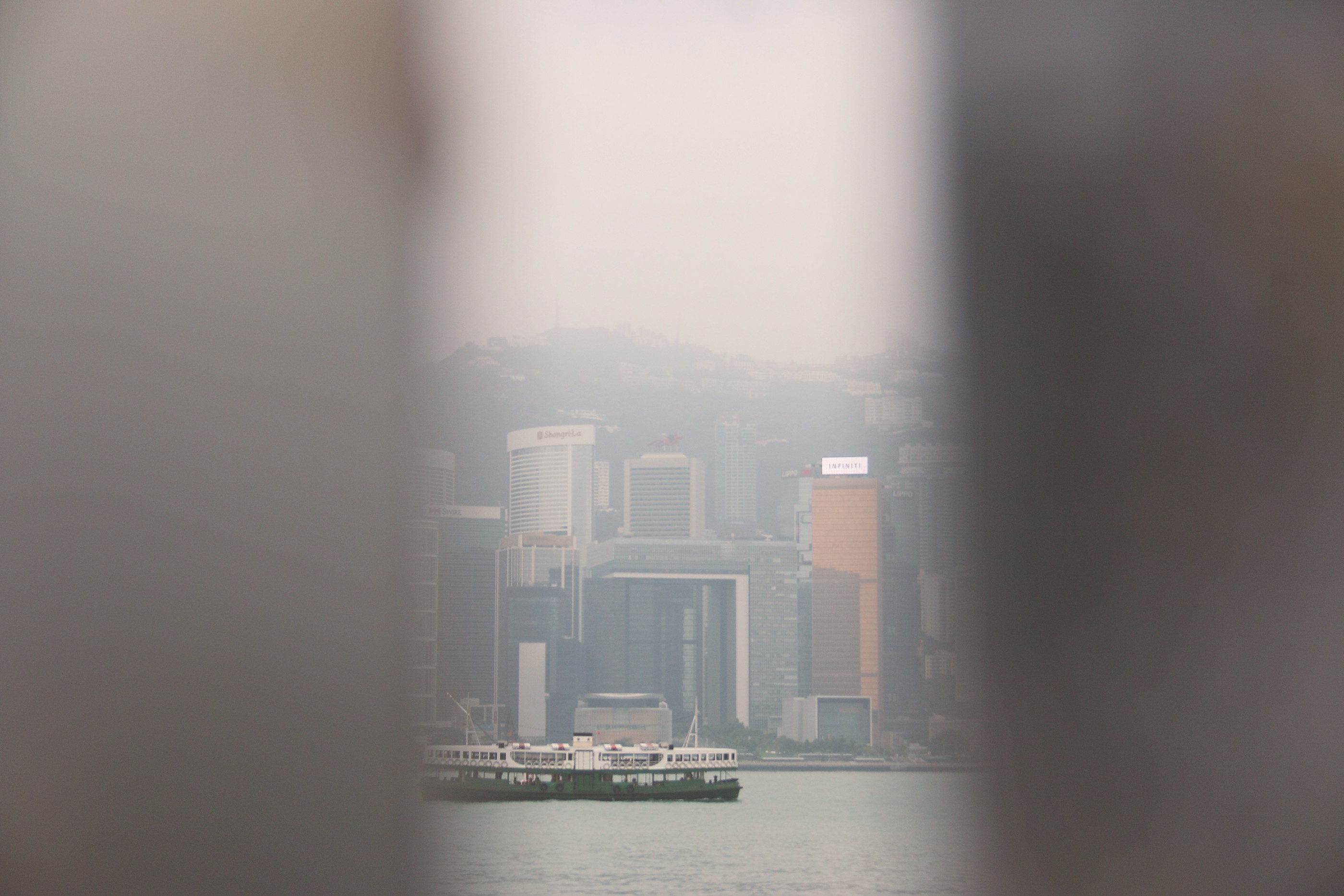
The government’s preference for one-way communication and limited public consultation fuels transparency fears
By Joey Kwan & Tiffany Tsim
Journalists scramble to place their microphones and set up their cameras in the lobby of the Chief Executive’s Office where the Executive Council meets. They are waiting for the Chief Executive, Leung Chun-ying, to respond to pressing issues of the day. In the end, Leung walks away after answering just three questions, leaving the journalists to pack up and rush to the next assignment. For Hong Kong’s local news reporters, this happens all too often. 
In 2013, the Hong Kong Journalists Association (HKJA) counted the number of such media “stand-ups” and press conferences Leung had given in his first 11 months of office. They found he had done 94 stand-ups and given no personal press conferences. His predecessor, Donald Tsang Yam-kuen, gave 47 stand-ups but conducted two personal press conferences in the same time period. “Leung has the most stand-ups [among the three chief executives] and seldom holds press conferences,” says Sham Yee-lan, the chairperson of the HKJA. “He mainly responds through stand-ups before the Executive Council meetings, even for all controversial items.
Hong Kong prides itself on being a city with high transparency and a free flow of information, qualities that set it apart from cities in the Mainland. But increasingly, critics say various aspects of the city are becoming less transparent.
In terms of the media, the government’s selective dissemination of information has made journalists’ jobs harder. During the Occupy Movement last year, the Chief Executive gave just one Chinese interview to TVB and one English interview to ATV among the local news media. He did not respond to questions raised by other journalists waiting for him at the stand-up positions after each programme.
“Different media have different audiences and obviously [the government] treats the media very unfairly,” Sham says. “The media will ask all kinds of questions and perhaps these questions break the hearts of the officials [so they are unwilling to be interviewed].”
Instead of holding press conferences where they can be questioned about decisions, policies and actions, Sham observes that the members of the Leung administration tend to use blog posts to make announcements, state positions and float ideas. The HKJA Annual Report 2014 said that Financial Secretary John Tsang Chun-wah updated his blog every week between March and May 2014 and first reminded the public it should be aware of the budget deficit in his blog rather than through the media. During the Occupy Movement, his boss Leung did not hold any press conferences but gave three televised statements.
“Leung’s government gives out information only from their direction. They only hide and write their blogs to issue important policies,” says Sham. “It is a very bad way of distributing information.”

Phyllis Tsang Kam-man, who has worked as a journalist for more than 10 years, does not mind officials’ use of blogs and social media. However, she thinks it is important that they respond to the media on issues they raise online.
“Facebook and blogs cannot replace the role of the media because the media challenges and monitors the government through questioning,” she explains. “Talking in their own words on Facebook, blogs and websites is another thing.”
Tsang has witnessed increasing physical restrictions on journalists covering the government and Legislative Council. At the old Central Government Offices, she could walk freely between different wings and interview officials when they passed by. Later, the administration put up fences and beefed up security. Since the administration moved to the new Central Government Complex, journalists have to walk a long way from one press area to another and get few chances to interview officials as they get in and out of their cars.
The Great Overload
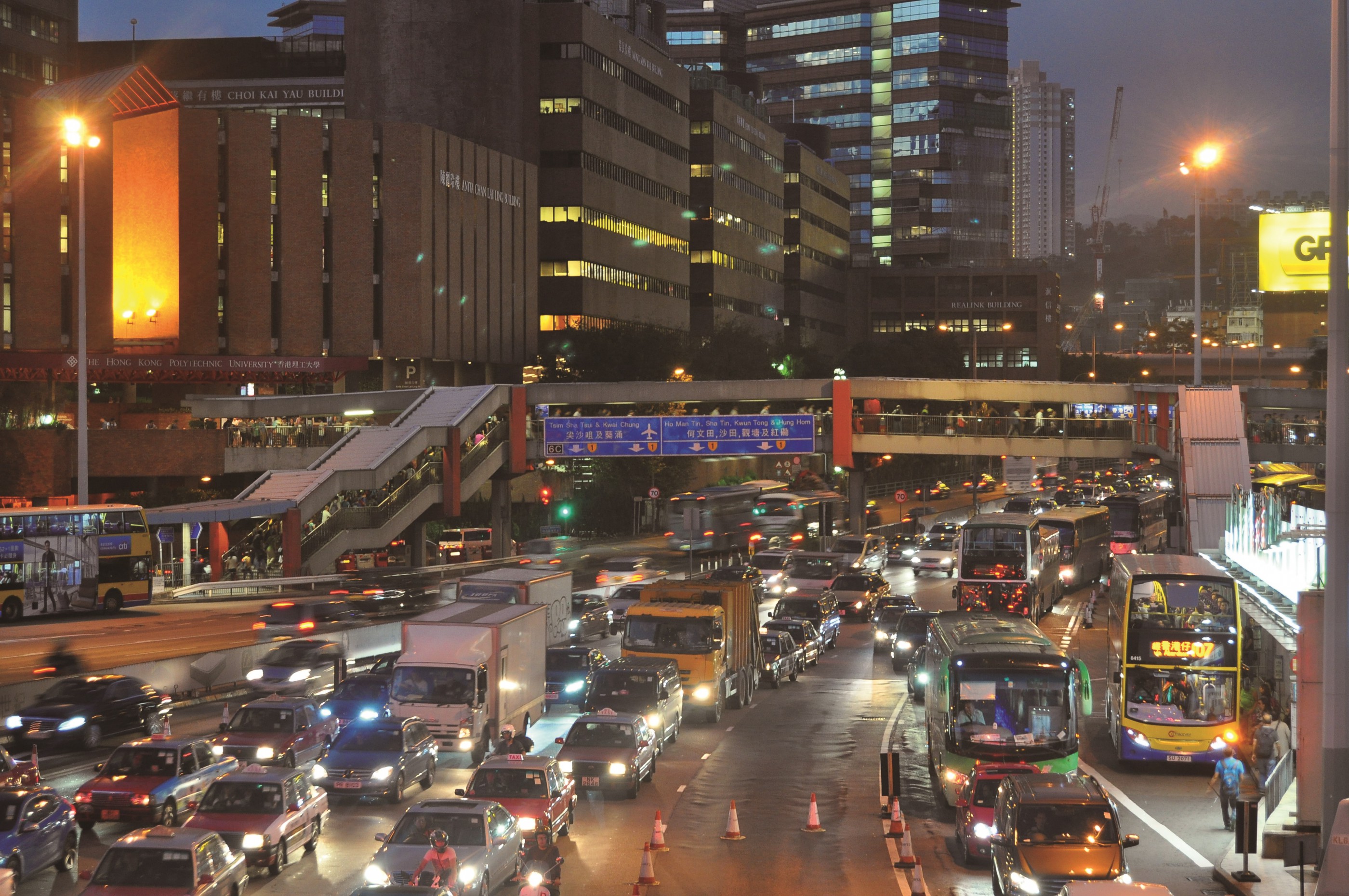
How Hong Kong’s world-class public transport system has failed to keep pace with increasing demand
By Cindy Gu & Teenie Ho
As vehicles headed to and from Hong Kong International Airport on the evening of October 23, they were suddenly brought to a halt by an announcement that Kap Shui Mun Bridge and Tsing Ma Bridge had been closed. A barge collision had triggered an alarm and two hours of emergency inspection. The only road linking the airport to the rest of the city was blocked.
Thousands were affected and dozens missed their flights as all six lanes of traffic and MTR services on the Tsing Ma Bridge were brought to a standstill. Xin (who prefers not to give her full name), an accountant, recalls she got off work at 8 p.m. and planned to take the Airport Express. Instead, she took a taxi straight from Kowloon Station to the airport for her flight at 10 p.m., only to get stuck in traffic in Tsing Yi. “Had it not been for the airline agent offering me a rebooking, I would have totally been furious.”
Like many other stranded passengers, Xin thinks the MTR and Transport Department gave insufficient information and is disappointed there were no alternative means of public transport.
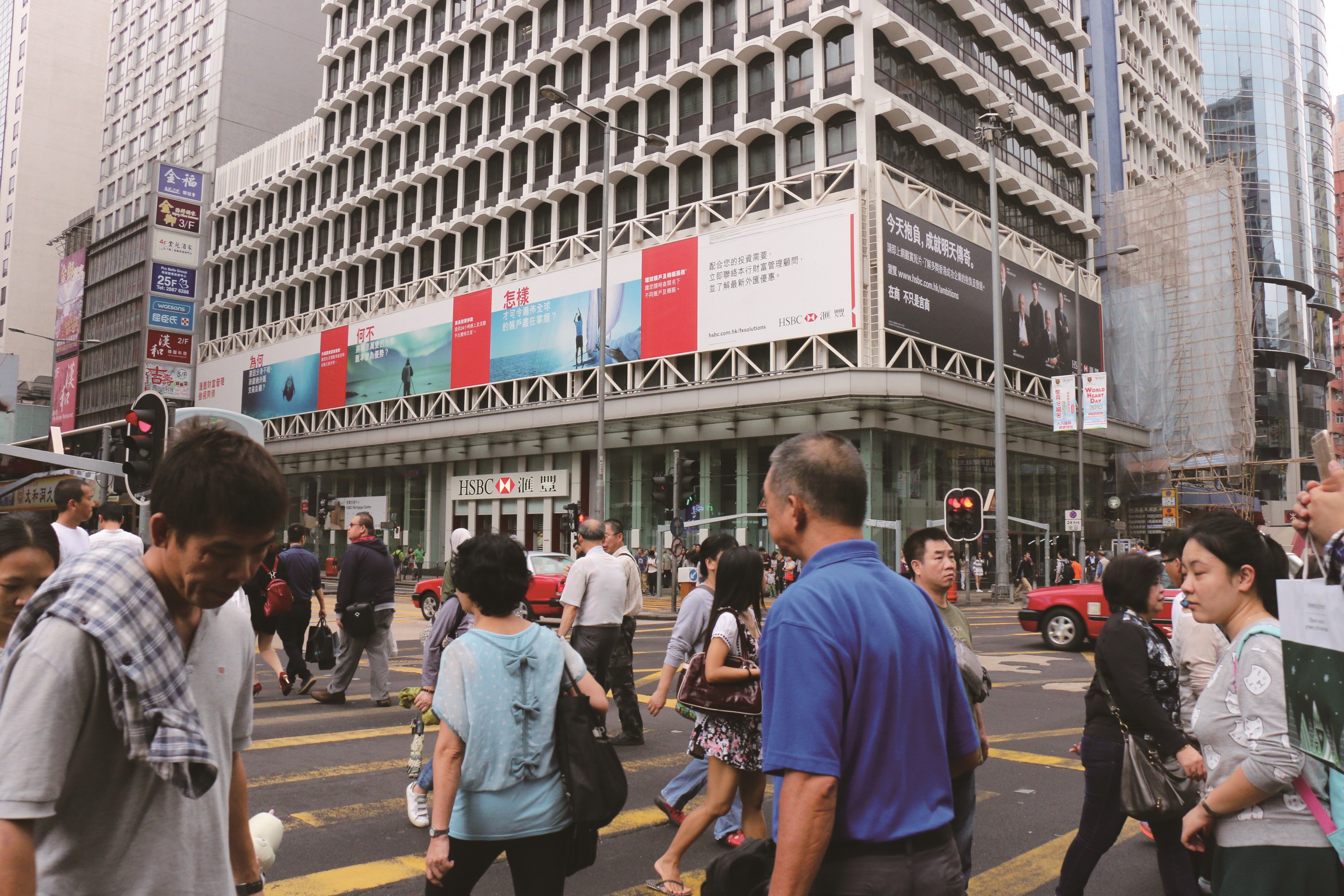
Hong Kong’s extensive and efficient public transport system is often held up as one of the city’s best features and indeed, the city ranked first among 84 countries in the 2014 Urban Mobility Index. The website of the government’s foreign direct investment department, InvestHK, proudly proclaims that the city provides a world-class public transport service that is “reliable, efficient and very reasonably priced”.
However, Hongkongers increasingly feel the transport system is not as efficient as it used to be. A spate of recent incidents has heightened their concerns.
Yuuji (who prefers not to give his full name) is a frontline MTR employee and founder of MTR Service Update, an unofficial information service on Twitter and Facebook run by passengers and MTR staff whistle-blowers. He says the Kap Shui Mun Bridge incident was “totally unexpected”, a rare event that only happens once every few decades. But the way it was handled highlights problems.
“Information updates on transportation availability given out by the MTR and the government were lacking, while communication between the MTR and the Transport Department was poor. Eventually passengers were the ones affected.”
Several other major incidents on the MTR took place in the same month, including a severe delay on the East Rail line due to power failure and a suspension of services on the Tung Chung line for over an hour due to a train malfunction.

Local Meat Disappearing from Hong Kong Tables
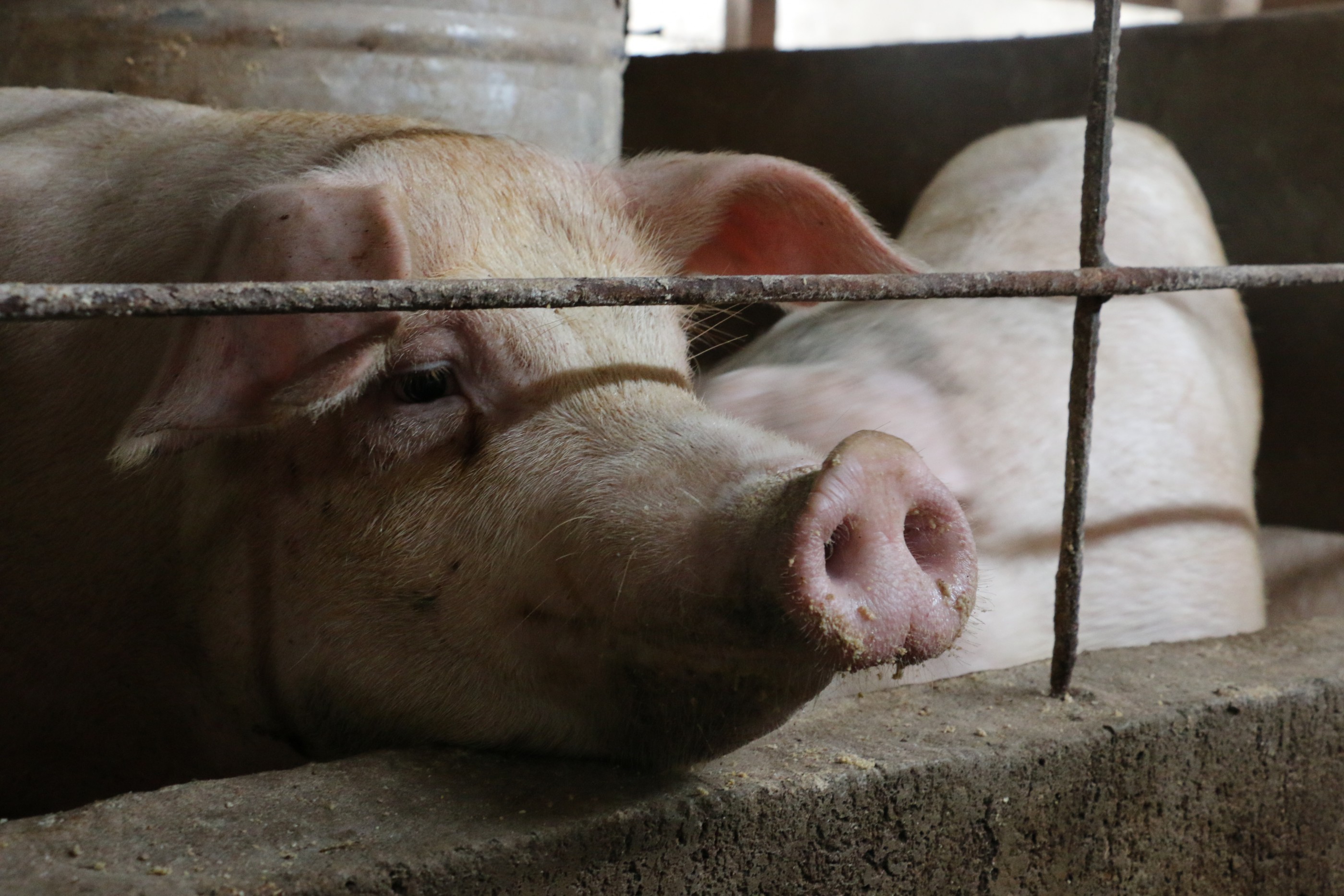
Hong Kong’s shrinking livestock industry suffers from lack of government support and experienced vets
By Achlys Xi & Karen Yu
At the Wing Shun meat stall in Sheung Shui’s San Cheung Street, Tao Kai-ching is chopping meat and chatting to neighbouring stall-holders. The stall has been here for 20 years and customers keep coming back for the freshness and taste of the pork.
Tao is not just a butcher, he is one of a dying breed. He is a local pig farmer and has been raising pigs on his farm in Ta Kwu Ling for more than 30 years.
“I have a conscience, I emphasise food safety and I want to benefit my customers,” he says.
Most fresh meat and poultry sold in Hong Kong comes from the Mainland and in recent years, reports about Mainland food safety scares have made consumers more vigilant about the safety and origin of their food. Opting for locally produced meat may seem to be an attractive alternative, but is impractical due to the decimation of the local livestock industry.
After an outbreak of avian influenza in 1997, the government introduced a licensing scheme to restrict the number of chicken farms in Hong Kong. There were other measures to follow. To improve public health and reduce environmental pollution, authorities launched a voluntary licence surrender scheme for pig farms in 2007 and a buy-out scheme for poultry farms in 2004 and 2008. Compared to the 1990s, Hong Kong now has 80 per cent fewer livestock farms. There are 43 pig farms and 29 chicken farms left.
“I always believe you can eradicate an industry in just a minute…but if you want to revive it, you need more than a decade,” says 64-year-old Wong Yun-kan, who is the former legislative councillor for the Agriculture and Fisheries functional constituency. Wong says he thinks the government would like to close all the farms.
He recalls that most of the pig farms in Tin Shui Wai were shut down after continuous complaints from residents in nearby residential areas about odour pollution. Wong says he recommended the government to improve waste discharge systems and cleaning facilities to reduce environment pollution caused by pig waste but that his calls fell on deaf ears.
Another local pig farmer, 44-year-old Lee Yau-hong who runs Hong Kong Quality Agriculture in Yuen Long says, “The Hong Kong government and the Agriculture, Fisheries and Conservation Department (AFCD) have never given us any help, absolutely zero.”
Lee says the role of the AFCD is just to regulate the industry and collect licence fees. The farmers have to rely on themselves for the purchase of pollutant facilities and vaccines. He adds that whenever animals get sick, the government asks farmers to give up rearing pigs. Therefore, they resort to treating the animals themselves based on their previous experience because there are not enough local veterinary services for livestock.
Local chicken farmers face the same challenge. Most of them try to work out how to treat sick birds by dissecting dead ones and comparing what they find with photos in veterinary literature. If they cannot identify the problem, they seek advice from the only consulting vet with the New Territories Chicken Breeders Association.
They rarely seek help from the government because that would automatically lead to their farms being shut down for quarantine inspection for 10 days.
Shall We Play?
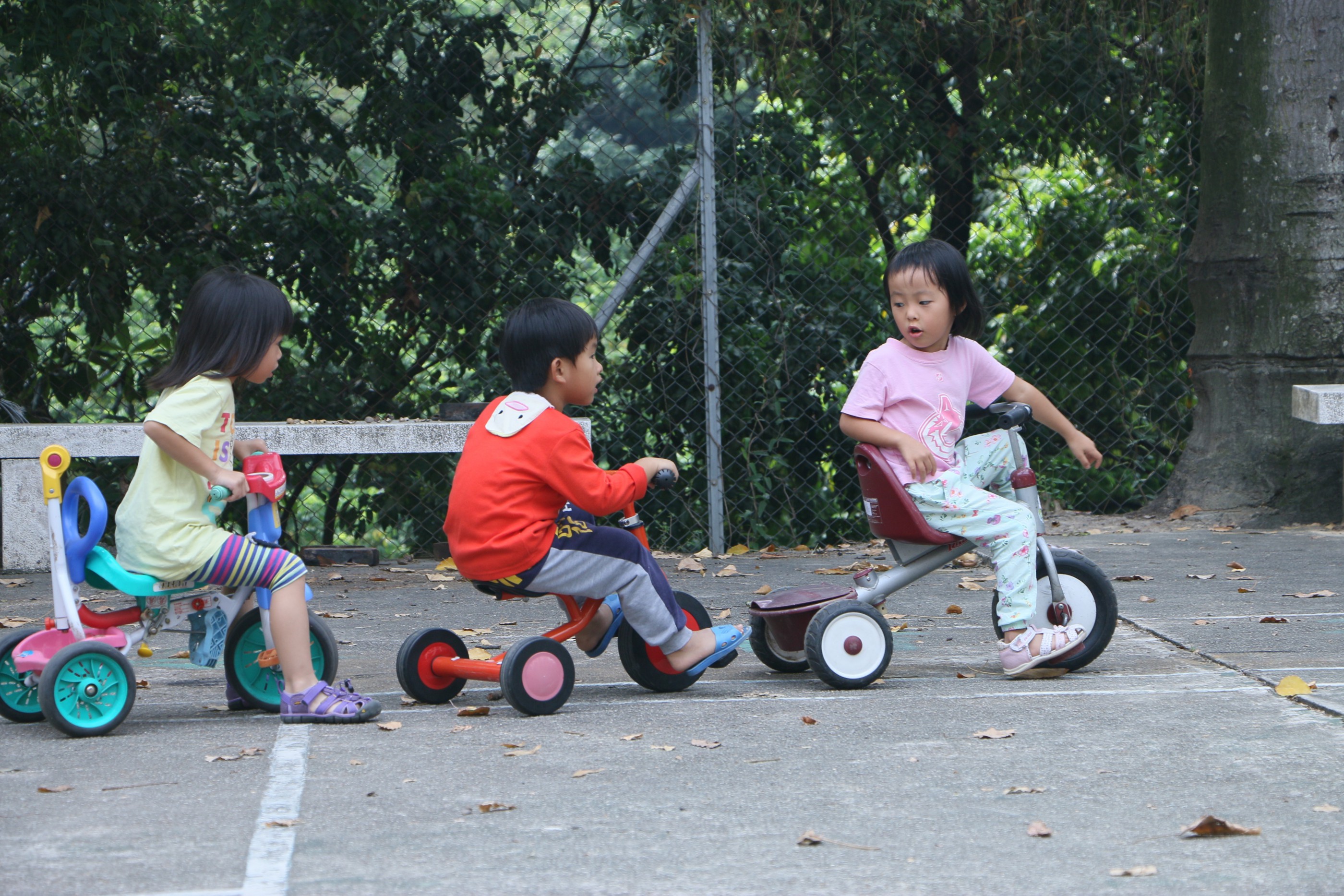
Too much schoolwork and safety fears deprive Hong Kong kids of free play
By Wing Chan & Vivienne Tsang
Like many nine-year-olds, Martina Lau Yuet-yiu likes to run around. After a morning of lessons, she would love to scamper about in recess. But that, according to her teachers, is “naughty behaviour” that could result in someone getting hurt.
When Martina was in Primary One she was twice caught jumping by prefects. Jumping, like running, is forbidden and students who violate the no-running rule are punished by being made to stand during all the four recesses every day for a month. Martina is upset by what she thinks are the “unreasonable” rules and says every child deserves to play freely. “Everyone has the right to enjoy freedom. But why don’t we have freedom in school?” she asks.

Such rules are widespread. Leung Siu-tong, honorary chairman of the Hong Kong Aided Primary School Heads Association, told Varsity around 80 per cent of its members’ schools “do not encourage students to run” during recess. He added that some 90 per cent of members’ schools encourage students to pursue passive activities such as reading and chatting in recess.
The prohibitive rules may come as a surprise to older people who remember chasing classmates and running around schoolyards. Yet they are just one aspect of an educational culture in Hong Kong that seemingly marginalises free play, which experts say is vital to children’s development.
Regina Ng Man-kin, the principal of Our Lady’s Primary School, has been teaching for 25 years. Ng remembers the no-running rule was implemented in the mid-1990s after the intake of students increased. Across the territory, schools became more crowded as morning and afternoon classes were merged after the government introduced whole day primary schooling, starting in 1993.
School administrators are not the only ones concerned about safety in crowded playgrounds during recess. Ng says that over the years, parents have become more anxious about their children’s safety. She puts this down to smaller family size – parents who have only one or two children tend to be more worried about them falling down or getting dirty while playing. Ng thinks the outbreak of SARS in 2003 exacerbated parental anxiety. She notes that unlike children from previous generations, who were used to rough-and-tumble play, some of today’s children do not know how to break a fall.
“I think it’s a pity that children do not even know how to fall. In the past, we just broke our arms or legs as we would use our hands to push on the ground,” Ng says, “Now, kids break their noses when they fall.”
Ng says many contemporary parents behave like “monster parents” who will complain or even sue the school if their children are even slightly injured. To avoid trouble, she has no choice but to institute more rules.
She acknowledges children’s need to play freely but struggles to implement her own teaching philosophy due to education policies that focus on academic performance and pressure from parents. However, she has tried to push some boundaries by taking 20 senior form students on a school trip to a beach in Tai O. The aim was to build team spirit and give them a first-hand experience of nature as a few of them had never touched sand before.
Ng was worried parents might be concerned about kids getting injured or drowning while playing on the beach. She was relieved that some parents took the risk. The activity was a great success. On the day, students dug for clams and fished. Their parents were happy to see the children learn about nature.
Under the Gaze
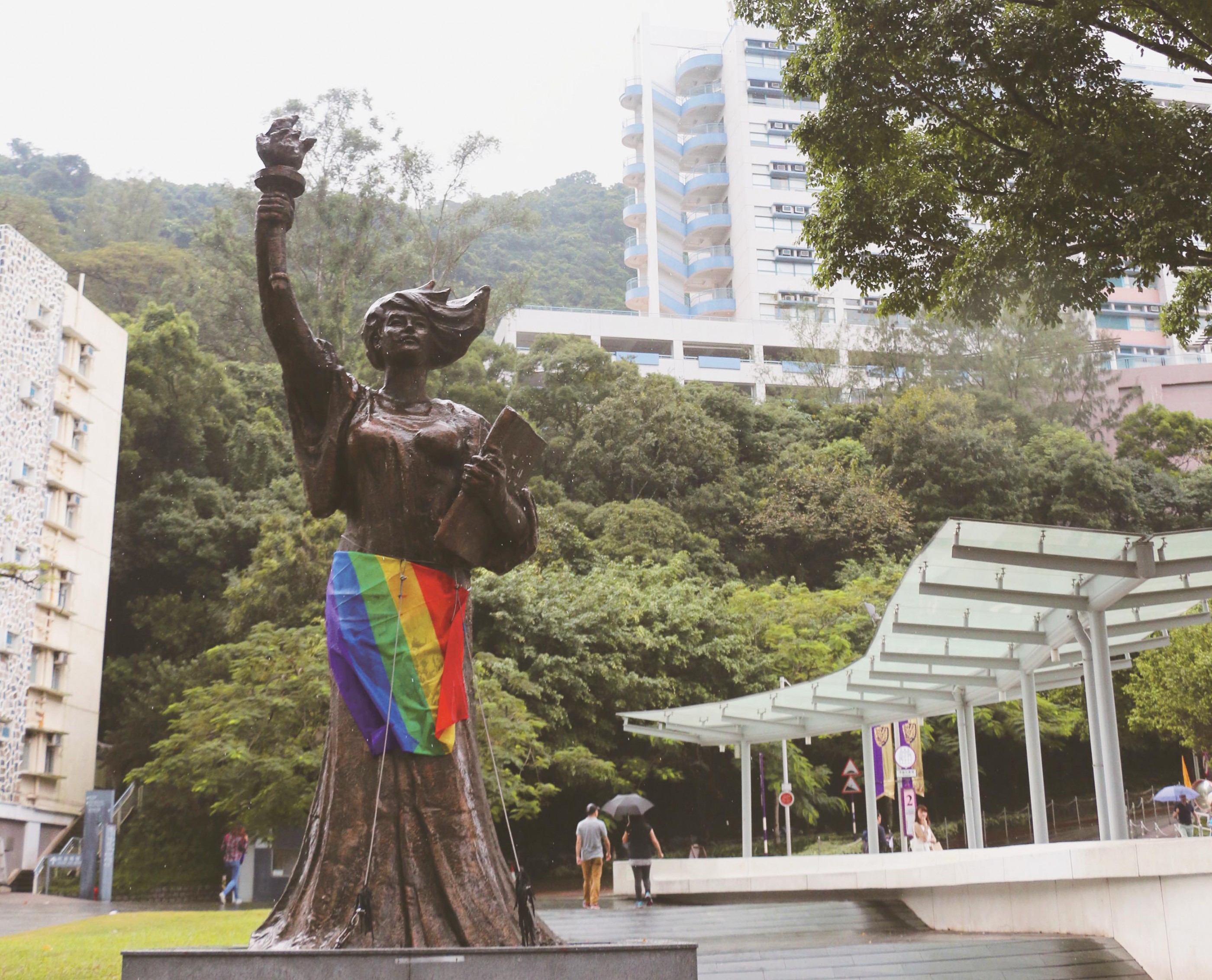
Women talk about gender in protests and politics in Hong Kong
By Emily Man & Julian Ng
On the morning of Sunday April 14, 2013, university student Sun Yi-chung stood in line with other tertiary students and began a 12-hour march from the Cheung Kong Holdings headquarters in Central to Container Terminal Number Six in Kwai Chung. They were marching to support dock workers who were striking for better pay and conditions.
Sun wore a white T-shirt, a red headband and jeans. She says her outfit that day was chosen to match the others and also for comfort and convenience. This was the reason she also wore a cross-body bag that would end up attracting ridicule and harassment from strangers on the internet.
When photos of the march were circulated online, some netizens combined pictures that emphasised the then 19-year-old Sun’s breasts with sexy young models. Added captions explained how female bodies were used for promotional purposes in commercials and claimed they were used for similar purposes in social movements. The picture quickly went viral.
“I was really angry because they misunderstood me and the movement, as if I was trying to achieve something by showing off my body,” Sun says. “But I never thought of it that way.”

A friend of Sun’s deactivated her Facebook account to protect her but she reactivated it after less than a day. She decided she should fight back and defend herself. Sun thinks people often judge female protesters by their appearance, by what they wear and how they look and this is unfair. After the incident, Sun’s friends and family members advised her not to wear skirts or cross-body bags while attending protests, especially if cameras were present. But she insisted on choosing clothes for comfort and convenience. “I have the freedom to choose what to wear,” Sun says. “And if people comment on my body again, I will just ignore them.”
A year after Sun was body shamed, it was Shek Pui-yin’s turn to be vilified for her body. The 21-year-old was a vice-chairperson of the Representative Council of the Hong Kong Federation of Students (HKFS) at the time of the Occupy Movement.
She had been one of the HKFS spokespeople earlier in the movement, but stepped back after Chin Wan-kan, an assistant professor at Lingnan University, reposted a photo of her on stage with the caption “the action really escalated” on his Facebook page.
The Chinese term for escalate is pronounced “sing cup” in Cantonese, which can be interpreted to refer to the size of a woman’s breasts, or “cup” size. Chin denied any sexual innuendo in his choice of words. But many lewd and suggestive comments were posted by others beneath his post.
“When it happened, I wished that I were a boy,” Shek says. “If you think what I said was nonsense, you can criticise me directly instead of criticising my body…it is not fair that females participating in politics always need to deal with these kind of attacks.”

Shek was unsure of how to react to the comments at first, but later criticised Chin for being disrespectful. She suggested he was using sexual violence as a tactic to scare away female protesters who held different political views to his. This only brought her more criticism.
Chin’s supporters attacked Shek and accused her of being an attention-seeking radical feminist. But Shek does not regret speaking out.
“If I had not replied, those people would use the same strategy to attack other girls. I felt I needed to stand up and let them know I did not like it,” she says.
Apart from being criticised for their appearance, Shek says women are marginalised in Hong Kong politics, where men dominate and women often just take supporting roles. She says even in social movements, the culture expects leaders to be masculine and to speak boldly. Men often occupy roles like secretary-general, and women generally provide back-up and support.
“This limits my participation. I think I am also capable of speaking publicly, and I also have my own thoughts. Why can’t I be involved in decision-making? Why can’t I speak on stage? Why do I have to retreat and not stand on the frontline?”
Do you speak Kongish ar?
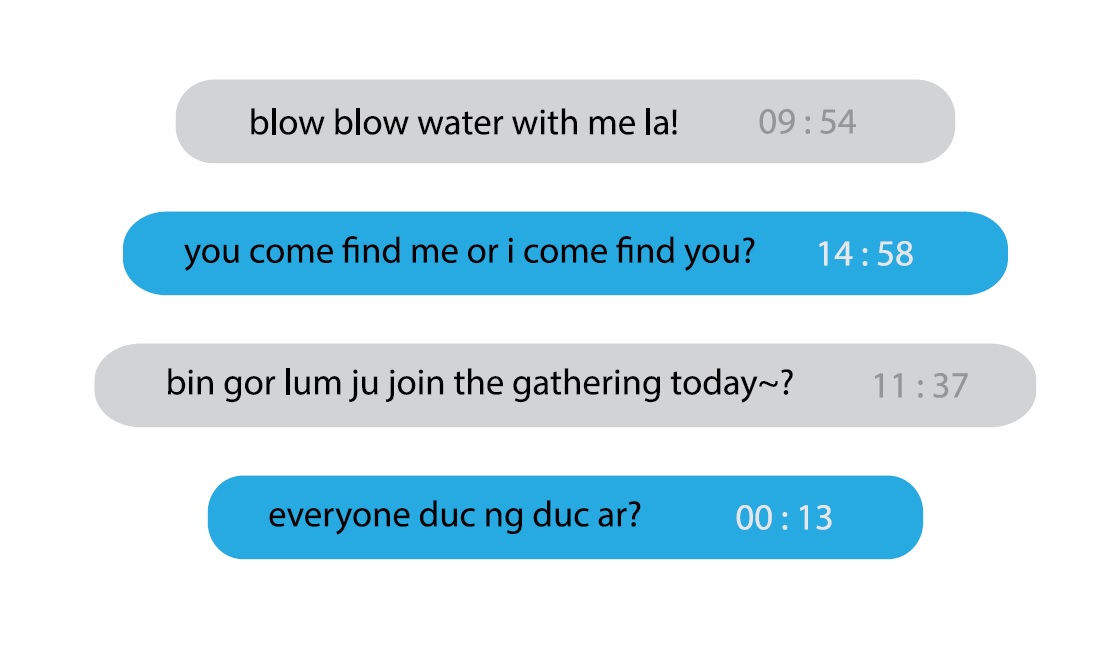
How Kongish, a new term for Hong Kong English, is helping to redefine Hongkongers’ identity
By Tiff Chan
Do you understand the following sentences? “On earth, work hard ge not only have ants, but also have even lin ants dou ng hai ge Hong Kongers, working like slave every day. But many work slaves ng dare say, ng dare fight.”*
If you do, chances are you are fluent in English, Cantonese and what a group of post-80s Hong Kong English teachers are calling “Kongish”. The mixing up of Chinese and English elements in speech is nothing new. Chinese Pidgin English, also known as Chinese Coastal English first emerged in Guangzhou in the 17th century. It developed into a lingua franca between English traders and the Chinese they worked and did business with through the 19th century and into the beginning of the last century.
People in Hong Kong, with its colonial history, have long used English elements in their Chinese speech and Chinese elements in their English speech. For instance, it used to be quite common to hear someone use the word “inch” as both an adjective and as a verb to describe someone as arrogant or to say somebody is being sarcastic to someone else. This is because the character for arrogant, 串, is a homonym for 寸which is the character for “inch”, the unit of measurement. Although such usages have been around for a long time, the explosion of social media in recent years has led to a rapid increase in the creation and use of such expressions to form a distinctively Hong Kong kind of English, or Kongish. The rise of Kongish also coincides with Hongkonger’s heightened sense of local identity.
In August, three local English teachers and a company executive created Kongish Daily, a Facebook page sharing local news using Hong Kong English (Kongish). The site gained over 30,000 likes in three months. One of the founders, Nick Wong Chun, a lecturer at the Language and General Education Centre at Tung Wah College, says the friends had originally set up the page for research purposes. They were interested to see how people were using Kongish to communicate and were surprised by the enthusiastic response they received. The page has become a platform where people can use Kongish in an open public space.
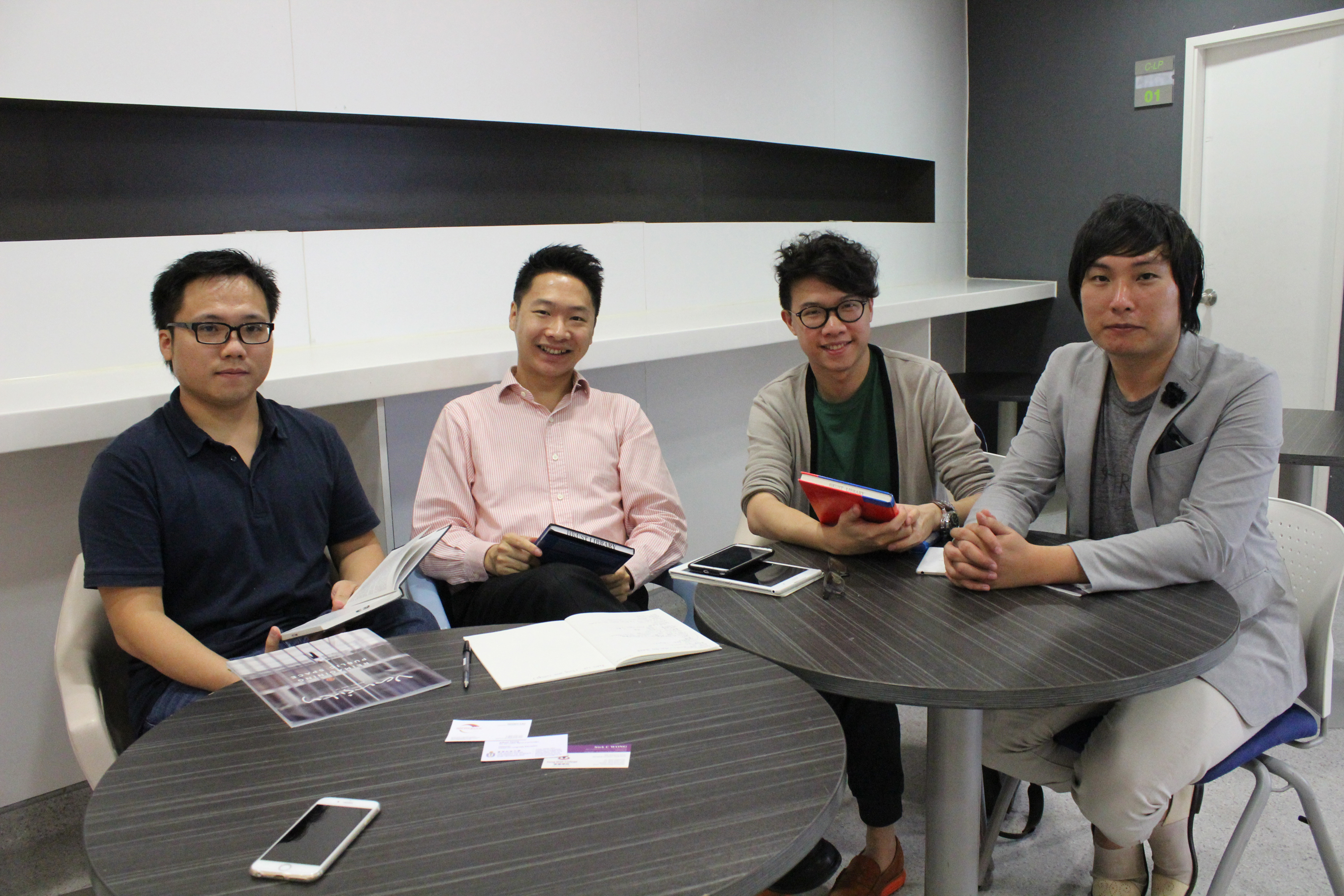
Wong says the use of Kongish is on a spectrum, sometimes there are more Chinese elements and sometimes more English ones. Depending on the balance of elements, Kongish can either be close to standard English or to informal Chinese English, or Chinglish.
While this may make Kongish seem to be little different from Chinglish, Professor David Li Chor-Shing from the Department of Linguistics and Modern Language Studies at the Hong Kong Institute of Education explains that Chinglish tends towards non-standard English. Kongish, however, involves the use of Hong Kong-style English in which the syntax generally conforms to standard English, with recognisable Cantonese elements inserted to different extents. However, as Kongish is more informal than standard English or “High Cantonese”, users tend to be more lenient about mistakes in syntax and grammar.
The growing popularity of Kongish over the years can be traced to the emergence of online communication tools such as ICQ. People who found it hard to type Chinese characters tried using English, Romanised Cantonese and the literal translation of Chinese into English in order to communicate. Given how widespread digital text communication has become in Hong Kong people, many have incorporated elements of Kongish in their messages. “If you do not use it, you are going against the tide,” says Kongish Daily co-founder Nick Wong.
Eventually, whether something is considered correct or incorrect usage will depend on whether it is accepted in mainstream society, says Wong. “Something said to be wrong becomes not so after it develops into a common practice.”
The Lost Beauty of Words
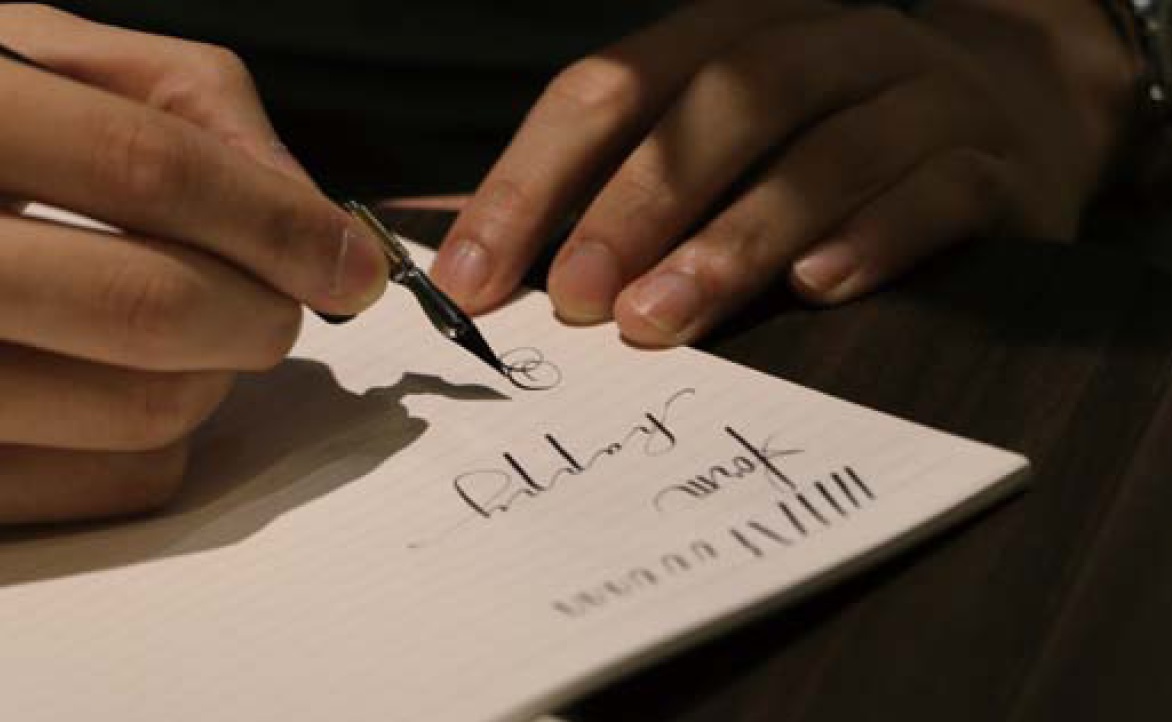

Calligraphy is gaining new followers as people rediscover the art of handwriting
By Kate Kim
Words and letters are all around us in our daily lives. We may wake up and check our text messages before breakfast, we type documents at work and we might browse Instagram before going to bed. Gradually, it seems touch screens and computer keyboards have replaced pen and paper, and we hardly ever write the old-fashioned way. But recently people have begun to rediscover the pleasures and uniqueness of handwriting.
“Calligraphy has more feeling than the digital texts. It’s more of a human touch,” says Brenda Ching Man-wah, who chairs a local calligraphy lovers’ group, the Alpha-Beta Club. Ching has been giving regular Western calligraphy lessons at the club and this year, she had to turn students away. Time and space constraints mean she could only enroll 12 students out of the 40 to 50 applicants who applied.
“I think [for] people who would like to learn calligraphy, maybe it is quite interesting for them, [and] they want to try something new, something nice,” says Ching. “The computer is too common for them. They would like to make something personal, in their style.”
Ching was introduced to calligraphy by her English teacher in secondary school, and she has devoted herself to the art for years. Currently working as a school teacher herself, she spends her spare time promoting the art of Western calligraphy in Hong Kong at workshops and exhibitions.
In her workshop, Ching teaches students four fundamental scripts, foundational, italic, Gothic, and copperplate. These are what she calls the “basic things” of calligraphy.
Though people learn the same scripts and use the same tools to write, Ching says calligraphy can be very personal. For example, different writers express different feelings by using different scripts. If they want to convey elegance, they can use copperplate flourishes and slanted italic lines.
As for tools, calligraphers can choose the typical aluminum dip-pen, with a nib inserted at the end, or they can create their own pen using different materials. Ching once asked a hawker to give her some feathers so she could make her own quill pens.