








Home Blog Page 95

3D Printing opens the door to possibilities

Hopes are pinned to the medical use of the technology

By Vivian Lai & Zoe So

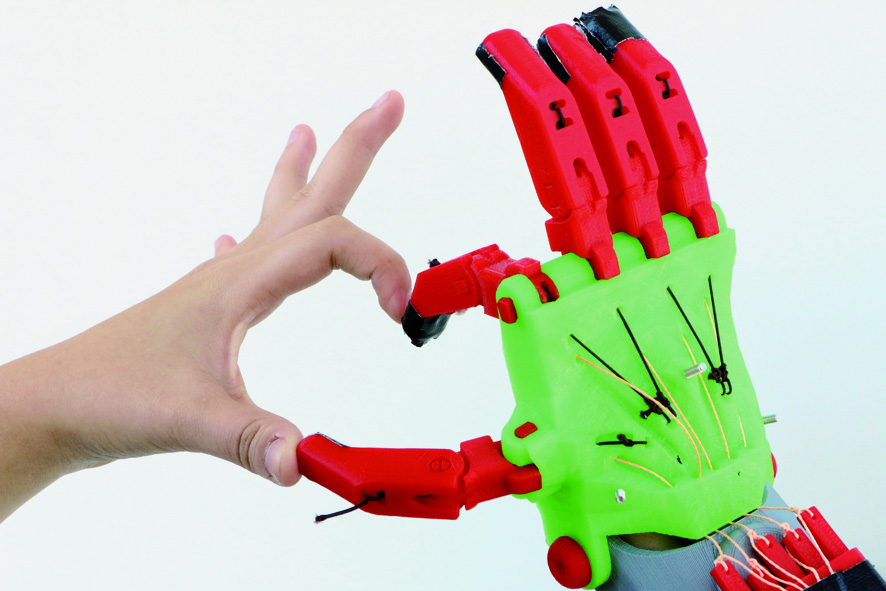
There were handicrafts and gadgets galore at the Hong Kong Mini Maker Faire where engineers, inventors and artisans showed off their creations. While many visitors gravitated towards the various robots on display, intent on their pilgrimage to find the perfect geekdom, a handful gathered in a corner of the exhibition hall. Their eyes were fixed on a 3D-printed artificial arm – a simple design, yet a cutting-edge  invention – which 31-year-old participant Au Kai-chun was using to try to lift a water bottle.

Born without a left forearm, Au gave up using a traditional artificial arm after a short period of time as a child. “The traditional ones are designed to be durable and heavy, as they assume you will wear it throughout your life,’’ he says. Au has grown accustomed to life without a forearm, but when he came across the idea of a light and stylish prosthesis made by 3D printing, he decided to join a project initiated by the Maker Club as a tester.

Au Kai-chun is testing his 3D-printed artificial arm.

Maker Club is a voluntary group of technophiles, operational therapists and programmers. Inspired by the US-based international network, E-nabling the Future, members decided to help customise artificial limbs using 3D printing technology.

Au explains that designing a perfect prosthesis requires making lots of adjustments. “The traditional mould-making for each adjustment can be very expensive, costing more than HK$100,000 in total … 3D printing is cheap so you can experiment and improve continuously,” he says.

A 3D printer works like a normal printing machine. First, users have to scan an object or send a design blueprint to the printer. The needle-shaped printing head then deposits liquid plastic on the base according to the design. Layer upon layer is laid down until the plastic fuses together and the product takes shape.

Mark Li, one of the organisers of Maker Club, says the cost of producing a prosthesis automated by an electric motor is around HK$2,000, whereas a mechanical one would only cost several hundred dollars to make. So far, Maker Club has helped Au kai-chun and an 8-year-old boy by designing tailor-made plastic limbs for them.

The little boy was born with just a thumb and little finger on one hand, which makes it difficult for him to hold a pen and use an eraser. The doctor says he cannot wear an artificial hand as the traditional design does not fit. “We were touched by this case and so hoped to do something to help him,” says Li whose team designed a tailor-made mechanical fist for the boy. With the mechanical fist, he can control the fingers of his prosthesis to grab objects.

3D printing may bring new hope for disabled people and amputees, as any standardised 3D printer can be used to produce a patient-specific design. However, Tse Chi-yung, a professional prosthetist and orthotist collaborating with the Maker Club, still has reservations about this application of the technology and its limitations. “Amputees can actually get hurt if the prosthetic leg breaks when they are walking,” he says, “I’d hesitate if I had to introduce it to my patients because there’s no official recognition.  What if it breaks easily?  When it comes to medical equipment, certification is very important!”

3D-printed artificial limbs are lighter and less durable than the traditional ones. Though they are cheap to produce, they are only expected to last for one to two years. Lifting heavy objects or accelerating suddenly could overload and break a prosthesis, leading to safety concerns. There is still a long way to go before hospitals can recognise the use of 3D-printed artificial limbs.

Although 3D printing may seem to be new and cutting-edge, the manufacturing industry has been using this technology for years, especially in the production of toys, jewellery and other small components. Compared to using traditional mould-making and die-casting to mass produce identical objects, 3D printing is more flexible, customisable and design-sensitive.

It has become better known among the general public recently because some local artists have used the technology to make sculptures and artwork, while cheaper, consumer-targeted 3D printers have enabled handicraft workshops to let people have a go at printing their own designs.  The biomedical application of the technology remains less well-known and understood.
The Weather Chasers

No typhoon too terrible for Hong Kong’s storm hunters

By Grace Cheung

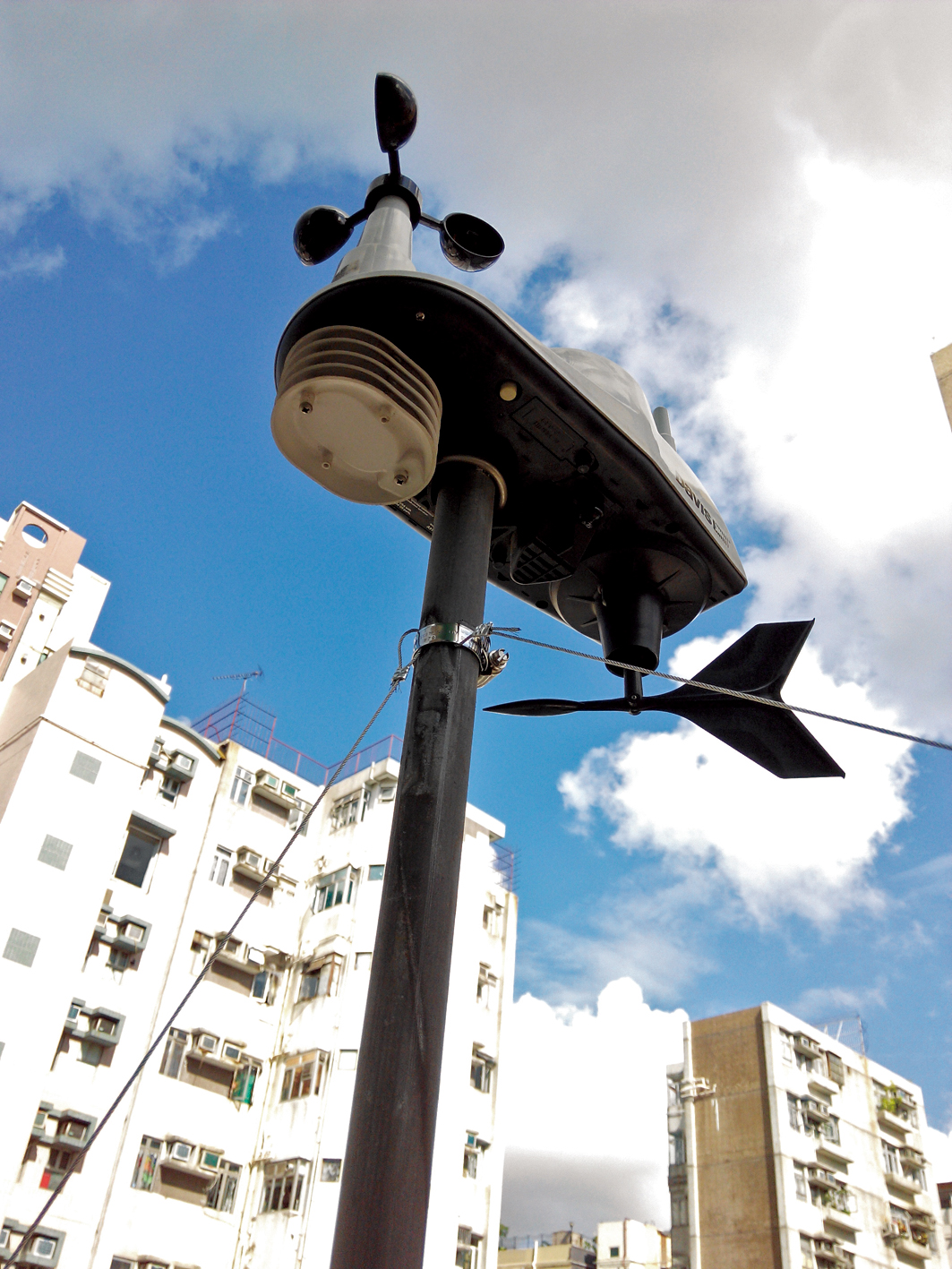
It was around 11:00 p.m. on 15 September 2014 and the T8 tropical cyclone signal had been issued for half an hour. Thick, dense clouds gathered in the sky and the raging wind was howling. Suddenly, a deafening bang split the air and tree branches collapsed under the gale. Instead of taking shelter at home, three youngsters in raincoats trudged uphill on a path strewn with fallen branches in the driving rain and then walked up to the roof of an eight-storey building facing Tolo Harbour. They held up their anemometers to measure the wind speed of Typhoon Kalmaegi, which had left chaos and destruction in the Philippines, and was now passing over Hong Kong.

Every summer, from July to September, Hong Kong’s meteorology enthusiasts pursue one of their most popular activities – wind chasing. They gather in the most exposed and wind-stricken areas to experience the power of the typhoons that visit this humid, sub-tropical city with four fairly distinct seasons and a temperate climate.

But tropical cyclones, while particularly fascinating to nearly all Hong Kong’s weather geeks, is just one of the aspects of their hobby. In general, meteorology is the science of the weather, or the study of the weather phenomena within the Earth’s atmosphere.

Calvin Yu cheuk-hei, a second year university student, was one of the young wind chasers experiencing Typhoon Kalmaegi on the Sha Tin rooftop that day. He has been a key committee member of the Hong Kong Meteorological Communication Centre – a group of amateur weather enthusiasts – for five years. Yu points out the differences between meteorology and astronomy, two disciplines that many Hongkongers tend to mix-up. “Phenomena that occur out of the atmosphere and are related to other planets fall under astronomy, such as solar eclipses and lunar eclipses,” he says.

Yu says the misconception is partially caused by the fact that the Hong Kong Observatory (HKO) is the official department for disseminating information concerning both meteorology and astronomy. “The Chinese name of Hong Kong Observatory implies ‘astronomy’, and the HKO is also responsible for reporting the times for eclipses and meteor showers,” he says.

OPEN PIC

While meterology is a mystery to most ordinary Hongkongers, it has been a lifelong passion for 43-year-old Clarence Fong Chi-kong. Fong launched the website Weather Underground of Hong Kong in June 1995, even before the HKO had a website.

The website is now the city’s most influential unofficial educational platform for sharing information about meteorology. It regularly publishes the latest weather charts, data and satellite maps.

When Fong first started it, he simply shared the statistics and graphs collected from other foreign sources online. “Before the launch of my online data base, HKO hadn’t published any of its weather statistics to the general public,” he says.

Since the launch of the HKO website in 1996, Fong’s site has run alongside it and he now writes blogs on the website to explain weather phenomena in a way laymen can understand. He has also started a Facebook page for Weather Underground of Hong Kong as an instant sharing platform.

Fong once worked at the HKO, joining as experimental officer in 1993, but he was disappointed the job was not a purely scientific one. As he had studied programming at university and had not studied physics at school or in college, he could not become a scientific officer. Besides, what he really enjoyed was conducting his research without any constraints. “I like to see the changes of weather and forecast them. Whether they’re accurate or not is just my business and I don’t need to explain to others…or give them any warning,” he says. So he left the HKO in 1995 and is now working as a web developer.

Fong first got into meteorology because he was fascinated with typhoons. He reminisces about his childhood days when the HKO physically hoisted typhoon signals onto selected towers on high ground. “These metal signals weighed over 40-50 pounds,” he says. “I would raise 3-D typhoon signals made of cardboard at home, and asked my parents to look.”

By the time he was at secondary school, Fong was already writing computer programs for entering tropical cyclone statistics and plotting typhoon tracks using real-time information from radio announcements. He recalls the computer was an Apple II which his father had bought him as a reward for his good academic results. He also regarded libraries as a treasure trove of information and he spent many hours building up his knowledge of meteorology in his university library.

Unlike the young weather fanatics, Fong rarely goes wind chasing as he does not want to take the risk. Instead, he sets up weather stations in secondary schools he collaborates with in Tai Po and Aberdeen, as well as his former home in Prince Edward. These provide him with real-time weather data to share on his website, including temperature, humidity, precipitation, wind speed and so on. “The weather stations are wireless and quite portable,” he says, “And they are accurate as they are the same models that were used at the Beijing Olympics Games.”

It’s a RAP!

Ethnic minority rappers break through cultural boundaries

By Antonia Wong

Inside a dimly-lit room in a youth centre in Aberdeen, an excited crowd of around 20 people stand in front of a small stage, waiting for the next act to appear in a line-up of local indie bands, rappers and beat-box artists. When the DJ starts to spin the decks, and three non-Chinese hip-hop artists take to the stage, the response is at first hushed – as if the audience is not ready to process the English language rhymes. But they soon warm to the trio and groove along to the beats.

The three rappers are members of Dope Boy, an ethnically diverse Hong Kong hip-hop ensemble made up of seven rappers from India, the Philippines, Britain and Brazil. While Cantonese is the dominant language of the underground hip-hop scene in Hong Kong, local audiences can still enjoy and relate to their music.

Dope Boy sees rap as an effective means to express their feelings and connect with the local community. The group’s vision is to merge with the local underground hip-hop scene and create what they believe hip-hop is really about – respect and unity. It is a vision they have embraced since becoming hooked on hip-hop during their secondary school years.

Hector Telmo, also known as SCF-SAiNT, 23, is a Hong Kong born and raised Filipino member of Dope Boy. As his parents are both professional musicians, Telmo has been exposed to different genres of music since he was a child. But he found himself the most drawn to hip-hop, which was wildly popular among the ethnic minority students in Delia Memorial School (Hip Wo) in Kwun Tong, a “designated school” for non-Chinese students.

Dope Boy members Hector Telmo (Left) and Mohit Kaliandasani

Telmo recalls that at the school, students would rap and write lyrics in class. He himself started to write his own songs when he was in Form Three. He loved rap because of the strong rhythm, poetic quality and the rhyming syllables, but he was also attracted to it because it was a channel to vent his emotions as he struggled against bullying at school. It was through writing lyrics and performing that he built up a sense of identity. “When you start creating your identity, people see you just like, ‘oh he can do that? That’s so cool’,” Telmo says.

Telmo’s view is shared by his fellow Delia Memorial School alumnus and Dope Boy member, 20-year-old Mohit Kaliandasani. Kaliandasani’s family originally came from India, but like Telmo he was born in Hong Kong. He says his primary school teachers used to dislike him but everything changed for him at secondary school once he started to perform. Rapping earned him respect from schoolmates and teachers. “The passion for music has brought us in front of the crowd and that feeling is very appealing to us,” he says.

But making music is also about expressing emotions and opinions. Kaliandasani and Telmo say they have written about such diverse subjects as breaking up with their girlfriends, the importance of individuality, and about how the world is not such a nice place.

My City, a track written by Dope Boy three years ago tells stories from an ethnic minority perspective, with each member contributing his own fearless verse about what they think of Hong Kong.

The track highlights the importance of diversity and criticises the flaws in Hong Kong’s social system, including how the opinions of ordinary people are not treasured and artists are not given the attention they deserve. Lines include: “Born in an underdog city where the industry is tasteless … Overwork myself each day – CALL IT ENDLESS! Some say MONEY AIN’T EVERYTHING but if you TRYNNA LIVE, IT IS!” and “from the city of lights – Where the officials decide? A lot are underrated – loaded with ego and pride!”

From Sweetheart to Survivor

Former screen and singing star Gloria Yip makes her mark as an artist and mother

By Angel Liu

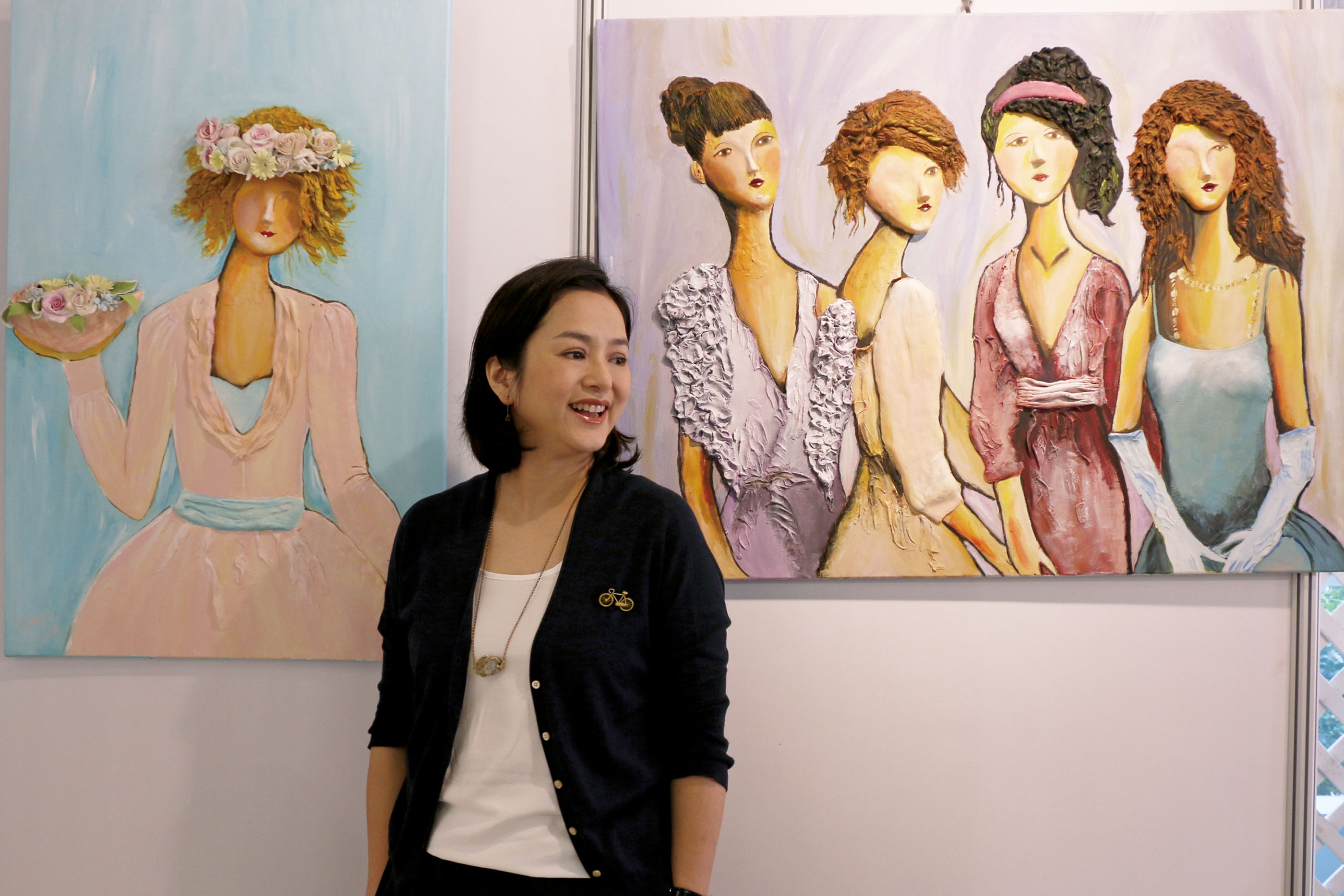
In a quiet corner of a trendy shopping mall in crowded, bustling Tsim Sha Tsui, Gloria Yip Wan-yee walks gracefully into her arts and crafts workshop, Art Around. Still fresh-faced and youthful, the 41-year-old actress, artist and mother talks calmly and wisely about her past, her ups and downs in life and her future plans.

EPSON MFP image
Gloria Yip Wan-yee

Twenty years after she quit show business, Yip made a comeback with a brand new image by playing the role of a ditzy but kind-hearted woman known as Chubby Akina in the TVB drama Never Dance Alone. The series is about the travails of a group of girlhood friends who reunite after many years, husbands, children, divorces and career struggles. The programme and the show have put Yip back in the limelight.

What has also captured attention is Yip’s unfussy and unswerving public support for the Umbrella Movement. She posts strong messages of support for the students and other occupiers on her Facebook page and pays frequent visits to Admiralty. She spent one night walking from Admiralty to Causeway Bay, tying yellow ribbons on street railings and signposts.

She has come a long way from the cutesy teenager who captured hearts in Hong Kong, Taiwan, Japan and Korea in the 1980s and 1990s.

Yip never set out to be a star. When she was 13, she was discovered by a talent scout while out shopping with her mum in Causeway Bay. This chance encounter set her on an unexpected and extraordinary path.

She started her journey in the entertainment industry by shooting commercials, and became the face of Vitasoy. At that time, posters featuring Yip drinking soy milk were plastered everywhere.

Still, she tried to live the normal life of a schoolgirl away from work. “I tried my best not to let it affect learning.” Yip says. “I told myself that at least I have to finish my studies till form five.” She continued to attend school, and only worked during weekends and long semester breaks. If she had to be on shoots, she brought her homework with her so she could revise when she was not needed.

But her acting career took off quicker than she could have imagined. In 1988, Yip received a phone call from a producer asking her to take a role in the Hong Kong-Japan collaboration movie, Peacock King, an action fantasy based on a Japanese manga. She was just 14 when she made her big screen debut as Ashura the Hell Virgin.

The movie turned out to be a great success both in Hong Kong and Japan after its release in 1989. Yip was named the most popular foreign female actress in Japan that year. One year later, she received the same title in Korea. Her sweet and innocent image gained her a lot of fans overseas. This opened the door to a singing career.

In 1990, Yip released her first album in Japan, becoming the third Chinese female artist to break into show business in Japan after Teresa Teng Li-chun and Agnes Chan Mei-ling. Soon, Yip’s career spanned Hong Kong, Japan, Korea and Taiwan.

So it came as shock when she suddenly announced her retirement from show business to marry toy manufacturer and businessman Chen Pak Ho in 1995. She was just 22 and her star was ascending.

Although people were stunned, Yip says she herself had long planned to quit. “When I started my work in the entertainment business, I made myself a promise that after five years, I would stop everything and go back to school,” Yip says. “I hope I can be trying out different things in different stages of life,” she adds.

Fermi Wong stands against racism, for Hong Kong

Campaigner steps down from Unison after serving ethnic minority communities for 16 years 

By Agnes Ng

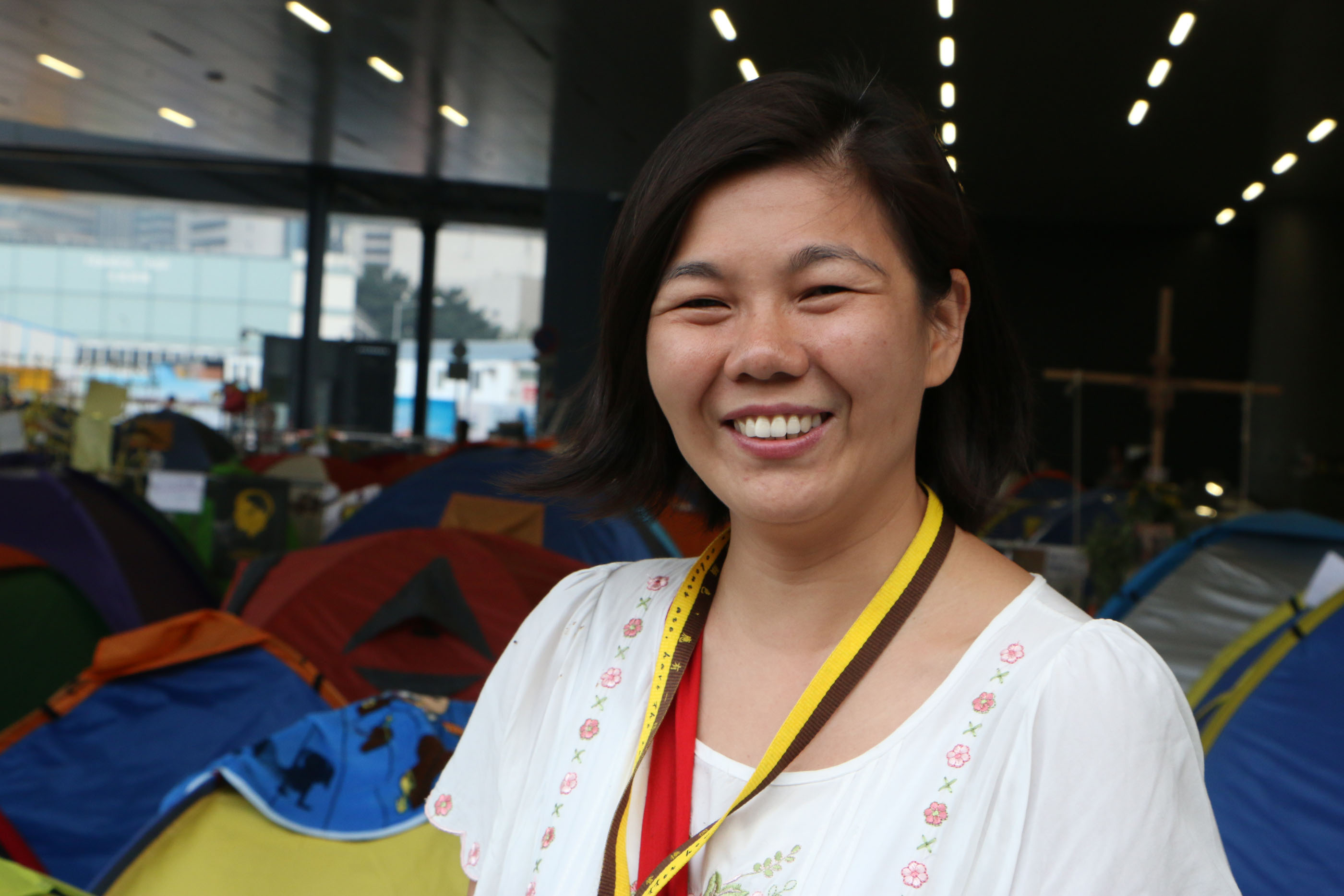
Sometimes, the surest sign of love is knowing when to let go. For Fermi Wong Wai-fun, setting up  and running Unison, Hong Kong’s foremost non-governmental organisation (NGO) advocating for the rights of ethnic minorities, has been a labour of love. Now, after 16 years, Wong has left the organisation in the hope that it can be more effective without her at the helm.

“I have been working non-stop in Unison for 16 years. I am really tired,” Wong says, then stops and tries to mask the hardship with a smile. “I think it is the time for me to let go.”

Wong started her career as a social worker specialising in community work in 1995. In the course of her work, she saw a pressing need for ethnic minorities to get out of poverty and segregation, particularly in schools. “Serving ethnic minorities is not a choice, [it’s that] at that moment you see the need and then you naturally respond,” Wong says.

Wong strongly believes everyone is entitled to dignity regardless of his or her race. “Under everyone’s skin, our bones are white and our blood is red. I cannot see that they [ethnic minorities] are inferior compared with the Chinese-speaking people,” Wong says resolutely.

Wong founded Unison in 2001 with two other partners. “There was not even a single organisation helping the ethnic minorities, so I did it myself,” Wong says.

P1090736
Wong with members of ethnic minority communities.

It was an uphill struggle. For the first three years, there was no funding and the organisation ran on donations. Wong herself depended on handouts. “My sister gave me cash. I cannot remember whether it was $3,000 or $5,000,” Wong says with gratitude. “But I spent most of it on Unison. I did not use much, only for dining and transportation,” she adds.

Apart from the lack of money, Unison also had no office. Wong says she used to meet her clients in neighbourhood cha chaan teng diners. She soon realised this did not work since the diners would charge double if customers only ordered drinks and Wong did not have the money to pay for food every time. Neither was it appropriate to go to parks because they were too exposed for private emotions; sometimes her clients wept when talking about their suffering.

Wong went as far as asking her then boyfriend, now husband, if he could lend her his home in Yuen Long where many ethnic minorities live. Fortunately, her teacher’s friend lent Wong an office space in Mong Kok after hearing about her plight.  Once she had an office, she furnished it with items she picked up near a refuse collection point.

“Our lack of resources might affect the scale of our services but it could be overcome,” Wong says. She then “found” clients by doing outreach work among the ethnic minorities. She would start random conversations in parks and offer to help members of the ethnic minorities to find schools and jobs. When they were in trouble with the law, she sometimes bailed them out. Gradually, she built up friendship and trust. Sometimes she even gave the key of her office to teenagers who had nowhere to sleep at night.

Before drug rehabilitation centres started to accept drug users from Nepal, some of them would seek Wong out. “I helped them to quit,” she says. “Actually it was very dangerous and luckily they did not die,” Wong says, describing scenes where drug users would be writhing on the floor suffering from withdrawal symptoms, while she worked at her desk and tried to distract them by chanting sutras.

The Storyteller’s Tale

How telling stories healed activist Yuen Che-hung’s soul

By Donna Shiu

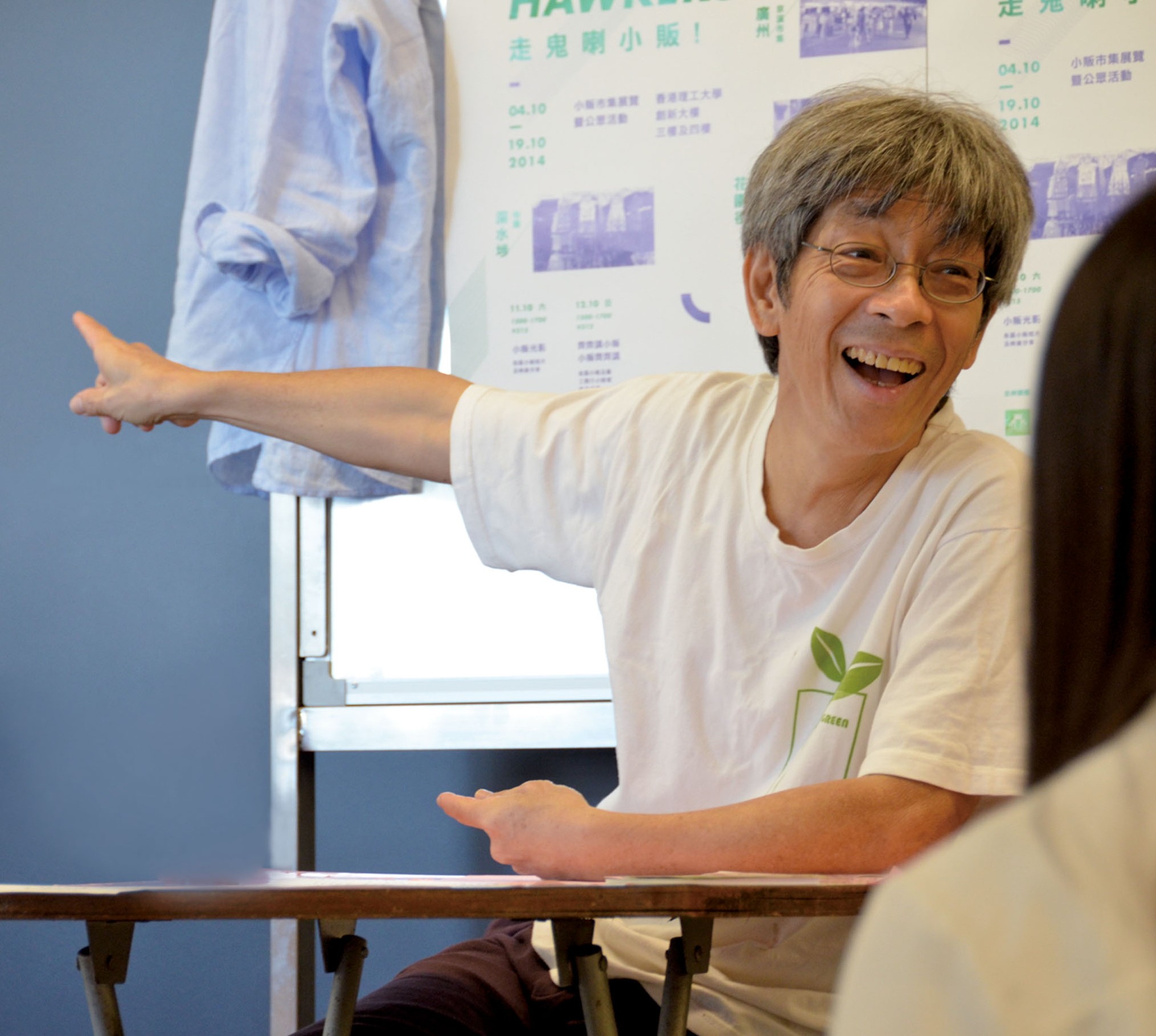
A small, slight man with a mop of grey hair is walking along a running track as a train in the middle distance approaches fast. He feels the onrush of the locomotive and, when it surges past, it seems as if it is taking his wrinkles away as it speeds off into the night. The man is 62-year-old storyteller Yuen Che-hung, better known as Uncle Hung, and he is describing a scene and an emotion he experienced on his way to his interview with Varsity. It may very well appear later in one of Yuen’s stories, if it has not done so already.

“My innate ability is to find stories,” Yuen says. He has felt a strong urge to express himself since he was a child but was not always brave enough to speak his mind. The first stories were told under his blanket, where he played multiple roles in his heroic tales. But he never expected he could turn his storytelling talent into a career that has lasted for more than two decades.online

Before becoming a full-time storyteller, Yuen had a number of different jobs. He taught English at a secondary school, worked in the publishing unit of a kindergarten and for the theatre education team of the Chung Ying Theatre Company. It was while working for the theatre company that he discovered his interest in storytelling.

As a storyteller, Yuen goes to different schools to tell stories on request. In his work, he comes across many children and parents. Some of these parents insist the value of storytelling lies in how much the stories can teach children. Yuen believes this is a misconception. He responds by asking them when children start to read. “Babies start to read from birth,” Yuen says. “When they open their eyes, the world is a book … Kids saying they know nothing actually know more than adults.”

Yuen thinks stories help children to learn about the world through stimulating and stirring up their curiosity. He refuses to tell stories that urge children to act in a certain way which are very popular in Chinese societies. “When you want to exhort children [to behave] with a story, the story is fading. Children can only remember the exhortation,” he says.

Yuen’s educational philosophy is to let the world speak for itself. It is a parenting style he learnt from his father. Yuen’s father always supported his choices, something that allowed his son to be a life-long dreamer. When Yuen was in Secondary Six in 1971, he was swept up in the active student movement of the time – enlightened by books of existentialist philosophy and listening to the songs of Bob Dylan and Simon and Garfunkel.

Hard To Say Goodbye

hardtosaygoodbye

Fly High

Get an aerial view of the city from a paraglider

By Stella Tsang

Ever imagined that you can fly? Fancy enjoying a bird’s eye view of Hong Kong, while feeling the wind on your face? Now you can, because paragliding will let you experience all of those things.

DSC_0130

There are several places in Hong Kong where you can paraglide. Dragon’s Back in  Shek O will give you a spectacular sea view, but if you are a little more adventurous, try flying off Pyramid Hill in  Ma On Shan, where you will find yourself high above the mountain and sea.Making use of aerodynamic forces and air pressure, the design of the paraglider allows the pilot to drift through the sky for as long as several hours before landing.

Beginners who want to learn this extreme sport can sign up for courses led by qualified coaches. In addition to field training, you will also learn about different aspects of aviation knowledge such as navigation and meteorology.

But if you are not ready to commit to proper training, try taking a tandem flight. With a professional pilot steering the paraglider, you can simply lean back and enjoy the view. You can also bring along a selfie stick and take a few snapshots with the world under your feet.

Monkey Kwan Chi-ming, who has been paragliding for five years holds licenses for both single-wing and tandem flight paragliders. He went through military-style training to become a qualified pilot. And for him, the safety of the passengers is a top priority, so he will check all the equipment and the weather conditions meticuously before taking flight.

For Kwan, the thrill of feeling the breeze and soaring through the clouds cannot be put in words. “I am still excited whenever I am heading to my next flight. It is like an addiction,” he says. To share the joy of flying with others, he organised the Hong Kong Tandem Paragliding Program, offering tandem flights as well as beginners’ courses.

For more information, please visit http://instagram.com/joy_flight or email percyky@gmail.com.

Edited by Rachel Cheung

Bring Your Own Bottle

Mobile app let’s you find location of your nearest free drinking water fountain

By John Cheng

Here in Hong Kong, around two million plastic bottles are sent to landfills everyday. Yes, that’s right – two million. And it is all because of our fondness for the convenience of bottled water.

It has become a habit for Hong Kong people to grab a bottle of water from one of the city’s many convenience stores whenever they feel thirsty. But seldom have they thought about the environmental problems this may create. With such a rapid increase in waste, it’s no surprise the landfills in Hong Kong will soon be full.

Sensing the urgency of the problem, 38-year-old lawyer Rachel Pang Hoi-yang developed a mobile app called Water for Free to encourage people to bring their own reusable water bottles instead of consuming bottled water. The mobile app shows the locations of more than 700 public water fountains and dispensers throughout Hong Kong, including in parks, sports grounds and universities. Users can easily find the nearest water fountain on the map, and if they discover a new water fountain which is not listed, they can also report the location to the developer of the app.

freewater

Pang devoted herself to raising public awareness of the over-consumption of bottled water after an unpleasant experience at the beach at Ma Wan. “My husband and I went there for a walk, but were welcomed by a sea of plastic bottles. It’s terrible!” she says.

Later, Pang came across a water fountain map of London on the Internet and was inspired to work on a Hong Kong version. Pang then asked the Leisure and Cultural Services Department for information on the locations of of water dispensers in Hong Kong, but they refused to give them to her at first. Fortunately, after Pang insisted, she eventually got the locations. And with the help of a friend, she developed the map into an app which is convenient for smartphone users.

To date, the Water for Free app has reached more than 1,000 downloads. Pang is glad to see some of her friends starting to change the habit of consuming bottled water. A friend of hers used to buy bottled water for hiking, but now brings his own water bottles because of this mobile app.

Pang hopes that the consumption of bottled water in Hong Kong can be reduced and more water fountains can be set up to encourage more people to bring their own bottles. “Practices which are environmentally unfriendly are most convenient…but we need to change this situation,”she says.

The Water for Free app is available for free on iOS and Android. For more information, check out the website of the app at http://waterforfree.org/. If you discover a new water fountain, you may also report the location on the website to the app developer. Bring your own bottle starting from today and save the planet.

Edited by Sharon Lee


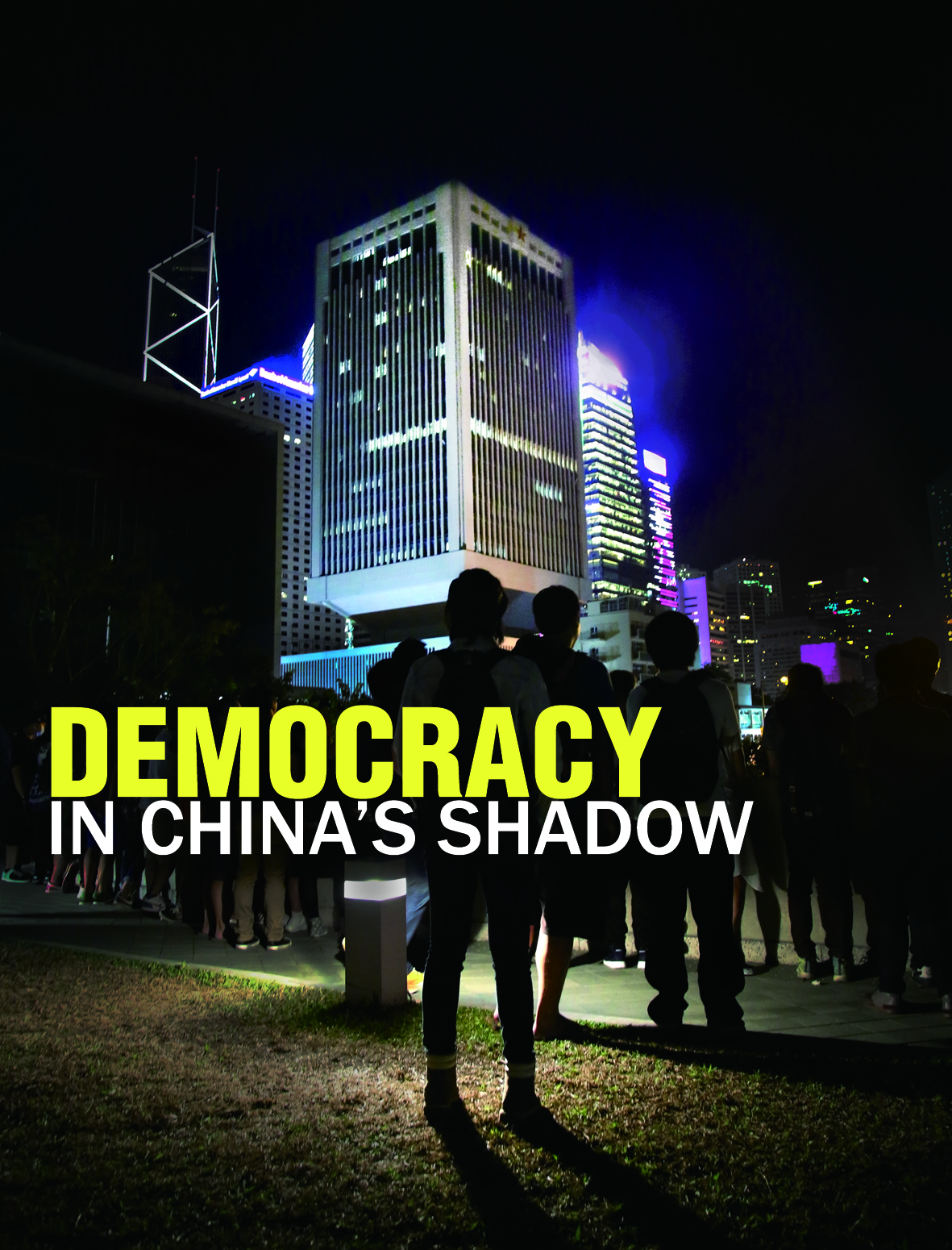
November 2014 – Democracy in China’s Shadow

As we bring you this issue of Periscope, protesters are still on the streets of the occupied areas of Admiralty, Mong Kok and Causeway Bay. They are demanding free and open elections to choose the first Chief Executive to be elected by one-person-one-vote in 2017. Hong Kong’s democratic journey did not begin with the Occupy Movement and it almost certainly will not end when the last of the occupiers have left their tents.

Varsity asks a question that is foremost in many people’s minds – what will happen after Occupy ends and how will Hong Kong seek a democratic path as a Special Administrative Region of China?

Apart from Hong Kong, we are also looking at two other Chinese societies, whose democratic development are affected to varying degrees by their relationship with mainland China. We look at how the democratic movements in Macau and Taiwan differ from Hong Kong as well at common features they share.

Hong Kong’s near neighbour Macau has never been much of a hotbed for democratic activism, so when thousands of protesters took to the streets to protest against a controversial retirement package for top officials, many pointed to an awakening for Macau civil society 

When the late Chinese leader Deng Xiaoping proposed the One Country Two Systems framework as the basis for Hong Kong’s reunification with the Mainland, the policy was supposed to serve as a model for Taiwan’s eventual reunification. But instead of an enticement, many in Taiwan see what is happening in Hong Kong as a warning.