





Home Blog Page 94

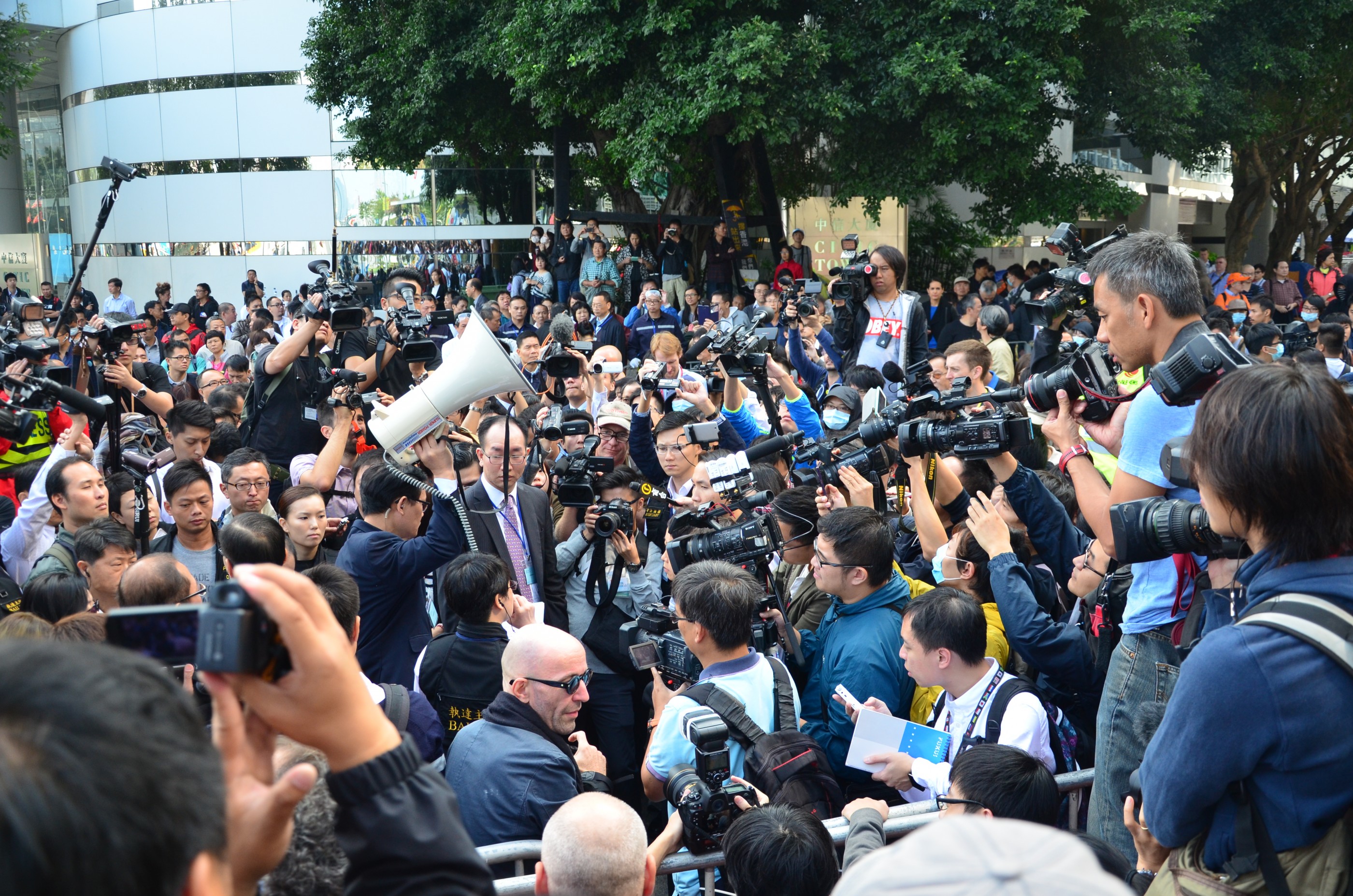
Citizen Journalists report the Umbrella Movement

What does it mean for journalism when amateurs take to the frontline?

Reporters: Henry Lee, Total Lam, Antonia Wong

Editors: Rachel Cheung, Sharon Lee

As the Umbrella Movement ran into its second month, it was another night of action in Mong Kok. This time, it was a camera flash light that triggered scuffles.

Daniel Cheung was in the middle of the crowd. He is a photojournalist from SocRec, an independent online media outfit in Hong Kong.

Cheung had been working for SocRec for around three months. Compared with the traditional media, he says reporters at independent media enjoy greater editorial independence; they can release first-hand information quicker. Usually, a camera or a smartphone is all they need to do their reporting.

Still, he concedes the mainstream media makes a bigger the impact than independent media, “Foreign media would only report through the information released by mainstream media,” says Cheung.

Gundam Lam is a student at the University of Hong Kong who works part-time as an amateur reporter for InMedia, another independent Internet media platform in Hong Kong.

Lam recalls that when he tried to report the meeting between representatives of the Hong Kong Federation of Students and government officials, he was refused entry to the venue. Lam’s credentials were not recognized by the guards. He found the decision ridiculous and says a media organisation should be judged by its credibility and influence.

Citizen journalists play a different role from that of mainstream journalists. Instead of maintaining objectivity, some would practice advocacy journalism, “We are here to be part of the social movement… our news is assisting the movement!” he says.

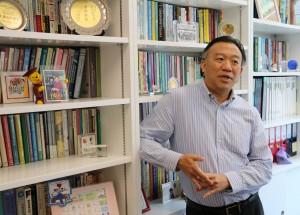
Paul Leung, who founded SocRec, thinks citizen journalists are different from journalists. “Journalists are journalists, they require professional knowledge … We are just netizens and citizens, who systematically collect information by crowd-sourcing and posting it online,” he says.

Leung tends to report things that may not be covered by mainstream media. He sees his role as complementary to rather that a replacement of traditional media. In this way, alternative media can put pressure on and motivate traditional media to report things they might otherwise have missed.

Sham Yee-lam, the Chairperson of the Hong Kong Journalists Association says citizen journalists cannot be recognized as journalists.

“[For them], it’s just an interest.. They are merely collecting information – a lot of people do that. We used to call them information sources. But now we gave them a name, citizen journalists,” says Sham.
Sino Centre: Witnessing the End of an Era

The decline of celebrity merchandise industry in Hong Kong

Reporters: John Cheng, Tracy Cheung, Vivian Lai

Editor: Elaine Tsang

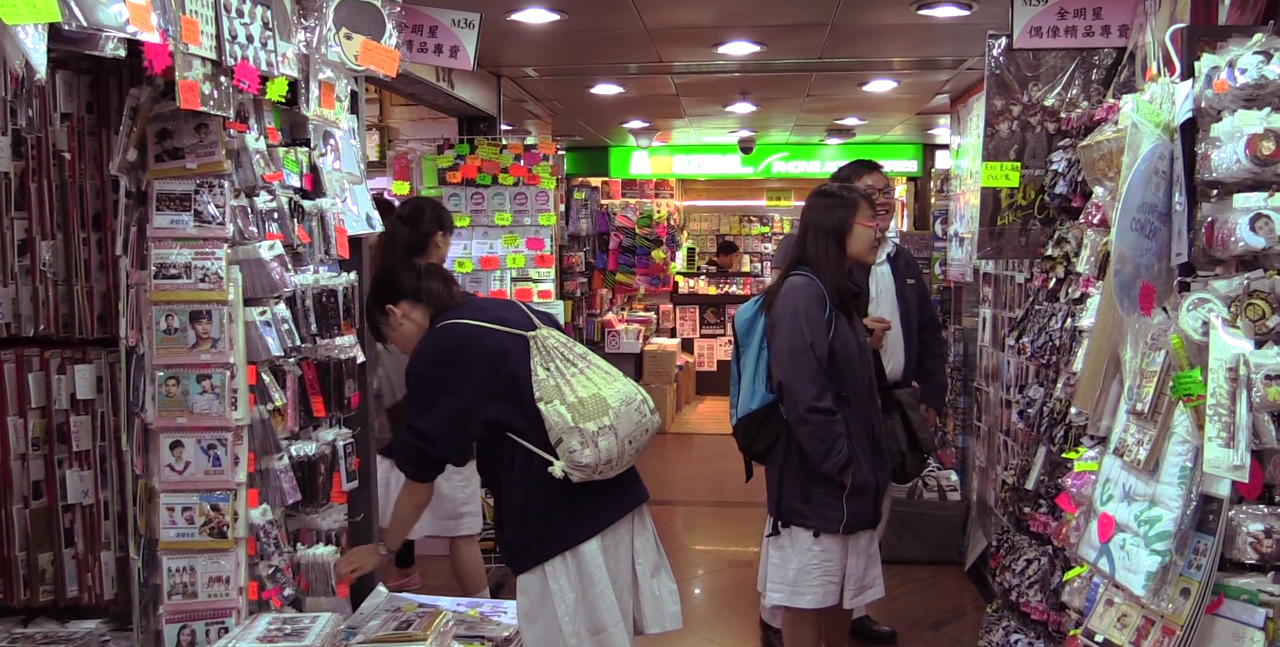
The glory days of Hong Kong popular culture in the 1990s gave rise to a variety of celebrity product shops, notably in Sino Centre in Mongkok. The shopping centre was  an important place for fans to purchase celebrity merchandise. But with the advent of the age of internet downloads and changes in idol worship culturemany celebrity product shops have closed down. For those that remain, the challenge is to change with the times or suffer the same fate.

Today, most of the idol merchandise on sale at Sino Centre is for fans of K-Pop stars. There are shops selling shops selling a large variety of collectibles, including Japanese magazines, stamps, local and foreign CDs But in the heyday of Cantopop, they were packed with photos, posters and collectibles featuring stars like Leslie Cheung and Anita Mui

Eva Ng and Tata Lee, who are devoted fans of the late Cantopop diva Anita Mui, used to visit Sino Centre frequently to purchase Anita merchandise. They recall the crowded scenes there and joke about the good old days when they had to line up outside the photo shops.

When they revisit their old haunt, the friends are surprised by the changes at Sino Centre. Compared to the more than 30 celebrity product shops of the past, there is only one celebrity photo shop left in Sino Centre.  They also lament that familiar names such as those of the Four Heavenly Kings of Hong Kong Cantopop can no longer be found in the shops.

When she was a schoolgirl, 20-year-old Kitty Chan would go to Sino Centre and buy stuff related to teen idols such as Twins and Fahrenheit. She blames online shopping for the closure of celebrity product shops. With greater a variety and better quality of products, many prefer to buy items online through official fan club websites rather than shops in Sino Centre.

Still, Sino Centre has an irreplaceable status in some people’s eyes. Patrick Choi, the owner of Sky Music CD shop since 1990, has witnessed the golden age of the celebrity merchandise industry at Sino Centre. He feels deeply connected to this place, and over the years some of the his customers have become his good friends. He is sad about the decline of the industry but says he will try his best to keep going in order to preserve the collective memory of a generation of people.

The Oyster Farmers of Lau Fau Shan

Pollution threatens traditional oyster culture industry but farmers press on

Reporters: Donna Shiu, Godric Leung, Macau Mak

Editor: Cherry Wong

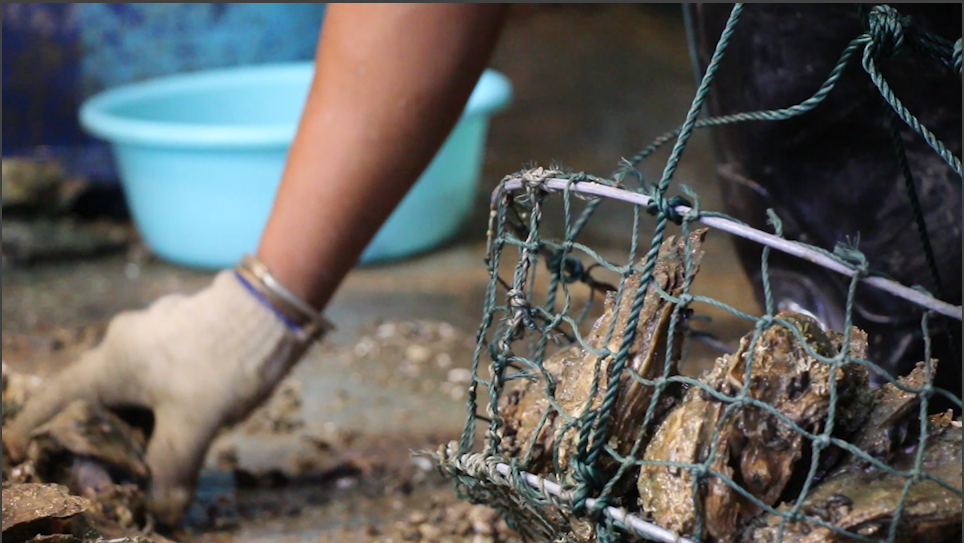
Oyster culture has been practiced in Hong Kong for around 200 years. A group of oyster farmers keep on running their business in Lau Fau Shan.

The oyster farmers wake up early every day and take to the sea to check the oyster rafts in the middle of Deep Bay. They culture oysters by placing them with wood pieces and concrete tiles suspended from bamboo rafts.

Tsang Kam-tong, an oyster farmer, says his father cultured oysters by placing rocks and concrete tiles on the mud flat. But he prefers the raft culture method to the traditional one because he can grow more oysters of better quality..

However, development in nearby Guangdong has adversely affected water quality in Deep Bay, raising concerns about the safety of local oysters.

Unlike their foreign counterparts, local oyster farmers do not have the resources to install purification tanks for their bivalves. Still, they insist their oysters are safe to eat. Tsang says oysters are sensitive to water quality and will die if the water is polluted.

Another oyster farmer, Chan Kam-to says oyster sales have declined since the 1980s, the golden decade for the industry. But Chan adds the safety issue is not the reason for the fall. He says customers now have more choice when it comes to seafood varieties, and they may opt for imported oysters, instead of the local ones.

However, Leung Ka-kuen, a food columnist, says local oysters are tastier than the American ones. He points out that local oysters are more expensive, and a reason local restaurants import foreign frozen oysters is because they are cheaper.

Although oyster sales are declining in the local market, Leung explains that a large proportion of local oysters are now sold to the mainland Chinese who have become more affluent.

Information to Opinion

Living in a materialistic modern society, we believe our life is constructed by things we can see, hear and touch. Many of us are unaware of the subtle power of information which profoundly influences our mindset and perception, shaping our sense of “reality”. Ironically, thanks to advances in telecommunications and the rise of social media, fast-circulating information accessible around the globe has given rise to a host of new problems.

When there is so much information, how can we be sure of its veracity, or the credibility of the sources, and how can we analyse and judge its importance? Perhaps more than ever, we are vulnerable to distortion, rumours and lies.

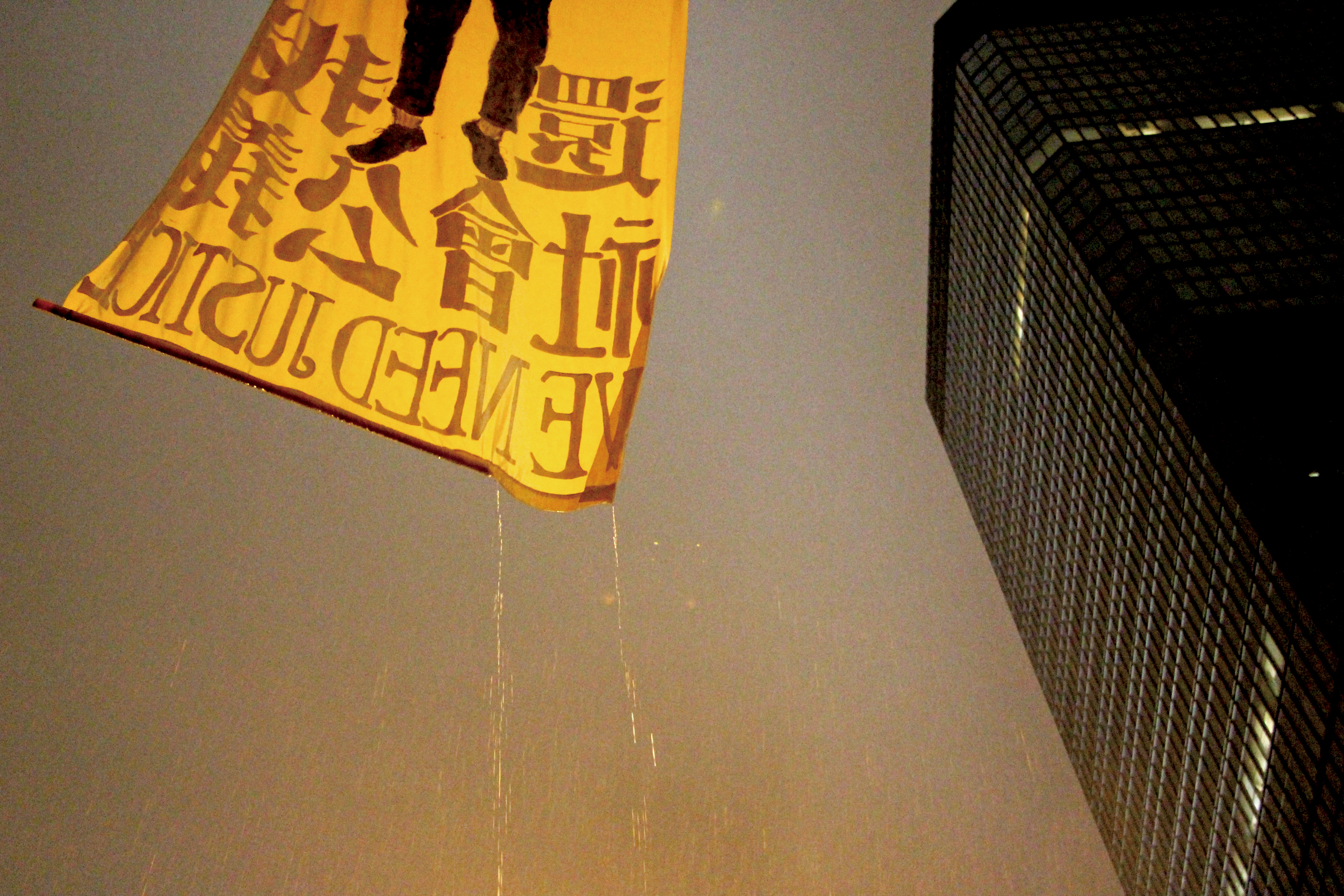
Since late September, the Occupy Movement has dominated local media and been given prominent coverage overseas. This has thrown the spotlight on the ways in which information shapes opinion. Varsity takes a look at the impact of information on thoughts and actions in the case of the Occupy Movement.

Many say the Umbrella Movement has created a more divided society – a split between liberal progressive youth and their conservative middle-aged elders. We try to see how the  “generation gap” relates to their respective media consumption. While much of the comments and news circulating on social media may be sympathetic to the protesters, the politically conservative mainstream media condemn the movement. The results of public opinion polls highlight the shifts in public support for the movement. It raises a question for the protesters of how to soothe public opposition and win back support.

As the Occupy Movement continued, the mass of live reports and updates from the occupied zones – some of them accurate, some of them less so and more of them false – were a source of anxiety to people hungry for information. Facebook posts and WhatsApp messages about police clearances and other developments quickly went viral. Every time a rumour spreads, protesters are on the alert for possible violence and arrests. The tension can lead to false moves and overreaction.

Despite the proliferation of rumours, sometimes reported as fact even in reputable media, press freedom is what many Hong Kong people cherish and take pride in. A liberal public sphere for expression also attracts young people from mainland China, some of whom only realised how severe censorship was back home after they came to Hong Kong. We ask whether having free and open access to information leads to a change in political outlook among young Mainlanders living and working in the city.

Apart from trying to look at the complex issues in the information battleground, we also have a range of stories for you, from the promise of cutting-edge 3D printing technology in medicine to profiles on actor Gloria Yip and Fermi Wong, a pioneer for the rights of Hong Kong’s ethnic minorities. We hope you enjoy your read.

Cindy Ng

Managing Editor

signature


Open Information, Open Minds?

Does free information flow change political opinions of Mainlanders in Hong Kong?

by Yan Li & Brian Wong

Hui Kei, a 29-year-old freelance writer from Zhejiang was once a Chinese patriot and firm believer in the Communist Party. He was an active member of the Young Pioneers and the Communist Youth League who would naturally stand to attention whenever the national anthem was played. Hui believed China would become powerful as long as it improved its military and economy.

In school, Hui learned that the June Fourth Incident in 1989 was a “political turmoil”. But he and his classmates did not pay much attention to it as they knew it would not come up in examinations. Rather, students were asked to express their opinions on Taiwan sovereignty and Falun Gong in exams. They knew they were expected to give “standardised” answers in line with the party position in order to score.

All this seemed perfectly normal and Hui never criticised the education and information he received in the Mainland until he arrived in Hong Kong in 2003 to join his mother who had married and settled here. In Hong Kong, he watched a documentary about the 1989 pro-democracy movement in China and the subsequent government crackdown. He realised what a huge difference there was between the account he saw and the version he had learned, and how serious media censorship was in China. “[After watching the documentary], I instantly doubted my previous education,” says Hui.

A documentary depicting the June Fourth Incident awakens Hui Kei’s political consciousness.

That was the beginning. Hui started to read books by liberal writers like Taiwan’s Li Ao and Hong Kong critic Leung Man-tao, which are hard to come by in the Mainland. He was inspired by the ideas of democracy and liberty and he was touched by the strong spirit shown by Hong Kong people in fighting for a better future for their city.

For Hui, Hong Kong has shown him “another way of Chinese existence”, such that he now finds China’s unification mantra increasingly annoying. “Looking back, I realise that Zhejiang people also have their own characteristics. We should not say we are Chinese. We should proudly say that we are Zhejiang people” says Hui. “‘Chinese’ is not enough to describe me.”

In Hui’s articles, he comments on the political situation in mainland China and Hong Kong. He also writes about the conflicts between the Mainland and the territory, and these articles are published on Mingpao Century and his personal Weibo account. However, his Weibo account is censored and only the people he has added and are following his account can view his articles. What is more, they can only view but not share his articles.

The Shifting Middle

Middle-aged Hongkongers hold different and changing views of Umbrella Movement

By Thomas Chan, Henry Lee

Pointing to a blue tent on the kerb, 23-year-old Leona Ho proudly proclaims, “This is my home!” The graphic designer comes to the occupied area in Admiralty almost every evening after work and does not  go home until the middle of the night. That means she gets as little as three hours of sleep every day, but she is determined to stay, “as long as there are people here.”

Ho was infuriated by the police’s use of pepper spray on student protesters after dozens broke into Civic Square at the end of a week-long class boycott on September 26. As a result, she joined tens of thousands of protesters in occupying key financial and retail districts in Hong Kong.

While many protesters, mostly youngsters and students, are urged by their worried parents to return home, Ho receives texts from her father with messages such as, “I’m proud of you.”

001

“My dad told me if I were arrested, he has enough cash and could bail me out,” says Ho, “I have realised since high school that my parents are very different from others.” Never once has her father imposed his views on her; instead, he often encourages her to think critically and to draw her own conclusions.

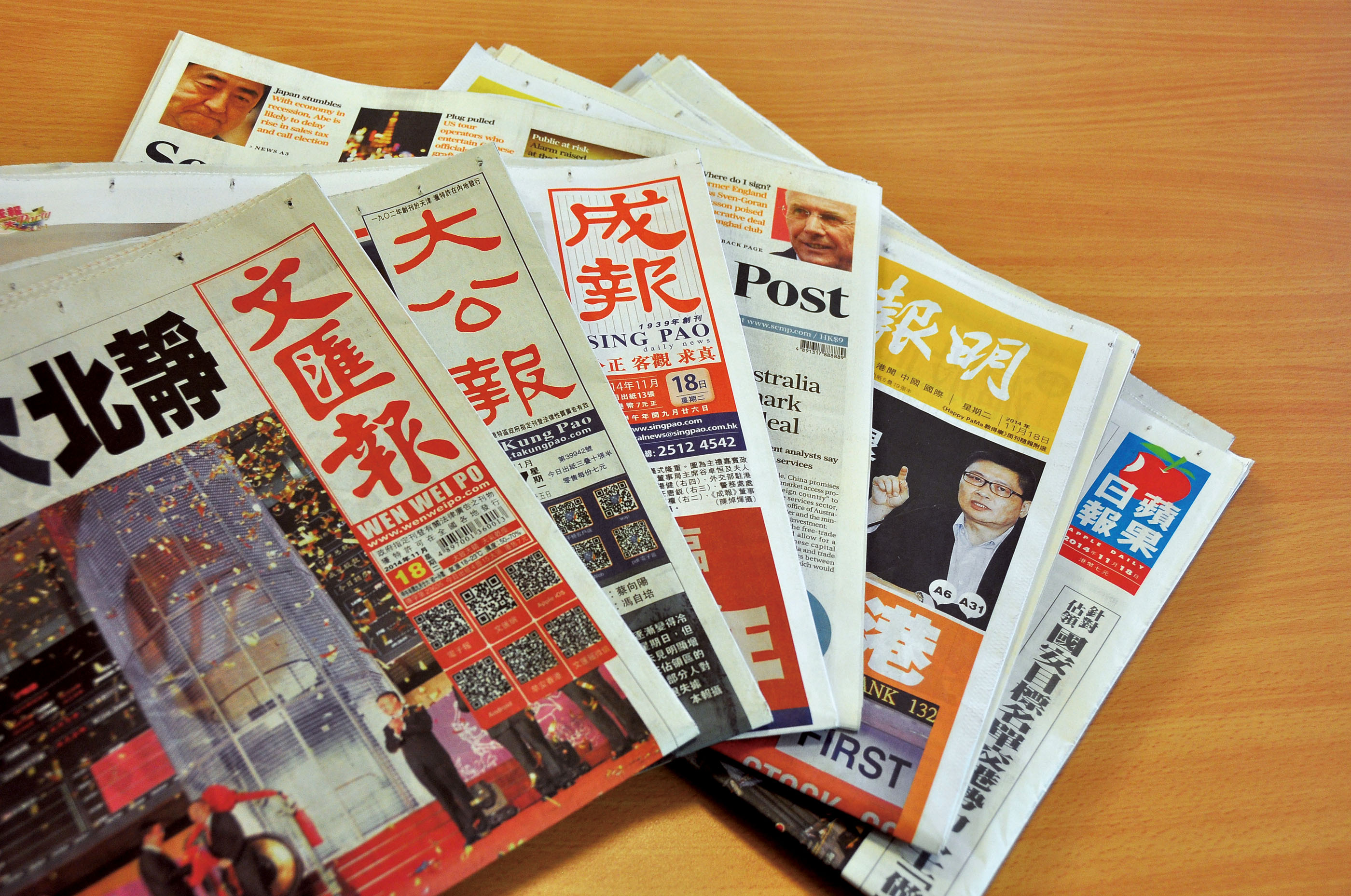
This open-minded father is Herman Ho, who also supports the democratic movement. Even though the older Ho has not received any tertiary education, his immense interest in history and politics makes him an avid reader. He works as a night-shift security guard at a local school and uses the long hours to browse news websites and even pores over his daughter’s history reference books. Each day, he scours several newspapers at different ends of the political spectrum. The pro-democratic Apple Daily, the largely pro-establishment Oriental Daily and the pro-Beijing Wen Wei Po are all part of his daily read.

Ho thinks part of the reason people oppose the democratic movement is because they do not have enough knowledge about how the political system works. “Many people that are against the movement do not understand what civil nomination is, or the split voting system or functional constituencies,” says Ho.  “They don’t understand and they don’t want to understand because they are scared of things that they cannot comprehend.”

But Ho believes that as a supporter of democracy and as a citizen, he has a responsibility to understand the unfairness of the political system. “When you absorb a lot of information, you’ll see how distorted the political system is,” says Ho. “But many Hong Kong people seem to think it’s too perplexing and would rather not care.”

Information and Disinformation

Activists complain rumours distract and damage movement

By Kanis Leung &  Jeffrey Loa

Hong Kong is a city with one of the highest smartphone penetration rates in the world, a relatively free-wheeling media and a growing online and alternative media scene. Add to that a large-scale social movement in the shape of the Occupy Movement and people hungry for news, and the result is a mass of information, some of it accurate, some of it less so and some of it downright false.

After the Occupy Movement began in late September, Facebook posts and WhatsApp messages about latest developments started to circulate wildly. As some readers and receivers click the “share” button without verifying the messages, rumours start to spread although their authenticity remains unverified.

On September 28, when the Hong Kong government fired tear gas at protesters in Admiralty, the rumours spread thick and fast. For example, the Hong Kong Federation of Students (HKFS) urged protesters to leave the streets that night because they had received information that police would shoot rubber bullets after midnight; some netizens said the People’s Liberation Army was coming through the Cross-Harbour Tunnel. The hundreds of thousands of protesters who gathered in Admiralty with goggles and masks checked their smartphones, reading and typing feverishly to process and exchange information.

Edwin Ty Pak-sing is a 20-year-old student studying in the Chinese University of Hong Kong. He was not physically in Admiralty on September 28 but he engaged in the battlefield at home with his mobile phone in his hands. Scanning through multiple recorded and text messages on WhatsApp that said police would use rubber bullets to disperse protesters, Ty was worried about his friends out on the streets. He sent out 10 to 20 such messages to warn the protesters. Even in hindsight, Ty says he would still share the unverified information even though it might be fake.

“If it is fake, at most you just believe in misinformation. But if it is true, it may have a great impact,” Ty says.

2

Ty says he did not share all the messages he received, but only those he believed made sense and did not have any negative impact. For instance, he saw rumours saying that Chinese military aircraft were flying over Hong Kong Airport, but he knew this was just daily flight practice and he dismissed the rumour as a joke.

Though Ty has developed his own method to decide if he should spread messages whether they are verified or not, some are concerned about the potential danger of spreading unverified information. Jonathan Wong Chun-him, a second year journalism student at the University of Hong Kong set up a Facebook page called LIVE: Verified Updates on September 28 to check out the veracity of rumours about the movement. He and his classmates working on the page believe that rumours can cause unnecessary panic.

The aim of the page is to post verified bilingual information about the movement. Some information comes from tip-offs and reports from citizens. Editors in the team will then call the relevant government departments or organisations to verify the information, while Wong and other team members post the information and verify rumours on the internet. The page now has around 113,000 likes.

Among the rumours the page has debunked is one that claimed protesters had used metal rods, metal racks and stones to attack the police. Wong’s team sent reporters to the scene to check it out and found it was untrue.

“They found those [metal rods and stones] were just rubbish and junk items. There was no such thing. But this was reported by Apple Daily at that time,” Wong says.

The Lonely Struggle For Recognition

Treatment hampered by lack of definition of rare disease in Hong Kong

By Macau Mak & Total Lam

For Terry Lai Ka-wai, doing simple things that most of us take for granted can be a struggle – for instance, walking. “I used to sweat heavily after walking outside for five minutes in winter. I’d be like someone who’s just played ball games and have to change my clothes,” he says.

Lai, who is now 24, was diagnosed with Pompe disease when he was nine. Pompe is an inherited metabolic disorder caused by the deficiency of an enzyme used to break down glycogen to glucose in lysosomes. The lack of the enzyme causes the buildup of the glycogen in the body’s cells which can impair organs from functioning normally.

In his teens, Lai suffered from muscle weakness, a drooping jaw, curved spine and reduced lung volume and had difficulty walking and speaking clearly.

Terry Lai Ka-wai
Terry Lai Ka-wai

The Hospital Authority (HA) started providing Lai with subsidised medical treatment in 2010, and his physical condition has improved since then. With increased stamina, he is now working in a ticketing office after finishing his degree at Hong Kong Polytechnic University.

With only around one in 40,000 people worldwide suffering from Pompe, it is regarded as a rare disease in some places like Taiwan and the United States.

There is no universal definition for a rare disease. Most are caused by genetic mutations, some of which are inherited. For the United States, any disease affecting about one in 1,500 people is defined as a rare disease; for the European Union, the figure is one in 2,000 people; for Taiwan, one in 10,000 people. Currently, more than 6,000 rare diseases are known, although the number of patients with any particular rare disease is relatively low.

In Hong Kong, the HA has not defined what counts as a rare disease, so related statistics are unavailable. However, it has been providing enzyme replacement therapy (ERT) to patients suffering from certain lysosomal storage diseases since 2008. The ERT drugs – which provide patients with the enzyme that is deficient or defective in their bodies – are categorized as special drugs in the HA Drug Formulary. Only six diseases are addressed, namely Pompe, Gaucher, Fabry and Mucopolysaccharidosis (MPS) Types I, II and VI. In 2008-2009 and 2010-2011, the government allocated additional recurrent funding of HK$10 million and HK$35 million respectively for the HA to provide the costly therapy.

However, patients are not automatically prescribed the treatment. In 2007, the HA established an expert panel to assess applications for ERT on a case-by-case basis. The panel comprises paediatricians, physicians, clinical pharmacology experts and pharmacists. The panel has handled 27 applications and 17 patients were still undergoing ERT in December 2013. The HA adopts a year-by-year contract system to provide ERT for successful applicants at highly subsidised charges.

Although Terry Lai is one of the successful applicants, he finds the system very stressful. “We would not know whether our contract is renewed until the last minute. It’s just creating fear and pressure for the patients,” he says. Lai adds he knows the HA stops renewing contracts for patients if their body function worsens. As the annual cost of ERT is around HK$2 million without a subsidy, Lai would be unable to continue treatment without government support. So he is under pressure to make sure he can make improvements in walking and lung function tests so that his contract can be renewed.

Make Up or Break Up

Marriage counsellers help couples to bury the hatchet and reconcile or part amicably

By Tracy Cheung & Benny Kung

Charles, now a 21-year-old undergraduate, can never forget the moment he called the police to stop his parents from fighting with each other. As an eight-year-old, he was terrified by an incident in which a chair was shattered into pieces and his parents had blood on their faces. Parents quarrelling over money and daily matters was a constant in his childhood.

Divorce was a topic repeatedly mentioned, but never realised. “I have always said if you want to divorce, go for it. As a child, I really understood this,” he says, adding that maintaining marital relations without addressing the problems is harmful to both parties and to any children of a marriage.

Charles (who does not want to disclose his full name) believes if his parents had sought help from marriage counselling, there may have been a remedy or at least some respite from their unhappy union. “Either they divorce or separate, or share the assets; everything will be much smoother with a middle-man. They do not have to torture each other for so long,” he sighed.

“My parents have lots of misunderstandings which are very complicated … if there had been a marriage counsellor, my father could have learnt how to deal with my mum’s emotions,” he says. A social worker from the Social Welfare Department did step in after the first incidence of domestic violence, but Charles believes they could not compare to a professional marriage counsellor. “Social workers may not know how to solve conflicts. Their only resort seems to be divorce or calling the police. But [a marriage counsellor] as a middle-man should be able to mediate the tension like lubricant,” he says.

Without support from any counselling or mediation services, Charles tried to solve the family problem by himself, but to no avail. “One of my relatives said if I studied hard I could make them happy and bring them together again,” he recalls. Nothing worked – the bickering and strained relations lasted until Charles’ dad passed away in June.

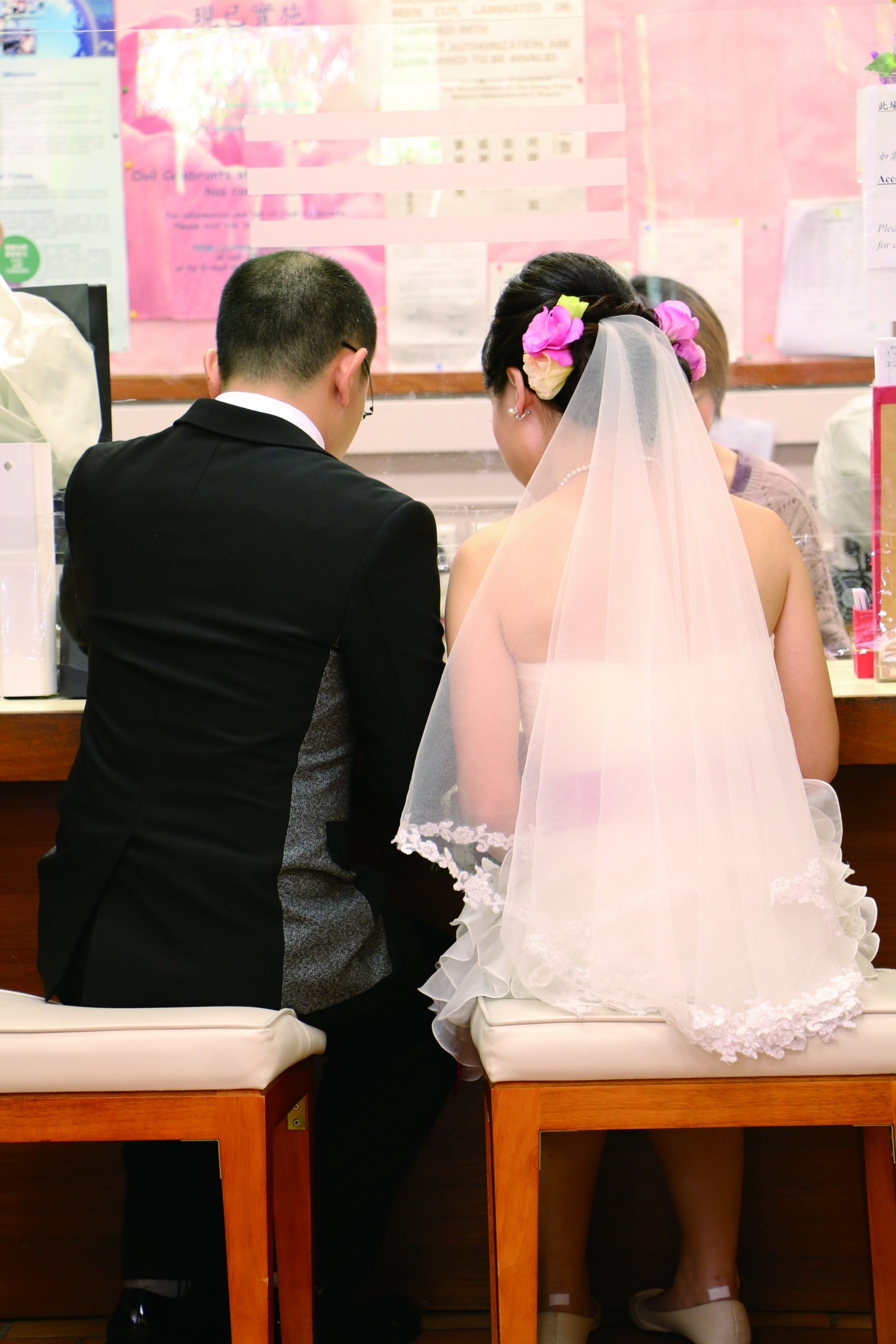
Unfortunately, Charles’s experience is not rare or unusual. According to the latest figures from the Statistics Department, the divorce rate has gone up from just under 1.6 per cent in 1993 to just under 3.5 per cent in 2013.

Dr Yeung Ka-ching, principal lecturer in the Department of Social Work and Social Administration at the University of Hong Kong, says both social and economic factors contribute to a growth in the number of divorces – such as women having higher financial autonomy, lower institutional barriers for divorce and the social acceptance of remarriage. But Yeung thinks there is something else. He is concerned the attitude towards marriage of the new generation has changed – from being a lifelong promise to an “easy come, easy go” decision. “In general, getting a divorce is easier and the cost is lower. Even if you remarry after divorce, society is more accepting,” Yeung says.

Dr Yeung Ka-ching, principal lecturer in the Department of Social Work and Social Administration at HKU

Marriage counselling in Hong Kong is provided by Integrated Family Service Centres under the Social Welfare Department, NGOs, churches and independent practitioners like psychologists and counsellors. Counselling services provided by independent practitioners generally cost around HK$1,000 for a one-hour session.

Yeung explains that marriage counselling provides a platform for couples to solve their most urgent concerns, then remedy their relationship, rather than to save a marriage at all costs. “Even if the couple realise they should get divorced in the end, it can be good [to get] counselling as they can have a happier life afterwards,” he says.

Yeung believes that although marriage counselling has become better accepted in recent years, Hong Kong society is not open-minded enough to make it a mainstay. “In the US, people just frankly share the names of their counsellors. In Hong Kong, people cannot fully accept it,” he says. Many still see marriage as a private matter and are ashamed to share problems with outsiders. Some even worry seeking marriage counselling will harm the family’s reputation. These views deter couples from seeking help at an early stage.