










Home Blog Page 118

Groom to Bloom

Spa days for Hong Kong’s pampered pets

Reporter: Amy Leung

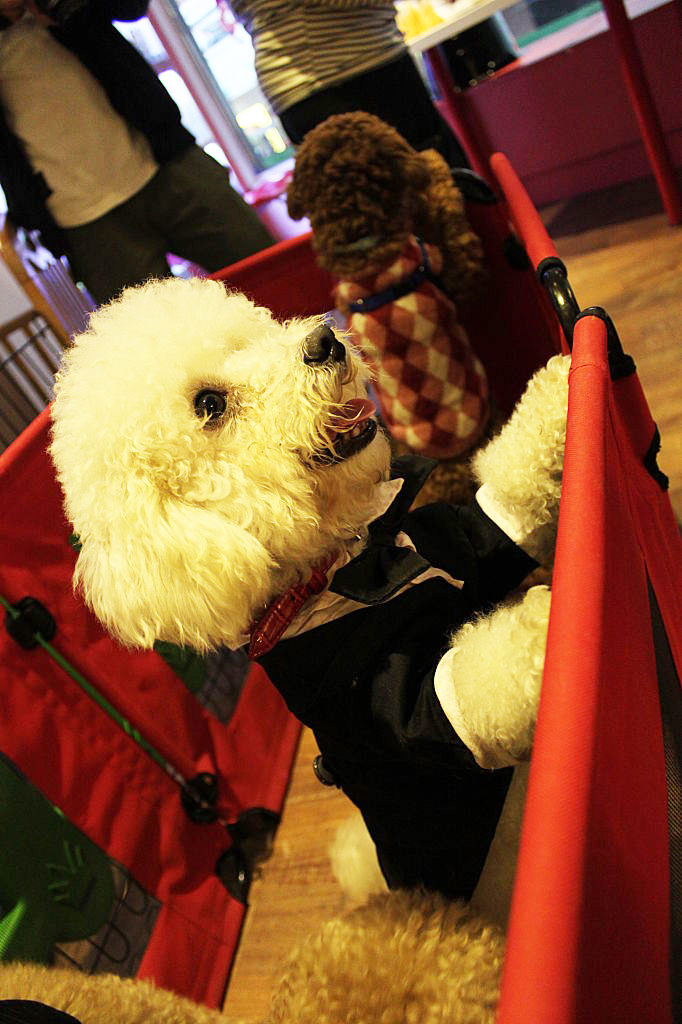
Walk along almost any street in Hong Kong and you will find dog owners carrying around their pets in their arms. These canines are immaculately coiffed and dressed in designer clothing with matching accessories.

Dogs are no longer kept for utilitarian purposes, to guard their owners’ premises or even for simple companionship. Some of today’s owners treat their pets as their children, their most precious possessions or even as status symbols and style statements. The mushrooming of pet–grooming shops and spas is evidence of such trends.

Academy of Modern Pet Ltd., which was established in 2007, is one of the pioneers in the pet grooming and pampering industry.

Sandra Cheung, the principal of this pet-grooming school, has been working in the industry for nearly two decades. The school offers a variety of professional training courses for people who are interested in becoming pet-groomers. These courses can cost up to $43,500 and topics covered include how to clip the fur of different breeds of dogs, how to dye their coats, their biology and anatomy, and business management.

“Being a pet-groomer can be treated as a job as well as an interest,” says Cheung, “that is why it is so welcomed by the public.”

However, Cheung stresses that when she started the business, her aim was not to make money. Likewise, she says most of her students attend the pet-grooming courses not because they want to turn their expertise into a business, but simply out of their love for animals.

In addition to the professional courses, the school also offers many short courses on how to care for and groom individual breeds of dogs, including how to groom them for dog shows. Students come from all walks of life; there are men and women, teenagers and homemakers, and their ages range from 14 to 62. “Because you love the pets, you will feel the time fly,” says Cheung.

According to Cheung, the industry really started to take off around 2006, when “bear bear poodle style”, which means a dog that is groomed like a teddy bear, became popular. “When the pet is beautiful, the owner feels happy. In return, the pets will feel the same too,” she says.

Cheung jokes that the look of a dog follows the interests of its owner. “How they dress their pets can definitely reflect their taste.”

People’s attitudes towards their pets and how they look have certainly changed over the years but to further develop the industry Cheung believes people need to look beyond Hong Kong. Therefore, she provides her students with opportunities for technical exchange, visits and international competitions. They travel to the mainland, to Japan and even the United States to acquire a deeper understanding of industry trends and apply what they have learnt.

“The world is ever-changing,” she says, “being in this industry, you must have a sense of the new products and inventions.”

Although not as experienced as Cheung, Shuet May has been a pet-groomer for nearly six years and opened her own grooming shop “Pet Fantasy” in 2005.

She went to Japan to learn the new trends in pet health and beauty treatments, and introduced some new facilities to Hong Kong. Pet Fantasy is one of the two shops in Hong Kong that provide something called the “Micro Bubble Pet Spa”. She describes the spa as similar to skincare treatments for humans. “It is a deep-cleansing procedure,” she explains enthusiastically. “The micro bubbles are so tiny that they can get into the pets’ pores and remove the dirt.”

Prices for the treatment range from $280 to $580 depending on the size of the dog; clipping and shearing costs extra. May says the prospects for the pet-grooming business are good because more people are willing to spend money to groom their pets.

“For people owning pets these days, it is just like having one more child at home,” May says. “They treat them like children.”

Most of the customers in her shop are young couples, but she also notices there have been more men, mostly single, visiting her shop in recent years. She attributes this to owners who view pet keeping as an activity through which they can socialize. “When the masters walk their dogs at night, they often stop and chat with each other,” says May. “It is a good chance to make friends with people with the same interest.”

Sometimes, owners will watch their pets having all the treatments, but most of the time they simply drop their pets at May’s shop for a few hours and pick them up later. May says that every time she hands the pets back to their owners, she feels like a teacher meeting parents. “It is as though I were giving out report cards after school. I have to report their performance in detail,” she says with an understanding smile.

Big Canvas for a Small-screen Villain

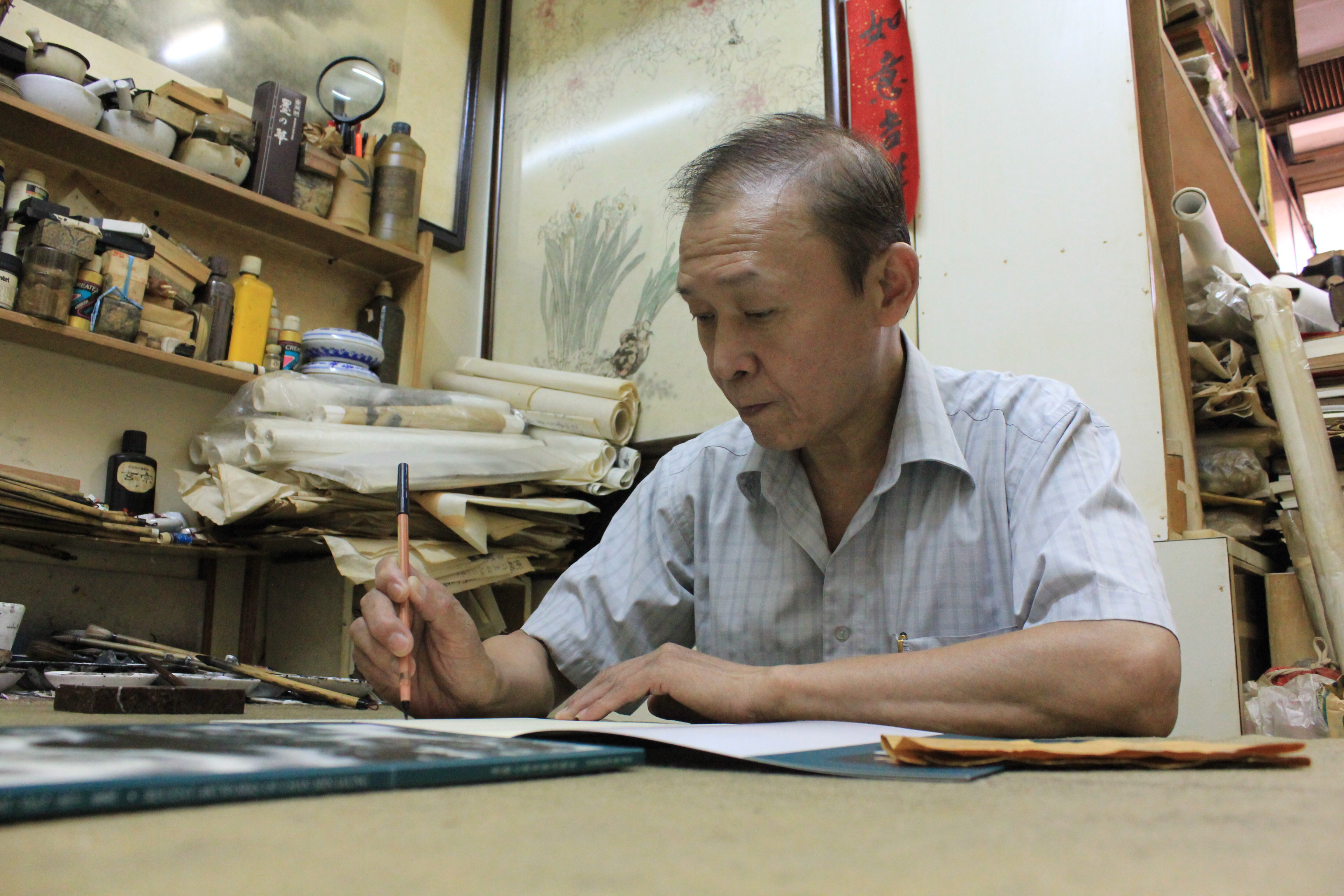
He plays gamblers and addicts on TV, but off-screen Chan Min-leung is a master Chinese painter.

Reporter: Charlie Leung

It was a rainy day on location in Sai Kung and some actors were standing around chatting, waiting for the shooting of the costume drama to continue. One of them, Chan Min-leung sat aside from the others and contemplated the mist that had lightly settled over a flowerbed. Captivated by the sight, Chan immediately drew the scene on the back of his script.

The name Chan Min-leung may not ring any bells, but his face is a familiar one. Many will have seen him on their television screens playing bit parts – a drug-user here, a swindler or a jobless, gambling addict there. The real Chan, aged 61, could not be more different from his on-screen persona; he is an artist, an accomplished Chinese painter who has won numerous awards and held exhibitions in Hong Kong and overseas.

Chan has been drawing and painting since he was young. His father was a baker who ran his own shop in the 1960s. When the bakery closed at 11p.m., Chan would cover the greasy worktops with newspaper and paint. At first, he did not have any teachers and taught himself by copying the pictures he liked in magazines.

Chan began to study Chinese painting at a studio at the age of 17 and threw himself into the art. However, when he said he wanted to be a painter, he got little support because nobody thought he would be able to make a living as an artist.

“Though the living was hard at that time, painting was my only occupation. I had given up all other activities for it. My motive for going to work is also painting.’’ Chan says.

In 1972, the bakery closed down because of the high rent. Chan decided to start his own bakery in Ma Wan, thinking he would be able to control his schedule and have more time for painting. However, as Chan had never started his own business before, it took him more time to learn and manage the bakery than he had anticipated.

In order to spare more time for painting, he soon closed the bakery and went to work in a carving factory. He also taught Chinese painting at a community centre and worked for a theatre company, both onstage and behind the scenes. Chan says he was lucky because his boss at the carving factory supported his painting and allowed him to be absent on weekdays to teach at the community centre.

Then, in 1977, a friend of Chan’s, who knew he had drama experience through the theatre company, approached him to ask if he would be interested in bit parts in TV drama.

In the 1970s, Television Broadcasts Limited (TVB), Commercial Television and Rediffusion Television were engaged in fierce competition and recruited large numbers of actors. Chan began his TV career and was formally contracted as a TVB artist in 1989.

“Show business is brilliant; it’s like a ‘Dream Factory’. People dream of becoming superstars. But it is also superficial and impractical,” Chan says. As a member of the entertainment industry, Chan has also thought about becoming a leading actor one day.

An Unlikely Activist

Vivian Leung – the Hong Kong housewife who took on the government.

Reporter: Sandy Ho Yuen-ki

Chairperson of the Lung Fu Shan Environmental Concern Group, founder of the Hong Kong Breastfeeding Mothers’ Association, active member of a parent-teachers’ association, member of the owners’ committee of her apartment block, owner of a passion fruit farm in Guangdong – these are just some of the many roles of Vivian Leung Tai Yuet-kam.

Leung, aged 48, is not the scion of any leading Hong Kong family, nor a high-powered professional or learned academic. In fact, she left school in Guangdong and came to Hong Kong at the age of 14. After the birth of her two children, her primary role was full-time mother and homemaker.

But it is her most recent role as an activist working to protect the environment of Lung Fu Shan that has attracted the most attention. Lung Fu Shan is an urban oasis on the slope at the back of the University of Hong Kong. Along with its surrounding area, it was designated as Hong Kong’s smallest and newest country park in 1998.

Leung was one of the many walkers who enjoyed the area’s peace and tranquillity. Then, in 2007, she noticed the historic granite surface along Pik Shan Path on Lung Fu Shan had been covered by a concrete road.

Leung saw this as an urban encroachment but the district council claimed the work had been done to solve minor flooding during heavy rain. Leung found this explanation unacceptable. She believed water-logging problems could be solved with improved pipes instead of a concrete layer on top of an historic path.

Leung drew up a petition and on October 14, 2007, she set off for Pik Shan Path on her own. There she asked walkers to sign her petition and a campaign was born.

It has been an uphill struggle. More and more construction projects kept being unveiled, including the erection of unsightly railings and fences along Old Peak Road and Hatton Road.

Leung sees the railings as more than eyesores that damage the environment; she sees them as an intrusion on freedom in Hong Kong. “They build railings alongside almost everything. They block the grass, the trees and even the benches,” says Leung. “Also, the railings constructed by the government are standardized and ugly; they simply do not match the environment and spoil nature.”

Born to Dance

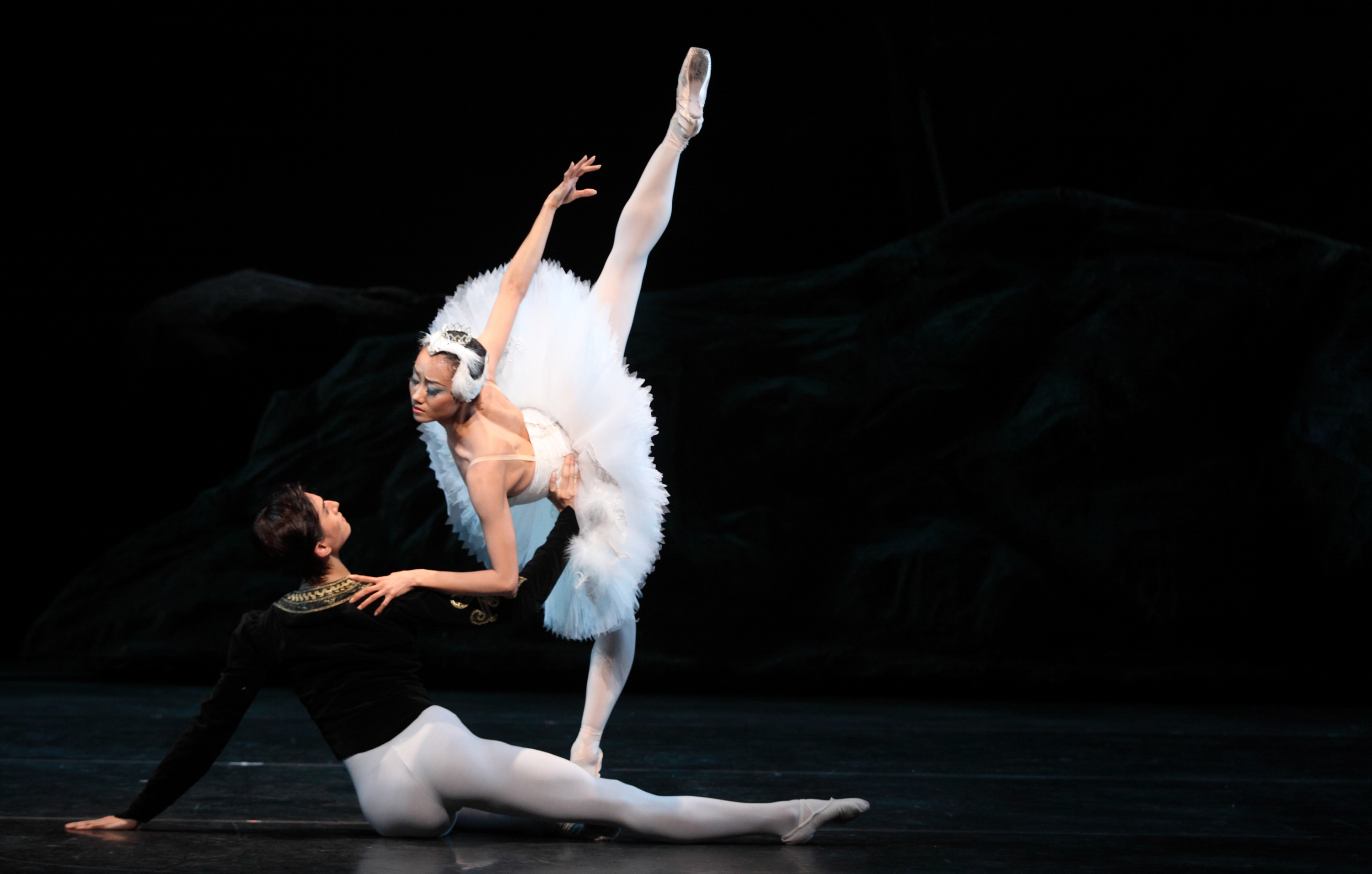
Hong Kong’s leading ballerina shares her thoughts on life, love and the highly competitive word of ballet

Reporter: Dora Chiu

Jin Yao, dressed in black sweatpants, a simple T-shirt and a black hoodie, is taking a break from rehearsals. Her feet are cocooned in a pair of huge down slippers. But, despite the casual attire, her ballerina credentials are immediately obvious in her elegant poise, her slender, long neck and limbs.

Dance is in Jin’s blood. Both of her parents were professional dancers. They know how hard a dancer’s life can be: brutally competitive, physically gruelling and mentally demanding. So they were wary of letting their daughter follow in their footsteps.

Still, the young Jin took a keen interest in dance. From the age of seven she joined the amateur dance classes her mother taught in Jilin. Even then, the girl’s talent was clear; just by imitation, she could execute the steps that her mother’s students could not do.

Although her parents were aware she had the athleticism, musicality and innate agility needed to become a professional dancer, they were still hesitant about allowing her to follow their path. They hid the application forms for the Beijing Dance Academy away from the young Jin.

Jin says she found them in drawer quite by accident. In the end, her parents relented and allowed her to audition for the academy, China’s leading dance institute.

Jin was nine when she auditioned and her performance won her a place. Now she had to decide whether to choose folk dance or ballet. In the end, Jin picked ballet because she liked the beauty and elegance of classical ballet.

She started studying dance at the academy at the age of 10 and graduated seven years later, joining the National Ballet of China. She was promoted to principal dancer in 2003 and was later ranked a top-grade China National Dancer.

Despite a promising career in the National Ballet, Jin decided to join The Hong Kong Ballet as senior soloist in 2004. Jin wanted to explore more possibilities in her dancing and see things from a broader perspective. She could see there were big differences between the arts world in the mainland and in Hong Kong.

Jin says a wider repertoire is performed in Hong Kong because audiences here can truly appreciate art. “Hong Kong people are more westernized and willing to accept different values,” she says.

In comparison, the focus in the mainland is mainly on ticket sales. Only famous and bankable programmes like Swan Lake and The Nutcracker are performed there. Dancers rarely have the opportunity to try performing other works, and this limits their talent and exposure.

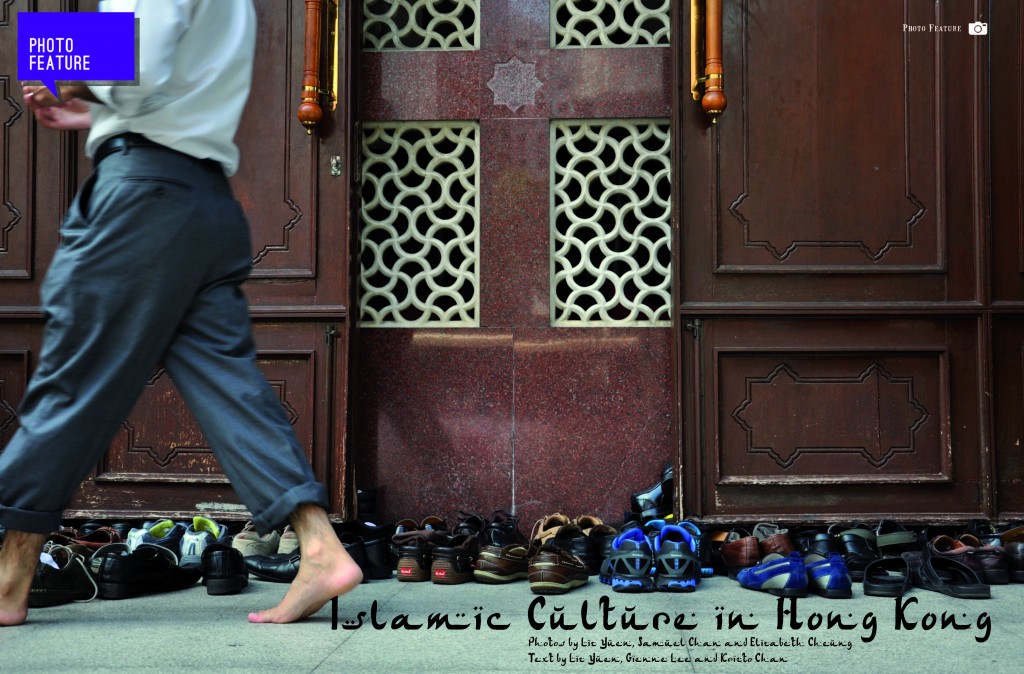
Islamic Culture in Hong Kong

Text: Liz Yuen, Gienne Lee and Krizto Chan

Photos: Liz Yuen, Samuel Chan, Elizabeth Cheung


Step in Their Shoes This Christmas

Understand the life of disadvantaged and dispossessed by living them – for 60 minutes

Reporter: Liz Yuen

What does Christmas mean to you? Perhaps it is having Christmas dinner with family members? Gathering with friends in your warm and cosy home? Going to Midnight Mass? You have the freedom to enjoy any of these rituals, but for refugees every day—even Christmas Day—can be a struggle to get through. For those in refugee camps, Christmas Day is just another day of hardship and suffering. Guarded by soldiers 24-7, they may have to mind every single word and action.

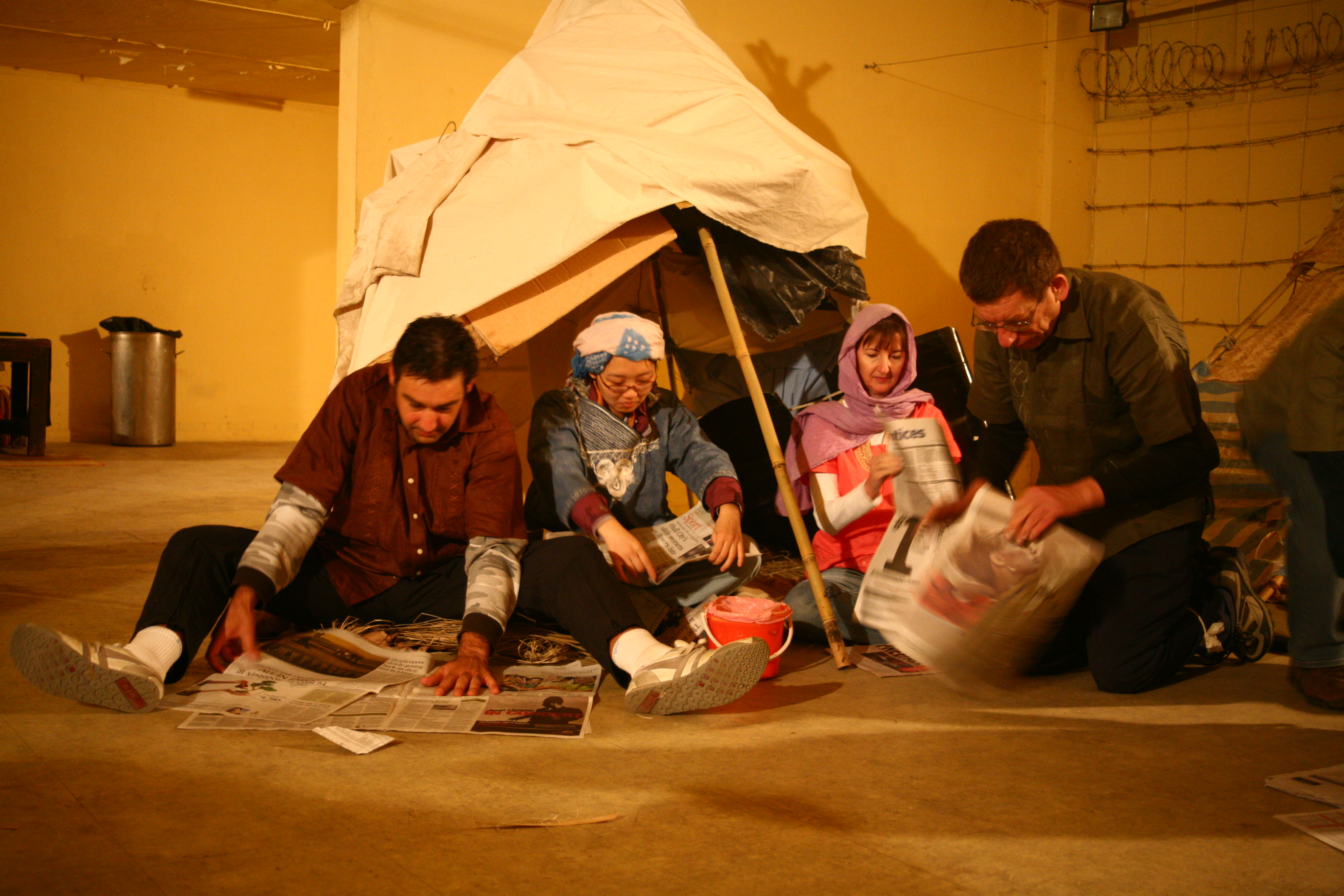
Living in a safe and affluent society like Hong Kong, it may be hard to imagine the lives of refugees. At Crossroads, you can get some firsthand experience by joining a simulation called “Refugee Run”.

Crossroads is a non-profit organisation which delivers quality excess goods collected in Hong Kong to poverty-stricken or disaster-stricken areas. It also organises simulations to make people aware of critical global issues.
Chan Nok Ka, a second year student from the Chinese University of Hong Kong participated in Refugee Run earlier this year.

Chan says it has made her more aware of wider issues. ”You wouldn’t otherwise think about what the solutions might be for these problems,” she says. People of all ages can join in the simulation and come up with ideas to help the displaced, she adds.

Apart from Refugee Run, Crossroads also stages Global X-perience simulations on a range of issues from HIV/AIDS to blindness.

These simulations can last from an hour to a couple of days. Most people choose to undergo a 60-minute experience but even this is enough to make a strong impact on participants.

Chan King-lok, who worked as an intern at Crossroads last year, describes one of the 60-minute X-periences as “a real eye-opener”.

It was set in the Indian city of Mumbai and participants experienced the lives of poor families who scrape by on the meagre income earned from making paper bags. “We were divided into groups of four and were given an unreasonably short time limit to meet the target [for making paper bags],” says Chan. “Since failing to meet the target means losing someone in your group, everyone worked really hard and some even snatched the finished paper bags from other groups.”

But when the allotted time was up, the person acting the role of the superior tore up all the paper bags the participants had given to him. “I was on the verge of tears when I saw that!” Chan recalls, adding that he felt for the first time how helpless the lives of others could be.

Chan says Crossroads managed to successfully create a tense atmosphere that made a lasting impact on the participants.

Christmas is not just a season for eating, drinking and making merry. It is also a time to share our love and care. This Christmas why not let Crossroads give you the gift of insight into and empathy for the plight of others from around the world? This Christmas, let us cherish what we have.

Punch Your Own Pick

Reporter: Joyce Lee

If you’ve ever wondered what to do with the thick wad of expired cards in your wallet, the Pickmaster Plectrum could provide an answer.

The Pickmaster is a portable punch that allows you to make guitar picks out of any plastic – credit cards, membership cards, CDs – basically any piece of thin plastic that you can find. This gadget cannot be easier to use. It works the same way as a standard hole punch. Simply slide an old card into the Pickmaster and press down. The useless plastic card has found a new lease of life – as a plectrum.

Not being able to find a pick just when you need one has always been a nuisance to guitar players. There is no need to root around under your drawers anymore. With the help of Pickmaster, a plectrum is always within reach. Where there is thin plastic, there is a guitar pick.

All the plectrums made will be in the traditional “351” shape. This ensures that everyone will be comfortable holding them. You can tailor-make a pick of the perfect thickness you like, as the Pickmaster is strong enough to punch through almost any thickness of plastic.

Why throw your money away on picks when you can make your own cheaper and more environmentally-friendly version? A plectrum costs around $8 each in stores nowadays. You can make up to five picks out of a single card. With a few uses, the gadget will have paid for itself. It is time to say goodbye to those fancy ivory plectrums and go green. Recycling is good for Mother Earth and easy on your wallet.

The Pickmaster also brings out your creativity. What could be cooler than having an original guitar pick of your own? Make it unique by choosing a card with your name or photo.

If you find the edges of the picks made from the Pickmaster rougher than shop-bought ones, just use a nail file to smooth the edges. The picks will then be flawless.

The Pickmaster is a fun and practical gift for guitar enthusiasts. It is also the perfect way to revive your dead cards.

The Pickmaster costs around US$25. Google “Pickmaster Plectrum” and order online.

Watch how the Pickmaster works on YouTube: Search “Making guitar picks with The Pickmaster Plectrum”.

November 2011 – Orienting Orientation

University orientation camps, or o’camps, in Hong Kong have come under scrutiny in recent years. Media coverage concentrates on shock stories of sexual impropriety and ‘obscene’ games. But for most students, o’camp is an unforgettable experience, an introduction to university life and the place where friendships are made. Varsity takes a closer and more comprehensive look at the o’camp phenomenon:

Hong Kong’s o’camps down the ages – a look at how o’camps have changed over time and what it tells us about our society

Why the media is obsessed with negative stories about o’camps and the reasons for the ‘offensive’ games students play

What makes Hong Kong’s o’camps so distinctively Hong Kong? How do they compare with orientation activities in other places?

Varsity November 2011 – Editor’s Note

Orientation or Disorientation?

Orientation camps, or o’camps in Hong Kong’s universities are much more than orientation programmes. Over the years, they have become almost like rituals. Among university students, they are both feared and celebrated. Outside of the campuses, some immediately associate o’camps with the obscene and sometimes offensive games that get a fair amount of media coverage every year. As insiders, we are well aware that such elements do exist in o’camps, but thre is more to o’camps than the coverage suggests.

That is why this issue of Varsity features an insider’s guide to local university orientation programmes in the Periscope section. We look at how o’camp has evolved into what it is today, what the fuss is all about and is it misplaced? We also look at what makes up orientation week with Hong Kong characteristics.

Challenging the stereotype of university orientation presented by mainstream media, we wish to go beyond the superficial and find out what university o’camp can tell us about our society, values, education and popular culture.

The November issue also features profiles of two homegrown journalists working in the international arena. Winner of this year’s World Press Photo award and veteran Associated Press photojournalist Vincent Yu shares with Varsity his experiences as a news agency photographer and his vision for photojournalism. The CCTV reporter Sze Ho-wai, who was taken hostage with dozens of foreign correspondents in a hotel during the rebels’ siege of Tripoli in Libya, recounts what it was like being an accidental war journalist.

Happy reading!


Samuel Chan
Editor-in-Chief


The Good O days

How o’camp culture has changed and evolved with the times.

Reporters: Joana U and Stephanie Chan

Mention o’camps, or university orientation camps, in Hong Kong today and people might think of sexually suggestive games or groups of identically clad youngsters acting like cheerleaders in the heart of the city. But for Alfred Hau Wun-fai and his friend Au Yuet-ching, o’camp brings back memories of romantic midnight boat-rides across a tranquil lake in the 1960s.

Fast forward to the 1970s and the scene changes again, with students singing their college anthem and songs of the Chinese resistance against Japanese aggression and hotly debating the Cultural Revolution taking place on the mainland.

The nature of Hong Kong’s o’camps changed with developments in Hong Kong society itself and reflects changing expectations of the role of university students in society.

Au Yuet-ching and Alfred Hau in 2011

Alfred Hau joined the Chung Chi College (Chinese University of Hong Kong, or CUHK) o’camp in 1968 as a Geography major, while Au Yuet-ching was a Sociology freshman. It was a big event, a time to meet new friends and adapt to university life.

“Everyone joined, and so did I,” says Hau. He and Au are more than happy to recall their “‘antique”’ memories. They remind one another of episodes from the event and chuckle over them.

Hau says there were not many facilities on the campus in those days. They spent most of the o’camp in a stadium where games were held. Hau said that physical tests, such as running, were the most demanding. The students were also organized into teams which had to stage performances. This was the most unforgettable activity for him.

“At that time, most university students came from a number of elite secondary schools, so we [freshmen] were very united…we did not compete with each other at all,” say Hau.

Hau explains that students always shouted “cheers” to show appreciation of their fellow performers. This is unlike the slogans and rhymes, referred to as “dem beat” or “demonstration of beats” of today. Instead of appreciation, these contemporary rhymes may include personal attacks on the physical appearance or characters of members of other groups.

As for the nocturnal boating, Hau says rowing across the Tolo Harbour was a must-do and significant activity in the o’camp of the 60’s. A boy and a girl had to row on one boat as partners as it was deemed to be too dangerous and strenuous for two girls to row together. “Many lovers may begin like this,” says Au, grinning.