





Home Blog Page 41

Break the Norms

(Photo courtesy of June Liu)

Pornstar June Liu shares her pornstar’s life and experience.

By Vivian Cao in Yunnan

Some people criticise June Liu for corrupting the image of Chinese women, but the 22-year-old Chinese pornstar still enjoys her career. Her stage name is Spicygum in Pornhub, one of the largest pornographic video sites in the world.

Liu has about three hundred thousand followers on Pornhub and nearly four hundred thousand followers on Twitter. Starting from the end of April last year to now, Liu has owned up to 200 porn videos with copyright protection.

Facing Bad Comments

“Misunderstandings are unavoidable, especially for porn industry which is controversial and uncommon,” Liu says.

Information asymmetry is the main reason for misunderstandings.

Many people who live in China know little about Liu because of the Great Firewall – a complex, multi-layered system censors and controls the internet, blocking access to Twitter, Facebook, and other foreign websites.

“They know me through other people’s eyes and mouths. The hostility of netizens is quite serious nowadays,” she says.

Liu says she has to face hostility, criticism, and misunderstanding every day. When reading the many bad comments, she even thought of giving up.

But she gathers herself when seeing messages left by her fans on her Pornhub page or Twitter chatbox. She cites a message from a fan: “Your videos give me warmth when I feel lonely.”

“I cannot give up just because someone hates me, there are many people still like me,” Liu adds that many fans are looking forward to watching her videos.

“I cannot give up just because someone hates me, there are many people still like me.”

Liu and her Pornhub Bobby Pin. (Photo courtesy of June Liu)

The Pornstar’s Life

Liu reveals there is no specific reason leading her to become a pornstar. She just wants to try. “Like you never ate durian before and one day you give it a try,” she says.

Taking videos when she has sex is her daily routine. “Before I become a pornstar I took videos by myself when I had sex. Those early-stage videos are actually part of my life,” Liu says.

She thinks sharing her sex videos is not only a way to share her daily life but also a way to express herself. She does not feel insecure when her body is exposed in front of the camera because she likes her body.

Since she started uploading videos on Pornhub, Liu insists on running her Pornhub page by herself without hiring by companies.

Other than making her videos of her own, Liu now also helps some newbies who want to enter the industry managing their Pornhub pages and editing videos.

Liu got nominated for Pornhub Awards 2020. (Photo courtesy of June Liu)

She thinks she is a considerate helper for them. With the experience of being a newbie, she knows it is not easy to be famous.

“I give the newbies autonomy and room for improvement,” Liu says.

Liu is busy every day as she is also a final year university student studying in London. In her view, studying is more tiring than working.

“My major is too theoretical which cannot usually be used in daily life,” Liu says. 

She declines to reveal the name of her school and what she is studying, however.

“If this kind of personal information is published, many people would ask for a personal meeting with me. It is troublesome for me,” Liu explains.

First Sex Lesson

By reading books, watching movies and porn videos, Liu learned things about sex when she was a teenager. Before becoming a pornstar, she thought she knew everything about sex.

“But I was wrong. The audience has many peculiar fantacies about sex and many are unknown to me,” Liu says.

Liu thinks making porn videos is a learning process and it is a way to help people turn their sexual fantasies into reality.

She needs to study before preparing a customised video which includes special demands.

Liu explains: “Everyone’s orgasm is different. For example, some people may ask me to wear a stocking inside a pant which is very strange to me.”

“Where is this sex fetish comes from? Why is it attractive? How should I express it through my performance? I must figure these out or my videos have no soul,” Liu adds.

Being a Professional Amateur

Liu believes being real and passionate are the highlights of her videos.

Her videos are very popular in Pornhub. Liu’s Pronhub page has 36 million views and her public videos were watched by more than a million people, some of them even own more than five million views.

“A standard style and tag may bring a burst of popularity to me for a short while. But it will trap my creativity and performance.”

“Amateur style can give me more freedom to shoot and edit which can make my videos more realistic,” Liu says.

The amateur style also helps Liu to keep the passion alive. “When one thing becomes a job, you may get tired. I do not want to hate sex,” she adds.

She avoids confining herself, so she can adjust performance according to a plot.

“A standard style and tag may bring a burst of popularity to me for a short while. But it will trap my creativity and performance,” Liu says.

In her videos, she breaks the stereotype that women should be passive in sex. She shows an aggressive role in most of her videos.

Liu explains: “It is my personality. Acting passively one or two times is acceptable. If I always go against my nature, my passion will burn out.”

Edited by Lasley Lui & Regina Chen

Look Good, Feel Good

Natasha Moor, founder and CEO of Natasha Moor Cosmetics. (Photo courtesy of Ali G Studios)

Makeup artist Natasha Moor helps women look their best to feel their best.

By Agnes Lam

Born and raised in Hong Kong, Natasha Moor is an Indian makeup artist who specialises in bridal makeup and an entrepreneur running her own cosmetic line. The 30-year-old is also a COVID-19 survivor.  

Moor was diagnosed with COVID-19 in March after returning from a business trip in London. She was hospitalised for 34 days in Caritas Medical Centre. Feeling bored when being treated in the hospital, she posted makeup tutorial videos and snippets of her life in the hospital on Instagram. 

Doing makeup helped lift her spirits when fighting against the virus.

“I asked my dad to send me some cosmetic products so I could do some tutorials in my free time in the hospital. So I could feel more confident, and I did,” Moor says. 

Her strong will not only helps her fight the deadly virus, it is also the foundation of her successful career.

Natasha Moor, founder and CEO of Natasha Moor Cosmetics. (Photo courtesy of Ali G Studios)

Moor had a love affair with makeup ever since she was a child. “When I was a primary three pupil, my teacher almost got fired by the school because I did her makeup every day,” she says. 

She thinks her grandmother had a strong influence on her childhood. “My grandmother never leaves the house without makeup. Even when I video call her now, she has to put on lipstick first,” she says.

Moor became a public relations executive after graduation. She worked with luxurious diamond jewellery companies such as Chopard. She was often praised for her makeup. Later on, she started doing freelance makeup jobs on the side. 

“I really loved it. It was all about passion,” she says. Moor resigned from her job after a year and did a six-week makeup course at Lia Schorr Institute in New York in 2012.

“As my business grows, more respect is earned.”

Natasha Moor at Cosmoprof Las Vegas in July, 2019. (Photo courtesy of Natasha Moor)

“Some people think that because you are touching people’s faces when doing their makeup, you are lowering your standards as a person,” she says.

Being a makeup artist was considered more of a blue-collar job rather than a respectable white-collar. “As my business grows, more respect is earned,” she adds.       

Her passion for doing makeup eventually wins support from her parents who were not keen to tell relatives about Moor’s work when she started her career as a makeup artist. 

“I think it is about Asian culture. We want our children to be doctors, lawyers, not an artistic occupation,” Moor says.          

“Now a lot of parents tell me that their daughters want to be like me. Their daughters want to become makeup artists too,” she adds. 

Moor mostly does makeup for brides now. “It is like the biggest day of their life, they are so excited to look beautiful,” she says. 

“Models are paid to look beautiful. But brides have this crazy confidence when I do their makeup,” she says. Moor realises that makeup is a transformative tool that can help boost a woman’s confidence. 

“I cannot do everyone’s makeup all over the world forever,” Moor says. So, she created a makeup brand in 2017. She wants women to be confident by doing their makeup with her products. 

The empowerment element is important for Moor’s brand. For example, lipsticks in her cosmetic line are named Ambition, Goal Digger, and Indestructible. “I want women to wear ambition and feel what they have is ambition,” she says.      

Apart from working as a makeup artist, Moor is very active with charity work. She often visits women’s shelters, orphanages and drug rehabilitation centres in Bali, Jakarta, Mumbai, Compton, Los Angeles, San Diego, and Hong Kong.

Natasha at Care for Kids Bali, Jodie O_Shea House in Bali May, 2018. (Photo courtesy of Natasha Moor)

Moor started the initiative ‘Do Moor’ in 2017 and visited women’s shelters. 

“I want to give a confidence boost to women who do not have that access to makeup. Women who do not have money and experience. Women who do not even know they can feel this confident just by putting on makeup,” she says.

“I want to give a confidence boost to women who do not have that access to makeup.”

Moor did makeup for women in shelters and rehabilitation centres just the same way she did it for her clients. 

Moor visited an orphanage in Bali in 2018. The weather was rainy during that visit. She was heartbroken to see children walking barefoot in the rain. 

“We spent so much time. We received so much from donations. We tried to take care of the kids. But how come they were barefoot?” she says, when talking about her experience in Bali. 

This gave her an idea to create slippers called ‘sole mate’ for children at orphanages and underprivileged children. During her March trip to Mumbai with Spark-A-Change foundation, she gave children ‘sole mate’ slippers.

She believes that the world needs more kindness and she strives to deliver positivity through her work and brand.

“Empowerment means being able to support another person without having to tell the world. Doing it from your heart genuinely is what matters. You don’t have to step on anyone to get anywhere. Just be a kind person,” she says.

Edited by Lasley Lui & Regina Chen
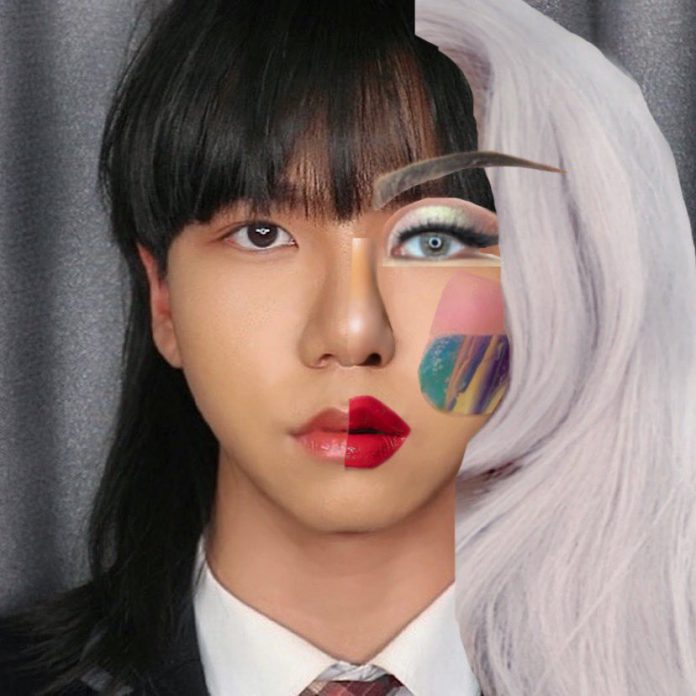
Werq the World

“The biggest advantage of being a drag queen is that I can be what I want to be.”

By Sarah Ryou in Jakarta

Turning Jong-in to Jong-ja

Jung Jong-in starts his day thinking about what makeup he wants to wear every day. “Before I put on makeup, I think of a concept first. From there I start to choose a colour and an accessory that I want to wear,” the 18-year-old drag artist who is also known as Jong-ja says.

“I get inspiration from everything around me. A single leaf falling from a tree can inspire me. After finishing my makeup, I wear a wig that goes well with my make-up,” Jung says.

“I feel thrilled and excited whenever I turn myself from Jong-in to Jong-ja.”

He once was inspired by Beyonce’s performance in a concert. He bought wigs and costumes that look like Beyonce and did make-up just like the American singer.

“I feel thrilled and excited whenever I turn myself from Jong-in to Jong-ja,” he says.

Jung started dressing up and performing as a drag queen after watching a YouTube video a few years ago. “When I first watched a drag queen clip on YouTube, it struck me to core of my heart and I wanted to find out more,” Jung says.

“With strong interest, I started to watch RuPaul’s Drag Race on Netflix. I was inspired by the drag performance and found courage to dress up as drag costume myself,” he says. RuPaul’s Drag Race is one of the most famous drag Queen competition shows featuring drag artists’ fashion, performance, and stories.

(Photo courtesy of Jong-in)

Perceptions of Drag Culture

Drag queens are men who dress up in fancy costumes to deliver performance.

Dot Face, a South Korean YouTube channel, showcases stories of LGBTQ, drag culture and other minorities who are not widely known to the public. The general attitude is quite negative due to a lack of knowledge of the subject.

Jung points out people have limited access to learn more about drag culture, as their performance can only be seen in clubs and queer festivals.

Due to the lack of understanding, he often comes across with people who ask him questions such as: Isn’t it strange for a man to dress up like a woman? And some would say to him that “Man should be manly”.

“It sometimes discourages me when people criticise my work. But I know I have friends and families who support me. Now, I have the courage and confidence to fight against these negative gazes,” Jung says.

“Why do men need to look like men? What is it like to be a man? I think what I do can also be defined as man. The way you look doesn’t define your sexual identity. Being brave and being yourself is the way to show your personality,” Jung says.

(Photo courtesy of Jong-in)

Being Jong-ja

Jung hosts shows and performs at drag clubs.

“Before becoming a drag queen, I always felt that part of me was missing. I feel that the mood of the society is suppressing me from being truly who I am. Whenever I am having a hard time and want to let everything go, drag culture lifts me up and gives me confidence,” Jung says.

When performing drag shows, Jung dances, sings, does catwalk in fashion shows, acts, and even does stand-up comedy. He uses the stage to tell the audience to accept drags as who they are.

Yet as a minor, he has limitations in performing drag shows, as most shows are held in bars or clubs. In Korea, youngsters aged under 18 are prohibited to enter bars or clubs. Jung can only perform in drag clubs which are open for teenagers.

Jung has been invited to attend television programmes to tell his story and he also runs his own YouTube channel which now has about 5,000 subscribers.

“A lot of people seem to know drag art exists, as the media reports about it. But judging from comments on YouTube or other social media platforms, many still think it is a shame that I dress up like a woman,” Jung says. 

“I am not upset, but I hope they will think differently one day. I want to break the stereotypes. I wish drag culture could be accepted as popular art culture,” he adds.

Jung thinks drag culture does not belittle or ridicule women, but he is aware that it is a sensitive subject.

“I am always very careful and aware about what I say and how I act during my performance and in my YouTube videos. I think that drag artists, including myself, should accept comments by others. This is a lifelong assignment for drag artists,” Jung says.

To those who do not accept the drag culture, Jung says, “Some may dislike us, and I can understand. All of us live in the same world, but how we live, and what ideology we have is a different matter. As long as people respect each other and respect diversities in culture, then it is fine. But it is intolerable to publicly spread false information about drag culture.”

Many drag queens including Jung have lost stages to perform due to the pandemic.

“The biggest advantage of being a drag queen is that I can be what I want to be.”

“This is a tough time for me and all the drag artists. I’m pretty sure that is the same for everyone these days. I want to give people pleasure and give them inspiration through my performance,” Jung says.

“I hope the audiences look at me and drag culture without prejudice. The biggest advantage of being a drag queen is that I can be what I want to be. There are so many ways to express myself. The most important thing is I feel happy,” Jung adds.

Edited by Lasley Lui & Regina Chen

Chill in the Chilly

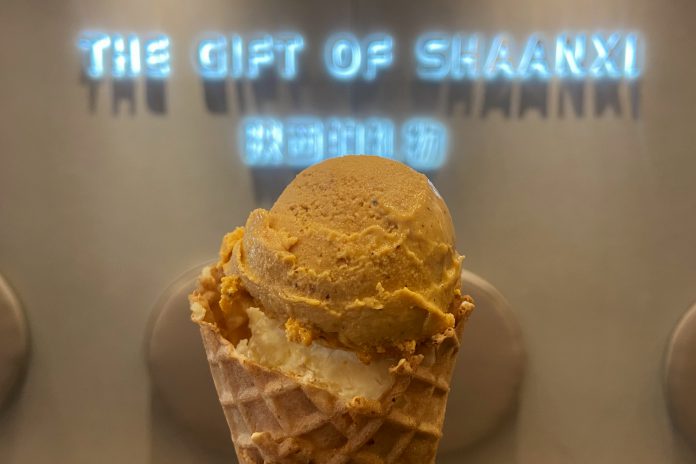
Exotic flavours of ice cheese such as spicy chilly oil tickle people’s taste buds in an ice-cream shop in Shaanxi.

By Coco Zhang in Shaanxi

Have you ever tried chilly ice cream? Wu Chunye and Hai Bin, who founded Shan Shi San in Xi’an, Shaanxi in 2013, are the inventors of the spicy flavour.

Shan Shi San, a Xi’an local ice cream shop, is decorated in an ancient architectural style.

Inspired by Italian gelato, they use local produce in the province such as chilly, corn and fruit to make ice-cream and name their product “ice-cheese”(冰酪).  

“Ice-cheese is a combination of the Chinese flavour and Italian gelato. It is handmade and low-fat,” Wu says.

People in the province like spicy food, and “red chili oil” is an indispensable ingredient in Shaanxi’s cuisine. They grind qinjiao, a local red pepper, peanut, sesame and other spices and splash the mixture with hot oil. 

Wu and Hai create “red chili oil” ice-cream and it is a top seller in the shop. 

Liu Yuhang, a visitor from Guangdong, goes to the ice cream store by recommendation from his friends studying in Xi’an. After trying red chili oil ice-cheese, he says: “It’s spicy and distinctive.” 

Apart from the “red chili oil” ice cheese, the store has 103 types of flavours. “Lintong pomegranate” flavour, “Hancheng Chinese prickly ash” flavour and “Sanyuan sesame” flavour are all made of local ingredients. It costs RMB ¥25 (US $4) for two scoops with a cookie.

Another signature product the store has is tiger tally cookie. 

Tiger ally cookie with ice cream.

“Shaanxi is a fertile region. But it is hard to find gifts with innovative design, exquisite craftsmanship and beautiful packaging in the market,” Hai says. 

Tiger tally was issued to generals for troop movement in ancient times, and this treasure is a highlight in Shaanxi History Museum. Inspired by the history and special presentation of tiger tally, the pair makes cookies modeling on the shape and design of it.  

Li Hao, a visitor from Beijing says: “I really want to buy some gifts with historic culture of Shaanxi. The cookies are delicious and well-packaged, and I believe my family will like this gift.” 

If you want to give spicy ice-cream a try and take a bite of tiger tally cookies, you can find out more about Shan Shi San on Dianping (大眾點評), a leading shop review website in the Mainland.

Edited by Lasley Lui

Silent Bakery

A touching story behind a bakery in Changsha draws crowds to buy bread.

By Coco Zhang in Shaanxi

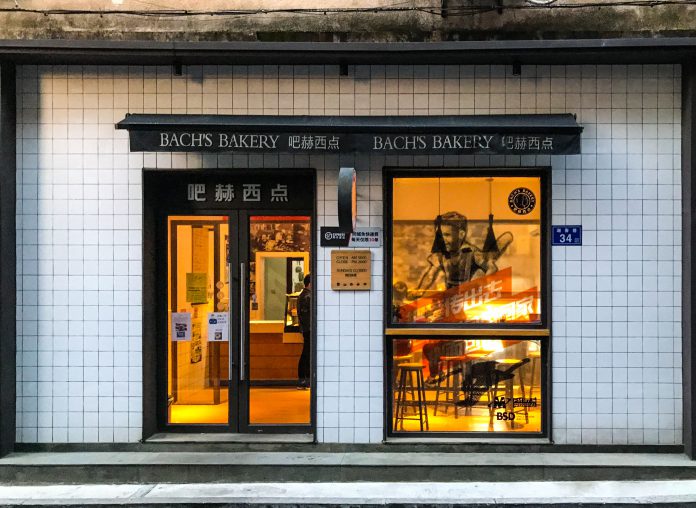
Bach Bakery is a quiet shop, as bakers are hearing impaired. The shop sells a variety of traditional German bread, including sugar-free bread. A card is attached to a bread tray listing all nutrient content in the shop. 

Red card means the bread contains sugar, and blue means sugar-free.

Most of the bread costs no more than RMB ¥10 (US $1.5). You can buy a cinnamon roll and a cup of coffee at RMB ¥18 (US $3) and enjoy a wonderful afternoon tea.

Pretzel (left), a very particular salty bread in Germany with special production technique and unique taste. Cinnamon roll (right), the best seller in Bach Bakery.

Uwe Brutzer, founder of the bakery, is from Germany. He is better known as Wu Zhengrong in China. 

Wu has run Bach Bakery for nine years in Changsha, a famous tourist city in Hunan Province.

The bakery owner, Wu Zhengrong, stands behind the counter.

“Bach’s music is perfect. We named the bakery Bach because we also want to produce perfect German bread,” Wu says.  

There are four bakers and two apprentices in this traditional German bakery, and all of them are hearing impaired. 

“Bakers and apprentices have their way of communicating. Apprentices are lucky because they can’t find another place where sign language is used to teach them,” Wu says. 

Every trainee undergoes three-month training and a two-month paid internship before working as qualified bakers.

“Every piece of bread is made of love,” Wu says. “People who want to support their career always come to buy bread made by our bakers,” he adds.

Customer is buying traditional German bread.

Wu has been living in China for more than 20 years. He can speak fluent mandarin. Wu loves to share everything about his life with his customer, especially his volunteering experience in China. Photos on the wall tell what he has done these years.

Wu and his wife went to Taiwan to study Chinese in 1997. Then they have settled in Changsha since 2002. Before they opened the bakery, they have worked in the China Disabled Persons Federation (CDPF) of Hunan to provide professional rehabilitation training for hearing-impaired children for nine years.

“The deaf communicate in sign language. They have flexible fingers, so they are good at handwork,” Wu says

“I’m wondering how to help the deaf make a living like other people. I think being a baker is a practical way, as they can make use of their strengths,” he adds.

If you want to know more about their stories and support this loving bakery, you may visit their website www.bachs-bakery.com or visit the bakery when you travel to Changsha.

Edited by Lasley Lui

E-Book

Special Issue

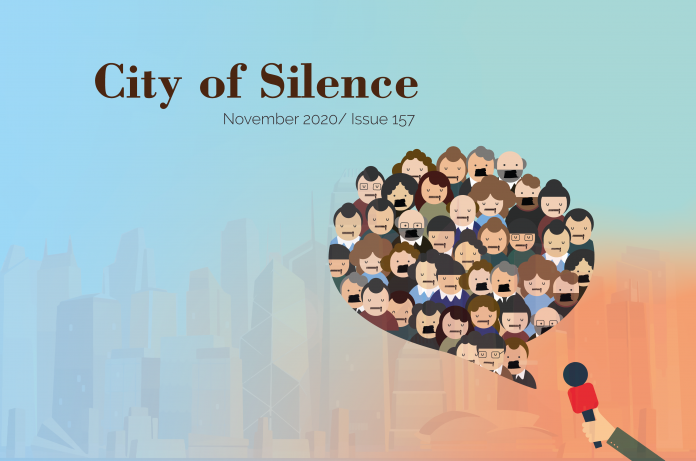
City of Silence – Editor’s Note

With the introduction of the national security law this year, fear is in the air in Hong Kong.   

Content providers in journalism, publications and music industry are worried whether their creation will lead them to legal traps. 

Our Periscope section looks into creative industry’s fear under the new law. We try to look at content providers who are affected by the law and their ways of coping with the situation.  

Soon after the law was introduced, books written by prominent pro-democracy figures were removed from public library shelves, triggering fears and concern for freedom of speech. We talk to independent booksellers to understand their worries about vagueness of the law.

Security concern when doing reporting or conducting interviews grows after the implementation of the law. Some journalists are self-censoring their works to avoid violating the law. We speak to journalists to learn their concerns and worries about press freedom that Hong Kong was once proud of.

Local music producers are also in fear when writing music about social issues in Hong Kong. We reach out to local music producers to learn their thoughts on how the law is having an impact on the music industry.

This issue of Varsity also features a wide range of stories in different places, such as Chinese students’ visas being cancelled by the U.S. and cinemas hit by COVID-19 in China, pregnant women doing strength training in Taiwan, press freedom under threat in Indonesia, and overworked delivery workers in South Korea. We also have coverage about Hong Kong on other issues such as young people starting e-business amid the pandemic, overworked domestic helpers, popular trend of eating vegetarian food and online counseling service. Enjoy the read!

Regina Chen

Chief Editor

Vocals are Muted?

Scene in the music video produced by Fong. (Photo courtesy of Fong King-lok)

Local music creators are worried about the increasing risks of political music creation due to national security law.

By Mandy YIM

Contagious Fear over the Law

“I will avoid using terms like “Free Hong Kong, revolution now” or replace the phrase with other terms when I write songs,” says Sunny Lam, a local political singer who has been creating music videos about political issues since 2014. With more than seventy thousand subscribers on his YouTube channel, Lam expresses fear over the national security law which came into effect on June 30.

He is concerned about the ambiguity in the law. “The government interprets everything,” Lam says. “Once the government says you violate the law, then you are,” Lam adds.

Having published two songs about the Prince Edward 831 incident on his channel, Lam worries about being arrested. “I thought about giving up (producing political songs) in August,” he says. “With the introduction of the law, the government may say I am spreading rumours through my songs about the 831 incident,” he adds.

Sunny Lam creates and performs his own political music. (Photo courtesy of Sunny Lam)

On August 31, 2019, police entered Prince Edward MTR station to arrest people after receiving reports that protesters assaulted members of the public and damaged station properties. Video footage showed police pepper-spraying protesters inside a train carriage and ordering them to kneel against a wall with their hands on their heads before making arrests. Commuters protected themselves with umbrellas, but some were still seen bleeding from head injuries. The event generates unsubstantiated claims of deaths that have been repeatedly denied and denounced by police and government officials.

Lam says some netizens he has worked with share his fear. “Some netizens wrote lyrics for some of my songs about Hong Kong. They told me they would stop doing it because of the law,” he says. 

People around Lam, especially his parents, advise him to stop his production to avoid violation of the law. “I used the phrase “black cops” many times in most of my songs. I may soon be arrested,” Lam says.

Despite his fear of being arrested, Lam says he will keep producing new songs and post them on his YouTube channel. “I am scared, but I won’t stop doing it,” he says. “I am still passionate about music creation,” he adds.

Lam believes that creating songs about current issues can arouse public awareness. “Some people may not care about politics. Some may find news boring. Music can repackage news by adding different styles to it such as a sense of humour,” he says.

Law predicts a decline in audience as people may tend to discuss political issues less openly under the law. “I’ve never thought the situation would become like this. In the past, I thought this only happens in China. Now, Hong Kong is the same,” Lam says.

“In the past, I thought this only happens in China. Now, Hong Kong is the same.”


Scene in the music video produced by Fong. (Photo courtesy of Fong King-lok) 

Survive under a Vague Law

Another music producer Fong King-lok also shares Lam’s feelings. “I do not expect the law to come so soon,” Fong says. “(Despite the law,) we will continue to create music and sing our minds,” he adds.

Fong, an executive committee member of the Hong Kong Professional Teachers’ Union, has devoted to music production for more than 20 years. He wrote a Cantonese song with his friends about how ordinary citizens resist the government. The team published the music video on YouTube in May.

Fong describes his team as a group of people who care about Hong Kong. “We want to entertain ourselves and voice out our thoughts and resonate with people through music,” he says. “Music can help everyone express their thoughts. It is not just an idea. It can be watched, listened to and shared with others. As a creator, this is the greatest joy,” he adds.

Yet, he loses motivation to produce music after the law was introduced in June. “Frankly speaking, the law makes me feel discouraged. I lose the will to express my opinion,” he says. Fong thinks the lack of room for tolerance and respect for different opinions in the city is suffocating. 

Similar to Lam, Fong points out the vagueness in the law creates fear. “What is sedition? What is subversion? Does singing a song mean sedition? Is national security that easy to be interfered with?” he says. 

“Our team is not a group of young frontline protesters. We are relatively moderate. Even so, we have worries.” Fong says. 

He also feels surprised about the current situation. “I have lived (in Hong Kong) for more than 40 years, and I have never seen a situation like this before,” Fong adds.

Fong says he will not stop making music. “We will not change the theme of our music. All the productions we do are related to society,” he says.

“Any change may cause a lot of ripples but may also bring a lot of hope,” he says. Fong believes the most beautiful music is created at the hardest time. “I don’t believe music creation will die,” he adds. He is planning to create a song about saying goodbye to Hong Kong. 

Power of Linguistics 

Heartgrey, a three-time Chinese Beatbox Champion who represented Hong Kong at the 2012 Beatbox Battle World Championship, has produced music about political affairs in Hong Kong. He says that it is important for music creators to survive in their own ways. “Music creators can use less explicit words in their lyrics,” he says.

Last year, Heartgrey produced a song titled “Under Mountain” with his friends to express their feelings towards the Anti-Extradition Law Amendment Bill (Anti-ELAB) movement. The song was first performed in the King Maker II Final Competition on ViuTV. It then became a hit.

Heartgrey performed the song “Under Mountain” in the King Maker II Final 
Competition on ViuTV. (Photo courtesy of Heartgrey)

Heartgrey thinks music can be a source of emotional support for Hong Kongers. 

“Music creators are able to influence the public emotionally by playing guitar and composing songs. 

“So, everyone can walk hand in hand with an optimistic vibe,” he says. “Given the tense atmosphere, music creators should make greater effort to send out our ray of sunshine,” he adds.

“Given the tense atmosphere, music 
creators should make greater effort to send out our ray of sunshine.”

Heartgrey says there are still positive impacts of the law. He believes that the quality of language used in lyrics writing will be improved because producers will express their minds by using implicit words. 

“We shouldn’t clash with the law directly,” he says. “And we have to stay alive. Don’t just bury ourselves into politics,” he adds.

Edited by Emilie Lui

Reporting on Thin Ice

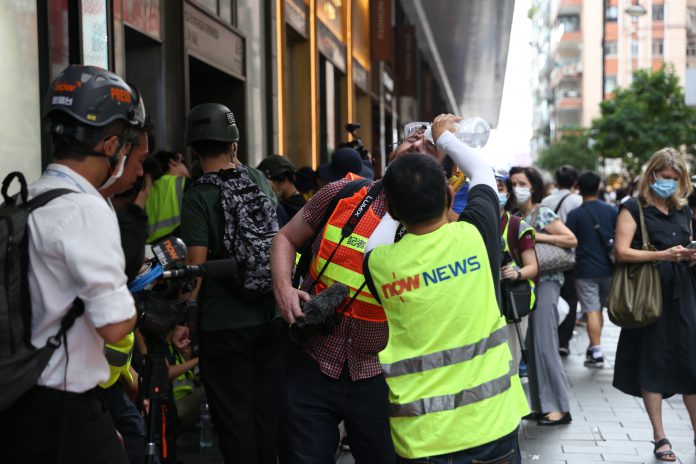
Journalists washed their eyes after being hit by pepper balls. (Photo courtesy of Cheung)

The implementation of the national security law has put the journalism industry at risk. Journalists and media outlets are now seeking ways to survive in the tight corners.

By Charlie Yip & Reus Lok

Protection of sources has become journalists’ major concern in Hong Kong after the introduction of national security law. “I won’t just phone call an interviewee whom I think is in need of high security. I will use applications such as Telegram or Signal to contact my interviewees,” says Ronson Chan Long-sing, the deputy assignment editor of The Stand News and the vice-chairperson of the Hong Kong Journalists Association (HKJA), says.

Signal is an instant messaging application currently on shelf with increasing popularity, especially among Hong Kongers after the law went into effect on June 30, 2020. It works just like other instant messaging tools, but with more security features such as end-to-end encryption for better privacy protection. To keep himself and his interviewees safe, Chan steps up security by using more reputable communication softwares and applications. 

Chan in a protest in January, 2020. (Photo courtesy of Ronson Chan Long-sing)

The national security law aims to prevent, stop and punish secession, subversion of state power, terrorist activities and collusion with foreign countries with legal accusation or even life imprisonment. 

On August 10, 2020, Apple Daily founder Jimmy Lai, Lai’s younger son, Ian Lai Yiu-yan and a few executives of Next Digital Media, which is well-known for being critical of Beijing and the Hong Kong government, were arrested for alleged collusion with foreign forces.  

About 200 officers raided the premises of the company in Tseung Kwan O and conducted inspection on news desks, sparking an outcry over the implications for press freedom. 

Chan thinks that the law is generally seen as a menace to all media practitioners. “The law threatens freedom of speech and discourages people from voicing out their opinions,” he says. He also describes the job of journalists now as skating on thin ice and expects to see a decline in the number of outspoken media outlets which are critical of the government and Beijing.

“The law threatens freedom of speech and discourages people from voicing out their opinions.”

“Of course my wife and my parents are worried about me, but they’re well-aware of my passion and ambition for my job,” Chan says. He also reveals that he is mentally prepared for the worst.

Deterrent Effect and Panic

Cheung*, a free-lance reporter, shares Chan’s worries. She thinks ambiguity in the law allows flexibility for interpretation. “The law gives them a very convenient tool to curb press freedom,” Cheung says.

Cheung is worried and aware that some journalists have already self-censored their works to avoid falling into any legal trap.

“No matter what aspect a story is about, say education or entertainment, as long as it is associated with politics, people no longer have the guts to speak up. It makes the interviewing process much harder when even speaking the truth has such serious consequences,” she says.

“Holding the authorities accountable and informing the public are the two main responsibilities of journalists. Unfortunately, under the national security law, perhaps journalists can no longer serve the public, but the government. We have to report the truth even when we are facing an increasing risk,” Cheung adds. 

“Unfortunately, under the national security law, perhaps journalists can no longer serve the public, but the government.”

Journalism is at Risk

The HKJA conducted a survey after the introduction of the law between June 8 and June 11. Of the 535 journalists polled, 98 per cent disagreed with the enactment of the national security law and 98 per cent were concerned about adverse effects on press freedom and expected stronger self-censorship.

Chris Yeung Kin-hing, chairman of the association, says that the concern reflected in the survey is well-founded. He cites wordings such as “incites” and “advocates” in some articles of the national security law as sources of worries, as reporters could be incriminated by wordings such as ‘incites’ and ‘advocates’ easily.

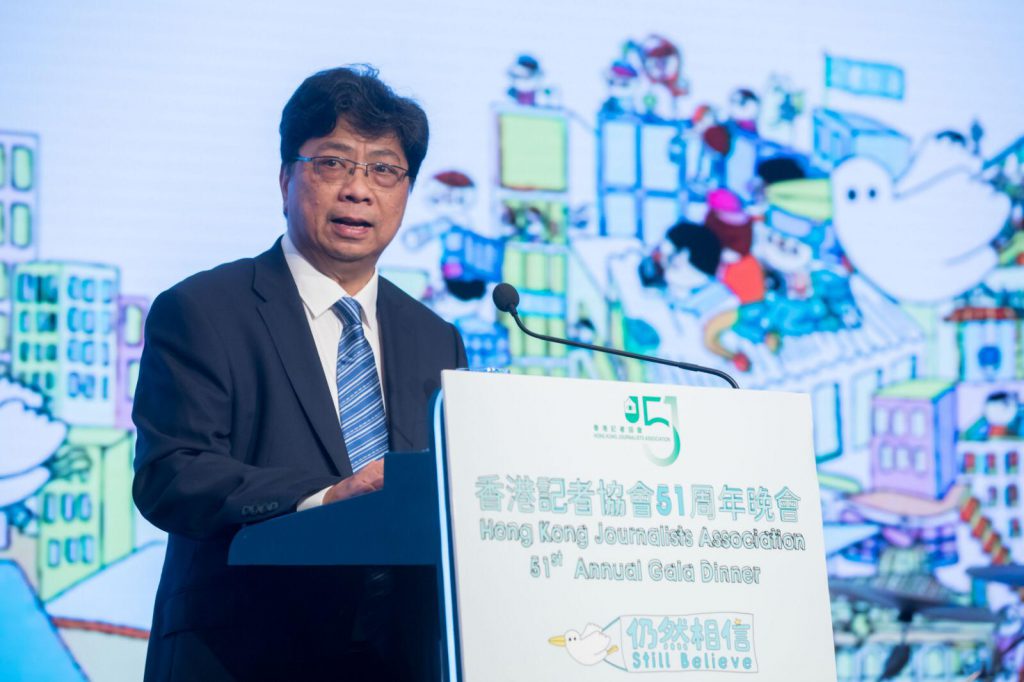
Yeung at the annual dinner of the Hong Kong Journalist Association. (Photo courtesy of  Chris Yeung Kin-hing)

Hong Kong ranks 80 out of 180 in 2020 World Press Freedom Index as compared to 18 in 2002 when the index was first launched. Yeung expects a further decline in Hong Kong’s ranking in press freedom after the introduction of the national security law. 

Yeung points out foreign journalists are having difficulties in applying for working visas in Hong Kong. On August 25, the Immigration Department denied a working visa application filed by an editor hired by Hong Kong Free Press (HKPF).  

“The government has not explained this matter, but it is believed to be related to the law,” Yeung says. He expects to see a rise in the number of similar cases. 

Varsity filed a question about the visa application of foreign journalists after the enactment of the law to the Security Bureau. “In handling each immigration case, the Immigration Department  will consider the circumstances of the case and act in accordance with the laws and immigration policies”, the bureau says in a written reply.

“This may give foreign journalists an impression that Hong Kong is like China which expels foreign journalists or revokes foreign journalists’ working visas,” Yeung says. “We did not have this in the past, but it seems that there are signs showing that this is happening now,” he adds. 

The HKJA, as promised by Yeung, vows to speak up and may take legal action against the government to defend press freedom. Yeung adds they will also remind their members to uphold professionalism to gain public support. 

The Road Ahead is Lost

Journalism students are also worried that the law will have a great impact on their future career. Lcarus Chan, a journalism and communication major student of  the Chinese University of Hong Kong (CUHK) and the president of the CUHK Campus Radio says, “To be honest, I may not work as a journalist after my graduation,” Chan says.

Citing the arrest of Jimmy Lai, Chan worries that reporting the truth may be considered as illegal by the national security law. “I study Chinese news reporting as I think it is worth studying. But it is hard to say whether journalists can continue to do their duty and serve the public in the future,” Chan adds.

Allan Au Ka-lun, a professional consultant of the School of Journalism and Communication of CUHK and a former journalist says, “Some principles have to be adhered and we should not scare ourselves at once.” “If we practice self-censorship out of fear, it is us who are giving up our values,” he adds. 

“If we practice self-censorship out of fear, it is us who are giving up our values.”

Asked if the national security law will affect  journalists doing reporting duty in Hong Kong, the Security Bureau says: Any measures or enforcement actions taken under the law must observe the principle that human rights including freedoms of speech, of the press and of publication”, the Security Bureau says in a written reply. 

“However, the above rights and freedoms are not absolute, and may be restricted by law for respect of the rights or reputations of others, and for the protection of national security, public order (order public) and public health or morals,” the bureau says. 

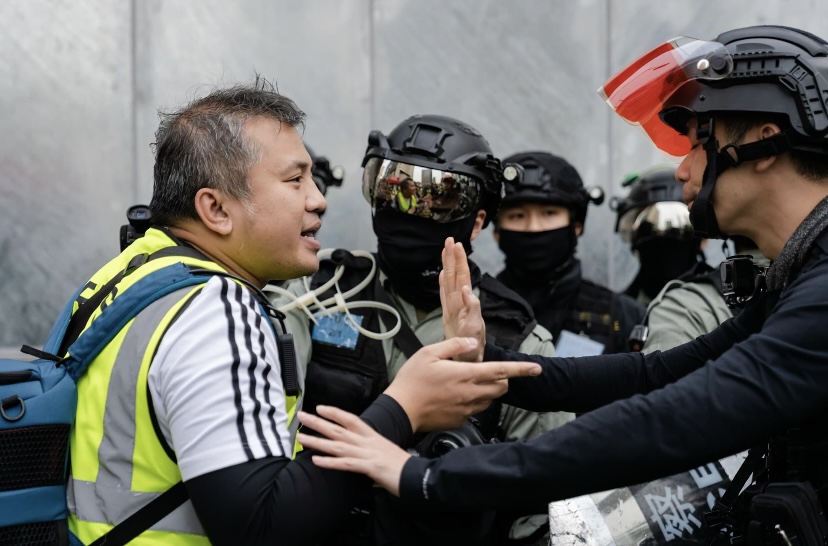
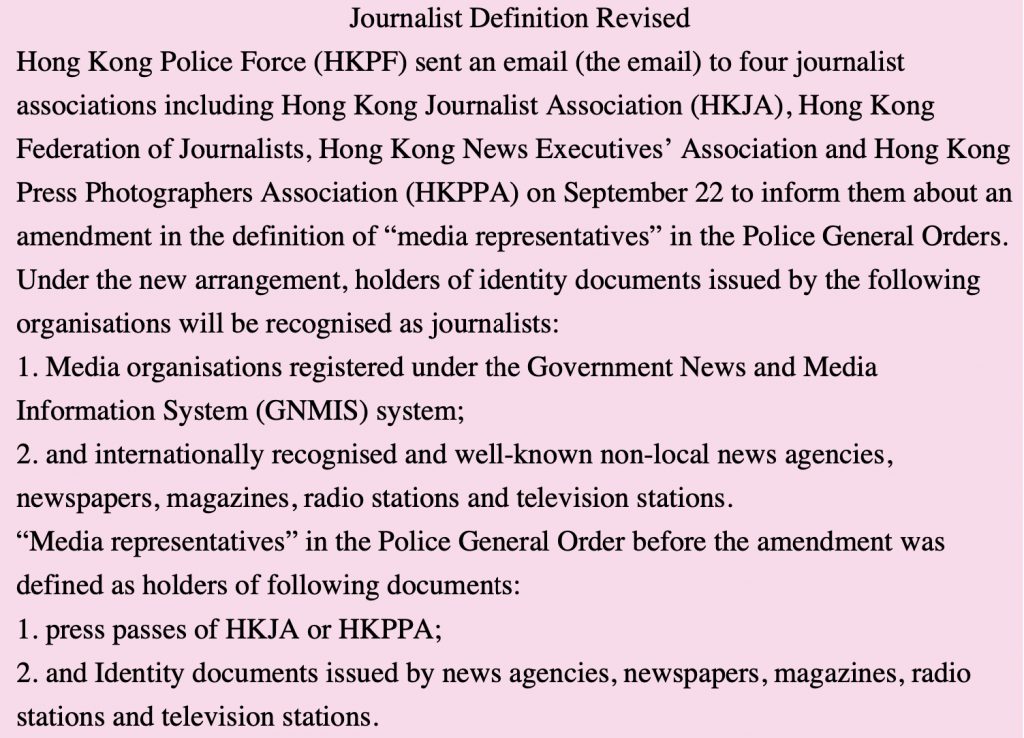
The amendment came into effect on September 23, one day after the announcement, without discussing and consulting HKJA or HKPPA.

HKJA, HKPPA, Citizen News Staff Union, Independent Commentators Association, Journalism Educators for Press Freedom, Ming Pao Staff Association, Next Media Trade Union, and RTHK Programme Staff Union issued a joint statement on September 22 to voice their opposition against the amendment. 

“The amendment allows authorities to decide who are reporters, and this fundamentally changes the existing system in Hong Kong. It is no different from having an official accreditation system. The amendment seriously impedes press freedom in Hong Kong, leading the city toward authoritarian rule,” the statement reads. 

“The amendment seriously impedes press freedom in Hong Kong, leading the city toward authoritarian rule.”

Chris Yeung Kin-hing, chairman of HKJA says the police have not fully explained why membership cards issued by HKJA are no longer recognised under the Police General Order despite repeated requests for clarification. 

He points out journalists who work as freelancers, stringers, fixers and foreign freelance journalists are not on the list of the Information Service Department’s GNMIS system, their reporting job will be affected. They face higher legal risk when doing reporting in public places and may be liable to charges of offences such as unlawful assembly.

Ronson Chan Long-sing, the deputy assignment editor of an online news website, The Stand News and the vice-chairperson of the HKJA, says the amendment limits reporting duty of journalists working for online media outlets that are not on the list of GNMIS system. 

The police explain that the new arrangement allows frontline police officers to recognize media representatives more efficiently in the email. Secretary of Security John Lee Ka-chu stresses the amendment does not affect the lawful reporting of  journalists and the press freedom in Hong Kong has not changed in an article dated on September 23 on the Security Bureau’s website.

*Name changed at interviewee’s request

Edited by Emilie Lui

Invisible Red Lines Threaten Publications

Independent bookstore Bleak House Books. (Photo courtesy of Albert Wan)

The vagueness of national security law has sparked ‘white terror’ over book production and publications.

By Kelly Yu

Daniel Lee, owner of Hong Kong Reader Bookstore, an independent shop featuring books on humanities and social sciences, is one of many booksellers in Hong Kong who is concerned about the implementation of national security law. 

“When the bookstore first established in 2007, Hong Kong was still a relatively free and open society. I never thought there would be (a concept of) banned books (in Hong Kong) one day,” Lee says. 

In view of the legislation, Lee says that he has reluctantly removed books about “Hong Kong Independence” from his store shelves. “Publishers have filtered content mentioning independence and rephrased polically sensitive terms. Some book printers have refused to print books related to independence even long before the law (was introduced) in light of the political climate,” Lee says.  

Daniel Lee reading a book at Hong Kong Reader Bookstore.

“I did not expect independent booksellers to become guardians of freedom of speech,” Lee says. “Ten years ago, we did not take politics into consideration. But now, running an independent bookstore and selling books is already like taking a (political) stand,” Lee adds. 

The national security law, introduced by the Beijing government to prevent, stop and punish acts of secession, subversion of state power, terrorist activities, and collusion with foreign forces that endangers national security, took effect on June 30, 2020, the eve of the 23rd anniversary of the city’s handover to China from British rule. 

Following social unrest brought by the anti-Extradition Law Amemdment Bill (anti-ELAB) movement since June 2019, implementation of the law has caused public outcry over Beijing’s tightening control on the semi-autonomous city. 

Soon after the law was introduced, books written by prominent pro-democracy figures, including at least nine titles by localist Horace Chin Wan-kan, activist Joshua Wong Chi-fung and former lawmaker Tanya Chan Suk-chong have been removed from public library shelves, triggering fears and concerns over possible impact of the law on freedom of expression.

Fear over Independent Bookselling

“There is zero guideline from the government, and that is worrying,” Lee says. “Until now, there is no official announcement as to what content might possibly be considered as threats to national security. All we can do is to pay close attention to how the law is being enforced,” Lee adds.

Lee, who still sells political titles such as 1984, On Tyranny and books about the anti-ELAB movement, says his biggest concern over the law is its vagueness. “What if I sell books about Mao Zedong or Marxism which also include issues about freedom of speech? Would it be considered illegal?” he laughs. “We would never know, not until the government knocks on my door one day, which is the scariest scenario,” he says. 

“We would never know, not until the government knocks on my door one day, which is the scariest 
scenario.”

White terror over independent bookstore sector sparked public outcry in 2015, when Lam Wing-kee, owner of Causeway Bay Books and five of his coworkers went missing. Lam later informed the public that he was detained by the Chinese authorities in Guangdong province for more than 400 days for selling books critical of China’s leaders. Lam flew to Taiwan in April 2019 and reopened his bookstore, Causeway Bay Books, in Taipei on April 25, 2020. 

The missing booksellers case has put Hong Kong under the spotlight of international media, provoking widespread concern over Hong Kong’s declining freedom. With the national security law imposed, booksellers are worried that similar incidents will take place again – only this time it is carried out according to the law. 

Chilling Effect 

Wan, owner of Bleak House Books, an independent bookstore that specialises in English language books, shares Lee’s worries. “They did that to the Causeway Bay booksellers without a law in place. Now that there’s a law in place and they have the whole apparatus to enforce the law, … I don’t see those tactics going away, if anything, it is going to be more common,” Wan says.  

On Tyranny being sold at Bleak House Books. (Photo courtesy of Albert Wan) 

As a former US lawyer himself, Wan is most concerned about validity and accountability of the law. “The enforcement of the law is very much up to the political leadership. There is no accountability and no transparency,” he says.

Wan views vagueness of the law as a way to generate a chilling effect. “There is no clear guideline and I think it is intentional,” Wan says. “The government wants us to set our own red lines and instil fear and self censorship among members of the public in terms of not saying things that might possibly offend the regime,” Wan adds. 

Wan thinks there is obviously a certain level of self censorship: “People may still agree with a lot of what they want to publish but cannot do so. At the same time, they have a business to run, they have families too, so they are concerned about their own safety.” 

Persisting in Resistance

Despite the depressing circumstances, both booksellers are committed to upholding what they think is right. “I don’t think we need to do anything especially brave. We just have to keep doing business as usual,” Wan says.      

Citing a quote from German philosopher Hannh Arendt, “There are no dangerous thoughts; thinking itself is dangerous”, Lee explains that he firmly believes in the power of books. “The act of thinking or bookselling itself is a way of resisting the political suppression. All we can do is to carry on,” he says. 

“The act of thinking or bookselling 
itself is a way of resisting the politcal suppression. All we can do is to carry on.” 

Reviewing Textbooks

Apart from books sold in bookstores, publication of textbooks is also facing similar situation. According to a circular issued by the Education Bureau on July 3, 2020, schools are urged to review curriculum and teaching resources, with “a view to reinforcing the learning elements of national security education”. The criteria and guidelines for reviewing materials are not mentioned. 

Controversies emerged when Liberal Studies textbooks were found altered after six local publishers joined a voluntary professional consultancy scheme established by the bureau in 2019. The scheme aimed to “improve the quality of the textbooks to ensure that they are in line with the aims, objectives and learning focuses of the curriculum”, according to a press release issued by the bureau on August 19, 2020. 

The term “separation of powers” was removed and legal consequences of civil disobedience were highlighted in examined textbooks published in August 2020, months after the national security law was imposed. The bureau dismissed allegations about censoring textbooks under the law, saying that the pusblishers “voluntarily participated in the professional consultancy service and refined the textbooks” in the same press release. 

A spokesperson of the Education Bureau tells Varsity that the bureau is seeking advice from relevant policy bureaux and experts in different areas, and has been consulting with the education sector, with a view to providing more detailed guidelines as soon as possible. 

“It is the professional duty of teachers to review regularly their teaching materials for student learning to gatekeep the quality and relevance of the resource materials of the school curriculum,” the spokesperson says. “The teaching materials provided to students by schools should not involve and promote any acts that endanger national security,” the spokesperson adds.

On August 19, the Hong Kong Professional Teachers’ Union issued a statement condemning the government of censoring Liberal Studies textbooks, describing it as an act undermining the learning objectives of the core subject.

Education lawmaker Ip Kin-yuen, who is also the vice president of the Union, raises his concerns over potential threats to academic freedom under the national security law. 

“In the past, we enjoyed freedom of speech in Hong Kong. Now with the law in place, teachers have to be cautious about what they say during lessons. That has a significant impact on teaching and learning,” Ip says. 

“In the past, we enjoyed freedom of speech in Hong Kong. Now with the law in place, teachers have to be cautious about what they say during lessons.

Ip perceives the removal of “separation of powers” in Liberal Studies textbooks as an infringement of academic freedom. “The government should not ban academic discussion,” Ip says. “There should be space for teachers to teach and students to discuss the concept of separation of powers, which is a long-standing model of Hong Kong legal and administrative system,” Ip adds. 

He urges educators not to practice self censorship and teach students independent thinking regardless of the current political climate. 

Liberal Studies teacher Lo Kit-ling, who is also a committee member of the Hong Kong Liberal Studies Teachers’ Association, thinks that schools should be given clearer instructions.

“Without an ‘official’ red line, teachers have no choice but to practise self censorship,” Lo says. “Our immediate action is to review teaching materials thoroughly and filter content that might be seen as possible threat to national security,” Lo adds. 

Lo is most worried about facts being removed from textbooks after assessment. “We are afraid facts will be altered one day. Historical events like the Cultural Revolution are worth mentioning and discussing,” Lo says.

She believes that Liberal Studies has an important role in cultivating students’ critical thinking and ability to analyze current affairs. 

“I hope students can learn in and out classroom with the help of both unbiased textbooks and real life experiential learning,” she adds.

Edited by Emilie Lui

Sub-edited by Howard Li