












Home Blog Page 43

Life Afloat

Fishermen in Bohai Bay are struggling with sharp decline in harvests and impact of COVID-19.

By Laurissa Liu in Tianjin

Fishermen hope a four-month moratorium from May to September can help Bohai Bay revitalize its vitality and bring them rich fish harvests.

But desertification of ocean floor and the impact from COVID-19 shows no mercy to the fishermen.

Liu Dongxiang, a fisherman with over 30 years of experience in fishing in Beitang is one of them.

Liu and his family keep casting and collecting fishing nets overnight every day, starting from September.

“The hunting usually starts from mid-night or after dinner,” Liu says. “We then have to sell our harvest during day time. Our work never stops,” he adds.

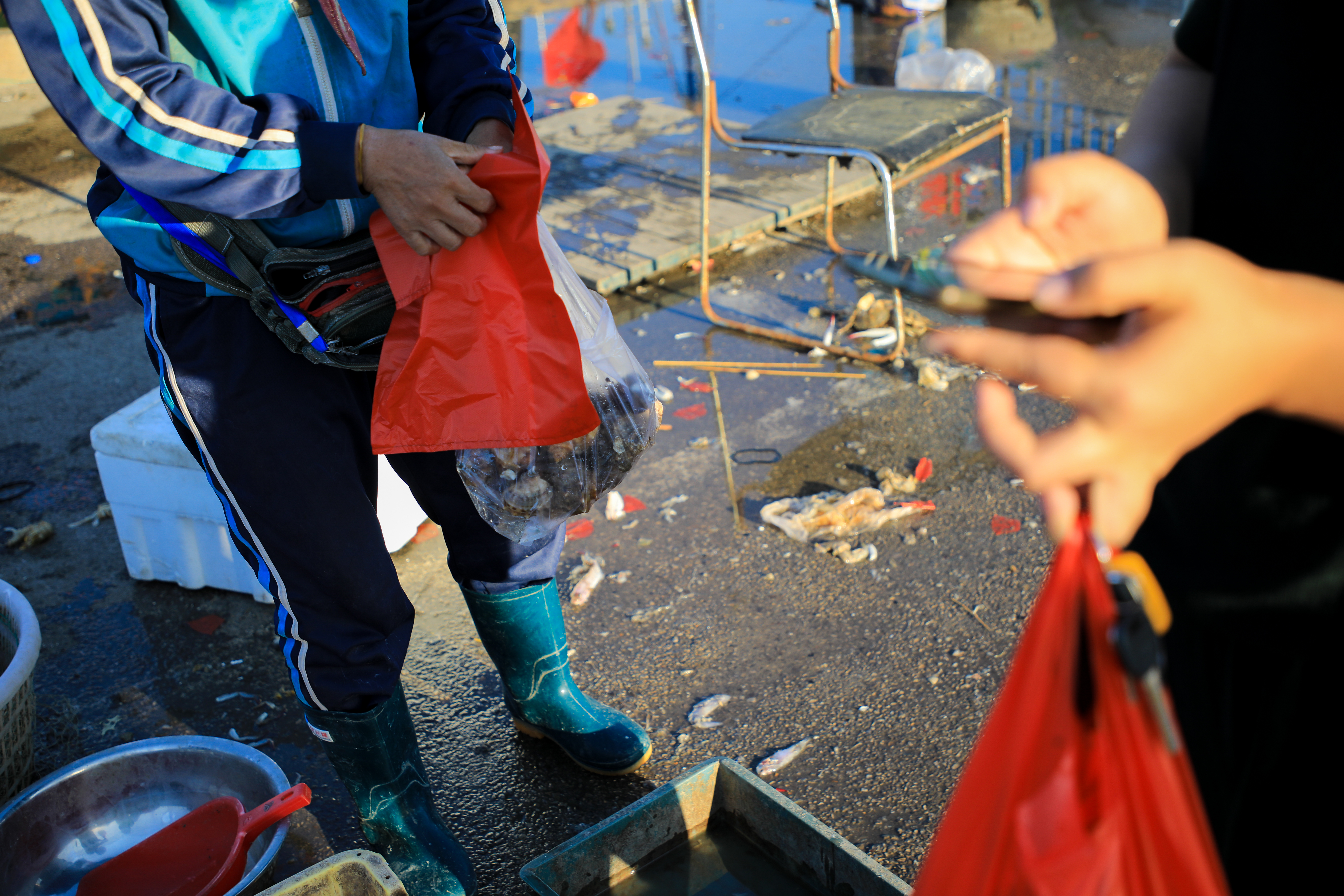
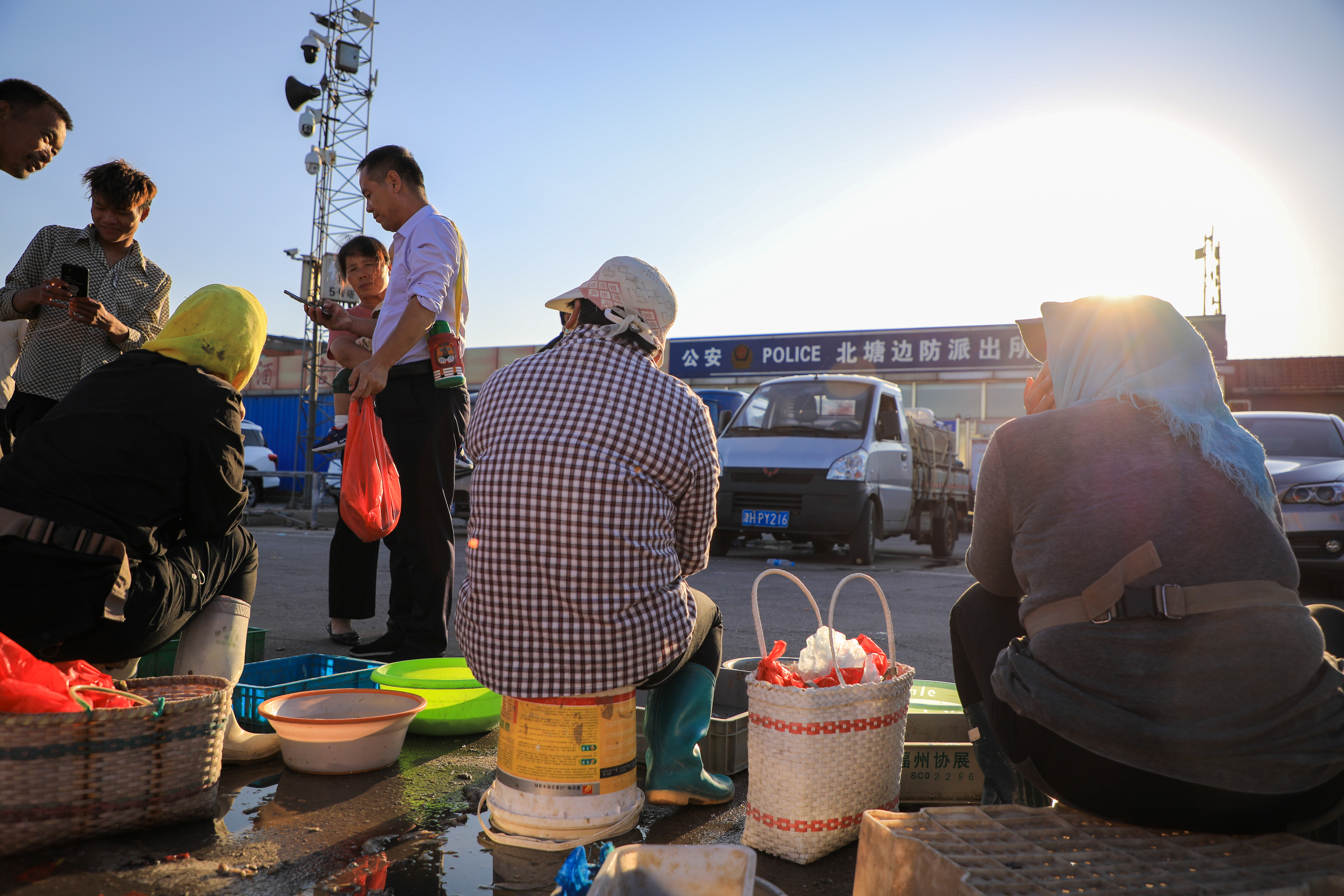
  • Fishermen in Beitang sell their daily catch at a dock.

Throwing out fishing nets and waiting under starlit night is a fisherman’s usual routine. By the time they get back, diners flock to the dock to buy lively seafood lifted from the ocean.

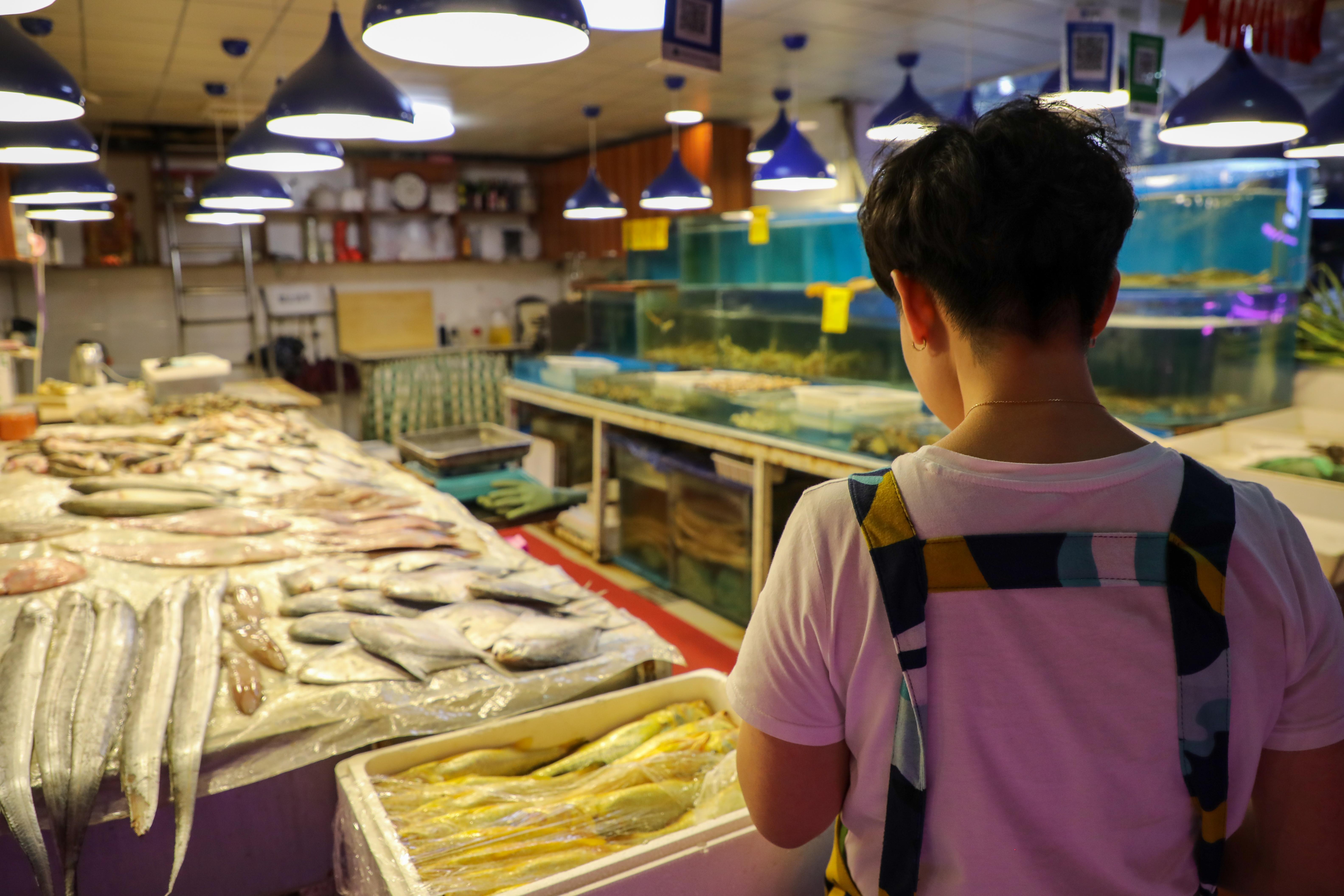
River crab, swimming crab, mantis shrimp and various shellfish are the most commonly seen and popular seafood among customers in Bohai Bay market.

Liu’s family relies on fishing to make a living. Yet in recent years, harvests have dropped drastically, because of the serious ocean pollution and overfishing. Sharp decline in fish harvest affects all fishermen in Bohai Bay.

“The catch has declined rapidly from 200-300 catties (100-150 kg) a day to only 20 to 30 catties (10-15 kg) in the past two years,” he says.

The current number of fish eggs is only half of before, compared to the data from 1982 to 1983, according to a research released by the Ministry of Agriculture and Rural Affairs in 2018. The seafood resources are less than one tenth of the time.

A fisherman is setting up his stall after a fishing trip.

The Bohai Bay is one of the four traditional fisheries in China. Tens of thousands of fishermen in Tianjin, Hebei, Shandong, and Liaoning make their living at the bay. But the shallow bay is overwhelmed by large-scale commercial fishing.

The government introduced the four-month fishing moratorium in 1995 to protect the marine ecology, considering the situation.

“No matter how fast fish and shrimp grow, boats are always faster. No matter how many fish are released, there are always fishermen in boats waiting to capture them,” Liu says.

September is the best season for harvesting mantis shrimp. Abundant yield of mantis shrimp used to be a major source of fishermen’s income. But harvest has dropped significantly this year.

“The harvest weights 2,000 catties (1000 kg) for a single boat trip in 2000. Yet, the harvest drops to around 500 catties (250 kg) this year,” says fishermen Han Gui, who is also based in Beitang.

“Mantis shrimp is the most popular seafood here, and the growth can never match the demand,” she adds.

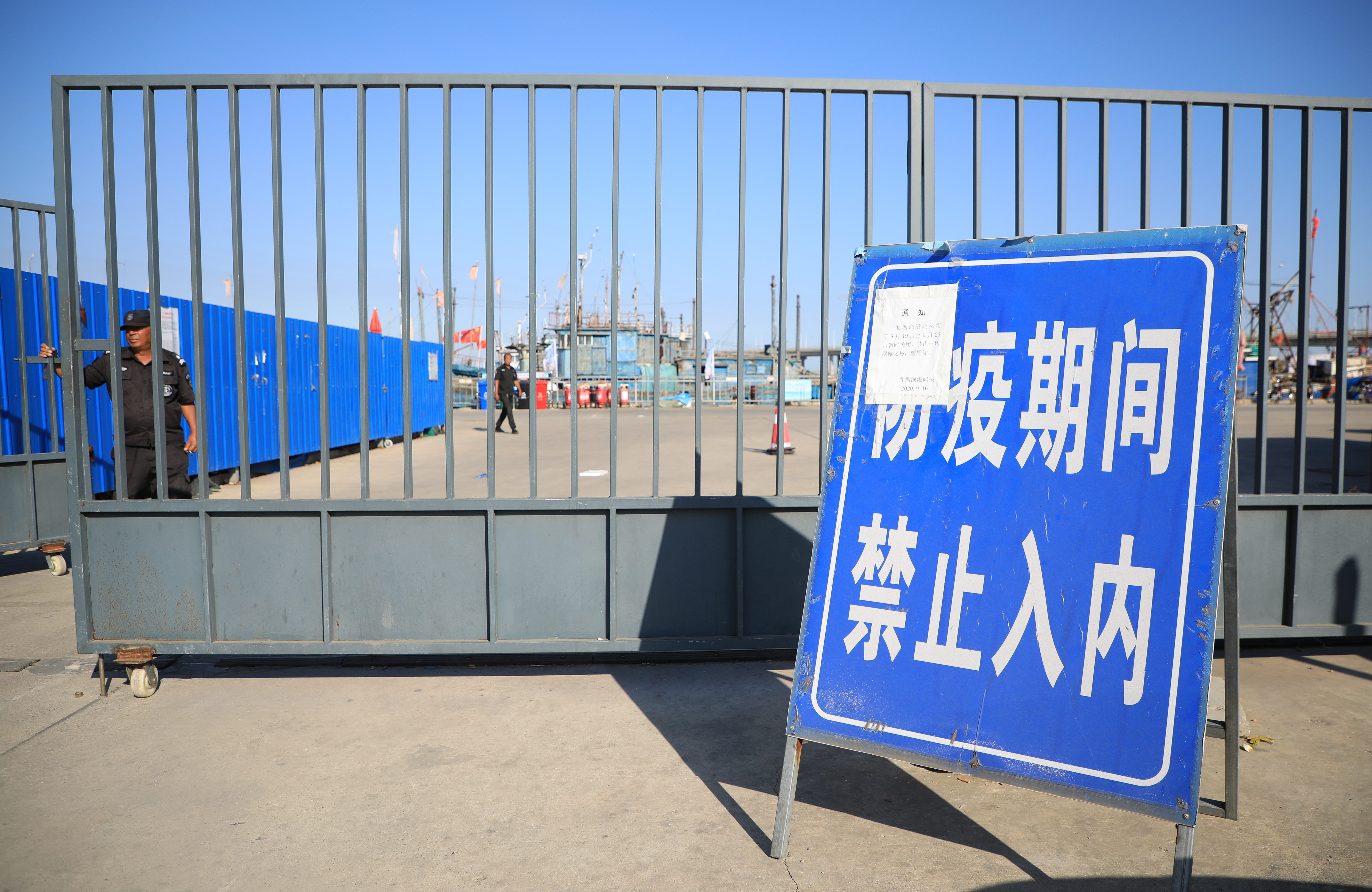
Apart from sharp decline in harvest, the pandemic also makes it more difficult for fishermen to make a living.

The fishermen can only rely on government subsidy during the summer moratorium. Some young fishermen used to look for part-time jobs in service and construction industry. But it was not easy to find work during the pandemic.

Seafood lovers scramble to buy fish and shrimps as the harvest is not enough for their demand.

Liu’s son, 24, used to work full-time in a restaurant, lost his job in March and rejoined his family to do fishing. “Fishing doesn’t make as much money as working in a restaurant,” he says. Fishing trips for tourists are also cancelled due to the pandemic.

“We only have local buyers. Tourists from other parts of the country have stopped visiting, especially those from Beijing,” Han says.

It takes only two hours to travel from Beijing to Bohai.

Tourists take selfie at a dock as all boat trips have been cancelled due to the pandemic.

The pandemic has also affected the seafood market business. “The wholesale price of crabs has doubled. The price is RMB ¥60 (US $9) to RMB ¥70 (US $10) per catty (0.5 kg),” says Han Yongqing, a seafood vendor market and a former fisherman. “Demand for seasonal seafood after the pandemic jumps, but the supply can never catch up with it.”

“Catching octopus used to mean bad luck. But now fishermen want anything that can be sold for money,” Han adds.

Edited by Lasley Lui, Regina Chen
Back to the Old Times

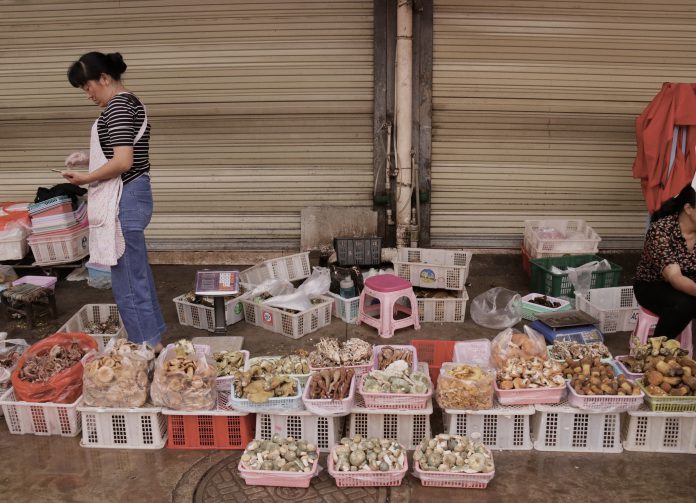
In Yunnan, people shop for daily necessities and fresh produce from the wild in street markets.

By Vivian Cao in Yunnan

In urban cities, new shopping malls and fancy supermarkets are replacing old street markets. But in Yunnan, people living in many undeveloped villages still shop for daily needs in old street markets.

Street market is a place where people in Yunnan trade agricultural commodities. History of street markets can be traced back in Shang and Yin dynasties in ancient China.

People go to street markets in nearby villages to sell their agricultural products and buy necessities that are not available in their own villages. 

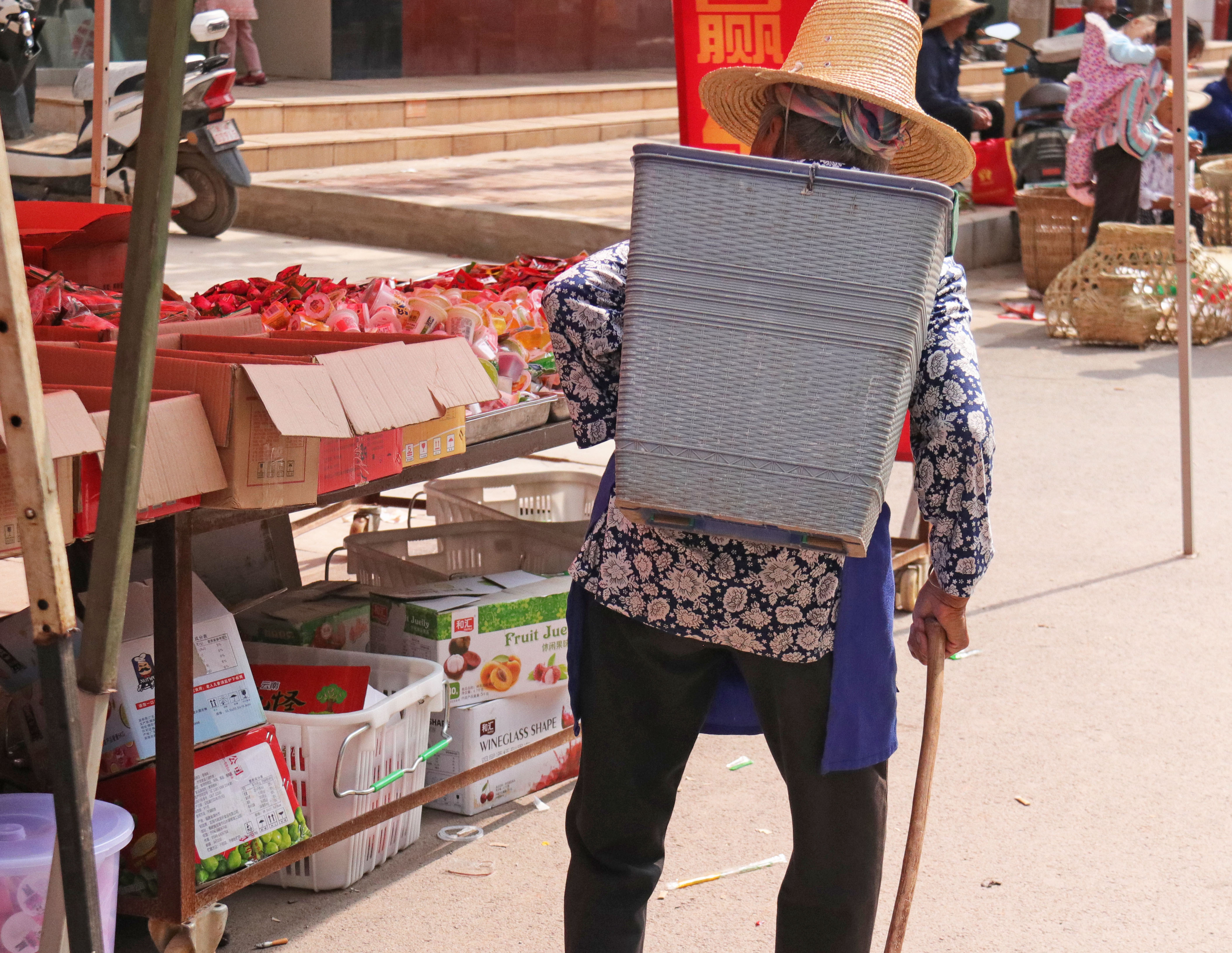
  • An old lady shops with a basket in Zhebei street market.

Mei, who declines to reveal her identity, bought chilis, corn, and wild fungi in a street market named Zhebei market which takes an hour drive from Kunming city.

She goes to the street market once or twice a month with her friends and families, and she believes it is a good way for them to relax.

“Agricultural products in this street market are really cheap. For example, the corn I bought here only costs RMB ¥2 (US $0.3) for a kilogram. But in Kunming, it costs at least RMB ¥10 (US $1.5) for a kilogram. These products are fresher than those in wet markets in the city,” the 47-year-old woman says.

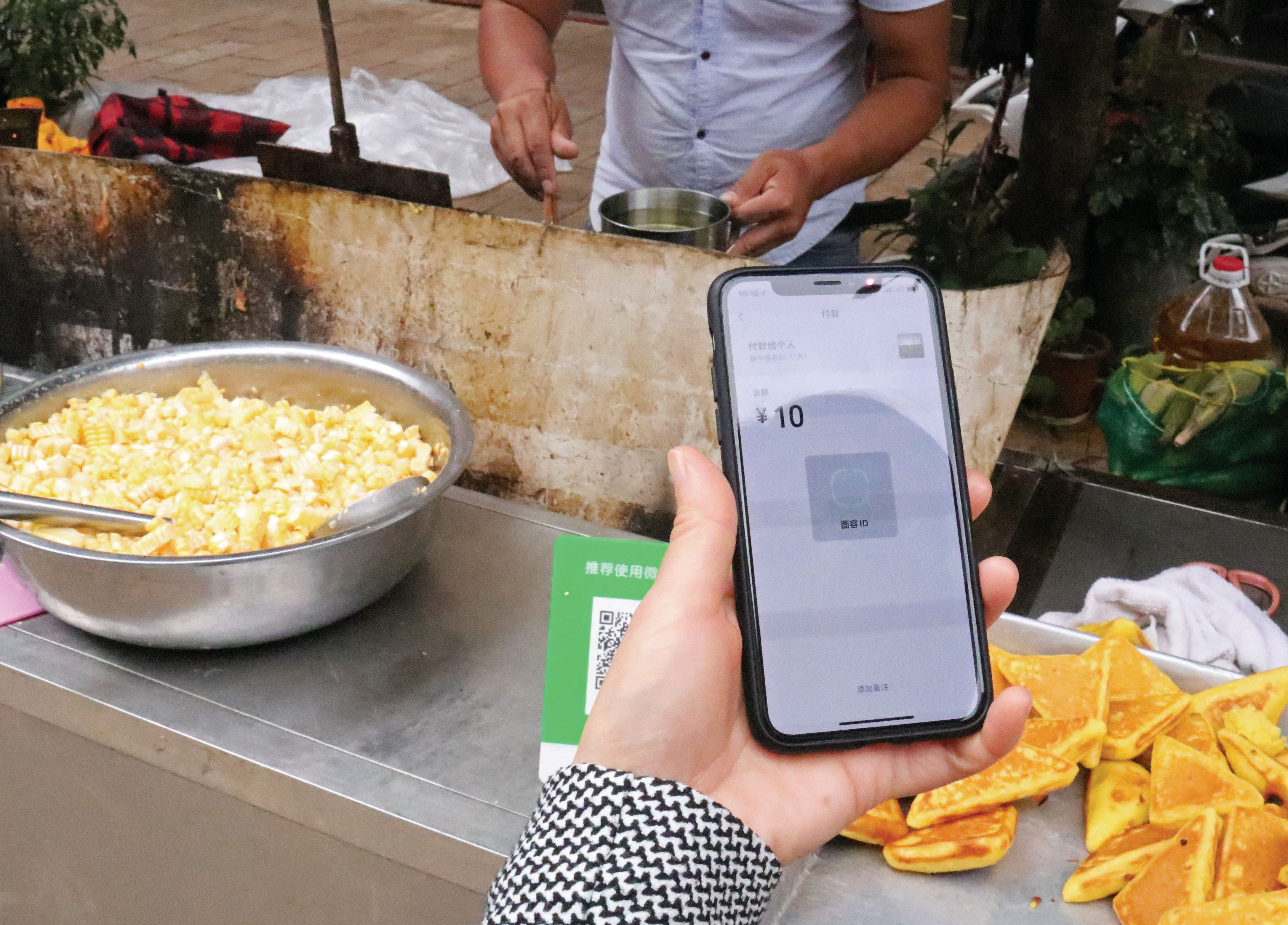
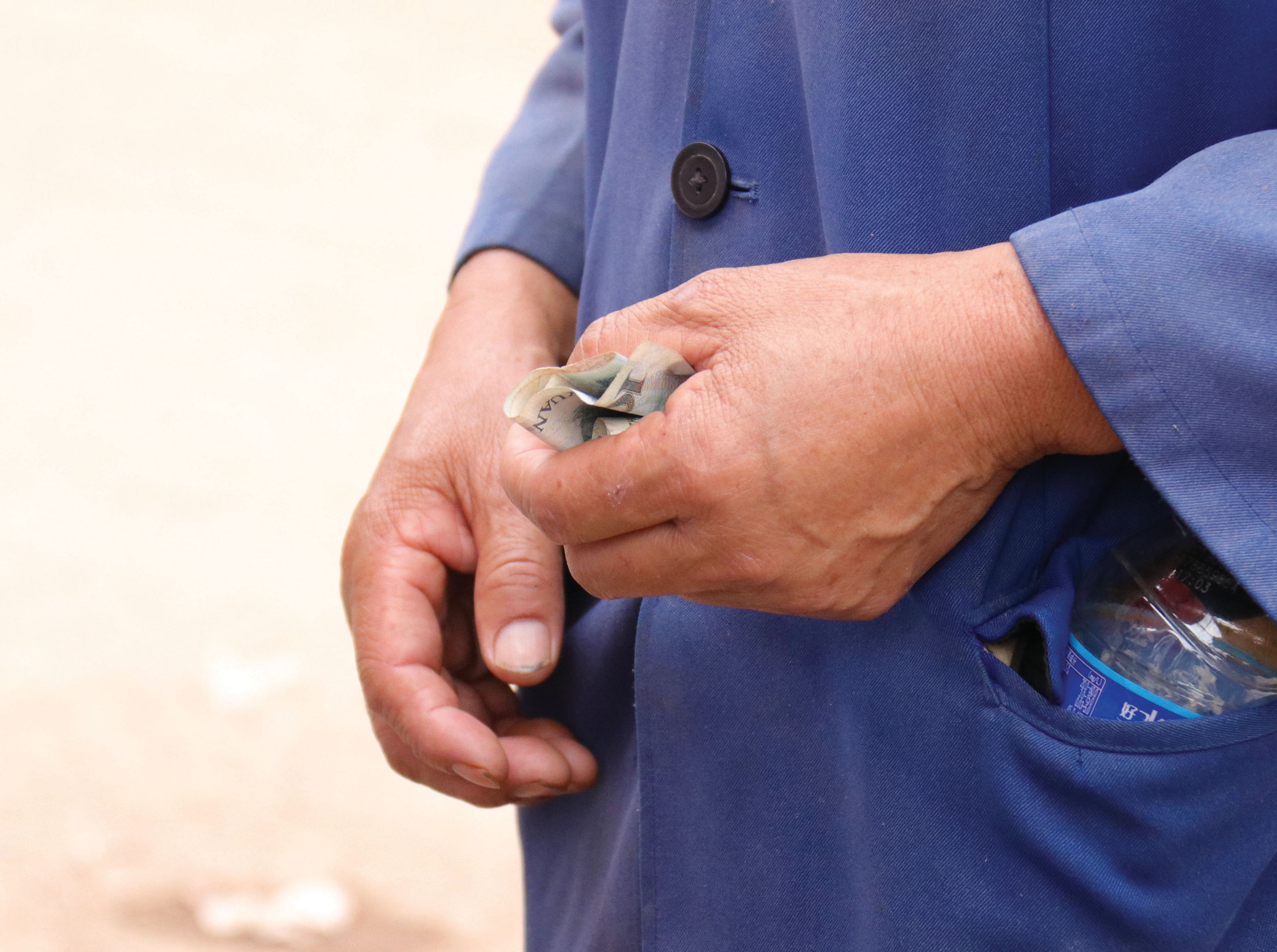
She pays cash for corn and chilis, and uses QR code payment for the wild fungi in the street market. “I prefer using QR code payment. But many old people do not have smartphones or are not familiar with using it in street markets. So I prepare cash when I come,” Mei says.

“Many old people do not have smartphones or are not familiar with using it in street markets… So I prepare cash when I come.”

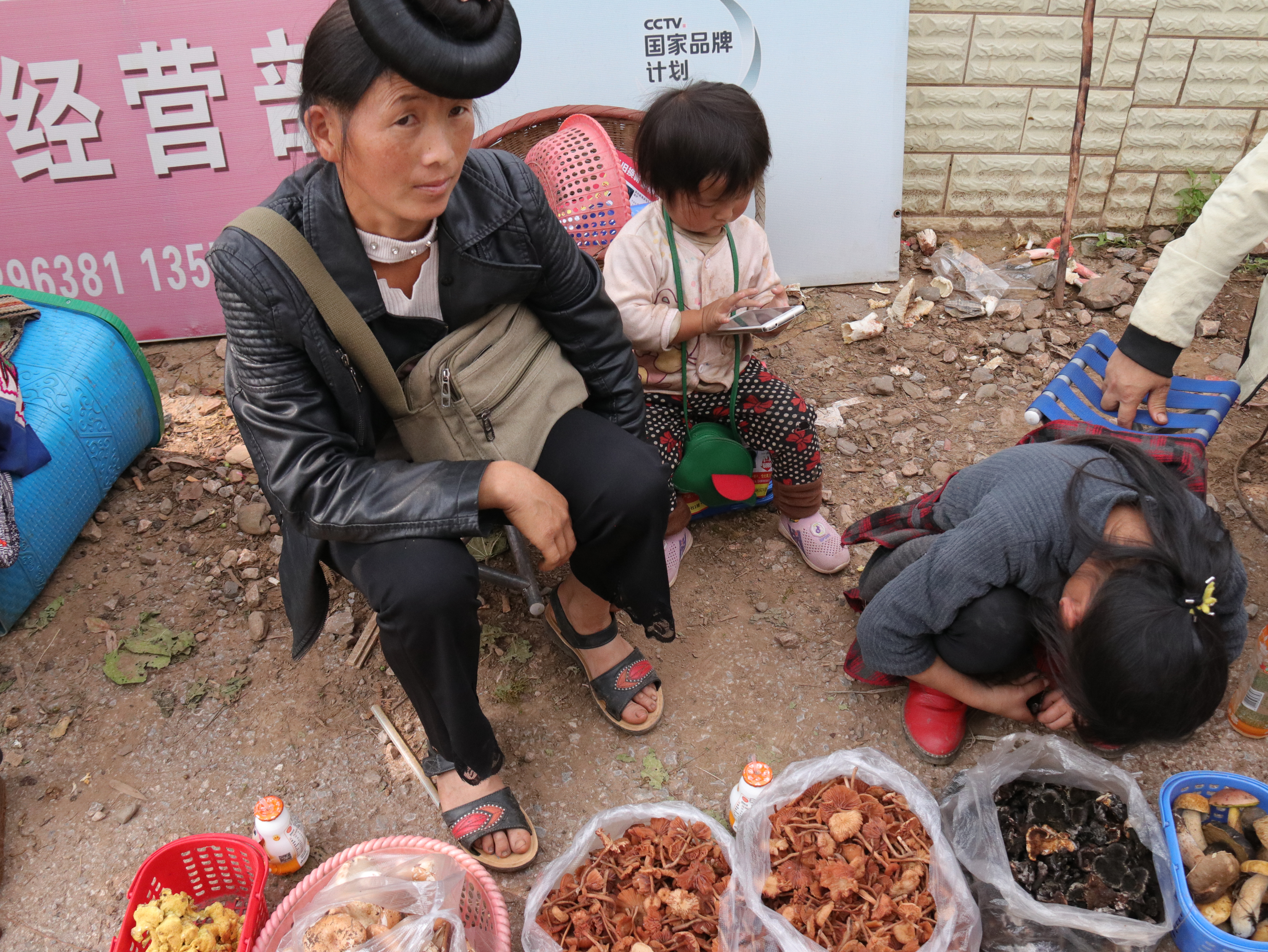
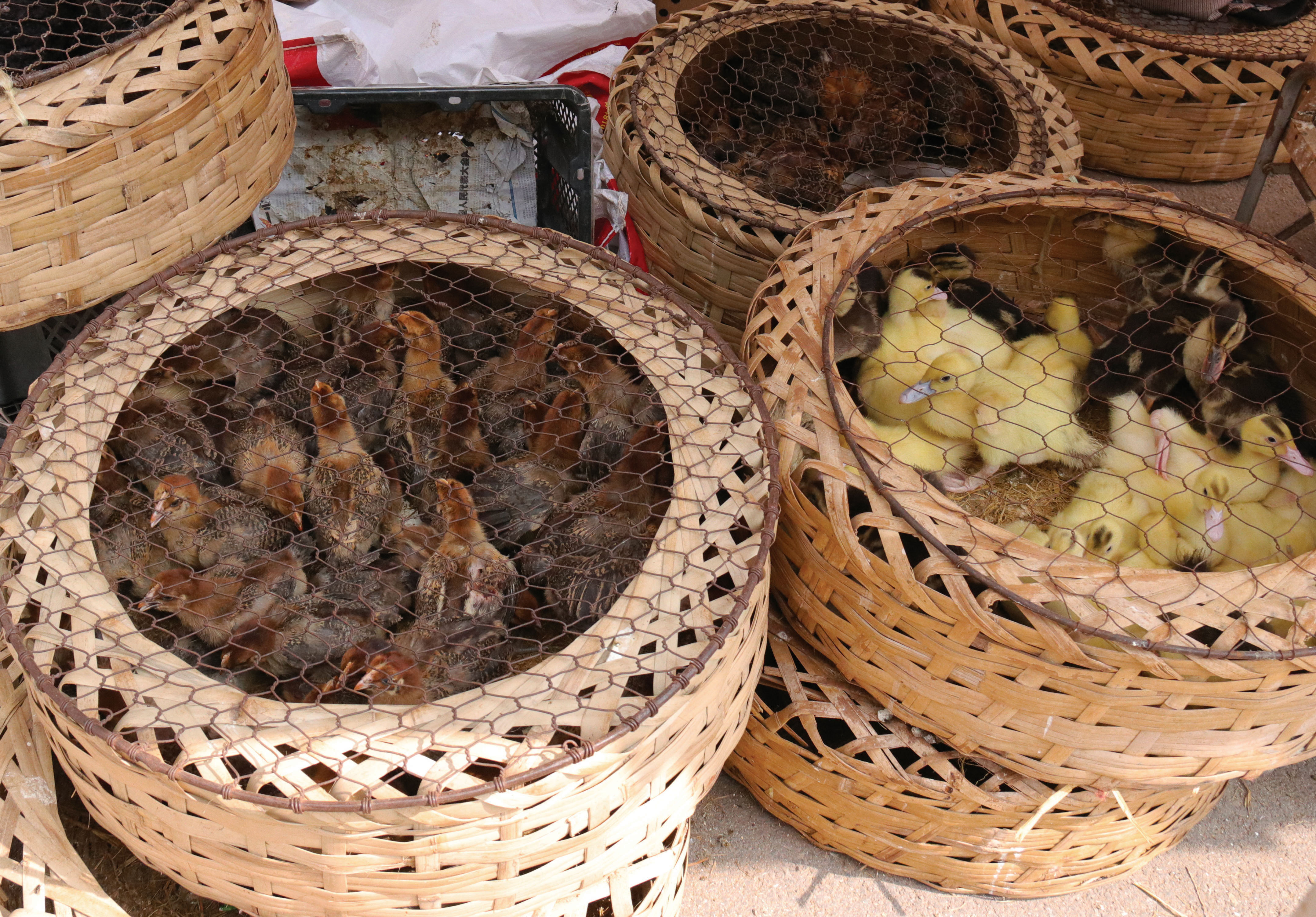
Yunnan has a lot of sundry delicacies from mountains during the summer. Many people living in the city go to street markets to buy them. 

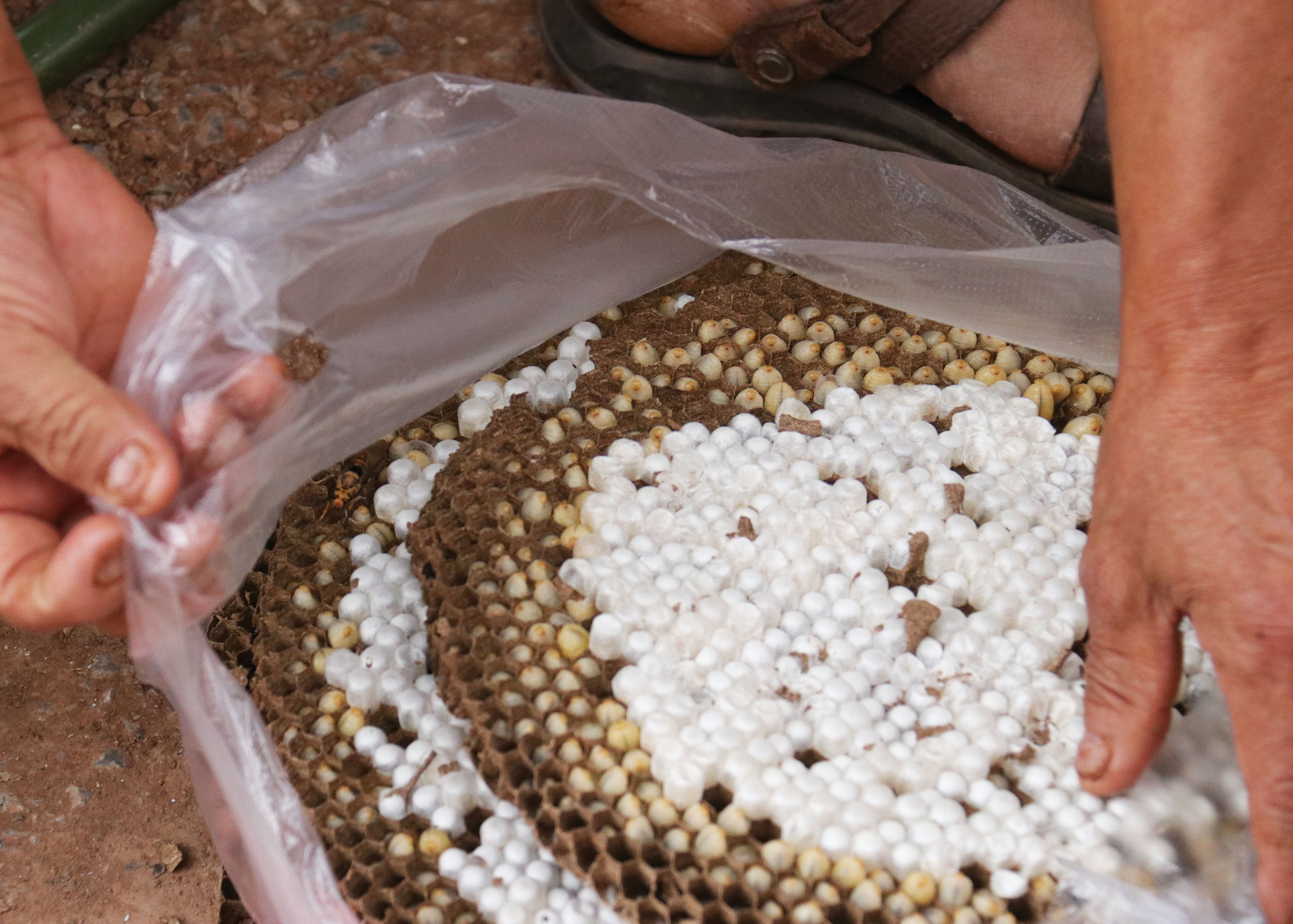
Wild fungi and wasp pupas are the most special ones and are considered as important food ingredients in Yunnan cuisine. People may get goose bumps when they see a worm-like wasp pupa. But it is always the best-seller because of its good taste and smell.

Li Longxian, a 37-year-old man from Machu Village who sells wild fungi and wasp pupas in Zhebei street market, gets up at 3 a.m. every morning to look for wild fungi in mountains. He  also cultivates wasp pupa on his own. 

“Wild fungi and wasp pupas are only available before the Mid-Autumn Festival,” Li says. His wasp pupas are sold at RMB ¥180 (US $27) each kilogram, much cheaper than those in wet markets in the city.

Lingzhi, a kind of wild fungus, is often used in traditional Chinese medicine.

Not only mountain delicacies, other agricultural products are also popular. Zhao Yufen, a 62-year-old farmer sells corn and chilis in Zhebei street market.

“Farmers rely on mother nature for food. If the harvest is not good, we will have less for sale. The harvest of chili is not very good as the weather is rainy this year,” she says.

Zhao thinks her life is getting better now. “It was hard to sell things in the past because most were poor and only wanted to sell things to make money. But now people have more money to do shopping,” she says.

An old lady carries a kid to do shopping in Luquan street market.

Wang Hong, a woman from Zhebei village shares Zhao’s feeling. “When I was young, I could not go to street markets very often because I had a big family and everyone wanted to go. It was hard to get a chance.” 

But she can go to street markets every weekend now. “Our living quality is better. If my homegrown agricultural products are more than enough for my family, I will go to street markets to sell them. If there is nothing to sell, I just go for fun and buy something to eat, drink, and play,” the 63-year-old farmer says.

Edited by Lasley Lui

Recycling Used Books

An online second-hand book trading platform revives used books on shelves.

By Laurissa Liu in Tianjin

Holding the belief of “Good books are worth reading twice”, Wei Ying founded a second-hand book store as an applet in WeChat in May 2017. “The value of books is generated by reading and sharing,” Wei says.

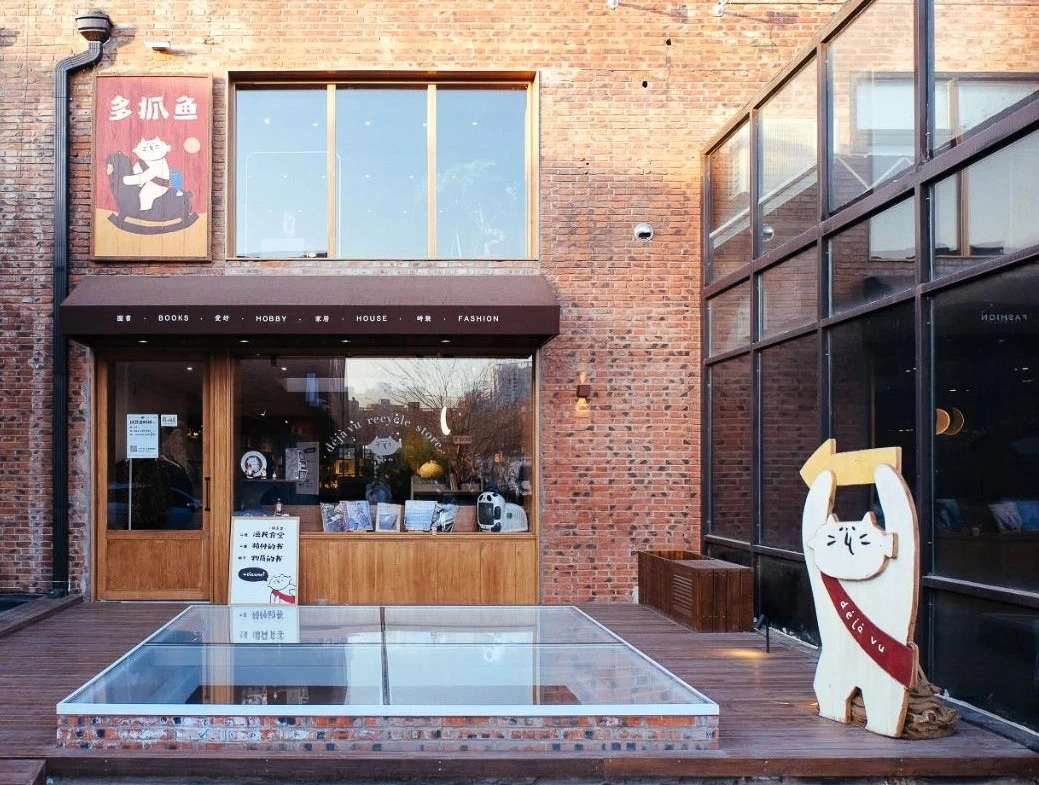
The name of the book store, Duozhuayu, comes from a French word, Déjà vu, meaning the memory and feeling of familiarity. “Second-hand items often carry memories of owners that can be shared with our customers,” Wei says.

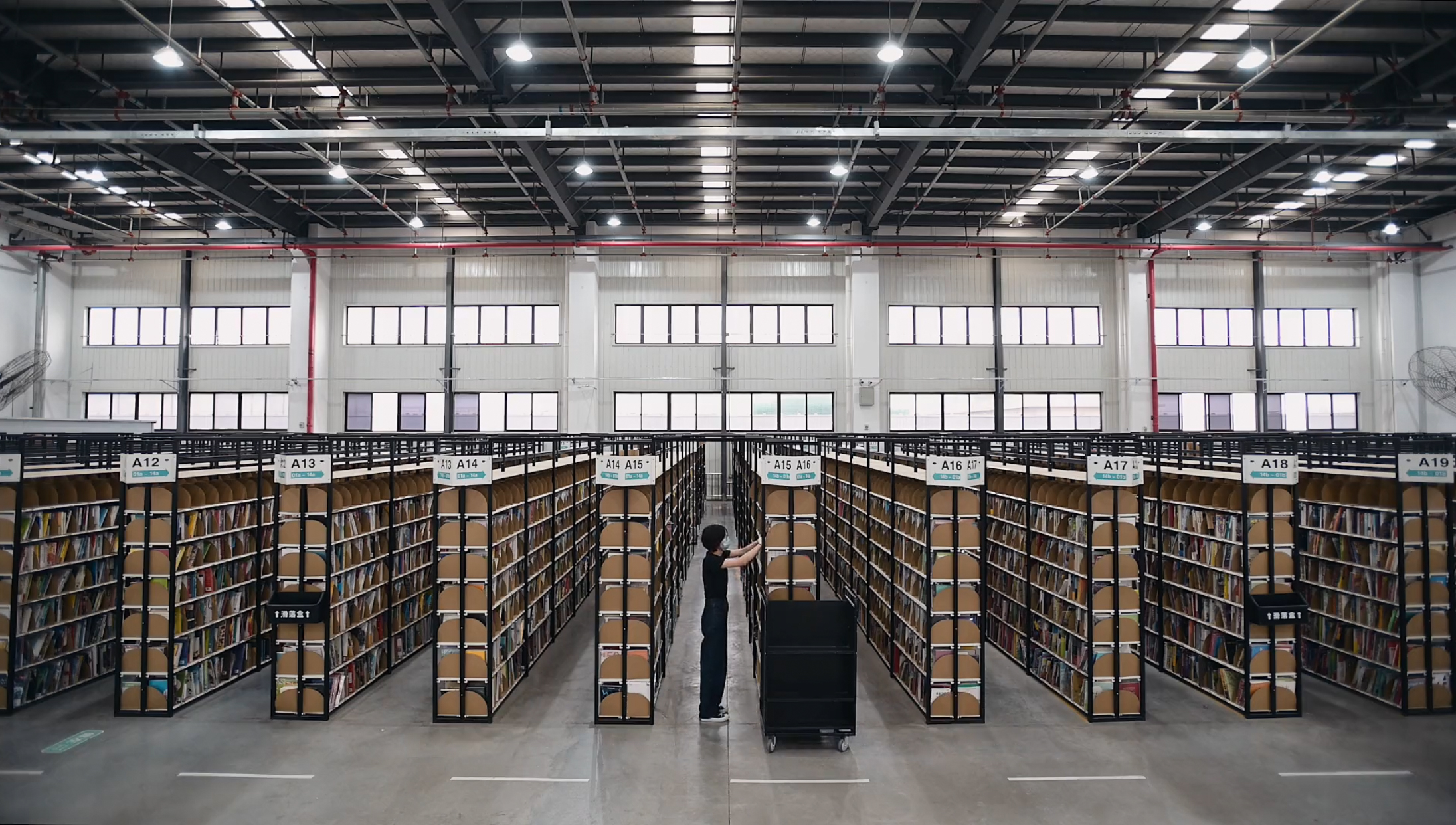
The store adopts algorithm models to operate their business. The number of users reached over two million in early 2019, and continues to grow at a rate of 2,000 to 3,000 a day. Over 11 million books were scanned on the platform. The store has also released an application for mobile phones and opened two physical stores in Beijing in October 2019, and recently in Shanghai in October 2020.

  • Duozhuayu first offline bookstore located in a cultural industry quarter in Beijing, also as its major office.

(Photo courtesy of Duozhuayu)

Wei had the idea of starting up a business back in 2015. She was inspired by BOOKOFF, the biggest second-hand bookstore in Japan.

The trading platform is simple, well-organized and sufficient.

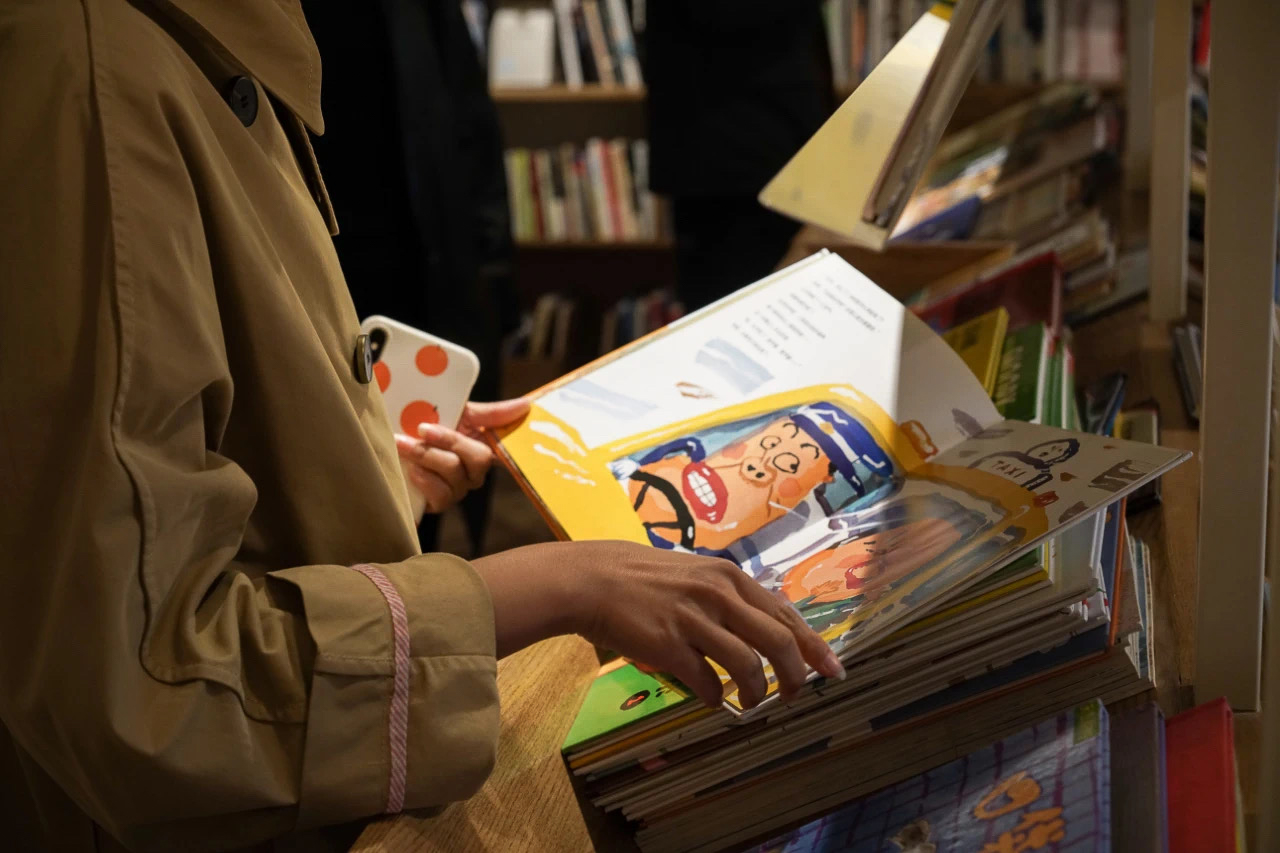
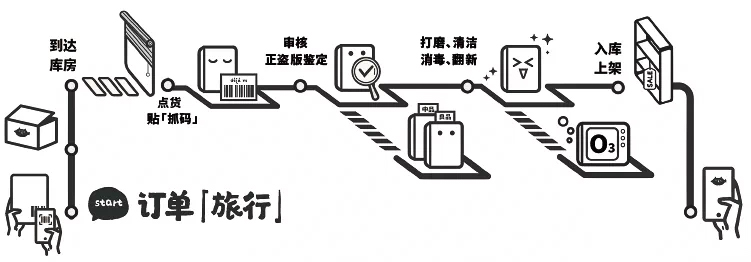
Book owners who want to sell their books can scan ISBN code on book covers through the applet so that they can find out the estimated price of their books in the second-hand market, which is about 20 to 30 per cent of the market price. Courier then collects these books after an online appointment is made.

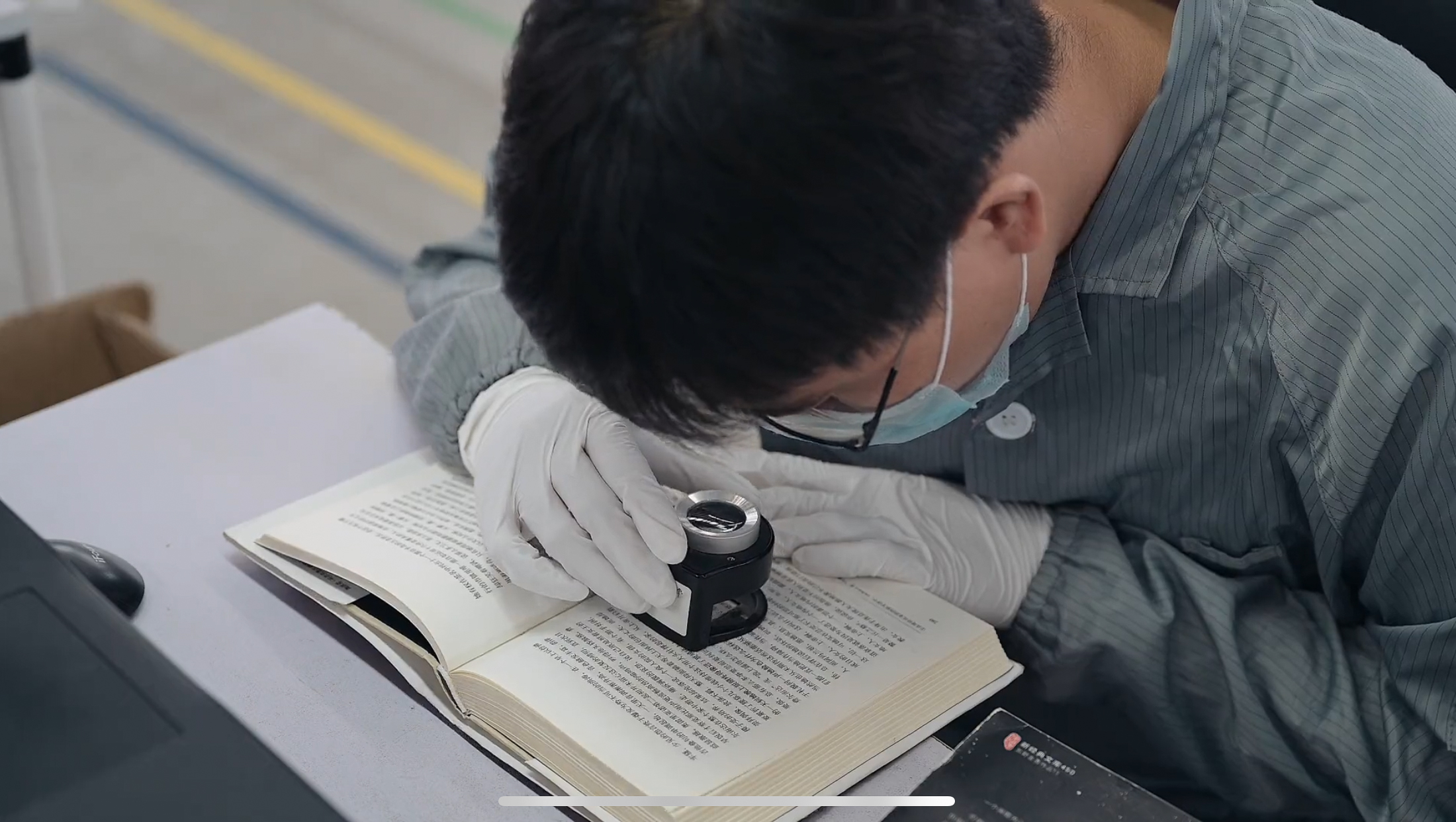
Collected books are then gathered at factories in Tianjin and Qingdao for checks and sterilization. All books will be wrapped in plastic before they are put on sale.

“The style of a bookstore is not determined by what it sells but what it does not sell,” says Li Chan, Operation Manager of the book store. The applet front page mostly features books about literature, history, philosophy and social science that are recommended by editors and users.

“We want to be recognized for offering service that features convenience, quality and humanity, not just low pricing,” Li says. The store has an algorithm model that keeps records of books being accepted and rejected. “As our database grows bigger, the data will be more accurate informing us readers’ preference,” Wei says.

“We want to be recognized for offering service that features convenience, quality and humanity, not just low pricing.”

“I want to build a business model that can stand against the test of time,” Wei adds.

A 73-year-old anonymous seller, who lives in Beijing, has been selling used books on the platform for two years. “I’m not good at using the internet but the store has helped me to sell my books,” he says in a letter to the bookstore.

“I began to lose my eyesight, but my children have no interest in reading. So, I need a channel to sell my books to those who love them,” he says. “Consumers always want to possess books, so they keep buying, but only knowledge and memories can last,” he adds.

Looking for a second-hand book online store which can help you pass on your used books? Search Duozhuayu in WeChat applet, download the app of the same name on your phone, or visit their stores in Beijing and Shanghai.

Edited by Lasley Lui, Regina Chen

Sleep with an App

(Photo courtesy of Trey Huang.)

Build a wonderland while you sleep.

By Vivian Cao in Yunnan

What was the last thing you did before going to bed last night? Using your phone to check Facebook and Instagram posts? Are you interested in building a town on your phone when you are sleeping?

Sleep Town, a time management app, can help you build good sleeping habits and a virtual town at the same time.

In this app, you can set two alarms to remind you when to sleep and wake up. If you go to bed and get up according to the time you set, you will be rewarded a virtual house and bonus which can allow you to unlock different houses in a virtual shop. If you fail, your house will be destroyed in the game.

Users can invite friends to join them and build world-famous architectural masterpieces together, for example, the Mont Saint Michel, the Taj Mahal, the Great Wall, and so on.

Trey Huang, a 19-year-old student who has been using the app for eight months, says: “Friends can watch out for each other when building houses. You can build your house and your friend’s one at the same time.”

Huang thinks it is not easy to change his biological clock at first. “When the pandemic first started, my routines were disrupted. I slept in the morning and played what at night. My friend invited me to build world-famous architectural masterpieces with him by using Sleep Town. At first, I lost the game all the time. My town was full of ruins,” Huang says.

“My big town” in the app is where users can see all their well-built architectures and ruins.

 Photo courtesy of Sleep Town.

“I can see many beautiful houses in ‘My big town.’ It motivates me to build more houses. Now my sleeping habit is back to normal after three months. I go to bed before 12:30 a.m. and get up at 8 a.m.,” Huang says.

“Gamify Your Life” is a slogan of Sleep Town’s developer, Seekrtech, a digital company from Taiwan. Their mission is to design easy games to help people develop healthy lifestyles.

Sleep Town ranks second as the most downloaded app of all paid games in the category of health and fitness in 2020 in China, according to Apple App Store data.

Do you want to have a better sleeping routine and enjoy work-life balance? Please join Sleep Town tonight. It is available on the Apple App Store and Google Play Store.

Edited by Lasley Lui

Chinese Clothing Manufacturers’ Plight: to pause or to resume?

While Chinese authorities have been ushering work resumption in a bid to revive economic growth, in Jiangyin, a manufacturing hub in Eastern China, small-sized garment factories and workers are still trapped in dilemma.
To postpone or to resume work, it remains a tough nut to crack.

Music-Making

During critical times in Hong Kong, people compose songs to express their thoughts and feelings. The lyrics and melodies foster unity and sense of belonging to Hong Kong when the city is going through difficult times.

The First Anniversary of Taiwan’s Same-Sex Marriage Law

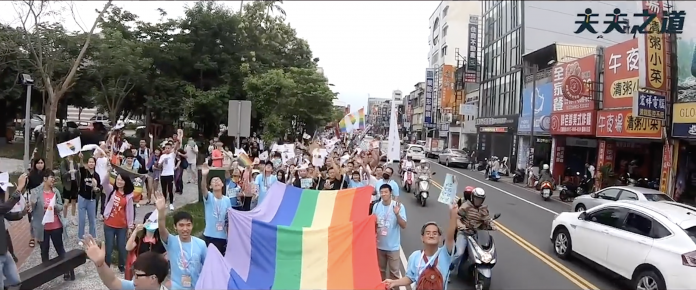
Taiwan became the first in Asia to legalise same-sex marriage a year ago, on May 17, 2019. While celebrating the law’s first anniversary, a veteran gay rights activist, gender equality advocates and married gay couples share their views on this breakthrough. Although couples are happily married, the fight for transnational same-sex marriage and children adoption continues.

Struggle in Chinese Learning

Photo courtesy of South China Morning Post (SCMP)

Reporter: Patricia Ricafort

Hong Kong does not have a Chinese as a Second Language, or CSL curriculum. Instead, schools can design their own curricula based on guidelines set by the Education Bureau. While some see the flexibility in curricula design as an advantage, others believe that the lack of a standardised curriculum prevents non-Chinese students from progressing in their level of Chinese.

Gabrielle Bas is a Hong Kong-born Filipino. Although she learned Chinese in a local school, she still feels that she cannot speak Chinese properly and that has affected her search for an internship.

Dr. Loretta Tam is a researcher at the Centre for Advancement Chinese Language Education and Research (CACLER). She recognises that the flexible CSL curriculum caters to the diverse needs of learners.

Mandy Cheuk is a project manager of Hong Kong Unison, an NGO which caters to the needs of ethnic minorities. She believes that the lack of standardisation in CSL curricula prevents ethnic minorities from improving their Chinese.

Editor: Howard Li

Fight Against Pandemic – Editor’s Note

Photo courtesy of South China Morning Post (SCMP)

Since the first identified case of coronavirus in Wuhan, China, in winter 2019,  the deadly virus has infected more than three million people, killing over 210,000 worldwide.

The pandemic has forced countries to put their citizens on various forms of lockdown. While medical experts across the globe are pulling every lever to contain the virus, members of the public practise social distancing to prevent the spread of the disease.

As human activities come to a standstill, the pandemic has weakened the global economy, resulting in the rise of unemployment rate and a severe hit to the world factory China. The Wall Street with the Dow Jones industrial average plunged 2997.10 points, or 12.9 per cent, to 20188.52 on 15 March 2020 – its third worst day ever since the Black Monday market crash in 1987. The oil price in the US  dived to an unprecedented  low  – minus USD$37.63 on 20 April 2020. Headlines of devastating events are frequently seen during the outbreak. The chain of events will have long-lasting impact on everyone in the world.  

Varsity examines how businesses in textile and garment industry in Jiangxu province are affected in terms of job and financial losses, as well as operation of local factories. Online classes are conducted following class suspension in Mainland China amid the pandemic. Varsity looks into how online classes affect teachers, parents and students who are preparing for their Gaokao, university entrance examination in China. Likewise, classes in Hong Kong are also held online after the Chinese New Year holiday. With the postponement of Hong Kong Diploma of Secondary Education (HKDSE) examination, university entrance exam in Hong Kong, Varsity explores how DSE candidates, secondary school teachers, parents feel about arrangement of the public examination.

Flights between Hong Kong and other countries have been cancelled amid the pandemic following travelling bans issued by other countries. Varsity looks at how travel plans are affected.

In the battle against a global health crisis, governments from different parts of the world have implemented measures to help citizens overcome this difficult time. Varsity explores how South Korean government introduces measures to help small businesses and the effectiveness of the measures.

Aside from coronavirus outbreak, Varsity also explores other social issues, such as the first anniversary of gay marriage legislation in Taiwan, electronic waste, veganism, ethnic minorities’ struggle in learning Chinese. In this period of upheaval, it is indeed challenging time for Varsity production, as people are unwilling to meet face-to-face for filming purpose. Varsity reporters still strive to report quality stories in the form of both text and multimedia that are shaping the recent global crisis.

We also would like to express our deepest gratitude to all medical workers who risk their lives on the front line to curb the spread of this deadly pathogen. May everyone be safe and healthy!  

Howard Li
Managerial Editor

Repair to Reduce E-waste

Reducing e-waste can be achieved by independent repair stores despite facing challenges.

By Isaiah Hui

Anson Ng had his iPhone 5s fixed by a handyman at a repair store in Mong Kok five years ago. The university student sold the device after repairing it and made about HK$ 1,000 in profit. He then used the money to buy a new model – iPhone 6s Plus. 

“If I want to continue using my phone, I will only use repair service offered by official stores,” the Year 2 student of the Hong Kong Polytechnic University says. 

“Repair service provided by Apple Store is done by staff trained to repair Apple products and the quality of replacement parts is guaranteed,” Ng says. He has used iPhone for seven years and only has confidence in repair service provided by Apple Store.

The university student is worried as handymen of independent repair shops may not be familiar with devices they repair and may use poor-quality counterfeits when replacing different components. “Although it is expensive to fix a phone at an official store, I only let Apple fix my iPhones,” Ng says.

“Apple was accused of slowing down old iPhones’ operation system to force people to buy their new models,” he says. “Then Apple comforted their consumers by lowering the price of (battery) repair.” 

Ng paid HK$ 228 for a battery replacement of his iPhone 6s Plus at Apple Store in 2018 during promotion period. The original price was HK$ 635. Apple Store now charges HK$338 for the service. 

Apple Faces Lawsuit 

In December 2017, Apple admitted it deliberately slowed down operation of older iPhone models to prolong the life of devices. The company was accused of inducing owners to buy replacement phones or batteries. Apple agreed to settle the case in the U.S. by paying consumers US$ 25 per iPhone, with a total pay-out of up to US$ 500 million (HK$ 3.9 billion) in early March this year, weeks after being fined for €25 million (HK$ 210 million) in France.

The multinational corporation is also being criticized of having phone design that is not easy for repair. Some iPhone models have vulnerable glass backs glued with whole back panel, which makes glass backs replacements difficult.

Handymen Faces Difficulties When Doing Repair

Handymen of repair shops face challenges when helping customers fix screens and buttons. Apart from gadgets designs, they also lack authorisation from device manufacturers.

“When I replace a new screen or battery for some new iPhone models, the phones may display a message saying ‘unable to verify this iPhone has a genuine Apple display’,” a handyman who prefers to be named as Peter Lam says.

The full-time repairer who has worked in the field for a few years says his replacement parts suppliers developcorresponding decoders and encoders to solve the issue. 

“Apple regularly updates the verification method of its device components,” he adds. “The development of encoders often lags behind.” 

E-waste Policies

In light of the situation, the European Union (EU) is taking wider moves to reduce e-waste by putting an increased emphasis on battery repair. A source leaked to Het Financieele Dagblad, a Dutch financial newspaper, in March revealed that the EU may be forcing electronic devices manufacturers to install user-removable batteries for any devices sold in the European market. 

Unlike the EU, the Hong Kong government implement policies that facilitate recycling rather than safeguarding the right to repair. 

According to the Environmental Protection Department (EPD), about 70,000 tonnes of Waste Electrical and Electronic Equipment (WEEE) are generated in Hong Kong every year. To minimise potential pollution, the Producer Responsibility Scheme on Waste Electrical and Electronic Equipment (WPRS) was implemented in 2018. 

Under the scheme, suppliers of Regulated Electrical Equipment (REE), including those of mobile phones and tablets, have to pay a recycling levy ranging from HK$ 15 to HK$ 165 for each REE. Sellers of REE are also obliged to provide free removal service that transport obsolete REE to a WEEE treatment and recycling facility in Tuen Mun. 

The EPD has also established Community Green Stations since 2015 to collect disposed electrical devices, such as phones and rechargeable batteries, which will then be sent to suitable recyclers for subsequent processing.

Independent repair stores can help reducing e-waste with the right to repair.
A Community Green Station in Kwun Tong

Right to Repair

Rolien Hoyng, an assistant professor of the School of Journalism and Communication at the Chinese University of Hong Kong urges the Hong Kong government to step up effort to cut down e-waste, as the waste is exported to other countries after collection and it takes ages to degenerate. 

“The Hong Kong government expects that (e-waste) recycling can be driven by the private sector. That’s their ideal. They don’t want to take care of all the recycling themselves,” Hoyng says. “We have to conclude that even for our own city, we don’t have the capacity to take care of our own e-waste.”

“Corporations always tell us that every year there is a new innovation that is so important; that we will want to have a new device. This is called ‘planned obsolescence’. This means the aspiration of a device is planned in a way that the aspiration comes pre-maturely. (The device) could have had a longer lifespan,” Hoyng adds.

This is called “planned obsolescence”. This means the aspiration of a device is planned in a way that the aspiration comes pre-maturely.

Hoyng also says Hong Kong people are more susceptible to “planned obsolescence” due to the lack of regulation of “right to repair”. She explains the “right to repair” refers to the government legislation that allows consumers acquire the ability to repair and modify their electronic devices themselves, rather than being limited to use repair services offered by electronic device manufacturers.

Hoyng is planning to create a platform called Open Repair to connect handymen and consumers by helping them make appointments and build a reputation for independent repair shops. 

“I think that will be a good option because it can help them to build trust in the process. They can be right there. They know what is happening and when it can be finished. So it also saves time,” she says. Still in the initial development process, Hoyng aims to run the scheme on campus for test once physical class resumes after the pandemic.

“The repair sector should be more visible with more reputation. It ought to be a reliable option for people,” Hoyng says. “My hope is that more students and middle-class people would also want to use those services. We can try to make sure it is cost-efficient. Then maybe more people will find it a good option.”

Edited by Cynthia Sit
Sub-edited by Tiffany Chong