













Home Blog Page 44

In Battle with Meat

By Fiona Cheung & Kassandra Lai

Melanie Joy, 54, used to eat meat. She had an epiphany in 1989 which changed her diet completely.

“One day, I ate a hamburger that was contaminated with Campylobacter and ended up in hospital on intravenous antibiotics. After that experience, I just became disgusted by meat,” Joy recalls.

Melanie Joy
(Photo Courtesy of Melanie Joy)

Campylobacter is one of the four major global causes of diarrhoeal diseases. It is considered to be the most common bacterial cause of human gastroenteritis in the world, according to the research of the World Health Organization.

The incident also made Joy wonder why she patted her dog and ate  chicken which might be as intelligent as the former.

The experience made Joy become a vegetarian and inspired her to discover more about animal agriculture and meat-eating culture in her doctoral paper in Havard.

Joy named the choice of eating animals and eating only certain kind of animals as “carnism” in 2001.

What is carnism?

Carnism, according to Melanie Joy, is “an invisible system or ideology that conditioned us to eat certain animals” which means in most cases in the world, eating meat is a choice that we are taught to make, but not a given.

An example would be a hamburger – but one made with dog meat. “Many people in the world would suddenly find that hamburger disgusting because they haven’t learned to think of dogs as edible.”  

Like sexism and racism, carnism uses a set of psychological defence mechanisms in order to distort our perceptions and disconnect us from our natural empathy. “So that we act against our core values of compassion, caring and justice, without realising what we are doing,” explains Joy.   

Carnism is seldom realized by meat-eating people as Joy says: “It is a dominant ideology that means it is woven through the very structure of the society to shape norms, beliefs and behaviours.”  

Embraced and maintained by all major social institutions, carnism becomes even harder to recognize. “For example, when people study nutrition, they are actually studying carnistic nutrition,” Joy says.  

Carnism is also the exact opposite of Veganism, which is a lifestyle that seeks to exclude, as far as is practicable and possible, all forms of exploitation of, and cruelty to, animals for food, clothing or any other purpose, according to the Vegan Society.  

Being a vegan is unlike being a vegetarian who also has a plant-based diet, but the former would also avoid all animal-derived products like eggs and dairy products.

Despite growing awareness towards carnism and veganism in recent years, Joy sees the lack of awareness-raising actions from vegan advocates. The animal activist founded Beyond Carnism in 2010 to promote the concepts.

“What we want to do is to reduce the resistance that people feel of becoming vegan, or moving towards veganism, and direct them to organisations and groups that can give them practical tools for dietary and lifestyle change”, Joy explains.

She believes that a meaningful social change requires a two-pronged approach: weakening carnism and strengthening veganism. “Our two-pronged approach includes awareness-raising so we raise awareness of carnism among the public and act among non-vegans primarily,” says the founder, who has now been to 50 countries and has given her carnism presentation on six continents.

Apart from creating video and giving talks about carnism, Joy also plans a campaign for the release of the 10th edition of her award-winning book Why We Love Dogs, Eat Pigs and Wear Cows: An Introduction to Carnism, with the new foreword by Yuval Harari, an Israeli best-selling author.

 “We try to strengthen veganism through the programme called ‘The Center for Effective Vegan Advocacy’”, says Joy, “And we train vegan advocates around the world in how to think and communicate about veganism to increase the chances of they will be effective in their own outreach.”

The Centre for Effective Vegan Advocacy aims to increase the impact of vegan advocacy around the world by providing on-site training, organizational consultation and grants to qualifying organisations and a strategy resource centre. Joy also mentions the programme is developing an online training.

For people who are not ready to fully commit to a new lifestyle, Joy encourages them to “be as vegan as possible”.

“By crowding out animal food or carnistic food, what (should) you do is just (to) add more and more plants in your diet, so there’s less space for the animals’ food,” says Joy.

Sharing Joy’s veiw, Dr Fiona Woodhouse, the Deputy Director (welfare) from the Society of Prevention of Cruelty to Animals (SPCA) in Hong Kong, has similar suggestions for people who are willing to go the extra mile for animals’ welfare.

Dr Fiona Woodhouse
(Photo Courtesy of Dr Fiona Woodhouse)

The organisation believes that animals are sentient beings and they must at the very least be protected from all kinds of unnecessary torments. Yet, Woodhouse points out that it is “very difficult to kill an animal without causing some degree of suffering.”

An example would be poultry. Woodhouse says that from breeding and living condition of both meat birds and laying birds, to the ways of killing them involve a certain degree of suffering. In Hong Kong, the tradition of wet markets and live poultry trade creates an even more unpleasant environment for chickens.

Woodhouse believes veganism or vegetarianism is an option. “And it doesn’t have to be a strict conversion, it could be a reduction in the amount,” she says.

The Meatless Meat

But let’s face the truth. To millions of people around the world today, meat remains as one of the greatest sources of pleasure and protein intake. That is one of the greatest challenges faced by vegan advocate groups.

Founded in 2012 in Hong Kong, Green Monday advocates plant-based living and supports the global shift to a more sustainable food system. With the mission to make sustainable living “simple, viral and actionable” for all, Green Monday is inspiring the public to go plant-based once per week as an effective way to create positive changes in the world.

 “Our team makes nutritional comparisons with plant-based meat to real meat, cooking videos and recipes, and spreading the benefits of choosing plant-based meat,” says Tiffany Cheung, a nutritionist and assistant program manager from Green Monday.

The green group has also opened Green Common, a one-stop plant-based concept store that merges a plant-based supermarket and restaurant into one. The group has developed a food-tech company, Right Treat, which invented an innovative pork alternative, OmniPork.

The concept store of Green Common
(Photo courtesy of Green Monday)

OmniPork is a proprietary blend of plant-based protein from peas, non-GMO soy, shiitake mushroom and rice. It was introduced in April 2018. This “all-purpose plant-based pork analogue” contains lower saturated fat and calories than real pork while offering more fibre, calcium and iron.

“It is also cholesterol-free, antibiotic-free, hormone-free, cruelty-free, and 71% lower in saturated fat and 62% lower in calories than real pork, while offering much higher fibre, 233% higher in calcium and 53% higher in iron,” says Cheung.

The launch of OmniPork by Right Treat
(Photo courtesy of Green Monday)

Cheung says the popularity of plant-based eating is rising dramatically since then: “Flexitarian population has skyrocketed from 5% before Green Monday was established to now 34% of the Hong Kong population, with people practicing one or multiple days of plant-based diet.”

Every baby step counts

Many people around the world are also making efforts to reduce meat consumption by choosing a more sustainable diet. Lim LiYing, a freelance writer and the founder of a wellness business, When Still Waters Speak, has been a vegan for more than seven years.

Instead of being a preachy vegan, she respects all manners of eating and lifestyles. “I believe in leading by example and I am glad to share that my family has gone a lot greener since then, and my dad has gone vegan too. Some of my friends are now also following suit,” she says.

Lim embarked on her vegan journey because she was once diagnosed with an eating disorder. In search of a suitable treatment, she found eating green is the best way to make peace with her plate.

The new diet and lifestyle have also given her a good thought on what it meant to be eating. “Eating is so much more than just putting food into our bodies,” says Lim. “I also studied what meat consumption is doing to the planet and I am very sure I will never turn away from the vegan way of life.”

Edited by Kayi Tsang
Sub-edited by Jasper Cao
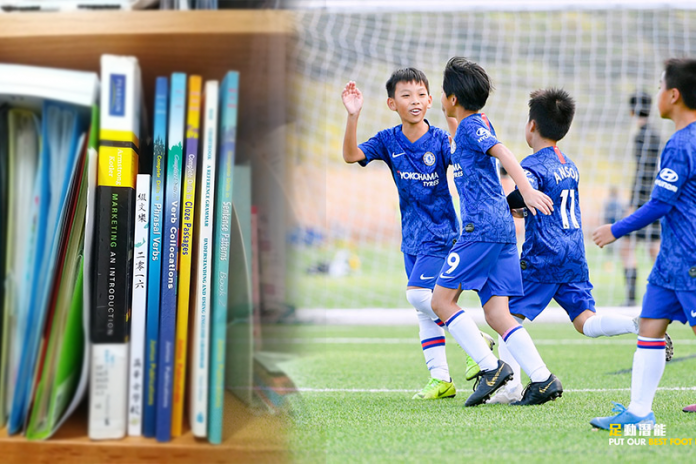
Athletes Put out of Court

By Mandy Yim

The shocking death of Kobe Bryant in a helicopter crash in January leaves sorrow across nations as well as admiration towards his sportsmanship.

Kobe Bryant, who won five National Basketball Association (NBA) championships with the Los Angeles Lakers, joined the NBA straight out of high school at the age of 17. Since then, he played for the Lakers throughout his life and is considered a basketball legend.

How about young athletes in Hong Kong?

Exams First!

“My parents always remind me to put schoolwork before anything. If I cannot strike a balance between study and sports, I should give up the latter one,” says Ethan Yim Wai-ho, current member of the Hong Kong National Water Polo Team.

While Kobe could choose to skip university and head to the pro at the age of innocence, Hong Kong students are loaded with private tutorial lessons in preparation for the Hong Kong Diploma of Secondary Education Examination (HKDSE). They are told to follow their parents’ path: study hard, get a university degree and find a decent job, even if they have sports goals.

Yim is now a Year 3 student at the Chinese University of Hong Kong. He started regular swimming trainings when he was a Primary Two pupil. After seven years of training, Yim wanted to explore a new sport – water polo. He was a Form Two secondary school student at that time. In 2014, he became a member of the Hong Kong Water Polo Team.

Yim is happy about his time record in a competition. (Photo courtesy of Ethan Yim Wai-ho)

“(Regular water polo trainings) Certainly reduce the amount of time I spend on revision. I usually return home from practice at around 12 a.m. After spending some time doing my own stuff, I go to sleep till 6 am. In fact, I don’t have much time left for study,” he says.  Leading a hectic study schedule, many sports lovers have given up in the middle of the trainings. “More than 10 people joined the team in the same term with me in 2014. Today, only two of them remain.”

His passion for water polo pushes him to skillfully manage both doing sport and his study. Yet, in order to save more time for his study, he had to cut his water polo training time when he was a Year 2 student.

Shooting the Ball to the Future

Yim points out that there are no full-time water polo athletes in Hong Kong. “As water polo is not on the list of Elite Sports supported by the Hong Kong Sports Institute (HKSI), athletes do not have stable income. They can only be amateur water polo players,” he laments. Very few athletes want to be a coach in Hong Kong. “For the time being, no water polo athletes will solely devote themselves in sports without having a back-up plan,” Yim says.

Sun Ming-him, a Hong Kong National Football Team player who currently plays for the Hong Kong Premier League Clue Tai Po, had a different plan.  The 18-year-old student who is pursuing a business degree started his football journey when he was five. Later, he joined some activities organised by The Hong Kong Football Association Limited Junior Fans Club (JFC). At 12, he joined the Youth Team. 

Sun participating in a football match. (Photo courtesy of Sun Ming-him)

“After graduating from university, I want to be a full-time footballer. When I retire, I will become a coach,” Sun says. To him, a university degree is nothing more than a back-up plan and fulfilment of his parents’ expectation. Though Sun’s parents fully support his dream, they still prefer Sun to get a degree.

Comparing to other countries such as the US, Sun observes that Hong Kong teenagers do fewer sports.  “My coach once told us that football teams in foreign countries were required to train twice a day. We only have a few training sessions per week,” says Sun. Sun attributes this phenomenon to limited training venues and heavy schoolwork.

“In some families, parents are concerned that playing football in Hong Kong cannot bring a promising future to their children.  They, therefore, force them to give up.”

Refuse to Invest in A Bottomless Pit

“We are trapped in a dilemma. Economic benefit is the major consideration of the government when it decides to develop certain sports or not,” says Chris Yiu Kei-sze, the Grassroot Football Manager of the Hong Kong Football Association.

Yiu shares some challenges of the Hong Kong football ecosystem. He explains the government finds projects not worth doing if they don’t have immediate returns. “When it comes to football, the return is usually not measurable. It is impossible to assure that the Hong Kong national football team must be able to reach certain ranking as long as a certain amount of funding is provided,” he sighs.

In Yiu’s view, the government puts resources only on sports teams having remarkable performances in the past, such as winning medals and getting high rankings in competitions. Yet, no outstanding results can be achieved if resources for development are limited. This is a chicken-and-egg problem.

Sun and his team cheering for their award. (Photo courtesy of Chris Yiu Kei-sze)

“We are given a priority in using it (the Jockey Club HKFA Football Training Centre), but we are not the only user,” Yiu stresses. He points out that the government is not responsible for any operating expenses of the training centre in Tseung Kwan O.  The Jockey Club has to rent the venue to the public to cover operating costs. Regular strategic trainings and promotions of the sport may be hindered if the association has no exclusive right to use the venue. In foreign countries, football clubs and associations have their own pitches. Local football teams need not share their training pitches with the general public.

“If there is a piece of land, the government will certainly use it for housing. Sports is never the first choice.”

 “Kobe can play freely without any academic pressure because universities would give him a position whenever he chooses to go back,” Yiu reckons.

Children having training organised by the Jockey Club. (Photo courtesy of Jockey Club)

Yiu thinks it is a pity that many talented primary school students quit football training to prepare for academic exams such as the internal examinations for the Secondary School Places Allocation (SSPA).

“Kobe mastered his skills with a carefree mind because he did not have any worries about his study. In contrast, no policy in Hong Kong supports young athletes such as adjusting secondary school entry requirements or providing conditional offers.”

After the implementation of the Five-Year Development Programme for Team Sports in 2018, additional funding is provided to the Hong Kong water polo team, supporting its trainings for better performance in the Asian Games. Each team member can receive $4,000 per month. Baseball, basketball, handball, hockey, ice hockey, softball and volleyball teams in Hong Kong are also covered by the programme.

Edited by Ariel Lai

Sub-edited by Howard Li

The Stranger

A pro-democratic Shanghai-born Hongkonger helps new immigrants speak out and fight against discrimination for Mandarin speakers in the city

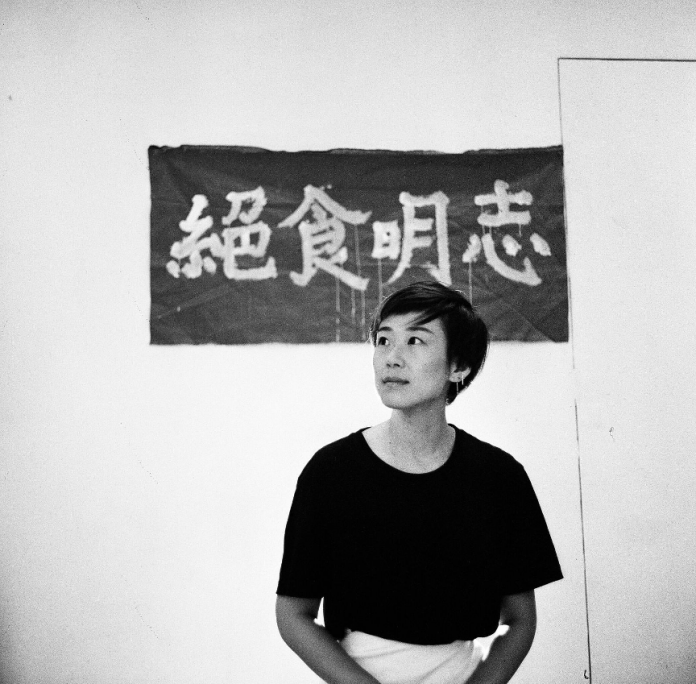
On February 21, 2020, a mainland-born sociologist Minnie Li Ming went to a “yellow restaurant” which supports anti-extradition bill movement protesters.  

The restaurant operated by Kwong Wing Catering announced on January 28 that it would “only serve Hong Kong customers and accept orders in Cantonese or English” on its Facebook page. 

Kwong Wing Catering made a post on Facebook declaring that they would “only serve Hong Kong customers and accept orders in Cantonese or English” on January 28, 2020.

“I don’t want to see our society become so radically antagonistic,” Li says. “Mandarin speakers are not enemies of (Hong Kong) society.” 

Li, together with her five Mainland immigrant friends and two Hong Kong friends visited the restaurant and ordered food in Mandarin, but the staff insisted on serving them in Cantonese. They finally managed to make an order by writing. 

The restaurant owner who promised to meet her in the evening that day did not show up at the end, nor did he respond to Li’s message. When leaving, Li and her friends gave the restaurant staff some masks and hand gel to thank them for being supportive of the social movement.

“I failed to communicate with the owner, but someone has to give a try,” Li says. 

From a Stranger to a Hong Kong Pro-democrat

Li, 35, is now a lecturer of the Education University of Hong Kong. Sharing the Chinese name of superstar Leon Lai Ming, she is an immigrant from Shanghai. After finishing her undergraduate study at Fudan University, she came to Hong Kong to pursue further studies at the Chinese University of Hong Kong in 2008. 

She is known to the public mainly because of two hats she wears: A Mainland immigrant and a high-profile supporter of the pro-democracy camp in Hong Kong. When she started her postgraduate study, she was a supporter of the Beijing government and planned to return to the Mainland after graduation. 

 “But gradually I felt I couldn’t go back (to the Mainland) … My thoughts have changed. I can’t get used to it (social environment of the Mainland) anymore,” says Li. “You can’t say what you want to say, care about what you want to care. You can only work hard to make money like my peers.”

On June 4, 2009, she attended a candlelight vigil at Victoria Park for the first time – where tens of thousands of people gathered to mark the anniversary of the pro-democracy movement in Tiananmen Square, Beijing. Li, in her 20s, changed her view on what happened in Beijing on June 4, 1989 after the visit. “I found that what I learnt in history lessons in the Mainland was wrong,” she says.

Gifted in language and having grown up in a metropolis, Li integrated well into Hong Kong. She has become a pro-democrat.

Like many Hong Kong young people, she took to the street during the Occupy Central Movement in 2014. Knowing that students were protesting at Civic Square, an open space outside the Central Government Offices in Admiralty on September 26, she bought some water and food, hoping to lend a helping hand to young protesters there. 

“I’ve never been there before,” says Li. “I didn’t know it was impossible to deliver water and food to the protesters until I got there.”

Witnessing a social movement of such a large scale for the first time in her life, Li was both overwhelmed and curious. Although she stayed at the back of the crowd, she was still peppersprayed by the police.

 Li’s father came to Shenzhen to visit her the day after the protest. She recalls her father’s reminder: “You are a Shanghainese but not a Hongkonger. Even though you support them and join the movement, they still call you ‘locust’. Then why did you go there?” 

His words made Li think about her identity and relationship with Hong Kong. She then figured out that her support for the social movement is not based on identity, but the ideology she believes in. 

 Encourage New Immigrants to Speak Out

Li used to work part-time at Midnight Blue in 2015, an organization aiming to protect rights of male and transgender sex workers. The experience makes her realise that she has integrated into Hong Kong society so well that she has overlooked difficulties other new immigrants encounter. She finds new immigrants are just like those transgender sex workers, they are both not accepted by the mainstream.

“The public think sex workers are shameful due to prejudice and lack of understanding,” she says. “Similarly, new immigrants are thought to be greedy locusts.” She believes misunderstanding can be reduced when people learn more about new immigrants. 

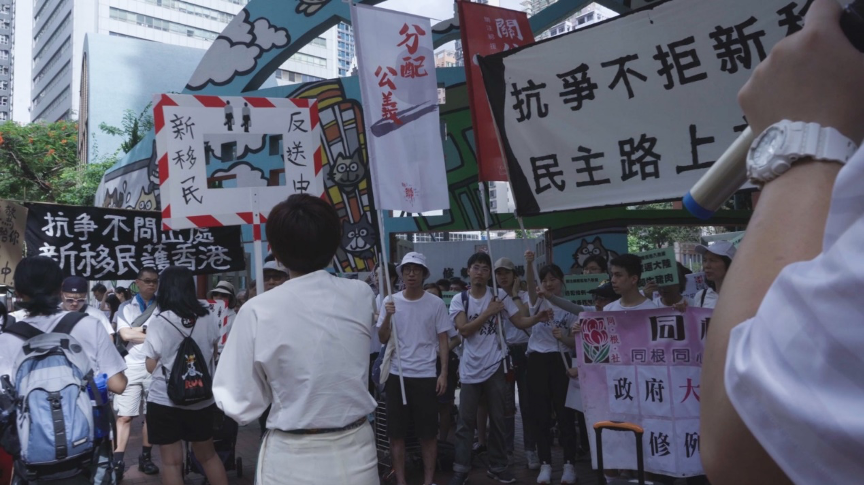
Li was in a gathering of new immigrants who support anti-extradition bill movement on June 9, 2020. Photo courtesy of Minnie Li Ming

On May 31, 2019, Li organized a signature campaign against the proposed extradition bill, but most new immigrants who supported the campaign only signed their surname fearing of getting into trouble. “They are as miserable as the gays go to a church,” she says.

The brochure collects news stories and interviews about new immigrants’ participation in the anti-extradition bill movement. Photo courtesy of Minnie Li Ming

To make a change, Li led a group of new immigrant protesters on June 9, 2019 in a demonstration. She held a huge banner that said: “Do not ask where protesters come from. New immigrants protect Hong Kong”. Participants gathered under the banner belonging to new immigrants for the first time. 

Their action received a warm welcome from many local protesters, although occasionally they faced discrimination which made them feel very upset. But Li still hopes new immigrants can make themselves visible in Hong Kong by participating in the social movement. “Being visible and accepted is a source of power,” she says. 

 “We are not just a cheering squad for local protesters. We are a part of the society. We also fight for ourselves,” she adds. 

Li also invited members of the New Arrival Women League, an organization consisting of grassroots female immigrants, to join them. “The image of new immigrants ought to be enriched, rather than being limited to the intellectual or middle class,” she says. 

“Integrity Is the Only Way Out”

Despite her high-profile involvement in pro-democracy movements in Hong Kong, an article she wrote about her visit to Kwong Wing Catering caused a heated debate in social media platforms. Some supported her, but some criticised her of provoking the restaurant operator to find flaws with ill intentions, though she holds the same political stance and views with them in the anti-extradition bill movement.  

But Li does not regret going to the restaurant. “They just carve some people out of the society with a simple and arbitrary standard according to their stereotype, without considering the complexity of identity in the real world,” she says.

Li believes people should not label or hurt others for speaking different languages, and every individual is unique and should not be judged by certain standards, especially in a social movement. Otherwise, a cutthroat world will be created. “The movement should make people feel being respected,” she says. “It is wrong to think that people are just instruments and dignity is insignificant.”

Li was in a gathering of new immigrants who support anti-extradition bill movement on June 9, 2020. Photo courtesy of Minnie Li Ming

She says that her biggest worry about the movement is some people may abandon their ethical standards. In an article she posted on her Facebook, she wrote: “As Albert Camus wrote in his novel Plague, integrity, which means doing what you are obliged to do, is the only way out.” 

Summer Journeys are Gone?

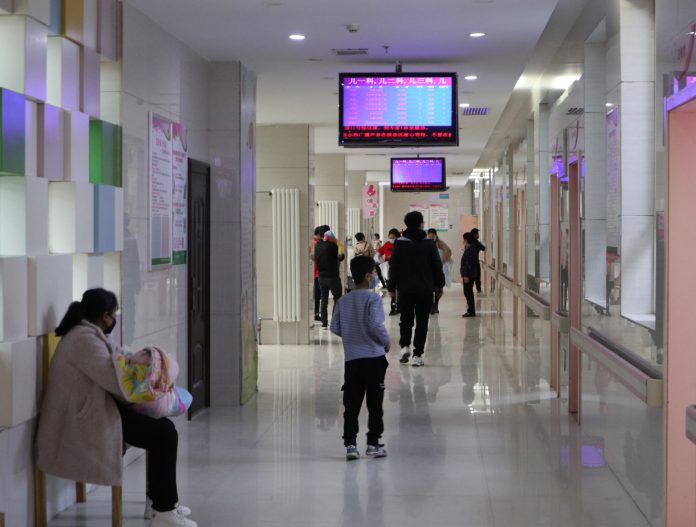
Summer vacation used to be one of the most popular travel seasons to Hong Kong citizens. Yet, due to COVID-19, countries issued different travel restrictions. The pandemic has a huge impact on both travel enthusiasts and business travellers. What are their new plans?

Preparing for Gaokao Amid the COVID-19 Outbreak

Physical classes have been suspended due to the Coronavirus pandemic, which first began in Wuhan, China in late 2019. Online teaching has been adopted by all schools.

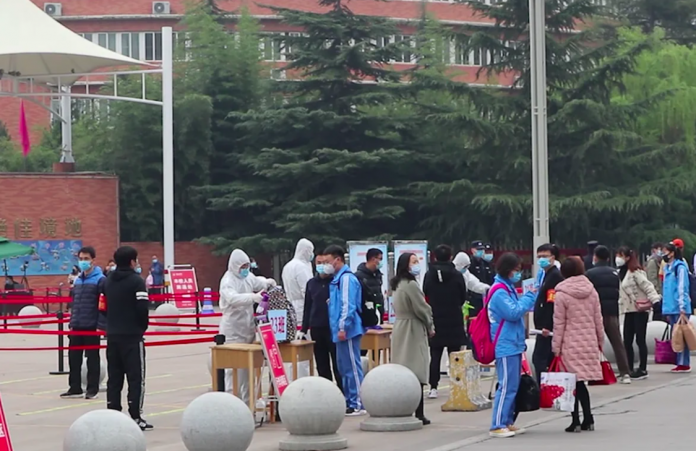
Gaokao, university entrance examination in China, which was originally scheduled on June 7th to June 8th has been postponed by a month in 2020. This decision affects over 10 million candidates. Preparing for the public examination during the outbreak is a challenge for senior three teachers, students and their parents.

Revitalising Small Businesses in South Korea

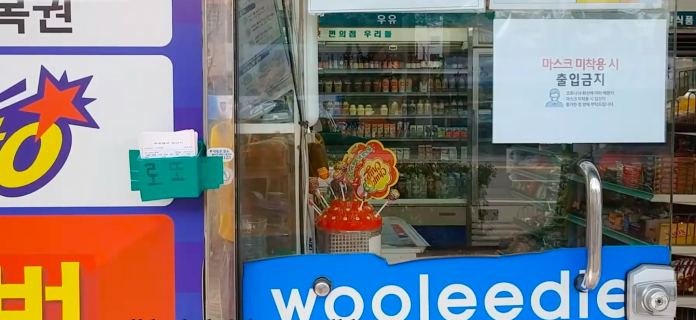
The COVID-19 pandemic, which first began in Wuhan, China, in late 2019, has spread across the world. The global economy struggles in the outbreak and South Korea is no exception.

South Korea faced a steep increase of confirmed cases of COVID-19 reaching over 10,000 in February 2020. Small businesses operators face the biggest crisis of their lives as a result.

The South Korean government introduces various measures to help them. The small business operators, however, find them insufficient.

DSE under pandemic

Photo courtesy of HKEAA

A long delay of DSE examination amid the COVID-19 pandemic puts extra pressure on candidates.

Reporter: Kelly Yu

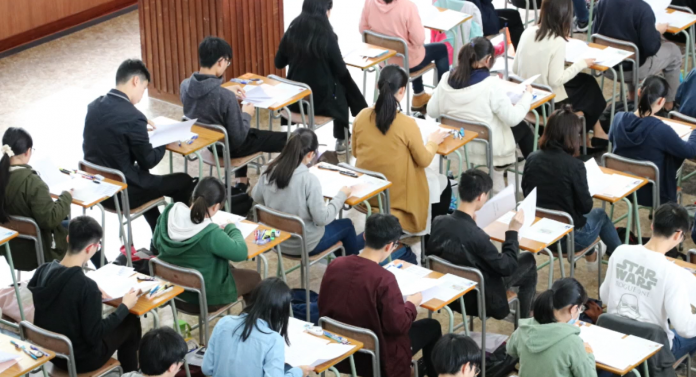
In light of coronavirus outbreak, the Hong Kong Diploma of Secondary Education (HKDSE) examination has been postponed to April 24, a month later than initially planned. The postponement has affected over 52,000 DSE candidates this year.

Jay Yu, one of the DSE takers, thinks that the sudden rearrangement of the public examination has added extra pressure to candidates. Yet, he says words of encouragement on social media have shown great support to them.

Even though the government has adopted several health measures to prevent the risk of infection, Bernice Shum, parent of a DSE candidate, expresses concerns over mental and physical health of students.

School closure amid the outbreak forces classes to be held online. A secondary school teacher Samson Wong points out difficulties in teaching and learning while conducting online lessons amid the pandemic.

Editor: Howard Li

Stay Masked – Editor’s Note

When Hong Kong people join the many anti-extradition bill protests, they wear masks. The habit of wearing masks continues, as Hong Kong is battling against COVID-19 outbreak which first started in Wuhan, China in winter 2019. The pandemic has so far affected more than 1.3 million people worldwide and killed over 70,000. The latest pandemic reminds Hong Kong people of the horrible SARS outbreak in 2003 during which mask played a crucial role in fighting against the deadly virus. 

The Chinese government is criticised for not being open about the spread at its onset. The same accusation was made against the Mainland authorities back in 2003. The lack of transparency and information about the virus is blamed for causing the pandemic that plagues the globe.

On January 23, Hong Kong confirmed its first two COVID-19 cases. The number of cases reached 914 on April 7. Online teaching was introduced to all kindergartens, primary schools, secondary schools and universities in late January and early February. Ironically, the mask which was banned by the government with a new legislation months ago is now a daily necessity which helps combat the highly infectious virus.

As COVID-19 has been raised to the top of the global agenda, Varsity decided to launch a special section in this issue to cover stories about the pandemic. In this section, our reporters investigate how patients with chronic disease in Wuhan struggled to seek for medical treatments which are vital for their survival during the city lockdown. Our reporters also speak to university students to find out what they think about Zoom online classes when physical classes are suspended during the pandemic.

Periscope examines the impact of the anti-extradition bill movement. Varsity looks at how Hong Kong people are affected physically, mentally and socially. 

The pandemic indeed has brought tough challenges to news reporting which heavily relies on face-to-face communication. Varsity members have to discuss work and even conduct interviews online. It is an unprecedented news production experience to all of us, but our pursuit of news quality remains unchanged. Reporters, editors and instructors who are thousands of miles apart, are all staying on the job, taking responsibilities, working hard for good content and producing meaningful stories.  

Impacts of the pandemic to global economy and politics is beyond our imagination. This is a long and harsh winter for everyone in the world. Hopefully, spring will come soon. 

Jasper Cao
Managerial Editor


Pandemic Pushes Chronically ill Patients to Back of Queue

Patients with chronic diseases in Wuhan faced severe difficulty receiving treatment when the city was sealed off due to the coronavirus outbreak. Volunteers lent them a helping hand.  

By Savoki Zhang & Coco Zhang

“Without hemodialysis, death for her is only a matter of time,” wrote Wang Gongbao in his post on Weibo, a Chinese social media platform, on February 1, 2020, pleading for help for his sick sister.

Wang’s sister, who suffers from chronic renal failure, lives in Xiantao, a small city only 100km from Wuhan. She was among thousands of patients with chronic diseases who were in urgent need of life-sustaining treatment or medication, while nearly all medical resources were deployed to contain the coronavirus pandemic.

“My sister used to receive regular hemodialysis at the No.1 People’s Hospital of Xiantao before she was tested positive for the novel coronavirus on January 28,” says Wang. “The hospital then refused to offer her dialysis.”

The 25-year-old and his sister had to transfer their files to another hospital which is designated to treat febrile patients. “We are under quarantine here, but so far no hemodialysis is arranged either,” he says on February 2. “I called the health bureaus but to no avail.”

Although Wang’s sister was admitted to a hospital after being diagnosed with coronavirus, she was not given timely treatment for chronic kidney failure. Many other patients with chronic illnesses, however, could not even leave their neighborhood for hospitals to receive treatment vital for their survival. 

The devastating coronavirus outbreak sickened over 82,000 and killed over 3,300 nationwide, mostly in Hubei Province and its capital, Wuhan, as of March 30. In the epicentre of the pandemic, collateral damage was also devastating. Apart from a dearth of essential medical treatment, strict lockdowns of cities as well as traffic bans cut many people off from supplies of drugs, leaving desperate patients with underlying conditions such as uremia, leukemia, and Aids in a deeper plight. 

Although the newly established Wuhan Novel Pneumonia Prevention and Control Headquarters issued an order to make arrangements for “chronic renal failure patients, the pregnant, surgical patients and other types of special patients” on February 5, there were still patients with other conditions who could not gain access to medical assistance. 

In an extreme case, Liang Shutao, a 70-year-old patient with uremia, committed suicide on February 10. No hospital offered Liang either testing for COVID-19 or further dialysis since February 2 after he showed fever symptoms when receiving dialysis. The man was in great pain days before his death and begged staff of Luo Jiadun Community, Wuhan, to arrange him a car to a hospital for dialysis several times, but all requests were rejected.

A doctor working in the emergency ward of Wuhan Central Hospital, one of the designated hospitals with fever clinic, who declines to reveal her name, says there was indeed a large number of patients with underlying conditions who were facing difficulties when seeking medical treatment. 

She says once these patients caught a fever, they could not go to non-designated or designated hospitals which only admit patients who are confirmed to be infected with novel coronavirus. 

“Fever clinics of non-designated hospitals were all closed… (The authorities) need to make these hospitals as clean areas…where anyone can come without protective measures,” she says. “If febrile and non-febrile patients are treated at the same hospital, it may cause cross infections.”

A nurse is testing temperature for every visitor of the hospital to prevent cross infection

In the face of the abrupt withdrawal of medical care for non-coronavirus patients, many of them and their families sought help from social media out of desperation. 

By March 12, the hashtag #Non-coronavirus patients asking for help had 100,000 posts with over 120 million views on Weibo, since its approval of opening on February 6.

Under the topic, volunteer groups and non-government organisations have joined forces in establishing chains to open up avenues for people with chronic diseases. Most volunteer teams, cofounded by friends, alumni, or passionate and caring strangers active in cyberspace, are fostered by the pandemic and have played a vital role in saving those whose pressing needs are unmet by authorities.

#Non-coronaviurs patients asking for help had 100,000 posts with over 120 million views on Weibo

No Red Pocket, a volunteer team founded on February 12, was initially dedicated to helping coronavirus patients. “But we soon found there were already numerous well-organized volunteer groups supporting coronavirus patients, which means efforts might be wasted if their work overlaps each other,” says Hai Hai, leader of the team. 

The team, with over 50 members so far, shifted their focus to bridge the gap between non-coronavirus patients, hospitals capable of providing corresponding treatment, and logistics chains of medical supplies to avoid overlapping work with other volunteer groups. “Apart from facilitating the flow of information between those in need of help and those offering help, we also closely follow every case to ensure their pressing needs are handled properly and efficiently at each stage,” she explains.

 The team collaborated with other volunteer groups to enhance efficiency. They collected information of patients with other diseases with the help of a volunteer group named Thunder Rescue. Another volunteer group, NCP Life Support, provides contacts of doctors who are willing to offer patients telemedicine support.

Hai Hai and her team gather information for non-pneumonia patients and publish it on Weibo

“My own voice is small, but our voice is loud,” wrote Hai Hai in her work journal posted on Weibo on Feb 12. By March 1, No Red Pocket had managed to help 266 patients suffering from other diseases and in a quandary to receive timely care. Among them, 13 were in need of dialysis, 51 suffering from cancer or tumors, and 21 stricken with acute diseases such as heart attack and stroke.

Wuhan Homosexual Centre is a civic organization founded in 2011, aiming to provide help for the LGBT community in Wuhan. Amid the pandemic, volunteers of the organization have shifted their work to deliver drugs for HIV carriers in the locked-down provincial capital. Without multiple drugs essential to cocktail therapy, those living with HIV may die from any infection as their immune system is weak.

“There are over 20,000 people infected with HIV in Hubei Province and a large number of them cannot receive their medicine due to the pandemic, making them at high risk of drug resistance and morbidity,” says Huang Haojie, a member of the organization. “Problem lies in medicine delivery but not its supply.”

Although some residential communities in Wuhan arranged staff to pick up medicines for people infected with HIV as the city tightened its traffic control, most of them refused to seek help from community staff in the light of privacy concerns, and they were more likely to turn to civil groups. However, inside the paralyzed city, civic groups were also bogged down sometimes. 

Huang’s fellow member was stopped and questioned by police on a delivery run on February 25, because he did not have a pass permit. Huang says though health bureaus and hospitals had expressed their support in issuing special permits for civil organisations, volunteers were not informed of any channel to acquire the pass permit from authorities by then. “Civil organisations do need support from government to function better,” Huang says.

“Civil organisations do need support from government to function better.”

As collateral damage triggered by the pandemic escalated, anger spread on social media against the government’s slow initial response to the coronavirus outbreak and their negligence of patients with chronic illness as the administration only focused on combating the coronavirus.

“I think the emergence of so many non-governmental channels was due to the lack of official channels at the early stage of the outbreak. If there was any, the people did not have to resort to social media for help,” says Fang Kecheng, assistant professor of the School of Journalism and Communication at the Chinese University of Hong Kong.

The Red Cross Society of China Hubei Branch also received a nationwide reproach for its inefficiency and misconduct in distributing donated materials during the early stage of the outbreak.

The Society, together with Hubei Charity Federation, had received an overall donation of ¥4.36 billion (US$610 million) and 5.29 million pieces of materials by January 29. However, according to a doctor in Wuhan Union Hospital, a hospital designated to treat febrile patients with more than 8,000 staff, was only given 3,000 surgical masks, while 16,000 were given to a hospital of Putian network specializing in gynecology and obstetrics. 

Putian network, the largest private hospital system in China, has long been criticized for deceptive promotion and low-quality medical service. 

Despite being suppressed instead of trusted by the authorities, civil society in China is striving to thrive. “Even if we do not have an official pass permit, we will still violate the traffic control to save people’s lives… I hope even during ‘wartime’, people still pay attention to vulnerable groups,” wrote Huang Haojie on his Weibo account on February 26. He received the pass permit on the same day.

As tension in Wuhan eases, operation at hospitals is gradually resuming normal. The National Health Commission declares that by March 31, 62 hospitals in Wuhan are providing medical services for all patients. According to Hai Hai, most patients No Red Pocket has helped can now receive routine treatment.

Edited by Jasper Cao
Subedited by Emilie Lui

Classes on Screen

University students in Hong Kong express their views on online teaching arrangement amid the COVID-19 outbreak

By Eve Lee in Seoul & Linn Wu in Taipei

Shin Jeongyeon, a 20-year-old South Korean student, who studies Operations Management at the Hong Kong University of Science and Technology (HKUST), has put off her study in 2019/2020 Term 2 due to the COVID-19 outbreak. She now is in Korea with her parents.    

“My parents suggested a suspension, considering the severity of the coronavirus outbreak,” Shin says.    

Coronavirus Disease 2019, or COVID-19 is a respiratory illness caused by a virus first identified in Hubei, China, late last year. It is now confirmed as a pandemic by the World Health Organization (WHO) due to its rapid widespread nature.

The number of confirmed COVID-19 cases in Hong Kong is 915 as of April 7. The Hong Kong government has announced the closure of all kindergartens, primary, and secondary schools until further notice.

This is the second time Hong Kong universities have announced a suspension in the school year of 2019/2020. The universities suspended physical classes in mid-November 2019, due to violent clashes between protesters and police officers on campuses during the anti-extradition bill movement.

An empty classroom at Humanities Building of CUHK
(Photo courtesy of Marcus)

HKUST implemented the online teaching arrangement in response to the suspension, on November 12, 2019. HKUST began online lectures via Zoom, a platform adopted university-wide to conduct online teaching.

Zoom is now widely used by not just universities but also by secondary schools, primary schools, and even kindergartens as a means of education amid the COVID-19 outbreak. Based on the experience of e-learning, Shin notes online teaching is not as effective as physical class meetings. She also adds virtual classes miss out on “the connections and the unique campus memories” of physical classes.

Shin is not the only student feeling unhappy with the online teaching arrangement.  

Fair Assessment?

On January 30, HKUST announced final examinations of the first term would be conducted online from February 17 to 22. Jeon Sanghyun, 25, a South Korean student studying the Master of Philosophy programme in Electronic and Computer Engineering at HKUST, took his online examination on February 18.

Jeon has concern over fairness in assessment.  “I heard students actively exchanged messages (with instant messaging tools) during online examinations,” he notes. 

In a bid to combat cheating, Marco Ho, lecturer of the Department of Information Engineering at the Chinese University of Hong Kong (CUHK), prepared multiple sets of questions for two of his courses in the first term of 2019/2020 school year.

“The questions had different numerical values and configurations so that the difficulty level was more or less the same, and the differences (of each set) were very minor to be detected,” Ho shares. “Time allowed for the online exam was barely sufficient (even) if the students well understood the course material and were well prepared,” he continues.

“That means if the students try to collaborate and work on the exam together, they will not have enough time to spot all differences in questions,” he says.

Ho suggests that measures could be implemented for future online examinations. “For example, examinations could be held in a centralised manner at a fixed time, similar to conventional exams. Stricter regulations (like making multiple question sets) can also be enforced so that students are further discouraged to attempt cheating,” Ho says. 

Calls for Refunds

Apart from technical concerns regarding the operation of online teaching, another major issue lies in tuition fees.

Anne, a Taiwanese who refuses to disclose her real name, is a Year 1 Biomedical Sciences student at CUHK. She believes fee adjustment or relevant explanation is necessary.

Anne, attending an online lecture
(Photo courtesy of Anne)

“A reasonable amount of refunds has to be considered. We need an explanation if the school decides not to give a refund,” says Anne. “My practical classes are heavily affected. Lab courses are all cancelled. Sometimes, my professor presents with a skeleton model, but I can hardly see it through the camera.”

Her first year of university has been rough. The university cancelled most of the classes about three weeks earlier than the schedule, in the first term. They emptied the campus and advised staff and students not to return until the campus environment was confirmed safe and restored. The school now replaces face-to-face classes with virtual ones due to the current pandemic.  

“I know it’s not the school’s fault for what happened in the first term, but I lost those remaining classes. We do not only care about grades but also the learning outcomes. The present class suspension and what happened in the last term make it (studying in Hong Kong) a bit meaningless to me,” Anne explains.

Results of the Survey on the Arrangements of Tuition Fees, Hostel Fees and other Academic Affairs During Class Suspension
(Photo courtesy of the Student Union of CUHK)

According to a survey conducted by the Student Union of CUHK in February, 98 per cent out of 5,685 undergraduates said that at least a part of the second term tuition fees should be refunded. Nearly 95 per cent responded they deserved a full or partial refund for the first term tuition fees. HKUST Students’ Union has also submitted a petition for a 60 per cent refund.

At public universities in Hong Kong, tuition fee for local students is about HK$ 42,100 (US$ 5,400) per year; for non-locals, the fee ranges from HK$ 140,000 to HK$ 171,000 (US$ 18,000 – 22,000).

Registration and Examinations Section of CUHK makes no remarks on fee refunds but postpones the due date for tuition fees to April 30. Johnny Tam, the Public Relations and Media Manager of HKUST, says tuition fees will stay the same as classes are conducted by the same professors.

Save Time, Save Money

There are, on the other hand, students who prefer online teaching. Yvonne Leung is a local student of CUHK who lives in Siu Sai Wan. She used to spend about three hours per day to commute to school by bus and MTR. Despite occasional unstable internet connection, she appreciates the advantage of taking online classes – saving money on travels. “I think online teaching is good because it saves a lot of transport time and costs. I used to spend around HK$ 30 a day, which is HK$ 600 a month,” she says.

Another CUHK student Marcus, who declines to reveal his full name, shares Leung’s view. Marcus lives in Kwun Tong and his journey to CUHK takes him about 40 minutes to an hour. “I used to get up more than an hour before my classes. But with online classes, I can just get up and turn on my laptop,” he says. “I think I am more proactive (in online classes), because it’s not (a) face-to-face (interaction). I feel less shy in class discussions.”

Advice from Teachers        

 “I am still learning how to use the platform to overcome challenges that limit interactions with students,” says Professor Fan Tingting, assistant professor in the Department of Marketing at CUHK Business School. Fan advises students to be more proactive and make more initiatives to interact with their professors. 

“Students have to accept that we do not have any choice for now,” Fan says. “Don’t hide behind your computer. Ask your professors questions,” she encourages.

Ho, lecturer of the Department of Information Engineering at CUHK, also believes communication between teachers and students is crucial, especially for online classes. 

“The students should be aware that they are not only given a set of online notes and online videos for learning, but also individual assistance and extra learning resources in the same way as in the conventional classroom teaching,” Ho says. 

The Unknown Future

As of April 7, 2020, 1,347,235 of the world population is confirmed with COVID-19 and reported 46,150 deaths according to WHO. Countries across the world went into nationwide lockdown, including school closures, to slow down the spread of the outbreak. WHO advises “all countries to continue efforts that have been effective in limiting the number of cases and slowing the spread of the virus.”

The United Nations Educational Scientific and Cultural Organisation (UNESCO) says the COVID-19 outbreak has deprived education of nearly 300 million students worldwide. Audrey Azoulay, Director-General of UNESCO notes “ (if) the global scale and speed of the current educational disruption is unparalleled and, if prolonged, (it) could threaten the right to education.”

Edited by Soohyun Kim
Sub-edited by Cynthia Sit