Plastic utensils ending up in the local rivers create pollution problem to the city
Reporters: Ada Chung, Jasper Cao, Fangdong Bai
Editors: Marilyn Ma, Brian Yu
Typhoon Mangkhut ripped through Hong Kong in September, bringing the city not only heavy downpour and gusty wind but also piles of plastic wastes which were dumped into the ocean decades ago. The sight of a plastic tsunami along Hong Kong shoreline is alarming.
According to a Greenpeace report published in October, more than 17 million pieces of plastic waste are flushed into the sea via Hong Kong’s Shing Mun River every year. The most common plastic items found in the rivers were plastic bottles, food wrappers, fast food utensils and containers.
Plastic wastes in rivers and the ocean subsequently break down into microplastics which find their way into the food chain and pose threats to the health of both marine lives and human beings.
Chan King-ming, associate professor at the School of Life Sciences of the Chinese University of Hong Kong, explains that if humans consume seafood that is contaminated by microplastics, women will be prone to cancers like breast cancer or ovarian cancer, while sperm count will be lowered for men.
To combat the problem of plastic pollution, both NGOs and the government have carried out various campaigns to encourage the public to cut down the use of disposable plastic items.
The Environmental Campaign Committee (ECC) has cooperated with three of Hong Kong’s major fast-food chains, including Café de Coral, Fairwood and Maxim’s, to launch a campaign to encourage customers to forgo disposable plastic utensils.
More and more small restaurants have also gone plastic-free in recent years. 5B Private Corner, a restaurant in Tsuen Wan has replaced plastic straws with stainless steel straws. The restaurant owner says they have saved over 100 plastic straws per day after switching to stainless steel straws.
On a Saturday afternoon, a group of To Kwa Wan residents gather at the House of To Kwa Wan Stories, where children have tutorial classes and adults make soup and dumplings together.
Housing estates residents nowadays are quite distant from their neighbours. It was a different story back in the 1950s and 1960s when neighbours had much stronger and closer relationships in their communities.
“Community development” is a concept of strengthening public engagement and bonding in the neighbourhood. Engagement amongst neighbours is promoted through a series of campaigns and events initiated in different districts by enthusiasts and concern groups.
The House of To Kwa Wan Stories is run by a group of volunteers who organise different activities regularly for local residents including flea markets, tutorial classes for children and maintenance services for residents in the district.
Hung Fook Street in To Kwa Wan will soon undergo redevelopment. The Urban Renewal Authority plans to recover more than 300 residential units by 2026. The House of To Kwa Wan Stories is rooted in the community with an aim to connect the residents together in face of the redevelopment plan.
Apart from residents’ joint efforts, there are also professionals who try to contribute to the community with their knowledge, hoping to establish a network for residents and encourage community members to share and interact.
Peter W.Ferretto, associate professor and director of the Masters of Architecture Programme at the School of Architecture of the Chinese University of Hong Kong, wants to strengthen the connection of residents by making use of public space in Hong Kong with his design.
He initiated the “Book Tree” project in August to encourage community members to share and exchange books. The project has received positive feedback from the residents with a circulation of over 10,000 books. He hopes it can ultimately become a mobile facility that moves around the city.
The establishment of community bonding needs continuous efforts. Max Leung King-sang, a member of the House of To Kwa Wan Stories, believes the group is sowing the seeds of community development in the younger generation. He hopes young people will organise activities to strengthen bonding in their own communities no matter where they will settle in the future.
Subdivided flats tenants are plagued by indoor air pollution
Reporters: Gloria Li, Iris Yeung, Johanna Chan
Editors: Jennifer Leung, Grace Liyang
Vehicles emission and outdoor industrial fumes are often associated with air pollution. Little attention is paid to indoor air quality which has become a dire problem in Hong Kong, especially in the cramped space of subdivided flats.
Ms Eckes (not her real name) and her daughter live in a subdivided flat in Mongkok. The only window of the unit faces an open yard of the building, which fails to facilitate ventilation and channels air pollutants into their home.
After moving into the cell-like unit, she starts experiencing frequent respiratory infections and her daughter’s nasal allergy worsens. Ms Eckes says they can hardly get a good night sleep. But there is nothing she can do.
“It’s very hot because of poor ventilation. Most nearby residents turn on air conditioners. The exhaust air [from the air conditioners] is also hot, so the heat drifts into our flat. Therefore, it would be better for us to close the window rather than leaving it open, especially during summer afternoons,” she says.
Ms Ng, who also lives in a subdivided unit in Cheung Sha Wan shares Ms Eckes’ problem. For better ventilation, the family has to keep five fans revolving simultaneously in a tiny room of fewer than 100 sq feet. But the effect is minimal. Ng and her son also have to bear cooking odours from nearby restaurants and vehicle emission from the streets.
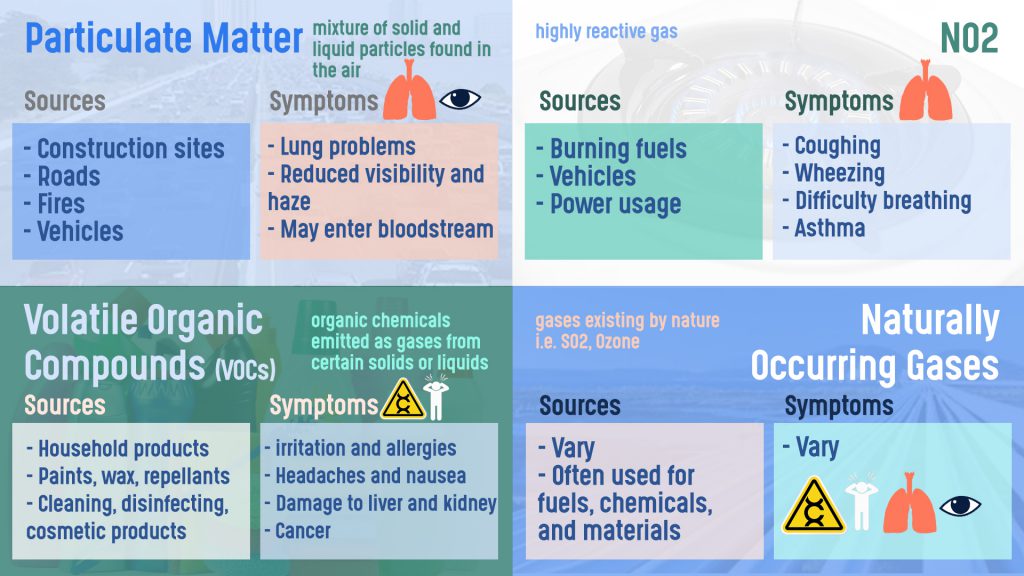
Particulate matter, nitrogen dioxide (NO2), volatile organic compounds (VOCs) and naturally occurring gases like radon are major indoor air pollutants. They come from cooking, building materials, home products and outdoor air pollution.
These indoor air pollutants pose serious health risks, and poor ventilation makes the condition even worse. According to the World Health Organisation, about 3.8 million people die from exposure to household air pollution every year. Air pollution can lead to a wide range of health problems from respiratory illnesses and eye diseases to cancers for both children and adults.
Guo Hai, professor of air quality studies at the Hong Kong Polytechnic University, calls on the government to set up a standard guideline of the ventilation system to prevent accumulation of air pollutants inside subdivided flats.
Currently, the Indoor Air Quality Certification Scheme is the only government initiative to tackle the problem. It is voluntary and only applicable to offices and public places.
Prima Yu, campaign officer of Clean Air Network, says that the air quality objectives set out by the government are far less stringent than the standard of the World Health Organisation.
Yu urges the government to review the current objectives and control the number of vehicles to combat pollution and protect public health.
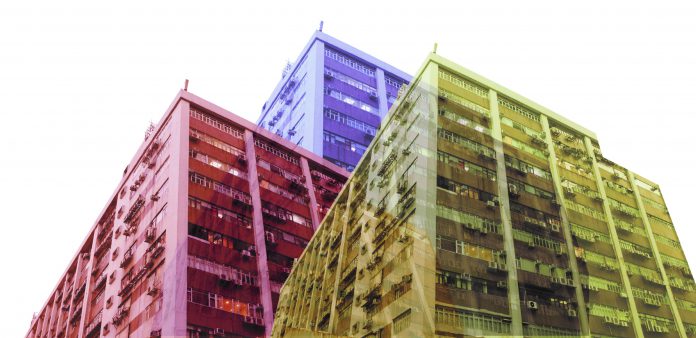
Plastic flowers, toys and electronic products bearing the label “Made in Hong Kong” were sold around the world in the 1960s and 1970s back when Hong Kong was the major export centre for manufactured products in Asia.
In the 1980s, labour-intensive industries were relocated across the border where costs were lower and many industrial buildings in Hong Kong became redundant. In the wake of runaway housing and land prices, people in search of bigger spaces at a cheaper rent began to eye up these deserted industrial buildings.
In this month’s Periscope, we look at how industrial buildings which were built decades ago are being used and how outdated rules are hindering better use of empty industrial buildings by looking at three scenarios.
Plastic flowers, toys and electronic products bearing the label “Made in Hong Kong” were sold around the world in the 1960s and 1970s back when Hong Kong was the major export centre for manufactured products in Asia.
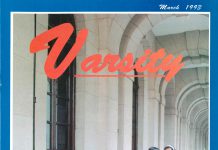
In the 1980s, labour-intensive industries were relocated across the border where costs were lower and many industrial buildings in Hong Kong became redundant. In the wake of runaway housing and land prices, people in search of bigger spaces at a cheaper rent began to eye up these deserted industrial buildings. In this issue of Varsity, we look at how industrial buildings which were built decades ago are being used and how outdated rules are hindering better use of empty industrial buildings by looking at three scenarios.
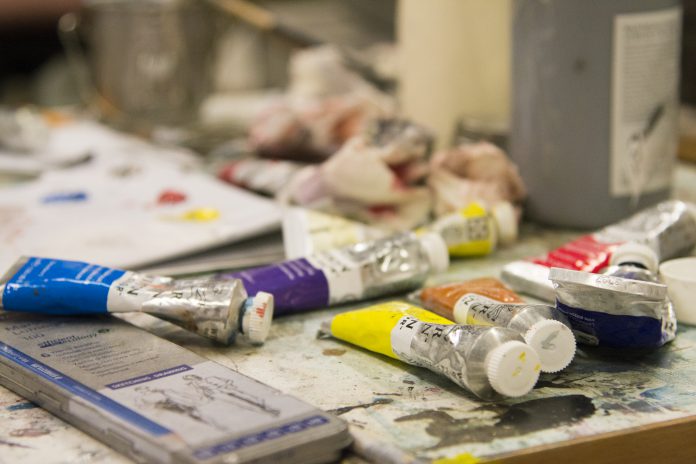
We start by looking into how local artists revitalise industrial buildings by setting up their art studios. Artists in search of bigger spaces at affordable rents share their stories about how the rigid opening hours of industrial buildings affect their work.
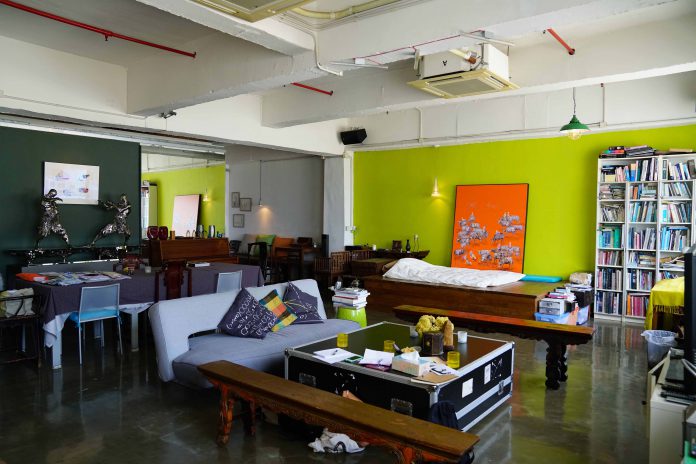
With the skyrocketing property prices in Hong Kong, many are struggling to find a roof over their heads. We talked to people who live inside industrial flats to learn about their living conditions and the problems they face.
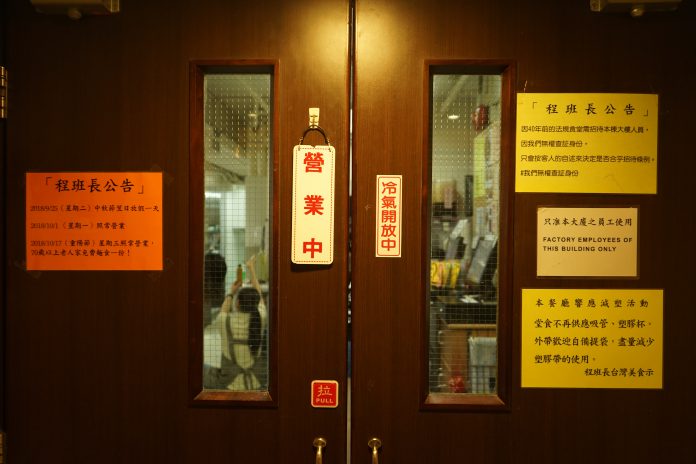
Our third story focuses on how restaurants enjoy cheaper rent and concessionary benefits by moving their business to industrial buildings. We examine how they cope with the outdated rules enforced inside industrial buildings.
This issue of Varsity also features stories on whether solar energy works in local households, tree waste recycling and much more. We hope that you enjoy the read!
Artists struggle to find affordable space to work in Hong Kong
By Daphne Li & Tommy Yuen
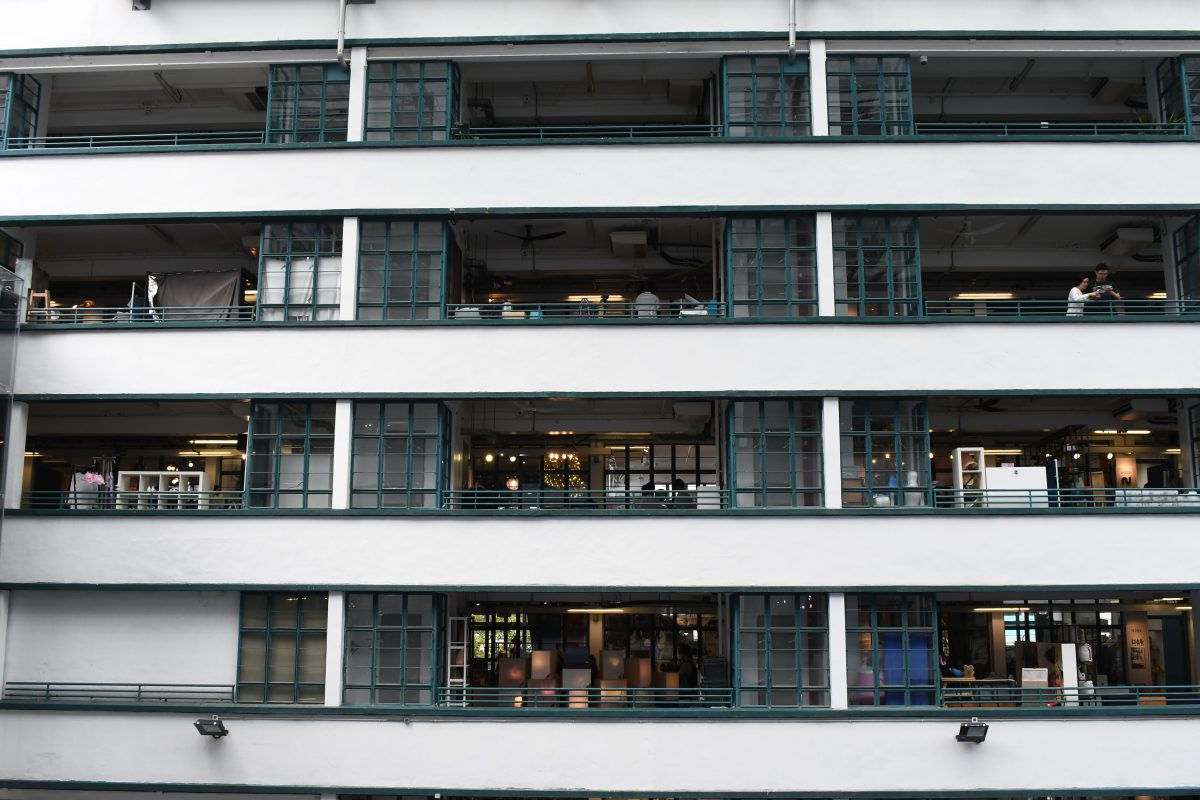
In a brightly lit studio scattered with bench tables and easels, Zheng Tianyi, a fine arts graduate of the Chinese University of Hong Kong, is sawing wood for her artwork. Her search for more space at a cheaper rent led her to share a 900 sq ft unit in a Fo Tan industrial building with three other friends for HK$9,000 per month. But the land lease and outdated regulations of industrial buildings are a headache for Zheng and many other artists.
Zheng points out that the opening hours of industrial buildings as specified in the land lease are too rigid and restrictive and they bother many artists. “Our building is locked at night. If we go back to the studio to work late at night, we have to get in by the car park exit. I just think of myself as a night-time worker who works at night from Monday to Friday.”
Despite such hassles, Zheng still prefers to work in an industrial building. “It is not convenient to work at home, especially when we are working with chemicals and powders which might cause dust and a smell. Neighbours in residential buildings may complain,” she explains.
Zheng says the rules also affect other artists, including her friends, teachers and professors, who work in art studios inside industrial buildings. She points out that some artists have to buy industrial building units in order to enjoy the freedom of using their own private property.
Mandy Lau Sze-man, a local designer who pays HK$9,500 a month for an 800 sq ft studio in a Fo Tan industrial building, agrees that rigid opening hours of industrial buildings have greatly affected her work. “Time flexibility is important for art creation,” Lau says. “The rules restrict us to work during daytime only. If this rule is strictly enforced, we have to stop working at midnight. It would be really inconvenient for us. We need more freedom,” she complains.
Lau stresses that most local artists have to work part-time during the day in order to make ends meet, and it is all the more important that they should have the option to work after office hours.
Living inside industrial buildings is against the law. Lau notes that most of the artists she knows prefer not to live in an industrial building and will only stay overnight for their work if it is absolutely necessary. “We [artists] only stay overnight here when we have no other options. Industrial buildings are not ideal for living. The air quality isn’t good here either. There is far more dust here than at home. We only do it out of desperation,” Lau adds.
In a bid to help local artists working inside industrial buildings, the Hong Kong Arts Development Council (HKADC) launched the ADC Artspace Scheme in 2014 to provide art studios to local artists at concessionary rents. One of the Artspace branches which is located on the 12/F of an industrial building in Wong Chuk Hang, provides 17 studios ranging from 300 to 1,400 sq feet in size. The scheme has been popular. In its latest round of tenancy applications, which ended in January this year, as many as 60 applicants competed for the studios.
One of the ADC Artspaces, located in Wong Chuk Hang.
Thomas Fung Yee-tin, a final year fine arts student, is one of the 17 successful applicants. He moved into the ADC Artspace (Genesis) in Wong Chuk Hang with two of his friends in late November to take advantage of the larger accommodation and more affordable rent. “I want to try to get used to an artist’s lifestyle and see if this career suits me,” Fung says.
The studio Fung and his friends rented is around 678 sq ft for HK$4,746 a month. Under the arts student or graduate rental subsidy scheme, tenants are charged HK$7 per sq ft, with HK$4 being rent and HK$3 being management, which is far below the territory-wide average rent of factory flats at HK$16.63 per sq ft in 2018. Tenants, in return, are required to make contributions to the community.
“In the application proposal, you have to outline your plan and explain how you will make use of the space to do art-related work during the tenancy period. We proposed to do community work and host workshops,” Fung says.
Thomas Fung’s ADC Artspace Unit. (Photo courtesy of Thomas Fung Yee-tin)
Lau, however, does not find the ADC scheme appealing. She dislikes the semi-open design of the art studios, which is meant to foster interactions among artists, as she thinks privacy is of utmost importance to artists.
“It would be a real concern for me if there were many people walking past my studio. It is fine to have arranged media interviews or public interaction. But if the working space for artists is semi-open, that would make me feel like working in a zoo,” Lau says. She adds that she has seen tenants in the Artspace using paper to block out openings in the walls for privacy.
Lau thinks having a place of her own is important for her creative works. “It is not just a matter of space. Of course, not having space at home is a problem. But more importantly, I need a good atmosphere for creativity or just a place where I can be alone,” she explains.
Chow Chun-fai, a local artist and former chairman of the Fotanian, an artist community, criticises the government for not helping artists who face difficulties when working in industrial buildings.
Chow says the most significant hurdles that discourage the arts and cultural sector from utilising industrial buildings are the stringent and outdated regulations. He cites Hidden Agenda as an example. The Hong Kong indie music livehouse, which has repeatedly been hounded by government departments for operating without the proper licenses, has to keep moving from one industrial building to another.
“Law enforcers often suggest that the workplaces do not have enough urinals or suffer from other minor defects and fail to meet fire and building safety regulations. They will not let you off the hook easily. I think when someone is accused of violating the law, either he or she has made a mistake, or there is a problem in the legal provisions. In this case, I think it is the latter,” Chow says.
In Taiwan, the government subsidies art studios and live music venues to enable them to meet fire safety requirements and also to provide an incentive to promote the development of the arts and cultural industry. Chow is not optimistic that Hong Kong will follow suit because of the different principles the two governments pursue when designing policies.
“The Hong Kong government would ensure that all sectors are treated on an equal basis and it may be a concern that, if the government decides to support the arts industry, other sectors will demand assistance as well,” Chow explains.
Two years after the government announced the end of the first industrial revitalisation scheme, which was introduced in 2009, Chief Executive Carrie Lam Cheng Yuet-ngor said that the scheme would be revived in the latest Policy Address with new measures.
The government proposes that a new condition should be incorporated whereby 10 per cent of the floor area can be designated for specific uses, including arts and cultural use.
The waiver application policy will also be relaxed on a time-limited basis (for five years initially) to permit the arts and cultural sectors and creative industries to operate at individual units of existing industrial buildings without the need for making separate waiver applications and paying waiver fees, as long as such uses are permitted under the planning system.
Legislator Roy Kwong Chun-yu believes the new measures will be rather difficult to implement. “Acquisition of industrial buildings and full ownership endorsements are needed. Then, you still have to reserve some space for arts and cultural use. The idea is good, but it is hard to achieve. In the whole of Hong Kong, there have been only two to three successful cases,” Kwong says.
Kwong suggests that an independent body should be set up to assist and define artistic work. He says it should only play a supplementary role to help the arts and cultural industry in the city.
“The soft power of a city hinges on this group of talented people. Are they robbing homes or doing something bad? No! They are hiding in industrial buildings and dare not be known. This is very depressing,” Kwong says.
Kwong is currently proposing revitalisation of abandoned schools for arts purposes. “I hope that the first school can be refurbished and used in early 2019, and although this can only provide very limited space, let’s say 20, at least 20 groups can work in this artistic village open in broad daylight.”
Kwong realises the space shortage problem cannot be solved by just converting abandoned schools. “There are so many industrial buildings and there could be hundreds, even thousands of industrial building units where people are creating and doing art there and we don’t know them,” he says. “While we are opening up space synchronically through different methods, we should also enable people in those existing spaces to survive.”
Soaring housing prices and rents are driving more people to live illegally in factory buildings
By Lily Yu & Fangdong Bai
Reclining in a spacious living room decorated with contemporary and vintage homeware, a long dining table and big windows offering a stunning view of a mountain, Andy (who does not wish to disclose his full name) is living the dream of owning a cozy home. In the wake of Hong Kong’s runaway housing prices, his 1,350 sq ft apartment in Shatin district is a home sweet home to most people. But there is a catch. Andy is living in an industrial building.
Living room of Andy’s home.
Hong Kong has some 1,400 industrial buildings and it is illegal to live in them. But many, including Andy, ignore the regulation because of the sky-high property prices.
According to the latest UBS Global Real Estate Bubble Index published in September, people who earn the average annual income in the highly skilled service sector would need to work 22 years to afford a 600 sq ft flat in Hong Kong.
Andy, a private tutor, bought his home for HK$1.7 million 10 years ago. With the same amount, he could only have bought a 600 sq ft residential flat at that time. The same amount of money would now only be enough to buy a flat of less than 200 sq ft.
Water quality is Andy’s biggest concern living in an industrial building. “I remember someone told me he got poisoned by water in an industrial building…That’s why I installed a water filter. I used filtered water for drinking and washing,” he says.
Brian (who declines to reveal his real name) also lives in an industrial building. The 31-year-old rents an around 200 sq ft industrial flat in Kwun Tong for HK$6,000 a month.
Working in the academic research field, Brian wanted to find a place where he could live and do his academic work uninterrupted. With a tight budget, he thought of living in a subdivided flat but then he found the living conditions too poor. He finally decided to move into an industrial building.
“At that time I was just searching for a place in which I could live and stay up late to finish my assignments. As you know, the most efficient way to beat an assignment deadline is living apart from your family. Then, when I found some studios in Kwun Tong, I discovered the advantage of living here. You can apply for business registration for your flat so that you can really make your home in a studio,” he says.
Brian moved into the flat equipped with its own toilet and bathroom after signing a contract with the landlord. “Owners of this kind of industrial flat are ready to enable you to use the flat for business and living. There is no problem at all. It is very convenient. I do not need to do any renovation,” he says. Brian feels happy not only about his flat’s rent, size and location, but also its layout.
“What comes as a surprise to me is that the design of many residential flats is very weird. However, flats in industrial buildings are usually very nice. You will not see a hexagon-shaped living room and a toilet close to a bed,” he says.
Safety in industrial buildings is always a concern. Dangerous goods such as flammable chemicals can pose a serious risk. It is fortunate for Brian that nearly all the areas with dangerous goods which used to be located inside the industrial building have been moved away. Brian believes that the stores of material are relocated due to exorbitant rents, as more and more industrial buildings are being used for residential purposes pushing rental prices up.
Like Andy, Brian is also worried about water quality in industrial buildings. “The water supply is a big problem. After living here for a month, I realise I cannot merely boil the water before drinking it, but I have to filter the water first,” he says.
Brian has also encountered other problems about living in an industrial building such as WiFi registration. He has to use a business registration, which is more expensive than a residential registration. Much worse, he might also face prosecution for living in an industrial flat.
He says he has never experienced a government inspection. He believes it would be difficult to prove that he is living in an industrial flat because the address is registered as a business and he can claim that the flat is used as his studio, which does not violate the law.
In a written response to queries from Varsity, the Buildings Department said it had mounted a series of large-scale operations to step up enforcement action to eradicate illegal domestic use in industrial buildings in accordance with the Building Ordinance. Owners of illegal domestic premises in industrial buildings who do not comply with statutory orders issued by the Buildings Department are liable to a fine of $50,000 and imprisonment for one year, or even a further fine of $5,000 each day the offence has continued. Apart from statutory orders, the Buildings Department may also issue removal orders. Failure to comply with a removal order is liable to a fine of $200,000 and imprisonment for one year, and a further fine of $20,000 for each day the offence has continued.
Anthony Chiu Kwok-wai
But Anthony Chiu Kwok-wai, executive director of the Federation of Public Housing Estates, maintains that the government is not wholehearted in its inspections to detect the use of industrial buildings for residential purposes. “I think the government is turning a blind eye to this situation. Where else can these affected residents live if the Buildings Department initiates harsh actions against them? They might end up sleeping under a bridge,” Chiu says.
According to a written reply from the Development Bureau to the Legislative Council in December 2017, up to the end of October 2017, the Buildings Department had inspected 137 targeted industrial buildings and identified 155 units for illegal domestic use and had issued 304 statutory orders in total.
Kenny Ng Kwan-lim, spokesperson for the Kwai Chung Subdivided Flat Residents Alliance, reveals that some underprivileged people living in industrial buildings have to move frequently to avoid inspection. When the Buildings Department discovers any breach of lease conditions, a warning letter will be issued to the flat owner. Ng says that flat owners may force tenants to move out within days. Some flat owners may even cut the water and electricity supplies without any prior notice in order to force tenants to move out at once.
The constant worry about being kicked out of their homes usually makes people living in industrial buildings very cautious when they are entering or leaving. They try to avoid giving others the impression that they are actually living there.
Ng warns that the fear of inspection put lives in such buildings at risk. “If someone knocks on their doors after a fire breaks out, they may not answer the door thinking it is an inspection. They will not know what is going on outside and their safety will be jeopardized,” he says.
In a bid to tackle the housing shortage problem, Chief Executive Carrie Lam Cheng Yuet-ngor announced in her latest Policy Address the revival of the policy of revitalising industrial buildings for transitional housing.
The new scheme will involve the wholesale conversion of industrial buildings into transitional housing units for grassroots families. Industrial buildings aged 15 years or above with a single owner located in “Commercial”, “Other Specified Uses” annotated “Business” and “Industrial” zones are eligible for the wholesale conversion. The government encourages developers to participate in this scheme by granting exemptions from paying the land premium and a short-term waiver for conversion for five years.
The Planning Department, commenting on approvals for converting industrial buildings for domestic use, said traffic and fire safety would be the major considerations. Any conversion also would have to meet the requirements of other relevant legislation, such as the Building Ordinance and the land lease provisions.
Esther Wu Ka-yi, community organiser of the Society for the Community Organization, wants the government to extend the five-year waiver to 10 years or more. She says that a longer waiver can give owners more time to recoup the renovation cost and residents in this transitional housing will still have a shelter while awaiting public rental housing. With more than 270,000 applications, the average waiting time for a public rental housing flat stands at five years and three months.
It is illegal for factory canteens to serve outsiders but factory workers are few and far between
By Ada Chung & Edith Chung
Factory canteen owner Cheng Chih-hsien, better known as Captain Cheng, is full of sympathy for some of those who eat in his establishment.
“We feel sorry for our customers as they have to lie before they can come in,” he says.
Many restaurants operate in industrial buildings due to exorbitant rents across the city. Captain Cheng, who sells Taiwanese food in Lai Chi Kok, is one of the many but it is in fact illegal for these “factory canteens” to serve people who are not factory employees inside these buildings.
Restaurants in industrial buildings operate with a factory canteen license issued by the FEHD. Holders of such licenses are only allowed to serve factory employees.
Cheng says the regulation is totally impractical. “We have no right to check the employees’ identities. We do not have such a right.” He adds that there is no clear-cut definition of factory employees. “What is the definition of factory workers? If a delivery man sends goods to the factory, can the worker be regarded as an employee and go into the factory canteen?” Cheng asks. “Such rule is just meaningless.”
Though he finds the regulations unreasonable, Cheng still tries to comply strictly with the rules by asking every customer if he or she is a factory employee of the building. “If they say they are not, we will just ask them to leave,” he says. Customers are turned away and his business is impaired. “Some customers think we do it on purpose,” Cheng says. “However, in fact, we have no option.”
Despite trying his best to follow the regulations, Cheng has still been charged by the FEHD for serving members of the public. He maintains the FEHD inspections are unreasonable.
“Once, an [undercover] inspector from the FEHD came to our canteen. We did ask if he was a factory employee,” Cheng recalls. “He did not respond to any of our questions. He just sat down and started ordering food. After that, he charged us with serving public customers.”
Cheng says the officer insisted that he did not understand what the canteen workers said as he claimed that they spoke to him in Mandarin.
After serving generations of Hong Kong workers, factory canteens like Cheng’s are not allowed to serve members of public like normal restaurants.
“They intend to catch you. Once they are determined to catch you, they will neglect all other things,” he says.
The Lands Department, in response to Varsity’s queries, says: “In general, the land leases of most industrial lots restrict the use of factory units to industrial/godown only.”
Those running canteens are in fact operating on “waivers” which are granted by the Lands Department and District Lands Office on the understanding that only industrial workers will be served.
Meanwhile, the FEHD says it will “discuss with relevant government departments, and have a comprehensive review and corrections on the current feasibility of licensing on factory canteens.” The department also says it will “continue to enhance regulation on factory canteen’s strictly complying with licensing conditions. Sending undercover inspectors and issuing special prosecution action will be processed when needed.”
Neither of these two departments was able to provide Varsity with readily available statistics on applications, approval cases and warning letters in respect of factory canteen use.
Other than the FEHD’s requirements, these factory canteens are also forbidden to have an entrance or exit leading to a public road, to display promotional materials, or to have transparent external walls, such as glass windows under the lease conditions set by the Lands Department.
A direct investigation by the Ombudsman last year revealed that many factory canteens have violated such rules. Factory canteens located on the ground level are using the escape routes leading to public streets as entrances for customers. Some factory canteens use transparent materials in external walls, putting up signs and displaying menus and other promotional materials.
While factory canteens are prohibited from serving members of the public, many newspaper columns and food magazines are recommending certain factory canteens to general readers.
Ramon Yuen Hoi-man, Sham Shui Po district councillor for Lai Chi Kok Central constituency, says that violation of factory canteen law can be easily seen in the district. “Frankly speaking, the problem is very common, especially in Cheung Shun Street and Tai Nan West Street,” Yuen says. “All the factory canteens have turned into restaurants. They just say they welcome factory workers only on the surface.”
Yuen believes there are historical factors for people to break the law. “In the past, many manufacturing factories were located in districts like Lai Chi Kok, Cheung Sha Wan and Tsuen Wan. There were many labour-intensive industries employing a large number of workers. That is why there was a demand to provide factory canteens for factory workers,” Cheng explains.
However, with the city’s economic transformation from industrial to service industries, Yuen thinks the policy has lost its meaning and should be abolished. “In fact, the government can entirely suspend it [factory canteens licensing] by imposing a sunset clause, say, for three years,” Yuen suggests. He adds that the government should formulate a plan to relocate these factory canteens, so that they can continue to operate.
Cheaper rent in industrial buildings is a major factor behind the abundance of factory canteens. Frank Sun Pin-hao, owner of a factory canteen named Doctor Beans in Kwun Tong, says the difference in rent between a factory unit and a normal unit on the street is quite substantial.
“Take the example of my place [2,000 sq ft in size], the rent downstairs could be HK$300,000, and up here is just one-fifth to one-tenth,” Sun explains.
Since factory canteens can also have concessionary benefits like a waiver on additional premiums and less stringent government food and hygiene requirements, they can operate their businesses at a lower cost. Some people in the trade say such advantages have created unfair competition between factory canteens and eateries owning a general restaurant license.
But Sun does not think that it is unfair. “Opening a shop upstairs in an industrial building is your own choice. It is not about wheeling and dealing,” Sun explains. “If you are capable enough, then, just open an upstairs canteen.”
Roy Kwong Chun-yu, legislative councillor and a former member of the Panel on Food Safety and Environmental Hygiene, believes money is the reason why so many people are operating business inside industrial buildings. “Why are they in industrial buildings? It is because they have no other choice. The land price in Hong Kong is way too high,” Kwong explains.
While factory canteens may reduce the owner’s financial burden and offer the public more options, they also raise safety concerns.
Under existing legislation, only some of the old industrial buildings built before 1987 are required to have an automatic sprinkler system. Obviously the risk of fire spreading in such buildings is much higher.
Kwong maintains the government should take the initiative to improve fire safety facilities in old industrial buildings which would help the operation of factory canteens. But he believes the government will never do so due to the large cost implications. “High cost is not a reason for not doing that [improving fire safety facilities],” he says.
Restaurants inside industrial buildings are popular among young customers.
In spite of the many problems in factory canteens and industrial buildings, Kwong believes industrial buildings have their unique advantages. “One of the special advantages of industrial buildings is that they are large. Their space can be used in a good way,” Kwong points out.
The current regulations on factory canteens date back to 1980 and Kwong believes it is time the government reviews them. “They should take a look at what is going on in society,” Kwong says. “They should protect the rights of these industrial buildings users who deserve to have a reasonable answer about how to make a living in these areas.”
He thinks the government should try to maximise the potential of these buildings. “In fact, they are gems. It all depends on how the government utilises them.”
Solar energy in Hong Kong still has a long way to go
By Johanna Chan & Scarlet Shiu
Village house owner Newman Lau Man-choi, who is also the president of Sheung Yeung Village Affairs Committee in Clear Water Bay, is finally planning to install solar panels at his home amid measures from the government and Hong Kong’s two power companies to encourage green energy.
But he does still have a few residual worries about the whole process of buying the panels and selling the power generated back to his electricity supplier.
The FiT scheme is open to customers of the two power companies who install solar or wind renewable energy systems at their premises with a generating capacity of up to 1MW. The power companies purchase electricity produced by an approved renewable energy system at HK$3 to HK$5 per unit.
So far, so good but it does involve money and red tape. FiT does not pay for solar panel installation or maintenance directly. Potential producers, who want to join the FiT scheme but have not installed panels, need to submit a proposal and application forms to their electricity supplier and the required documents to relative government departments. Electric companies and the government will then decide if the potential producers qualify.
Once they are approved, the producers need to contact contractors themselves and purchase the panels. The FiT scheme will buy electricity from the producers after they install all the equipment and the idea is that – money they earn can be used to cover the cost of installation and future maintenance.
Since all the power produced by these solar systems will be fed directly into the FiT scheme. Households will still need to pay their electric bills in the usual way.
The government also pledges to promote the development of renewable energy by relaxing restrictions on the installation of solar photovoltaic (PV) systems on the rooftops of village houses in the New Territories. A new programme to assist schools and NGOs in installing small-scale energy systems will also be launched, according to the Policy Address 2018.
Lau first thought of using renewable energy 10 years ago but only seriously considered it after the FiT scheme was introduced. However, he still thinks more should be done to make the economic incentives more appealing for participants. “The government should also relax a regulation which restricts village house owners to use no more than half of the rooftop area for solar panels installation.” He adds that the current restriction reduces the potential economic benefits for power energy producers.
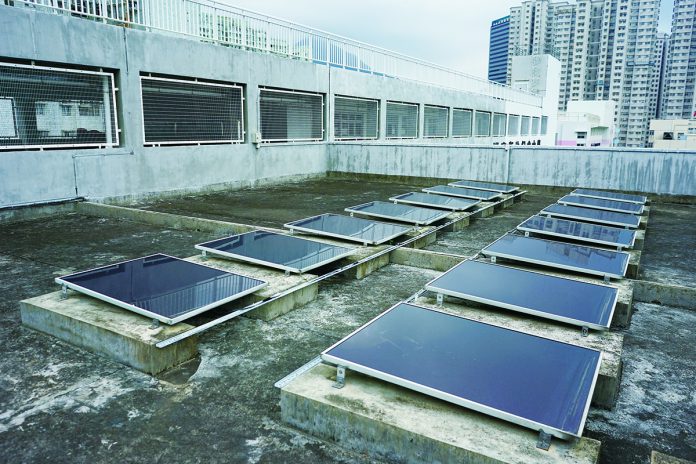
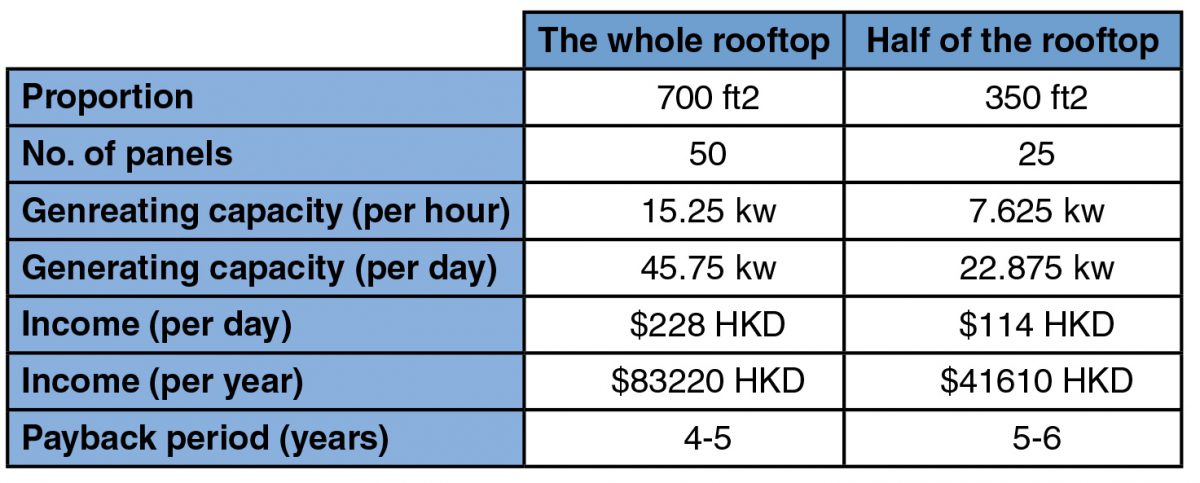
At current prices, Lau has to pay more than HK$200,000 to purchase and install solar panels. His village house rooftop is the standard 700 sq ft, but since it is only legal to use up to half of the rooftop, Lau now can only install a maximum of 25 solar panels. As each panel generates 305W of electricity every effective sunshine hour, the capacity of his renewable power system, consisting of 25 panels, will be 7.625kW.
Hong Kong has a daily maximum of four and a half effective sunshine hours with an average value of three. As all the electricity produced will be fed into the FiT system, and the capacity of Lau’s system is under 10kw, the price of the electricity to be bought will be $5 per unit. The income for Lau, with his roof half filled with panels, will be $114 per day and $41,610 per year with a payback period of five to six years.
“Maybe the government should consider using its discretion over property owners who install solar panels so that we can make full use of the rooftop area.”
However, if as a village house owner, he was allowed to use his whole rooftop, the income for Lau would double to HK$83,220 a year. Even though more panels means more expense, the payback period would still be shorter at around four to five years. The corollary to that of course is that if the government relaxes the regulations on rooftop usage, the financial income will be much more attractive for potential renewable energy producers.
Apart from the building regulations, Lau is also worried that the supporting structure of a solar energy system might be mistaken for an illegal structure.
“Anything placed on the roof might be regarded as an unauthorised building structure. Maybe the government should consider using its discretion over property owners who install solar panels so that we can make full use of the rooftop area,” he says.
Income from FiT for Lau Source: Newman Lau Man-choi
Greenpeace campaigner Walton Li Yat-sun shares Lau’s view and urges the government to introduce more supporting measures.
According to the group’s study with the Baptist University and the City University of Hong Kong on the development of solar energy systems in 22 primary and secondary schools this year, many schools are troubled by the initial set-up cost.
“If they do not have enough money or they fail to apply for the Environment and Conservation Fund (ECF), it is impossible for them to take part in the FiT scheme,” he says.
Li points out that even if a school is financially prepared to set up a solar energy system, the complicated procedures and technical skills required in setting up such system can be big challenges. A school might have to seek approvals concerning the installation of a renewable energy system and other supporting structures from different government departments, he says.
“School management might have to deal with numerous government departments simultaneously. An application for approval might take a year or up to six years. This [setting up of a solar energy system] consumes a lot of time, resources and manpower,” he says.
Lingnan Hang Yee Memorial Secondary School is one of the few schools to have had a solar energy system installed successfully before the introduction of the FiT scheme. It took the school three years to complete the installation in 2013.
The electricity the school produces is transferred directly to the school’s own electric system but, as the panels can only generate 5000kWh electricity per year, the renewable energy counts for a very small percentage of the school’s energy usage. On the plus side, the main purpose of the solar system is for education and the installation cost was covered by the Environment and Conservation Fund.
Now the school is planning to join the FiT scheme. If its application to join the scheme is approved, the school plans to use the income it generates to cover the maintenance costs of the solar system and buy better and more efficient panels.
Kwong Shing-hymn, the head of the Moral, Civic and Environmental Education Team, says they were required to submit written reports to the government every month to keep them informed about the progress even after the system was completed. The preparation and submissions were very time-consuming.
“We really need help from the government for expert knowledge and information about solar panels available in the market.”
“It would be better if the procedure could be simplified as the paperwork correspondence with government departments can last for almost two years,” he says.
Other than that, Kwong thinks a lack of adequate technical support from the government was the biggest challenge encountered by the school at the development stage.
“It is difficult for teachers to communicate with an engineer because they don’t have the technical knowledge. For instance, a school might not be aware sunlight reflected by solar panels may cause nuisance to buildings nearby unless they learn about it from professional engineers,” Kwong says.
Kwong explains his school relied heavily on engineering companies for professional advice concerning where solar panels should be installed at the school and which solar panels should be purchased in order to achieve the best result. At the same time, he worries that schools might be cheated by engineering companies which can play on their ignorance to make money.
“We really need help from the government for expert knowledge and information about solar panels available in the market. This [technical support] has always been insufficient. No one has ever told us which solar panel is good or whether it is reasonably priced or if certain panels have defects. We never get that support,” he says.
Dr William Yu Yuen-ping, the founder and chief executive officer of World Green Organisation, which helps organisations and schools find qualified engineers and professionals to help them with installations, understands Kwong’s worries.
“The purpose of FiT is to set an example by exploring renewable energy by attracting individual producers with financial benefits. We are not able to replace Hong Kong’s power resource on a large scale right now,” Yu says.
He adds that one of the greatest concerns is the lack of talent in the industry, as the sector is growing fast. He says some operators offer to install solar panels at a low price but the quality of these panels is very poor and they do not offer a long-term maintenance service. “A good quality solar panel has a life expectancy of more than 20 years, but low-quality panels can only last for about a year or two,” he says.
Apart from providing support to schools, Yu’s organisation is also promoting renewable energy in 150 secondary schools by conducting eco-tours and workshops. He believes it is important to educate students about the importance of using renewable energy and how solar energy systems operate in their schools.
“I think it is important to engage students in learning the theories and knowledge behind the systems and then pass on the message of leading a low-carbon lifestyle to them,” he says.
Students from Lingnan Hang Yee Memorial School present their solar energy science projects. Photo courtesy of Lingnan Hang Yee Memorial Secondary School
The city’s irreplaceable post-war architecture is being overlooked, conservation activists claim
By Jasmine Ling & Valerie Wan
Built in 1951, PMQ, the former Police Married Quarters on Hollywood Road, is now a Hong Kong creative industry landmark. Back in the 19th century, the site was the original home of the Central School, which nurtured many famous figures including Sun Yat-sen who studied there in 1884.
But the history and all the tales about PMQ would have been lost if Katty Law Ngar-ning, who founded the Central and Western Concern Group, had not taken action to urge the government to conserve the building 13 years ago.
The minimalist design of PMQ demonstrates “form follows function”, a principle that is common in modernist architecture.
In 2005, the concern group campaigned to conserve PMQ after learning the building was on the list of sites for sale. “The original land use was GIC [government, institution or community], but then we found out that it had been changed to high-density residential land use in around 1997 to 1998 and would be auctioned in 2015,” she says.
Law, who grew up in the neighbourhood, has always thought PMQ and other structures around it form a cluster of buildings with a rich historic value. The architectural features of PMQ, which highlight simplicity in design and use of space, are representative of the unique style of buildings constructed in the 1950s in Hong Kong.
After learning that the building site was up for auction, the group conducted research and spoke at public consultations. Two planning applications filed with the Town Planning Board were also made in an effort to conserve the site for community and recreational use. The board rejected them. “Why did the government want to sell the precious site to developers for luxurious property projects?” she says. “Even though it is not a colonial building aged over 100 years, it was built in the 1950s and has its own unique value in contemporary architectural history.”
The government’s change of heart came in 2007. PMQ was removed from the List of Sites for Sale by Application and the Development Bureau announced PMQ would be transformed into a creative industry landmark in 2010.
Law criticises the government for ignoring the importance of conserving cultural heritage, especially 1950s’ buildings, such as PMQ, Government Hill, and Central Market. “From the government’s view, ancient heritage is always valued over relatively modern heritage,” she says, “but if they keep on removing the modern ones, it will lead to a gap in Hong Kong’s [architectural] history.”
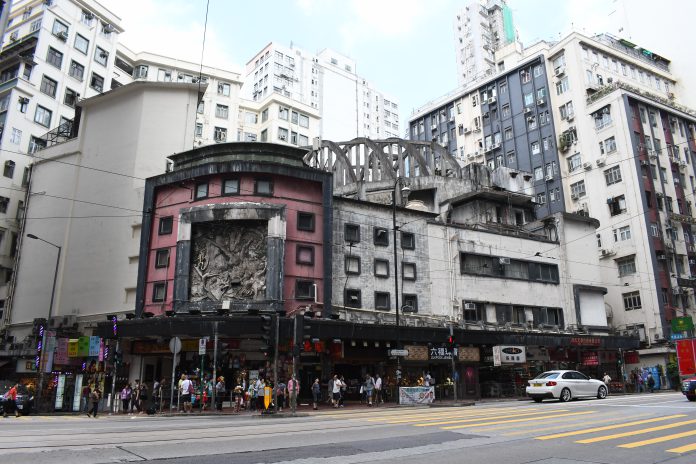
State Theatre (formerly known as Empire Theatre) in North Point is another example of post-war modernist architecture that has survived threats of redevelopment. Featuring a series of concrete arches over its roof, the theatre was built in 1952 and served as a world-class performance venue. Concerns were raised over the building in 2015 amid fears the theatre might be demolished for redevelopment. In April 2016, the Antiquities and Monuments Office (AMO) listed State Theatre as a Grade 3 building, meaning the building could still be torn down for development.
Paul Chan Chi-yuen, co-founder and chief executive officer of commercial cultural enterprise Walk in Hong Kong which promotes local culture by organising sight-seeing tours, campaigned for the preservation of the theatre. He criticised the grading system for lacking transparency. “Even till now, we still don’t know how the Grade 3 decision was made in the system,” he says.
Since March 2009, The AMO has been assessing and grading 1,444 historic buildings into three levels or nil grade status according to their historic value. As of September 2018, among the 1,421 historic buildings with confirmed grading, 17 were built between 1940 and 1945, and 280 were built after 1945. In a written reply to Varsity’s enquiries, the Development Bureau states that “while the prevailing grading assessment focuses on buildings mainly built before 1950, buildings built after that year have also been assessed on cogent need and on a case-by-case basis”.
The six assessment components are historical interest, architectural merit, group value, social value and local interest, authenticity, and rarity. A panel of four experts comprising of historians and members of the Hong Kong Institute of Architects, Hong Kong Institute of Planners and Hong Kong Institute of Engineers is responsible for the assessment. The Development Bureau says that the grading system for historic buildings, which is administrative in nature, aims to provide an objective basis for assessing the heritage value of historic buildings in Hong Kong, and hence their preservation need.
Chan recalls the expert panel citing the building’s loss of authenticity due to interior modifications as the major reason for the grading. Yet, the panel admitted the argument was based on assumptions without detailed investigation. Chan criticises the AMO for failing to recognise the heritage value of the theatre which was built by Harry Oscar Odell, one of the most significant figures in the Hong Kong entertainment history. Odell devoted his life to building the world-class theatre in which the late British tenor Peter Pears, Katherine Dunham’s Broadway dance company and the late Taiwanese pop singer Teresa Teng once performed.
Despite its glamourous history, some panel members argued the State Theatre had a fairly short history. “The point is if you don’t preserve a 60-year-old building now, it will never turn 100 years old. You can’t demolish the building just because it is still young now,” Chan argues. He also condemns the grading process as a “black-box operation” which relies heavily on the subjective opinions of panel members. “How can the process which controls the fate of many precious historic buildings be so outdated and feudalistic?” he says.
Chan and his team conducted research and gathered solid evidence in a bid to overturn the grading result. They organised a campaign to arouse public concern for the case and persuaded concerned property owners to preserve and revitalise the theatre for the benefit of Hong Kong.
Chan’s efforts paid off and, in 2017, State Theatre was upgraded to a Grade 1 historic building. However, unlike declared historical monuments, Grade 1 building owners are free to modify, demolish, or conserve their properties as they wish. In October 2018, New World Development, which was considering to start a conservation project for the first time, applied to the Lands Tribunal for a compulsory sale order regarding the State Theatre Building.
Financial resources are another major consideration for conserving historical buildings. In 2008, the government set up the Financial Assistance for Maintenance Scheme on Built Heritage, for private owners of graded historic buildings. The ceiling of the grant for each successful application is HK$2 million inclusive of both the consultancy fee and the costs of the maintenance work, and the payment will be made on a reimbursement basis.
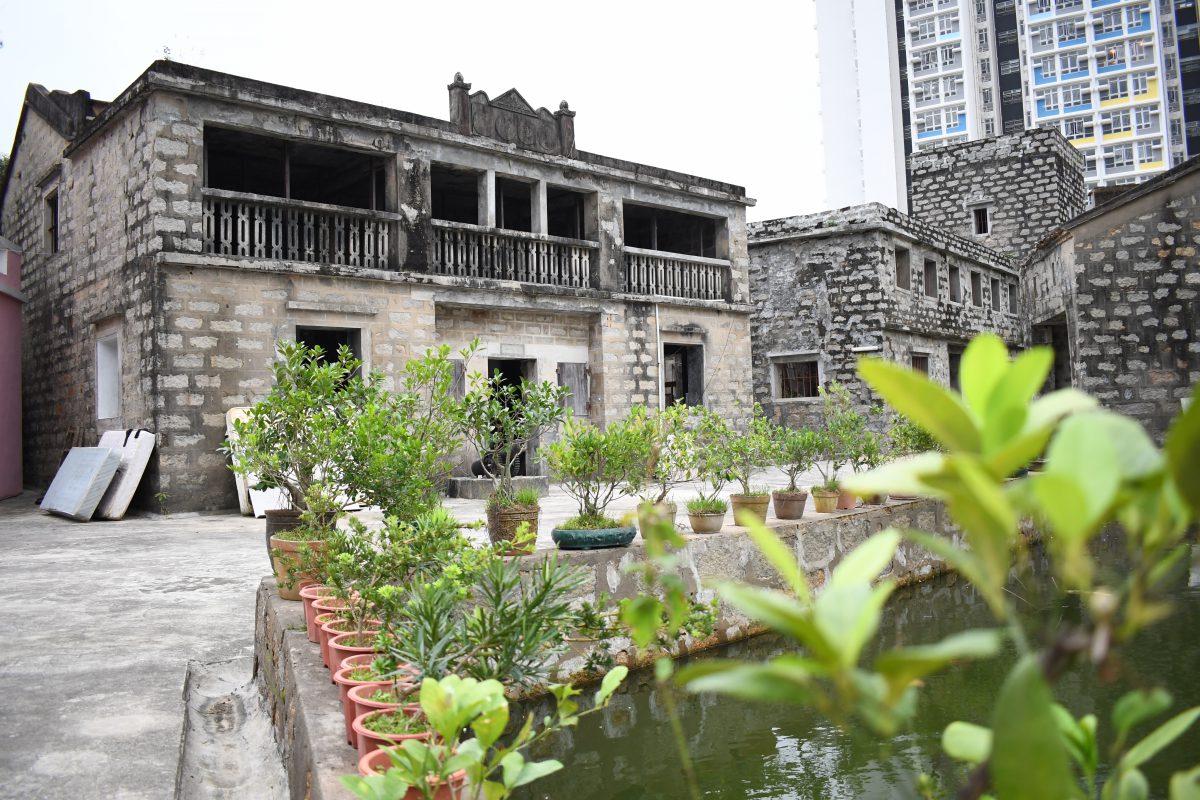
The third-generation owner of the Yuen’s Mansion in Mui Wo, Yuen Chit-chi, says he wants to preserve the family mansion which was built in the 1930s but the government does not provide comprehensive assistance to private property owners. The fortified estate consists of six Grade 2 historic buildings: the main house, two watchtowers, two ancillary houses and a barn.
Town planner Stanley Ng Wing-fai has followed Yuen’s case closely. He says the Maintenance Scheme is not applicable to compound buildings like the Yuen’s Mansion. “The scheme requires applicants to pay first then receive reimbursement afterwards. And many owners cannot afford the initial payment,” he says.
The F11 Foto Museum in Happy Valley, a Grade 3 historic building, has a totally different story to the sad tale of Yuen’s Mansion. Douglas So Cheung-tak, a solicitor and a photography and heritage enthusiast, bought 11 Yuk Sau Street for HK$90 million in 2012 and founded the museum two years later. It remains an example of how historic buildings in Hong Kong can be privately revitalised and renovated – in this instance at a cost of over HK$10 million. The owner is also committed to the long-term maintenance of the building.
Fiona Li Yuen-kwan, manager of F11 Foto Museum and former assistant curator at the Antiquities and Monuments Office, says the case of F11 might be one of a kind, as not many owners have both the passion and the resources to conserve a historic building. “The most difficult part isn’t the one-off payment, but the continuous maintenance of the building,” she says.
Referring to her experience at the AMO, she says conservation policy in Hong Kong is quite short-sighted and the role of the government is relatively passive. “They only handle problems when it becomes urgent and controversial,” says Li. In her opinion, education is essential to arouse public awareness about the importance of conservation.
Li Ho-yin, associate professor and head of the Division of Architectural Conservation Programmes at the University of Hong Kong, says the grading system in Hong Kong is outdated. The conservation concepts the government adopts lag far behind countries like the UK, Singapore and China. “When people say ‘striking a balance’ between conservation and development, they are assuming the two are in conflict,” says Li. “Conservation should be an important component in sustainable development.”