














Home Blog Page 54

Gap Year: Work or Travel?

Hong Kong gappers intern. Others volunteer and travel.

By Katherine Wang & Lasley Lui

Students always face many tests and exams. Taking a break from academics for a year and having a rest sounds attractive to them.

“Gap year”, originated in Western countries in the 1960s, provides a golden opportunity for students to explore the world, look for a richer spiritual life and exchange cultural ideas. It is usually taken between the end of secondary school and the start of university, or during university education.

What did Hong Kong students do during their gap years?

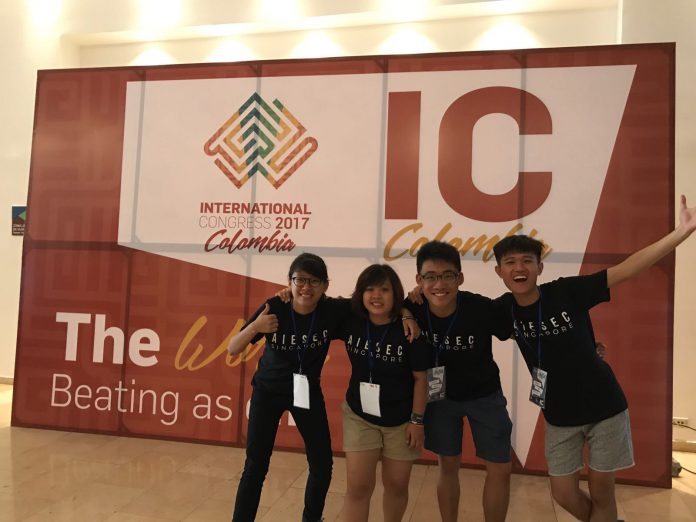
Oscar Chan Chi-kin, a Year 3 business student at the Hong Kong University of Science and Technology, took a leap in Singapore last year to work as a volunteering national team vice-president for AIESEC, a platform for young people to develop leadership. “Instead of being career-driven like most others, I hope for clarity of life direction, figuring out what I love to contribute to,” he says.

Oscar Chan Chi-kin

“Leadership does not improve over time at school. Instead, it develops when we are conducting multicultural leading roles,” says Chan. After the gap year, he knew what his ideal working environment looks like in his future career. “Whether the company vision aligns with my personal value is really important.”

Another organisation, Projects Abroad, also provides worldwide volunteering programmes for young people. They can choose among programmes like teaching, conservation and care based on their interests and professions. The most popular destination is Nepal and teenagers like to attend medicine and healthcare projects there.

“Many people came to us because they want to be inspired. If you are not clear about life direction, there is no harm in taking a leap to think about what to do next,” says Vincci Chan Wing-chi, director of Projects Abroad for Hong Kong.

The company says they sent 944 volunteers abroad from the U.S. and 1,263 from the UK last year, while in Hong Kong, only 135 young people joined the programmes.

Instead of travelling and volunteering, young people in Asia especially Hong Kong prefer to intern and work to enrich their resumes, sharpening their competitive edge.

Why do Asian students prefer to intern during gap year?

Japanese gappers volunteer to make a fence for a Cambodia kindergarten

On the application form for suspension of studies downloaded from the website of the Chinese University of Hong Kong, the reasons for suspension of studies are divided into two categories –– internship and other reasons. In the business school, more than half of the students take gap years for an internship.

Taking a gap year is common among mainland students as well. “Almost all of my colleagues took a gap year,” says Jack Wong, a final year student at CUHK. He had an internship at an investment company in Beijing last semester.

“Internship only exists when you are students. After you graduate, you can no longer apply for an internship, you apply for a job,” he says. He grabbed every opportunity to gain work experiences before he steps into society. A semester-long leave from school seems necessary for him to build an impressive resume. The workplace environment in Hong Kong is too competitive for Jack not to worry about his future employment, motivating him to plan ahead for his career.

“Maybe there is someone going with the flow blindly, taking gap year internship only because others are taking. But there are also people knowing well what they are doing and benefiting from their enjoyable and meaningful experiences.” Wong adds.

Gapyear.com is an online institution selling gap year planning and internship opportunities. The emergence of such kind of institutions might explain why there are criticisms saying that gap year is gradually deviating from its original intention.

“Employers are now looking for relevant workplace skills, knowledge and passion for the vocation to differentiate candidates…The emphasis is now firmly on the ‘super-curricular’ experience – something which a structured gap year offers on a plate!” These appealing words are excerpted from the company’s website.

However, Sascha Choi On, a Korean student from CUHK has a different view. “Nowadays it’s changing. My Asian friends also like to travel during gap year and they really want to find the sense of self such as ‘who I am’, ‘what the goal in my life is.”

“Asian students highly care about their inner peace and happiness rather than just focusing on earning money,” she adds.

Source: Legislative Council Paper – Examination of Estimates of Expenditure 2016-17 LWB (L) 029

Travelling while working

If students want to work while being paid to travel during a gap year, working holiday sounds like a win-win situation.

In 2015, more than 11,000 young people in Hong Kong successfully applied for a working holiday visa, according to the Labour and Welfare Bureau. The Working Holiday Scheme, designed by the government, provides an opportunity for youngsters aged between 18 and 30 to enrich their global exposure in countries like New Zealand, Australia, Ireland, Germany, Japan and the UK. Thanks to its welcoming policy, Australia remains the most popular destination for working holidays, captivating over 75 per cent of participants.

Hong Kong youngsters hoping to enrol in the public universities encounter high competitions every year. The high pressure does not allow high school students to relax, causing emotional problems and low learning motivation. They become the main target of the Hong Kong Federation of Youth Groups (HKFYG).

The HKFYG has been working with the Hang Seng Bank since 2014 to organise a youth employment programme for low academic achievers in schools. With the guidance of social workers, this group of students are allowed to put their studies on hold for a year to participate in work placements tailored to their interests. Unit-in-charge of Youth Employment Network, Cheung Chi-wai, says a gap year can be a life-changing experience for them.

“A leave from school for a couple of days may not help those students. We hope they can explore their life seriously through a gap year,” Cheung says.

A gap year does not mean one has to leave school. The school will guarantee that students can still return to school after the gap year, which frees them from many worries.

“The ‘Placement’ of our programme does not just mean that students are assigned to job positions. Instead, we put great emphasis on their autonomy and independence. We encourage them to seek full-time jobs by themselves,” Cheung says.

Some attendees failed to find jobs for several times. Cheung says these experiences help them see the reality. “They can have a taste of what a real workplace is like, reflect on it and figure out whether they like to study or work,” says Cheung. “They may compare school life with challenges they experienced in reality. The academic stress for them is just a piece of cake.”

Cheung says for students who have to deal with low motivation to study and emotional problems, exploring and travelling around the world would not solve their problems as they are not mature enough to manage their life. Instead of wasting a whole year, they can obtain a fruitful experience through placement and internships.

“Life-driven gap year is not popular in Hong Kong as open-minded parents are not the mainstream here.” Cheung says.

Tips here for students who want to take a gap year: Always think of why and be brave to pursue what you believe is right.

A care programme in Kenya under Projects Abroad

Edited by Sam Kwong & Valerie Wan
Camera Eats First

Foodstagram phenomenon has a strong influence on the bubble tea market

By Tiffany Chong

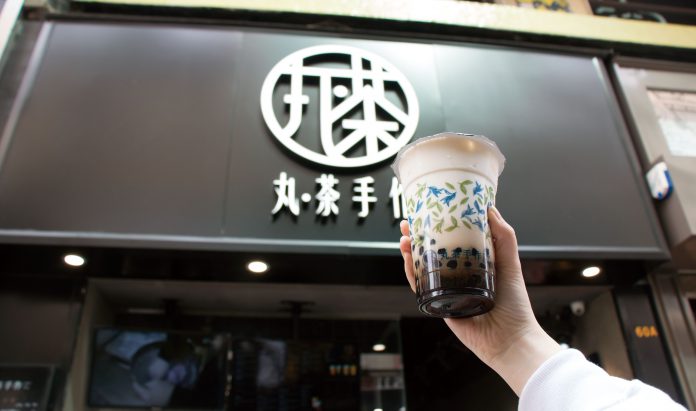
Chewy tapioca pearls with a photogenic pattern of stripes made of brown sugar – bubble tea, has become a fad in Hong Kong recently. Taiwanese bubble tea lovers are willing to endure a long wait for this comfort food. Once bubble tea fans grab the drink, they always let their camera take a zip first. Social media platforms are flooded with check-in posts featuring the latest Taiwanese bubble teashop.

Two Taiwanese teahouses claim as the founder of bubble tea. Chun Shui Tang (春水堂), a Taiwanese tea house which serves cold Chinese tea says bubble tea was invented in the mid-1980s by their manager Liu Hsiu-hui. She created this beverage by adding milk and tapioca balls (粉圓) into the tea drinks. But Hanlin Tea Room (翰林茶館), another Taiwanese tea house selling black and white bubble tea for more than 32 years, insists this bubbly drink was developed by Tu Tsung-ho, who added semi-transparent tapioca balls into milk tea.

Nowadays, bubble tea addicts do not pay any attention to the dispute of its origin. They only care if they have missed any latest bubble tea shop on their checklist.

Wong uses purple potato juice to make the drink more photogenic

Maggie Wong Lai-kei, director of BaBo The Drink Shop, imports this bubble tea brand from Taoyuan to Hong Kong due to her children’s affection for bubble tea. Wong finds this is a healthy brand because the tapioca balls are all handmade with no colourings and preservative. In a bid to get a share from this sweet market, Wong invents new products like the avocado special drink and brown sugar cold drip coffee for adult customers.

“Bubble tea is for the ladies, young ladies love bubble tea a lot. If the drink is photogenic enough, it really attracts them,” Wong says. That is why the store is decorated with a vernal freshness of young girls. The walls are painted in pink and bunches of flowers are placed for customers to take some artsy photos.

The pink decoration style is prepared for female customers

Although Wong acknowledges the promotional effect of foodies, she thinks the opposite effect is more detrimental. “If they appreciate your drink, there is an extra 20 per cent of the positive effect. But when they bad-mouth you, it will be an extra 80 per cent of the negative effect.” Wong once faced criticism online just because she refused an invitation to a foodies networking event from a marketing firm.

“When they bad-mouth you, it will be an extra 80 per cent of the negative effect.”

Matthew Chiang, co-owner of Bubble Tea Work, shares a similar feeling towards the foodies. As a Hong Kong originated brand, Chiang and his partner strike to keep the quality of handmade tapioca balls as their strategy to survive in this nearly saturated market. Chiang says: “We employ a master to knead tapioca flour behind the show window. Because we want to prove our products are freshly made without preservative. We have no intention to make it as an attraction for Facebook postings.”

Chiang says he seldom relies on promotion posts by foodies. He has doubts over the credibility and subjective judgement of taste. Still, he has a team to collect online posts data for internal reference. Instead of depending on Foodstagram promotion, Chiang values the cooperation with student fans who distribute fan-made goods for their idols, mostly K-Pop idols’ birthday celebration. “Actually we just provide a place for the fans to take a check-in photo with the decoration and distribute some small gifts and cup sleeves. But it influences our sales a lot,” says Chiang. He reveals the profit has a significant increase of 30 per cent to 40 per cent within a few days after an event is dedicated to some popular idols.

Chiang prefers to do promotion by cooperating with K-pop fandom

In fact, some foodies also reflect on their role in influencing the industry, instead of just focusing on business opportunities. Luncinda Leung, a social worker, started her Foodstagram – “foodictionaryhk”, four years ago with her sister. It currently has 255,000 followers. Recalling the early stage of getting followers, Leung thinks the rule of thumb is to understand who your followers are and match the suitable price range of food. She shows a photo of rice with curry fish balls, which is sold at HK$13, but the post has more than 800 likes.

Although Instagram is an image-oriented social media, when it comes to the recommendation of dishes, Leung thinks the taste is more important than the appearance. “I really want to introduce food that is delicious. It will be better if it has an enticing appearance. But even it does not look appealing, as long as it is tasty, I will still do a post on my Foodstagram,” says Leung, adding that she often uploads photos without any monetary reward.

“Camera eats first” propels the creation of Foodstagrams. Leung is doubtful about the foodies’ effect on the Taiwanese bubble tea industry. “The flooding posts of a particular food from different Foodstagrams can make a type of food suddenly become very popular, but also out of the public eye very quickly,” says Leung, “Hong Kong people like jumping on the bandwagon of sharing trendy food and that puts many food and beverage outlets into death.” In fact, this is what happens to eateries on Dundas Street, restaurants move in and out every six to nine months, Leung adds.

“Hong Kong people like jumping on the bandwagon of sharing trendy food and that puts many food and beverage outlets into death.”

“There are people posting Taiwanese bubble tea whenever I browse my Instagram and Facebook. If the beverage appears to be photogenic, they will think it is worth to have a try,” Leung says. She says she cannot differentiate the taste of the brown sugar bubble tea from different shops so that it is difficult for this industry to be sustainable, no matter how tasty the beverage is.

Regarding the “camera eats first” phenomenon, Francisco Cisternas, assistant professor of the Marketing Department at the Chinese University of Hong Kong, suggests this is a way for the young generation to search for independence and establish a social identity. The reward they get from social media, in the form of likes, comments, and sharing, is immediate, and it reinforces this behaviour.

Cisternas believes Foodstagrams play a determinant role in the evaluation of a beverage shop. “Recommendations from a friend have a significantly stronger impact on consumers’ purchase intention and brand evaluation than other forms of marketing,” says Cisternas. Although it allows the shops to pick up free publicity, Cisternas mentions the risk of losing control of the advertising content by using Foodstagram promotion.

In the long term, the incentive of foodies to cooperate with bubble tea shop is complicated, he says. “On one hand they can be charged for giving preference to bubble tea shop in their page. But on the other hand, they have to be careful not to hurt what people want to see. Because this may have a negative effect on their own business model,” Cisternas adds.

Edited by Fangdong Bai

Dedicated to Serving the Minorities

Former social worker Rex Yiu talks about his own experience as a sexual minority and his service in the Hong Kong LGBT community

By Lambert Siu

Like many other teenagers, Rex Yiu met his first love – a girl – when he was a secondary school student. But he had a strange feeling about dating a girl. He did not feel any affection and was unwilling to hold her hand or hug her. There he learnt about his sexuality.

Having come out publicly and happily married with his male partner, Yiu, 34, now works in the administrative section for a non-governmental organisation. Previously he worked as a social worker mainly helping and providing counselling service to the LGBT community in Hong Kong for 10 years.

Yiu has served the Hong Kong LGBT Community for more than 10 years

Growing up as a sexual minority, Yiu definitely feels the pain and sufferings of the LGBT community. Having studied in a Christian secondary school, where homosexuality is considered a sin, he felt guilty for his sexual orientation when he was a teenager.

“I chose to believe in Christianity at that time, which intensified my inner struggle. The situation went worse since most of my friends were Christians and I did not have the courage to tell them [that I’m gay],” he recalls.

During the toughest times of his life, he wrote diaries about his inner thoughts. He even thought of committing suicide. “In the worst days, I had 20 to 30 nightmares every night which kept me awake,” he recalls.

Yiu eventually plucked up his courage and decided to come out in a fellowship gathering. But responses from his fellowship members made him feel weird. “Maybe people in the fellowship were teenagers, so they didn’t have any peculiar reactions. But no one would discuss or share any views on the topic [about coming out],” he says.

He at last found comfort when he came out to a priest who prayed for him instead of judging his decision. As he began his university study, he met some new friends who were more receptive and open-minded towards his sexuality.

The pain of growing up in Yiu’s teenage life had helped him understand more about his own identity and led him to study social work in university in a bid to help other sexual minorities who suffer from similar problems.

He recalled an experience in his university life which changed his worldview. An anti-LGBT organisation, the Society for Truth and Light, did a full-page advertisement expressing their opposition against the legislation of Sexual Orientation Discrimination Ordinance on Ming Pao. To his surprise, his Christian classmates began to question their religion. “It was the very first time that I thought there might be a possibility for the world to change,” he says.

Yiu participating in a parade supporting the LGBT
(Photo courtesy of Rex Yiu)

Yiu became a social worker after graduating in 2006. LGBT was still not a major service target in the local social work field at that time. There was no formal organisation which specifically offered support to the LGBT community. Whenever some mainstream NGOs start volunteer projects about LGBT, Yiu never hesitates to join. “It’s one of the dreams that I have always kept in my heart, and it finally comes true,” Yiu says.

“It’s one of the dreams that I have always kept in my heart, and it finally comes true.”

Yiu’s adversities in the teenage years have made him a more understanding person, especially when helping the LGBT youth, who long for others to understand their difficulties and loneliness. “My identity and experiences help me better understand others’ situations,” he explains.

He thinks these LGBT teens easily have problems with socialisation, as they face many different barriers – not just from society but also from the LGBT community itself, as minority groups are often marginalised within the community.

Yiu says it is not just the LGBT teens who need counselling service, but also their parents, who very often either know nothing about LGBT or perceive it negatively. “Many would think it’s good enough to have the courage to come out to their parents. But in fact, it may be the start of suffering for the parents, and the children seldom know how to help their parents,” he says.

Yiu also says the most challenging part of his job is to provide support to people living with HIV or drug abuse problems, especially with the stereotypical views in society.

Yiu giving a speech to the public
(Photo courtesy of Rex Yiu)

Yiu now switches from frontline work to an administrative position, as he hopes to take a break after working in the field for a decade. “When you make great effort to do your work, it actually consumes lots of your energy,” he says.

Two years ago, the social worker married his partner in Denmark after being together for nine years. It was not easy – it was only shortly before his marriage that he completely came out to his whole family – the last one in the family to learn the news was his 90-year-old father. He originally planned to keep his father in the dark, but Yiu changed his mind.

“If I did not tell my father [about my sexuality] before getting married, I wouldn’t tell him for the rest of my life,” Yiu says. After Yiu came out, the father and son had a lengthy talk about sexuality, marriage and even child adoption. Everything was more peaceful than Yiu thought, and he felt relieved.

Speaking of his future plans, Yiu says he might go back to the frontline in the future. He hopes the LGBT community one day will be treated equally. “I believe society can be more inclusive,” he says.

Edited by Tommy Yuen

Recording Hong Kong Culture

Hong Kong cultural journalist Vivienne Chow speaks of her story of cultural journalism

By Shell Zhang

She is now regarded as one of the best cultural journalists in Hong Kong. Her bylines can be seen in big name media outlets such as BBC, Variety, Quartz and the South China Morning Post (SCMP).

The humble journalist, Vivienne Chow recalls she was not an outstanding student when studying journalism at the Chinese University of Hong Kong. She never thought of becoming a journalist. “I always wanted to be a film director, so initially I chose film school,” she says.

Like most typical Hong Kong parents, her mother worried about her future career. She signed up for CUHK journalism school which also offered television production and film studies courses instead of majoring in film.

Yet Chow has never forgotten her dream to pursue a career in the film industry. Her passion for film has inspired her to become a cultural journalist. “I have always been interested in arts throughout my teenage years. I love performing. I love cinema. I love painting. I used to paint,” she says.

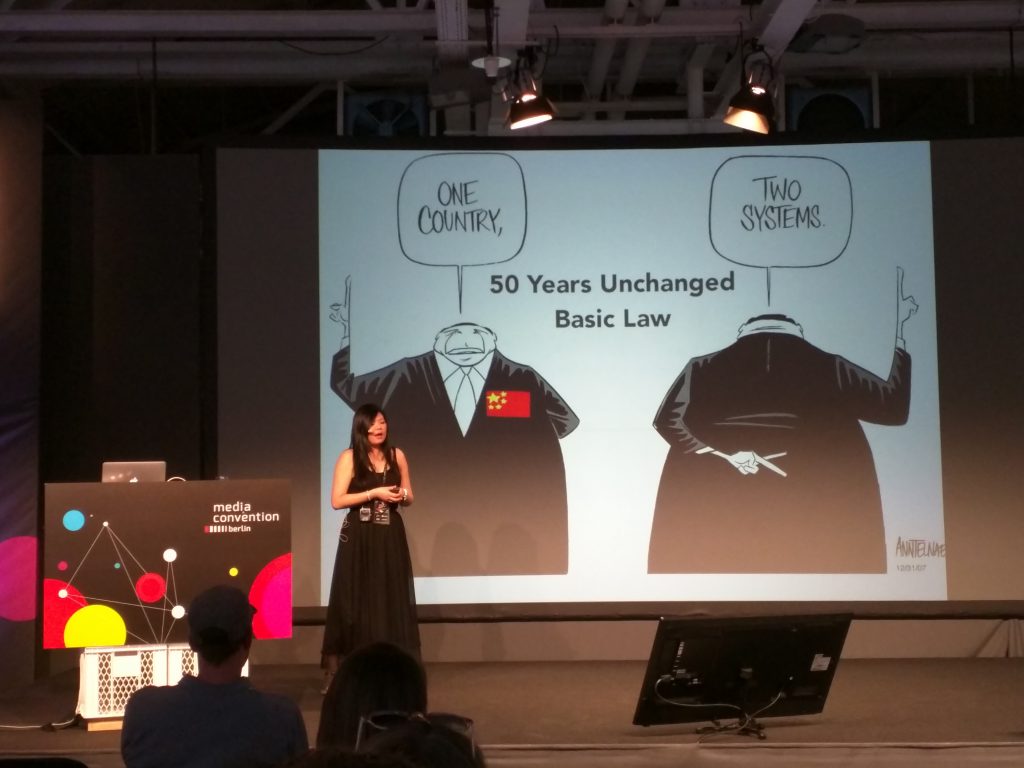
Chow as a speaker at re:publica, Berlin in 2016
(Photo courtesy of Vivienne Chow)

Writing stories about film and entertainment is a perfect job for her. She was an intern at the Hong Kong Standard during her final year in college. She started her career as a junior writer at SCMP after graduation.

During her 15 years at the SCMP, she went to countless film screenings and interviewed famous artists and filmmakers including Tony Leung Chiu-wai and Wong Kar-wai. She enjoys meeting interesting people when covering stories.

When most people think culture is quite distant to the daily life of ordinary citizens, Chow argues: “Actually it’s not. It’s something that everybody can enjoy. It appeals to not only a small group of people but also the general public.”

She believes her job is more than just a journalist. She tries to bring her stories alive and conveys the message of arts to her readers with the hope that these creative minds can inspire others.

Chow’s job takes her to explore different parts of the world such as Europe and South America where she gets to see and experience different kinds of art forms and cultures. “Arts and culture are international languages and they always bring you a different dimension,” she says.

Chow hosting Art Basel Salon 2017
(Photo courtesy of Vivienne Chow)

When asked about the most memorable interview she has done so far, she cites the one with Wong Kar-wai. “He is a mystery. He always wears his sunglasses so you can’t see his eyes. You don’t know what he is thinking… He is also a great storyteller who is eloquent and knows how to market himself.”

Famous for her cultural perspectives, Chow explains that there are two aspects of culture in Hong Kong. She points out culture is not only about arts, it is also related to politics and public policy such as urban development.

How can the government’s expenses benefit cultural development? How do certain projects affect the environment? How can these projects reach children? How can culture policies engage the general public? These are the questions Chow thinks about when reporting about culture and public policy.

Chow is also an advocate of preserving Hong Kong culture and heritage. She offered suggestions in the preservation of paintings by the King of Kowloon on doors and electricity facilities which otherwise would be demolished. The paintings are now conserved in the M+ collection. “I am preserving something that I think is important,” she says.

“I am preserving something that I think is important.”

Her passion for Hong Kong is overwhelming. Hong Kong’s soft power and the importance of Hong Kong culture as an international institution are the two issues she cares the most. “The world will know Hong Kong through exhibitions,” she says. She also points out it is important to maintain Hong Kong’s cultural identity.

Looking ahead to the future of cultural journalism in Hong Kong, she believes we need to find and build an audience. “We need a younger audience to become more interested in these topics. Young people are not interested in long pieces. So maybe we have to come up with different types of storytelling. Maybe I can do more videos. We have to rely on social media much more.”

Chow founded the Cultural Journalism Campus (CJC), a non-profit educational initiative in 2014, which promotes arts and culture among young people through the practice of cultural journalism, art criticism and storytelling.

Chow with Cultural Journalism Campus participants at Art Basel in Hong Kong 2018
(Photo courtesy of Vivienne Chow)

At the end of the interview she has a message for the young: “Curiosity is one of the most important things for human beings.” On how to do future planning, she says: “Well, that’s life. You know, you never know what’s gonna happen. You know, it just happens.”

Edited by Sam Kwong & Tommy Yuen

Telling Stories Differently

Journalist-turned stand-up comedian Ng Ting-ting continues to tell stories in her new role

By Laurissa Liu

No fancy outfit. No heavy make up. She looks plain. Yet, she fills a whole lecture hall with laughter and applause when she tells her wonderful stories on stage.

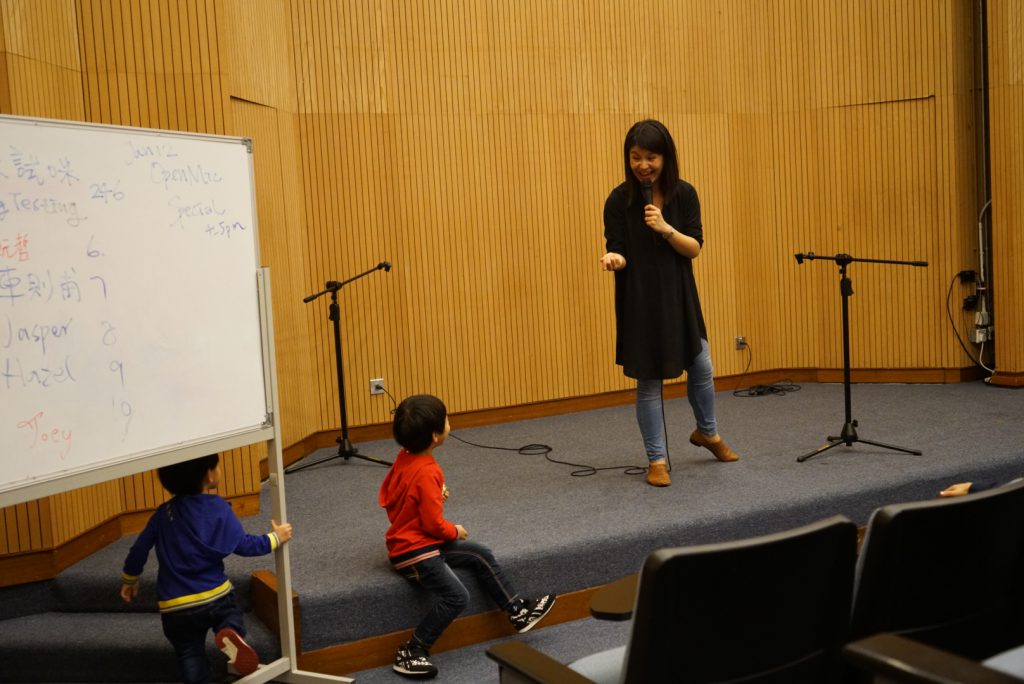
Ng Ting-ting, 36, also known as Mary, is a local full-time stand-up comedian. Since last year, she has been performing regularly at different places outside Hong Kong such as Australia and Malaysia. She also organises her own talk shows and runs a stand-up comedy class for kids known as “Not Only for Adults”.

Ng performs at a stand-up comedy show at Green House (Hong Kong)
(Photo courtesy of Ng Ting-ting)

But before Ng devotes her career to stand-up comedy, she had worked as a journalist for 10 years in local media, including i-Cable and RTHK, after graduating from the Chinese University of Hong Kong with a bachelor degree in journalism.

As a child, Ng’s dream has nothing to do with stand-up comedy. Rather, being a journalist had been her life goal for years. It all started from an episode of a documentary produced by RTHK about Lee Kuan Yew, the first Prime Minister of Singapore. It inspires Ng to become a journalist, who produces meaningful documentaries to make a positive influence in society.

“I don’t mean to do something great [with the documentaries], but when I was young, I am the type of person who insists on fighting against injustice that I come across in society,” Ng says.

Her dream of being a journalist came true after her university graduation. But her journalism career did not go smoothly as she thought. She calls herself too “idealistic” – believing that journalists should speak out against injustice, but the reality is different from her thoughts.

Disappointed by the bureaucracy and tedious procedures, she gave up her job. “If you like steak very much, you’ll be delighted when you can have it sometimes. But when you have it every day, it will gradually become not tasty anymore,” she says. Instead of being a journalist, now she finds more satisfaction in performing stand-up comedies.

Ng first got in touch with stand-up comedy when her friends invited her to join a workshop held by Vivek Mahbubani, a local stand-up comedian. The encounter had a significant impact on her.

“When you are doing news, it’s impossible to add your own emotions or put it in a funny way. But for stand-up comedies, I can present them in a hilarious way, and I think it’s cool,” she says. Since then, performing stand-up comedies has become Ng’s major hobby.

In Ng’s eyes, stand-up comedy and journalism have something in common – journalism requires careful observation, so does stand-up comedy as jokes originate from life experiences. One of her performances is about the secrets in a local girls’ school, where she spent her whole secondary school life. The performance went viral online with more than 300,000 views. It illustrates how she has turned her life experiences into intriguing stand-up comedies.

Ng invites kids to get on stage in her show

Doing stand-up comedies also brightens Ng up by changing her attitude towards life. When she first met other fellow stand-up comedians, she was amazed by the way how they respond to different issues. “When I first talked to them about the absurdity of politics, they would reply me with an interesting angle. In fact, they did not follow the news closely and were simply speaking nonsense, but their responses were quite funny to me,” she recalls.

Whenever something terrible happens, Ng’s first reaction is to write it down as a source for her jokes and to understand it in a funny way, instead of indulging herself in depressing feelings. She was furious about the incident of the disappearance of Causeway Bay Bookstore’s booksellers back in 2016, but now she has decided to adopt another attitude towards the issue.

“I still believe the issue is unreasonable, but in a hilarious instead of an angry tone. I still hope to change these unreasonable things, but I’m more relaxed towards them now,” Ng says.

But it is not easy to work as a full-time stand-up comedian. Ng thinks most Hongkongers have little or no knowledge about the culture of stand-up comedies which directly affects her income. “People have the habit of searching for what to do or which films to watch on weekends, but seldom will they look for stand-up comedy shows,” she says.

Still, Ng believes her career will have a promising future. Most comedians in Hong Kong are part-timers, doing it as a full-time job means Ng has more time and resources to work on her performances. “Same as comedy films, even though the jokes are funny, it doesn’t mean they are carelessly created. The crew behind pays great effort to every idea,” she explains.

Ng takes a selfie with a poster promoting her class
(Photo courtesy of Ng Ting-ting)

Looking back at her life, Ng says she always follows her heart whenever she makes any decision. She never thought of pursuing a career in stand-up comedy. “Life is about groping all along the way, instead of doing the thing you have always dreamed of,” she says.

For future plans, she intends to continue to do stand-up comedy, teach kids as well as expand the Mainland market. Having worked as a full-time stand-up comedian for about a year, she is still unsure whether she can earn a living with this job. But she does not feel worried at all. “If I can’t work this out in two or three years, I can try other things. I can go sell bread. It’s always important to believe in your ability,” she says.

“You only live once, so everything is valuable. No matter how much you earn, if you aren’t doing what you are passionate about, then everything is in vain,” she adds.

“You only live once, so everything is valuable.”

Edited by Tommy Yuen

Painting the Future for Pokfulam Village

Villagers initiate conservation projects to unite the neighbourhood and save their home

By Ariel Lai & Sarah Ryou

Unplanned constructed houses are common scenes in Pokfulam village. Land ownership is a complicated issue in the village. Near the entrance of the village is Wai Chi High Street, where a wet market and grocery stores locate. The businesses started in the 1920s. There were more than 50 stalls back in the 1950s and 1960s. Only five stalls are still in operation now, as many villagers have moved away. Village activities such as Poon Choi Fest and Harvest Festival for Chinese New Year, Handmade Rice Dumpling Workshop for Dragon Boat Festival, and the Lantern Riddle Games for Mid-Autumn Festival are held at the Vegetable Garden Place. It is a public area and the facilities are contributed collectively by villagers. As part of the revitalisation project of the village, the conservation group introduces numerous artworks to beautify the village and to attract visitors. Graffitis are painted on some walls. Artistically decorated “Exit” signs can be found all around the village. The signboards are for emergency evacuations in case of a fire, which is particularly dangerous in this densely populated village. The Fire Dragon wall painting depicts the symbolic Mid Autumn tradition of the village. The ritual is believed to bring peace and blessings to the village. Master Ng Kong-kin, the Fire Dragon artist in the village, is cutting a bamboo stick for crafting a Lion Head. Plushies and toys are hung on the fence near vegetable crops as scarecrows

Pokfulam Village is often described as a “brighter and cleaner” version of Kowloon Walled City. Tin-roofed huts, narrow alleys and laundry hanging outside shabby huts are all features of the 400-year-old village which is said to be one of the last indigenous villages on Hong Kong Island.

Surrounded by high rise buildings, the village has witnessed important historical moments of Hong Kong, the arrival of Missions étrangères de Paris in the 1870s, and the establishment of the largest dairy farm in Hong Kong in the 19th century, just to name a few. Today, the village is home to 3,000 residents with different family names.

Like many other rural villages, Pokfulam Village has been under constant threats of urban development. “Even people living here felt pessimistic about the village’s future at that time. Everyone was feeling gloomy,” Aaron Wong Kwong-cheung, vice-chairperson of the Pokfulam Village Cultural Landscape Conservation Group, recalls the early days when the group was established in 2009.

The group has initiated various festive activities for villagers and outsiders, to reunite the village with a “sense of belonging”. They also want to introduce the village culture to the public. Fire Dragon Dance performed at Mid-Autumn Festival is one of the highlights.

The conservation effort eventually paid off when Pokfulam Village successfully made its appearance on the 2014 World Monuments Watch – a programme which uses cultural heritage conservation to empower communities and improve the sustainability of their cherished sites. Since then about 4,000 visitors have joined the village’s biweekly walking tours.

Ms Tang, who visits the village with her husband and child during weekends and attends a Lion Head crafting workshop, is fascinated by the unique history and culture of Pokfulam Village. She first learned about the culture of the village when she joined the walking tour. “It’s rare for a village to organise walking tours for outsiders, and I find it very interesting,” she says.

The village has gained local and international recognition, villagers have built a community which could decide its own destiny on the path of conservation. Steven Chui Chu-kwan, chairperson of the conservation group, says: “We have to start from the community level and we cannot just rely on the government to take action.”

Nigel Ko Wing-hong, another vice-chairperson of the group, believes the “way of living” of the village and its wisdom are priceless gems worth passing down to the next generation. By means of conserving the “hardware”, he hopes to preserve the intangible culture in the village, and ultimately, the “diversity of living” in Hong Kong.

“Pokfulam Village is a treasure box. Hidden treasures are concealed in every household, waiting to be uncovered,” he says.

Edited by Valerie Wan

A Capsule for Love

Getting a blind date from vending machines

By Ariel Lai

Insert coins, turn the knob, and… ta-da! Here comes a rounded capsule which contains an appealing little toy that may be an anime figurine or a miniature of food and animals.

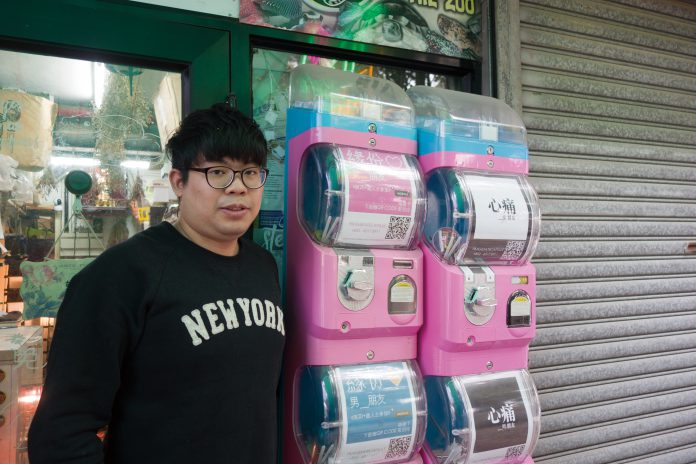
Capsule toys, or Gashapon in Japanese, are childhood memories of many Hong Kong people. But have you ever imagined getting a blind date from a capsule toy? The tower of pink capsule vending machines standing outside BT Reptile, a pet store in Shek Kip Mei, does exactly that.

Ben Tang, 26, owner of BT Reptile, came across the idea in Taiwan and decided to set up his own one on Valentine’s Day last year. Named “Fate Capsule”, the machines have sold over 2,000 capsules, with around 20 to 30 users a week.

Paying HK$20, a capsule containing the name and personal details of a date will be spat out from the machine. People who want their information contained in a capsule have to leave their information such as name, age, height, weight, hobby and contact on Fate Capsule’s Facebook page.

Tang says he wants to change the local dating culture with his machines. “Generally, it’s hard to find a partner here since many occupations have long working hours, not to mention the prominent problem of gender imbalance in many industries,” he says. Tang adds that many female users of the machines are nurses or kindergarten teachers, whereas male users are usually engineers or members of disciplined services. These occupations are known for extreme sex ratios.

Do the Fate Capsule machines actually make any successful matches? Tang says he does hear about successful cases occasionally. “We have a withdrawal mechanism. When users are no longer single, they ask us to opt them out from the matching and have their names removed.” He says some couples matched through the machines revisited his shop to thank him.

He has also taken measures to make the matchmaking process safer. Applicants are screened before their information is put in the capsules, and they are only allowed to contact by WeChat through which users can block or reject friend requests. “They have the right to say no,” he says.

Tang introduces the “Pain Capsules” in addition to the original Fate Capsules. The new idea allows users to share their heartbreaking stories with potential dates. While the original capsules are more popular among male users in their 20s, the new Pain Capsules, which contain more than simple personal information, are well-received by female users.

If you want to take a chance to meet a new partner, find the Fate Capsule machines at Shop 208, Kum Yuck Building, 2 Wai Chi Lane, Shek Kip Mei or visit their Facebook page for more information.

Edited by Valerie Wan

Havens for the Strays

Small charitable dog shelters struggle to make ends meet

Reporters: Daphne Li, Tommy Yuen, Civi Yap

Editors: Crystal Wu, Rivers Zhang

Stray animals are often found wandering on the streets of Hong Kong. According to figures from the Agriculture, Fisheries and Conservation Department (AFCD), 1,566 strays dog were caught last year. Under current policy, these dogs are transferred to management centres for observation. The department will then transfer suitable dogs to animal welfare organisations for adoption.

In a bid to help more stray dogs, animal lovers have set up small charitable dog shelters to provide food and accommodation for them. But these shelters face financial problems as they rely largely on public donation.

Narelle Pamuk, chairperson of self-funded dog shelter Sai Kung Stray Friends Foundation, says the operation of her dog shelter costs up to HK$57,000 a month. The foundation receives an annual subsidy of HK$45,000 from the government for desexing and vaccinating their dogs, but the amount is far from enough.

Another self-financed dog shelter House of Joy & Mercy also faces similar challenges. Person-in-charge of the shelter Ivy Tse says medical spending and body checks for dogs are the biggest financial burdens.

On the bright side, public awareness of stray animal welfare has grown stronger in recent years. The number of stray animals caught and received by the AFCD dropped significantly from 4,074 to 2,926 from 2015 to 2017. The number of dogs being euthanised also went down by 30 per cent during the same period.

Lawmaker Roy Kwong Chun-yu says the government should appreciate the value of small charitable organisations, as well as introducing supporting measures so that they can operate in a sustainable way and more stray dogs can be saved from hunger and misery.

Take it SLOWLY

Reviving pen pal experience

By Sarah Ryou

When was the last time you bought stamps or wrote a pen pal letter? When did you last write a letter to a friend? Most people stay in touch or make new friends by posting messages on social media platforms instead of writing letters nowadays. SLOWLY is a mobile app that brings back the experience of pen palling.

In SLOWLY, you can connect with strangers around the world by writing and sending them letters sealed with a stamp of your choice. As its name suggests, SLOWLY encourages users to slow down and wait. And the delivery time varies with the distance between a sender and a recipient.

Kevin Wong Ho-yin, founder of SLOWLY

Kevin Wong Ho-yin, founder of SLOWLY, says the app was inspired by his experience of writing to pen pals when he was young. He has forgotten what he wrote in letters, but he still recalls the excitement of waiting for a reply. Therefore, he wishes to reintroduce the pen pal experience to the young generation.

“In a very fast-paced city like Hong Kong, we lack patience to wait,” says Wong, who finds the beauty in waiting. SLOWLY encourages users to compose long and meaningful messages. He notices that messages as long as 10,000 words are sent every now and then.

A main feature of SLOWLY is that users can stay anonymous. A user only needs to create a nickname and an avatar to start matching with pen pals who share common interests. The anonymity, Wong believes, frees users from privacy concerns and allows them to express themselves freely.

The user interface in SLOWLY (Image courtesy of Kevin Wong Ho-yin)

Though he had difficult times developing the app, Wong says positive feedback from users brings him pleasure and satisfaction. One user who suffers from depression finds emotional relief and gains motivation from his pen friend by using SLOWLY. The duo thanked Wong for creating the app and the unique experience.

Until now, SLOWLY already has over one million users and the community is still growing. Wong believes the charm of the app is that everyone can become friends: “There are users as young as 16 and as old as 60, and they have actually become friends by common interests.” He is now developing a desktop version of the app.

Want to slow down your pace, start some meaningful conversations, and experience the pleasure of sending and receiving letters? Join SLOWLY today and download it for free from Apple App Store or Google Play Store.

Users can choose from a variety of stamps to go with their letter
(Image courtesy of Kevin Wong Ho-yin)

Edited by Valerie Wan

Nowhere to Skate

Hong Kong ice-skating athletes are yearning for a training venue of their own

Reporters: Sarah Poon, Valerie Wan, Erica Li, Edith Chung

Editors: Angela Ng, Catherine Chiang

There are currently five ice-skating rinks in Hong Kong, including Cityplaza Ice Palace, Glacier at Festival Walk, Mega Ice at Megabox, the Rink at Elements and Sky Rink at Dragon Centre. All of them are located in indoor shopping malls and open for commercial use all year round. Skaters of all ages can drop by any rink, rent a pair of skates and start skating.

In the past three years, Hong Kong athletes won five medals in the Asian Figure Skating Trophy, one of the toughest skating competitions in Asia. They had also qualified for the short track speed skating events for four consecutive Winter Olympic Games since 2002.

However, athletes still do not have their own training venue despite having won numerous awards in international competitions. All the five skating rinks in Hong Kong fail to meet the Olympic standard, which measures 60 metres x 30 metres.

Some ice-skating athletes raise concerns over the inadequacy of training facilities in Hong Kong. Figure skaters Chow Hiu-lok and Harry Lee Hau-yin say their performance is greatly affected by the lack of a training venue. They find it difficult to adapt when taking part in international events, as they are not trained in a standard rink.

The precision of rink dimensions is particularly important for short track speed skaters and it is closely related to their performance in competitions. “Basically I had to skate slower in Hong Kong and just expect myself to skate faster in competition. It is not an ideal training method,” says Sidney Chu, who used to train in the Hong Kong National Team.

Sun Dandan, head coach of the Hong Kong Skating Union, notes that the absence of a suitable rink places athletes at a disadvantage when they compete overseas. She explains that athletes have to adjust their skating speed and flow of their programme.

Speed skating athletes also have similar problems. “For short track speed skating, athletes must practice in a standard and safe venue with protection mats. Otherwise, our training could come to no avail,” says Sun.

Yip Siu-yin, chairperson of the Union, says the lack of training venues is the greatest problem hindering the development of ice sports in Hong Kong. “More than ten years ago, the lack of a proper arena was a common problem. The situation has now changed. Southeast Asian countries all have standard ice rinks, but we still don’t,” says Yip.