








Home Blog Page 56

No Place for Fallen Trees

Typhoon Mangkhut left more than 55,000 wrecked and uprooted trees in its wake – and a major disposal problem

By Jasper Cao & Sam Kwong

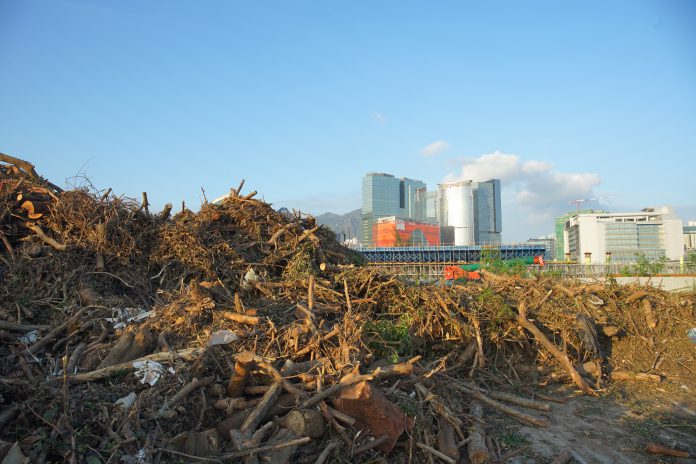
A large part of the old Kai Tak Airport runway is still overwhelmed by tonnes of trees knocked down when Super Typhoon Mangkhut, the strongest storm on record, lashed the city in mid-September. About 8,000 truckloads of tree debris have been delivered to the collection area designated for tree waste storage since September 21.

Disposal of tree waste onto the runway continued for nearly two months after the super typhoon struck, according to the Environmental Protection Department. In a press statement issued on November 8, the department said the temporary wood waste collection area stopped receiving tree debris on November 10. It later confirmed that, over the next few months, the waste would be delivered to the West New Territories Landfill or the North East New Territories Landfill so that the Kai Tak dump could eventually be closed.

Green groups and scholars criticise the government for disposing of all the tree waste at the same location and sending most to landfill without conducting any resources classification or selection for further recycling.

Chan Mei-mei, officer of the Greening, Landscape and Tree Management Section under the Development Bureau, explains the government prioritises the removal of storm-damaged trees that pose a threat to public safety and those which have paralysed traffic. As too many trees collapsed within a short period of time, she believes it was not feasible to classify or assess the fallen trees before disposal.

The collection area at the old Kai Tak Airport.

Alvin Tang Ming-chak, a lecturer on tree management at the Hong Kong Baptist University, says tree waste is generated in Hong Kong every day. “The situation after Mangkhut was unusual, as a lot of trees were wholly overturned by the typhoon,” Tang says. Although he understands the government’s decision to dispose of the waste in Kai Tak, Tang worries that useful wood waste is not being recycled. The condition of wood waste deteriorates once they start to ferment, generating gases such as ammonia, he says.

In 2014, the Development Bureau’s Greening, Landscape and Tree Management Section released its Guidelines on Yard Waste Reduction and Treatment which aims to provide information for government departments in charge of gardening works. However, it is only a general guideline that does not introduce any concrete instructions regarding wood waste recycling. “People don’t have to follow it [the guideline],” says Tang. “It is just a guideline but not a regulation. It is not mandatory.”

Tang also points out that disposing of green waste in a landfill is free of charge under the current regulations. He urges the government to review the regulations. “As people know that they will not be charged if they send green waste to a landfill, they don’t have the incentive to reduce the amount of green waste or to sort out useful resources from the waste for recycling,” Tang explains.

He suggests that one solution would be for the government to introduce a penalty for disposing of tree waste in the landfill. Tang points out that many government departments are involved in tree management in different districts of Hong Kong and the gardening work is outsourced to contractors. “The government should also require the contractors to recycle a certain percentage, such as 10 per cent of the tree waste collected. The requirement should be added as a term in contracts,” says Tang. Given time, the contractors Tang believes, would form the habit of recycling tree waste.
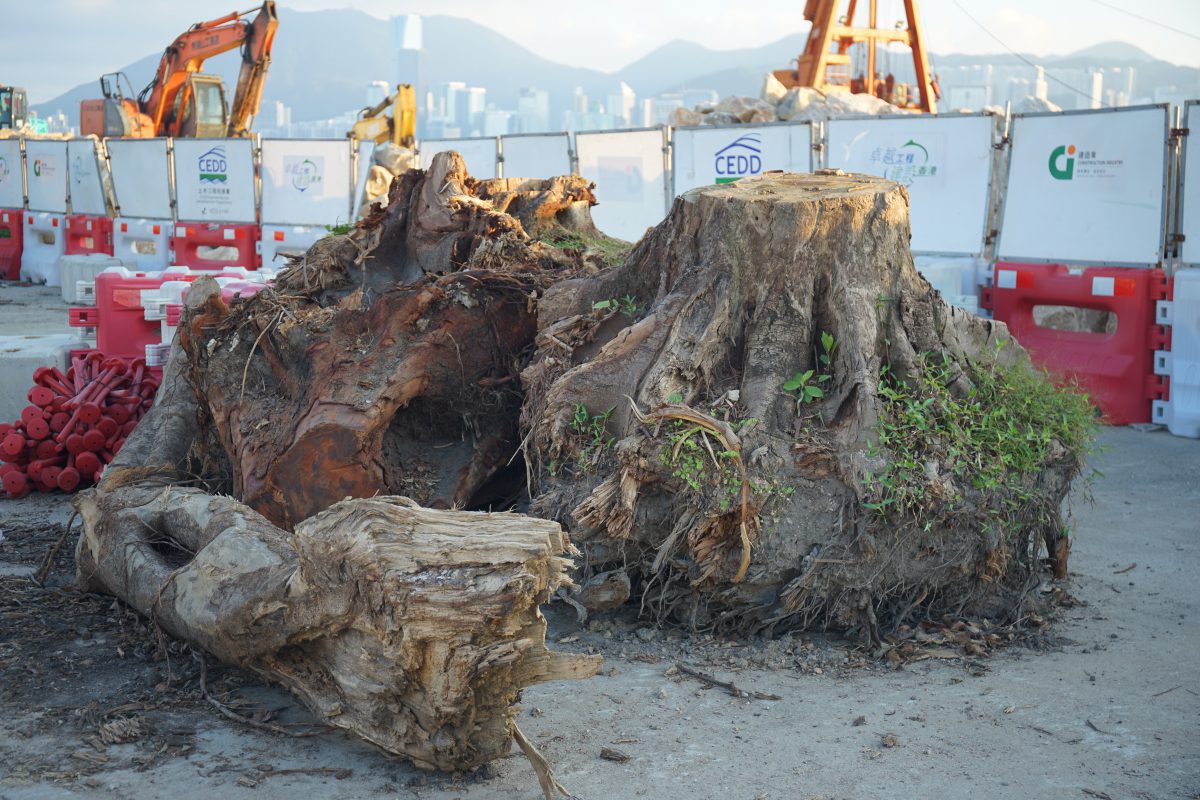
Trees uprooted by Typhoon Mangkhut.

The collection of tree waste is the first step in recycling. “The biggest problem [of the Kai Tak collection area] is the absence of a classification system,” says Tang. “When the wood waste is collected, they are not sorted. Different sizes of trunks, branches and leaves are mixed together in the collection area.” He explains that different kinds of wood waste can be recycled in many different ways. For instance, Tang says, small trunks can be crushed and turned into compost for mulching and medium ones can be used for building fences. The large trunks can be used for making furniture, he says.

Roy Tam, general director of the local green group Green Sense, says he feels disappointed that the government fails to act in line with its own environmental policy which advocates waste reduction and low carbon emissions. “It is such a waste… sending tree truks to landfills. The general public will have a misconception that fallen trees are all garbage and useless.”

Tam suggests the government should set up shelters at tree waste collection areas in order to keep the trunks dry and in good condition which is important for effective recycling. The green group is reaching out to the business community to help and it has encouraged biomass companies and power plants to take a more active role in reusing and recycling felled trees.

At the Kadoorie Farm and Botanic Garden (KFBG) of Hong Kong, all tree waste is recycled, Kit Lee Kit-wah, the education officer of KFBG says. Some are used by artists to create sculptures while trunks can be turned into tables and chairs for visitors. Such uses, however, take up a very small amount of the total amount of tree waste.

Wood waste is also used to make compost at KFBG. Staff members mix crushed wood with animal faeces. “If we retain all the wood waste in the forest, it will break down very slowly,” says Ryan Chiu Kam-wai, the senior arborist of Flora Conservation Department at Kadoorie. “However, if mixed with animal faeces, the carbon and nitrogen content will be balanced. And when the mixture is fully mature, the compost can be used as fertilizer at farms, providing considerable nutrition to the soil,” he says.

But Chiu believes it is not feasible to turn all wood waste into fertilisers, as the process is time-consuming and requires lots of space. He says woodchips can also be used for mulching as a protective layer for soil and offer protection and nutrition to tree roots.

In a press statement released in early November, the Environmental Protection Department said it had procured an industrial grade wood shredder, which would be placed in the open space near T·PARK, and it was estimated that about 100 tonnes of tree waste could be shredded every day. The shredded wood would be used to conduct various treatment trials, such as using it as a bulking agent in the composting process at the Organic Resources Recovery Centre; turning it into wood pellets into solid fuel for boilers or cement manufacturing; or turning it into soil cover for use at landfills.

Last year, the Leisure and Cultural Services Department purchased six wood chippers. The department says that the wood chippers are used for handling tree waste generated every day in Hong Kong. The models of the wood chippers are only suitable for handling small-and-medium-size tree waste. They are not capable of dealing with the large amount of wood waste produced by the Super Typhoon Mangkhut.
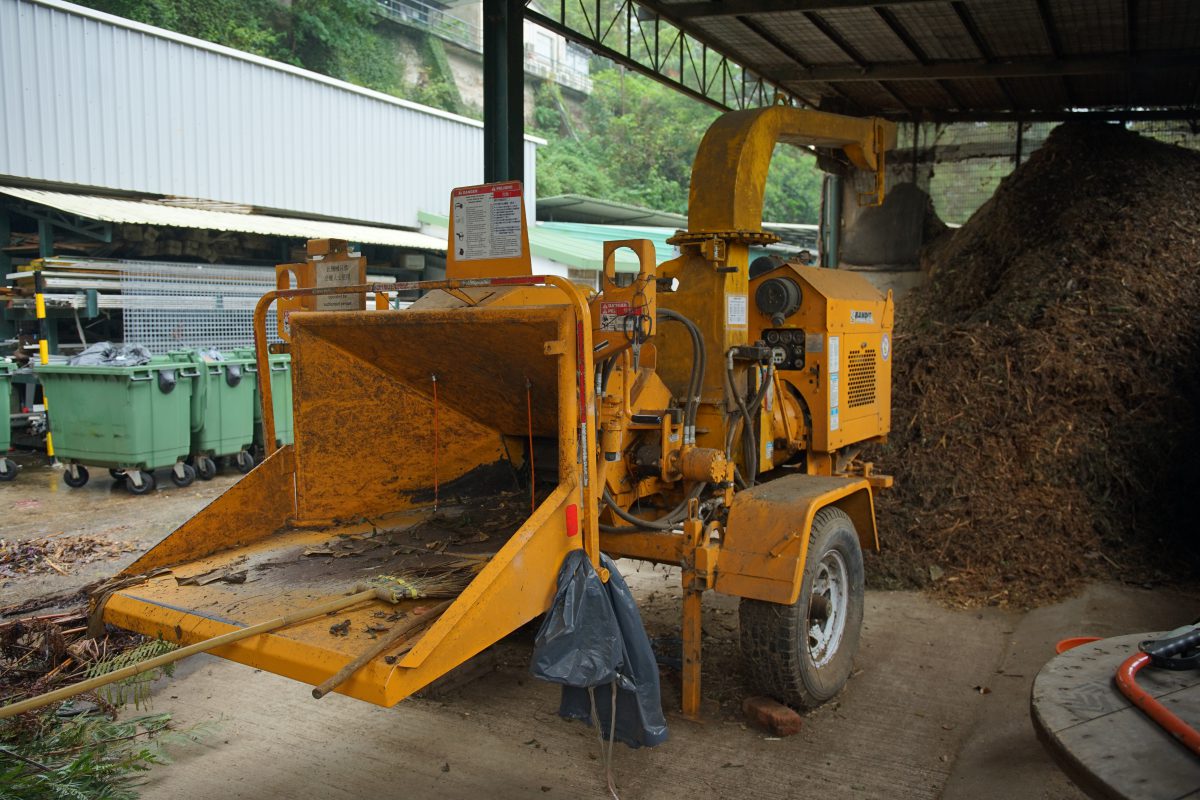
Wood chipper owned by the Kadoorie Farm and Botanic Garden (KFBG).

Tang warns that Hong Kong will probably be hit by strong typhoons more often in the future due to climate change. He urges the government to develop a long-term strategy to handle wood waste. “Now that the Kai Tak collection site is full, what other solutions do we have? What about the future?” says Tang. “It doesn’t matter if the government fails to do well in dealing with tree waste this time, but they must learn a lesson to develop a systematic process to recycle tree waste if another super typhoon hits Hong Kong again.”

In the same press release issued in early November, the Environmental Protection Department added they would review the experience gained in handling the aftermath of Typhoon Mangkhut and identify areas for improvement. “Looking ahead, the government will need to build new refuse transfer facilities and increase the capacity of existing refuse transfer stations (RTSs),” the statement read.

Edited by Brian Yu
Dress Sense

Clothing rental startups are helping customers to pay less and waste less

By Iris Yeung

Kat Wu, a student at the Chinese International School, wore a floral embroidered black dress at her Year 11 graduation prom two years ago. Her dress was just as glamorous as any of the others but there was something special about her prom outfit – it was rented from an online platform.

Wu, now 17, recalls spotting a student discount advertisement when she was browsing the website of Yeechoo, an online clothing rental platform two years ago. She was impressed by the cheap rental price and rich variety of designer dresses. After her first fitting in the company’s showroom in Central, she decided to give dress rental a go. The rental fee of the dress was HK$380 for four days while the retail price was HK$2,400.

The rental service helped Wu save money and time since she did not have to visit numerous boutiques to hunt for her dream dress. “If you look at the price of dresses that are marketed as prom dresses, the high-quality ones are very high, like in the thousands,” Wu says. “If I were to buy it, I would spend significantly more than just renting it.”

Yeechoo introduced Hong Kong to the idea of an online “shared wardrobe” in 2014. The business allows customers to rent dresses from more than 200 designers for as little as one-fifth to one-tenth of the retail prices. Rented items are properly dry-cleaned after each use to keep them in good condition.

Abby Zhang, co-founder of YeeChoo, inspects a rental dress in YeeChoo’s office in Wong Chuk Hang

One of its co-founders, Abby Zhang, says the inspiration behind the startup stemmed from a common problem that many women have experienced. “We realised that we always end up buying dresses that would only be worn a couple of times so we asked ourselves: Why can’t we create a sharing closet so that we don’t need to buy every single time?”

In the United States, online fashion rental businesses like Rent the Runway are doing well but it is not easy to replicate that successful business model here in Hong Kong. Yeechoo is now a fast-growing startup with more than 30,000 users, but Zhang reveals it was tough going in the first year. She says even though Hong Kong has a culture of dressing up for special occasions, unlike in the U.S., most Hong Kong consumers have little knowledge about the concept of a shared closet.

Her company has made a great effort to educate local consumers about the idea of sharing a wardrobe and how it is different from the service offered by second-hand clothing rental companies in the city that lend wedding outfits and formal suits. “In the U.S. they are more open to the second-hand market. You can just purely say rental services, second hand, all that. But for Hong Kong, I think the marketing message is that we don’t really focus on rental. We tell people more about the lifestyle they’re choosing. This [renting a dress] is lighter [less burden on spending], smarter and cooler,” Zhang says.

The company started by providing a rental service for cocktail dresses and evening gowns, Zhang says. It now offers a wider variety of clothes including daily wear. Customers can join a monthly subscription plan under which they can rent six designer pieces at a fixed price. The package targets young professionals who need to change their work outfits constantly.

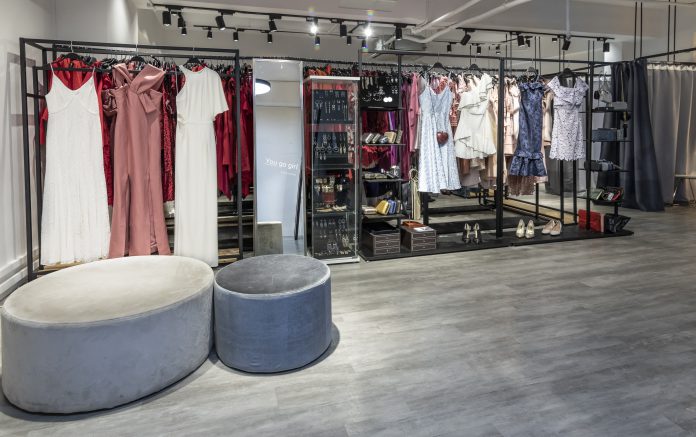
Established in the beginning of this year, Prêt-à-Dress is the latest player in the market. Company owner, Ellen Ng, carefully selected around 500 luxurious fashion pieces for rental. The rental fee is set at 10 to 20 per cent of the retail price. Most items in her collection are dresses by famous designers, including Elie Saab and Vera Wang, and the collection is renewed from time to time. Having worked in the fashion industry for more than a decade, Ng decided to step into the clothing rental business because she could see its potential in a fashion-forward city like Hong Kong.

Ellen Ng of Prêt-à-Dress arranges the rental dresses on display

“There are so many fashion trends and new things for girls to try out nowadays. You would not invest too much on a single, exorbitant piece. Maybe you would wear it for only a couple of times, then you would find out that it is no longer a trendy item after two or three months. You would want to wear something new for the next occasion. That is why the rental model is getting more popular,” Ng explains.

The fashion industry has always been trend-driven. The cheap price tags on fast fashion encourage consumers to buy more garments just to keep up with the ever-changing fashion trends. Ng says her dress rental platform can serve as “a different version of the fast-fashion trend”, as her service allows customers to try out different styles on a small budget.

Ng says her customers vary widely in age and occupation ranging from university students looking for party dresses to tai tais going to charity balls. She has also seen young women in a panic who drop by her place in Central without any idea how to dress for a formal event. Her job is to help clueless customers by providing constructive styling advice. She says such a tailor-made and thoughtful service gives added value to a customer’s experience.

Elaine Fong and Joey Li started running a wardrobe sharing and clothing rental platform, Wardrobista, in February last year while they were still working full-time – Fong in retail clothing and Li in the IT industry. As an industry insider, Fong says the problem of clothing waste is very serious in Hong Kong.

“I am a practitioner in this field. I have seen so much waste created by the fashion industry. Lots of waste is generated at each production stage, starting from sampling to unsold products,” Fong says.

Established on the basis of a “shop less, rent more” belief, Wardrobista has a mission to make the local fashion industry more sustainable by promoting the concept of sharing under-utilised dresses and bags. They hope their customers will still look fabulous without being guilty of harming the planet.

Wardrobista’s motto: “Shop Less, Rent More”

The platform now has around 200 dresses available for rental. About 40 per cent of their collection belongs to their customers who list their barely used frocks for hire. Under its “share your dress” initiative, those who collaborate with the platform can earn a 25 per cent commission for each successful rental.

“A dress might only be worn twice or thrice a year; it is left idle most of the time. But there are people who might want to wear this dress for different occasions. That is how resources should be better utilised,” says Li, explaining the rationale behind the initiative.

“We hope people can think twice before buying new clothes. Do you really need an extra piece? Or you just need a dress for an occasion? If it is the latter, why not rent it or share the piece you have with others to extend the life of the garment?” she says.

Ada Wang would agree entirely. The 44-year-old who works in a publishing company is a strong supporter of clothing rental. She often struggles about what to wear to gala dinners, weddings and other social events. Before trying dress rental service, she bought five to six evening gowns per year for a few special occasions and ended up a collection of gowns which she no longer wears in her wardrobe.

Wang stopped shopping for fancy dresses after she found she could hire gowns. She says she no longer has to worry about being caught for wearing the same outfit more than once by her friends on social media anymore as she can always rent a different dress. Since all rental dresses are kept in good condition, Wang says her friends cannot even tell that her dresses are used items.

She now congratulates herself for being a huge supporter of dress rental which saves her money – and space in her wardrobe. “Lots of space is freed up in my closet now. It is no longer suffocated with clothing waste that I will not wear,” Wang says.

Edited by Eric Park

Shop Naked

Consumers and businesses in Hong Kong are taking a stand against excessive food packaging

By Sarah Poon

More than 290 organisations, including some of the world’s biggest packaging producers and leading consumer brands such as Coke, Pepsi, Nestle and Kellogg plus retailers and recyclers, governments and NGOs, signed a pledge in late October to cut plastic waste from their operations.

The pledge – the New Plastics Economy Global Commitment – was launched by the Ellen MacArthur Foundation and the United Nations Environment Programme (UNEP) on October 29 this year. Participating organisations promised to eliminate single-use and unnecessary plastic and to recycle packaging, with targets to be reviewed and updates on their progress to be posted regularly to drive momentum.

In a move that shares the spirit of the new global pledge, civil society and private businesses in Hong Kong are campaigning for the “naked shopping” concept, where consumers choose to buy products that are not packaged. Patsy Cheng Man-wah, director of the SEE Network, a pioneer of the shop naked campaign, says the concept stems from the BYOB (bring your own bag) movement.

The goal of the campaign, says Cheng, is to arouse public awareness. “Everyone has a chance to be a consumer. But not everyone has a chance to participate in the decision making of government policies. Not everyone joins protests but everyone buys things every single day. And if you shop every day, can you be a bit more eco-friendly? The concept should help everyone to stop and think – am I willing to change?”

To promote the concept, they set up a community group on Facebook for people to share their experiences of naked shopping. They also collaborated with sixteen local businesses in the Central and Western District in hosting a “Shop Naked Day” last year, where a diverse range of unpackaged and handmade products were sold. Residents were invited to bring their own containers to the stalls and get their first taste of naked shopping.

Despite the positive reaction, Cheng says it is hard to sustain the momentum, and the ultimate solution requires a structural change of the existing waste-treatment system by the Food and Environmental Hygiene Department. “I don’t think there is a lack of promotion [on this issue from the government],” says Cheng, “There are not enough substantial policies and measures. The government should take this problem more seriously.”

In the “Hong Kong Blueprint for Sustainable Use of Resources 2013 – 2022” published by the Environment Bureau, the government listed “fill missing gaps in Hong Kong’s waste-related infrastructure” as one of the policy directions. Whether or not packaging materials will be listed under Producer Responsibility Schemes, where manufacturers have to share the responsibility of recycling and disposing of their products, is still under review. So far, plastic shopping bags, waste electrical and electronic equipment and glass beverage containers have been included under the scheme.

The absence of government policy support, however, does not discourage private businesses and consumers in Hong Kong from taking action against excessive food packaging. A handful of grocery stores have sprouted up around the city with this very aim.
One such store is Seed, a modern eco-friendly grocery store in Sai Kung. Belle Chak Yuen-chi, one of the four co-founders of Seed, says their name stands for “Saving the Earth Every Day”.

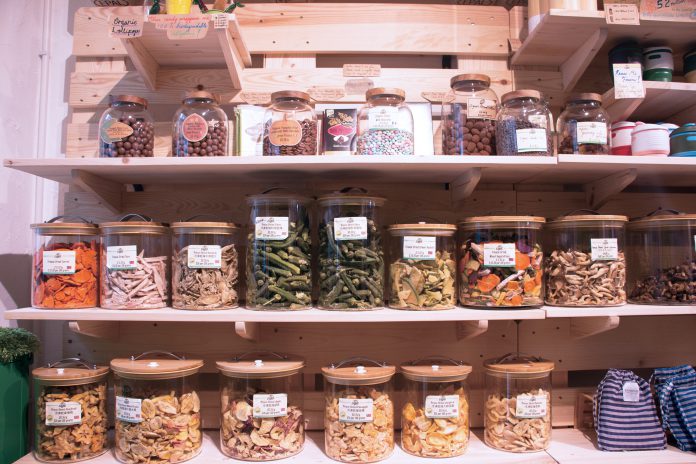
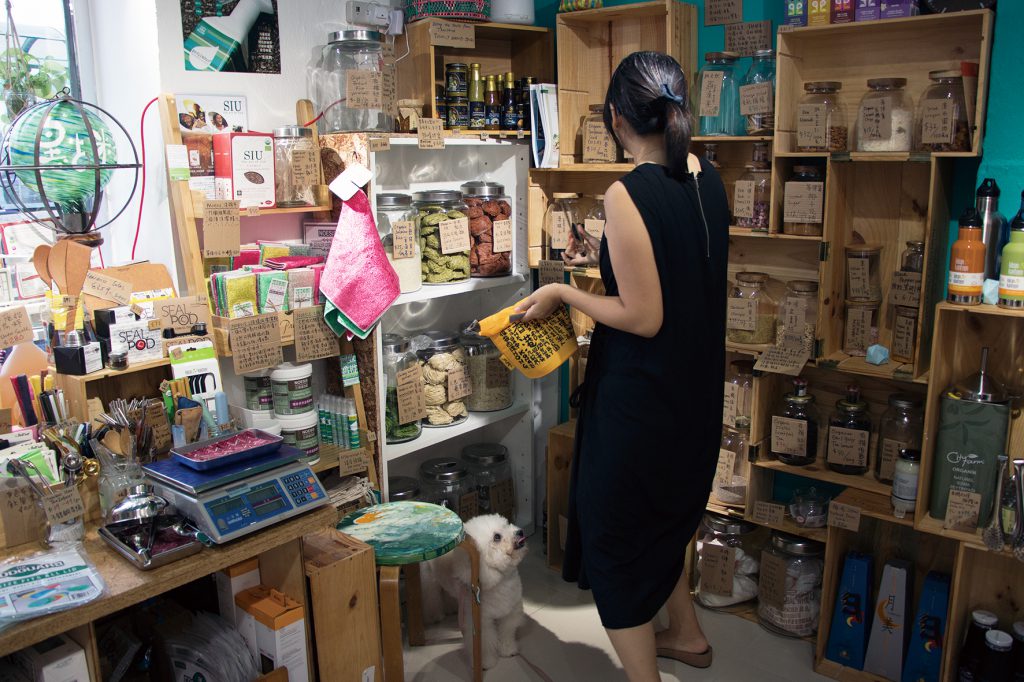
Opened in June this year, the shop offers a great variety of food products, ranging from parched fruits to jasmine rice and almond milk. Dried food items are stored in large glass bins and customers are encouraged to bring their own containers when they shop.
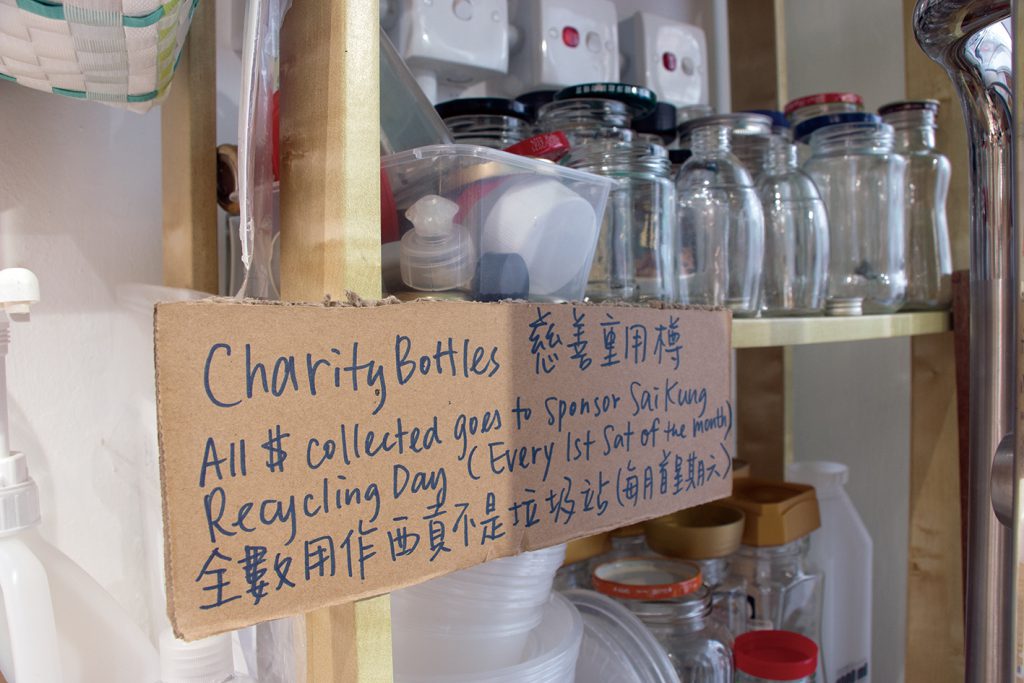
Customers can pick used plastic boxes and glass bottles donated by nearby residents if they forget to bring their own or if they are new to the concept of shopping naked. Consumers are charged HK$2 to HK$5 for each container, Chak says, to remind them of the value of these used bags and containers. “We want everyone to realise that a small step can help a lot,” she adds.

Charity bottles at Seed.

Chak believes everyone should shoulder the responsibility for the excessive amount of food packaging waste. People are too used to the convenience of purchasing packaged goods in supermarkets, even though such packaging is often excessive. “If 100 or 1,000 people stop going to supermarkets due to the packaging…if everyone has this awareness and steps back, then supermarkets and other manufacturers will be more aware of the issue,” she says.

She thinks people nowadays are pushing hygienic requirements to an extreme. For instance, restaurants in the past had sugar stored in a tin and toothpicks kept in a holder, but everything is individually packaged now.

Hygiene concerns sometimes make it difficult for consumers to buy unpackaged goods in some shops even when they are well-prepared with their own bags or containers. Carol Ho Kit-yee, a customer of Seed, who has been a devotee of naked shopping for a year, recalls an unpleasant experience of buying tea. She says a chain beverage brand in Causeway Bay once rejected her request of filling her own water bottle with green tea citing operational and hygiene concerns.

Carol Ho Kit-yee holds her reusable produce bag as she shops at Seed.

The incident shows that despite her good will, her environmentally friendly shopping habit is not welcomed in some places. Ho believes this has greatly undermined her right to select what suits her best. “I think participating in naked shopping is my right and my choice, just like I can choose whether to use plastic bags or not, and I am not forced to use it,” she explains. Ho adds shopping naked saves people the hassle of recycling because they can avoid producing waste by buying unpackaged products in the first place.

Another environmentally friendly shop which shares Ho’s social mission is Edgar, a bulk grocery store chain that specialises in organic food.

Raphaël De Ry, the founder of Edgar, was a food distributor before he became a shop owner himself. His solution to the problem of food packaging is buying in bulk, which he says allows both him and his consumers to “win all along the chain”. By working with manufacturers who use minimal packaging, the items he ships take up less space in shipping containers and that in turn helps reduce the carbon footprint produced during the shipping process. Purchasing products in great quantities, such as using ten-kilo bags as opposed to five-kilo bags, helps cut down the use of packaging materials. Customers who bring along their own containers and bags also eliminate the use of plastic packaging for their purchases.

His store, like Seed, also features a stunning array of glass containers labelled with product descriptions. De Ry points out that customers often rely on packaging to decide whether to make a purchase or not and they might feel uneasy if they cannot read the food information. “The packaging is something that is very reassuring … it gives like a sense of confidence in the purchase,” he says.

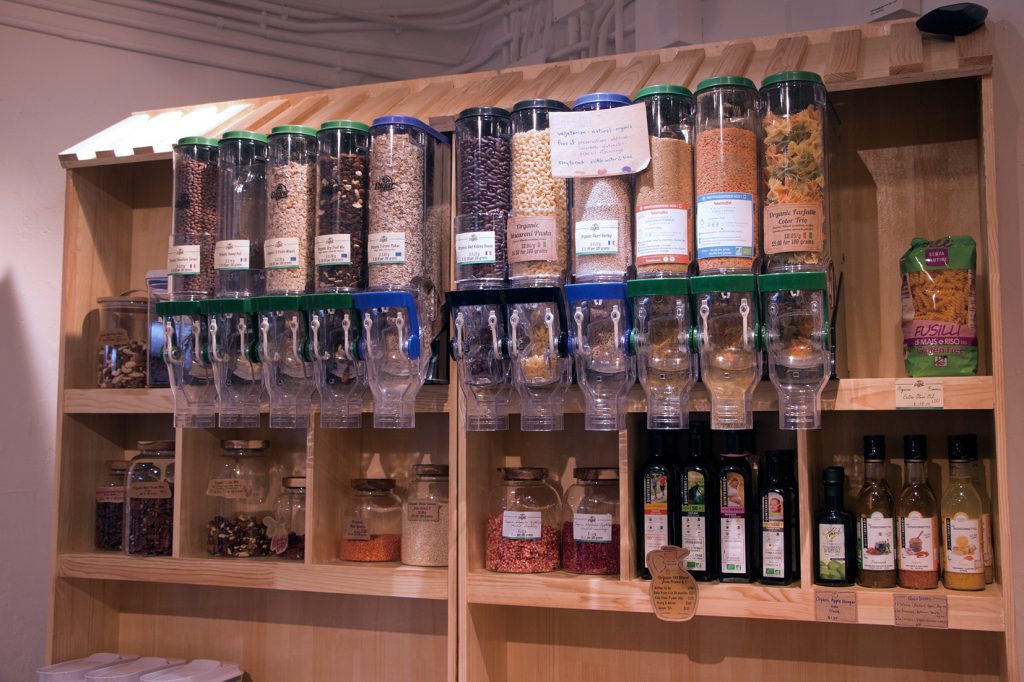
Bulk dispensers containing cereal, spices and organic pasta at Edgar.

Though the unpackaged movement is picking up, De Ry says he still encounters setbacks in searching for zero-waste products. He recalls he once sourced some metal straws only to discover that they were each wrapped in plastic and enclosed in a ziplock bag.

In his Wan Chai store, De Ry says up to 40 per cent of customers bring their own containers and 20 per cent do the same in his Tsim Sha Tsui branch. He feels optimistic about the possibility of making a change, and he thinks the Hong Kong government should do more. “I think people are taking the lead. They understand that the government will not do anything so they have to do it by themselves,” De Ry says.

Edited by Catherine Chiang

Going Green

Businesswoman Jenny Leung Kit-wah discovers a new meaning in life through voluntary work that helps protect the environment

By Erica Li

On an ordinary evening after work, Jenny Leung Kit-wah sits in a small classroom, showing handmade soap bars and coffee beans to a group of students attending a workshop. But these are no ordinary goods — they are made by people from East Timor, a country in the Indonesian archipelago which finally won independence in 2002.

Leung has spent six years working part-time for the Hummingfish Foundation, the voluntary organisation behind the workshop which strives to conserve the world’s natural resources by developing a green economy.

Now 46, she is the marketing director of a local tour agency, Jetour Travel. Before that, she worked in the advertising industry for more than 10 years. A successful businesswoman in the eyes of many, her life story may seem unusual. Several brief and random encounters led her down different paths.

One of the encounters was with the late veteran photojournalist and eco-tourism pioneer Daniel Groshong who inspired Leung to do voluntary service and became an important mentor of hers. During the photography workshop where they met, Groshong showed some stunning pictures he took in East Timor when covering the independence movement there. He also introduced the work of the Hummingfish Foundation which he founded.

“At first, I thought [the workshop] was a scam after the first few slides were shown,” Leung recalls. “I came to the workshop to learn photography skills, but he was talking about ecotourism which has nothing to do with that.” But later she was deeply moved by Groshong’s passion and vision in helping the people of East Timor.

Born and raised in Hong Kong, Leung had always thought environmental protection and conservation could not coexist with economic development. “There’s always a trade-off, you have to give up one thing in exchange for the other,” she says. It was what she was taught in school and she never questioned it – until she met Groshong. She found his idea of a green economy so innovative that she decided to become a volunteer at the Hummingfish Foundation.

Soap team from East Timor visited the soap workshop in Hong Kong. Daniel Groshong on the right. (Photo courtesy of Leung)

Four thousand kilometres away from Hong Kong, East Timor was once occupied by Indonesia, leading to a violent and decades-long military conflict. Sixteen years after independence, East Timor’s economic development is still slow and relies heavily on exports of coffee, marble and petroleum.

One of Leung’s East Timor projects was to promote female empowerment in the local community by helping women establish a natural handmade soap brand, Ai-Funan. This soap was displayed in the Shanghai World Expo in 2010 and has become a signature brand of East Timor. She also helped local young people to develop the coffee bean business.

Leung visited East Timor three times for the soap and coffee projects under The Hummingfish Foundation. She recalls her first trip there with Groshong — while she expected poor living conditions, the smiles of people caught her off guard. She found her job meaningful and rewarding. “I realised the influence and value of a brand can be way broader than one can imagine,” she says. “It’s not only measured by sales target, like in the advertising industry.”

Leung with a Timorese coffee bean farmer. The logo on the shirt is the project name – Maubere Mountain. (Photo courtesy of Leung)

Such pleasant yet unusual experiences were certainly not what the young Leung would have expected. Back in 1994, as a fresh graduate in sociology at the Chinese University of Hong Kong, she was fascinated by advertising and aspired to advance a career in the industry. “It allows you to create something out of nothing, from strategy planning to the final product,” she says. “As an arts student, I never thought of being able to [do so].”
After working in advertising and marketing for a couple of years, there was a turning point in her life. Her husband (then boyfriend)’s job required a move to Mexico and, at first, things did not go well as she expected.

“I used to be in the debating team back in school and with my experience in the advertising industry, I consider myself quite eloquent,” Leung says. However, language became a major obstacle as she could not speak a word in Spanish. “The lesson I learnt in those days is that something you own, or are good at, can easily disappear,” she says.

“The lesson I learnt in those days is that something you own, or are good at, can easily disappear.”

Fortunately, she was able to make new friends in gatherings organised by her husband’s company. Many of them were wives who accompanied their husbands to Mexico for work, just as Leung did. She later became a volunteer at the Newcomers’ Club, an organisation which helped expats in Mexico blend in with the local community.

Her job was to organise local tours for expats around three to four times a month in order to introduce them to the local culture. The tours included different Mexican customs and holidays, such as Día de Muertos (the Day of the Dead).

Leung leads the Day of Dead Tour for expats in Mexico. (Photo courtesy of Leung)

There, Leung met Ora Anekanada (Granny Ora), an American living in Mexico, who introduced Leung to voluntary work in the country. On Anekanada’s 60th birthday, instead of celebrating with her family, she decided to cook a meal for 60 homeless and old people in a church.

“She [Ora] thought one should not celebrate a birthday on his or her own. It could be an occasion to do good deeds for the less fortunate ones,” Leung explains. Helping out with preparing the meal, she started to wonder: “As an expat, I will leave Mexico one day. During my stay here, I received a lot of help from the locals. Shouldn’t I give back to the Mexicans as well?”

Ora Anekanada (Granny Ora) on the left. (Photo courtesy of Leung)

Leung describes her two-year stay in Mexico as the “happiest days” in her life, ones which changed her lifestyle and mindset completely. Back in Hong Kong, her hectic life working in the advertising industry had left her with little room to consider other possibilities in life. “Whenever I was free at weekends, I would only stay at home and rest,” she says. Living in Mexico brought her an entirely new perspective on life.

Shortly after returning to Hong Kong, in 2012, Leung started to organise local tours for foreign visitors using her experience in Mexico. “I realised how things had changed so much while I was away and it was shocking to me,” she says. She was surprised to see small boutiques and stores replaced by jewellery shops and pharmacies. It prompted her to hold tours in old districts like Kowloon City, Shek Kip Mei and Sheung Wan, with the aim of preserving local culture.

She was especially touched by the hospitality of local residents when leading local tours in old neighbourhoods. Sometimes shop owners would extend their business hours or even open on public holidays just for Leung’s local tours. “In the business world, we always talk about win-win situations. But that was not the case when I worked with [these shop owners],” she says. “It made me realise how lovely this city is.”

“In the business world, we always talk about win-win situations. But that was not the case when I worked with [these shop owners].”

Although balancing a full-time job and voluntary service can be hectic at times, Leung never considers giving up her voluntary work at the Hummingfish Foundation as it has become an essential part of her life. “I have this struggle on and off, whether I should quit my job and work full-time in the Hummingfish Foundation, but never the other way round,” she says.

Sadly, the founder of the Hummingfish Foundation Groshong died last year in a car accident in East Timor. Together with fellow volunteers, Leung now hopes to continue with Groshong’s initiatives by further developing the soap and coffee bean projects in East Timor and promoting eco-tourism there. As she embraces a new chapter in life with a new vision, she is looking forward to helping other developing countries to boost the local economy while also respecting and treasuring the natural environment.

Edited by Angela Siu

Making Music From Scratch

Tapping into Hong Kong’s niche handmade instrument market

By Raven Hui & Civi Yap


Warm yellow light from a table lamp illuminates Corvus Kwok’s work desk. He pulls out a half-crafted violin body, running his fingers over its smoothed wooden surface and pondering the whole design.

He is facing a wall covered in bending irons, sharp knives, dial callipers, peg shavers and other violin-making tools, some of which he has used since he first started learning the craft. With a potential design in mind, he grabs a couple of f-hole drills and starts working around the pencil marks on the violin. This is Kwok’s daily routine, the highly skilled craft he practises at his studio in an industrial building in San Po Kong.

The 29-year-old had an uphill struggle at the start of his career since there was no local institution to teach him the necessary skills. After graduating from Hong Kong Baptist University with a degree in music, he drew out his savings and set out to learn violin making at the Shanghai Conservatory of Music. Later, he furthered his studies with top-notch violin artisan Michael Darnton in the United States. Now, Kwok is one of the few well-known violin makers in Hong Kong and the results of his work are available at instrument retailers, such as National Strings.

“There is no perfect violin in the world, just like no one is perfect,” Kwok says. Violin making, he explains, is not about replicating a million-dollar Stradivarius, it is about making sure every violin has a unique character. “Even though violins share a standard structure, wood pieces — unlike plastic — have their own characteristics, and the arcs you make out of them always differ,” he says. “We have to strive beyond precision.”

Since there are only a few local instrument makers in Hong Kong, Kwok says most people have no idea about the quality of locally crafted instruments. “The determining factor in an instrument’s quality is not whether it is made locally or overseas, but whether it is made well or not. There could be good ones made in Hong Kong and bad ones imported from overseas,” he adds.

Unlike Kwok, who received formal training in institutions outside Hong Kong, the founder of drum studio Drum Map, Ho Yat-kwan, 55, and his partner Rex Lau Kwok-wah, 40, acquired their skills by trial and error. Ho and Lau, who became friends through their mutual obsession with drumming, started disassembling and reassembling old drums seven years ago out of sheer curiosity. “It’s a relatively new industry here but not overseas. We’ve been learning from foreign drum makers via the internet,” says Ho.

All local instrument makers have to struggle to get a stable supply of raw materials and Ho and Lau are no exception. “It is quite hard to negotiate with the suppliers because they don’t want to entertain us. They always question our production volume,” Ho says. Besides, machines and tools for making drums are rare in the city. Lau says: “In Hong Kong, there are no tools specifically designed for making drums, so we had to invent suitable ones ourselves.” Their studio is now filled with machines they have perfected over the years.

Large chain retailers, like Tom Lee Music, sell mainly imported instruments from big brands but they have begun to welcome locally made instruments in recent years. Ho and Lau were invited to display their handmade drums in Tom Lee Music’s shop in Tsim Sha Tsui, and some of them were eventually purchased by foreign drummers.

Now, the duo’s ideal is not to sell their drums solely for money, but also to musicians who share their enthusiasm. They notice that artists in the local music industry have become more inclined to use locally crafted instruments than the big brand ones. Playing good music, according to Ho, does not only depend on the brand or quality of an instrument. It is about “half the player, half the drum”. “Our drums cannot make their players play well—they have to play well per se. Only then can our drums help them unleash their potential to the fullest,” explains Lau.

Sha, who prefers to go by his nickname, was a pioneer in the local artisan guitar industry more than two decades ago. His masterpiece, he says, was the flame-shaped electric guitar played by famous local singer Nicholas Tse Ting-fung at his Viva Live concert in 2000. The guitar maker’s interest in the craft started when he was only 16. He went on to handcraft guitars in Australia, Europe, the US, Japan and then Hong Kong. Now, the 32-year-old has his own guitar factory and his instruments are available at Sha Instruments in Chai Wan.

Sha thinks that the local instrument retail industry is changing. “The business has been transforming into a direct sales model from a retail model, as the price range of direct sales is more affordable,” he says. Building brand loyalty is very important for independent sellers like Sha. “If you set a good standard with your brand, people will refer to your standard. Then you can go on building your brand slowly. Eventually people will know and accept your brand,” he says.

“10 to 20 years ago, Hongkongers had little idea of handmade instruments,” he says, “but now, they know more and understand what makes instruments high-quality.” Sha believes that those looking for custom-made guitars are people who already have their own notion of what makes a good guitar. “The instruments speak for themselves,” says Sha. “For those who want to explore their dreams, I’ll help them make dreams happen [with my guitars].” Sha only makes around 30 guitars a year, so each of them is one of a kind.

In the future, Sha plans to explore the possibility of improving production by using computer technology. He will keep handcrafting guitars, but hopes that his new, automated branch will improve the production rate and add to his profit. “[My idea is that] after entering the formulas, the machine will carve out the guitar body precisely, making the production process more efficient and accurate,” he says.

Like Kwok, Lau and Ho, Sha is one of the few independent instrument makers in Hong Kong who built their careers from scratch. He thinks that the government should lend more support to craft-based businesses such as his by organising cultural market fairs and providing more venues for culture and art activities. “I hope that eventually the makers won’t have to advertise for themselves all the time.”

Edited by Angela Ng & Angela Siu

Chop and Change

Easy-going Ng Kam-chun enjoys making seals for children and foreigners

By Civi Yap

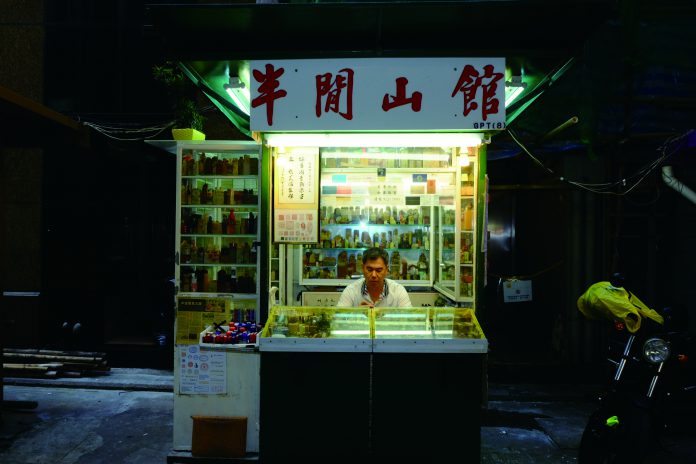
Man Wa Lane, also known as Chop Alley, is a tiny pedestrian lane in Sheung Wan lined with stalls of chop makers. It is where Pun Han Sin Koon (半閒山館) — which translates into “laid-back mountain hut” — sits with its wide display of traditional Chinese seals. Ng Kam-chun, the 60-something owner of the stall, refers to himself as a “laid-backer”. “Our predecessors hoped that in this industry we could enjoy some free time while earning a living. Isn’t this lifestyle delightful?”

You may have seen Ng’s artwork without realising it — the red chop in fifteen-fold seal script on Standard Charter’s 2010 edition of HK$100 banknotes was in fact his work. Ng was 16 when he entered the industry as an apprentice in a printing house in Macau where he learnt various engraving and printing skills. In 1989, after nine years of apprenticeship, he moved to Hong Kong because the market here was more diverse.

“In Hong Kong, we carve in numerous languages such as Chinese, English, Japanese, Russian, and Thai,” Ng explains. He says traditional chops are more formal and require higher crafting skills, whereas making modern chops allows for more creative flair. “We want to have a fusion between Chinese and Western cultures,” he says. “There are fewer rules and limits now…when you express ideas through carving, it’s just like making layouts.”

Ng Kam-chun demonstrating the process of seal-carving

Even though automated rubber stamp-making technology and machines exist nowadays, Ng believes hand-carved Chinese seals can never be replaced. “You’d know the difference between hand-written fonts and computer-generated ones. Handmade chops have human spirits in them,” he says. “Things don’t have to be rigid and static. Be more flexible and you will have lots of variation.”

Ng’s carefree spirit helps him enjoy making creative chops for children and foreigners. Sometimes he helps foreigners translate their names into Chinese, and also combines cartoon patterns onto the seals for children. He is such an experienced craftsman that he can draft his designs on the spot and modify them until customers are satisfied. From experience and reading calligraphy books, he is also aware of the cultural preference for how names appear on seals, which affects how he utilises the space aesthetically.

Ng believes the philosophy behind Chinese seal-making is “respect the job and have fun with it.” After working for nearly four decades in the field, he is still eager to learn. “Every day is a challenge, but that is where my skills come from,” he says.

To customise your own Chinese seal, be it for an official purpose or for fun, visit Pun Han Sin Koon at GPT8, Man Wa Lane, Sheung Wan, Hong Kong Island.

Edited by Angela Ng

Shadow Players Under the Spotlight

Revamping classic Western plays with a Hong Kong twist

By Raven Hui 

English-language theatre might be a niche market in Hong Kong, but the Shadow Players, a theatre company founded in 2012, aims to change that by modernising classic Western plays to suit the taste of local audiences. Members of the Shadow Players are young local English major graduates, who not only share an interest in theatre and literature, but also gather for a higher purpose — to make classic plays more accessible for everyone.

“We have localised the contexts and characters of the plays but kept the language original,” says Joseph Lin Chi-wo, 29, a founding member of the Shadow Players. “We hope more people will be attracted to Western literature and find it more approachable, relevant and fun.”

During their regular play-reading sessions, the members choose and discuss a play that might resonate with Hongkongers. Although there may be a few twists in the scripts to make them fit into a local context, changes are kept to a minimum to preserve the original message.

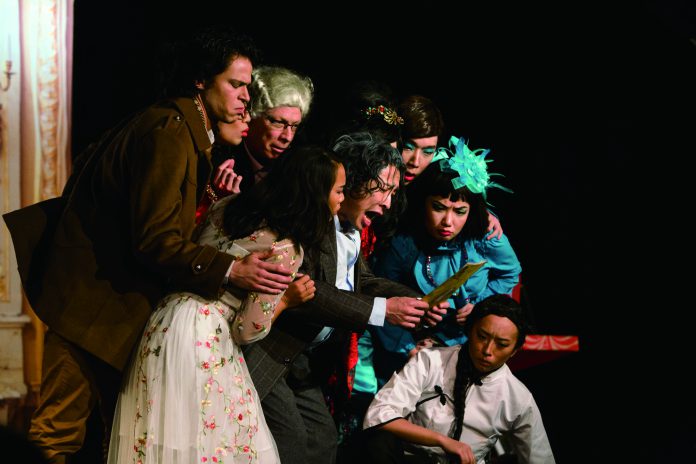
Their first play — The Learned Ladies of the Mid-levels — was based on Les Femmes Savantes (The Learned Ladies) by the 17th-century French playwright Molière. The original play is a satire about pretentious women who like to use fancy words to flaunt their superior education and the Shadow Players found a resemblance in Hong Kong’s middle-class. In their version the women are middle-class “tiger moms” who like to boast about the outstanding achievements of their children.

Performance of Learned Ladies of the Mid-levels
(Photo courtesy of Shadow Players)

More recently in November, they adapted the American play The Glass Menagerie, in which they re-contextualised the setting from a poor small town in the United States to Hong Kong’s public housing estates in the 1960s to give it a local flavour.

Despite differences in the cultural contexts, Lin believes all good plays are based on human experiences that people can relate to regardless of their nationality and generation. “Very often, playwrights build their satire on social phenomenon. This hasn’t changed over the years,” Lin says. “They are either about how pretentious, fake or corrupt people are, or convoluted interpersonal relationships or broken hope and dreams…It’s the same then in the Shakespearean age as it is now.”

What sets the Shadow Players apart is that they are an entirely local cast solely performing Western classic plays in English. “There are very few theatre groups in Hong Kong – so few that you can count them on one hand,” he says. “So it is actually a really big untapped market.”

He thinks attracting audience is not an issue, as most of their tickets sold out quickly, but finding venues can be a real challenge. “We think our biggest bottleneck is the lack of institutional support [on the venues] because performances in industrial buildings would be shut down and people are unwilling to go there.”

However, Lin remains optimistic about their prospects. He says there are more people who are interested in English theatre than expected, as their audience includes not just drama students, but many professionals as well. “Actually, we need to have more faith in Hong Kong society,” he says. “After all, we are an extremely educated and culturally diverse society.”

The Shadow Players are currently recruiting undergraduate students to join and share their enthusiasm for theatre. Visit their website http://hkshadowplayers.com or their Facebook page @HKShadowplayers for more details.

Edited by Angela Ng

Former pan-democrat Frederick Fung strikes back against criticisms of vote splitting

By Daphne Li

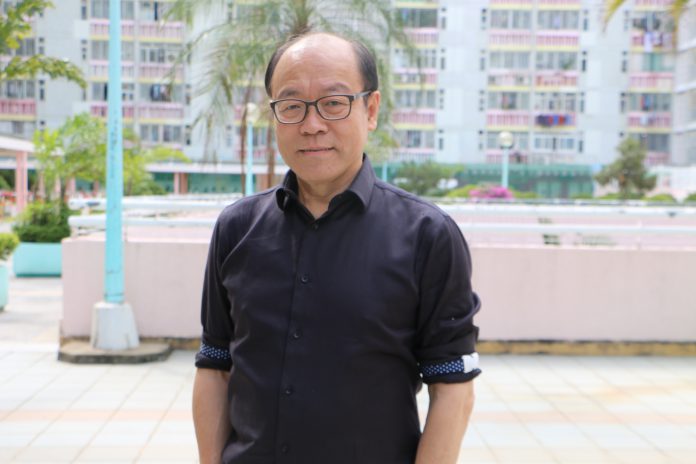
Veteran democrat, now independent Frederick Fung Kin-kee describes his candidacy in the Kowloon West By-election as an “advocacy of democracy” and “declaration of war” to his former pan-democratic allies.

Fung, former chairman of the Hong Kong Association for Democracy and People’s Livelihood, says he is upset with Lee Cheuk-yan being picked as a backup candidate after top choice Lau Siu-lai was disqualified, without a primary election.

The 65-year-old veteran lawmaker calls this an “undemocratic” act: “The way you [Lau Siu-lai] appoint Lee Cheuk-yan is problematic, it’s like an emperor picking his royal concubines.”

He believes a primary election is the only way to unite the opposition camp and sees the lack of it as a big step backward in the progress of democracy.

“Years ago, we bargained with the central government and successfully urged them to include ‘universal suffrage in the selection of the Chief Executive’ in the Basic Law,” he says. “So why are we going backwards now?”

Fung’s candidacy has drawn criticisms of vote splitting among the pro-democracy camp, but he thinks otherwise. “I got 30,000 to 60,000 votes throughout the years in Kowloon West,” he says. “But Lee Cheuk-yan and the Labour Party basically did nothing here.”

He says since the beginning of his election campaign, there have been malicious attacks and political smears against him: “I found it unacceptable that the pan-democrats are using these undemocratic speeches and ways to attack me.”

Despite losing support from his former allies, Fung says he has gained more support from young people this time, including those with localist background who disapprove of the pan-democrats, compared to the Legislative Council by-elections earlier this year.

Speaking of future plans, Fung says even if he loses in this by-election, he will not stop his advocacy for democracy. “I will continue to run for elections if the pan-democrats keep addressing the problem in an undemocratic way,” he says.

*The other candidates in the 2018 Legislative Council Kowloon West By-election are Rebecca Chan Hoi-yan, Judy Tzeng Li-wen, Lee Cheuk-yan and Ng Dick-hay.

Edited by John Cheng


“Localist” Judy Tzeng Li-wen seeks to raise awareness on local district issues

By Daphne Li

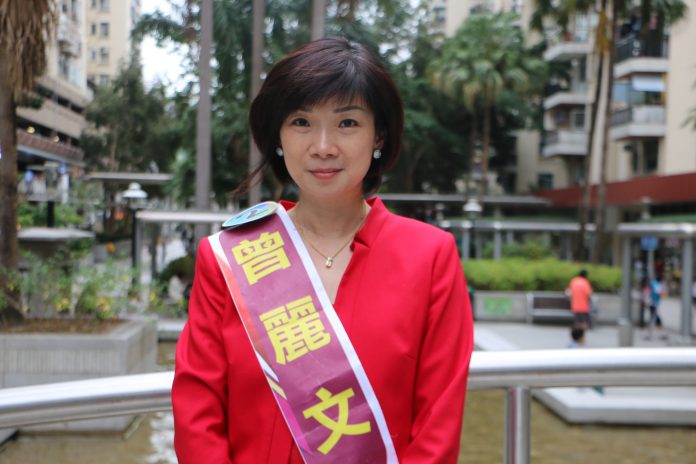
Unaffiliated Judy Tzeng Li-wen is standing for the Kowloon West By-election claiming to be “the only localist” in the by-election. She says her main purpose of joining the by-election is to expose the “hypocrisy” of the pan-democrats and to encourage the young generation to stand up against injustice.

The 50-year-old housewife was a two-time candidate in District Council elections, in 2011 and 2015, representing People Power and as an independent candidate respectively, but lost both times.

Tzeng says maintenance issues of her mother’s flat at Mei Foo Sun Chuen prompted her to join elections. She recalled finding water leakage in the entire flat due to enhancement work by the property management company. Together with several other victims, she sought help from different parties but ended up in vain.

“I have been through a lot of difficult times but the pan-democrats could not help me. I am just fighting for community autonomy [by joining the election],” she says.

Disappointed with the incompetence of the pan-democrats, Tzeng joined radical party People Power led by former lawmaker Raymond Wong Yuk-man in 2011, subsequently joining the District Council election in a bid to raise awareness on issues in Mei Foo.

Though localists nowadays might be associated with separatism, Tzeng, who sees herself as a localist, does not agree with it. “Localists are those who support high degree of autonomy in Hong Kong and work in the interest of Hong Kong people, regardless of their political stance,” she says. “Localists are not always radical.”

“Localists are not always radical.”

She is in particular critical of the pan-democrats: “[Their] community work has nothing to do with democracy. They won’t reveal the fact that most of the times they did not show up, or vote to abstain or against [democratic issues].”

While ousted lawmaker Lau Siu-lai’s disqualification in the by-election sparks outrage, Tzeng thinks otherwise. “When Edward Leung Tin-kei was disqualified in the Legislative Council election two years ago, the pan-democrats did not stand up for him,” she says. “Why do we have to support Lau now?”

Even though Tzeng admits she has a slim chance of winning, she believes if she had enough resources, she could bring about changes to Mei Foo district. “The entire landscape [in the neighbourhood] would be very different,” she says.

*The other candidates in the 2018 Legislative Council Kowloon West By-election are Rebecca Chan Hoi-yan, Frederick Fung Kin-kee, Lee Cheuk-yan and Ng Dick-hay.

Edited by Crystal Wu

Lee Cheuk-yan hopes to regain veto power for pan-democratic camp

By Gloria Li

Labour Party’s Lee Cheuk-yan is running for the Kowloon West Legislative Council By-election as the “Plan B” for fellow party member Lau Siu-lai, who was barred from the by-election earlier. He says this seat is crucial for the pan-democrats to regain veto power in the Legislative Council.

Lau Siu-lai was one of the six lawmakers ousted from the Legislative Council in an oath-taking saga two years ago. Though she set out to win back her seat through this by-election, her candidacy was disqualified because of her advocacy of Hong Kong self-determination.

Lee criticises the government’s act as it has deprived Lau of her basic political rights. “This is actually a violation of both International Covenant on Civil and Political Rights and the Basic Law, because supposedly we should have the right to stand for election,” he says.

The 61-year-old trade union leader describes this election as “very unfair”, which he believes is manipulated by the government as they can arbitrarily screen out candidates they dislike.

Serving as Lau’s back-up candidate, Lee is widely supported by the pan-democratic camp. This crucial seat in the Kowloon West Constituency will determine whether the pan-democrats can regain their veto power in the Legislative Council, after Edward Yiu Chung-yim’s defeat in March’s by-election.

“One seat means one more voice for pan-democracy and one more vote,” he says. “So [there is] more voice…in monitoring this government and protecting the rights of Hong Kong people against the Communist Party’s invasion.”

However, Lee faces an uphill battle as he is not only competing against pro-Beijing candidate Rebecca Chan Hoi-yan, but also veteran democrat Frederick Fung Kin-kee, who has parted ways with the pan-democratic camp.

“He [Fung] does not include himself as part of pro-democracy camp now,” Lee says. Fung previously protested against the decision to make Lee a back-up candidate for Lau Siu-lai without a primary election, but Lee fights back.

“In terms of political moral, Lau Siu-lai should have the right to choose the Plan B,” he says. He thinks it is more important for the camp to remain united to concentrate votes and minimise internal competition. “If you want to win, you should agree on a candidate and try to focus and push that candidate, instead of wasting time and energy on primary election.”

However, Lee admits that Fung’s joining brings about a “vote-splitting” effect that cannot be ignored, considering that Fung has been working in the Kowloon West district for more than a decade. “The only way out for me is to get as many votes as possible from those who have not voted before, to counteract the effect of Fung,” he says.

Moreover, he believes his biggest rival in the by-election is “political apathy”, which makes people unwilling to vote. “We want people who love Hong Kong, [those who] are concerned about the future of Hong Kong — the next generation — to come out to vote,” he says.

To improve the voting turnout rates, particularly amongst young people, Lee holds numerous street campaigns to explain his ideology and political agenda to the public. He opposes the “Lantau Tomorrow Vision” reclamation plan and also calls for the government to transform large brownfield sites such as the Fanling golf course into residential areas.

“We are in a disadvantageous position, but we believe that we can win the hearts of people,” says Lee.

 “We are in a disadvantageous position, but we believe that we can win the hearts of people”

*The other candidates in the 2018 Legislative Council Kowloon West By-election are Rebecca Chan Hoi-yan, Frederick Fung Kin-kee, Ng Dick-hay and Judy Tzeng Li-wen.

Edited by Angela Ng