

















Home Blog Page 98

When Children Age Quicker than Their Parents

The difficult old age of the intellectually disabled

Reporters: Agnes Ng, Edith Lin, Total Lam

Editors: James Fung, Charlene Kwan

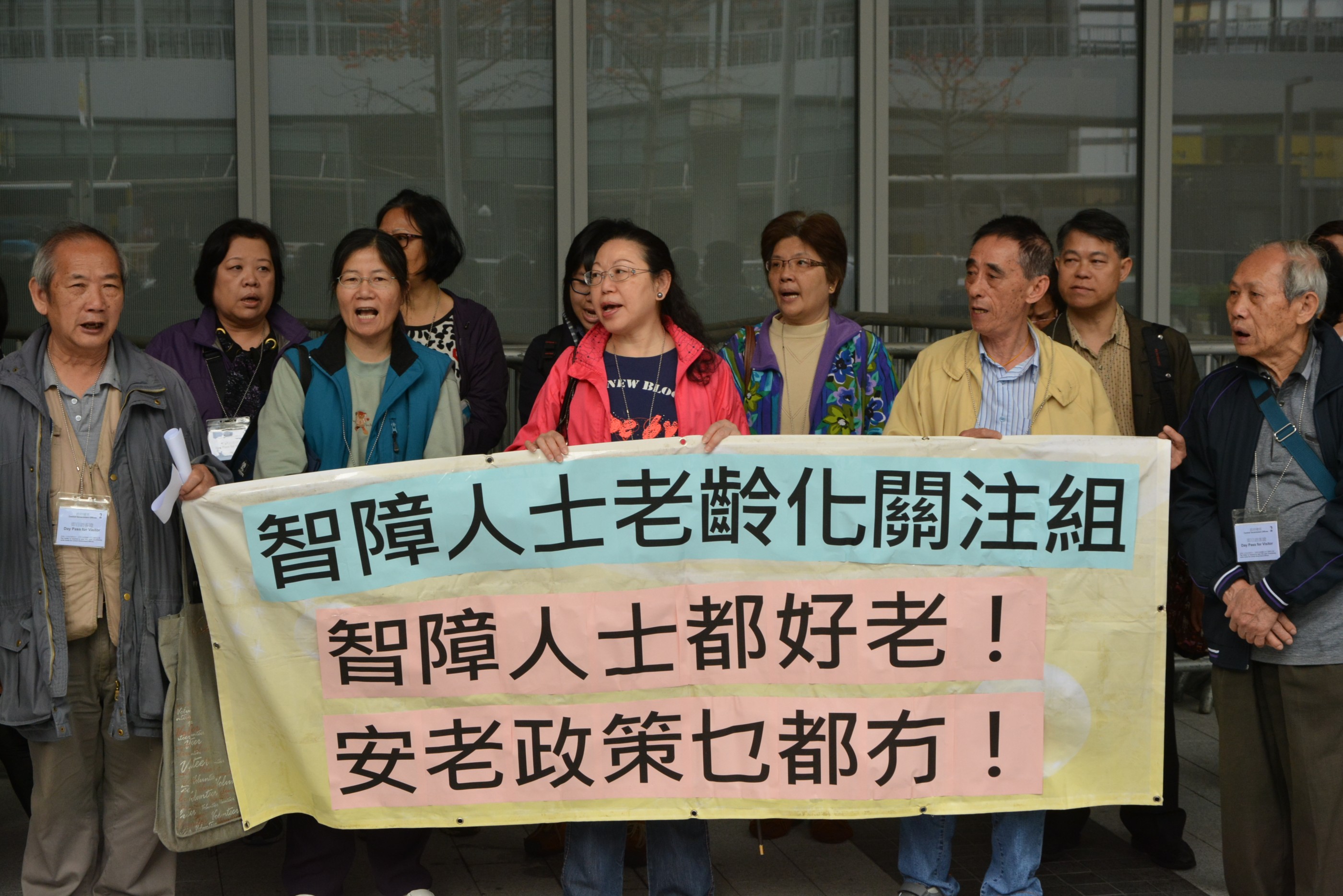
Once Hong Kong residents reach the age of 65 years, they can apply for a Senior Citizen Card and enjoy various benefits, such as cheaper fares on public transport. On their 70th birthdays, they can receive Health Care Vouchers to pay for some health services. However, those with intellectual disabilities may never have the chance to enjoy these benefits.

The biological functions of the intellectually disabled begin to decline from the age of 45. As the aging process is accelerated, they may die before they are entitled to services and benefits aimed at the elderly. Therefore, various concern groups, including the Ageing Intellectually Disabled Concern Group, are fighting to redefine old age for the intellectually disabled so that they can have a better quality of life in their final years.

What makes things more difficult is that as the intellectually disabled enter old age, their carers (who are often their parents or other family members) are also getting older and becoming less able to cope with the increased physical and emotional demands of taking care of them.

In improving services to the intellectually disabled, the government has allocated more resources in the policy address. The funding for hiring more staff at residential care homes and day training centres has increased from HKD 67.9 million in 2013 to HKD 93 million in 2014. However, Wu Shing-choi, Member of the Ageing Intellectually Disabled Concern Group, doubts whether it will be used properly.

Since the funding to the organizations is a one-off lump sum payment, Wu points out organizations receiving it, such as those providing residential services, tend to focus on administrative work rather than truly serving the intellectually disabled.

There are at least 7000 intellectually disabled waiting for a few hundred places in the residential care homes per year. Those with moderate intellectual disabilities have to wait more than five years. Even worse, the severely intellectually disabled have to wait for 10 years.

To shorten the waiting time, the government has launched the Pilot Bought Place Scheme to purchase places from private residential care homes that meet the government’s requirements. Still, they fail to meet the needs of the disabled. For instance, they do not have adequate staff to take care of each resident with intellectual disabilities and lack facilities for physical therapy.

At long last, there seems to at least be some awareness of the special needs of the intellectually disabled, and their carers, as they age but there is still a long way to go.
The Childcare Gap

Parents in Hong Kong struggle daily to juggle childcare with work

Reporters: Thomas Chan, Benny Kung, Antonia Wong

Editors: Frances Sit, Louie Cheng


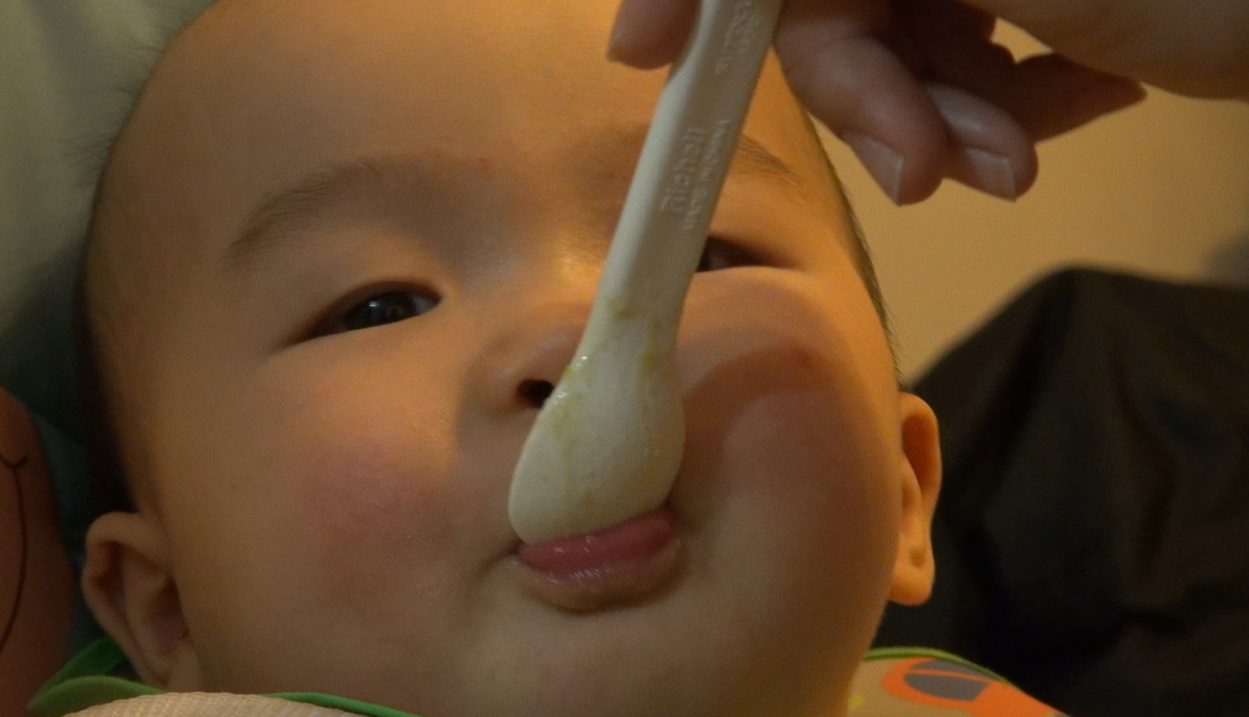
For those who do not have the financial or housing resources to hire a full-time domestic helper, or who do not wish to do so, there is a striking shortage of affordable alternative childcare services for children of all ages in Hong Kong.

According to the Census and Statistics Department, more than half a million people were full-time carers in 2011, of which over 90 per cent are women. At present, The Social Welfare Department provides some subsidies for childcare services, many of which are operated by non-profit-making organization, and some by private operators. But places available at such centres are limited.

 Working parents can opt to put their children under the age of three at childcare centres, where occasional childcare services are provided on a two-hour, half day or full day basis. However, according to statistics, the total number of places offered by full day childcare centres was just 690 in 2013.

 A joint survey by the Hong Kong Federation of Women’s Centres and the Tin Shui Wai Community Development Network in 2013 showed that more than two-thirds of the 474 respondents thought childcare services were insufficient. The lack of sufficient childcare services deprives parents of opportunities to work full-time or part-time.

Wah is a 31 year-old mother of two boys aged one and eight. She gave up work and has been a full-time carer for nearly a year. Although Wah would like to get back to work, she has been unable to find a place at a baby centre for the infant. After queuing up for half a year, she was told to wait another six months. For the time being, the family has to rely on Wah’s husband as the sole source of income.

As for children aged between three and six, not all of them are able to enroll in full-day courses in kindergarten, many of which offer only half-day classes. Most of the alternative childcare services provided by NGOs and privately run childcare centres operate at full capacity. Parents caring for kids of this age can usually enjoy just two to three hours of free time a day.

After Ling’s mother-in-law passed away, she has found it hard to find suitable childcare services for her 4-year-old younger daughter. The 32 year-old mother of two quit her job for two years and was a full-time carer. She was able to return to work in a fast food restaurant when her younger daughter got a full-day place in kindergarten. But the job means she has limited time to look after her daughters, and when the younger girl is on school holiday, Ling has to take her to her workplace.

For better-off families, hiring a domestic helper might be a possible solution for the childcare gap, and employees working in enterprises such as the Hang Seng Bank and HSBC can make use of in-house childcare services for employees. But such workplace-provided childcare arrangements are rare in Hong Kong and little has been done by the government to help the populace strike a work-family balance.

Leung Lai-ching, associate professor in the Department of Applied Social Sciences at the City University of Hong Kong, says the government lacks both vision and a sense of mission when it comes to long-term childcare policies. Leung says that in the face of the government’s lack of planning and support, the community needs to thoroughly rethink the way its children are being brought up.

PMI: A Better Choice For Chinese Teachers?

Local teachers lose out as schools switch to teaching Chinese in Putonghua

Reporters: Tiff Chan, Esther Chan, Mavis Wong

Editor: Jeffrey Wong

MM_Focus_PMI_Graph


Earlier this year, an article on language learning support on the Education Bureau’s website claimed that Cantonese was “a Chinese dialect which is not a statutory language”. This sparked a heated debate and shone a light on a trend which has been growing steadily in recent years.

Since the policy of using Putonghua as the Medium of Instruction (PMI) was introduced in 2008 primary and secondary schools have been able to choose between using Putonghua or Cantonese as the medium for teaching Chinese language.

Even before the policy was implemented, the Curriculum Development Institute proposed “teaching Chinese by Putonghua” as a long-term goal in 2000.

PMI is more popular in primary schools than in secondary schools. According to research done by Hong Kong Language Studies, over 70 per cent of primary schools are teaching Chinese in Putonghua, compared with 25 per cent of secondary schools. While the government strongly supports PMI, only around 1 per cent of schools implementing PMI are government ones.

Much of the debate has focused on the impact that using Putonghua to teach Chinese has on students’ Chinese Language performance.

Critics say PMI may affect teachers’ performance in class. A practice teacher, Wong Hei-tung says it is difficult to use Putonghua to explain Chinese traditional values or ethics. Another practice teacher, Kwan Ka-lee says using Putonghua in class may reduce students’ initiatives to learn and participate in class discussion.

Far less attention has been paid to another potential impact – the job prospects of local teachers. As more schools switch to PMI, teachers are expected to have a pass in the the Language Proficiency Assessment for Teachers (LPAT), which tests Putonghua ability in the context of teaching.

This test consists of four parts: Listening and Recognition, Pinyin, Oral, and Classroom Language Assessment. For the oral part, test takers can choose to take either the LPAT oral test or the Test of Proficiency in Putonghua (TPP). The results of the two tests are interchangeable. Many teachers prefer the latter as it is considered easier to get better results.

Even experts in Putonghua education, such as the Director of the  Centre for Research and Development of Putonghua Education, Lam Kin-ping says that getting a pass in the test does not mean teachers have the ability to teach Chinese in Putonghua. However, the test has become the “entrance ticket” for prospective Chinese teachers regardless of whether they want to work at a PMI school or not. Putonghua proficiency seems to be a must, even though Cantonese is Hong Kong’s most common language.

The impact of PMI on local teachers is just one aspect of what may become a protracted culture war between Cantonese and Putonghua. Although the Education Bureau removed the offending article from its website after strong criticism, the incident made many Hong Kong people view Cantonese as being under threat.


Customise your Ride

Car and motorbike owners modify vehicles despite risk of violating regulations

Reporters: Donna Shiu, Godric Leung, Macau Mak

Editor: Tommy Lee


On a Saturday night, a group of car owners gathered and parked their modified cars on the pedestrian street in Mong Kok. Given the eye-catching appearance of the cars, they caught the attention of the passers-by as well as the police.

Fortunately, on this occasion, the police officers did not impound the modified cars and merely told them not to park too closely together. Afterwards, the car owners immediately drove to a car park to continue their gathering.

The drivers say they used to drive their cars on hill roads to keep any possible disturbance to other road users to a minimum. But they have switched to driving and gathering in urban areas in recent years.

Gred Tong, a car owner, says police have been carrying out checks on vehicles on hill roads more frequently in recent years, and often impound cars that look out of the ordinary, even if drivers have not broken any speed limits. The vehicles would then be sent to vehicle examination centres where components such as brakes, tyres and lights are inspected. Car owners say quite a number of these vehicles subsequently pass the examination.

In Hong Kong, the government has set a vehicle safety standard and drivers are required to submit an application for any proposed alternations of their vehicles and  the approval of vehicle manufacturer to the Transport Department before modifying their vehicles. The Road Traffic Ordinance, Cap 374 and Road Traffic (Construction and Maintenance of Vehicles) Regulations, Cap 374A list the requirements for different types of vehicles and their respective components, while section 80 of the Road Traffic Ordinance, spells out a police officer’s authority to detain a vehicle.

Some vehicle owners think the regulations are outdated and overly stringent. Motorbike enthusiast Water says he and his peers customize their bikes with spare parts that can actually improve the safety of the vehicles. For instance, by swapping out original Taiwan-manufactured tyres with ones that better suited for the roads in Hong Kong.

Most importantly, Water and his friends say they are conscious about the safety of each modification they make and stress they are capable in handling their modified motorbikes.

Zoroastrians in Hong Kong

Reporters: Angel Liu, Stella Tsang, Yan Li

Editor: Joyce Cheng

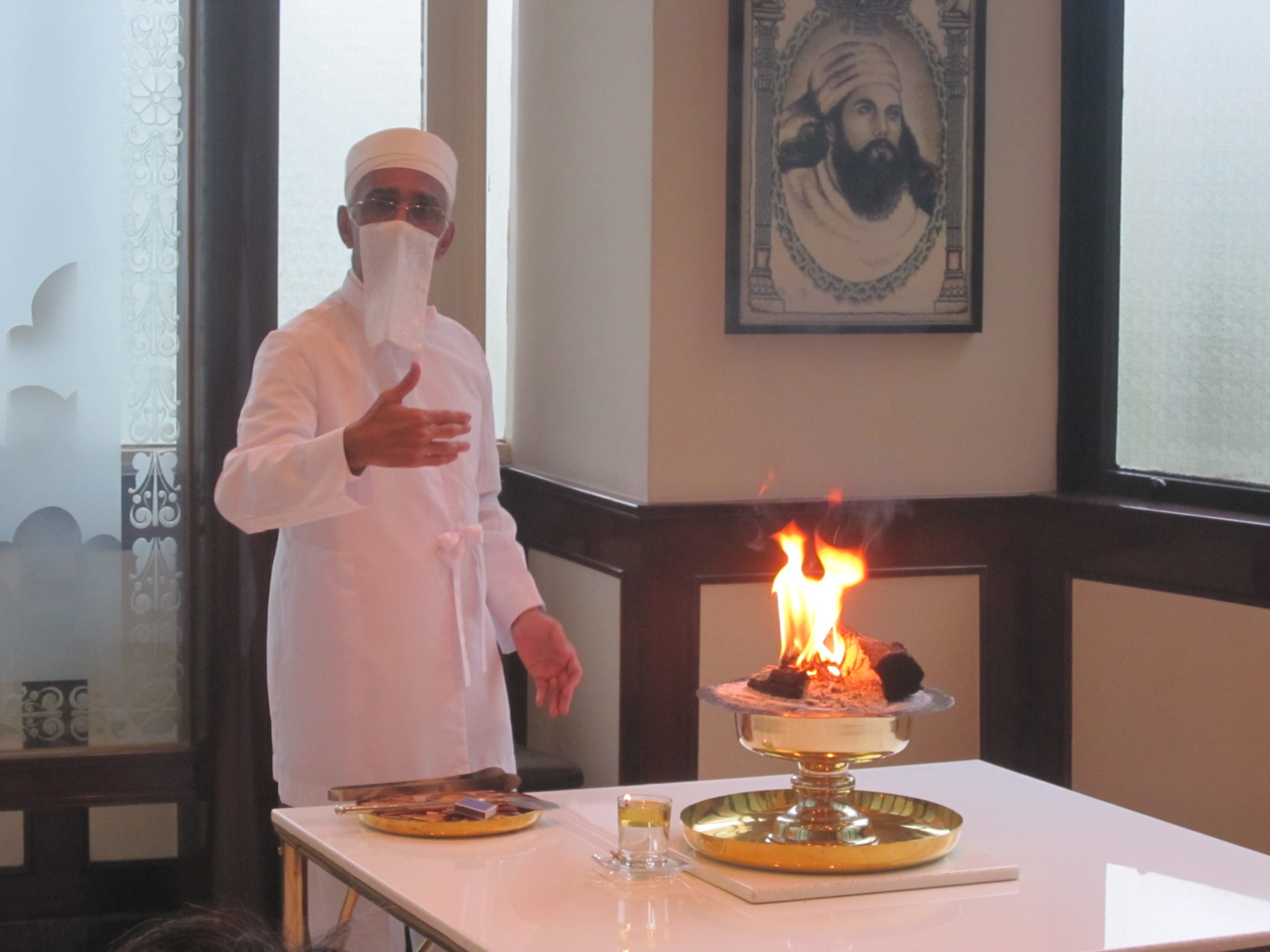
Five times a day, inside a commercial building in bustling Causeway Bay, a 59-year-old Indian man performs a ritual originating in ancient Persia. Homyar G. Nasirabadwala is the priest of the Zoroastrians in Hong Kong.

Dressed in all white, with his lower face covered by a veil, Homyar prays in front of a burning fire basin to welcome each section of a day, namely the dawn, noon, afternoon, evening and night.

Zoroastrians have an illustrious history in Hong Kong, though few people have heard of the religion. It is one of the world’s oldest faiths, founded by the prophet Zoroaster and with roots in what is now Iran. Zoroastrians believes in one supreme God, Ahura Mazda.

At the beginning of the 10th century, a small group of Zoroastrians left their motherland, Persia to escape religious persecution after the Muslim conquest. Those Zoroastrians moved to Gujarat, a remote state in Northwestern India where most modern Zoroastrians, known as Parsees, now live.

Homyar recounts a tale about the migration of the Zoroastrians. When they arrived in India, they met and petitioned a local King, called Jadav Raja, for shelter. At first, Jadav was unwilling to do so and he showed the Zoroastrians a vessel full of milk, saying his kingdom already had many people and could not take in more.

A wise Zoroastrian man added a spoonful of sugar into the milk and said his people would not create any population problem but would enrich the kingdom. The King was moved and decided to offer them shelter as well as religious freedom.

Although the number of Zoroastrians worldwide is small, they have produced outstanding leaders in business, education and banking as well as outstanding philanthropists.

Parsee merchants arrived in China the 18th century, from where they came to Hong Kong with the expansion of the business of the East India Company. The Parsees made great contributions to the city’s development in the early days of the British colony, helping to found such icons as Star Ferry and the University of Hong Kong.

But having survived 3000 years, the religion now faces is facing a population crisis. Worldwide, numbers are dwindling and in Hong Kong, there are now only 232 Zoroastrians, aged from 2 to 97. Strict rules about conversion and late marriage have contributed to the falling population of Zoroastrians.

Nevertheless, Homyar, the Zoroastrian priest is still optimistic about the community’s future. They have lived through waves of persecution and managed to hold on century after century. The Zoroastrians will be around for a long time yet, says Homyar.

April 2014 – Hong Kong’s China Fix?

In recent years, Hong Kong’s government and business sector have increasingly looked to greater integration with the Mainland for development and growth. It cannot be denied that Hong Kong has reaped economic benefits from acting as a gateway to mainland China, but is ‘looking north’ the best or only answer to Hong Kong’s long-term economic and social problems?

In our Periscope section we take a look at whether the Mainland can offer solutions to some pressing Hong Kong problems:

The government is encouraging more Hong Kong students to pursue their further education at mainland universities by offering cash allowances. Students who study in the Mainland will gain a greater understanding of the Mainland and build connections there but what kind of impact will the experience have on their values and academic learning? And would the money be better spent on increasing the number of higher education opportunities locally?

Chief Executive Leung Chun-ying promoted the inspirational example of a young Hong Kong entrepreneur who made his fortune in Guangxi province. The vast and quickly developing mainland job market certainly seems to offer many opportunities for Hong Kong talent. But as Varsity finds out, the streets are not quite paved with gold.

The shortage of places at public residential care homes for the elderly in Hong Kong has led to a long waiting list and prompted the government to buy places for Hong Kong senior citizens in purpose-built retirement homes in Guangdong. However, critics say authorities are outsourcing the elderly to the Mainland rather than dealing with local problems, locally.


Hong Kong’s China Fix?

Ever since the handover, Hong Kong’s greater economic integration with the Mainland has been touted as an engine for future growth. But in recent years, Hong Kongers have begun to view integration, especially when it extends beyond the economic realm, with suspicion.

Last month, the government acknowledged reports that it had considered a proposal to rent land in Guangdong province to construct a “Hong Kong Park” to house Hong Kong’s poor and elderly. Although it said the proposal has been deemed unfeasible, it highlights Chief Executive Leung Chun-ying’s belief that the answer to Hong Kong’s problems lies in greater cooperation and integration with China.

Without doubt, Hong Kong has benefited from its position as a gateway to China for the rest of the world, and as a source of expertise and international knowledge for China. But as China produces its own professionals and with more “sea turtles” – overseas educated mainland Chinese returning to China, Hong Kong’s role as a bridge between East and West is shrinking.

The April 2014 edition of Varsity takes a closer look at three major integration-related policies mentioned in this year’s Policy Address, in education, employment and elderly care.

In education, the Government is making it more attractive for Hong Kong students to study in mainland universities by offering cash allowances on top of the direct admission scheme.

Studying in mainland universities gives students greater exposure to Chinese culture and society; it can help them build up their personal networks in China. But what kind of an education will they be getting? Besides, those who study in the Mainland may be more likely to stay and work there and, in the longer term, this may add to Hong Kong’s workplace shortages as the city’s population continues to age.

The Chief Executive used the story of a young Hong Kong entrepreneur striking it rich in China to encourage young people to seek their fortunes in the Mainland. We talk to young people working in the Mainland and hear about the pros and cons. Doing business in a rapidly rising market brings lucrative opportunities, but also risks. There are failures as well as successes.

Figures from the Census and Statistics Department shows the Hong Kong workforce in the Mainland is actually shrinking, and ageing. Are the streets of China still paved with gold for Hong Kong’s young people?

Old age is not so golden for many of Hong Kong’s elderly. There is a serious lack of nursing and retirement homes here. The Policy Address acknowledges the problem by expanding local elderly care services to the Mainland.

But without mainland medical insurance and also hampered by a lack of trust in the mainland medical system, most of the elderly who retire to Guangdong, go to Hong Kong’s public hospitals for their medical treatment. Apart from the practical difficulties involved, we ask whether the best solution for the shortage of services in Hong Kong is to outsource them.

Underpinning these three stories, is the question of whether China is our best or only solution? By looking north for the answers to problems at home, could we be inviting more problems?

At the crossroads of Mainland-Hong Kong integration, pinning our fortunes and our future on China may be the most politically correct thing to do. But turning our backs on developing local potential to solve the problems on our own is not the self-strengthening “Lion-rock spirit” of which we were once proud.

  Managing Editor

Jeffrey Wong

Jeffrey Wong

Learning the Mainland Way

Hong Kong encourages its students to enter mainland universities
By Macau Mak and Sherry Tsui

Charles Sin Kwok-ching is in the third year of his history degree at Peking University. “I used to criticise them, and I thought they were conservative,” he says of his mainland classmates, “but now I know more, I know why they are like that. Even if you don’t agree with them, you can understand them more,” says the Hong Konger.

Sin did well in the Hong Kong Certificate of Education Examination (HKCEE) in 2010, scoring four As and four Bs. He applied to the History Department of Peking University and was accepted.

Charles Lee
Charles Sin Kwok-ching, decided that rather than facing public exams in Hong Kong, he would study in Peking University.

In order to attract outstanding students, in 2004, the Ministry of Education (MoE) authorised Peking University and Tsinghua University to exempt Hong Kong students from taking the Mainland’s Joint Entrance Examination. In 2006, Fudan University followed suit.

For Sin, studying history at Peking University was a long-held goal because of the institution’s prestige and high ranking. But he concedes the fear of taking Hong Kong public examinations was a push factor. “I didn’t want to take the Hong Kong Advanced Level Examination (HKALE). I heard many people saying HKALE is very terrible,” he says.

Hong Kong’s public examinations are highly competitive and getting the grades needed to fulfill the minimum requirements to get into a local university far from guarantees a place. So it is hardly surprising that students are increasingly looking to universities in the Mainland as an alternative.

In the 2012/2013 academic year, the MoE and Hong Kong’s Education Bureau collaborated to launch the Scheme for Admission of Hong Kong Students to Mainland Higher Education Institutions. Under the scheme, Hong Kong students are exempted from taking the Mainland’s Joint Entrance Examination. In the first year, 63 mainland institutions joined and this year, the number has been expanded to 75. More than 6,500 students have applied since the scheme started and around 2,200 have been given offers.

In this year’s Policy Address, the government further announced the Mainland University Study Subsidy Scheme to encourage Hong Kong students to study in the Mainland. The plan offers students on the Admission Scheme a means-tested bursary of up to HK$15,000 per year during their study period. There is no quota on the number of students who can benefit and payments will begin in the 2014/15 academic year.

Executive Councillor Starry Lee Wai-king, who is also a Democratic Alliance for the Betterment and Progress of Hong Kong legislator, supports the scheme. She says there are a lot of advantages to studying in the Mainland. For instance, students can gain greater understanding of Chinese culture and the mindset of people in the Mainland, as well as build up personal networks. “To know the way of thinking of the mainlanders, you have to stay there and communicate with them. Going to their schools to study is the fastest and most straight forward method,” says Lee.

Cracking the Chinese Job Market

Tang Tsz-kin is the owner of supermarket chain Ecosway

Opportunities and challenges for Hong Kongers working in the Mainland

By Donna Shiu and Zoe So

Philip Fung Kwok-on believes there are many opportunities for architects in China.

It is 7.00 a.m. and the Lo Wu Control Point is bustling with people from all walks of life. Mixed in with the crowds of young students and cross-border parallel traders are thousands of white-collar workers. Some will return to Hong Kong the same evening, while others will stay on the Mainland for the week.

These cross-boundary Hong Kong workers are just the tip of the iceberg. Many others cross at the other five control points while some commute by plane. Some have even made the Mainland their home. According to the Census and Statistics Department, over 170,000 Hong Kong permanent residents now work in China either part-time or full-time.

In this year’s policy address, Chief Executive Leung Chun-ying urged Hong Kong’s young people to consider career opportunities in China. He cited the story of a young Hong Kong entrepreneur who started a business in the Mainland after finishing his master’s degree. This young person is said to be now running a HK$100 million a year wine and food import business in Guangxi.

While the identity of the said entrepreneur remains unknown, there is nothing new about Hong Kongers heading north for jobs. The trend was given a boost after the Mainland and Hong Kong Closer Economic Partnership Arrangement, or CEPA was signed in 2003. This gave Hong Kong’s goods and services preferential access to the mainland market and allowed for the mutual recognition of professional qualifications.

Indeed, the mainland market is a big draw for professionals like architect Philip Fung Kwok-on. Apart from working for a year in Hong Kong after his studies, followed by two years in Switzerland, Fung has spent the majority of his 13-year career in China. Having worked in Beijing, Shanghai and Shantou, Fung is now based in Shenzhen.

Fung says China’s vast area gives architects like himself more space to work with and the freedom to experiment with different types and styles of architecture. His latest project was a hot-spring villa in Chaozhou. He says the project would not be possible in Hong Kong as there is neither the space nor geological conditions for it. Instead, Fung says architects in Hong Kong are limited to designing commercial and residential estates and are under pressure from property developers to maximise floor areas.

That is not to say it has been an easy road to success for Fung. Even after he set up his own studio, Elsedesign, in Shanghai in 2007, he was still required to cooperate with a mainland firm. The mainland company does all the official paperwork and, on paper, Fung works as a design consultant.

Under CEPA, over 412 individual architects registered in Hong Kong obtained the Mainland’s “class one” architect qualification between 2004 and 2009 but they are still barred from setting up their own practice there. Starting from 2011, architects registered in Hong Kong have to take another exam in order to set up their own business and even then, only in Guangdong.

According to the Hong Kong Institute of Architects (HKIA), more than 200 Hong Kong architects have taken the exam but none have been approved to set up shop. An HKIA survey in 2013 found fewer than 10 Hong Kong architects working in Guangdong after qualifying through CEPA.

Sunset Years in Guangdong

Can sending elderly to Guangdong solve Hong Kong’s care home shortage problem?

by Total Lam and Brian Wong

Uncle Cheung sits bundled up in a thick jacket and wears a knitted wool hat. It is a cold wintry day in Zhaoqing, Guangdong but the 83-year-old Hong Kong retiree is comfortable in his surroundings. “I tried out staying here for a month first. I was satisfied with the accommodation, food and services. So then, I chose to live here,” he says of the Hong Kong Jockey Club Helping Hand Zhaoqing Home for the Elderly.

Cheung is originally from Guangdong and came back with his wife two years ago. Their daughter had emigrated to the United States and the couple had no other family in Hong Kong, but they have a son who lives nearby in Zhaoqing.

IMG_0144
The vegetable patches in Zhaoqing home

What Cheung likes about the centre is the space and the facilities. Whereas elderly homes are crowded in Hong Kong, here there are spacious corridors, huge television rooms, landscaped gardens, exercise equipment, a fishpond and vegetable patches.

He can also receive acupuncture to alleviate recurrent pain in his lower back in one of the two rehabilitation rooms at the centre. Massage and traditional Chinese tuina therapy are offered too.

Cheung is one of only 25 Hong Kong elderly people out of the 103 residents at the home, which opened its doors in 2001 with the aim of providing accommodation and services to elderly people from Hong Kong as its priority. The Hong Kong Jockey Club also has another centre in Shenzhen, the Society for Rehabilitation Yee Hong Heights, providing similar services.

The centres were built to help alleviate pressure on the demand for places in government-subsidised nursing and care homes in Hong Kong. Figures from the Social Welfare Department show that close to 30,000 elderly people were on the waiting list for such places at the end of January this year. They can expect to wait for an average of 35 months for a place in a nursing home and 20 months for a care-and-attention home.

In this year’s Policy Address, the government stated it plans to purchase 300 to 400 residential care places in the Zhaoqing and Shenzhen homes for those on the Central Waiting List for subsidised residential care in Hong Kong. This follows the implementation last October of the Guangdong Scheme for Hong Kong residents aged 65 or above living in Guangdong. Under the scheme they will keep receiving their Old Age Allowance without having to return to Hong Kong every year.

The government insists the policies are aimed at providing the elderly with more choice and are not an attempt to “outsource” Hong Kong’s increasing elderly population.

So far, more than 9,000 people are benefitting from the arrangement. Legislator Chan Yuen-han, of the Hong Kong Federation of Trade Unions, says the federation’s mainland service centres have received many enquiries from elderly Hong Kong people in recent months.

Chan says many of the elderly who retire in Guangdong do so because that is where they originally came from and they do not have many relatives in Hong Kong. “Goods and food are cheap. Living spaces are bigger than in Hong Kong, and most importantly, relatives are here [in the Mainland],” says Chan.

She says there are also groups of friends without prior social networks in the Mainland who retire there together. Some may have bought property in the Mainland when prices were lower. However, as they grow older and their health deteriorates, depleting finances and the cost and quality of medical care become concerns. The appreciation of the renminbi adds to their woes and some choose to return to Hong Kong.