








Home Blog Page 100

Snap, Scoop, Sell

Amateur photographers sell work through crowdsourcing app

by Jeffrey Loa

“Click!” The shutter of Carlos Ngui’s smartphone goes off as he takes a picture of himself standing in front of the bathroom mirror. He has just woken up and is brushing his teeth. But this selfie is not for the 19-year-old City University of Hong Kong student’s friends on Facebook or to be uploaded to Instagram, it’s destined instead for Scoopshot, a photo crowdsourcing mobile app founded in Helsinki, Finland.

With Scoopshot, publishing photographs is no longer the privilege of professional photographers and journalists using expensive digital single-lens reflex cameras. In fact, anyone with a sharp eye and a smartphone can get published and even be paid for it.

Scoopshot currently has a user base of more than 110,000 mobile photographers from 170 countries. Once registered, you can upload photos and videos you think the media or companies would want to publish.

You can earn money by licensing your pictures or by selling them. In 2012, Arto Mäkelä from Finland earned more than $19,000 by responding to a task set by Fonecta, a Finnish directory services company. The task was to take pictures of shops and businesses. Mäkelä took thousands and earned enough for a trip to Miami and the Caribbean.

Simpler tasks may include capturing moments from your daily life. Who knows? A few photos of your messy dorm room with dirty clothes and books lying around may earn you a couple of hundred dollars.

Besides taking pictures yourself, you can set a photo assignment for others.  Ngui’s toothbrushing selfie was for taken for as assignment called “Show Us Your Morning Face” created by Scoopshot. Anyone can create a task. If your favourite band was performing in New York and you could not afford to go, you can create a task to ask people to take pictures of the show for you.

You can also contribute to advocacy work of global non-government organisations.

In 2013, Scoopshot collaborated with the charity Oxfam and the British rock band Coldplay to produce a music video composed of photos and video clips taken by Scoopshooters to highlight the plight of families forced from their homes because of big land deals.

When it comes to breaking news and significant social events, Scoopshot may be the place to turn to. For instance, if you are in the middle of a protest in the streets of Mongkok, your photos may be exactly what media companies want. Perhaps a picture of a protestor throwing IKEA wolf toy Lufsig at the Chief Executive could become an iconic image. News organisations in Hong Kong, like Apple Daily and Metro Daily, crowdsource photos from this mobile app.

Photoscooper Ngui says: “It’s a clever way to provide us with an incentive to take photos… I can’t wait to snap some breaking news.”

Scoopshot is more than about taking selfies and accomplishing tasks. It illustrates the changes in how the media sources images. Photojournalism has become a collaborative work of media producers and media consumers.

Scoopshot is available for iPhones, most Android devices and Windows Phone smartphones. As the saying goes, “a picture is worth a thousand words”, so join the Scoopshot journey now!

Check out Scoopshot’s website to learn more at www.scoopshot.com.

Edited by Jeffrey Wong and Esther Leung

For the Greater Good

We are often told it is more blessed to give than to receive. And Hong Kong people certainly live up to the saying. Hong Kongers are generous donors and enthusiastic volunteers. Last year, the city ranked in the top 20 countries and regions in the World Giving Index, with around 63 per cent of the population donating to charities. It is also undeniable that charities play a vital role in our society, contributing to a vibrant civil society and advancing Hong Kong’s social and democratic development.

But behind this glowing picture are grey areas –– questions left unanswered, challenges left unrecognised and problems left unsolved. In this issue of Varsity, Periscope examines the seemingly clear-cut topic of charity by looking at different aspects of Hong Kong’s third sector.

We start by looking at how charities are regulated in Hong Kong. Under the existing charity regulatory system, the legitimacy of many charitable organisations is ambiguous and this makes it easier for fraud, scams or abuse to take place. The introduction of tighter rules can help prevent fraud, provide confidence for donors and create legal mechanisms to ensure funds are not used for personal gain. But the flip side of increased control, is the spectre of bureaucratic and even political interference and administrative requirements that would create great challenges for the operation and survival of small scale charitable organisations. To what extent would regulation affect the independence and autonomy of the sector?

Despite the absence of charity laws and regulations, Hong Kong’s charitable organisations, also called non-governmental organisations (NGOs), are relatively developed, especially compared to the Mainland. The concept of NGOs is still fairly new  in China and Chinese NGOs face numerous challenges, ranging from problems with registration and funding, to a lack of manpower and skills. As a part of China and sharing aspects of language and culture, Hong Kong is in a unique position to offer assistance and act as a reference for the development of Chinese NGOs. In our second story, Varsity explores Hong Kong’s current and future role in the development of Chinese NGOs and civil society.

Charity is also a growing concern of the private sector as the concept of corporate social responsibility (CSR) becomes more prominent. CSR programmes are well received by those who regard CSR as a meaningful attempt by businesses to contribute to society’s wellbeing rather than just fulfilling economic and legal obligations. Critics, however, say the idea of CSR is just a business model, a risk management device and a public relations tactic for advertisement and image building. How do businesses make sense of the idea of CSR, when the altruistic rationale of charity fundamentally contradicts their profit-seeking goals?

Through looking at charities, non-profit organisations and the charitable activities of businesses, we hope to explore some of the hidden problems and challenges faced by the so-called “third sector”. Charities and NGOs are a vital part of our civil society –– a well-developed third sector can provide a balance to government and business and help Hong Kong develop as a vibrant and diverse society.

Now I proudly present the March issue –– produced through the concerted efforts and unremitting hard work of Varsity’s advisors, editors and reporters. I sincerely hope you find this issue an enjoyable and inspiring read.

Frances Sitsignature

Chief Editor

The Flip Side of Charity Law

Charities fear legislation could stifle autonomy

By Vivian Lai and Jeffrey Loa

Edited by Yoyo Chan

The video footage shows people in wheelchairs collecting money for a charity in a busy shopping area. These same people are then shown standing up and walking away. The video is part of a report published online by the Apple Daily in 2011 which stirred public concern about improper and possibly fraudulent fundraising activities by charities and organisations claiming to be charities.

Concerns about fundraising and the lack of transparency of some charities are not new. Back in 2003, the Office of the Ombudsman published an investigation report on the monitoring of charitable fundraising in Hong Kong. The report concluded that:“Government monitoring of charities is partial and patchy, fragmented and ineffective.” It recommended the government consider setting up a charity registration system.

In 2007, the issue was passed to the Law Reform Commission of Hong Kong which issued a consultation paper in 2011. Among the proposals in the paper were how to define a charity and controversially, the setting up of a charity commission to oversee and monitor the registration of charities.

After six years of deliberations, the commission finally released its recommendations in December last year, making some concessions to concerns from civil society on the establishment of a charity commission and on how to define a charity. Up to March 2013, there were close to 7,600 tax-exempt charities in Hong Kong. Under current regulations, a non-profit organisation can register first as either a company or a society. In order to obtain charitable tax-exempt status, they need to then apply to the Inland Revenue Department.

In the Law Reform Commission’s 2011 consultation paper, charities were classified mainly into those working for the relief of poverty, advancement of education and advancement of religion, with a fourth classification of those working for other charitable purposes beneficial to society but not falling under the other headings.

The list of accepted charitable purposes extended beyond those categories to cover work for the environment, health, the disabled, disaster relief, the environment and animals.

Organisations set up with the aim of advocating for human rights, or changes to existing laws and policies were not included. After many complaints, the commission added human rights to the list in its 2013 recommendations.

But advocates are still dissatisfied that groups campaigning for laws and policies are still excluded from the proposed definition. Legislator Fernando Cheung Chiu-hung, who is also a social work lecturer at Hong Kong Polytechnic, says that advocating for laws and policies is integral to the work of charities and social workers. It is even included in the Code of Practice for social workers.

For Cheung, excluding this work from the definition of charitable purposes raises concerns about censorship and the suppression of charities. He cites the example of Forthright Caucus, a non-government organisation (NGO) he founded to strive for the rights of the underprivileged, such as the disabled, mental health patients and children with learning difficulties. The group has made three attempts to gain charity status from the Inland Revenue Department and was rejected every time.

Correspondence from the Inland Revenue pointed out the group had participated in the July 1 protests to call for more services for the disabled. This was defined as a political activity and the Inland Revenue suggested the group should be more service-oriented and focus less on policy change and advocacy. It asked for amendments to the group’s charter which Cheung refused to make.

Without official charity status, it is hard for Forthright Caucus to access funding and other resources. “The rules are grabbing charities by the neck and squeezing them,” says Cheung.

Another NGO, the Hong Kong Women Workers’ Association (HKWWA) shares a similar experience. The association was founded in 1989 and is a tax-exempt charity. In 2006-2007, the Inland Revenue Department required it to fill in a form to review its charity status. In the form, the association was asked to fill in descriptions of its work and to hand in work and audit reports.

1
Douglas Shum Hong-yuen, Light of Raphael’s Clinic

After these were submitted, the Inland Revenue Department quizzed the group about its work, much of which is to fight for women’s employment rights and welfare, including organising and taking part in protests. The department said this work did not fit its charity status and that the group may have violated the regulations of its charity status by organising campaigns.

Apart from the definition of charities and charitable purposes, many groups also voiced opposition to the proposal to set up a charity commission to monitor charities. Fernando Cheung says that in Hong Kong’s current political climate and with its existing political structure, there is a danger that the commission could become a channel to control charities. He says such a body would be able to freeze the assets of a charity, place people on the board of the charity and even deprive it of its charitable status.

Although the commission concluded a charity commission should not be set up at the present time, due to a lack of consensus, it still states it should be a long-term goal to establish a charity commission or centralised regulatory authority for charities.

Learning from the Hong Kong Experience

The role of Hong Kong in developing Chinese civil society

by Thomas Chan and John Cheng

Chung To will never forget the night the mainland police stormed into his office at midnight, took his staff away –– including one who was pregnant –– to the police station and confiscated all the computers. Throughout his 16 years of work in mainland China, To has been under constant surveillance by authorities, his emails and his whereabouts closely monitored.

DSC_1099
Chung To, founder of Chi Heng Foundation

To is the founder of Chi Heng Foundation, a Hong Kong non-governmental organisation (NGO) working on the prevention of HIV/AIDS and supporting AIDS orphans in the Mainland. His experience illustrates the kind of challenges faced by NGOs working in the Mainland and has been shared to varying degrees by many others.

Before China’s policy of opening up and reform in the 1980s, there was no room for any organisations that were not under the direct control of the Communist Party. During the 1980s, non-profit projects and groups started to appear. Still, few in China had heard of NGOs until 1995 when the United Nations’ 4th World Conference on Women was held in Beijing. Parallel with the main conference, an NGO forum was held outside of the capital in the suburb of Huairou which was attended by tens of thousands of activists from all over the world. This inspired some Chinese to start thinking about setting up their own NGOs or working for the international NGOs that were already in China.

Throughout the 1990s, NGOs continued to grow despite the challenges of operating in a grey area and, in the aftermath of the Sichuan earthquake in 2008, thousands of local NGOs emerged to assist in relief work.

But while NGOs have become one of the driving forces of the development of civil society in China, the definition of an NGO in China is not as clear cut as in some other countries. Although NGOs are usually understood to be independent of any government, in China some are sponsored by the government. These are called government-organised NGOs, or GONGOs.

Official figures released by China’s Ministry of Civil Affairs state there are an estimated 490,000 civic organisations in China as of 2012. But Zhu Jiangang, director of the Institute for Civil Society of Sun Yat-sen University says that when the western definition of NGOs, which emphasises their autonomy, is applied, the real figure is closer to 3500.

The lack of a proper legal framework for NGOs means that it is almost impossible for them to register independently as legal entities. Instead they are required to find a government department to act as a patron. This has resulted in thousands of unregistered grassroots NGOs across China.

The inability to register makes NGOs vulnerable to crackdowns from authorities and affects their ability to obtain funding, hire staff and organise events. Those that choose to register as companies are liable to high taxes. Many NGOs also struggle with constant surveillance, interference and sometimes suppression from the police and local authorities.

The Business of CSR

Who stands to gain most from corporate social responsbility?

By Benny Kung and Antonia Wong

IMG_9505

It is a Sunday and at the International Commerce Centre in Kowloon, a group of staff from a Swiss investment bank is back at the office. They are not here for a board meeting or to work overtime. Rather, they are here to conduct a workshop organised by a Hong Kong NGO called Enrich, on budgeting and financial planning for foreign migrant workers, most of them domestic helpers.

At another time and in another part of town, some students arrive at a Maxim’s bakery at closing time to take bags of surplus bread to a charity drop-off point where it will be distributed to the needy. The Bread Run is a programme run by Feeding Hong Kong.

These are just some of the corporate social responsibility, or CSR, initiatives in which local and international companies in Hong Kong participate. CSR has become a buzzword in recent years. Most big companies have dedicated staff and even departments working on CSR. They strike partnerships with non-government organisations (NGOs), draw up CSR strategies and organise activities and events.

The Standard Chartered Marathon, Hang Seng Bank “Leaders to Leaders” Lecture Series and the Maxim’s Group Surplus Bread Donation Programme are some of the events and programmes the Hong Kong public is familiar with. The most common impression people have of CSR is that it is a kind of philanthropy or charity. They are less familiar with the history and the rationale behind the concept of CSR.

The Standard Chartered Hong Kong Marathon, an annual event most Hong Kong people are familiar with

Discussion about what social responsibilities businesses had beyond their legal responsibilities developed in the 1960s and in the 1970s the Organisation of Economic Cooperation and Development and the United Nations began to draw up codes in response to the growth of corporate globalisation. Together these sought to set the rules for corporate behaviour and foreign investment and to regulate corporate abuse.

But it was not until the 1990s that CSR began to really take off and spawned an industry of consultants and experts. Throughout the 1980s, multinational corporations were hit by bad publicity and boycotts over such issues as the destruction of natural habitats, investing in apartheid South Africa and exploitative labour practices. The anti-corporate backlash reached a peak when the oil company Shell was accused of complicity in the Nigerian government’s execution of activists who had been campaigning against the petroleum industry’s destruction of their homeland.

The damage to Shell’s reputation, brand and therefore their bottom line, alerted the business community to the importance of taking steps to repair and build relations with the communities where they work and operate, with their customers, their workers and other “stakeholders”. The company spent the equivalent of HK$260 million on a public relations campaign to rebuild its reputation, which included community engagement activities and the production of a CSR report.

According to the CSR Guide for SMEs in Hong Kong, published by the Hong Kong Council of Social Service and CSR Asia, there are five other aspects to CSR besides community involvement, namely corporate governance, environmental protection, human corporate management, responsible procurement and consumer issues.

Let’s Talk about Sex

Sex education in schools fails to address real needs
By Macau Mak and Sherry Tsui

Bowie, who does not want to disclose her full name, was 17 when she experienced several days of discomfort after having unprotected sex. To her shock, she was diagnosed with chlamydia, a disease that can lead to infertility if left untreated.

Like many of her friends, Bowie thought condoms were just for avoiding unplanned pregnancies. She had never imagined that she may get a sexually transmitted disease (STD). “I had never thought about STDs, like it’s not that easy to get infected. I never bothered with condoms,” she says.

Bowie has now fully recovered after treatment. She also underwent one-on-one counselling and took part in an interactive sex education workshop arranged by AIDS Concern. As a result, she now insists her partner uses a condom before intercourse. But Dr Angela Ng Wing-ying, the vice-chairperson of Hong Kong Association of Sexuality Educators, Researchers & Therapists, says that many teenagers ignore or are unaware of the fact that STDs can lead to complications that could cause permanent damage.

“STDs can result in infertility. Some will experience tremendous pain during intercourse; some experience the pain for the rest of their lives. It is sad to see many of the patients were just in their early teens [when they contracted STDs],” says Ng.

From her own experience, and the attitude of her friends, Bowie thinks the sex education taught in her secondary school failed to deliver the message of preventing STDs to the students. She explains the sex education classes consist of lectures in the school hall, using slides with few pictures or animations. “The hall is so crowded and noisy; no one can hear what the speaker is saying… people are either asleep or playing with their cell phones,” she adds.

Even though Bowie warns her friends that they all face the risk of being infected with an STD, they still think it is difficult to contract such diseases. “They will only be scared when they are also infected with an STD,” Bowie says.

There are no comprehensive figures on the number of youngsters who have contracted STDs, but according to the last available statistics provided by the Social Hygiene Service of the Department of Health, the annual reported number of STD cases for those aged below 15 years increased fourfold from four cases in 2006 to 20 cases in 2009.

Bowie suggests schools should organise more activities with interactive elements, for example use teaching prompts and games to attract students, and create situational scenarios with role playing that they can participate in.

The Activity & Resource Centre of The Family Planning Association provides educational programmes and resources, clinical and counselling services to schools, families and the young community.

Heidi Yip Cheung-sau, vice-chairperson of the Hong Kong Sex Education Association agrees that today’s teenagers need a more interactive way to learn about sex education. She says the association uses the scenario learning methods recommended by Bowie in its workshops to explore situations such as breaking up with a boyfriend or girlfriend, or how to turn down a request for intimacy.

Yip says learning through scenarios piques students’ interest sufficiently both to reflect on the reasons behind each decision they make while role playing and to relate those decisions to their everyday lives. She says such methods can strengthen students’ ability to think independently and cope with real life problems.

Surviving Single Fatherhood

How single dads take up the role of both parents

by Grace Cheung and Yan Li

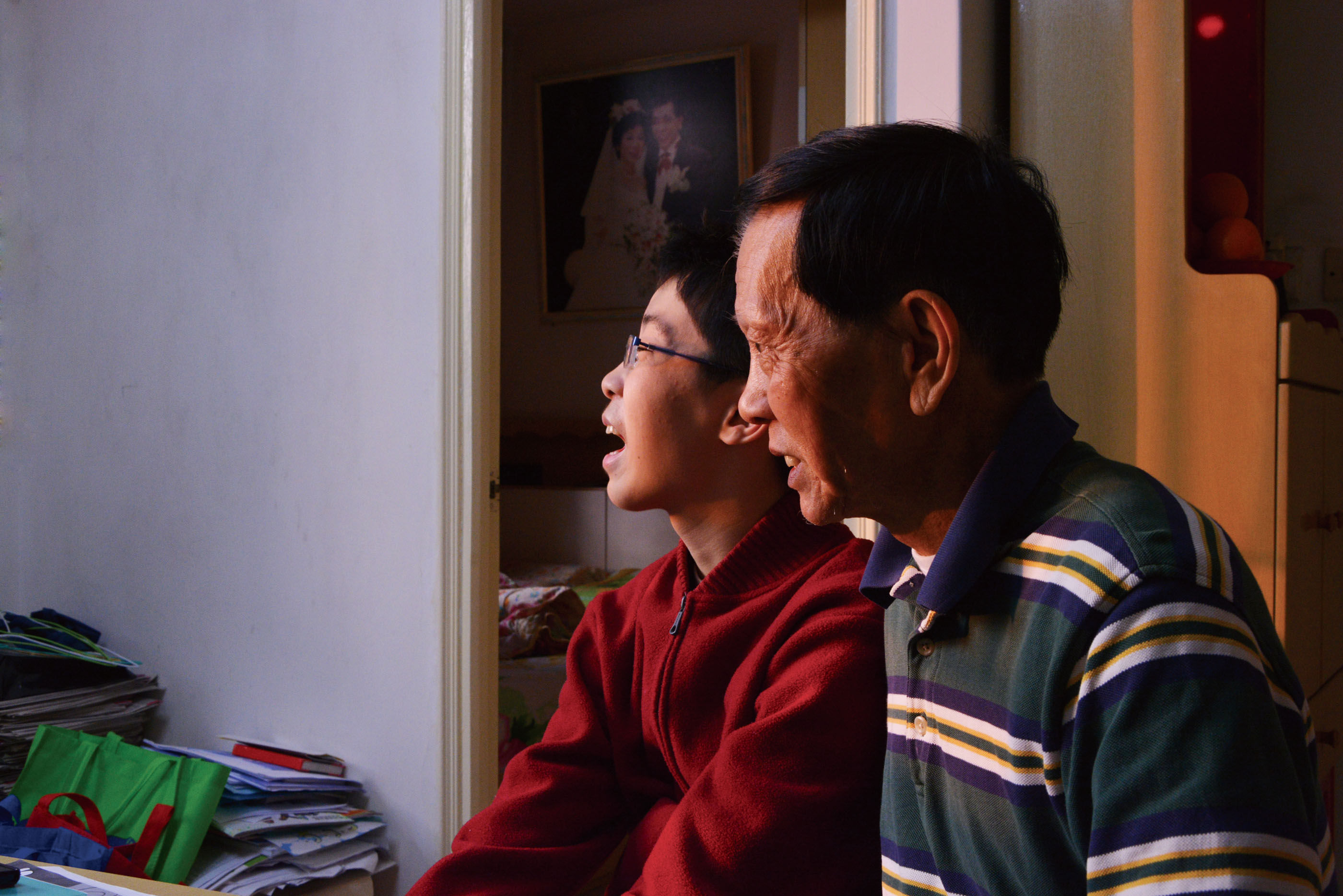
It is still dark when Chan Yung-kun leaves for work as a security guard. He starts his shift at 5:30 a.m. and, an hour and a half later, he calls his 16-year-old son, to wake him up for school. The day is far from over after his 10-hour shift ends. The 64-year-old still has the dinner to cook and the housework to do before he can finally go to sleep in the cramped bedroom of the public housing flat he shares with his son. This has been Chan’s daily routine for almost two years now after his wife died of cancer in 2012.

When his wife was still alive, Chan was a typical Hong Kong husband of his generation. He was the sole breadwinner of the family and did not spend much time on household chores or parenting. It took him half a year to adapt to his new role as a single dad.

“After work, I still need to go to the market and then cook the dinner. I work non-stop till after 10 p.m. Of course it is very tough. My life was totally different when my wife was here, as she’d take care of the cooking. I didn’t have to do anything after work,” says Chan. Yet, Chan has not actively sought help. “It’s fine. I just try to learn the stuff [housework and cooking] myself,” he says.
Long hours and stressful working conditions in Hong Kong make it hard for single fathers to develop an intimate relationship with their children, even if they very much want to. “Since I need to work, I really don’t have much time to communicate with them [the kids],” says Lo King-lam, a single dad living with two sons in Tai Po.

Since Lo’s wife died from gastric cancer in 2006, he has come to realise how tough her life had been. He recalls how she had to take care of the children, the household chores and work full-time. Despite having so much on her plate, she was the one who had a closer relationship with their children.

Lo’s elder son, Lo Wing-on, who is now 23, recalls he usually went shopping and had intimate chats with his mother. Family days were often initiated by her as well. It was only after she had gone that he started to develop a closer relationship with his father.

IMG_9738
Family photo of Lo King-lam

Lo King-lam is making up for lost time now. Although it is a challenge for him to do the housework, he decided not to hire a domestic helper as he found he would have less communication with his sons when there was somebody else to take care of their needs. Instead, the family moved to the same housing development where his mother lives so she could help with the cooking.

Often, single fathers do not actively seek either practical help or emotional support when they need it. This is a phenomenon observed by Ken, who does not want to disclose his identity to protect the privacy of his two children. Ken suddenly found himself a single dad after his wife left him for one of his best friends. Their daughter was 10 and their son just three at the time.

After the couple divorced in 1999, Ken ran into financial difficulties with just one income, two children to support and a mortgage to pay. Feeling overwhelmed, he tried to kill himself. Luckily, he did not succeed and instead he approached the Caritas Family Service. With the help of social workers, Ken managed to free himself from his suicidal thoughts.

“When a man’s life is falling apart, he tends to hide himself at home and not consider asking for help,” says Ken. “I believe the most important thing is that you know when to seek professional help when you are having problems. I’m fortunate that there were some good social workers around to help me at that difficult period of time.”

Ken also understands from his own experience that, due to their characters and the way they have been brought up, fathers’ concerns tend to be concentrated on the physical needs of their children rather than on their emotional needs and problems. It is hard for them to help children vent their frustrations, express their feelings and relieve their stress.

It’s Not Only Rock ‘n’ Roll

Music festivals bring alternative sounds and fresh vibes to Hong Kong

 By Edith Lin

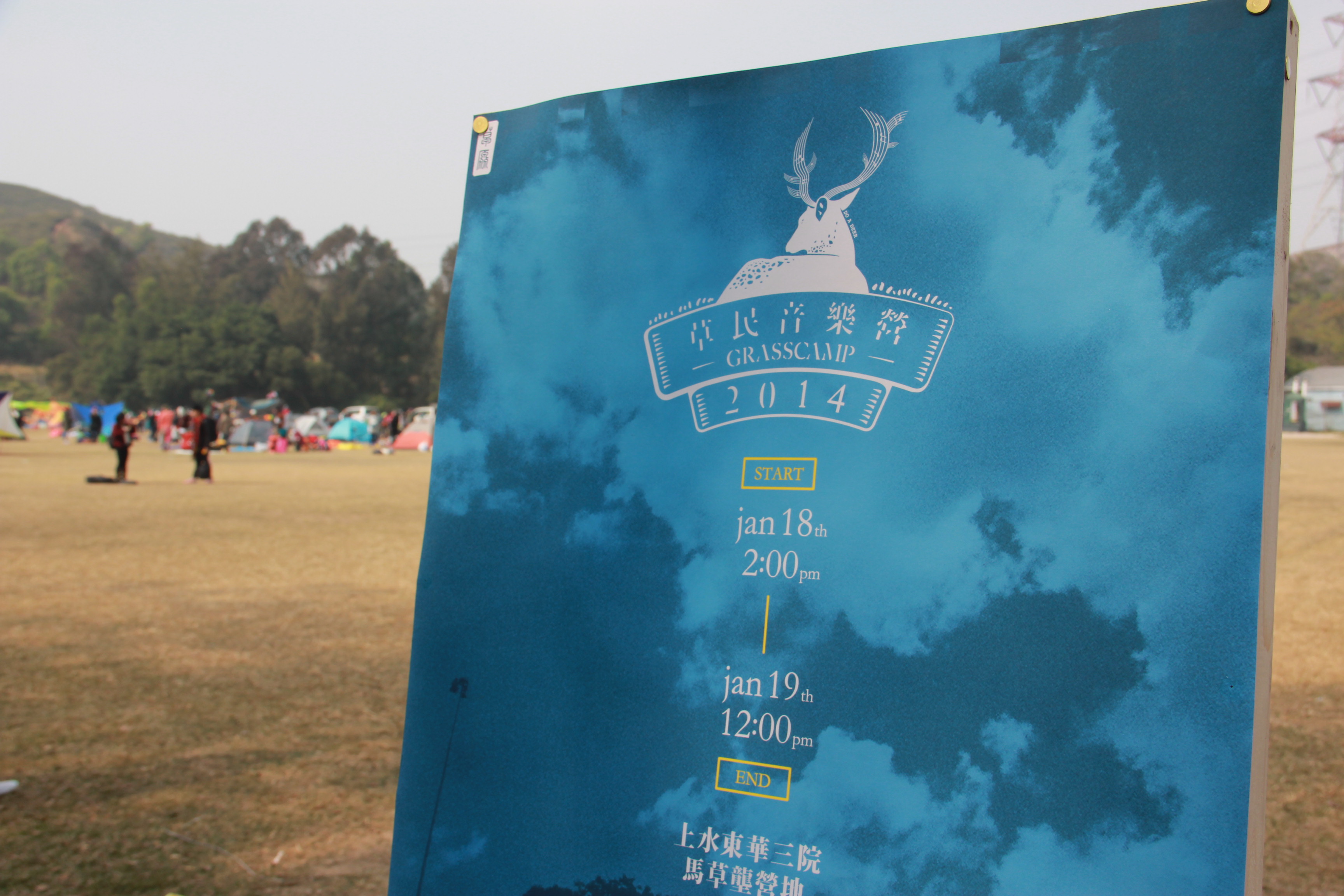
At nine o’clock on a cold Sunday morning, a melody wafted through a Sheung Shui campsite. A singer-songwriter was crooning a folk song to the crowd as local villagers walked around to serve breakfast – homemade steamed buns and warm soya milk. Further down the field, campers were boiling water on canister stoves as dogs ran around freely and toddlers tottered between the tents.

This was the second day of Grasscamp 2014, one of the many new music festivals in Hong Kong. Other local music festivals include Silvermine Bay, Freespace Fest and Grassfest. For fans of foreign music, Clockenflap and Taiwan Calling have also hit town in recent years.

The outdoor music event as we know it today began with the 1969 Woodstock Festival in New York state. During the weekend, which later became synonymous with 1960s counterculture, over 400,000 young people came together to celebrate peace, love and rock and roll.

The trend gradually spread to other parts of the world. The annual Japanese Fuji Rock Festival kicked off in 1997, the Midi Festival in China began in 2000.

Hong Kong’s first music festival was Rockit, which opened in Victoria Park in 2003 and was held annually until 2006. But it was not until in 2008, when the likes of Clockenflap and Grassfest surfaced, that the trend started to take off.

Anthony Fung Ying-him, the director of the School of Journalism and Communication at the Chinese University of Hong Kong, believes the change is testimony to the public’s fight for more public space.

“Basically Hong Kong lacks performance venues and the public space was not open to use,” says Fung. “Public pressure has forced the government to open up public spaces like Kwun Tung Ferry Pier, areas under flyovers or the open area in front of Hong Kong Arts Centre for citizens to play music.”

Due to the increasing accessibility of public space, more music festivals are held outdoors. They usually feature a variety of performers, ranging from established indie bands to the up-and-coming, and the events can last up to a few days. Unlike conventional concerts, the audience can do things other than watch the performances. For instance, they can picnic, dance, play games or even ride bikes.

Boccia – A Game with No Barriers

A Paralympic sport that everyone can play
by Zoe So

Gold medallist Leung Yuk-wing wants to win another medal in the Paralympics’ pairs event

With their sights firmly fixed on a white leather target ball, or jack, the athletes take turns to throw red and blue balls at it. They do so from wheelchairs on an indoor rectangular court. This ball game, which bears a resemblance to petanque and lawn bowls, is called Boccia and has been a Paralympic sport since 1984.

The sport was originally developed for people with cerebral palsy but is now played by people with other disabilities that severely affect motor skills. Athletes can complete in four classes according to their locomotor condition.

Players – or pairs of players in the doubles games – are represented by either red balls or blue balls. They each have six leather balls, which they either throw or use a chute to propel towards the jack. A referee measures the distance of the balls to the jack and the player whose balls are the closet wins the game.

Boccia is a test of nerves, tactics and skill that is now played in more than 50 countries and regions, including Hong Kong. In fact, Hong Kong’s Boccia players have been participating in overseas competitions since 2003 and they have an impressive record in the sport. In the 2008 Paralympics in Beijing, Hong Kong athletes won a gold and a silver.

Leung Yuk-wing is a 29-year-old part-time athlete from the Hong Kong Boccia Team. He has muscular dystrophy and can only play Boccia with his hands. “I love this sport,” says Leung. “When I first came across it in secondary school, I never imagined I could enter the Hong Kong team and enter overseas competitions. I am really delighted!”

Leung and his teammates practise every Tuesday, Thursday and Saturday, for a total of around seven hours per week. Once every two weeks, they also spend eight hours practising on a Sunday. They start off with practising basic skills and moves before having a match.

Leung says that playing Boccia has been beneficial to him. “This makes my character become less impetuous. I was quite stubborn before. The game presents many possibilities and this makes me think twice before making a decision.”