


















Home Blog Page 113

Islanders fight Shek Kwu Chau Incinerator Plan

Editor: Margaret Ng, Liz Yuen
Reporters: Caleb Ho, Thee Lui, Vicki Yuen

Shek Ku Chau, a rocky island a 20-minute ferry ride away from Cheung Chau, provides the tranquil backdrop for the Shek Kwu Chau Treatment and Rehabilitation Centre for drug users. That tranquility is now under threat from a government plan to build an artificial island with a rubbish incinerator nearby.

Patrick Wu Shun-on, the Superintendent of the Shek Kwu Chau Treatment and Rehabilitation Centre, says the plan totally disregards the well-being of the 300 patients and staff at the centre.

A quiet environment is an essential part of the treatment provided and for the rehabilitation process. Wu says the patients experienced emotional problems when the government first held a site investigation of the sea bed near Shek Kwu Chau two years ago.

He says it would be hard for the residents to endure the noise during the five-year construction period of the project. Wu is afraid many of the patients would no longer be willing to stay.

Hong Kong’s last waste incinerator was shut down in 1997 due to pollution concerns. However, with solid waste continuing to increase and the territory’s landfills overflowing, the government says the incinerator is necessary.

The proposed 16-hectare artificial island would contain a thermal incineration plant which can deal with 3,000 tonnes of waste a day and a mechanical sorting and recycling plant. There would also be an education centre which could host 450 visitors a day, mainly students. Proponents say this will help boost tourism in Cheung Chau.

However, the $15 billion project has aroused opposition from various groups. On 18March 2012, around 500 Cheung Chau and Mui Wo (in Lantau) residents marched to the new Government Headquarters. They objected the site of the incinerator and the type of technology used, which they fear will add to air pollution. Fishermen also expressed worries that the reclamation would damage their livelihood.

But Au Wai-kwong, the Assistant Director of Environmental Protection Department says the incinerator will be designed to meet stringent international standards and suitable mitigation measures will be adopted to minimise any environmental impact.

The project is now held back by the panel on Environmental Affairs in the government. The authority says more consultation is needed.

Concerned environmental groups, such as Friends of the Earth, believe that incineration is not a solution to tackle Hong Kong’s waste disposal problem. They believe the Government should devise a comprehensive strategy and an action plan covering enhancing waste reduction and recovery, and fees for dumping rubbish. As the amount of waste in Hong Kong builds up, reducing the amount of rubbish produced rather than building an incinerator may seem like a more sustainable long-term solution.

No Place to Call Home

Editors: Dora Chiu and John Yip
Reporters: Kris Lee, Yannie Mak and Viola Yeh

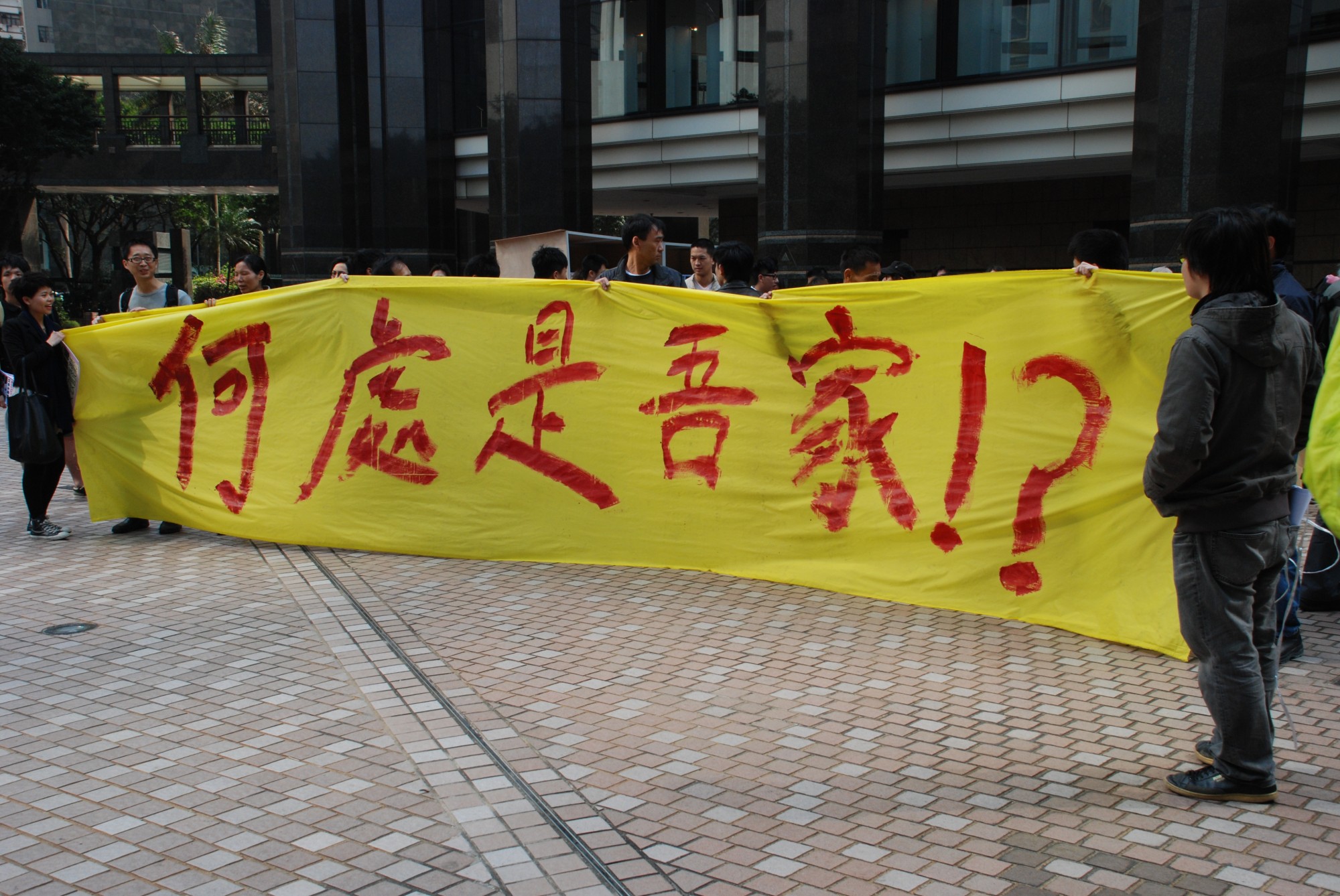
In a home of around 300 square feet with mouldy ceiling, dimmed lights and hanging electric wires, lives a family of four. They have to tolerate persistent noise from traffic every day. They also have to face fire risk, hygiene problems and unstable electricity supply, as well as the threat of eviction. They live in a subdivided unit in an industrial building.

Leung Fat-wei, a 46-year old construction worker and sole breadwinner of the family, received a closure order from his landlord recently. He is now nervous and panicked, placing his last hope on his application for public housing. He has been waiting since 2009.

Leung’s situation is not unique. Currently, there are approximately 2000 people living in subdivided units in industrial buildings. On March 7 this year, the Buildings Department applied for a closure order to clear the subdivided units in industrial buildings on Larch Street in Tai Kok Tsui. More than a hundred tenants lost their homes.

Increasing public concern over safety issues has driven the Government to begin abolishing such illegal units. In light of the Government’s crackdown, some landlords are worried they may face prosecution for constructing illegal structures and renting them out. As a result, some of them try to sell up and evict their tenants as soon as possible.

But the tenants are asking to be resettled before the clearance of their homes.

“Can you imagine 2000 people become homeless because of this action?” asks Foo Wai-lok, Assistant to legislator Raymond Wong Yuk-man. He initiated a one month protest with evicted tenants in late-January this year to tell the Government about the problems they are facing and to raise public concern.

Anthony Wong Kin-wai, chief research officer in Policy and Research and Advocacy in the Hong Kong Council of Social Service believes that the fundamental problem lies in the inadequate supply of affordable housing.

Wong says the queue for public housing keeps growing but the government has done nothing to clear it. He criticizes the Government for keeping members of low-income groups waiting for years.

In fact, many grass-roots families are unable to see when they will live in public housings. Subdivided units in industrial buildings are perhaps the best they can afford. Facing the eviction from the Buildings Department or the landlords, these people live with helplessness and great uncertainty, not knowing where they can go.

Food Banks: Enough food for all?

Editors: Christine Tai, Yvonne Yeung
Reporter: Sabrina Poh, Nectar Gan, Ben Lam

It is 3 p.m. on a Wednesday afternoon. James Lung Wai-mun, manager of the Yau Tsim Mong Food Bank, opens the doors of a room inside a Nepalese temple, welcoming a line of silver-haired elderly people. It is lunch time for those who receive food assistance from this private food bank in Hong Kong.

“We make friends with [the users],” Lung says. “We don’t have an examination process [for selecting food bank applicants]. Once they express their needs and reasons, they can come and get the food.”

Instead, applicants are invited to the private food bank’s office in Yau Ma Tei for a casual chat with Lung and his colleagues who will try to understand and help them overcome their difficulties.

Meanwhile, government-funded food banks face more stringent guidelines.

“Prior to government support, our income was not stable, but we had a lot of flexibility in the way we handled things,” says Connie Ng Man-yin, service manager of the St. James Settlement People’s Food Bank.

She adds that once the food bank received government support, the procedures became more rigid, less flexible. For instance, applicants are strictly means-tested.

Ng says that half the users of the People’s Food Bank comprise of families.

“If families are already on public aid, we will not assist because the financial aid should have covered food costs,” Ng says.

In addition, in order to apply for food aid, an individual’s salary must not exceed HKD3800 a month; while a two person family’s salary should not exceed HKD7000 a month.

Furthermore, Ng says that an application needs to go through many departments and it takes a long time for an application to be processed.

Lung says these restrictions are one of the reasons why the Yau Tsim Mong Food Bank has not applied for government funding.

“Government food banks do not help people without an address proof, without residency, or have not lived in Hong Kong for at least 7 years. However, this has led to several problems. For example, homeless people definitely need food, but they do not have any address proof. You cannot tell the government that you live under X bridge near Y road; this is not an address proof,” Lung says.

In addition to the qualification process, the budget allocation of food banks is pre-assigned by the government. Food banks have little say in how the money is spent according to their operational needs.

“There is enough food for the people for now,” says St James Settlement’s Connie Ng. This is because the government allocates the majority of funds to buying and stocking food products, rather than for administrative purposes.

“Manpower is a problem,” Ng says, explaining the shortage of employees at the People’s Food Bank.

One of the critical limitations of the government-aided food banks for users is that they can only enjoy assistance for six weeks in the year. Private food bank users do not have to worry about a limit to the time they can seek help.

There is a relatively higher degree of flexibility in running a private food bank and in receiving help from one. Yet, Lung points out that private food banks still need to rely heavily on stable food donations in order to keep providing their services.

Tea Dance waltzes into the Future

Editor: Joana U
Reporters: Nicole Chan, Astina Ng

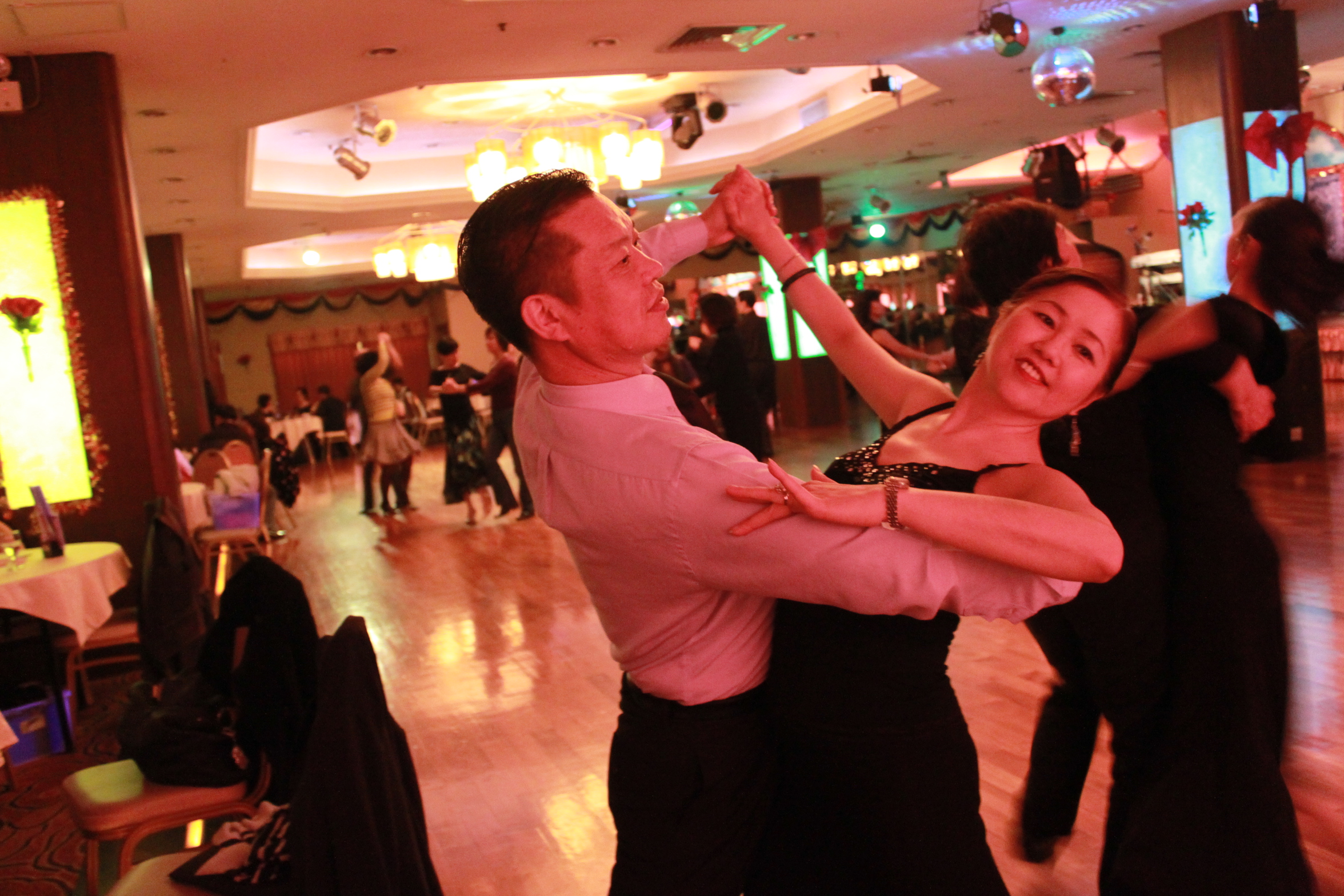
It was afternoon, but the sparkling lights were already turned on in the upstairs teahouses and ballrooms. Pairs of middle-aged dancers were in their dancing shoes, moving fluidly to the music played by the live-bands. They may not be professionals but they take their hobby seriously.

Tea dances were fashionable and wildly popular for young people in the 1960s. But with the rise of other activities like karaoke, the tea dance fell into decline.

Tea dance was defined as the dance session from two to six in the afternoon, the time for afternoon tea. Some liked to spend their whole afternoon in the dance hall, dancing freely and happily.

Although the golden age of the tea dance has past, the activity experienced a mini-revival more than a decade ago. It has now become a niche interest among the middle-aged in Hong Kong.

To cope with the increasing rent, some dance halls have moved upstairs. Some tea dance venues are Chinese restaurants equipped with dance floors. Most venues hire live bands to provide the music for customers to dance to.

Middle-aged couples can relive the past, meet their friends in ballrooms during tea-time and share the joy of dancing together. It costs about $60 to $200 for each four-hour session.

Mr and Ms Tang, a couple who has danced for over ten years, said that tea dance is suitable for all ages. Although they are in their late sixties, dancing regularly keeps them active and fit. They have loved music since they were young and now they have fallen in love with dancing. They vow to dance until they drop.

But the tea dance is not a leisure activity that can be taken lightly. Some professional training is needed. Dancers need to follow the proscribed steps and keep up with the rhythm of the music. Eric Wong, an experienced coach, gives lessons regularly in the Shatin Sunbeam Teahouse. He believes that tea dance is growing in popularity as his students are getting younger.

Martin Cheung, a manager of a ballroom in Mong Kok, says tea dance boomed again 12 years ago. But Cheung points out there is little room left for improvement in terms of facilities and services because the gross profit margin is fixed due to the maximum number of customers on any given day. It is difficult to survive in the industry.

As the tea dance session drew to a close, the bright lights came on and the dancers began to leave. Silence returned to the ballroom as Cheung and his co-workers took some time to rest before preparing the venue for the evening dance. Perhaps opening for more sessions is just another way to survive.

Iphoneography – fad, art or movement?

Editor: Gavin Li
Reporters: Jennifer Lam, Lindy Wong and Stephanie Cheng

Thanks to the rise of smartphones, people can now instantly illustrate their online updates on social networking sites and blogs with photographs. Not so long ago, they would have had to take a photograph on their camera and transfer the data to a computer to upload onto a website.

Smartphone photography has become increasingly popular in recent years, especially after the launch of Apple’s iPhone in 2007. In fact iPhone photography has evolved from simple snapshot taking to something like a branch of photography. It even has its own name – “iphoneography”.

In February and March this year, Lai Yat-nam, a local cinematographer, held an exhibition of photographs he took with an iPhone on Hong Kong’s subway system. “Underground Scene” took place at the Studio Kim Tak. During the exhibition period, Lai also organised an iphoneography workshop.

Lai says the sharing function supported by iPhone apps has made the iPhone a more popular device to shoot photos.

Raven, a participant of Lai’s workshop, also enjoys taking photos with the iPhone. “It’s easier to capture smoother and more natural scenes with iPhone cameras,” he says.

While apps appear to have facilitated the growth of iphoneography, in turn, the growth of iPhone photography has also led to the creation of more apps.

Instagram is one of the more popular apps. It allows people to apply different effects like retro-style filters to their photos and to edit them. They can then immediately upload the photos to social networking sites, such as Facebook and Twitter. The whole process takes just a minute or two.

Despite the numerous advantages of shooting photos with iPhones, there are also setbacks of iphoneography. Lai points out: “You can’t have very detailed and fine photos when taking pictures with iPhones.”

Circle, another participant of the iphoneography workshop, seems to agree with Lai. He prefers a digital single-lens reflex (DSLR) camera when pursuing high-quality photos. He also feels like he is really engaged in photography when shooting with a DSLR camera. He says many photographers actually enjoy hearing the shutter sound of the camera.

It seems that iPhones may not be the best device to shoot photos on very serious occasions. However, some photo-journalists are actually using iPhones to take news photos.

In November 2010, New York Times (NYT) published four photos showing American soldiers on duty in Afghanistan on its front page. The pictures look beautiful and delicate but they were taken using on an iPhone using the Hipstamatic app by the NYT’s photographer Damon Winter. The iPhone camera stepped up from being a gadeget for capturing the trivial scenes of daily life, to being a tool for shooting professional pictures.

In fact, smartphone photography is still undergoing development but it has great potential. iPhone users can now attach add-on lenses on their smartphones, such as telephoto zooms and fisheye lenses. The add-on SLR lenses can even practically turn an iPhone into a DSLR camera.

Nevertheless, smartphone cameras may not be able to take the place of conventional cameras despite their rising popularity and plentiful functions. Some people may still stick to using conventional cameras like film cameras as they regard their continued use as an attitude towards photography. Therefore, while smartphone cameras and conventional cameras are competing against each other, it is unlikely that either will eliminate the other.

Multimedia May 2012

Check out the May Multimedia Stories

Health Care in Trouble

Hongkongers are lucky to have one of the more equitable public health systems in the world. We enjoy relatively low-cost, high-quality care. Our hospitals employ some of the most advanced technology and our medical professionals are well-trained.

But health systems experts have long warned that Hong Kong’s reliance on hospital-based services is out of date and cannot meet the needs and growing expectations of a modern and aging society.

There are long queues at accident and emergency departments and many residents, especially the elderly, choose to use out-patient services at public hospitals rather than see private doctors.

In this issue’s Periscope, Varsity looks at some aspects of the problems facing the health system, including provision of health care services for the elderly and the shortage of doctors and nurses.

To encourage Hong Kong’s ever expanding number of old people to use private medical services, the government recently extended the Elderly Health Care Voucher Pilot Scheme for three more years to 2014. But so far, the scheme has not achieved the desired goals of relieving the burden on the public sector and increasing choice for elderly patients.

The pressure on the public system is exacerbated by manpower shortages. Reports of medical blunders frequently make the headlines, understaffing and overwork are often mentioned in these cases.

The rapid expansion of the private sector has led to an exodus of doctors and nurses attracted by the better pay and working conditions in private hospitals.

To alleviate the problem, the Hospital Authority (HA) has started to recruit overseas-qualified doctors to practise in public hospitals without first having to sit a licensing exam. But the move has met fierce opposition from local doctors.

As for the nursing shortage, the HA has also offered more training and promotion opportunities to nurses in order to retain them. However, it remains to be seen if these measures are effective.

Apart from leaving the public sector for the private one, nurses are also leaving the profession. Some nurses tell Varsity that their job is not well respected. Perhaps it is time to reflect on how nursing is perceived as a profession.

Apart from health, education is also a core issue that our society pays much attention to. In the Our Community section, Varsity looks at the associate degree and investigates whether the programmes offer students brighter prospects and value for money.


Gavin Li
Managing Editor


No Solution in Sight for Pensioners’ Plight

Vouchers fail to solve elderly health care problem
Reporter: Derek Li and Thee Lui

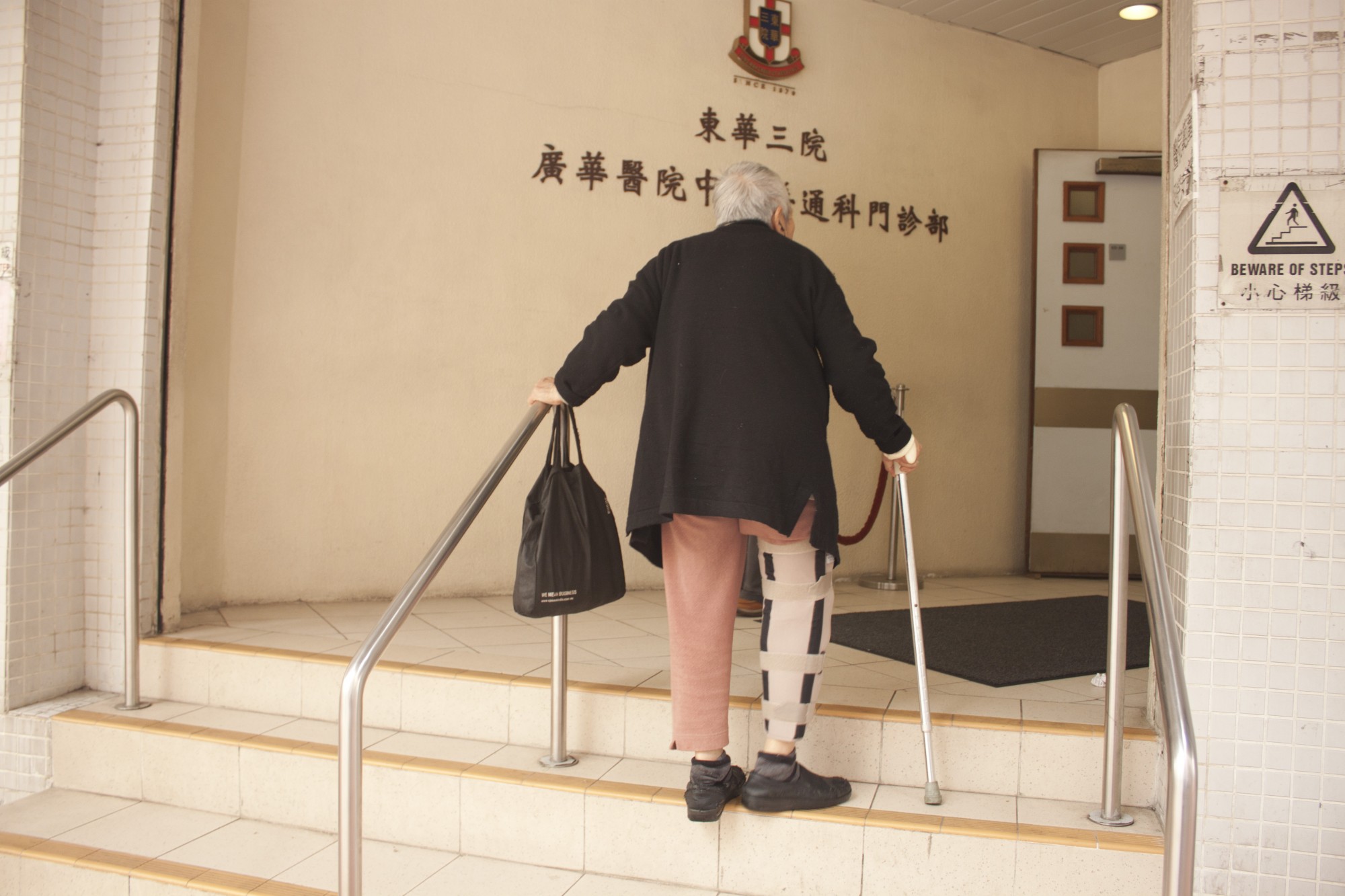
Dozens of elderly patients sit silently on benches in the lobby of Kwong Wah Hospital. The only sounds to be heard are the announcements calling for patients. Ms Lee, in her 70s, keeps an eye on the numbers flashing up on the screen and carefully checks them against the number on her chit. She knows she faces another hour of waiting.

A crowd of elderly patients wait in the lobby of Kwong Wah Hospital in the early morning and the quota is already full.

Despite the frequent long waiting times in Hong Kong’s public hospitals, many elderly accept they have to wait since they are enjoying either free medical care or paying far lower fees than they would pay at private hospitals or clinics.

This is particularly true for those with chronic diseases like Lee. She has to go to the hospital for regular kidney check-ups every month and kidney dialysis costs her more than $10,000 every month.

Lee relies on a government subsidy of a few thousand dollars a month to pay for her medical expenses. Her son and daughter, who each have their own families to support, foot the rest of the bill.

Lee lives in a private elderly home which adds to their financial burden. She is waiting for a place in a government-subsidised elderly home that would cost $2,000 to $3,000 a month, a tenth of the cost of private elderly homes.

Like Lee, most of Hong Kong’s elderly population depend on government medical services. As highlighted in the latest Policy Address, Hong Kong’s aging population presents a huge challenge for its public health system. The number of people aged 65 or above is expected to rise from the current 0.9 million to 2.1 million in 2013, which represents a quarter of the total population.

The recurrent government expenditure on medical and health services in 2012 will be $45 billion, an increase of 8 per cent on the previous year and 17 per cent of total government expenditure.

In an attempt to relieve the increasing pressure on public medical services, the government introduced the Health Care Pilot Scheme in 2009 to encourage the elderly to use private health care services. Under the scheme, non-means tested medical vouchers were issued to people aged 70 or above. Each person was given five $50 vouchers, that is, a total of $250 to spend on private primary health care services.

Two years after it was launched, the Hospital Authority reviewed the scheme last year. Of just over 1,000 elderly people who were interviewed, only around a third said they used private primary care services more than they had before. The others did not change their behaviour and 26 per cent of these respondents said the reason was because they were used to seeing public doctors; a similar percentage said the subsidy amount was too small.

Although the total value of medical vouchers was increased from $250 to $500 following the review, many believe it is still far from satisfactory.

Tang Kam-ying, 79, visits clinics several times a month. He had already used three of his 10 vouchers for the year by February and thinks that even after the increase, the vouchers cannot meet the needs of the elderly.

Each time Tang visits a private clinic, it costs him two vouchers. So, when he chooses to see private doctors, he opts for those that charge the lowest fees.

Overseas Physicians Best Medicine for Doctors’s Shortage?

Local doctors oppose scheme to make it easier to recruit overseas doctors
Reporters: Sabrina Poh & Viola Yeh

She starts her work day at 9 a.m., spending the morning checking up on and chit-chatting with patients on her ward rounds. Then she has a working lunch or talks to her supervisor at noon. In the afternoon, she has to rush to fit in more patients. Technically, she finishes work at 5 p.m., but she rarely gets to wrap up her work before 7 p.m. When she is assigned to be on-call, which usually happens one to two times per week, she needs to stick around until 1 a.m. the next day. By the time she gets home, she is exhausted; she eats, talks a little to her family and goes to bed.

Dr Vinci Ma, who is in her early 30s, studied and practised medicine in the United Kingdom (UK). She returned to Hong Kong to be with her family. As a result, she has had to adapt to the long working hours and frenetic pace of Hong Kong’s public hospitals. Here, she works 60 to 70 hours per week, compared to 48 hours in the UK.

Ma has been working in the Queen Elizabeth Hospital since 2009. Like other doctors who qualified outside of Hong Kong, she had to sit a re-qualification exam and jump through other hurdles to be granted a partial licence. “We can only practise under limited registration, which means we are restricted to working in public hospitals, in a specific department under a contract,” Ma explains.

Ma earned her medical degree from the University of Nottingham and worked in the UK as a pediatrician for three years before coming back to Hong Kong.

She spent half a year to prepare for the licensing exam set by the Medical Council of Hong Kong (MCHK). “There aren’t any [sample] exam materials. There is a syllabus but it is not very helpful,” she recalls. As a result, Ma had to go through all the materials she studied while at medical school.

She passed the examinations, which have long been criticised as difficult by other overseas-qualified doctors, on her first try. However, she still had to repeat half of her basic training before she could practise.