Glass art – a new form of art is gaining popularity
By Kayi Tsang
Glass is everywhere in our daily life –
from utilities to artwork, we can easily find products made of glass. DIY glass
workshops are also gaining popularity all over the world. Wong Kwok-chong, 56,
is a glass making artist who teaches people how to make beautiful glass
products.
Wong first learnt about glass art through
the Studio Glass Movement originated in the United States in the 1970s. After
acquiring the glass making techniques in Taiwan, he decided to set up a glass
studio in Hong Kong for glass art fans in the city in 1993.
As the first glass studio in Hong Kong,
Wong aims to promote glass art through workshops, glass restoration,
consultation services and art work exhibitions. He describes the making of
glass as “very flexible and ever-changing”. Different temperatures result in
different colours and shapes of the glass work. “The unimaginable beauty of
glass art fascinates me,” he says. Wong says glass making nowadays is more than
just blowing glass near the furnace.
Different kinds of glasses, including cold
glass, warm glass and hot glass can be produced. Each of them has distinctive
processing features such as polishing, bonding, fusing, slumping and casting.
It provides more possibilities and variations for artists to create their own
unique artwork.
Apart from producing glass art, Wong also
specialises in glass restoration. “Restoration takes time. Before doing so, you
need to understand the materials first,” he says. Even though the techniques
used in repairing glass art are more complicated, Wong finds it both
challenging and meaningful.
Wong says he helped restore Italian painted
glass windows of the Haw Par Mansion, a historical building built in 1935. It
took his team over four months to restore 20 glass windows which were destroyed
by bombing in the World War II. In order to restore the mansion to its original
shape, Wong and his team had to find materials that match the style of
architecture of that time, which made the task more challenging.
Though Wong has made great effort to
promote glass making in Hong Kong, he admits that glass art is still not widely
recognised by the public. “Glass art is more like an obscure and underground
art,” he says. “Glass is widely seen as an installation decoration, but not a
form of fine arts.”
Wong shaping a glass marble with a flame
Glass production requires huge investment and space for equipment storage, which makes it difficult for the trade to develop in Hong Kong. Wong points out government policies are introduced to encourage consumers to purchase glass art products to boost the glass art market in South Korea. Hong Kong, however, does not have such kind of policies and the market is niche.
But Wong says he will strive to promote the
art despite the challenges. “We will focus more on art creation and hold
regular exhibitions in the future,” he says.
Want to make your own unique glass art? Pay a visit to the Studio Glass Hong Kong at L0-04 Jockey Club Creative Arts Centre at 30 Pak Tin Street, Shek Kip Mei or go to their website for more details.
Yang Chun Lei, a century-year-old herbal tea shop struggles to survive
By Shell Zhang
Most people nowadays go for soda and alcohol for a drink. But in the old days, a cup of herbal tea was a more popular choice. They would gather at a herbal tea shop to chat with one another while having herbal tea.
Yang Chun Lei, a herbal tea shop in Wan Chai, has been in operation for 105 years. It is one of the few traditional herbal tea houses in Hong Kong. Yang Wen-jia, the third generation owner of the shop, says he inherits the shop from his father and grandfather.
“You can say it is our uniqueness, or just
being simple,” Yang laughs as he explains why there is only one item on the
menu. Different from other herbal tea stores, Yang Chun Lei only sells “24 Herbs” (二十四味). He explains that 24 Herbs is good for health and therefore they
focus on producing this kind of herbal tea.
Yang explains the key to enhance herbal
tea’s effect is to keep it fresh and maintain the temperature. He says at first
customers just walk by his shop and give the herbal tea a try. When they find
the tea is really effective, they visit regularly. “Some Westerners are also
our regular customers,” he says.
Although the business has been quite
successful, Yang says he has never thought of expanding the business scale. He
says the major concern is the quality of herbal tea. The preparation of 24
Herbs now requires manual labour. But if they increase the scale of production,
he is afraid that the tea quality might be compromised.
“If you do not produce the tea yourself and
rely on factories to manufacture, the tea will no longer be fresh after being
packaged and then transported here and there,” Yang says.
He admits that the herbal tea industry is
shrinking, but says his store still manages to survive. “We have the advantage
of cost since we own the store. We do not have to pay rents.”
Yang says he does not view the recent
revitalisation projects in Wan Chai as a threat to his business. “When it is
time for our community to be redeveloped, we have to leave.” Yang says he will
strive to continue the family business. “It is a family asset passed on through
generations. I have to protect my family’s name.”
Want to try the 24 Herbs and stay healthy? Pay a visit to Yang Chun Lei at 29 Spring Garden Lane, Wan Chai.
Yang Wen-jia is the third generation owner of Yang Chun Lei
The structural problem of overcapacity has long existed in the public medical sector. With increasing number of patients, public hospitals in Hong Kong are constantly overloaded. Society has to explore alternative healthcare options to minimise reliance on public healthcare in Hong Kong.
Hong Kong’s medical system is heavily subsidised by the government. Every resident has the basic right to enjoy quality medical services.
According to 2018 Bloomberg Health Care Efficiency Index, which took into account the lifespans of citizens and the costs of healthcare services, Hong Kong had the world’s most efficient healthcare system.
But the structural problem of overcapacity has long existed in the public medical sector. With increasing number of patients, public hospitals in Hong Kong are constantly overloaded, especially during peak flu seasons. People have to wait for many hours to see a doctor.
These have raised doubts over whether patients can really obtain timely access to medical treatments. Society has to explore alternative healthcare options to minimise reliance on public healthcare in Hong Kong.
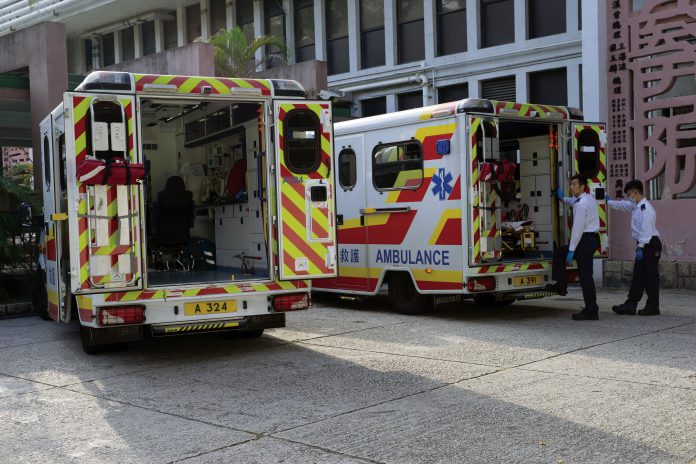
We begin by discussing the significance of first aid in our everyday lives. It has always been a race against time when it comes to life-saving situations. To increase the chance of survival, general citizens should be equipped with basic first-aid knowledge. In reality, it is difficult to promote first-aid education in school.
The Good Samaritan Law has been widely implemented in Western countries to offer legal protection to people who help in medical emergencies. We talk to scholars about the necessity of enacting the Good Samaritan Law in Hong Kong and how it can change society’s perceptions on first aid.
To alleviate the pressure on public health system, it is becoming common to employ foreign caregivers to take care of the elderly. The government has introduced the concept of “ageing-in-place” to allow seniors to live in their homes as they age.
In response to this, foreign domestic workers gradually take up the roles of caregivers at home. They can receive proper medical training from fully-subsidised courses. However, the public have little knowledge about private foreign caregivers, according to employment agencies.
In the meantime, the government is considering resorting to Chinese medicine to share the burden of the existing medical system. Chief Executive Carrie Lam Cheng Yuet-ngor has announced a plan to open the first Chinese medicine hospital in 2024. We listen to union representatives and practitioners about the functions of the hospital, as well as their concerns on its management and mode of operation.
Apart from healthcare concerns, this issue also features a variety of stories, ranging from the difficulties in accessing halal food and a profile on a LGBT social worker to the bubble tea craze. We hope you enjoy your read!
Responsible journalism cannot be more important now
By Charleen Chen
Responsible journalism cannot be more important now. When fake news goes viral around the globe in no time, a piece of news coverage can act as a powerful weapon.
While Ethical Journalism Network, an alliance of news workers aiming to strengthen journalism around the world, advocates the principles of ethical journalism, most media practitioners are just paying lip service. When will the news industry start to drop all the ill practices and act responsibly?
Ethical Journalism Network proposed five core principles of journalism: truth and accuracy, independence, fairness and impartiality, humanity, and accountability.
To err is human. Government officials may provide false information from time to time even they are often considered as a credible source. What needs to be taken care of is the way journalists handle information. In most cases, reporters directly cite what officials say without doing any fact-checking.
To ensure accuracy, journalists should never overly rely on interviewees, particularly government officials. Grace Leung Lai-kuen, lecturer of the School of Journalism and Communication at the Chinese University of Hong Kong, notes questions officials receive can be categorised as expected and unexpected ones. Questions that are expected usually relate to big issues, such as policies. The media can raise questions to information officers beforehand, so that officials can prepare their answers. Questions that are unexpected may lead to rushed answers with incorrect information. Journalists must check the fact by doing additional research after interviews of such kind.
From interviewing to publishing a news story, most of the journalists go all the way out to dig out as much information as possible. Such an attitude is professional but it may invade other people’s privacy.
Leung criticises that to make news juicier, many reporters go too far and deep when collecting information, so much so that they put people’s private life under the sunlight. “Public information like deaths and injuries in an accident is supposed to be reported,” Leung continues, “but if other things that are irrelevant to the incident get published, it may become a privacy issue.”
Citing a car accident in Hokkaido which involved Hong Kong famous actor Eric Tsang as an example. Leung says while public information including drivers, injuries, and location is released, some news outlets reveal a lot of information about a woman sitting next to Tsang in the car. The woman, who allegedly is the girlfriend of Tsang, had no direct relation to the cause of the accident. However, many journalists tried to gossip about her relationship with Tsang by exposing her personal details, such as her ex-husband, occupation, and how she got to know Tsang.
Tsang’s incident may ring a bell. The death of Princess Diana, back in 1997, leaves a shocking impact on the world until now. To shake off paparazzi, the driver drove at a very high speed thus accidentally bumped into a pillar, taking away Diana’s life.
This serves as a painful reminder: tragic consequences could happen if the press invades one’s private life. How unfair it was for the princess. When she tried to protect her privacy, a fundamental human right, she sacrificed her life.
The cases above are just the tip of the iceberg. Not just famous people, press nowadays are inclined to neglect privacy of the general public. Journalists must strike a balance between seeking the truth and respecting privacy, for it is both a legal-moral and life-death issue.
Every news outlet must take journalistic responsibility
In journalism, there is no such thing as “what’s done is done”. When a news story turns out to be fake, or people involved in certain news stories demand to correct false description about themselves, journalists and editors must take the responsibility to right the wrong.
But in reality, quite the opposite is true, especially when the internet takes the lead. News stories are spread in a blink of an eye, and the journalism industry turns a blind eye to accountability. Many news practitioners make excuses by blaming the internet, which allows readers to keep a record of news reports easily. They justify their reluctance to make correction by claiming that even if a mistake is corrected, false reports have been spread already.
Journalists can be so cruel that they are seldom aware of the harm they have caused. Ordinary people are often hurt by the media. In reporting a car accident, journalists may portray a victim as a good father, mentioning his contribution to his family as a breadwinner over the years. But bringing this up has nothing to do with the accident and will not comfort the victim’s family. Rather, such news rubs salt into the wounds by reminding the family their loss. What’s worse, when they demand to remove such private contents from the news coverage, most journalists will refuse to do so.
Cases like this happen all the time, and it is very unethical for journalists to turn a deaf ear to the voices of ordinary people, simply because they are not politicians or celebrities. Journalists should put themselves into others’ shoes to produce news stories with humanity that makes the world a better place, but not harm.
More citizens have to learn first aid to make time for the paramedics to save lives
By Agnes Lam and Kayi Tsang
Basic first aid education – first aid from ANYONE
Clad from head-to-toe in blue lycra fabric, “Anyone” is the Fire Services Department’s safety representative. The blue mannequin-like figure is featured in the department’s series of promotional videos demonstrating life-saving techniques. His videos have become a viral sensation since his debut on social media last August. Apart from being an amusement for viewers, “Anyone” has a serious message for the people of Hong Kong – Anyone can help save lives. Anyone in the city can learn to administrate cardiopulmonary resuscitation (CPR) in times of emergency.
Over 5,000 cases of sudden cardiac arrest were reported outside hospitals every year, and less than three per cent of these patients survived from acute heart attacks, according to a study by the Hong Kong Academy of Medicine published in 2017. Only 29 per cent of patients having heart attacks were given CPR before the ambulance arrived.
The Hong Kong St. John Ambulance (St. John) is a charitable group dedicated to promoting first aid knowledge to the general public. Chairman of the group Chung Chin-hung says it is important for every citizen to be equipped with proper first aid skills in order to help people in need when accidents happen. “First aid is the extension of doctors. It is necessary for citizens to learn this basic knowledge,” he says.
Chung Chin-hung, chairman of St. John
Chung believes education is the best way to promote the concept of first aid to the general public. St. John has been providing free first aid courses at both primary and secondary schools for the past few years, but schools’ responses are not enthusiastic. Among the 400 primary schools in Hong Kong, only 70 of them have enrolled in the first aid courses provided by the organisation.
“The schools tell us their students are too busy with their studies. They do not have the time to take our courses,” Chung says.
In some Asian countries such as Japan, Singapore and Taiwan, first aid training courses have been treated as regular school curriculums. Students are trained to use an automatic external defibrillator (AED) to perform resuscitation during emergencies. But the Education Bureau in Hong Kong does not require schools to provide such training for students.
Ho Dao College is one of the few secondary schools participating in St. John’s first aid training courses. Chan Kwong-kau, the teacher in charge of the first aid team, agrees that some schools may find it difficult to make time out of their busy class schedules for first aid courses. Even if they are free of charge, time is their main concern.
The solution for Chan’s school is to include first aid training in Physical Education curriculum. Every Form five student is required to undergo three hours of training during their PE classes. They are taught to perform CPR in case of emergencies.
Other than students, Chan says it is also important for teachers to learn first aid knowledge, as they have the responsibility to keep their students safe during lessons and outings.
“We organise a lot of outdoor activities and field trips. If teachers are equipped with first aid skills, they will be able to take care of our students if they get hurt,” Chan explains.
While most of the time teachers perform simple treatments like bandaging for students with minor injuries, Chan recalls he once rescued a student who fainted and lost his breath a few years ago. Chan put theories he learnt into practice and performed artificial respiration on the student. The young man was revived at the end, even before an ambulance arrived at the campus.
Chan Kwong-kau, the teacher in charge of the first aid team in Ho Dao College
Legal concerns – The Good Samaritan Law
Abraham Wai Ka-chung, clinical assistant professor of Li Ka Shing Faculty of Medicine at the University of Hong Kong, says most citizens do not feel obligated to perform first aid treatments to others in need, as they think it should be done by medical professionals. Even they have such awareness and skills, there is currently no specific law in Hong Kong to offer legal protection to first aiders. That means a first aider could be legally liable if something goes wrong during the process.
Wai suggests that the government should implement the Good Samaritan Law in Hong Kong by taking reference from other Western countries in which legal protection is given to people who give injured people reasonable assistance. He believes introducing such a law will give first aiders a stronger sense of security when they perform emergency treatments on those in need.
“The main purpose of the legislation is to reduce their worries by stating clearly they won’t face legal problems as long as they try to save lives in good faith,” he says.
Abraham Wai, clinical assistant professor of Li Ka Shing Faculty of Medicine at the University of Hong Kong
Health services sector lawmaker Joseph Lee Kok-long agrees that with the introduction of Good Samaritan Law, people with basic first aid skills will be more confident to perform emergency treatment on strangers. But Lee says the progress of legislation “is still in stage zero”. He adds that the legislative process is complicated and may take years to complete.
The Double Track Approach
Axel Siu Yuet-chung, former chairman of the Resuscitation Council of Hong Kong, says the government should adopt what he calls, ‘Double Track Approach’, while waiting for the lengthy legislation process to complete. He suggests making first aid training as compulsory courses in schools.
Axel Siu, former chairman of the Resuscitation Council of Hong Kong
Siu points out patients in need of urgent treatment cannot rely on ambulance service only, as time is always crucial when it comes to medical emergency such as resuscitating a patient of cardiac arrest.
“A patient’s death rate increases by seven to 10 per cent if AED is performed one minute late. If it takes 10 minutes for an ambulance to arrive, there is little chance for the patient to be revived,” he says.
Hong Kong is searching for solutions to take care of the growing elderly population with limited resources
By Emilie Lui & Cynthia Sit
Four months ago, Fredaley, an ordinary housewife, left her home in the Philippines and came to Hong Kong alone. Barely able to speak a word in Cantonese, she had no experience working as a domestic helper. But her employer Ms Yue still decided to hire her to take care of her father who is over 90 years old.
Retraining abroad
An 18-month pilot scheme was launched by the Social Welfare Department in 2018 to strengthen the skills of foreign domestic helpers in taking care of frail elderly and enhance their quality of life in the community. In collaboration with the Department of Health and six District Elderly Community Centres operated by non-governmental organisations, training classes are available in Wan Chai, Kowloon City and Tsuen Wan districts.
Training courses are taught by professional nurses, physiotherapists and occupational therapists, covering common elderly care skills such as fall prevention, first aid and assisting the elderly with mild mobility impairment to change positions. Domestic helpers will be awarded attendance certificates after finishing the course.
Domestic helpers can learn elderly care skills such as feeding, helping them take medicine and taking their blood pressure with the elderly in the course
“[I have learnt] how to feed the elderly, [help them] take a bath and help them take medicine,” Fredaley says. Yue notices Fredaley’s performance has improved after joining the pilot scheme, which equips her with medical knowledge.
Wiri, 24, another domestic helper from Indonesia who joined the training courses, says she has to take care of Ms Yu’s family and her 87-year-old mother. Wiri believes the certificate has given her recognition and she has learned a lot from the lessons. “The in-class instructions are clear,” she says, “[the trainers] teach us step by step.”
A total of 300 free training places are provided. The scheme receives overwhelming responses and Yu had to queue in a waiting list for Wiri’s place. “Both my mother and my helper can learn something from the courses,” Yu suggested the organiser that employers should participate in the scheme together with their domestic helpers. “Elderly have their own opinions,” she says, “and domestic helpers cannot make their own decisions since it depends on the preferences of the elderly.” She believes it is important for the elderly and domestic helpers to work together.
Ageing in place
According to the Census and Statistics Department, the Hong Kong population is projected to be ageing with an increase of elderly aged 65 or over from 1.16 million (16.6 per cent of the total population) in 2016 to 2.37 million (31.1 per cent) in 2036. The projected increase means greater demand for medical care services.
In light of the situation, the Chief Executive Carrie Lam Cheng Yuet-ngor proposed a series of elderly services programmes, aiming to achieve the target of “ageing in the place as core, institutional care as back-up”. By “ageing-in-place”, the elderly are allowed to choose to live and age in an environment they are familiar with and are attached to. With a limited supply of residential care services, foreign labour might be a solution for elderly care policies.
New solution?
Other than foreign domestic helpers, private foreign caregivers are also hired to take care of elderly at home in Hong Kong. They are usually registered nurses with a higher education level and recognised qualifications. Currently, most of the private foreign caregivers in the market are from Indonesia and the Philippines.
When they come to Hong Kong, they stay with their own employers. However, even with professional training and registered nurse licence obtained in their own countries, tasks that private foreign caregivers can perform are restricted to non-invasive treatment – wound care and massaging for example. They are not allowed to perform invasive treatments, such as injection, without a medical practitioner license.
KL Home Care Limited is an agency which recruits foreign domestic helpers and caregivers for local families. Its CEO Vincent Lau says they do not encourage or allow caregivers to perform invasive treatment even if certain caregivers have obtained relevant licences. “Caregivers can simply dial 999 or take first-aid measures if there is something wrong with the elderly.” The risk is too high for both the caregivers and agencies to bear. “Any kind of errors can get them into trouble as they can take someone’s life.”
While private foreign caregivers could be a solution to solve the problem of ageing population, Lau points out that only 10 per cent of the elderly care market is looking for private foreign caregiver services. “The market has a preliminary understanding on the private foreign caregiver industry,” Lau says. “They do not understand what we are selling, or what kind of services we can provide.”
Apart from little knowledge about the industry, Lau reveals another major difficulty to achieve ageing-in-place. “You have to renovate the house, including renovating toilet and installing rails, in order to construct a suitable environment for the elderly and chronic patients in particular.”
Lau predicts the industry needs three to five years to grow. With lower demand for private foreign caregivers, he believes that with suitable training, the foreign domestic helper scheme is sufficient enough to minimise the pressure on the public health system. “We must train foreign domestic helpers who are working in Hong Kong because we have no choice,” Lau adds. “If we don’t train them, it is impossible for us to import sufficient foreign domestic helpers to cater to the great demand in the market.”
Vincent Lau, CEO of KL Home Care Limited, believes it takes three to five years for the private foreign caregiver industry to grow
Best medicine?
Under the policy of “ageing-in-place”, foreign labour will play a major role in providing care services. Amid of positive responses from foreign domestic helpers and their employers regarding the pilot scheme, a spokesman for the Social Welfare Department says the government is considering to extend it to other districts with training places being increased to around 800.
Legislator Fernando Cheung Chiu-hung says the pilot scheme is worth implementing on a large scale. He thinks it is beneficial to provide training to domestic helpers, as there are around 380,000 of them in Hong Kong. However, he is concerned if employers will offer domestic helpers free time to join the training courses.
Although “ageing-in-place” can be achieved by both private foreign caregivers and domestic helpers, Cheung thinks the government fails to facilitate “ageing-in-place” because public services are in shortage.
Though the pilot scheme is well-received by the participants, Cheung believes importing foreign domestic helpers or providing them with certain training is not the ultimate solution. “You won’t expect people with different cultural and language backgrounds to take care of the elderly and the needy,” he says.
Hong Kong’s first Chinese medicine hospital is expected to open in late 2024
By Bonita Wong & Wayne Chang
Western medicine has always been a core element of Hong Kong’s public medical system. But with the launch of the city’s first Chinese medicine hospital, a change of government’s attitude may turn the tide.
Highlighted in the 2018 Policy Address, Hong Kong’s first Chinese medicine hospital will be a “flagship institution” for the sector. The government will subsidise certain in-patient and out-patient services. The 400-bed hospital is expected to come into operation by phrases from late 2024.
The idea of setting up a Chinese medicine hospital first emerged in 2014, and a site in Tseung Kwan O was reserved for the project.
Utilisation of human resources
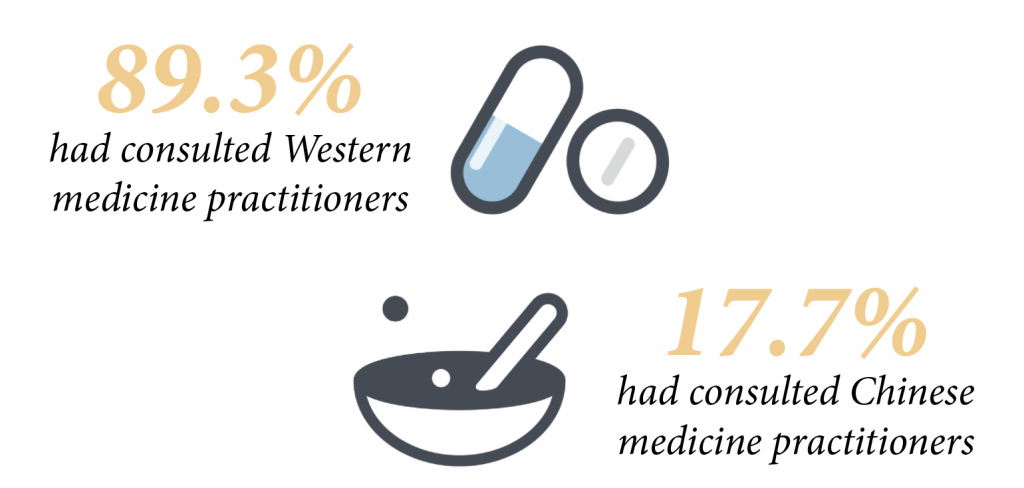
Chinese medicine practitioners hope this new facility can help the industry better utilise its manpower. According to a survey published by the Census and Statistics Department in 2015, almost 90 per cent of the population consulted practitioners of Western medicine, whereas less than 18 per cent consulted Chinese medicine ones.
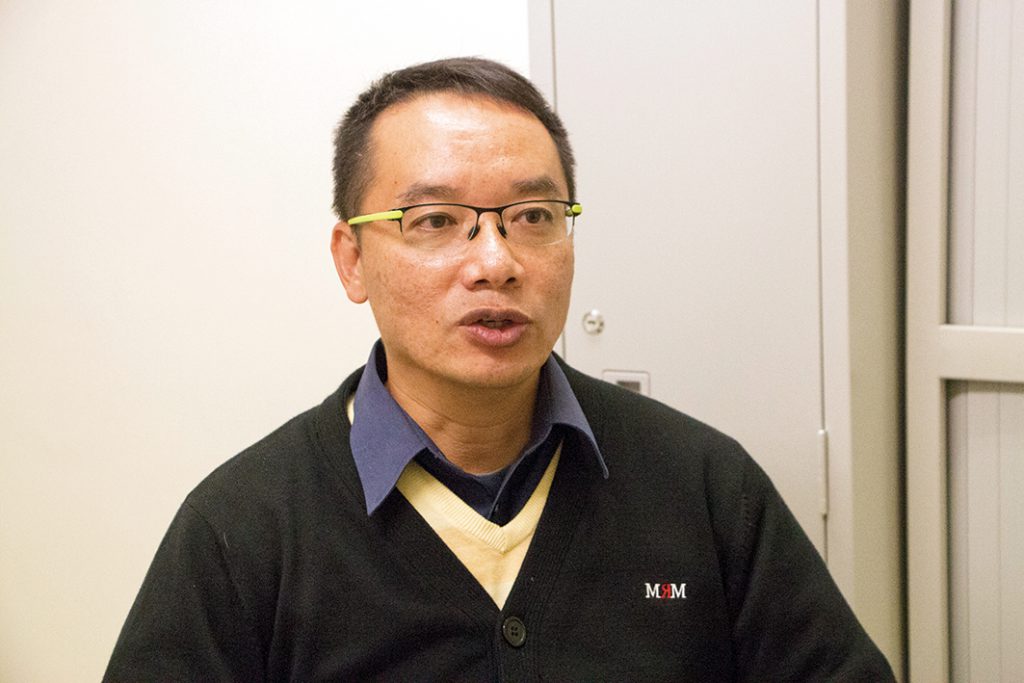
“There is an oversupply of human resources,” says Sung Chun-kei, chairman of Union of Frontline Chinese Medicine Practitioners (Hong Kong). He notices a serious imbalance in doctor-patient ratio when it comes to traditional Chinese medicine.
According to Sung, the number of Chinese medicine practitioners is now about 10,000. Although the population size of Western medicine doctors is slightly larger, they can work on different platforms, such as hospitals and specialist divisions. But Chinese medicine practitioners are only serving a smaller group of patients.
Apart from providing more opportunities, the future hospital is believed to be able to enhance the development of Chinese medicine. “We know the government has been actively exploring the role of Chinese medicine in healthcare. Initially, they did not know much about the functions of Chinese medicine. But now you can see the government has a clearer picture of the positioning of it,” Sung says.
As announced in the 2018-19 Budget, a Chinese Medicine Development Fund of HK$500 million is set up to facilitate applied research and Chinese medicine specialisation. Part of the fund is dedicated to promoting public awareness and nurturing talents for Chinese medicine hospital.
Management and ownership of Chinese medicine hospital
To maximise the room for further development, the Chinese medicine hospital will be operated by a non-profit organisation on a self-financing basis. The government will finance the construction and select an operator through tendering procedures.
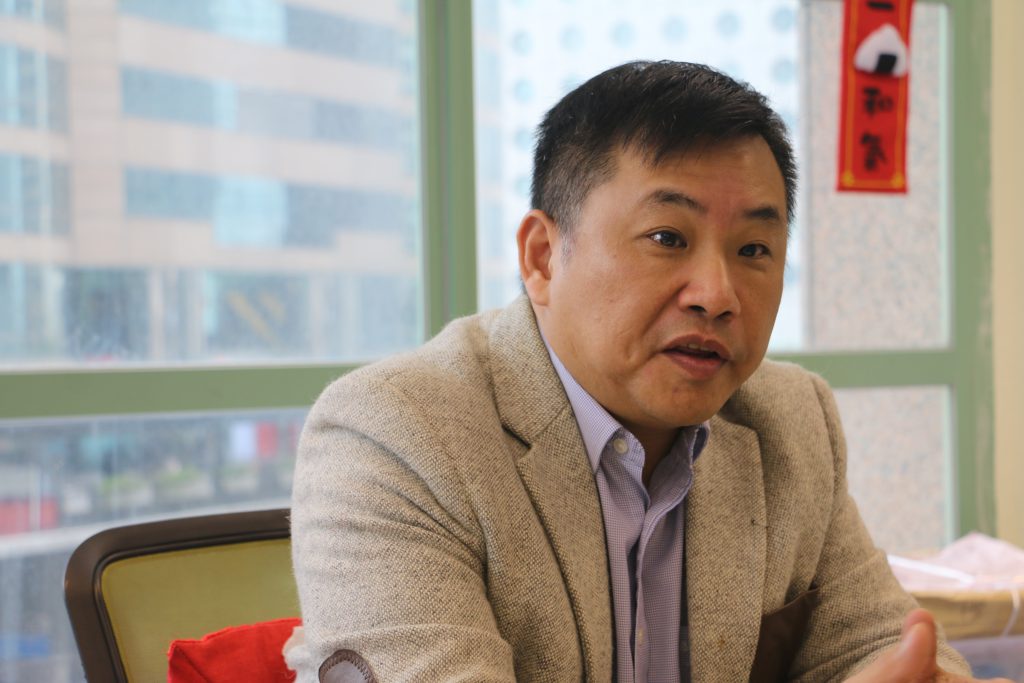
The ownership arrangement has received divided responses among stakeholders. The plan is not welcomed by some practitioners like Sung. He says: “We have a very clear stance: we want the government to fully own the hospital.”
Sung also expresses worries over the sustainability of the project. “To achieve long-term development of Chinese medicine, the government itself must take the responsibility. What if an NGO (non-governmental organisation) quits after running the hospital for 10 years? Then, the government would have to look for another one. Would this affect the business model and the quality of services?” he asks.
Sun Siu-yan, Officer of Union of Frontline Chinese Medicine Practitioners (Hong Kong), says the proposed mode of operation has some advantages. She, however, recalls how Dr Cheung Wai-lun, Project Director of the Chinese Medicine Hospital Project Office, addressed their concerns in a meeting.
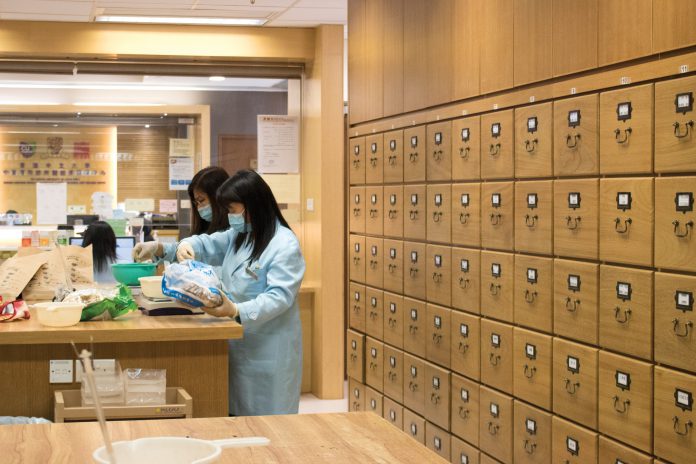
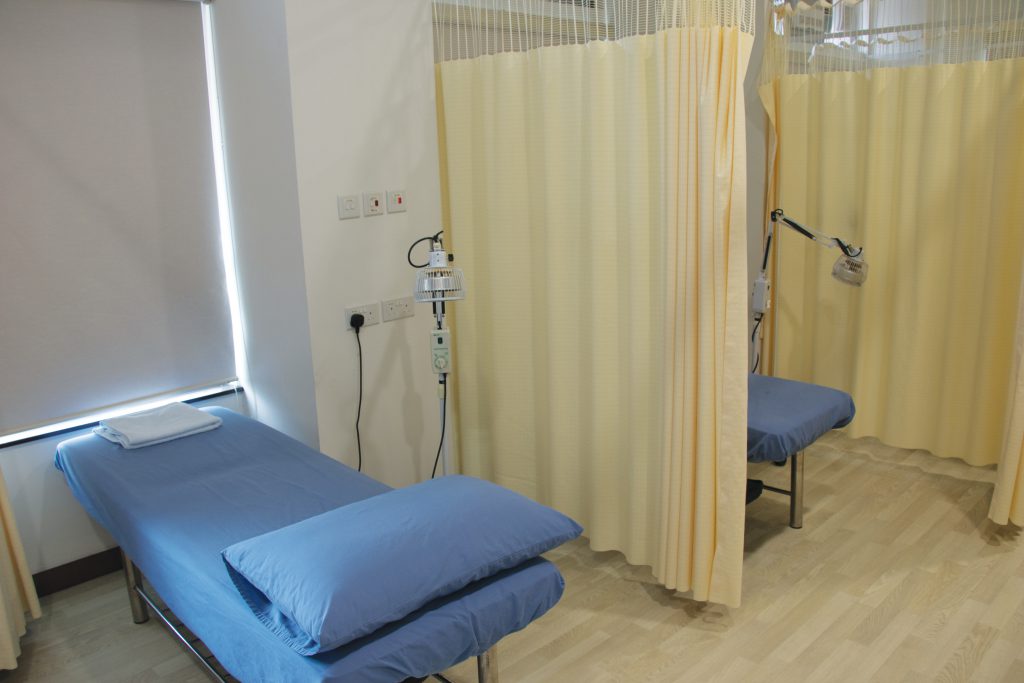
Examination beds and equipment at The Chinese University of Hong Kong Chinese Medicine Specialty Clinic cum Clinical Teaching and Research Centre
“During the start-up period, Cheung said, if the hospital was solely managed by the Hospital Authority, there would be many constraints imposed by the government, unlike the flexibility that is available now for discussions. If an NGO administers the hospital, we can easily make amendments when we feel like something is not working well,” she says.
Contribution of Chinese Medicine Centres for training and research
Despite having less ownership, Sun believes the government is still proactive in the planning of the hospital. She says the government has taken reference from its previous experience in running the public Chinese Medicine Centres for Training and Research (CMCTR).
Based on the information of Legislative Council papers, CMCTR operate on a tripartite collaboration model, which involves the Hospital Authority, NGOs, and local universities. NGOs are responsible for daily operations of the centres. There is one CMCTR in each of the 18 districts in Hong Kong.
“The government has acknowledged problems in CMCTR that need to be solved immediately. The government’s role is to improve the situation so that these issues do not resurface at the Chinese medicine hospital. The problems mainly revolve around resources allocation,” says Sun.
Collaboration of Chinese and Western medicine in the hospital
Other than ownership, another controversy lies in the adoption of an Integrated Chinese-Western Medicine service model. Western medical equipment and treatment have always been crucial for curing acute cases and complex illnesses. Due to existing legal regulations, Chinese medicine practitioners are forbidden to carry out Western medical procedures.
In fact, the collaboration between Chinese and Western medicine has been in practice for some years. Cooperating with tripartite CMCTR, the Hospital Authority has launched the Integrated Chinese-Western Medicine Pilot Programme since 2014. Eligible patients can receive Chinese medicine treatments at designated public hospitals. More importantly, they serve as testing grounds to incorporate Chinese in-patient medicine and explore plausible clinical frameworks for the future hospital.
However, Professor Joseph Lee Kok-long, legislative councillor for the health services functional constituency, stresses that the new hospital “should be a purely Chinese medicine practitioner-operated hospital”. When discussing the handling of severe illnesses, he believes acute cases should not be handled there.
“Traditionally, a Chinese medicine hospital should not have operation rooms. If you need to stay in the [Chinese medicine] hospital, you are purely receiving Chinese medicinal treatment, instead of being intervened by Western doctors,” he says.
Lee believes the establishment of the Chinese medicine hospital carries a symbolic meaning for the whole industry. It reflects that the government recognises the significance of Chinese medicine. Historically, the first hospital in Hong Kong, which was operated by the Tung Wah Group of Hospitals 150 years ago, was also a Chinese medicine hospital.
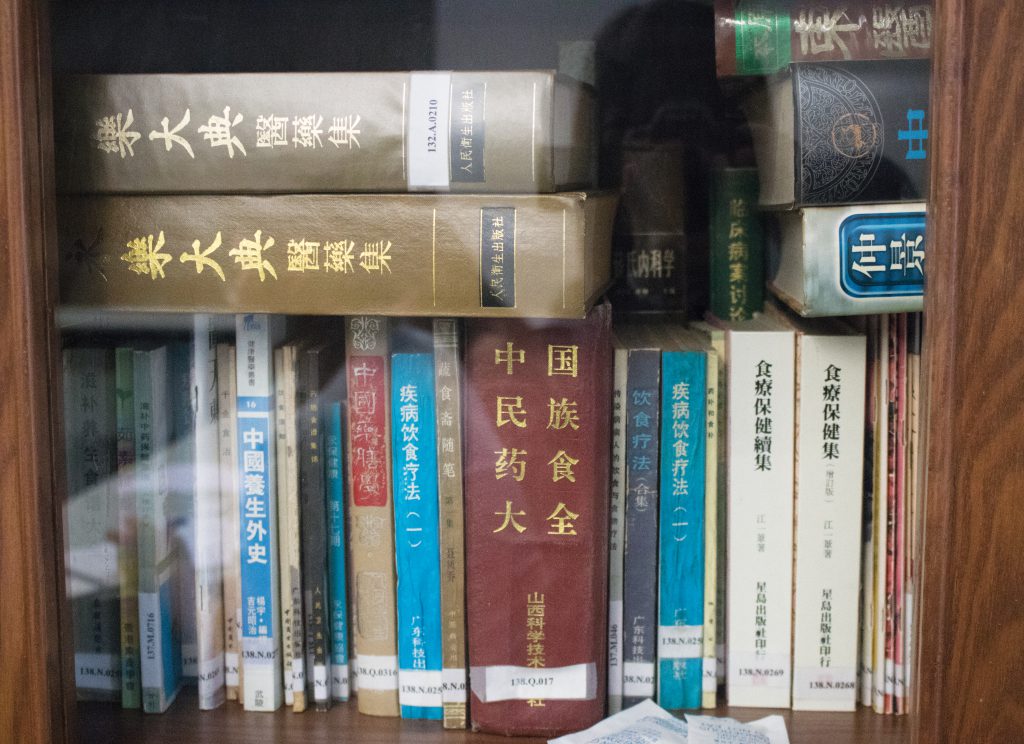
The School of Chinese Medicine at CUHK houses a wide collection of books on the use of Chinese medicine
Rather than advocating exclusive use of Chinese medicine in the new Chinese medicine hospital, Professor Lin Zhixiu, Associate Director at the School of Chinese Medicine at the Chinese University of Hong Kong (CUHK), holds a different view. “In terms of medical techniques, the relationship of Chinese and Western medicine should be complementary. Also, they should respect each other,” he says.
Lin says it is necessary to resort to Western medicine practitioners in times of emergency. They can carry out blood tests, X-ray examinations and prescription of Western medications.
In general, Lin is optimistic about the establishment of the Chinese medicine hospital. “It can enhance the overall remuneration level of the sector. As the Chinese medicine hospital is the leader in clinical research in Hong Kong, hopefully it can raise the professional standard of the industry,” he says.
Local Muslims look for a more diverse selection of halal food
By Regina Chen & Hayley Wong
“It was the biggest sin that I’ve ever made,” says Mubina Jabeen, a 21-year-old student at the Chinese University of Hong Kong.
The “sin” she committed was eating a pineapple bun made with lard by accident when she was eight. Being a pious Muslim, eating the bun is not just a matter of making a wrong food choice. Consuming products containing pork content is a strict taboo in Islam.
“I felt extremely disgusted and I was guilty at the same time… So, I had to pray and ask for forgiveness from my God,” she says.
To avoid consuming food forbidden by her religion again, Jabeen has been extremely cautious in choosing her food ever since.
Why does halal food matter to Muslims?
Muslims have to follow the dietary standards as prescribed in the Quran. They are required to follow a halal diet – eating only what is permissible by their God. Precautions must be taken during the preparation of halal food. For instance, halal meats have to be processed, transported and stored according to Islamic guidelines.
Ibraheem Mohammad
“Before the actual animal is slaughtered, the animal needs to be looked after properly…After it is slaughtered, when it is being transported, there should be no contamination between halal and non-halal,” explains Ibraheem Mohammad, halal products certification officer of The Incorporated Trustees of the Islamic Community of Hong Kong (the Trustees).
What is the significance of halal-certified restaurants to Muslims?
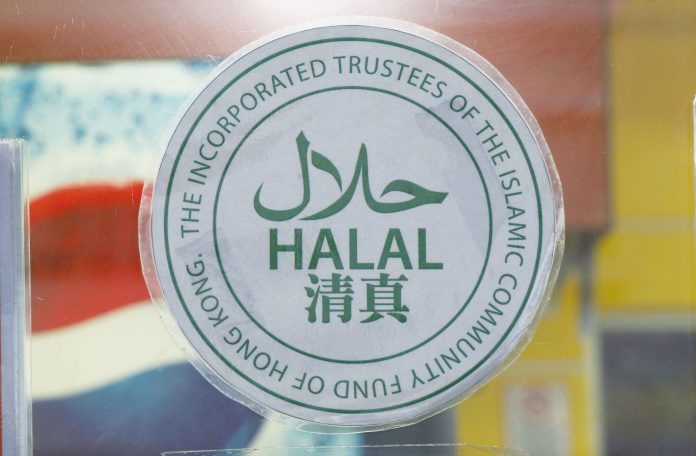
The Trustees has started certifying halal restaurants since 2006. The initiative is to provide the local Muslim community a sense of security of what they are eating. Mohammad says religious experts from the Trustees would inspect halal ingredients used by the restaurants to make sure that they come from a trustable source.The cooking method of halal food also has to comply with Islamic laws.
“We make sure there is nothing mixed in the process. We make sure there is no contamination from the fridge to the cooker until being served,” Mohammad adds.
So far, there are 72 halal-certified restaurants in Hong Kong. The number of restaurants, however, is limited comparing to the large Muslim population in Hong Kong. In the 2016 Hong Kong Year Book, the Census and Statistics Department estimated the Muslim population in the city to be 300,000.
What are the hurdles local eateries may face to become halal-certified?
A higher cost of imported food can be an issue for restaurants to become halal-certified. Anil Rekhani, director of Ebeneezer’s Kebabs & Pizzeria, says the company has to import 90 per cent of their meat as it is very difficult to find halal meat in the city. He reveals the cost of halal meats in Hong Kong can be 10 per cent higher than normal meat.
Some meats can be way more expensive, such as pepperoni and ham. “Normally, pepperoni and ham are made of pork. But pork is not halal. So, we specially import turkey-based ham from Malaysia, which is five times more expensive than pork ham,” says Rekhani.
Ebeneezer’s is currently the largest halal restaurant chain in Hong Kong. All of its 17 branches have received halal certificate issued by the Trustees. Rekhani says it is not too difficult to obtain a halal certification. The obstacle, however, is to maintain the certification. He says officers from the Trustees would conduct regular spot checks and surprise inspections on restaurants, which might hinder the daily operations of some.
“They will regularly come into your kitchen. Without asking you anything, they open up your fridges, your storeroom and check each and every item,” Rekhani says. Smaller restaurants might find it difficult to accommodate such a requirement, deterring them from getting a halal certification.
With 17 branches across the city, Ebeneezer’s offers local Muslims a wide selection of Halal cuisines
Are Muslims enjoying a wide variety of halal food in Hong Kong?
Mehmet Emin Arduç, an 18-year-old Muslim high school student who has moved to Hong Kong for five years, is concerned with the healthiness of halal food served in restaurants. Although halal food choices have increased in recent years as halal restaurants can be found in almost every district now, he finds only a few of them serve nutritious cuisines.
“Most of the food in halal restaurants are unhealthy. That’s also the reason I do not like eating outside,” says Arduç. “The food is too greasy and too heavy.”
Professor James Frankel, director of Centre for the Study of Islamic Culture at the Chinese University of Hong Kong, believes there are enough restaurants to satisfy the halal demand, but people would like to have more options and variety.
“I have some Chinese friends and when they think of halal, they match that with the Islamic culture or Muslim people that they know. So, they think halal food must be kebab and curry… People think that because there’s a cultural association, but any food can be halal,” says Frankel.
The Islamic Centre Canteen is the only Halal-certified eatery in Hong Kong that serves pork-free dim sum
What can be done to make Hong Kong a more Muslim-friendly destination?
Last year, Hong Kong was on the list of top five Muslim-friendly non-OIC (Organisation of Islamic Cooperation) destinations in the Global Muslim Travel Index. Frankel says Hong Kong should seize the opportunity brought by its incoming Muslim tourists and the growth of the local Muslim population.
“Hong Kong prides itself for being an international city and being a magnet for tourism and business. If you want to attract Muslim visitors and also the increasing Muslim population, I do think the government could initiate some programmes, and some promotion to increase the awareness of not only halal but also Islam in general.” he says.
Currently, the Hong Kong Tourism Board organises seminars to encourage companies to promote halal tourism. It also puts the list of certified halal food outlets on its website for Muslim tourists. But Frankel suggests more can be done to incentivise more businesses to accommodate halal food demand.
He cites Taiwan as a model. The region has a similar proportion of Muslim population like Hong Kong but has made strong efforts to boost Islamic business development and attract Muslim tourists. The Taiwanese government has been hosting the Taiwan International Halal Expo since 2012 to provide local companies access to the world’s halal market.
Frankel says it is important to educate local eateries the market potential of halal food. He believes steps should be taken to create a favourable business environment for local restaurants to accommodate halal demand, such as providing capital incentives like tax reduction. In that way, Hong Kong can have a greater variety of food and eventually a bigger share of the Muslim market.
“In the end, this is going to be a cost-and-benefit analysis”, says Frankel.
Parents raise concern over students’ safety as safety belts are not equipped in all school buses
By Alice Wang and Kelly Chen
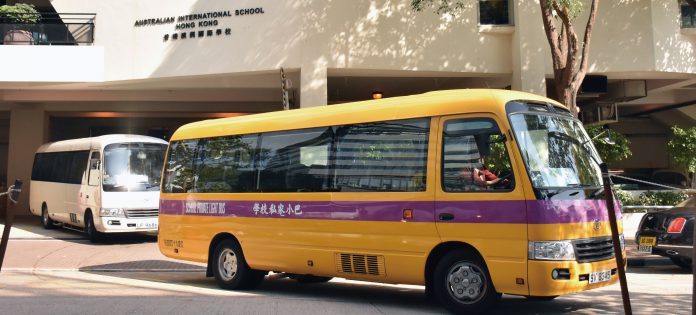
Road traffic congestion is nothing new in busy Hong Kong every morning. Among the many vehicles flooding the roads across the city are 5,212 school buses conveying tens of thousands of school pupils from homes to school.
Out of the 50 school bus accidents that took place between 2014 and 2018, one of the most severe school bus accidents happened when a bus rammed into a road divider in Kowloon Bay in December last year, injuring seven students aged between six and 11.
Ms Li, whose nine-year-old daughter studies on Hong Kong Island, raises concern about school bus safety. “Children do not fasten their safety belts when they are on board. There’s no seatbelt on the coach,” Li says. “It worries me that the driver might be driving too fast as the children sometimes describe it as a roller coaster ride.”
Li thinks the children are not well protected due to the lack of safety belts on school buses. “I think it is necessary that children fasten their safety belts. However, there may not be safety belt on the bus or the school bus attendants do not require the children to do so because they will get off from the bus soon.”
The Transport Department requires all student service vehicles registered on or after May 1 2009 to install “safer seats” – strong and closely spaced seats with high and energy-absorbing seat backs – to reduce the risk of students being thrown out of their seats and the extent of the injuries in vehicle collisions.
However, safety belts are not required by law. The department’s figures show by January, 22 per cent of school buses riding in the city are without safer seat or safety belt installed.
According to the Transport Department, 5,212 school buses have registered with license eligible to provide student service by January 2019
Concerns from the Service Provider
Lam Chi-ping, chairperson of School Buses Operators Association, says parents nowadays are more cautious about school bus safety. “Parents always ask if there is any safety belt available on the school bus to be reassured.”
He says there is concern hanging in the air when it comes to mandatory installation of safety belts.
“After some previous coach accidents, some people have demanded shuttle bus companies to install safety belts,” he says. “It is better for the new batch of buses now as they usually come with safety belts. However, it can cost up to HK$300,000 to install safety belts for the old-modelled ones.” Lam adds that most companies tend to phase out the old models, instead of investing a hefty sum for new installation.
Even if old coaches are replaced that safety belts are available, Lam says it remains unclear who should take up the legal responsibility for not fastening the safety belts.
Lam Chi-ping
“Should the responsibility to fasten safety belts be held by the passengers, the drivers or the attendants?” Lam questions. “If the onus lies on the drivers and attendants, their responsibility would be huge because they have to look after all children,” he adds. “But you cannot keep your eyes on them all the time.”
However, Ho Chu-ping, president of the Federation of Parent-Teacher Association in Tai Po says otherwise. Ho believes the attendants and drivers have the responsibility to ask students to fasten their safety belts. “They are responsible for looking after the children during the ride. They need to have the safety awareness to take care of the children.”
He adds that many kindergarten school instructors would now act as escorts to take care of the children during the ride for that they know better about the children, “These instructors would act as attendants to accompany the children along the bus ride. Discipline of the children becomes better, but school bus fee will definitely go up.”
The Transport Department distributes guidelines to schools, school bus service providers, parents and students
Are Seatbelts Necessary?
Despite a growing interest calling for safety belt installation on school buses, there has been a long-running debate over whether school buses are safer with safety belts. Lo Kok-keung, a veteran mechanical engineer, believes ordinary safety belt is not necessarily the best protection for children because it is usually measured at adult’s size.
“A three to four-year-old kid can easily pull their neck if he or she is wearing an adult’s seatbelt and the waist part (of the seatbelt) will be too loose for them, thus having limited effectiveness to keep them safe,” he says.
However, Lo thinks safety belts are essential to keep the passengers intact during an accident. “The ride is only safe when one is wearing a seatbelt. You can always keep the children protected when a seatbelt is fastened. In case of any car accidents, the kids would not be thrown outside of the vehicle,” he says.
Lo suggests that school bus companies install child car seats with specially-designed safety belt to reduce the risk of death and injury in a traffic collision, “They are like baby seats for private cars. You can put a few on your bus – which means you do not need extra installation.”
Stepping up to safety
Safety measures on non-franchised buses like school buses have been widely discussed following a serious traffic accident in February last year. A KMB bus flipped onto its side in Tai Po with 19 people killed.
In January this year, an independent review committee made 45 recommendations for franchised bus operations in the city, which included: providing funding for franchised bus operators to promote the use of new safety technology and requiring buses to provide real-time alerts of excessive speeding.
“Poor driving behaviour can only be uprooted only if drivers are reminded of their problems whenever they are spotted.”
Dr Hung Wing-tat, a long-time member of the Hong Kong Society of Transportation Studies, believes similar practices should be introduced to non-franchised buses that would ride on highway with speed limit above 70 kilometres per hour. “Every vehicle on the highway, especially those carrying passengers, needs to reinforce their safety apparatus.”
“There are some safety devices available in the market that can reveal if a driver gets exhausted, dozes off, drives too close to a vehicle in front or has sudden acceleration and halt.” He suggests school bus companies install these devices, and remind drivers of the risk of dangerous driving behaviour.
These devices will be of great help to school bus safety. The Transport Department finds accidents involving school bus last year were mainly caused by drivers who were “driving too close to the vehicle in front” and “disobeying give way sign”.
Hung believes training of drivers are of utmost importance. “Even if these safety devices are in place, management of bus companies should also offer retraining and valuation system to drivers. Poor driving behaviour can be uprooted only if drivers are reminded of their problems whenever they are spotted,” he says.