Ng Dick-hay is running his second campaign after losing in the Legislative Council Hong Kong Island By-election earlier this year, obtaining only 0.8% of the total votes. The unaffiliated anti-independence activist says he joins the Kowloon West By-election to raise public awareness on the poor living conditions of the grassroots.
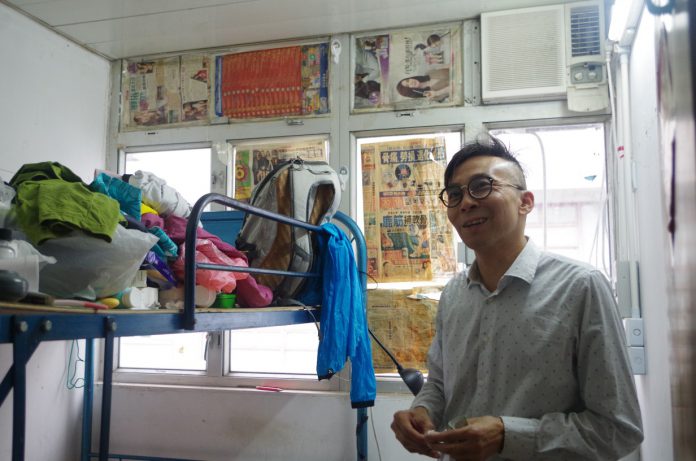
Calling himself “Subdivided Flat Brother” (劏房阿哥), Ng currently rents a tiny flat on the 9th floor of an old building in Sham Shui Po with a monthly rent of HK$4000. He sets his eyes on becoming the first lawmaker living in a subdivided flat, but admits that he has a slim chance of winning the by-election.
Ng Dick-hay wearing a T-shirt that says “reintroduce tenancy control, eradicate micro-flats”.
Wearing a white T-shirt with red Chinese characters reading “reintroduce tenancy control, eradicate micro-flats”, the 54-year-old IT officer says the government should restore the tenancy control scheme to protect tenants’ interests and pave way to a better economic development in the long run — a move which Chief Executive Carrie Lam Cheng Yuet-ngor has ruled out in her latest Policy Address.
As a former spokesman of anti-independence group Defend Hong Kong Campaign, Ng writes on his campaign platform that Article 23 should be legislated as soon as possible. “With strong trust, Hong Kong people can gain Beijing’s support to bargain with the 1% of very wealthy people for economic well-beings,” he says.
Besides, he also advocates for the implementation of Moral and National Education in primary and secondary schools, which he believes can strengthen students’ sense of Chinese identity.
However, Ng doesn’t identify with the “typical” pro-establishment advocates. “If you read my political campaign thoroughly, [you would find that] many ideas I proposed are even more aggressive than some localists or pan-democrats,” he says. Apart from opposing the government’s “Lantau Tomorrow Vision” reclamation plan, he says he holds “localist” opinions on some urban planning issues.
Ng believes running for election as an unaffiliated candidate allows him more freedom to express views on sensitive issues. “I don’t need to listen to anyone. I only need to follow my heart,” he says. “I can speak [out] on some sensitive issues. No other candidate will do so.”
“I don’t need to listen to anyone. I only need to follow my heart.”
Although he admits the lack of support from a political party makes it tough for him to compete with other candidates, Ng says his purpose of joining the by-election is not necessarily to win, but to spark off public debate on poverty and housing issues. Sitting in his tiny flat in Sham Shui Po, he says: “I can ask them [the media] to come here to report on the real situation [of living in subdivided flats] and the dilemma people are facing.”
*The other candidates in the 2018 Legislative Council Kowloon West By-election are Rebecca Chan Hoi-yan, Frederick Fung Kin-kee, Lee Cheuk-yan and Judy Tzeng Li-wen.
Hong Kong’s education system has been surrounded by controversies over the past decade. These controversies include Moral and National education, the Territory-wide System Assessment (TSA), increasing suicide rates among schoolchildren, to name but a few. In this month’s Periscope, we look at how Hong Kong’s education system affects student’s social mobility in a broader perspective.
We have been taught from childhood to associate education with
social mobility.
In primary schools, little children are often advised to study hard so that they can be admitted into one of the better secondary schools which, in turn, could prove a bridge to a good university. In secondary schools, teachers told us to endeavour to get the best results in the public examinations if we wanted to study a desirable major in a good university.
However, the notion that we can “change our fate with knowledge” has been challenged in recent years. It might not hold true if we ignore the significance of the social locations of each individual. Their social and economic status does play a role when they try to move up Hong Kong’s social strata. Therefore, in the Periscope section of this issue, we look into the situation of our secondary and tertiary education system where some students find it harder to advance their future prospects through education.
The Direct Subsidy Scheme (DSS), according to the Education Bureau, was set up in 1991 to “enable secondary schools to have greater flexibility in resources deployment, curriculum design, and student admission”.
Schools under the DSS scheme can also collect school fees which help provide additional support services and school facilities. The result is that they can impose tuition fees that are unaffordable for grassroots students who are thus denied access to quality education.
The objective of DSS is to inject more variety into Hong Kong’s school system, so how well is the scheme doing to achieve this objective? Varsity has talked to alumni from DSS schools and education advocates to look into the impact of the scheme on the social mobility of less privileged students in Hong Kong.
While most of the students in Hong Kong are admitted to universities through the Joint University Programmes Admissions System (JUPAS), more well-off students might choose options outside JUPAS by taking the more expensive International Baccalaureate (IB) or GCE A-level examinations in Hong Kong, which are known as “non-JUPAS admissions”.
Lawmaker Ip Kin-yuen discovered that, in general, 5.3 per cent of freshman students had IB or GCE A-Level qualifications in the past academic year but, shockingly, the percentage of non-JUPAS students in programmes like business, medicine and law has exceeded 35 per cent.
That means the well-off students are concentrated in the upper tier of the social strata, while the less well-off ones may find it harder to move upwards. Therefore, in the second Periscope story, we talked to education experts, advocates and students in order to examine the disparity in education between the well-off and less well-off students in university admissions.
Other than stories about education, this issue also features stories about student athletes, wet markets and the disappearing signscape in Hong Kong, as well as a variety of cultural and human interest stories. Don’t miss out any of them and enjoy the read!
Direct subsidy schools are damaging students’ social mobility academics claim
By Raven Hui & Civi Yap
Retired primary school principal Leung Kee-cheong sighs with regret over the inequalites in the Hong Kong education system.
He bemoans the deep differences between government schools and those on the Direct Subsidy Scheme (DSS) and the effect on students.
For Leung, the division between rich and poor students is not just heartfelt – it needs to make headlines. And, back in 2002 he did just that.
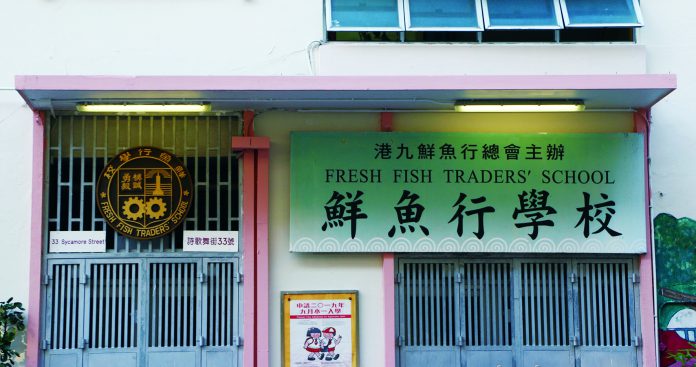
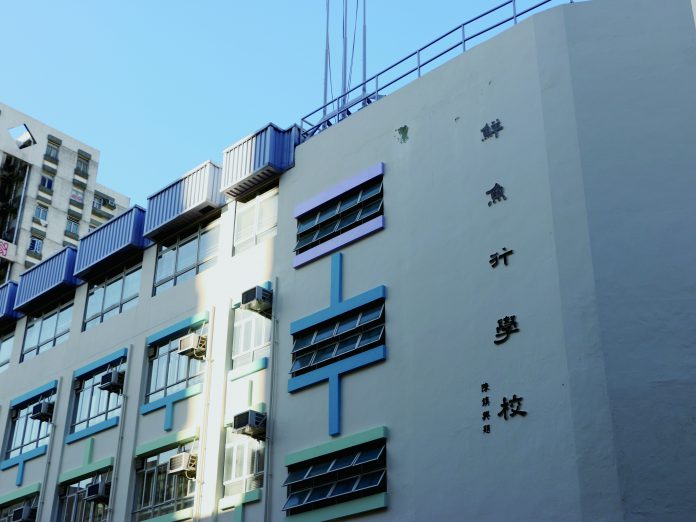
That year he left his school development officer job in the Education and Manpower Bureau to take over the closure-threatened Fresh Fish Traders’ School in Tai Kok Tsui, Kowloon. Then the battle for the school for mainly grassroots students really commenced. Leung fought long and hard and won. He remained as the school’s principal until his retirement in 2015.
Now, however, he is thinking of one student in particular who won a place at a DSS school.“Yeung Man was a top student and I recommended her to get into Heep Yunn School in 2013. But I learnt that she dropped out of school last year, as she could not manage her studies while having a part-time job to cover the tuition fees,” Leung says.
“This is very unfortunate,” he adds. “Our school can help students to get good results with the aid of donations, but once they get into secondary school, there are no more resources that can help them. I have tried to contact her, but she did not pick up my call.”
The Fresh Fish Traders’ School, well-known for helping grassroots students.
The DSS was introduced in 1991 to inject diversity into the local education system by giving some schools autonomy in management and some independence in setting fees and curriculums. DSS schools receive a government subsidy for each student who is enrolled but are still allowed to collect fees.
Heep Yunn School’s annual school fee for each student, for instance, is HK$33,000 while at St. Paul’s Co-educational College, the fee is HK$61,000 for secondary school classes, and HK$91,500 for International Baccalaureate Diploma Programme (IBDP) classes. These schools, therefore, have more resources to provide additional support services and facilities, such as building swimming pools and offering exchange opportunities.
Students who studied at DSS schools believe their school brought them more opportunities and exposure. Yam Wai-shan, a graduate of St. Paul’s Co-educational College, says: “My school arranges a four-week summer exchange programme to Australia for third-year students every year…and it is partially funded by the school.” Wong Yui-hang, a graduate of Heung To Secondary School (Tseung Kwan O) says the school has “a lot of co-curricular activities…they always hire the top tutors from the sports field.”
In recent years, many top government-funded schools have made the switch to DSS. There are now 60 DSS secondary schools across the city and the change has sparked speculation that these prestigious schools made the move in a bid to maintain their social status in society.
“When DSS was introduced in the late 90s, not only Hong Kong but the whole world was talking about the new public management model which is bringing the mode of private business into education to enhance the efficiency of the sector. Senior government officials and education elites thought this could improve the functionality of education,” says Hayes Tang Hei-hang, assistant professor in the Department of Education Policy and Leadership at the Education University.
Hayes Tang says the original aim of DSS was to improve efficiency and diversification.
Retired school principal Leung believes many schools switch to DSS because they want to have automony in student admissions. “Due to the decreasing population in Hong Kong, the number of students become fewer. Schools want to adopt DSS to maintain their own reputation hence they eliminate less wealthy students who are randomly sent by the government’s Secondary School Places Allocation,” he says.
Leung points out students in government funded schools and those in DSS schools are not competing on a level playing field. “This is not fair competition. Competition between DSS schools and aided schools is never fair. DSS schools receive money from the government and from the parents by charging tutition fees. You have double income and resources, how can that be fair? ”
Students also observe inequalities between aided schools and DSS schools. Lam Ho-yi, a graduate of Po Leung Kuk Laws Foundation College, a DSS school, recalls: “I had experience of the dissection of a mouse, ox eye and pig lung. But I found that my friend who studied in a government-aided school never had dissection at school. This made me realise that our school did really have more resources.”
Grassroots students who cannot afford the school fees of DSS schools can only go to government-aided or government-funded schools. Grassroots students admitted into the traditional, more prestigious schools still have a chance to move up the social ladder but Leung warns that once all those schools turn into DSS schools, they will lose that chance completely.
“Take say Maryknoll Convent School, a government aided-school; I can still be admitted if I study in a primary school somewhere else. But if I apply for St Paul’s Co-educational college, which is a DSS school and most of the student quota is taken up by their affiliated primary school, I couldn’t get in as the places left in the quota are only for people who are wealthy enough.”
This puts students from grassroots families at a disadvantage as they cannot afford the school fees. Even though DSS schools give out scholarships and financial schemes, poorer students are less likely to apply. Leung says: “To apply for financial help, you have to prove your family is from the low income category but then you would not pass the interview in the first place if you come from a low income family.”
Photos of Lam Ho-yi going on an exchange programme in Japan when she was in secondary school. (Photo courtesy of Lam Ho-yi)
Despite the growing polarisation, there are still groups who stand against turning prestigious government-funded schools into DSS establishments. In 2013, groups of former pupils and parents at St Stephen’s Girls’ School successfully fought against the school board applying to become a DSS school.
They are, however, a rarity and meanwhile bright students from less wealthy families will be screened out by DSS schools at the interview stage, according to Leung. “When a teacher is choosing students, they will accept you if you live in Laguna City [a private housing estate]. You will be rejected if you live in Lam Tin Estate [a public housing estate],” he says. This means DSS schools are favoured by the middle-class families.
The DSS Council was unavailable for comment about Leung’s claim at the time of going to press.
Some DSS schools adopt the International Baccalaureate (IB) programme instead of Hong Kong’s Diploma of Secondary Education (DSE) – the public examination students take in the final year of secondary school. Since the government recognises the IB certificate, students can choose to take HKDSE exams or the IB programme. The fee for the IB programme, however, is not included in the tuition fee. Students who are taking IB have to pay an additional fee of around HK$30,000.
Leung notes: “Students choose IB over DSE because DSE is harder. Yet, students from government-aided school don’t have a choice but only taking the DSE exam…Only DSS students get to study the IB programme and the ratio of the university intakes of students from IB, GSCE, Non-JUPAS is higher.”
Eventually, fewer poor people will have the chance to study in these elite schools which will affect their access to tertiary education and hinder Hong Kong’s social mobility. “Social mobility in Hong Kong has a trend of polarisation. We have mobility, but it all depends on your class background,” says Professor Wong Yi-lee, assistant professor in the Faculty of Education at the Chinese University of Hong Kong. “If you come from a wealthy family, you can go up; otherwise, you fall deep down.” She points out that the education system has lost its function as a social mobility mechanism to improve people’s living standard.
Wong adds that it is understandable that successful government-aided schools prefer switching to DSS so that they can enjoy autonomy in student selection. “As a school principal, he or she must be thinking of the interests of his or her own school and wants to maintain the quality of the school by admitting quality students.”
The IB programme in DSS schools, she says, offers students extra advantages. “Even though students with IB certificates only make up a small amount of the university admissions, it seems like the medical department has taken in a lot of students with IB certificate…This creates inequality, because most of the time…IB is for students who have a better income background.”
She adds: “Parents have different strategies to try to bypass this competitive route in order to send their children to university in every generation. And this time it is the IB programme. Since you don’t have to send your kids overseas, and why not take the IB? This creates inequality relating to the wealthiness of families.”
Wong believes random allocation is the most suitable method to rectify the situation. “Previously, when we allocated students for basic education with random allocation, we were able to admit students from all levels,” she says, “Random selection is better if you believe teaching is better when there is a group of people with mixed ability and background, which means you have all kinds of students in a class. Students actually can learn better from each other, like they get to know students with different background in a class.”
Odd admission rates raise questions on fairness and social mobility
By Scarlet Shiu & Jasmine Ling
On August 6, 2018, Gabriel Leung Cheuk-wai, the Dean of Medicine in the University of Hong Kong (HKU), held a press conference announcing the admission results of the 2018/19 academic year.
This year the number of students admitted to the Bachelor of Medicine and Surgery programme under the Joint University Programmes Admission System (JUPAS) dropped drastically to 49 per cent, significantly lower than the usual 75 per cent. The figures have sparked public debate over the fairness and transparency of the current university admission system.
The government currently provides about 15,000 publicly funded first-year degree places for local students every year through the eight University Grants Committee (UGC) funded universities. That means about 18 per cent of the students trying for admission will be admitted. This year, 13,134 publicly-funded places were granted to JUPAS applicants, leaving a small percentage for the non-JUPAS students to fill in. The overall figures may show no cause for alarm, but the admission data of some prestigious degree programmes present a different picture.
Admission figures show that an increasing number of students in prestigious degree programmes, such as medicine, international business and law, are from the non-JUPAS stream. The University of Hong Kong (HKU)’s Li Ka Shing Faculty of Medicine, for example, admitted 114 students through JUPAS and 121 non-JUPAS applicants. The faculty once pledged to maintain the ratio of JUPAS and non-JUPAS at 75 to 25, but the ratio now is reduced to nearly 50 / 50.
The number of local students taking DSE and IB examinations from 2013-2018
Number of local students taking respective exams
2012
2013
2014
2015
2016
2017
2018
DSE
73074
82283
79572
74131
68128
61624
59000
IB
1594
1807
1962
2038
2072
2235
-
Source: The Hong Kong Examinations and Assessment Authority (HKEAA) and The International Baccalaureate (IB)
According to data analysis of university admission for the school year 2018/19, by legislator Ip Kin-yuen, who represents the education constituency, non-JUPAS admission for Chinese University of Hong Kong’s Bachelor of Business Administration in International Business and Chinese Enterprise programme counts for 46.2 per cent, and 43.5 per cent for the university’s Bachelor of Business Administration in International Business and Global Management programme.
“The JUPAS admission rate of HKU’s Faculty of Medicine is particularly alarming. The university in 2013 promised that at least 75 per cent of the school places at the faculty would be reserved for students from the JUPAS stream, for the sake of promoting social mobility. But the results show that the admission rate of JUPAS students was far below that standard. We are very concerned about the increasing number of non-JUPAS students being admitted to other prestigious programmes too,” Ip said in a press statement.
In early September, the Education Bureau issued a statement in response to media enquiries pointing out that “the share of students who gained admission to UGC-funded places intake via JUPAS route stood at about 83 per cent in the past three years without much fluctuation. Among local students admitted via non-JUPAS routes, over half are sub-degree or degree holders. For the remainder, less than half hold non-local qualifications when applying for admission. The statistics prove that candidates of the Hong Kong Diploma of Secondary Education Examination (HKDSE) have all along been the major source of local students for UGC-funded undergraduate programmes.”
The press release also stated that “UGC-funded universities are allowed to enjoy autonomy in the selection of students” and “each university has its admission policy and criteria based on the principles of fairness and merit-based selection”.
The Chinese University of Hong Kong, in a press statement also issued in early September, said the university selected the most deserving students among numerous applications, irrespective of the academic qualifications held by local applicants. The university said it did not impose any fixed ratio regarding the admission of JUPAS and Non-JUPAS students to individual programmes, and flexibility was allowed in admission to cater different departments’ and schools’ needs and concerns.
However, Ip, who is also an education scholar, argues that when students are taking different curriculums and examinations, standard criteria are needed to make a fair evaluation of different grading systems applied by different examinations.
As Ip points out, according to the Hong Kong Examinations and Assessment Authority (HKEAA), the cumulative percentage of students attaining level 5** in DSE is 1.3 per cent. On the other hand, the cumulative percentage of students attaining H7 in IB Diploma Programme is 7.7 per cent.
“Hong Kong students perform well in IB examinations and their percentage of getting H7 could be up to 24.4 per cent, which is far higher than DSE. I am worried that students are not competing on a level playing field, and the situation is less favourable to most DSE students,” he says.
Fung Wai-wah, president of the Hong Kong Professional Teachers’ Union, believes the ratio of JUPAS and Non-JUPAS students admitted to prestigious undergraduate programmes indicates that the current system is not fair to local students applying to universities with DSE examination results. “Whether students take IB or DSE, they are all elites. The problem is why universities admit more from the Non-JUPAS stream than JUPAS.” he says.
But the Education Bureau, in a press statement issued on September 4, argued that international score comparison systems (such as the Universities and Colleges Admissions Service) show that elite students taking the HKDSE perform just as well as those taking other international examinations (such as the International Baccalaureate and the General Certificate of Education A Level). “The Education Bureau is of the view that there is no evidence showing that it is easier for local students taking international examination to be admitted to the UGC-funded undergraduate programmes,” the statement read.
Despite the government’s view, Fung points out that only well-off families can afford to send children to schools which provide IB curriculums, as IB curriculums are only available at Direct Subsidy Scheme (DSS) schools, private schools, and international schools which charge expensive tuitions fees. “The majority of students, especially those from grassroots families, have no other way of improving their chances of being admitted to universities,” he says.
Matthew Chow Tsun-ho, a former IB student at Diocesan Boys’ School (DBS), who is now taking a double degree in social science and government and laws at Hong Kong University, says: “The only reason why I think IB students can have a higher chance of entering universities is that if you pay 100 per cent effort to study IB curriculum, you can secure at least 70-80 per cent of the return. If you accidentally slip during DSE, you can lose everything.” He explains that IB curriculum puts more emphasis on course assessment, unlike DSE, which relies on examination results only.
Chow shares Fung’s view that only students from well-off families can afford to study at schools that offer IB curriculums due to expensive tuition fees. The monthly tuition fee at DBS is HK$6,000 a month, he says.
Another IB graduate, Cherrie Chung Yuen-chee, 18, is a first-year student in the Bachelor of Medicine and Surgery (MBChB) programme at the Chinese University of Hong Kong (CUHK). Explaining why she chose to continue her medical studies in Hong Kong, she says: ‘It is because I want to practise medicine in Hong Kong instead of overseas. If I study medicine abroad, I will have to pass the qualifying examination in order to practise in Hong Kong. The examination has a very low passing rate,’ Chung says.
Fung believes that the rising admission rate of non-JUPAS students is unfair for DSE candidates, mainly due to the large difference in the number of applicants between the two systems. “There are nearly 50,000 DSE candidates every year, with 20,000 candidates obtaining the minimum entry qualification. These 20,000 candidates have to fight for half of the seats, while there are only a few thousand people competing for the other half. This makes it easier for non-JUPAS candidates to enter these popular subjects as compared to JUPAS students,” he says.
Wong Yi-lee, assistant professor in the Department of Educational Administration and Policy at CUHK, explains that IB curriculums in DSS schools enjoy higher autonomy than government schools.
For example, they are free to set their own tuition fees and their own IB curriculum.
Wong says: “Even though equal consideration is given to both JUPAS and non-JUPAS students, IB is not accessible to all students. IB seems to be easier, but grassroots families cannot afford it.’
Hui Hon-wing, a lecturer at the Department of Educational Policy and Leadership at the Education University of Hong Kong (EduHK), echoes Wong’s view that the DSS system is enforcing the uneven distribution of resources among low-income and well-off students. He states that the whole system “encourages some aided schools with good academic performance to become DSS schools that offer IB curriculums. It is true that this can lower the financial burden of the school, but if we place this issue in a social context, it means that students from grassroots families will have a much lower chance to enter these schools.”
Schemes to regulate the city’s more than 120,000decades-old signboards may dim visual landscape
By Iris Yeung & Gloria Li
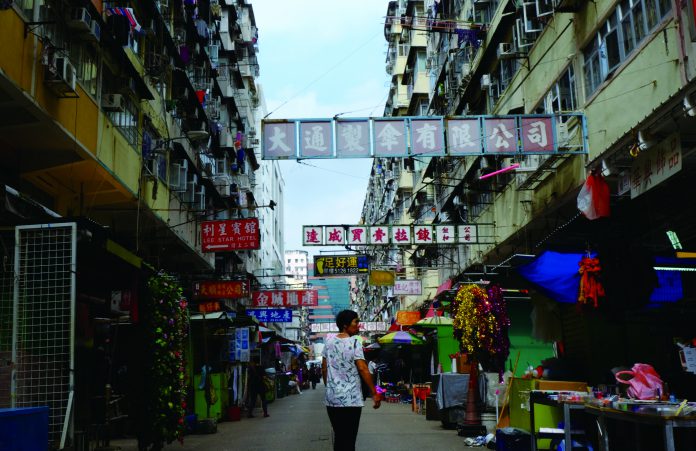
Colourful neon signs and eye-catching billboards have long been a defining characteristic of Hong Kong’s cityscape. An interesting blend of exquisite craftsmanship, expressive typography and creative design, arrays of distinctive signboards protruding from buildings have long shaped the city’s visual culture, giving visitors a dazzling sight of the Pearl of the Orient.
But visual delight though they are, some of the city’s signboards can be potential bombs hanging over our heads. A survey conducted by the Buildings Department between May 2011 and December 2012 found about 120,000 signboards across the city, most of which are unauthorised.
While the government insists most of them pose no potential danger, accidents involving falling signs resulting in casualties are not uncommon. Last December, a three-metre-wide signboard of a gaming centre in Yau Ma Tei came loose and fell onto pedestrians, injuring three men. In June 2008, a restaurant wooden signboard in Wan Chai fell off and killed a passer-by.
Veteran structural engineer Simon So Yiu-kwan says local signboards, mainly composed of wood and steel, may be structurally dangerous if their fixing is not strong enough. As he explains, while wood weakens after absorbing too much water, metal is easily rusted by rainwater and iron may break under fatigue.
Apart from falling, So says if signboards are not properly hung, they pose a threat to the structural safety of buildings as well.
“Some signboards are too large. They are often fixed on columns or beams of a building. In strong wind, the signboard will create a large turning force called torque onto the structure, which is potentially damaging to the columns or beams,” he says.
Currently, a signboard is considered unauthorised if its owner has not obtained approval from the Buildings Department, or followed the requirements under the Minor Works Control System. The department issues emergency removal order for signboards which are found to pose immediate danger to the public.
According to Development Bureau’s statistics, Varsity has compiled a table showing the number of unauthorised signboards found in three districts notorious for this issue in 2015—2017:
District
2015
2016
2017
Yau Tsim Mong
868
737
632
Wan Chai
350
434
356
Central and Western
230
173
262
(Source: Development Bureau, May 2018)
The neon sign of Ka Do Li Restaurant in Jordan, which had been in use for more than two decades, is one of the signboards which vanished after receiving a statutory removal order from the Buildings Department.
Restaurant owner Ms Lau, who does not wish to disclose her full name, says the projection of the signboard was found to violate current building safety regulations. Had she refused to remove the signboard, she would have been subjected to a daily fine of HKD$20,000. She says after the signature signboard was removed, the restaurant’s revenue dropped by half.
However, enforcement effort by officials so far is still not enough to impress residents in Yau Tsim Mong, where most unauthorised signboards are located.
In a committee meeting of the Yau Tsim Mong District Council earlier this year, the Buildings Department came under fire for making “slow progress” in taking action against unauthorised signboards in the area. Officials issued 180 “Dangerous Structure Removal Notices” in the area last year, but only about half of the signboard owners complied with the removal order. The department explained that their work was limited by the lack of manpower and resources.
Vincent Cheng Wing-shun, Kowloon West lawmaker and Sham Shui Po District Councilor, thinks the government should speed up the validation process and make the progress more transparent.
“Although the validation procedure cannot be simplified, [the Development Bureau] should find a way to boost manpower, and give the owners who have applied for validation some guaranteed finished dates,” Cheng suggests.
“They could introduce a certain vetting phase within, say, 35 days.” He also thinks the voluntary nature of the scheme is too lenient and legislation is needed.
Leung Tim Chopper Factory, whose signature knife-shaped sign has been issued a removal order.
Carrying out safety inspections of 120,000 signboards across the territory is seemingly impossible within a short period of time, so officials are also taking extra steps to encourage better maintenance by signboards owners. The Buildings Department has implemented a signboard validation scheme in 2013. Owners of signs installed before the implementation date of the scheme are allowed to continue their use if they have sought approval from the department, meet specific safety requirements, and undergo inspection every five years.
The Development Bureau, however, told lawmakers in May that less than half of the total 662 applications had been validated by the department so far. The scheme comes under criticisms for its lack of transparency and effectiveness.
North District Councilor George Pang Chun-sing, who is also a registered structural engineer, says many small business owners would not bother to go through the validation process before putting signboards up, as it may cost them extra time and money. Even if they are willing to take measures to ensure the safety of signs beforehand, Pang says they usually encounter difficulties in finding the right buildings professional to help them earn approval from the government.
“It might be a headache for businesses running on a shoestring budget, say like shops owned by a couple. Where can they find those authorised contractors? They simply do not know about that,” Pang says.
“After refurbishment, they will return to business. They will not apply for an authorisation of their signboards because it is too complicated.”
Pang says most of the shopkeepers he knows find the rules too hard to follow, the government should consider simplifying or even relaxing the validation scheme: “Of course I’m afraid of the safety risks, but a business can hardly survive without its signboard.”
He suggests that if a signboard is proved to be safe by a professional, it should be exempted from the required vetting process.
It is not only shop owners who feel strongly about the removal of signboards. Architect and photographer Kevin Mak, who co-founded concern group “Streetsignhk” which promotes conservation of signboards, says the government’s ongoing signboard demolition campaign neglects the cultural values of street signs.
“The regulations give an impression that signboards are dangerous. Safety concerns aside, we think the government is not viewing signboards in other ways, like from a cultural or tourism perspective,” he says.
Mak thinks that the vibrancy of signboards is a key feature of Hong Kong’s cityscape, which has mesmerised many visitors.
“When we were little, signboards were everywhere. We wouldn’t pay much attention to them. But when foreign tourists come to Hong Kong, they look at them as a local signature,” he says. “For example, quite a number of foreign movies are set in Hong Kong streets featuring signboards.”
Ken Fung, another co-founder of the concern group “Streetsignhk”, hopes the government could provide more options to shop owners so that they can keep their symbolic signage, instead of adopting an “one-size-fits-all” approach to eliminate all unauthorised signboards across the city.
A large overhead neon sign inscribed with eye-catching Chinese calligraphic characters in red in Woosung Street in Yau Ma Tei highlights traditional design of the old Hong Kong vibe. This newly crafted signboard of Tak Hing Sea Products was hung up this year, following the shop’s relocation in January.
“This is a brand new signboard which adopts the same fonts as our previous one. We want to make it easier for customers to find our shop,” says Mr. Leung, Tak Hing Sea Products’ owner.
The owner of the decade-old shop says he is willing to spend extra time and money to comply with the new requirements.
“We have already spent tens of thousands of dollars on this signboard anyway. I don’t want it to be deemed an unauthorised building structure and removed one day. That would cost us even more money,” he says.
Secondary school student athletes face strikingly different levels of support for their sports and studies
By Lily Yu & Sarah Poon
When Alan Tang Ming-chun was in secondary school, his daily schedule was quite different from his fellow classmates. As a sabre fencer in the Hong Kong Junior Fencing Team, he had to train at the Hong Kong Sports Institute (HKSI) on weekdays after school for up to five hours and attend private coaching on the weekends.
Fencers training at the Hong Kong Sports Institute. (Photo courtesy of Hong Kong Sports Institute)
“It was impossible for me to balance [studying and training],” the 19-year-old says. “I would usually stop practising during the exam period or only practise once or twice a week and spend that period of time studying ceaselessly. But during regular school days, I lagged far behind in terms of my academic [studies].”
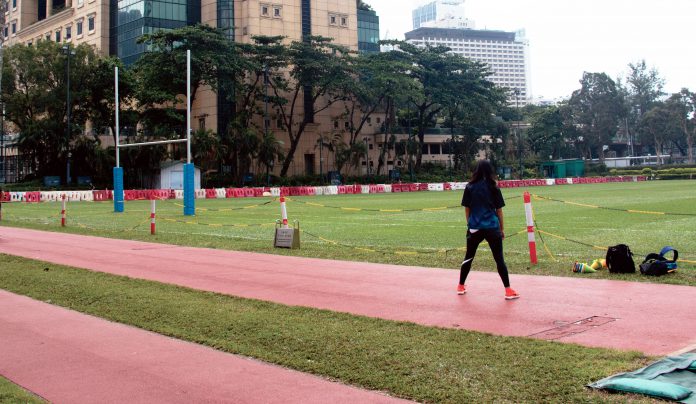
Tang’s case reflects the situation of many secondary school student athletes who train as either part-time or full-time athletes at the Hong Kong Sports Institute, the city’s official training base for elite athletes. Scattered across different schools around Hong Kong, these secondary school student athletes receive varying degrees of assistance and support from their schools in pursuing both their academic and athletic achievements.
Tang says that though the school he attended, Cheung Sha Wan Catholic Secondary School, was accepting and supportive of student athletes, there were no specific policies in place to aid athletes in academic learning. Even if students performed poorly on tests, his school did not offer any supplementary courses for senior form students, and practice exam sessions were often held after school, when athletes had to rush to practice. The time clash between the extra classes and the athletes’ training routines made it even more difficult for them to seek academic help.
Limited facilities at the school also posed challenges. As the fencing team at his school was rather new, Tang says they initially lacked a lot of the necessary equipment needed for practice, until his team and coaches reflected their concerns to the principal. This resulted in the team receiving a sum of money for purchasing equipment which eased a small part of their burden.
Despite his struggles in balancing studies and sport, Tang feels that the school tried its best to encourage student athletes. “The school gave us a lot of space to unleash our potential, to practise and to take part in competitions. It was generally supportive,” he says.
Mandy Lau Hiu-man, 20, who represented Hong Kong in the 2018 Asian Games, has been a softball player for seven years. Currently, she is training on four teams, including the Hong Kong National Women’s Softball Team and the Chinese University of Hong Kong (CUHK) Softball Team, while pursuing her degree in Food and Nutritional Sciences at CUHK.
Mandy Lau Hiu-man practices softball alongside her teammate. (Photo courtesy of Mandy Lau Hiu-man)
During her time at the secondary school she attended, Heep Yunn School, Lau found the balance between her academic studies and sporting pursuits manageable, as her school was understanding about student athletes and tried to accommodate their needs.
She recalls that when she once had to skip school to go to a competition, her teachers held make-up classes for her and her fellow teammates. In terms of athletic support, the school provided subsidies when athletes had to book off-campus training venues, as well as sponsoring half of the coaching fee. There were also a lot of personnel dedicated to the various sports teams. Lau says that three coaches were hired for the softball team, and the school also assigned a teacher-in-charge for each sports team to handle administrative work. Some teams even employed additional fitness coaches.
This kind of support is reflective of the vision of the Elite Athlete-friendly School Network, which Heep Yunn School, along with 26 other secondary schools, is a part of. The network was set up by the HKSI in 2014, with a goal “to encourage Hong Kong secondary schools to provide enhanced support for talented athletes to pursue their sporting achievements while sustaining their academic goals.”
As Ron Lee, director of community relations and marketing at the Hong Kong Sports Institute, explains, the purpose of the scheme is to provide flexibility for secondary student athletes that train at the HKSI. These students are required to train 15 hours a week in order to qualify as a part-time athlete, or 25 hours a week to be a full-time athlete. They also have to attain top rankings in their sport in order to benefit from the free training, meals and accommodation offered by the institute. Qualified individuals are further subsidised by grants. In other words, their training time is not only essential in excelling in their sport, but also necessary in ensuring their status at the HKSI.
Athletes training at the Hong Kong Sports Institute. (Photo courtesy of Hong Kong Sports Institute)
Since the scheme operates on a voluntary basis, Lee says schools can still maintain administrative autonomy in setting up policies for their student athletes. Therefore, even with the same vision in mind, there is still a large discrepancy in the support athletes receive at these schools due to the scheme’s lack of mandatory instructions. For instance, Lau says that Heep Yunn School did not provide athletes with flexible timetables, even though such flexibility is one of the components of the Elite Athlete-friendly School Network guidelines.
Another initiative the HKSI has launched to better resolve the challenges student athletes face is the Partnership School Programme. Established in 2015, the programme is designed specifically for student athletes to pursue dual career paths as a student and as a full-time athlete and offers benefits such as extra tutoring and a lengthened course of study, as students can be enrolled in senior secondary levels for up to six years. It also enables students to apply easily for absences, as long as they have documents from their head coach.
Lee believes the creation of the programme can reduce the turnover rate of elite athletes. In the past, award-winning student athletes started to quit their sports careers as soon as they reached Form Six. “Because the Hong Kong education system demands [good] grades, parents and schools keep a close eye on these athletes. But when you have this [kind of policy], it can gradually shape the culture of society,” he says.
So far, the English Schools Foundation, which has 22 schools under its wing, and Lam Tai Fai College, have signed memorandums of understanding (MOUs) with the institute to become partnership schools. Once they receive referrals from their managing coaches and their respective sports associations, students who have signed the contract to become full-time athletes are eligible to apply for senior secondary places, regardless of the previous institutions that they studied in. In Lam Tai Fai, admitted athletes can either join the regular class or the specialised PE class, which consists solely of full-time athletes sponsored by HKSI.
Eighteen-year-old Karate athlete, Chau Ka-him, who has been in the Hong Kong National Team for eight years, transferred to this class when he was in Form Four. In the past, he says, his school prohibited him from increasing his training time. His experience at Lam Tai Fai College, where he only had to go to school for three and a half days per week, was a huge contrast.
Chau notes that this flexibility in class time was the biggest difference between his previous secondary school and Lam Tai Fai College. The attitudes of the teachers were also quite different.
“Teachers were more eager to spend extra time helping us catch up with the curriculum because they understood our situation,” he says, adding that they were always willing to answer students’ queries online, arrange supplementary classes, and design new sets of exam papers if students missed any exams due to training and competitions.
In case students have to participate in overseas training, resulting in longer absences, the school also had a solution. “We actually videotape each lesson and upload it onto e-class,” says Tony Lai Yeung-keung, director of sports development in Lam Tai Fai College, “Students who need it can then revisit the lecture online.” Additionally, teachers email the learning materials and assignments to overseas students, and provide feedback on their homework as well.
“Our slogan is ‘even if class is suspended, learning never is’,” says Lai. “We hope our students can … have their cake and eat it too, that they can both get into university, and also represent Hong Kong.”
In spite of the numerous advantages, the number of beneficiaries of the Partnership School Programme is rather small. In the 2018-19 academic year in Lam Tai Fai College, there were 24 students enrolled in their regular classes. For the specialised PE class, there were a total of 43 students from Form Four to Six. However, in 2016/17, there was a total of 106 full-time elite junior athletes supported by the HKSI. This means that a considerable number of students still cannot enjoy the tailor-made policies.
For the remaining athletes who study in mainstream secondary schools, the situation can be dire. Raymond Sum Kim-wai, who is an associate professor at the Department of Sports Science and Physical Education at CUHK, says that even now, there are some schools in Hong Kong that fail to provide student athletes with any support, or choose to only focus on the development of certain sports, neglecting athletes who excel in other areas. For instance, he says he has seen many cases where athletes had to transfer schools, as their original secondary school did not support the sport they played.
Even in schools that have set up separate classes especially for student athletes, Sum has reservations over whether they are getting the education they deserve. His worry is that though in theory allowing student athletes to concentrate on their sports is a good idea, some schools, being more interested in using these students’ sporting achievements to boost the schools’ reputation, may teach these athletes less academic material. To him, this goes against the aim of whole-person education.
On the bright side, Sum thinks that some recent policies aimed at supporting secondary school student athletes indicate that Hong Kong is moving in the right direction. For example, in recent years, the HKSI has established partnerships with five universities in the region to attract and facilitate more athletes to study at university.
“This is beneficial … not only because it will affect [the atmosphere] inside the universities, but also because it will affect how secondary school students apply for universities. It will also affect how primary school pupils are admitted into secondary schools,” Sum says. His hope is that if this policy continues to expand, it can eventually transform how schools view, treat and support student athletes.
The new public markets announced in the Policy Address may finally break the Link monopoly but questions remain about planning and management
By Ada Chung & Tommy Yuen
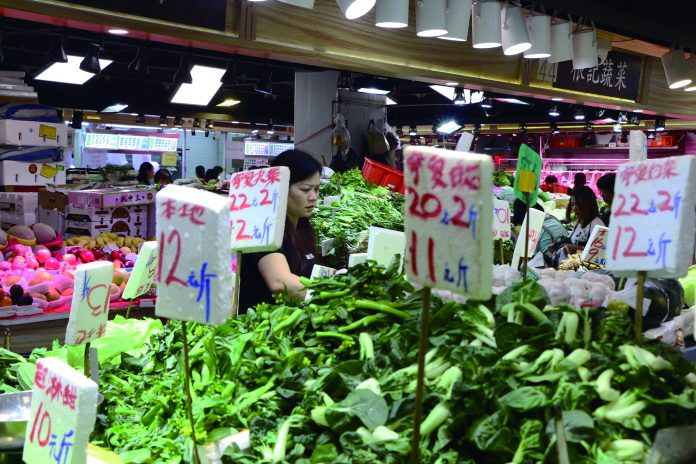
The search for affordable fresh food can be a time-consuming and frustrating chore for many Tin Shui Wai residents.
And it can also involve travelling a few kilometres as one shopper can testify. “I go to Yuen Long to stock up fresh food enough for two to three days whenever I have days off,’ says a Tin Shui Wai resident.
There is a Link wet market close to her home but Ms Chan, who did not want to give her full name, still prefers shopping in a Yuen Long public market even it takes her two hours of travelling to and fro.
“I can save at least HK$30 per meal if I go to Yuen Long,” she explains.
The price difference between the private markets owned by Link Asset Management Limited (Link), and the public wet markets can be substantial due to the monopoly of Link in the fresh food retail market which badly affects the livelihood of Tin Shui Wai residents. So says Tin Shui Wai New Force, a concern group which has been advocating building a public market in the new town for years and now has the satisfaction of seeing a plan for one included in 2018 Policy Address.
In Tin Shui Wai, there are five wet markets in total. Four of them are under Link and the remaining one is under the Housing Authority but it is comparatively small and the management is outsourced unlike the Food and Environmental Hygiene Department (FEHD) markets.
“Ms Chan’s shopping habit is common among Tin Shui Wai residents,” says the community officer of the concern group Mo Kai-hong. “They have no choice but to shop at Link wet markets in their neighbourhood during working days due to time constraints. When they have days off, they go shopping for cheaper fresh food in Yuen Long, where there are also more choices. Some residents even go as far as Shenzhen Bay for fresh food shopping.”
Link’s monopoly of wet markets not only occurs in Tin Shui Wai but across the city. Its dominance began in 2005 when most Housing Authority-owned shopping centres and wet markets were divested to Link REIT. Currently, there are a total of 73 wet markets owned by Link in Hong Kong. The effect of the monopoly is most evident in the third-generation new towns, like Tin Shui Wai and Tung Chung, where there is no FEHD public market.
In response to public demand for more public wet markets, the government announced in the 2018 Policy Address that new public markets would be built in Tung Chung, Tin Shui Wai and Hung Shui Kiu. Studies on site selection have been done and the administration plans to build wet markets at spare space near Tin Shui Wai MTR Station. The public market in Tung Chung will be built on the lower floors of a commercial building which is adjacent to Tung Chung MTR Station. The government is also identifying sites for public markets in Tseung Kwan O and Kwun Tong North Development Area.
Current locations of the five wet markets in Tin Shui Wai (Red zone: proposed location of the public market planned by the government)
The latest government’s move on building new public markets signifies a major policy change. While 73 wet markets are owned by Link, 21 wet markets are under the Housing Authority (HA) and 99 are managed by the Food Environmental Hygiene Department (FEHD), according to figures prepared by the Legislative Council Research Office.
Constructing new public markets to bring in more competition seems to be a solution to counter Link’s dominance in some districts but public markets are not without problems. A direct investigation of public markets in August this year by the Ombudsman found five major management problems at public markets, including great disparity among stall rentals, automatic tenancy renewal, stalls licenses held on a succession basis, no limit on the number of stalls to be rented by a single person and idle stalls.
Chan Shuk-ki, spokesperson for Alliance on the Development of Public Markets, thinks the newly-announced location for the Tin Shui Wai public market will not benefit residents living in the northern area. She suggests the government should set up transitional facilities in the area, for example a temporary market to meet the residents’ demands.
Chan points out the proposed location is in a crucial public transport hub where the Tin Shui Wai MTR station connects with the Light Rail. Therefore, she hopes the government will address the issue of how traffic will be handled. She is asking for a response from the government on the technical feasibility of the proposed construction plan and a specific working timetable.
Chan also says the lack of effective monitoring system by the FEHD is to blame for the poor management of public markets. “The FEHD lacks a comprehensive system in evaluating the performance of stall tenants. The department should take reference from the Housing Department’s Marking Scheme for Estate Management Enforcement, a tool which ensures effective management of public housing estates,’ Chan says.
“If a stall tenant violates some rules, discredit will be noted. The FEHD can take their performance in a marking scheme as a major factor for contract renewal. A blacklist can also be drafted to record tenants with poor performance,” Chan adds.
Apart from the management issue, public markets also have infrastructure problems. According to a Legislative Council paper entitled Market Modernisation Programme submitted by the FEHD in March this year, only 41 out of 138 markets managed by the department are air-conditioned. Many stalls are small in size. Of some 8,900 stalls selling vegetables, fruits and dry goods, over 90 per cent are smaller than 6.75 square metres. The floor drains are not properly built and the floor is always wet and slippery, especially for fish and vegetable stalls.
Chan admits that private markets, such as those under Link, are equipped with better facilities. “There are sinks for washing hands. Corridors are broader and dry. There are also designated corridors for disable people in wheelchairs,” she says.
A woman in a wheelchair negotiates a lane in Tin Chak Market.
Lawmaker Eddie Chu Hoi-dick, who is a member of the Subcommittee on Issues Relating to Public Markets, says there are historical reasons for the poor management and facilities in public markets. “The failing public markets we are criticising now have a long history. They were built to accommodate street hawkers,” Chu explains.
Public markets were provided by the two former Municipal Councils in the past with a policy objective of serving as sites to relocate street hawkers and minimising environmental nuisance and obstruction to pedestrians induced by the hawkers trading on streets.
In a bid to fix problems in public markets, the government announced it was earmarking HK$2 billion to launch a 10-year market modernisation programme, which includes upgrading infrastructure and reforming the management of FEHD markets in the 2018-19 Budget.
The overhaul of Aberdeen Market will be the pioneering project in the Market Modernisation Programme.
While the government has taken the initiative to improve the quality of public markets and promises to build more public markets, it is still uncertain whether such moves will help lower fresh food prices by bringing in more competition.
A survey by the FEHD in 2016 compared prices of food items among different retail channels in 22 FEHD markets, 18 Link markets, 51 supermarkets and 154 neighbourhood fresh food retail outlets. The study found some items sold in FEHD markets were not cheaper than those sold at other retail outlets. The highest prices of poultry and fresh fruit were reported in FEHD wet markets.
But Chu criticises the survey for not being comprehensive and representative. “Their sampling confuses people and ignores districts with no market competition,” Chu explains. “For example, Tung Chung and Tin Shui Wai are not included in the survey, as there is no public market competition in these two new towns.” Chu stresses that pricing is not the only decisive factor for determining whether a public market should be built.
Chu points out the government has no clear guideline or standard to rely on when deciding whether a market should be built. “There are 100,000 people in Tung Chung; it could be having 250,000 people later on, and the government builds one new public market there. There are 300,000 people in Tin Shui Wai and the government builds one there. There are 180,000 in Hung Shui Kiu, and the government also builds one there. Then what is the population ratio required here? There is no clear guideline or standard for reference,” he says.
According to the Hong Kong Planning Standards and Guidelines (HKPSG) outlined by the Planning Department, one public market stall should be provided for every 55 to 65 households or approximately 40 to 45 stalls per 10,000 persons. However, in 2009, the Planning Department removed the guideline and stated that the provision of new public markets should be considered on a case-by-case basis.
Chu says a clear guideline concerning the construction of new public markets should be set and it is vital for the government to have a better tenancy policy for public markets.
“Tenancy policy in public markets should have a cap over rental fees and offer better protection for tenants. The FEHD cannot force tenants to leave any time they want, for example,” Chu explains. “If these two elements are considered in the management of new public markets, then the public market can really bring good to our community,” he says.
Dr Leung Chi-yuen, teaching fellow in the Department of Applied Social Sciences at the Hong Kong Polytechnic University says the newly announced location is close to a public transport hub, but it is not an area that lacks markets.
Leung thinks the consultation on the operation model of the market should start soon, or else, the same old problem will come back again. He suggests forming a consortium consisting of stakeholders from different sectors to manage public markets.
“The composition of an operating team can be flexible. Members can be government officials, people from the business sector and stakeholders in the community so that they can pull their knowledge together to run a market,” explains Leung.
Space-starved Hong Kong’s private work and study room business is soaring
By Daphne Li
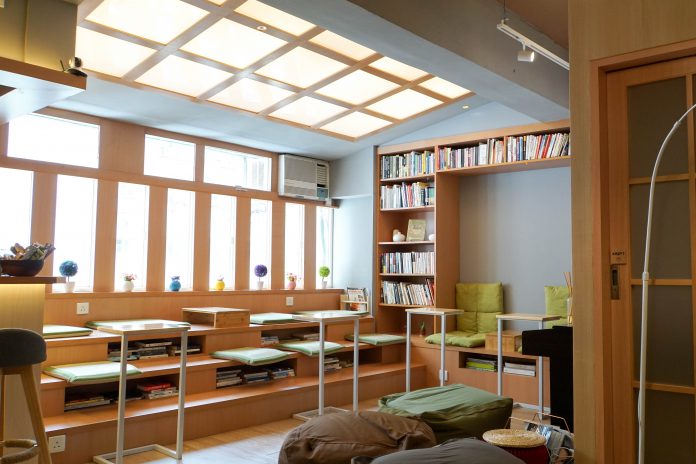
There is warm light, soothing music and space – 1,800 square feet of it – and that, according to Linda Chan Wai-shan, makes this study area the ideal place to settle in a cubicle and prepare for her actuarial exams.
The 25-year-old goes to this wood-themed study space three days a week because she believes she can only really get her head down away from home. Chan particularly likes the atmosphere, for it is a getaway from her “agony of revision”. “I like its freedom and convenience. To me, revision is already depressing. I don’t want to make it harder by going to a more depressing place,” she says.
That depressing place in her eyes is one of the public study rooms, familiar places to many Hongkongers. According to the Education Bureau, there are 213 study rooms operated by the government which provide about 15,200 seats this year. Meanwhile, the number of students studying for the Diploma of Secondary Education (DSE), which determines university admissions, is around 60,000.
Public study room operated by the government.
These public study rooms provide a lifeline for students to study, especially those living in crowded homes. To maintain order, the authorities forbid study room users from eating, drinking and sleeping, and those who leave their seats unattended for more than 15 minutes are not allowed to use them for the rest of the day. Many who are not fans of public study rooms, and who have the means, turn to the commercial study rooms that have sprung up in the last few years, where fewer regulations are imposed.
Chan finds private study rooms a better fit for her than public ones. “They do not allow us to eat and drink in there. Only water is allowed. I couldn’t even bring my coffee in. There was a time when I was taking a nap at my desk, and a staffer came and woke me up immediately,” she says. In a private study room, however, Chan can leave her seat to take a stroll, or even walk away for two hours for a session of Muay Thai nearby.
Apart from these considerations, Chan has to take air quality into account. She says the poor air quality in public study rooms triggers her nasal allergy whereas at WooderSpace, a private study room where she usually goes, there are air purifiers, which prevent her allergy and help her stay focused.
Unlike the free public service, private study rooms usually charge HK$55 to HK$115 for a day pass, depending on its services, location and the day of the week. Chan, who has a job, believes the HK$85 entry pass for her weekend stay is a fair price.
While public study rooms have existed in Hong Kong for over 20 years, private study rooms are a novelty. Public study rooms are widely available, but are often in short supply during the public examination period. Borrowing the concept of shared space, private study rooms aim to provide space for working people and students. Their targets are usually students and working people who want to prepare for their jobs, professional exams, or studies. In Hong Kong, the private study room business started to take off over the last few years, with an influx of companies trying to tap into this new market.
Gloria Lau Kun-ying, one of the co-founders of the WooderSpace study room, believes Hong Kong has a huge study space market. She says the co-working space in the United States and South Korea focuses on business professionals and students, but most Hongkongers look for a different service. “Hongkongers need [personal] space. Some of them don’t even have a bedroom, let alone a study room,” she says. Sensing Hong Kong’s space shortage to be a grave problem, Lau started her study room business in May.
Lau says she did not set up the study room as a workplace because she believes that customers need to escape their normal fast-paced lifestyle and enjoy a quiet open-plan space. “The study room is not just a place for revision. In fact, we want to encourage more Hong Kongers to relax amidst their very hectic lives,” she says.
WooderSpace uses wood as its design theme.
She has adopted a Japanese minimalist interior design to create a warm and homey ambiance in the study space, with facilities such as study rooms, step seats, a tatami room, a lounge and a coffee bar as well as a multi-purpose room. She says some customers not only go there for revision but also to read, watch movies, or even play video games because of the study room’s homey and comfortable atmosphere.
Eric Chan, a co-owner of another work-study space called MyBASE, points out that the service gives students a chance to share space with professionals, which may provide
them with some added motivation. “Work-study spaces provide users with a sense of synergy because people around them are all working towards the same goal,” he says.
Chan and his co-founders, who come from architectural and engineering backgrounds, started their business in January after observing that 50 per cent of customers in the many cafés across the city are students, freelancers, and even professionals. He notes that a café is not a proper place for study or work because it is too noisy. Seeing an enormous demand for proper working space in Hong Kong, they looked for a business solution to this problem.
Long desks at MyBase encourage communication.
“Home is also not a good place for revision. There is a lot of distraction,” Chan says. He explains that for an ideal working environment which helps users to stay focused, each user should have a desk with a minimum size of 60cm by 90cm and sufficient lighting. He adds that having enough fresh air is also important because too much carbon dioxide makes the room stuffy, hindering users from concentrating.
Interior designer Keith Chan Shing-hin also stresses that a café is not an ideal place for work and study. Apart from the noise, Chan says the yellow lighting in cafés tends to make a person feel sleepy so it is only suitable for casual chatting rather than working. For a proper working space, white lighting should be installed to enhance users’ concentration.
Chan says a relaxing and meticulously designed study room can help studying by improving communication. “You need to talk to people when you are revising, or else you will just end up cramming for an exam on your own. There are individual [cubicles] and long desks [in these private study rooms], and this allows for more communication and interaction,” he explains. Chan believes shared study space benefits students as they get to meet different people in the space, instead of just burying their heads in textbooks.
Although there is an increasing demand for relaxing study spaces, the Leisure and Cultural Services Department has no plans to refurnish the 35 students’ study rooms which are operated by the Hong Kong Public Libraries.
While working people may find the price of a private study room reasonable, students may find it pricey. Form 6 student Harry Yap Shee-yau says he and his friends visited a private study room three or four times because the public study rooms were all full, but he will never go again. “I would go there more often if they could charge less. Even though they charged us HK$108 for three hours with unlimited tea and snacks, HK$108 is still too much for us.
”And while some may find private study rooms relaxing, Yap, for one, does not like them. “I came to the study room for revision and to strive for better results. Therefore, I prefer a plain, monotonous and quiet place instead.”
Private and public sectors bring organic craftsmanship to local communities
By Edith Chung
It is the perfect approach to a business that relies on natural products. Follow the trail through the Lantau woods filled with the smell of a sea breeze until the white houses in Tai Long Wan Tsuen are in sight. Then continue on to a hut surrounded by large pieces of indigo cloth and the sounds of water splashing.
Max To Hok-chi, the owner of the cloth, is the founder of Indigo 11.50, the first indigo dyeing workshop in Hong Kong. To was introduced to the craft on a visit to Taiwan and it was love at first sight. He decided immediately to bring the handcraft to Hong Kong and pursue a new career as an indigo dyeing craftsman. After five years of running his own business, he is satisfied with his current position. “Back then, I felt lost about what I was doing,” says To. “Then I met indigo dyeing, which brings me happiness and is a learning experience.”
Max To hangs an indigo sheet under the sun.
To, with his organic and healthy craft, is attempting to swim against the tide in this era of fast and vast manufacturing. Every day, people come into contact with different kinds of garments. Some buy cloth or clothes simply out of necessity and some because of current fashion or a style they like. But very few care to find out how cloths are dyed.
In 2012, Green Peace published an investigation report highlighting the use of chemicals in daily commodities. They tested 141 samples of cloths from 29 countries and found 89 samples have nonylphenol ethoxylates (NPE). Used as detergents to enhance the dyeing process, NPE is a toxic hormone that might lead to breast cancer and miscarriage. Despite the harm it may cause, it is still being used. Clothing companies use NPE to shorten the manufacturing process and maintain competitiveness within the market.
As for To, he only wants to produce chemical-free cloth with skilled craftsmanship. Indigo dyeing requires soaking a garment repeatedly into indigo dye between the washing and drying process until the cloth turns blue. The dye is naturally derived and extracted from indigo plants. To explains there are seven different kinds of plants that can be used as ingredients in indigo dyeing and they can be condensed into indigo cakes. “A block of indigo cake is around one kilogram, and we can dye 80 tee shirts with one block,” To says.
Flowchart: How to make an indigo cake.
Although the preparation is time-consuming and sophisticated, the handmade process is what distinguishes indigo dyed material from that produced through mass production. To believes one cannot learn it simply by surfing online. “Your experience is enhanced and enriched with every second you are in touch with them [indigo plants],” says To. Armed with the knowledge gained from the dyeing experience, he enjoys sharing his thoughts and everything about dyeing with others. “This is the meaning of life to me,” he says.
Working corner at Indigo 11.50.
As a pioneer of indigo-dyeing in Hong Kong, To believes there is still a long way for him to go before his business can take off. In Taiwan, he says, the support from the Taiwanese government is the key reason for the industry’s development. But at the same time, he thinks government support is a double-edged sword, as some companies in Taiwan close down once the financial support ends. “Wild trees are always better than the farmed ones, that is the game of survival of the fittest,” says To. “Maybe that is the future of Hong Kong’s craft art industry.”
While the indigo dyeing industry in the private sector is only in its infancy in Hong Kong, some non-governmental organisations (NGOs) are providing free workshops introducing the craft to local communities and preaching the importance of leading a sustainable lifestyle. The Hong Kong Federation of Women Centres (HKFWC) is among the groups and it holds dyeing workshops in schools and neighbourhoods.
Green Fong, the project coordinator of HKFWC, started teaching people creative dyeing with help from subsidy under the Sustainable Development Fund (SDF) of the Environment Bureau. The bureau encourages NGOs and other organisations to arouse public awareness about environmental sustainability. The centre received about HK$1.5 million to promote dyeing culture and sustainable use of biological resources. “Plants are one kind of biological resource, so we start from there,” says Fong.
Cloths with leaf impressions.
Apart from indigo dyeing, the HKFWC promotes plant dyeing – a simple method of dyeing without the use of water. Fong demonstrates the process by simply placing a piece of leaf onto a white cloth and hammering it until it is imprinted onto the cloth. “This kind of dyeing is relatively easy and convenient,” says Fong. It is also safer as the whole process does not require boiling and drying, she adds.
A volunteer who identifies herself as Miss Lo adds that all the materials used for dyeing are environmental friendly and upcycled. The HKFWC collects used bed sheets from hotels and leaves from farms and turns them into products such as napkins, tote bags, and even pencil cases. And they give out these products during workshops and talks. “We want the public to learn the message with the bags they bring home,” she says.
Staff members involved in the project are still conducting experiments with various kinds of plants for different dyeing effects. Pointing at one of the leaves that Lo identifies as leaves of Mikania micrantha, Lo says: “They are known as the plant killer. We collect them and hammer them onto our cloths.” She continuously makes experiment with various kinds of plants to find out the beauty of each pattern and colour. “This is how we capture students’ attention [during workshops],” she adds.
Their work brings them a warm welcome whenever they do school visits. When asked about how she feels about the future generation, Fong says that they usually call this a sowing process, and they cannot predict when the seeds will germinate. “But at least we plant them,” says Fong. “And when the right time comes, they will blossom.”






















 The press release also stated that “UGC-funded universities are allowed to enjoy autonomy in the selection of students” and “each university has its admission policy and criteria based on the principles of fairness and merit-based selection”.