







Home Blog Page 96

Fly High

Get an aerial view of the city from a paraglider

By Stella Tsang

Ever imagined that you can fly? Fancy enjoying a bird’s eye view of Hong Kong, while feeling the wind on your face? Now you can, because paragliding will let you experience all of those things.

DSC_0130

There are several places in Hong Kong where you can paraglide. Dragon’s Back in  Shek O will give you a spectacular sea view, but if you are a little more adventurous, try flying off Pyramid Hill in  Ma On Shan, where you will find yourself high above the mountain and sea.Making use of aerodynamic forces and air pressure, the design of the paraglider allows the pilot to drift through the sky for as long as several hours before landing.

Beginners who want to learn this extreme sport can sign up for courses led by qualified coaches. In addition to field training, you will also learn about different aspects of aviation knowledge such as navigation and meteorology.

But if you are not ready to commit to proper training, try taking a tandem flight. With a professional pilot steering the paraglider, you can simply lean back and enjoy the view. You can also bring along a selfie stick and take a few snapshots with the world under your feet.

Monkey Kwan Chi-ming, who has been paragliding for five years holds licenses for both single-wing and tandem flight paragliders. He went through military-style training to become a qualified pilot. And for him, the safety of the passengers is a top priority, so he will check all the equipment and the weather conditions meticuously before taking flight.

For Kwan, the thrill of feeling the breeze and soaring through the clouds cannot be put in words. “I am still excited whenever I am heading to my next flight. It is like an addiction,” he says. To share the joy of flying with others, he organised the Hong Kong Tandem Paragliding Program, offering tandem flights as well as beginners’ courses.

For more information, please visit http://instagram.com/joy_flight or email percyky@gmail.com.

Edited by Rachel Cheung

Bring Your Own Bottle

Mobile app let’s you find location of your nearest free drinking water fountain

By John Cheng

Here in Hong Kong, around two million plastic bottles are sent to landfills everyday. Yes, that’s right – two million. And it is all because of our fondness for the convenience of bottled water.

It has become a habit for Hong Kong people to grab a bottle of water from one of the city’s many convenience stores whenever they feel thirsty. But seldom have they thought about the environmental problems this may create. With such a rapid increase in waste, it’s no surprise the landfills in Hong Kong will soon be full.

Sensing the urgency of the problem, 38-year-old lawyer Rachel Pang Hoi-yang developed a mobile app called Water for Free to encourage people to bring their own reusable water bottles instead of consuming bottled water. The mobile app shows the locations of more than 700 public water fountains and dispensers throughout Hong Kong, including in parks, sports grounds and universities. Users can easily find the nearest water fountain on the map, and if they discover a new water fountain which is not listed, they can also report the location to the developer of the app.

freewater

Pang devoted herself to raising public awareness of the over-consumption of bottled water after an unpleasant experience at the beach at Ma Wan. “My husband and I went there for a walk, but were welcomed by a sea of plastic bottles. It’s terrible!” she says.

Later, Pang came across a water fountain map of London on the Internet and was inspired to work on a Hong Kong version. Pang then asked the Leisure and Cultural Services Department for information on the locations of of water dispensers in Hong Kong, but they refused to give them to her at first. Fortunately, after Pang insisted, she eventually got the locations. And with the help of a friend, she developed the map into an app which is convenient for smartphone users.

To date, the Water for Free app has reached more than 1,000 downloads. Pang is glad to see some of her friends starting to change the habit of consuming bottled water. A friend of hers used to buy bottled water for hiking, but now brings his own water bottles because of this mobile app.

Pang hopes that the consumption of bottled water in Hong Kong can be reduced and more water fountains can be set up to encourage more people to bring their own bottles. “Practices which are environmentally unfriendly are most convenient…but we need to change this situation,”she says.

The Water for Free app is available for free on iOS and Android. For more information, check out the website of the app at http://waterforfree.org/. If you discover a new water fountain, you may also report the location on the website to the app developer. Bring your own bottle starting from today and save the planet.

Edited by Sharon Lee


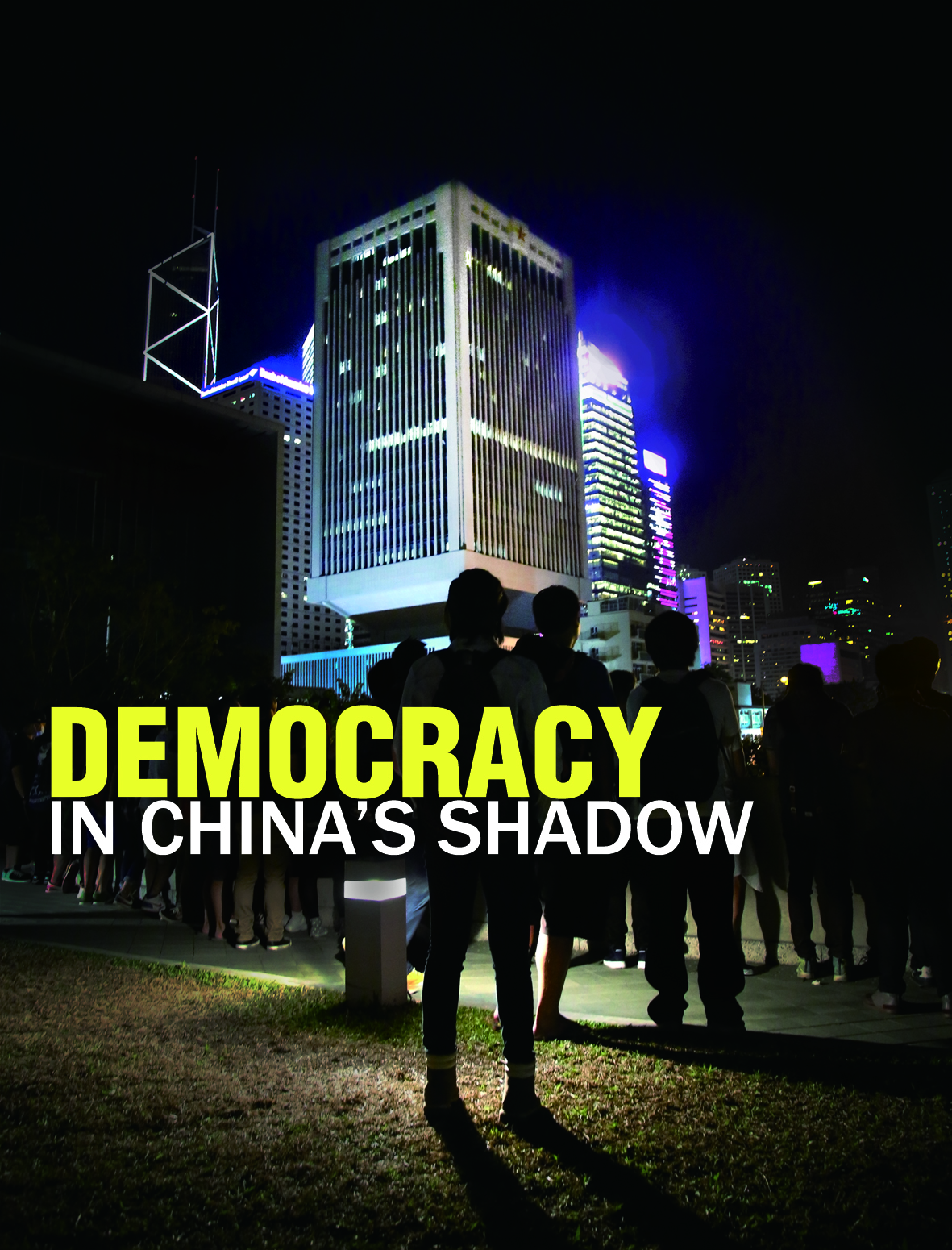
November 2014 – Democracy in China’s Shadow

As we bring you this issue of Periscope, protesters are still on the streets of the occupied areas of Admiralty, Mong Kok and Causeway Bay. They are demanding free and open elections to choose the first Chief Executive to be elected by one-person-one-vote in 2017. Hong Kong’s democratic journey did not begin with the Occupy Movement and it almost certainly will not end when the last of the occupiers have left their tents.

Varsity asks a question that is foremost in many people’s minds – what will happen after Occupy ends and how will Hong Kong seek a democratic path as a Special Administrative Region of China?

Apart from Hong Kong, we are also looking at two other Chinese societies, whose democratic development are affected to varying degrees by their relationship with mainland China. We look at how the democratic movements in Macau and Taiwan differ from Hong Kong as well at common features they share.

Hong Kong’s near neighbour Macau has never been much of a hotbed for democratic activism, so when thousands of protesters took to the streets to protest against a controversial retirement package for top officials, many pointed to an awakening for Macau civil society 

When the late Chinese leader Deng Xiaoping proposed the One Country Two Systems framework as the basis for Hong Kong’s reunification with the Mainland, the policy was supposed to serve as a model for Taiwan’s eventual reunification. But instead of an enticement, many in Taiwan see what is happening in Hong Kong as a warning.  

Democracy in China’s Shadow

Just before the autumn term began, the National People’s Congress Standing Committee (NPCSC) announced its framework for the Chief Executive election in 2017. The plan was perhaps even more restrictive than had been expected and crushed the hopes of many Hong Kong people who hope to elect their own leader by universal suffrage.

But instead of killing off the fight for democracy, it triggered off a struggle that is still ongoing as I write.

The Occupy Central movement became the talk of the town, opening a new page in an age of civil disobedience and non-cooperation.

In late September, thousands of university students went on strike to oppose the NPCSC framework. On the last day of the week-long class boycott, some students broke into Civic Square triggering an early start to the long-threatened Occupy Central sit-in.

The movement rapidly developed and grew into Occupy Hong Kong as tens of thousands of protesters flooded the streets of Admiralty and mass sit-ins sprang up in Mong Kok and Causeway Bay. The campaign has lasted longer than could have been foreseen.

We are all filled with questions without answers. But in this issue, we would like to look at one that has been occupying the minds of all protesters: what’s next?

What will happen to Hong Kong after the protesters leave the streets? Nobody knows for sure but it is the question we had in mind, when we talked to young protesters, an organiser, scholars and the president of the Legislative Council about Hong Kong’s future.

We also look at our neighbours, Taiwan and Macau, which, like Hong Kong, are Chinese societies living in mainland China’s shadow. Taiwan suffered a bloody suppression before a democratic system was instituted. Does Hong Kong have to go down the same path? What lessons can we learn from Taiwan’s struggle for democracy and what do people in Taiwan think when they look at what is happening in Hong Kong now?

Also a Special Administrative Region, Macau seems to have a less developed civil society than Hong Kong. Its press is less free-wheeling, its legislature less democratic. Does Hong Kong set an example for Macau to follow? Or will Hong Kong one day become more like Macau is now?

Producing this November issue has been difficult for Varsity editors and reporters alike. Not just because of how complicated the issues involved are and how rapidly the situation is developing, but also because Hong Kong is our home and we care about it.

We have done what we can to present to you this compilation of stories and hope that they can provide some insight into the democratic movement as well as the future of Hong Kong.

Rachel Cheung

Editor in Chief

001

Hong Kong after Occupy

Keeping the democratic struggle alive after the Occupy Movement

By Tracy Cheung and Godric Leung 

“Stop charging or we use force!”

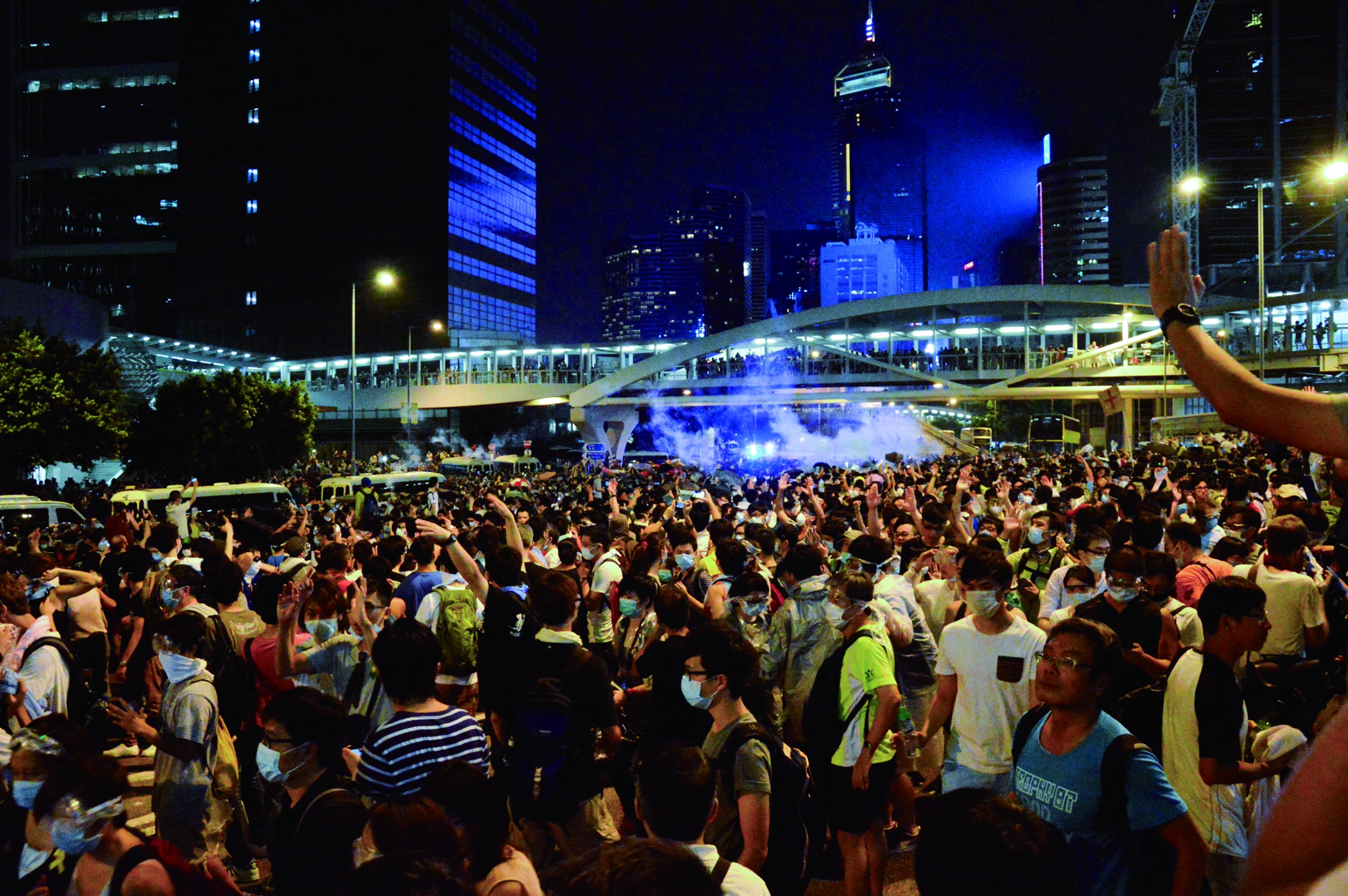
Minutes after the final warning flag was unfurled, several blasts pierced through protesters’ angry cries as police in riot gear fired volleys of tear gas into the crowd. Streams of pungent smoke filled Harcourt Road, an artery outside Tamar government headquarters, where thousands of protesters were jostling against the police cordon. Many choked as they screamed and dashed back. More retreated to nearby Tamar Park in panic. Meanwhile, those suffering the effects of the suffocating gas kneeled on the ground in tears and breathed heavily.

It was 5:57 pm on September 28, the first day of a city-wide occupy movement to demand universal suffrage. “We had never imagined police would use tear gas on a main road,” says Angie Lam Yin-shan, a 21-year-old student protester from Baptist University who was caught in the chaos when police dispersed the crowds. “My friends saw thick smoke coming from behind. We then started running at full speed,”

DSC_0456
Angie Lam gets ready to face tear gas and pepper spray

Heightened tension persisted in Admiralty until 2 am. Although police fired 87 tear gas canisters and more than 40 people were sent to hospitals, thousands of protesters continued to occupy the main roads in Admiralty, Central, Mong Kok and Causeway Bay. “It’s totally unacceptable! How can the police use violence against peaceful protesters?” cried Lam, adding that many of her acquaintances had taken to the streets to protest against police violence.

Lam was a supporter of the week-long class boycott organised by university students which began on September 22. During that week, students surrounded the government headquarters and held civic lectures at Tamar Park. The protesters ended up staying after police arrested a group of students and other protesters who broke into Civic Square, the forecourt outside the Central Government Office.

This led to the midnight announcement on September 28, by University of Hong Kong Professor Benny Tai Yiu-ting that Occupy Central would begin earlier than planned. Lam chose to stay as she believed the occupy movement and the class boycott served the same goal: to fight for genuine democracy.

In recent years, disagreements on how candidates should be selected for the territory’s first Chief Executive election by one-person-one-vote in 2017 has turned into a tug of war between Beijing and its supporters and local democracy advocates.

When Beijing announced a restrictive framework for the 2017 election in August, many believed it had “closed the door” on democracy by screening out any candidates it disapproves of. Under the framework, candidates must be endorsed by half of the 1,200-strong nominating committee – which is stacked with pro-Beijing members – before they can run for the election.

Against all odds: Macau’s democratic awakening

Civil society starts to assert itself in gambling enclave

By Grace Cheung and Agnes Ng

“Support Hong Kong!” “Shame on the police for using violence!”

These were the slogans chanted by around 1,000 people who had gathered in Macau’s Friendship Square on China’s National Day to show their solidarity with the protesters of the Occupy movement in Hong Kong, then four days into their sit-in to demand true universal suffrage for Hong Kong.

The residents of the former Portuguese colony, which is about an hour’s ferry ride from Hong Kong, are increasingly vocal about their desire to have a greater say in choosing their top leader. They may not be ready for an Occupy movement like Hong Kong, but they are seeking changes to the enclave’s political structure.

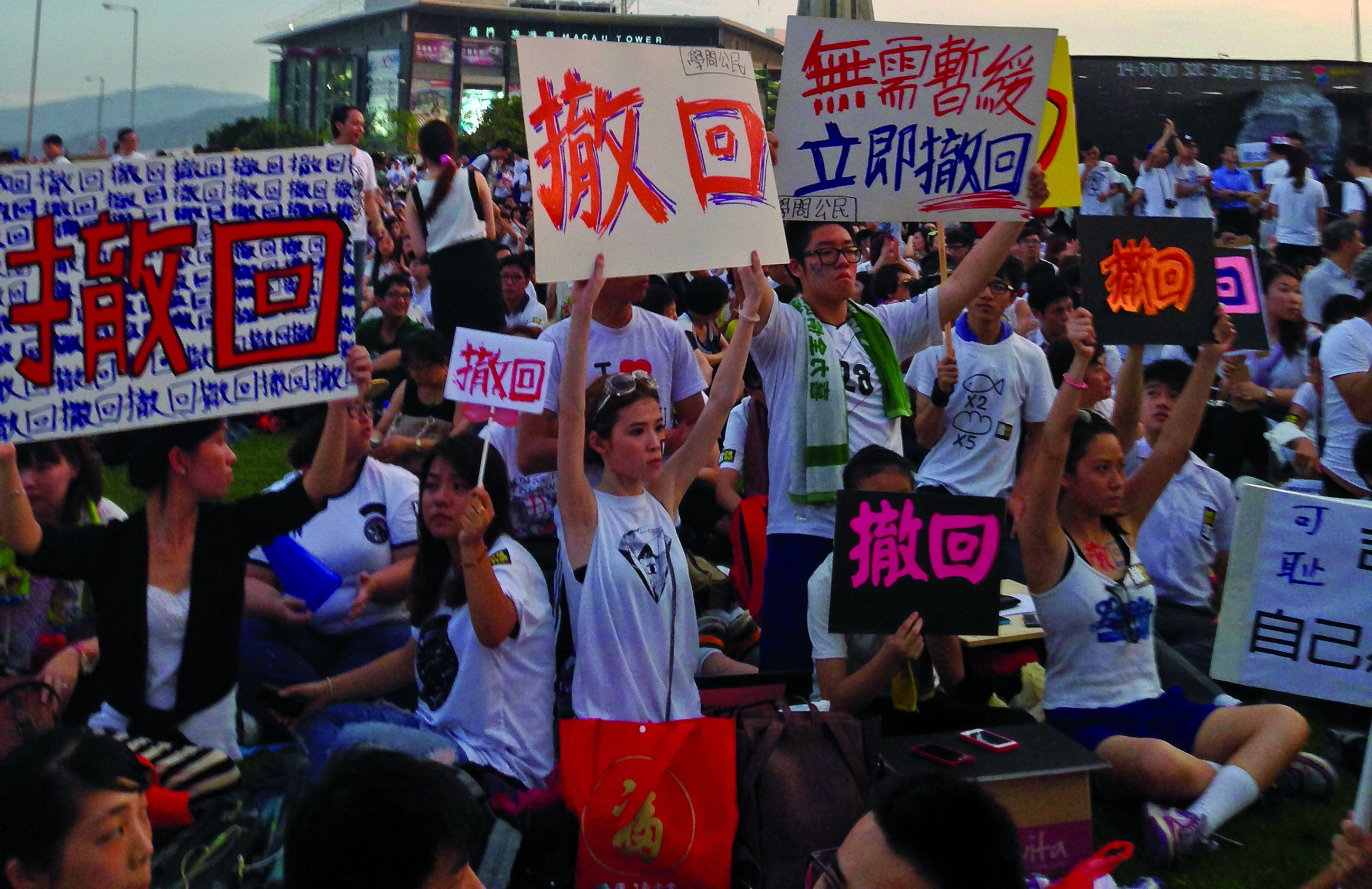
macau 3(1)
Protesters demanding withdrawal of the controversial retirement package bill (Courtesy photo from Roy Choi Chi-chio)

On May 25 this year, more than 20,000 outraged Macau citizens from all walks of life protested against a controversial government bill that would have rewarded the outgoing Chief Executive and senior officials with lavish retirement packages. What caught the attention of the local community and beyond was not just that the Macau Chief Executive Fernando Chui Sai-on would attempt to quickly push through such a contentious bill without consultation, but also the unprecedented public outcry.

Since sovereignty over Macau was transferred to China in 1999, the special administrative region’s Chief Executive has been chosen by a committee that heavily favours business interests and is deferential to the Chinese government.

There has been limited political reform. In 2012, the Macau Legislative Assembly passed a reform bill, which added two directly elected seats to the 29-member body. But critics considered these additional seats to be “cancelled out” by two additional indirectly elected functional constituency seats. Together with seven appointed members, this brought the total number of lawmakers to 33. The bill also added 100 members to the 300-strong election committee to vote for the Chief Executive. It was widely seen as a setback for democratic progress.

It is within this context that the May 25 protest was seen as a glimmer of hope for the development of civil society in Macau. In recent years, there has been growing dissatisfaction with the declining quality of life for ordinary people despite constant growth in the economy. The retirement package bill, which would have further enriched top leaders, was the straw that broke the camel’s back and drove people onto the streets. More and more people are beginning to question the political system and the leadership.

The unprecedented show of opposition forced Chui to back down and shelve the bill. It was a triumph for people power but some have questioned how sustainable the sudden flowering of civil society will be. One of the hurdles to overcome is the conservative political culture in Macau.


Today Hong Kong, Tomorrow Taiwan?

What can Hong Kong and Taiwan learn from each other in quest for democracy?

By Angel Liu and Stella Tsang

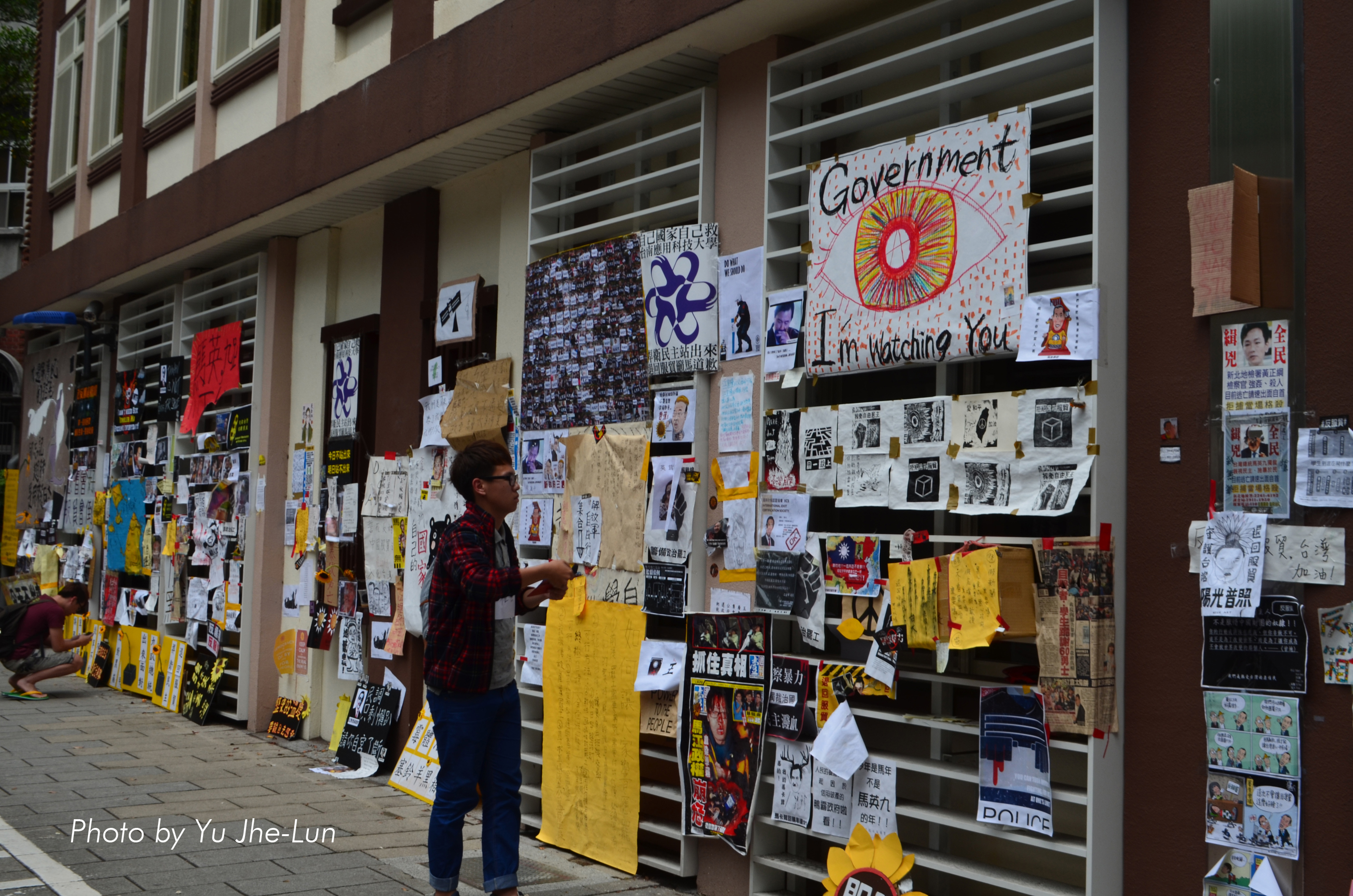
On the night of March 18th this year, student protesters in Taiwan broke through police cordons, climbed over fences, stormed into the island’s lower house of parliament, the Legislative Yuan, and occupied it. They were protesting against a trade pact with China, which they said had been passed without sufficient deliberation and due process. The occupation grabbed news headlines, and lasted for almost a month.

The movement, which became known as the Sunflower movement after a supporter brought bunches of sunflowers to symbolise the need to let the sunlight shine into the “black box” of the trade pact, found many sympathisers in Hong Kong. Slogans shouted by Hong Kong’s Sunflower movement supporters included “Today Hong Kong, Tomorrow Taiwan” and “I am a Hongkonger. Taiwan, please step on Hong Kong’s corpse and contemplate the path you want to take.”

sunflower in legislative yuan
A sunflower in the occupied Legislative Yuan in Taipei
(Photo by Wu Hsiang-Yuan)

The idea behind these slogans was clear. China’s former paramount leader Deng Xiao-ping devised the concept of “One Country, Two Systems” in 1978 to allow Hong Kong, Macau and Taiwan to maintain their own systems of governance as a path to reunification. As a condition of the British handover of sovereignty to China, Hong Kong was promised 50 years of a “high degree of autonomy” under the One Country, Two Systems framework. The Special Administrative Region was meant to be a shop window for Taiwan, a blueprint showing the island the benefits of the path to reunification across the Taiwan Strait.

But while Beijing more or less lived up to its promise in the initial years after the handover, concerns have been raised about the Special Administrative Region’s (SAR’s) high degree of autonomy in recent years. Just this year, a brutal chopper attack on former Ming Pao chief editor Kevin Lau Chun-to was seen as a threat to the city’s press freedom. And a white paper issued by the State Council raised fears that the SAR’s judicial independence was being undermined.

“You cannot persuade Taiwan people to agree on one country, two systems,” says Leung Man-To, a professor at National Cheng Kung University’s Department of Political Science. In recent years, people from Taiwan have witnessed things that have happened in Hong Kong also happening to them.

“China brought Chinese economic factors into Hong Kong, and gradually changed the constitution of Hong Kong’s economy,” Leung says. “If you want to make money, you have to listen to me. China is using this to control Hong Kong, and so it will [do the same] to Taiwan in the future.”

Leung says the 2003 Mainland and Hong Kong Closer Economic Partnership Arrangement (CEPA) and the 2009 Cross-Straits Economic Cooperation Framework Agreement (CECA) are examples that show how economic penetration strengthens China’s political control.

Hong Kong’s current political impasse over political reform and the civil society initiatives to break the deadlock through social movements and civil disobedience have prompted people to ask whether Hong Kong is walking the same path to democracy as Taiwan did in the past.

Gambling Away Youth

Stakes are high as young gamblers find it hard to quit

By Donna Shiu & Edith Lin

It is a refrain that will sound familiar to anyone who has had a problem with gambling. “When you lose HK$1,000, you want to get that HK$1,000 back; when you win HK$1,000 easily, you want to win HK$1,000 more,” says James (not his real name), a 22-year-old university student.

James started gambling six years ago when he was 16. He asked an adult friend to place a bet on a football match on his behalf. He accumulated losses of HK$2,000 over six months. It was an amount he felt he could absorb, so he continued to gamble despite the losses. In fact he thinks an “appropriate” amount of gambling is not harmful to individuals or to society as long as gamblers can control their mindset.  “Gambling is an innate mentality of human beings,” James says.

It seems that gambling habits can begin early – according to findings released by the Sociology Department of the Chinese University of Hong Kong in 2010, 28 per cent of secondary school students had gambled for money in the 12 months prior to the survey. Card games and mahjong are highly popular among students.

Raymond Wu Man-wai, supervisor of the Hong Kong Gamblers Recovery Centre acknowledges gambling can be a problem for teenagers under 18. But Wu says gambling addictions usually develop and worsen once youngsters enter adulthood.

Wu says teenagers usually learn how to gamble through watching their family members playing mahjong or purchasing Mark Six lottery tickets. “Before age 18, [the idea that] “gambling is not a big deal” is cultivated in their mind. Their parents gamble. Their society accepts gambling, which means the Jockey Club allows gamblers to place their bets after they are 18,” says Wu.

Various gambling games are available online and in  apps stores
Youngster uses gambling app on his smartphone

Once youngsters become adults, they can earn money through full-time and part-time jobs and borrow money on their credit cards. It is with this new-found capital that their gambling behaviour may begin to spin out of control.

Indeed, Wu says fewer than 5 per cent of the centre’s clients are under the age of 18. But when teenagers do gamble, it is difficult for their parents to spot the problem. “Gambling is colourless and tasteless,” Wu says. Teenagers can easily find gambling games online or available for download as mobile apps. The games usually start off free, but they soon require players to buy points or tools via credit cards or other kinds of payment if they want to proceed to a higher level.

One of Wu’s clients, a secondary student, was obsessed with the Texas hold’em mobile app and had a very high rank in it. To unlock higher levels, the student stole his siblings’ credit cards and even classmates’ mobile phones for resale in order to pay for his habit.

Wu says students may hide in their rooms and bet through mobile apps, with parents oblivious to what is going on until they receive bills from the bank or loan companies. They usually try to settle the debts run up by their children without seeking help from social workers.

Unsustainable Rights

Male indigenous villagers’ right to build small houses questioned in land-squeezed Hong Kong

By John Cheng and Antonia Wong

In August this year, television viewers were shocked to see a group of angry Lantau villagers hacking away at mangroves and even bringing in excavators to raze the lush green trees in an area that had been designated as a Site of Special Scientific Interest.

The villagers felt their rights to farm and build Small Houses, known as “ding houses”, were being trampled on by the government and vowed to fight to protect them. The incident drew attention to a long-standing issue in Hong Kong, the question of male indigenous villagers’ rights to build three-storey houses in the New Territories and whether the scheme is sustainable in land-strapped Hong Kong.

In 2012, the government revealed in a response to a lawmaker’s question about “vacant government land”, that 932 hectares of land had been reserved for “Village Type Development” while only 391.5 hectares were zoned for “Residential” or “Commercial/Residential” uses.

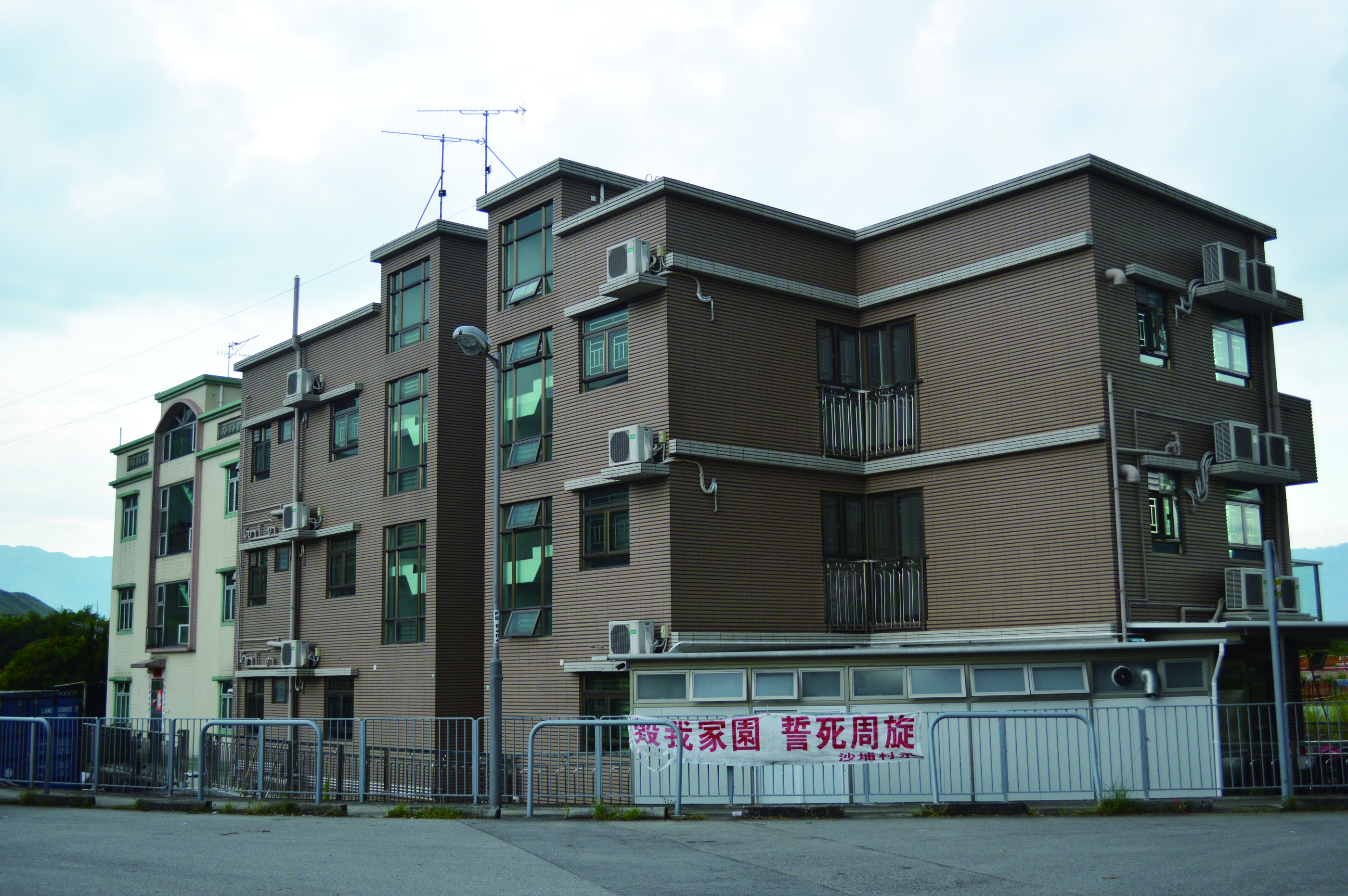
A ding house in Sha Po Village in Yuen Long.

This led people to question whether the government was putting too many resources into developing rural areas – a move which would benefit indigenous male villagers since they have the right to build Small Houses.

The origin of ding rights dates back to 1972, when the colonial British government set up the Small House policy as a compromise with indigenous villagers to expropriate land in the New Territories to develop new towns.

Under the policy, a male indigenous villager aged at least 18 years old, who is descended through the male line from a resident of a recognised village in the New Territories in 1898, may apply once during his lifetime for permission to erect for himself a ding house on a suitable site within his own village.  They can either apply for a free building licence to build a small house on their own land without paying a premium, or for government land at a concessionary premium.

In general, land for building ding houses is confined to areas within what are referred to as Village Environs (VE), which generally means a 300-feet radius surrounding a recognised village.

Consideration may also be given to an application if the site concerned lies outside a VE but is located within a ‘V’ zone, which encircles a recognised village and is larger than the 300 ft. village environs, provided that the ‘V’ zone concerned surrounds or overlaps with the VE.

The right to build a ding house seems to be a gift to male indigenous inhabitants which is unfair to non-indigenous villagers. But Lawrence Poon Wing-cheung, senior lecturer at City University’s Department of Architecture and Civil Engineering, suggests otherwise.

“Looking back at history, [you’ll see] this is not bestowed,” says Poon. “The indigenous inhabitants really did lose something during the development.” Poon explains that Britain rented the New Territories from the Qing government in 1898 under the Convention between Great Britain and China Respecting an Extension of Hong Kong Territory.  At that time, the owners of the land in the New Territories were the indigenous inhabitants. Poon thinks it is reasonable to “return’” the land to them as compensation since the land originally belonged to their ancestors.

However, four decades after the policy was implemented, the population of indigenous villagers has grown, as has the demand for land on which to build Small Houses.

Opening Hong Kong’s Final Frontier

Sha Tau Kok residents disagree over whether closed area should be opened up

By Brian Wong and Sherry Tsui

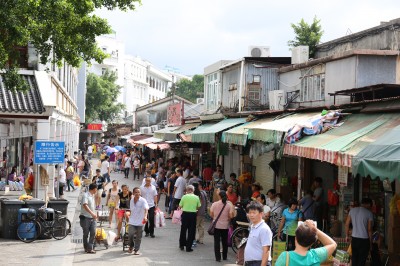
The two sides of Chung Ying Street are lined with boutiques selling clothes and knick-knacks and stores selling everything from accessories to electronics and appliances. But the most popular ones are the grocery shops and minimarts offering everyday consumer items imported into Hong Kong – such as milk powder, instant noodles, nappies and shampoo. Shoppers enter empty-handed and leave with boxes of goods. Outside the stores, people busily pack the goods they have bought.

Logs of daily goods keep entering Chung Ying Street every day
Trolley-loads of daily goods enter Chung Ying Street every day

They are free to shop on both sides of the 250-metre-long street, and pay no attention to the seven boundary stones separating Hong Kong and mainland China in the middle of Chung Ying Street. They were erected in 1898 to mark the boundary between imperial China and British Hong Kong, and after 1950 between the People’s Republic of China and the capitalist crown colony.

In 1951, most areas of the Sha Tau Kok district became part of the Frontier Closed Areas (FCA), including Chung Ying Street, which means visitors can only enter with a permit. Today, the Sha Tau Kok Rural Committee estimates that only 6,000 to 7,000 of the 30,000 or so residents from Sha Tau Kok’s 47 villages still live in the area, of which 4,000 to 5,000 are non-indigenous residents.

At the urging of the Rural Committees, the government announced a substantial reduction of Hong Kong’s Frontier Closed Area in 2008. Currently, Sha Tau Kok Market and Chung Ying Street are the only restricted areas left in Hong Kong and ironically access is easier from the mainland side where travel agents can secure permits for Rmb10.

Business may be brisk now, but it cannot compare with the early 1980s when China embarked on economic reform and Mainlanders flocked to Chung Ying Street to buy Hong Kong and foreign goods. At its peak during the 1990s, there were more than 40 gold shops in Chung Ying Street – the businesses there attracted up to 100,000 visitors and made HK$1 billion in takings a day. The adjacent Sha Tau Kok Market also prospered at that time.

Tsang Yuk-on, the indigenous village representative of Mui Tsz Lam Tsuen, says mainland residents and Sha Tau Kok residents could go freely between Chung Ying Street and Sha Tau Kok Market before 1997 as the colonial government exercised discretion over their movements. But after the handover, the permit system was strictly enforced on the Hong Kong side. Tsang speculates this is due to the need to enforce the One Country, Two Systems principle.

He is disappointed to see many of the spaces and facilities in Sha Tau Kok Market left unused after access became restricted. “For 16 years, we’ve wasted the shop spaces. The whole area is wasted,” Tsang says. It is hard to make a living in the closed area and he estimates that fewer than a thousand people stay overnight as most residents have moved to the mainland side or the downtown areas in Hong Kong where there is better transportation and access. Tsang says many hold on to their empty homes solely so they can apply for permits to enter the closed area.

Tsang and other indigenous villagers think the only way to stem the exodus and revive the area is to open it up and develop it.

Members of the Sha Tau Kok District Rural Committee and Sheung Shui District Rural Committee submitted a development plan to the Development Bureau and Security Bureau in February this year. Proposals include setting up a boundary control point at Chung Ying Street and opening up Sha Tau Kok Market. They say development of Sha Tau Kok could curb the number of mainland visitors going further afield to shopping hubs like Sheung Shui and Tsim Sha Tsui.