















Home Blog Page 105

Methadone Throws Lifeline to Heroin Addicts

Programme under fire for not providing value for money

Reporters: Pash Chan, Tommy Lee, Jeffrey Wong
Editors: Derek Li, Vicki Yuen

In 1960s Hong Kong, triads and drugs were a deadly cocktail.  Petty crime such as muggings, pickpocketing, pilferage and burglaries were common means for heroin addicts to score their hits. Addicts were left to their last pennies, lying on the street to suffer withdrawal symptoms. The government sought a solution to the chaos and methadone emerged as an appropriate anti-addictive drug that serves two purposes: maintenance and detoxification.

Developed in Germany in 1937, methadone was first introduced to Hong Kong in 1972 in a pilot study by Doctor Robert Newman and Peter Lee. In 1974, a sudden heroin shortage gave the government a perfect opportunity to open four methadone clinics and launch an out-patient methadone maintenance programme. By 1980, 21 clinics were in operation.

The methadone maintenance programme has five characteristics: it is unrestricted, non-residential, provides regular medical treatment, counselling and has no time limit. Its biggest advantage is that it does not disrupt a participant’s schooling or work.

Each participant is prescribed a certain dosage between 30-70 mg as determined by a physician and needs to attend dosage reviews at regular intervals. The participant can opt to join a detoxification programme in which the dosage is gradually reduced till it reaches zero mg.

The Society for the Aid and Rehabilitation of Drug Abusers, or SARDA, is the only government-funded concern group  aimed at helping drug addicts with methadone medication, counselling and psychotherapy and educating the general public. It currently handles 7,000 cases and organizes various activities, including weekend outings, musical bands and peer support groups, to foster a healthy lifestyle for its clients.

Methadone treatment is widely acclaimed as a useful tool to achieve “harm reduction” – effectively lowering crime rate and disease transmission rates. Drug addicts can see methadone as a substitute for heroin when there is a surge in heroin price so they do not have to commit crime to obtain quick cash. Besides, addicts can refrain from sharing needles to inject heroin so the risk of contracting infectious diseases such as HIV and hepatitis C can be minimized. Hong Kong’s success has inspired the Mainland and some Southeast Asian countries to follow suit.

Drug users and former users say methadone gives them a chance to work, to care for their family and to sustain a normal life. They say they would stand a very slim chance of quitting drugs if they were sentenced to compulsory “Cold Turkey” treatment in jail as it would arouse their resentment.

However, Jacob Lam from Christian Zheng Sheng College criticises methadone for allowing patients to “take both drugs” at the same time and cannot completely eradicate the addiction problem. He says gospel residential rehabilitation should be a better alternative, both to patients themselves and to society.

Methadone clinics also face criticism from the Audit Commissioner for not being cost-effective. As the number of heroin addicts has decreased over the years,  he suggested re-allocating  money to help the rehabilitation of abusers of so-called “soft-drugs”.

The clinics  are also under threat from urban redevelopment projects since clinics are seldom welcomed into new neighbourhoods. A large and combined clinic would bring more addicts to the area and be perceived to pose a danger to social order.
Jobs Give Ex-Offenders a Second Chance

Former prisoners helped to re-integrate into society 

Reporters: Elaine Tsang, Katrina Lee, Vanessa Cheung
Editors: Natalie Cheng, Astina Ng

With the help of sympathetic employers and support organisations, some former offenders are proving there is life after prison.

It seems that more employers are now willing to hire past offenders. According to the Correctional Services Department (CSD), the success rate of re-integration programmes for offenders after release is 86.6% in 2010.

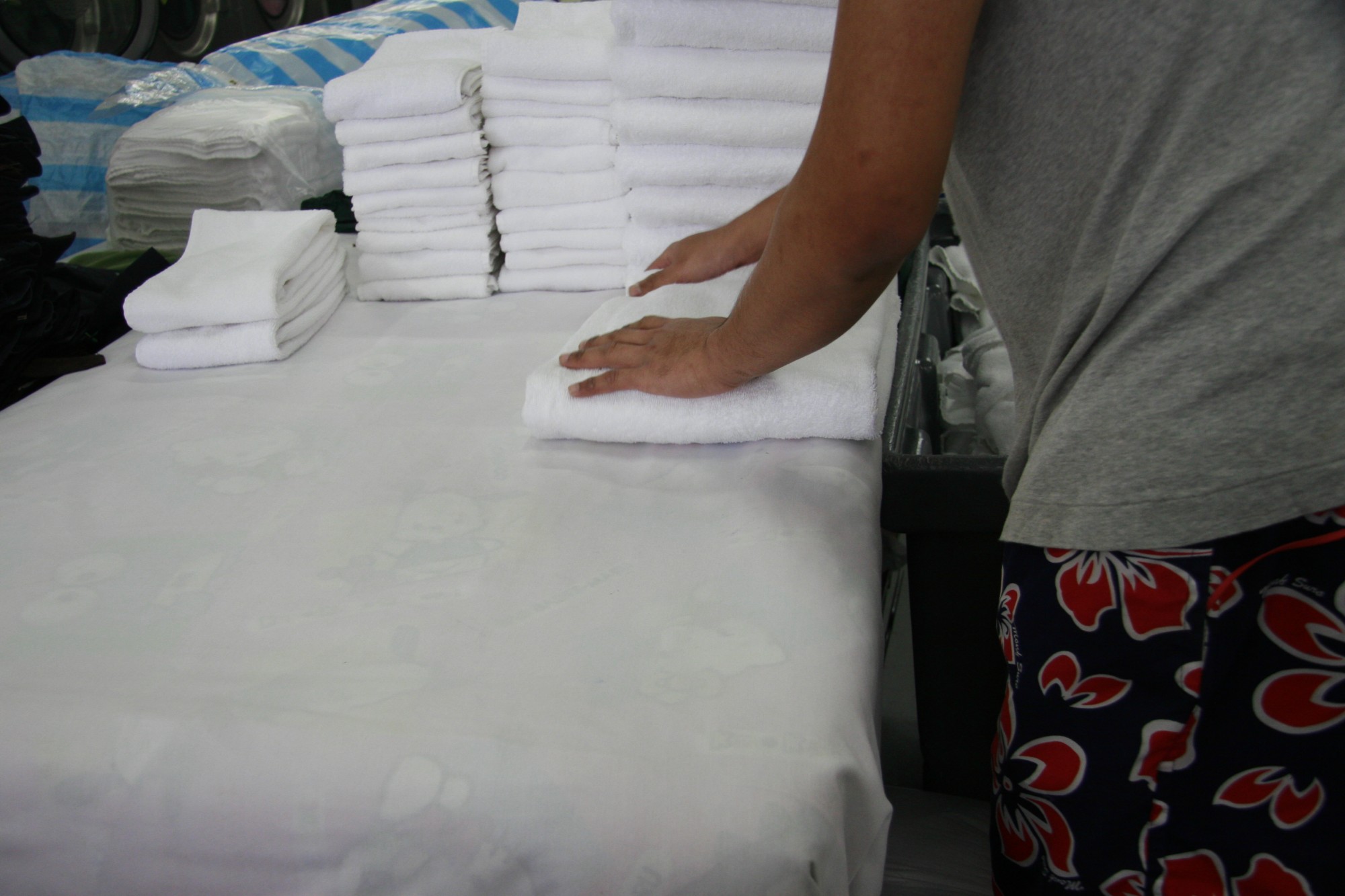
For young offenders, the CSD provides half-day compulsory technical, commercial and services training, while for adult offenders, the department provides pre-release vocational training courses on a full-time and part-time basis.

Some employers are also instructors who teach skills like cooking and dry-cleaning in these courses. Offenders who are trained during their imprisonment stand a higher chance of being employed by their instructors after their release.

Josephine Lam Suet-wah, who has employed former offenders for more than 20 years, is also a cleaning instructor at Hei Ling Chau Addiction Treatment Centre. Lam says  some of her employees are bad-tempered and do not have a good working attitude. But despite some drawbacks in hiring ex-offenders, Lam and the rest of her sector are still willing to hire them because of the labour shortage in the industry. Past offenders are  regarded as a stable source of workers.

Some employers say they have made adaptations to the work environment after hiring former offenders, such as hiring more mature co-workers who may have more patience in teaching them. One said they had “Closed Circuit Television” (CCTV) to monitor their work.

Past offenders’ identities are kept confidential within the company but some ex-offenders may reveal their identities to colleagues after working for a period of time.  Some past offenders are satisfied with their relationships with colleagues. They are grateful that their colleagues have not discriminated against them and are tolerant of their mistakes..

However, one past offender told Varsity  that she faces discrimination in her workplace. She is not sure if her colleagues look down on her, but their stares still make her feel uncomfortable.

Most employers see hiring former offenders as a way to contributie to society, but they have their concerns when considering employees with some specific criminal records.  And many employers are reluctant to hire former offenders who have committed sexual crimes or have mental health problems.


Masters and Apprentices in the World of Martial Arts

Survival of master and apprentice relationship in modern Kungfu

Reporters: Silvia Li, Cindy Ng, Frances Sit
Editor: Yannie Mak

Fans of kungfu movies will be familiar with scenes of Baisi ceremonies, where an apprentice  kowtows to their master and serves them tea. In return, the master touches the apprentice’s head, explains the rules and recognizes him or her  as an apprentice. For some, these rituals are outdated, but Master Lee Chan Wo, heir of the legendary kungfu master Wong Fei-hung insists on preserving both the rituals and the traditional bonds.

This is because of a promise to his own master. During the Japanese occupation in the 1930s, Lee was brought up by Wong’s wife, Mok Gui-lan. From her, he inherited the authentic Wong Fei-hung kungfu, lion dance and Chinese chiropractic.When Mok died, Lee promised to continue her spirit.

In turn, his own apprentice, Master So Chi-kwong, is deeply touched by Lee’s sincerity and treats Lee a father. So lost his father when he was small. Whenever he encountered problems, he talked to Master Lee instead. Their intimacy grew after years of teaching and learning. So is now imparting the traditional martial spirit through interest classes.

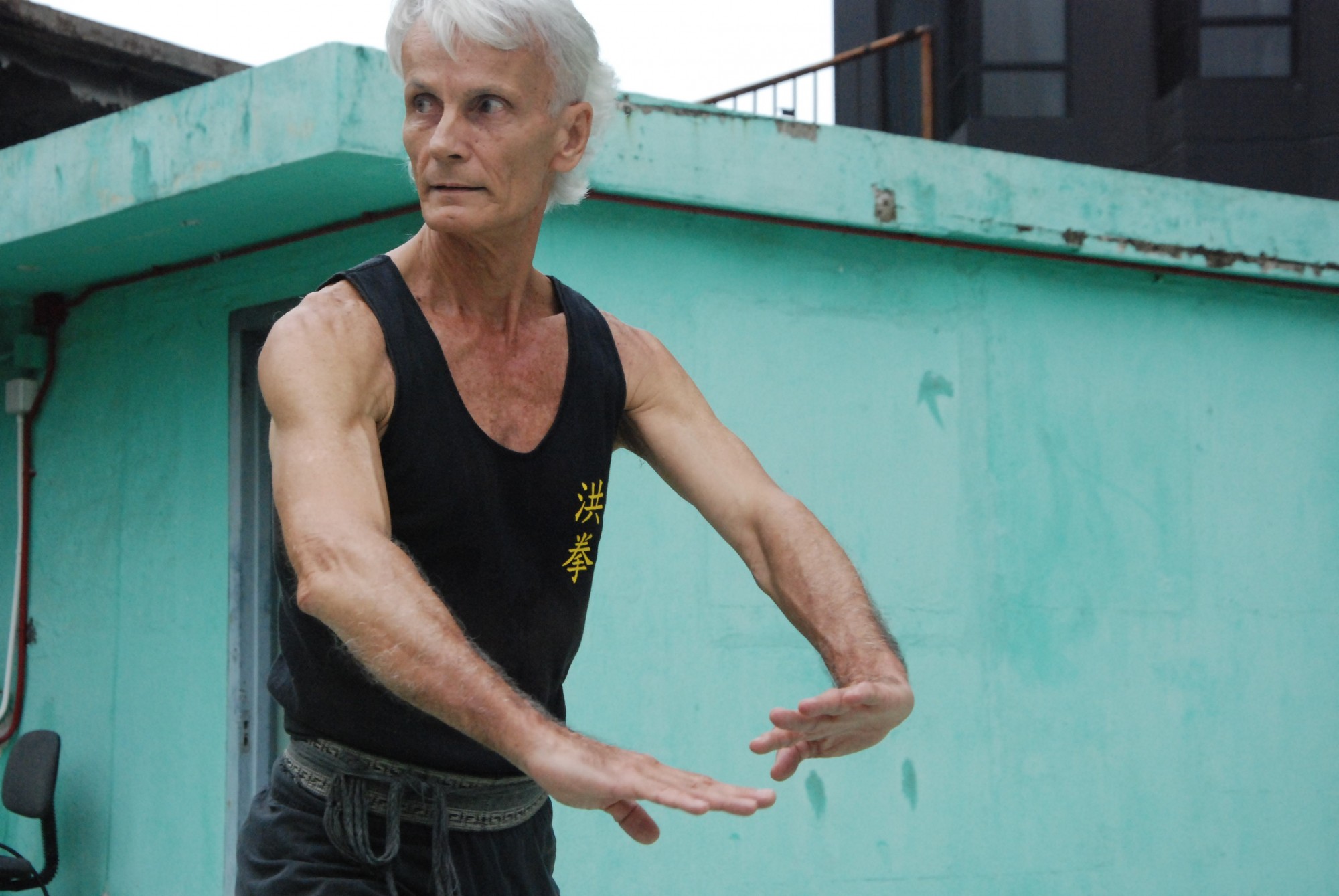
The traditional master and apprentice relationship is not only embraced by Chinese practitioners but also by foreign kungfu fighters like Master Gam Bok-Yin. Kim, an Australian who has taught Hung Gar kungfu in Hong Kong for decades, believes the master is a father-like figure. Gam, who was wheelchair-bound as a young child, says his first master changed his life by helping him to walk. It was only after he overcame his condition that he realised the exercises he did every day were from Hung Gar kungfu. When his first master died, Master Gam took up the mission to promote his kungfu.

Gam does not require complete obedience from his students. His student, Wong Yin-chor treats Gam as a mentor and a friend. But respect is still evident. When Gam sat on a bench to talk to Varsity, Wong insisted on standing.  

The old ways are changing, not all learners would find Gam’s balcony kungfu classes appealing. For them, kungfu masters like Wong Ben-kai have given the old martial arts “kwoon” modern makeovers and adopted new teaching styles.

Master Wong is the heir of “yu jia yun zhang” (俞家雲掌), an old family kungfu which originated in northern China. Until a few decades ago, the learning of this style of kungfu was restriced to members of the original Yu family. Today, Master Wong teaches martial arts that incorporate the skills and theories of Chinese kungfu with Thai boxing and free combat.

Master Wong the master-apprentice relationship is no big deal in modern society. He says masters should treat their students as friends.

Yet, Chinese martial arts cannot be entirely separated from the traditional master and apprentice relationship. As times have changed, has the nature of kungfu changed for good, or has it preserved its essence in an alternate form?  The question remains.


Residents face forced move from Tai O’s Tin Lee House

Government to sell off public rental flats under Home Ownership Scheme

Reporters: Tracy Chan, Joyce Cheng, Charlene Kwan
Editors: Ian Cheng, Rene Lam

Tin Lee House in the fishing village of Tai O, is the least occupied public housing block in Hong Kong. Just 14 households live here, most of them comprising elderly people who were rehoused after their stilt houses were either destroyed in a fire in 2000 or were demolished by the government.

The residents thought they would see out the rest of their days in Tin Lee House but instead they have been plagued by uncertainty.

In 2002, the government announced it would turn the building into a hostel but later abandoned the plan. Then, in February this year, they were told they had six months to move as the building would be turned into Home Ownership Scheme (HOS) flats.

Tin Lee House resident Siu Tak-kwai, says most of the residents are “old and frail”. His daughter, Siu Sin-yee says her parents have health and mobility problems, “ You couldn’t force them to move away, could you?” she says with tears in her eyes.

Most of the residents have lived in Tai O all their lives, they say they cannot adapt to life outside at their age.

On top of that, they find  the Housing Authority’s arrangements  unacceptable. The Authority is offering them each HKD 4000 in moving fees. Siu  says this will not cover the actual costs.

Although they have been given priority to purchase flats in Tin Lee House once they have been turned into HOS units, residents say they cannot afford to do so. “Why don’t you let us stay and sell the remaining vacant flats?” says Siu Tak-kwai. “We are only occupying 14 of them, but you still have more than 70 flats to sell.”

Legislator Leung Yiu-chung is helping the residents in their fight to stay. Leung opposes the government’s plan, he says Hong Kong faces a problem of insufficient social housing. Once the flats are sold off as HOS units, the supply of public rental units  is reduced. “Why don’t they ([he Housing Authority] think of some ways to attract people to live in Tai O, rather than selling it [Tin Lee House]?”

“The Housing Authority claims that nobody wants to move to Tai O, resulting in the high vacancy rate of Tin Lee House. And this is the main reason given for turning it into HOS flats,” says Leung.

Yet, Ng Kam-chuen, a Tai O resident, has been applying for public housing for three years and wants to move into Tin Lee House.  Ng says Tin Lee House has a high vacancy rate because  the Housing Authority removed it from the list of public housing estates people could apply for in 2008.

In a written response to Varsity, the Housing Authority says the letting of flats in Tin Lee House was frozen in 2008 because the vacant flats of other housing blocks are sufficient to meet the demand of the Waiting List applicants. It reiterated that to encourage residents to move out early, the Housing Authority has offered the granting of an ex-gratia Domestic Removal Allowance and one-month rent free period in their current tenancy with a choice of any districts for transfer.

Wheelchair Athletes Call for Better Sports Facilities

Hong Kong society lacks awareness of disabled athletes’ needs

Reporters:Natalie Tsoi,Emily Chung,Louie Cheng
Editors:Nectar Gan,Sabrina Poh

Just one year after the end of a 14-year hiatus of the full marathon wheelchair race at Standard Chartered Hong Kong Marathon, the event was cancelled in this year’s race. The move calls attention to a lack of awareness surrounding resources and welfare for wheelchair athletes in Hong Kong.

Ajmal Samuel is a passionate wheelchair athlete and a former Pakistani soldier, who sustained a permanent spinal injury whilst fighting in the Indian-Pakistani Conflict in the 1980s.  Samuel is  unhappy about the time arrangements of this year’s wheelchair race, which automatically disqualified any racer who was unable to complete the first 11 kilometres in 40 minutes.  Out of the six participants, only one managed to finish the race.

“When I started talking about it five years ago, the idea was to make it an inclusive race,” says Samuel.  “The time limit is very unrealistic, so only a few professional athletes are allowed to finish the course.”

William Chu Yun-ming participated in the 3 kilometer wheelchair race.  He started training at the  Tseung Kwan O Sports Ground every Tuesday and Friday six months before the race.  However, he experienced much inconvenience and often felt he was competing for track space with other members of the public.

“Other people complained that it was very dangerous to run alongside the wheelchair athletes, in case they got hurt by the wheelchairs,” says Chu.  “As a result, I would only train on the two innermost tracks.”

The shortage of facilities and training space is made worse for most amateur wheelchair athletes as resources are focused on the professional disabled athletes in certain sports such as fencing and table tennis.  Whilst professional athletes receive monthly subsidies and training expenses, average wheelchair athletes in other fields are left with little resources and support.

During Varsity’s visit to a training session of a wheelchair basketball team at Kai Tak East Sports Ground, none of the basketball players had their own game wheelchair.

Chung Cheuk Ping has been playing with the team for three years, and he hopes to get his own game wheelchair.  “Since I am without a [game] wheelchair, it really hinders my performance.”

However, this may be just a dream for Chung.  Cat To, programme officer from the Hong Kong Paralympic Committee and Sports Association for the Physically Disabled, says  it is difficult for the organisation to buy each player a game wheelchair, which costs up to  USD 3000-5000..  To adds that since funding from the government is limited, it is inevitable that resources can only be spent on medal-winning elite sportsmen.

Benny Cheung Wai-leung, four-time Paralympic gold medalist in fencing and Chairman of the Hong Kong Federation of Handicapped Youth (HKFHY), acknowledges the imbalance in resources distribution. He says there is a need to develop wheelchair sporting facilities for all. He believes organisations like his own have a role to play in this respect.  “It really needs organisation like ours to reflect to the government what needs to be improved,” says Cheung.  “I think our organisation needs to talk to the government in the future to hold activities through pilot schemes.”

Cyclists Savour Life in the Slow-lane

Slow-mo cycling helps city-slickers slow down and enjoy the simple things in life

Reporters: Rachel Cheung, Sharon Lee, Yoyo Chan
Editor: Jennifer Lam

They cycled through villages and between fields, exploring the history of the New Territories. Some rode on vintage bicycles, played Taiwanese music and put fresh flowers in the baskets attached to their bikes.

Slow-Mo Classic, a cycling group that promotes a slower lifestyle, holds occasional events to encourage cyclists to connect with the world around them. The group’s founder Lee Chi Man says, “I think (being slow) is a kind of awakening. In Hong Kong’s environment, you are educated to believe that being fast means improving and is an advantage. Slowing down seems to imply lagging behind.”

Lee invites people to contemplate on why they need to be fast.

“I think being slow is like living happily. Being slow is an attitude. But it is a choice, rather than being slow for the purpose of slow. If you don’t have any choices and you have to always be fast, you’re being pulled by the fast-paced world,” says Chris Lee Kwok-chiu, a Slow-Mo cyclist and a close friend of Lee.

Chris Lee used to be a model-maker but the hectic work schedule exhausted  him. He now works as a private art teacher and enjoys a more flexible lifestyle.

Both of men say Slow-Mo cycling is an experience that makes them reflect on their own lifestyles and decide to pursue other careers. However, for history teacher Sam Chu Kin-heng, Slow-Mo cycling helps him reconnect with people around him and see relationships differently.

Chu loves history and is very fond of vintage bicycles. His bicycle opens sparks conversation between him and people from  older generations. “They will share what think about the bicycle and the world. They may even share their past experiences,” he says.

While they all have different understandings of Slow-Mo cycling and living, there is one thing they all agree on – that they should observe more. Slow-Mo Classic encourages people to observe the world around them – on the history, culture, social issues around them. As founder Lee Chi-man says, “Bicycle is a good tool for us to become closer with society. I hope we can put the elements of life into cycling.”

MAP


Local Bands Snub Government’s Flyover Venue Plans

Musicians say project runs against indie music ethos

Reporters: Hilda Lee, Cherry Wong, James Fung
Editor: Kris Lee

In recent years, Kowloon East, an area comprising the former Kai Tak Airport, and the former industrial heartlands of Kwun Tong and Kowloon Bay has become the hub of a thriving local indie music scene.

Artists and musicians moved into factory units left empty after the bulk of Hong Kong’s manufacturing industry moved to the Mainland. But now high-grade offices and retail centres are emerging in Kowloon East, pushing rents up.

With the aim of further developing Kowloon East into another premier central business district, the government has undertaken revitalization efforts with gusto. It set up the Energizing Kowloon East Office (EKEO) last June to facilitate the transformation.

One of the plans is to open up and transform areas under the Kwun Tong Bypass for public enjoyment – to create a performance venue called Flyover 01, part of an ambitious “Fly the Flyover” project. In the near future, Flyover 02, 03 or 04 and so on may also be developed to construct a vibrant waterfront incorporating the Kai Tak Runway Park and Kwun Tong Promenade.

The Government says widespread consultations were conducted and that most stakeholders agree revitalizing the waterfront is crucial to energizing Kowloon East.

This account is disputed by the bands using the factory buildings in Kwun Tong for rehearsals and gigs. Many say consultations were inadequate and that the government has ignored the actual needs of musicians.

Although the administration is touting its project as one that will provide free venue support, musicians say what they need a place to do pre-production work and performance practice; they need to be close to their audience while performing. Giving them a performance stage under a bypass does not tick those boxes. Besides, the associated red-tape runs against their indie music ethos.

Some also believe the Fly the Flyover01 may have the effect of forcing local artists out of the factories. Due to the “Energizing Kowloon East” project, the owners of the private industrial buildings would grab this chance to raise rents. Critics say the government will be able to point to the alternative venues available to bands under the flyovers.

The bands believe that having brought a new lease of life to Kowloon East with their indie values, they are now seen as an obstruction to the arrival of Central values into this corner of Kowloon.

An Uninhabitable City

In 2012, Hong Kong was ranked the world’s most liveable city according to the Economist’s annual liveability index.

By such reckoning, Hong Kong should be a paradise for most, but whether it really is and what makes the city inhabitable brings up other questions.

There are many important indicators to assess a city’s quality of life; the standard and cost of living, its education system and environment. In this issue of Varsity we look at these indicators and what they tell us about our city.

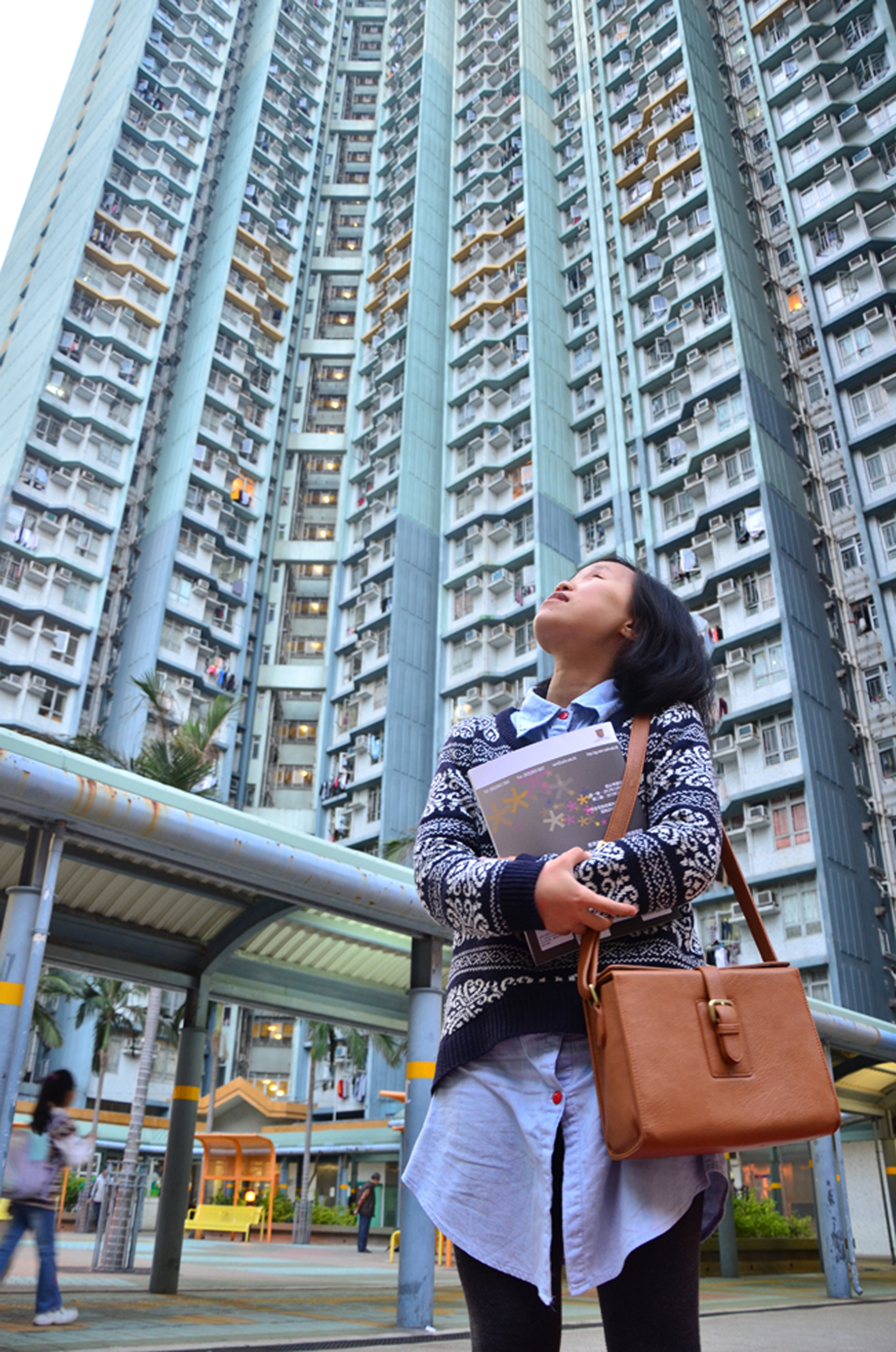
Hong Kong is one of the most densely populated cities; with a population of over seven million and a land mass of just over 1,000 square kilometres, land in Hong Kong is a precious commodity. The rising land and property prices have led to steep price rises in nearly all daily necessities.

The demand for housing remains red hot and prices keep reaching new peaks, making it nearly impossible for people to purchase a new home.

Not only do the exorbitant property prices delay many people’s dreams to own their own home, they also lead to outlandish rent increases. Many are waiting for the government to alleviate the current housing problem.

When walking in busy districts, black smog is easily visible. Vehicles and factories produce toxic emissions. The declining air quality underlies growing health problems; every breath people take contains harmful substances.

People have even started to leave Hong Kong because of the declining air quality. To stem the damage to our health and environment and the exodus of professional talent, we need clean air. Although regulations have been enacted to monitor the emission of pollutants, a significant effect has yet to be seen.

The amount of time and money many parents spend on early and extra-curricular education to prepare their kids for the future can seem incomprehensible. All parents want the best for their children but the city’s children seem to be carrying heavy burdens on their shoulders.

Ironically, Hong Kong is rated in the top 10 best places in be born, but even pre-schoolers and toddlers can be expected to “perform” under pressure from parents and society in order to succeed later in life.

So is Hong Kong really inhabitable? This question has yet to be answered.


Natalie Cheng
Managing Editor

Dream Homes out of Reach

Priced out in the world’s most expensive housing market

By Louie Cheng & Rachel Cheung

College graduate Man Yuk-ho has two jobs, shops for cheap clothes on the Chinese online shopping site Taobao, and seldom eats out. On the few occasions when she does eat out, she carefully compares the prices of various eateries beforehand and chooses the cheapest restaurant. She makes all these efforts for one purpose only — to save enough money to buy her first home.

The 24-year-old graduated with a Higher Diploma in Journalism last year but failed to find a job related to her major. She ended up taking a teaching assistant job at a secondary school with a monthly salary of HK$9,300. In order to earn extra money, she also works part-time at a residential clubhouse and sells clothes online.

Ho now lives with her mother and brother in a 300-square-foot public housing flat in Shek Kip Mei, where she shares a bunk bed with her mother. Like many other young people, she wishes to buy a private apartment and start a family, but she still has a long way to go.

With the extra work and thriftiness, Ho manages to save HK$5,000 per month because she does not need to pay for family expenses at the moment. For a typical one-bedroom, 300-square-foot starter home in a Sham Shui Po high-rise, Ho would have make a down payment of HK$700,000 for a HK$3 million flat. At her present rate of saving, she would need to wait for at least 10 years.

Cutting down on leisure expenditure is not the only sacrifice Ho has made for her future home. She is also forced to give up her dreams. She once dreamed of going on a working holiday after graduating from college, but she had to give up the plan because it would cost her too much in expenses and lost earnings.

“It seems like right after your study you have to work, to save money, to a buy house. The whole thing is so boring. It’s like we sacrifice our whole life to making a living,” Ho says.

Ho is just one of the many Hongkongers struggling with the city’s sky-rocketing housing prices. Hong Kong consistently ranks top in surveys of the least affordable housing in the world. In January, the latest annual International Housing Affordability Survey by the respected US-based consultants, Demographia, showed the average housing price in Hong Kong is 13.5 times the local annual household income, which makes the city the most expensive place to buy a flat among big cities worldwide. In fact, Hong Kong has ranked first in the list for three years running. Other reports show Hong Kongers who do not qualify for public housing spend more than 40 per cent of their household income on housing.

In order to cool down the property market, the government has launched a series of “strict measures” in the past six months, including introducing the Buyer’s Stamp Duty (BSD), a 15 per cent tax on property transactions imposed on non-permanent residents, extending and intensifying the existing Special Stamp Duty (SSD), and doubling the stamp duty for homes and non-residential properties which are worth more than HK$2 million.