






Home Blog Page 47

Live the Life You Want

More people value quality lifestyle over material success and social status

By Charlie Yip

How many people regret spending their whole life on doing things they do not like with low salary and satisfaction instead of devoting their lifetime to chase after dreams or achieve goals? 

The concept of life goals has changed when fulfilling basic needs in life is no longer a difficult achievement in modern society. People are no longer satisfied with three stable meals a day or a roof over their heads. Many people are now pursuing “quality lifestyle” that can hardly be defined by money but going after desires and fantasies — be them their hobbies, dreams or passion. Some people dare to escape from the old-fashioned nine-to-five job and turn their thoughts into reality. 

Retiring Early

Retired at the age of 19, Hillman Chan, founder of the Dreamwork team, has enjoyed quality lifestyle that he has life controlled in his hands. His business on multi-level marketing of health-related products generates passive income to support his daily expenses. Chan introduces himself as a person who only worked 19 months in his whole life. He has already retired for more than 30 years.

Chan and his wife celebrated Dreamwork office opening. (Photo courtesy: Chan)

 “I had decided not to work before I started working,” Chan says. He loathes following social norms and craves for a life that allows him to travel and accompany his family. He defines quality lifestyle as being able to have full control over one’s own time and do things that are worth spending time on within one’s own financial capacity. 

Chan believes it is the correct decision as it grants him countless unforgettable moments. “I witnessed how my youngest daughter learned to ride a bicycle and swim, and I can watch my kids growing up,” the father of three says. 

Meaning of Success

Chan is not alone in his pursuit for quality lifestyle. Shalom Lam, currently a Year three student majoring in Economics and Finance at the University of Hong Kong, strives to retire when she graduates by building up her business project. 

“There is a great difference between success and achievements. Most people strive for achievements, but I am not convinced that achievements add meanings to your life,” Lam says. She believes success is living a life she wishes and being able to inspire others. This includes being an influential person in interpersonal relationships and family.

Most people strive for achievements, but I am not convinced that achievements add meanings to your life.

Shalom Lam, a Year three student majoring in Economics and Finance at the University of Hong Kong

Lam cites an example of a typical “successful person”, who was a senior student of her department and became regional vice-president of a company at the age of 25. “He has a serious health problem recently. Yet, he is not willing to take sick leave because his position at the company may be threatened when he is away. He still works until midnight every day. This tells me high salary does not necessarily bring happiness,” Lam sighs. 
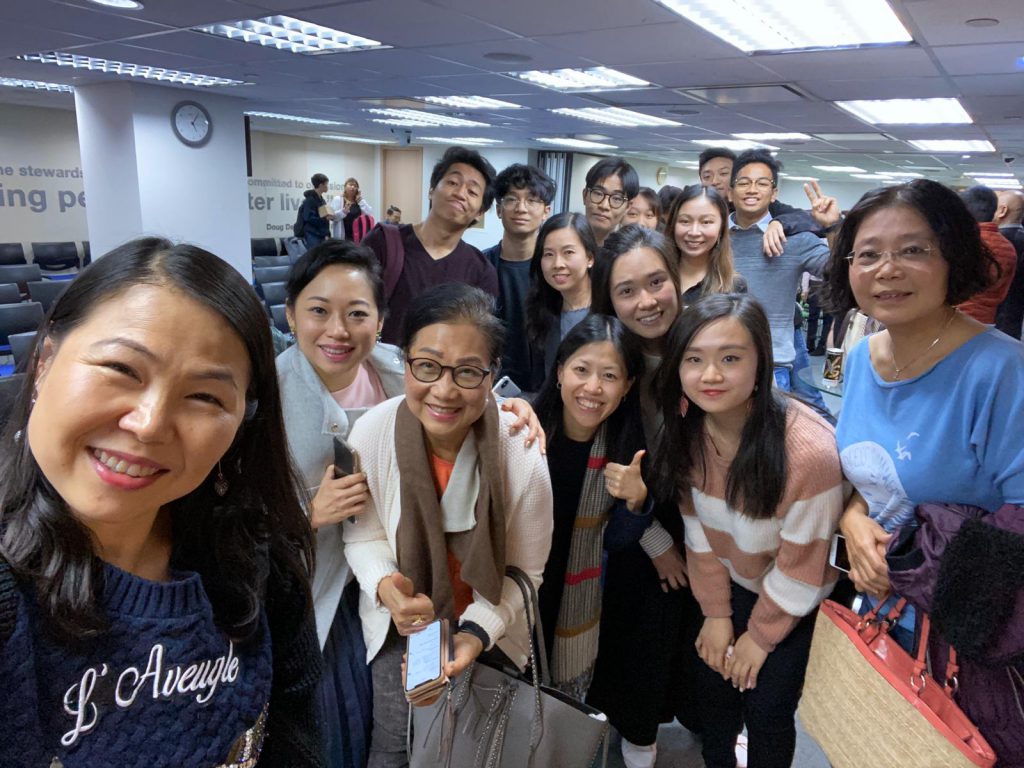
Lam (right two, first row) and her business partners had a training about their business. (Photo courtesy: Lam)

To Lam, success is not merely defined by money or job title but also by how much time and freedom one has. “What is the point of earning millions a year but not having any free time and a healthy body to spend it?” Lam adds.

Lam is longing to be an influential person who can inspire others with her experience, but not simply to have a well-paid job. “It is meaningful if my story can inspire others or encourage them to dream about their future,” Lam says. 

Work-life Balance 

Setting up a start-up business is certainly not the sole path to quality lifestyle. People working full time can also enjoy balance between career and emotional satisfaction.

Luk enjoys playing water sports in her leisure time. (Photo courtesy: Luk)

Mill Luk, executive director of a prominent communications design and production listed company, thinks she is able to strike a healthy work-life balance. Despite her busy schedule, she still manages to find time to travel with her husband and children, does volunteer work and plays water sports and ball games with her besties.

 “The definition of quality lifestyle varies among people. I consider it as a lifestyle of knowing how to take care of yourself before handling other matters. Quality lifestyle is how you manage time for your family, health, social life and entertainment. At the same time, you can choose how you want to live your life,” Luk says. 

Being a member of a company’s senior management and earning a fortune is generally regarded as success. But this is not the case for Luk. “Only a few people are successful. So it is inappropriate to interpret success from the majorities’ point of view. Many successful figures may not have lucrative income. But they are successful in giving meanings to others’ lives,” Luk says.

Many successful figures may not have lucrative income. But they are successful in giving meanings to others’ lives.

Mill Luk, executive director of a communications design and production listed company

She believes everyone has the right to pursue their own quality lifestyle. The only determining factor is whether their dreams are indispensable enough to be realised. “If you believe work-life balance is your ultimate life goal, you must have good time management to achieve your goal,” Luk says.
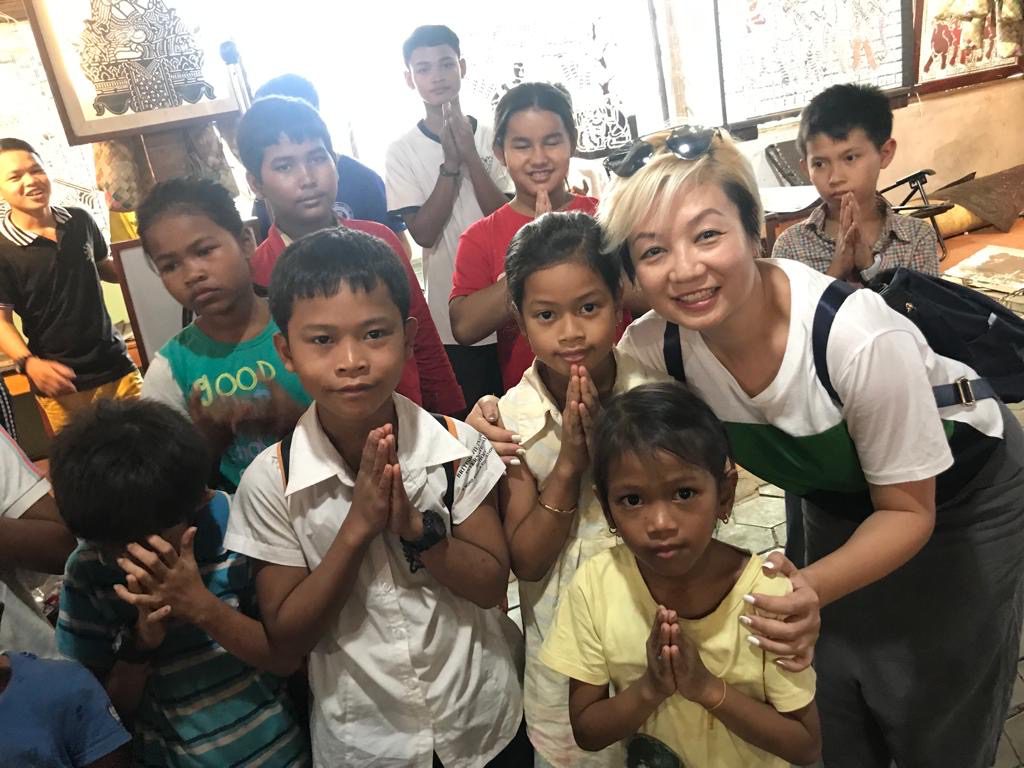
Luk visited an orphanage in Cambodia for voluntary services. (Photo courtesy: Luk)

Asked whether the three interviewees would encourage youngsters to step out of the box and chase for quality lifestyle that they want, they unanimously mention the same term — delay gratification. “Youngsters ought to discover their life goals. I encourage them to plan their personalised quality time while learning,” Luk suggests.

Edited by Tiffany Chong
Sub-edited by Cynthia Sit

Love Shaped by Colours

By Gloria Wei

Ongoing protests affect dating lives as different political views cause conflicts between lovers.

Politics is everywhere. It affects a society in many aspects including romantic relationships. Lovers are supposed to stand by each other, but can they still support each other when they have opposing political views?

How dating is affected by politics?

“The division has put us on the edge of breaking up,” says Ruye Xia. She finds a relationship crisis brewing. They had endless fights triggered by different views on the anti-ELAB movement in Hong Kong.

Xia, a Year 2 student studying at the Chinese University of Hong Kong, has been in a relationship for three years with Naiq Xu, who studies in China.

Xia feels helpless when she tries to persuade her lover to understand the reasons behind the movement. Her boyfriend also refuses to communicate with her.

Xu, says being indifferent to politics, the lovers mostly chatted about food and gossips about others rather than politics. “What bothers me the most is her suffocating attitude, but not the difference in political views,” he says.  

Apart from having arguments with families and friends, many young lovers in the city are struggling in their romantic relationships which have turned stormy due to politics. More and more people reckon political stances as one of the crucial factors in judging their partners –“Yellow”: being on the side of pro-democracy protesters, “Blue”: being on the side of the pro-establishment.

Finley, a Year 2 university student who declines to reveal her full identity, shares a similar experience. She broke up with her German boyfriend Josh because of continuous quarrels over the social unrest in Hong Kong. Josh thinks actions taken by the Hong Kong Police Force are justified, as police shooting is common in the United States.

Finley thinks it is absurd to compare the situation in Hong Kong with that in the USA, where cultural and social contexts are very different in terms of police brutality and abuse of power by frontline police officers.

Yet when asked whether the conflict led to the end of their relationship, Finley denied without a doubt. “I asked for break-up because I want to be alone”, she says, “I hate being obliged to stay with someone just because he is my boyfriend when I am in a relationship.”

While some lovers quarrel and break up because of different political views, some also fall in love because of politics.

Max Zhang, a 20-year-old Chinese student who came to Hong Kong to study two years ago, met her girlfriend, who prefers to be called Winnie, because of their political views. They met at a political event.

Before they met, Winnie was isolated by her friends due to her choice of being a ‘blue ribbon’. Her friends leave comments such as ‘Cold-blooded’ and ‘Get Out of HK’ on her Facebook account. The lonely girl went to a political activity held by a blue camp group. Participants sang patriotic songs to celebrate the 70th anniversary of People’s Republic of China. She met Zhang there and thought of Zhang as her Mr Right who fully understood her.

Yet, it takes more than sharing the same political view to maintain a relationship. Max and Winnie broke up a month later. Both of them realize that they do not know each other very well.

Lovers have quarrels because of their opposing political views.

Chin Ming-hui, assistant professor from the School of Psychology at the Chinese University of Hong Kong, points out that the social movement merely reveals problems that have long existed between lovers, such as forcing opinions on others.

“The opposing political views cause conflicts between lovers, but they are usually not the real and main cause. Even if without the protest, the latent contradiction will erupt someday,” he says.

Ways to cope with romance problems – Respect and communication

To maintain a healthy relationship, Chin thinks respect is the key. Chin thinks it is hard for couples to be like two identical leaves, looking for a spouse that shares same thoughts and views. The difference in political opinions is as natural as that in dining habits. “Don’t be charged emotionally and magnify any distinction”, he says, “especially when facing politics, a complex question with more than two options.”

Chin advises couples to divert to other topics instead of drowning in the swamp of protests. ‘Excessive repetition will diffuse negative energy, putting the two under much pressure. Try digesting the emotion independently and stop drawing comfort from others. Sometimes stopping is going ahead,’ he adds.

Despite their different political views, Addrina Zhang, a 19-year-old university student studying in Hong Kong, gets along well with his boyfriend Suntoo, who studies in Canada, by following principles similar to Chin’s advice.

Zhang believes that the social unrest brings them closer by teaching them how to deal with frictions. At the beginning, they also argued for the same issue about the unrest when it first broke, but soon they figured out solutions to deal with arguments.

“Every time when signs of conflicts emerge, we always put them aside temporarily,” Zhang says, “perhaps we will think the same way several months later.”

Edited by Kayi Tsang
Sub-edited by Wayne Chang

“Heartmade” Handmade Paper

A Handmade paper maker finds a new way to advocate green lifestyle.

By Coco Zhang

It is easy to buy paper in Hong Kong, but Because Yeung still prefers making her own paper. She learnt the craft when studying at Hong Kong Art School (HKAS). She now makes green wedding cards and offers paper-making workshops to promote green lifestyle.

Thanks to her green production concept and tailor-made design, Yeung is able to sustain her business by making handmade wedding invitation cards using recycled offcuts from local paper mills. “It is trendy for young people to have a green wedding to spread green message and that’s why they come to me,” says Yeung, “They want handmade invitation cards which are made from recyclable materials.” 

The material of these wedding invitation cards is handmade paper

Apart from making wedding invitation cards, Yeung also organises workshops to promote green lifestyle. She teaches participants how to turn a common waste like milk cartons into usable handmade paper by showing them how to separate plastic films from the cartons. “The best way to persuade people to save paper is to let them do it and see how hard-won it is,” says Yeung. 

Although more and more people are adopting a paperless lifestyle and relying on electronic devices, Yeung still makes paper because she believes paper is irreplaceable. She says the thickness of a book can influence readers’ experience and its texture can help you immerse in the story. “Paper raises the temperature of reading,” says Yeung.

Make paper from scratch

Yeung’s love affair with handmade paper started when she was studying in Hong Kong Art School (HKAS). At that time, the campus had just relocated in the rural area and she was assigned to design a poster to celebrate the 10th anniversary for the school.

Wandering around the new campus, Yeung was inspired by the surrounding environment. She decided to create an artwork featuring the natural environment around the campus. 

The paper available in the market is too thin and its texture is too smooth to fulfil her aesthetic requirement. “There is really no choice but to do it by myself,” says Yeung. There was no paper-making course available in Hong Kong seven years ago, so she learnt it by watching clips on YouTube.

“I like the state of paper when it’s in the water, which resembles the clouds in the sky, ”says Yeung, “The paper pulp is high in plasticity and I like its plasticity and freedom.”

The handmade paper is made of recycled paper

Turn hobby to her career

Yeung had never thought about turning her hobby into a career until she was invited to hold a paper-making workshop in HKAS’s open day. The event was a turning point in Yeung’s life – she started thinking about setting up a studio to make handmade paper or books.

Yeung was a full-time designer in an advertising company back then. She decided to quit her job and start her own paper-making business. “You never know whether you have made the right decision until you get a result,” says Yeung, “You won’t succeed if you don’t take action.”

“You won’t succeed if you don’t take action.”

Introduced by her friends, she went to Taiwan to learn traditional paper-making techniques from a paper-making family. She received a systematic training from planting mulberry trees to selecting raw materials.

Though Yeung is happy that she can turn her interest into a career, she feels confused sometimes. When making paper, she needs to stand for hours and sometimes up to five hours a day, especially when she is loaded with many orders from her clients. Long hours of repetitive work annoys her. “I don’t want to be a machine,” she says.

Yeung believes that one has to be very careful and attentive during the process of paper-making. The products in some way can reflect the mentality of the maker. There were times when she found the paper she made was fragile. “I asked myself why I didn’t enjoy it when the hobby became my career. And I found it was because my mindset changed,” she says.

Yeung keeps reminding herself why she started making paper in the first place — it is to enjoy the process. She tries to focus better when making paper by putting her phone aside. “It’s more like ‘heart-made paper’ instead of ‘handmade paper’,” she says.

“It’s more like ‘heart-made paper’ instead of ‘handmade paper’.”

Because Yeung founded her own business Somood

Yeung named her studio “Somood” because its pronunciation resembles Cantonese “水木” (meaning “water and wood” ), which are the major raw materials for making paper. She also finds that Somood is a Muslim name (Arabic writing: صمود), which means “steadfastness” and “firmness”. Yeung says that such coincidence perhaps explains why she falls in love with handmade paper and turns it into her career.

Edited by Jasper Cao
Subedited by Emilie Lui

Let’s Come Out and Do Sports!

Dennis Philipse brings LGBTQ’s Gay Games for the first time to Hong Kong, hoping sports can connect people together.

By Lynne Rao

On October 30, 2017 at Hôtel de Ville in Paris, the deputy mayor of Paris announced Hong Kong won the bid to host Gay Games in 2022.

“It was amazing. Everybody was super excited,” Dennis Philipse, co-chair of the Gay Games 11 Hong Kong 2022 team, says when recalling the night his team won the bid.

The 47-year-old Dutch, who has been living in Hong Kong since 2010, devotes himself to making preparation for the Gay Games HK 2022 and serving Hong Kong’s LGBTQ community.

Dennis Philipse receiving our interview.

Originated in San Francisco in 1982, Gay Games is a global sports competition held every four years and perceived to be the Olympic Games for LGBTQs. Back in 1998, when visiting the Gay Games held in Amsterdam, the young Philipse was impressed by the event.

“There were so many people, so many spectators and so many things going on… You could feel what was happening,” he says, “People from all over the world came together for sports. That’s quite unique.”

Gay Games has only been held in western countries since it was founded. Philipse had an idea of bringing the Gay Games to Hong Kong in 2014. He then started a campaign to fight for the right of hosting the game. 

Core members of the organising committee of the Gay Games Hong Kong 2022. Photo courtesy: Dennis Philipse.

Working with a team of 15 people and 40 volunteers in the campaign, Philipse spent six months preparing a 300-page bid proposal and a presentation to convince the game committee that Hong Kong was the perfect candidate to host the game.  

Hong Kong beat 10 strong competitors, including Washington DC and San Francisco, and won the bid to host the Gay Games 2022. The biggest difficulty Philipse and his team faced was to explain the event to the public. “People have no idea about how big it is and how important this is for Hong Kong,” he says.

The successful story is actually closely related to an LGBTQ community he founded and his love for outdoor activities.

Set up an LGBTQ Community

Philipse observes that many people do not like mingling with friends in clubs or bars. He opened a Facebook page – Out in HK in 2014 and began organising sports activities with his friends every week from then on with connection he made on social media platforms. The activities include trail running, swimming, tennis and so on. 

He hopes by founding the group, members of the LGBTQ can meet new faces. “If you go to bar or club, it’s very loud and noisy and difficult to talk to people,” says he, “If you go hiking, it is easy to make friends because when somebody gets cramps or falls, people help each other.”

“If you go hiking, it is easy to make friends because when somebody gets cramps or falls, people help each other.”

“There are several sport groups in Hong Kong but those are usually very exclusive. Out in HK is a community for everybody to join. It’s more visible,” says Philipse.

He believes that sports can help people keep fit and build connections. Some LGBTQ people even found their lovers when taking part in the sports activities. 

Participants of Out in HK go hiking. Photo courtesy: Dennis Philipse

Out in Hong Kong is now one of the biggest LGBTQ communities in Hong Kong with more than 6000 members. Philipse incubated the organizing team of Gay Games 2022 through this group and is using it as an important platform for promotion.

“It’s nice to bring people together,” Philipse says, “People who come the first time for the events like this and they keep coming. It’s really important.” 

Philipse believes that playing sports is important for physical and mental health. He embraces challenges by participating in Hong Kong 100 Ultra Trail Race, a 100km trail running challenge in Hong Kong, twice and completing the race once in 22 hours. “If you run for a long time like 24 hours, you are on your own,” he says, “It’s a mental game.”

“If you run for a long time like 24 hours, you are on your own. It’s a mental game.”

Get Ready for 2022

Gay Games 2022 is still in “the developing stage”. Philipse and his teammates have deployed multiple media channels to promote it in Asia. They expect the game to attract 12,000 LGBTQ athletes and 75,000 spectators. 

“Because it’s the first time the game comes to Asia, many people have not heard about it,” says Philipse, “We really need to explain what it is and why people should join it.”

Philipse is now working in a technology company, and plans to quit the job to dedicate himself to the big event, though he has not yet thought about other ways to make a living.

Philipse points out that as the degree of acceptance of LGBTQ communities in Asia isn’t as high as that of western countries, many people hide their sexual orientation. 

By organizing sports events for the LGBTQ community, Philipse wants to change public’s view on homosexuality. “It’s quite hard if you can’t bring your whole self to work or home,” says Philipse, “Hiding half of yourself is an emotional burden.” 

“Gay Games is about education… being LGBT is normal,” he adds. 

Edited by Jasper Cao
Sub-edited by Howard Li


Transforming Structures to Images

Architectural photographer, Leon Xu, captures the beauty of a building with his knowledge in architecture and art sense. 

By Vivian Cao

“As an architect, I think about the building’s physical look, structures, material, and the relationship between people and space. As a photographer, I focus on imagining what buildings look like when I take photos,” Leon Xu says. 

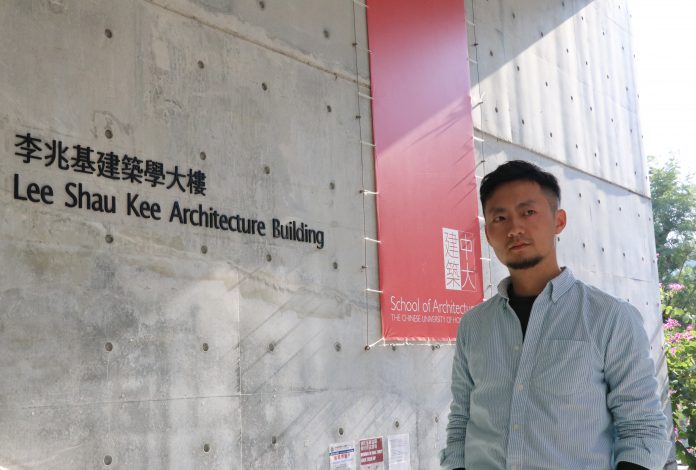
Xu, aged 29, wears three hats. He is an architect, a lecturer in the architecture school of the Chinese University of Hong Kong (CUHK), and a photographer. His interest in art design and degree in civil engineering navigated him to take up an unusual role – an architectural photographer.

Switching Different Hats

Xu believes photographers’ training in different disciplines affect their approaches of taking picture. He recalls one of his clients hired three photographers for a shooting project. One of them who studied Arts at university was good at capturing objects in an aesthetic way, but failed to seize the importance of space. Xu learns about space as an essential concept from his training in architecture, and this has a great influence on his productions. 

Xu showed his Double Wall Pavilion project outside his office at School of Architecture.

One of Xu’s recent works, Double Wall Pavilion, was exhibited at the 2019 Shenzhen Bi-City Biennale of Urbanism\Architecture. Although this modal has a simple exterior, Xu highlighted: form, materials and elements in it, by applying his photography acumen. 

Design of Double Wall Pavilion. (Photo courtesy: Xu Liang)

“When I was designing this project, I decided to employ a metal net for the roof. The metal net should be three-dimensional instead of flat. Because this can create a shimmering effect when sunlight reflects on it,” Xu recalls. Architecture photography makes him pay more attention to different spots inside a building.

Another latest work of Xu is a cooperation with HATO Studio for Tai Kwun publication after its major revamp. Xu’s photos are printed on pamphlets for promoting Tai Kwun. This is a unique experience for Xu because he usually works with architects. But this project involves a cultural heritage organization and a graphic design studio.

“Do you know which team of Tai Kwun invited me? It is not the designing team nor curatorial team but the marketing team. Their perception of photos and what they want to convey are different from architects,” Xu explains. When he works with architects, he applies his professional knowledge and presents concepts and highlights of a building in photos. But the marketing team of Tai Kwun requires images that can attract public attention and interest.

Xu’s photo were printed on the promotional pamphlets of Tai Kwun. (Photo courtesy: Xu Liang)

Living under Principles

Everyone has their living principles and Xu is no exception. There are two principles he lives by when working as an architectural photographer. Xu had his first taste of commercial photography with BEAU Architects, an architecture studio in Hong Kong. The founders and partners of BEAU Architects, who cannot read Chinese, showed their appreciation after seeing a report of his works. “The report only has a Chinese version. They were not touched by my words but my photos,” Xu claims.  

He highly appreciates the opportunity to work at BEAU Architects because this studio emphasizes tectonics which is an expression of construction and materiality. This matches one of Xu’s principles – focusing on the quality of buildings.

Another principle is to avoid being proactive when handling clients. He aims to maintain an equal status with his clients but not just a service provider. Xu explains, “The relationship between my clients and I should be built base on their appreciation of my works instead of relying on self-promotion. I think this can safeguard my professionalism.”

The relationship between my clients and I should be built base on their appreciation of my works.

Xu finds defining the boundary of professionalism necessary to ensure autonomy of his works. So he only take pictures of architectures for commercial photography, but not for events and portraits. 

Separated by a River

Photo taken in Nam Shan Estate, Shek Kip Mei. (Photo courtesy: Xu Liang)

Xu has a taste of living in two proximate cities: Hong Kong and Shenzhen. After finishing his master degree in Shenzhen, he studied a postgraduate course in Hong Kong at Architecture school. Although these two cities are separated by a river,  cultural difference affects all aspects of people’s daily lives in the two cities. During his six years of stay in Hong Kong, Xu has melt into Hong Kong way of life already.

“I like Hong Kong because this city brings a lot of excitement to me. It is a city with a mixture of new and old, traditional and modern, low-income and high-income. Under this situation, plenty of unexpected things can happen,” Leon says. He adds that Shenzhen is a newly developed city that is big, clean and comfortable, but it lacks historical elements.

The limited space in Hong Kong is what Xu finds challenging, as an architect, yet attractive. “When you face a confined space compared to a big and empty room, you will have a completely different design,” Xu says. He is amazed by some narrow stores with only 3 meters width along Hong Kong’s old streets. 

More than a Photographer

Living in a fast-paced city like Hong Kong where commercial values often win over art, Xu still has high regards for art. “Art has a high value. Because it can enlighten people. But it depends on if you want to be enlightened or not,” he says. Xu believes art form is an expressive way to portray problems in society and people’s daily lives. Art form might not bring quick improvement, but it can enlighten people. 

Art has a high value. Because it can enlighten people. But it depends on if you want to be enlightened or not.

Xu gave a lecture to the students from School of Architecture.

He thinks the difference between him and other commercial photographers is that commercial project is only part of his works. He also enjoys art photography and attends different exhibitions to meet friends who share same interests as him. “I will not define myself as a commercial photographer. I am a photography artist,” Xu says.

Edited by Tiffany Chong
Sub-edited by Ariel Lai

Turn the Clock Back

A Taiwanese restaurant inside an industrial building can bring you back to the old times.

By Tommy Huang

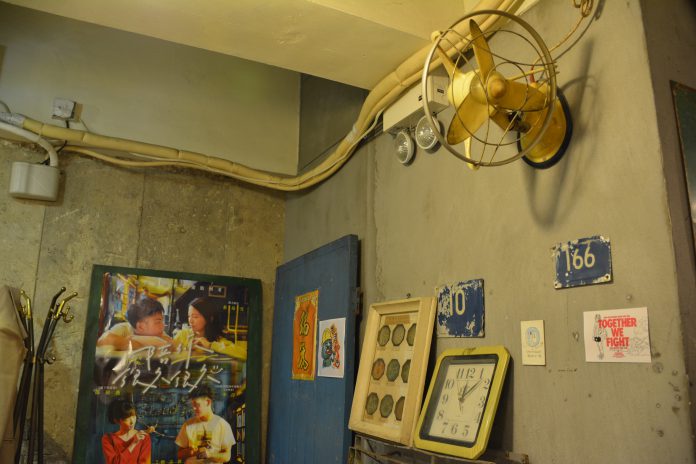
School Café (小時光) is a Taiwanese restaurant inside an old industrial building in Kwun Tong. Decorated like an old school, School Café is not simply a restaurant to dine in, but also a place to turn the clock back.

The owner of School Café, Kevin Chan, is a Hong Konger who loves Taiwanese food so much that he opened a Taiwanese restaurant.

Chan also likes to collect old stuff. Old desks and chairs in School Café were originally abandoned when some schools underwent renovation in Taiwan. Chan collected and brought them to Hong Kong. He thinks it is wasteful to throw away old school furnitures which are now used in the café as dining tables and chairs for customers to sit.

Abandoned old furnitures taken from school renovation are placed in School Cafe.

Hongkongers love Taiwanese romantic movies like “Secret (不能說的秘密)” and “You Are the Apple of My Eye (那些年,我們一起追的女孩)”. Posters of these films are hung on walls in the café. Customers can feel as if they are in Taiwan once they step into the restaurant. “I have seen movies “Detention (返校)” and “Our Times (我的少女時代)”, so I find these old desks and chairs familiar,” Bowie Mok, a Hong Kong customer says.

Second-hand comic books are also available for customers to read at the café. Japanese comics became popular in the 1970s in Taiwan and Hong Kong. “I like Slam Dunk and comics by Mitsuru Adachi,” Cannie Chan, manager of School Café, says. “Dragon Ball was also popular in my time, but it was not my favorite,” she adds.

Customers can read classic Japanese comics on the shelves.

“It brings my childhood memories back. I see action figures of Mazinger Z, which we all watched when we were young,” Lai Jui-Chin, a Taiwanese customer shares. Antiques such as action figures, sashes, fans, television, and telephone are all special features of its decoration.

Braised pork on rice is the signature dish in School Café.

Red-braised beef noodle soup and braised pork on rice are School Café’s signature dishes. Most of the ingredients are imported from Taiwan directly. “Without these ingredients from Taiwan, the taste of the food will be different,” Chan says. Tablewares such a flask-style cups, colored pencil-style chopsticks, and note-shaped menus another highlights of the restaurant. All imitate stationaries students use in schools.

“Older customers are more familiar with these decorations. When they come with their families, they share memories with their children,” Chan says. “I find it meaningful.”

Edited by Lambert Siu
Sub-edited by Soohyun Kim

A Path to Freedom

Walking along the Freedom Trail is like revisiting the history of American revolution.

By Tommy Huang in Boston

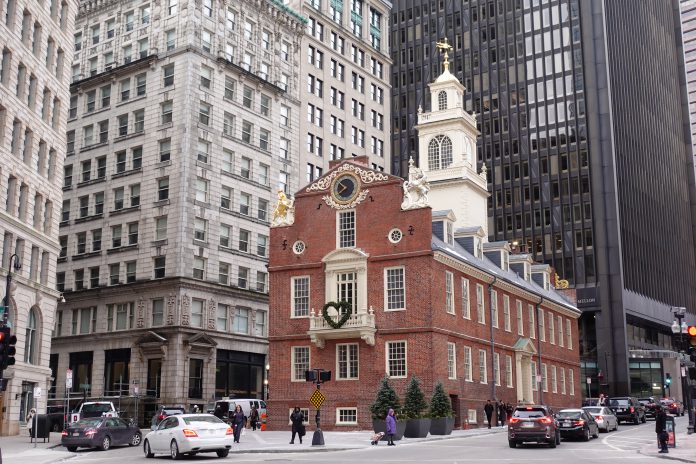
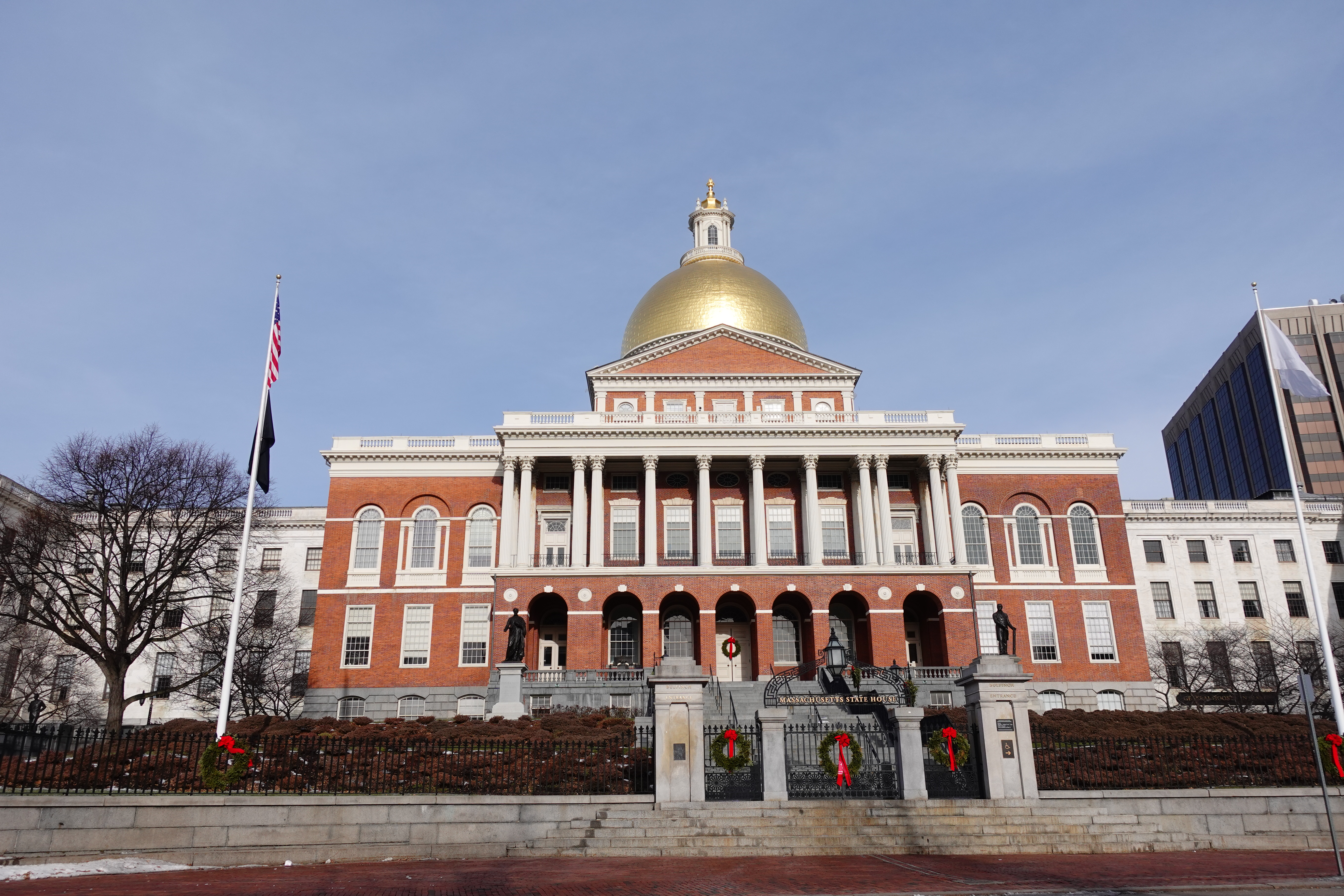
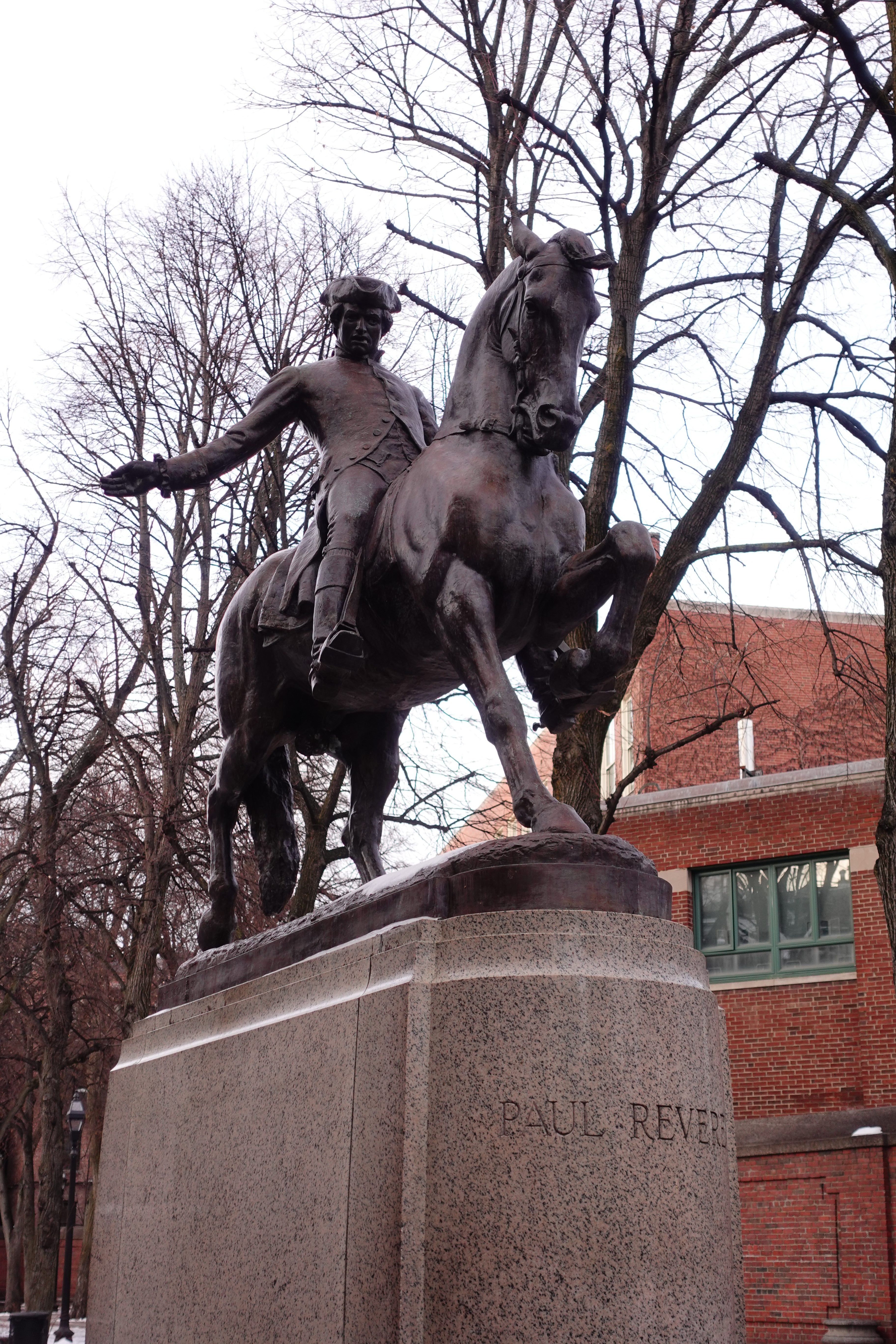
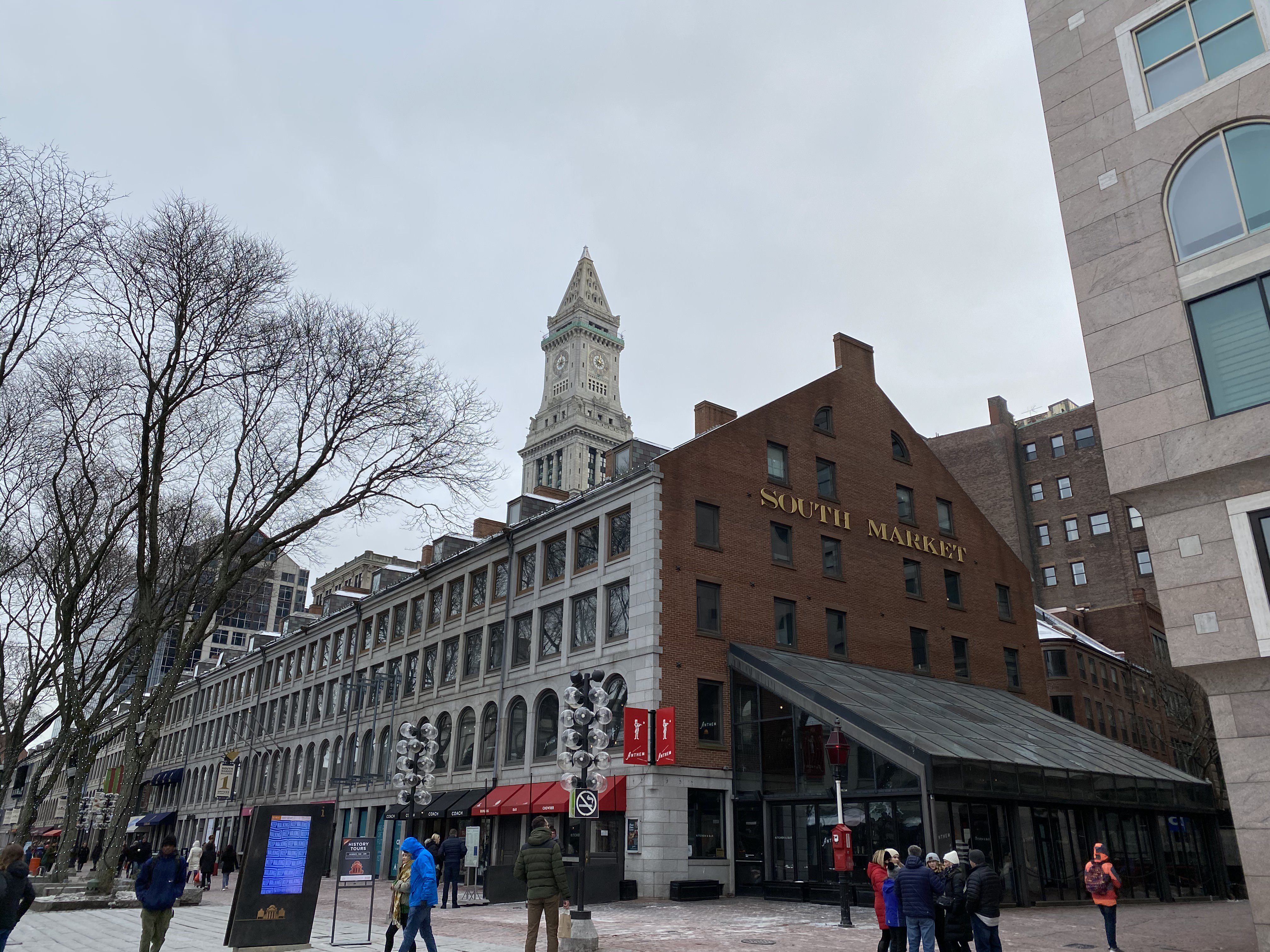
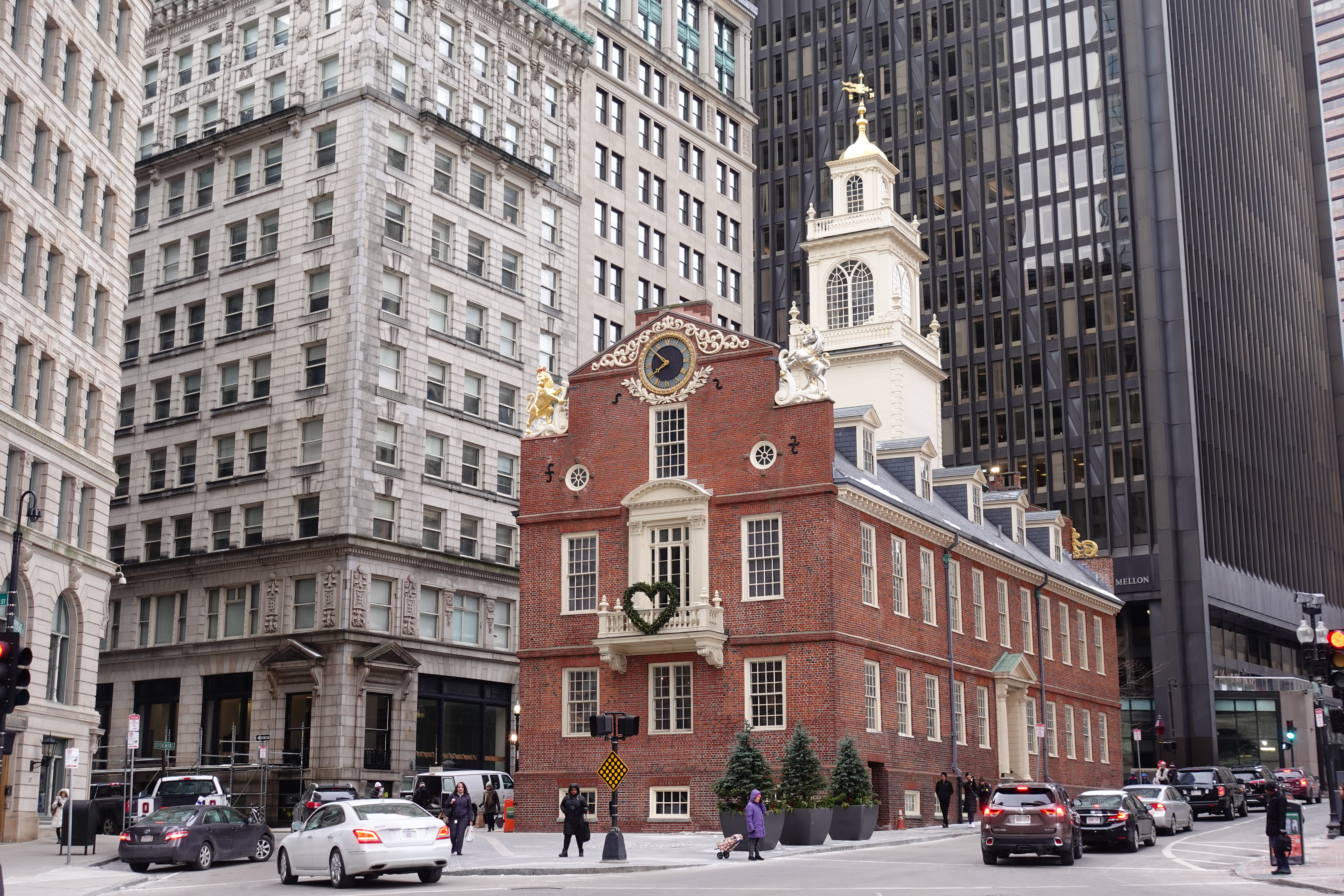
Boston was regarded as the birthplace of the American Revolution. Now a popular tourist attraction there, the Freedom Trail, is a 4 km red brick pedestrian walk starting from Boston Common to Bunker Hill, with 16 historical sites in American history.

Before the American Revolution between 1765 and 1783, Americans had to pay tax to their coloniser, the British government, but Americans had no representative in the British Parliament. “No taxation without representation” then became the slogan of the revloution.

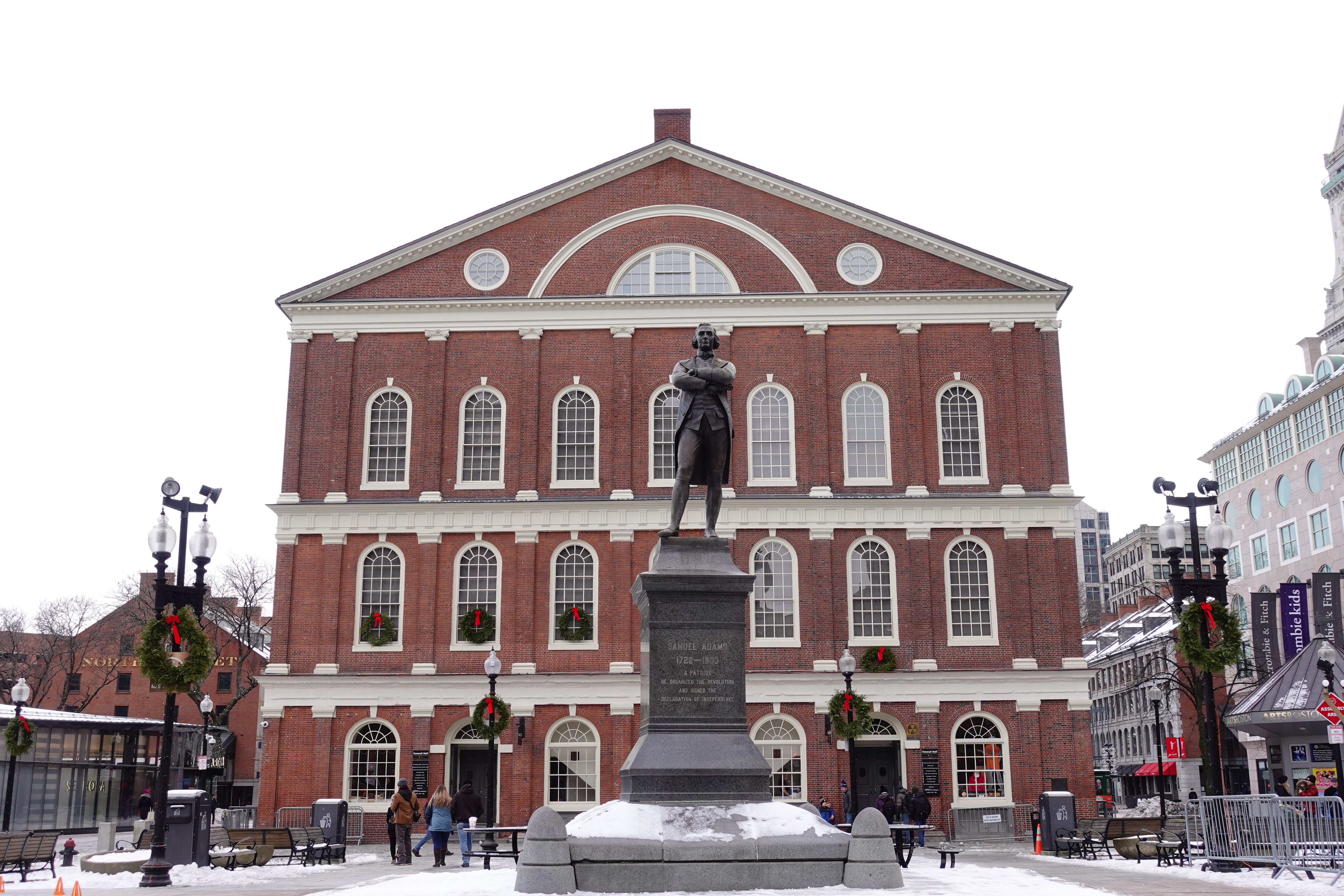
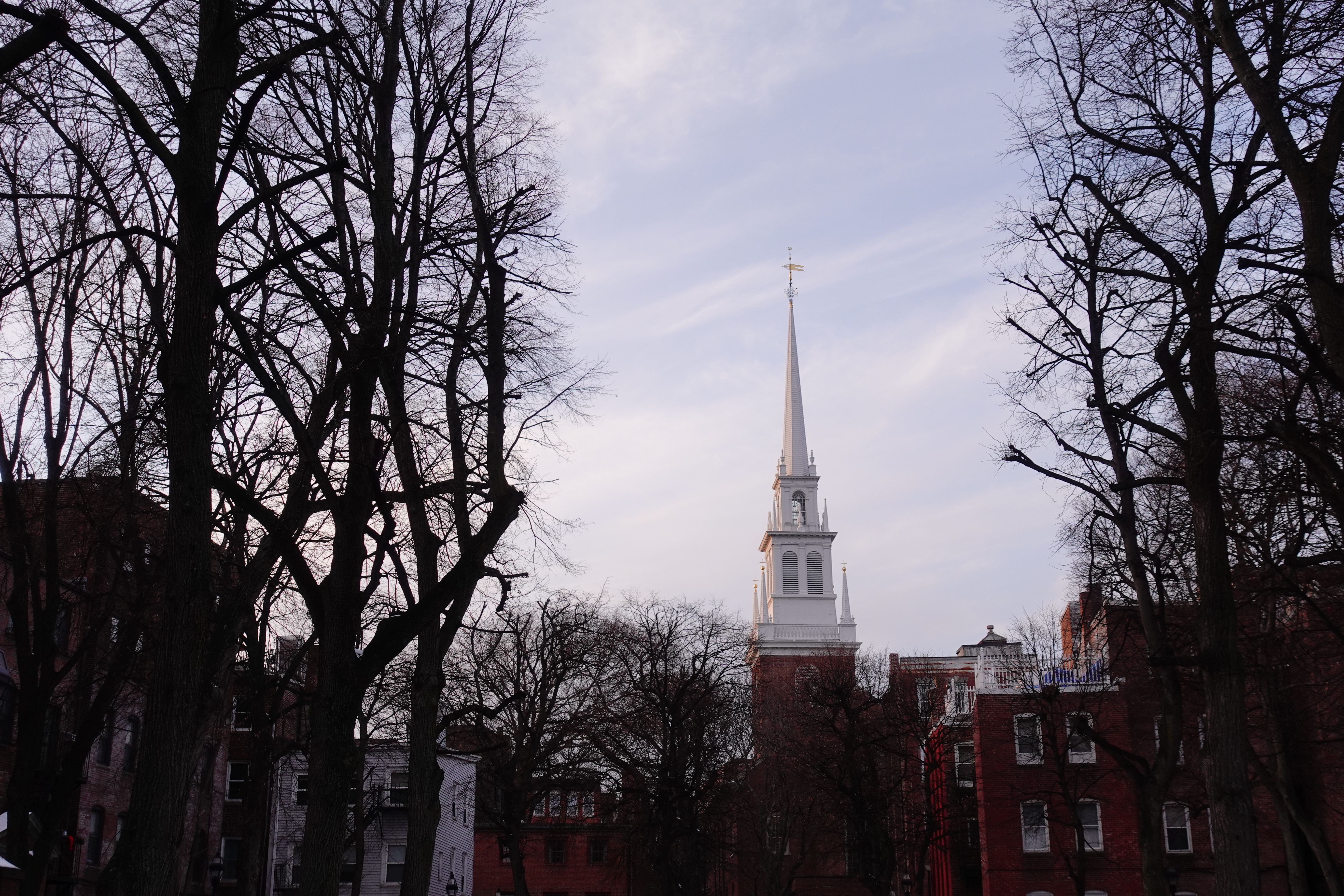
Two important sites on the Freedom Trail are Faneuil Hall and Old South Meeting House. Boston revoluntionists gathered in these meeting halls as they challenged the British Parliament and demanded their rights during the Boston Tea Party, a mercantile and political protest which is usually considered to be the catalyst to the American Revolution.

Several weeks of town meetings discussing tea boycott were held upon the arrival of the British East India Company’s ships and the situation reached its climax on December 16, 1773, when demonstrators marched to Griffin’s Wharf to board on those ships to dump 340 tea chests into the Boston port.

“As a major commercial port among the 13 Colonies, Boston was seriously affected in terms of trade when the British levied taxes on colonies,” says Lian Yi-Zheng, an economic professor says. “So anti-taxation campaigns occurred in Boston,” Lian, who had his tertiary education in the US and taught at the University of California, adds.

The British government was angered by the the Boston Tea Party. In 1774 the British enacted the Intolerable Acts, a series of punitive laws, that the Boston port was closed until American paid for the dumped tea and restored British authority in the Province of Massachusetts Bay.

Lian says Boston had a highly independent colonial governmen under British rule, like Hong Kong before the 1997 handover from British to Chinese sovereignty.

Lian points out many Americans liken today’s Hong Kong to the US during the American Revolution. “In order to pursue freedom and escape from oppression, people left the motherland and established a highly civilized place economically and politically. In the end, the oppression of the government of motherland led to resistance,” Lian says.

“This mechanism is very similar with what the USA had gone through. In comparison with their own history, what happened in Hong Kong in 2019 consciously or subconsciously resonates Americans.”

Edited by Lambert Siu
Sub-edited by Soohyun Kim

Pepe the Frog, more than a frog

Reporters: Ariel Lai, Howard Li, Tiffany Chong, Soohyun Kim

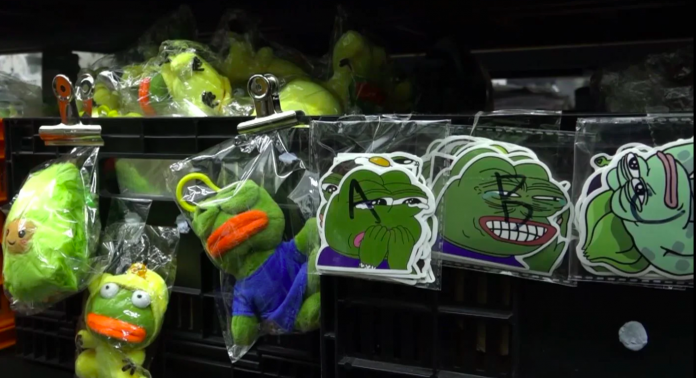
It is fun to convert feelings and opinions into emojis, GIFs, memes, stickers. Internet meme Pepe the Frog originated in the USA as a symbol of hate has taken the stage as a prominent figure in the anti-extradition bill movement as a symbol of love and support.  

Associate professor Katrien Jacobs of Cultural Studies at the Chinese University of Hong Kong says people spend more time chatting with friends via social media platforms. They do not like reading long texts and are more infatuated with visual imagery. People who made the stickers distribute them for free, inviting others to adopt them on various platforms. These social norms give rise to such a new communication trend.  

The practice of storing and creating stickers of cartoon characters and human reactions for the purpose of communication is prevalent among Hong Kongers. One of them them, Pepe the Frog, is used as a means to convey political messages. The character has gained widespread attention in anti-extradition bill protests. The cartoon character is portrayed as a symbol of democracy, love, freedom by the people in Hong Kong, which is different from “hate speech” conferred by people in the United States. Starting from an innocent figure in the US, it was used by radical groups to hate minorities. 

Pepe has been carried around by many Hong Kongers during protests, activities to show support, encouragement, and solidarity for each other in the fight for democracy and freedom. Mandy, a participant of the Pepe human chain, has changed her view of Pepe in light of the recent protests. She first found the frog ugly, but now she finds it to be more adorable after being used as a symbol in a more positive light in the recent anti-government movement.

Jumping on the Pepe bandwagon, businessmen commercialize Pepe by selling products featuring the cartoon frog, such as toys, backpacks, wallets, and so forth. Sam, owner of Accstore, an online store that sells mainly sports-related products, has included Pepe products into their sales item list since the start of 2019, long before the anti-extradition bill movement started in June. He says the facial expression of Pepe reflects the frustration of Hong Kong people when the government keeps turning a deaf ear to their demands.

Do Good; Save Food

Hong Kong people take challenges in rescuing food from landfills

Reporters: Emilie Lui, Kayi Tsang, Cynthia Sit 
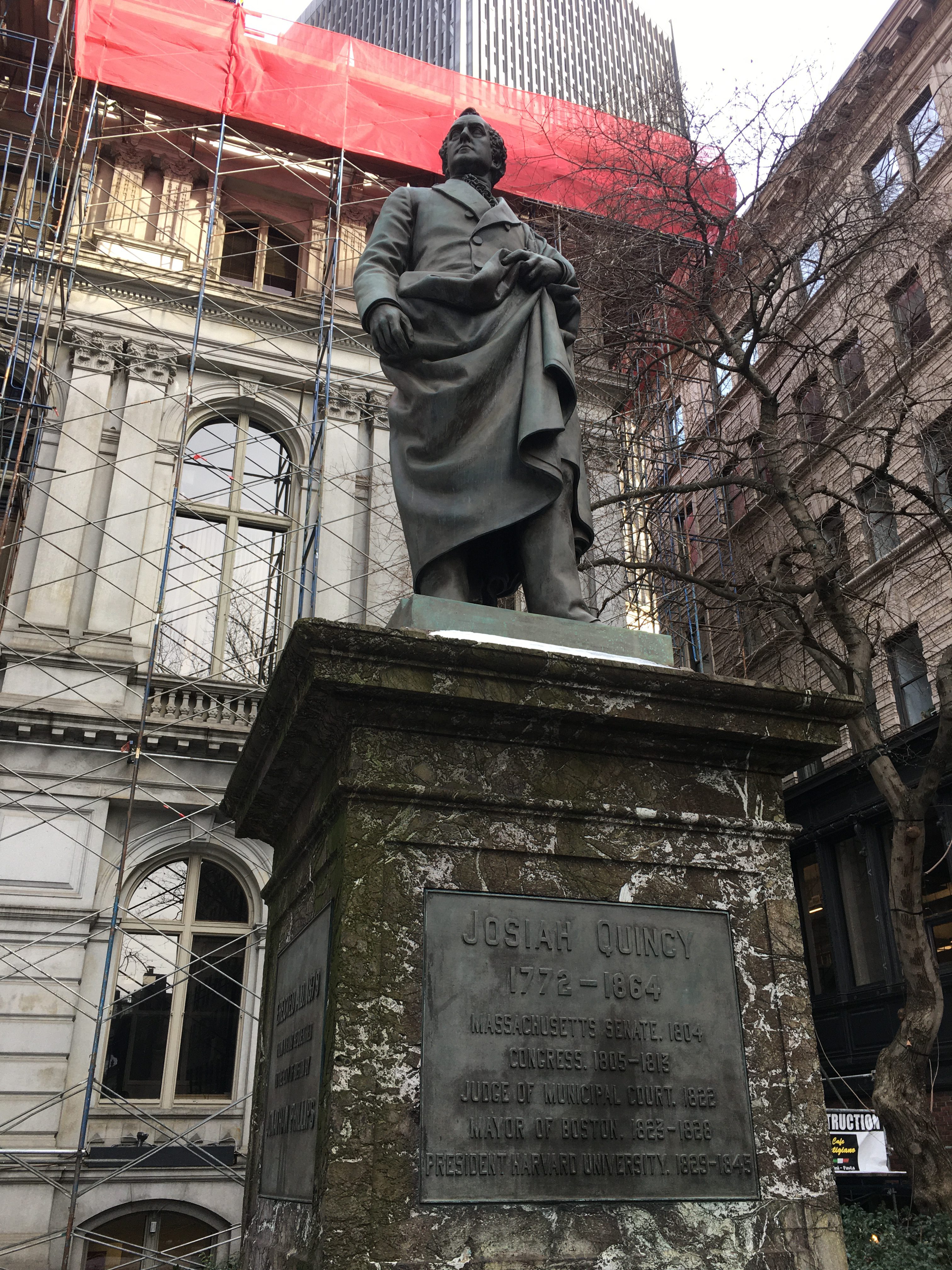
The government, NGOs and social enterprises have made great effort to combat food waste problem, as dumping huge amount of food wastes in landfills which are reaching their full capacity soon is not sustainable.

About 3,600 tonnes of food waste were landfilled each day in 2016, according to the government statistics. The huge number constituted 35 per cent of all municipal solid waste disposed of at landfills, making food waste as the largest municipal solid waste category in Hong Kong. 

The government has coordinated various food waste projects as the current practice of disposing food waste in landfills is not environmentally sustainable. One of the well-known schemes is the Food Wise Hong Kong Campaign launched since May 2013. With the orange big-eyed cartoon “Big Waster” mascot promoting food reduction concepts, citizens have gradually become familiar with the campaign and paid more attention to food waste recovery.

Apart from government plans, some local organizations and businesses  are also trying to take up social responsibilities by initiating other innovative methods. 

GreenPrice is a social enterprise founded by four university students in 2016. The co-founders decided to sell short-dated packaged food and bottled drinks after learning from  some food products are still safe to be consumed after “best before” dates. According to a research by Hong Kong Baptist University in 2014, microbial presence levels in food products reaching the “best before” dates are acceptable, which means food products expiring “best before” dates are safe for human consumption. The shop owners believe promoting this concept to the public can help reduce food waste.

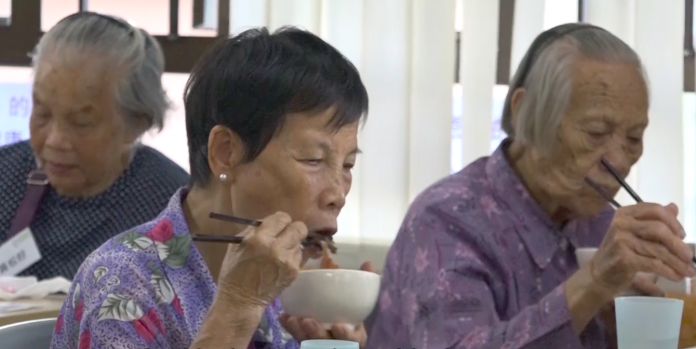
Food Angel, a non-governmental organization, rescues edible surplus food from the catering industry and turns it into fresh and hot meals in their central kitchen with a set of strict safety protocols. Meal boxes are then served to elderly in need in the community. To encourage public participation in food recycling, the charity has also set up food collection boxes in 15 shopping malls to accept food donations. Food Angel pays a great effort to turn food waste  into a meaningful social devotion, which they aim to utilise any food resources they collect to provide assistance the needy .


Safeguard Hong Kong Cleaners

Reporters: Lambert Siu, Lasley Lui, Regina Chen, Wayne Chang

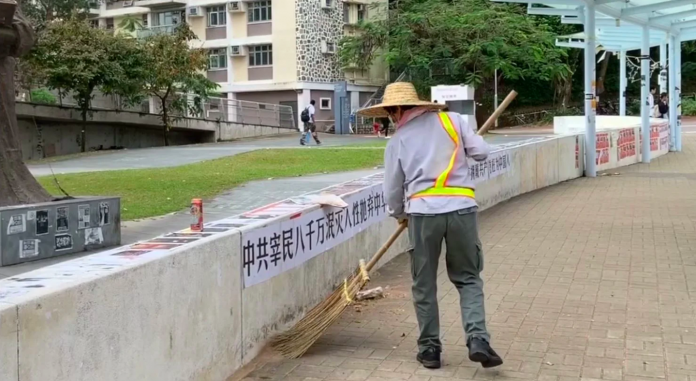
Flyers and leaflets about the anti-extradition bill movement can be seen all over Hong Kong.  

Cleaners who are tasked to clear these flyers and posters, however, are not equipped with proper tools and protective gear. 

CUHK Grassroot Concern Group demonstrated outside CUHK’s Estates Management Office (EMO) in November, demanding the office to provide better protection and equipment to cleaners.

To Chun-ho Danny, Organizing Secretary of Hong Kong Confederation of Trade Unions,  urges the government and government contractors, such as the Food and Environmental Hygiene Department and MTR to issue guidelines and instructions to frontline cleaners about removing chemicals and offer frontline cleaners better protection.