














Home Blog Page 118

Time to be a Dad

What paid paternity leave means for Hong Kong’s new dads and dads to be?

Reporter:Billy Leung, Stephanie Chan

Welcoming a new baby is one of the most precious moments in life, but it can also be a stressful, chaotic and overwhelming time. It takes time for new parents to adjust to their new identities and responsibilities. This autumn, there was good news for civil servants who are expecting to be fathers, as the government announced it would introduce paid paternity leave for its employees.

Civil servants may enjoy paid paternity leave starting from the second half of next year, but the wait for most private sector workers will be longer. The government says it will conduct a feasibility study before making any recommendations on that front.

For those Hong Kong dads who have been given paid time off work to spend time with their newborns, the benefits are tangible.

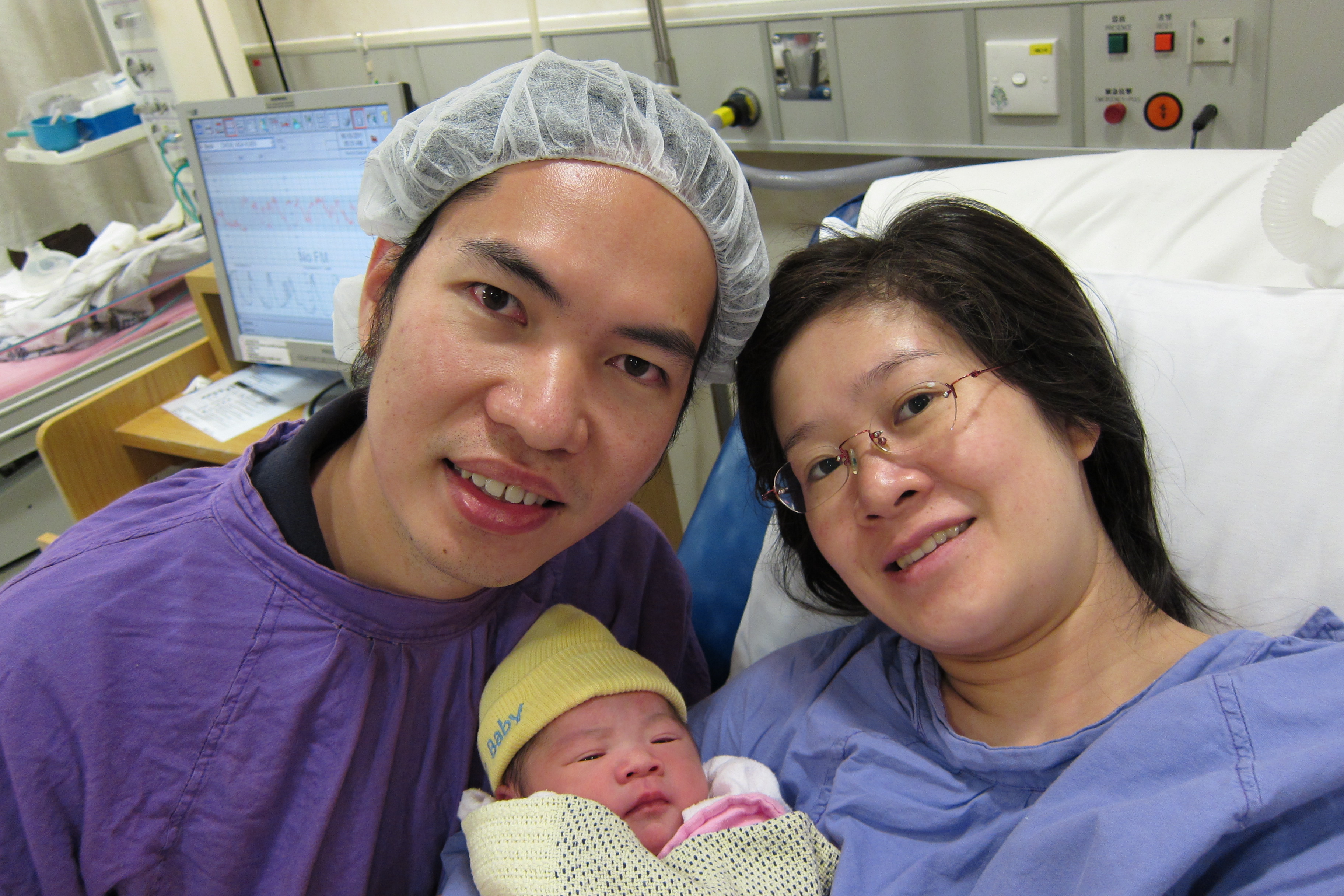
Colin Cheung Kwok-lam, a studio technician at the Chinese University of Hong Kong, took his five days paid paternity leave in October. “I was not just physically by [my wife’s] side but I could also provide emotional care and comfort to my wife and baby,” Cheung says of his week at home.

Cheung says he was able to help his wife in very practical ways. “I could accompany them home from the hospital, cook for my wife, and take my child to the clinic.”

What is more, Cheung says he experienced a miraculous bonding with his baby during his one-week leave. Although he is just an infant, Cheung finds his son can recognize those who are closest to him. “When I hold him in my arms, he feels comfortable and natural,” Cheung says. “But he does not react naturally when others hold him in their arms.”

Cheung’s wife approves of the workplace policy. She believes her husband’s presence has helped her to adapt to the change in their lifestyle and that Cheung has been able to share the burden of taking care of the newborn. For his part, Cheung believes his presence aided his wife’s recovery and eased any emotional problems she may have otherwise experienced.

Speaking as a mother, Mimi Choy, director of the Talent Management Department of Hong Kong Broadband Network Limited, also thinks it is crucial for mothers to have support from their partners after childbirth. She recalls the emotional roller coaster that new mothers go through as a result of hormones and the sudden changes to their lives.

Choy’s company provides paternity leave for all its male employees with the aim of creating a better workplace. Since 2007, male staff are entitled to two days paid leave.

“Apart from their work, employees also bear family responsibilities,” says Choy. “Family problems would in turn affect their job performance if they cannot handle them well.” According to Choy, whether the leave is paid or not is not the most important thing; the crucial point is to give employees time to concentrate on their family affairs.

Time is what Peter Tung, who works for New World Telecom, needed after his baby was born. After giving birth, his wife’s health deteriorated and she suffered from high blood pressure.

Peel Off the Label

Most Filipinos in Hong Kong may be  domestic helpers but who are the rest?

Reporters:Dorothy Goh, Joyce Lee

On any given Sunday in Central, the weekday business suits and power dressing gives way to a more casual and diverse ensemble of outfits. The space around the former Legislative Council building fills up with groups of Asian women sitting on flower-shaped mats and enjoying elaborate picnics. There air is filled with the sound laughter, of conversations and songs in Tagalog. A visitor stumbling onto the scene may feel she is in the Philippines.

As of the end of September 2011, there were 163,800 Filipinos in Hong Kong, according to statistics from the Immigration Department. This makes the Filipino community the largest population of expatriates in the city.

According to a survey of 208 local people conducted by Varsity earlier this month, 97 percent of respondents said their immediate association with Filipinos is domestic helpers. However, while most of the Filipinos in Hong Kong do work as domestic helpers, the territory is also home to Filipino professionals and business people who have regular working visas or permanent residency.

Rey De Guzman came to Hong Kong on a working visa four years ago to work for an international electronics company. Later, he decided to start his own business, Dogside Café, a canine friendly eatery and meeting place in Causeway Bay. The business is doing well as De Guzman has successfully targeted Hong Kong’s middle class pet-lovers.

De Guzman’s experience is a Filipino success story highlighting the opportunities to be had in this city. But not every Filipino professional in Hong Kong has found it so easy to start and then advance their career here.

“You just feel like you have to prove yourself all the time.” says Daisy Mandap, Editor of the Sun, an English language newspaper circulated widely within the Filipino community in Hong Kong.

Mandap is a permanent resident of Hong Kong, along with her husband and their two daughters. Before coming here to work as a journalist 24 years ago, she had been a lawyer and a journalist in the Philippines.

Mandap has personally experienced discrimination as a professional Filipino working in Hong Kong. She worked for ATV for 10 years as an English news producer and editor. One time an anchor who had never written a story wanted to change a line in one of her scripts, arguing that Mandap did not even speak the language. Mandap replied that she had studied the language and it was more important to study a language than to just speak it without understanding whether or not what you are saying is right.

She says she came to the realisation that, “No matter how hard you worked, there is always either a white person or Chinese person above you.”

Not only did Mandap feel that her professional skills were questioned by her co-workers, she says the mere fact of being a Filipina meant she has been mistaken for a domestic helper, even by her compatriots.

Varsity Survey on Hong Kong People’s Perspectives to Filipinos

Modern Treasure Hunters

Geocaching – all you need is courage, curiosity and a GPS device for you outdoor adventure.

Reporter: Carmen Shih

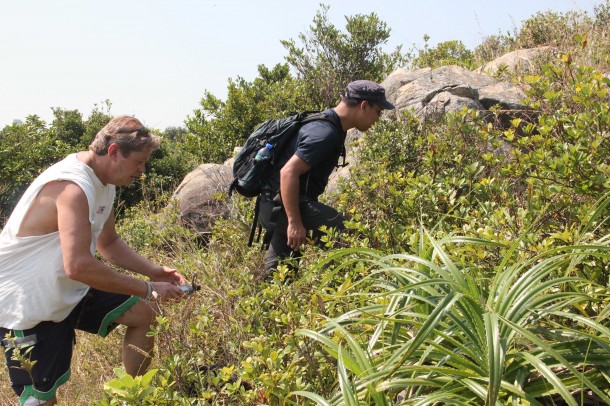
Feeling quite seasick after their journey to the remote island of Ng Fan Chau near Shek O, two young men eagerly jump off the boat as it approaches shore. They land on rocks and climb quickly into a tangle of bushes. The men look like characters in an action movie but, in fact, they are modern day treasure hunters taking part in geocaching (ge-o-cash-ing), a pastime that combines travel, hiking, navigating and exploring.

Geocaching is a worldwide treasure hunt using modern technology. With Global Positioning System (GPS) receivers or smartphones, participants look for hidden containers known as geocaches (or “caches”) whose coordinates are listed on geocaching websites. Every geocache contains a logsheet or logbook. Participants, who are known as geocachers, can write down how they got to the cache and share their feelings about it.

Geocaching uses technology to pull people away from their computers and into the great outdoors. “The most important part is the idea of finding an adventure at a location, the idea that you can go out and then you’ll find an adventure somewhere,” says Jen Sonstelie, the marketing manager for Groundspeak, the company that runs geocaching.com.

Currently, there are over 1.5 million active geocachers all over the world.

The game started on May 30, 2000. It quickly spread to different parts of the world — and even into space. The first traditional geocache in Hong Kong was hidden in January 2002 by Joan Garcia, a chemist from Spain. He hid the cache, named “Tram Peak”, inside the Lung Fu Shan Country Park, near the peak of High West.

“It is very important to choose a place you know others will enjoy, don’t just go with a box to a place you still do not know and try and find a place,” says Garcia, who chose the location because it has a view of both skyscrapers and dense vegetation.

Garcia was delighted that he hid the first cache in Hong Kong. “I try to imagine how other people will live the experience.” He even left a camera in the box for the geocachers to take a picture of themselves.

There are currently more than 400 active caches in Hong Kong and local geocachers have established a geocaching community with around 30 active members. Jimmy Tang Tai-kwan, one of the young men at Ng Fan Ch au, started geocaching in 2005. Tang, who is a software engineer, acquired a GPS chip through work. His research revealed that geocaching was one of its uses.

Although Tang grew up in Hong Kong, he says geocaching has allowed him to learn more about the place. His most memorable cache in Hong Kong so far is the “Pillbox” at Wong Nai Chung Gap. A pillbox is a type of military bunker and the pillboxes at Wong Nai Chung Gap date from World War Two.

“Climbing into the water tunnel was the only way that I could reach the cache. It was steep but not very dangerous. I estimate the risk before I take action,” says Tang.

The search itself was rewarding because it led him to the best preserved pillbox in Hong Kong. The cache is owned by a geocacher who loves WWII relics.

Groom to Bloom

Spa days for Hong Kong’s pampered pets

Reporter: Amy Leung

Walk along almost any street in Hong Kong and you will find dog owners carrying around their pets in their arms. These canines are immaculately coiffed and dressed in designer clothing with matching accessories.

Dogs are no longer kept for utilitarian purposes, to guard their owners’ premises or even for simple companionship. Some of today’s owners treat their pets as their children, their most precious possessions or even as status symbols and style statements. The mushrooming of pet–grooming shops and spas is evidence of such trends.

Academy of Modern Pet Ltd., which was established in 2007, is one of the pioneers in the pet grooming and pampering industry.

Sandra Cheung, the principal of this pet-grooming school, has been working in the industry for nearly two decades. The school offers a variety of professional training courses for people who are interested in becoming pet-groomers. These courses can cost up to $43,500 and topics covered include how to clip the fur of different breeds of dogs, how to dye their coats, their biology and anatomy, and business management.

“Being a pet-groomer can be treated as a job as well as an interest,” says Cheung, “that is why it is so welcomed by the public.”

However, Cheung stresses that when she started the business, her aim was not to make money. Likewise, she says most of her students attend the pet-grooming courses not because they want to turn their expertise into a business, but simply out of their love for animals.

In addition to the professional courses, the school also offers many short courses on how to care for and groom individual breeds of dogs, including how to groom them for dog shows. Students come from all walks of life; there are men and women, teenagers and homemakers, and their ages range from 14 to 62. “Because you love the pets, you will feel the time fly,” says Cheung.

According to Cheung, the industry really started to take off around 2006, when “bear bear poodle style”, which means a dog that is groomed like a teddy bear, became popular. “When the pet is beautiful, the owner feels happy. In return, the pets will feel the same too,” she says.

Cheung jokes that the look of a dog follows the interests of its owner. “How they dress their pets can definitely reflect their taste.”

People’s attitudes towards their pets and how they look have certainly changed over the years but to further develop the industry Cheung believes people need to look beyond Hong Kong. Therefore, she provides her students with opportunities for technical exchange, visits and international competitions. They travel to the mainland, to Japan and even the United States to acquire a deeper understanding of industry trends and apply what they have learnt.

“The world is ever-changing,” she says, “being in this industry, you must have a sense of the new products and inventions.”

Although not as experienced as Cheung, Shuet May has been a pet-groomer for nearly six years and opened her own grooming shop “Pet Fantasy” in 2005.

She went to Japan to learn the new trends in pet health and beauty treatments, and introduced some new facilities to Hong Kong. Pet Fantasy is one of the two shops in Hong Kong that provide something called the “Micro Bubble Pet Spa”. She describes the spa as similar to skincare treatments for humans. “It is a deep-cleansing procedure,” she explains enthusiastically. “The micro bubbles are so tiny that they can get into the pets’ pores and remove the dirt.”

Prices for the treatment range from $280 to $580 depending on the size of the dog; clipping and shearing costs extra. May says the prospects for the pet-grooming business are good because more people are willing to spend money to groom their pets.

“For people owning pets these days, it is just like having one more child at home,” May says. “They treat them like children.”

Most of the customers in her shop are young couples, but she also notices there have been more men, mostly single, visiting her shop in recent years. She attributes this to owners who view pet keeping as an activity through which they can socialize. “When the masters walk their dogs at night, they often stop and chat with each other,” says May. “It is a good chance to make friends with people with the same interest.”

Sometimes, owners will watch their pets having all the treatments, but most of the time they simply drop their pets at May’s shop for a few hours and pick them up later. May says that every time she hands the pets back to their owners, she feels like a teacher meeting parents. “It is as though I were giving out report cards after school. I have to report their performance in detail,” she says with an understanding smile.

Big Canvas for a Small-screen Villain

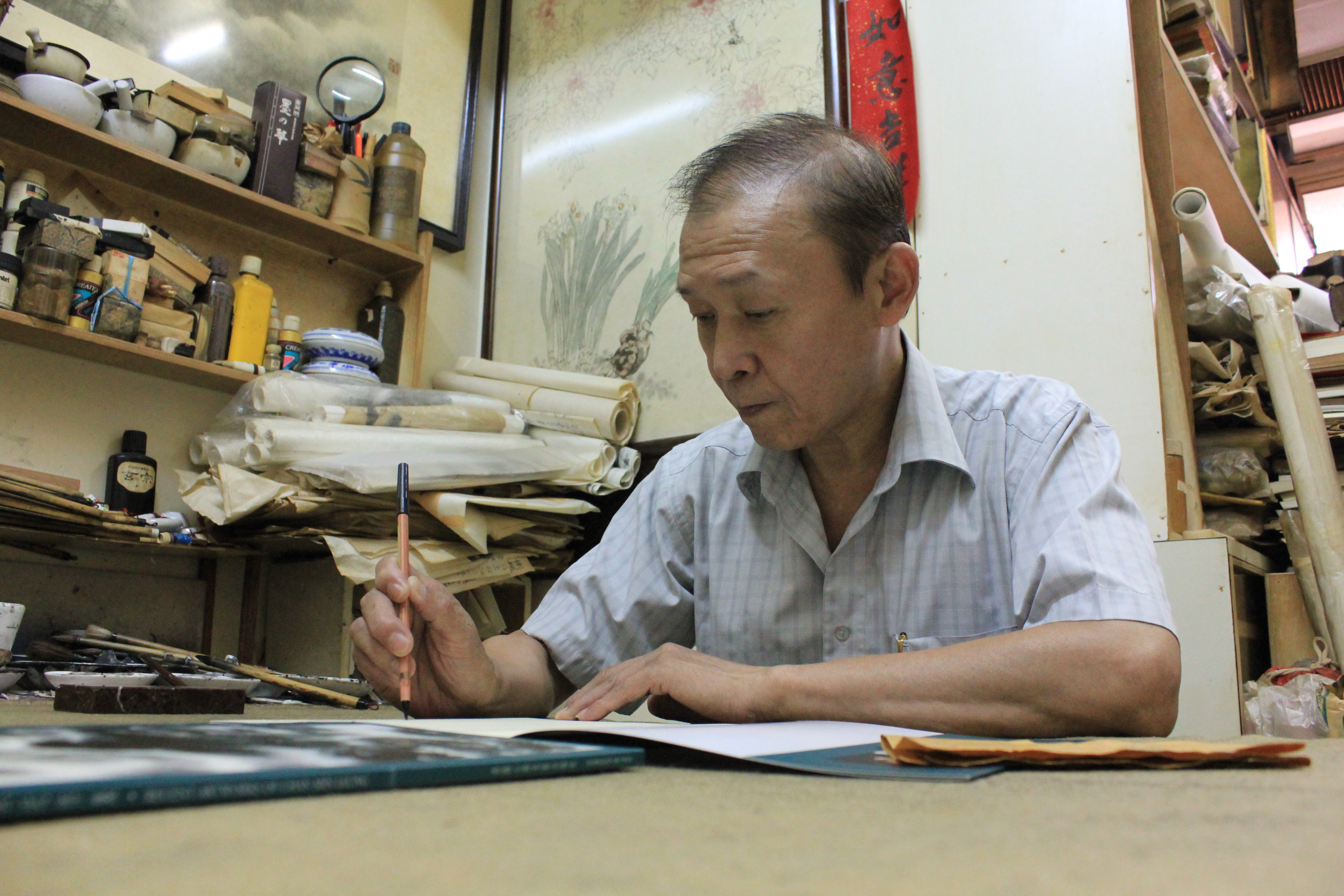
He plays gamblers and addicts on TV, but off-screen Chan Min-leung is a master Chinese painter.

Reporter: Charlie Leung

It was a rainy day on location in Sai Kung and some actors were standing around chatting, waiting for the shooting of the costume drama to continue. One of them, Chan Min-leung sat aside from the others and contemplated the mist that had lightly settled over a flowerbed. Captivated by the sight, Chan immediately drew the scene on the back of his script.

The name Chan Min-leung may not ring any bells, but his face is a familiar one. Many will have seen him on their television screens playing bit parts – a drug-user here, a swindler or a jobless, gambling addict there. The real Chan, aged 61, could not be more different from his on-screen persona; he is an artist, an accomplished Chinese painter who has won numerous awards and held exhibitions in Hong Kong and overseas.

Chan has been drawing and painting since he was young. His father was a baker who ran his own shop in the 1960s. When the bakery closed at 11p.m., Chan would cover the greasy worktops with newspaper and paint. At first, he did not have any teachers and taught himself by copying the pictures he liked in magazines.

Chan began to study Chinese painting at a studio at the age of 17 and threw himself into the art. However, when he said he wanted to be a painter, he got little support because nobody thought he would be able to make a living as an artist.

“Though the living was hard at that time, painting was my only occupation. I had given up all other activities for it. My motive for going to work is also painting.’’ Chan says.

In 1972, the bakery closed down because of the high rent. Chan decided to start his own bakery in Ma Wan, thinking he would be able to control his schedule and have more time for painting. However, as Chan had never started his own business before, it took him more time to learn and manage the bakery than he had anticipated.

In order to spare more time for painting, he soon closed the bakery and went to work in a carving factory. He also taught Chinese painting at a community centre and worked for a theatre company, both onstage and behind the scenes. Chan says he was lucky because his boss at the carving factory supported his painting and allowed him to be absent on weekdays to teach at the community centre.

Then, in 1977, a friend of Chan’s, who knew he had drama experience through the theatre company, approached him to ask if he would be interested in bit parts in TV drama.

In the 1970s, Television Broadcasts Limited (TVB), Commercial Television and Rediffusion Television were engaged in fierce competition and recruited large numbers of actors. Chan began his TV career and was formally contracted as a TVB artist in 1989.

“Show business is brilliant; it’s like a ‘Dream Factory’. People dream of becoming superstars. But it is also superficial and impractical,” Chan says. As a member of the entertainment industry, Chan has also thought about becoming a leading actor one day.

An Unlikely Activist

Vivian Leung – the Hong Kong housewife who took on the government.

Reporter: Sandy Ho Yuen-ki

Chairperson of the Lung Fu Shan Environmental Concern Group, founder of the Hong Kong Breastfeeding Mothers’ Association, active member of a parent-teachers’ association, member of the owners’ committee of her apartment block, owner of a passion fruit farm in Guangdong – these are just some of the many roles of Vivian Leung Tai Yuet-kam.

Leung, aged 48, is not the scion of any leading Hong Kong family, nor a high-powered professional or learned academic. In fact, she left school in Guangdong and came to Hong Kong at the age of 14. After the birth of her two children, her primary role was full-time mother and homemaker.

But it is her most recent role as an activist working to protect the environment of Lung Fu Shan that has attracted the most attention. Lung Fu Shan is an urban oasis on the slope at the back of the University of Hong Kong. Along with its surrounding area, it was designated as Hong Kong’s smallest and newest country park in 1998.

Leung was one of the many walkers who enjoyed the area’s peace and tranquillity. Then, in 2007, she noticed the historic granite surface along Pik Shan Path on Lung Fu Shan had been covered by a concrete road.

Leung saw this as an urban encroachment but the district council claimed the work had been done to solve minor flooding during heavy rain. Leung found this explanation unacceptable. She believed water-logging problems could be solved with improved pipes instead of a concrete layer on top of an historic path.

Leung drew up a petition and on October 14, 2007, she set off for Pik Shan Path on her own. There she asked walkers to sign her petition and a campaign was born.

It has been an uphill struggle. More and more construction projects kept being unveiled, including the erection of unsightly railings and fences along Old Peak Road and Hatton Road.

Leung sees the railings as more than eyesores that damage the environment; she sees them as an intrusion on freedom in Hong Kong. “They build railings alongside almost everything. They block the grass, the trees and even the benches,” says Leung. “Also, the railings constructed by the government are standardized and ugly; they simply do not match the environment and spoil nature.”

Born to Dance

Hong Kong’s leading ballerina shares her thoughts on life, love and the highly competitive word of ballet

Reporter: Dora Chiu

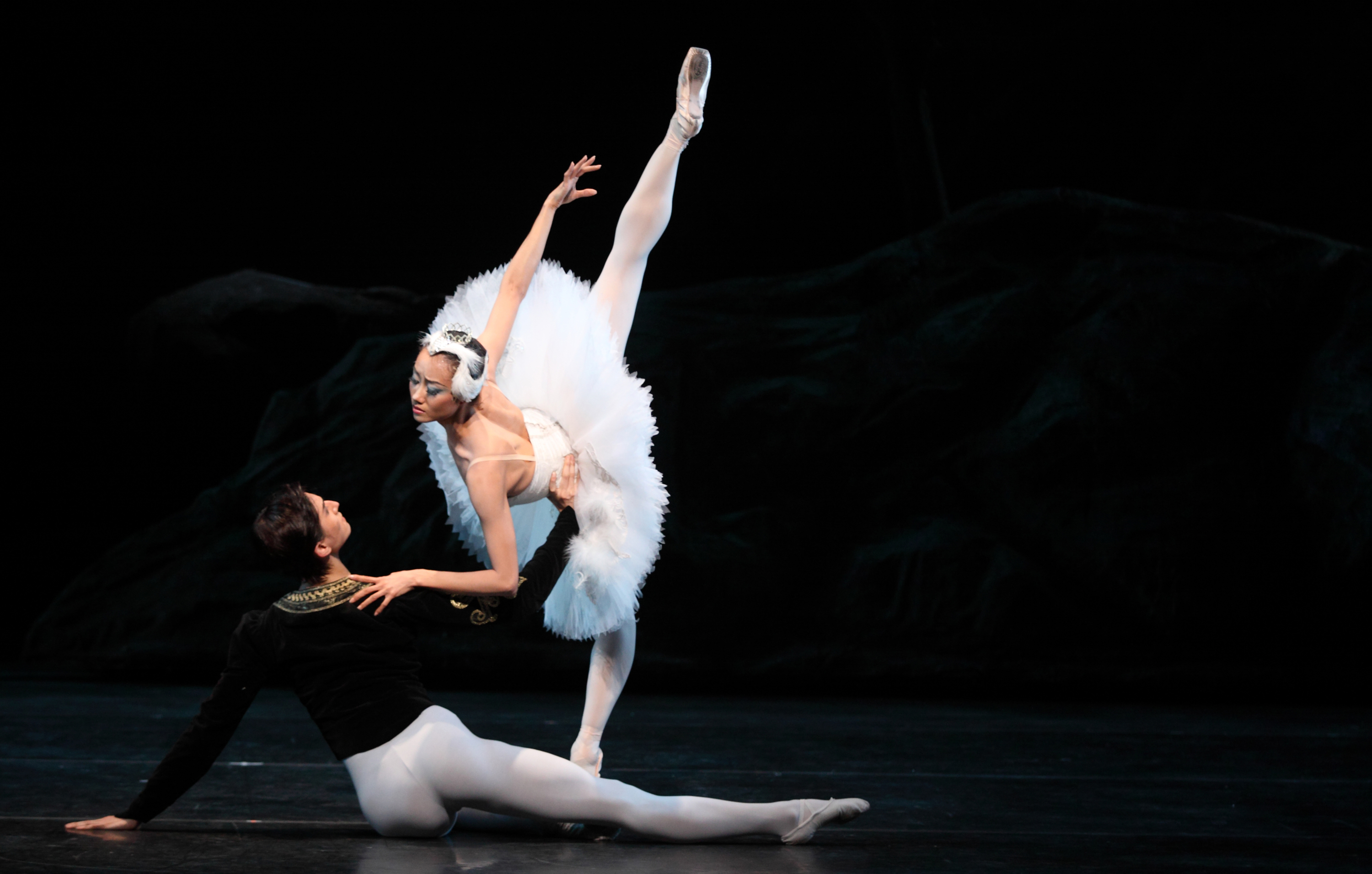
Jin Yao, dressed in black sweatpants, a simple T-shirt and a black hoodie, is taking a break from rehearsals. Her feet are cocooned in a pair of huge down slippers. But, despite the casual attire, her ballerina credentials are immediately obvious in her elegant poise, her slender, long neck and limbs.

Dance is in Jin’s blood. Both of her parents were professional dancers. They know how hard a dancer’s life can be: brutally competitive, physically gruelling and mentally demanding. So they were wary of letting their daughter follow in their footsteps.

Still, the young Jin took a keen interest in dance. From the age of seven she joined the amateur dance classes her mother taught in Jilin. Even then, the girl’s talent was clear; just by imitation, she could execute the steps that her mother’s students could not do.

Although her parents were aware she had the athleticism, musicality and innate agility needed to become a professional dancer, they were still hesitant about allowing her to follow their path. They hid the application forms for the Beijing Dance Academy away from the young Jin.

Jin says she found them in drawer quite by accident. In the end, her parents relented and allowed her to audition for the academy, China’s leading dance institute.

Jin was nine when she auditioned and her performance won her a place. Now she had to decide whether to choose folk dance or ballet. In the end, Jin picked ballet because she liked the beauty and elegance of classical ballet.

She started studying dance at the academy at the age of 10 and graduated seven years later, joining the National Ballet of China. She was promoted to principal dancer in 2003 and was later ranked a top-grade China National Dancer.

Despite a promising career in the National Ballet, Jin decided to join The Hong Kong Ballet as senior soloist in 2004. Jin wanted to explore more possibilities in her dancing and see things from a broader perspective. She could see there were big differences between the arts world in the mainland and in Hong Kong.

Jin says a wider repertoire is performed in Hong Kong because audiences here can truly appreciate art. “Hong Kong people are more westernized and willing to accept different values,” she says.

In comparison, the focus in the mainland is mainly on ticket sales. Only famous and bankable programmes like Swan Lake and The Nutcracker are performed there. Dancers rarely have the opportunity to try performing other works, and this limits their talent and exposure.

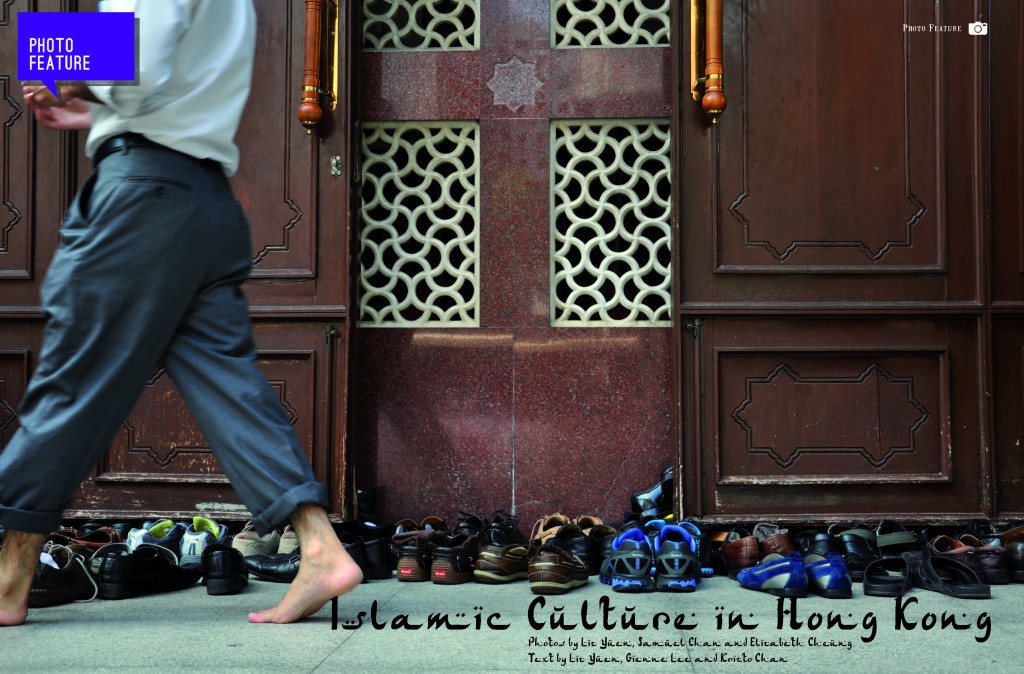
Islamic Culture in Hong Kong

Text: Liz Yuen, Gienne Lee and Krizto Chan

Photos: Liz Yuen, Samuel Chan, Elizabeth Cheung


Step in Their Shoes This Christmas

Understand the life of disadvantaged and dispossessed by living them – for 60 minutes

Reporter: Liz Yuen

What does Christmas mean to you? Perhaps it is having Christmas dinner with family members? Gathering with friends in your warm and cosy home? Going to Midnight Mass? You have the freedom to enjoy any of these rituals, but for refugees every day—even Christmas Day—can be a struggle to get through. For those in refugee camps, Christmas Day is just another day of hardship and suffering. Guarded by soldiers 24-7, they may have to mind every single word and action.

Living in a safe and affluent society like Hong Kong, it may be hard to imagine the lives of refugees. At Crossroads, you can get some firsthand experience by joining a simulation called “Refugee Run”.

Crossroads is a non-profit organisation which delivers quality excess goods collected in Hong Kong to poverty-stricken or disaster-stricken areas. It also organises simulations to make people aware of critical global issues.
Chan Nok Ka, a second year student from the Chinese University of Hong Kong participated in Refugee Run earlier this year.

Chan says it has made her more aware of wider issues. ”You wouldn’t otherwise think about what the solutions might be for these problems,” she says. People of all ages can join in the simulation and come up with ideas to help the displaced, she adds.

Apart from Refugee Run, Crossroads also stages Global X-perience simulations on a range of issues from HIV/AIDS to blindness.

These simulations can last from an hour to a couple of days. Most people choose to undergo a 60-minute experience but even this is enough to make a strong impact on participants.

Chan King-lok, who worked as an intern at Crossroads last year, describes one of the 60-minute X-periences as “a real eye-opener”.

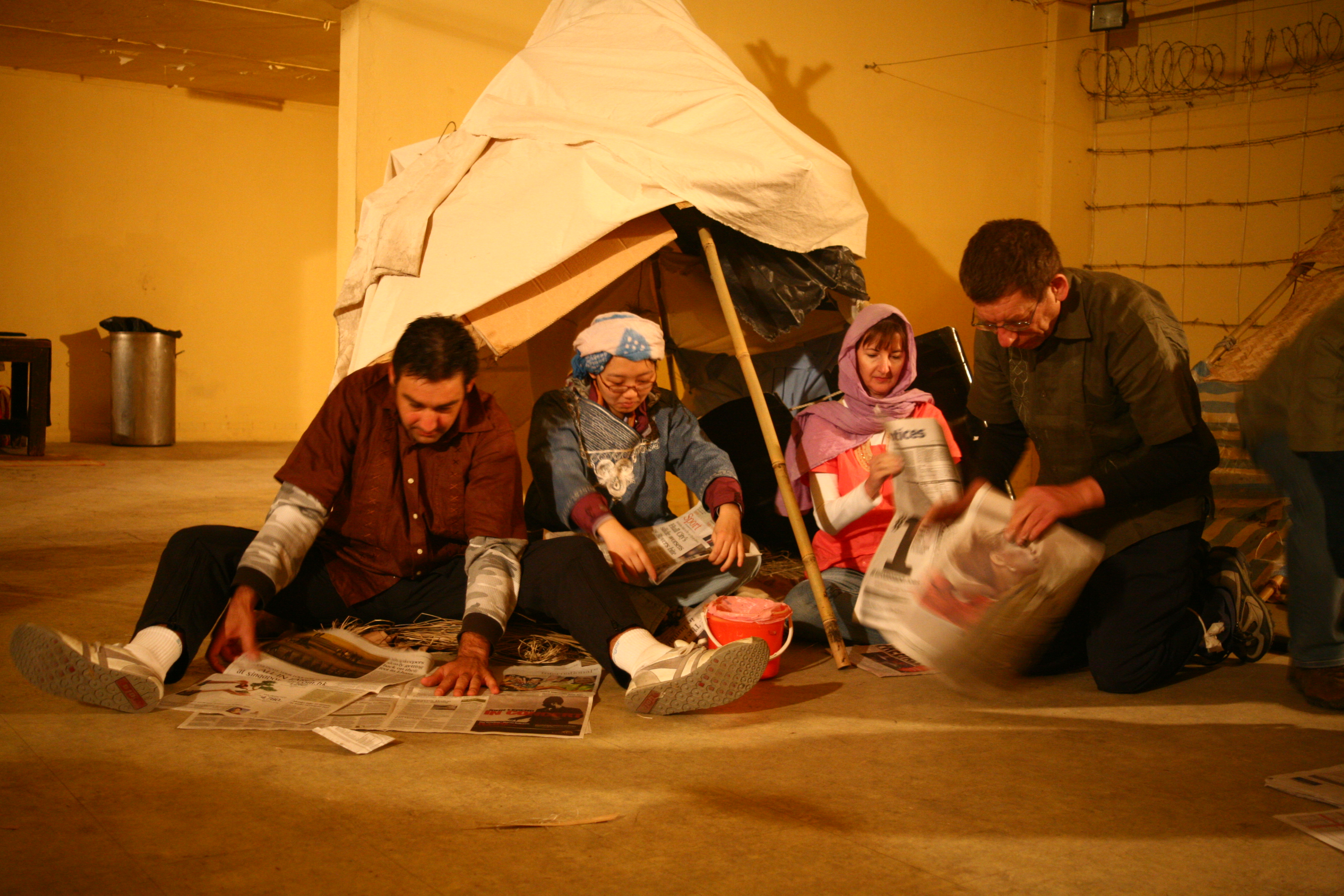
It was set in the Indian city of Mumbai and participants experienced the lives of poor families who scrape by on the meagre income earned from making paper bags. “We were divided into groups of four and were given an unreasonably short time limit to meet the target [for making paper bags],” says Chan. “Since failing to meet the target means losing someone in your group, everyone worked really hard and some even snatched the finished paper bags from other groups.”

But when the allotted time was up, the person acting the role of the superior tore up all the paper bags the participants had given to him. “I was on the verge of tears when I saw that!” Chan recalls, adding that he felt for the first time how helpless the lives of others could be.

Chan says Crossroads managed to successfully create a tense atmosphere that made a lasting impact on the participants.

Christmas is not just a season for eating, drinking and making merry. It is also a time to share our love and care. This Christmas why not let Crossroads give you the gift of insight into and empathy for the plight of others from around the world? This Christmas, let us cherish what we have.

Punch Your Own Pick

Reporter: Joyce Lee

If you’ve ever wondered what to do with the thick wad of expired cards in your wallet, the Pickmaster Plectrum could provide an answer.

The Pickmaster is a portable punch that allows you to make guitar picks out of any plastic – credit cards, membership cards, CDs – basically any piece of thin plastic that you can find. This gadget cannot be easier to use. It works the same way as a standard hole punch. Simply slide an old card into the Pickmaster and press down. The useless plastic card has found a new lease of life – as a plectrum.

Not being able to find a pick just when you need one has always been a nuisance to guitar players. There is no need to root around under your drawers anymore. With the help of Pickmaster, a plectrum is always within reach. Where there is thin plastic, there is a guitar pick.

All the plectrums made will be in the traditional “351” shape. This ensures that everyone will be comfortable holding them. You can tailor-make a pick of the perfect thickness you like, as the Pickmaster is strong enough to punch through almost any thickness of plastic.

Why throw your money away on picks when you can make your own cheaper and more environmentally-friendly version? A plectrum costs around $8 each in stores nowadays. You can make up to five picks out of a single card. With a few uses, the gadget will have paid for itself. It is time to say goodbye to those fancy ivory plectrums and go green. Recycling is good for Mother Earth and easy on your wallet.

The Pickmaster also brings out your creativity. What could be cooler than having an original guitar pick of your own? Make it unique by choosing a card with your name or photo.

If you find the edges of the picks made from the Pickmaster rougher than shop-bought ones, just use a nail file to smooth the edges. The picks will then be flawless.

The Pickmaster is a fun and practical gift for guitar enthusiasts. It is also the perfect way to revive your dead cards.

The Pickmaster costs around US$25. Google “Pickmaster Plectrum” and order online.

Watch how the Pickmaster works on YouTube: Search “Making guitar picks with The Pickmaster Plectrum”.