









Home Blog Page 63

Remaking Manufacturing in Hong Kong

Factories relocating from the Mainland face challenges

By Erica Li & Gloria Li

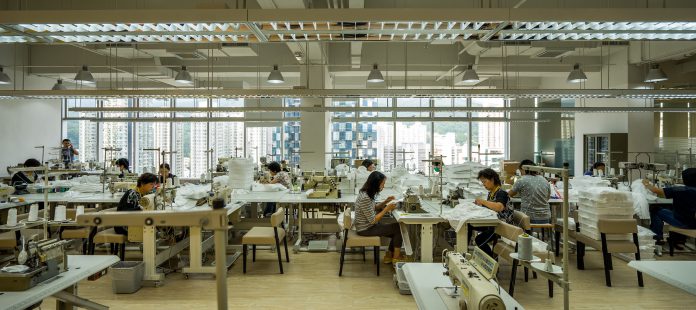
In 1996 Alan Cheung founded a garment manufacturing business, Grandion Industrial. Like many Hong Kong entrepreneurs, Cheung headed north to establish production lines in Guangdong. But three years ago, he launched a project called To Make Locally and relocated some of his factories to an industrial estate in Hong Kong.

The 51-year-old businessman says increasing rent and labour costs as well as the complicated tax system in the Mainland place a heavy burden on manufacturers there and contributed to his decision to move.

Cheung initiated To Make Locally to promote local businesses by using local designers, green production and technology. He hopes to reinvigorate the “Made in Hong Kong” brand by showcasing the comparative advantages of running his business in Hong Kong, including strong copyright protection and a robust legal system.

“When some manufacturers make production prototypes in mainland factories, their products may already be selling on Taobao,” says Cheung, referring to the online shopping platform. “But if we do it in Hong Kong, most companies will feel reassured as the awareness of intellectual property rights protection is higher.”

Cheung says another advantage is that Hong Kong has a free flow of information and the population is in general more aware of the latest fashion trends from other regions and countries, such as Paris and Japan. He says designers in Hong Kong tend to have a more global view.

Alan Cheung designs T-shirts with a mobile application

The move to relocate factories to Hong Kong chimes with government plans to diversify Hong Kong’s economy through developing technology and reviving industry. “Re-industrialisation” was highlighted as a potential new area of economic growth in the 2016 Policy Address.

The government hopes the manufacturing industry can contribute up to 5 per cent of Hong Kong’s gross domestic product (GDP), having declined to 1.2 per cent in 2015 from 2.7 per cent in 2006. In 1977, the manufacturing industry accounted for 30 per cent of the territory’s GDP and employed one million workers. By 2016, the number of employees had dropped to around 97,700 despite a larger population overall.

Despite such grand visions, Cheung says it is difficult to transform Hong Kong businesses into high value-added enterprises after relocation, and to develop niche and customised markets. “The problem is we do not have a blueprint to follow,” says Cheung. “We need to learn and to correct our mistakes while running the business.”

Tam Wing-yiu, 56, is the founder of Tool and Mold Hong Kong Limited, a company that produces moulds for a range of toys and healthcare products such as inhalers for asthma relief and electric toothbrushes. Tam once operated factories in the Mainland in a joint venture with an American company but since that contract ended in 2013, he has only set up local factories. He agrees with Alan Cheung that Hong Kong manufacturers have little experience to draw upon because the territory’s factories moved in pursuit of lower costs when the Mainland opened up in the 1980s.

“There is nothing left in Hong Kong. Not any knowledge is left,” says Tam. “The young do not have the chance to do research and development, and Hong Kong gave up its opportunity to be the base of the manufacturing industry.”

Apart from the lack of experience and knowledge, Tam says there is not enough support from the government compared with other countries and this makes local industries less competitive.

“In Germany and Japan, where they have a long industrial history, their government will sponsor half of a machine’s cost,” says Tam. “But in Hong Kong, there is none.”

Limitations of land and space are another issue for companies who are thinking of relocating their production lines to Hong Kong. Hoi Tin Tong Food Limited, a producer of herbal drinks and jellies, has factories both in the Mainland and in Hong Kong. The Hong Kong plant serves the local market and the mainland one caters to Hong Kong, Guangdong and Macau.

Hoi Tin Tong produces herbal drinks and jellies in mainland factories.
Photo courtesy of Christita Ng

Hoi Tin Tong’s general manager, Christita Ng, says most production lines remain in the Mainland to fulfill the great market demand there. The company also has the space in the Mainland to cater to the renewed interest in industrial tourism and can organise tours for visitors to the facility. “The land in Hong Kong is just too expensive,” says Ng. “Our factories in Hong Kong can never be as large as the mainland one.”

In 2016, the government told legislators it did not keep statistics of the number of companies that had relocated to Hong Kong or the number of factories started in Hong Kong by those companies. But in a written reply to lawmakers in May 2017, it said there were 142 companies operating in industrial estates in Hong Kong, with 70 in Tai Po, 40 in Yuen Long and 32 in Tseung Kwan O. Some of the most prominent industries being food and beverages, machinery and parts, as well as biotechnology and pharmaceutical products.

Despite the difficulties and limitations, the Hong Kong Productivity Council (HKPC) says the government has invested over HK$18 billion to promote re-industrialisation in Hong Kong.  In a written response, Raymond Shan, principal consultant of Smart Manufacturing and Materials with the HKPC, says that re-industrialisation does not only focus on relocating labour-intensive production lines, but on developing high value-added manufacturing industries and a new business system with the help of innovation and technology.

This is in keeping with the government’s promotion of the development of “Industry 4.0” or the “smart factory” concept. The term originated in Germany and focuses on the use of automation, data exchange and algorithms in manufacturing technology. Shan says that with more overseas customers embracing Industry 4.0, factories in Hong Kong must upgrade their operations.

But this may not align with either the capacity or business models of all Hong Kong manufacturers. Wong Lap-wing is the founder of Universal Engineering Hong Kong Limited which produces back-up electricity generators for buildings and data centres in Hong Kong. Wong has local factories for carrying out design, testing and systems debugging, and both local and mainland factories for product assembly. He says the majority of his production still relies on manpower rather than automation. “Robotics cannot help us,” he says. “Even carmakers still need technicians because there are still procedures machines cannot carry out.”

Wong thinks it is impractical to develop Industry 4.0 in Hong Kong because the costs are too high. Although mass production is possible with the help of automation, he says it would be a waste to invest in robotics because there is not such a high demand for his products in the market. “I am not looking for an expansion of the business. The costs would be so huge if we expanded as monthly expenses would increase,” says Wong. “We might have to close down sooner if we do not have enough orders.”

Lee Ka-man, an assistant professor at the Department of Industrial and Systems Engineering at the Hong Kong Polytechnic University, agrees. Lee says everyone seems to be talking about Industry 4.0 but only has a very vague idea of what it involves.

“To be frank, 4.0 is still a concept,” says Lee. “I have visited some German factories and they said they have not really achieved 4.0 because it requires the internet of things, big data analytics, integration of systems, automation and robotics.”

Automated machines at the RFID Solutions Laboratory at the Hong Kong Polytechnic University

Lee works closely with third-year engineering students on internships with industrial companies. These are supposed to be an opportunity for students to learn more about the sector but because the internships are not compulsory, Lee says, it is hard to recruit both students and companies to take part. Only 20 to 30 percent of teachers contact companies for internships, she adds.

Lee also points out that although there is an Innovation and Technology Fund Project – administered by the Innovation and Technology Commission – which offers two graduate internships related to manufacturing every year, most graduates of the Department of Industrial and Systems Engineering would rather work in the tertiary industries than in the manufacturing industry.

“We hope students can develop their interests in engineering through this project, but it is their choice whether they want to continue with this path in the future,” says Lee.

According to the department’s statistics on graduate employment by sector in 2016, fewer than half of the students who responded to a survey found jobs in the manufacturing sector. With few college leavers willing to join the sector, it is hard to revitalise the manufacturing industry.

Tam Wing-yiu from Tool and Mold Limited is not surprised that few young people want to pursue a career in industry. He says there is an imbalance in society, with most policies benefiting the financial and property markets. “If policies in general are too inclined towards certain sectors, it will make society unhealthy,” says Tam. “Everyone will be the victim in the end.”

Edited by Katie Cheng

Screen Revival

Independent filmmakers are the new standard-bearers for Hong Kong cinema

By Edith Chung & Johanna Chan

When the dystopian independent movie Ten Years defied expectations to win Best Film at the 2016 Hong Kong Film Awards, its producer Andrew Choi took to the podium and said the award showed there were a lot of possibilities for Hong Kong films.

At the same awards ceremony a year later, another local film, Trivisa, produced by Johnnie To Kei-fung as a vehicle to nurture young directors, became the night’s biggest winner. It won five awards, including Best Film and Best Director. The Best New Director’s award that night went to the young director of another low-budget local film, Mad World.

Despite these accolades, the environment is tough for Hong Kong films. The number of local films, excluding those co-produced with mainland film companies, dropped from 28 in 2008 to just 19 in 2016.

Number of Hong Kong films produced from 2008-2016.
Source: Hong Kong Film Development Council, CreateHK

With the once mighty Hong Kong film industry in slow decline since the 1990s, more and more filmmakers have turned to the mainland market and co-productions with mainland film companies.  The number of co-productions increased from 29 in 2008 to 39 in 2016. Co-productions generally make more at the box office, taking in around eight times as much as locally produced films in 2016.

However, even taking into account Hong Kong-Mainland co-productions, there are still far fewer Hong Kong films being made now than during the industry’s heyday. In 2015, there were 59 local films, including Mainland-Hong Kong co-productions, which is 60 per cent less than the number of Hong Kong films produced 20 years ago.

Still, the numbers may not tell the whole story. With a slew of young local filmmakers intent on telling Hong Kong stories and turning to alternative forms of distribution, some are pointing to the start of a revival of Hong Kong film, albeit on a smaller scale.

Ng Ka-leung is one of the producers and directors of Ten Years. The 37-year-old thinks this generation of filmmakers may see success differently to their seniors.

“Their aspirations, their courage to express themselves is much stronger than the industry personnel of the past, they don’t carry the same baggage,” says Ng.

For these young filmmakers, movies are no longer just a form of entertainment. Instead, Ng says some young filmmakers want their works to provoke audiences to reflect upon society. He sees an increasing number of films addressing social issues, which can lead to a change in audiences’ attitudes towards and expectations of films.

Taking Ten Years as an example, Ng says it would have received a very different reaction if it was released 10 years ago. It became a phenomenon through the combination of its filmmakers, the audience and the general social atmosphere, he explains.

However, strong public interest and acclaim in Ten Years did not secure the film’s screening in mainstream cinemas. Ng says this shows there is an “absolute breakdown” in the distribution system and that self-censorship and political pressures are rife in the commercial film business.

A community screening of Ten Years held under a flyover in Mei Foo on April 1, 2016.
Photo courtesy of Ng Ka-leung

Ng and his colleagues got around the restrictions by organising screenings and post-screening discussion sessions in the community. On April 1 2016, they worked with educational institutions and community groups to hold a simultaneous screening at 34 different public locations in Hong Kong. Although guerilla screenings in community halls, schools and other public spaces is an alternative, Ng says there has to be a new mindset and willingness to take risks if there is really to be an  industry revival.

Chan Tze-woon, a 30-year-old independent film director, is optimistic that independent films can spearhead a revival in Hong Kong film. Chan spent around half a year working in the commercial film industry after graduating from university – as a script supervisor, a director’s assistant and on post-production. But he found working in the commercial sector too constricting and decided to step out on his own to seek more creative freedom.

Using his own savings and with support from a backer, Chan made the low-budget 2016 feature Yellowing in 2016, a documentary about the 2014 Umbrella Movement. It cost just HK$ 50,000 to make but was nominated for a Golden Horse Award for Best Documentary and was screened at film festivals in Taiwan and Vancouver. Despite gaining international recognition, the film was screened in only one local mainstream cinema. Chan says it is hard to say whether this was entirely due to political reasons as mainstream cinemas in Hong Kong do not tend to screen documentaries but he is worried about increased self-censorship, especially after Ten Years.

Chan Tze-woon at a Q&A session after Yellowing screening organised by Hong Kong Independent Film Festival.
Photo courtesy of Chan Tze-woon

Being an independent filmmaker is tough, but one reason for Chan’s optimism is that he sees there are other young directors facing up to the same challenges. “There are always possibilities, so you can never say one chooses a path that nobody takes,” he says.

At the same time, it is hard for full-time independent directors to sustain a living in Hong Kong, so many of them, including Chan, take freelance jobs. In order to make ends meet, Wong Wai-nap, who makes independent short films, also teaches creative media at the HKICC Shau Kee School of Creativity. After graduating in creative media at City University, Wong had high hopes of working in the commercial film industry.

But the stress of paying off his student loans and the long irregular hours with low pay forced him to quit and work for a production house instead. Like Chan, Wong thinks there are too many restrictive factors in the commercial film industry, and these cannot be changed. Independent films allow filmmakers to produce the works they want to create.

Wong says the emergence of alternative screening methods provides different channels for films to reach a wider range of audiences. Apart from community screenings, he thinks it is good to show works at overseas film festivals as films should never be restricted to the local community.

Vincent Chui Wan-shun is an independent film producer and one of the founders of Ying E Chi, a non-profit organisation that organises the Hong Kong Independent Film Festival. Although he agrees that it is difficult to screen independent films in mainstream cinemas, he maintains that official screening opportunities are important to motivate new directors, and are a recognition of their work.

Chui adds that while the domestic market in Hong Kong is too small to support large-scale productions, it is still possible to produce films that Hong Kong people are interested in watching with low budgets. “Don’t imagine and expect too much. Just focus on what you’re doing right now,” is his advice for young filmmakers. But to really revive the industry, he says there must be more nurturing of new talent and greater allocation of resources to new directors.

In an attempt to revive the film industry, the government set up the Film Development Fund (FDF) to subsidise local film productions and has injected HK$540 million into the fund since 2005. It launched the First Feature Film Initiative (FFFI) in 2013, with funds from the FDF. The funds are to support new local film directors and their production teams to make their first feature films on a commercial basis. Mad World, the fifth highest grossing local film in 2017 with HK$16 million, is one of the five films financed under the fund so far.  Others include the acclaimed Weeds on Fire (2016) and Somewhere Beyond the Mist (2017).

While Chui regards the scheme as a good career starter for young directors, Shu Kei says neither the FDF nor the government is helping young directors and the industry at all. Shu is the former dean of the School of Film and Television at the Hong Kong Academy for Performing Arts and the vice-chairman of Freshwave, a short film competition and screening platform for young film talent. Taking the production of Mad World as an example, he says anyone familiar with the film industry knows that a HK$2 million subsidy is insufficient for a HK$10 million production, and he describes the FFFI’s amount of subsidy for the film as “ridiculous”.

“It’s an illusion. the success of the films has nothing to do with the First Feature Film Initiative,” says Shu.

He says the government’s role has always been vague since it is unfamiliar with the film industry and the challenges it faces. He says the small amount of funding not only affects the quality of filming equipment, the scale and quality of the cast and crew but also the audiences a film will attract. Shu explains most audiences prefer large-scale, big-budget productions to low budget ones.

Some attribute young directors’ failure to break through in the film industry to inadequate film education and nurturing, but Shu believes the issue lies beyond education. He says that while the academy can provide a foundation and a basic set of skills for students, it should not be regarded as a vocational school and graduates are merely beginners. They only undergo training for the production of shorts and lack hands-on experience on commercial productions. Shu thinks young directors must be motivated to search for learning opportunities.

Film critic Shum Long-tin agrees the government’s policies do not adequately address Hong Kong’s current situation. He says there is a need to modify current arrangements as filmmakers have complained about the complicated, bureaucratic procedures involved in applying for funding. Shum says applicants do not really know how the FDF panel assesses applications and there is a lack of youth participation in the process.

“The government is neither letting nor trusting young people to be part of the board,” Shum says. “Youth participation must be present in the discussion of film policies and government subsidy.”

Overall, Shum believes there is a Hong Kong film revival of sorts, with an increasing number of young filmmakers making films with a strong local ethos and characteristics. But he believes the revival would be more successful with a rethink in the way resources are allocated and the replacement of decision-makers in the process.

“The industry’s revival really depends on whether the government’s willing to make changes and come up with a comprehensive film policy,” he says.

Edited by Selena Chan

Workplace Woes

Workplace bullying is rampant in Hong Kong

By Jasmine Ling & Iris Yeung

Ariel Or was a newly hired designer at an advertising firm when she first fell victim to workplace bullying at the hands of a superior from another department. Or says the co-worker, who sat close to her, would often feign clumsiness and push the objects on her desk onto the floor. He would also tamper with her work, once hiding the external hard-drive containing all her work files so that she could not complete assignments.

The bullying reached a point where it affected the company. Or says on one occasion her tormentor deleted some important information in her work so that it looked like she had made a mistake. The company had to compensate the client. Colleagues later told Or she was not the first victim; her tormentor had a history of bullying junior staff, especially newcomers.

Ariel Or

Or’s experience of workplace bullying is not a rare or isolated one. Sarah Chan (not her real name), 33, is a project manager for a small non-governmental organisation. Chan says that since having a work disagreement with her boss on a recent project, her workplace has turned into a hellish environment. After the dispute, she has had to endure verbal insults, the yelling of profanities and being handed unrealistic tasks – causing her to seriously consider leaving once the project is completed.

According to a 2013 survey conducted by the Vital Employee Service Consultancy – which is a unit of the Christian Family Service –  53 per cent of respondents said they had been bullied at work. The most common forms of bullying included verbal abuse, being given unreasonable tasks and being socially ostracised by co-workers.

Although many workers are affected by workplace bullying, there is currently no statutory definition for it. The Labour Department says workplace bullying falls outside the scope of the Occupational Safety and Health Ordinance, meaning there are no labour laws  specifically addressing bullying in the workplace. This could be one of the reasons why, as found in the survey, only one in 10 victims of workplace bullying would complain to their companies.

For her part, Sarah Chan is one of the bullied employees who has chosen to remain silent. “Hong Kong people are really judgmental,” she says. “[If you complain it will] End up there will be people judging. You know Hong Kong people must [take sides]. There will be people asking why are you arguing with your CEO?” Chan is afraid that if she airs her grievances publicly, it may affect her work prospects later.

Chan finds the environment in Hong Kong very different from the United Kingdom, where she used to work. She says British labour unions would help employees take legal action against bullying employers while keeping their identities anonymous. She thinks this makes it a lot easier to combat workplace bullying.

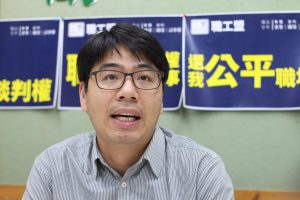
Ng Koon-kwan, organising secretary of the Hong Kong Confederation of Trade Unions (HKCTU), agrees that unions in Hong Kong do not have sufficient power to stand up against employers. Ng says the government should re-enact collective bargaining rights so unions have a stronger hand in negotiating with employers.

Ng Kwoon-kwan

In the meantime, Ng says existing labour laws do not give workers any protection from workplace bullying. However he admits it would be hard to legislate against workplace bullying as it falls into a grey area. “Even if I’m insulting you using foul language, I’m not violating the law. I can’t just legislate a labour law that prohibits employers from swearing at their employees, it doesn’t work. Yet, this is precisely a kind of bullying [behaviour],” Ng says.

At the end of the day, he sighs, the reason so many workers put up with bad working conditions is because they cannot risk losing their jobs. “The mentality of workers is that they have to provide for their family, living from hand to mouth, that’s why even if they’re bullied by their boss they will keep working.”

Sammi Lee (not her real name), 55, is one such case. Lee worked as a garments clerk at a local company. Although she faced frequent bullying, she could not quit because she had to take care of her mother. “If I could give up my job, of course I would want to quit. But sometimes there are things that cannot be decided by me. If you quit your job, it is hard for you to find another one,” she says.

For years, Lee put up with working frequent unpaid overtime shifts till one or two in the morning, and taking on extra responsibilities when others resigned, for no extra pay. She remembers mornings where she would just lie in bed, feeling helpless and staring at the ceiling. She could not face getting up and going to work for another gruelling day of stress and abuse.

Eventually the work life that she describes as being a “white terror” took its toll on her physical health. “I had a persistent headache,” she says. “The symptoms weren’t that serious, but they were getting more frequent. The pain became overwhelming, hitting me every day.”

She went to see a psychiatrist who recommended she quit her job for her health’s sake. She finally accepted the advice and quit her job in 2017 after 20 years at the company.

Elaine Chow Yee-ling, 35, a registered industrial-organisational psychologist, says it is common to see mental and physical health problems in workers who experience workplace bullying. Chow says her clients usually suffer from two major mental illnesses, anxiety and depression. She notes that victims are often very fearful when they receive phone calls from their bosses and often suffer from insomnia. Stress weakens their immune systems and many of them get sick easily, some even developing chronic symptoms.

Despite the impact of workplace bullying, Chow observes many workers believe they cannot do anything about it. “Sometimes victims will normalise these bullying behaviors,” says Chow. “Psychologically they will think that in this company or culture it is very normal.”

And it is not just the bullied who are mentally affected by workplace bullying. Chow says co-workers who observe bullying incidents are also affected – they become afraid and anxious that they could be next. She says this creates a cycle of silence and bullying where bullies continue to dominate and exert power over others through intimidation.

“Hong Kong is very career-oriented. It is a dog-eat-dog world out there. After all, bullying is a selfish behaviour. I’m suppressing you so as to secure the things [and power] I possess,” says Chow.

Joe Siu Kin-chung, a council member of the Hospital Authority Employees General Union, believes that the formation of office cliques may contribute to bullying behaviour. Siu says workers who are not on their superiors’ good side often find themselves being treated unfairly. They may be given tasks no one wants, be put on back-to-back graveyard shifts and subjected to biased performance reviews which hurt their prospects for promotion.

“If you are part of the ‘in crowd’, you need to help your boss buy breakfast. You need to play mahjong with him/her on weekends. You need to sing karaoke or have gatherings with him/her,” he says. “Such a culture still exists in the Hospital Authority nowadays.”

The union conducted a survey among Hospital Authority rank-and-file staff in 2017 and found that 30 per cent of respondents had been bullied by their superiors. But 80 per cent of them said they would not seek help from the human resources department.

Members from the Hospital Authority Employees General Union stage a protest against workplace bullying within the Hospital Authority outside Tung Wah Hospital. Photo courtesy of the Hospital Authority Employees General Union

“There is not a single channel we can complain to,” explains Siu. Although bullying is widespread, he says it does not receive much government recognition or public attention until it is reported by the media.

In response, the Hospital Authority says there is a set of objective criteria in reviewing staff performance, with various channels for staff to reflect their views and that complaints are handled prudently according to established mechanisms.

Suen Lap-man, principal consultant for Vital Employee Service Consultancy, says culture definitely plays a role in the severity of workplace bullying in Hong Kong. Suen cites a 2007 study conducted in the United States in which only 24 per cent of respondents said they had been bullied at work. He compares this with the 53 per cent who said they had experienced bullying in Vital’s Hong Kong survey.

“People from the East are more timid. They are afraid of being the first one standing up. They are afraid of bearing the risk,” says Suen. “I think the westerners have a higher awareness of their own rights. When they’re being bullied, they won’t suffer in silence. I believe there is a cultural difference.”

However, Suen believes the problem is not beyond remedy. “I don’t think employers in Hong Kong are bad, but the work stress in Hong Kong is really high; people tend to cast negative thoughts on the management,” says Suen.

He hopes human resources departments can play a bigger and more independent role in mediating conflicts between workers, and between workers and employers. However, he also thinks it is just as important that people improve their communication skills to reduce misunderstandings. Companies can also do more by providing training on how to give constructive feedback and comments.

“Try to avoid using emotionally charged phrases so that colleagues are able to listen to your advice, and not your emotional venting,” Suen says. “These comments are not effective, they won’t know how to improve.” Instead of using insulting language, he says it is more important to give practical suggestions on how to improve and to prevent feelings of being bullied.

It is also possible to move on from being a victim of workplace bullying. Designer Ariel Or eventually quit from the advertising company where she was bullied by a superior. As she gained more experience in the field and worked for different companies, she discovered that bullying is rife in the hyper-competitive graphic design industry. This motivated her to try to change the culture  and promote a more harmonious workplace.

“I don’t want any of these negative things to happen, which is why I decided to open up a company,” says 31-year-old Or, who now owns a publishing, advertising and design company. Her aim, she says, is to run a company where workers will not have to suffer the injustices she once did.

It is a place “where workers won’t need to stay-up overnight to complete a project, where there won’t be any vicious conflicts within the company, to not be afraid to speak freely, to not worry about missing meals, to not worry about being unable to go home and eat with their families,” she says.

Edited by Yi Yeung

Stopping Superbugs on the Farm

Curbing antibiotics in livestock farming to stem the spread of drug-resistant bacteria

By Civi Yap & Daphne Li

At a fish farm in Fanling, farmer Teresa Chan Suk-chun scatters black soldier flies into a pond teeming with fish waiting to be fed. She breeds the flies as a protein supplement to prevent disease and to avoid the use of antibiotics.

Chan, who is also the chief executive of the Hong Kong Organic Association, believes an ounce of prevention is worth a pound of cure. “Actually if you put more effort into prevention, it is unnecessary to use any medicine,” she says. To this end, she strives to provide a better environment for the fish, including using running water to keep the pond clean and aerated.

In 2017, the World Health Organisation issued new guidelines calling on farmers to “stop using antibiotics routinely to promote growth and prevent disease in healthy animals”. This is because the use of antibiotics – or antimicrobials – in food animals can lead to changes in microorganisms and the spread of antimicrobial resistant (AMR) bacteria. These AMR bacteria, or superbugs, can then spread to humans via contact with animals, food or through other routes. In Hong Kong alone, one strain of AMR bacteria, commonly known as MRSA, has led to 1,000 deaths annually in the last three years, according to figures from the Department of Health.

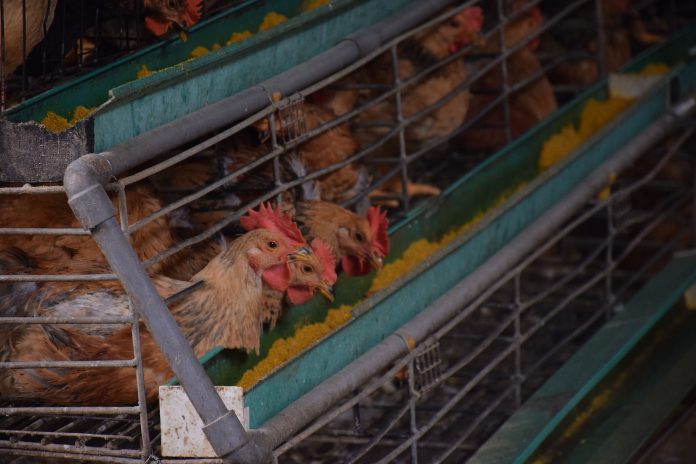
Most experts agree the widespread use of low doses of antibiotics by livestock farmers around the world to prevent disease and promote growth has contributed to the spread of resistant bugs.  Lee Leung-kei, a Yuen Long chicken farmer and the chairman of the supervisory committee of the New Territories Chicken Breeders’ Association, says the practice was common among local chicken farmers in the 1980s but that it has now stopped. Today, Lee says he does not use antibiotics for disease prevention. Instead, he uses Chinese medicine like fishwort herb powder in the feed to keep the chickens healthy.

Lee Leung-kei

It is not just concern over the spread of superbugs that is restricting his antibiotic use. Lee says the stricter government regulation of antibiotics for livestock and the high prices for the drugs means it is hard for farmers to get antibiotics when their birds are sick.

“Buying antibiotics is not like shopping in the wet market, we have to place the order through a veterinary physician. The prescription is not instant and we have to wait for some time [before the antibiotics arrive],” he says. “Even after you buy it, you still have to stick with the [government’s] guidelines.”

Chinese medicine andrographis paniculata and fishwort herb powder

Farmers must first get a permit from the Agriculture, Fisheries and Conservation Department (AFCD) for the purchase and possession of antimicrobials to treat the diseases of their farm animals. The permit covers 20 antibiotics and must be renewed every six months, instead of every three years as previously. Once they have a permit, farmers must then get a prescription from a veterinary physician. In a written reply, the AFCD says it has issued 71 antibiotic permits in total, 43 for pig farms and 28 for poultry farms.

Lee is critical of the current system and the requirement that farmers must first get a vet’s prescription before buying antibiotics. He says it is unfair on the farmers as most vets in Hong Kong only know how to treat pets, not livestock

“If we can’t use antibiotics, our chickens will die. Who bears the loss of chickens’ death? It will not be the government. It is our loss,” he says.

Apart from implementing the permit system to monitor the use of antibiotics in livestock, the AFCD also conducts regular and surprise inspections at livestock farms. During the inspections, information related to the types of antimicrobials, purpose of use and amount, route and frequency of administration is collected. The AFCD says there is no evidence from its inspections to suggest antimicrobials are being misused in the local livestock industry.

As for the food safety regulatory system and surveillance programme, the Centre for Food Safety (CFS) takes food samples to test for antibiotic-residue levels. The centre said it sampled over 7,600 meat, poultry, aquatic and related products at import, wholesale and retail levels from 2015 to 2017 and found only seven aquatic food samples with trace amounts of antibiotics residue. It said all other samples were satisfactory.

However, tests and inspections only test for the residue levels of antibiotics and there is no surveillance system on the presence and levels of antibiotic-resistant bacteria.

A Consumer Council report issued in December 2017 gives cause for concern. The council tested chicken on sale in Hong Kong for ESBL-producing bacteria (an antimicrobial resistant bacteria), against guidelines and standards set by the US and European agricultural and food safety authorities. It found over 60 of the 100 tested samples were found to contain ESBL-producing bacteria, with samples from Mainland China and Hong Kong reaching 80 per cent or higher. ESBL-producing bacteria have been found to be resistant to antibiotics such as penicillin and cephalosporin, which is described by the WHO as a “critically important antibiotic to combat serious health threats”.

However, Kwok Ming-cheung, a breeder of local Ka Mei chicken, says he thinks there are other factors that affected the test results, particularly environmental factors. “[AMR bacteria] can be tested in the environment, because AMR bacteria are flowing everywhere and do not just appear inside the body,” says Kwok.

Kwok says he does not use antibiotics and also questions the degree to which the use of antibiotics in livestock farming has contributed to antimicrobial resistance in Hong Kong. For one thing, he says, it requires far higher dosages of antibiotics to treat infections in livestock than in humans, which means it is not cost effective. “If it costs a human HK$100 for an antibiotic shot, then how would it be possible to sell a chicken for HK$200? So that’s why we basically don’t use those drugs.”

Kwok thinks it is unnecessary for the government to step up supervision on antibiotic use on livestock farms because it will have little or no effect. He points out local farms supply just 10-20 per cent of the domestic market, therefore, he believes they cannot be the source of the spread of AMR bacteria. Not only does Hong Kong import most of its poultry, much of it from the Mainland, but also, according to Kwok, Hongkongers are overly fond of antibiotics. “The biggest problem is that people always require their doctors to prescribe [antibiotics] for them,” he says.

This is an argument that Yuen Kwok-yung, the chair of Infectious Diseases at the University of Hong Kong, has heard from farmers before. He says farmers and doctors should not be blaming each other. “Both of them should bear the responsibility [to curb use of antibiotics],” says Yuen. He also suspects that some local farmers are bypassing the supervision system by buying antibiotics in the Mainland.

Yuen Kwok-yung

In any case, Yuen says the use of antimicrobials in the livestock industry contributes to the transmission cycle of AMR bacteria both directly and indirectly, through the selection for and dissemination of AMR bacteria which are then ingested and excreted by animals and humans and end up in rivers and the soil.

As we move into a “post-antibiotic era” where the drugs in our medical arsenal can no longer fight bugs that have become resistant, common infections will become incurable. In recognition of the dangers that this poses, the High-level Steering Committee on AMR under the Centre for Health Protection announced a five-year Hong Kong Strategy and Action Plan on Antimicrobial Resistance in July last year.

The plan outlines a list of actions and activities to curb the growing threat of antimicrobial resistance in Hong Kong, some of which target local livestock farms. However, much of the food consumed in Hong Kong is imported from the Mainland and surveillance on imported food in the action plan has only extended to “conducting surveillance studies in imported day-old chicks and breeding pigs to ascertain if they are significant carriers of AMR microorganisms”.

The Consumer Council suggests the government should not only strengthen periodic spot checks on food animals and edible meat from farms, but also at food import checkpoints and retail outlets. It wants to see the High-level Steering Committee on AMR make concrete suggestions and take a three-pronged approach involving reviewing the current legislation in respect of regulations, healthcare and hygiene, and the raising of food animals.

The Consumer Council also suggests the phasing out of permits for the regular use of antibiotics so as to eventually restrict the use of antibiotics to situations in which they have been prescribed for medical reasons by veterinarians.

In order to monitor AMR bacteria more effectively, Chen Sheng, a professor in the Department of Applied Biology and Chemical Technology at the Hong Kong Polytechnic University, suggests locally produced and imported food should be tested for both antibiotics residue level and AMR bacteria because this “will make farmers who produce food for export to Hong Kong be careful not to use antibiotics”.

In the meantime, HKU’s Yuen Kwok-yung says ordinary citizens can also do their bit to slow the spread of superbugs by observing personal and kitchen hygiene.

“Boil everything you eat or drink, especially when you are taking antibiotics,” he says. “Don’t go to the hospital unless it is exceptionally necessary.”

Yuen suggests that people with symptoms of acute upper respiratory tract infections should see a doctor to assess the likelihood that they have a bacterial infection. “If the risk is low, wait for two days before you start taking antibiotics,” he says.

Edited by Kristy Tong

Living with a Stoma

Stigma and a lack of support prevent ostomy bag users from living normal lives

By Ada Chung & Howard Li

Leung Kin-hong, now aged 60, first noticed something was wrong 10 years ago when he started experiencing abnormal bowel movements. He was later diagnosed as having a malignant tumour and had to undergo surgery to remove the growth near his anus.

As a result of the surgery, Leung was left with a permanent stoma – an opening in his abdomen for the discharge of faecal waste – and needs to use an ostomy bag to collect waste.

When parts of the gastrointestinal or urinary system – such as the colon, ileum and bladder – malfunction due to diseases such as cancer or as a result of accidents, doctors may create similar artificial openings or stoma.

The stoma appears as a pinkish-red opening in the abdomen and in cases like Leung’s, it is in fact an opening of the intestine. To this opening, a stoma patient attaches an adhesive, skin-coloured ostomy bag, which contains a piece of charcoal as a deodorant. There are one-time ostomy bags and also reusable ones. One-time ostomy bags are disposed of after use, while reusable ones have an opening in the lower part which allows waste to be poured out so that the bag can be washed and reused again. A stoma can be temporary or permanent. A temporary stoma is created to allow the bowel or bladder to heal after an operation and can be reversed afterwards.

Different types of ostomy bags

With support and some adjustments, people with even permanent stomas – who are called ostomates – can lead full and active lives. As Leung Kin-hong points out, activities such as swimming, playing badminton and even soaking in a spa are all possible. But in Hong Kong, ostomates commonly face ignorance, stigma and financial pressures in their everyday lives.

Leung recalls he was once travelling on public transport when he realised his ostomy bag had become detached from his body. “I was on a bus from Tuen Mun to Kwun Tong and I felt a surge of heat along my thigh.” Leung says he panicked and tried to avoid other passengers as he was afraid that the smell would affect them.

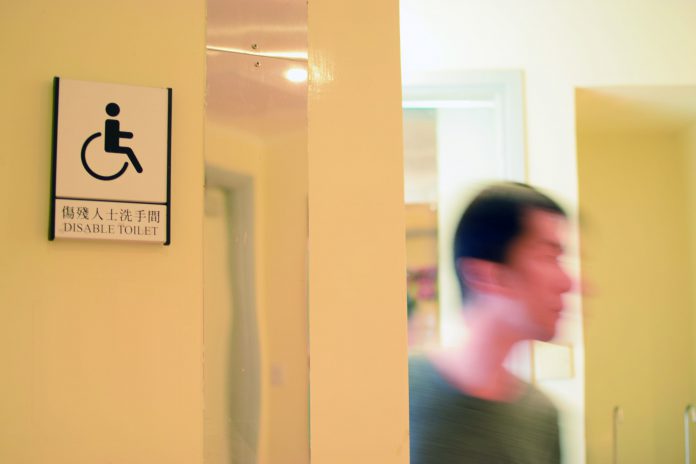
Leung says public toilets for the disabled are really important if this sort of accident happens because they at least offer some space and privacy for washing.

However, he points out that unlike Japan, Hong Kong does not have specially-designed toilets for stoma patients. “Toilets in Japan provide cleansing soap…and tailor-made mirrors for [ostomy bag users].”

The fact that people with stomas do not have any outward sign of disability can also lead to misunderstandings when they use toilets for the disabled. “Others do not know we have such need…they say we are occupying the toilets,” says Leung, recounting an experience he had with a suspicious security guard. “People don’t understand [what a stoma is].”

Besides embarrassment and the misunderstanding of others, Leung has also faced discrimination in the workplace. He had to quit his job as a cook after his cancer surgery and after he recovered, a friend recommended him for a job at a local diner. Leung says everything was fine until the employer asked if he had any health conditions. Leung disclosed he was a cancer survivor and that he used a colostomy bag. He was rejected for the job.

Labour Party lawmaker Fernando Cheung Chiu-hung says there is a lack of awareness of the needs of stoma patients in Hong Kong and that regionally, Hong Kong lags behind Japan and Taiwan in this respect. In addition to public ignorance, Cheung says it is very difficult for people with stoma to apply for and receive disability allowances.

This is something 70-year-old Cheung, who prefers not to give her full name, can attest to. After losing 9 kilogrammes in the space of a few months, Cheung was diagnosed with phase-four rectal cancer 18 years ago. She received electrotherapy and underwent surgery to remove the cancerous tissue in her intestine and to create a stoma for waste discharge.

Auxiliary products for stoma patients

Cheung says the monthly expenses of using ostomy bags are a financial burden. “Even if we are frugal, we could spend around $1,500 per month,” says Cheung. Apart from purchasing the ostomy bags, stoma patients also need various pieces of equipment and products, such as powders and sprays for better adhesion of the ostomy

bags. “It all adds up,” says Cheung.

There are currently two types of allowances stoma patients can apply for, but Cheung points out that neither are easy to get. They are the Social Welfare Department (SWD)’s Disability Allowance and the Pilot Scheme on Providing Special Subsidy for Persons with Permanent Stoma from Low-income Families for Purchasing Medical Consumables. The latter is administered by the Community Care Fund.

The disability allowance is a monthly non-means-tested, non-contributory allowance and there are two types: Normal Disability Allowance, which is HK$1,720 per month, and Higher Disability Allowance, which is HK$3,440 per month. In order to qualify for either, patients must be certified by a doctor to prove that they have severe disabilities persisting for at least six months. Applicants are eligible for the higher rate if they need constant attendance from others in their daily lives.

Doctors base their assessments on a standard Medical Assessment Form designed by the SWD. Under the criteria set by the SWD, those assessed to have 100 per cent loss of earning capacity are regarded as having severe disability. People with stomata rarely meet the criteria, so doctors will consider if they have other medical conditions that may restrict their working capacity when considering whether to sign off their applications.

In Cheung’s case the doctor who performed her surgery in a private hospital completed the Medical Assessment Form but her application for disability allowance was rejected by the SWD.

Cheung says she then tried to seek proof of her disability from the Prince of Wales Hospital, but a doctor there rejected her claim of disability. She even sought the help of several lawmakers and succeeded in meeting the chief executive of the hospital, but this too was to no avail.

Cheung says the worst rejection came from a doctor at the Yuen Chau Kok General Out-patient Clinic. “I faced severe discrimination from the doctors there,” says Cheung. “You don’t look [disabled], you can go to work,” they told her. Cheung says she tried one more time, at the Lek Yuen Health Centre but they rejected her outright.

Cheung did manage to get a doctor’s certification and approval for Normal Disability Allowance in the end, but only after undergoing surgery for acute peritonitis. The condition almost cost her life and she was in hospital for four months. “I used my life to gamble for this,” she says of her disability allowance.

Cheung’s struggle to get disability allowance is not a rare occurrence. Yeung, 70, who also prefers not to give her full name, was diagnosed with colorectal cancer 20 years ago. Her approval for disability allowance was granted, but she has to seek a renewal every two years, even though her stoma surgery cannot be reversed.

Kenny Wong Kin-wah, the executive secretary of the Hong Kong Stoma Association, questions this and other cases where ostomates have been denied permanent allowance. “We wonder why [stoma patients] are not granted permanent disability allowance given they have irreversible conditions.”

The legislative councillor for the Medical functional constituency Pierre Chan Pui-yin, thinks that problem lies in the application system for disability allowance, and the assessment form drawn up by the SWD. “[The criteria] are formulated by the SWD rather than by doctors themselves,” says Chan, who is also a gastroenterologist. He says the SWD’s criteria are too general, which can lead to different doctors making different judgments. What is more, Chan says that in exercising their discretion to sign off an application, doctors have already “crossed a line” and are acting beyond what they are duty-bound to do.

Apart from the disability allowance, ostomates may be able to apply for subsidies through the Community Care Fund’s means-tested pilot scheme to relieve their financial burden. Patients can receive a subsidy of HK$1,000, HK$750, or HK$500 each month, according to their family incomes.

However, Kenny Wong thinks the income threshold and requirements for eligibility are too high. “[Applicants] have to be first proved as permanent stoma patients and second, be non-CSSA recipients,” he says. The amount of detailed information required about the incomes and assets of the applicants and their family members may also deter some would-be applicants, adds Wong.

Although financial assistance may be hard to come by, other forms of assistance are available for stoma patients. Lam Yuk-yin, an advanced practice nurse (surgical) from North District Hospital, launched a mobile application called Stoma Care App(造口護理通)for stoma patients. The application includes stoma information and provides a guide for stoma patients on how to take care of their stomata.

Nurse Lam Yuk-yin launched the Stoma Care App

The hospital also organises a patient self-help group for stoma patients to support one another. Lam says it can be hard for patients to psychologically adjust and accept themselves after their surgery. She stresses the importance of providing accurate information to help them with their recovery. “When we give more information to them, they can realise that they can actually handle [the stoma]…many of them can return to a normal life.”

Edited by Nancy Mak

Veggie Food Fears

The health risks of fake meat and processed vegetarian foods

By Soohyun Kim

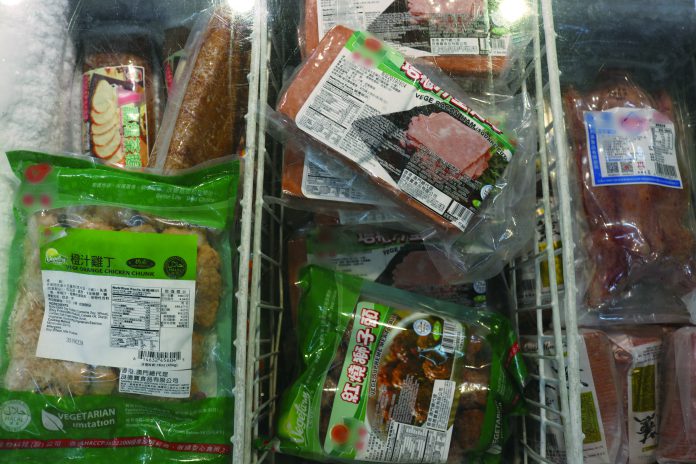
It looks much like any other Hong Kong grocery store, but on the glass window next to the entrance is a sign with the Chinese character “vegetarian”. Inside, there are fresh food items ranging from vegetarian sweet-and-sour pork to vegetarian roast meat. The shelves are lined with a variety of seasoning products such as soy sauce and vegetarian oyster sauce. And in the refrigerators, customers can find such items as luncheon meat and sausages with the word “vegetarian” on their labels.

It may be an indication of how much Hongkongers like meat that even the city’s vegetarian food stores stock so many items marketed as meat substitutes. Indeed, statistics show we consume more meat than Americans per capita.

But in recent years, sparked by concerns about health, the environment and animal welfare, more and more people are opting for vegetarian and vegan diets. According to a study conducted by the market research company Ipsos for advocacy group Green Monday in 2012, an estimated 3 per cent of Hong Kong’s population is vegetarian and up to 1.6 million people will adopt a vegetarian diet once a week.

The increasing number of vegetarians and flexitarians – that is people who adopt partially vegetarian diets – is increasing around the world, not just in Hong Kong. This has led to a corresponding increase in the range of food items being marketed towards vegetarians. In the United States alone, sales of food labelled as vegan reached more than US$2 billion last year, an increase of 23 per cent over the previous year.

Violet Man is an accredited dietitian in Hong Kong and Australia. She says that with more people becoming vegetarian, it makes sense that there are more processed vegetarian foods such as meat analogues or fake meat.

“More people want to be vegetarians,” says Man, “Of course, food manufacturing companies, they want to produce more products convenient for vegetarians…so when they chew, the texture and flavours are still like meat.”

Meat substitutes have a similar appearance to real meat and try to approximate the taste and texture of meat. Many such products are made of soy that has been processed to mimic the texture and taste of meat. These meat replacements can make the transition to becoming a vegetarian easier. However, in order to enhance the flavour of these naturally bland products and to preserve them, these processed foods require a lot of seasoning and additives.
As many processed vegetarian foods contain high levels of sugar, salt and sometimes fat, Man says consumers should be careful to check the nutrition content when choosing products.

“If you choose processed vegetarian meals that are high in sugar, high in salt, or high in fat, of course, you exceed the [recommended levels for] fats, sugar and sodium.”

Man warns that in the longer term, over-consumption of fat, sugar and salt is associated with heart disease, type 2 diabetes, hypertension, obesity and elevated cholesterol levels.
Michelle Tan Sze-may, however, is not aware of these health risks. The third-year university student grew up in a Buddhist family and has been used to eating vegetarian meals from a young age. Today, she calls herself a flexitarian. Tan says she likes eating mock meat when she dines out at vegetarian restaurants.

“I forgot how I accept [this] mock meat. [It] just feel[s] tasty,” says Tan, discussing the variety of mock meat found in vegetarian restaurants, such as mock roast meat and mock duck. “Usually I eat it a lot, I mean if I eat out at vegetarian restaurant, because I love the mock meat.”

Tan says she is surprised to learn that a meat analogue can contain large quantities of additives and sodium. “I was not aware of that … I think I will not quit completely but I will try to eat less. But I really love those mock meats,” says Tan.

Surgeon Irene Lo has been a vegan for 20 years. She is an active advocate for a raw and whole food diet. She says a lot of chemicals, such as stabilisers, artificial colourings and flavourings are added to meat substitutes in the manufacturing process. While she thinks eating meat analogue products is good for helping people transition to vegetarianism, she says that over-dependence on them can be bad for your health. Yet many people are unaware of the risks.
“Some of the [processed vegetarian foods] are being fried, being overcooked with a high temperature,” says Lo, adding that frying at high temperatures can create harmful chemicals.

Vegetarian sweet and sour pork

Another misconception people may have is to assume that vegetable or plant-based oils are always healthier than animal or dairy fats. In fact, the consumption of partially hydrogenated fats – or trans fats – which are sometimes used to replace butter in baked goods, raises the risk of heart disease.

However, Shara Ng, the chairwoman of the Hong Kong Vegan Association, points out that processed foods in general are unhealthy and therefore vegetarian food should not be singled out. “We cannot say the processed vegetarian food is unhealthy … It is not fair because processed meat is even worse,” says Ng. “It doesn’t matter maybe [whether] it is meat- or plant-based, if they are processed, of course, it is not good for your health.”

Instead, Ng thinks that people should decide on the amount of processed foods to consume according to their own health considerations. She says it is up to individuals to choose the right foods for a healthy diet.

“You should learn about the nutrition thing,” says Ng, “Do your research and you will know how to choose. No one can tell you this one is good and this one is bad.”

Kai Fong, 34, was brought up in a Buddhist family. Fong’s mother introduced him to vegetarianism but today he is vegetarian by choice. He says he is well aware of the health risks in processed vegetarian foods.

Vegetarian Sichuan saliva chicken

“They [processed vegetarian foods] usually have high sodium contents… If you eat too much sodium then, you know it is going to increase heart disease, increase your blood pressure,” says Fong. “I do like lots of processed meat but I know in general that processed foods, they are unhealthy because there are too many chemicals. So nowadays I eat less processed foods.”

The US-born Fong says he reads the nutrition labels whenever he shops for food and tries to avoid sodium and the flavour enhancer monosodium glutamate, or MSG.

Fong agrees with Shara Ng that it is personal food choices that determine a healthy diet.
“I will definitely eat a lot less greasy, fried food. Eat more steamed. If you steam the food, we know that it keeps most of the nutrients. I will try to eat more organic; [it] is probably the right way to go vegetarian,” he says.

In many ways, it has become easier to be a vegetarian, but with greater choice, consumers need to be better informed to make better judgments. Just because something is vegetarian does not always mean it is the healthier option.

Edited by Nannerl Yau

Rolling with film

Analogue photography makes a comeback in the digital age

By Scarlet Shiu

Pull up the film-rewind knob, open the back of the camera, insert a roll of film, drag it all the way through the film take-up spool, tug on the lever and close the door. This sequence of actions was a familiar one for photographers in the past. Today, despite the domination of digital cameras and smartphone cameras, more and more photographers are performing the same rather laborious ritual as analogue photography becomes fashionable once again.

Analogue photography, as the name implies, refers to photographs taken with an analogue camera and film rather than a camera with digital image sensors. The first camera using flexible roll film was made in 1881, but the popularity of analogue photography really took off when the mass production of cheap cameras in the 1960s meant more people could afford to own one. Although the first digital cameras were produced in the late 1980s, it was not until 2003 that they outsold analogue cameras for the first time.

Now, film is making a comeback, at least among enthusiasts like Lui Pak-yu. The 28-year-old opened her first film and film camera retail store, Showa, in Mong Kok in 2015 as a venue where she could gather “film photophile” friends. She opened another branch in Causeway Bay in 2017. She says film photography is increasingly being seen as a lifestyle choice.

“You can say it [analogue photography] is living on in another form,” says Lui. “Now it’s really for living a way of life, randomly taking pictures, less emphasis is put on the functionality.”

Lui Pak-yu’s first film and film camera retail store was a meeting place for fellow “film photophile” friends

Lui’s first customers were mostly young people. As her business has grown, her customer base has expanded to other age groups, including experienced photographers. She says peer influence and interest from the media has encouraged more young people to experiment with film cameras.

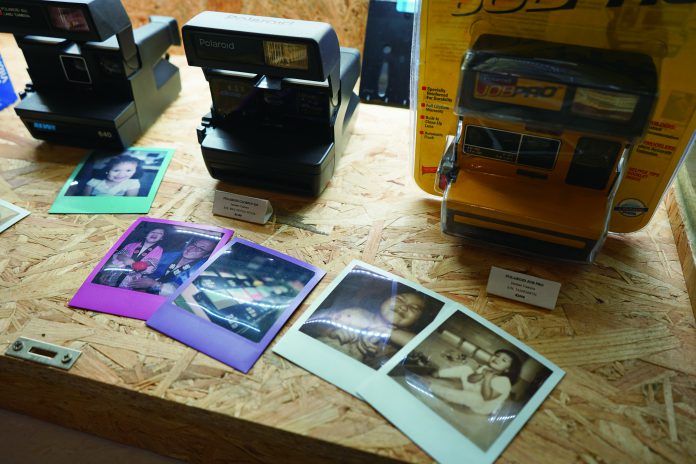
Pictures at Lui’s store

For 22-year-old photography fan Cherie Tsoi Tsz-tung, using film encourages her to concentrate on the scene before her rather than the image on a monitor screen.
“When you are shooting on digital, you often view the scene through the monitor. But when I shoot on film, I mostly look directly at the scene before taking the picture. This reminds me to look at it carefully with my eyes and heart,” she says.

Cherie Tsoi Tsz-tung with her Lomography camera

Tsoi started shooting on Lomography film in 2013. She recalls she once accidentally dropped her camera on the floor. “It [the back of the camera] was broken open. The film inside was exposed. I closed it immediately and continued to use that roll of film. When I took the film to print out [the photos], the light leak effect was unexpectedly beautiful,” she says.

You cannot always predict how a photo will turn out until it is developed and printed and it is this element of surprise that brings joy to Raymond Chin Wai-yin, a freelance photographer who has been shooting with film since 2011.

“The most appealing thing [about analogue photography] is anticipation … I think shooting on film enables you to cherish every frame, you will observe carefully before you press the shutter. Unlike digital, you can’t use a continuous shooting mode and delete it if you don’t like it,” says Chin.

For Chin, the colour and texture of film is something that cannot be achieved in a digitally captured image and the digital format will never “replace” film. “Would you say painting will be replaced by an electrical drawing board?” says Chin.

For her wedding photos, Phoebe Chan Wing-hei hired a digital photographer to shoot a series of shots and used a studio photographer for some film shots. The 29-year-old says she enjoyed her studio film shooting experience more.

Hong Kong still has a few film photography studios and despite the higher cost of her film photos, Chan appreciates the human touch as well as what she believes is a superior result.

“When you look at the colours as reflected in the outline, you will see that film is slightly better,” says Chan. “You only press the shutter once after thinking it through, but with digital you can shoot continuously; I will treasure it less this way… Film gives you a feeling that it is delicate, you have to be really careful to take one good photo, every photo is precious.”

Vishal Soniji, the founder of Camera Film Photo, is a film distributor and online film retailer in Hong Kong. He has noticed an increasing use of film in secondary schools and universities. He says some schools have started to invest in film paper, chemicals and equipment to set up darkrooms for photography classes. “There are a lot of good things happening with film photography,” he says.

Soniji says it is the element of surprise and the aesthetics and authenticity of film that makes analogue photography attractive to people living in a digital era.

“With digital, it’s so easy to manipulate. But with film … what you see is what you have,” he says.
Soniji says the sensors of digital cameras are designed to be flat so it is impossible for them to produce images with the kind of depth of field that film cameras have. He thinks images shot on film are livelier.

Rather than thinking of whether one format is superior to the other, or whether one should be replaced with the other, it is perhaps more useful to think of analogue and digital as being suitable for different uses. On the one hand, digital images are useful for commercial work as pixels can be easily manipulated, creating many possibilities for the easy post-editing of photos. On the other, according to Soniji, the grain that appears on film photos is important and adds a sense of liveliness.

He believes that analogue media will continue to have fans in the digital age. He draws an analogy between film and vinyl, saying audiophiles and people who are genuinely passionate about music still prefer listening to recordings on vinyl because there is less data loss in the analogue medium. “When you listen to digital music, you don’t realise there is a lot of sound that you are missing but you listen [to] the same music on vinyl, a lot of details then sort of appear,” he says.
At the end of the day, while Soniji concedes “film will not be as big as digital”, he believes it definitely has a future.

“Film will always have a good community that will keep everything sustainable and it’s growing sustainabley, but nicely because there [are] a lot of people who are interested in it,” he says.

Edited by Nannerl Yau

Lest We Forget

Hong Kong Holocaust educator Simon Li’s lessons from the past

By Tommy Yuen

In 2006, the then Canadian Prime Minister Stephen Harper apologised to the country’s Chinese community for the levying of a punitive head tax on Chinese immigrants between 1885 and 1923.  As he listened to Harper saying “Canada apologises” in Cantonese, Simon K. Li felt vindicated – all the reporting he had done to keep the issue in the public eye as a journalist on the social justice beat had been worthwhile.

What drove Li to persist in his journalism was his belief that the best way to arouse public awareness in seemingly uninteresting issues is to educate them. This same belief has underpinned his endeavours since he left his job at Toronto’s multicultural CHIN Radio 10 years ago. His current post is director of education at the Hong Kong Holocaust and Tolerance Centre.

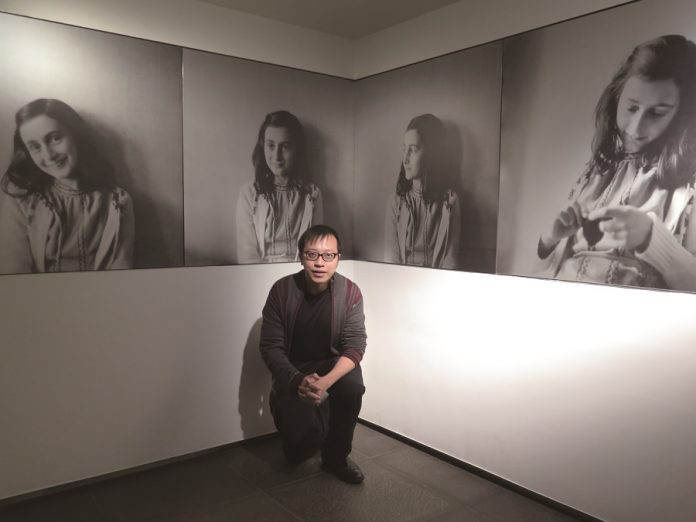
Now 36, Li emigrated to Ontario in Canada with his family when he was 12. However, he first encountered the Holocaust as a primary four student in Hong Kong when he came across The Diary of Anne Frank. Even as a young child, the book made a deep impression on him but he could never have imagined back then that he would one day be a Visiting Educator of the Anne Frank House in Amsterdam.

Although Anne Frank’s words made a mark on the young Simon, it was the images from a documentary film that really seared the atrocities into his mind. The film Memory of the Camps was partly directed by Alfred Hitchcock and lay unfinished and forgotten in a vault in London’s Imperial War Museum before it was completed and broadcast in 1985. It contains harrowing footage taken in Nazi concentration camps such as Dachau, Buchenwald and Bergen-Belsen in the last days of World War II. There are scenes of scores of bodies strewn across fields, burned in huts and dumped into mass graves.

Simon Li

“I later realised that young kids should not watch these [images], because you really can’t sleep,” says Li.

These stories and scenes from the Holocaust stayed with Li as an adult, including when he was following and covering news of the 70th anniversary of the Nanjing Massacre in 2007. A year later, Li left Canada and returned to Hong Kong as a senior lecturer in history at Yew Chung Community College. There, he made an effort to impart knowledge about genocide and to teach his students about tolerance.

When a vacancy for director of education at the Holocaust Centre came up in 2016, Li decided to make a change and become the first ethnic Chinese to take the post. He has taken up the job at a time he thinks the field is going through a transitional period.

“From the end of the war until now, the essence of Holocaust education has been passed on by survivors telling their stories. But how can the education continue with the gradual passing away of the survivors?” he asks. It is part of Li’s responsibility to find a way forward.

To Li, genocide does not just affect the people who were killed or involved in the killings, but is an issue that concerns humanity itself. He thinks the most chilling part of the Holocaust was not the killings but the fact there were so many bystanders, those who saw what was happening but did nothing about it. “This silence of bystanders, this is something that I have found to be most shocking, from when I was a child until now,” he says with a frown.

This is why Li always emphasises the “power of one” in his Holocaust education. He says an individual’s effort can make a great difference. “You may have never considered the power of one. You may think you are the only one who is standing up, but in fact there may be more than a dozen following [in your footsteps],” he says.

Unlike in Europe and the United States, the Holocaust seems like a distant event, an abstract topic in Hong Kong and other parts of Asia. Li says there is not much knowledge or awareness of it and the sensitivities it arouses. For instance, Nazi images, decorations and toys can often be found on sale or on display, with those responsible seemingly unaware of their offensive nature.

“The Holocaust is a human catastrophe and a source of great pain to many people. When we don’t understand it, we might hurt others’ wounds,” he says.

Li thinks the language barrier is one reason for the lack of knowledge but he also acknowledges that Hong Kong is rather backward when it comes to racial sensitivity and tolerance, especially compared with Canada. As the first director of education at the Holocaust Centre to speak Cantonese and Mandarin as well as English, Li is well placed to take the story of the Holocaust and the message of tolerance to local communities, as well as to facilitate discussions in other regional centres like Taipei and Shanghai.

In recent years, Li has also worked with local schools. He says The Diary of Anne Frank is a good book to start with as it speaks to teenagers. Apart from this, another one of his preferred texts is Lilian Lee Pik-wah’s The Red String(煙花三月), which discusses comfort women and the Nanjing Massacre. Unfortunately, says Li, the history syllabus in Hong Kong’s secondary schools is so packed there is little room for in-depth discussion about the issues raised.

Outside of the classroom, Li seizes any opportunity he can to advance education on the Holocaust and other acts of genocide. For instance, he worked with Amnesty International to hold the Human Rights Documentary Film Festival, and worked on the Chinese subtitles for Watchers of the Sky, a documentary about global genocide and efforts to lobby the United Nations to adopt the Genocide Convention.

At the Holocaust and Tolerance Centre, Li is responsible for public outreach, organising a range of activities that includes talks by survivors, public exhibitions, lectures and workshops for teachers to acquire the skills to safely introduce such a heavy topic.

Many ask after Li’s well-being as he has to immerse himself in such an intense, dark subject every day. How does he deal with the emotional and mental stress? “Sometimes I think of the survivors, I do it for them,” says Li, for whom the survivors are an inspiration.

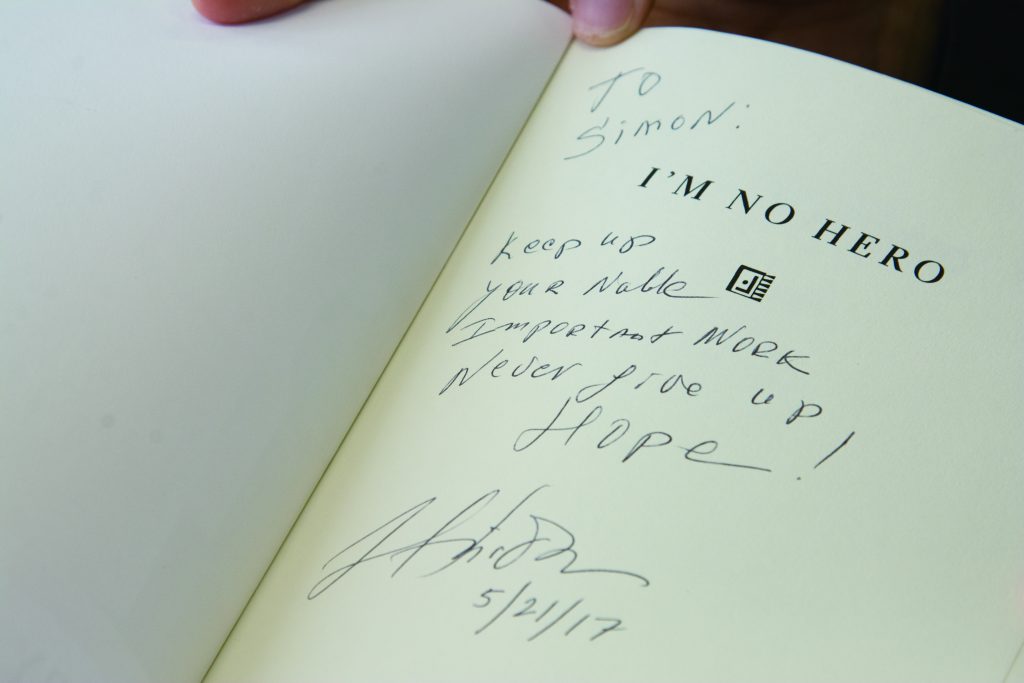
Last May, Li invited the 90 year-old Polish survivor Henry Friedman to come and give talks in Hong Kong schools. Friedman and his family escaped internment in the concentration camps after being hidden by two Ukrainian families. He spent 18 months in a tiny space the size of a queen-sized bed. Friedman later wrote a book about his wartime experiences which he called Im No Hero, to emphasise the fact that he is an ordinary human being who survived because he was saved by others.

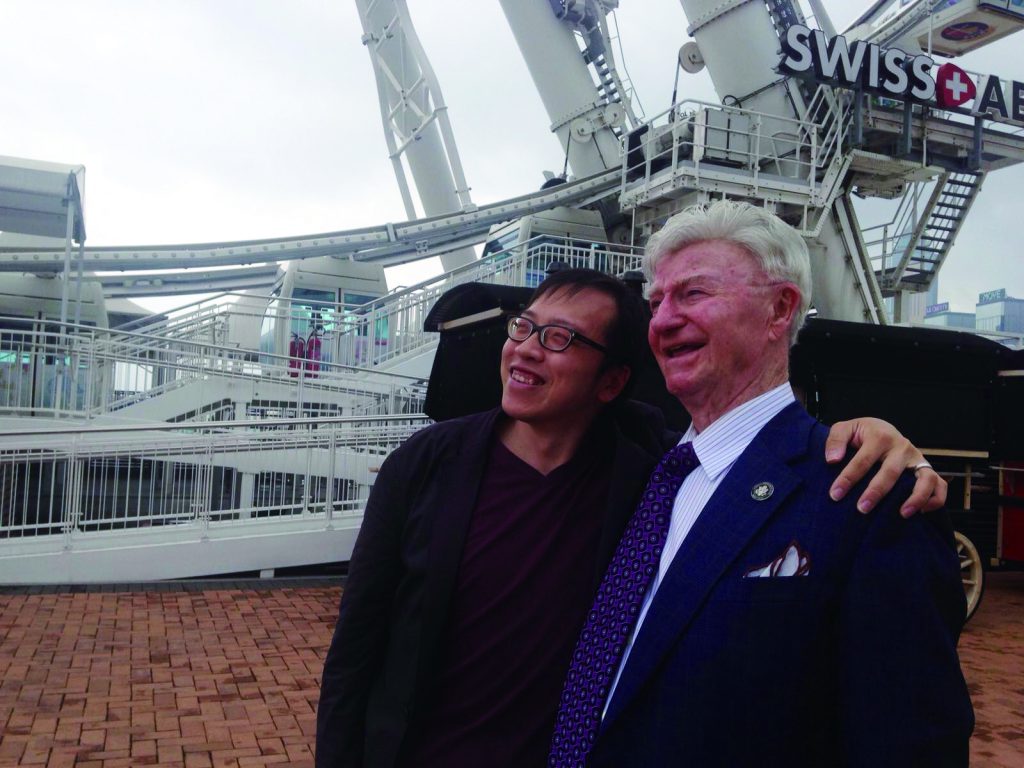
Simon Li with Holocaust survivor Henry Friedman in Hong Kong, who always tells young people never give in to hate. Photo courtesy of Simon Li

Like the other survivors Li has met over the years, Friedman is surprisingly humourous, Li adds. “To me he is special not only because of his experiences during the war, but also because of his hopeful attitude. He never loses hope.”

Before he left Hong Kong, Friedman gave Li a copy of his book, inscribed with the words: “To Simon, keep up your noble important work, never give up hope.” This is exactly the spirit Li wants to impart to his students.

Words from Henry Friedman to Simon Li

The survivors want to bear witness, to tell the next generations about their experiences in the hope that history will not repeat itself. Li is determined to continue their mission. “We have a term called ‘never again’, that is do not [let it] happen again. However, the saddest truth is ‘never again yet again’.” As long as people do not learn from the past, education will always be paramount.

From being a journalist covering social justice issues, to teaching history in a community college, to his current role as a full-time Holocaust educator, Li says his work has remained essentially the same. “It is just a change in circumstances, but to me, my heart, my passion and my message are all the same,” he says.

His mission is to disseminate Holocaust knowledge in Hong Kong.“To talk to a witness, is to become a witness, and it is our moral responsibility to educate others,” he says.

The Holocaust was a calamity and Holocaust education is about healing wounds and preserving history so that we may learn from it. Hong Kong is fortunate not to have undergone a tragedy on the scale of the Holocaust but taking stock of the divisions and troubles in Hong Kong, Li asks us to remember this quote from the American civil rights leader Martin Luther King: “In the end, we will remember not the words of our enemies, but the silence of our friends.”

Edited by Jade Li

Staging Hearts and Minds

Actor and therapist Chan Cho-kin heals with drama

By Raven Hui

           
As the children, teenagers and their parents hold hands and laugh out loud, it seems like all the stresses of family, school and work fall away. The enthusiasm of the man leading the activities is infectious, everyone seems energised.

Chan Cho-kin is a 38-year-old actor with many other feathers in his cap – he is a dancer, director, voice artist, educator and psychodrama therapist. If he had to choose just one description though, he might choose to say he is an applied drama practitioner because using drama to help others is at the heart of nearly everything he does.

Drama has been a part of Chan’s life since he was a junior in secondary school when he took part in a production of Farewell My Concubine. He only had a walk-on part as a soldier who delivered one line before promptly dying. But he was also involved in making the props and even now he can still remember painstakingly glueing pieces of mahjong-table liner paper onto cardboard to make pieces of armour. During the process he felt empowered by the opportunity to unleash his creativity and by the sense of teamwork with his schoolmates.

Not long afterwards, the young Cho-kin resolved to get into the Academy for Performing Arts (APA) to study drama. He managed to fulfil this ambition and spent five years at the APA training as an actor. After graduating, Chan became a jobbing actor, dancer and choreographer. Then in 2005, he landed a part in the opening team of the Lion King show at Hong Kong Disneyland.

Chan Cho-kin

Chan’s eyes light up as he recounts his experience of sharing the stage with top overseas performers in the show. During this time, he also taught private acting and dancing lessons in his spare time. He remembers the period fondly as a time of positive changes. “Through drama I gained more self-knowledge and learnt how to relate myself to the others.”

All seemed to be going well when Chan suffered a serious accident while performing. He slipped and broke one of his cruciate ligaments in a Lion King dance. After the accident he could not dance or perform for half a year. The enforced absence from the stage led Chan to think over what his real passions were.

“I like to perform, but at the same time, I like to teach because I like to be with different people,” says Chan. “Working with people, seeing them learn something or change. It turns out I enjoy that process.”

As he was already doing some teaching, he decided to sharpen the tools in his box, so he enrolled for a master’s degree in drama education at Griffith University in Australia. The experience opened Chan’s eyes to the multiple possibilities in drama.

“It can assist with personal growth, [help in the] debating of social issues, help create interpersonal and inter-group dialogue. It can open so many doors.”

Chan leads a psychodramatic activity. Photo courtesy of Chan Cho-kin

Chan began to use drama in different ways and contexts – what he describes as applied drama.  However, he realised there were some people he could not get through to in his activities. When his sessions did not work, he began to doubt, devalue and judge himself.

During this period of self-doubt, Chan got a taste of psychodrama therapy – a technique that uses guided drama and role play to identify problems and get to know oneself deeply. After studying and practising psychodrama, Chan’s questions to himself became motivations for self-improvement.

Since 2011, Chan has been using psychodrama therapy to help a range of people, from children with learning difficulties to elderly people with depression. He tailors his approach for each different group and although he is a playful and easy-going person, he becomes serious and professional when talking about his therapy practice.

For instance, he recalls a child in his kindergarten class who suddenly behaved aggressively and kept on yelling at the others. Chan did a role-play activity with him and designed some scenes for him to experience. Because children usually act out what they encounter in their daily lives, Chan soon realised the child’s parents had had a big quarrel and he was copying them.

Chan says the key to his relationship with his clients is trust. “I will do anything to give them a sense of togetherness and to let them know I am not going to judge them.”

He explains that adults are harder to deal with than children because they hide under the many layers and different appearances they put on to survive. He thinks drama can be a more effective way of getting through the layers than traditional forms of therapy. This is because it can help people to gain new insights and resolve problems experientially through acting out roles and adopting different mindsets.

He cites the example of a project he took part in called Recovery Montage(康復者口述歷史戲劇計劃 —《心織.行》)in 2013. Collaborating with the New Life Psychiatric Rehabilitation Association, Chan directed a drama aimed at eliminating the stigma that attaches to people with mental illness. The script was based on oral histories of ex-psychiatric patients, to which Chan added creative elements. Chan says it was meaningful for the former patients to tell their own stories of their transformation. It was a process through which they helped themselves break free from stigma.

Being able to use drama to help others gives Chan great satisfaction and that is why he has increased his engagement in community work. For instance, he conducted a playback theatre session for To Kwa Wan residents during the district’s redevelopment. Actors invited the residents to share their memories of To Kwa Wan, and in turn, through improvisation, they acted out their stories. His team emphasised the spirit of the neighbourhood and the close bonds between the residents as these were core messages presented by members of the audience. Many residents thanked Chan for the experience but he says it is he who should be thankful. “[They said] I led the team to perform as a gift for them. But actually, listening to their stories is a gift for me.”

Chan leads a session in Lost and Found, an event to advocate child psychotherapy, held by The Boys’ & Girls’ Clubs Association of Hong Kong

Chan believes that drama has the power to change more than individuals, it can also help bring about social change. During the Umbrella Movement in 2014, he joined some social worker friends to conduct a “process drama” to help social workers and teachers make sense of the events around them with their students. This was done through creating a dramatic world in which the teachers and students could work together to explore issues and work out solutions.

Chan and his collaborators created two roles called Fire and Water, representing those who stayed in the occupied areas during the movement and those who did not for various reasons. Chan hoped students could experience the struggles of the characters and make their own decisions. Chan says that even if such activities cannot bring about large-scale social change, it may lead to a tiny change in the way a participant considers an issue.

From an aspiring actor and dancer to a practitioner who uses drama as a tool, Chan admits he does miss the old days but he does not feel the need to go back. He says he has discovered the infinite possibilities of the thing he loves and that having seen how it can give people more space to explore different things, his aspirations have changed.

“I think I did not leave the drama I love,” he says. ‘Instead I think it is my great fortune to be able to gain entry into the stage people have in their hearts.”

Edited by Jade Li

Having it All

Doctor and athlete Heidi Yu strives for excellence in medicine and running

By Sarah Poon

Most days, after an intense 10-hour shift as an anaesthetist at the Pamela Youde Nethersole Eastern Hospital, 27-year-old Heidi Yu Wing-hay puts the drama of the operating theatre behind her and stretches her limbs and muscles. Showing no signs of exhaustion, she is ready to start her daily training – usually along the coastline of Repulse Bay – as a long-distance runner.

Yu’s multiple identities means she has a tightly packed schedule, but also a richer life. Her irregular hospital shifts make it hard to train with a dedicated coach but it also means her training time is flexible. In 2016, when she came third in the Standard Chartered Hong Kong Marathon, Yu forced herself to put in two training sessions a day.

Her ambitions and interests in running can be traced back to her junior secondary years when she was selected for the school athletic team in Form One. After that, she spent most of her secondary school days practising for track and field events with external sports clubs. Even after she was admitted to an academically demanding major – the Bachelor of Medicine and Bachelor of Surgery Programme at the University of Hong Kong, her enthusiasm for sport did not fade. She started to specialise in 10km running and going orienteering.

Heidi Yu in a race. Photo courtesy of Heidi Yu

“I am always obsessed with how I can do better,” says the perfectionist Yu.

Yu’s natural competitive streak drives her to excel at everything she does, which means she has to find a balance between running and work, and previously, between running and studying. This has not always been easy. When she was at school, in the lead up to taking her public exams, she almost slipped up. At one point she almost ranked last in her class of 28. This made her feel she had let down her parents and her physical education teacher, who had always believed Yu had the ability to keep up with her academic work and her athletics training.

Time management and setting priorities are always at the forefront of Yu’s mind. Another difficult time came in her houseman year. Her hospital residency made it very difficult to keep up with her training routine. She remembers that some really average racers, who she would always beat in the past, were all running ahead of her. At that point, she says, she was ready to consider not competing any more.

It took an even more difficult moment in her life for her realise there was nothing that could not be faced up to or overcome. “Probably… it was when my cousin passed away,” Yu says. Even now, she shakes when recalling her cousin’s death from bone cancer in 2012. He was just a year older than her. “Nothing else in the world can be more difficult than facing death,” she says.

Yu thinks her commitment to her interests in running and more recently orienteering, have helped her to develop an ability to deal with adversities. She feels especially bad about the students who die by suicide due to academic pressure. Yu thinks no one actually enjoys studying and everyone suffers from stress. In her case, exercise helps to alleviate work and study burdens. Her training has made her tougher physically and mentally, while dealing with frustrations in competitions and finding her bearings when she loses her way in orienteering are processes that have helped her learn to deal with adversities.

Heidi Yu running in Aberdeen Sports ground

Over the years, Yu has learnt to balance her double role and to set priorities. Being an athlete and being a doctor are both highly demanding but she is unwilling to let go of either role. “If you are really passionate about that thing, you would find time for it anyway,” she continues. “I love running, I really love it.”

Perhaps at the root of her competitive nature is her race against her toughest opponent of all.  “Running is a competition with myself because there are always people faster than you,” she says. Yet, even in this most independent of sports, Yu says, she is not a lonely long-distance runner and that the support from friends and family has contributed greatly to her achievements. When she is tired or tempted to slack, her training partners push and motivate her.

Meanwhile, Yu’s proud parents save every news item about their daughter and their encouragement both reassures her and gives her the confidence to pursue both medicine and sport. She cannot help breaking into a smile when she says her parents always grant her a lot of freedom to follow her own path.

When she set off on her double career, Yu may not have foreseen quite how the two roles would complement each other. The more time she spends working as a doctor, the more she has come to like her job. Being an anaesthetist is challenging because she can never predict how a case will turn out. She compares her work in the operating theatre to orienteering, which requires a combination of navigation, route planning techniques and fitness. You can never know the outcome or your ranking until you reach the finishing line. Likewise, an anesthesia doctor has to constantly monitor her patient throughout the surgery, and cannot declare she is safe until the very end.

“Both [orienteering and anaesthesia] requires us to stay calm in urgent situations, to sort out problems and to find out the resolutions,” she says. No matter how tired Yu is from work, running a few laps before or after work refreshes her; it can brace her for the day ahead or wash away the exhaustion at the end of the day.

Heidi Yu performs a medical procedure. Photo courtesy of Heidi Yu
Heidi Yu at work as an anaesthetist. Photo courtesy of Heidi Yu

Blessed with success and fulfilment in two fields, Yu knows she is privileged, so she decided to spend some time volunteering in less-developed regions. Towards the end of 2014, she travelled to Mnazi Mmoja Hospital in Tanzania to work for nearly two months. Yu recounts how a few patients shared the same bed, manpower was in short supply and the hygiene conditions were so bad there were flies in the operating rooms.

“I think it is very fortunate to possess the ability to help the others,” she says, adding that the experience has made her a more compassionate and tolerant doctor.

Living and working in Hong Kong, she is thankful to have much better medical facilities and trained personnel. However, she is also aware of the shortage of medical experts in public hospitals and notes that many of her colleagues complain about the lack of manpower and the corresponding increasing workload.

“If we don’t solve the manpower shortage, which makes the same group of people work for longer, with heavier workloads, these [medical incidents] will happen more often, making the frontline doctors more stressed,” she says with a frown.

Although more of her colleagues are leaving to work in private hospitals, she is staying in the public system so she can serve a broader group of patients and gain more experience. She wants to continue to develop and learn in both the medical field and in athletics, which are rewarding in very different ways.

Yu feels an immense sense of professional achievement at the end of a successful surgery and she derives more personal gratification from achieving any new personal bests and winning awards.

“I don’t think they are mutually exclusive, because I have my own time after work,” she says.

“I will continue running till one day I can no longer run,” she says.

Edited by Jade Li