







Home Blog Page 66

The Hidden Cost of Building a World City

Employers accused of hiding industrial accidents to avoid compensation

By Selena Chan & Yi Yeung

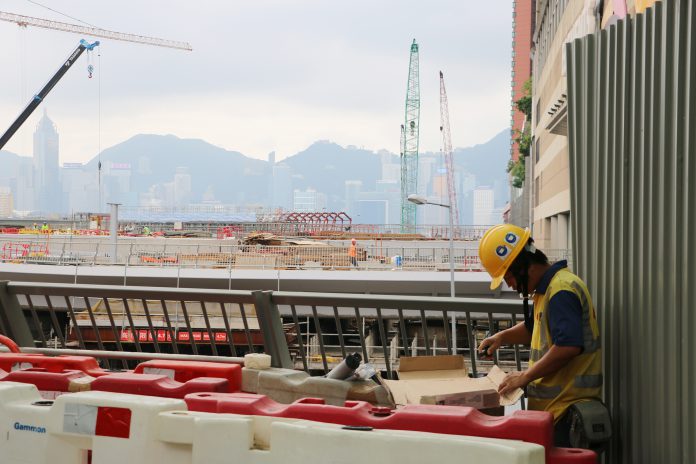
Ah Fei (not his real name), 54, was working on an elevator construction project on a flyover when he lost his balance while avoiding a falling board with nails sticking out of it. He fell to the ground and felt a searing pain in his pelvis.

The accident in June was just one of many that take place on Hong Kong construction sites every year. Last year, there were 35,768 industrial accidents overall and 3,720 in the construction industry, which was a drop of 0.2 per cent and 0.1 per cent respectively from 2015.

But while the number of reported accidents dropped slightly, the number of fatalities in the construction industry – which already has the highest rate of work-related deaths – has gone up. As of August 8, the number of recorded fatalities in the construction industry was 14, exceeding the total number of 10 in the previous year.

Ah Fei sat in agony on the ground for half an hour. But he had been instructed to never call an ambulance in the event of an accident in the company’s safety training course. He called his supervisor, who drove him to the hospital himself.

Ah Fei stayed in hospital for three days and during this time, the safety officer from his construction site took down an oral statement. He assured Ah Fei the company had reported his injury to the Labour Department. But when he checked a month later, Ah Fei found no record of it.

Ah Fei

Although Ah Fei insisted on filing the incident as a work injury with the Labour Department, the contractor reported it as a contested employees’ compensation case. By refusing to acknowledge accidents as work injuries, employers can avoid paying the injured workers compensation.

Ah Fei’s employer issued him four-fifths of his monthly income, along with a loan receipt, which states that if the Labour Department investigation eventually rules the incident is not a work injury, he has to return the money with interest. As the sole breadwinner in his family, Ah Fei could only sign the receipt and accept the money. “This is so unfair to us as injured workers,” he says.

Ghale Surendra Man, 42, is a Nepalese cladding worker who moved to Hong Kong in 2007. His late brother-in-law, Gurung Chitra Bahadur, who was 51, worked on the Hong Kong-Macau-Zhuhai Bridge construction as a carpenter. Ghale says that on February 8 this year Gurung went to work as normal in the morning. But at around 6pm, he fainted while he was changing his clothes.

He was driven to the North Lantau Hospital in Tung Chung in a company car and remained unconscious until he died on March 27. Ghale says he believes the company did not call an ambulance because it wanted to avoid reporting the incident.

He thinks this caused a delay in Gurung’s treatment. “The problem was related with the brain, the oxygen, the blood circulation. They [the employer] should call immediately the ambulance. If the ambulance came, there should be oxygen, so they can treat him immediately, and give him the oxygen,” he says.

Ghale adds there were other Nepalese workers on the construction site at the time, but none of them did anything to save Gurung. He suspects they were worried they would lose their jobs if they intervened.

Alvin Yau Chi-hang, programme officer of the Catholic Diocese of HK Diocesan Pastoral Centre for Workers says it is common to find cases where employers avoid reporting work injuries to the Labour Department. He says their motives are to hide the incidents to avoid making big compensation payments and to protect their reputations.

The Labour Department requires employers to report any work injury within 14 days and any deaths on the job within seven days. Yau says some employers will ask the injured worker to take sick leave and not report the incident. When the worker discovers the employer has not reported the accident, the employers may try to convince them that the procedures are very complicated, and dissuade them from filing a report to the Labour Department. Since workers are usually in urgent need of money, they can only accept what their employers offer them as a settlement.

Yau says workers are vulnerable because of their limited knowledge of the compensation mechanism and regulations. They are unaware of their own rights. Labour regulations are rarely mentioned in mainstream education and workers are not taught about them on the job. This makes it easy for employers to take advantage of them and offer smaller settlements.

What is more, the existing labour regulations are stacked in favour of employers and Yau says the Labour Department is relatively powerless. He points out that when employers refuse to acknowledge work injuries, all the Labour Department can do is launch an investigation and tell the employer they “suspect” there is a case of work injury. In the meantime, employers can suspend payments for salary, medical fees, or compensation.

Under the current regulations, any employer who fails to give notice of an accident to the Commissioner for Labour is liable to a maximum fine of $50,000. The Labour Department does not have a figure for the average fine handed out for the offence, but its statistics show the average fine per summons arising from industrial accidents was only around HK$12,000 to HK$17,000 from 2014 to 2016.

“Ten thousand means very little to employers. If they hold back on reporting one case, they could save a million dollars [in compensation],” says Yau.

It is unlikely the regulations will be changed in workers’ favour given that functional constituencies, many of which are pro-business, make up half of the Legislative Council. “The government is obviously pleasing those from the business sector and employers,” Yau says.

That is bad news for Ho Wai-ip. Ho, 42, worked as a baggage handler at the Hong Kong International Airport for five years before he suffered spinal disc herniation two years ago. He has been on sick leave since then.

He says his workplace was always short-staffed and he often worked at least 100 hours of overtime each month. When the accident happened, Ho was unloading luggage from one aircraft by himself. He strained his back and found it hard to stand properly or move.

According to the Employees’ Compensation Ordinance, employees’ compensation claims involve three stages. First, the injured worker is paid four-fifths of their monthly earnings at the time of the accident for the period of their temporary incapacity. Secondly, they can claim the full amount of their medical expenses. And finally, they receive compensation according to the Certificate of Compensation Assessment issued by the Labour Department. In Ho’s case, the first two have been settled, but the Assessment of Permanent Loss of Earning Capacity carried out in December 2016 determined Ho had only lost 1 per cent of his earning capacity.

“The 1 per cent says nothing about my pain and injury,” says Ho. Two years after the accident and numerous treatments, he still feels the pain and cannot sit still. He says the months he spent at home and unable to work, relying on his wife’s income and financial support from his family were a kind of mental torture. He has to bear all the medical fees incurred after the Assessment of Permanent Loss of Earning Capacity result was issued, and he cannot afford the cost of physiotherapy.

Apart from injured workers, family members of victims who die in industrial accidents also face difficulties claiming compensation. There have been nine recorded fatalities and over 200 cases of injury since construction on the Hong Kong-Zhuhai-Macau Bridge began in 2009. Tse To-hung’s younger brother, Tse To-long, was a surveyor on the project and fell from a 15m elevated work platform three years ago. Even now, Tse still cannot get a death certificate for his brother.

In cases of unnatural death, the Coroner usually takes at most 24 months to determine the cause of death. But the cause of Tse To-long’s death is still under investigation. Tse To-hung says without a death certificate, he cannot handle his brother’s bank accounts and probate. “For our family, all we need is a death certificate, then we can close the file,” says Tse. “But at this moment, we can do nothing but wait,” he adds.

Apart from the waiting, what frustrates Tse most is the inefficient coordination between different government departments, their slow responses and lack of communication. Tse was annoyed that the Labour Department did not even bother to notify him when it decided to sue his brother’s employer.

With his brother’s case currently locked in a court battle between the Labour Department and his brother’s company, Tse has no idea when he will finally get an answer on what happened to his brother. “My father is already 80. If this drags on for a few more years I’m not even sure if he’d still be here,” he says.

Tse To-hung

“My brother’s case is definitely not the last accident of the bridge construction project and there are a lot more coming,” says Tse. He urges the government and contractors to put more effort into monitoring safety and preventing more accidents from happening.

According to Michael Luk Chung-hung, a legislator for the Labour Functional Constituency, officials estimate that around 70 per cent of industrial accidents are the result of workers’ lack of safety awareness and failure to follow safety regulations. However, he thinks there should be changes made to ensure workers’ safety. “At the end of the day what’s most important is to see legal changes, harsher punishments in fines and jail terms,” Luk says.

He suggests a points deduction system where contractors would lose points as a result of misconduct. The deduction of points would affect their chances of landing bids for construction projects in the future. Luk says this would have a deterrent effect on contractors.

Luk also questions the independence of safety officers on construction projects. They are responsible for monitoring the safety measures and standards on site but are directly hired by the contractors, this creates potential conflicts of interest. Luk suggests an independent body should be set up to recruit safety officers instead.

Chan Kam-hong, chief executive of the Association for the Rights of Industrial Accident Victims, has been advocating for injured workers for decades. He says the existing punishments fail to reflect the seriousness of industrial accidents. Not a single employer has been sent to jail as a result of an industrial accident so far.

Chan says it is “a crime,” to allow industrial accidents to happen. He believes developers hold the key to preventing industrial accidents as they control the timeframe and methods used for construction.

Chan outlines three things the government should do to reduce the number of accidents: promote safety education, raise safety standards and mete out harsher punishments on employers. “What the government has done to the workers who were sacrificed in the construction of Hong Kong is unforgivable. It is condoning those who’re breaking the law,” he says.

Chan Kam-hong


For Chan, employers are being given a free pass, few are willing to speak up for workers and people seldom blame the bosses where there is an accident. He says that while the government requires workers to follow safety measures, “they never dare to say that protecting workers is the employers’ responsibility.”

He has been delivering the message for more than 20 years but Chan laments that “things remain the same.”

“And if we don’t work towards heavier punishment, safety education and higher safety measures, I believe everything will still remain the same 20 years later.”

Edited by Jessica Li
Chronically Overlooked

Long hours and poor working conditions in Hong Kong’s service industries

By Jennifer Leung & Brian Yu

This year, Hong Kong sweated through the hottest day, the hottest September and the hottest October in more than 130 years. On the day before Typhoon Hato struck, Hongkongers endured temperatures of up to 38.1 degrees in urban areas. Now imagine being subject to even higher temperatures for more than 10 hours a day, day in, day out.

For chef Ng Chi-fai, being “trapped” inside a hot kitchen is an occupational hazard he has lived with for 35 years.

“I worked in a kitchen which was almost 50 degree Celsius before. I could barely wear any clothes. Once you enter the kitchen, you start to sweat, until the end of your work,” Ng says.  Apart from putting up with the heat and humidity in commercial kitchens, workers have to contend with bad air quality – cooking fumes produce emissions of carbon monoxide, particulate matter, total volatile organic compounds and polycyclic aromatic hydrocarbons. Chronic exposure to the heat and emissions can lead to health problems such as kidney dysfunction, high blood pressure and respiratory diseases.

Ng, who is head of the Hong Kong Chef Union, observes that conditions in commercial kitchens have barely improved over the years and employees’ health is often neglected, both by the employers and the government. He says food hygiene is always prioritised over employees’ health and safety .

“The Environmental Protection Department is only concerned about whether restaurants are emitting toxic gas into the street, ignoring the problems inside the kitchen,” he says.

The situation is made worse when employees are asked to work extra shifts. For workers in the catering industry, working long hours is almost a given but for chefs it can be even worse. They sometimes have to forego their one day off of the week, as it is common practice in the industry for employers “buy back” their holidays in peak seasons.

Ng says bosses assume their employees can endure working long hours and working extra days or shifts; it means they do not need to hire extra staff. Although the workers are either compensated in money or by another day off in the future, working long stretches without a break takes a toll.

Ng recalls he once worked for 13 to 14 hours per day for 15 consecutive days. He remembers being in a daze. “I used to cool off my hands by pouring cold water on them, but I unconsciously poured boiling water instead.”

Ng Chi-fai works in the kitchen

While most office workers get one hour lunch breaks, cooks are lucky if they get half an hour to eat on a 10-hour shift. During peak times, they may even have to finish their lunch in 15 minutes so there are enough hands on deck to cater to keep up with the orders.

The working conditions wear employees down both physically and mentally. Ng says he has no time for a private life. He blames this for the breakdown of his marriage and strained relations with his family members.
He cites the case of a 19-year-old boy who committed suicide in Wong Tai Sin in January. It took the police a long time to contact his parents who did not have a clue about their son’s death. It turned out that both parents worked in the catering industry, and the father is a cook.

Ng thinks the implementation of standard working hours is necessary if the situation is to improve. The government established the Standard Working Hours Committee in 2013 to study the feasibility of a standard working hours policy. But after years of deliberation, the committee merely proposed the introduction of contractual working hours in 2017.

Under this arrangement, employers would clearly list the working hours and overtime compensation in the labour contracts with their workers. What is more, this would only apply to lower-income workers making less than HK$11,000 a month.

Like many unionists, Ng is critical of the plan. “The contract I have now also states a 10-hour working time, it is already a contractual working hours contract then,” he says, adding that he still has to work overtime every day.

The proposal has come under fire for being easily manipulated. For instance, employers could slightly adjust the salary of an employee to more than HK$11,000 or list longer working hours in a contract to avoid paying for overtime.

Ng believes it will be hard to make progress unless workers can win back collective bargaining rights so that they can negotiate for better conditions and push for better legislative protection.

As things stand, employers call the shots and workers can find themselves in hot water if they push for better pay and conditions. Ng himself was dismissed from his job in March. While his employer said this was due to his “poor attitude”, Ng says it was because of his labour activism.

However, artist and labour rights campaigner Luke Ching Chin-wai thinks it is hard to unite workers to fight for their rights in the service industry. Ching thinks workers do not dare to speak up because they cannot afford to lose their jobs. Having come across numerous instances of unfair working conditions over recent years, Ching decided to help workers to fight for better conditions.

For instance, after staff of the convenience store chain Circle K complained about being required to wear caps, Ching successfully lobbied the company to change its rules. As a result of his efforts, staff in Circle K were subsequently allowed to decide whether to wear the caps while on duty.

A Circle K worker leans on a high chair to rest

Back in 2007, he wrote a series of commentaries arguing for seats for the security guards in the Hong Kong Art Museum and at the Legislative Council. Last year, he spearheaded a successful campaign to fight for seats for cashier staff of the Wellcome supermarket chain. The campaign succeeded in getting the company to gradually provide chairs throughout its 281 stores in Hong Kong.


“We are not using any special tactics; it is just so ridiculous that you can’t get a chair when your working area is actually fixed while the guideline [of providing chairs to standing cashier staff] has already been listed on the brochures from the Labour Department,” says Ching.

He says successful campaigns have a knock-on effect. For instance, rival supermarket chain ParkNshop and the Watsons pharmacy chain also started providing chairs for their cashier staff soon after Wellcome did so.

Ching Chin-wai argued that security guards in Legco needed seats

Many might overlook the health impact of standing for long periods of time but it can lead to long-term conditions. The most common ones are lower limb diseases like varicose veins and plantar fasciitis, a common cause of heel pain.

Hong Kong has transformed from a manufacturing-oriented economy into a service-oriented city one in recent decades but its legislation has not kept pace with that change. There are many recognised occupational diseases related to industry, manufacturing and construction but in the service industry, where there are many common conditions that afflict workers, only bursitis (inflammation of tissues around the joints) and subcutaneous cellulitis, a skin infection, are listed as occupational diseases under the Compensation Ordinance Schedule 2. Varicose veins, which are very common among cashiers, salespeople and wait staff, are not listed.

Under the Employees Compensation Ordinance, a worker has to first provide medical proof to their employers that they suffer from an occupational disease due to their work in order to get compensation. From 2010 to 2015, the total number of confirmed occupational diseases in Hong Kong did not exceed 500 cases a year, with only 256 cases in 2015. Nevertheless, of these 256 reported cases, none of them covered lower limb disease, and most of them were related to the construction industry.

According to the Labour Department, one of the factors affecting whether a condition is listed as an occupational disease under the Compensation Ordinance, is that there should be medical proof that it has a direct correlation with certain industries. As lower limb diseases can be caused by many factors, they do not meet the criteria to be listed as occupational diseases.

“It is common for service industry staff to stand 10 to 12 hours with only a half hour break. With such long working hours, it is hard for them to practise a healthy lifestyle like taking normal exercise or rest off work,” says activist Ching who thinks the terms of the ordinance is unfair to workers.

Lawmaker Fernando Cheung Chiu-hung, says there are a lot of loopholes in the existing ordinance. For example, it is difficult to prove the cause of injury is due to a particular form of employment and it takes a long time for the workers to chase after their employers for compensation.

“The employees always end up, after years of proving the injuries caused by the employer, having to spend an even longer time and make [greater] efforts to chase after the employer for compensation,” he says.

Cheung’s party, the Labour Party, has proposed the establishment of a Central Compensation Fund, from which employees would be paid once the injury occurs, no matter whether it was caused by the existing or former employer. The government would then investigate and pursue the respective employers afterwards.

However, the government has rejected the proposal, saying the budget for such a fund and its potential effectiveness are still unclear. It also says the existing mechanism is running well. With a more worker-friendly occupational health and compensation system still out of reach and no sign of mandatory standard working hours across the board, Hong Kong’s workers are still in a weak position to bargain for better working conditions.

Fernando Cheung is not hopeful of legislative change in the short-term. He says the Hong Kong Government does not like to legislate. It wants to retain the discretion, flexibility and power to interpret the existing laws and avoid confrontation with the business sector, he adds.

“Legislating these practices means the decentralisation of power. And our government doesn’t like it.”

Edited by Rubie Fan

Unions Strike Back

Freelancers discover the flipside of the gig economy’s promise of flexibility and start to unionise

By Katie Cheng & Nancy Mak

When Kenny Lai Kar-hay joined the voice-acting industry 24 years ago, he heard that the industry was once considered an ideal job – stable, secure and well-paid. That started to change in the 1990s when the advent of cable television channels and pay TV created a greater demand for voice artists. The new stations did not want to set up their own dubbing teams and contracted the work out to outside studios who hired freelancers. Apart from the lack of job security and benefits, the casualisation of voice-acting work has led to industry-wide changes. In particular, Lai says, studios tend to drag their feet on payment, waiting to be paid by their clients before paying the voice actors for their work.

This state of affairs is not unique to voice actors. The European Foundation for the Improvement of Living and Working Conditions has written of how increasingly the “standard employment relationship” of full-time work is being complemented by “non-standard” forms of work such as part-time employment, fixed-term contracts, temporary work, homeworking, self-employment and casual work. One recent survey of 31 countries including China, showed that 85 per cent of executives plan to increase their organisation’s use of independent freelance workers over the next year.

For some young people engaged in creative types of work such as media production and graphic design as well as in IT, these new forms of employment may seem more attractive, flexible and give them greater control than conventional full-time work. But in reality those engaged in the so-called “gig” economy also suffer from exploitation, as do others who work in casualised labour. Meanwhile, the nature of the way they work means they are less likely to be part of an organised labour movement that can fight for their rights.

Thomas Lau, who recently graduated from the Chinese University of Hong Kong, surprised his friends recently when he showed them his recent purchase of a high-end professional digital single-lens reflex (SLR) camera. Unsuccessful in his applications for jobs, Lau has been working on various freelance photography jobs and has now made enough money to buy this tool of the trade.

Thomas Lau takes a break from his work as a freelance photographer.

But he is also aware of the downsides of freelancing. “There was one outdoor photo-taking job. My client told me the shooting was cancelled due to bad weather. Then the guy contacted me one day, saying that the shooting would take place on that day. That was three weeks later already,” Lau says.

Lau says he does not really have a schedule and does not know when he will next get paid. Not only that, but some clients do not even recognise photography as a skill; one offered to pay him just HK$300 for a job. “It was just HK$300, not to mention the travel expenses,” he recalls.

Another flipside of the flexibility from freelancing is that it is hard to switch off from work altogether, as freelancers have to constantly network, look for the next job or chase up payments. Nor do they get paid for holidays or when they are sick.

It is not just freelancers who do not get to switch off. Kenchi Wong, an assistant professor at the Department of Counselling and Psychology at the Hong Kong Shue Yan University says advanced communications and technology may have eliminated the need for a fixed workspace and facilitated the creation of new modes of work, but they also blur the boundary between work and non-work. Employees are expected to respond and work any time, anywhere, resulting in longer working hours and higher stress levels.

Farzana Aslam, a lecturer at the Faculty of Law at the University of Hong Kong, says that the “right to disconnect” should be regulated. She believes that reforming the law would help relieve work-life conflict. However, freelancers or contract workers do not satisfy the criteria to be considered employees under common law, so they cannot avail themselves of the protections afforded by the Employment Ordinance which gives the basic layer of minimum protections.

Aslam says the government is too cautious. “They are very concerned about the financial impact on employers. That’s a legitimate concern,” says Aslam. “But to my mind, it’s not really balanced enough in favour of employees and workers and what rights they should be seeking to protect.”

While some choose to work on a freelance basis, others are forced to do so by companies who manipulate ordinance loopholes to avoid providing benefits. Mung Siu-tat, chief executive of the Hong Kong Confederation of Trade Unions, says the trend towards casualisation in Hong Kong began with the Asian financial crisis in 1997, when companies cut costs by using outsourced security guards and cleaners.

The HKCTU’s Mung Siu-tat

This mode of employment did not change even after the economy recovered. Some workers, such as fitness coaches, salespeople and construction workers, are often self-employed on paper but are actually working full-time for their employers. “The employers are shifting the business risk to the workers,” says Mung. “Workers used to be paid as long as they have worked, but now if companies suffer a loss, the workers have to bear it.”

Mung contrasts the attitude of Hong Kong’s Labour Department with the European Union, which promotes “flexsecurity”, a notion that work can be flexible and secure at the same time. A 2013 report by the European Union showed countries with greater work flexibility and security had higher levels of productivity and GDP per capita. “Hong Kong’s Labour Ordinance is certainly outdated,” says Mung. “The situation of freelancers is basically ignored.”

In the face of new pressures created by the changing nature of work, some employees, including contract workers and freelancers, are organising. It is much harder to unite workers when the workforce consists of freelancers and casual labour, who often do not work in the same space at the same time, but workers in some fields have managed to form new unions in recent years.

Kenny Lai Kar-hay’s Labour Union of Dubbing of Hong Kong, which was formed in 2015 and now has 68 members, is one of them. The Social and Political Organisation Workers’
Union, a new labour union established in 2016, is another. Vincent Lam is the chairman of the union which serves Legco and district councillors’ assistants and workers across different non-establishment advocacy parties and groups. Lam says assistants are expected to always be on call. “Basically, you have to reply to WhatsApp messages instantly,” he says. “Sometimes constituents look for you and sometimes your boss looks for you. So, even if you’ve left the office, you’ll still have to work.”

Lam says he and his peers also face underpayment and arrears in salary. But nobody ever dares speak out against their bosses as they will be accused of disloyalty and trying to score points to pave the way for their own political aspirations. Lam says the union was set up to provide a formal platform for people to make complaints about their working conditions without being labelled as traitors for speaking out. It currently has 40 to 50 members.

Another recently formed union is the Hong Kong Teaching and Research Support Staff Union, which was established in 2016. The trend of casualisation of employment has increased in higher education in recent years, with many long-term jobs being replaced by short-term, contract-based jobs. Teaching staff often have to worry about their jobs, including their medical benefits, every one or two years. Universities began to adopt these employment practices after the pay structure was decoupled from that of the civil service in 2003 – leading to cuts in pay and benefits.

Glen Ng Ka-lun, an executive committee member of the union, says teaching and research assistants (TAs and RAs) have suffered the most, along with other lower-rank employees. “Our jobs are not secure, your contract will end when the funding of a [research] project is over and they have no money to pay you. Then you have to find another job,” says Ng.

Glen Ng Ka-lun and his fellow union members promote their union during the Labour Day march.

The union has heard from TAs and RAs who say that contract-based, short-term employment excludes them from most benefits and regular promotion procedures. “I’ve heard that in some cases, they don’t even have a proper working space. And that they’re barred from using some departmental facilities, some of which are very basic, because they’re not regarded as regular staff,” says Ng.

Ng added university management can manipulate the terms of their employment so that it is difficult to get pay rises and promotions from one contract to the next. He says the mechanism for pay rises, promotion and benefits are not standard and lack transparency, resulting in unfair treatment.

Therefore, the field has a high turnover rate. The union once had about 25 members but that figure has now dropped to around 10. This high fluidity makes it hard for TAs and RAs to unite and fight for better terms. Their work is also quite independent, creating very individual labour disputes across different departments and institutions.

The union has tried to bring people together and raise their collective consciousness. They take part in mass labour rights events, such as the May 1 Labour Day rally. They are also striving for the right to vote in the Higher Education Subsector functional constituency elections and are working with other concern groups on academic freedom.

However, Ng thinks the union’s future is grim. “Our union has about 10 members but the required minimum number of executives is five,” says Ng. “The union has to disband if our people drop below five.”

Mung of the Hong Kong Confederation of Trade Unions says contract workers change jobs frequently and do not feel a sense of belonging to their jobs and peers, so they are disinterested in joining labour movements. He says the number of members in traditional workers unions are also decreasing because of casualisation. “When the number of members drops, the bargaining power of the union will decline,” he says.

The ability of unions to take any kind of industrial action is severely limited in Hong Kong because of the lack of collective bargaining rights. However, Aslam thinks setting up new labour unions is “a brilliant idea”.

“If you get together collectively, you can start to create change. Obviously, ideally, you’d have a legal system that supported and gave greater recognition to that,” she says. For voice actor Kenny Lai Kar-hai, collective action has made a difference, however small.

“I think that to some degree things have improved a little since the union was formed. For instance we get paid sooner. Some studios are even paying every month. That’s almost like being a regular employee getting paid at the end of a month’s work,” he says.

Edited by Howard Yang

Wheelchair Travel Woes

Hong Kong’s efficient public transport system is not so convenient for the disabled

By Angela Siu & Eric Park

Streets jammed with vehicles, pavements packed with people – Hong Kong is a city on the move. It is also blessed with an efficient and extensive public transport system and it is generally easy to get around. But for those with physical disabilities, what would be a straightforward journey for most of us can be a lot less convenient.

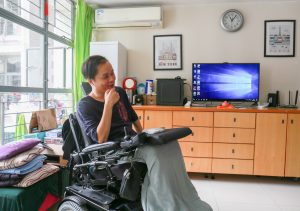
Henry Tam Wing-hang, 23, is a student at the Chinese University of Hong Kong. Tam has spinal muscular atrophy and his mobility is restricted to the four fingers of his right hand. He needs his helper and his electronic wheelchair to go about his daily life.

Tam often takes the bus to get around. Nowadays, most buses in Hong Kong are super-low floor models allowing for easier access from the sidewalk onto the bus for the elderly and people using wheelchairs and walkers. The Kowloon Motor Bus Company (KMB) introduced the world’s first super-low floor double-deckers in 1997 and now most of its fleet is super-low floor.

Wheelchair users do still need assistance from the bus driver to board or alight. The driver needs to leave his or her seat to lower the ramp for wheelchair users to get on and off the bus. In his experience, Tam says most drivers are helpful and friendly and he attributes this to the training and guidelines bus companies provide to their employees.

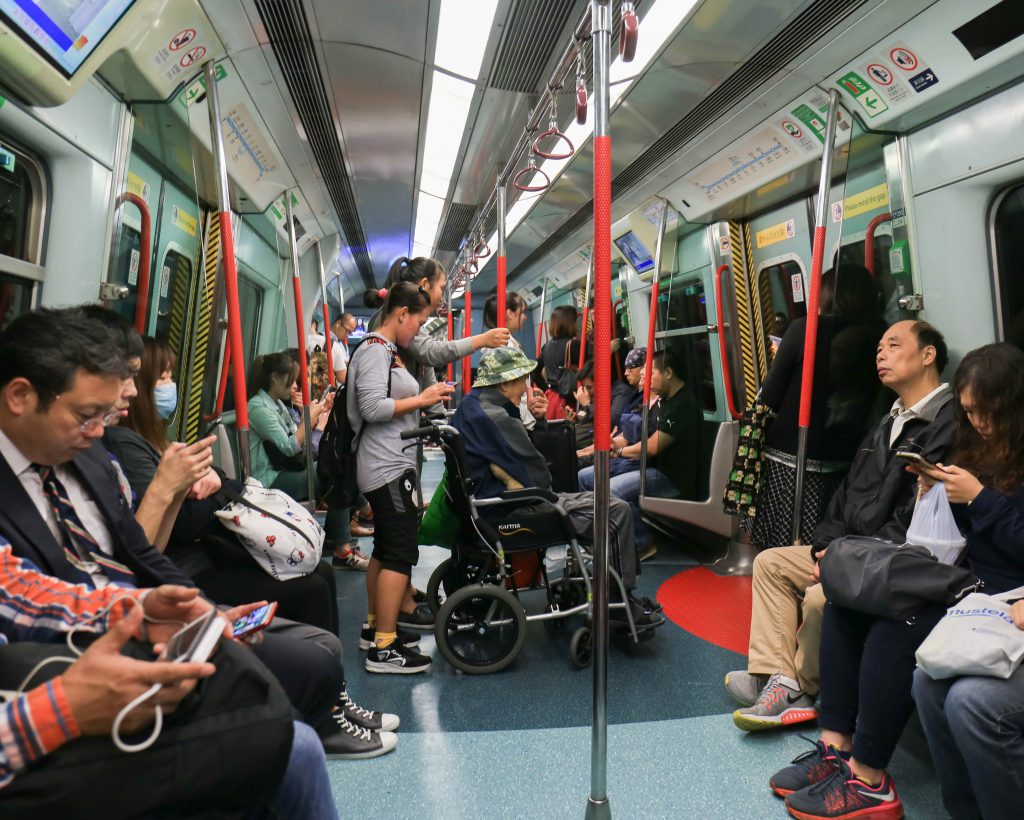
However, it is a different matter when it comes to his fellow passengers. Tam says passengers are sometimes reluctant to make way for him when he is boarding the bus.

“In fact, the capacity of the area [set aside for wheelchair users] can accommodate several people. If they are already standing there before I come on board, then for sure they are not willing to move,” says Tam.

Fortunately, most of the time, the passengers do eventually cooperate after they are asked to by the driver. But Tam can tell that some of them are displeased by the expressions on their faces.

“There was one time about a year ago, where there was a group of ladies standing in that area on the bus. They didn’t say much when the driver asked them to move away. But when I walked pass them, I heard them murmur, saying that I am ‘annoying and shouldn’t have taken the bus’,” Tam recalls sadly.

Apart from such unpleasant experiences, Tam says safety concerns are another issue to contend with when taking the bus. There is only one seat-belt attached to the disabled seat, and it is not long enough for the larger models of wheelchair, which have become common in recent years. Tam says that to be really safe, there should be four to five locking points to secure the stability of the wheelchair. Knowing that many developed countries have already introduced technologies to keep wheelchairs stable on board, Tam urges the government and public transports operators to review the current designs.

The problems Tam encounters on public buses are not an issue on the Rehab Bus, the rehabilitation bus service operated by the Hong Kong Society of Rehabilitation with funding from the government. However, Tam questions the effectiveness of this service.

Wheelchair users have to book the service several months in advance, as many timeslots are reserved for elderly groups and students at special schools. With such a long waiting period, some are willing to take the risk of hiring privately-owned vans that are modified specifically for wheelchair users.

These privately-owned modified vans are not licensed, regulated or insured to provide passenger services. Yet, service providers freely promote their businesses in online forums. There is no sign the government is cracking down on them and Varsity’s questions to the Transport Department on the matter had not received a response at time of publication.

Tam thinks the fact that people are willing to pay for these vans despite the potential dangers, both physical and legal, illustrates shortcomings in the provision of licensed transportation for disabled passengers in Hong Kong.

Hui Yuk-ching

Hui Yuk-ching, 44, a member of the Direction Association of the Handicapped, agrees there is room for improvement on the rehabilitation bus service. He thinks there should be a better way to allocate service resources.

Hui says it is common to have a situation where one individual occupies the whole bus and he thinks this is “a waste of resources” when a rehabilitation bus has the capacity to carry up to four wheelchair users and six to seven non-disabled passengers at a time. So, if a user wants to enjoy the services on their own, which they are allowed to, plenty of space is wasted.

To allocate resources in a more effective way, the Hong Kong Society of Rehabilitation recently launched the Pooled Dial-a-Ride Service. The scheme aims to gather and pick up several disabled passengers in a single journey. Hui thinks that can shorten the average waiting time for the service. However, the service is not compulsory and some users may not want to share a ride due to an increase in travel time.

Bookings made long in advance are also needed for Diamond Cab, a taxi service for wheelchair users run by a social enterprise.  Apart from the long waiting time, users also have to be willing to pay a high cost for these cabs. The fare can be three to four times that of a regular taxi.

The wheelchair users who spoke to Varsity say that of all the available transportation options, they and most of their friends prefer using the MTR.

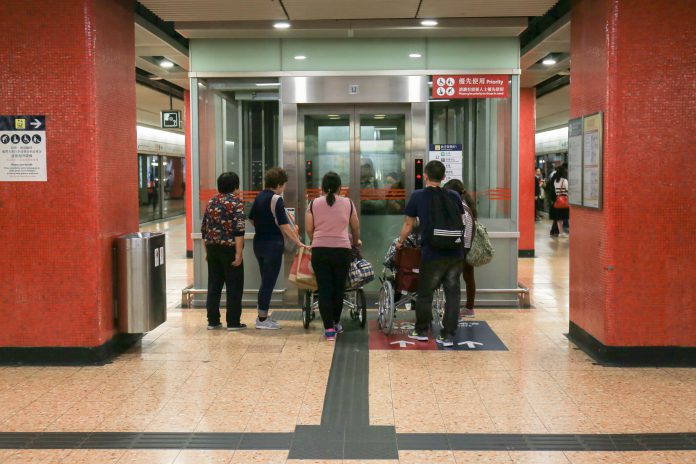
Under the current MTR policy, wheelchair users can ask for staff-assisted portable ramp services to get across the gap between the platform and the multi-purpose space provided in the front carriage. However, company policy dictates that only one wheelchair is assisted in boarding for each train due to time and safety considerations. This is because the MTR thinks it is difficult to handle more than one wheelchair in emergency situations.

In other words, when a group of wheelchair users request assistance from the MTR staff, they need to split up and get onto different trains, rather than different carriages. This has
happened to Hui in the past and he felt sad to have to travel separately from his friends. It also extended their total travel time.

Passengers who need assistance are recommended to give prior notice by calling the control room of the station at which they will board. The staff will then inform the control room about the passenger’s destination. Hui says this communication normally takes enough time for one or two trains to pass the station.

“Sometimes when I am in a hurry I want to get on as soon as possible. But I am not allowed to board immediately. I am a bit impatient under such circumstances,” says Hui.

In fact, many wheelchair users choose to board without assistance in order to save time. Hui thinks this is “no big deal” because they are able to cross the platform gaps themselves at most stations. He only asks for assistance when it is necessary, for example when he is at University station on the East Rail, which has particularly wide platform gaps.

There is a reason why most wheelchair users prefer taking the MTR to buses. Hui’s electric wheelchair is too bulky for the buses and he has trouble getting on them. The gangway in the buses can barely accommodate his wheelchair so he needs to be extremely careful when he moves through the bus.

Hui thinks the gangway and wheelchair-prioritised areas on buses are too narrow because the carriages were designed before bigger electronic wheelchairs became commonplace. He is not sure what can be done to improve the situation.

Size is not the only thing that causes problems with electric wheelchairs and other mobility aids, there is also their appearance.

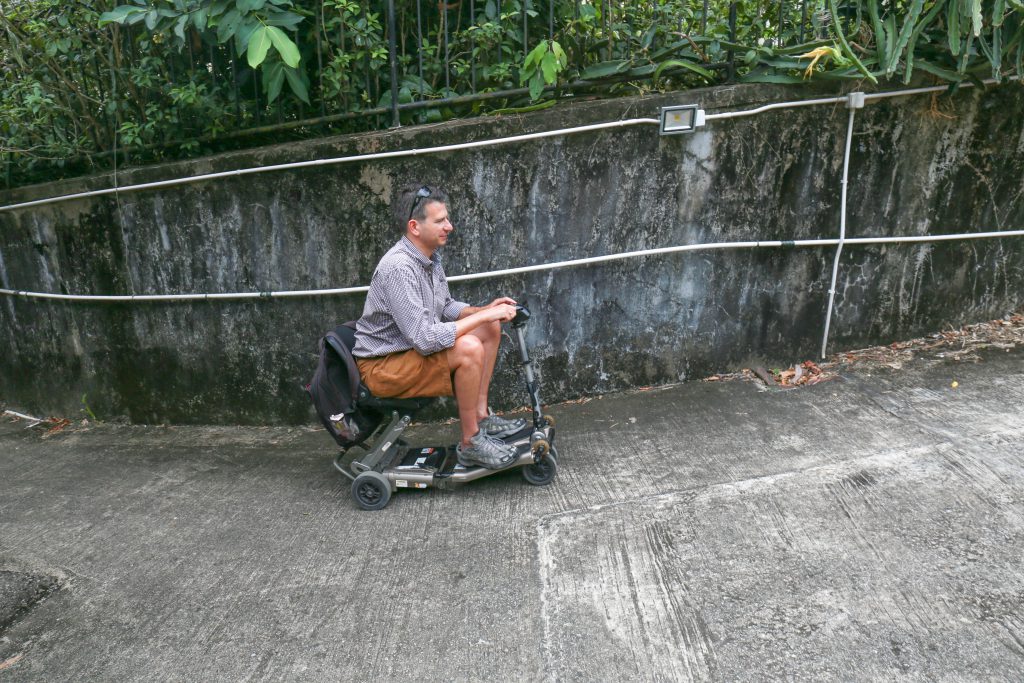
Briton Paul Letters, who works as a part-time teacher at an international school, has had chronic pain in his legs for the past 10 years. Letters now uses a mobility scooter, which he is able to get off from to walk around for short periods of time. He has also used a wheelchair in the past. He says public transport for the physically disabled in Hong Kong is “really weak.”

“That’s one of the areas where Hong Kong is way behind certainly Europe, North America, Australia, New Zealand and probably behind Japan and South Korea as well,” he adds.

Many people think Letters’ mobility scooter is a “cool toy”, not knowing it is a kind of electric wheelchair. He has been questioned more than once by bus drivers and MTR staff, who are supposed to be well-versed in the guidelines and training provided by the companies, when he tried to board. He thinks this is because mobility scooters are rare in Hong Kong.

Paul Letters on his mobility scooter

However, he does appreciate the prompt action by the government to legalise mobility scooters. When he purchased his scooter four years ago, it was actually an illegal item of transport in Hong Kong. After meetings with government officials in 2014, authorities agreed the regulations were outdated and amended the laws to make mobility scooters legal.

Some stakeholders think public transport for wheelchair users has improved in recent years because different government departments and public transport operators are willing to consult passengers with disabilities.

Vicky Ho Hoi-yin, senior organising officer of the Direction Association for the Handicapped, says the Transport Department and the MTR have invited the group’s members to meetings and site visits to see whether the existing facilities can cater to their needs.

Ho says getting around on public transport has been getting easier for wheelchair users but there is still a lot to be done. She stresses that consultations and meetings need to be followed up with prompt action.

Ho’s colleague Elaine Wan Yee Ling, the centre-in-charge at the Direction Association for the Handicapped, points out that barrier-free facilities, such as elevators and ramps, are not only for wheelchair users.
People without disabilities may need to use them as well at different times of their lives. Anyone may need them when they are old and have difficulty in walking or when they are carrying infants, young children and a stroller. Creating a barrier-free public transport system should not just been seen as a matter of rights for people with disabilities, but also an issue that is relevant to everyone.

Edited by Ryan Li


A Closed Book

Dumping of library books reveals poor management of public libraries in Hong Kong

By Catherine Chiang & Nannerl Yau

A mountain of boxes block one side of a quiet street. Some are torn, spilling their contents onto the floor. Closer inspection reveals the boxes to be filled with books – with barcode labels and stamped with the chop of “Hong Kong Public Libraries” in Chinese.

According to a January 2014 report in the Oriental Daily newspaper, over 300 such boxes were found near a pavement in Ap Lei Chau. The boxes were sealed with tape from the Hong Kong Central Library and filled with library materials, some close to new and without any checkout records. All of them were marked with the words “withdrawn by Hong Kong public libraries” on their back pages.

The reports drew criticism that the Leisure and Cultural Services Department (LCSD), which manages Hong Kong’s public libraries, was being wasteful. It also prompted the Office of the Ombudsman Hong Kong to launch a direct investigation in January 2016 into the LCSD’s criteria and procedures for the procurement and withdrawal of library materials.

The LCSD later explained to reporters that the boxes, involving nearly 20,000 withdrawn items from the Hong Kong Central Library, should have been recycled by the contractor.

The disposed books turned out to be just the tip of an iceberg. The Ombudsman’s report released in September this year showed that 544,537 library materials were withdrawn in 2013/14, accounting for 4.2 per cent of the total entire library collection during the period of the press reports about the dumped books. The number of withdrawn library materials has ranged from about 336,000 to 860,000 annually since 2009/10.

Simon Cheng Wai-him, the manager of Lohas Book Family, a community bookstore promoting reading culture, worked as an assistant librarian in the Central Library for six months in 2009. He later worked in Tuen Mun Public Library and Sheung Shui Public Library for three months in 2014 in the same position. He says that when he worked in Tuen Mun, he participated in the withdrawal procedure of library materials and witnessed books being dumped in boxes.

Simon Cheng Wai-him

Cheng says the materials withdrawn at that time included maliciously damaged books and outdated items, such as old editions of books. There were also old, worn out books, many of them were children books, with missing pages. They were packed in boxes and recycled as waste paper at the end of the year.

The Hong Kong Public Libraries (HKPL) website states that librarians will conduct regular and systematic weeding to identify which materials are to be withdrawn. There are two main targets of withdrawal: old or damaged items, and outdated items.

Frontline staff usually sort out old or damaged items as part of their routine work. Librarians sort through outdated materials from time to time, check whether the sorted items comply with the above withdrawal criteria, and assess whether the damaged items can be repaired and put back on the shelf.

However, Cheng questions this process. “I think they may be subjective in deciding whether this and that are regarded as ‘damaged’.”

Book sharing corner at Lohas Book Family

Cheng says withdrawn books may still be readable. Instead of being dumped, he suggests they should be donated for community book sharing, or to the underprivileged. “Certainly a lot of manpower is needed for the logistics. Whether the government can and is willing to afford it becomes another matter,” Cheng adds.

Cheng says the HKPL used to hold sales of withdrawn items and he even volunteered in one of them. However, it no longer organises them now and Cheng thinks this is one of the reasons so many books are disposed of and recycled.

According to a written reply from the Home Affairs Bureau to the Legislative Council in June 2009, the HKPL stopped organising book sales to redeploy its resources to district activities in 2007 after it adjusted its annual plans to focus more on local communities’ needs.

The Ombudsman report acknowledges the LCSD has launched some projects to donate books to community organisations in the past two years. However, Rita Lo, chief investigation officer of the Office of the Ombudsman Hong Kong, points out these were just short-term pilot projects and only 400 books were eventually donated in total. She says the LCSD finds the projects cost too much in manpower and resources and is still discussing how to make long-term donations feasible.

In fact, the HKPL has adopted the practice of recycling withdrawn materials according to the Government’s Stores and Procurement Regulations, for years. These regulations apply to stock purchased or acquired by or on behalf of all government departments, such as waste paper and stationery items.

“Books from the public libraries contain a lot of cultural elements,” says Lo, “Our question is, should they be treated according to the same principle as those for waste paper and objects?”

Another shortcoming in the system is the lack of systematic recording and analysis of the reasons for withdrawing individual items. Lo says that although the LCSD maintained lists of withdrawn items for years, it was not until the Ombudsman initiated an inquiry that it revised its guidelines to require staff to list the reasons. But even then, there is a lack of follow-up and analysis.

While many books are disposed of as waste, the total stock of public libraries has continued to grow over the previous years. This despite the fact the lending rate has been dropping. Statistics show that between 2014 and 2016, the total number of loans dropped by around 2 million.

Every year, librarians propose the quantity of Chinese or English materials to be acquired, but they have no need to specify the reasons for acquiring such a quantity. The HKPL adopts a principle set by the Urban Council back in the 1990s that at least 700,000 library items should be acquired annually.

But the Ombudsman’s report reveals the annual number of items procured in the previous years has been exceeding even that target by up to 100,000.

Varsity requested information from the LCSD on its total expenditure on acquiring new library materials in the previous five years. The reply shows a rising trend, from around HK$90 million in 2013-14 to a peak of around HK$102 million in 2017-18.

“I think the biggest problem is they fail to explain why they have to procure that many books,” says Lo, “They [the LCSD] could not provide a reason to explain why the procurement has to be at least 700,000 items.”

Currently, the LCSD’s Collection Development Meeting is responsible for procurement, while the Departmental Disposal Committee oversees withdrawal.  Lo says the investigation found a lack of communication between the two bodies, making it hard to find a balance.

Although public funds are at stake, it appears that most members of the public are unaware of how public libraries manage resources. Varsity designed a quiz of six true-or-false questions to test respondents’ knowledge on how books are acquired or withdrawn in public libraries. One point was awarded for each correct answer and respondents were allowed to select “not sure”.

The final average score among respondents was just 1.42 out of a possible 6 points. Given how little people know about how books are bought and disposed of, it is not surprising that few are active in expressing their thoughts on public libraries’ management.

The Secretary for Home Affairs appoints the Public Libraries Advisory Committee (PLAC) to advise on the formulation of strategies for library development and management. A chairman, a vice-chairman plus 20 members, including government representatives, professionals, academics and community personalities, form the committee. The term of appointment is two years.

Clarisse Yeung Suet-ying, district councilor for Wai Chai’s Tai Hang constituency and chairwoman of the NGO Hong Kong Culture Monitor questions the representativeness of the committee. She also doubts that it can be effective in bringing about any changes because it only meets three to four times a year.

“They may have to handle complicated matters and information within a short time,” she says. “They will never know things as clearly and in as much detail as the librarians who work there every day.”

Legislator Roy Kwong Chun-yu is a current member of PLAC. Apart from management problems, Kwong says he notices that libraries are becoming less appealing to many people. As a writer and frequent visitor to public libraries, he thinks it is a shame that fewer people, especially young people, use libraries due to the increasing reliance on online search engines and electronic materials.

Varsity conducted a survey in October to find out about how people use public libraries in Hong Kong. Results showed that more than 42 per cent of the 458 respondents never visit public libraries. Around 47 per cent visit once or twice monthly. Asked why they do not visit libraries, the most commonly selected responses were “I do not have the need to access public libraries’ books and resources” and “I can get the information I want from the internet” respectively.  Some respondents also pointed out that public libraries were closed when they left work or school.

Roy Kwong says that as reading habits and library use changes, society needs to have imaginative and bold ideas about how to make libraries relevant for our times.

Po On Road Library in Sham Shui Po was selected as the base for the LIBoratory project.

In 2016, Make a Difference (MaD) Social Lab, a non-profit organisation collaborated with the LCSD to launch the LIBoratory project with the aim of creating a more interesting library that truly meets residents’ needs. They described the project as an attempt at “re-imagining the library”. The project, lasting from September 2016 to January 2017, was based at Po On Road Library in Sham Shui Po, with some public libraries’ librarians participating.

It introduced the South Asian Bookshare, a book sharing corner at the library to make more books available to the ethnic minority community in the neighbourhood. Rachel Yan, MaD Social Lab’s project director, says most ethnic minorities don’t see libraries as spaces they can go to, nor can they find books in their languages.

Apart from reading-related activities, MaD also introduced spaces for non-reading activities in their new library design. For example, they included a Maker’s Space, where people could create things, like sewing products or 3D printing.

Yan is optimistic that libraries will be able to adopt more user-focused approaches and eventually become a community hub for all.

Edited by Fiona Chan

Accommodating Anchor Children

Varsity investigates private fostering and visa services for mainland families with Hong Kong-born kids

by Grace Liyang & Rivers Zhang

Every Sunday afternoon, 10-year-old Zheng leaves a children’s home in Lok Fu to reunite with his maternal aunt, Wai (who does not want to disclose her full name) for the day. The 56-year-old became Zheng’s legal guardian in Hong Kong when his parents, who both live in Shenzhen, left the boy with with her in 2012 when he started Primary One.

In early October, Wai sent Zheng to the children’s home operated by the Social Welfare Department. “I have no choice. How can I take care of Zheng alone?” says Wai, who is hearing-impaired and uses sign language to talk to Zheng.

Zheng is the Hong Kong-born child of mainland parents. He has the right to permanent residency in Hong Kong but his parents do not. His mother visits once a month.

Wai says that without his parents by his side, Zheng sometimes acts out and has had behaviour problems at school. Last year, he was caught stealing two mobile phones from his classmates.

“I hope Zheng can fix his behaviour [problems] in the children’s home,” says Wai.

For Zheng, the children’s home is still a strange new environment. “The ‘aunties’ working there help me more with dictation exercises,” he says.“But they only allow us to play computer games for 20 minutes every day.”

Many children like Zheng – who are often referred to as anchor children – have difficulties finding caretakers and homes. While the children can live in Hong Kong, attend local schools and access local services, their parents cannot take care of them here. More than 170,000 of the babies born in Hong Kong from 2001 to 2011 were anchor babies. The Hong Kong government introduced a “zero quota” policy to stop birth tourism from the Mainland in 2013.

The birth of anchor babies led to the rise of cross-border students in Hong Kong’s northern New Territories. It also created a demand for foster services for anchor children. Online forums like 88db and 58.com are full of advertisements for foster family services, ranging from individual households to childcare companies.

Varsity reporters contacted some of the people advertising their services by posing as relatives of “Xiaomei” a four-year-old anchor girl living in Shenzhen.

The bedroom created for a mainland child in Mrs Ho’s home

Mrs Ho, a home-maker who lives on a Tin Shui Wai public housing estate, provides overnight hostel care for HK$9,000 per month. The fee covers three meals a day and all living expenses. She shows our reporters where the anchor child would live – a little room with a bunk bed, which is separated from the living room by wooden boards in the 600-square-feet apartment.

She says her husband, a construction worker, built the room in order to give the fostered child some privacy. Ho says she has previously taken care of a primary four anchor child, whose parents live in Huanggang. “If there is no Hong Kong residence for them [anchor children], they have to cross the boundary from the Mainland to Hong Kong to attend school every day,” she says. She adds that Tin Shui Wai is close to Shenzhen Bay, which makes it easier for the anchor children to return home for the school holidays.

“We will definitely treat her as my own child,” promises Ho. She says apart from daily childcare, all three members of her family would contribute to the growth of the anchor child. Her son, a second year university student, could help her with her homework and her husband would never smoke and drink in the home.

Ho also explained the benefits of using her address to apply for a school place for Xiaomei. In Hong Kong’s Primary One Admission System, children who are not admitted to their preferred schools in the initial points-based discretionary stage of allocation, will take part in the Central Allocation system. In this stage, children are placed in schools within their geographical school net. In recent years, some of the anchor children registered at mainland residential addresses were allocated school places in districts like Tuen Mun and Tung Chung, which are harder to access from the Mainland.

“Use my address, or else you will end up in disappointment and tears,” Ho says. She further suggests we let Xiaomei adjust to the local education system by enrolling her in a Hong Kong kindergarten.

Ho tells us that her family is an approved foster family and assures us of her credentials by showing us bank statements that show payments from the Social Welfare Department. However, the foster services she provided through the SWD were for daycare only and did not include overnight residential care.

It is not just grassroots families who want to earn some extra money that are providing private fostering services for anchor children. There are also middle-class people providing a more high-end service.

Leona Cheung’s room for anchor children

Leona Cheung, 52, is a private tutor who teaches Putonghua and Chinese literature to primary and secondary school students. She charges HK$13,000 to $16,000 per month for residential childcare. Her household is a three-bedroom Home Ownership Scheme flat in Yau Ma Tei that is finely decorated with Chinese calligraphy and paintings.

“I am not running short of money; I want to provide family care to people with similar education values,” says Cheung, who says she graduated from a university in Northeast China. When Varsity approached her, she insisted on having an in-depth talk with Xiaomei’s birth parents.

Cheung came to Hong Kong in 2000 on a one-way permit after marrying a Hong Kong businessman. She became a single mother in 2003 and her children are now at secondary school and university respectively.

She says that as a private tutor, she will pay attention to the academic performance of the fostered child. Her children, who play western classical and Chinese musical instruments, are additional selling points.

“Your kid can play piano and guzheng any time, while my son and daughter can be her private music teachers,” she says, pointing to the instruments in the room and the certificates on the wall. Her son can also teach Japanese and Spanish. “Hong Kong kids are good at everything,” she says.

Cheung also uses her background as a new immigrant and her native Putonghua to appeal to our reporters. “Many people may discriminate against anchor children. I, of course, will not,” she says.

She says she has previously fostered three anchor children, arranged through the charitable organisation Po Leung Kuk. Cheung adds the children only knew Putonghua and wrote in simplified Chinese when they arrived. “I taught them with patience and care,” she stresses.

Cheung takes the job seriously. She tells our reporters she would require them to appoint her to be the child’s only legal guardian in Hong Kong. By making the guardianship declaration in front of the Commissioner for Oaths under the Home Affairs Department, “I can share the same status as the birth parents,” she says. The child would then apply for schools with her address, which is one of the elite school networks, Yau Tsim Mong. She would also be able to sign her up for any school activities and sign her school handbook.

Barrister Michael Kung Kin-chung says that the “arrangement of guardianship is not that simple” and that the Home Affairs Department may investigate the relationship between the guardian and the child.

Kung says that even if they are guardians, childminders who are not licensed by the Social Welfare Department to provide foster care still risk being charged if accidents happen to the children. He says childminders would have sole responsibility for any harm that befalls the fostered children whose parents could launch a civil suit against them.

“Sure, childminders could apply for insurance; but insurance companies may not take them on because their activity is unofficial and unlicensed,” he says.

As for Mrs Ho from the Tin Shui Wai public housing estate, Kung says public housing tenants are required to notify the estate office of any household changes. Only residents listed on the tenancy agreement are allowed to live in public housing. Subletting, with or without rental income, as well as engaging in commercial activities are serious breaches of the tenancy agreement. Tenants may have their tenancies terminated and may be prosecuted by the Housing Authority.

Kung adds that applying for a primary school using the address of a paid guardian is the same as using a “borrowed” address. Those involved can be under suspicion of conspiracy to defraud.

The “accompany studying” alternative 

Apart from paying for a foster family, mainland parents can also try to live with their children in Hong Kong by applying for a student visa. Agents call this method – where parents apply to local universities – “accompany studying”.

Advertisement on accompany studying
Screen capture from Care House’s website

A Varsity reporter approached Care House-Integrated Family Service, a Shenzhen-based agency we found on WeChat, posing as a mainland mother who wanted to take care of her Hong Kong-born anchor child. The agency specialises in visa and immigration consulting services to parents of Hong Kong anchor children.

A staff member who said her surname was Ng and an education consultant of Care House strongly advised the reporter to buy the accompany studying package which costs Rmb$98,000 (HK$115,280). By applying for a full-time post-graduate degree at a Hong Kong university, the parents become eligible to stay in Hong Kong to take care of their children.

“To be honest, most of the parents are not interested in studying, they just want to get a visa and take care of their children themselves,” she says, adding that the majority of clients are mothers aged from 25 to 40.

“To be honest, most of the parents are not interested in studying, they just want to get a visa and take care of their children themselves”

Ng shared some tips. “We recommend most of our clients to study programmes conducted in Chinese, because their English proficiency level is not high,” she says, citing Chinese culture, Chinese language and tourism programmes as examples.

The accompany studying route does not end after the mother successfully enrols at a local university; she can bring the whole family to reside in Hong Kong.

“After you get the student visa, you can apply for dependant visas, which are for immediate family members like your husband and children,” Ng says.

She explains experts will look into the clients’ academic background and work experience and generate a list of suggested programmes and institutions. They will also assist clients by preparing CVs and conducting mock interviews. After she completes her degree, the mother can stay for one more year to get a job. If the client’s application to study in Hong Kong fails, the agency will return around 90 per cent of the commission fee.

The advertisement for the agency reads: “Hong Kong government banned expectant mothers from Mainland China from its hospital maternity wards starting from 2013. For the 180,000 anchor children born through birth tourism since 2001, what can their parents do?”

Ng says clients can still give birth to babies in Hong Kong and those babies will gain residency. “Pregnant women with travel permits cannot enter Hong Kong now,” says Ng, “but it is okay if you have a student visa.”

“Pregnant women with travel permits cannot enter Hong Kong now but it is okay if you have a student visa.”

The tactic is to be pregnant after June, when the application for student visas and school interviews usually take place, says Ng.

Edited by Doris Yu

Picking Your Own Food

Foraging for edible and medicinal plants in Hong Kong’s biodiverse countryside

By Kristy Tong

Every week, Sandy Wu Kwai-mui makes her way to some wasteland near where she lives in Tung Chung to look for wild plants known as Chinese fever vine (Paederia foetida). She takes the leafy climber plants back to New Century Soybean Food, a traditional Hakka food store, where she juices the leaves and combines the dark green liquid with Chinese sugar syrup before kneading the mixture into rice flour. She forms little balls with the dough and steams them to make hundreds of traditional Hakka rice cakes.

The 54-year-old has been foraging for the key ingredient for these traditional snacks since she opened her Hakka food shop 14 years ago. Chinese fever vine, which grows wild year-round, is one of the most common plants in Hong Kong. It is used in traditional Chinese medicine (TCM) to treat rheumatism, arthritis and asthma among other conditions. According to TCM lore, it is also believed to eliminate damp and clear toxins from the body. Households also use it with other ingredients to make soup.

Wu sees no problem with foraging. After all, she says, humans are just part of the food chain. “The government would just clear those wild plants as ‘weeds’ regularly, but I usually go up on the mountains and look for these ‘treasures’ for making rice cakes, which is just another form of clearing action.”

She says the areas where she forages are far away from the normal walking paths and rarely have any foot traffic. She always wears shirts with long sleeves and long trousers to protect herself from wild insects, snakes and mosquitos. “Once I even fell accidentally into a deep pond because it was covered with weeds and wasn’t very visible. And I was really afraid as there might be snakes inside,” she recalls.

But she says stubborn persistence is part of the Hakka character and she insists on carrying on despite the slim margins on selling the rice cakes compared with the effort she has to make.

“I had stopped [making them] for a while but people would just come by and ask for this food, and I want them to remember their childhood days,” she explains.

In a written reply, the Agriculture, Fisheries and Conservation Department (AFCD) says it is illegal to cut, pick or uproot any plant or part of a plant, whether living or dead, from within a country park area without express permission under the Country Parks and Special Areas Regulations (Cap 208A). The maximum punishment for violating the regulation, which also bars hunting and trapping animals, is a maximum fine of $2,000 and imprisonment for three months. The department says there were 79 relevant prosecution cases over the past five years.

Rice cakes on sale in New Century Soybean Food

Stony Ng Leung-kwai, a wild plants guide, usually holds foraging activities near organic farms to avoid legal problems. He says it is also safer to forage in the farmed areas rather than in untended areas.

Ng thinks Hong Kong provides rich pickings for foragers because of its high biodiversity. The territory lies in the subtropical zone which means it has both evergreen and broadleaf deciduous trees and provides ideal conditions for both tropical plants and plants that grow in colder climates. Apart from collecting wild plants for food, he says people also forage for a wide range of medicinal plants to use in Chinese medicine or dietary therapy.

The local herbal medicinal tea, 24 flavours, is just one example of how rich Hong Kong is in wild herbs and plants since it has so many herbal ingredients, he says.

Although wild plants are more natural and possibly more beneficial to health in that they do not contain pesticides, Ng points out there are risks involved in consuming foraged food.

“Especially for people living in modern cities, they might not be used to foraged food as the wild plants are sometimes hard to digest and could even hurt their stomachs,” he says.

What is more, Ng warns, some plant species in Hong Kong are poisonous and some of these poisonous plants may resemble other non-poisonous species to the untrained eye. Ng cites as an example the Campanula Orchid which is a plant villagers use to kill rats. Poisonous plants can pollute the flora, soil and fruits around them.

A toxic plant commonly seen in the wild in Hong Kong

Wanda Huang is an experienced forager who knows how to identify edible and medicinal plants. She grew up in Canada and moved to Hong Kong for work. Huang tries to avoid processed and synthetic products as much as possible and incorporates foraged food and materials into her daily life. For instance, she makes her own wine and shampoos.

Huang’s interest in foraging started in childhood when her father took her on outings and taught her how to identify herbs and plants in the wild. “We picked blueberries and made pancakes for breakfast, we made tea from pine needles and pine cones. and then we cut the pine cones for the nuts. It was just for me such a fun experience growing up,” she says fondly.

“And we don’t have to spend time to farm like farmers who constantly plough the land and sow seeds. Foraging happens naturally so you think back to when humans were hunters and gatherers,” Huang says.

She adds that the vegetables we cultivate today originated from wild plants, and that the original strains have long roots that penetrate deep into the soil. She adds this means they contain more nutrients and trace minerals.

Huang says that over time, the cultivation and domestication process meant breeding bigger, sweeter and faster growing vegetables. The roots eventually shortened, as did the ability for these plants to live without frequent watering and fertilizing, along with their ability to absorb the trace minerals and nutrients deep in the soil. She adds this is why it is healthier to eat wild plants than store-bought vegetables.

Huang holds workshops with A-Team Edventures, an educational programmes provider in Hong Kong with an environmental focus. However, she notes that most of the participants in the workshops are expatriates and chefs from high-end restaurants. Only around a tenth of them are local people.

“So there is real interest from the expat community in Hong Kong and [they’re] fascinated about what is edible around them,” Huang says. “They were just amazed, like ‘we didn’t realise there is so much in Hong Kong we can eat’.”

Foraging in Tai O

Huang also forages to sell ingredients to high-end restaurants. Uwe Opocensky, the chef- owner of the restaurant Uwe in Sheung Wan, participated in one of Huang’s workshops and now buys foraged food from her. He says foraged food is sustainable and diners find it interesting.

“The taste is much deeper, and the species are very different because they have to grow in a natural environment and the flavour is really related to the place where they grow.”

Opocensky wants to cook with seasonal and locally sourced ingredients and he goes table to table explaining where the ingredients come from. The ratio of foraged ingredients to farmed ones depends on the time of year. He says that during the peak season in February, when foraged plants are most abundant, around 40 per cent of the herbal ingredients are gathered in the countryside. The harvest depends on the season. Now in the early winter months, for instance, it will include wild pepper leaves and ginger blossoms.

The reaction has been positive. “They love it,” says Opocensky of his customers. “They are very surprised and ask questions, like where exactly they come from, how can you find it? And lots of conversations are about locally foraged food.”

Huang, his supplier, says foraging has caught on overseas. “It has become a kind of lifestyle for a lot of people in the west, so on the weekends, there are lots of parents and kids who go out and forage,” she says.

But in Hong Kong, it is mainly elderly villagers who still possess local knowledge about edible wild plants. She is sad that the custodians of this traditional knowledge do not see their knowledge as being valuable.

Meanwhile, it is hard for Hong Kong people to incorporate foraging into their lifestyle because they work such long hours and simply do not have the time.

“They now go to the supermarket and eat bananas from Chile and they eat pak choi from China. They lost the ability to get connected with the entire environment. What touches me most is that foraging is not for making money but making people aware of all the things that are in the environment,” Huang says.

Edited by Chester Chan

Marijuana as Medicine?

Marijuana is illegal in Hong Kong but some patients use it to ease their symptoms

By Brianna To

Matthew Kaufman, aged 31, was diagnosed with ulcerative colitis in 2001. He was prescribed many different medications and tried various treatments, none of which could alleviate his pain and discomfort. Ulcerative colitis is an autoimmune illness that affects the stomach and small intestines. Kaufman experienced severe internal bleeding which he says almost killed him.

“On top of all the pain and bleeding, I would constantly run to the bathroom all the time. I didn’t live a normal life. I basically lived in a bathroom,” recalls Kaufman.

But since a friend suggested he use marijuana as a last resort, Kaufman says his symptoms have completely subsided.  “It’s a miracle. I don’t use that word lightly. It’s been a gift.” Kaufman says.

Kaufman lives in Boston, Massachusetts where the medical use of marijuana, also known as cannabis, has been legal since January 2017. He hopes his experience and that of others like him will spur more scientific research into the medical effects of marijuana, and persuade more American states to allow its use for medical purposes.

In most regions, the field of medical marijuana research is more likely to be based on anecdotal evidence than scientific proof as it is still illegal and is classed by the United States Controlled Substances Act as a schedule-1 drug.

Even in states where the drug has been legalised, the medical effects of different types and doses of marijuana still lack the scientific proof that can help doctors prescribe the optimal formula and dosage. Often, it is up to patients to adopt a trial-and-error approach to figure out which, if any, cannabinoids help to relieve their symptoms.

The research that does exist seems to be mixed. According to a recent 400-page report published by the US National Academies of Science, Engineering, and Medicine, which analysed more than 10,000 scientific studies, of the hundreds of purported medical benefits of marijuana, only three are concretely supported. These are that it can help relieve chronic pain in adults, reduce nausea and vomiting in chemotherapy patients and relieve some symptoms of multiple sclerosis. There is also strong evidence to suggest marijuana use is associated with four purported risks: that it may worsen respiratory problems, increase the risk of motor vehicle accidents and low-birth weight in babies and that it can exacerbate schizophrenia and other psychoses.

Rolling a joint

Marijuana is mainly divided into three types, namely cannabis sativa, cannabis ruderalis and cannabis indica. Every marijuana plant contains cannabinoids – tetrahydrocannabinol (THC) and cannabidiol (CBD) with variance in level only. Both types of cannabinoids have medicinal value, with the difference being that THC is psychoactive while CBD is not.

In Hong Kong, marijuana is controlled as a dangerous drug under the Dangerous Drugs Ordinance (Cap. 134). That means the trafficking, supplying, manufacturing, possessing or consuming of cannabis is illegal.

The Pharmacy and Poisons Ordinance (Cap. 138) states that pharmaceutical products must be registered before they can be imported, or manufactured locally, for supply in Hong Kong.  And according to the Department of Health, there are no registered pharmaceutical products containing cannabis or any constituents of cannabis in Hong Kong at present.

However, some people in Hong Kong are using cannabis for medical purposes. Lee Siu-ming (not his real name), has been suffering from chronic depression and post-traumatic stress disorder (PTSD) since 2001.

Lee says he was taking drugs including marijuana, ketamine, ice and ecstasy and got into trouble for his behaviour when he was at school in Hong Kong. This resulted in his being sent to the controversial Elan School in the United States to undergo a behaviour modification programme.

“You have to shout at everyone and the students they would play with your time and they would bully you. They cooperate together to make you worth nothing. It’s like you’re
spiritually broken inside,” Lee recalls of his experience at the school, which he says ruined his life. The school was closed down in 2011.

After quitting the programme, Lee suffered from mental illness and was sent to a hospital in the US. After a couple of months he came back to Hong Kong and his condition
worsened, such that he would not leave his home and refused to see anyone. All he could do was try to forget the dreadful memories with the help of cigarettes and computer games.

Lee’s prescribed medicine

He has been taking anti-depressants for 16 years now, but he stressed that he only takes pills when his symptoms are obvious as they numb his body and his mind.

“Sometimes the medication itself will distract your concentration, will make you dull and make you sleepy every day. And it’s not good; we should be feeling energetic,” says Lee.

One day Lee discovered marijuana could help ease his symptoms. “You  feel your surroundings are very relaxing. You  feel no pain. You  feel all the pain is gone,” says Lee. “When your brain fluctuates, and when your brain is overheated, then you need something to balance your brain and calm yourself.”

The founder of the Facebook page ‘420HK’, who goes by the name of Jacky Kief is committed to changing what he says is the Hong Kong public’s misconceptions about marijuana. As an advocate of the legalisation of marijuana, Kief says the drug should be distinguished from synthetically produced psychoactive substances because it is a natural herb. And he accuses the media and the government of scare-mongering by lumping it in with addictive synthetic drugs.

420HK Facebook Page

Despite his efforts, Kief thinks awareness of the relative safety and the purported benefits of marijuana are still low.  He says there are too many other issues competing for people’s attention in Hong Kong and, even if they are concerned about the issue, many people are afraid to like his Facebook page for fear of being suspected of using marijuana.

In the meantime, he says many Hong Kong people suffering from mental disorders have contacted him to ask for further information on using marijuana to treat their illnesses.

“Hong Kong is just lagging far behind other countries in the world as many of them have at least legalised the use of marijuana in the medical field and are debating recreational use,” says Kief.

However, psychiatrist Tsang Fan-kwong, is vehemently opposed to the use of marijuana for medical purposes.

“Medicine is science, based on scientific data. When there are other medications that are more effective, why use cannabis?” says Tsang.

Tsang says there are no grounds for doctors to prescribe marijuana in Hong Kong either medically or legally. “There is no benefit actually if you consider the risk and benefit. The risk is much greater than the benefit so it should not be called some benefit.”

Some experts have pointed out that even in the areas where there is strong evidence that marijuana is beneficial, newer generations of legal drugs have also been shown to be at least as effective, and with fewer side effects than older medicines.

Also, Tsang is afraid that more people will be diagnosed with drug-induced psychosis if medical marijuana is legalised.

“This may bring about a big change in the drug scene in Hong Kong in which more and more people may try cannabis. And more people trying means that possible complications arising from taking cannabis may increase,” says Tsang.

Edited by Chester Chan

Fun with Physics

Colourful physicist Tong Siu-sing finds fame on TV

By Jade Li

In a city not known for its scientific prowess, Tong Shiu-sing may be the closest thing Hong Kong has to a rock star scientist – not because he is at the forefront of cutting edge research but because he may just the most recognisable physicist in town.

Tong is a senior lecturer in the Physics Department at the Chinese University of Hong Kong (CUHK) and is best known for his quirky role as “Dr. Tong” (湯博士) in a popular Television Broadcasts Limited (TVB) programme- Sidewalk Scientists (學是學非).

Tong teaching at the lecture hall in CUHK

While many people might think of physics as being boring or impenetrable, Tong has managed to present scientific knowledge in an accessible and even humorous way.

His first love was astronomy, being a stargazer as a child, but he soon found that physics was the fundamental science, the most basic way through which to understand the world.

His passion for physics took him all the way through graduate school and he had assumed he would pursue a career in research. But after completing his PhD at CUHK, Tong realised he was not a typical “lab person”. He was more of a “people person”.

Instead of spending his time chasing research grants and writing journal articles, he preferred a more interactive job where he could communicate with others. “I like to get to know others and communicate with them. This helps me to get a better picture of who they are,” he says.

Tong enjoys teaching and likes to spend a lot of time preparing for his classes. Although teaching involves intellectual stimulation and the dissemination of knowledge, it also incorporates elements of performance, and this is something that Tong discovered he has a gift for and love of.

Tong giving a speech at the lecture hall in CUHK

His entry into the world of television started from a random phone call he got from programme makers at TVB one day.

“Basically they wanted me to perform an experiment on camera and add some explanation…it was very easy,” he says, explaining that he is as an extrovert who likes performing in front of audiences whenever he has the chance.

His colourful on-screen persona began to take shape after he started filming for the first few episodes of Sidewalk Scientist, a programme that explores science in daily life through performing various experiments.

Tong with the girls in Sidewalk Scientists (provided by interviewee)

“I was brought onto the set of an ancient pagoda, where I was told to dress up in a costume,” he recalls. “Then I realised I was expected to do some acting.”  Although Tong was not a professional actor, his jokes and interaction with the presenters was positively received by the general public.

Tong is grateful for the support his employer has shown for off-campus performances.

“There is a reason why I chose to stay in CUHK. They provide me with lots of freedom,” he says. Tong says he is free to use and develop his own teaching methods and is able to squeeze time off from work to do something he adores.

“I don’t think this can be measured by money, because I’m able to do something that can influence society.”

Tong has taken advantage of his TV fame to interact with the public on social media and share his knowledge of science. His physics-themed Facebook page “Dr. Tong’s Sharing” (湯博士的物理空間) now has more than 24,000 followers. He hopes the page will attract not just his students but also members of the public to see the fun and interesting side of physics.

He is also active on the discussion forum Hong Kong Golden, using his real name. Discussions can get heated and insults personal on Hong Kong Golden, but Tong says he is thankful that he does not get a lot of “haters” online. He thinks this is mainly because he shows sincerity and wears his heart on his sleeve. He understands that the old-fashioned way of talking to young people in an authoritative way does not work any more.

“I think I really show the message that I care a lot about my students, about young people,” says Tong. “I would support them to understand themselves or break through in their growth, to fight against social norms and to take the path they truly desire.”

As for his own path, he wants to be the first to try new things. He was the first physicist to act in a TV series, the first to apply for funding from the Education Bureau to set up a physics database.

“I’ve the courage to try to achieve things that others aren’t willing to,” he says proudly.

As a semi-celebrity, Tong says he does feel pressure, but it mainly comes from within. He was invited to be a guest speaker for the Inno Tech Expo 2017 at the end of September and was worried about the expectations of the audience.

“People might come in with certain expectations or standards from the other speakers. What if I can’t give them what they want?”

Still, he will grab such opportunities because he enjoys interacting with the public. Comparing his off-campus work with classroom teaching, Tong says teaching is more limiting in terms of creativity and inventiveness because of the constraints of the syllabus. “You have to ensure that your students understand the logic within the theories,” he says.

The parameters are different when Tong is doing work on promoting popular science (科普). Popularising science is all about promoting the understanding of science among the general public. It is done through various channels like performing experiments in public, promoting science education through television shows, online platforms and journals.

Being a CUHK science lecturer means Tong is often invited to give school talks and attend activities in various district communities.

“From my perspective, popular science isn’t targeted for particular groups; it shouldn’t be constrained by a set of rules,” he says. “The logic is simple; you apply different methods on different audiences.”

For example, when explaining scientific concepts to children, Tong uses more graphics and props; when talking to university students, more abstract concepts can be introduced.

The key is to understand the needs of a particular demographic group. Tong seems to have an intuitive grasp for this but admits he is still unsure what the most effective way is to promote science in Hong Kong. He says this is because people in Hong Kong are stuck in their existing views and mindsets and often put emotions before reason.

“Hong Kong is an anti-intellectual city where people are often emotionally drained and our [political] stances often come first,” he sighs.

Tong said the government is also like this. As an example, he cited the third runway proposal for the Hong Kong International Airport. He says the government should convince the public with scientific evidence that the proposal is safe and cost effective, so people would not think the government is building it only for political or economic reasons. He said if people could look at the matter objectively, they would understand the reasons behind it.

For Tong, it is a person’s approach to knowledge, rather than the knowledge they have that is more important. He says that not everyone understands the theories behind science, but they can learn them through applying scientific methods or simply by analysing them logically. This can be applied to how we understand and interact with our society as well.

Tong uses the idea of the Mandela Effect –where a person or group of people becomes convinced that something happened though it did not – to describe Hong Kong’s current predicament.

“Are the things we choose to believe reliable? Or are we just believing because we want to get self-satisfaction and feel included?” he asks.

Edited by Minnie Wong

A Travelling Soul – Vicky Fung

Multi-faceted musician makes a comeback after healing heartache through music

By Angela Ng

I

n mid-September this year, singer-songwriter Vicky Fung Wing-ki took the 600 people with her in a concert hall on a musical journey to her inner world. The solo concert, “Travelling Soul 繼續彳亍”, was staged with the HK$207,980 she raised through her crowdfunding platform MusicBee which also covered the cost of an album of the same name. The personal philosophy she wanted to get across over two hours and 20 songs was of “one’s tininess in the universe”.

Vicky Fung performs at her concert “Travelling Soul 繼續彳亍”. ( Photo courtesy of Vicky Fung)

The show at the Hong Kong Academy for Performing Arts was Fung’s first concert since 2011. That previous concert Vicky Fung’s Second Day/Concert was a gift Fung gave to herself for standing back up after discovering and then acknowledging her son’s autism.

Having worn so many hats in the music industry, the past six years have led Fung to her current philosophy of life. “At this stage in life, I realised that I’m tiny compared to the vast universe. So as long as I keep a humble heart and proceed, any problem can be solved,” she says. Fung founded the music label and artist management company Frenzi Music in 2012, the fund-raising platform MusicBee in 2015, and 1563 at the East live house and restaurant in Wan Chai’s Hopewell Centre in 2016. In recent years, she sees herself as a person who “opens doors” for newcomers in the music industry – she has helped nurture indie pop artists such as Jing Wong, Tang Siu-hau, Michael Lai and Nowhere Boys under Frenzi Music.

But she did not start her career as a songwriter. Succumbing to parental expectations and wishes, Fung studied law and practised it for six years. Her heart though, was always with music and she wrote songs on the side. She composed her debut song “Can’t Let Go 放不低” for Cantopop diva Sammi Cheng Sau-man in 1996 when she was an undergraduate.

Although the song topped the charts on three radio stations, Fung completed her law degree and became a solicitor – and she now feels no bitterness about taking that path.

“In the past, I’d be very stubborn and thought why didn’t my parents allow me to study music? But after two decades, I think the blame is on me because it was me who accepted it,” she says about what was once her biggest struggle in life.

In Fung’s first few years of “part-time” songwriting, she produced a lot of “karaoke songs”; big hits such as her debut Sammi Cheng’s “Can’t Let Go 放不低”, Cass Phang’s “Just because of having you 只因有著你” in 1997 and Priscilla Chan Wai-han’s “Wàn Wèi 玩味” in 1998.

Once she saved enough money to sustain the pursuit of a musical career, she finally took the plunge to give up her stable job and income. It was not plain sailing.

At the beginning, she was pressured to churn out crowd-pleasing pop hits such as Joey Yung’s “Bothering You 麻煩你” in 2001 and Kelly Chen’s “The Best Position 最佳位置” in 2002, rather than music that appealed to her own musical preferences.

It was not until 2005 when Juno Mak’s “Androgynous 雌雄同體” won a flurry of awards from the Composers and Authors Society of Hong Kong (CASH), Roadshow and Metro Broadcast that Fung became determined to persist in her own style of music. The song redefined a non-mainstream style in pop music and proved that non-karaoke songs could win critical and public acclaim.

“Many people told me you should write more pop songs like “The Best Position 最佳位置” and “Can’t Let Go 放不低” , but I just can’t. When I persist in doing things I like and the outcome is not that bad, I learned to pick advice,” Fung says.

At the peak of her career, Fung became a mother. Immersed in great joy, little did she know in what special ways her world would change because of her son’s arrival.

“I found out my son had autism when he was two years old,” Fung says. “When I found out about my son’s autism and realised there was a problem I could never solve, my belief system completely broke down.”

Fung says that for three to five years she lived in a bubble, physically and emotionally stressed from not being able to see her son’s future. As a result, her creative work remained stagnant for years.

During that trough in her life, music saved her. Jerald Chan of the pop duo Swing, whom she befriended through the co-production of a song, questioned her motive for hiding her son’s condition and her struggles. This prompted her to admit that she was doing so not to protect her son, but rather, her own pride.

Chan suggested she reveal this “secret” in order to seek help for her son. This was a major change for Fung who was stubborn, tough and independent. Her way of dealing with problems was to keep them to herself. “I used to think revealing my weakness would make it worse, but my son’s condition forced me to surrender,” she says.

To her surprise, once she opened up about her son’s condition, she received a lot of support instead of mockery. The support she experienced at the 2011 concert made her realise that letting others into her world when she was weak was an opportunity, rather than a threat.

Vicky Fung with her 11-year-old son. (Photo courtesy of Vicky Fung)

Now, her 11-year-old son is Fung’s muse. “He has his own way of living and a different angle to see and feel the world,” she says. Through observing his behaviour, Fung has experienced epiphanies and gained insights that she would not have had he been an ordinary child.

Fung often takes him out on joyrides to entertain him and it was those rides that led to revelation. She realised her son would look out of the window with the brightest smile all the way, despite having no idea where he was going.

“I wondered if I could be like him on a joyride, smiling to this world from the bottom of my heart without caring how the world looks at me? This is a philosophy indeed,” Fung says with a bright smile. Her new song this year “Crystal Soul 水晶靈魂”, was inspired by the new age book, The Children of Now, which describes children sent from the universe who have crystal-clear souls but their special characteristics make typical ways of communication impossible. Fung was particularly inspired by the book as she also communicates with her son non-verbally.

Even if Fung’s son is unwilling to speak for most of the time and he has difficulties with speech, he loves to sing songs with his mother. People are often amazed at how he can sing an entire song no matter what language it is in.

“You can tell that he’s very curious about the world. It’s only that he’s physically limited so there are things which we cannot comprehend,” she says. Despite his physical difficulties, Fung is not infinitely lenient towards him.

“In many ways he’s a normal child,” she says. “One cannot measure his achievement with a conventional ruler … in fact he cannot be measured by any set of rulers. The only thing I can do is to understand what he’s capable of doing, then add a bit of a challenge each time.”

As a working mother, Fung insists on being there for her son and teaching him as many life skills as possible. Meanwhile, she is trying to figure out ways to help more people understand autism. For instance, her son loves being photographed, and inspired by this she has thought about the idea of starting a social enterprise that recruits children with autism as models.

Fung’s creative ideas to help her son and other children with autism spectrum disorders echoes her creativity in finding ways to support independent and alternative music, such as the crowdfunding platform MusicBee.

Fung’s music, much like the woman herself, often inhabits the frontiers between the mainstream and the non-mainstream. This is probably best exemplified in the hit song she wrote for Juno Mak, the Buddhism-inspired “Vastness of Water 弱水三千”.

“If you stretch out the timeline, you will notice that some ‘alternative music’ will turn into a trend or a movement given sufficient time for it to brew,” she says. That is why she is more concerned about a song’s durability than its chart position in the short-term and it is also the principle that motivates her to run MusicBee. Ultimately, she hopes to “grow MusicBee into a hive”.

With 20 years in the music industry behind her, she can see deeply entrenched problems in its “ecosystem”. She says the local music industry is too commercial. It is unwilling to take risks and explore alternative styles of music that deviate from mainstream pop.

“It’s [based on] a misunderstanding,” she says. “As industry insiders assume the public likes the mainstream style, they keep producing the same kind of songs to please the audience, thinking this formula works because it sells.”

Despite this, Fung is optimistic about the development of Hong Kong’s music industry as she thinks it is easier for independent musicians to gain exposure through social media in the digital age. As Fung’s own life journey shows, doors can open when we adjust our mindsets and open our hearts.

Edited by Stanley Lam