Home Blog Page 90

Plug in and drive on

Car owners say promotion of and infrastructure for electric vehicles is insufficient

Editors: Macau Mak, Jeffrey Loa

Reporters: Brian Yu, Emily Man, Kelly Wong, Teenie Ho


111111

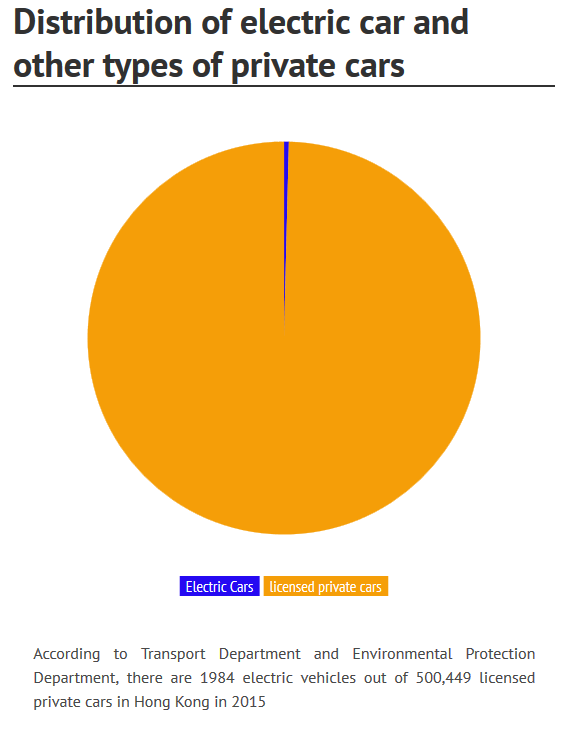
The government has waived the First Registration Tax, Section 5(4) of the Motor Vehicles Ordinance, of electric vehicles (EV) since 1994 to encourage the use of electric vehicles (EV). But as of last year, fewer than two out of 1000 cars on Hong Kong’s roads run on batteries instead of petrol.

An electric car can be recharged within an hour using a quick charger and does not emit pollutants.

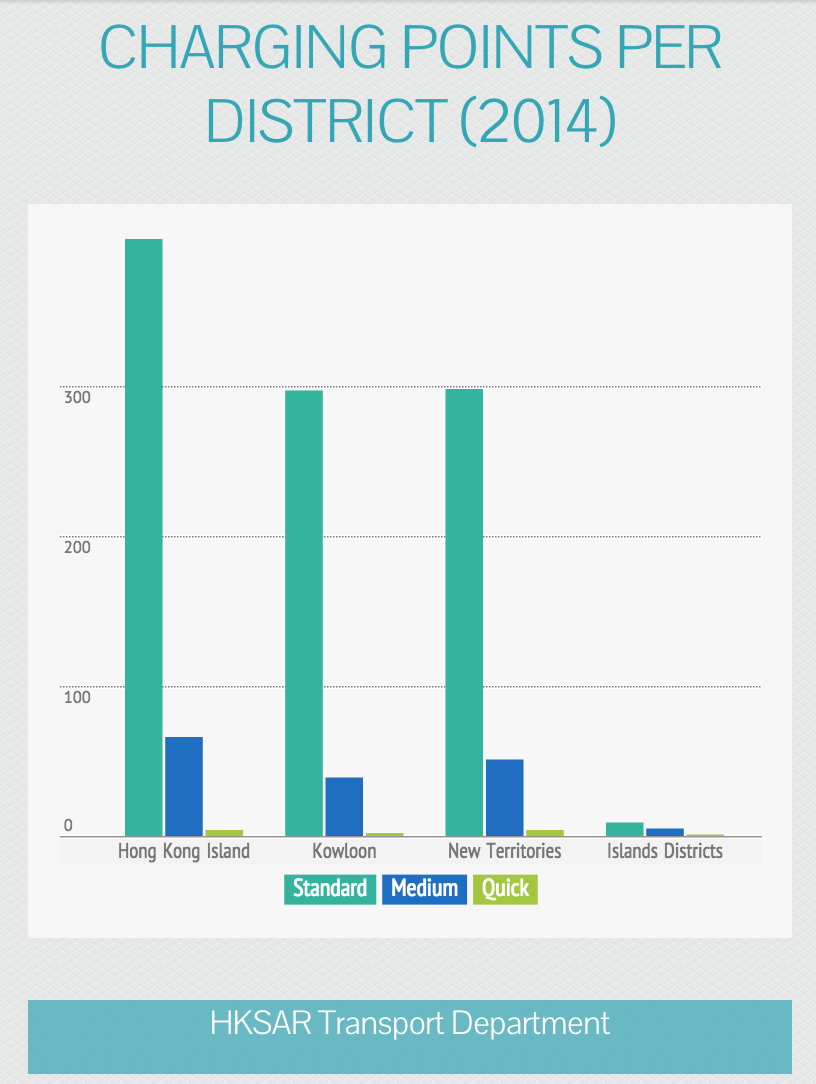
But despite being cost-efficient and eco-friendly, electric vehicles are still not popular in Hong Kong. Alex Poon Kwok-wai, an owner of an EV, believes this is mainly because of lack of quick chargers. There are three types of chargers differentiated by charging speeds, namely standard, medium, and quick.

Poon says there are an adequate number of overall parking facilities with chargers, but not all of them are efficient.

Chart at 3.44.37 pm

Price is another issue.  In general, electric vehicles cost around twice as expensive as similar conventional cars that run on petrol.

Financial Secretary John Tsang Chun-wah, who chairs the Steering Committee on the Promotion of Electric Vehicles, says the government has been actively promoting the use of EV, but it needs to be cautious when spending public money to install chargers in private car parks.

Tsang says the government is working on a guideline which will require private building car parks to spare 3 per cent of their parking spaces for electric cars, as well as a gross floor area incentive scheme to encourage private buildings to allocate more EV parking spaces.

Eric Cheng Ka-wai, the professor at the Hong Kong Polytechnic University, believes that more promotion is needed.


Finding the Spotlight

Local musicals struggling to earn recognition

Editors: Donna Shiu, John Cheng

Reporters: Natale Ching, Wing Chan, Zoe Tam

When it comes to the word “musical”, you may instantly think of Broadway and West End of London. However, there are some local artists and performers trying to create original Cantonese musicals which are tailored to Hong Kong culture and audiences.

Actor’s family, an award-winning theatre company, mainly produces original musicals. In their studio in Kwai Hing, they rehearsed a new musical, Beyond Paradise, staged in mid-April.

The story is about a man’s confession to a crime he committed years ago. Director Henry Fong Ka-wong hopes the musical could get members of the audience to reflect on morality.

Directing a new musical presents specific challenges. Fong found it hard to fit new songs into the drama. Once, he and his actors burst out laughing when they rehearsed a new song for the first time, because its style was at odds with the serious tone of the scene.

As for actors Jarita Wan Cheuk-yin, Gregory Charles Rivers and Margaret Cheung Kwok-wing, the biggest obstacle of local productions is singing in Cantonese. They say it is hard to get the intonations right when they sing.

Apart from technical issues, there are also structural problems hindering the development of local musicals. The Hong Kong government does not allow the booking of performance venues for long-runs, so it is not possible to stage long-running and big-scale musicals like on Broadway.

Since there is no long-term performance, actors have to do side jobs to make a living, like teaching, dubbing for cartoons and even providing backup vocals for Cantopop artists. “You can make a living and you can survive (as a musical actress),” says Margaret Cheung.

Jarita Wan says Hong Kong musicals are becoming more popular but are still not as well-recognized as other forms of entertainment and art. Despite all the hardships, the Beyond Paradise cast is proud of being local musical pioneers because they can tell Hongkongers’ stories.

Apart from professional actors, a group of youngsters are also passionate about sharing their stories using music. The students of Whole Theatre’s one-year drama programme used their own experiences to form the plot for the original local musical, Cabaret 2015.

Chan Suk-yi and Cecilia Ng Yan-kit, the directors of the show and instructors of the programme, were touched by the students’ sincerity during the rehearsals and performances. They believe the rich life experience of the actors is the key to their authentic acting.

However, Ng thinks it is premature to discuss the future development of musicals as a genre of the arts in Hong Kong. In her mind, theatre itself is not yet well-established enough for musicals to be considered a form of entertainment in itself.

“Drama and musical is not yet a ‘culture’ in Hong Kong,” says her artistic partner Chan, “a lot of theatre organisations are already working very hard, but it takes some time.”

Walking in the City

A plan to free Central from congestion and make it a paradise for pedestrians

Editors: Tracy Cheung , Vivian Lai

Reporters: Eric Park, Jayce Lai, Tiffany Tsim

Central is one of Hong Kong’s busiest business districts. It is often crowded with vehicles and people, particularly during peak hours. The heavy traffic leads to air pollution which adversely affects the health of those who live and work in the area. To deal with this problem, the Hong Kong Institute of Planners, Civic Exchange, MVA limited and the City University of Hong Kong have proposed a plan to make Central more walkable. They are suggesting the removal of almost all vehicles from the roads to make streets more pedestrian and tram friendly.

Walkability can be understood at the functional level and the social level. The functional level is where buildings connect, like the walkways and pedestrian bridges between them. As for the social level, walking itself can be seen as a social activity that gives people a chance to interact with their surroundings and each other.

Under the plan, Des Voeux Road Central would be transformed into a street for pedestrians and trams and divided into three parts. The Western Market section would provide a casual and comfortable walking environment for users. The Central Market, which would encompass Hang Seng Bank Headquarters and the Central Oasis building, would be an area for exhibitions, performance and seating. The proposed Financial Market would run between Jubilee Street and Pedder Street. More benches and colours would be introduced into this section.

123123

Photo from: Civic Exchange

There are a number of difficulties when it comes to building a walkable city but advocates say the problems are not insurmountable. Some worry that if traffic is taken off Des Voeux Road Central, the vehicles and the pollution will simply shift to other streets, like Queen’s Road, and worsen Central’s air quality further. However, as The Hong Kong Institute of Planners and Young Planners Group points out, the Central – to Wan Chai bypass and the MTR extension to Kennedy Town should reduce the number of vehicles and ease the pollutants problem in Central.

The scheme would also benefit Hong Kong in other ways. A walkable Central would improve the street environment and encourage more social interactions. The effect of this would be greater community bonding and the creation of more public space for the public to share. The streets would also become friendlier for cyclists.

Similar plans have already carried out in some European cities like Amsterdam. If Hong Kong is to enhance its status as a world class city, the government could embrace a golden opportunity for government to tackle the problem of air pollution and traffic congestion and create a more comfortable environment for pedestrians.


Raising Hope – The Future of Dolphins

Development, sea traffic and poorly-managed dolphin-watching tours threaten Hong Kong’s wild dolphins

Editor: Brian Wong

Reporters: Karen Yu, Venice Lai and Zoe Lai

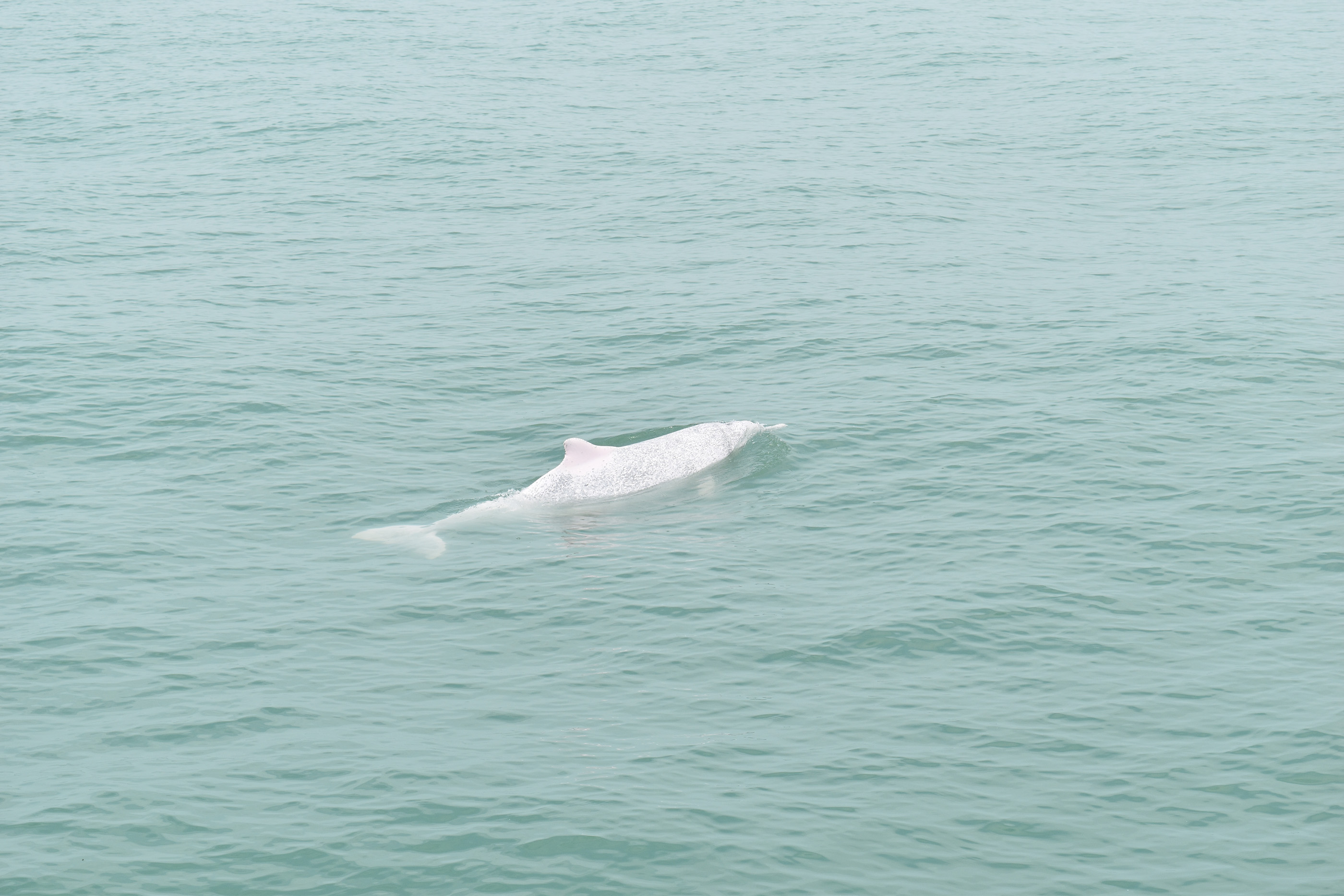
Mention the waters around Hong Kong, and most people will think of cargo ships or ferries rather than dolphins. But in fact, Chinese white dolphins have been recorded in the area since the 1600s. The marine mammals are usually found in waters around North Lantau, near Castle Peak, Lung Kwu Chau and Sha Chau Marine Park, Chek Lap Kok and Tai O. They can also be found in the waters south of Lantau, including Fan Lau and the Soko Islands.

Dolphin-watching is a popular sightseeing activity for both locals and tourists. However, the impact of dolphin-watching tours on the animals themselves has become a concern in recent years. Those concerns came under the spotlight in January,  when a Chinese white dolphin later named “Hope” was found injured with four severe wounds that were likely caused by a boat propeller.

After 18 days of observation and six attempts to rescue him, “Hope” was handed over by the Agriculture, Fisheries and Conservation Department (AFCD) to Ocean Park’s rehabilitation facilities for further care and observation. Unfortunately, he was euthanized four days later due to a drastic deterioration in his condition.

What happened to Hope triggered conflicting views over when and how the rescue was carried out. Some believe the injured dolphin was better off left alone in the sea, others thought that Hope should have been immediately rescued and sent for treatment  after he was first spotted with injuries.

As for the possible cause of Hope’s injuries, Samuel Hung Ka-yiu, the founder and chairman of the Hong Kong Dolphin Conservation Society thinks small-scale local dolphin watching tours may be responsible. Hung says many tours leaving from Tai O fail to follow the Code of Conduct issued by AFCD, which is a non-legally binding voluntary code established to reduce disturbances to dolphins during dolphin watching activities.

Under the Code of Conduct, vessels should cruise slowly, avoid a sudden change of course and always keep a distance from dolphins. What is more, the code stipulates there should only be one vessel watching a pod of dolphins at any time. According to a written reply for the AFCD, the department has been in regular contact with the local operators in Tai O to promote the code.

Although some local tour owners emphasise they slow down when approaching dolphins, Varsity still observed practices that could disturb dolphins in that area, for example, the chasing of the dolphins at high speed, calling other affiliated in the boat tours to speed into the same area and hover around the dolphins, cutting across the course of dolphins, and sudden changes in boat direction.

Tammy Cheung, of Eco Travel Limited says visitors, have a responsibility to choose a proper dolphin watching tour operated by companies that adhere to the rules of the Code of Conduct and employ a trained guide.

The negative impact of dolphin watching activities is cumulative, repeated disturbances can potentially lead to damaging effects in the long run for the dolphin population.

In view of this, related organisations such as Sea Shepherd Conservation Society and Ocean Park Conservation Foundation are working towards a solution to minimise the impact of the tours on the sustainability of the dolphin population and dolphin-watching as an activity. Measures could include effective regulation of dolphin-watching tours and a recognised protocol for marine mammal rescues.

Apart from inadequate regulation of local dolphin-watching tours, construction on projects such as the third runway for Chek Lap Kok Airport and the building of the Hong Kong-Zhuhai-Macau Bridge also threaten the dolphins’ natural habitat. Noise pollution from the construction works and water pollution from the Mainland are other factors that threaten the survival of dolphins in the area.

Gary Stokes, the director of the Sea Shepherd Conservation Society in Hong Kong suggests authorities designate a marine park for the dolphins before further construction in the western waters off Lantau begin to narrow the dolphins’ habitat, and to balance conservation and development.

It would all be too late for Hope, but not soon enough for Hong Kong’s ever declining Chinese white dolphin population.


Local apps developers seek to protect innovations

Editors: Agnes Ng, Grace Cheung

Reporters: Kate Kim, Karin Li and Vivienne Tsang

Many of us use mobile apps everyday but few would consider whether the innovators who came up with the ideas behind the apps get credit for their work. Sadly, they find their inspired and creative ideas are often ripped off.

Apps developers can secure claims to their software programs by applying for copyrights but their ideas cannot be protected as software code can easily be rewritten to perform similar functions to the original program. As copyright protection for software like mobile apps is patchy at best, victims of copycats can often do little more than suffer in silence.

A voice messaging function pioneered by local company GreenTomato in 2010 was later adopted by many Instant Messaging services such as WeChat and Facebook Messaging. Jacqueline Chong, Chief Marketing Officer of GreenTomato, says there was little the company could do about it. Chong sighs this is the reality of the technology industry, where copying happens all the time.

GreenTomato filed patent applications for the app in Hong Kong, China and the U.S. once, when it launched its TalkBox app. However, every time the app is re-coded to fix bugs and add advanced functions, the developers are required to file a set of new patent applications. Because of the company’s lack of capital as well as the large team of legal consultants needed for the patent process, GreenTomato chose to refocus on developing other products and gave up on efforts to protect TalkBox.

While some developers bemoan the lack of adequate intellectual property protection in Hong Kong and warn this could hamper young innovators and start-up companies, others take a different view. Keith Li, Co-Founder and CEO of Innopage, believes over-protection of intellectual property would hinder creativity. This is despite the fact his company has also experienced having a social networking app copied.

Derek Lau, Senior Solicitor of Intellectual Property Department (IPD) says Hong Kong’s regulations and laws on protecting inventions are more or less as in line with other countries worldwide. He adds an indigenous patent examination system will be introduced next year, which will save applicants from having to undergo time-consuming and substantive examination procedures overseas. This should make it easier for patent registration in Hong Kong. He hopes this effort will enhance Hong Kong’s bid to be an innovation and technology hub.

The implementation of the new patent registration system is expected to help start-ups prevent having their ideas poached by others and enhance protection for the creativity of Hong Kong’s young innovators.

A Hong Kong Natural Treasure

Hong Kong Global Geopark is facing its biggest challenge this year

Editors: Antonia Wong, Yan Li

Reporters: Joey Kwan, Julian Ng, Cindy Gu, Achlys Xi


In September 2011, Hong Kong National Geopark became a member of the Global Geoparks Network of The United Nations Educational, Scientific and Cultural Organisation (UNESCO) and was renamed Hong Kong Global Geopark of China.

There are now 111 global geoparks on the list. UNESCO conducts a midterm review every four years to assess various aspects of the work done by the listed global geoparks, including tourism, promotion, conservation and education.
In July, the UNESCO will conduct a quadrennial midterm assessment of the Hong Kong Global Geopark. Among the criteria that will be used to assess the condition and management of the Geopark are conservation, education and tourism. According to some reports, there are fears that Hong Kong could lose its place in the network because of a decline in the number of visitors and a lack of promotion.
Capture

Wong-Bing, a tour guide of the Hong Kong Global Geopark believes the Geopark is unlikely to be removed from the list because the natural areas are being preserved well.

Ng Sai-leung, Associate Professor of the Department of Geography and Resources Management of The Chinese University of Hong Kong is also optimistic about the review. Besides, he says the most important purpose of the Geopark is conservation rather than tourism. In this respect he believes the Geopark has been doing a great job.

Although the primary purpose of the Geopark is conservation, the Government has not overlooked the importance of education as it is also one of the criteria of the midterm review.

The government opened the Volcano Discovery Centre in July 2014 in order to educate visitors and promote the Geopark. The centre’s curator, Tsang Fan-hong, says the government has been giving strong support to the Geopark, for example, investing a lot of resources into promoting the centre. However, it takes time to see the effects of their promotion.
Ultimately, the Geopark’s value is as a great natural resource and a site where the public can learn about and from nature. Everything else is just a bonus.

Reimagining Public Space – Editor’s Note

Public space is a crucial element of a city’s liveability. In crowded Hong Kong, where land is maximised for commercial and residential use, the importance of public space has been diminished. In this issue, we take a closer look at citizens’ access to and rights in using public space.

As the government imposes more restrictions on public space, it seems people are developing more ideas on how to better use it.

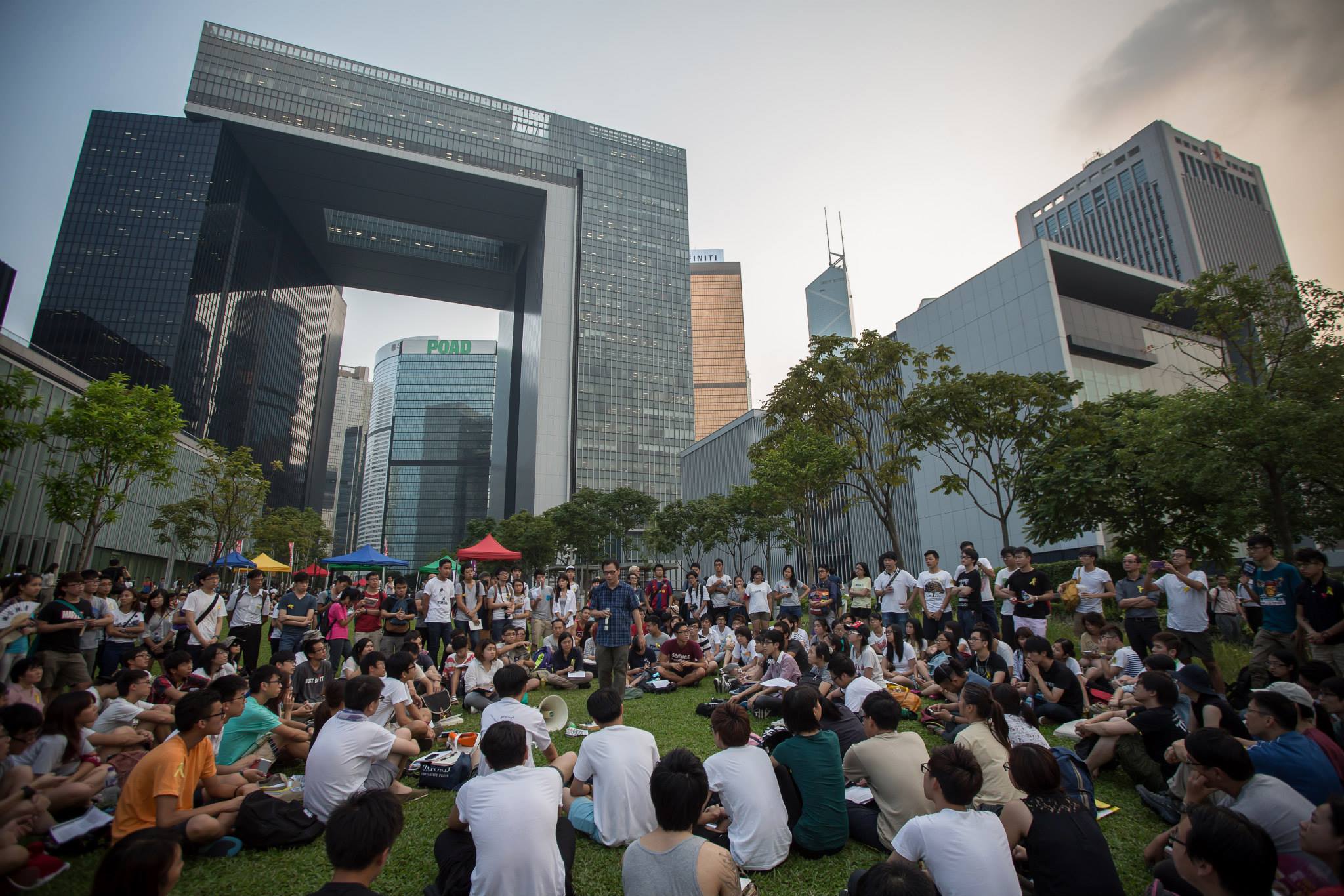
Last September, more than a hundred demonstrators broke into the fenced area outside the Central Government Office, now known as Civic Square, to reclaim it as a public space and show their support for democracy. Not only did this trigger the start of the Occupy Movement, it also awakened the public to the concept of public space as a place where people are free to express their ideas.

During the 79 days of the movement, the public’s eyes were opened to the possibilities of having collective actions within public spaces. People started to organise different activities like music performances, lectures, public forums and even farming in the occupied areas. Such spontaneity in using public space was unprecedented in Hong Kong.

As arguments over people’s rights to use public space continue, another debate rages on how it is defined. Given the price of real estate in Hong Kong, public space can be considered an ill-afforded luxury. To encourage the private sector to integrate public space into their developments, a policy of creating public open space in private developments was introduced in 1980. But the accessibility of these private open spaces is very questionable.

Varsity visited some of the open spaces in heritage buildings such as the famous Woo Cheong Pawn Shop in Wan Chai and the former Police Married Quarters in Central.  These two revitalisation projects both sought to provide “local open space” but these spaces are either too small or inconspicuous to visitors. Critics say Hong Kong’s property management culture is at the root of the confusion and disagreement regarding such public spaces.

We also examine the cases of street obstruction in Mong Kok’s flower market and the dining sections of Temple Street. With frequent complaints and prosecutions, flower shops and al fresco eateries find it hard to survive. Is there any way to tackle the problem of obstruction but also accommodate these local features?

Tying these three stories together is the idea of new possibilities for public engagement and utilising public space. Can Hongkongers re-imagine the use of the spaces we have and put their creative minds to work?

We hope you will enjoy pondering these questions as much as we did in bringing you these stories.

Vivian Lai

Managing Editor

vivian lai

The Politics of Public Space

Reimagining the use of public space after Occupy Hong Kong

By Julian Ng & Brian Yu

Today, traffic moves unimpeded on Harcourt Road in Admiralty and pedestrians must use footbridges to cross this important transport artery on Hong Kong Island. But four months ago, this same section of road was crowded with tents and countless banners were hung from the footbridges.

During the 79 days of the Occupy Movement, people’s eyes were opened to the possibility of a city where pedestrians, rather than cars, inhabited the roads.

In what became known as Harcourt Village, volunteers distributed free meals and citizens expressed their views on Hong Kong democracy by making speeches or music and artistic works

1380793_10152739847997420_363670227875337539_n
Citizens walk in Harcourt Village on Garden Road

Surrounded by skyscrapers, Hongkongers would never have thought of walking on Harcourt Road, let alone interacting with strangers in a “self-organised” village. “Tim Mei Workshop”, a group of carpenters who wanted to remain anonymous, built wooden stairs with handrails so people could get over the concrete highway dividers. With the help of other participants, they even managed to set up an outdoor study room with furniture and electricity. A sense of community was gradually formed in the occupied area.

Emily Wong Lai-ming, a 40-year-old animator who initiated farming outside the Legislative Council Complex during the occupation, regards Harcourt Village as an example of a new concept of public space that calls for “mutual understanding, respect and ongoing communication.” Wong says: “This is how we can make a public space more well-used and meaningful.”

As a way to deepen her engagement with the movement, Wong started planting crops on the corner of Tim Mei Avenue and Harcourt Road. “I think the significance of farming in such public space is the connection,” says Wong, who adds connections are not just made through words but by actions that form examples that others can follow.

Wong’s action contributed to a new perception towards public space in Hong Kong. Others found different ways to link themselves to the movement. Activities like movie screenings, music performances and lectures were organised, homemade food was distributed, various local artists made handicrafts such as leather yellow ribbons and origami umbrellas as souvenirs.

Witnessing the spontaneity of the movement, Cole Roskam, an assistant professor in the Department of Architecture at the University of Hong Kong, was fascinated by how people interacted with each other in this small community.

“The public realm in Hong Kong is much more than simply physical space.  The complex social activities that happen in these places are also part of it,” he suggests, “and what we do within those places is part of public space too.”

Roskam says public spaces in Hong Kong tend to be overly designed and very programmed as there are lots of regulations on how they are used. Public areas like parks are divided into different sections with particular restrictions such as forbidding ball games, bicycling and kite-flying.

But while people can only enjoy limited activities in common public space, the protesters in the occupied areas seemed to fully engage and utilise the spaces.

These observations motivated Roskam to hold a public forum in January, bringing in professional architects and some Occupy participants to broaden the discussion on how architects and design shape public space, and how the new kinds of activities challenge ideas of public space.

Roskam says the movement created opportunities for activities that take root in open spaces. He cites “Stand By You: Add Oil Machine”, which projected messages of support for the Umbrella Movement from around the world onto the Central Government Office (CGO) building. “Projecting social media messages on the building was a kind of very aggressive but interesting way of engaging with the government headquarters,” he says.  “I found the resonances with some artistic and architectural projects very interesting.”

The Public Private Paradox

Hong Kong’s privately owned public spaces are hard to access, poorly designed and barely regulated

By Eric Park & Zoe Tam

On Johnston Road, in the heart of Wan Chai, a cluster of immaculate, four-storey heritage houses stand out from the nearby high-rises. The buildings date back to 1888 and were a classic example of Chinese tenement buildings or tong lau once common in southern Chinese cities. One of them housed the famous Woo Cheong Pawn shop which provided the inspiration for the name of the high-end bar and restaurant now housed in the building, The Pawn. The building’s other tenants are upscale retail shops.

Not many people know that the building has a roof garden where anyone can go without paying a cent. Off the main street, an unassuming side door leads to a lift with access to the top floor of The Pawn where visitors can access a roof garden overlooking Wan Chai. A small sign posted next to the lift shows the roof garden is opened to the public from 11a.m. to 11p.m. every day.

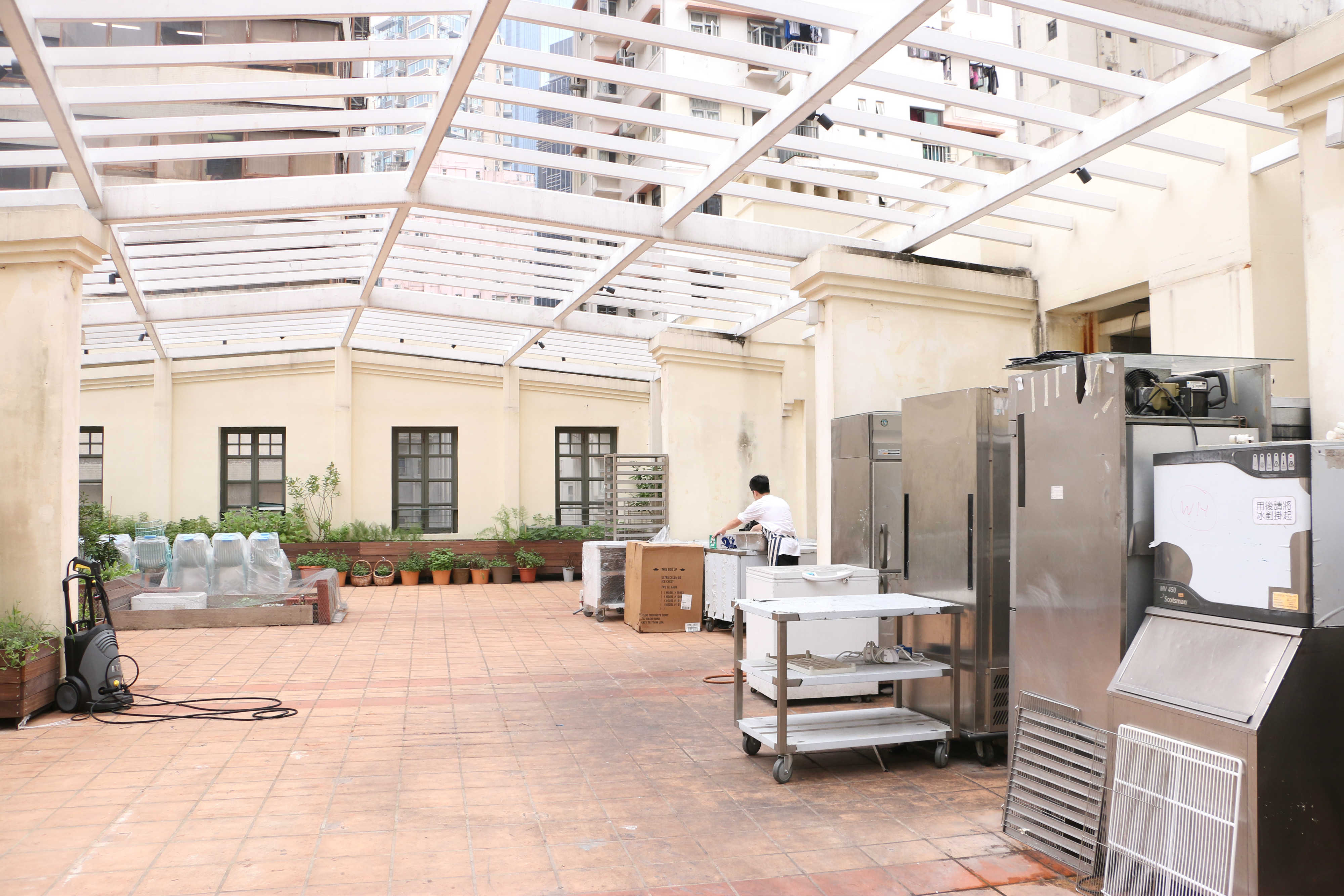
When Varsity visited the roof garden, it was decorated with lots of potted plants. However, around a third of the area was taken up by restaurant equipment such as large refrigerators and stoves. There were also fire-extinguishers that were past their expiry date.

A third of The Pawn’s roof garden is occupied by restaurant equipment
A third of The Pawn’s roof garden is occupied by restaurant equipment

Ms Chung, who works nearby was visiting the garden with her friends. They had heard it was a public open space and decided to check it out during their lunch-break. They were disappointed with what they found. Ms Chung thinks the garden is a bit messy and poorly-managed. “[The government] should send some people to check this place regularly, otherwise people will just take it over,” she says.

In fact, this space illustrates the confusing boundaries between public and private space in Hong Kong. The Pawn was restored by the Urban Renewal Authority (URA) in 2005 at a cost of HK$15 million. It was co-managed by the URA and a private property company until March 2014, and is now solely owned and managed by a private developer, K. Wah International.
Most people thought the roof garden was a private space that could only be used by restaurant patrons until media reported that the roof garden was designated for public use under an agreement between the government and the URA. In a written reply to Varsity, the URA said it had required the developer to open the roof garden for the public’s use in the lease. But the roof garden was not stated as a “public space” either on the land deed or the master layout plan which was approved by the Town Planning Board.

In March 2012, there were reports that the property management company of The Pawn called police when they found people having lunch in the garden, which violated the venue’s rules. The URA responded to media enquiries by saying the roof garden is a “private open space” instead of a “public open space”.

The Pawn’s roof garden is not the only place that shows the poor management of open spaces for public use in Hong Kong. The heated controversy over public space in the city first emerged in 2008 when local media discovered Times Square, a shopping mall in Causeway Bay, restricted public access to space on its ground level, which is legally considered public space. The incident triggered a debate about the management of privately owned public space in Hong Kong.