









Home Blog Page 91

Street life or street obstruction?

Government proposes tightened laws against street obstruction but defenders urge for better use of the largest public spaces

 By Cindy Gu & Karin Li

On most streets in urban Hong Kong, the pavements are filled with pedestrians and the roads filled with cars and trucks. But walking through Mong Kok’s Flower Market, the vehicles and pedestrians have to give way to pots containing lush green foliage and buckets of exotic blooms. The Flower Market is one of Hong Kong’s colourful feature shopping areas, it is also a street obstruction black spot.

It has long been common for shops in the Flower Market to put plants and flowers out on the sidewalk, or even in the road.

Ms Wong, who has been running her shop, New World Flower Corporation, on the periphery of the Flower Market on Fa Yuen Street, for 26 years says she only does so during certain times such as Lunar New Year or when she has a particularly big order and there is not enough room in the shop to accommodate the large baskets of flowers. Still, Ms Wong, who did not want to give her full name, was fined three times for street obstruction last year.

Defenders say the flower vendors should be treated leniently because the market is a unique Hong Kong landmark. “The Flower Market is a feature spot. It should be given immunity to put some flowers outside. Or else it will be an ordinary street just like every street in Mong Kok,” says Ko Shing-kon, the owner of a home accessories shop in the Flower Market.

The government disagrees. In a consultation document on Enhanced Measures Against Shop Front Extensions (SFEs), it said unauthorised shop extensions are “often at the expense of road access, safety and environmental hygiene, and affect the quality of city life. They usually cause nuisance, inconvenience and hazards to pedestrians and traffic.”

Flower Market
Flower pots put on the street outside the Flower Market

For authorities, shop extensions are a persistent problem in the Flower Market. According to the Food and Environmental Hygiene Department (FEHD), there were 149 related complaints and 343 prosecutions in the area in 2014.

Currently, businesses can receive a summons for violating a number of different laws such as “Obstruction of Public Places” under section 4A of the Summary Offences Ordinance, “Conduct of Food Business outside Licensed Food Premises” under section 34C of the Food Business Regulation, and “Illegal Hawkering” under section 83B of the Public Health and Municipal Services Ordinance. These are implemented by different departments including the FEHD and the police.

Typically, it can take around two months from a summons to prosecution in court and the average fine for the most common offences was just HK$ 595 in 2013.

To address the shortcomings of the existing system, namely, the long lead-time of prosecution, light penalties and the lack of a “targeted legal tool against SFEs”, the government’s consultation document suggests introducing an additional fixed, on-the-spot penalty of HK$ 1,500. The consultation period ended in July last year and the Home Affairs Department expects to submit a draft of the new law to the Legislative Council by October at the earliest.
Misfits Makes Good

How autistic people can overcome challenges at work

By Joey Kwan & Tiffany Tsim

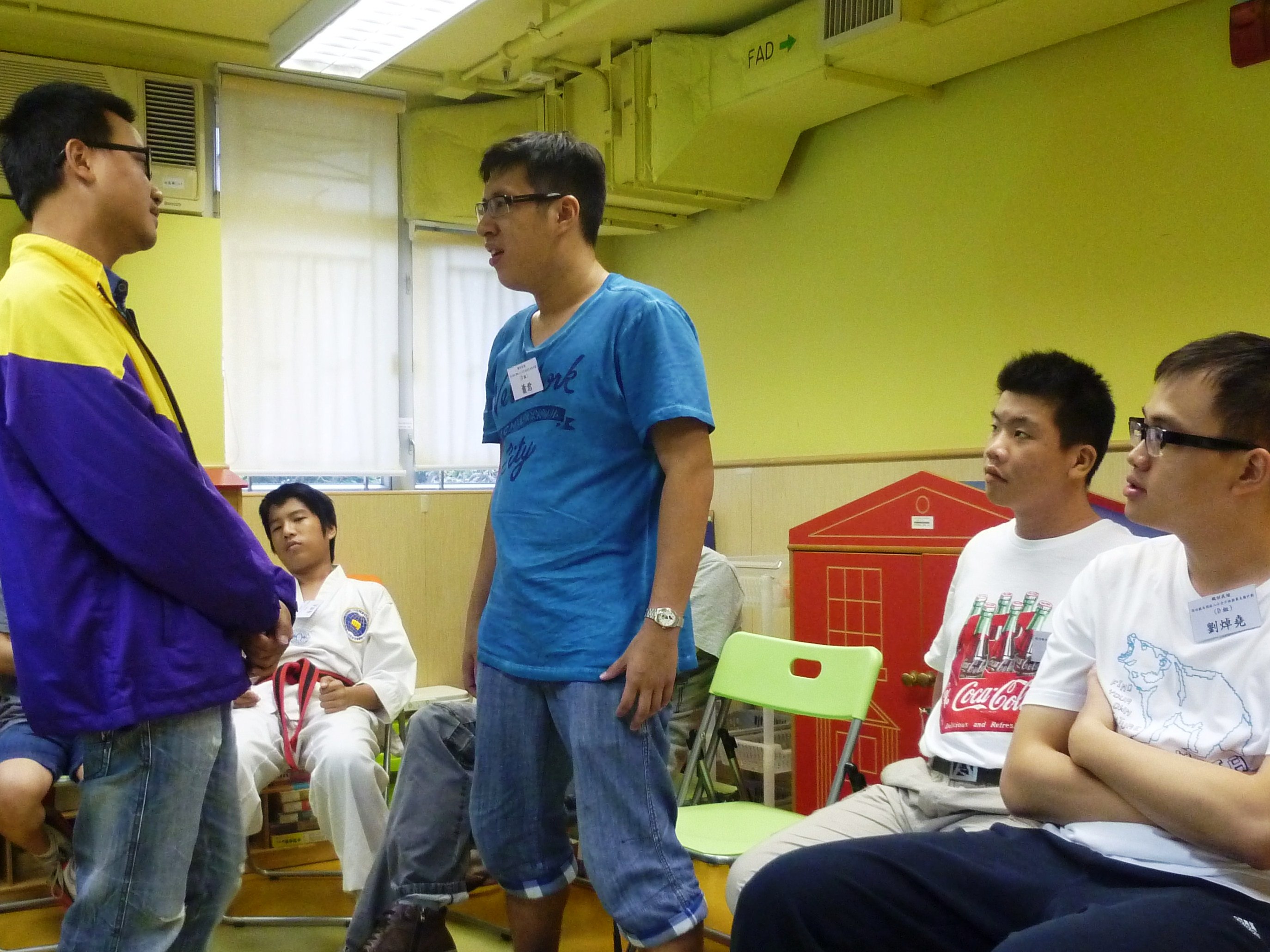
After working as a clerk for a month, Daniel switched to being a courier. But just like in his previous jobs, he could not survive and resigned after three months. Daniel, who is 24 and does not want to disclose his real name, was diagnosed by a pediatrician as having high-functioning autism at the age of three.

In his previous jobs, Daniel struggled to cope with interacting with his colleagues as he found it difficult to understand their jokes and wordplay. Now he has settled into working in a butcher’s shop. He started this job in December and his current boss has more knowledge about autism. But even now he is not always fully at ease.

“Even now, I’ll hold back if I have to enter mainstream society to work because the boss and co-workers will pick on me,” says Daniel.

In Hong Kong, people tend to label autistic people as freaks and commonly misunderstand that they are either severely intellectually disabled or are geniuses. Either way, the labels marginalise autistic people, including those with higher-functioning autism (HFA).

Autism is a developmental disorder which affects individuals’ cognitive and social ability. It is also a spectrum disorder and around 30 per cent of autistic people have an intelligence quotient (IQ) of more than 70. These people are diagnosed as having higher-functioning autism (HFA). According to figures from 2010, one per cent of the world population has autism, and it is almost five times more common in boys than in girls.

Like Daniel, most autistic people are diagnosed when their symtoms become noticable at around the age of three. Greater public education on autism has heightened parents’ sensitivity to the disorder and encouraged them to seek help when when they find their children lack eye contact with people or are slow to speak. Parents, or sometimes kindergarten teachers, seek advice from psychiatrists. The psychiatrists will conduct tests based on the criteria for autism listed in DSM V – a psychological assessment tool designed by the American Psychiatric Association. The diagnostic criteria include the seriousness of persistent defecits in social communication, emotional reciprocity and in understanding relationships, along with repetitive patterns of behaviour.

The term “autistic savant” is used to describe those autistic people with exceptional skills in limited fields. “Not every autistic person is good at studying. They follow rules strictly, ” says Dr Ting Sik-chuen, a specialist in psychiatry. This has led to the popular image of autistic people as brilliant but socially awkward scientists or musicians. But autistic people are just as likely to be craftsmen, bakers, or drivers because they are not afraid of repetition.

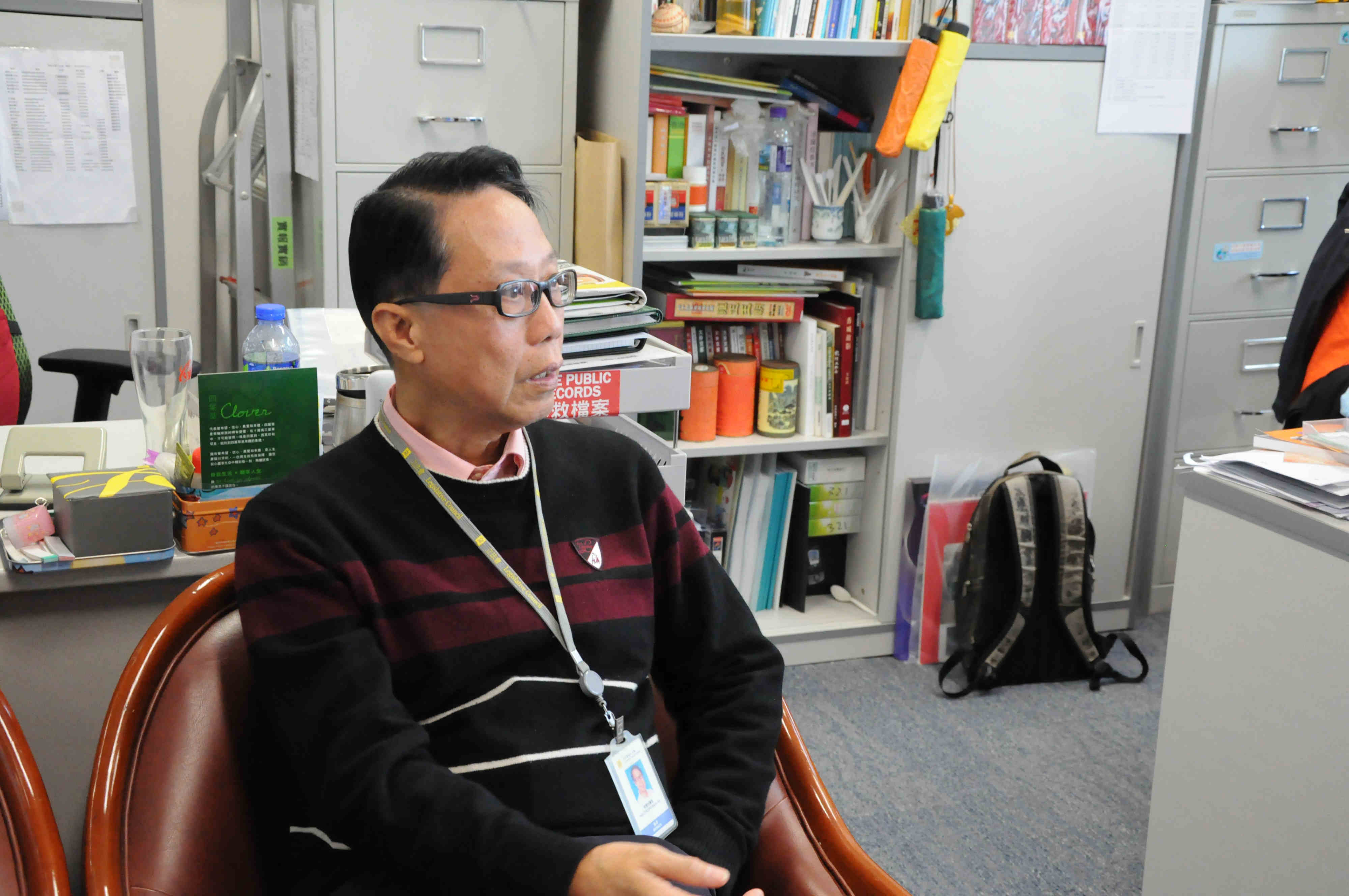
As realistic knowledge about higher-functioning autism is lacking in Hong Kong, employers are unwilling to hire people with HFA, despite their capability. “I guess it is not employers not wanting to hire them, but employers don’t have so much knowledge about this kind of disability,” says Peter Cheung Kwok-che, the legislator for the social welfare functional constituency.

Peter Cheung Kwok-che, the legislator for the social welfare functional constituency
Peter Cheung Kwok-che, the
legislator for the social welfare
functional constituency

“High-functioning autistic people are the same as normal people. The IQ of some of them is even higher than us. If we assess their special skills, perhaps they can perform better than most of us,” says Cheung. “We need people with related knowledge to work with them to bring out their special skills.”

Nevertheless, little has been done by the government for autistic people, still less for those with HFA. While there are services and training for the disabled, none of these are specifically targeted at people with HFA. For instance, the Vocational Training Centre’s Shine Skills Centre offers the same employability enhancement training to the intellectually disabled, people with Down’s syndrome and those with HFA.

Invisible Disability

Chronic kidney disease patients in a bind on disability allowance

By Jayce Lai & Vivienne Tsang

Bonnie Ho Oi-ying releases around two litres of fluid from her abdomen from the end of the catheter inserted into her stomach. She then takes out a pack of fresh cleansing solution and the same volume of fluid flows into her abdomen. The process, called peritoneal dialysis takes 45 minutes to complete and the 60-year-old has to go through it three times a day just to stay alive. Ho, was diagnosed with end stage renal disease (ESRD) in 1987.

Patients are diagnosed as having ESRD when their kidneys can only function at below 10 per cent of their normal capacity. This means they are unable to effectively filter out metabolic waste such as urea. Unless they are able to receive a successful kidney transplant, such patients have to rely on dialysis to remove the excessive and harmful build-up of metabolic waste.

More than 8,500 ESRD patients were under the care of public hospitals in Hong Kong in December 2014. Around 5,000 of them need dialysis treatment and, around 80 per cent of them perform peritoneal dialysis.

Some, like Ho perform the treatment at home. Before they can do so, they are required to undergo training with nurses so that they know how to minimise infection. There is no subsidy for the treatment and it costs around HK$1,500 a month.

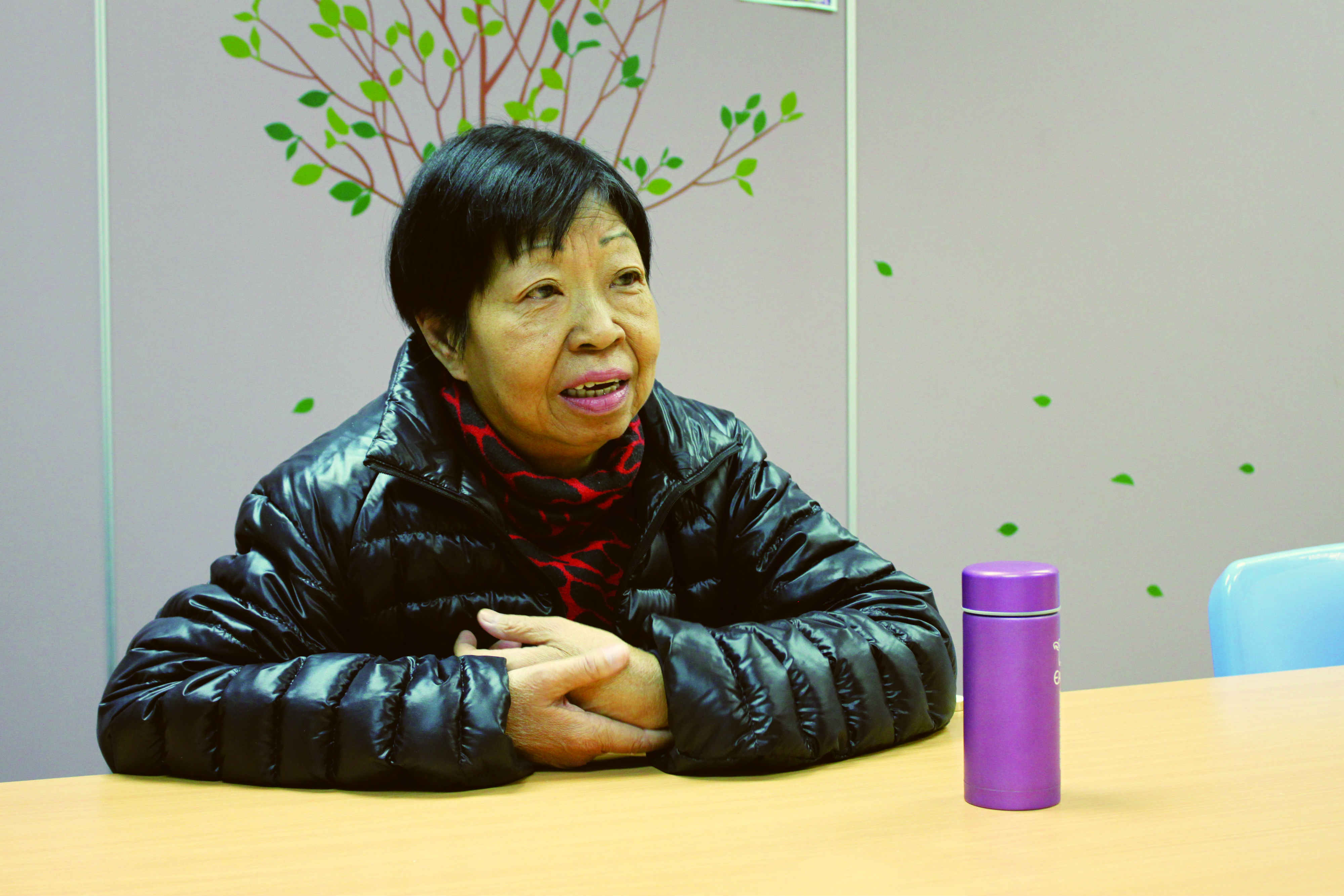
Bonnie Ho Oi-ying
Bonnie Ho Oi-ying

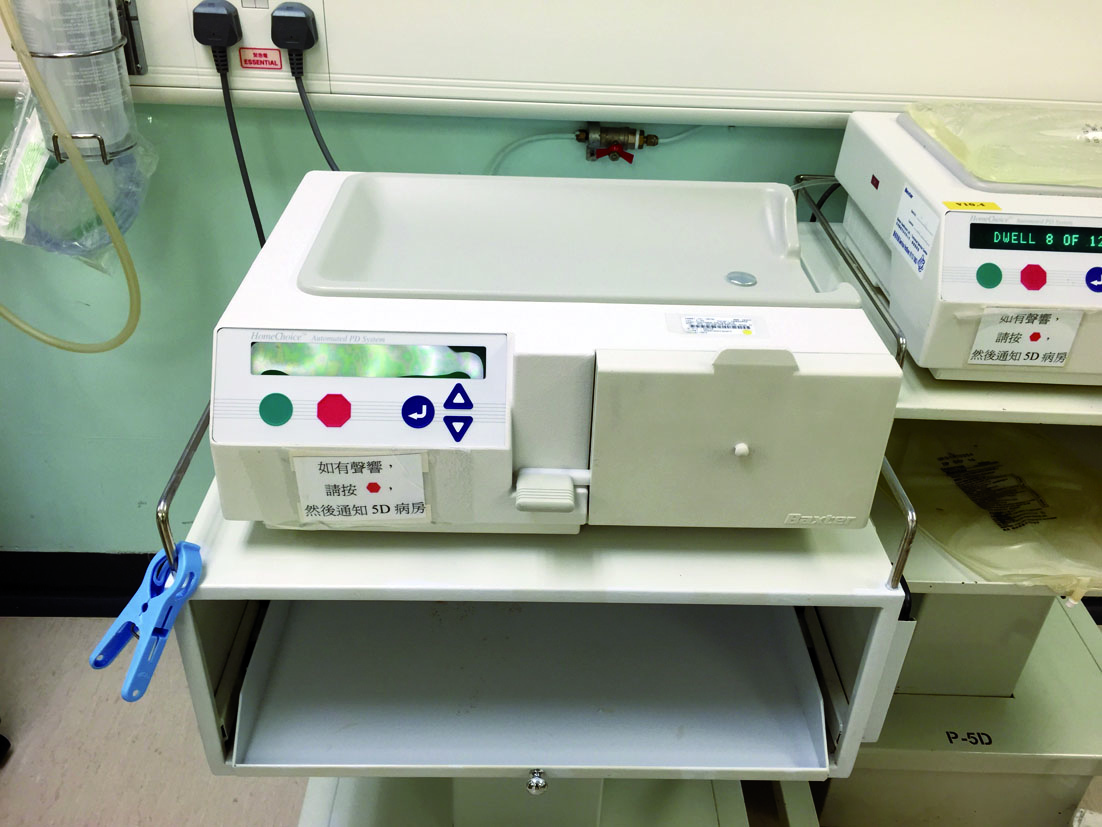
A more sophisticated form of peritoneal dialysis relies on a machine to conduct the fluids exchange. Automated peritoneal dialysis (APD) saves a lot of time as it can be performed while the patient sleeps at night. However, APD costs HK$6,000 a month and is not a common treatment in Hong Kong.

Some patients are unable to undergo any form of peritoneal dialysis because of they have malfunctioning peritoneal cavities and they need to undergo hemodialysis in hospitals or dialysis centres. In these cases, a machine drains blood from the patients’ arm and filters the waste, returning the clean blood to the body. The whole process takes around five hours, and patients need treatment every three days. However, each treatment costs at least HK$1,200.

With limited resources in public hospitals, the number of patients the government subsidises to undergo hemodialysis stood at just 156 in December 2014.

As Ho’s peritoneal cavity still functions, she is not qualified to receive subsidised hemodialysis. She spends HK$2,000 every month on her treatment. Because of the time constraints this imposes, she can only look for part-time jobs. Even this is a challenge and when she injured her hand in 2009, she stopped working altogether. Ho applied for disability allowance, but her application was rejected.

Disability allowance is a benefit under the Social Security Allowance Scheme to help disabled people meet the special needs caused by their disabilities. Successful claimants are entitled to either HK$1,510 under the normal disability allowance or HK$3,020 under the higher disability allowance. Most ESRD patients who manage to claim the benefit receive the normal disability allowance.

In order to qualify, patients must have their applications approved by public doctors who have to fill in a medical assessment form saying they are satisfied the patient has lost “100 per cent of earning capacity” or has “any other conditions including visceral diseases resulting in total disablement”.

Ho says some doctors do not accept that ESRD patients have lost 100 per cent of earning capacity. “The doctors think that we have arms hands and legs … we’re invisibly disabled,” she adds. However, as the chairperson of the Renal Companion Association, the patients’ association of Queen Mary Hospital, she knows that some ESRD patients with similar symptoms do get the disability allowance. It all depends on the doctor’s interpretation of the assessment criteria and Ho thinks this is unfair.

Leung Ka-lau, the legislator representing the doctors, is aware of this issue and says doctors should not regard being able to work as contradicting the “100 per cent loss of earning capacity” requirement.

The Return of the Non-natives

Government targets second generation overseas Hongkongers to boost workforce

By Achlys Xi and Teenie Ho

Teresa Kuan was doing post-doctoral research in California before she received an offer to work as an anthropology professor at the Chinese University of Hong Kong (CUHK) in 2012. She jumped at the chance to return to the city she left at the age of five.

As an anthropologist studying China, Kuan says Hong Kong was an “obvious choice” because it is both close to the Mainland and an international cultural hub. “It’s such a fun, vibrant, dynamic city,” Kuan says. Although she was born in Hong Kong and holds a Hong Kong Identity Card (HKID), Kuan sees herself as culturally a Chinese American as she lived there for nearly 30 years.

Still, Kuan values the opportunities and lifestyle options found in Hong Kong. She is not alone, which is why so many foreigners have been drawn to living and working in the territory over the years. But in recent years, the city has faced tough competition from neighbouring cities and regions like Singapore, Shanghai and Taiwan in vying for foreign talents.

This comes as Hong Kong faces a rapidly ageing population. Figures from the Census and Statistics Department show the city’s workforce will start shrinking in 2018 and drop by 170,000 in 13 years. Projections show one in three Hongkongers will be aged 65 or over by 2041, meaning there will be fewer than two working people to take care of one elderly person.

This manpower shortage poses a challenge to the government to maintain the productivity of the city’s future workforce. In the latest policy address, Chief Executive Leung Chun-ying announced the government would target the children of Hong Kong people who had emigrated overseas as a way to bolster the skilled workforce. These returnees, who have foreign nationality, would need to apply under policies typically aimed at other incoming foreigners, such as the General Employment Policy and Quality Migrant Admission Scheme, in order to come and work in Hong Kong.

The government says a pilot scheme will be launched to attract second generation overseas Hongkongers, who would be bachelor degree holders aged between 18 and 40, to return to Hong Kong. Under the scheme, a stay pattern of “1+2+2+3” years would apply, by which the government would grant applicants a one-year visa and extend their stay if they can secure employment. They could then obtain a permanent HKID after seven years in Hong Kong.IMG_0034

The government believes these people’s knowledge of foreign languages and cultures makes them “quality” workers who might be more willing to come to Hong Kong because of their family ties to the city.

The aim is to draw in professionals like 37-year-old Lokman Tsui, assistant professor in the School of Journalism and Communication at CUHK. Born to and raised by parents from Hong Kong in Amsterdam, Holland, Tsui says family ties was one of the reasons he came here to work for internet giant Google after getting his PhD in the United States in 2010.

Here, Tsui reunited with family members and relatives after years of separation. He says he feels emotionally attached to Hong Kong as he grew up listening to Cantopop and watching Hong Kong movies and Cantonese-dubbed cartoons. Hong Kong holds a special appeal to him. “I like to be here, I want to be here. I can be anywhere else, but I wanna be here,” he says.

Career-wise, Tsui thinks his knowledge of multiple languages gives him a competitive edge here, “Hong Kong… has always been a bridge between the East and the West, and as long as it continues to do so, my skills will be useful here,” he says.

Collecting for Posterity

Meet the collectors who want to preserve our history

By Emily Man

Upload_IMG_1382

The reading on the thermo-hydrometer on a custom-made cabinet shows the humidity within is below 60 per cent. Tam Kwong-lim opens the cabinet doors and carefully takes a scroll out from a long wooden box. He unfurls it to reveal an antique map of the coastal region of Southern China. On the map, the place where Hong Kong should be is marked as “Hung Heung Lo” (Red Incense Burner).

The map dates back to the 19th century and the late Qing dynasty. Tam explains that Hong Kong harbour was an important water channel at that time so the Qing government needed to set up a military station on the unnamed island and later decided to formally name it as Hung Heung Lo after the Hung Heung Lo Tin Hau temple. Not until the arrival of the British in the early 19th century was the island renamed “Hong Kong”.

Having studied geography at the University of Hong Kong and worked in the shipping industry, Tam’s life has been intertwined with maps. He was first drawn to them during his secondary school geography lessons, in which he had the opportunity to study maps of Britain. He was fascinated by these colourful maps, and enjoyed examining the British map legends to find out where the villages, roads and other features were. “At that time, I had much imagination about those splendid places which Hong Kong did not have,” he says.

But it was his stay in Japan for work that sparked his lifelong passion for map collecting. In the Kanda district of Tokyo, he came across quite a number of antiquarian bookshops which also sold old maps, such as those from the Second Sino-Japanese War. He became intrigued by them, and later started collecting antique maps of different countries, like China.

So far, Tam has collected more than 2,000 maps including his favourite one which is now publicly exhibited in the Hong Kong Maritime Museum. It is a hand copied version of the six-page Great Universal Geographic Map drawn by the 16th century Jesuit missionary and explorer Matteo Ricci.

When Ricci arrived in China in the late Ming Dynasty, he showed the western version of the world map to the Chinese people. “They [the Chinese] had believed that the world was China,” says Tam, “and they had thought the earth was flat.” The news of the world map quickly spread to the Chinese Emperor, Wanli, who then requested that Ricci combine Western maps and Chinese maps into a real world map – the Great Universal Geographic Map.

Copies of the map became popular in Japan, and as the Japanese did not know the wood board printing technique, each copy there was hand-drawn. There are now 21 such copies of the map in existence in the world, one of which is Tam’s – each with an estimated auction price of US$150,000 to US$250,000. But for Tam, the maps’ value lies not in how much money they are worth but in their historical significance.

Maps are not the only artifacts that provide us with a window into the past.  William Tong Cheuk-man, the 58-year-old president of the Hong Kong Collectors Society, is fascinated by the history represented in his collections. Tong says his love of history only really blossomed after he began collecting.

To let the public know more about the geography, history and maritime heritage of Hong Kong, Tam will consider loaning more maps from his collections to the Maritime Museum in the future upon request.

Bricks without Boundaries

Lego has captivated generations of children but do contemporary sets stifle creativity?

By Kelly Wong 

It has been around since 1949 and still continues to bring hours of fun to children around the world. Some may slavishly follow instructions to build a pirate ship, or a spaceship or a a rather angular tree. Others may simply let their imaginations take over and build whatever comes to mind. But whatever they create, their raw material is the same Lego – that deceptively simple system of hollow interlocking plastic bricks that can be put together to form infinite combinations, and then be taken apart so you can start all over again.

Jared Chan Chun-kit, the Facebook editor of LegendBricks, a Lego user group founded in 2010, takes two flat pieces with rounded ends and quickly makes them into a heart. He takes two plastic bow-and-arrow pieces and turns them into the armrests of a chair.

“Sometimes it’s really a test of if you can think of [the construction] or not,” Chan says. “ If you’re as crazy about it as we are, then play it as frequently as we do, the power of observation is very important.”

It is precisely because playing with Lego can inspire this use of imagination, creativity and observation that the toy has been a firm favourite with not just children but also their parents and teachers. The toys are used in the classroom and some schools even offer after-school classes in Lego building.

But in recent years, Lego has come under criticism for becoming less creative and for reinforcing gender stereotypes by bringing out “themed” sets based on blockbuster films like Star Wars and Pirates of the Caribbean and sets targeted specifically at girls. These sets include instructions for pieces that are specially designed to make specific objects.

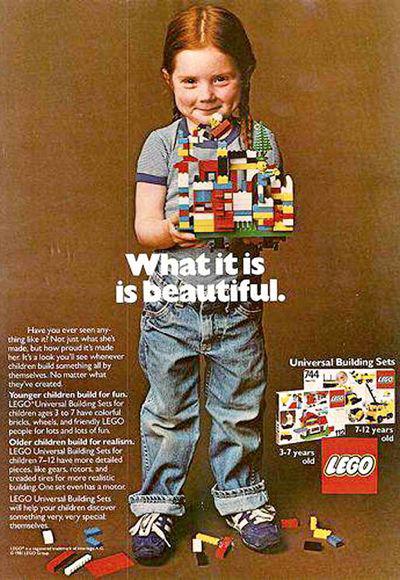
Lego's 1981 ad (source: internet)
Lego’s 1981 ad (source: internet)

Critics were quick to point to Lego’s own advertisements from the past, including one from 1981 featuring a little girl wearing a blue T-shirt and jeans and proudly holding up her Lego creation, which highlighted a very different ethos. Lego was less theme oriented then, and consciously gender neutral. Along with the slogan “What it is is beautiful”, the copy reads “Have you seen anything like it? Not just what she’s made but how proud it’s made her. It’s a look you’ll see whenever children build something all by themselves. No matter what they’ve created.”

Sadly, this is not an experience that Alex Tam Shun-yiu, who is a committee member of Hong Kong Gifted Family Association, can share from his own experience with Lego.

Tam recalls that he did not find playing with Lego appealing at all. He was not capable of following the instruction booklet strictly to assemble the bricks. He ended up frustrated and finding things to blame.

He argues that assembling the bricks with the given theme–setting and guidelines does not reveal people’s creativity.

Dr Au Yiu-kai – Always On Call

Veteran of numerous overseas humanitarian missions tells of heartbreak over Hong Kong

By Karen Yu

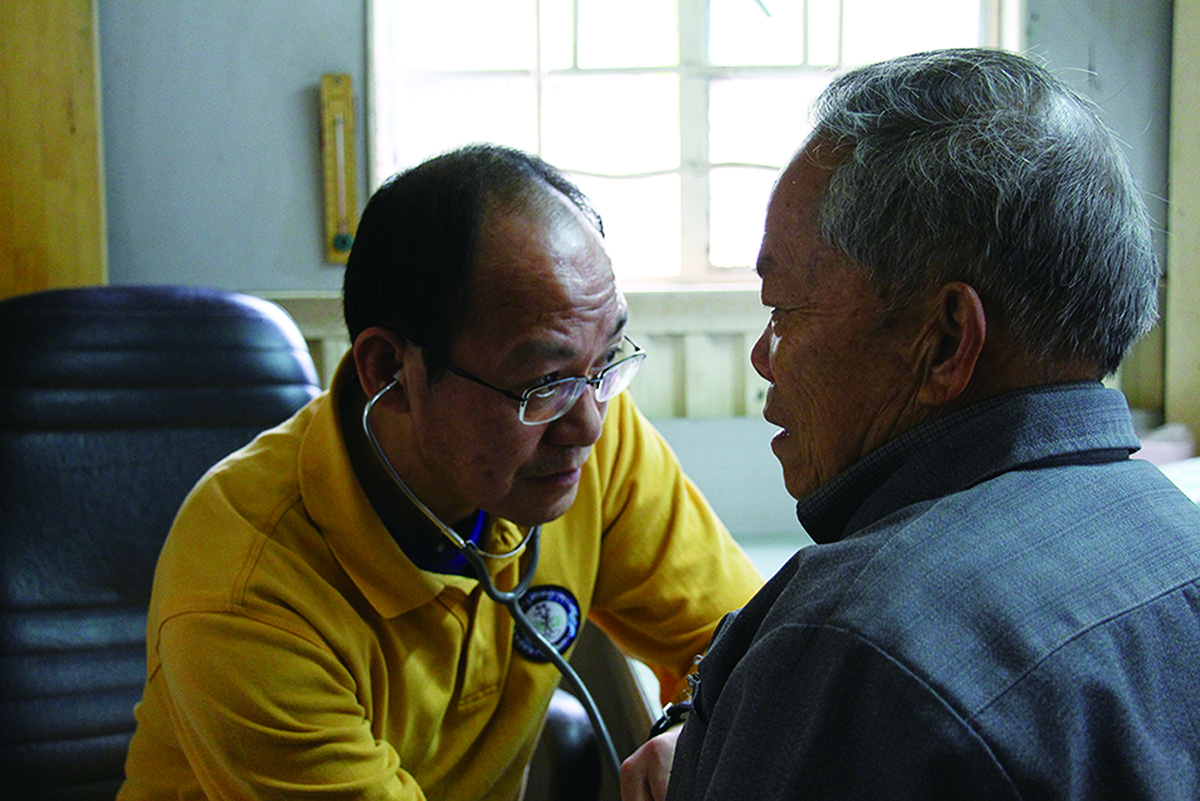
Most of us are brought up to be kind and always lend a helping hand to others, and most of us find it is easier said than done. Not so Au Yiu-kai, a 56-year-old consultant surgeon at Kwong Wah Hospital, who has made it his mission in life to do both. Au has saved lives in conflict zones as a volunteer for the Hong Kong Red Cross and Médecins Sans Frontières (MSF). Closer to home, he founded the Hong Kong Wheelchair Aid Service, a wheelchair repair and rental service in 1997.

Au’s resolve to become a doctor and his devotion to service are, in large part, motivated by the loss of his mother to kidney disease when he was a young boy and his brother to cancer when he was a medical student. His commitment is also driven by his Catholic faith. Today, serving people is what makes him happy and he smiles readily when recalling the stories he has encountered along the way.

Au first started to help the needy in 1987.  He launched a monthly free clinic service for the residents of a former coal mining village in Ma On Shan. “Wherever there is need, I will continue to do it,” he says. He has kept his promise to his elderly patients there – most of them are retired miners and their families – for 28 years.

In 2002, Au’s personal mission to help the underprivileged took a different turn – it went global. A doctor friend attended a talk+ by the Hong Kong Red Cross to recruit volunteers for medical missions overseas. He suggested Au had the right skills for the job and Au decided to give it a go.

That is how he ended up working in a hospital in Kenya, operating on the war wounded from South Sudan. Since then, he has been volunteering for the Hong Kong Red Cross and MSF in many conflict and disaster areas. Recognition of this work won him the Hong Kong Humanity Award in 2009.

Au started his volunteering in a hospital in Kenya.

The year 2002 does not just mark the beginning of Au’s involvement in overseas humanitarian medical service. It also marks a turning point in Au’s perspective on the medical profession and his place in it. Most notably, it affirmed his belief in the importance of traditional surgical skills and his own persistence in practising those skills.

Au says that since 1990, there has been a growing use of high technology in medicine and a trend towards conducting minimally invasive surgery in Hong Kong. But having spent his whole working life in no-frills public hospitals, Au trained in and uses traditional and basic surgical techniques.

Sayed Gouda – The Poet Who Will Not Be Silenced

Egyptian writer recounts Tiananmen Square protests of 1989

By Kate Kim

On an early summer morning in Beijing, a mother carried the frail, wounded body of her nine-year-old son to the front of a university campus, desperate for help. Blood oozed out from several gunshot wounds in the boy’s back, staining his white shirt red. The mother kept fanning his body, trying to keep him alive and not knowing he was already beyond help. Sayed Gouda, an exchange student from Egypt, took out his camera and captured this heart-breaking moment.

The boy was the one of the victims of the crackdown on the Tiananmen pro-democracy protests in 1989. At around midnight on June 4, People’s Liberation Army troops equipped with assault rifles and tanks marched into Tiananmen Square, the heart of the protest, and cleared the protest site by force. During the course of the clearance, the army fired shots at unarmed protesters and the Beijing residents who tried to help them, causing heavy casualties.

Today, the Egyptian exchange student from 26 years ago is a published poet and novelist, proficient in Arabic, English and Chinese. He taught at the City University of Hong Kong and participated in many international poetry festivals and academic conferences around the world. Recently, he published a novel called Closed Gate in remembrance of Tiananmen.

Back in Egypt, Gouda majored in Chinese as he was drawn to the seemingly mysterious Chinese characters and Chinese language. With outstanding results, the 20-year-old Gouda received a scholarship to study for one year in the Beijing Languages Institute (now called the Beijing Language and Culture University) from 1988 to 1989, a time when foreigners were a rarity in China. He never imagined he would witness the course of the historic Tiananmen Square protests and the brutal crackdown on June 4, 1989.

In April 1989, when the protest first broke out, Gouda thought it appeared to be nothing more than an ordinary demonstration. “Everything was very peaceful and joyful. Everybody was happy to participate,” he says. As the movement progressed, hundreds and thousands of students from all over the country flooded to Beijing to support the movement.

Share Your Vision

Mobile app lets you become the eyes for the visually impaired

By Natale Ching

Imagine that you are blind. You have to press an elevator button without markings you can feel and no one is nearby to help you. What can you do?

Be My Eyes, a free iOS application developed by Hans Jørgen Wiberg, can let you be eyes for the visually impaired.

Be My Eyes connects blind people with volunteers globally through live video chat. Users first have to indicate whether they are sighted or blind. Blind users can simply direct their phone’s camera on anything they need help with. Through video streaming, helpers can ask questions, communicate with the blind and provide instructions to assist them.

The Magic Tap feature allows blind users to ask for help by double tapping the screen with two fingers, while the sighted users can indicate their availability by tapping a button. A notification pops out whenever a blind user requests help. What if the helper is busy? Through a simple tap, they can deny the request and the app will notify other volunteers until one is found.

Users can rate and report misuse after each aiding session and anyone who abuses the system will be kicked off the network. The calls can only be placed between 7 a.m. and 10 p.m. in order to prevent helpers from being disturbed at midnight.

The app takes advantage of an iPhone feature called VoiceOver, a screen reader which assists the blind through synthetic speech and a touched-based interface to use the iPhone. This convenience allows quick publishing of the app in iOS but not in Android, although development of the app for Android is currently underway.

Wiberg, the app’s founder, is also visually impaired, with only five-degree vision and has first-hand experience of the inconveniences experienced by the visually impaired in daily life. After learning that his visually impaired friends were using the video-calling feature on their smartphones, he quickly came up with the idea of making this app and presented his idea to build a network of volunteers in April 2012 in the Startup Weekend technology competition in Denmark.

Together with Thelle Kristensen, his technical collaborator, they refined the app using Wiberg’s ideas and existing technology. The team will come up with a sustainable business model by September 2015, when their initial funding comes to an end.

Be My Eyes has now attracted more than 130,000 sighted users and more than 12,000 blind users. It is translated into 70 other languages and you can add new translations which are approved through crowd-sourcing.

Instead of just immersing yourself in mobile game apps, share your eyes and give help within just a few minutes.

Be My Eyes is now available for free on iOS. For more information, check out their website at http://www.bemyeyes.org.

Edited by Jeffery Loa