









Home Blog Page 94

The Forgotten Transport: Kaito Ferries in Hong Kong

Reporters: Kanis Leung, Agnes Ng, Thomas Chan

Editors: Katrina Lee, Hilda Lee

65-year-old Big Sister Fook has operated illegal kaito ferry services in Cheung Chau for decades. These kaito ferries are both a tradition and a common mode of transport. During major festivals such as Ching Ming and Chung Yeung, demand for such ferries is overwhelming. At other times, their passengers are mainly tourists and fishing enthusiasts.

Although the government requires those operating kaito ferry services to hold a license for taking passengers, enforcement had been lax for years. This meant illegal kaito ferries could still operate. But after the Lamma Island ferry collision in 2012, authorities stepped up enforcement of regulations, affecting the livelihood of those running the kaito ferries.

At the same time, most kaito ferry owners are elderly and find it hard to adapt to changes required for license application. Big Sister Fook took the necessary examinations but her application was rejected. Cheung Chau District Councilor Ken Kwong Koon-wan suggests the government should help boat-owners to get licenses so they can use their vessels for both fishing and carrying passengers.

Another place where illegal kaitos operate is Sha Lo Wan Village, a remote settlement near Lantau Island. As there are only six registered kaito ferries running each day between the village and the city, many villagers have moved out, leaving the village only half occupied with elderly residents. To cater to the villagers’ everyday needs, small boats providing illegal on-call services have appeared. But safety is a concern – one small boat sank in 2008 because of overloading.

Sha Lo Wan village headman Man Wai-cheong says government policy on kaito ferries is inadequate. With a lack of any subsidy, registered kaito ferry operators are unwilling to run more frequent services.

Registered kaito ferries face a similar problem in Peng Chau. Wong Hon-kuen, the Peng Chau District Councilor laments that kaito ferry services are struggling to survive. Some routes have been cut due to high operational costs and the lack of government support. Wong predicts small kaito ferry companies will eventually give up on this business, leading to further inconvenience for the residents.
Viewing Hong Kong history through protest

Reporters: Benny Kung, Edith Lin, Jeffrey Loa

Editors: Vanessa Cheung

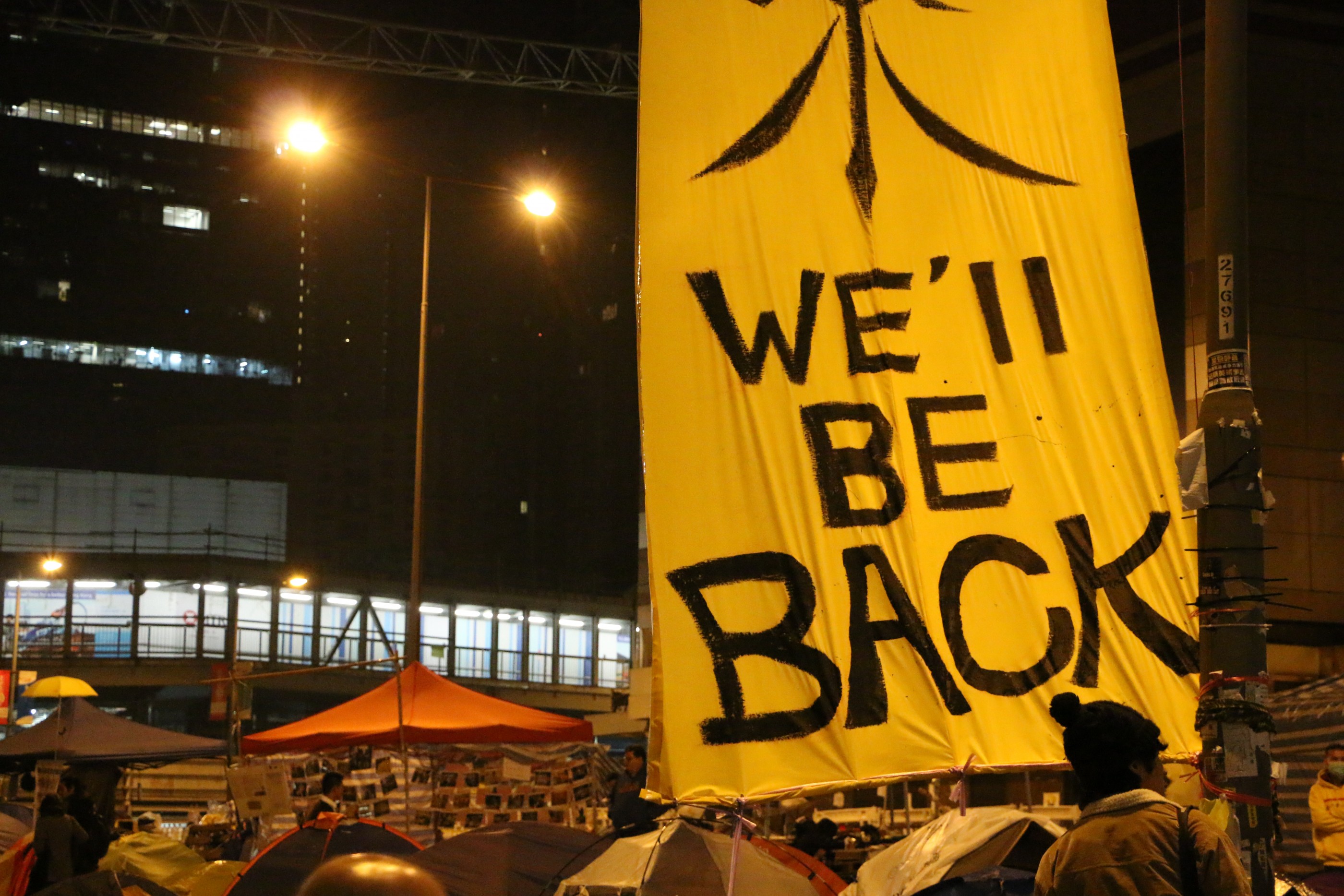
Public museums are not the only places to find artefacts that tell the story of Hong Kong’s development. Protest items collected by the public tell the story from another perspective.

Chong Yiu-kwong, who has participated in social movements since the 1980s and is now a Senior Teaching Fellow at the Hong Kong Institute of Education, started his collection in 1989. At the time, Hong Kong people from all walks of life threw their support behind the students’ pro-democracy movement in Beijing. Many posters, T-shirts and stickers were printed, and Chong still has many ot them.  Over the years, he has collected more than 300 t-shirts and many stickers.

Compared to when Chong began collecting,  protest items made by participants of the recent  Umbrella Movement show much more variety and creativity. There are leaflets, postcards, posters, statues, drawings, sculptures and installation artworks – you name it. Chong thinks advances in technology have made it easier for members of the public to create their own protest items, leading to greater diversity in the types of items that have been created.

Individual collections going back more than 20 years are relatively rare but as the number and nature of demonstrations increased after the handover, more people have become aware of the importance of collecting items that capture the concerns and spirit of the time. In  2002 the Community Museum Project held an exhibition on “objects of demonstration” to show the unique ways the public have used to express opinions . Exhibits included a bitter melon representing the hardship of life, mock coffins for government officials and the Goddess of Democracy.

Phoebe Wong Siu-yin, on the project members notes that unlike in previous demonstrations, notes participants in the Umbrella Movement  have turned tools used by police to manage and control demonstrations  into their own protest objects. For example, they utilize the police barricades to create road blockades to limit the police’s movement. Wong says such action reproduces the function of the tools of authority and shows the wisdom and creativity of protesters.

The sheer volume and diversity of Umbrella Movement protest items facilitates the telling of the story of the movement from the ground up.  A group of artists, curators and critics have established the Umbrella Movement Visual Archives and Research Collective to protect these items for history.

Clarisse Yeung Suet-ying is a member of the collective.She thinks it is better for the public to preserve Umbrella Movement protest  than for government-supported museums and organisations to do it. She fears that the government is responsible for preserving the objects, it  may rewrite the story and fail to present the voices of the public.

Capturing scenes from the city – the old fashioned way

Reporters: Angel Liu, Stella Tsang, Yan Li

Editor: Tracy Chan

It has never been easier to capture scenes from the city with an array of digital devices. But even in the age of smartphones and numerous apps to shoot, edit and share still and moving images, there are some people who prefer to use non-digital means to record Hong Kong’s history and daily life.

Ric Tse works in property management and is a freelance photographer in his spare time. Apart from taking conventional photographs of scenes and events, he prefers to recreate them, with Lego bricks, before taking pictures of them. Tse’s Legography series includes such iconic scenes as the annual Hong Kong marathon and June 4th candlelit vigil. The works, combining 3D tableaux and 2D photographs have been a hit. So far, he has created around 30 pieces, through which he hopes people can look at the city from the perspective of children. Tse held his first art exhibition at Picture This Gallery in November 2014.

Apart from recreating three dimensional scenes, there are also artists observing and documenting the city through drawing and painting.

Luis Simões, a Portuguese Illustrator, started his World Sketching Project in March 2012. He planned to visit five continents in five years, sketching  the places he visits and the people he encounters. He has already travelled to 29 countries and made more than 1,000 sketches.

“The idea started after I realised I don’t want to be too materialistic.” Says Simoes“I wanted to explore some countries, to explore my art and try to be more like an artist.” So he quit his job as a motion designer and lifted up his backpack.

Simoes has spent ten  months in Hong Kong, and likes the contrast between urban life and nature in the city. Scenes from the Umbrella Movement have given him plenty of subject matter to sketch.

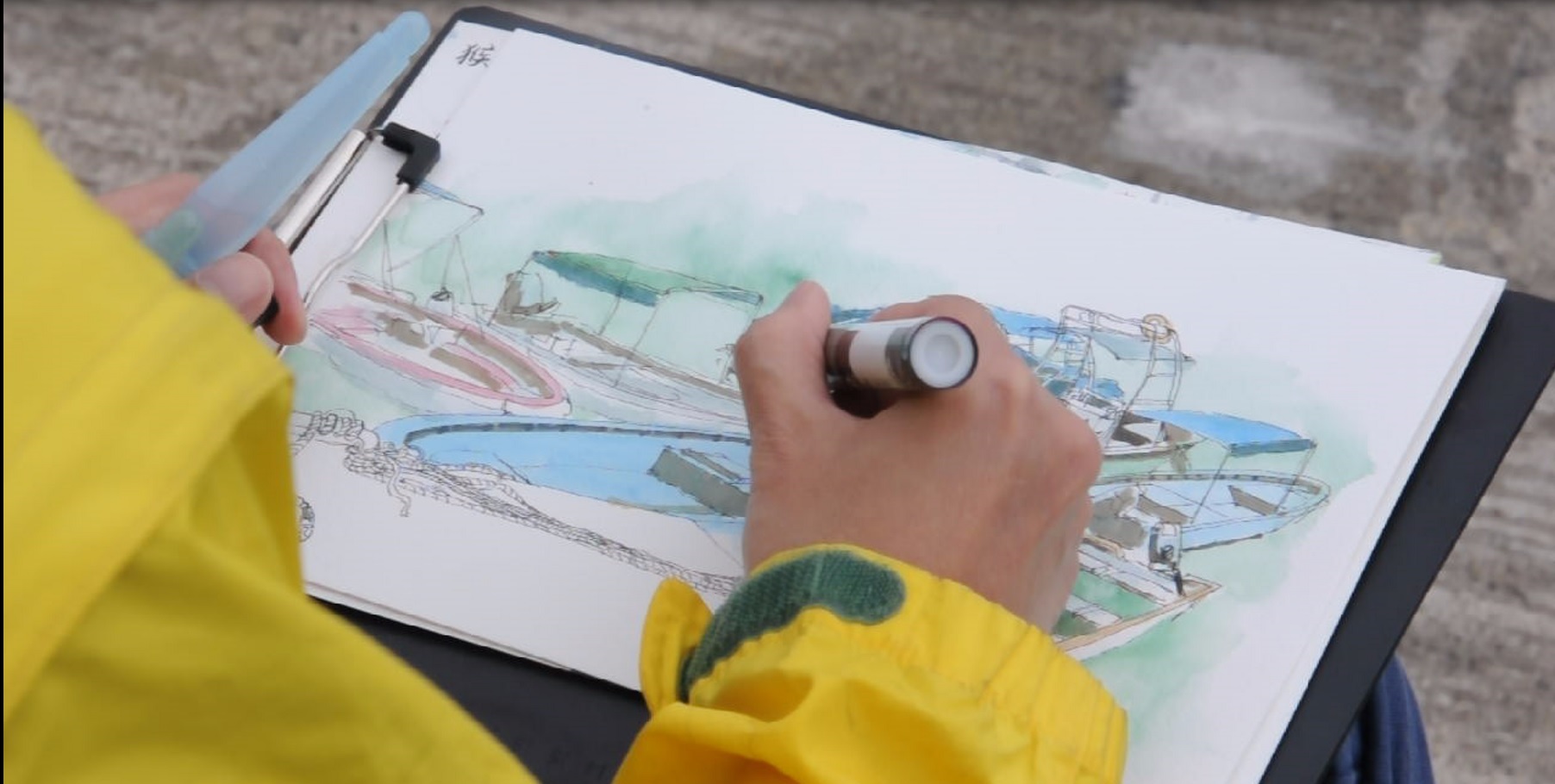
For local artist Gary Yeung, urban sketching is more reproducing  reality in pretty watercolours. As a Hongkonger born and bred , Yeung has always been attached to the territory’s idyllic charms, a side of Hong Kong he finds gradually receding due to rapid development. By using his brush, Yeung becomes a historian, documenting the city’s long-standing buildings and communities.

In 2012, Gary Yeung co-founded Urban Sketchers Hong Kong with a few other illustrators, and they started to meet regularly to recordcityscapes in different parts of Hong Kong. When the  Occupy Movement got underway, Yeung felt the group was playing another role as well“Since Occupy Central started, as urban sketchers, my friends and I became aware of another role we’ve been playing in recent months. We have in fact been reporting. We’re not just sketching, but sketch reporting.”

Yeung says, urban sketching is always about human life. “There are many shops in a street, but without humans, there’s no life… People are in action. And we are sketching actions.”

Old and alone in Hong Kong’s ghost villages

Reporters: Grace Cheung, Zoe So, Sherry Tsui, Brian Wong

Editors: Cindy Ng, Silvia Li

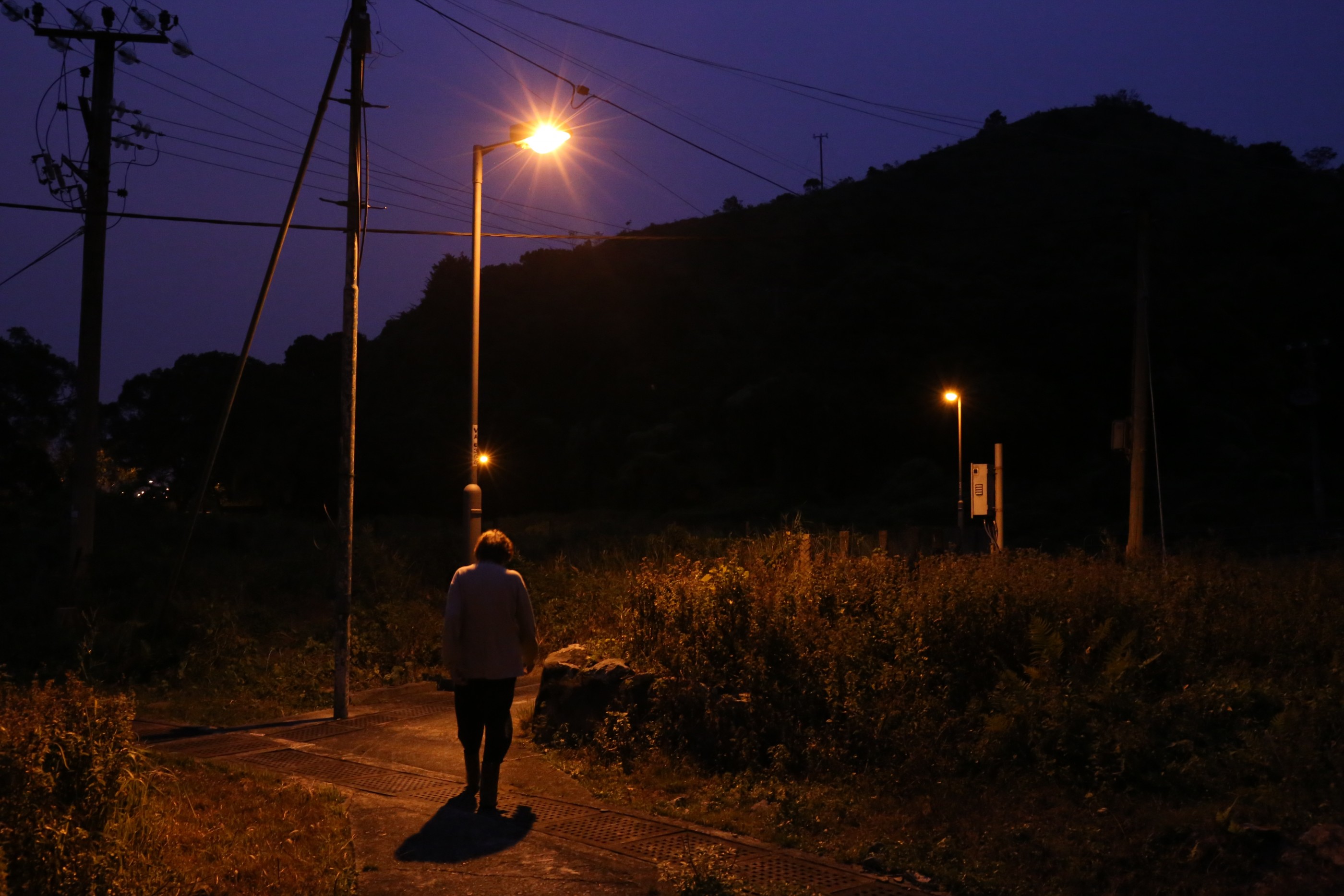
Away from the hustle and bustle of city life, few people are away of the plight of the elderly left behind in semi-deserted rural villages. While many senior citizens living in city areas may enjoy family life when their children are off from work, these elderly villagers in remote area of the New Territories hardly ever see their loved ones because their homes are not easily accessible.

64-year-old Tsang Shan-wah moved back to Lai Chi Wo Village in Fanling two years ago and runs a store there. “Transportation is the major reason why the villagers move to the city, and many of them actually wish to come back very much,” he says.

In the 1960s, there were approximately 450 villagers around Lai Chi Wo area, and Tsang’s village was one of the seven most populous villages in Lai Chi Wo. But the remoteness of the location – it takes at least three hours to walk from the nearest train station – and the lack of public transportation means many young people have left.

When the elderly villagers fall sick, they have to hire a ferry to take them to the city and this costs a few hundred dollars.

Residents of Lai Chi Wo Village are not alone in their plight. Sha Lo Wan Village along the Tung O Ancient Trail can only be accessed by motorbikes or bicycles through a narrow hiking trail; and ferries which have just six sailings a day that stop here on the route between Tuen Mun and Tai O.

According to the Planning Department, Sha Lo Wan Village has a total population of 700 in 2013. However, most of the working younger people only return to the village on an irregular basis due to the inconvenient transportation, leaving fewer than 30 elderly people staying at the village on a daily basis.

A 70- year- old villager, who lives alone, says she has to hire a ferry to Tung Chung whenever she goes for medical follow-ups. It is an expense she can ill afford.

These villagers have been urging the government to run a ferry from Ma Liu Shui to Lai Chi Wo or let them operate “kaito” (small fast boats), but to no avail. They hope better transportation can bring the younger generations back and rejuvenate the villages. In San Tau Village along the same Tung O Ancient Trail, the villagers have been asking the government to build a carriageway linking Tung Chung to Tai O for 30 years. The government promised them one as a trade-off for building the new airport near their home. “It has already been ten-something years since the completion of the airport but still there is no progress for the carriageway,” says 76-year old Ms. Wong, who has been living in San Tau Village for over 50 years.

Cost efficiency and complex construction work are the major concerns of the government. In the meantime, these elderly people, many of them living alone in some of Hong Kong’s remotest villages continue to face uncertainty and anxiety. “Even the ambulance cannot access the villages promptly,” Wong says, “You just have to wait. If it’s not something that’ll kill you, you can wait, if it is, then you’ll die. That’s it, no big deal.”

Citizen Journalists report the Umbrella Movement

What does it mean for journalism when amateurs take to the frontline?

Reporters: Henry Lee, Total Lam, Antonia Wong

Editors: Rachel Cheung, Sharon Lee

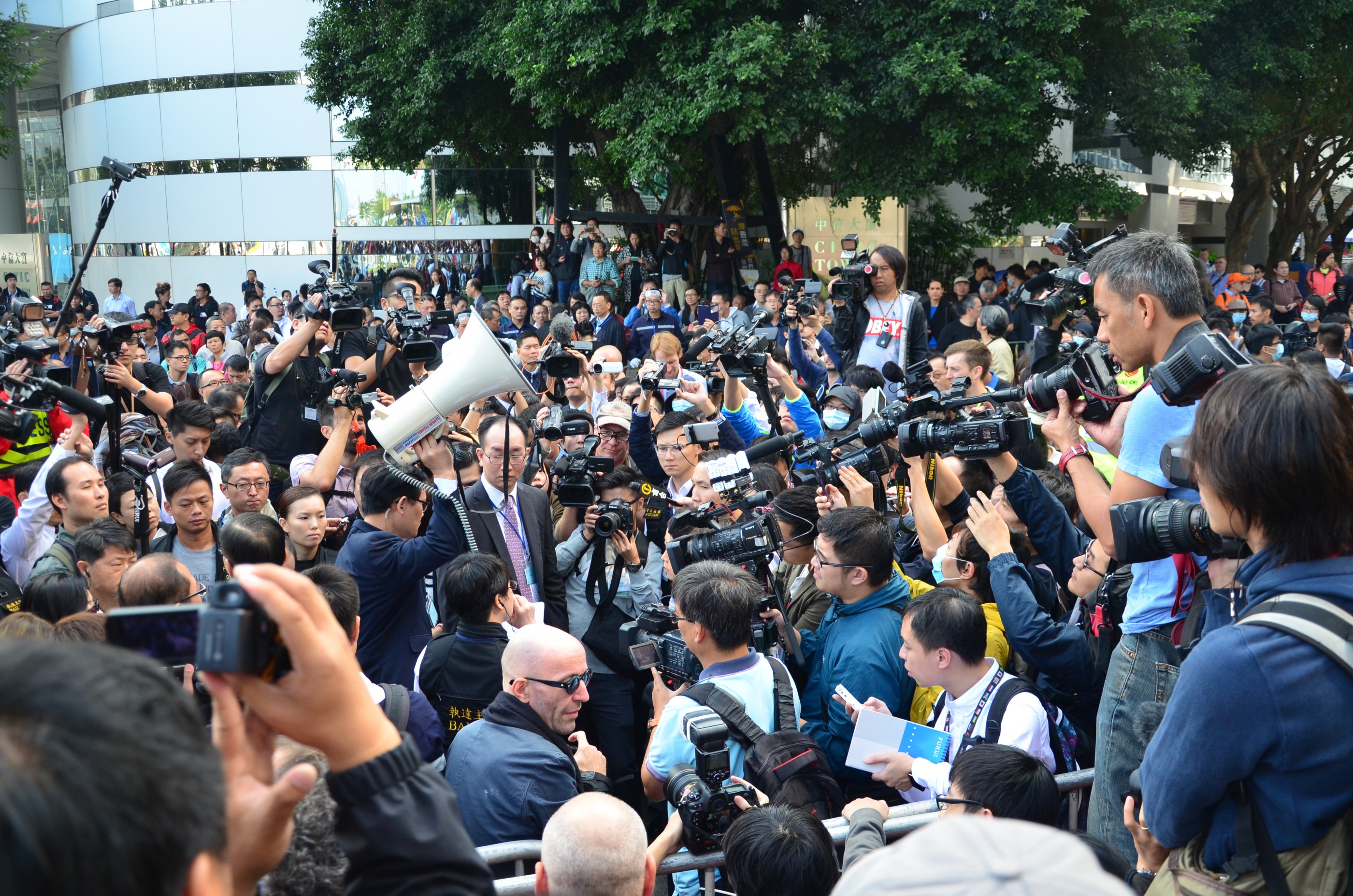
As the Umbrella Movement ran into its second month, it was another night of action in Mong Kok. This time, it was a camera flash light that triggered scuffles.

Daniel Cheung was in the middle of the crowd. He is a photojournalist from SocRec, an independent online media outfit in Hong Kong.

Cheung had been working for SocRec for around three months. Compared with the traditional media, he says reporters at independent media enjoy greater editorial independence; they can release first-hand information quicker. Usually, a camera or a smartphone is all they need to do their reporting.

Still, he concedes the mainstream media makes a bigger the impact than independent media, “Foreign media would only report through the information released by mainstream media,” says Cheung.

Gundam Lam is a student at the University of Hong Kong who works part-time as an amateur reporter for InMedia, another independent Internet media platform in Hong Kong.

Lam recalls that when he tried to report the meeting between representatives of the Hong Kong Federation of Students and government officials, he was refused entry to the venue. Lam’s credentials were not recognized by the guards. He found the decision ridiculous and says a media organisation should be judged by its credibility and influence.

Citizen journalists play a different role from that of mainstream journalists. Instead of maintaining objectivity, some would practice advocacy journalism, “We are here to be part of the social movement… our news is assisting the movement!” he says.

Paul Leung, who founded SocRec, thinks citizen journalists are different from journalists. “Journalists are journalists, they require professional knowledge … We are just netizens and citizens, who systematically collect information by crowd-sourcing and posting it online,” he says.

Leung tends to report things that may not be covered by mainstream media. He sees his role as complementary to rather that a replacement of traditional media. In this way, alternative media can put pressure on and motivate traditional media to report things they might otherwise have missed.

Sham Yee-lam, the Chairperson of the Hong Kong Journalists Association says citizen journalists cannot be recognized as journalists.

“[For them], it’s just an interest.. They are merely collecting information – a lot of people do that. We used to call them information sources. But now we gave them a name, citizen journalists,” says Sham.

Sino Centre: Witnessing the End of an Era

The decline of celebrity merchandise industry in Hong Kong

Reporters: John Cheng, Tracy Cheung, Vivian Lai

Editor: Elaine Tsang

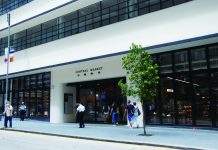
The glory days of Hong Kong popular culture in the 1990s gave rise to a variety of celebrity product shops, notably in Sino Centre in Mongkok. The shopping centre was  an important place for fans to purchase celebrity merchandise. But with the advent of the age of internet downloads and changes in idol worship culturemany celebrity product shops have closed down. For those that remain, the challenge is to change with the times or suffer the same fate.

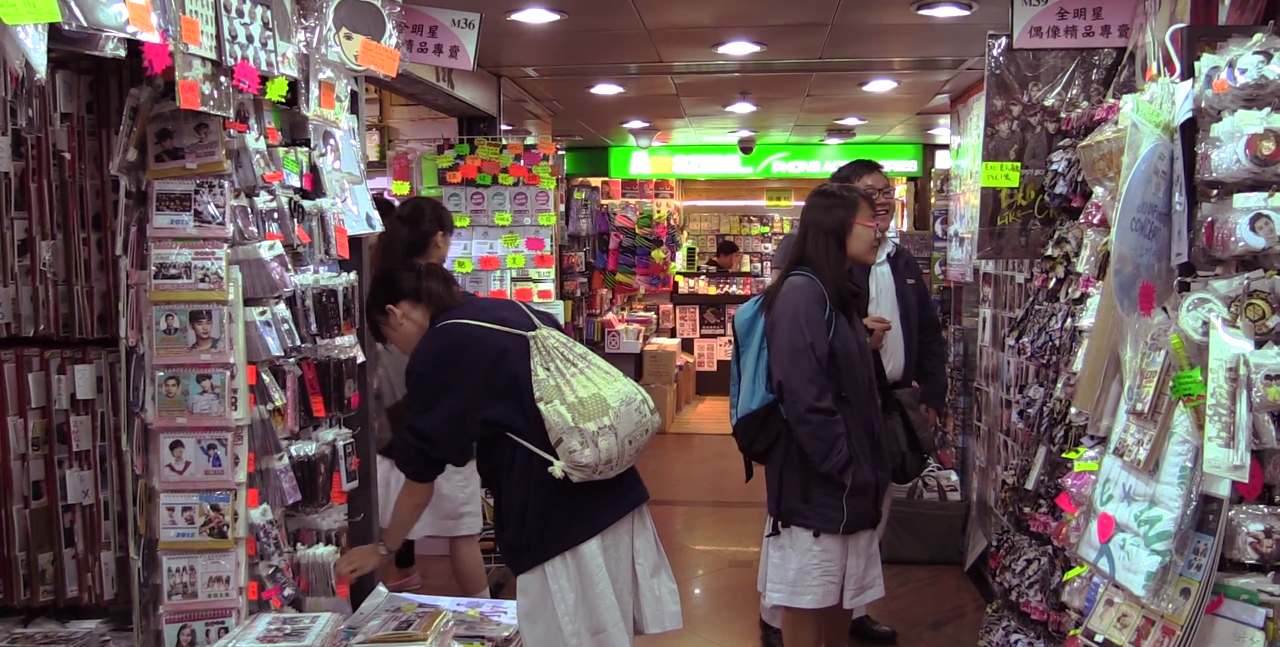
Today, most of the idol merchandise on sale at Sino Centre is for fans of K-Pop stars. There are shops selling shops selling a large variety of collectibles, including Japanese magazines, stamps, local and foreign CDs But in the heyday of Cantopop, they were packed with photos, posters and collectibles featuring stars like Leslie Cheung and Anita Mui

Eva Ng and Tata Lee, who are devoted fans of the late Cantopop diva Anita Mui, used to visit Sino Centre frequently to purchase Anita merchandise. They recall the crowded scenes there and joke about the good old days when they had to line up outside the photo shops.

When they revisit their old haunt, the friends are surprised by the changes at Sino Centre. Compared to the more than 30 celebrity product shops of the past, there is only one celebrity photo shop left in Sino Centre.  They also lament that familiar names such as those of the Four Heavenly Kings of Hong Kong Cantopop can no longer be found in the shops.

When she was a schoolgirl, 20-year-old Kitty Chan would go to Sino Centre and buy stuff related to teen idols such as Twins and Fahrenheit. She blames online shopping for the closure of celebrity product shops. With greater a variety and better quality of products, many prefer to buy items online through official fan club websites rather than shops in Sino Centre.

Still, Sino Centre has an irreplaceable status in some people’s eyes. Patrick Choi, the owner of Sky Music CD shop since 1990, has witnessed the golden age of the celebrity merchandise industry at Sino Centre. He feels deeply connected to this place, and over the years some of the his customers have become his good friends. He is sad about the decline of the industry but says he will try his best to keep going in order to preserve the collective memory of a generation of people.

The Oyster Farmers of Lau Fau Shan

Pollution threatens traditional oyster culture industry but farmers press on

Reporters: Donna Shiu, Godric Leung, Macau Mak

Editor: Cherry Wong

Oyster culture has been practiced in Hong Kong for around 200 years. A group of oyster farmers keep on running their business in Lau Fau Shan.

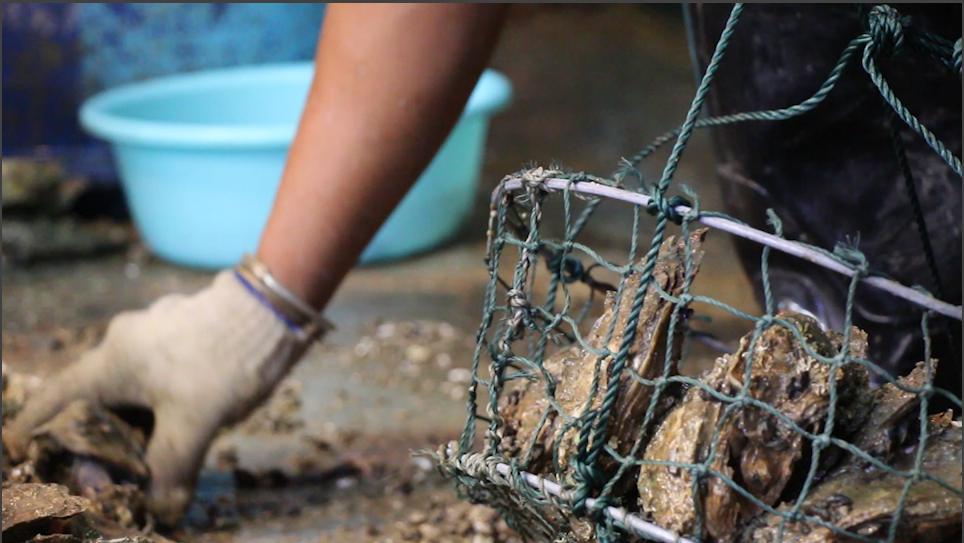
The oyster farmers wake up early every day and take to the sea to check the oyster rafts in the middle of Deep Bay. They culture oysters by placing them with wood pieces and concrete tiles suspended from bamboo rafts.

Tsang Kam-tong, an oyster farmer, says his father cultured oysters by placing rocks and concrete tiles on the mud flat. But he prefers the raft culture method to the traditional one because he can grow more oysters of better quality..

However, development in nearby Guangdong has adversely affected water quality in Deep Bay, raising concerns about the safety of local oysters.

Unlike their foreign counterparts, local oyster farmers do not have the resources to install purification tanks for their bivalves. Still, they insist their oysters are safe to eat. Tsang says oysters are sensitive to water quality and will die if the water is polluted.

Another oyster farmer, Chan Kam-to says oyster sales have declined since the 1980s, the golden decade for the industry. But Chan adds the safety issue is not the reason for the fall. He says customers now have more choice when it comes to seafood varieties, and they may opt for imported oysters, instead of the local ones.

However, Leung Ka-kuen, a food columnist, says local oysters are tastier than the American ones. He points out that local oysters are more expensive, and a reason local restaurants import foreign frozen oysters is because they are cheaper.

Although oyster sales are declining in the local market, Leung explains that a large proportion of local oysters are now sold to the mainland Chinese who have become more affluent.

Information to Opinion

Living in a materialistic modern society, we believe our life is constructed by things we can see, hear and touch. Many of us are unaware of the subtle power of information which profoundly influences our mindset and perception, shaping our sense of “reality”. Ironically, thanks to advances in telecommunications and the rise of social media, fast-circulating information accessible around the globe has given rise to a host of new problems.

When there is so much information, how can we be sure of its veracity, or the credibility of the sources, and how can we analyse and judge its importance? Perhaps more than ever, we are vulnerable to distortion, rumours and lies.

Since late September, the Occupy Movement has dominated local media and been given prominent coverage overseas. This has thrown the spotlight on the ways in which information shapes opinion. Varsity takes a look at the impact of information on thoughts and actions in the case of the Occupy Movement.

Many say the Umbrella Movement has created a more divided society – a split between liberal progressive youth and their conservative middle-aged elders. We try to see how the  “generation gap” relates to their respective media consumption. While much of the comments and news circulating on social media may be sympathetic to the protesters, the politically conservative mainstream media condemn the movement. The results of public opinion polls highlight the shifts in public support for the movement. It raises a question for the protesters of how to soothe public opposition and win back support.

As the Occupy Movement continued, the mass of live reports and updates from the occupied zones – some of them accurate, some of them less so and more of them false – were a source of anxiety to people hungry for information. Facebook posts and WhatsApp messages about police clearances and other developments quickly went viral. Every time a rumour spreads, protesters are on the alert for possible violence and arrests. The tension can lead to false moves and overreaction.

Despite the proliferation of rumours, sometimes reported as fact even in reputable media, press freedom is what many Hong Kong people cherish and take pride in. A liberal public sphere for expression also attracts young people from mainland China, some of whom only realised how severe censorship was back home after they came to Hong Kong. We ask whether having free and open access to information leads to a change in political outlook among young Mainlanders living and working in the city.

Apart from trying to look at the complex issues in the information battleground, we also have a range of stories for you, from the promise of cutting-edge 3D printing technology in medicine to profiles on actor Gloria Yip and Fermi Wong, a pioneer for the rights of Hong Kong’s ethnic minorities. We hope you enjoy your read.

Cindy Ng

Managing Editor

signature


Open Information, Open Minds?

Does free information flow change political opinions of Mainlanders in Hong Kong?

by Yan Li & Brian Wong

Hui Kei, a 29-year-old freelance writer from Zhejiang was once a Chinese patriot and firm believer in the Communist Party. He was an active member of the Young Pioneers and the Communist Youth League who would naturally stand to attention whenever the national anthem was played. Hui believed China would become powerful as long as it improved its military and economy.

In school, Hui learned that the June Fourth Incident in 1989 was a “political turmoil”. But he and his classmates did not pay much attention to it as they knew it would not come up in examinations. Rather, students were asked to express their opinions on Taiwan sovereignty and Falun Gong in exams. They knew they were expected to give “standardised” answers in line with the party position in order to score.

All this seemed perfectly normal and Hui never criticised the education and information he received in the Mainland until he arrived in Hong Kong in 2003 to join his mother who had married and settled here. In Hong Kong, he watched a documentary about the 1989 pro-democracy movement in China and the subsequent government crackdown. He realised what a huge difference there was between the account he saw and the version he had learned, and how serious media censorship was in China. “[After watching the documentary], I instantly doubted my previous education,” says Hui.

A documentary depicting the June Fourth Incident awakens Hui Kei’s political consciousness.

That was the beginning. Hui started to read books by liberal writers like Taiwan’s Li Ao and Hong Kong critic Leung Man-tao, which are hard to come by in the Mainland. He was inspired by the ideas of democracy and liberty and he was touched by the strong spirit shown by Hong Kong people in fighting for a better future for their city.

For Hui, Hong Kong has shown him “another way of Chinese existence”, such that he now finds China’s unification mantra increasingly annoying. “Looking back, I realise that Zhejiang people also have their own characteristics. We should not say we are Chinese. We should proudly say that we are Zhejiang people” says Hui. “‘Chinese’ is not enough to describe me.”

In Hui’s articles, he comments on the political situation in mainland China and Hong Kong. He also writes about the conflicts between the Mainland and the territory, and these articles are published on Mingpao Century and his personal Weibo account. However, his Weibo account is censored and only the people he has added and are following his account can view his articles. What is more, they can only view but not share his articles.