









Home Blog Page 11

Home Sweet Home

The homeless struggle to live as their belongings and living space are stripped away by the government.

By Charley Ho, Roy Ng & Daniel Paek

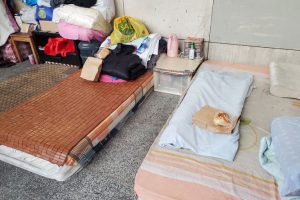
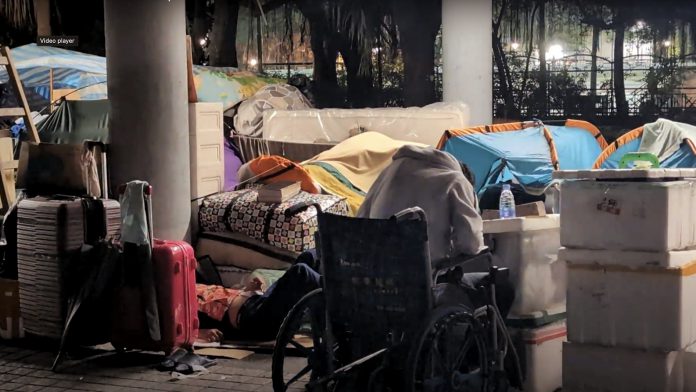
Sleeping in Tung Chau Park in Sham Shui Po, Ah Bing stays alert for her belongings every day after all her belongings were dumped as rubbish by government contractor cleaners in 2019. 

The 60-year-old homeless woman is angry that everything she had was taken away. “There was no prior notice, and all my clothes were suddenly treated as rubbish. Most of my belongings disappeared,” she says.

“I am extremely sad about losing the clothes that my sister gave me before she passed away. Every time I mention it, it makes my heart ache,” the street sleeper who prefers to be addressed as Ah Bing adds.

On the eve of the 2019 Winter Solstice, homeless people sleeping in Tung Chau Street Park in Sham Shui Po, had their belongings confiscated and discarded by the Leisure and Cultural Services Department and were evicted by riot police in an anti-crime operation.

One of them was Ah Bing. Together with eight other homeless people, they took the government to court and each received HK$100 (US$12.78) in compensation after two and a half years. The court ruled that the government had failed to properly handle their belongings during the park clearance operation. 

Despite the favourable ruling, no apology to any of the homeless people has been issued.

The Small Claims Tribunal later also rejected an appeal regarding the amount of compensation, ruling that the adjudicator is not required to make unnecessary inquiries into the issue of mental distress.

The Court ruled that the plaintiffs failed to prove their actual losses from the clearance operation, upholding that HK$100 (US$12.78) was a suitable amount for symbolic compensation on July 21, 2022. 

Street sleepers not only risk having their possessions taken away, some homeless even face forceful eviction.

Sleeping under a bridge, Chi Goh, 62, now struggles not just to keep his possessions but his spot on the street. He is forced to stay about 100 metres away from a subway where he used to sleep, as fences are installed in the Cherry Street Subway in Tai Kok Tsui.

A section of Cherry Street Subway was blocked with fences due to “maintenance work”, according to a notice jointly issued by seven government departments on March 15, 2024.

Fences in the Cherry Street Subway in Tai Kok Tsui have been installed for “maintenance work”, which prevents the homeless from living there.

The Yau Tsim Mong District Office says it received numerous complaints about the accumulation of miscellaneous items leading to obstructions, environmental hygiene problems, and public safety concerns. Renovation and beautification works on the affected section are expected to be completed this summer.

The Social Welfare Department says it coordinated outreach service teams to visit and assist the affected homeless before blocking the subway and on the day of the blockage. They also advised the homeless to access assistance services. 

While facing forced eviction by government action, Chi Goh finds it hard to find affordable housing.

As a freelance driver, his monthly income is unstable, ranging between HK$10,000 and HK$29,000 (US$1,279 to US$3,711). 

According to the current public rental housing policy, a one-person household cannot earn more than HK$12,940 (US$1,656) per month and has a net asset over HK$286,000 (US$36,566) to be eligible for public housing.  

“The government traces my annual income from the past, and the amount has exceeded the limit…  But I can’t afford to stop working for a year just to apply for a public housing unit. It’s unrealistic. I don’t expect anything from the government. I’d rather rely on myself. They have their heads in the clouds,” he says, adding he has to cover his other living expenses.
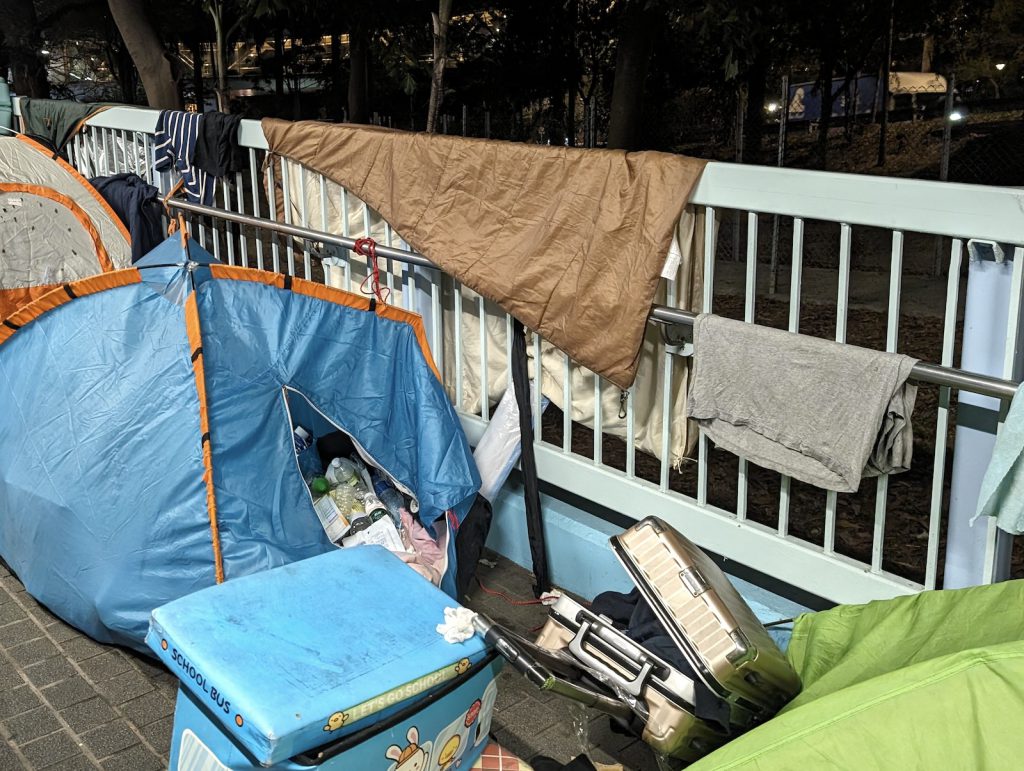
Chi Goh has moved his tent and possessions onto the Cherry Street Bridge after fences have been placed in the subway.

And he does not want to reveal his plight to his family. “I don’t want my son to know about my situation and I don’t want to bother my son who is now in a relationship,” he adds.

Social worker Ng Wai-tung, a community organiser at the Society for Community Organisation, points out that many street sleepers are unwilling to take legal action or engage in dialogue with government officials to solve their problems.

“They don’t want their families to find out they are street sleepers. They are worried that their identities might be exposed if their court cases or meetings with the government are reported by the media,” Ng says.

Having helped the homeless in the city for more than 20 years, Ng says they have very limited housing options, and social welfare support for them is inadequate.  

“The cheapest sub-divided flats cost HK$4,000 (US$512) a month in rent, while cubicle apartments with shared bathrooms cost at least HK$2,000 (US$256). The price per square foot is among the most expensive, while the living conditions are the worst. The flats are stuffy, noisy, and infested with fleas,” Ng says.

“The number of homeless people has doubled since 2014, yet the government has only increased the number of temporary shelters and hostels by 10%. There are about 1,470 homeless people now,” he adds.

Ng notes that many temporary shelters are located in remote sites with limited access to public transport, and the homeless are also worried about security issues in the shelters such as theft due to the lack of lockers.

Ng also points out that only less than half of the homeless are receiving Comprehensive Social Security Assistance. “They generally want to make a living on their own and don’t want to bother others. I hope this vulnerable group will soon be destigmatised, and that Hong Kong will become a compassionate community,” he says.

Edited by Lorraine Chiang
The Journey of a Young Fighter

Chen Tze-kin shares his journey with a rare disease on his YouTube channel to inspire others.

By Winnie Li

Suffering from a rare disease, Noddy Chen Tsz-kin cannot wear clothes by himself and even a smartphone is too heavy for the 15-year-old to hold.  

The illness Chen has is Duchenne muscular dystrophy, which causes progressive muscle fibre degeneration and weakness.

“I need my mum’s help to wear my clothes,” says Chen, who was diagnosed with the sickness when he was only one year old.

“I have to leave home 20 minutes earlier so that I can arrive at school on time because the nearest MTR exit has no lift with it,” the Form Three student says.

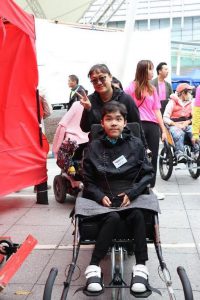
Tsz-kin with his mum in a charity funding event (Photo courtesy of Chen Tze-kin)

Despite his disability, Chen leads a very busy life with his studies and YouTube channel.  

His channel “Snail Tszkin”, launched in 2020 so far has 15.6 thousands followers. 

“I name the channel snail because every move I make is slow like a snail,” he says. 

Chen does all the script writing, shooting, and editing by himself, and it takes him about six to seven hours to prepare a five-minute-long video. 

The secondary school student shares his daily life as a disabled person in his channel, hoping to encourage others who suffer from disabilities like him to lead a happy and fruitful life. 

“I started thinking of being a YouTuber after joining an ultramarathon in Gobi Desert in 2018. I want to tell people that a lot of things are possible through my YouTube channel,” Chen says.

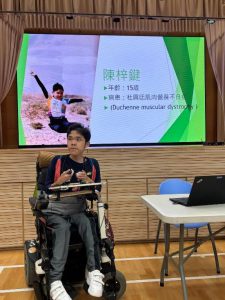
Tsz-kin doing sharing in school about his story (Photo courtesy of Chen Tze-kin)

Chen went to the Gobi Desert and Kyrgyzstan to join ultramarathon competitions in 2018 and 2019 with Wheel for Oneness (WFO), which helps the disabled to join marathons.

Since the whole journey was video recorded, Chen started to get used to camera shooting.

“Me and my mum have never thought of going to the desert. I was very excited when I knew that I had the chance to join the trip,” Chen recalls adding that when he joined the competition he was nine.

During the competition, Chen recalls he and his teammates came across a dune as tall as the International Finance Centre (IFC) in Hong Kong, which is 412 metres tall, during the long march in the Gobi Desert.

“A team of 40 carried me with a rickshaw. It was a challenge to go up the dune, but we decided to do it rather than picking another route,” Chen recalls.

“We wanted to show our determination to overcome difficulties along the way in the desert. We did not want to give up easily. We should try to deal with them,” he says.

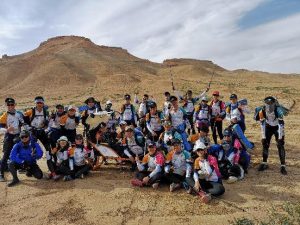
Tsz-kin with the team in Gobi Desert (Photo courtesy of Chen Tze-kin)

Apart from the ultramarathon, Chen joined an activity “Dreams2Gather” held by the Adolescent Medical Centre of Queen Elizabeth Hospital in 2013, which helps disabled children make their wishes come true. 

“Although I’m affected by the disease, it doesn’t limit me from exploring the world,” Chen says.

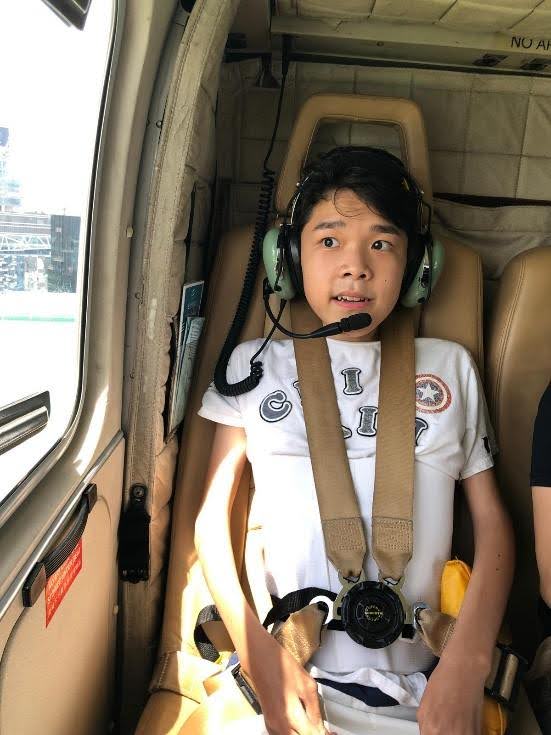
Thanks to the help of the centre, Chen took a helicopter ride to see the scenery of Victoria Harbour.  He met Steve Ma Chun Wai, a Hong Kong singer and shared his thoughts at human library Lingnan University with other disabled children who joined Dreams2Gather.

“Since my life is shorter than others, I don’t want to spend my time feeling sad. I want to explore the world. There are a lot of people leaving me supportive messages on my channel. They also have helped shape who I am now,” Chen says.

Chen also wants to help others despite his condition. 

“Sometimes I do sharing sessions in school. I receive help from others, and I want to help others by spreading positive vibes in life. I don’t think doing nothing is a choice.  We should explore our interests instead of giving up,” he says. 

Chen also joined a course “Jin Ngo” in Chinese last year, which means “show me”. It is a speech course arranged by Hong Kong Rehabilitation Power, an NGO that helps the disabled to find jobs.

Chen is interested in doing speeches because he thinks that it is similar to running his YouTube channel and sharing about himself.

“I think it is more powerful to communicate with others face-to-face than sharing through videos, so I want to do more speeches in the future,” Chen says.

Edited by Jasmine Lam

Sub-edited by Nicole Li

Survival of Hong Kong Independent Bookstore

Independent bookstores in Hong Kong offering unique collections and beyond.

By Mike Chu

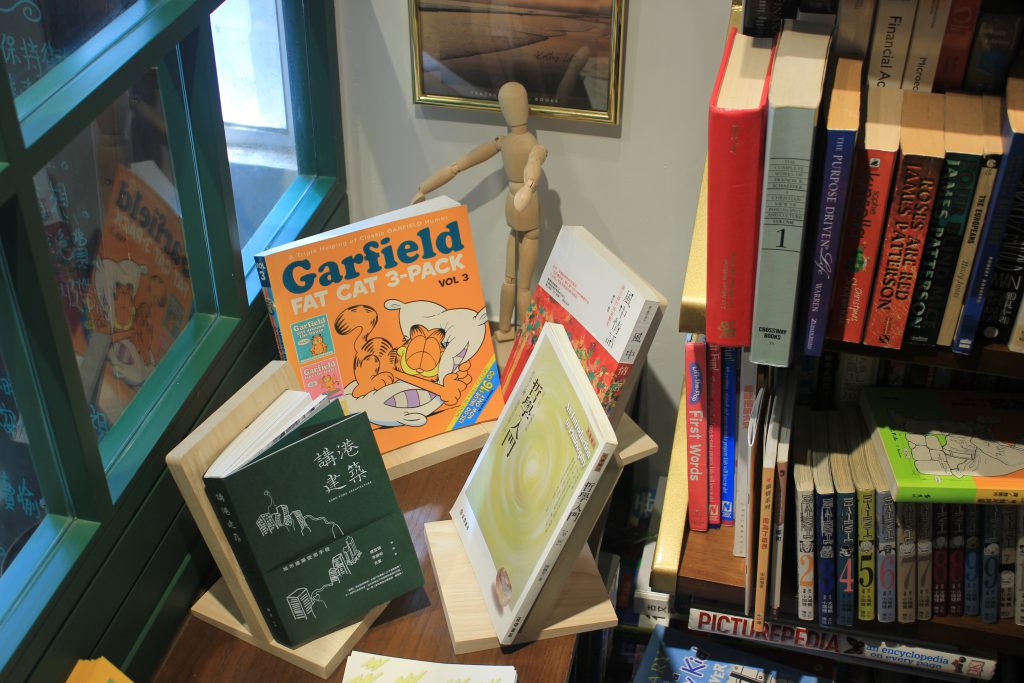
Independent bookstore owner Dexter Tse woos customers with his comprehensive selection of books about Hong Kong history.

Tse is the owner of Lion Ink Bookstores. Lion Ink is a member of “ABookClub”, which is composed of smaller bookstores in the city. Each bookstore has its own niche collection of books focusing on one theme. 

“As people have been getting more interested in the history of Hong Kong recently, I want to provide Hong Kong history book lovers with a rich selection of books on the subject to cater to their needs,” says Tse, who studied history at university. 

Tse, who has been running his bookstore for two years, tries to offer something that mainstream bookstores cannot provide.

“Compared to mainstream bookstores, independent bookstores are more focused on the process of book curation,” he says. 

The store is located in an attic in a private flat on Tai Nan Street. 

“We have limited space to store books so independent bookstores are selective with their collections featuring a particular theme,” Tse says.

Apart from limited space, another challenge for Tse is sourcing books. 

“Books we source from Taiwan are sometimes held for inspection by the Hong Kong Customs for a few months before we can take them back,” Tse says, adding that it usually happens around July and October. 

“By the time the books are returned to us, we miss the best-selling period for new Taiwan books, as customers have already bought them online,” he says. 

Apart from selling books, Tse also hopes he can provide some public space for residents nearby. 

Tse is not alone in creating unique experiences for readers in independent bookstores. 

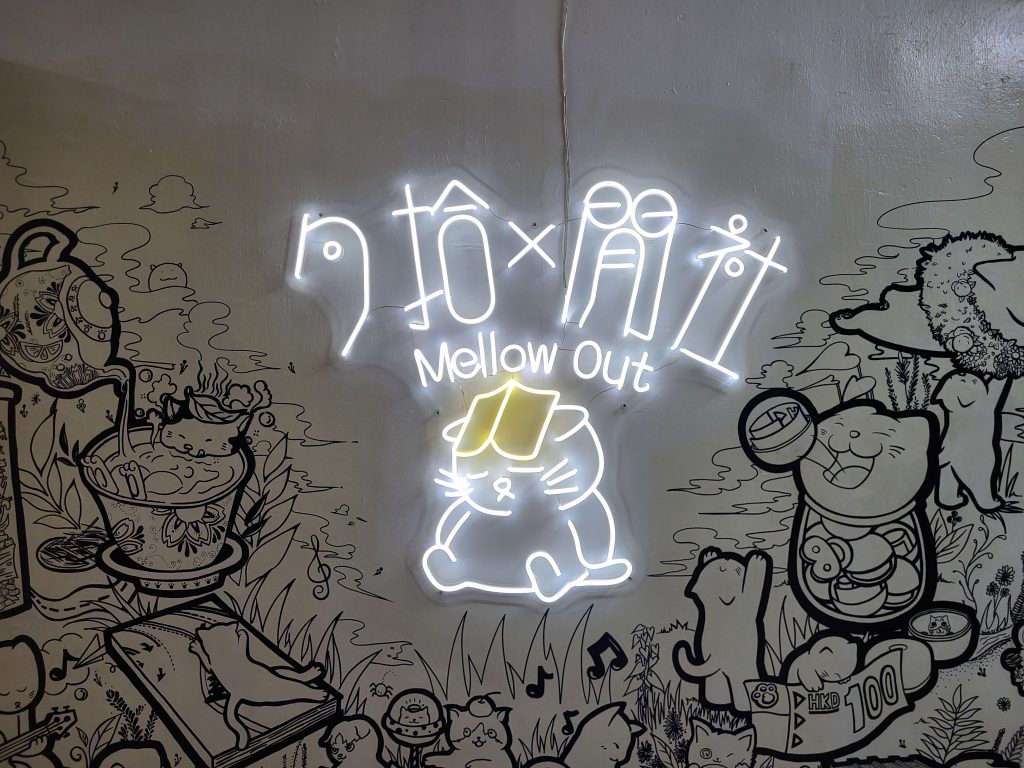
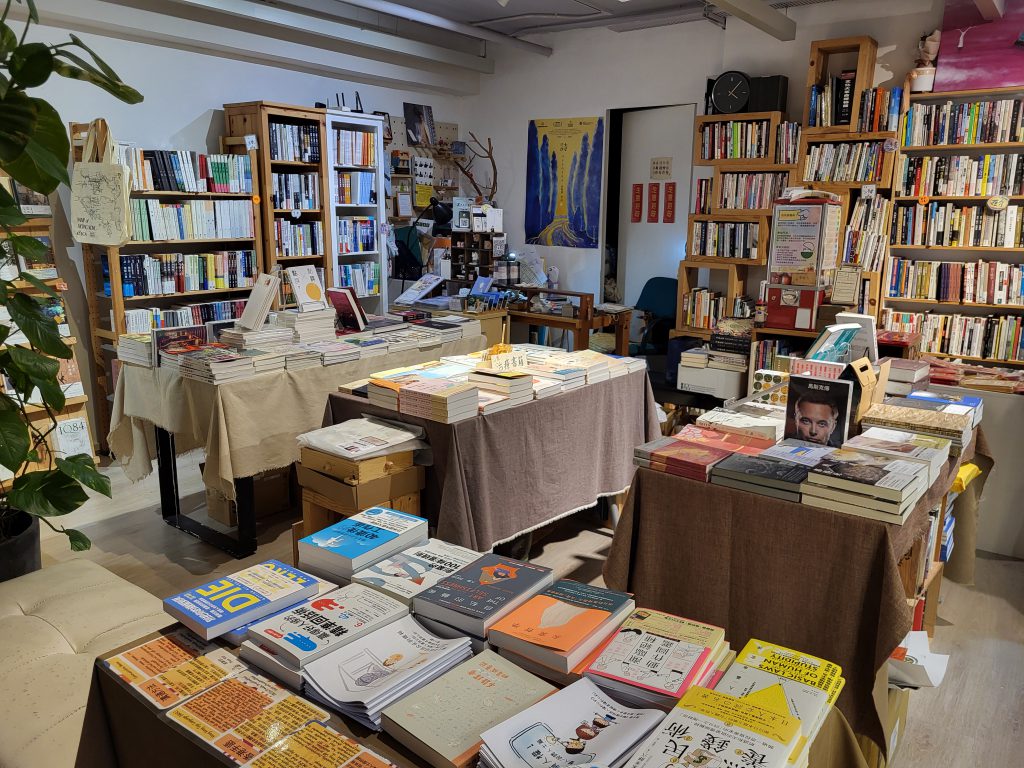
Sharon Chan, who runs Mellow Out in Kwun Tong, organizes events ranging from author sharing to boxing classes for customers. 

Mellow Out, an independent bookstore in Kwun Tong.
Mellow Out does not only sell books, but also hold events.

“I live here and I feel like Kwun Tong is lacking a place for people to gather around and have fun,” Chan says. 

The most memorable event for Chan was a dog adoption event in June 2023. “It was really funny to watch puppies running around inside a bookstore. It was quite a unique experience,” she recalls. 

Still, the ultimate goal for Chanisto is to encourage people to buy books at her store. “By holding events here, I hope people can take a look at the books too and perhaps buy some of them,” the bookstore owner adds.

Chan also wants to connect authors and readers by hosting meet-and-greet sessions. “They can have face-to-face chats to exchange their thoughts and ideas more,” Chan adds. 

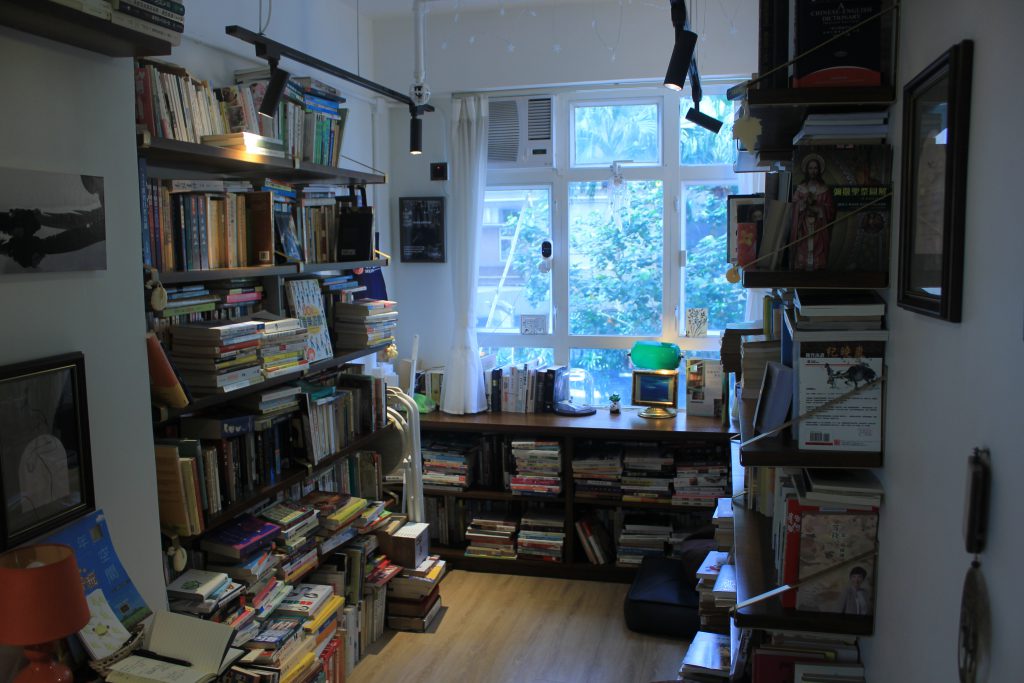
Traces of Books, located in Fortress Hill, does not sell or lend books to others. While it sounds odd at first, the owner just wants to offer readers a place to read. 

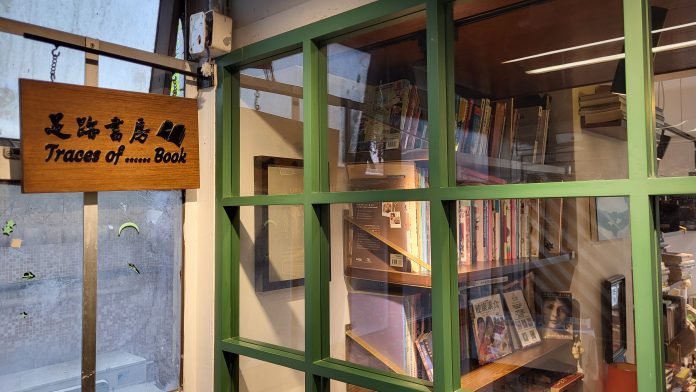
Traces of books, located in a half-empty mall.

“I believe books can heal people’s souls. So I want my bookstore to be a place where people can experience this power,” bookstore owner Map Tang, who is also a social worker, says.


All categories of books can be found in Traces of Books.

No staff is deployed at the store, as Tang wants visitors to enjoy solitude when reading.

“My store cannot accommodate many people. It is like a mini town hall for people who just gather around and read, and maybe even chat,” Tang says. 

Tang is not optimistic about the future of other independent bookstores. Many bookstores have ceased operation recently, with Mellow Out announcing they will close their physical store in Kwun Tong due to “violation of the building’s rule”. 

“This is a new Hong Kong, and we have to get used to it and move on with our life. We still have a long way to go,” Tang says. 

Edited By Perry Kwok

Sub-edited by Cynthia Hu

Rescuing leftover Bread for the Needy

NGO redistributes leftover bread which might end up in landfill to the needy.

By Alexia Leung and Pauline Yau

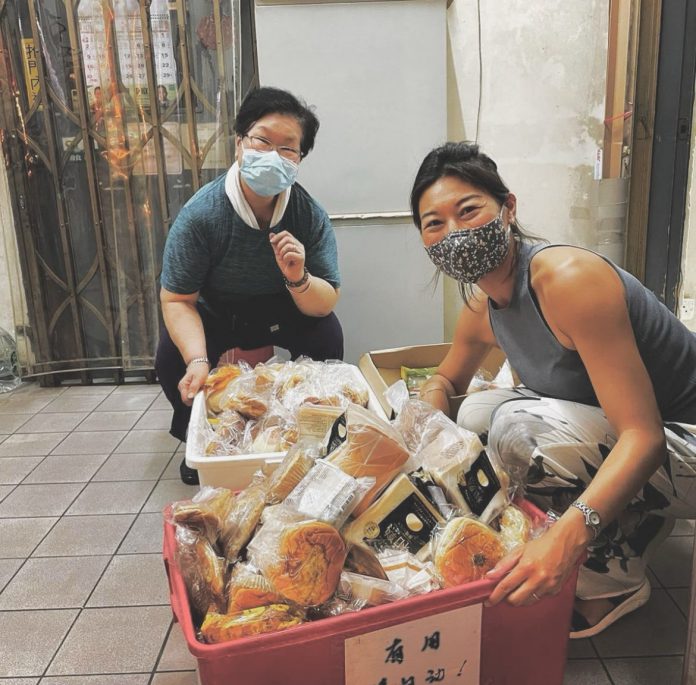
Carrying bags full of baked goods on their shoulders, volunteers collect surplus bread from bakeries in Wan Chai to help people in need every Friday. One of them is Sachin Mital, who shares that it is the rightful act to offer a hand.

The volunteers of an NGO, Breadline, pick up leftover bread from bakeries on Hong Kong Island and in Kowloon at closing time and distribute it to those in need across the city. 

“I do this because I think it is my moral responsibility and obligation–not even a choice. If I have the privilege of not worrying about where or when my next meal will come from… I think this is the least I can do to play even the smallest part to minimize someone else’s suffering,” says the management trainee at the University of Hong Kong.

“I had just finished my tutoring and immediately left so I could reach here! We come every Friday night to pick up (bread) from Causeway Bay and go back to Tsim Sha Tsui to distribute them,” he says.

Mital adds that he also tries to invite others to join. 

“I shared the charity work I do in some community groups at the University of Hong Kong. One of my friends who tried this quite liked it. Even when not volunteering, I am more attentive and try to provide food or water (to the homeless) wherever I can,” he says. 

Another volunteer, Adrian Wong On-hing, starts volunteering after learning about the project from a friend.

 “I just hope to do whatever I can to help the charity so that more homeless people can be supported,” he says. 

 “Usually my Fridays are for resting, but now I go to the charity. I think the time spent on charity work is negligible considering the difficult conditions homeless people face,” the sixteen-year-old student says. 

Wong shares that volunteer work makes him treasure what he has more. 

“I believe the experience makes me more mindful. Wasting food makes me feel guilty, as now I know I have the luxury of wasting it while others have a hard time getting it. It is quite heartbreaking when I am having fun while there are people starving in the cold,” Wong says.

Mital and Wong are two of the 1,500 volunteers of Breadline, which has helped give new life to over 350,000 loaves of bread since 2020.

Collaborating with over 170 bakery and cake branches such as Maxim’s, Yamazaki, and Saint Honore, the NGO served over 160,000 breakfasts for those in need in 2023.

With the help of the charity group’s crowdsourcing app, volunteers connect with bakeries to pick up leftover bread so that food waste can be avoided and people in need can be supported. 

Currently, there are four drop-off points for the bread gathered from bakeries: Causeway Bay, Tsim Sha Tsui, Hang Hou, and Sheung Wan. Volunteers from different charities such as Hanuman Charity, Grassroots Future, Refugee Union, and Impact HK then collect the bread gathered by volunteers and distribute it to the underprivileged, including refugees, the homeless, and low-income families.

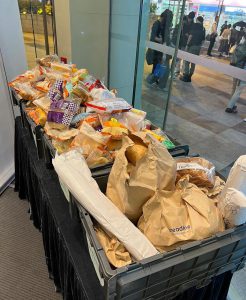
Breads are packed into boxes by drop-off points managers.

To ensure food safety, only bread without filling is collected for redistribution. 

“Pastries like cream roll cakes and cocktail buns are not wanted because they easily expire. Bread for redistribution must be individually packaged. Often, there are ten to thirty pieces of baked products left in this bakery,” a salesperson at one of the Saint Honore branches says. 

Breadline volunteers try their best to care for the underprivileged. 

Wong Fook-hing, who has been volunteering as a drop-off point manager in Causeway Bay for four years, takes the volunteers’ attendance, puts the bread into boxes, and redistributes the bread to volunteers from different charities.

“I bought these plastic boxes (which are used for packing bread) using my own money because I want to make sure their dignity is respected. The people who receive these breads are already in poor shape, so I just thought, why not give it our best and care a little bit more,” he says. 

According to the Environmental Protection Department, Hong Kong throws away 3,200 tonnes of food daily to landfills. Meanwhile, 20% of Hong Kong people live in poverty and experience hunger in their daily lives, figures from the Census and Statistic Department reveals. 

Hanuman Charity, one of Breadline’s partners, helps distribute the collected bread to the homeless.

Breads are distributed to the homeless.

“Breadline has been instrumental in supporting our NGO by providing us with edible bread that we can distribute to our regular recipients. This allows those who are homeless or the underprivileged to have access to food when they are hungry,”  Naveen Sadhwani, founder of Hanuman Charity, says. 

“Currently, our NGO has up to ten volunteers to help distribute bread and regular meal bags we prepare,” he adds. 

Breadline’s founder,  Daisy Tam Dic-sze, shares that it is important to cater to the special needs of different needy groups.  

“We try to find individually wrapped bread, which is more hygienic for redistribution, especially for the homeless, and also soft bread for the elderly,” she says.  

Tam is considering expanding her operation to cover the northern New Territories by adding a drop-off point and developing partnerships in the area. 

“We are exploring opportunities with a team of cyclists called iBikeHongKong to see if they could be a good match for collecting bread in the Sha Tin, Tai Wai, and Tai Po areas because they are linked with cycling lanes,” Tam says. 

*Names changed at interviewees’ request

Edited by Sunnie Wu

Subedited by Sean Pan

TV programme serves as missing persons units in China

CCTV programme helps families look for loved ones whom have been lost for years.

By Cathleena Zhu

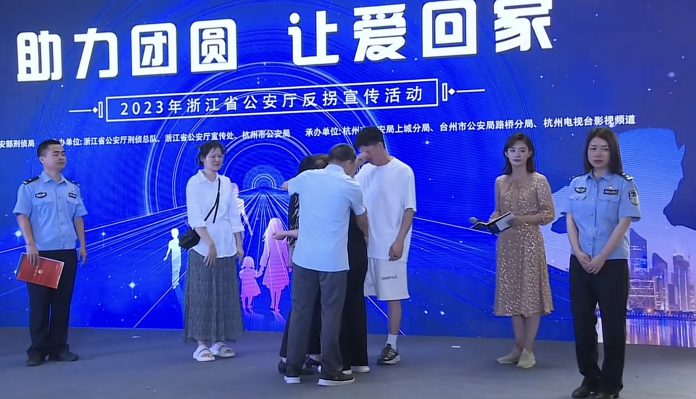
Liu Linlin now lives with her parents in Inner Mongolia and spends festivals with them every year after being apart for 19 years. 

Liu was given to a worker 30 days after she was born by her birth parents at a construction site in Hunan Province in 2000 because of financial difficulties.

She was then adopted by Xiang Minghua, a housewife. The baby girl was just 50 days old.

“My adopted mother raised me like my birth mother,” says the 24-year-old university student.

Liu was diagnosed with parotid gland cancer when she was seven. After comparing the DNA in her treatment tests, she learned that Xiang was not her birth mother.

Parotid gland cancer is a malignant tumor occurring in the parotid gland. The size is generally three to five cm, and its tumor growth rate is fast.

“I felt scared and was in great pain when I had my cheek surgery, but I didn’t want my adopted mom to worry, so I didn’t cry,” Liu recalls.

Liu Linlin, the girl with parotid gland cancer. (Photo courtesy of Liu Linlin)

In 2019, Liu’s disease turned into terminal parotid gland cancer in a checkup and was informed that she had only two to three months to live. That made her want to look for her birth parents.

“I wanted an explanation from them. At the same time, I was curious about what my birth parents were like,” Liu says.

Her adoptive mother, Xiang Minghua, was hesitant about the idea.

“I struggled with whether we should look for her birth parents. I wanted their financial help to cover her medical expenses. But at the same time, I did not want to lose Linlin whom I treat like my biological child,” Xiang says.

“I would also like to say sorry to her biological parents for not being able to look after their daughter. Otherwise, I would live with guilt for the rest of my life,” Liu’s adoptive mother adds.

Liu and Xiang sought help from the China Central Television programme “Waiting for Me,” which helps families find missing loved ones.

Those who seek help from the TV programme have lost children who were abducted. Some of the children were abandoned by their parents, while some fled home because of family pressure.

Liu was helped by Li Qiyue, the head of the missing person team of the TV programme and one of the hosts.

“After receiving Liu’s case in December 2018, we released a short video about her on the TV programme’s website. More than 100 media outlets have since reposted it,” Li says.

“Netizens from Inner Mongolia, Henan, and Hubei provided us with information and clues after seeing the post about Liu,” she adds.

Police and volunteers also joined the search. Liu’s father, who used to work in Qingshan District, Hubei Province, was finally located after a 10-month search that lasted from the end of 2018 to October 2019. 

Liu refused to hug her birth parents when they first met.

“We didn’t force the girl to do anything. We respected her decision,” Li says.

“The most important thing is to give Liu care and understanding because children who did not grow up in their biological family are extremely insecure,” the TV host adds.

“Waiting for Me” programme recording scene. (Photo courtesy of Li Qiyue)

Liu gradually accepted her birth parents after spending a day with them.

Today, Liu’s condition has been controlled effectively after treatment with the programme’s donation fund. She is more optimistic about her life and her family on both sides.

“We have no excuse for our behavior. We shouldn’t have given up our child,” says Liu’s birth mother, expressing regret for her actions when interviewed by the TV programme for an episode aired in October 2019.

“We owe Xiang who raised my child,” the birth mother adds. 

With the help of the national anti-trafficking gene database, police in Qingsha District, and volunteers, “Waiting for Me” has reunited more than 8,000 families on average every year since the programme was first launched in 2014.

Chen Shiqu, deputy director of the Criminal Investigation Bureau of the Ministry of Public Security of China, who is also the investigation and management staff of the missing person team, says most human trafficking cases occur in Henan, Jiangsu, and Shandong.

“With years of separation, the information we get from help seekers might be wrong or incomplete, which makes it harder for us to search. Some families are still not reunited because of this,” Chen says.

Since 2008, China’s genetic database has been set up and is regularly updated to help match children who have been lost for years to find their biological parents.

Chen says the database has helped crack more than 90 percent of the cases.

“We have zero tolerance for human trafficking. Special attention should be paid to the protection of the rights and interests of minors,” he adds.

Edited by Sean Pan

Sub-edited by Ryan Teh

Hong Kong’s Stunted Vtubing Scene

Hong Kong’s virtual YouTuber industry is limited by a small domestic market.

By Alexa Lau

Local Virtual YouTuber Kobayashi Aisu streams in Cantonese despite the saturated and small market in Hong Kong.

“The audience only watches you when they understand the language you speak and relate to the topics you cover. That’s why I ended up streaming entirely in Cantonese,” she says.

Also known as VTubers, Virtual YouTubers are YouTubers who interact with the audience via virtual avatars instead of appearing on camera as a real person.

“Having a virtual persona is a protective means to me. I can bravely share some unconventional or controversial thoughts such as comments regarding sensitive issues without having to worry about being bashed,” Aisu says.

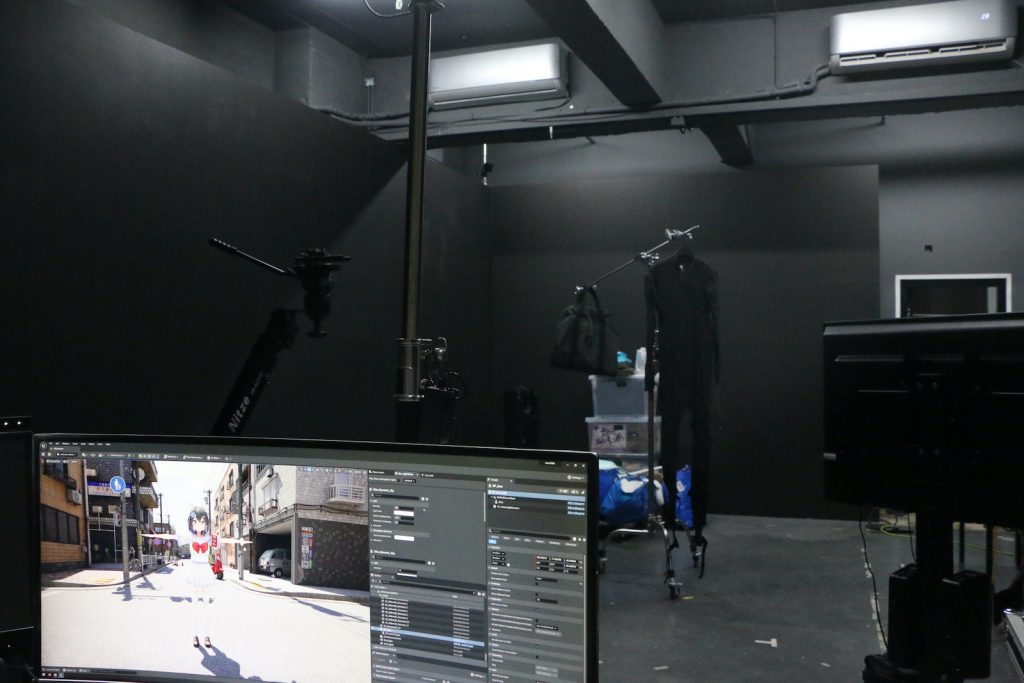
A motion-capture suit, a camera, and a computer with relevant software is the basic setup for 3D virtual YouTubing.

Bullying and the recently introduced waste charging scheme in Hong Kong are topics Aisu has covered. 

With over 16,900 subscribers on YouTube, she also enjoys reading and reacting to her fans’ anonymous texts and picture submissions about topics like first love and baffling experiences at work.

“It is all about the emotional connections I have with my fans,” Aisu says, noting that some of her audience are anime and manga fans who may find it difficult to communicate with others face to face.

When she first established her channel in 2020, Aisu tried streaming in both Japanese and Cantonese, but she now mainly uses Cantonese because it helps increase her relatability and build a closer bonding with her viewers.

“There are more common topics to talk about with fans when I speak their language, such as recent social issues and local trends. It helps connect me with my fans,” she says, adding that most of her fans are Cantonese speakers who find her content relatable.

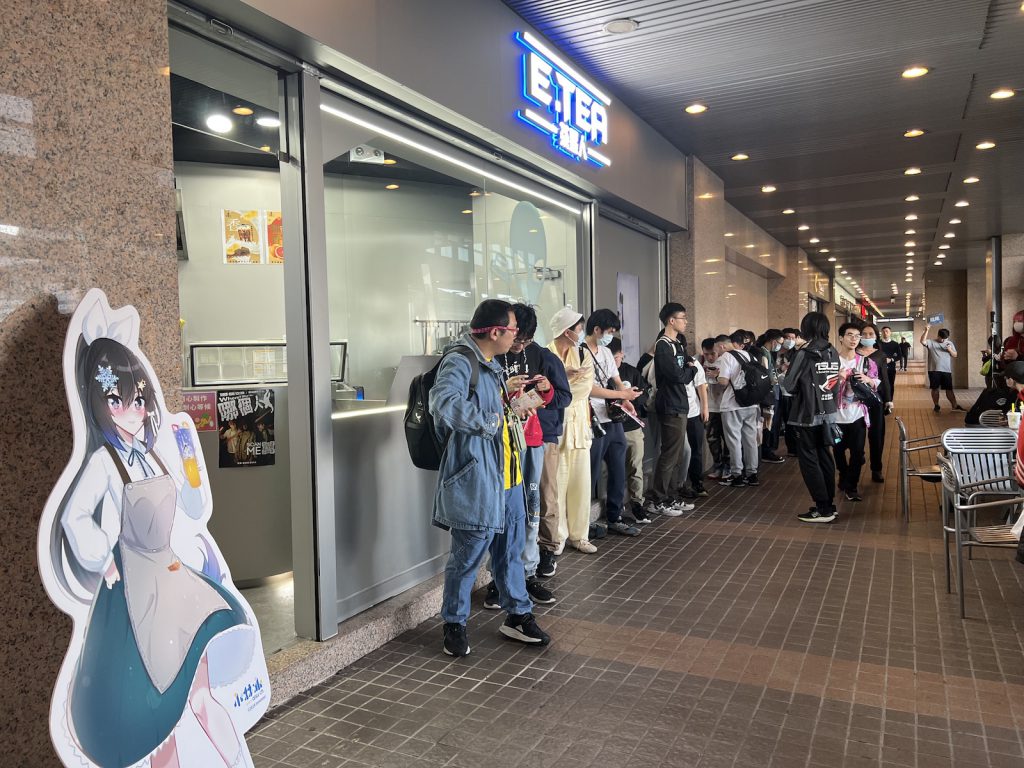
Fans of Kobayashi Aisu queueing for her collaboration event with a boba tea shop.

Despite how VTubers from overseas generally have a higher subscriber count, such as Gawr Gura from Hololive Production English who has over 4,450,000 subscribers, Aisu says that she prefers collaborating with local YouTubers rather than with overseas content creators.

“A main reason that fans watch their favourite VTubers is the language that they speak, for example English or Japanese, so collaborating with overseas VTubers once or twice won’t bring in more viewers that don’t really watch Hong Kong VTubers,” Aisu points out, also noting that the small market for local VTubers cannot be expanded this way.

When she first started her channel three years ago, Aisu developed her virtual avatar with her friends. She is now working under innoneer.TV, the only company managing VTubers in Hong Kong.

Seeing that corporate VTubers overseas achieve high levels of popularity, Kairos Huang Xijun, one of three co-founders of innoneer.TV, founded the company with his team in February 2023 to jump on the trend and promote VTuber culture in Hong Kong.

“We want to use VTubers as a medium to produce different content since it is popular in other parts of the world. We want to explore the opportunities that VTubers bring to the table and see if we can reach the level of other countries like Japan,” Huang says.

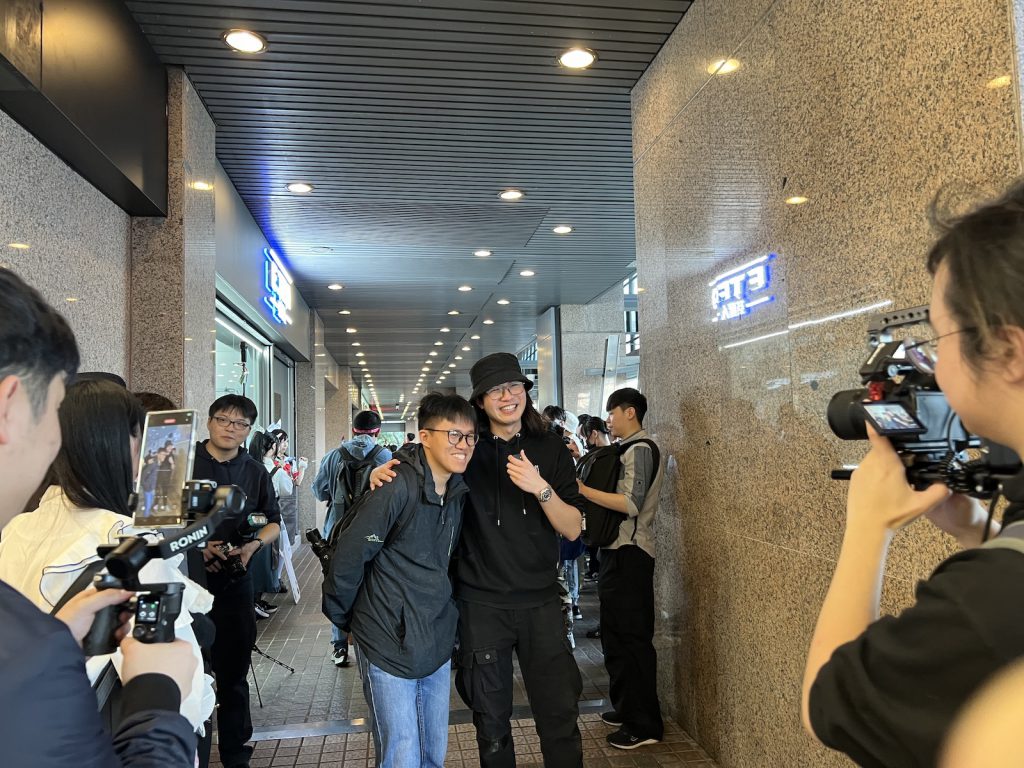
Kairos Huang Xijun interviewing a fan of Kobayashi Aisu.

However, the VTubing industry in Hong Kong is still in its infancy. The 25-year-old points out that this is why their management structure is smaller and simpler than other entertainment companies.

“The local VTubing industry is a mess. We need a complete business model. Without one that we can follow, there won’t be new investment and in turn we cannot increase the commercial value of the industry,” Huang says.

Adding that the audience for VTubers is already saturated in Hong Kong, Huang thinks the size of the audience for local VTubers will not increase significantly in the near future. He suggests gradually easing more Hong Kongers into having higher acceptance towards VTubers in order to popularise local VTubers.

“What we could do now is to share VTubers and their content to those who have no idea what VTubers are but have interest in Japan’s anime and manga culture, so that we can increase Hong Kong people’s acceptance towards VTubers,” he says.

“This will also expand the entire VTubing circle in Hong Kong,” he adds.

Professor Anthony Fung Ying-him from the School of Journalism and Communication at the Chinese University of Hong Kong points out the scale of the local VTubing circle is too small to even establish a business model.

“The market is too small. There isn’t any bargaining power for Hong Kong VTubers due to the lack of opportunities,” he says.

Fung points out that local VTubers are also lacking important components such as a dedicated platform for content creation to attract new audiences. 

“The platforms they are using now aren’t from Hong Kong and can’t be tailored to fit local cultures. Unlike other places such as Mainland China, where they have Bilibili, or Japan where they have a wide variety of platforms just for VTubers,” Fung says.

Fung also believes the limited size of the Cantonese speaking market makes it difficult for local VTubers to gain a higher level of popularity worldwide.

“Language barrier is a big factor in the size of the audience. Even if this problem is solved, it is also hard for local VTubers to find interesting and relatable topics,” he says.

Edited by Liam Hordijk

Sub-edited by Sunnie Wu

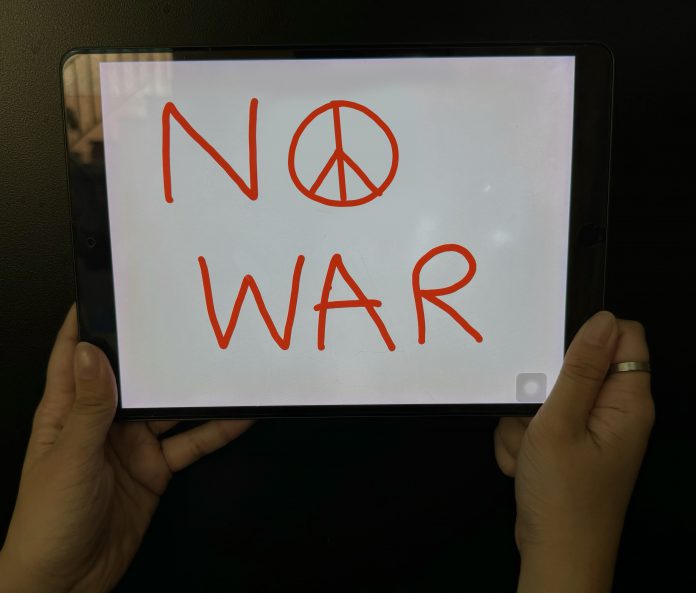
Make Peace No War

Veteran Vietnamese soldiers appeal for peace in the era of chaos

By Chloe Nguyen

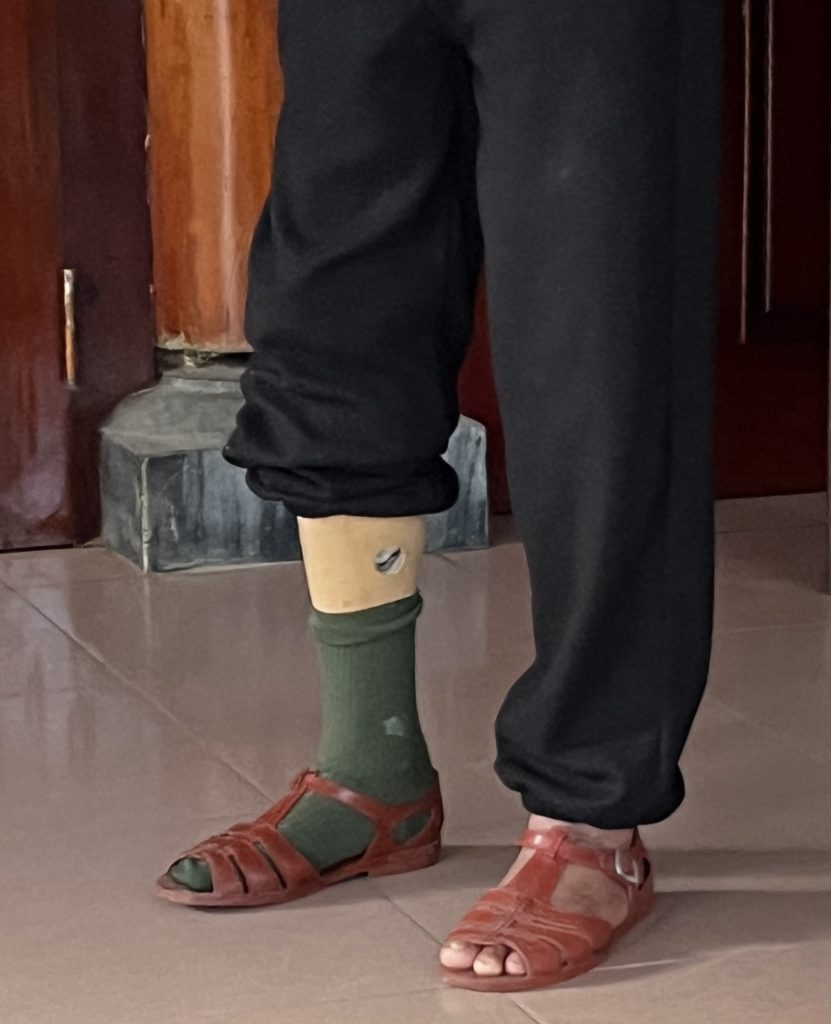
Trần Duy Nghĩa, who had one leg amputated in the 1969 Vietnam War, sends out a message of peace when wars have erupted in different parts of the world.

“Wars are nonsense. Civilians, who are not involved in the conflicts between governments, are most affected by wars,” he says. 

At the age of 81 now, the veteran soldier reads newspapers every day to learn what is happening in Ukraine since he has deeper feelings about it.

Suffering a lot from wars throughout his life, he says, “Rulers in various countries become more greedy and use violence to compete with each other nowadays.”

He believes the Russia-Ukraine War broke out due to the political interests of different parties, including the president of Russia wanting to conquer Ukraine to create a greater Russia and the United States and its allies’ plans to make Ukraine a Western bastion on Russia’s borders.

“I cannot believe there are still wars going on and empathize with people there,” he says as he recalls how he lost his right leg in the Tet Offensive military campaign, one of the largest military campaigns of the Vietnam War.

“While I was investigating the battlefield to see if there were enemies nearby to attack, a bullet hit my knee. If my team had not carried me to a bush quickly, I would have been captured,” the former leader of the military district says.

Half of his right leg was cut and he stayed in the hospital for five years for  treatment and practicing walking all over again with a prosthetic leg. In 2021, a segment of his leg was cut again as it got infected.

Trần Duy Nghĩa wearing a prosthetic leg.

During the Vietnam War from 1954 to 1975, about 800,000 soldiers became disabled, 849,018 military died and an estimated 500,000 soldiers went missing, the Ministry of Defence says.

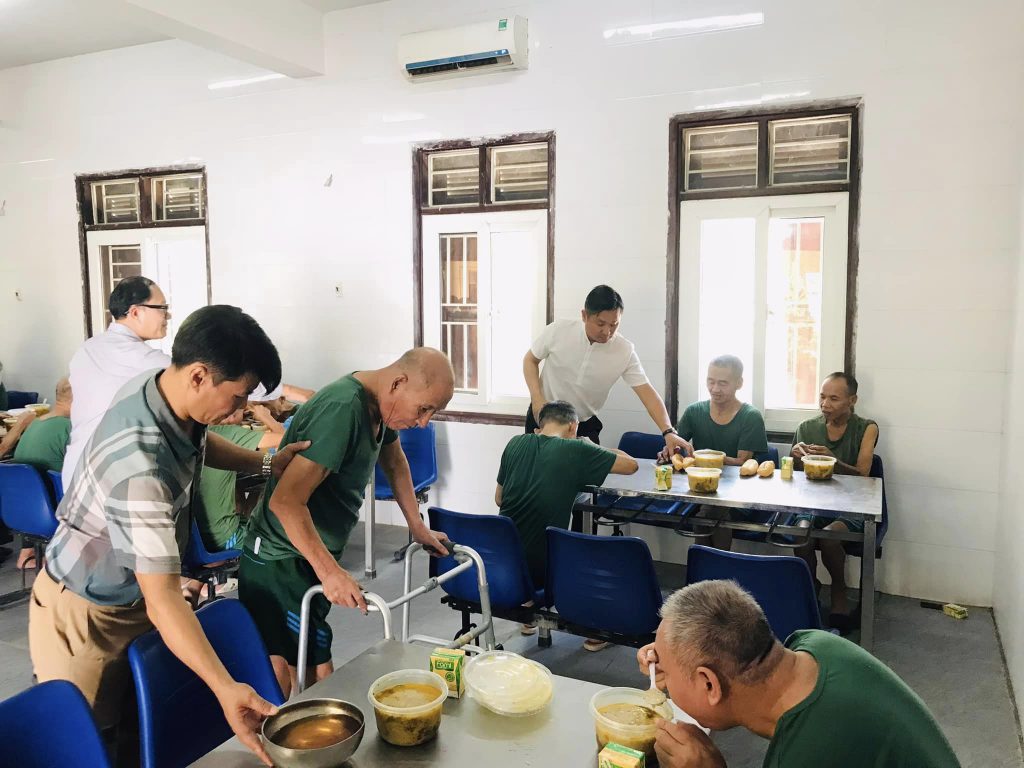
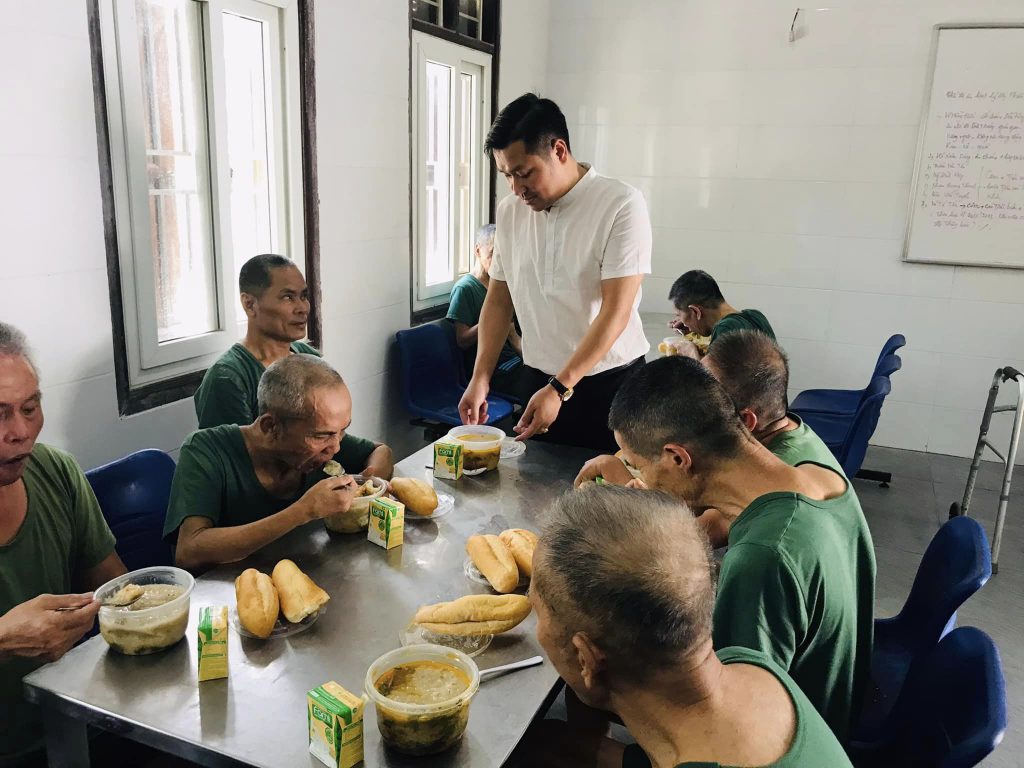
In 1981, Trần worked at a government-funded neuropsychiatric nursing center, which caters to soldiers with post-war mental health issues and head injuries. 

“Having witnessed my comrades sacrifice their lives for peace, I felt lucky to be alive and wanted to make the best of it by serving the injured after the war,” he adds.

He says because of the war, the government was so poor that it could not feed patients and provide proper healthcare for them.

“We did not even have enough money to buy food so we grew vegetables and raised pigs on our own,” the nursing center’s director adds. 


Injured veterans living at the Nghe An Convalescent War Invalids Nursing Area
(Photo courtesy by Khu điều dưỡng thương binh TTK Nghệ An)

The veteran soldier is saddened to see that 444,000 Ukrainian military were wounded and killed, figures updated in February 2024 from Russia’s Ministry of Defence show.

A total of 10,582 civilians were killed and 19,872 were injured during Russia’s invasion of Ukraine in February 2024, according to the Office of the United Nations High Commissioner for Human Rights (OHCHR). 

The former soldier hopes the wars will end soon for civilians’ sake.

“Violence cannot solve conflicts, it only harms innocent humans and makes situations worse. Negotiation is a better solution that authorities involved in ongoing wars should resort to,” he says.

Veterans taken care by employees at the center
(Photo courtesy by Khu điều dưỡng thương binh TTK Nghệ An).

Also feeling wretched by the Vietnam War in 1972 is Ngô Thị Thu, who joined the rear forces of the army, supporting the front line with logistic works when she was only 17 years old.

She remembers her teeth were broken when she tried to escape from an airstrike with a 70-kg rice bag on her back.

“I was the least injured, 11 people in my team were hit by dropped bombs and died. Their bodies could not be found as they were shattered into pieces,” she adds.

“The worst part was I lost three family members when the U.S. dropped bombs in my hometown in 1969 and 1972,” the 69-year-old woman says.

Although the war ended more than 50 years ago, she is still suffering from war trauma, including body aches and mental health problems like experiencing nightmares and feeling anxious whenever a plane flies over her head.

An annual meeting of former soldiers after the war (Photo courtesy by Trần Duy Nghĩa)

The current war also annoys her. “I do not dare to see pictures of the Israel-Hamas War as they are too heartbreaking,” she adds.

She wishes no one would feel the same sorrow as her.

“Leaders involved in current wars should give up political interests and ambitions,  to achieve a common voice and bring peace to the people and the world,” the war witness says.

Associate professor Nguyễn Quang Hồng, from the Department of History at the Vinh University, says every war has disastrous impact on human lives, economy and environment.

More than 40,000 deaths and 60,000 injuries have been caused by the 800,000 ton unexploded bombs left behind by the U.S. in Vietnam. The war ended more than 50 years ago but nearly 6.1 million hectares of land are still contaminated, accounting for 18.71 per cent of the total area of the country, according to the Vietnam National Mine Action Center. 

Data from the World Bank reveals the war between Russia and Ukraine, which was started in 2022, leads to 24.2 per cent of Ukarinians living in poverty. Before the war, the figure was only 5.5 per cent.

Over 34,000 people, 33,091 Palestinian and 1,410 Israeli have been reported as killed in the Israel–Hamas war, figures updated in April 2024 from the Gaza Health Ministry (GHM) show.

Nguyễn notes that consequences of the Russia-Ukraine War are on a global scale as the world is interconnected with each other.

“There is a danger that the Russia-Ukraine War will escalate, as the North Atlantic Treaty Organization (NATO) might jump into the fighting and nuclear weapons might be used,” the professor says.

Edited by Nutcha Hunsanimitkul

Sub-edited by Kamun Lai

Migrant Domestic Worker-turned-Writer

Migrant domestic worker finds strength in writing amidst struggles in Hong Kong.

By Lunaretta Linaura

Edited by Lorraine Chiang
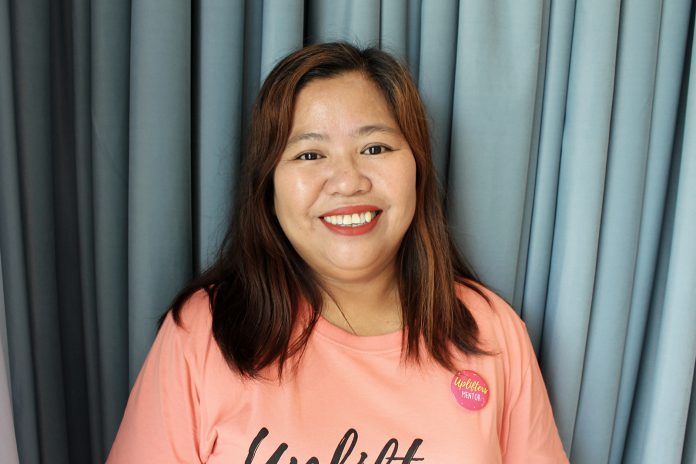
Just like other migrant domestic workers, Ailenemae Salvador Ramos has to leave her family – including her husband and two children – in the Philippines as she works in Hong Kong. 

But since coming to the city in 2010, Ramos has grown into a writer, an author and a co-founder of a writers’ group.

As a migrant domestic worker, she finds it difficult to talk about heavy topics to her family and other workers. So in her free time, Ramos reflects on and records the details of her daily experiences through poems and short stories, mostly written in English.

“We cannot talk to our families about how we feel being away from them, because we don’t want them to feel sad. I don’t want my family to know I am not happy here,” the mother of a 17-year-old son and a 19-year-old daughter says.

“I keep it in my journal, and it makes me feel better. At least I have paper and a pen to help me understand what I’m really feeling,” the 40-year-old worker adds.

Ramos’ employers encouraged her to publish a book by sponsoring the publication.

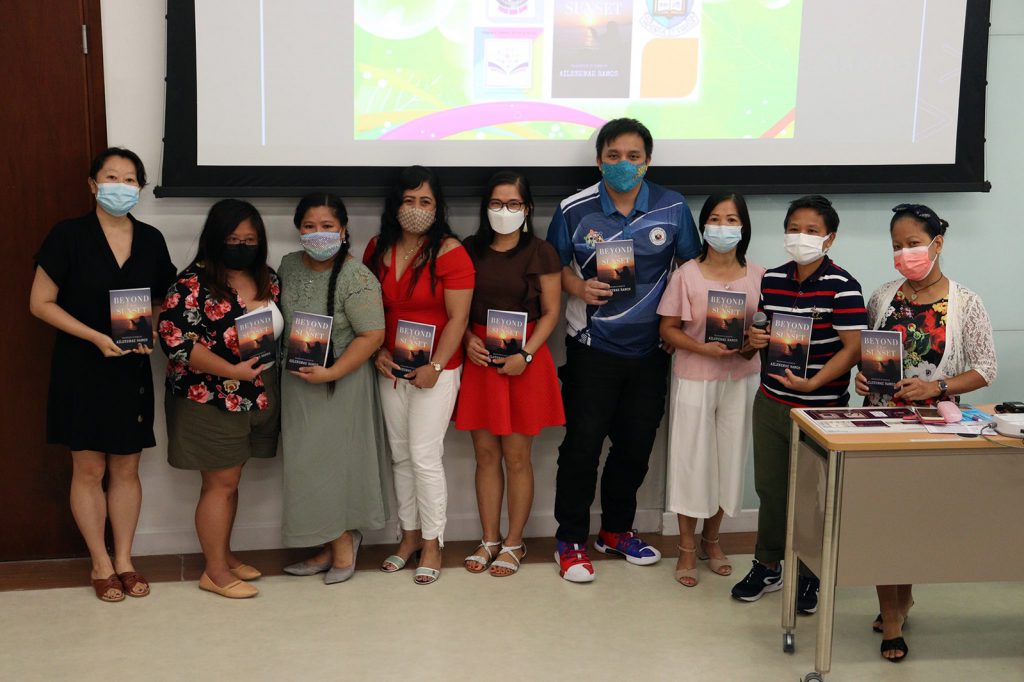
In 2021, Ramos’s first book, a poetry collection, “Beyond the Sunset” was published by Poetry Planet Publishing House. She dedicates the book to her mother who passed away when Ramos was two years old. As a child, Ramos’ relatives made her believe that her mother was “beyond the sunset”. 

Ramos’ book reveals her personal experiences and the collective experiences of women and migrant domestic workers – being away from their children, finding confidence in being a “simple woman” and the optimism through it all. 

“[My book] is my life story. Growing up, marriage, my aspirations, dreams for my children, migration story, pains, anxiety, depression. It’s everything,” she says.

“I honestly did not dream of being a writer. When I was a child, I actually dreamed of being an accountant to follow my mother’s footsteps,” she adds.

However, to sustain her family, she came to Hong Kong as a domestic worker. The minimum allowable monthly wage for migrant domestic workers in Hong Kong is currently HK$4,870 (US $623.64), while the low to average monthly income in the Philippines ranges from HK$1,530 to HK$6,060 (US $195.93 to US $776.02).

Having stayed in Hong Kong for 14 years, Ramos has worked for six different employers. She has no plans to return to the Philippines soon.

“I need to make the sacrifice despite the homesickness I feel. If I don’t make the sacrifice, my family will have no food to put on the table,” she says.

Ramos had a difficult time adjusting to her new life in Hong Kong.

“It was hard to stay with a stranger’s family and take care of their newborn baby whom I treated as my own. It was really hard since I myself have my own children, who were around 4 and 5 years old, whom I left in the Philippines,” she says.

Ramos’ fourth employer gave her the most difficult time. It only took three months before Ramos terminated the contract.

“Every day, [my fourth employer] called me ‘stupid’, ‘liar’, ‘dumb’. I couldn’t take it. It was torture,” she recalls.

Luckily, Ramos has also worked with supportive employers. She highlights how valuable they are in getting her to where she is today.

“They encouraged me to join activities, even on weekdays. I have never once received a ‘no’ from them… They believed that participating in events helped me improve myself… to inspire other migrant domestic workers,” she says.

In 2020, Ramos became acquainted with students from Singapore through a financial management online course. Through their introduction, she joined the Migrant Writers of Singapore — a writers’ group composed of migrant domestic workers in Singapore.

“I participated in writing and sharing poetry in their Facebook group. I joined their poetry reading and storytelling sessions every week,” she says.

Ramos also joined creative writing workshops held by the University of Hong Kong.

“[At the time of the writing workshops], I kept on writing. I improved my diary entries, rewrote them, and wrote them through poems and short stories. When I checked my notes app, notebooks and writings on Facebook, I’d written around 100 poems.” she says.

Ramos hopes other migrant workers can find the same resilience she found in writing.

Inspired by Migrant Writers of Singapore, Ramos co-founded Migrant Writers of Hong Kong with friends and fellow migrant domestic workers, MariaNemy Lou Rocio and Liezel Marcos, in 2021 just before publishing her own book.

With over 3,000 members now, Migrant Writers of Hong Kong conducts writing workshops for migrant workers and hosts a Facebook group where they can upload their writing.

Ramos’ book launch was held at the University of Hong Kong, where she celebrated with her peers.

“We wanted to start a community where [migrant domestic workers] could freely share their experiences and emotions without burden. Not all migrant domestic workers are confident to share their stories publicly. They may be scared to offend their employers with their stories,” she says.

“We think if other [migrant domestic workers] read the posted writings, they can relate to it and think ‘if she can survive this, why can’t I?’” she adds.

Through Migrant Writers of Hong Kong, Ramos aims to widen other migrant domestic workers’ horizons, not only through gaining new skills and engaging with literature, but also to inspire them to share their migration stories with confidence.

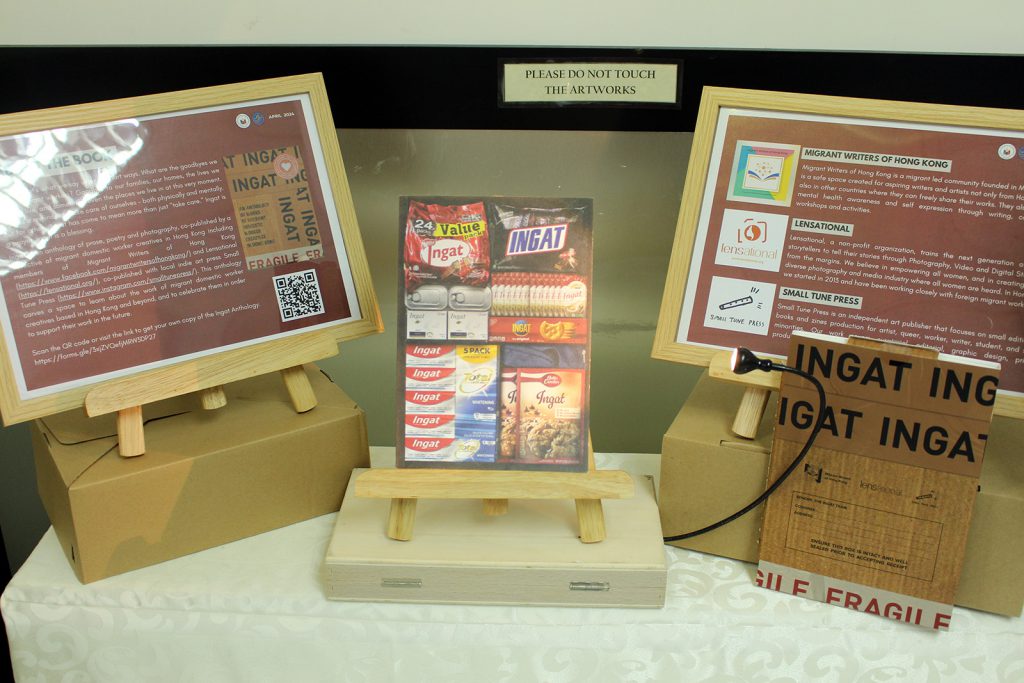
In March 2024, together with other photographers and sketchers who are also the city’s migrant workers, Migrant Writers of Hong Kong launched an anthology, Ingat, meaning “take care” in Tagalog.

Ingat was displayed at the Consulate General of the Philippines in Hong Kong in celebration of Philippine’s National Literature month.

Ingat showcases poetry, photography and visual art created by migrant domestic workers. All written pieces include Cantonese translations so that the artists will be able to be understood by more people in Hong Kong.

Ramos believes that writing can promote inclusion of migrant domestic workers in the city.

“I want us to voice out our stories for employers and the wider Hong Kong community to understand the true life and struggles of migrant domestic workers, that we are also human beings,” she says.

Although Ramos has no plans to publish another book soon, she continues to promote writing through Migrant Writers of Hong Kong’s writing workshops.

“I want [other migrant domestic workers] to understand that being in Hong Kong doesn’t mean only being a domestic helper. While working with our employers, there is more to do during our free times,” she says. 

“We are not just domestic helpers. We are more than that. We can do more,” Ramos adds.

Spotlight on Women in Chinese Musical Industry

Musicals featuring female artists as leading roles are becoming popular in China

By Bliss Zhu

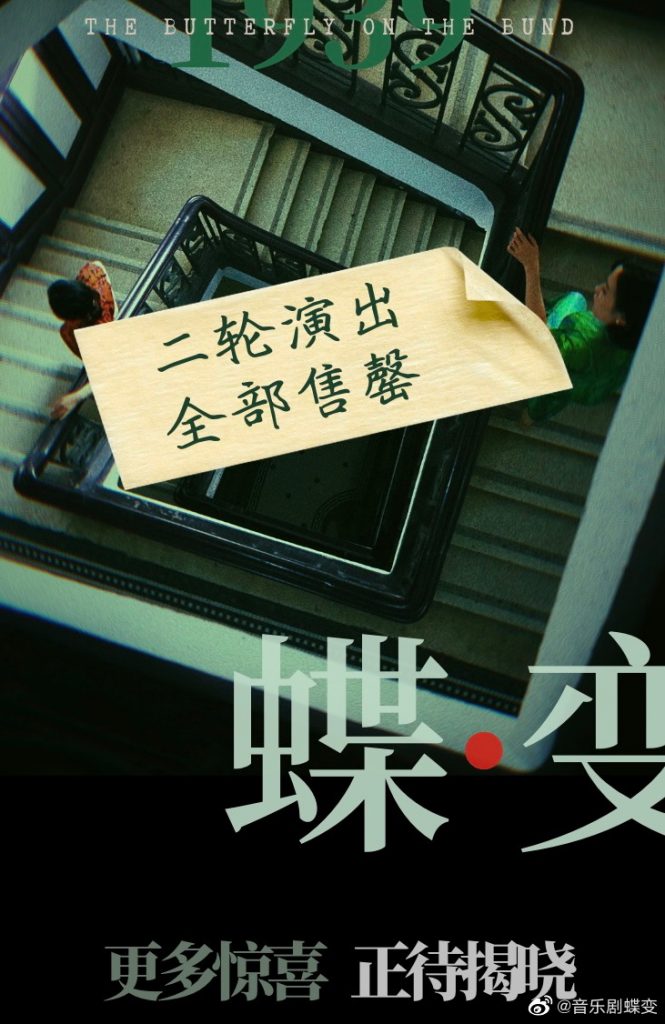
University student Chen Yishu has watched The Butterfly on the Bund(蝶變) featuring female artists as the leading roles six times. 

“I watched the first show in June last year. I wanted to watch more musical productions with female characters. I find that I am easily moved by female characters in musicals and can resonate with them. That is an attraction for female audiences,” the undergraduate says. 

The musical about the friendship of the underground party‘s two female members during the period of the Republic of China had tickets sold out in a few weeks. 

Chen visited Shanghai six times in the last six months watching more than 20 musicals – a total of 40 times. Of them, 13 productions are with female artists as the leading roles. She spent more than RMB ¥40,000 (about US $5,500) on tickets.

The tickets for The Butterfly on the Bund (蝶變)’s second round of shows were all sold out. (Photo courtesy of Musical The Butterfly on the Bund (蝶變) official account)

Most of the musical audiences are women, which accounts for 66 per cent, and the gender ratio of musical audiences is 9:1 for women to men, according to China Performance Market Annual Report 2022. 

In 2023, musicals focusing on female issues such as mother-daughter relationships, girls’ career development and women’s friendship were the new topics explored in the musical world, according to Jiemian Financial Channel, a financial and business news media outlet in Shanghai.

The Chinese version of Lizzie, the first all-female rock musical in China, became the top on the best-seller list of musicals after its first month of performances, according to the box office record from Damai Ticket, an important ticketing site in mainland China. 

Another popular musical featuring women on stage is Rocking Tai Bai, Poetry Stars (搖滾太白·詩與星), which tells a story about girls’ growing up experience and mother-daughter relationship, gets 9.5 points out of 10 on Damai’s musical rating site in which viewers voted for musicals they like.  

This musical has a long-term residency in Shanghai since September 2023 and celebrated its 100th performance in mid-April 2024.

Producer and director of the musical Yuki Huang says she launches the show to provide more opportunities for female musical artists. 

“It is a natural thing to do, as I am a woman. I want my audience to have some food for thought and resonate with the characters watching it,” Huang says.

Huang describes the absence of Chinese musicals featuring female artists as ‘not fair’, and she wants to fill this gap in the musical market.

“It is not easy to raise money for productions. Investors are quite conservative and most are convinced by past experience. Musicals featuring male artists are profitable so they keep pouring money into this,” she says.

“But that is understandable. It takes time for them to understand that the audience wants to see more musicals featuring female characters, as this is new to them,” she explains.

Huang borrowed RMB ¥1,000,000 (about US $138,000) from her mother to cover costs for casting, hiring a composer to create songs and renting a theatre venue, as she had difficulties finding investors when she was preparing for the production. 

“The ticket profit can now cover operation costs, including rental fees, and salaries for the entire cast and crew,” she says, adding that she will continue to produce more musicals featuring female characters.

Musical blogger Gu Qingzhou observes musicals featuring female artists are very much welcomed by netizens. 

Gu runs her blog about musicals on Weibo, the largest social media platform in China, with 400,000 followers. Many of her followers use her blog to exchange thoughts on plays and read musical reviews.

Gu observes there is an increasing interest in online discussion about women’s issues and that contributes to the popularity of musicals featuring female artists and exploring female-related matters. 

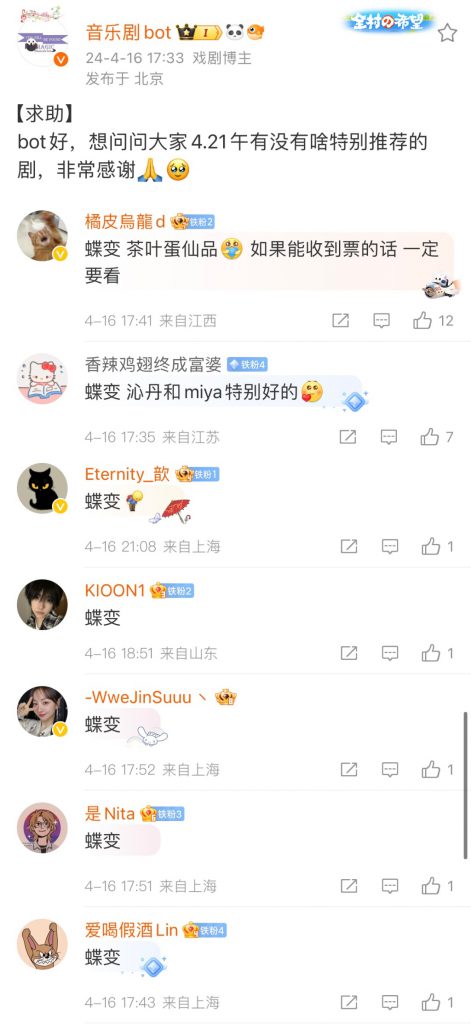
Screenshot of Musical_Bot’s discussion

“Females now are the majority in the audience. They prefer to watch productions focusing on women’s stories. But investors still think male musicals are more profitable because many female fans are willing to pay to watch performances by their favourite male actors,” Gu says.

“But I think new ideas and diversity are important for high-quality productions,” she adds.

Edited by Kamun Lai

Subedited by Nutcha Hunsanimitkul

Shining nails for pocket money

University students in China run nail businesses on campus.

By Suzana Li

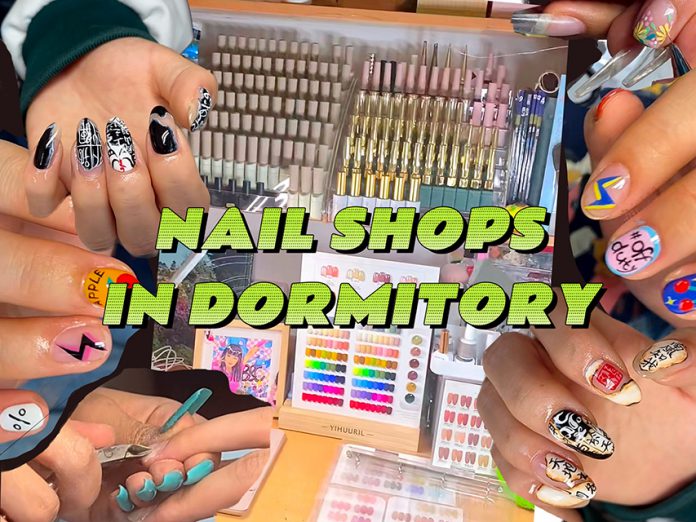
University student Kelsey Hou Yayuan has been running a nail salon in her dormitory for four years, making RMB ¥2000 to ¥3000 (US $276.40 to $414.60) a month. 

“A manicure session with complex designs costs around RMB ¥400 to ¥700 (US $55.28 to $96.74) for clients coming from outside of school, and RMB ¥100 to ¥300 (US $13.83 to $41.49) for customers on campus which is nearly half of the market price,” Hou says.

“I do not have to pay rent. I can do good design for nail painting. The dormitory’s warden is also one of my customers,” the art major student adds.

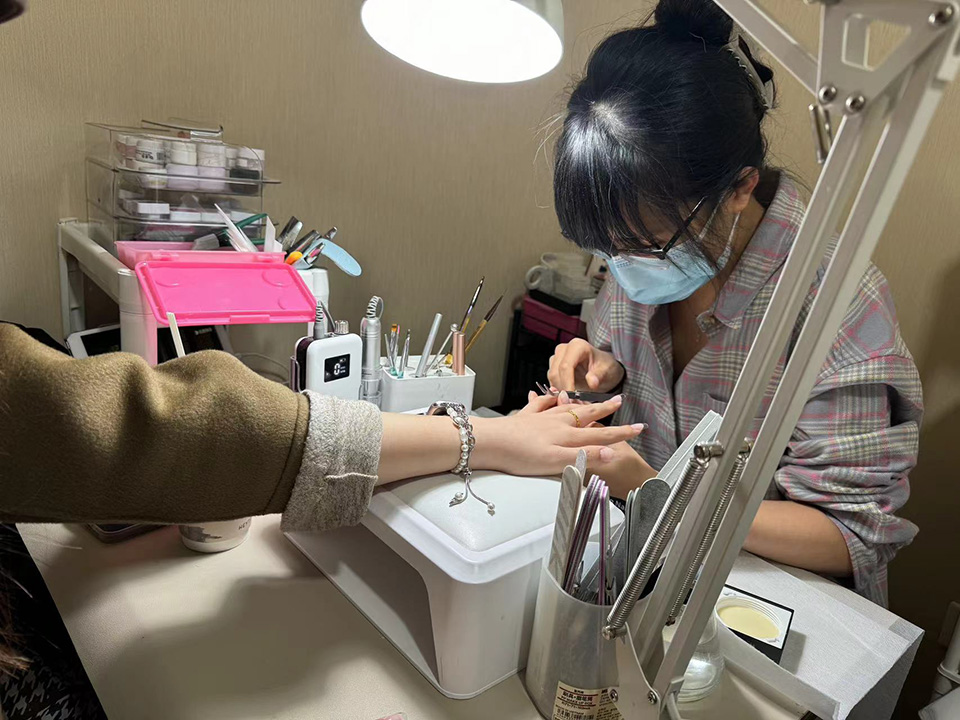
Hou’s workplace sits in the common area of her dormitory.

She serves four customers a day when she has no class and two during her school days.

Despite pressure from her studies, the 21-year-old student still devotes her time to her nail business because of her love for nail art.

“I’m a nail art lover. I get a sense of achievement from my beautiful artwork,” Hou says.

Another university student Zhou Yitong makes about RMB ¥13,000 (US $1,797.90) in three months by doing nails at her dormitory.

Zhou has been running a nail salon in her dorm room for two years, having started from scratch. 

“I did not know anything about doing nails. I paid 1,500 RMB (US $207.45) for learning manicure skills from an experienced senior student,” Zhou recalls.

 “When I asked my mom for money so that I could pay someone to teach me how to make nails, she thought it was a scam and refused to help me. She thought I should focus on my studies. So, I asked my friends for help,” the Year Four student says.

Zhou’s mother now has a different view of her nail business, as the student is making money to cover her own expenses. 

“Spending money that I make myself makes me feel much better than asking my parents for it,” Zhou adds.

To reach out to her potential customers, Zhou sends advertisements to WeChat and QQ groups. She also distributes flyers on campus.

“Customers with flyers are offered a RMB ¥5 (USD $0.69) discount. Those who are referred to me by my customers can also get a discount,” the nursing major student says. 

Yan is making nails for customers. (Photo courtesy of Yan Kelu)

University student Yan Kelu also started her nail business at school, but not in her dormitory. 

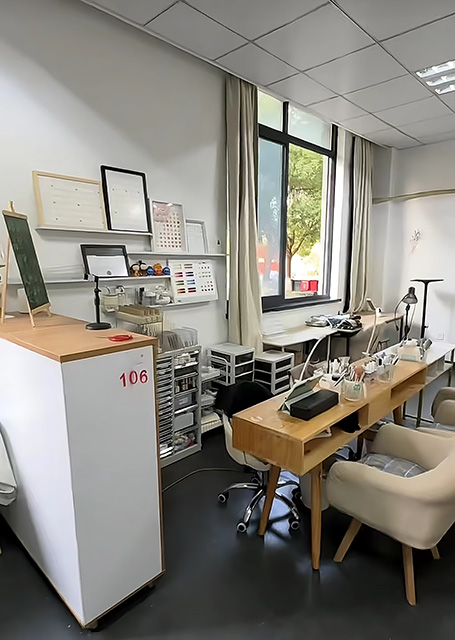
With support from Shaoxing University’s student entrepreneurship park, she and five other girls set up a nail salon studio in 2022. 

The team was offered a 20-square-meter room in a school building for running their nail business, after their business proposal was approved by the school. 

The outlay of nail shop in school’s entrepreneurship park. (Photo courtesy of Yan Kelu)

“Although we don’t have to pay rent, we have to cover expenses for utilities and decorations like nail supplies, sofas, tables, totaling RMB ¥7000 (US $967.40) at the beginning,” Yan says. 

“I usually take one to two clients after class. Sometimes I have no business.  It is not easy to balance my studies and work. But I find doing nails enjoyable and more importantly I can make money,” she adds. 

Frank Ng Wing-fung, a lecturer at the Department of Management at the Chinese University of Hong Kong, believes it is good for students to have hands-on experience to practice entrepreneurial skills. 

“When I teach entrepreneurship, one of the core principles is to get out of the building… The university provides students a safe space to test the feasibility of an idea. No one criticizes you if you fail,” Ng says. 

“It is important to research the industry, talk to customers and experts, and match personal interests with market needs. Also, one should plan for long-term growth and aim to become an expert in one field,” he adds.

Edited by Lilac Ye

Subedited by Liam Hordijk