





Home Blog Page 40

Podcast Boom

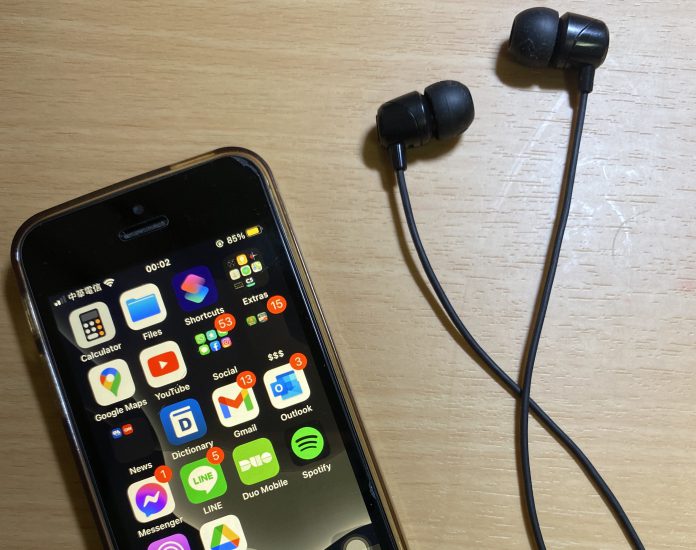
Podcasters in Taiwan witness a growth in the industry during the pandemic.

By Charleen Chen in Hsinchu

Huang Jhih-ping spends three to four hours listening to podcasts every week. “I listen to podcasts whenever my hands are busy, such as commuting, doing the dishes, and riding a bike,” he says. 

Podcasts helped the Taiwanese student, who started the habit in 2019, pass time during the pandemic when he was attending an exchange programme in Switzerland. “I was stuck in my room because all stores were closed,” he says. 

“I felt bored staying in my room, so I listened to podcasts, such as the show hosted by Froggy Chiu,” he says.

Chiu is a Taiwanese politician and YouTuber, who launched his podcast in 2019 commenting on social issues in Taiwan.

The global studies major student Huang thinks podcasts are informative and entertaining. “They allow me to make better use of time. I can gain new knowledge when commuting,” he says. 

Breaking Time Constraint

The term “podcasting” was coined by The Guardian journalist Ben Hammersley in 2004, who combined “iPod” and “Broadcasting”. 

According to Apple, podcasts are audio shows composed of individual episodes. 

Huang listens to news podcasts that address current affairs and issues on Spotify. He is a fan of Bailingguo News (百靈果News) and The Reporter (報導者). 

Spotify is a Swedish-based audio and video streaming service provider, launched in 2008.

According to the company’s 2019 annual report, there were over 500,000 podcasts on the platform. The company witnessed a 200 per cent increase in podcast listening from 2018 to 2019. 

“Spotify makes listening to podcasts relatively easy. I can switch between music and podcasts on one single platform,” Huang says.

University student Pang Yun-chi shares Huang’s thoughts.

“I want to learn something new by listening when my hands are busy. Listening to music turns out to be quite monotonous,” the business major student says.

Pang started listening to podcasts on Spotify in 2018, when she was commuting, cooking, and cleaning. 

“I hope I can gain new knowledge from podcasts, especially language skills,” the Chinese University of Hong Kong student says. 

She subscribes to chat shows in which podcasters speak in English or Cantonese, such as On the Floor and Alohagwa. “Because of the pandemic, I cannot go back to Hong Kong at the moment. But I am trying to brush up my Cantonese,” Pang says.

“I also listen to Talent Connect. You know, career preparation is the most urgent thing for seniors now. The show invites practitioners from technology industries to share their work experiences,” the Year Four student says.

Spotify witnessed a 200 per cent increase in podcast listening from 2018 to 2019.

Rapid Development in Taiwan

Kuo Yan-hsin, a part-time podcaster, has been working on user growth in SoundOn since March, 2020.

SoundOn, a Taiwanese podcast company which provides hosting service, was founded in 2019. It helps podcasters store and distribute their podcasts’ audio files.

Kuo says there are three factors contributing to the rapid development of podcasts in Taiwan.

“First, the prevalence of Chinese contents lowers the barriers to enter the industry,” she says.

She points out before SoundOn was founded, most resources for podcasters to start their business were in English, posing challenges to producers who wanted to create podcasts for Chinese audiences. 

“Second, the bluetooth headsets optimise the experience of listening to podcasts. Users find wireless earphones much more convenient than traditional ones,” Kuo says.      

“Lastly, the pandemic helps the podcast industry grow when listeners get more free time staying at home. They spend more time on podcasts,” she says. 

According to Kuo, the total podcasts hosted by SoundOn has increased from 700 to 3,500 from April to September in 2020.

Hsieh Lu-yang is a freelanced Taiwanese podcaster. She also witnesses market growth in the industry.

“In terms of the total number of listens per episode, the number doubles from 10,000 in the first quarter to 20,000 in the third quarter of 2020,” Hsieh cited her show as an example.

Different from Kuo, she thinks the growth in podcast listening results from the increase in podcast shows. “YouTubers and KOLs who join podcasts production also contribute to the growth, since they have already built their audience base,” Hsieh adds.

Hsieh started her podcast show Sex Chat in April, 2019. “I want to record my learning process of sex and ‘debug’ the problem that women rarely talk about sex,” she says.

Hsieh interviews experts from medical field and the LGBTQ community to share sexual knowledge and advice. 

“Some write me letters about their sexual concerns or thoughts,” she says. Making use of her podcast show as an open forum, Hsieh reads letters in her show. “Many audiences really like this part, because they can relate to others’ experiences,” she says.

“Those who enjoy my podcast say the content is really genuine and down-to-earth. They like the way I share my opinions from an ordinary person’s viewpoint,” she says.

“Podcasters in Taiwan have to start embedding advertisements into their shows to sustain the business.”

Tony Chou, a Taiwanese podcaster based in Toronto, says many of his audiences are commuters who love the sense of companionship of podcasts. Chou and Esther Tu, co-host of the show, launched On the Way to Work in May, 2020.

The podcast provides the latest business news every day, focusing on global economy and business. It reaches 4.9 out of 5 on Apple Podcast rating within six months. 

Chou says reading news has always been his habit. He summarises news every day after the North American stock markets close, and he says the timing is good for the podcast production.

“Due to time difference, commuters in Taiwan can get the latest news in the morning,”he says.

Despite the rapid growth in the podcast industry during the pandemic, Kuo predicts the development will reach a plateau before long.

“The donations from the audiences are not enough. Podcasters in Taiwan have to start embedding advertisements into their shows to sustain the business,” she says.

Edited by Regina Chen
Health Alarm Rings

COVID-19 reminds many of how important a healthy lifestyle is.

By Charlie Yip

 “I had two bowls of rice for dinner, and very often, I had ice cream for dessert,” university student Stephanie Chan says, recalling her eating habit at the beginning of the pandemic earlier this year.

Physical classes in Hong Kong were suspended and online teaching was adopted by all schools from kindergartens to universities in January this year. 

Chan is also one of those affected students. Her physical activities have been greatly reduced due to the outbreak of COVID-19. Like many she has been doing her study at home and practising social distancing.

The change of lifestyle is reflected in her weight which went up to 58 kilograms in COVID-19.

“I went hiking during school suspension in February. Looking at photos taken during the hiking trip, I realised how much weight I put on. I looked really chubby!” Chan says, blaming the change of lifestyle caused by the pandemic. 

In the wake of the COVID-19 pandemic, the government has tightened social-distancing rules like mandatory mask-wearing at all public venues, limiting social gatherings and closing leisure venues and gyms since the beginning of this year.  

Many Hong Kongers self-quarantine at home. They choose to work and dine at home to avoid going out.  

An insurance company Sun Life conducted a survey in September this year. Findings show 52 per cent of them gained weight, and over 40 per cent of them did not exercise at all, starting from the beginning of the pandemic.

Over 900 Hong Kong people aged between 20 and 55 were interviewed about their eating and exercising habits during the pandemic period in the poll. 

Acknowledging health problems brought by the change in lifestyle during the pandemic, Chan starts preparing healthy meals for herself.

“Having online classes at home allows me to cook my three meals and to think about how to eat healthier. I lost 5 kg from February to May. Now I look much better on camera,” she says.

Chan cut down carbohydrates intake at dinner from February to May.  “I have reduced portions and eaten more vegetables, and also stopped eating ice cream after dinner,” she says. 

Stephanie’s meal. (Photo courtesy of Stephanie Chan)

Immune System is the Key

Certified international nutritionist and weight loss coach, Thomas Kwok, observes that there is a rising trend of weight gain when people try to avoid infection by staying home. 

“People stay at home for too long. They consume more (food) and expend less energy,” he says.  

Kwok explains that walking is the basic and easiest way to burn calories, but those who are working from home walk much less. 

“All recreational activities have been restricted. Many watch movies at home, giving them a very good reason to have snacks,” he adds.

Kwok says the key to fight COVID-19 is having a strong immune system. He recalls nobody had any idea about how to fight the virus at the beginning of the outbreak. 

“What people did was purely washing their hands and practising social-distancing. The importance of a strong immune system is highlighted when symptoms appear to be more severe on elderly and chronic patients,” he explains.

In June, 2020, the Faculty of Medicine of the Chinese University of Hong Kong held a press conference unveiling the balance of the benign and harmful intestinal bacteria is the main immune system that combats COVID-19. 

Kwok says more people have started to purchase probiotics and vitamin C supplements to enhance their immune system after learning the study results.

“People are now more conscious about their health, knowing that not every illness has a cure,” he says.

Health Taken for Granted

Lares Beauty, an online food company that provides meals that are low in calories and fat by using ingredients high in fibre such as fresh vegetables and fruits, has gained popularity during the pandemic, as more are becoming health conscious. 

Founder, Eli Lam, says her business grew by 20 per cent on average from July to September, 2020. 

“We have new promotion plans that are designed during the pandemic such as ‘Stay At Home Set’, consisting of meal plans for people working from home,” Lam says. It includes various meals like curry chicken, beef burgundy and braised beef etc.

“In the past, my customers consulted us on what to eat to lose weight. Now, they want to learn more about processed food, and whether preservatives and additive agents are added in my products,” Lam adds. 

She recalls some young customers once told her that healthy food was not what they would choose in a promotion event before the pandemic. 

But Lam now sees a change in their mindset. “They have become more health conscious after learning that anyone can be infected by COVID-19 regardless of age,” she adds.

(Photo courtesy of Lares Beauty Meal)

Energy Expenditure is Indispensable

Marcus Tong, a qualified fitness trainer and a physical education teacher, also finds the public have become more health conscious. 

He has received more requests for health consultations and advice on doing exercise during the pandemic. 

“Many are lacking basic cardio training like walking. I can see that my students have gained weight. They have become less willing to exercise after months of school suspension,” Tong says.  

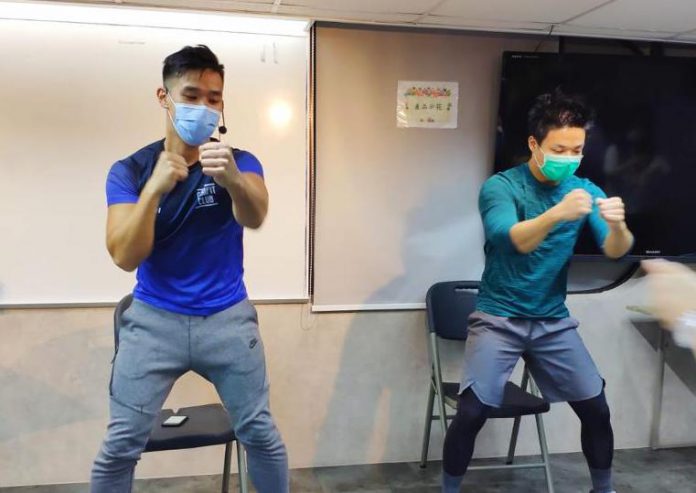
As a founder of a fitness club, Tong thinks the pandemic has changed the exercising habit of many. He says many go hiking or do water sports and some do household exercises like high intensity interval training, which is a cardiovascular exercise of alternating periods. 

“After the government has decided to limit social gathering to only a few, many fitness training groups use Zoom as a communication tool to monitor progress of participants. This is an unprecedented breakthrough in exercising mode,” he says.  

Marcus teaching exercise to do at home. (Photo courtesy of Marcus Tong)

The Department of Health says physical activity can boost immune system and defend the body from infections including respiratory infections.

“The World Health Organization (WHO) recommends adults to engage in at least 150 minutes a week of moderate-intensity aerobic physical activity, or at least 75 minutes a week of vigorous-intensity aerobic physical activity, or an equivalent combination of moderate- and vigorous-intensity activity, as well as muscle-strengthening activities involving major muscle groups on two or more days a week,” a spokesperson of the department says in a written reply.  

Edited by Lasley Lui & Regina Chen

Self-love – An Endless Journey

(Photo courtesy of Joyce Cheng Yan-yee)

Say no to body-shaming. How is the city embracing body positivity?

By Kassandra Lai

The daughter of the late Hong Kong comedian Lydia Sun, Joyce Cheng Yan-yee is the best person to tell the city to stop fat-shaming and embrace body confidence.

From TV drama featuring skinny artists to advertisement selling slimming pills, thinness is overwhelmingly idolised in the media. Cheng thinks that the media has a strong negative influence on body image. 

“The way that people use models, actors and entertainers in the media is still very cookie-cutter. There is still a certain image that you must fit. If a person is constantly bombarded by this certain type of body, it is easy to feel bad with your own flaws,” the singer says.  

Under enormous social pressure, the now 33-year-old singer-actress, who possesses a considerably larger figure, went through a time in her life that she tried to lose weight to conform to the social norm. 

“It felt really crappy because no matter what I did, even though I had lost, at that time, close to 100 pounds, my calves were still too big. My torso was still too long.  My thighs were still too muscular… like I could never fit that ideal body type, that ideal look,” Cheung recalls. 

“Whenever I lose weight, my face slims down first. And people would say I look like an alien and my nose looks even bigger. It got to a point that I only see my own flaws and I wasn’t appreciating the accomplishment that I had already made,” she says. 

In 2014, Cheng published a post on her Facebook account, announcing that she would no longer lose weight, but to start leading a healthy life instead. The post went viral on the internet and she received many positive comments and support. 

Cheng’s beloved friends’ support helped her overcome fat shaming.

“I am very loved and supported by friends who don’t care about how I look and what I do. We just never put each other down. Because of them, I know that even though I am fat, I am actually a pretty good human being,”  she says. 

“If you hold on to these negative comments, hold on to these critiques, you are unable to live your life fully and be the bright person you’re meant to be.”

Throughout the years, Cheng has also learnt how to deal with criticisms.

“I have been in the game since the very early on in my life. And I have learnt that if you hold on to these negative comments, hold on to these critiques, you are unable to live your life fully and be the bright person you’re meant to be,” she says. 

With the hope to empower women and create a positive impact in  society, Cheng released two Canto pop songs, Slim Enough?! (《你瘦夠了嗎?》) and Goddess (《女神》) in 2015 and 2016 respectively. Both songs are considered as inspiration for encouraging self-love and body positivity. 

“I would never allow someone to speak poorly of my best friends, so why would I allow myself to say mean things to myself in the mirror?” she says.

“I always believe that we are our own harshest critics. I personally need to hear  messages in these songs as much as I want to put these messages out to the world,” she adds.  

(Photo courtesy of Joyce Cheng Yan-yee)

“Confidence should not come from anyone else, but from yourself. “

Apart from creating songs, Joyce has also started a YouTube channel, Joyce is Moist, where she  shares videos about fashion, beauty and sports. 

“Through this channel I want to deliver a message that it is okay to be not okay. Personally, doing makeup, styling my hair, putting a cute outfit together make me feel good about myself. Confidence should not come from anyone else, but from yourself. I think there are ways to make yourself feel more confident, to trick yourself into feeling more confident, until you have achieved that self-assurance,” she says.

Cheng’s mission to  promote body positivity in the city is shared by Makayla Ng, who founded a plus-size fashion brand, Fashion Corner Plus (FCPlus) in 2014, aiming to provide comfortable clothes for girls of every size.

“I started FCPlus because I couldn’t find any best fit or stylish clothes when I was a teenager,” Ng recalls.

“Most stores in the city only sell items with limited choice of size. The society seems to have deprived plus-size girls of the right to be fashionable,” she says. 

Wearing size 3XL herself, the shop owner sells clothing ranging from size L to 8XL. As the designer of the brand, Ng says her design aims to break all restrictions.

“There is no ‘should or shouldn’t’. Just choose what you love or hate!” To me, being confident and loving yourself is the key to beauty,” she says.

Plus size fashion (Photo courtesy of Makayla Ng)

Ng recalls one of the unforgettable moments she had with her customers. 

“A customer who looked very shy at first chose some clothes at my store and tried them on in a fitting room. She was totally amazed when came out from a fitting room exclaiming:, ‘Wow! I never knew I could carry these types of clothes and styles. I look so good and different in them!’” Ng says.  

The founder of the shop says she feels happy and fulfilled when she sees her customers being confident wearing her designs. 

To those who are still struggling with their body shape or think they are ‘imperfect’, the shop owner would like to tell them: “There are different kinds of beauty standards around the world. We don’t have to change ourselves for others. Our faces and body shapes do not define who we are. Most importantly, I think true beauty comes from within.” 

Echoing Ng’s thoughts, Cheng thinks beauty is a quality that everyone has.

“We are beautiful in our own way. And if we are able to recognise the unique beauty in ourselves and others, the world becomes a more beautiful place,” she says.

To Cheng, self-love is an endless journey.

“Taking the time to love yourself and to accept yourself is a lifelong homework and project that you must continuously put in the time and effort to do. But trust me, if you are willing to work on it, you’ll thank me later hahaha,” the singer says with a hearty laugh. 

Edited by Lasley Lui & Regina Chen
Power of Art

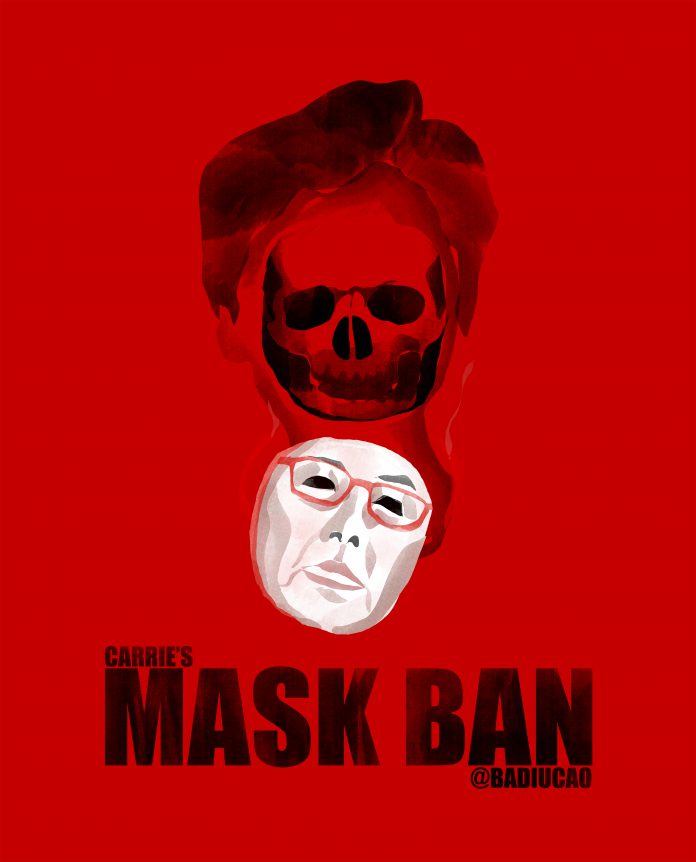
Badiucao’s cartoon showing "Carrie’s Mask Ban”. (Photo courtesy of Badiucao)

Chinese-Aussie political artist Badiucao stands by Hongkongers with his cartoons.

By Mandy Yim

Badiucao, a Chinese-Aussie political cartoonist, describes himself as an “artist hated by the Chinese Government”. The 34-year-old artist lives by his nickname and stays anonymous for the sake of protecting his parents who now live in Mainland China. 

Born and educated in Shanghai, he holds a law degree from the East China University of Political Science and Law. He gave up his Chinese citizenship and moved to Australia in 2009.

Start an Artistic Life

When studying at the university, he watched a video about the Tiananmen massacre in 1989 in his dormitory with his friends. He was shocked to learn how the Chinese authorities censored information about the student movement.  

The clip, coupled with the tragic story of his grandfather, sowed the seed for his artist life.  

As a filmmaker, Badiucao’s grandfather was targeted by the Chinese Communist Party during the “Hundred Flowers Campaign” in the 1950s. He was sent to a rural concentration camp and died later in the camp. “I realise that being an artist is extremely dangerous in China, so I left the country and restarted my life in Australia,” he says.

“Art can be dangerous for artists.”

Magnet of Danger

The artist started drawing political cartoons and posting them publicly on his Twitter account two years after moving to Australia. “Art can be dangerous for artists, especially when what the artist says or creates becomes a problem for the government,” Badiucao says.

Badiucao planned to hold his first international solo exhibition《#Gongle #共歌》in Hong Kong in October 2018. Yet, the event was called off because the Chinese authorities urged him to do so by threatening his family in Shanghai. He realised that his identity was known to the authorities. ‬‬‬

“After the authorities learnt about my identity, I have become a potential threat to anyone I know in China. They might be in trouble just because of their connections with me. So, I cut connections with my parents and my friends,” Badiucao says.

Proudest Moment

The pursuit of freedom of speech and the sense of responsibility to educate the public are the two major driving forces that keep him creating arts despite all the troubles he is facing.

“As an artist, I have great respect from society. People look up to my artwork. My art serves the public,” he says.

His interest in political issues in Hong Kong started to grow when the city underwent the Anti-Extradition Law Amendment Bill (Anti-ELAB) Movement in 2019. The national security law, which came into effect on June 30, 2020, also captures his attention.

Badiucao was covering his right eyes to show support to the girl who was shot with a beanbag by the police in an Anti-ELAB protest in Hong Kong. (Photo courtesy of Badiucao)

His friend once sent him photos, telling him that his drawings were held by Hong Kong protesters during a rally in June. 

“I feel like, wow, that’s a great honour,” he smiles. “The cancellation of my exhibition in Hong Kong in 2018 was a huge setback. But I felt fully recovered when I saw my artwork was held by Hong Kong protesters. I felt really proud,” he says.

He designed the Lennon Wall Flag in September 2019 and posted it on his personal website, hoping that it could be a new symbol for Hong Kong’s freedom and resistance.

“Protests in Hong Kong since June have become the biggest inspiration of my art creation,” he stated on his website.

The Lennon Wall Flag consists of 96 coloured squares which symbolise colourful post-it notes on Lennon Walls in Hong Kong. The number – 96 – refers to the year before the handover in 1997. Every colour on the flag represents a different voice from Hong Kong.

On September 17, 2020, Badiucao received the 2020 Václav Havel International Prize for Creative Dissent from Human Rights Foundation for his design which has become a protest symbol of the Anti-ELAB Movement in Hong Kong and the global community.

“This award belongs to all the protesters of #HK #Uyghur #Tibet #Mongolia & #China. You are my inspiration and reason to make art!” he tweeted the day after receiving the prize.

Badiucao’s cartoon showing Chief Executive Carrie Lam resigns with a box of police equipment. (Photo courtesy of Badiucao)

Unbounded Art

Badiucao believes artwork will become more powerful after the introduction of the national security law because people can express their opinion in different art forms. He thinks there is always room for political artists to manoeuvre.

“The government can hardly control art because art has the power to define things.”

“Even if it (a word or a symbol) is banned, we can create new art,” he says citing a girl holding blank placards in a protest in Causeway Bay to show her defiance against the national security law on July 1, 2020, as an example.

He thinks the blank placard is already a form of expression in arts. “It is ridiculous and absurd for the government and the police to forbid holding blank placards in protests,” he says.

Badiucao’s cartoon showing the national security law book with a bomb replacing the Regional Emblem. (Photo courtesy of Badiucao)

Badiucao says some Chinese artists are inspired by how Hongkongers share political posters and cartoons via Telegram groups.

Chinese political artists create a similar Telegram group which is called “Voice of CN” (In Chinese: 文宣中国). Group members are all Chinese.

“As they are afraid of the Chinese government, they make memes and pictures anonymously. I also share my artwork there,” he says.

“The government can hardly control art because art has the power to define things,” Badiucao says.

Edited by Lasley Lui & Regina Chen 

I Hope to Film till I Die

Director Chow Kwun-wai discusses his two popular films, Beyond the Dream and Ten Years, his strong character, and his lifelong goals as a filmmaker.

By Isaiah Hui

Beyond the Dream’s total box office exceeded HK $15 million and won Best Adapted Screenplay at Taiwan’s Golden Horse Awards – dubbed the Chinese-language “Oscars”. Despite these achievements, its director, Kiwi Chow Kwun-wai, thinks it is a difficult time for the film industry.

Chow says the pandemic greatly impacted the box office of Beyond the Dream as cinemas were temporarily closed because of the deadly coronavirus.

“The release dates of Beyond the Dream were suspended, and we had merely released our film for thirteen days. That period was crucial for promotion. When the cinemas were reopened after nearly one and a half months, the heat of promotion had already faded,” Chow says. 

“Not only my film, but also other films’ box offices have been affected. Everything is interrelated. If my film’s box office is bad, it would affect me in the future if I want to find people to invest in my film. Those impacts exist,” the 41-year-old man says.

The director says impacts brought by the pandemic to film industry are a global issue, and people must wait for the end of the pandemic.

“Unless you want to film a recent story, when you film a street view and find that all passengers are wearing a mask, this kind of shot (could be problematic). I have also heard that some crews had infection cases, and quarantine was needed. So, many films haven’t resumed their works. They don’t dare to. They delay,” he says.

Director Chow Kwun-wai with the background of a poster of Beyond the Dream.

Ten Years

Chow is famous for directing one of the five short stories in Ten Years, a Hong Kong film depicting a dystopian future of the city, which was released in 2015 and quickly garnered international attention.

“The resistance is larger, so is the suppression.”

Five years after its release, Chow says the situation today is very close to the film’s prediction, “the resistance is larger, so is the suppression.”

“At that time (when Ten Years was filmed), we were arguing whether the scene of riot police beating people was exaggerated, but it turns out to be the norm today,” Chow sighs.

Despite this, Chow says it is encouraging to see many people are prepared to go onto the street although situation in Hong Kong was miserable last year.

“They are willing to sacrifice for Hong Kong. The film Ten Years uses the role of a self-immolator to ask a question about sacrifice: Someone is willing to self-immolate, how much do you want to sacrifice for Hong Kong?” Chow says the social movement in 2019 has given him an answer that further motivates him.

Chow, who is a keen Christian, says audience could hardly spot the Christian elements in Ten Years, “Most of the public screenings took place at churches and divine schools, and Jesus is actually another kind of self-immolator.”

He adds that he deliberately included the element of suffering in the ideology of both Beyond the Dream and Ten Years.

Chow is also determined that, as a film producer, he is obliged to film Ten Years.

“First, I have a religious belief and I am not scared. Second, I know I am not alone.” Chow attributes his determination to his own religion and the social movement in 2019.

Determination

“I hate examinations, but I asked myself whether I was willing to study for the sake of cinematography.”

Chow’s path to be a director is not a smooth one. Failed the English subject in the Hong Kong Certificate of Education Examination, he was forced to start working at an early age. He worked as a coolie, a CD shop worker, a mooncake factory worker and an ice-cream store worker before he decided to retake the public examination.

“I thought I could be a self-taught movie master, but I failed. I hate examinations, but I asked myself whether I was willing to study for the sake of cinematography,” Chow explains why he retook the exam twice in order to enter the Hong Kong Academy for Performing Arts (HKAPA).

“I remember the days in HKAPA when we had to do a film project with a limited budget. I was so determined that we must have a scene decorated like a household that I went to the waste station to pick out the suitable furniture,” Chow reminisces.

“Until last week, my parents still thought that my job as a freelance movie director was not stable, and they persuaded me to change to a full-time occupation. I didn’t listen to them as I really want to make movies. I even rejected an offer to work as a lecturer,” Chow says.

Chow is always determined in doing what he has decided.

Future

Chow is pessimistic about the future of film production as the freedom of local film production has been limited since the advent of national security law. He describes this as “a future that we don’t want to see”, a line used in Ten Years.

Chow thinks that the room for creativity is narrowing, “The Office for Film, Newspaper and Article Administration asked the Inside the Red Brick Wall to open with a warning that its content ‘may be unverified or misleading’. Maybe it is just a start. Maybe more films will be banned because of political censorship,” Chow says.

The film documenting last year’s siege of the Hong Kong Polytechnic University was made by a collective of anonymous directors.

For movies produced in Hong Kong, Chow says they can be categorised into movies co-produced by Hong Kong and mainland film production companies and movies produced by local Hong Kong companies.

Chan fears that even films funded entirely by Hong Kong people would also cater to the taste of the Chinese market.

“Co-production film caters to the mainland market, and it has experienced (political) censorship; whereas local film doesn’t need to be censored. I felt that they have been merged as China wants ‘one country, one system’. I felt the risk of the ‘fusion’ of both movie types, a bad fusion,” Chow says that the inferior currency is now supplanting the superior one.

Speaking of his coming project, Chow says his next film will be about education.

“I am planning for a film about the education system. As what I have said, my childhood was rebellious. I resisted the education system. I have a strong feeling against an education system that stresses exams because I was a failure under this system, and it is also this kind of system that makes me endure a lot. I want to try this topic,” Chow says. 

“Cinematography is my lifelong pursuit. I hope to film till I die,” the film director concludes.

Edited by Lasley Lui & Regina Chen

Unsung Hero

(Photo courtesy of Kang Jung-hwa)

A veteran nurse who fought with COVID-19 at the frontline got diagnosed with the virus.

By Soweon Park in Seoul

Kang-Jung-hwa, who has been working as a nurse for 20 years in Jeonju, South Korea, volunteered to serve COVID-19 patients in Daegu, a city which was hit hard by the pandemic in February.

“Empty streets and people were in panic. It made me feel like I am in a zombie movie,” says Kang, recalling the first impression of the city when she arrived on March 2, 2020.

On February 28, 2020, the daily confirmed cases of COVID-19 in South Korea reached the peak at 909 patients. On the same day, Daegu, a city which is 230 kilometres from Seoul, reported 741 cases in the first wave of COVID-19 in the country.

Kang’s family was reluctant to let her go to Daegu fearing she might be infected by the deadly virus. But Kang insisted.

“I wanted to make my part of contribution with my medical knowledge and experience for the people, not as someone’s mum or wife but just myself,” Kang adds.

Kang resigned from her job on February 28, 2020 and went to Daegu. She could not be absent from the hospital which she used to work for in Jeonju for a long time. Also, she did not know when she would be back.

“My family and friends were worried about me, as I quit my job and went to do volunteer work. But I didn’t think that I was quitting my job, rather, I thought that I just worked for another hospital in Daegu. Also I have a belief that I can work at any hospital,” Kang says.

Serving COVID-19 Patients

Kang worked in a ward for COVID-19 patients at Yeungnam University Medical Center, which was the frontline of the battle against the pandemic.

The government recommended medical professionals to do volunteer work for four weeks, considering the fatigue and possibility of infection. But Kang stayed in Daegu for six weeks starting from March 2 to April 15, 2020.

“As soon as I arrived in the medical centre, I had a two-hour orientation tour and then I was led to a ward,” she says. The volunteer nurse was assigned to work for three two-hour shifts.

“Since it was too hard to work for long hours in full heavy protective gear, we took a two-hour break after working for two hours,” Kang says.

Kang says every medical worker had to wear personal protective equipment (PPE) from head to toe. With safety goggles and overshoes, the heavy protective gear is quite suffocating.

Medical professionals are required to wear heavy personal protective equipment. (Photo courtesy of Kang Jung-hwa)

“It feels like taking a sweat shower inside the protective clothing, and the pressure of goggles really hurts. I struggled with sore oozing from my nose bridge and ears,” Kang says.

Working at the frontline and taking care of the patients can be psychologically demanding to medical workers. “The ward I worked for was a place of life and death. I witnessed patients whose family couldn’t take care of them dying alone in a ward,” she says.

“Some patients who could not accept that they were diagnosed with COVID-19 were so mad that they spat at me. It was hard to make them understand and accept the situation,” she adds.

After all the volunteering work, Kang received an award certificate for her sacrifice. (Photo courtesy of Kang Jung-hwa)

The Nurse Became a Patient

“In the fourth week of volunteering, most patients were close to full recovery and some were discharged from the hospital,” Kang recalls.

On April 15 when the daily confirmed cases of COVID-19 dropped to one, Kang decided to go back to home.

After the six-week volunteer work, she had to undergo two weeks of self-monitoring in a hotel in Daegu.

“I wished it were a dream. I was getting ready to go back home but just sent to the hospital instead.”

On April 28, a day before she was supposed to return home and meet her family, she was diagnosed with COVID-19. “I wished it were a dream. I was getting ready to go back home but just sent to the hospital instead,” Kang says.

She did not have any symptoms of COVID-19, so the diagnosis was a shock to her. “I still don’t know how I got infected,” she says.

After she became a patient, she suffered from depression and panic disorder.

“I couldn’t sleep and eat well. During the 31-day of treatment, I realised how sad, lonely and frustrated the patients I helped were,” Kang says.

Trace Left by COVID-19

Although Kang is now completely cured, she is still suffering from after effects of COVID-19.

“I lost my sense of smell. It’s getting better, but I sometimes still burn my rice. And also, I have muscle pain, particularly my legs,” she says.

Kang used to go hiking on weekends, but she cannot do long walk now.

Having experienced a dramatic change from being a nurse to a patient, Kang urges people not to blame the COVID-19 patients and survivors. “No one wants to be infected. Anyone can be infected, just like I was. We think ill of COVID-19 patients, but they are all infected by someone,” she says.

Edited by Lasley Lui & Regina Chen

Break the Norms

(Photo courtesy of June Liu)

Pornstar June Liu shares her pornstar’s life and experience.

By Vivian Cao in Yunnan

Some people criticise June Liu for corrupting the image of Chinese women, but the 22-year-old Chinese pornstar still enjoys her career. Her stage name is Spicygum in Pornhub, one of the largest pornographic video sites in the world.

Liu has about three hundred thousand followers on Pornhub and nearly four hundred thousand followers on Twitter. Starting from the end of April last year to now, Liu has owned up to 200 porn videos with copyright protection.

Facing Bad Comments

“Misunderstandings are unavoidable, especially for porn industry which is controversial and uncommon,” Liu says.

Information asymmetry is the main reason for misunderstandings.

Many people who live in China know little about Liu because of the Great Firewall – a complex, multi-layered system censors and controls the internet, blocking access to Twitter, Facebook, and other foreign websites.

“They know me through other people’s eyes and mouths. The hostility of netizens is quite serious nowadays,” she says.

Liu says she has to face hostility, criticism, and misunderstanding every day. When reading the many bad comments, she even thought of giving up.

But she gathers herself when seeing messages left by her fans on her Pornhub page or Twitter chatbox. She cites a message from a fan: “Your videos give me warmth when I feel lonely.”

“I cannot give up just because someone hates me, there are many people still like me,” Liu adds that many fans are looking forward to watching her videos.

“I cannot give up just because someone hates me, there are many people still like me.”

Liu and her Pornhub Bobby Pin. (Photo courtesy of June Liu)

The Pornstar’s Life

Liu reveals there is no specific reason leading her to become a pornstar. She just wants to try. “Like you never ate durian before and one day you give it a try,” she says.

Taking videos when she has sex is her daily routine. “Before I become a pornstar I took videos by myself when I had sex. Those early-stage videos are actually part of my life,” Liu says.

She thinks sharing her sex videos is not only a way to share her daily life but also a way to express herself. She does not feel insecure when her body is exposed in front of the camera because she likes her body.

Since she started uploading videos on Pornhub, Liu insists on running her Pornhub page by herself without hiring by companies.

Other than making her videos of her own, Liu now also helps some newbies who want to enter the industry managing their Pornhub pages and editing videos.

Liu got nominated for Pornhub Awards 2020. (Photo courtesy of June Liu)

She thinks she is a considerate helper for them. With the experience of being a newbie, she knows it is not easy to be famous.

“I give the newbies autonomy and room for improvement,” Liu says.

Liu is busy every day as she is also a final year university student studying in London. In her view, studying is more tiring than working.

“My major is too theoretical which cannot usually be used in daily life,” Liu says. 

She declines to reveal the name of her school and what she is studying, however.

“If this kind of personal information is published, many people would ask for a personal meeting with me. It is troublesome for me,” Liu explains.

First Sex Lesson

By reading books, watching movies and porn videos, Liu learned things about sex when she was a teenager. Before becoming a pornstar, she thought she knew everything about sex.

“But I was wrong. The audience has many peculiar fantacies about sex and many are unknown to me,” Liu says.

Liu thinks making porn videos is a learning process and it is a way to help people turn their sexual fantasies into reality.

She needs to study before preparing a customised video which includes special demands.

Liu explains: “Everyone’s orgasm is different. For example, some people may ask me to wear a stocking inside a pant which is very strange to me.”

“Where is this sex fetish comes from? Why is it attractive? How should I express it through my performance? I must figure these out or my videos have no soul,” Liu adds.

Being a Professional Amateur

Liu believes being real and passionate are the highlights of her videos.

Her videos are very popular in Pornhub. Liu’s Pronhub page has 36 million views and her public videos were watched by more than a million people, some of them even own more than five million views.

“A standard style and tag may bring a burst of popularity to me for a short while. But it will trap my creativity and performance.”

“Amateur style can give me more freedom to shoot and edit which can make my videos more realistic,” Liu says.

The amateur style also helps Liu to keep the passion alive. “When one thing becomes a job, you may get tired. I do not want to hate sex,” she adds.

She avoids confining herself, so she can adjust performance according to a plot.

“A standard style and tag may bring a burst of popularity to me for a short while. But it will trap my creativity and performance,” Liu says.

In her videos, she breaks the stereotype that women should be passive in sex. She shows an aggressive role in most of her videos.

Liu explains: “It is my personality. Acting passively one or two times is acceptable. If I always go against my nature, my passion will burn out.”

Edited by Lasley Lui & Regina Chen

Look Good, Feel Good

Natasha Moor, founder and CEO of Natasha Moor Cosmetics. (Photo courtesy of Ali G Studios)

Makeup artist Natasha Moor helps women look their best to feel their best.

By Agnes Lam

Born and raised in Hong Kong, Natasha Moor is an Indian makeup artist who specialises in bridal makeup and an entrepreneur running her own cosmetic line. The 30-year-old is also a COVID-19 survivor.  

Moor was diagnosed with COVID-19 in March after returning from a business trip in London. She was hospitalised for 34 days in Caritas Medical Centre. Feeling bored when being treated in the hospital, she posted makeup tutorial videos and snippets of her life in the hospital on Instagram. 

Doing makeup helped lift her spirits when fighting against the virus.

“I asked my dad to send me some cosmetic products so I could do some tutorials in my free time in the hospital. So I could feel more confident, and I did,” Moor says. 

Her strong will not only helps her fight the deadly virus, it is also the foundation of her successful career.

Natasha Moor, founder and CEO of Natasha Moor Cosmetics. (Photo courtesy of Ali G Studios)

Moor had a love affair with makeup ever since she was a child. “When I was a primary three pupil, my teacher almost got fired by the school because I did her makeup every day,” she says. 

She thinks her grandmother had a strong influence on her childhood. “My grandmother never leaves the house without makeup. Even when I video call her now, she has to put on lipstick first,” she says.

Moor became a public relations executive after graduation. She worked with luxurious diamond jewellery companies such as Chopard. She was often praised for her makeup. Later on, she started doing freelance makeup jobs on the side. 

“I really loved it. It was all about passion,” she says. Moor resigned from her job after a year and did a six-week makeup course at Lia Schorr Institute in New York in 2012.

“As my business grows, more respect is earned.”

Natasha Moor at Cosmoprof Las Vegas in July, 2019. (Photo courtesy of Natasha Moor)

“Some people think that because you are touching people’s faces when doing their makeup, you are lowering your standards as a person,” she says.

Being a makeup artist was considered more of a blue-collar job rather than a respectable white-collar. “As my business grows, more respect is earned,” she adds.       

Her passion for doing makeup eventually wins support from her parents who were not keen to tell relatives about Moor’s work when she started her career as a makeup artist. 

“I think it is about Asian culture. We want our children to be doctors, lawyers, not an artistic occupation,” Moor says.          

“Now a lot of parents tell me that their daughters want to be like me. Their daughters want to become makeup artists too,” she adds. 

Moor mostly does makeup for brides now. “It is like the biggest day of their life, they are so excited to look beautiful,” she says. 

“Models are paid to look beautiful. But brides have this crazy confidence when I do their makeup,” she says. Moor realises that makeup is a transformative tool that can help boost a woman’s confidence. 

“I cannot do everyone’s makeup all over the world forever,” Moor says. So, she created a makeup brand in 2017. She wants women to be confident by doing their makeup with her products. 

The empowerment element is important for Moor’s brand. For example, lipsticks in her cosmetic line are named Ambition, Goal Digger, and Indestructible. “I want women to wear ambition and feel what they have is ambition,” she says.      

Apart from working as a makeup artist, Moor is very active with charity work. She often visits women’s shelters, orphanages and drug rehabilitation centres in Bali, Jakarta, Mumbai, Compton, Los Angeles, San Diego, and Hong Kong.

Natasha at Care for Kids Bali, Jodie O_Shea House in Bali May, 2018. (Photo courtesy of Natasha Moor)

Moor started the initiative ‘Do Moor’ in 2017 and visited women’s shelters. 

“I want to give a confidence boost to women who do not have that access to makeup. Women who do not have money and experience. Women who do not even know they can feel this confident just by putting on makeup,” she says.

“I want to give a confidence boost to women who do not have that access to makeup.”

Moor did makeup for women in shelters and rehabilitation centres just the same way she did it for her clients. 

Moor visited an orphanage in Bali in 2018. The weather was rainy during that visit. She was heartbroken to see children walking barefoot in the rain. 

“We spent so much time. We received so much from donations. We tried to take care of the kids. But how come they were barefoot?” she says, when talking about her experience in Bali. 

This gave her an idea to create slippers called ‘sole mate’ for children at orphanages and underprivileged children. During her March trip to Mumbai with Spark-A-Change foundation, she gave children ‘sole mate’ slippers.

She believes that the world needs more kindness and she strives to deliver positivity through her work and brand.

“Empowerment means being able to support another person without having to tell the world. Doing it from your heart genuinely is what matters. You don’t have to step on anyone to get anywhere. Just be a kind person,” she says.

Edited by Lasley Lui & Regina Chen

Werq the World

“The biggest advantage of being a drag queen is that I can be what I want to be.”

By Sarah Ryou in Jakarta

Turning Jong-in to Jong-ja

Jung Jong-in starts his day thinking about what makeup he wants to wear every day. “Before I put on makeup, I think of a concept first. From there I start to choose a colour and an accessory that I want to wear,” the 18-year-old drag artist who is also known as Jong-ja says.

“I get inspiration from everything around me. A single leaf falling from a tree can inspire me. After finishing my makeup, I wear a wig that goes well with my make-up,” Jung says.

“I feel thrilled and excited whenever I turn myself from Jong-in to Jong-ja.”

He once was inspired by Beyonce’s performance in a concert. He bought wigs and costumes that look like Beyonce and did make-up just like the American singer.

“I feel thrilled and excited whenever I turn myself from Jong-in to Jong-ja,” he says.

Jung started dressing up and performing as a drag queen after watching a YouTube video a few years ago. “When I first watched a drag queen clip on YouTube, it struck me to core of my heart and I wanted to find out more,” Jung says.

“With strong interest, I started to watch RuPaul’s Drag Race on Netflix. I was inspired by the drag performance and found courage to dress up as drag costume myself,” he says. RuPaul’s Drag Race is one of the most famous drag Queen competition shows featuring drag artists’ fashion, performance, and stories.

(Photo courtesy of Jong-in)

Perceptions of Drag Culture

Drag queens are men who dress up in fancy costumes to deliver performance.

Dot Face, a South Korean YouTube channel, showcases stories of LGBTQ, drag culture and other minorities who are not widely known to the public. The general attitude is quite negative due to a lack of knowledge of the subject.

Jung points out people have limited access to learn more about drag culture, as their performance can only be seen in clubs and queer festivals.

Due to the lack of understanding, he often comes across with people who ask him questions such as: Isn’t it strange for a man to dress up like a woman? And some would say to him that “Man should be manly”.

“It sometimes discourages me when people criticise my work. But I know I have friends and families who support me. Now, I have the courage and confidence to fight against these negative gazes,” Jung says.

“Why do men need to look like men? What is it like to be a man? I think what I do can also be defined as man. The way you look doesn’t define your sexual identity. Being brave and being yourself is the way to show your personality,” Jung says.

(Photo courtesy of Jong-in)

Being Jong-ja

Jung hosts shows and performs at drag clubs.

“Before becoming a drag queen, I always felt that part of me was missing. I feel that the mood of the society is suppressing me from being truly who I am. Whenever I am having a hard time and want to let everything go, drag culture lifts me up and gives me confidence,” Jung says.

When performing drag shows, Jung dances, sings, does catwalk in fashion shows, acts, and even does stand-up comedy. He uses the stage to tell the audience to accept drags as who they are.

Yet as a minor, he has limitations in performing drag shows, as most shows are held in bars or clubs. In Korea, youngsters aged under 18 are prohibited to enter bars or clubs. Jung can only perform in drag clubs which are open for teenagers.

Jung has been invited to attend television programmes to tell his story and he also runs his own YouTube channel which now has about 5,000 subscribers.

“A lot of people seem to know drag art exists, as the media reports about it. But judging from comments on YouTube or other social media platforms, many still think it is a shame that I dress up like a woman,” Jung says. 

“I am not upset, but I hope they will think differently one day. I want to break the stereotypes. I wish drag culture could be accepted as popular art culture,” he adds.

Jung thinks drag culture does not belittle or ridicule women, but he is aware that it is a sensitive subject.

“I am always very careful and aware about what I say and how I act during my performance and in my YouTube videos. I think that drag artists, including myself, should accept comments by others. This is a lifelong assignment for drag artists,” Jung says.

To those who do not accept the drag culture, Jung says, “Some may dislike us, and I can understand. All of us live in the same world, but how we live, and what ideology we have is a different matter. As long as people respect each other and respect diversities in culture, then it is fine. But it is intolerable to publicly spread false information about drag culture.”

Many drag queens including Jung have lost stages to perform due to the pandemic.

“The biggest advantage of being a drag queen is that I can be what I want to be.”

“This is a tough time for me and all the drag artists. I’m pretty sure that is the same for everyone these days. I want to give people pleasure and give them inspiration through my performance,” Jung says.

“I hope the audiences look at me and drag culture without prejudice. The biggest advantage of being a drag queen is that I can be what I want to be. There are so many ways to express myself. The most important thing is I feel happy,” Jung adds.

Edited by Lasley Lui & Regina Chen

Chill in the Chilly

Exotic flavours of ice cheese such as spicy chilly oil tickle people’s taste buds in an ice-cream shop in Shaanxi.

By Coco Zhang in Shaanxi

Have you ever tried chilly ice cream? Wu Chunye and Hai Bin, who founded Shan Shi San in Xi’an, Shaanxi in 2013, are the inventors of the spicy flavour.

Shan Shi San, a Xi’an local ice cream shop, is decorated in an ancient architectural style.

Inspired by Italian gelato, they use local produce in the province such as chilly, corn and fruit to make ice-cream and name their product “ice-cheese”(冰酪).  

“Ice-cheese is a combination of the Chinese flavour and Italian gelato. It is handmade and low-fat,” Wu says.

People in the province like spicy food, and “red chili oil” is an indispensable ingredient in Shaanxi’s cuisine. They grind qinjiao, a local red pepper, peanut, sesame and other spices and splash the mixture with hot oil. 

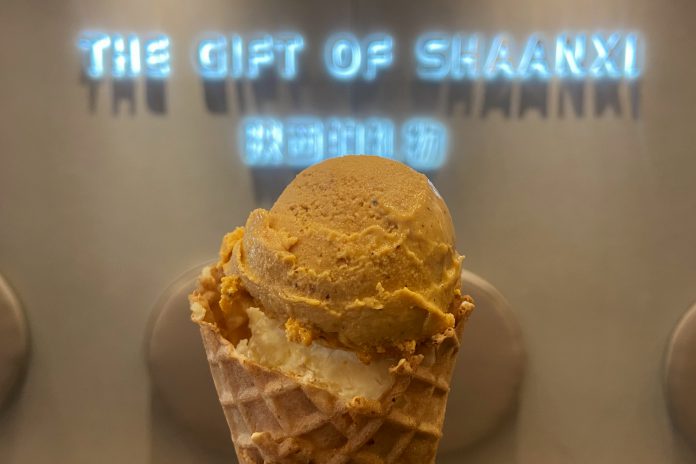
Wu and Hai create “red chili oil” ice-cream and it is a top seller in the shop. 

Liu Yuhang, a visitor from Guangdong, goes to the ice cream store by recommendation from his friends studying in Xi’an. After trying red chili oil ice-cheese, he says: “It’s spicy and distinctive.” 

Apart from the “red chili oil” ice cheese, the store has 103 types of flavours. “Lintong pomegranate” flavour, “Hancheng Chinese prickly ash” flavour and “Sanyuan sesame” flavour are all made of local ingredients. It costs RMB ¥25 (US $4) for two scoops with a cookie.

Another signature product the store has is tiger tally cookie. 

Tiger ally cookie with ice cream.

“Shaanxi is a fertile region. But it is hard to find gifts with innovative design, exquisite craftsmanship and beautiful packaging in the market,” Hai says. 

Tiger tally was issued to generals for troop movement in ancient times, and this treasure is a highlight in Shaanxi History Museum. Inspired by the history and special presentation of tiger tally, the pair makes cookies modeling on the shape and design of it.  

Li Hao, a visitor from Beijing says: “I really want to buy some gifts with historic culture of Shaanxi. The cookies are delicious and well-packaged, and I believe my family will like this gift.” 

If you want to give spicy ice-cream a try and take a bite of tiger tally cookies, you can find out more about Shan Shi San on Dianping (大眾點評), a leading shop review website in the Mainland.

Edited by Lasley Lui